Warhorse: Theater had great bathrooms.

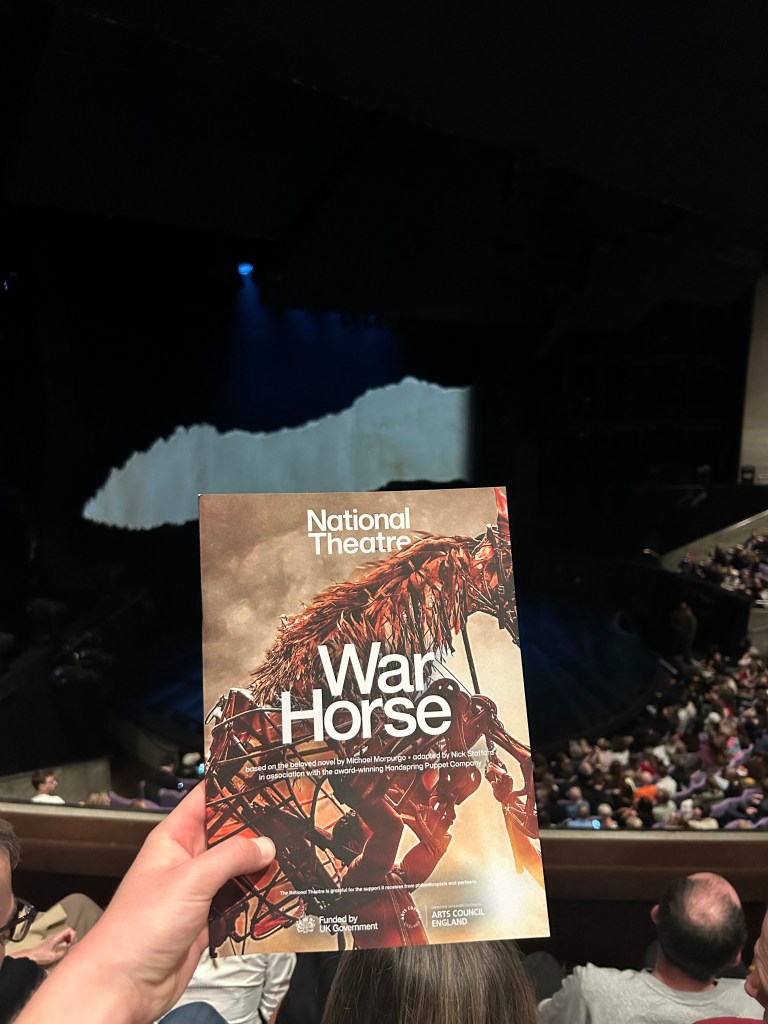
Ok dude. I have things to say. Was it beautiful? Yes. Was the puppet one of the most spectacular pieces of technical theater I’ve ever seen? Yes. Did I like the play? No. 

I’m not going to say it was a bad play, because I don’t have the ability to determine what makes a “good” or “bad” piece of theater. I am not a professional, and I’m certainly not a theater critic. Also, I know I’m in the minority in my opinion. The goodness that the play provided was reflected in the audience, who created a beautiful collective sound of emotion. Regrettably, I was not able to feel it. 

My lack of connection to the play I feel was almost entirely because of the plot. After receiving the knowledge that the play was a condensed version of a prior book, it made more sense to me, but during the production, sense was the furthest thing from what I felt. I did not see the plot as cohesive and felt it was not structured in a way I could look past. Due to the plot being so condensed, the addition of many characters within the story felt unnecessary, and we were unable to receive a true character arc for those who were supposed to be crucial elements of the story. The focus also seemed to shift in a very indelicate way. Right as I felt I was starting to get attached to the subject of the horse, the subject transitioned to focus on the people. Then, right when I started to become attached to the story line of the people, the focus was back on the horse. I’m all for a fragmented story line, but the delivery of this idea was not well communicated to me. 

I also feel like the show (and story in general) relied far too heavily on large displays of emotion and grusome imagery to create substance, rather than touching on the complexities and nuances of emotion during war. I saw this specifically with the character Friedrich. I never understood his character for a single second. It seemed that his character was very black and white, which I didn’t understand, and I believe limited his character arc severely. 

However, I can’t deny the absolute beauty of the technical pieces. There were definitely moments within the show that I felt myself tear up. For example, one moment that used the puppetry beautifully, and also touched on a very beautiful theme, was directly after Joey and Topthorne were placed inside a pen to intimidate each other and determine the power dynamic between them. After a very intense scene, with dramatic music and bold lighting, the two horses are quiet and go back to eating grass. I thought this was a very powerful moment that showed the contrast between humanity and nature. At the end of the day, after all the fighting and drama, they were still just horses. 

Warhorse was a visually beautiful show, and I’m very glad that I saw it. I would be interested to read the book and see how the story compares, but for now, I will hold my opinion and remember the positives about the play.
Natural History Museum: Limited Bathrooms

I can’t say that I was fully impressed with the Natural History Museum here in London. This is in no way because of the content of the museum, which was thorough and fascinating. I only find that it didn’t strike me the way I hoped it would’ve. I found it did not stand out in comparison to the other museums I’ve seen, that fall into the same category. 

For example, the Field Museum in Chicago is quite similar. I do have my biases, due to my growing up in Chicago and loving everything about it, but overall it is more intensive on natural history. To me, the Natrual History Musuem just didn’t stand out. 

My disappointment did not stop my from enjoying what was there, however. I’ve always been a lover of paleontology so the walkthrough style exhibit of dinosaurs and prehistoric life was very enjoyable to me. I also quite enjoyed the mammal and avian sections, and some of the taxidermy looked very silly. 

Overall, I’m glad I visited the Natural History Museum, even if it wasn’t the most incredible thing I’ve seen in London so far.

Poetic roads in plays and pictures

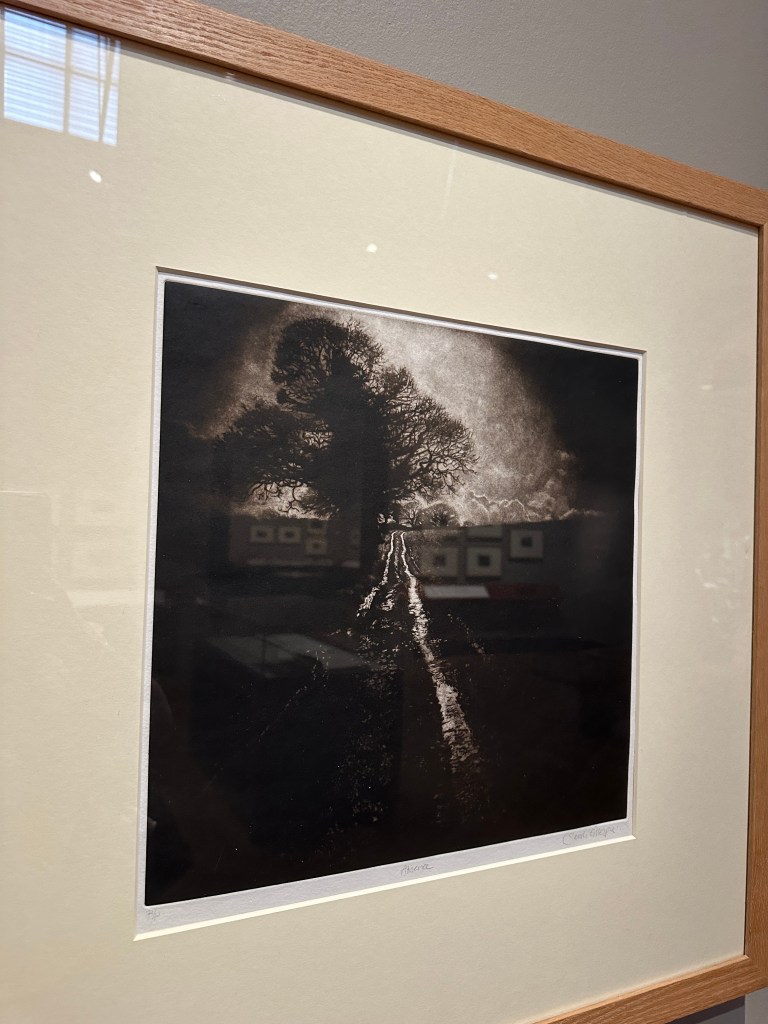
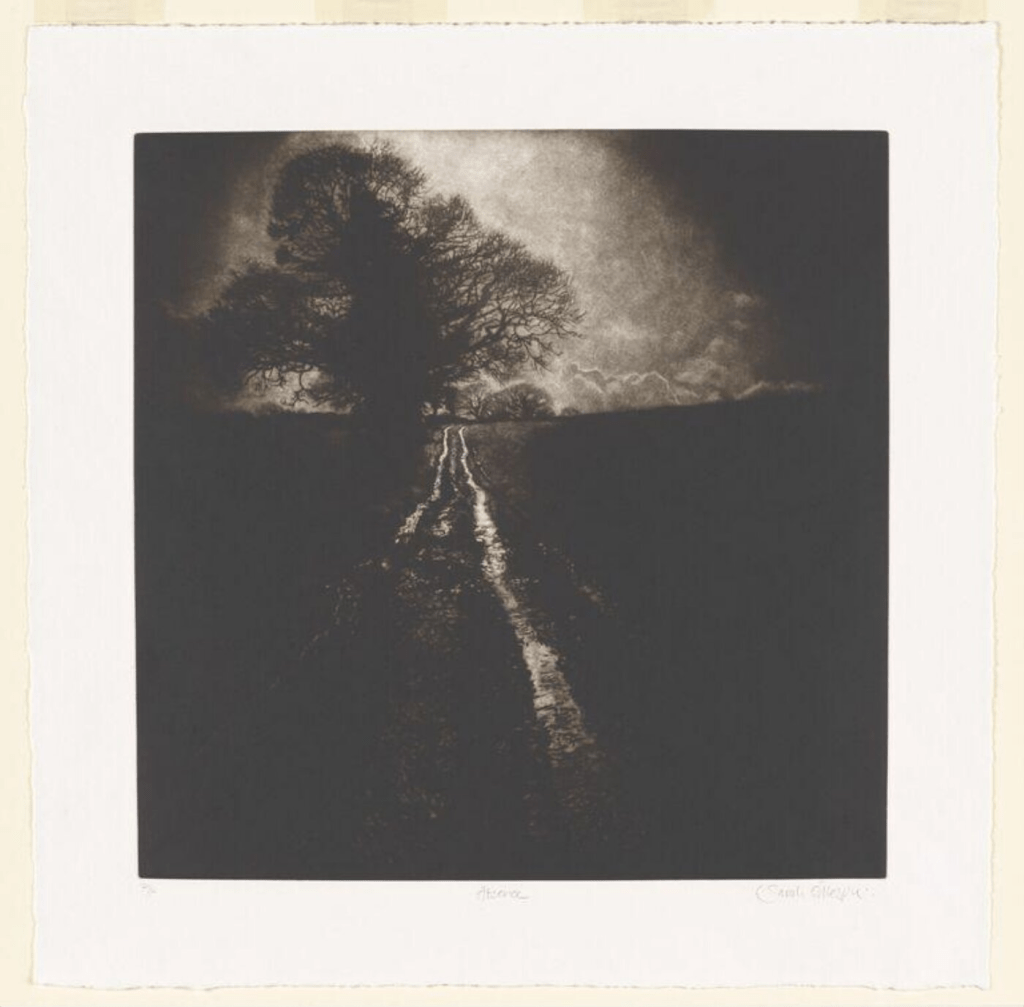
What I love about theatre is the way “place” becomes a character of its own. The stage is not just a background, but it is acting as a real setting, relying on the audience’s imagination to complete the world in their minds. Setting is such a crucial part of any story because it creates the space for every action, every word, and every feeling. It remains powerful and present throughout the entire performance. In War Horse, the setting was beautifully brought to life through the use of a striking split-screen in the back and through simple objects, while the tone of each scene carried the story forward and grounded us fully in each place. And while visiting the Victoria and Albert museum, I found myself paused by this image as it evoked the same emotions I felt while sitting in the National Theater watching War Horse. (And not just because of the two bright grooves in the road looking like wheel ruts that could have been a cart or plow being pulled by a horse!) 

The piece is called Absence, a mezzotint by Sarah Gillespie from 2019. Gillespie was born in 1963 in Winchester, England, and studied 16th and 17th-century techniques at the Atelier Neo-Medici in Paris before reading Fine Art at the Ruskin School of Drawing & Fine Art at Oxford University. Her works often focus on the natural world, such as moths and birds, and other natural things. Her aim appears to be re-focusing our gaze on things that we see daily, but don’t take the time to notice or appreciate. And this image stuck out to me greatly, with its deep contrast and feelings of solemnity and solitude, but also beckoning hope. It captures the same feelings of isolation and danger, but also emotional endurance, as the path must continue on, which we see in War Horse and this artwork. 

I noticed right away this dark country road feels like a comfort but also a corruption, like it very well could be the country roads Joey and Albert once rode freely through, but also it could be the kind of rural landscape they might have traveled through during the war.

And the bare tree and story sky fit the atmosphere of War Horse very well, like nature itself has been darkened. The play showed World War I as brutal and dehumanizing, affecting not just soldiers but animals, families, and the land itself as barbed wire fences replace picket fences, and the land becomes littered with crows and lifeless bodies. 

The fear of stepping out into the unknown (especially in the uncertainty of war) and not knowing where a trail may lead can be terrifying, but often it is the only direction left to go. Still, that thin strip of light on the road is where the hope is found. It is the courage to prevail against the darkness, amidst the uncertainty and brokenness. It appears as a broken road, but maybe when one looks back on it in a place of light, they can see not only what they survived but how they were strengthened by it. 

And as for the title, Absence, of course, I also can think of this image as the setting of the rural land where Albert is without Joey. The absence of his joy, his comfort, his friend, his light. But still, at the end of the path remains that parting of the clouds for them to be together again.  That is what made both War Horse and Gillespie’s Absence so moving. Neither one needs to show everything to make us feel everything. A dark road and a tree and a thin line of light, or a simple stage object, a faint image on a screen, and a puppet horse, can become enough when the audience is willing to believe in it, see through it, and search deeper within themselves to learn from it.

Omg! Harry’s cardigan!

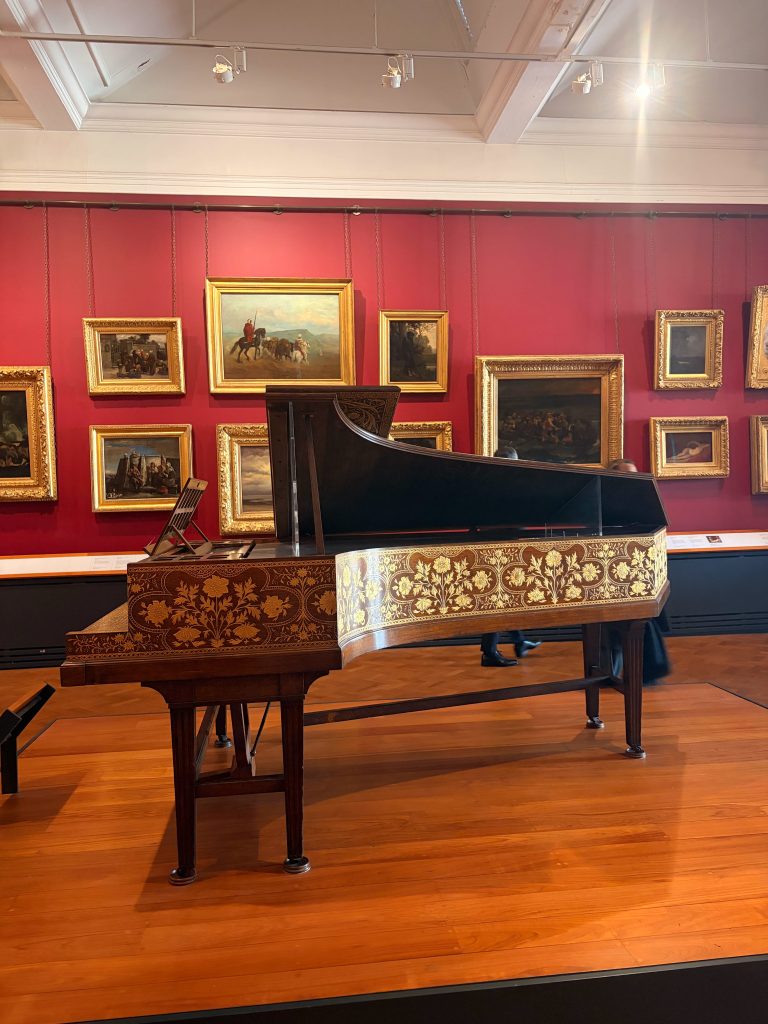
Our time spent at the Victoria and Albert museum was a morning spent admiring paintings and tapestries as old as the 1500s, marble statue sculptures of royalty and prisoners, and golden plates and spoons that were used in high teas with the most expensive people in London. However, our wander to the Theater and Performance exhibit was the most exciting part for me (currently typing this while shaming myself that I spent more time admiring Charlie Chapman’s iconic hat and cane than I did on 500+ year artifacts – but oh well!). I was very appreciative to be in the presence of props and original costumes that I have idolized for years, as well as feeling extremely thankful to be in a museum that features and carefully attends to entertainment showman artifacts, because that is not always the case where we are from (save the Kennedy Center!). As we were leaving the museum, I passed a huge oak grand, double-decker piano with gold-painted detailing on the sides, and I was immediately drawn to it. Its size was so powerful and elegant, and I was so excited to find the connection between it and The Mousetrap. I loved the detail of the piano being in the study room, subtle in the first act, turned vital in the second act. The point of the suspects going to a room off stage and playing the tune of Three Blind Mice over the radio is an extremely telling and intentional detail that I thought was genius. The whole reason the show is entitled “The Mousetrap” is because the murderer is killing 3 people, the “three blind mice”, so I thought playing that tune was a good nod. The piano from the museum was what I would imagine the piano in The Mousetrap would be if we could see it on stage. The vintage era look and size is mysterious, like how the show’s stage is, and I think it would be exactly what the set designers and prop masters would be looking for if they wanted a piano on stage!  

Motherhood: Worth the Hype?

I love museums, especially art museums. One of my favorite ways to pass the time is by roaming the halls of a gallery, gazing in awe at sculptures, portraits, photographs, prints, papers, and other wonders of the visual arts. It’s no surprise then that I was chuffed to visit the Virginia and Albert museum, dedicated to performance and design. There were significantly more traditional art exhibits than I expected, lots of halls filled with classical sculptures and gilded-frame paintings. They were just as inspiring as ever, and I was so engrossed I didn’t even make it through the first floor in the allotted time.  

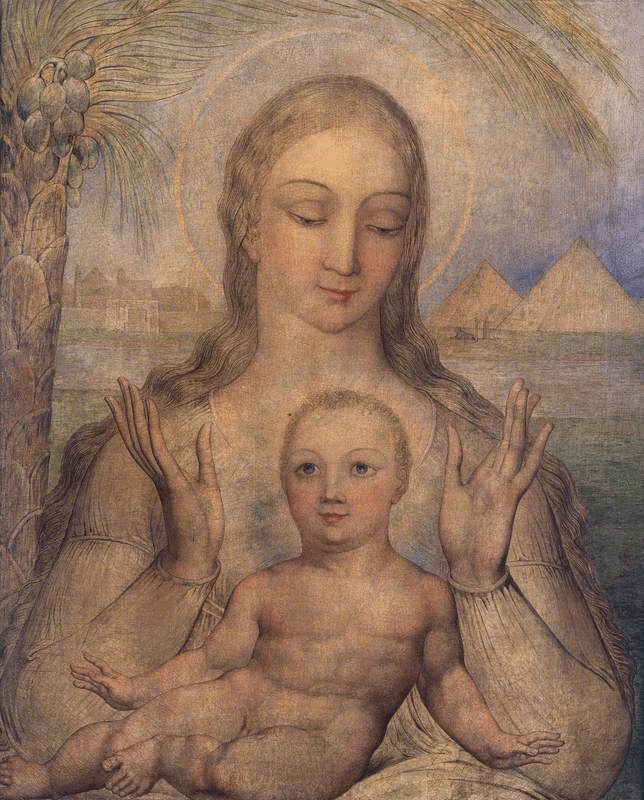
Before our visit, we were tasked with finding a work in the V&A that related in some way to one of the plays we’ve seen so far. I knew beforehand that I was probably going to choose A Doll’s House or War Horse (sorry again, Mousetrap, you just weren’t emotionally deep enough for this one. Many of the paintings and pieces I saw were very literal or visually oriented—a landscape here, a horse and farmer there. When I stumbled upon this portrait, however, I was reminded of a central theme in A Doll’s House: questioning the value of motherhood.  

Although A Doll’s House is largely devoid of religious references (particularly Almeida’s modern adaptation), it heavily explores the role of women in their children’s lives. And is there a more iconic symbol of motherhood than the Virgin Mary, the mother of the Christian savior? The Holy Mary, a paragon of traditionally valued maternal traits—grace, patience, selflessness, compassion, obedience, etc. She braved the uncertainty of the divine conception for her son; she engaged in charity work and volunteerism for those in need; and she paid the ultimate sacrifice of losing a child so that the Lord’s will could be fulfilled. Societally, this is often considered an admirable standard to aspire to, a way to embody virtue and lead others to virtue as well. 

William Blake’s The Virgin and Child in Egypt

Also by Mary’s example, it is the single greatest sense of purpose for a woman. Many say raising children is the most challenging but rewarding experience of your life, which contrasts sharply with Nora’s relationship to her children in A Doll’s House. She is absent, busy, and largely unattached to her kids, however much she tries to pretend. Near the end in the adaptation, she even says “what I have with the kids, it isn’t real, it’s just a game.” What a realization, that you might not be ready (now or ever) to have children, after you’ve already got them! It makes you wonder if societal pressures to reproduce cause unnecessary stress and resentment for many parents who only have them because it’s “what people do.” This certainly is the case with Nora, as with most other decisions in her life. But it is an important reminder that parents are and always will be individuals, human beings of their own with personalities and interests, and further, it is incredibly difficult to guide others in leading a life if you don’t know who you are yourself. 

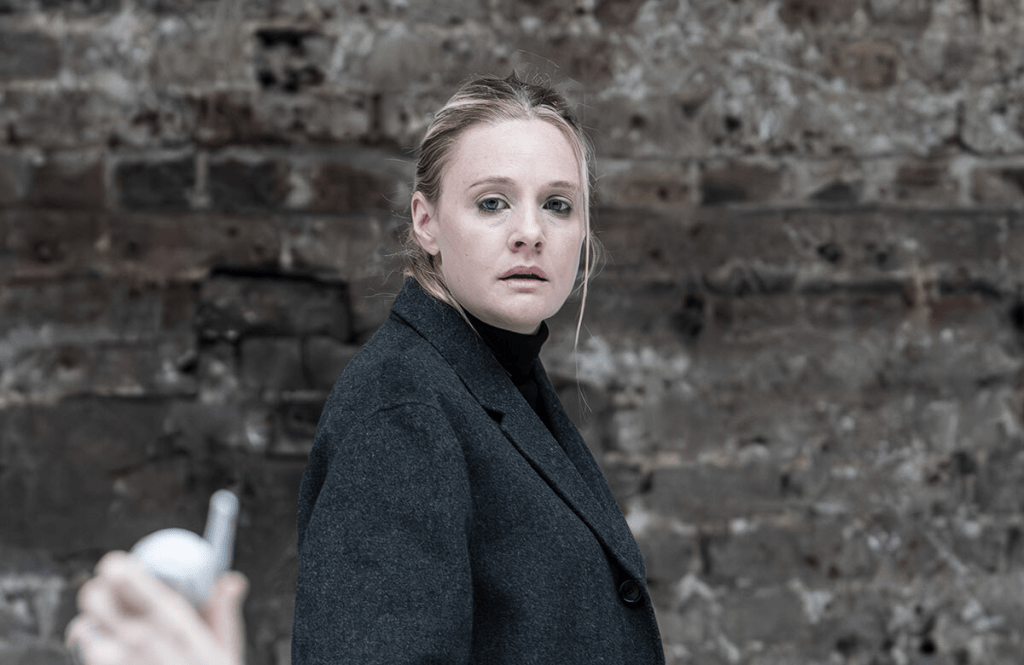
Romola Garai as Nora in the Almeida Theatre’s production of A Doll’s House

Throughout the trip I was imbued with gratitude that such institutions even exist, where people like me can casually step inside the history of civilization. I love the opportunity to learn something new about the past and in an interesting way, and museums fulfill that interest perfectly. But there is also great value in the way art allows us to understand our world. Art very often transcends time; a work from the Middle Ages may still have relevance and resonance with audiences today, whether it be religious, political, personal, or otherwise. I know I was deeply impacted by this experience and will be reflecting for weeks to come! And don’t forget to smash that like button. 

Yours truly,

Reese

A Mom and Her Baby (And a Horse)

Seeing War Horse at the National Theatre on Tuesday night was such a special treat. The production quality was incredibly high, and the story was powerful and moving. The whole production blew me away, but it was the final moment that started the floodgates. War Horse is about a boy named Albert who gets a horse he names Joey. When his home town of Devon gets involved in World War I, Albert’s dad sells the horse to the military. Albert wants to join the war to stay united with his horse, but he is too young so they get separated. The rest of the play follows Joey and Albert’s story as they both eventually end up in the war, and then finally reconnect at the end. While the play is about the relationship between Albert and Joey, in the final moment Albert comes home and gives his mom a hug as the lights go dark. These last 15 seconds of the play have stuck with me over the past 24 hours because of just how tender, loving, and heartbreaking the moment is.

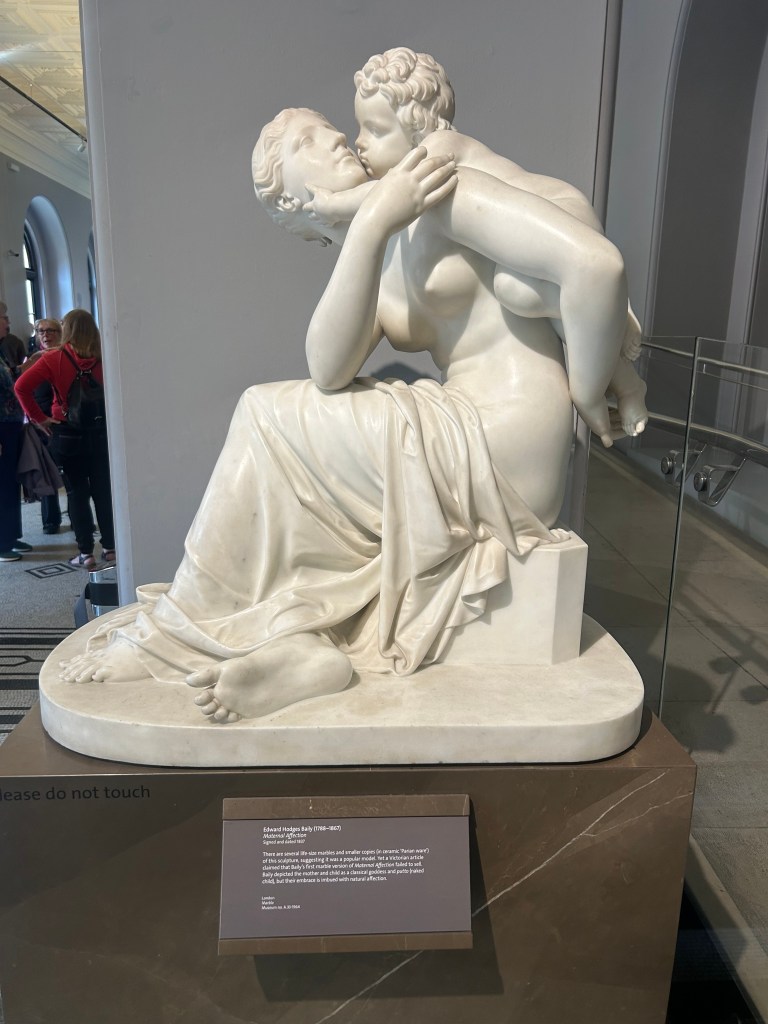
The prompt of this post was to find something at the V&A Museum that related to one of the shows we’ve seen and explain how it deepens our understanding of the show. As I was wandering around the museum this morning, I was having little to no luck in finding a piece that struck me, but just as I was about to leave I walked into a room full of statues, and the piece “Maternal Affection” caught my eye. The statue depicts a child embracing their mother. This made me think back to the night before and the final moment of the show.

In the play there were only a few interactions between Albert and his mother, but she was the one who was supportive of him, and she was the one who discouraged the idea of selling Joey in the first place. While this relationship is not the focal point of the show, I am glad that they let that reunion be the final moment. The sculpture made the moment even more impactful for me because it reminded me that Albert started out as a baby. Not only did Albert start out as a baby, but every single soldier who died in World War I did as well. The play uses Joey as a representation of innocence to reflect on war and the choices that we make, but the statue made me think about the once innocent nature of every character in the play. The differences that cause the conflict do not negate the fact that we all start out the same, an innocent baby who needs connection with their caretaker. In the final moment of the show, it wasn’t the soldier who survived a war hugging his mother, it was the inner child who just needed to give his mother a hug. 

In looking at the play as a whole, this theme of us not being all that different rings through. One other scene that particularly struck me was a moment where Joey gets caught in barbed wire. One soldier from both the British and German side approaches Joey, and the two soldiers work together to help free Joey. In that moment they forgot their differences and united for the good of the horse. If we as a society can do that more often, then the play will have achieved its goal.

War Horse was a thrilling way to end our first week in London, and I am looking forward to the rest of the show that I will be able to see while I am here.

Cheers,

Thatcher

Horses, Rabbits, and Geese! Oh My!

War Horse at the National Theater is a perfect example of puppetry done well. All the animal puppets, especially the horses, moved with such intention and accuracy that you began to look past the operators and see them as real. It was so impressive the way the puppets were able to portray emotion and have such an intense connection with the actors. The Victoria and Albert Museum in South Kensington has a Theatre and Performance section, although most of it was closed, that showcases a variety of costumes and props from various musicals, plays, ballets, TV shows, and movies.

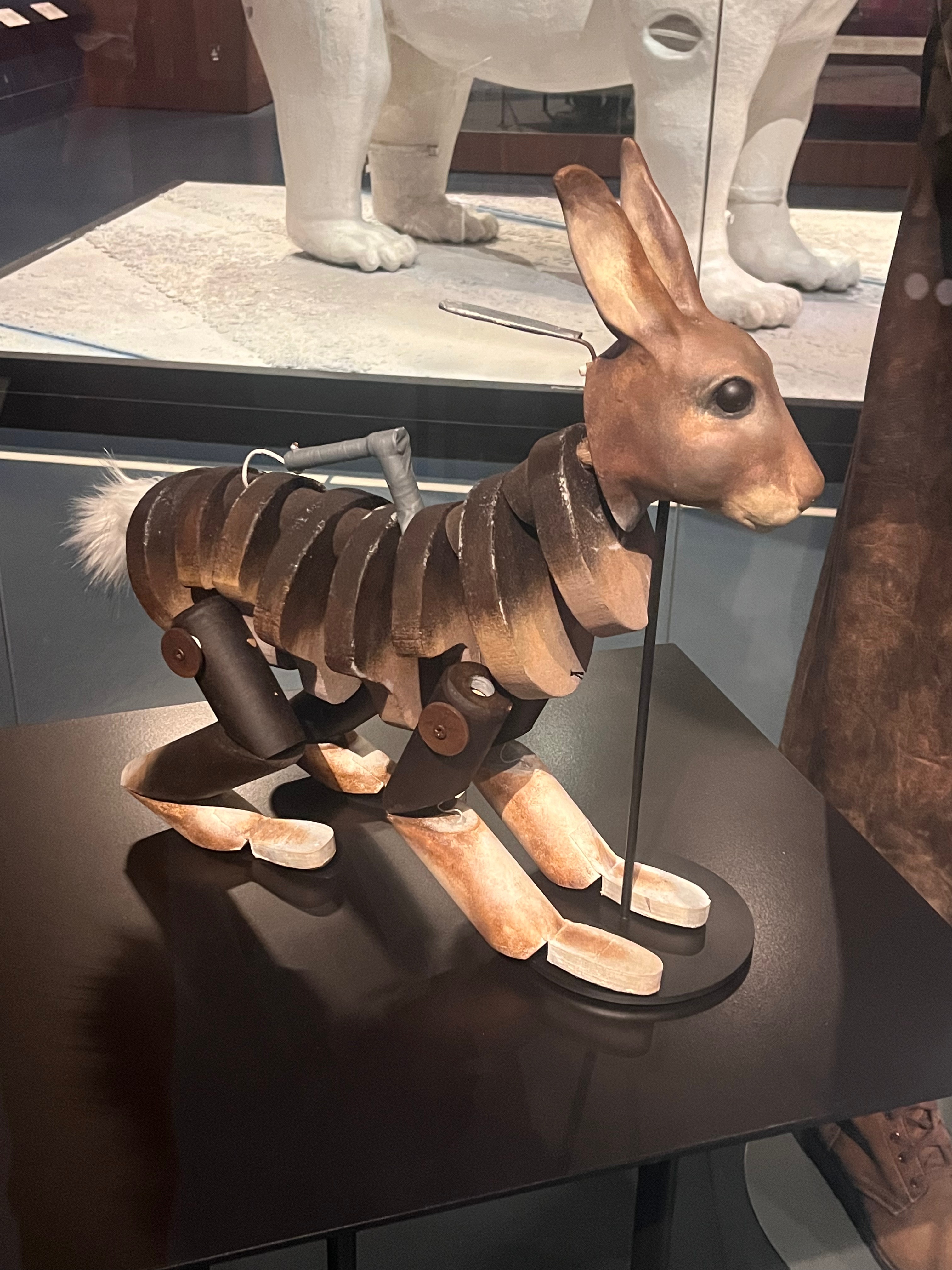
The most interesting part of this exhibit for me was the puppets from the series His Dark Materials. There was a video discussing the creation behind the puppets, in which the creators explained that the most important aspect of the puppets were their heads and eyes. This is because these parts are a touch point for the actor, where the connection is built. The more accurate the head and eyes are, the stronger the relationship will be between actor and puppet. The puppets also needed to be as lightweight as possible so they could be easy to manipulate. It was important to the creators that the specific detailed mannerisms of the animals were clear and readable on screen. When translating the puppets to VFX, the animators built the animals from their skeletons to muscles to skin to fur, making them as realistic as possible. This video made me curious about the process of building the puppets for War Horse and what the creators thought the most important aspect of the process was. I wonder how much each puppet weighed and how they made each puppet so accurate to the real life animal. I loved War Horse and this exhibit only made me want to learn more about it. 

-Milly Medlock

Digital Anxieties in A Doll’s House.

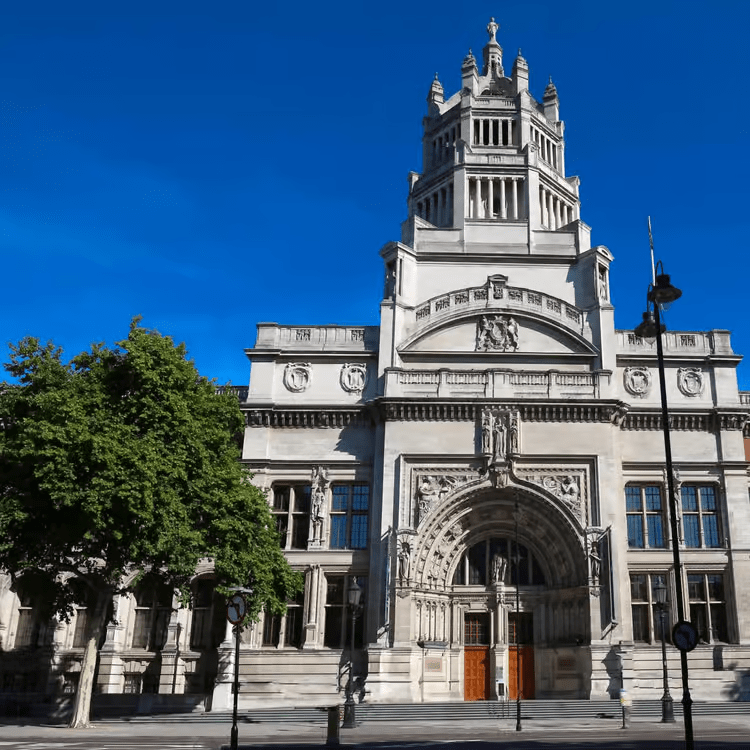
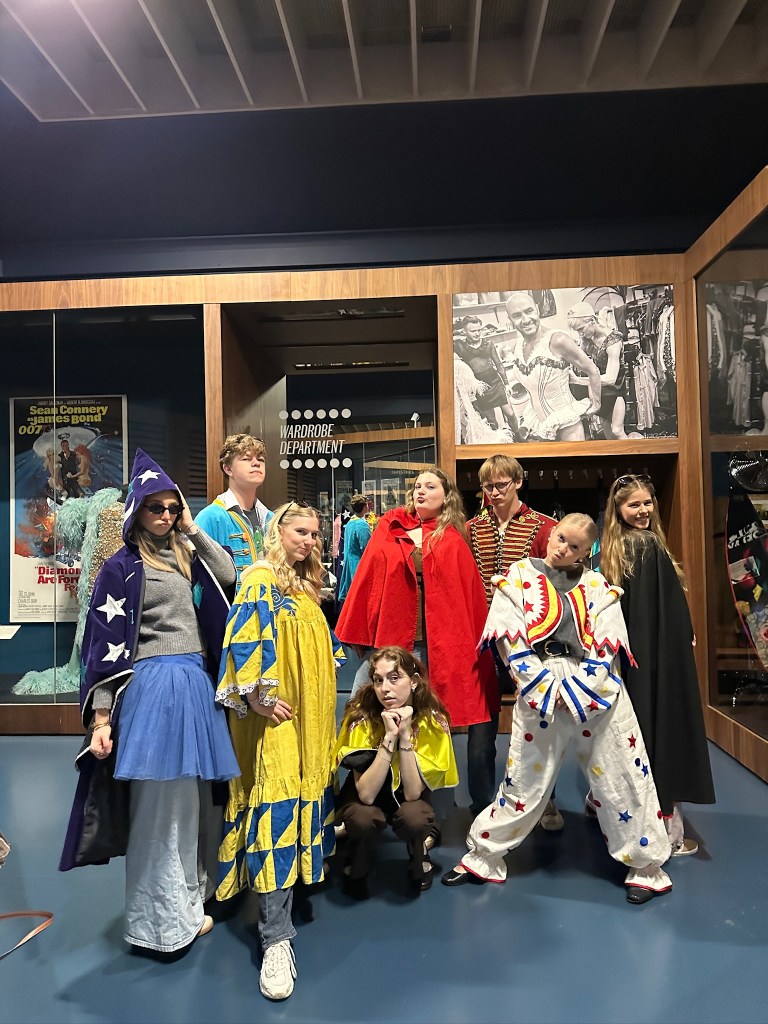
This morning, we ventured to the Victoria and Albert Museum in South Kensington. This museum has always been such an iconic spot in movies/TV shows, so I was so, so excited to see it finally! I learned that it was founded in 1852 and is home to over 4.5 million objects across 6 different sections, ranging from artifacts to even a whole theatre section! We got to see some original costumes, puppets, and posters- as well as try on some fun outfits. 

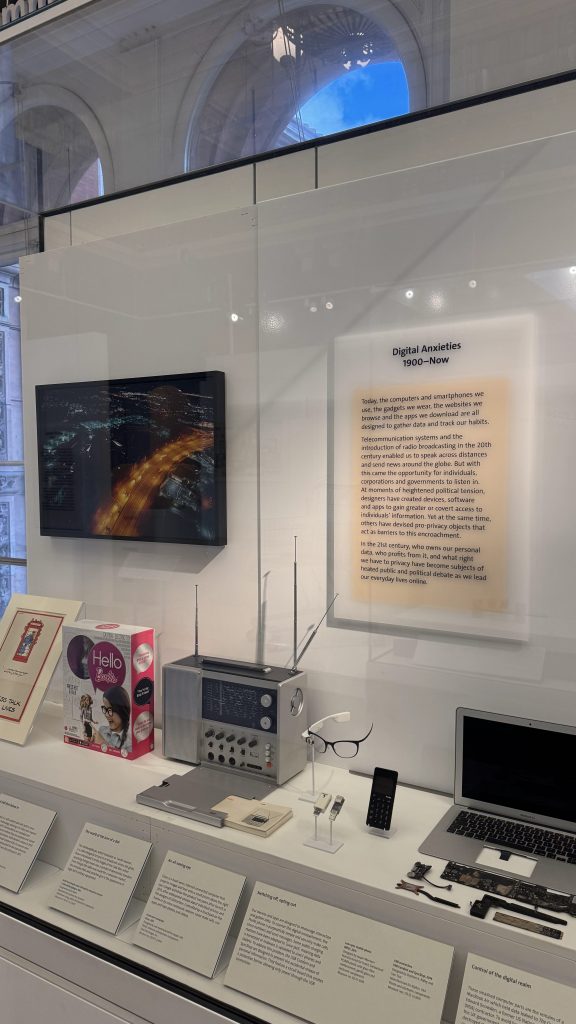
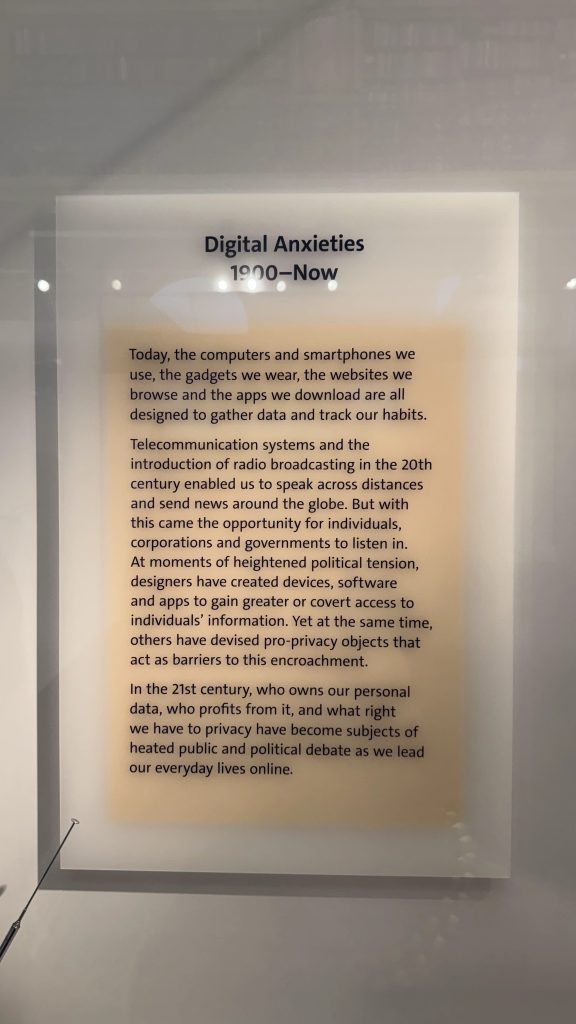
For our blog post today, we were asked to choose an artifact we thought went hand in hand with one of the shows we have seen. I decided to choose the modern technology exhibit at the museum and connect it to when we saw A Doll’s House at the Almeida Theatre.  The exhibit was titled “Digital Anxieties,” which almost perfectly coincides with themes present in the modern version of A Doll’s House. The artifacts focus on all the modern gadgets we wear and how they are designed to gather and track our data. Focusing especially on political tension, it states, “At moments of heightened political tension, designers have created devices, software, and apps to gain greater or covert access to individuals’ information.” Throughout the adaptation of A Doll’s House, we saw each character experience anxiety when using devices such as phones or computers. Nora had to hide technology from Torvalt so he wouldn’t discover her secret. Technology was used as a form of blackmail, and at the very end, a text on a cellphone is what changed everything. Technology is constantly evolving, and we are always seeing how it affects us as humans. I really liked the modern use of technology in the adaptation we saw because it perfectly illustrated how technology can be used for good and harm. I really enjoyed the Digital Anxiety exhibit at the V&A because it reminded me of the show and made me wonder how technology is really affecting us.

Aren’t we all jesters in a way?

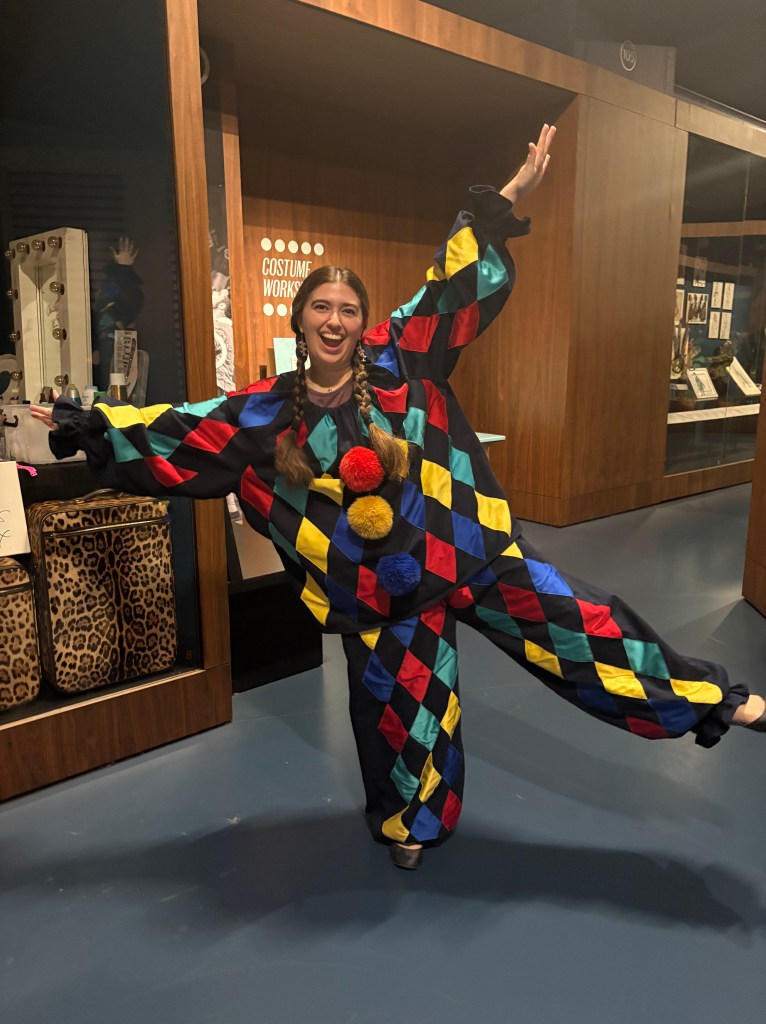
Within the halls of the Victoria and Albert Museum, there was a wonderful exhibit about theatre. And within this exhibit that I found absolutely interesting, there was a corner of certain fabrics hung on hooks. I crept forward with curiosity. What could all this colorful fabrics be? As I moved closer, I noticed something. They were garments. Not only garments, but garments meant to be adorned. By guests I must add. I thought to myself, I am a guest am I not? So I picked up the most beautiful costume and put it on. 

It was a jester costume!!!!! For those who knew me in my high school days, I have played a jester and I am very fond of jesters. Just had to add that in. 

Anywho! Now to what this post is really about! Connecting this jester costume to the modern adaptation of a Doll’s house that we watched. 

Connection number 1. 

The role of a jester:

Jesters were meant for entertainment, yes. But they would also perform in front of the enemy to taunt them. They would also perform household chores such as running errands. 

What the character Nora was seen doing:

Performing for her husband. And performing for her husband’s best friend. She also basically was taunting the husband’s friend, leading him on. She also ran errands for the family. 

Coincidence? I think not!

Another connection for me. Nora put on a costume and acted like someone she was not to gain the attention of her husband. A costume just like how the jester garments were a costume meant to be worn for a performance. Performing as someone you are not. In the play, Nora even mentions that she is playing a part. She isn’t who she really is. She is playing who she thinks her husband wants. 

This tells us that in the world of this play, Nora is a performer. She believes her goal is to perform for her husband. 

Below is a picture of the Jester costume in the V & A Museum:

V&A Museum: I NEED TO PEE

When entering the Victoria and Albert Museum, I had one thought: I need to pee. So I went to the bathroom. We made our jolly way to the theater exhibit, but it was closed when we first got there. Thanks a lot, Shawn. I used this as an opportunity to walk around the museum. I did this because when I looked up: “What to do in a museum?” I couldn’t find a straight answer. 

I eventually made my way into a section with a lot of large statues. I think the area was called Cast something. I wasn’t paying that much attention because museums are boring, but I noticed in here that there were a lot of so-called “art students” working on their so-called “drawings.” 

When moving through the museum, I found myself looking at the art in hopes of finding something that would fit this assignment, rather than looking for my enjoyment. No matter, I was still able to find something and get a cool photo to post on my Instagram, so I could look cool and mysterious. 

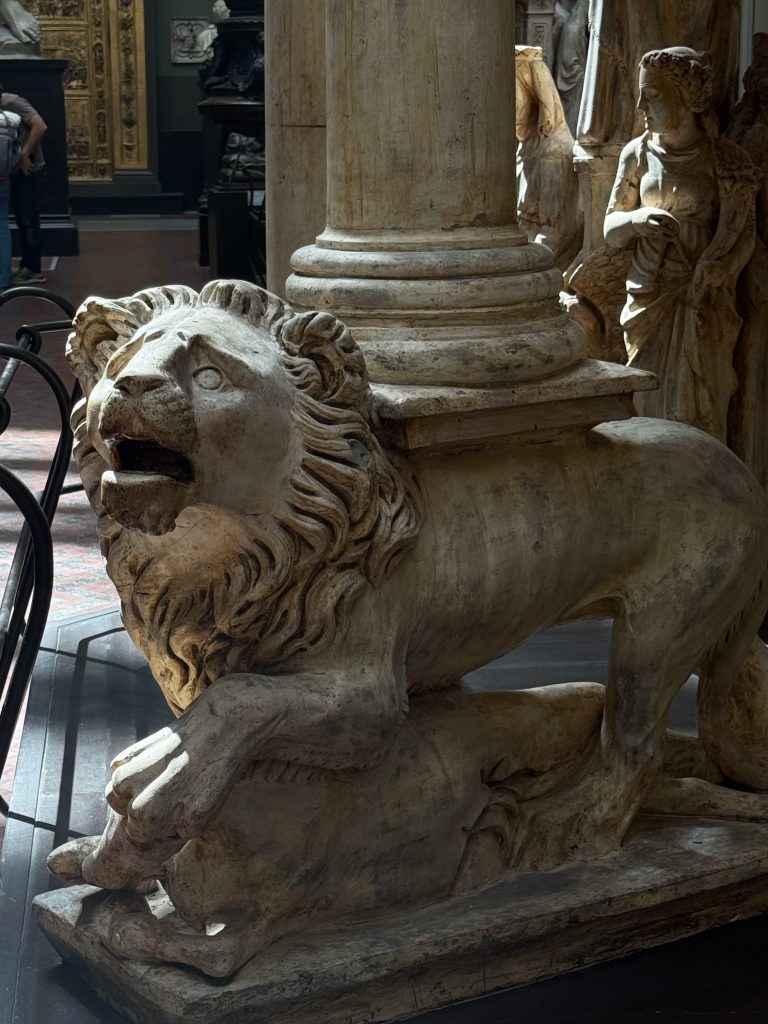
Ok, I’m wasting time. The piece of art that I noticed was in the previously mentioned section, and it depicted a large overhead thingy. I don’t know what to call it. Maybe a canopy? What’s the British word for canopy? There were four columns, one in each corner, each going down to land on top of a lion. The lion had a very visible expression of pain and agony. What play did this remind me of? Girl, what do you think? WARHORSE!!! My opinions on Warhorse will remain unsaid, but the message of animals being brought into labor stands within both of the artistic pieces. 

This piece in the Victoria and Albert Museum, whether intentional or not, depicted the unfairness of bringing unwilling animals into spaces of hostility and labor. Anyways. Will put a picture down below. Stay woke. Like and subscribe. 

-Lucinda Eells (2006-2034)