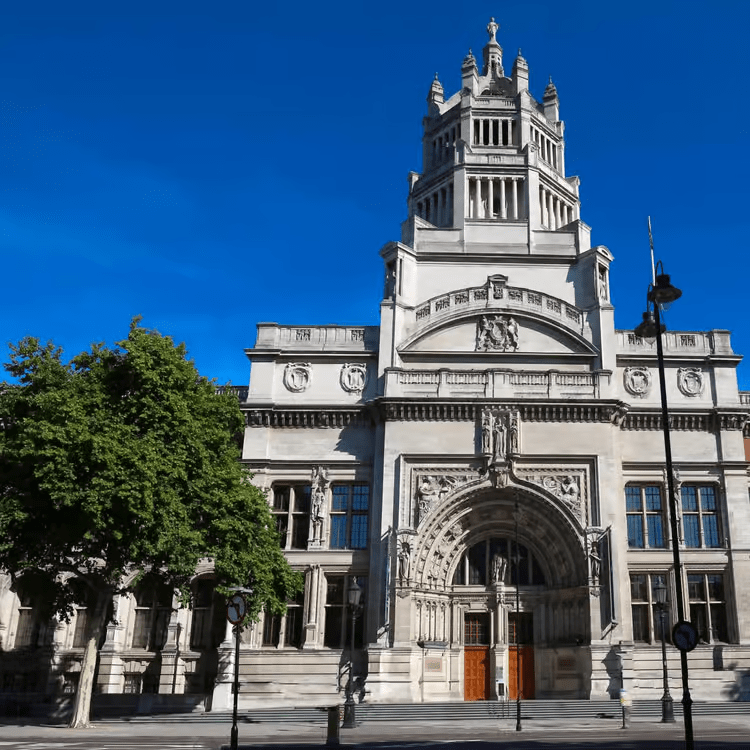
I love museums, especially art museums. One of my favorite ways to pass the time is by roaming the halls of a gallery, gazing in awe at sculptures, portraits, photographs, prints, papers, and other wonders of the visual arts. It’s no surprise then that I was chuffed to visit the Virginia and Albert museum, dedicated to performance and design. There were significantly more traditional art exhibits than I expected, lots of halls filled with classical sculptures and gilded-frame paintings. They were just as inspiring as ever, and I was so engrossed I didn’t even make it through the first floor in the allotted time.
Before our visit, we were tasked with finding a work in the V&A that related in some way to one of the plays we’ve seen so far. I knew beforehand that I was probably going to choose A Doll’s House or War Horse (sorry again, Mousetrap, you just weren’t emotionally deep enough for this one. Many of the paintings and pieces I saw were very literal or visually oriented—a landscape here, a horse and farmer there. When I stumbled upon this portrait, however, I was reminded of a central theme in A Doll’s House: questioning the value of motherhood.
Although A Doll’s House is largely devoid of religious references (particularly Almeida’s modern adaptation), it heavily explores the role of women in their children’s lives. And is there a more iconic symbol of motherhood than the Virgin Mary, the mother of the Christian savior? The Holy Mary, a paragon of traditionally valued maternal traits—grace, patience, selflessness, compassion, obedience, etc. She braved the uncertainty of the divine conception for her son; she engaged in charity work and volunteerism for those in need; and she paid the ultimate sacrifice of losing a child so that the Lord’s will could be fulfilled. Societally, this is often considered an admirable standard to aspire to, a way to embody virtue and lead others to virtue as well.
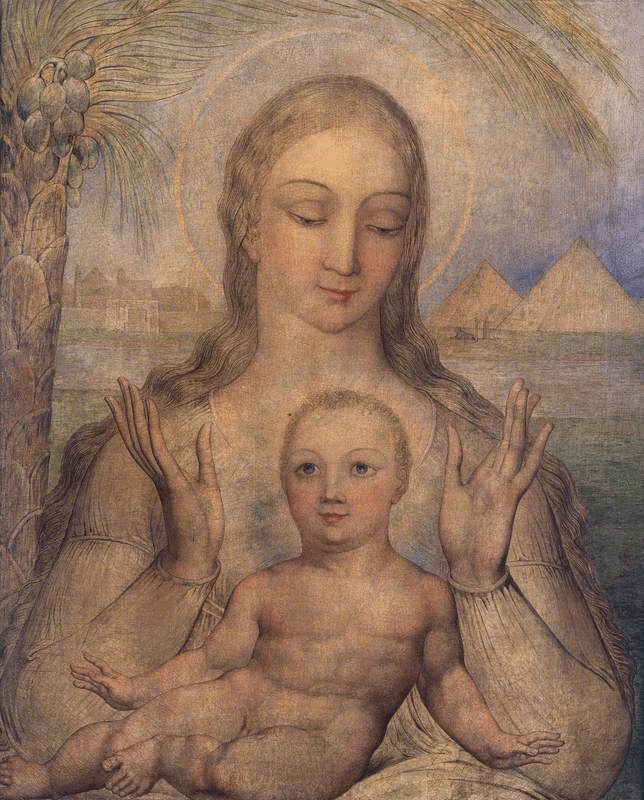
Also by Mary’s example, it is the single greatest sense of purpose for a woman. Many say raising children is the most challenging but rewarding experience of your life, which contrasts sharply with Nora’s relationship to her children in A Doll’s House. She is absent, busy, and largely unattached to her kids, however much she tries to pretend. Near the end in the adaptation, she even says “what I have with the kids, it isn’t real, it’s just a game.” What a realization, that you might not be ready (now or ever) to have children, after you’ve already got them! It makes you wonder if societal pressures to reproduce cause unnecessary stress and resentment for many parents who only have them because it’s “what people do.” This certainly is the case with Nora, as with most other decisions in her life. But it is an important reminder that parents are and always will be individuals, human beings of their own with personalities and interests, and further, it is incredibly difficult to guide others in leading a life if you don’t know who you are yourself.
Throughout the trip I was imbued with gratitude that such institutions even exist, where people like me can casually step inside the history of civilization. I love the opportunity to learn something new about the past and in an interesting way, and museums fulfill that interest perfectly. But there is also great value in the way art allows us to understand our world. Art very often transcends time; a work from the Middle Ages may still have relevance and resonance with audiences today, whether it be religious, political, personal, or otherwise. I know I was deeply impacted by this experience and will be reflecting for weeks to come! And don’t forget to smash that like button.
Yours truly,
Reese

