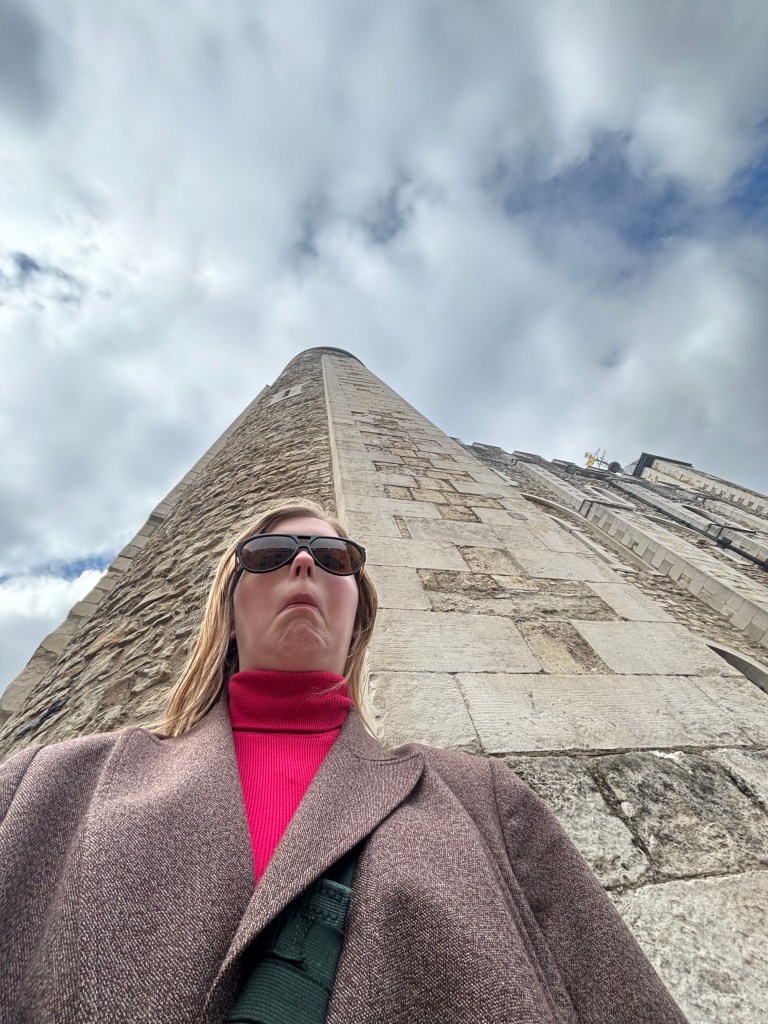
The foggy gray skies of London seem to reflect the gloomy history of one of the city’s oldest structures. The Tower of London, constructed in 1066 by William the Conqueror, has historically been a symbol of power, a demonstration of the ruling house’s authority over England. From its dramatic beginnings with the Norman takeover to the tradition of beheading, it stands as a symbol of monarchic might and control. It also established examples of many governmental institutions that remain in the English system today, such as the coin and defense.
Beheading within the Tower itself was typically reserved for individuals of noble birth, a dignity that the peasantry was apparently unworthy of. One of the most notable figures executed in such a fashion was Sir Thomas More, the Lord High Chancellor of England in the early 16th century. Born in 1478, More was well-educated and quickly rose professionally to become a successful barrister and adviser. He was an avid learner and studied Catholic texts, treatises on trade, and various other subjects. His expertise and knowledge earned him a seat at King Henry VIII’s table, first as a justice of the peace, then as a member of Parliament, next on the Privy Council, and eventually the Lord High Chancellor.
More was fervent in his support and adulation toward the King until he tried to separate from the Catholic Church to secure a divorce against his wife. Thomas, devoutly Catholic, refused to aid Henry VIII in creating his Anglican Church, as was consequently ostracized and eventually resigned his position. Having exited government services, he thereafter disparaged the state and refused to endorse the Act of Succession, which affirmed the King’s break from the Church. He was subsequently beheaded for his insolence and is now classified as a saint by the Catholic Church. Who’s laughing now?
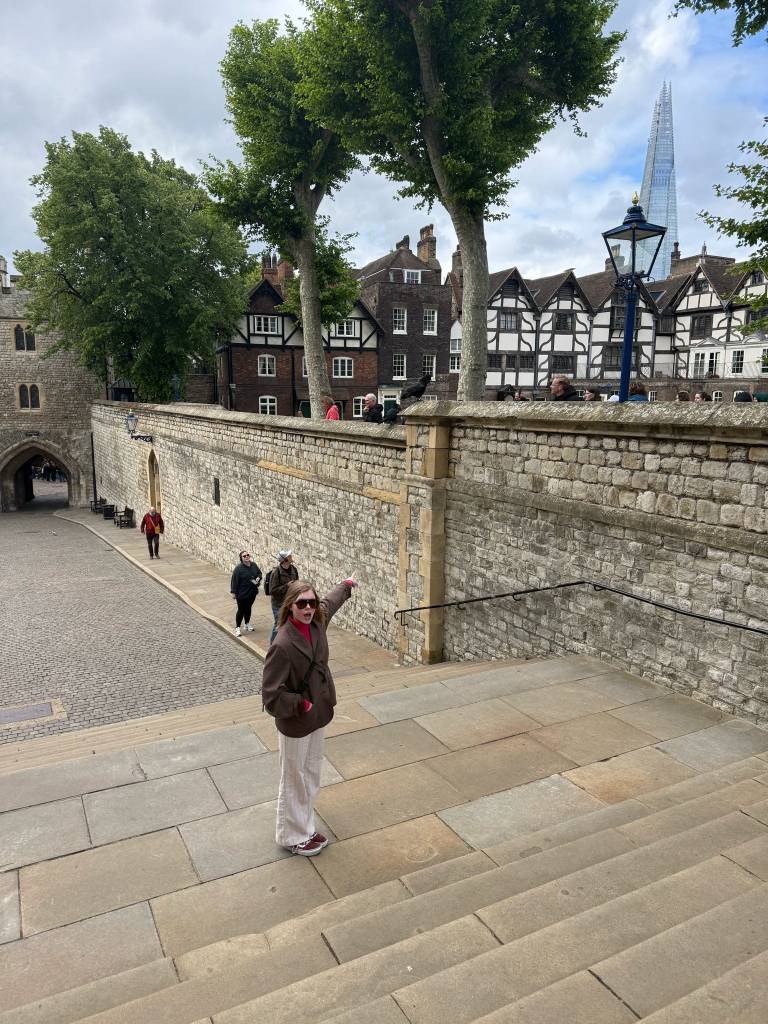
At present, there are no more beheadings fortunately, and the tower is full of artifacts, jewels, and relics of British history. I visited once before, but this time around, I forgot to walk the White Tower exhibit and instead saw the Regimental Museum. I learned more about the British armed forces than I ever thought I would know! I liked viewing the progression of their infantry through time, and I didn’t even know before that they are called the “Fusiliers.” I only knew of the RAF previously. The medal room was also a nice touch; it was interesting to see how their awards differ from ours visually and by their content.
It is interesting that, as with many relics of England’s past, the Tower now largely serves as a celebration of Britain’s history, without acknowledging the misdeeds woven in. In the torture dungeon, for example, the signage emphasizes that torture was incredibly rare and “only” 48 individuals were subject to such mistreatment. Of course, this count only includes the officially approved cases, as torture was not a legal punishment by British law. How evolved.
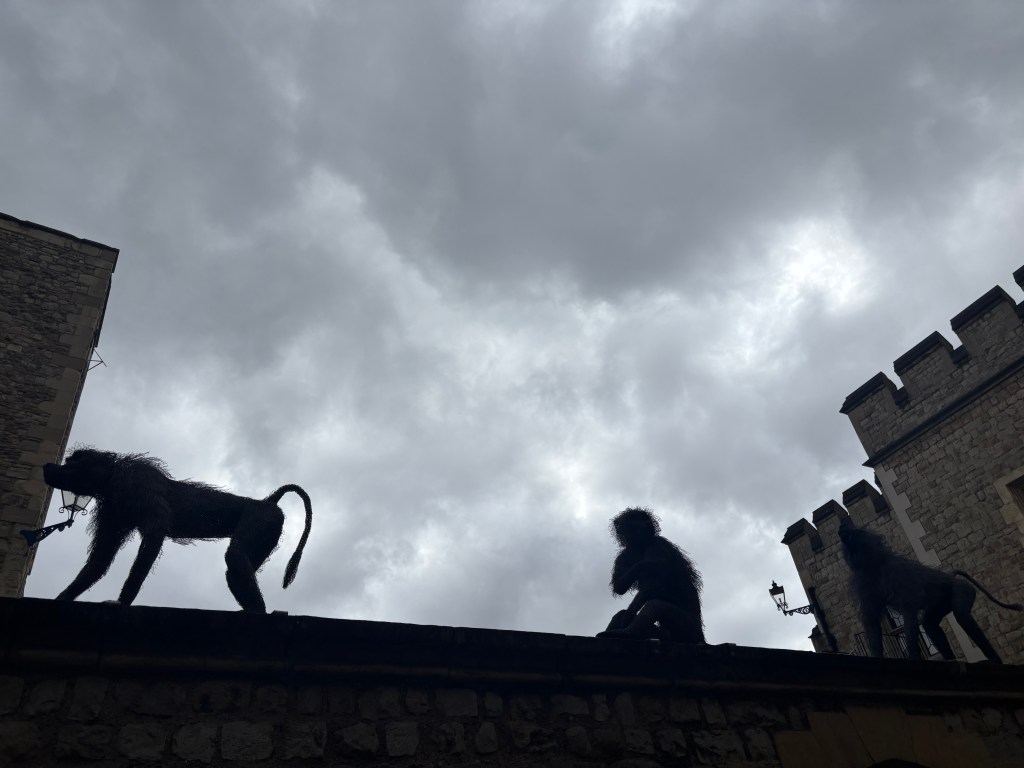
I also learned that there used to be a menagerie at the tower! Rumor has it, you could eat free if you brought a dog or cat to feed the lions. Watch out, Fido . . . Nowadays, the tower is animal free, save the metal sculptures of monkeys, a lion, and an elephant. I thoroughly enjoyed seeing them throughout the grounds; it added a modern element to the Tower, kind of like the eclectic mix of London itself. Animals that do remain are the ravens, and what wonderful creatures they are! And well-fed by the looks of it. I also wondered if anyone in London really comes to the Tower, outside of school trips. Regardless, I know I enjoyed our visit! Ciao for now.
For more about Thomas More’s execution: https://www.hrp.org.uk/tower-of-london/history-and-stories/sir-thomas-more/
– Reese

