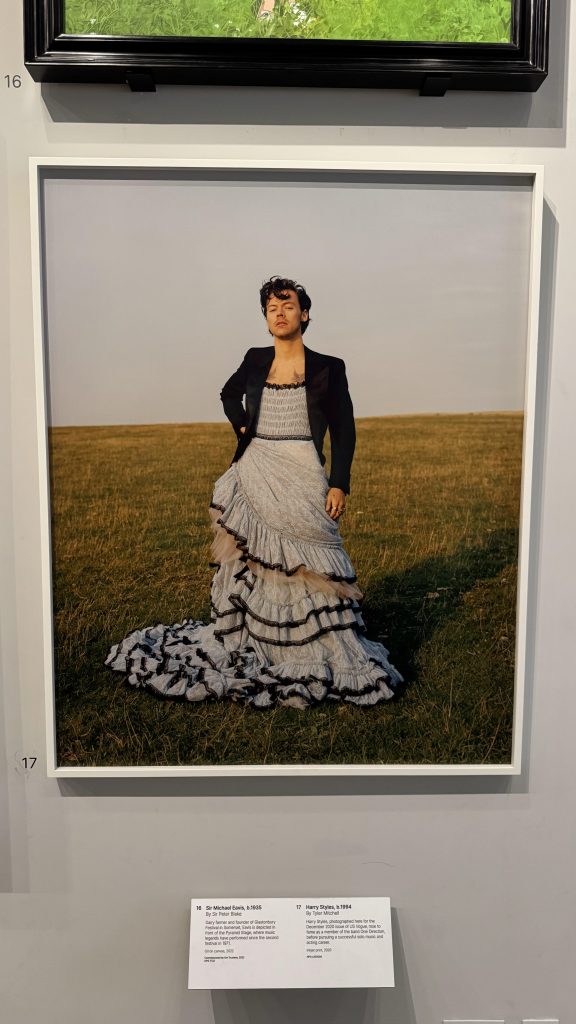
Gooood morning! Last week we took a trip to The National Portrait Gallery, and as of right now it’s my favorite place we’ve been in London! The gallery sits right in Central London and holds portraits of historically important and famous British people. I’ve always really loved photography and what a single still can tell about a person, so I was very very excited to see what the gallery held! Immediately upon walking in I saw one of my favorite portraits of Harry Styles and I just knew this was going to be the best day ever.
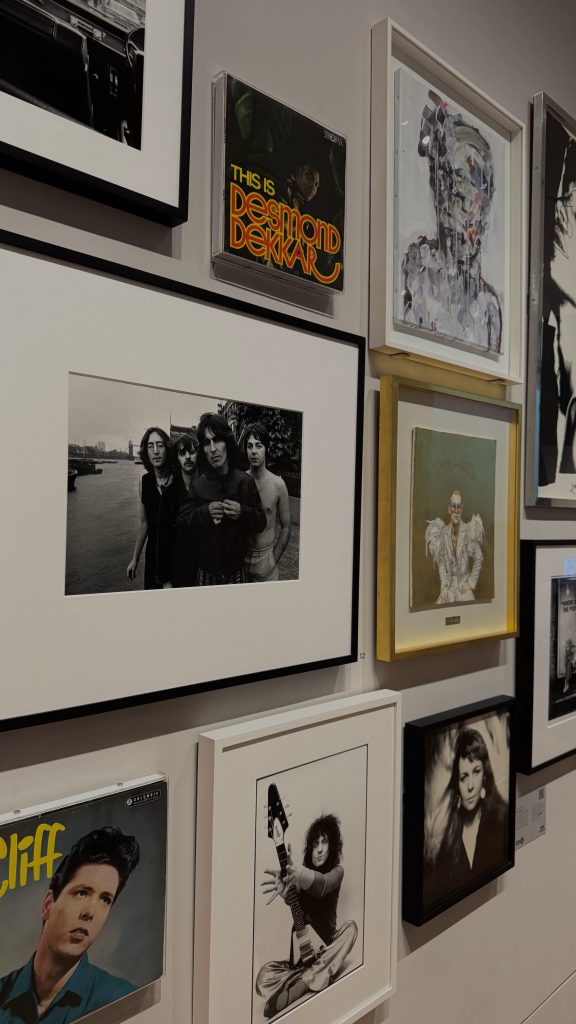
The entire gallery was full of so much emotion and history, images of British royalty, pop bands, actors, activists, scientists and more told a rich story of England. Every section in the museum was handcrafted and visually appealing, down below is one of my favorite walls that covered music artists such as Mick Jagger, David Bowie, The Beatles, and Elton John.
My favorite portrait however was the “Me as Mapplethorpe” done by Gillian Wearing. Wearing is a British photographer and artist who is best known for her photography and video works with masks that explore human identity, confessions, and the boundary between private lives and public personas. In this piece she is recreating an iconic photograph taken by American photographer Robert Mapplethorpe, best known for his provocative, technically flawless black-and-white photographs.
Original portrait by Robert Mapplethorpe:
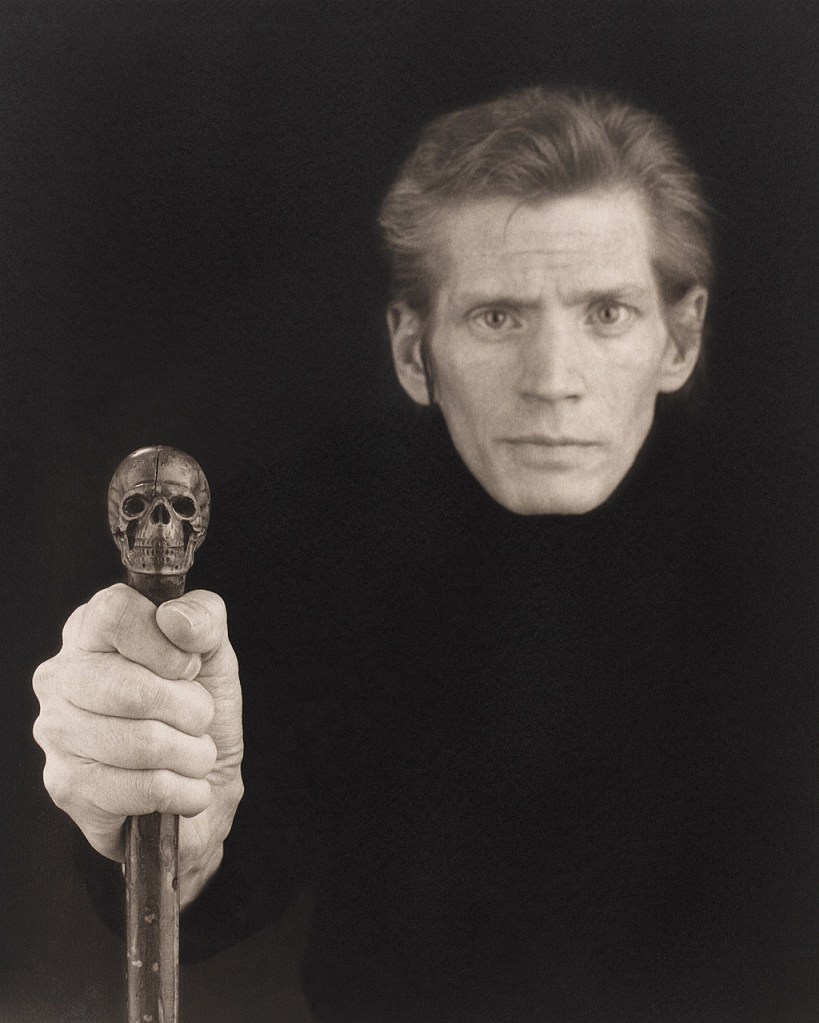
In Mapplethrope’s original self portrait he faces straight on, as though confronting death. At the time of the portrait in 1988 Mapplethorpe had been diagnosed with AIDS, which would take his life the following year. In his portrait the skull cane he holds signifies notions of mortality, he wears black to appear floating. His head is disembodied and this way, he is seemingly floating free from his fate. This portrait differed from his usual works that featured self-portraits in which he assumed various personae such as rocker, leather fetishist, cross-dresser, and fashion plate. This portrait signifies to me the powerful connection between art and life as well as Mapplethorpe’s own transitory existence.
Gillian Wearings recreation:
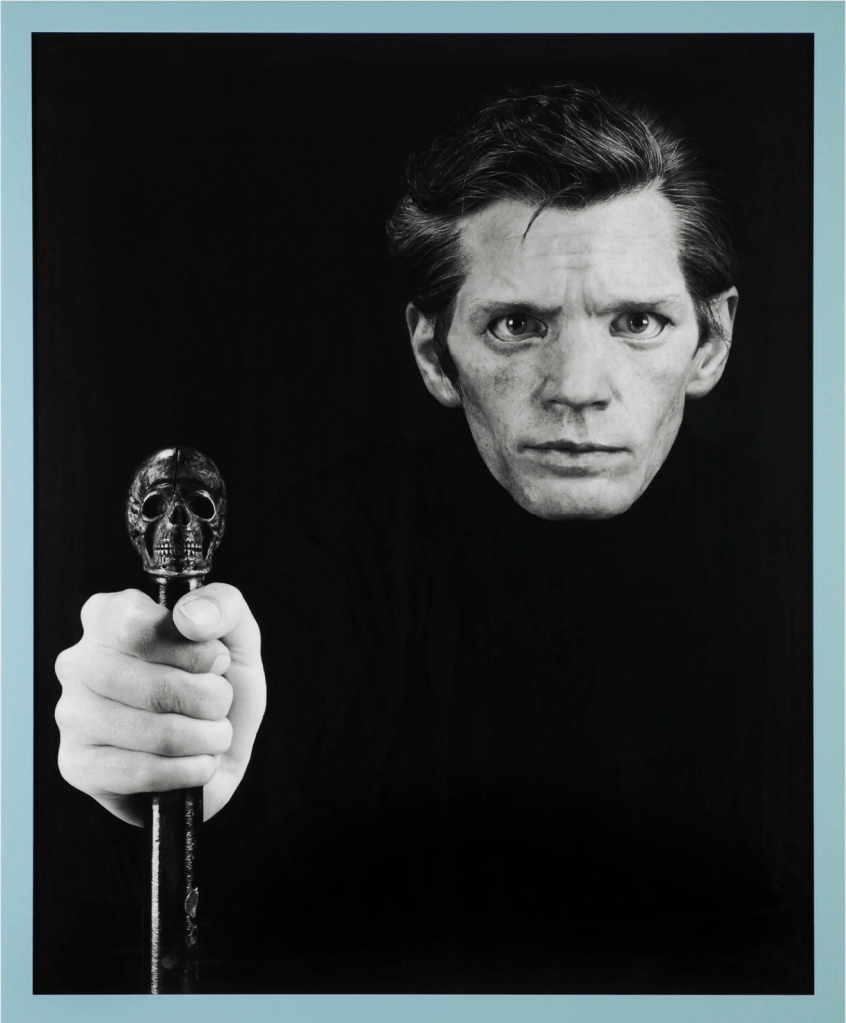
Flashforward to the present, Gillian Wearing recreates the iconic portrait. For this portrait, Wearing replaces the photographer’s psychologically intense gaze with her own, as the eyes are the only part of her face not covered with the silicone mask of Mapplethorpe. Wearing’s ongoing contemplation of mortality, on the one hand, and the artist as an immortalized celebrity figure, on the other, is embodied in this tribute, as she “becomes” Mapplethorpe. This portrait really stood out to me because it signifies how artists interpret death and emotion. She wanted to explore how Mapplethorpe felt and what pain he endured composing this image when knowing he had only months left to live.
-Erin
 Theatre in London U of A