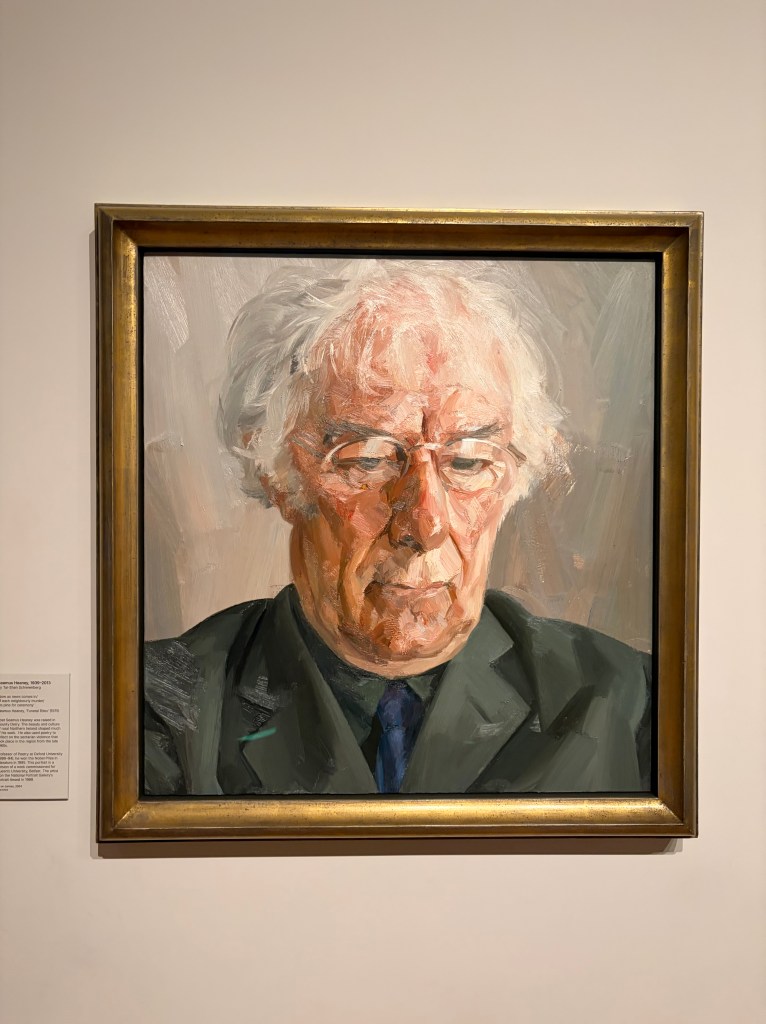
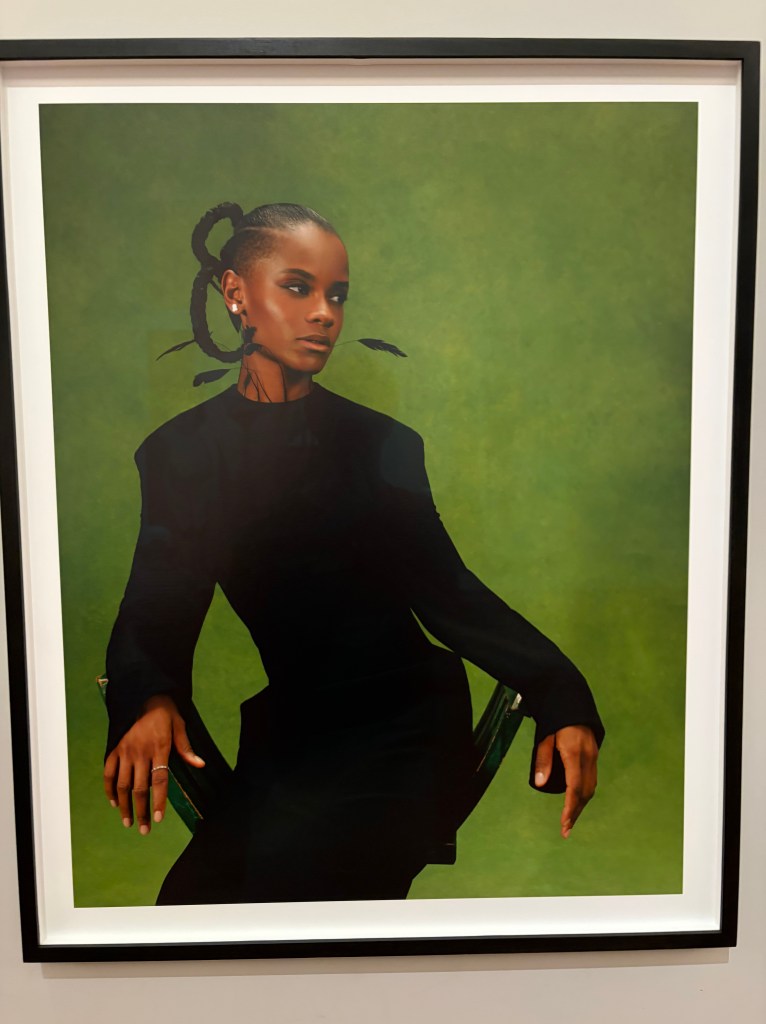
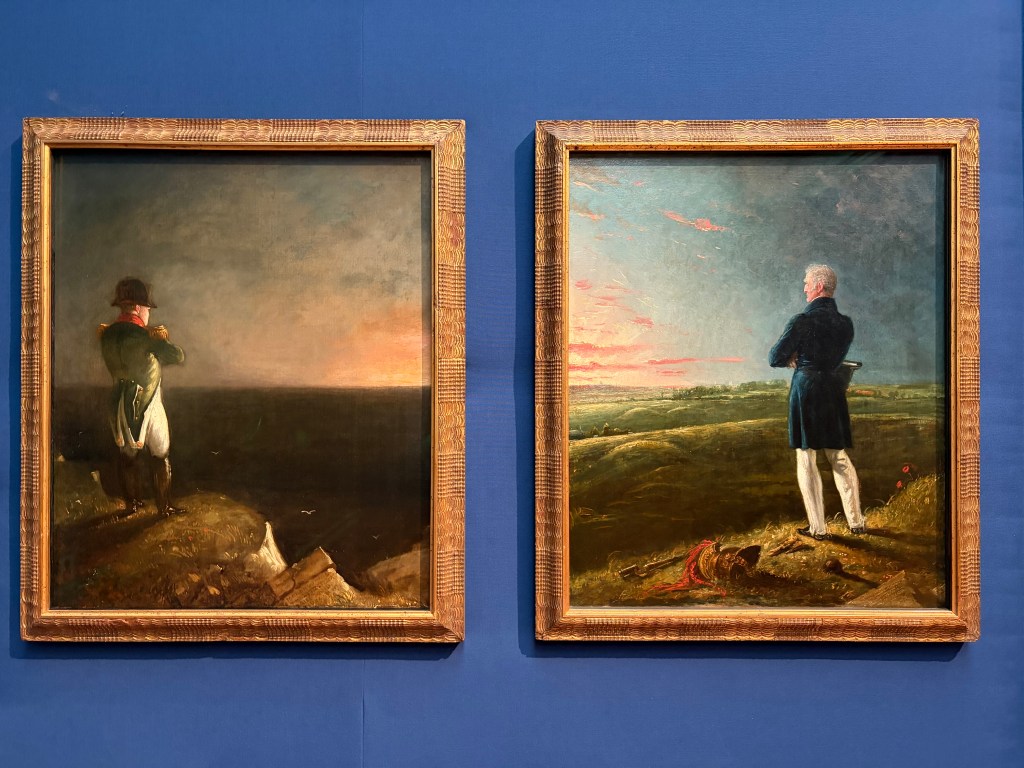
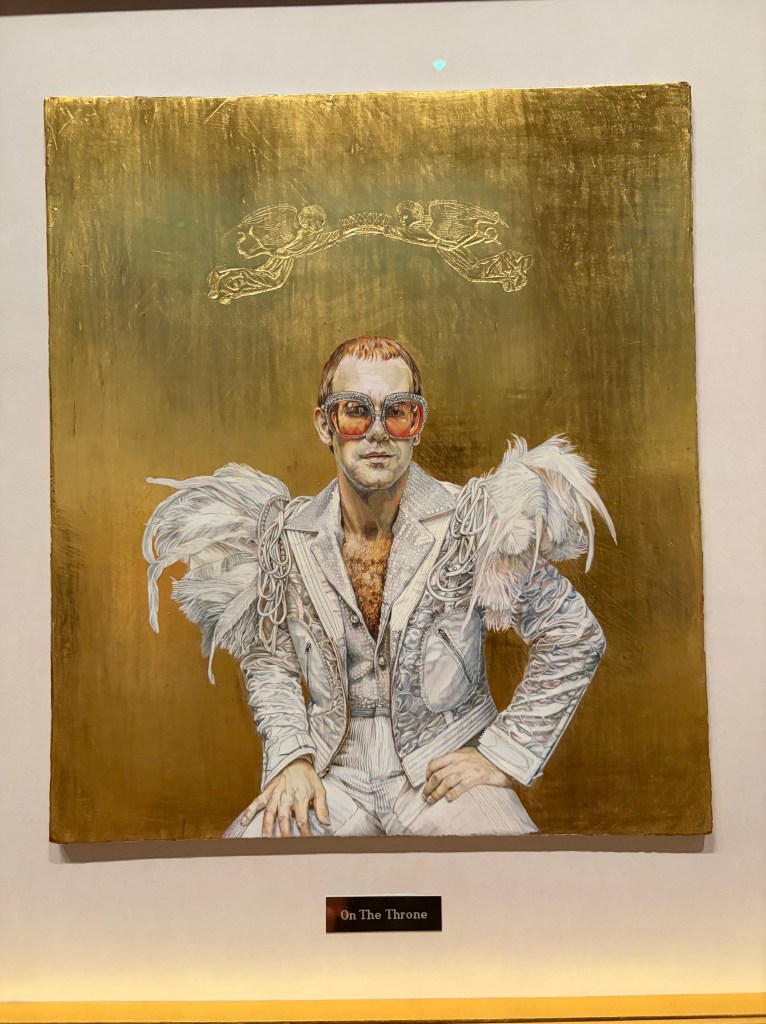
Today we went to the National Portrait Gallery, a multi-storied museum filled with halls and halls of paintings and portraits ranging from historic figures from the 1700s, like Napoleon Bonaparte or Toussaint L’Ouverture, to more recent historical legends, like Elton John!
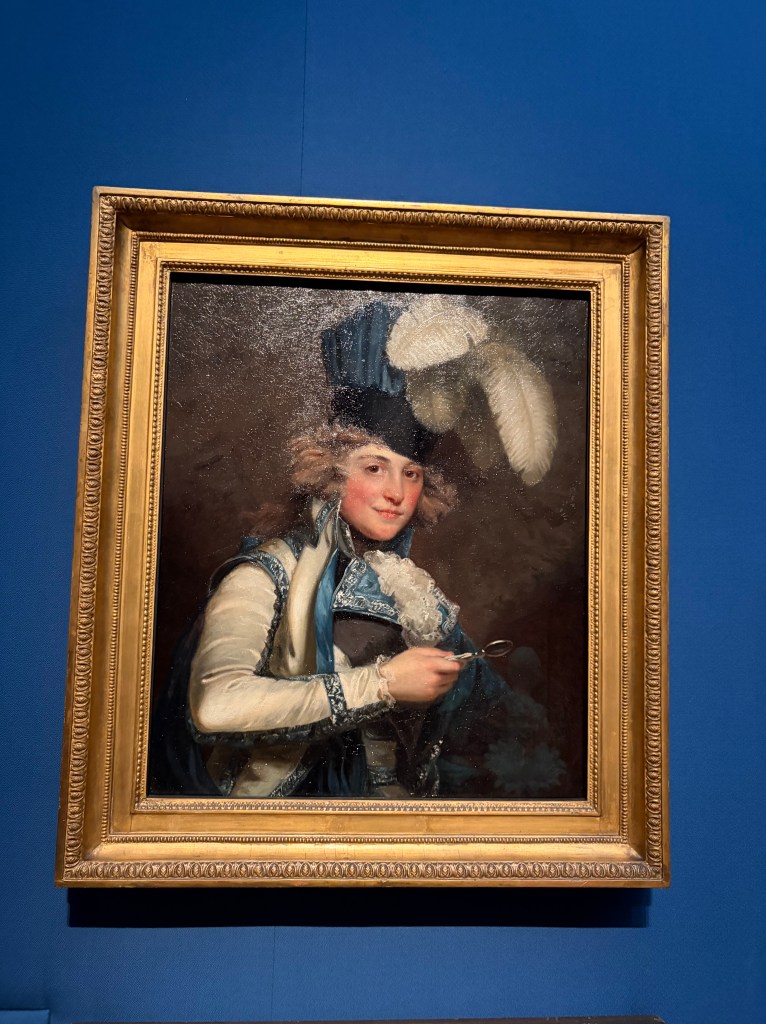
One portrait that first grabbed my attention and then became even more interesting as I read about it was this painting of Dorothy Jordan. She was an extremely popular actress in the later 1700s who was well known for cross-dressing as men for certain roles, which was something that wasn’t that common or women to do, or well received by audiences. Being such a prominent and controversial actress in her time, I’m not surprised the artist John Hoppner wanted to paint her. This was painted in 1791, well into her career, but I’m sure that the room was silent while Hoppner focused on the exact details of her costume.
In this portrait, she’s wearing the costume of a young male soldier, potentially one of her costumes for a show she was in. I love her expression in this, too! I love the shading and the lighting of the blue throughout her costume, how it fades the farther down it goes and how it pops more around the center of the portrait. The feathers on the top of her hat look so natural and detailed, the way they flow downward. I also love the contrast between the blue and the white of her sleeves.
Jordan was also extremely famous for her relationship with the Duke of Clarence, who eventually was known as King William IV. They had ten children and never actually married, but Jordan would pay off the duke’s gambling debts from the money she got from her plays. She was dropped by him in 1811, where he found a wife, and she died in France after fleeing there to escape her debts. Not the best ending, sadly.
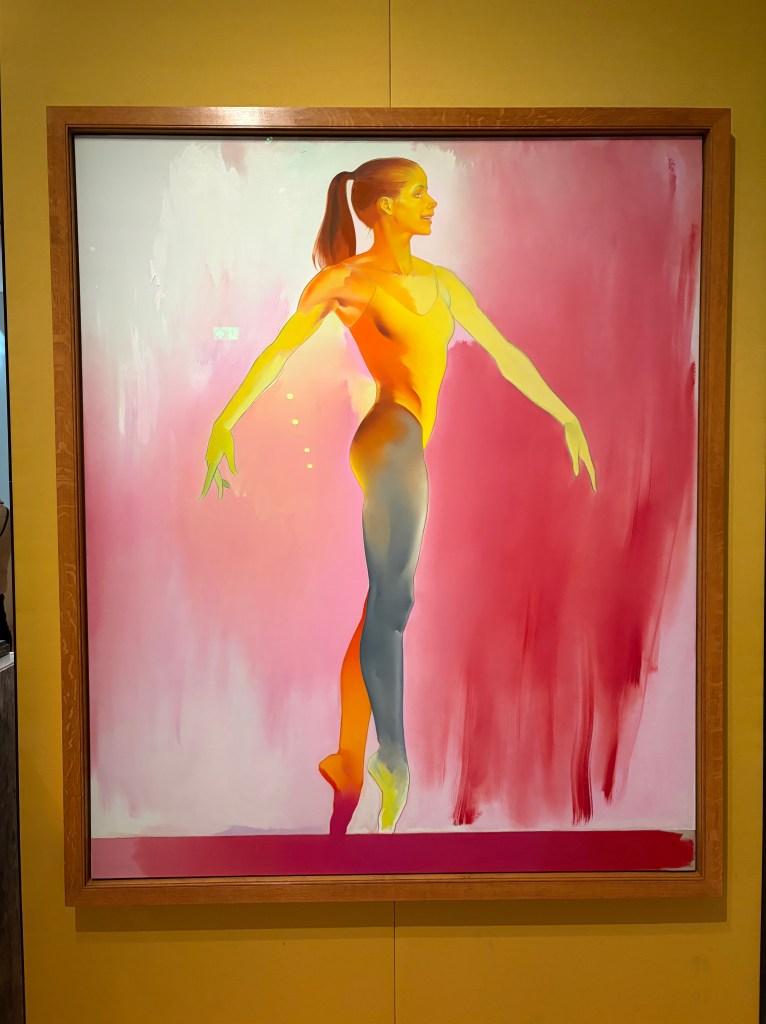
It was so much fun reading about all of the different artists behind the paintings and their intentions with them. Some of my other favorites were Dame Darcey Bussell (by Allen Jones), The Duke of Wellington Surveying the Field of Waterloo / Napoleon on St Helena (by Benjamin Robert Haydon), and Sir Elton John (by Suzi Malin).