The Westminster Abbey has over a thousand years of history, and is the site of thousands of burials and monuments. The Poet’s Corner is dedicated to the artists, writers, actors, and musicians. The largest memorial in this area is dedicated to William Shakespeare, displaying a life-size full body statue of him leaning against a pile of books atop a column decorated with the faces of his characters. It immediately stood out to me as the most impressive part of the Abbey, as it did many others who lined up to take pictures next to the memorial. The rest of the memorials were tiny and bland in comparison, especially that of any women. The three Brontë sisters (Charlotte, Emily, and Anne Brontë) shared one incredibly small memorial shoved into the corner next to Shakespeare. A fun fact about this specific memorial, their last name was spelled wrong for 85 years. Only in 2024 was the typo “Bronte” fixed to “Brontë.” Although the sisters were all successful and influential poets and novelists of the 19th century, their memorial is completely overshadowed by the ones for men surrounding them. There is also something to be said about the shared memorial. They were separately successful individuals, but they are forever to be remembered as one to save space for the men. Although there is a memorial for Percy Bysshe Shelley in the Poet’s Corner, there is not one for Mary Shelley, arguably the more famous of the couple. Mary Shelley is still celebrated today, especially for Frankenstein, her most notable work. Meanwhile, I had never even heard of her husband. It is extremely disappointing to go to a section to celebrate the lives of the most significant artists of England, only to see half of them left out or shoved into a corner with their names misspelled.
Dearest Gentle Reader
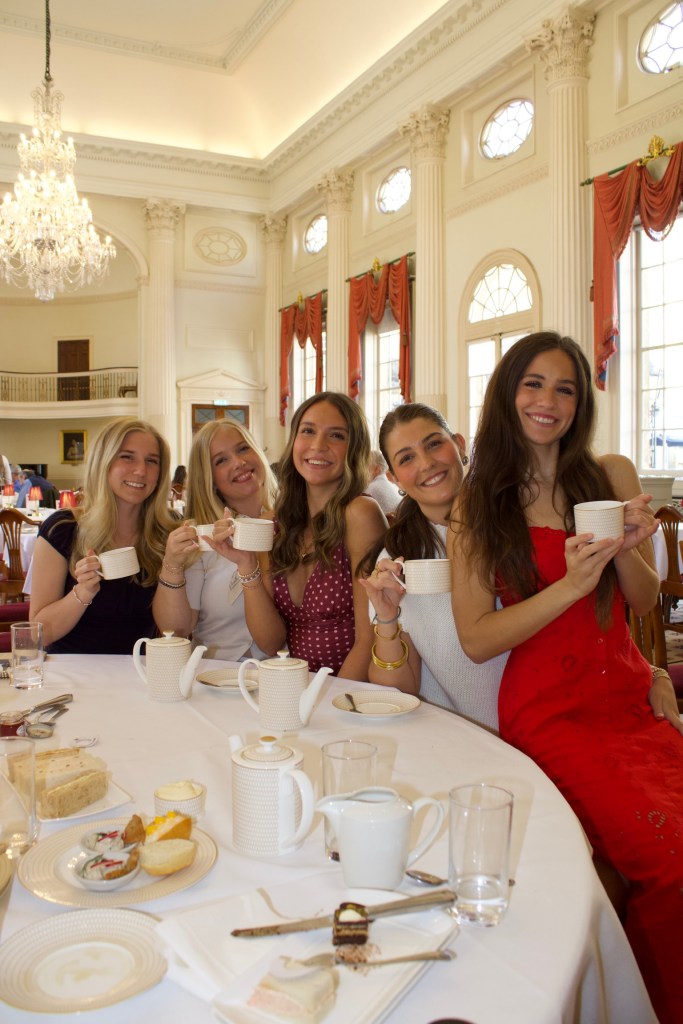
Spending the day in Bath has been one of my favorite days so far. From when we first got off the tube, there were cobblestone roads, which was what I pictured all of London to be in my head. Our first stop was to have tea at the Pump Room, which was such a cool experience. I’m not usually a tea person, but the tea was delicious. We made up fake names and talked in British accents the whole time, which was especially fun! If talking like that the entire time at tea wasn’t enough, we in fact talked like that for about 45 minutes afterwards!
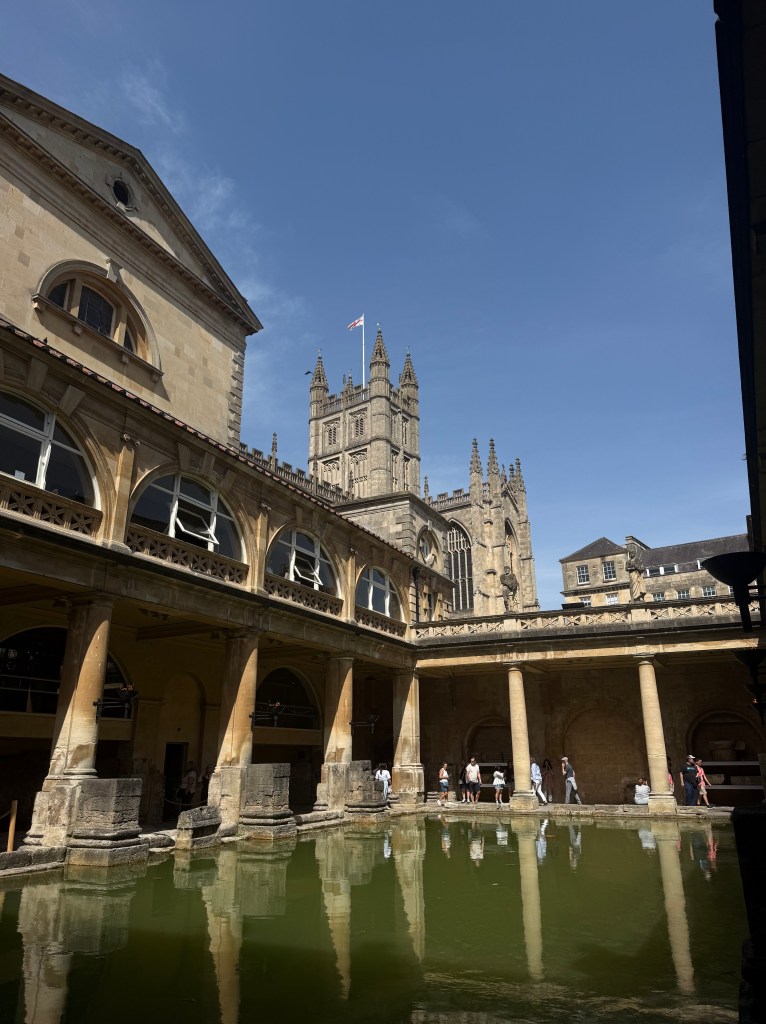
We had a tour of the Roman Baths exhibit, which was super interesting and super incredible getting to see some of them. There was a water fountain where you could drink water from one of the bath streams that still flows. It’s crazy to think that people actually used to take baths in there, but they have been preserved so well.
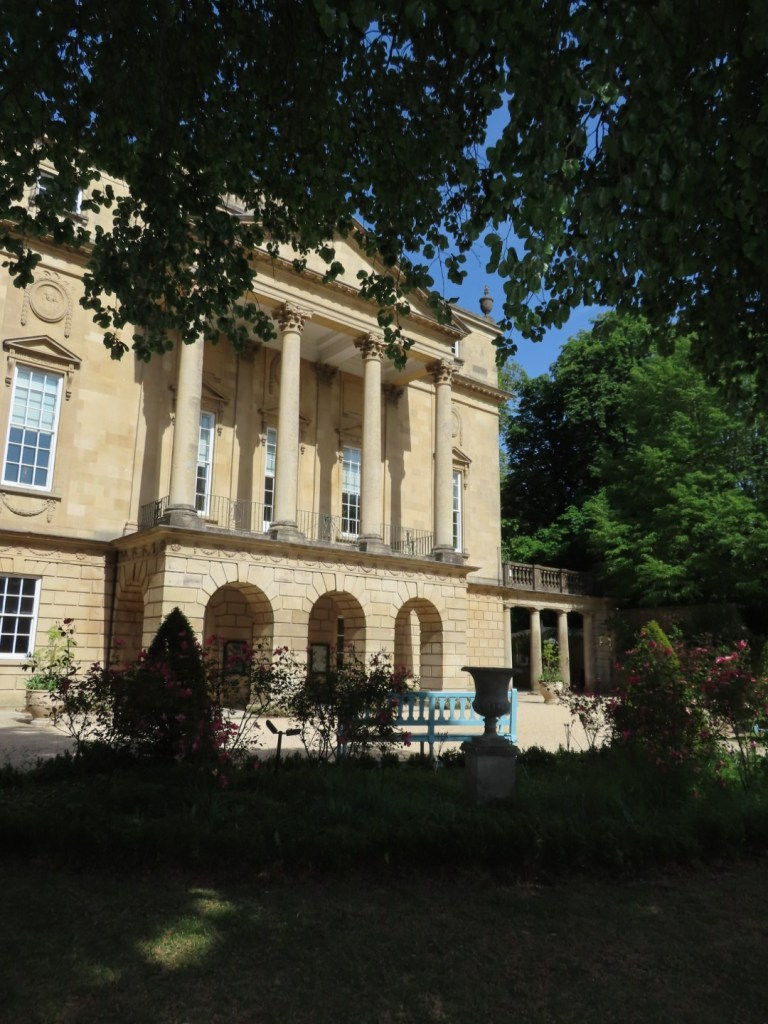
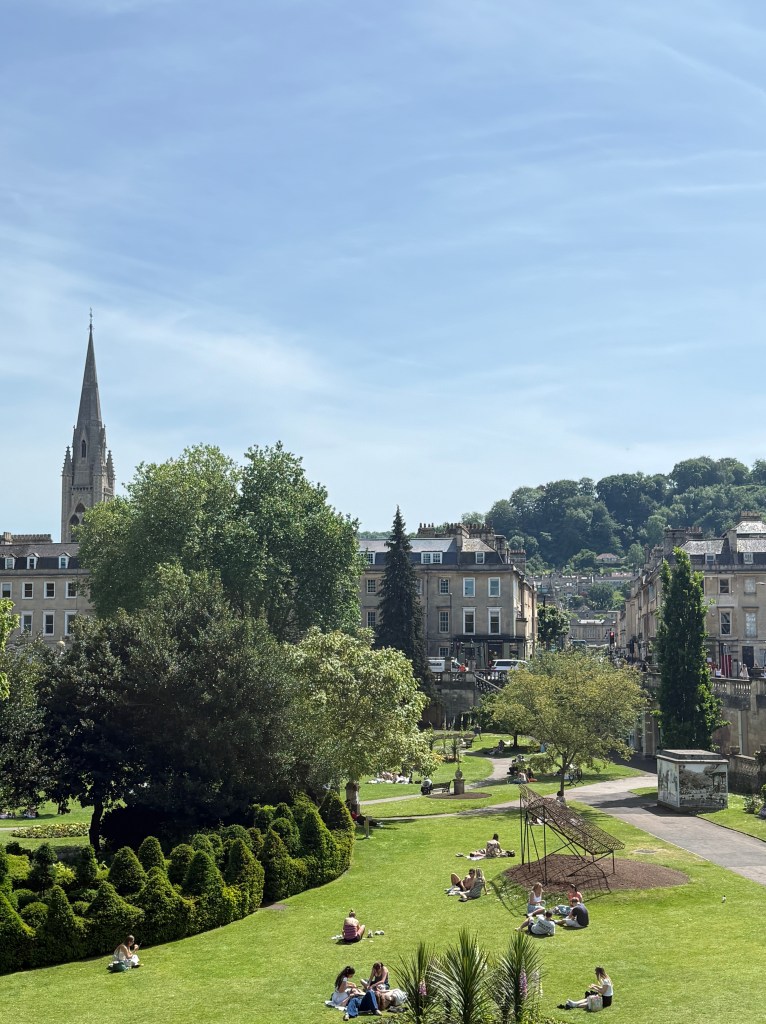
Walking around and looking at all of the architecture and nature was just so beautiful. I think we went to look at the park about 5 times because it was just so peaceful. My favorite thing was getting to see the Bridgerton stuff because I love the show so much and it was so surreal seeing it in real life. Not all of the houses are in Bath, but we got to see the Featherington house and Lady Danbury’s house, which was my favorite! We also got to go inside the shop where all of the characters in the show get their clothes tailored.
We ended the day getting some gelato on our way to the train after we played on the playground in the park. We met these really nice ladies and this dog named Juno that they were trying to get us to adopt… poor Juno. Anyways, it was such a perfect day trip, and I honestly wish we could’ve stayed longer to explore more!
Does Mother have courage?
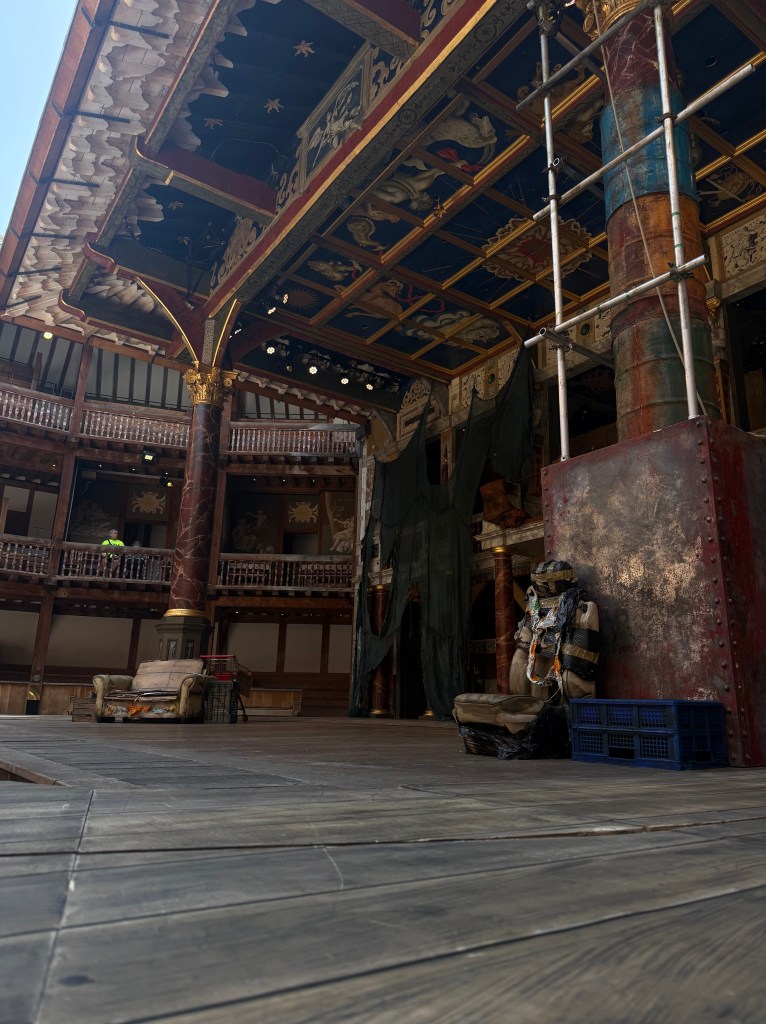
Mother Courage and Her Children has been one of my favorite shows we’ve seen. To be honest, I had no clue what it was about going into it and anticipated being bored watching the show. It ended up being quite the opposite of that, and I enjoyed it so much. I’ve never seen a play by Brecht, but after seeing this show, I feel like I would like more of his stuff. Where we were standing was also so good, (despite the part where I almost passed out and threw up). I think that made me very engaged in the story. I really liked all the modernization used in this play even though it takes place in a time of war. The Globe Theatre doesn’t really have room for them to work with lighting, so they really have to hone in on other elements like sound and visuals to create the illusions.
Right when the show ended, my immediate response was that I really liked it, but I couldn’t develop deep thoughts about it. After sitting with it and giving it more thought, I really saw how much deeper meaning this play has. I think my favorite question is if Mother Courage is actually courageous or not. I don’t think she’s courageous at all. I believe she’s selfish and only actually cares about herself. I just think she wants to make money and be the last one standing. All of her kids died protecting something, and she ironically wasn’t there for any of them. She didn’t grieve any of their deaths and showed no emotion, and I feel like it comes from Mother Courage seeing it as a sign of weakness. She was an avoider and used comedy as a defense mechanism.
Overall, I very much enjoyed this play; however, I think that the word “courage” led me in a different direction. And honestly that might’ve been the intention. Unfortunately in this show, the system ruled above all, and it caused people to act in survival mode. The system was broken, so therefore everyone else was broken too.
Ballerina Maknae
Today we got the chance to experience the national portrait gallery. It was filled with stories of pictures and statues of people ranging from very historical oil paintings to modern portraits of celebrities that are still thriving to this day. Many of the rooms we toured were filled with portraits of important people from their time, which we had an interesting time reading about them and what they contributed to society.
One of the portraits that really stood out to me was named, Dame Darcy Bussell, by Allen Jones in 1994. This oil on canvas depicted the youngest ballerina as a principal dancer at the Royal Ballet in Covent Garden, London. The making of this portrait was done by her posing for seven evenings after a day’s rehearsal at the Royal Ballet.
As I took in and examined this portrait, I noticed at first the bright, bold, and vibrant colors that were radiating off the dancer. Then I noticed her ballerina pose on point with arms outstretched, which gave me much respect for Bussell after knowing she had to pose that way for seven evenings. The colors that the artist used brought her to life by illuminating her upper body and cascading an ombre to her legs which were a darker blue color, but none the less striking. Her feet were lit up almost as much as her upper body, drawing the eye to her impressive point position. Bussell wears a smile while doing this, conveying a joy for her sport and passion. The background of the portrait was a mix of color from white, pink and red. This specific choice of color for the background really made Bussell stand out and pop from the picture. If I was able to step into this portrait, I would feel a sense of energy that she is pushing as it feels contagious, even from just the painting.
Westminster? I hardly know her
On Tuesday our group traveled to the famous Westminster Abbey. Going into the tour I only knew that it was the place where coronations happen, but I didn’t really know just how many people are buried there. With military figures, royals, scientists, and artists. There is a wide variety of different people that have been laid to rest in the building. While the tombs of the royals were incredibly ornate and cool to see, it was Poets Corner that intrigued me the most. This section of the building contained memorials and graves of famous authors and artists. It was so cool to see so many people that I love the work of buried there.
While many of the people who have memorials there are actually buried there, some are not. For example, Shakespeare has a fairly large statue dedicated to him, but he is actually buried in Stratford Upon Avon. This is the same for the likes of the Bronte sisters and Jane Austen. It was interesting to see Shakespeare get such a large statue, whereas these four women only got small plaques by Shakespeare’s feet. I understand that Shakespeare is an incredibly famous figure, but the amount of men that have statues as compared to women felt sexist and fitting of the time they were made. I talked to a worker at the museum and he said that this is a common sentiment, but it is actually a great honor that they are placed there because it means that they were the female Shakespeare’s of their time. This explanation didn’t quite make sense to me, and I think it was just an attempt to make it look better, but that is besides the point.
One person that I thought was interesting to see was David Garrick. I did a research project about the birth of the modern theatre director last semester, and he was one of the main people that I focused on. He was an incredibly popular Shakespeare actor, and he managed Theatre Royal, Drury Lane. He helped create more unified work in a time when neoclassical ideals were being heavily pushed. This led to him being the first modern director in terms of working with the actors, and the other design elements of the show. He also helped switch the style of acting of the time period from a more rehearsed and recited feel, to a naturalistic style.
Another intriguing person to see was Charles Dickens. Being one of the most famous authors of recent history, I am very familiar with his work. His stone on the floor was very plain like many of the others, which was interesting to see for such a prolific person. One show that I would like to go see before the end of this trip is “Oliver!” This musical is based on Dickens’ book “Oliver Twist.” His works have clearly stood the test of time the last 200 years which is marvelous to see.
One that I found particularly interesting to see was Laurence Olivier. Apparently he wasn’t actually buried there, but his ashes were spread near the location. He does have a smaller stone than the people who are actually buried, but I think that he counts. Laurence Olivier was an incredibly famous English actor who was influential on the artform. He started the National Theatre, where our group saw the show “War Horse” on this trip. He also starred in movies like Wuthering Heights, Spartacus, and Hamlet. His career was so illustrious that they named the Olivier awards after him. These are the British theatre awards (kind of similar to the Tony’s in the United States).
Our trip to Westminster Abbey was full of history, and it taught me so much about this country. Definitely recommend to anyone visiting.
Cheers,
Thatcher
Jane Austen I’m your biggest fan
There were several literary icons buried or memorialized in Westminster Abbey. It was quite crowded so I’m sure I missed a few, but I caught sight and took pictures of memorials for Shakespeare, Wordsworth, Dickens, Austen, and the Brontü sisters. Obviously I will be picking my favorites to write about which would have to be Shakespeare, Austen, and Charlotte Brontë.
I found it interesting (although not surprising in the least) that Shakespeare was the only writer of the three just listed who had an actual statue commemorating them. Even further, Austen and Charlotte’s names were the only things given to their memorials other than their birth and death years. Their names were also quite small on either side of Shakespeare’s grand statue in comparison with all the other male names or statues surrounding them. Just an interesting aspect of the memorials I happened to notice.
Anyways, none of these writers are actually buried at Westminster Abbey. Shakespeare’s memorial is a statue of him leaning against a pile of books while holding a piece of paper with lines from The Tempest. His memorial was installed in 1741, and it contains his birth year of 1564 and his death year of 1616. I’m not sure anyone really needs biographical information on Shakespeare, but nonetheless, he was born in Stratford-upon-Avon, married Anne Hathaway at 18, had three children, and was an actor and playwright in London. He is best known for his plays Romeo and Juliet, A Midsummer Night’s Dream, and Hamlet, as well as his sonnets, of which he wrote 154.
Moving on to Austen, who was sadly only given a small plaque with her name and birth/death year on it. Austen was born in Hampshire, England in 1775. She spent her early life with family, and occupied her days with reading and creative writing. Jane Austen is known for her works of literature such as Sense and Sensibility, Pride and Prejudice, and Emma.
Charlotte Brontë, who was also sadly only given an even smaller plaque with her name, alongside her sisters’, was born in Thornton, Yorkshire, England. Charlotte helped raise her younger siblings in her early years. She is known best for her famous literary work of Jane Eyre.
Overall, I’d say Westminster Abbey was a pretty cool place for literary fanatics like me!
- Jill Qualls
The Tale of Lady Sandwich
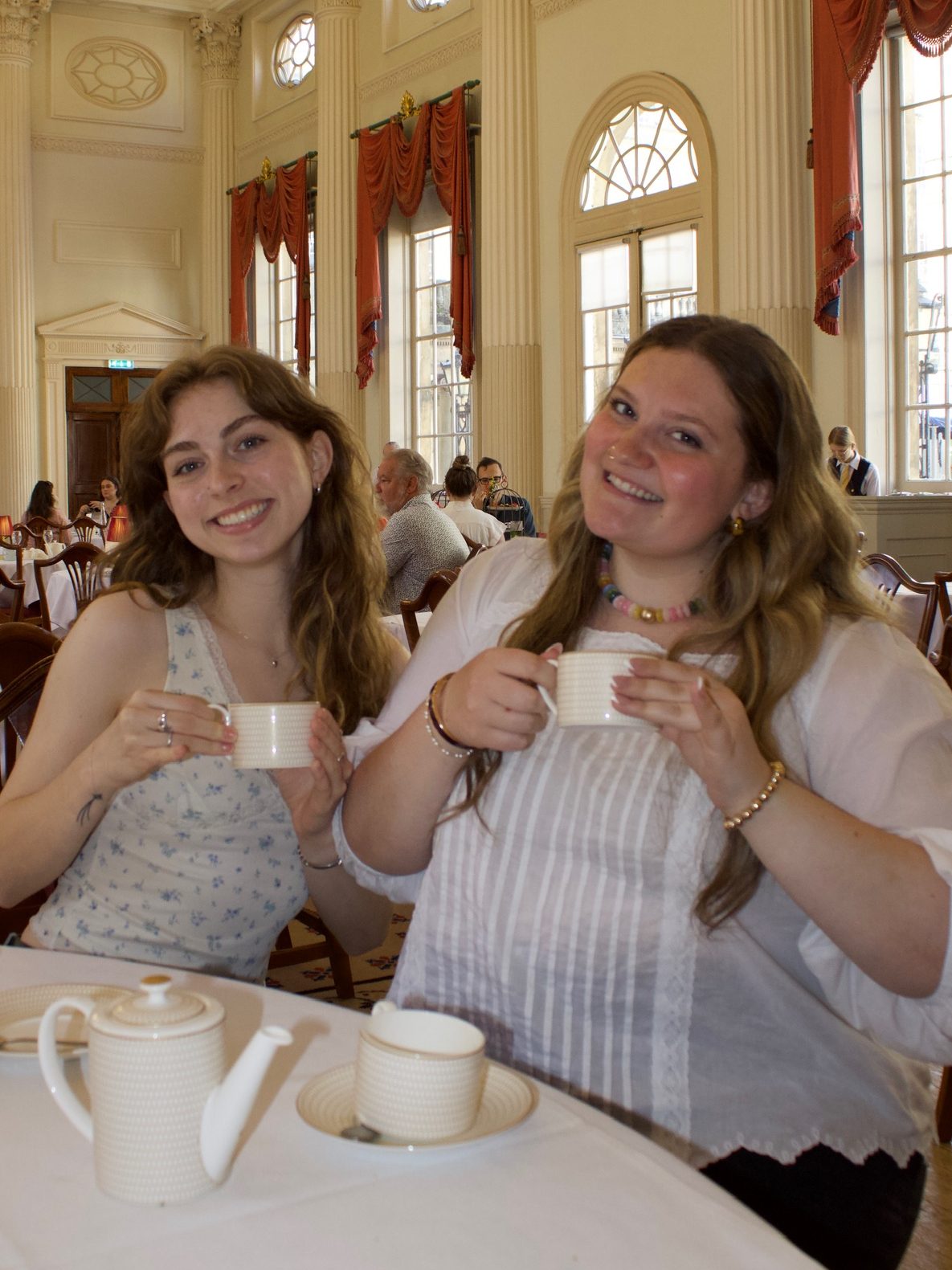
Exploring the town of Bath was such a wonderful adventure! We started off by walking through the square around the Abbey, then had afternoon tea at the Pump Room. It was so cool to visit the same location and have the same experience as people like Charles Dickens and Jane Austen did. The tea room was so pretty, with its ceiling high windows, crystal chandelier, and view of the Roman baths. We felt so culturally immersed that we role-played as 19th century ladies. My name was Lady Sandwich, an 87-year-old widow with a deep love for food. The servers absolutely thought we were incredibly obnoxious, but they were polite enough to not say anything. While we ate our finger sandwiches and sipped our tea, talking with our likely offensive accents, I thought of all the great minds that sat in this very room. All of the beautiful literature that might have been written here. And I felt like a dumb American.
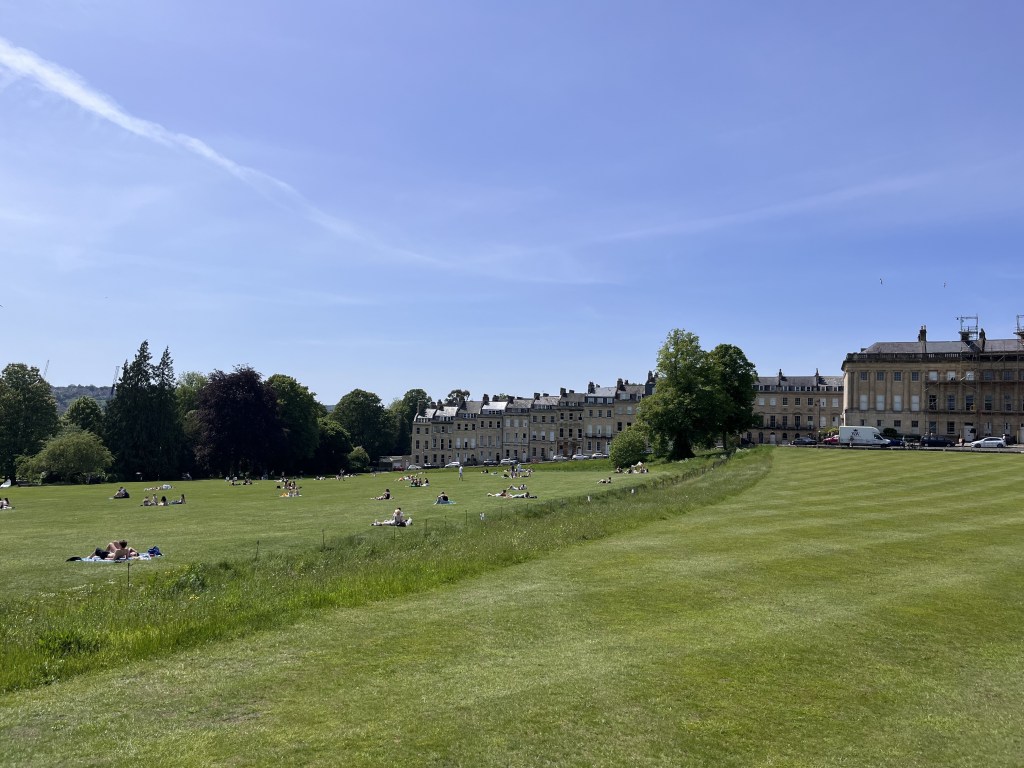
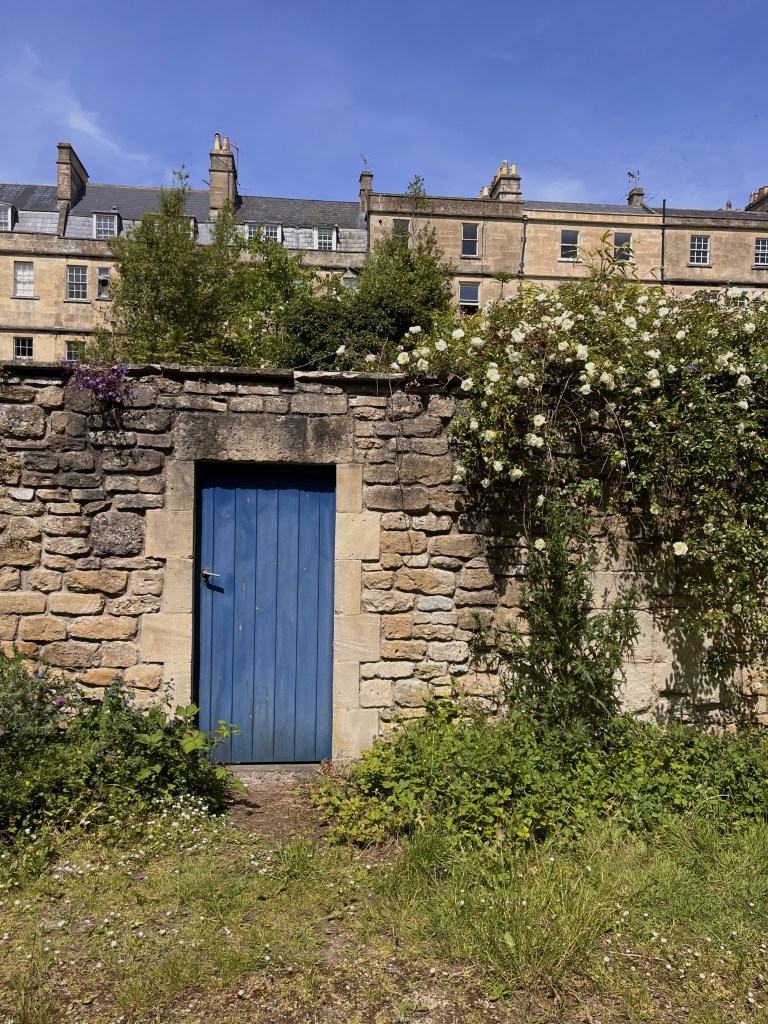
Next we walked to the Circus and the Crescent. It was such a beautiful day: the sky was so blue, the grass so green, and the architecture so gorgeous. We then took a trail by a park back to the Roman Baths. This was the prettiest view I saw all day, with the gardens and brightly colored gates. When we got to the Roman Baths, we walked through artifacts and reconstructions of different rooms. It was so interesting how they would light fires underneath the floor to warm the room for a sauna-like effect. And I found the medicinal uses of the different baths so fascinating, how they believed the water could cure you of various ailments. Overall, I loved our trip to Bath. The beautiful history and architecture was so incredible to share with my friends. But I do miss Lady Sandwich and I hope she makes an appearance soon. -Milly Medlock
BB (bath blog)
This past Friday, we finally escaped the heat of London to be met with the heat of Bath!
Just kidding, getting away from the city and getting to explore Bath was so, so much fun!
We started with a calming train ride through England with gorgeous views, and then finally arrived in Bath. We visited The Pump Room, where we were served many teas, scones, and delicious sandwiches. Our group had so much fun pretending to be British that we made up characters and fake drama to discuss. After a delicious meal, Milly, Thatcher, Cate, and I went to the circus and laid in the grass under trees and enjoyed the breeze. Thatcher led us through a meditation so relaxing that, shortly after, I suffered the consequences of lying in the grass and had the worst allergies. By the time we took the tour of the Roman Baths, I was so stuffy and itchy that it was hard to focus. Overall, though, I really enjoyed touring the baths because it was a real on-site location, and I was able to see the actual baths. It made everything so much cooler. I really liked learning about how the Romans spent their day-to-day lives. I was also obsessed with all the architecture and history around Bath; everything felt so stuck in time, and I truly felt like I had entered a new world upon arriving. It feels different in London, almost entirely to me; I felt like I was in the Italian countryside, everything was so much quieter and more intimate. We could walk to everything in about 10 minutes, and all the locals and shops made the town feel so, so charming. I could truly tell this is a town that cherishes its history and always strives to uphold it. One of my favorite parts of the day was chatting with the guides at the visitor center and just hearing them talk about their favorite things around town.
-Erin
In Awe of Architecture
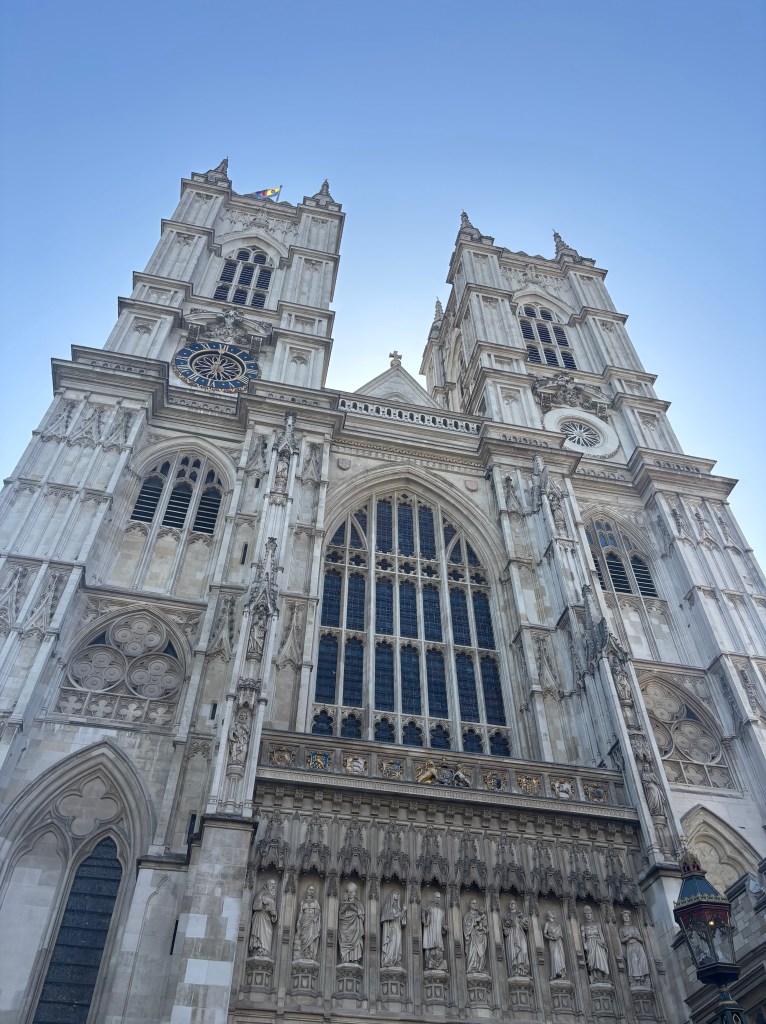
I don’t have the proper words to describe the beauty of this structure. I was breathless throughout most of the tour, just from sheer awe and wonder. Even before we walked into the building, I was amazed by the intricacies of the abbey’s outer walls, the details of the tympanum, and holy flying buttresses! I have a particular affinity for architecture as a visual art, so it really captured my attention.
But onto the interior! Poets’ Corner was a particularly captivating section. I didn’t catch the reason why it was added in the first place, but it seems an interesting edition. I saw some familiar faces—Tennyson, Longfellow, the Bronte Sisters—but there were also several names I wanted to learn more about. John Dryden, for example, an English poet, playwright, and satirist of the 17th century. He actually attended the Westminster School as a boy, and he often wrote in favor of the monarchy and to perpetuate loyalty to the crown. For this he was appointed the poet laureate in 1668, and he enjoyed a successful career in the theatre, adopting and exploring genres like the heroic tragedy, tragicomedy, and farce. He also became famous as a satirist, although he completed nearly all of his satirical works within the last two years of his life.
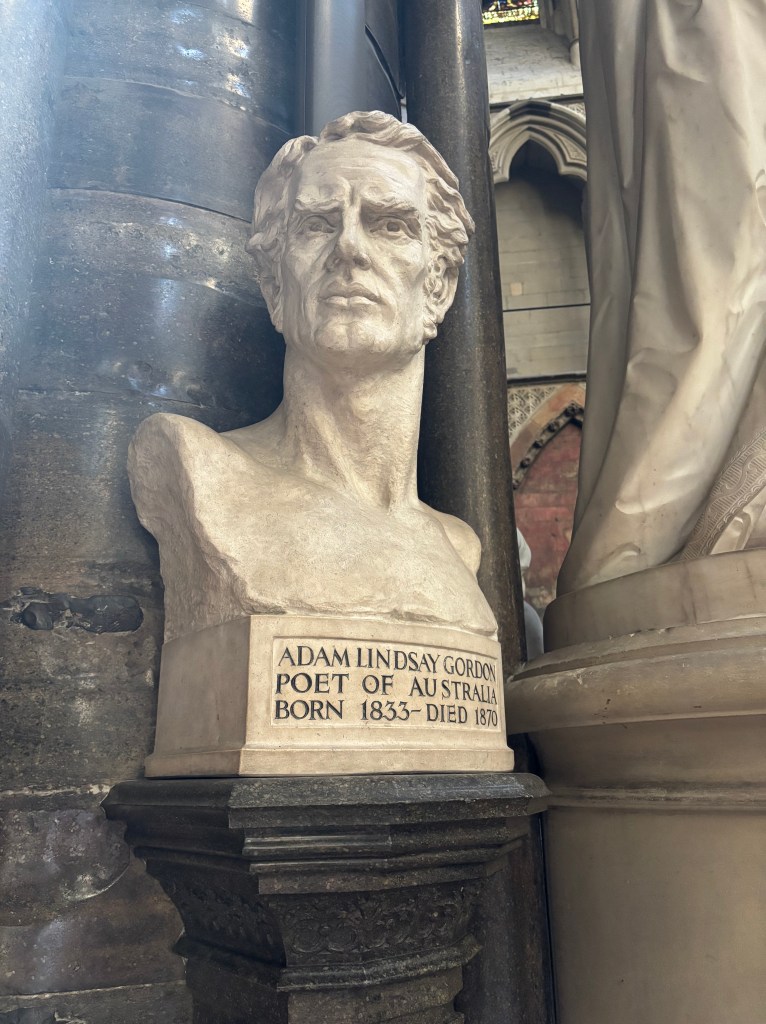
And yet another source of knowledge, D. H. Lawrence! I know him primarily as a novelist and shorty story writer, but he has also wrote lots of poems, including “All of Roses,” “Birthday,” and “Bread Upon Waters.” He’s known for his themes highlighting the effects of industrialization on society and capturing human emotion. Many of his works were censored, largely for their sexual content. Needless to say, he was a rather progressive figure of his time, one who gained acclaim largely after his time (the late 19th and early 20th centuries). Contrast him with Adam Lindsay Gordon, a poet of the mid 19th century. He was a real horseboy and became a steeplechaser, horse breaker, and was a member of South Australia’s mounted police. He apparently led a tortured life, as shortly after a copy of his poetry collection Bush Ballads and Galloping Rhymes was published, he shot himself at Brighton beach. A sad end indeed.
I also have to mention the Lady Chapel. What a ceiling! And the stained glass! And Mary Queen of Scots’ hands! Apparently some famous Italian sculptor shaped them, and the detail was quite striking. I think elaborate burial places are also a way of establishing a regime’s legitimacy and authority even after death, which was especially true given her integrating three symbols of her claims to three different thrones (the Scottish, the French, and English). I also deeply enjoyed the Chapter House; I liked the syncretic mix of stained glass, classic Medieval painting, and inscriptions with updates on its history. It’s just a beautiful place besides.
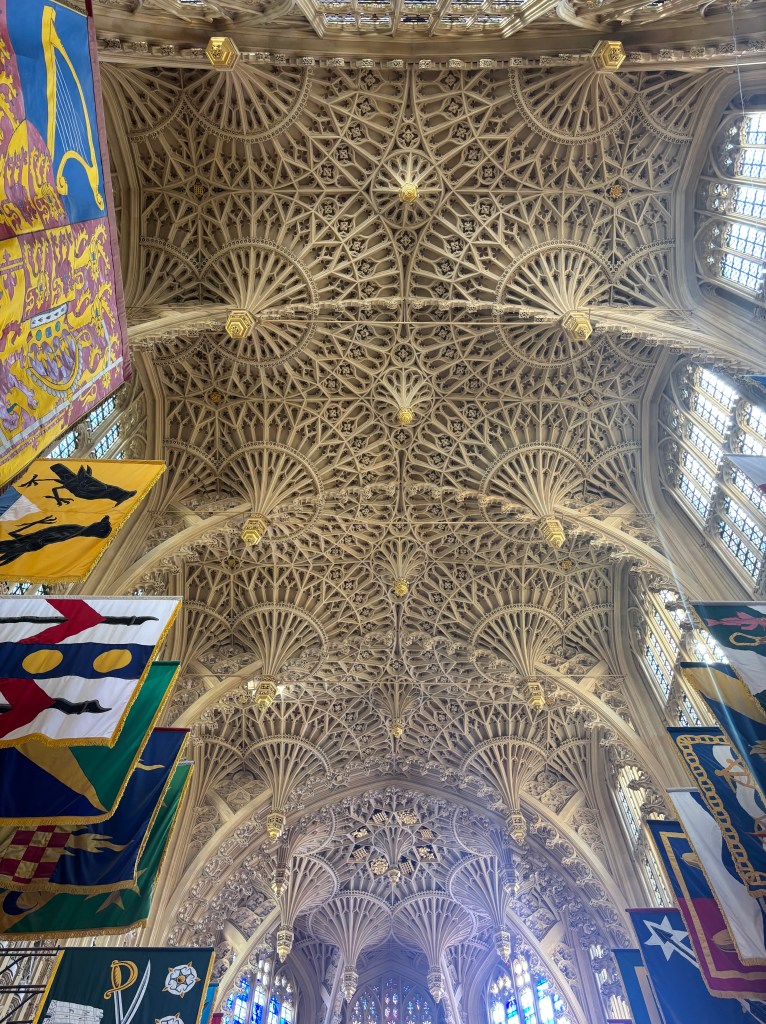
Because we’ve visited so many museums and exhibits the past few weeks, I’ve realized that I never have enough time to truly absorb the contents of these places, This is especially true of architecturally detailed sites; each stained glass window has its own narrative, each wall a new embedded statue, and don’t even get me started on the ceilings! It makes me want to start a new tradition of designating a day (as in a full, unscheduled, unbusy day) of wandering in a museum, ruins, or whatever historical institution, just to have the opportunity to explore every inch of learning. This is typically difficult when there’s a social aspect to the trip, or you’re with a group and involved in other plans, but to have the freedom to just wander through galleries, stare at busts of Greek figures, and ponder the meaning of art! What an idea.
Anyway, I hope to visit again someday, if for no other reason than to experience the reverie of being surrounded by divine art!
Stay cool,
– Reese
Dead Poets Society, but make it British
When stepping out of the tube station at Westminster and seeing Big Ben and the Elizabeth Tower, the Houses of Parliament, and Westminster Abbey, I felt my feet stop moving and my eyes fixed on the most iconic London landmarks right in front of me. I had to snap out of it quickly, however, because Shawn happens to walk at the speed of lightning.
Waiting in line to get into Westminster Abbey gave me plenty of time to admire the architecture, but what I didn’t know was what the inside of the Abbey had in store for me to admire. Every corner and corridor of the Abbey had me more astonished than the last, and before I knew it, I was at the infamous Westminster Abbey’s Poet’s Corner. This corner honors many different writers, poets, actors, and playwrights. As I made my way into the space, my eyes fell on the largest monument in the corner- the infamous William Shakespeare, leaning against a stack of books. In Shakespeare’s left hand is a scroll, on it are lines inscribed from The Tempest. While staring at this monument, I heard Shawn tell me to look at where I was standing, and I was in fact, standing right on top of Henry Irving’s memorial.
Unlike some of the other famous writers or actors in Poet’s Corner, Henry’s is easy to miss, especially if you’re stuck looking up. As I stood there above his memorial, I felt like I was under no authority to be standing on top of his memorial. As such a transformative actor in England, I became suddenly aware of just how influential he was, despite how small his memorial might have been.
Also found on the floor of the Abbey was the memorial of Charles Dickens, another legacy in both British and American literature. I found it interesting how Dickens’ memorial was almost in the shadow of Shakespeare, and it immediately made me think of how I once heard that Dickens called Shakespeare “The great master who knew everything.” Overall, Poets Corner was fascinating. I felt like I was gaining wisdom just by gazing at some of the most celebrated writers and actors in history.
-Emmy

