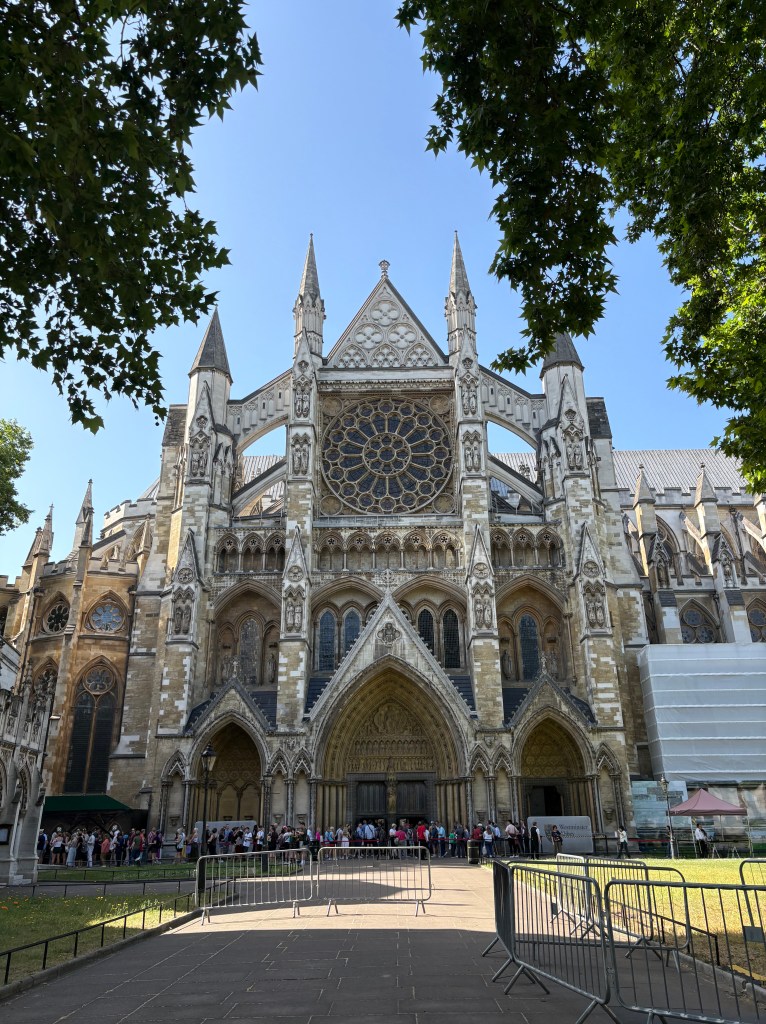
As we continue to melt in the heatwave, we take cool shelter within the Westminster Abbey. The treasured memorials showed just how much theatre has meant to those in London. Actors and playwrights littered the grounds. Oscar Wilde, being one of the many playwrights memorialized at the Abbey, caught my attention. Due to the criticism and jailing of Wilde due to his homosexuality, he wasn’t memorialized until much later. Oscar Wilde wrote brilliant comedies and had some of the best final words I’ve ever heard. On his death bed he said, “my wallpaper and I are fighting a duel to the death. One or other of us has got to go.” Famous English actor, Laurence Olivier, was also memorialized here. However, while he is not buried at the Abbey, his ashes were spread there. Having been known for his Shakespearean roles, Olivier was memorialized near Shakespeare himself. That brings us to the man, the myth, the legend himself; William Shakespeare. While he’s memorialized in the Westminster Abbey, he is buried in Stratford-Upon-Avon where he was born and retired. However, his play writing career thrived here in London.
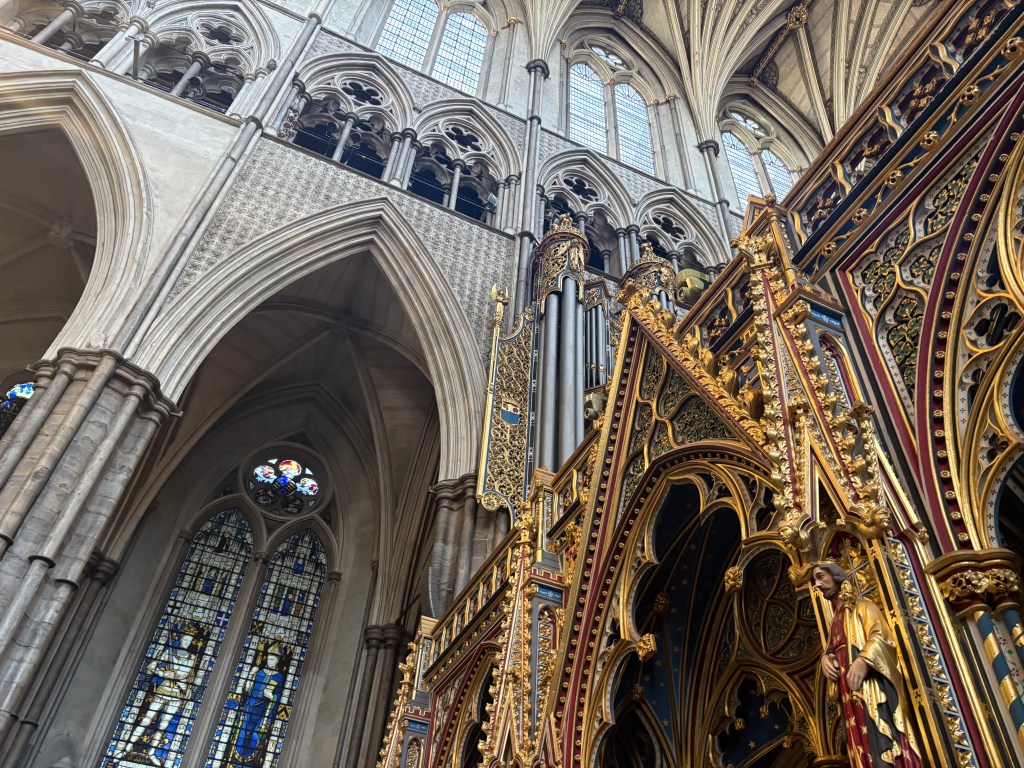
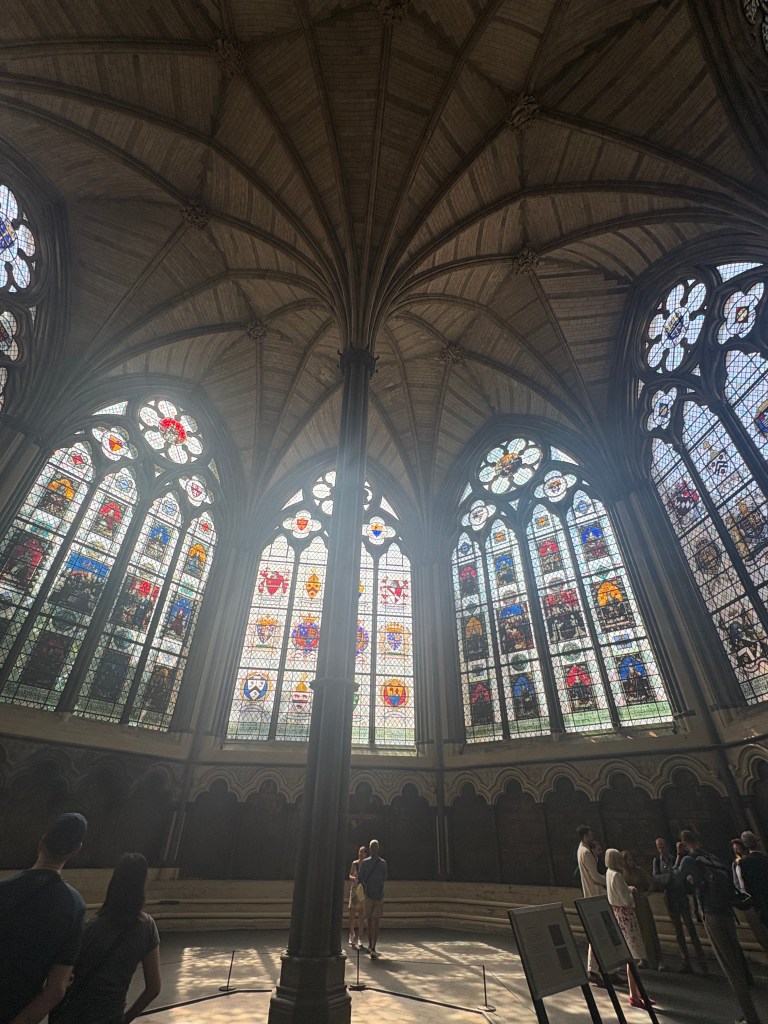
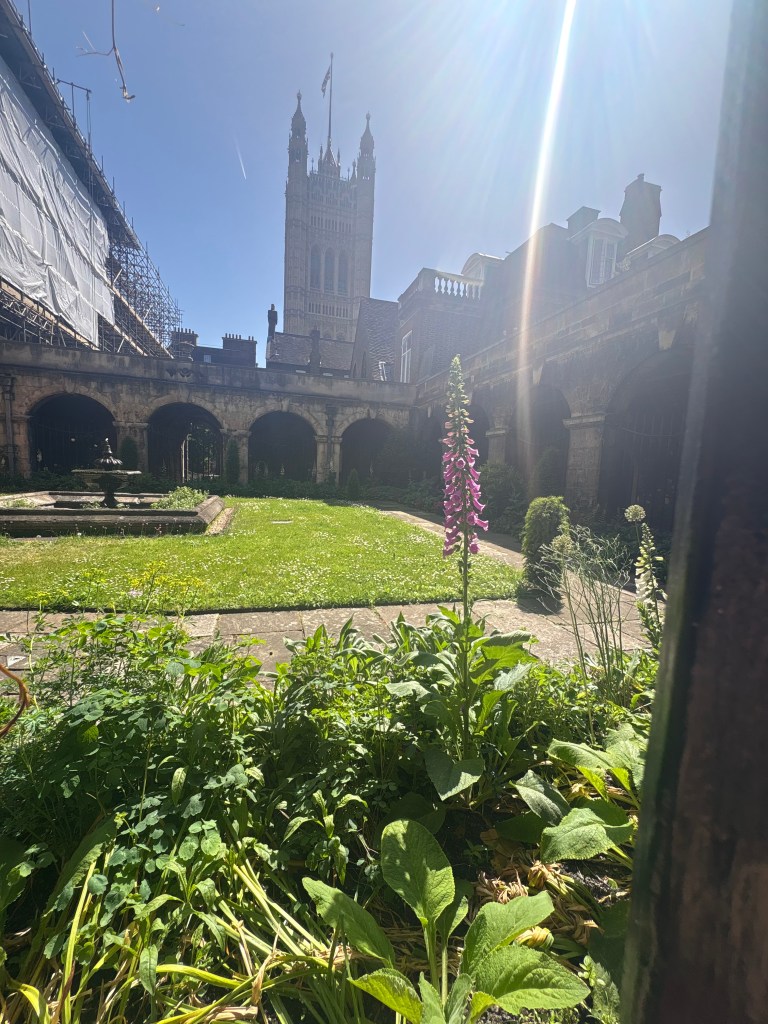
Aside from all the history within the Westminster Abbey, the architecture was absolutely beautiful. The archways and stained glass were breathtaking. There were absolutely stunning loggias surrounding a the gardens. They had the perfect breeze flowing through them along with a beautiful view of the Abbey. You could see the top of the Elizabeth Tower, better known as Big Ben as well. Some good music or a book could have kept me there all day.
Learning the history of such an important place was fascinating. The contrast that the old architecture has against the modern aspects of the city ceases to amaze me. It created such a beautiful contradiction of style and time period.
I’ve long said, “I want to feel humbled walking into Church,” and when stepping foot in Westminster Abbey, I not only felt the reverence of Christ’s splendor, but also felt quite small in comparison to the nobles buried here before me. My jaw fell a little more at the turn of each corner, seeing who else lies here. (Elizabeth I, Mary Queen of Scots, Charles Dickens, to name a few, like wow?!)
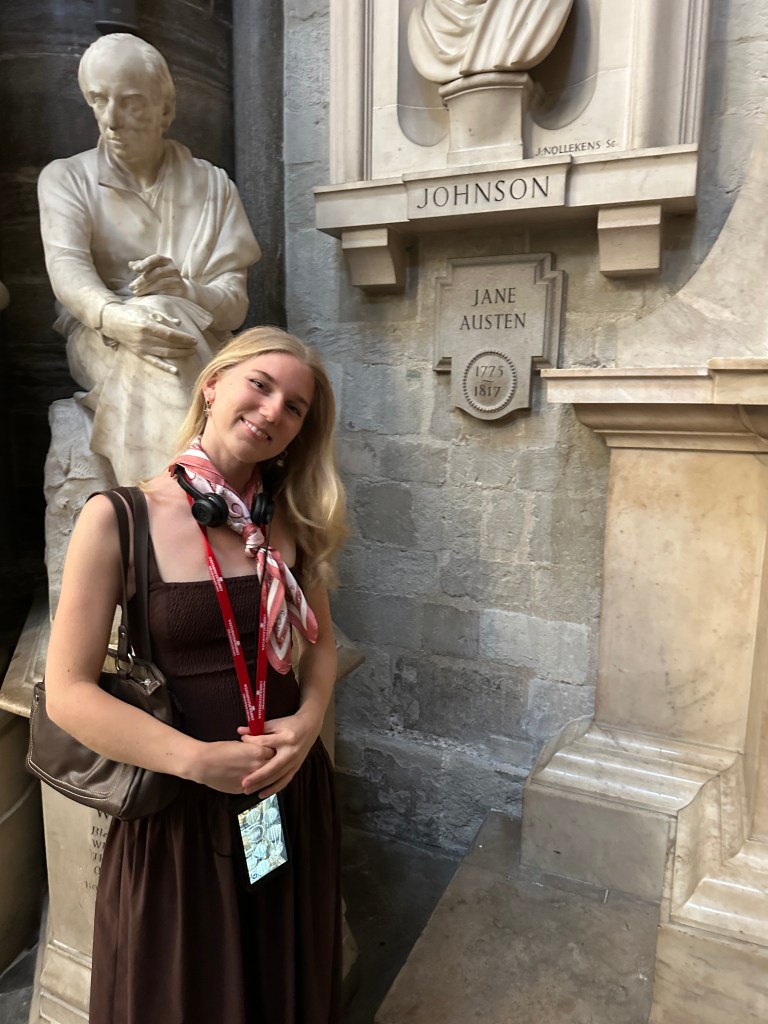
The writer’s grave at the top of my list was, of course, Jane Austen’s. It has been such an honor to walk in her footsteps these past few weeks, from London to Bath, while also buying her books and engaging more deeply with her work. Austen was far ahead of her time, portraying the realities women faced, exposing social hypocrisies, critiquing expectations, and creating strong female heroines, all while remaining rooted in her faith and quiet strength!
She is one of my greatest inspirations, and truly, without her, I may not be pursuing writing today. I especially admire her determination, how she educated herself through the books in her fathers library and turned her love of reading into a calling as a writer. I also loved learning that she had been writing since childhood, using her real-life experiences as the basis for her early stories, much like I did as a teen! And Pride and Prejudice remains one of my favorite stories because Elizabeth Bennet is independent, authentic, and unwilling to compromise herself for love. She reminds young women that they do not need to change who they are or settle to be chosen. I am thankful for Jane Austen and the path she paved for female writers and women in general. Seeing her grave was surreal, and to make the day even better, I found/bought another copy of Pride and Prejudice in a thrift store after visiting the chapel!
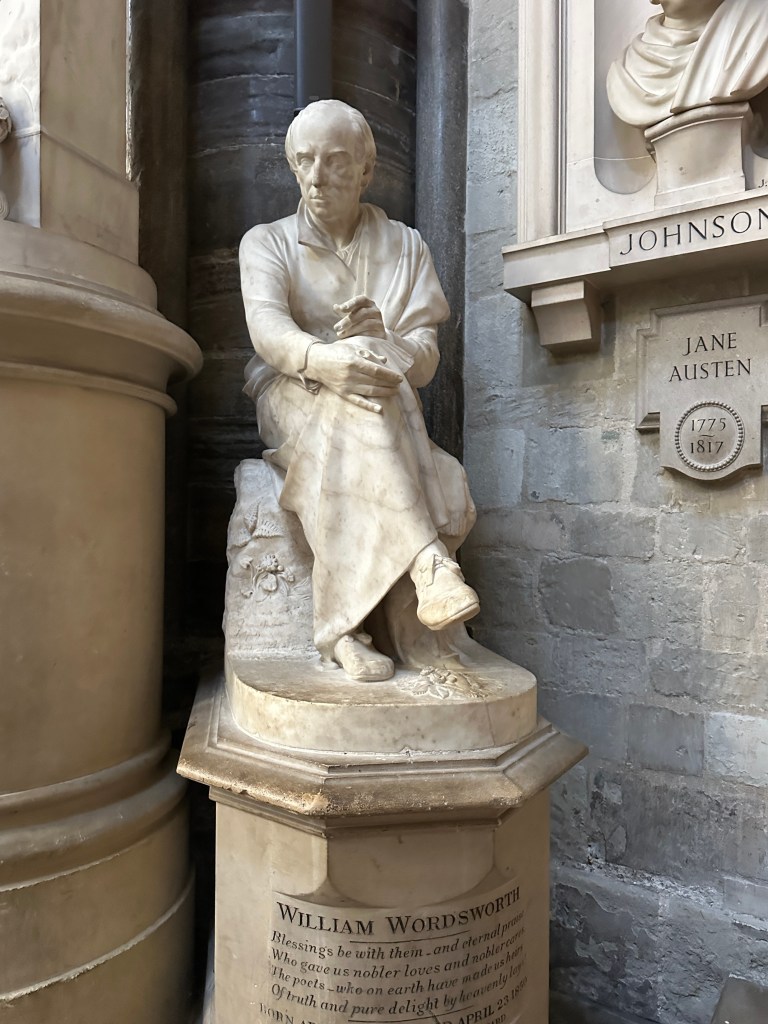
Now for another one of my favorite poets of all time, William Wordsworth! Ironically, right next to Jane Austen! I studied various Wordsworth poems in my World Literature class in the fall semester of this past year, and quickly found one of my favorite poems ever, “The World is Too Much With Us.” Another writer who revolutionized his craft, Wordsworth, along with Samuel Taylor Coleridge, helped launch the Romantic Age in English literature through their joint publication “Lyrical Ballads.” In my research, I found that through his poems, Wordsworth broke traditional poetic forms to produce verse that placed the poet’s emotions at the forefront and centered a natural, pastoral world within the words. His approach was more direct, disregarding traditional rules or tropes in favor of verses that reflected everyday speech. In doing so, he made poetry more accessible and relatable to a wider audience. Seeing his grave was, once again, awe-inspiring. It was a wild feeling to stand so close to someone who changed one of my greatest passions for the better.
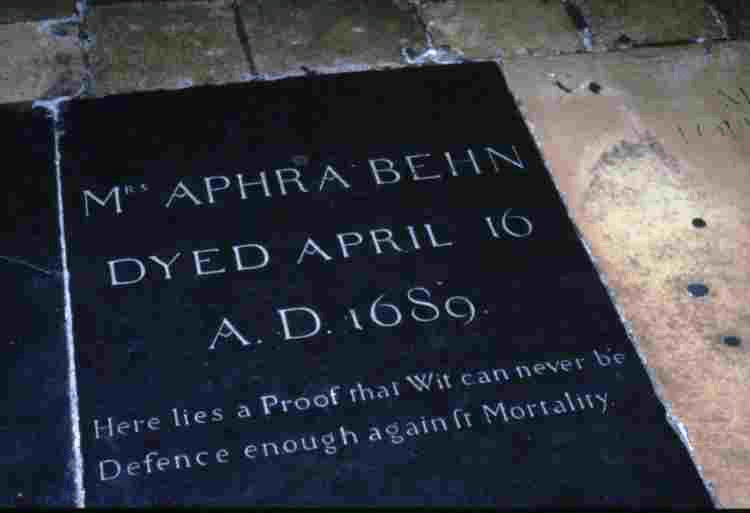
Lastly, it was amazing to hear that Aphra Behn is buried in Westminster Abbey. I studied her and her novel Oronooko in the spring semester of my freshman year, and the fact that she was one of the earliest English women to earn a living from writing is incredibly inspiring. I often think of what Virginia Woolf said about her, that “all women ought to let flowers fall upon the tomb of Aphra Behn, for it was she who earned them the right to speak their minds.” Being a feminist myself, Aphra Behn is another great inspiration. She challenged stereotypes and traditional female roles through her writings. I also thought it was fascinating how she wrote under a pastoral pseudonym, Astrea, named after the Greek goddess who personifies justice. Feels quite fitting for an early feminist exploring women’s rights, even back then!
What a wonderful visit to Westminster Abbey. Feeling so inspired and awed!
I adore Gothic architecture, so it was wonderful seeing one of the most important Gothic buildings in the country. A historic, royal church. It has the highest Gothic vault in Britain! It’s always an incredible feeling looking up at the ceiling of a European church as well as looking at their stained glass windows. My favorite is the rose windows, the most telling characteristic of Gothic churches.
Poet’s Corner – 📖
John Keble
English priest & poet, not buried at Westminster Abbey but has a dedicated memorial.
He was the key leader of the 19th century Oxford Movement, a 19th century religious revival within the Church of England that sought to restore the church’s ancient, Catholic roots and establish its independence from state control. I found it fascinating how he sparked a historic revolution in how the Anglican Church understood its sacraments and authority. He argued that the state had no right to interfere with the church and Keble’s aim was to go backwards and restore the past, he believed that the church had turned spiritually lazy.
He did this by popularizing Theology through poetry and translating the Church Fathers.
What I found very interesting was how he profoundly loved nature and how this influenced his writings which directly correlates to the English Romantic Movement. Keble loved William Wordsworth and viewed him as a prophet!!!! (Woah)
He believed God intentionally designed the natural world to communicate invisible spiritual truths to mankind (Sacramental veil). His poetry is devotional and his love of nature was explicitly Christian.
This guy is very interesting 🧐
“The loveliest flowers the closest cling to earth, And they first feel the sun: So violets blue; So the soft star-like primrose – drenched in dew – The happiest of Spring’s happy, fragrant birth.” – Spring Flowers
A religious allegory, he uses the low growing nature of early blooms to praise the virtue of Christian humility.
John Dryden
English poet & playwright of the 17th century. He was buried at Westminster Abbey. He’s known as the Father of English Criticism and England’s first official poet laureate. After Shakespeare, he wrote the greatest tragedy of the Restoration (The Conquest of Granada).
He adapted a few stories from The Canterbury Tales by Geoffrey Chaucer into verse stories. A great quote from one of these stories:
“love is not in our choice but in our fate”.
Dryden was a master of political satire and standardizing the Heroic Couplet. He perfected the rhyming iambic pentameter couplet which gave it musicality and natural speech rhythms.
I love love this quote from the poem, Happy the Man,
“Not Heav’n itself upon the past has power, But what has been, has been, and I have had my hour.”
Absolutely beautiful!
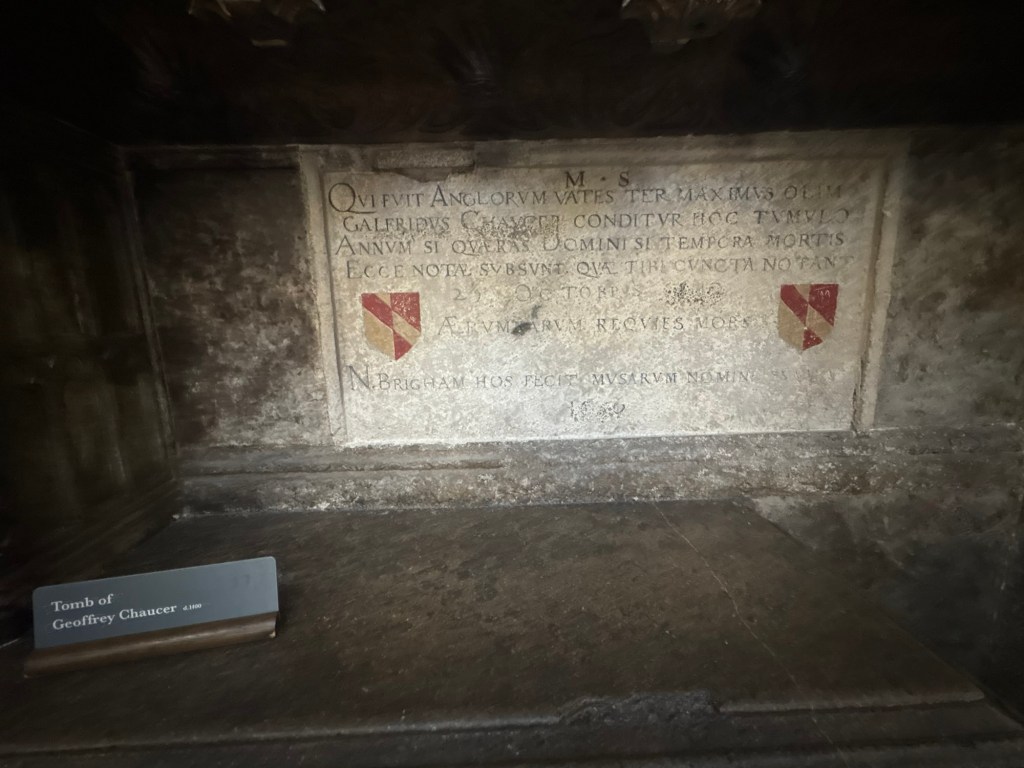
Geoffrey Chaucer
Born around 1342 & was laid to rest in Westminster Abbey on October 1400.
Father of English literature! Chaucer is known as the first English author. His most famous work is The Canterbury Tales, which is unfortunately unfinished. He came from a prosperous family of wine merchants and vintners.
Before Chaucer, serious European literature was written in Latin or French. Latin (the language of religion & science) & French (the language of royal court).
English was considered a crude language for commoners. Chaucer changed this by writing in Middle English and was the first writer to elevate English into a language of high art. So cool!
This shifted the literary tradition away from Latin & French.
“For thogh we slepe, or wake, or rome, or ryde, / Ay fleeth the tyme; it nyl no man abyde.”
Translation: “For though we sleep, or wake, or roam, or ride, / Always time flees; it will wait for no man.” – The Clerk’s Tale in The Canterbury Tales.
With the amount of hype that was built up around the idea of a day trip to Bath, I was positive that it would fail to meet such high expectations. But, after spending an entire day there, I can confirm that it is a pretty remarkable place. We began the day with a train ride that was about an hour and a half to two hours long. We’ve been riding the tube as a group every day, but this was our first extended train ride of the trip. Cate, Joclyn, Trevi, and I all sat by each other and passed the time getting to know each other better and playing crazy 8’s. After we arrived in Bath we had about 30 minutes to explore before our scheduled tea time. We went into a couple of fun candy shops, and then went into the visitors center to get a better understanding of the area. They gave a brochure with the must-sees of the city, so we stowed that away because it was time for tea.
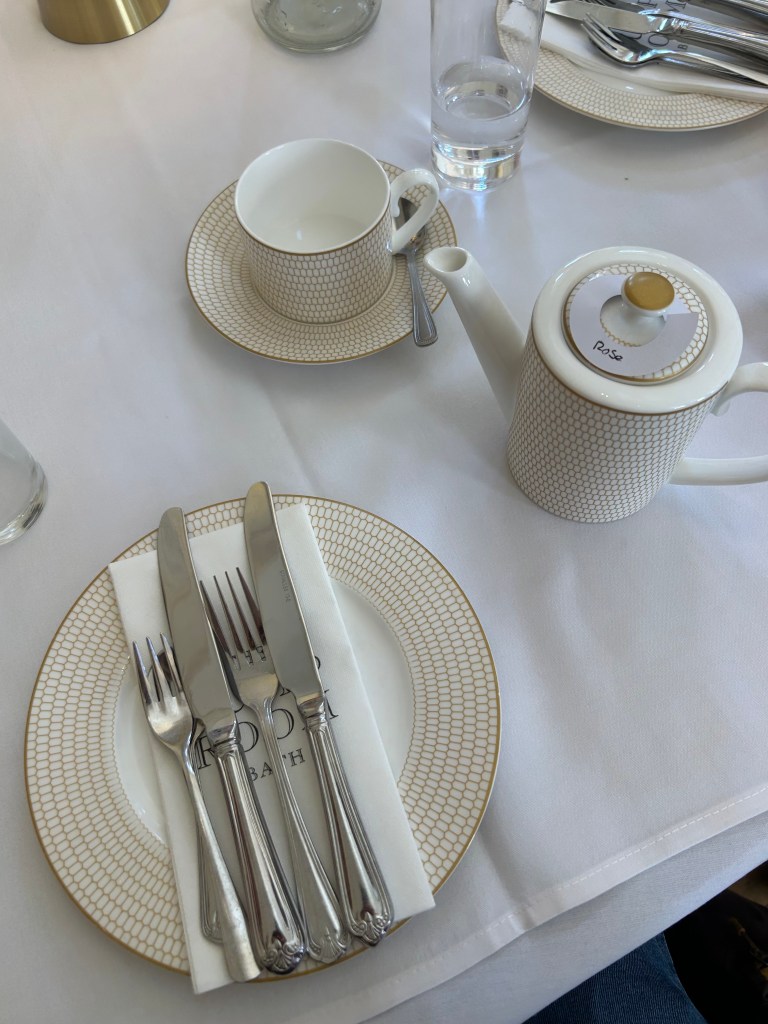
I find the invention of afternoon tea to be such a whimsical thing. According to thebritishmuseum.org, afternoon tea was started by the seventh Duchess of Bedford, Anna Marie Russell, around the year 1840. With the rise of industrialization and specifically gas lighting around this time period, the wealthier classes started eating their dinner later and later. Russell did not enjoy the large gap between lunch and dinner, and felt incredibly hungry at around 5:00. One day she requested tea, bread, and cake to be brought to her room in the late afternoon. This simple request caught on, and afternoon tea was born. With England being such an old place with deeply rooted history, you would expect for there to be a ritualistic origin, but no, the now famous activity was started because of one iconic woman wanting a little treat.
I am so glad that Russell wanted this little treat, because boy did I enjoy afternoon tea. The atmosphere was so prim and proper, and felt straight of a show you would see on BBC. The tea was delicious, and the finger foods were fresh and light. I have never added milk to my tea before this trip, but I do quite enjoy this addition to a tea. The group at my table did get caught up in the whimsy of the event, and all pretended that we were higher class folk enjoying an afternoon tea together. So much joy was shared during this experience, but I would recommend taking off the posh British accents when actual British people walk by. I got caught up in the bit and fully responded to someone in the most obnoxious accent. Not life ending, but I wouldn’t recommend it if you are trying to hold on to the small amount of dignity you have left as an American tourist.
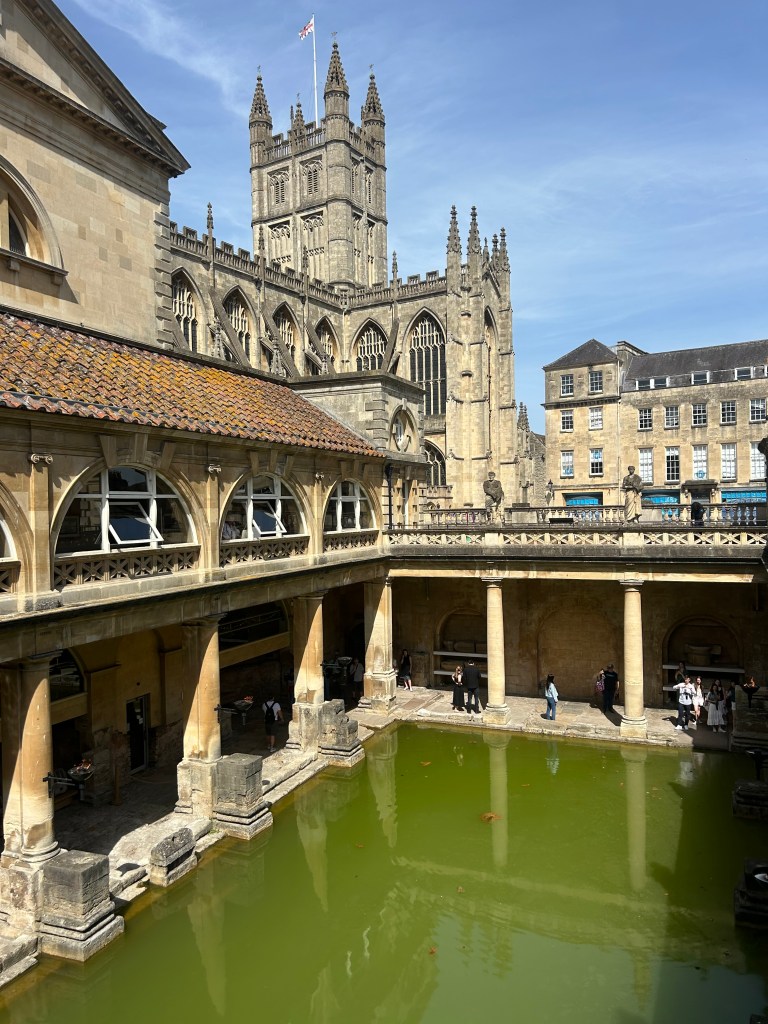
After our tea we got the opportunity to explore the ancient Roman Baths. This was by far my favorite museum of the trip thus far. The museum was built around the ruins of the ancient baths, so you actually get to walk through 2000 year old roman buildings. This incredibly old architecture is something that you just don’t really run into in the United States, so I was in awe of the ancient structures. At the end of the experience you actually get to try some of the spring water. It was warm and full of sulfur, but being the person I am, I drank two cups of it. It was particularly enjoyable, but when in Bath you have to do things for the plot.
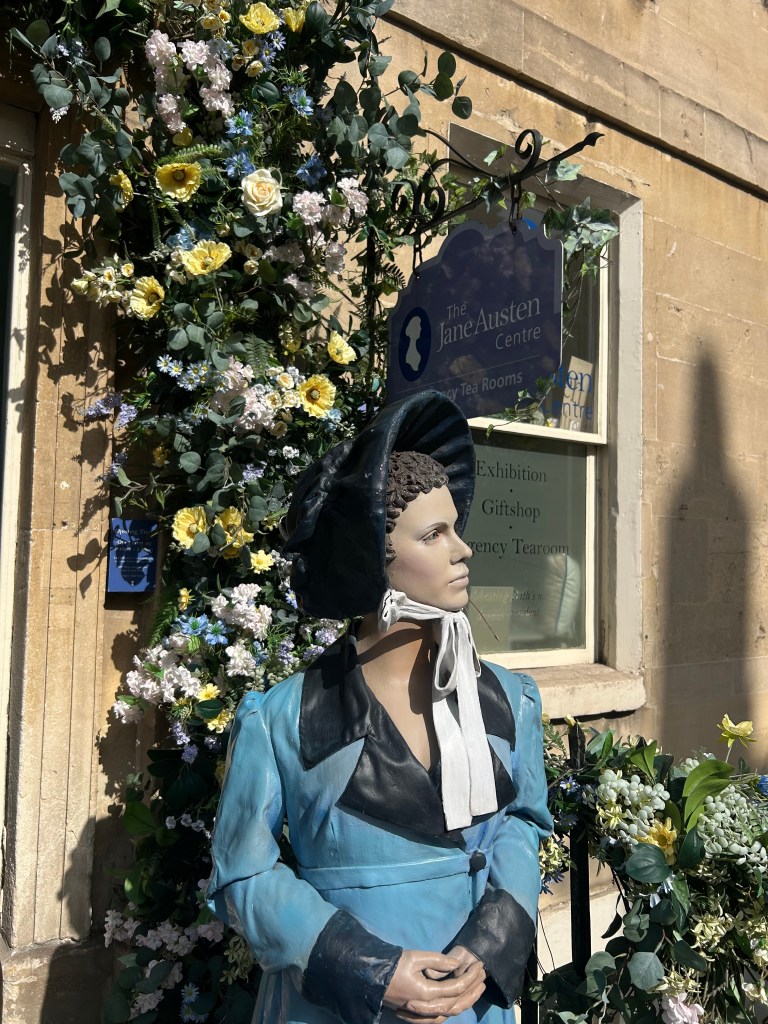
I finished off the rest of my day by enjoying the pretty sights of Bath and finding the Jane Austen and Mary Shelley centers. I didn’t pay to go inside either of them, but the fact that these two remarkable female authors lived in Bath is pretty amazing. Overall, I was a pretty remarkable day.
Tuesday, May 26, is another boiling hot day in London. I will say, it is a good thing that we ventured to Westminster Abbey early, so we did not bake in the line we stood outside in for 20 minutes. Contrary to the rest of today, which was soooo hot, the poets did not mind the heat as their plaques were inside with their bodies buried elsewhere. My lady, Ms. Jane Austen, and my boys William Shakespeare and Charles Dickens were chilling in the 68 to 70 degree cooling, how lucky they are! Enough about their luck, here is what they really did and what earned them a spot in the famous Abbey.
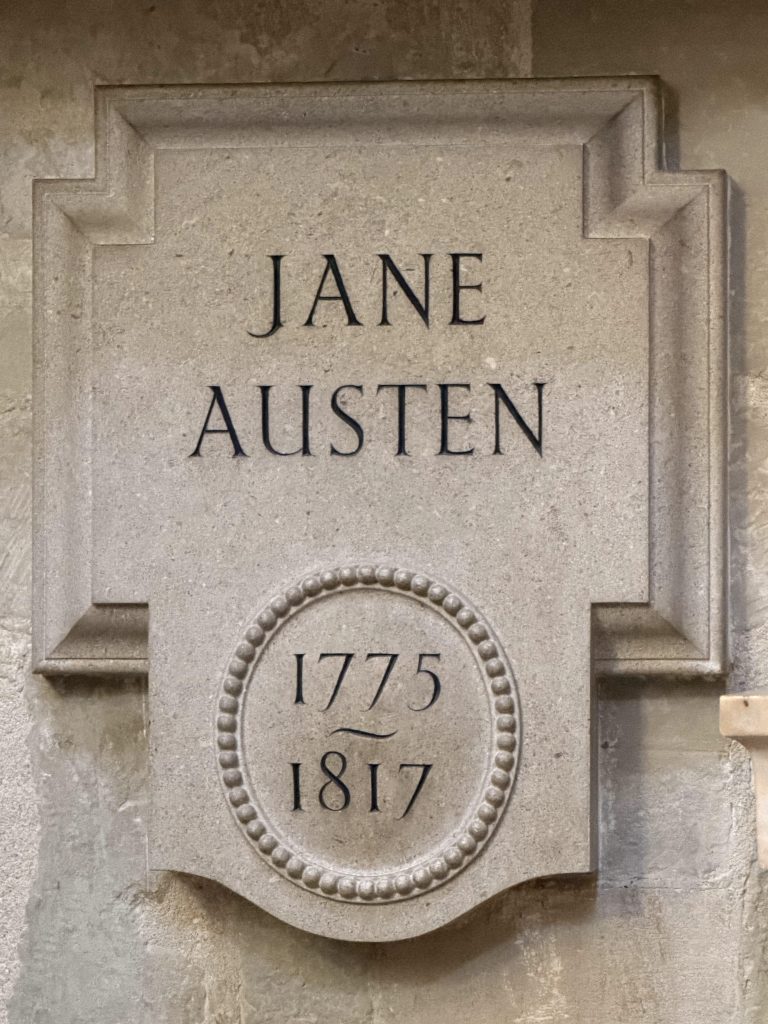
Jane Austen is best known for her work about women’s lives. She wrote the famous Pride and Prejudice, Sense and Sensibility, and Emma. She made her characters feel real and wrote about the pushback and inspiration that women can and should feel in a time when women were dependent on their husbands and had unrealistic expectations imposed on them. During my tour of the Abbey today, I was most excited to find her memorial, only to discover that she had a plaque next to many statues of men on the walls. How ironic is it that she, in her death, which was July 18, 1817, in Winchester, is still facing the issues that she once jokingly wrote about?
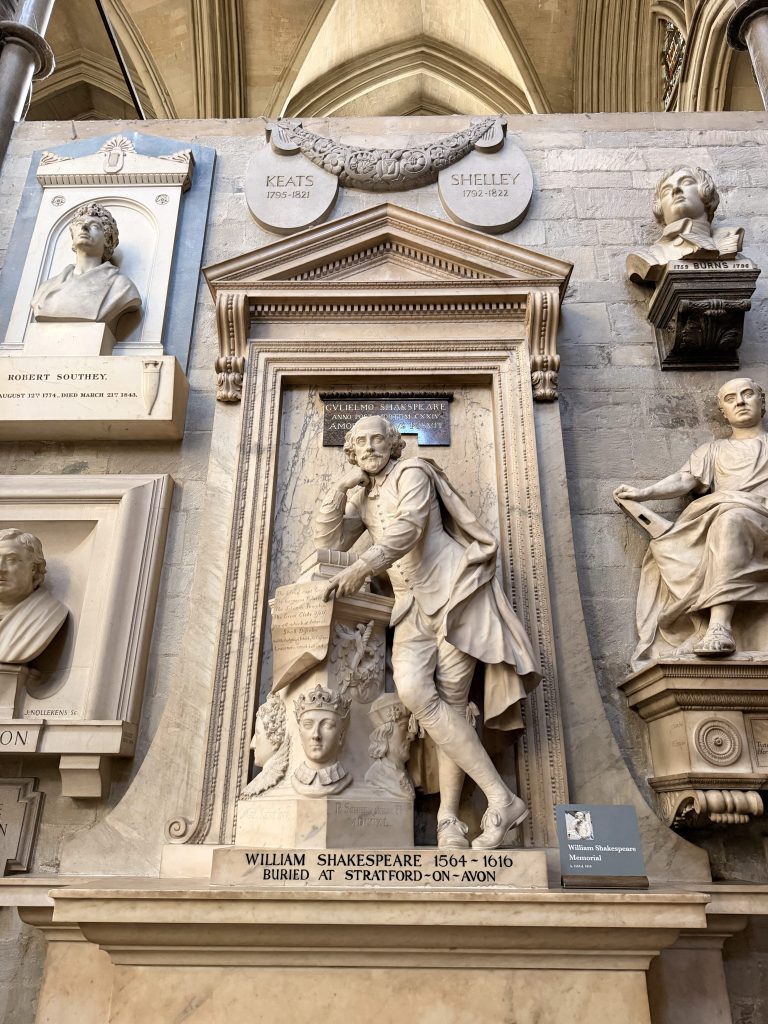
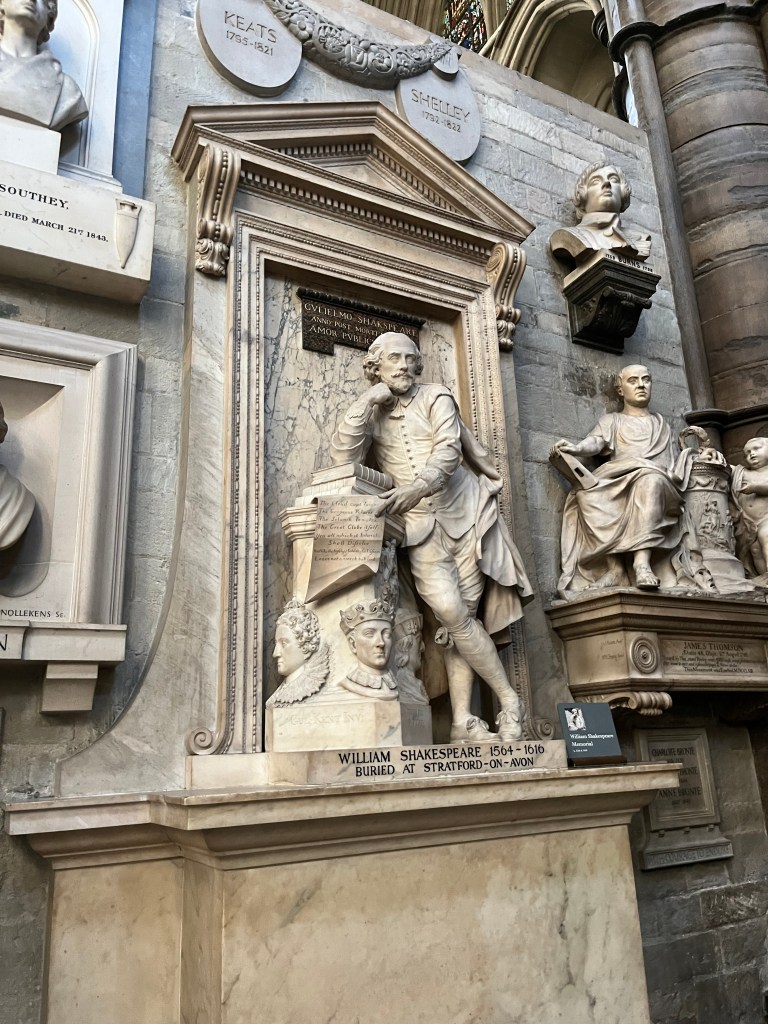
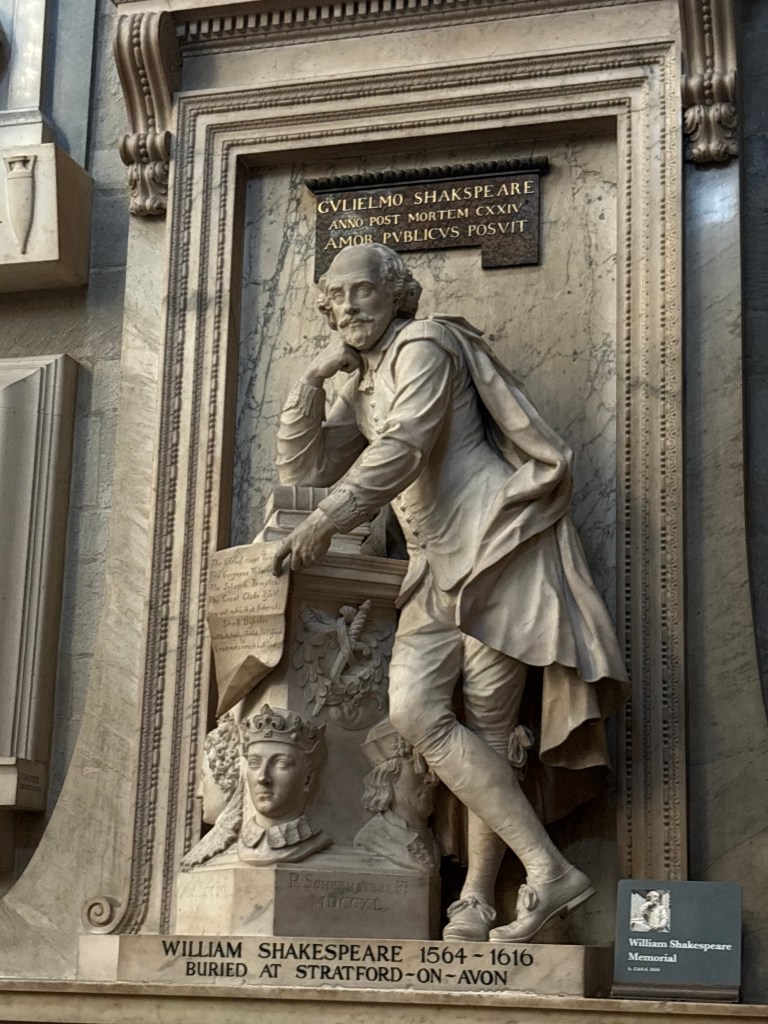
Moving on to the men, one of whom had a giant statue right next to Jane’s tiny plaque, is William Shakespeare. We love him, and if you claim not to have heard of him, you’re lying! A man who needs no introduction, it’s William, who is most famous for his plays Romeo and Juliet, as well as Hamlet, A Midsummer Night’s Dream, and Macbeth. He is an English icon who died on April 23, 1616, in Stratford-upon-Avon, which we will visit soon.
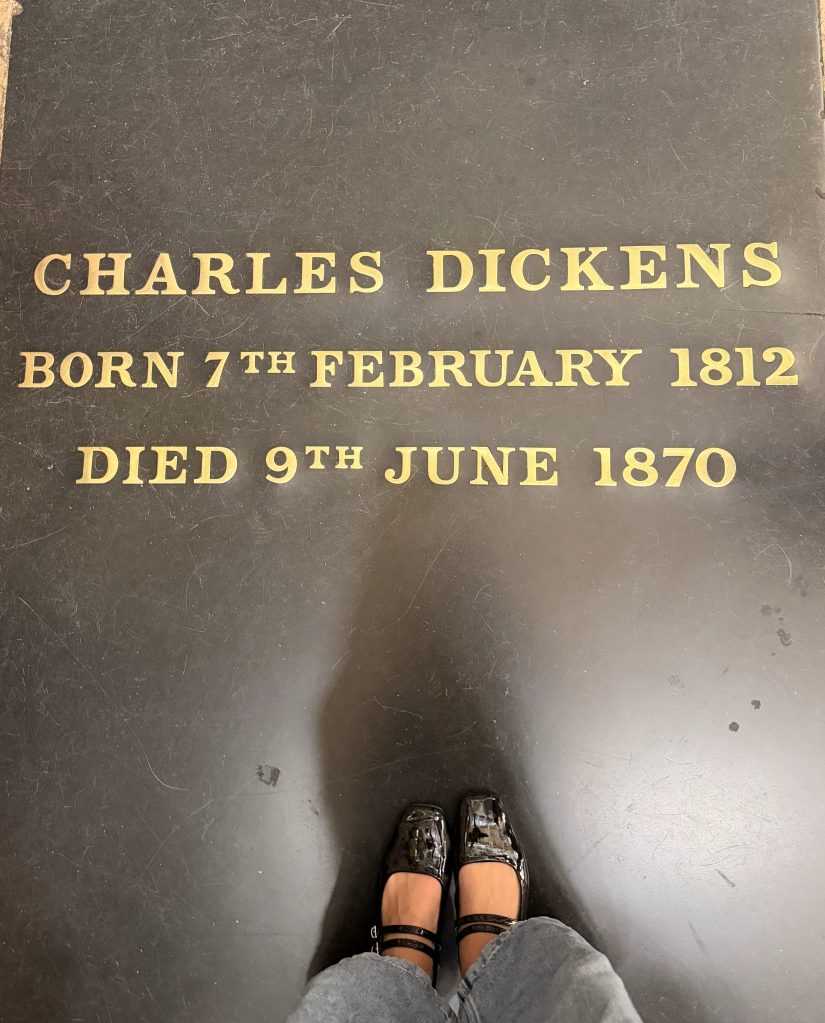
Last man of the hour, it’s you guessed it, Charles Dickens. A man who raised social problems such as child labor, working conditions, and class inequality, now that’s a man! He wrote A Christmas Carol, and I will forever be indebted to him for creating the idea for one of my favorite Disney movies ever. He also wrote other things, but I think I covered the most important one, in my opinion. He died on June 9, 1870, and is actually buried in Westminster Abbey! So even today, he gets to enjoy the cooler temperatures while the rest of London almost gets heat strokes.
As Taylor Swift once coined, “The Tortured Poet’s Department” (TTPD), Austen, Shakespeare, and Dickens get to sit forever known with plaques, statues, and burial grounds, in their own version of TTPD, the “Tortured Poet’s Corner” (TTPC).
I absolutely loved Westminster Abbey!! What a beautiful place!! It was boiling hot today so it was nice to cool off at one of the most beautifully crafted places in London. I was so interested and surprised by all the names, graves, and monuments I found throughout. The one thing that I will say is, what’s the thing with basically none of the women writers having statues or big monuments… it’s giving sexism!!
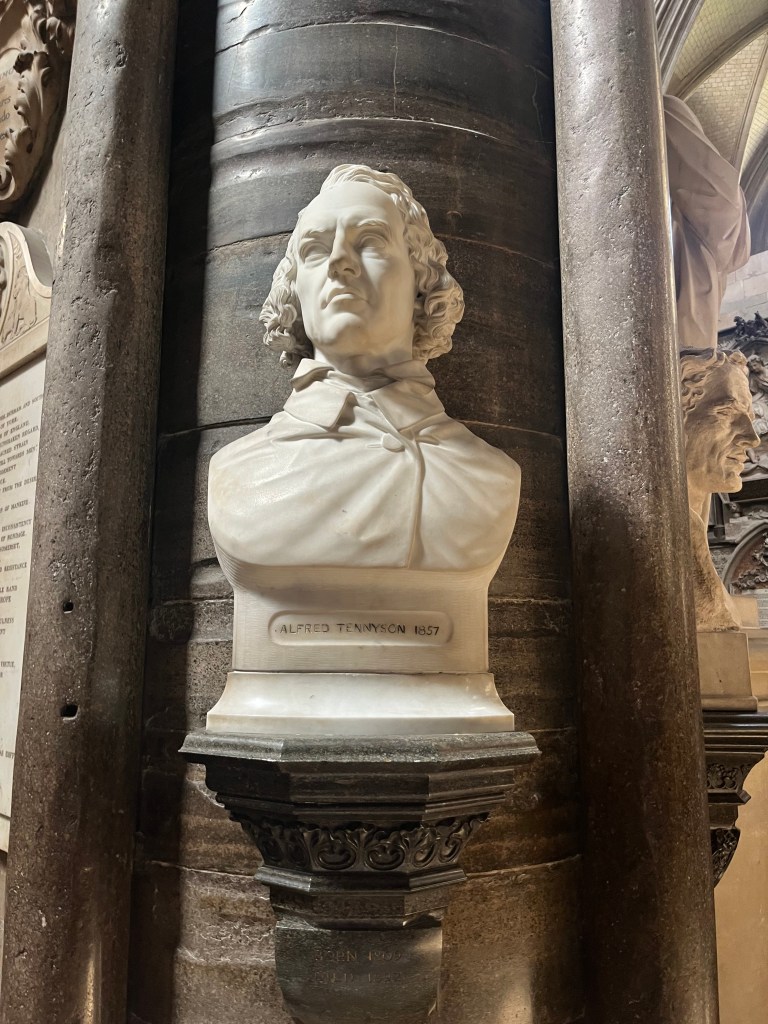
Alfred Tennyson was one of the most famous poets of the Victorian era in Britain. His poetry is known for its emotional depth, vivid imagery, and themes of nature, loss, heroism, and the passage of time. One of his most famous works is “The Charge of the Light Brigade,” which is about British soldiers and their bravery in the Crimean War. My favorite part of the poem is, ” Theirs not to make reply, Theirs not to reason why, Theirs but to do and die.” His poetry reflected on many Victorian concerns at the time such as scientific changes, religion, and conflict between tradition and progress.
William Shakespeare is widely considered on of the greatest writers in the English language. He was born in Stratford-upon-Avon (I cannot wait to visit!!) and became a famous playwright, poet, and actor during the Elizabethan and Jacobean periods. His work is still studied, taught, and praised heavily today.
Shakespeare’s plays were usually divided into the three categories of tragedies, comedies, and histories. Some of his bigger plays were Hamlet, A Midsummer Night’s Dream, and Henry V. Many of his plays were shown at the Globe Theatre (shoutout!!!). His writing was famous for its emotional depth, memorable characters, and creative use of language. Fun fact, Shakespeare coined the phrase, “break the ice.” Even though his plays were written so long ago, many people can still relate and connect with them today.
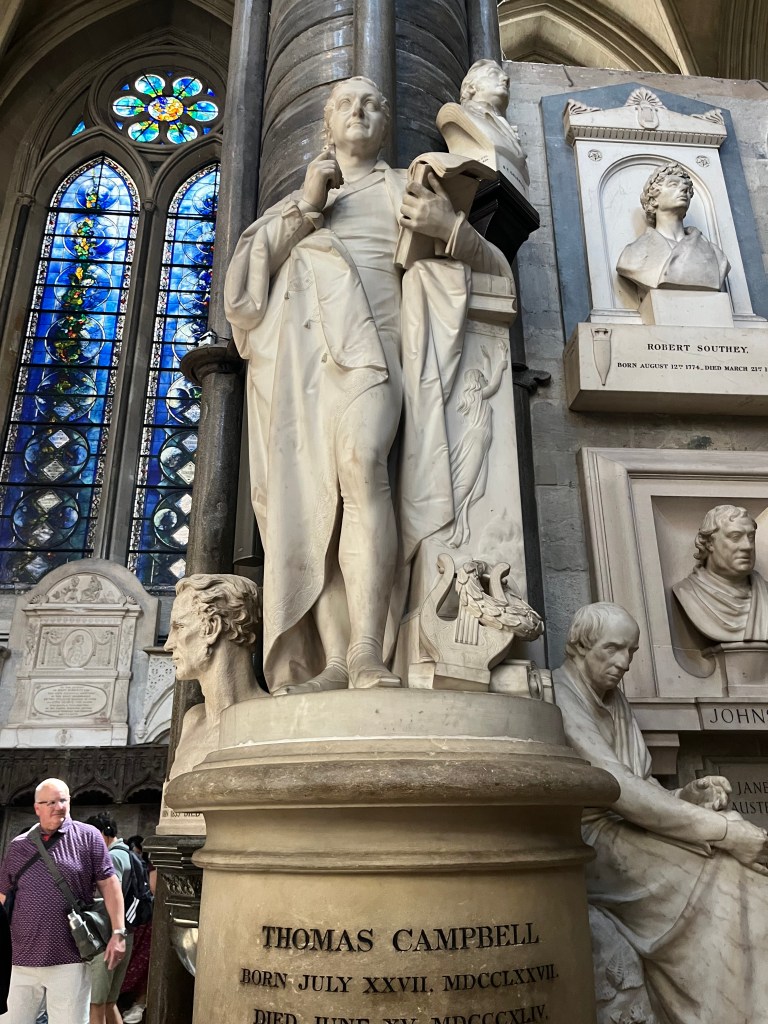
Thomas Campbell was a Scottish poet born in Glasgow. He was famous during the Romantic period for his poetry that focused heavily on patriotism, heroism, and strong emotion. His writing used musical language and dramatic storytelling.
He is famously known for his poem, ” The Pleasures of Hope,” which was a super long poem that reflects on freedom, human progress, and optimism. My favorite line from the poem is “Tis distance lends enchantment to the view,” which means that things often seem more appealing when viewed from far away or remembered from the past. Fun fact, Campbell also founded the University College London. He was a big supporter of education and liberal political causes.
Today we took a tour of Westminster Abbey, and it was beautiful. All of the different tombs and sculptures as well as the stained glass and design of the ceiling gave the entire place the reverence that it’s more than well known for. In one section, there were a ton of plaques and statues in place in honor of actors, writers, and artists.
One plaque that I found was for Charles Dickens, the famous Victorian-era author who wrote classics like A Christmas Carol, Great Expectations, and Oliver Twist. He died on June 9, 1870, and was added to Westminster Abbey on June 14, 1870. I wish he could have seen A Muppet’s Christmas Carol, I’m sure he would have loved it.
Another plaque I saw was for Lord Byron, his full name being George Gordon Byron. He was an English poet and was responsible for creating an image of the “romantic hero.” This hero has flaws and is passionate and has a drive in the story, helping people relate to a character who, despite having flaws, you want to see reach their goals. He died on April 19, 1824, and was added to Westminster Abbey on May 8, 1969.
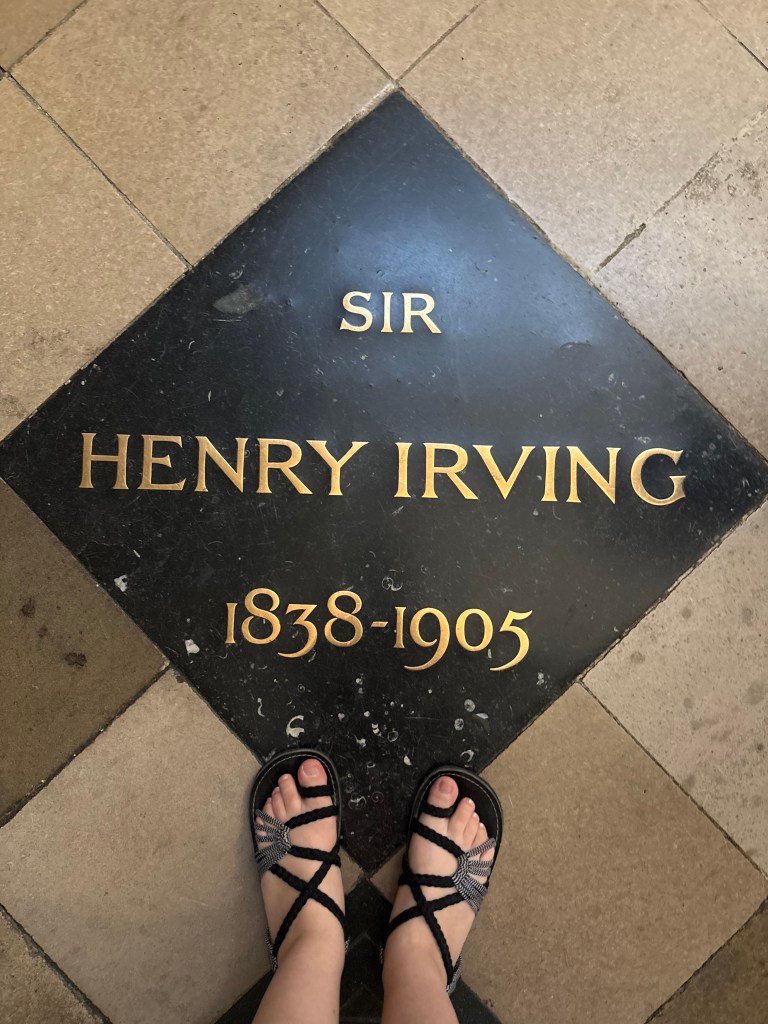
Another plaque belonged to Sir Henry Irving, an actor in the late 1800s and the early years of the 1900s, who viewed his career of acting as just that, a career, in a time where it was not seen as a full on profession. He was also one of the first actors to receive a knighthood! Irving died on October 13, 1905, and was added to Westminster Abbey just a week later on October 20, 1905.
Both the inside and the outside of Westminster Abbey were beautiful to look at. I love seeing the architecture of these old buildings and wondering about the purpose behind all of the design choices.
We had the incredible opportunity of visiting Westminster Abbey! I was in complete awe as we walked up and as I walked around the Abbey. The architecture was absolutely incredible! So much detail. And the graves were so extravagant. I need to commission someone immediately to make my grave. It’s going to take them awhile.
There were a lot of queens and kings there. But what was the most interesting were the graves and memorials for actors and writers. These were in what was called the Poet’s corner. Those buried include Charles Dickens, Sir Henry Irving, and Geoffrey Chaucer. Those memorialized include William Shakespeare, Jane Austen, and The Bronte Sisters.
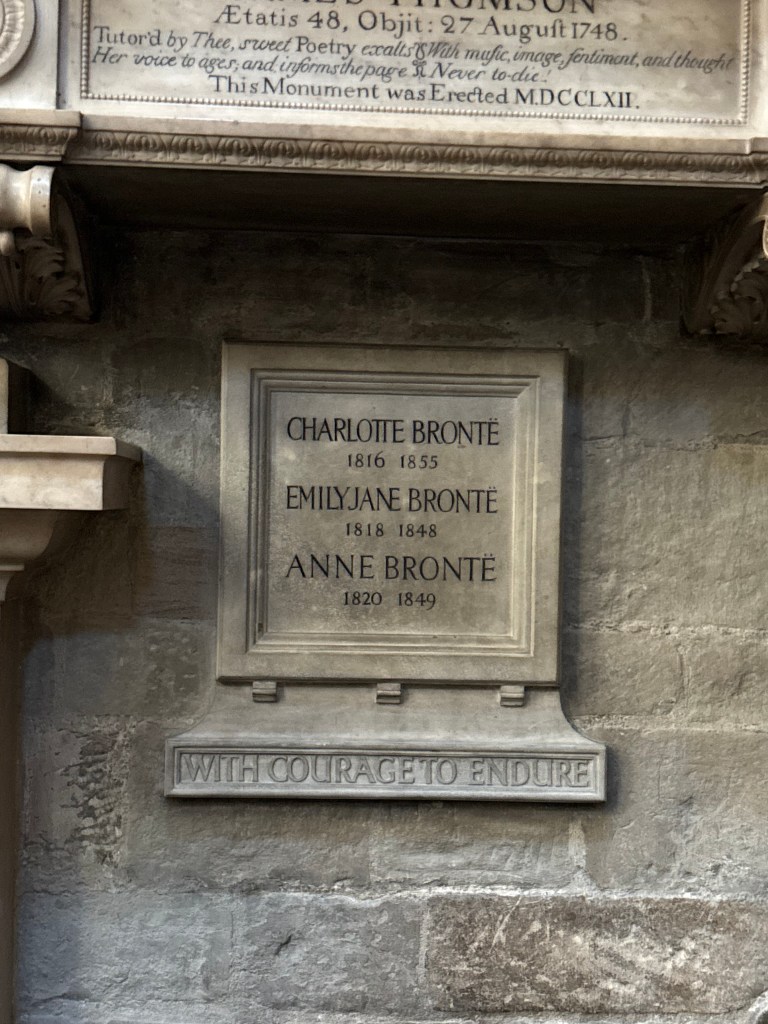
The Bronte Sisters were a trio of sisters who were all writers in the 19th century. They published their works under male pseudonyms: Currer, Ellis, and Acton Bell. Their real neames are Charlotte, Emily, and Anne Bronte. Charlotte wrote Jane Eyre, Shirley, Villette, and the Professor. Emily wrote Wuthering Heights. And Anne wrote Agnes Grey and The Tenant of Wildfell hall. Together, they wrote a shared volume of their poetry.
Sir Henry Irving was an actor. He was the first actor to be knighted. Fun fact, Grace pervades was about him. That was the play we watched that I wrote a review about. He grew up with his aunt raising him, who very much disapproved of his passion for theatre. He grew to be one of the most influential actors. He was given Bateman’s theatre company after the death of Bateman and after Bateman’s wife ran it for a few years. He dies at the age of 68 while on tour for a performance of Becket.
Geoffrey Chaucer was an English poet and writer in the fourteenth century. He is best known for writing the Canterbury Tales. He is known as the “Father of English literature”. He helped establish English as a legitimate literary language.
Overall, I really enjoyed walking around the Abbey. There was a beautiful little courtyard and a peaceful garden that was a part of the school at the abbey.
Mother Courage and Her Children by Bertolt Brecht at Shakespeare’s Globe is one of many anti-war shows we have seen in London. However, its unique style lets it stand out distinctly from every other play. Today, shows on the west end employ a lot of realism and naturalism tactics. But the Brechtian style strives to be exactly opposite of that. Brecht wanted the audience to be reminded of the fact they were watching a play and not be emotionally invested in the story. In Mother Courage and Her Children, actors frequently interacted with the audience, either by making eye contact with them or speaking directly to them. The characters in the play acknowledge when they sing and the inherent theatricality of it. And instead of carrying dead characters offstage, they roll them into a pit in the middle of the stage. There were frequent reminders of the play’s unreality, though it may not have been to Brecht’s standards. The gunshot sound-effects and smell of smoke in the air felt extremely life-like. As did the use of gore makeup and fake blood on the actors, especially Swiss Cheese and Kattrin. Additionally, the direction and the acting in the deaths of each child as well as Kattrin’s attack made it hard not to be emotionally invested in these characters. In these moments, the actors played realism and I saw many audience members around me tear up. I think Brecht would have been appalled by this and heavily disagreed with how it was directed. But that is not a bad thing in my opinion. For audiences in the modern age, I think you have to tug at their empathy and emotions to make them care about the story you tell. Although it wasn’t the exact definition of a Brechitan work, this production of Mother Courage and Her Children was greatly inspired by Brecht’s theories while also being more accessible to modern audiences.
Our trip to Westminster Abbey was very educational and historic as well as beautiful and elegant. We saw many famous British people that were buried there or had a memorial including Jane Austin, William Shakespeare, Stephen Hawkings and Charles Dickens. It was surreal to see so many famous legends memorialized in one place. We were given a listening guide as we toured this grand cathedral with different sections paired with the specific rooms and exhibits such as statues and plaques. It was very interesting to listen and understand the history behind the major parts of Westminster Abbey.
Seeing a William Shakespeare monument was especially fun for me as I have just read and studied multiple of his famous works and just seen a play in his globe theatre! He was born in April 1564 and died in April 1616 both in Stratford-upon-Avon. William Shakespeare was known for his play writing, poems, and acting. He is widely regarded as the greatest writer in the English language and was referred to as “the Bard”. His famous plays include Hamlet, Romeo and Juliet, King Lear, and many more.
I was pleasantly surprised to get the opportunity to see the Stephen Hawkings monument as well. He was born in January 1942 in Oxford and died in March of 2018 in Cambridge. Stephan Hawking was an English theoretical astrophysicist, cosmologist, and author who was a director of research at the Centre for Theoretical Cosmology at the University of Cambridge. He is especially known for becoming a world-renowned pioneer of the black-hole theory.
The guided tour that was supplied to us specifically mentioned Jane Austin who I deeply respect as an author. She was born in December 1775 in Steventon and died July 1817 in Winchester. Jane Austin was an English writer, famously known for her novels Pride and Prejudice, Sense and Sensibility, and many more! It was very special to be able to experience these monuments in this luxurious cathedral.