Scrubby dub dub, I did not get in the tub.

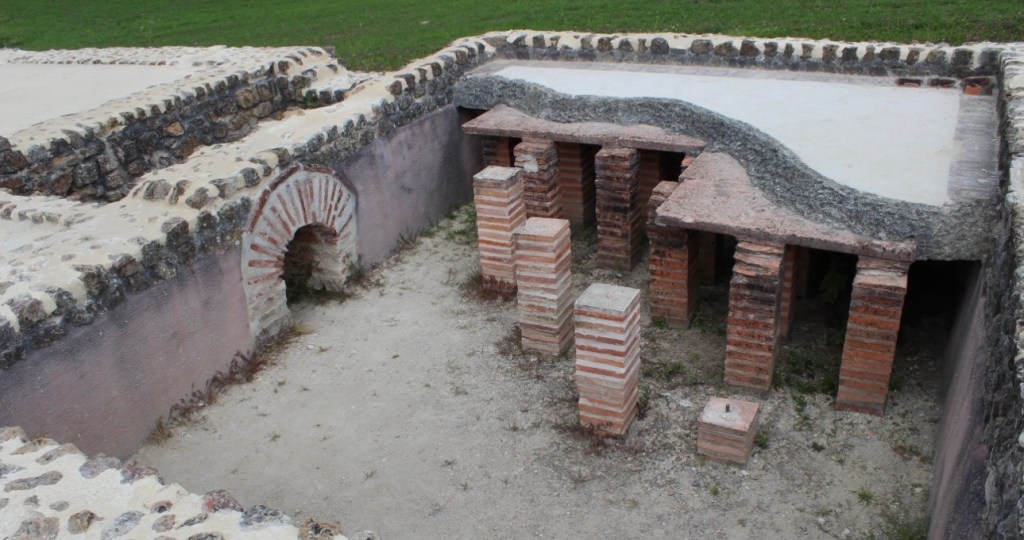
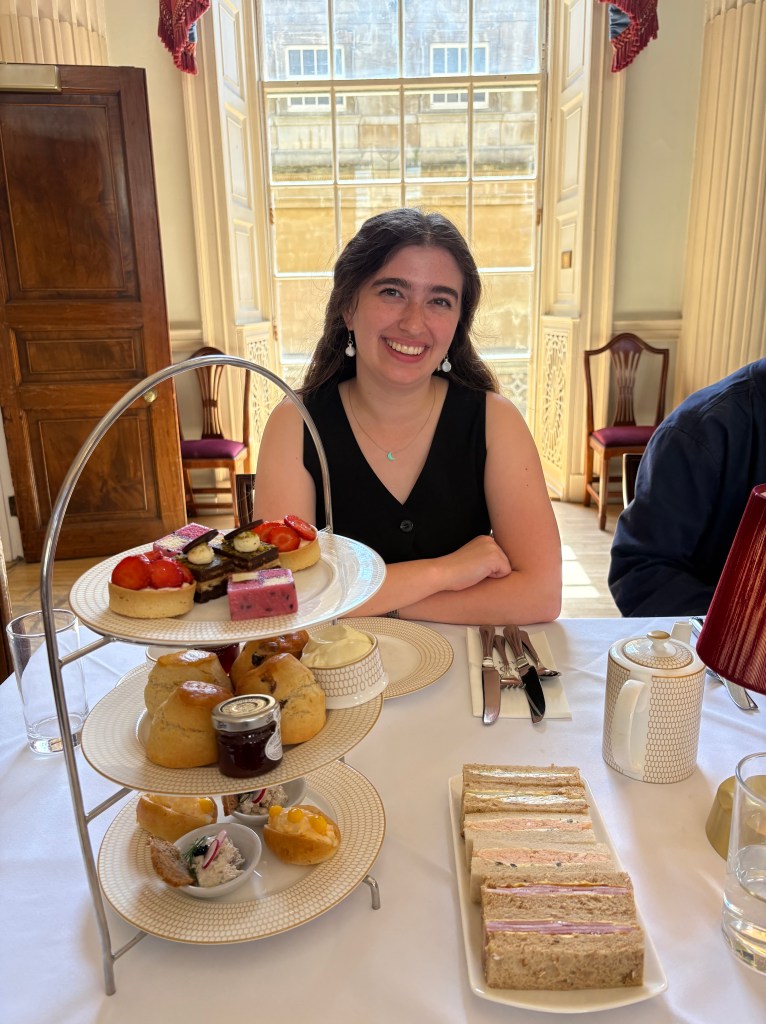
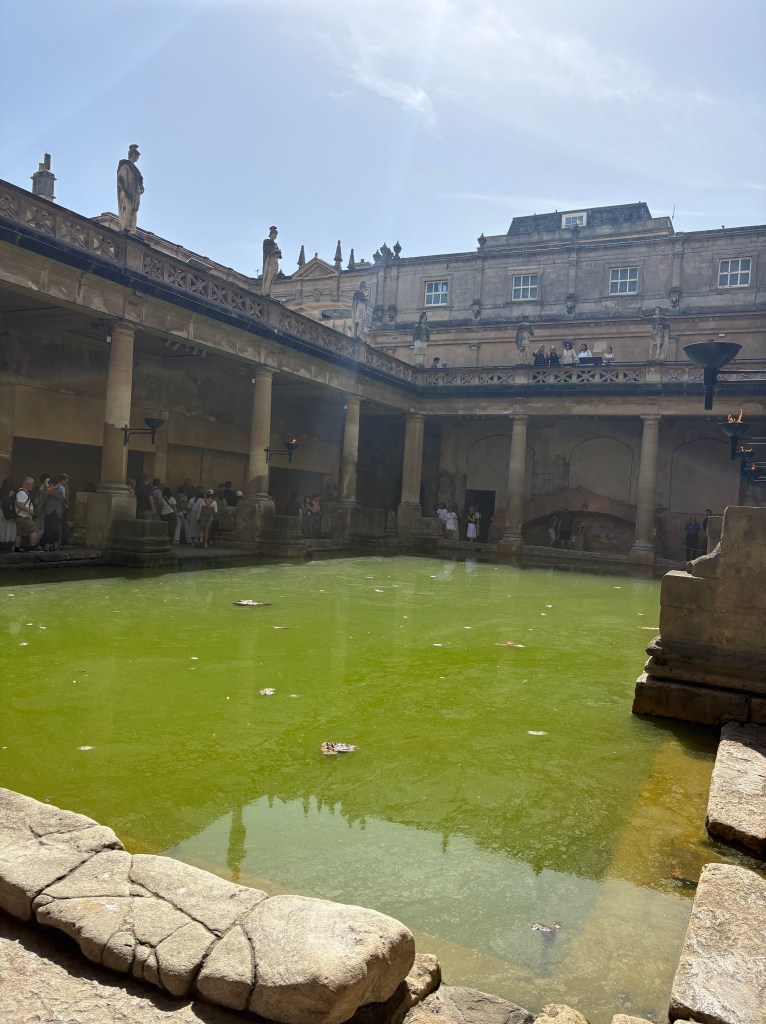
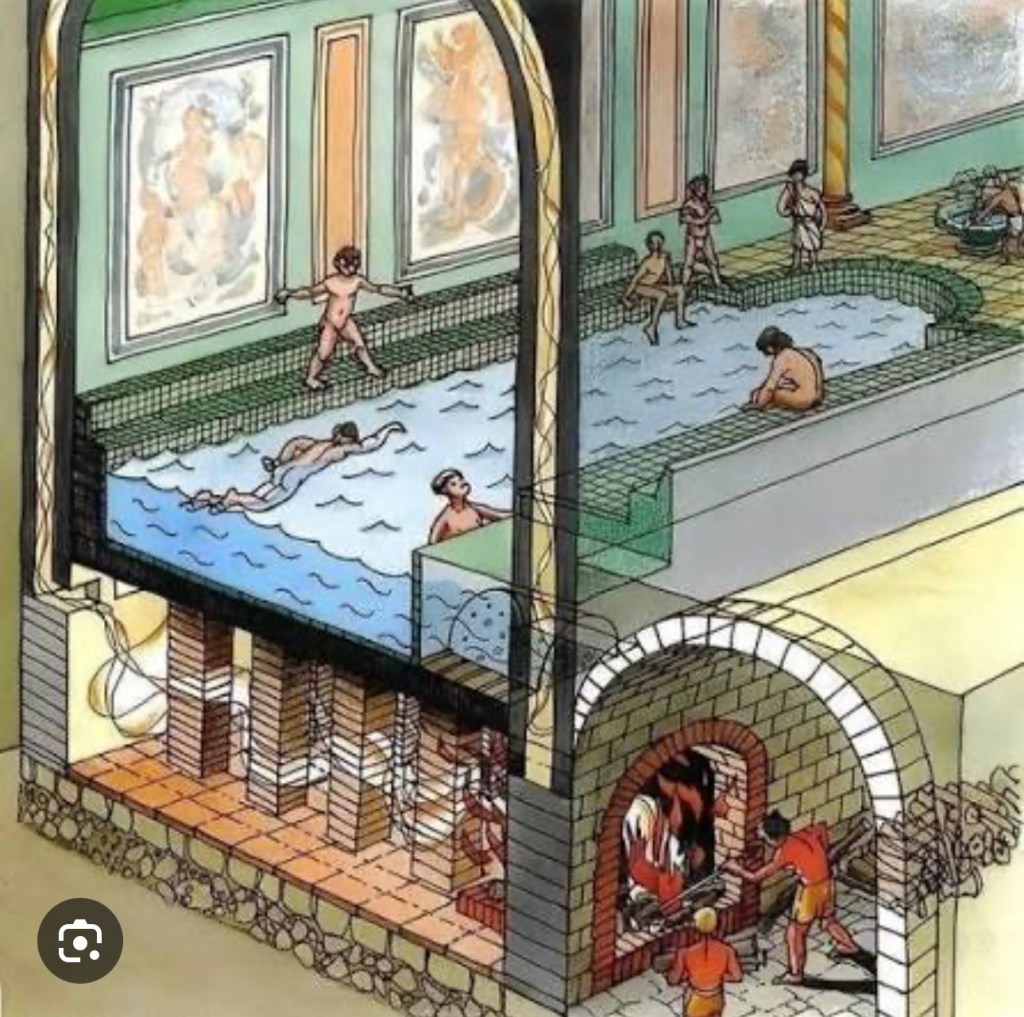
We went to Bath! It has been one of my most favorite parts of my time here. I got a fun new pair of pants that I am very excited to wear! I found a pair of sunshine earrings that I have been searching for for quite some time now. But…I did not get them. They were a little plastic looking for my taste. So the hunt continues! We had tea that I actually liked! That is a difficult thing for me. I have only had a few teas in my life that I have liked. And there were sandwiches and scones and… DESSERTS! Then we went around some shops. We then met up to tour around the Roman bath houses. That was a really neat experience. The fact that a lot of the bathhouses were preserved is incredible. As I walked through the place, I imagined myself in that time, and what I would have done. It was really cool! I was so immersed that I didn’t take any pictures except for one of the main spring that was a yucky green. Just about all of the history of the baths interested me. What I found really cool was how they heated the flooring and the baths. They used a double flooring system. Almost like a hollow floor.There was the bottom floor, and then stacks or towers of rocks to support flooring above that. Then people would throw hot coals into the floor sand which, and the hot air would circulate through the floor and would become trapped, heating the above floor of the sand which. 

Here are some pictures that help show this. They are pictures that I got off of the internet:
Screenshot
Screenshot

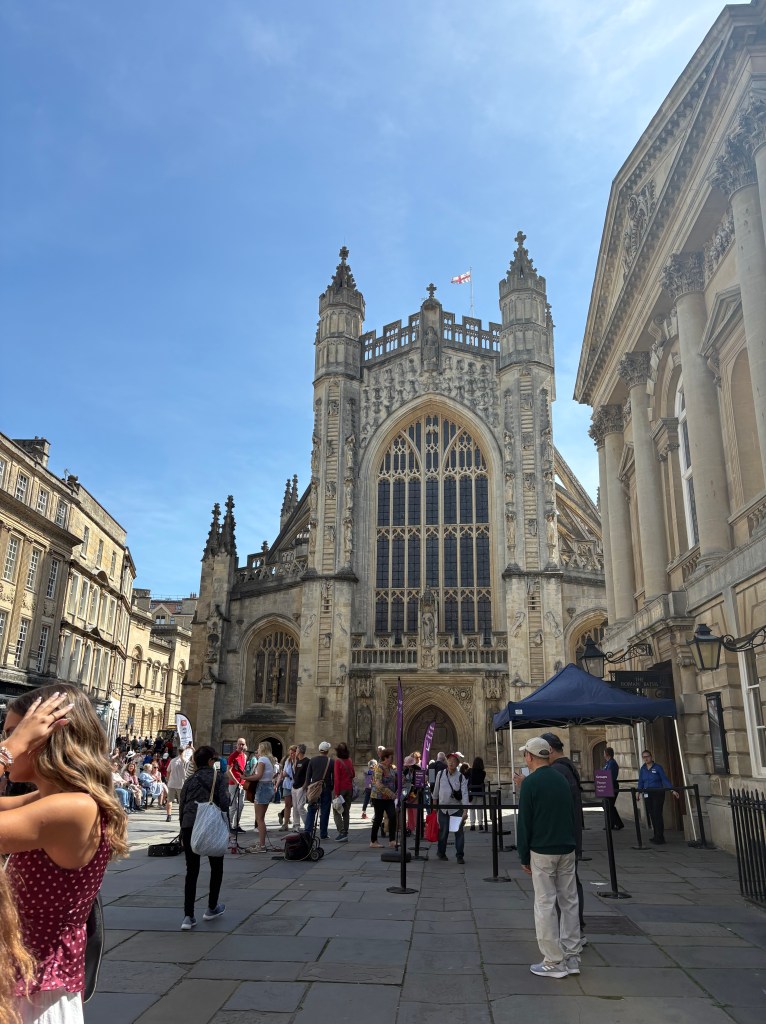
Bath felt very different from London. The architecture was different. It felt more Roman in a way. There were a pretty good amount of columns. It was also very charming with the street vendors and people busking on the streets. And all of the people busking were insanely good. All of the shops were fun too. Overall, I loved Bath a lot!!! I would like to go back. It was such a fun experience. And it was so beautiful. 

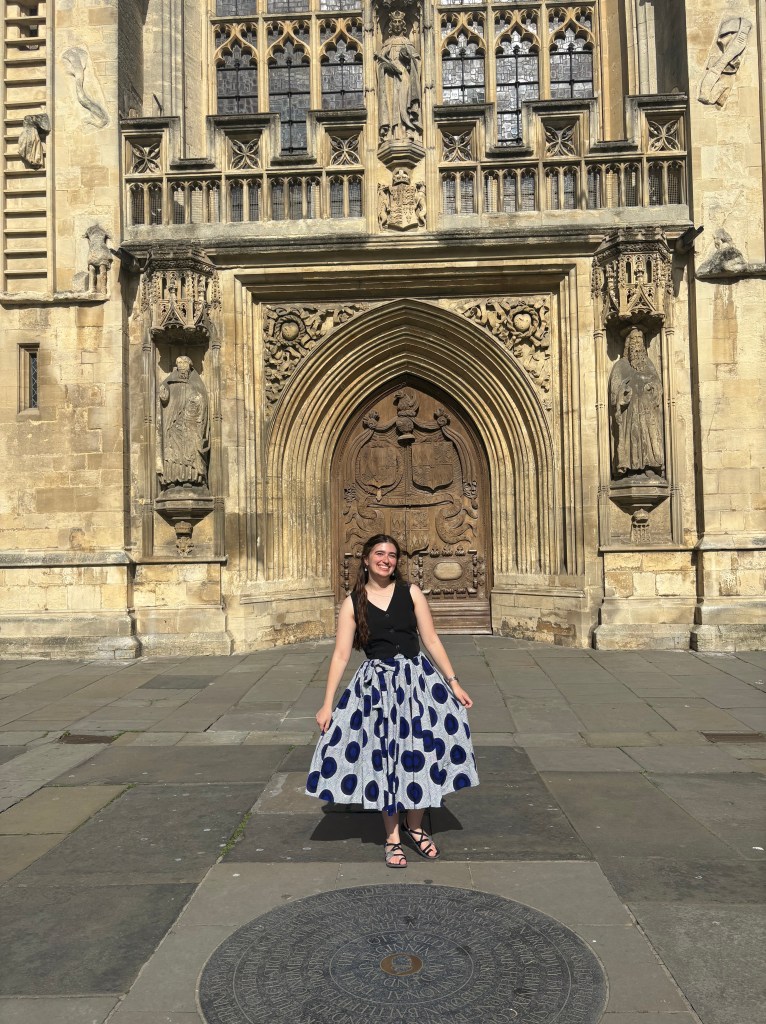
Below are some pictures from the trip:
Not a bathtub in sight…

One of the most interesting, and beautiful aspects, of bath, in my opinion, was the pump rooms. The Grand Pump Room was built between 1789 and 1799 to accommodate the large number of people who wanted to actually drink the waters from the baths. The waters were thought to be rich with minerals and had “healing” powers. The pump rooms are known for having famous visitors such as Jane Austen and Charles Dickens (which I was very excited about). I even went to the Jane Austen Centre to try and see the Jane Austen Exhibit but it was sadly closed for the time we were there that day. The gift shop was open though (of course)!

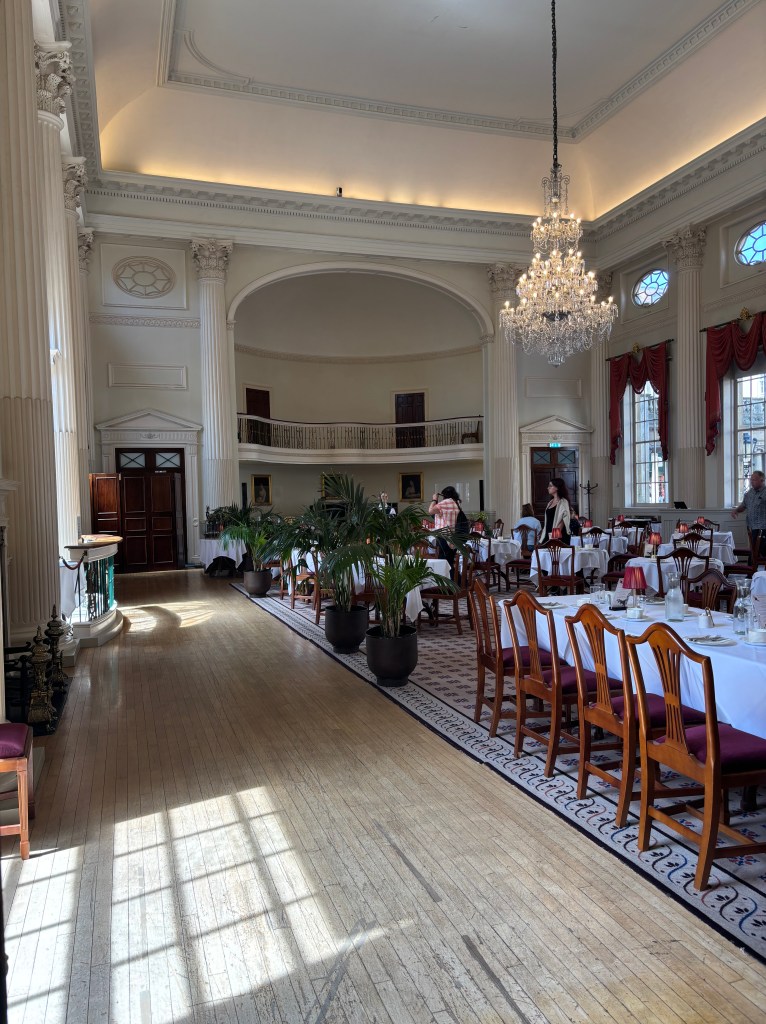
I loved our tour of bath, especially the pump room. It was so cool to experience drinking tea in the very room Jane Austen also drank tea in. The atmosphere in bath for some reason felt completely different than the atmosphere in London. I definitely felt like I was farther away than just an hour or two by train. One of my favorite parts was the street performers. Those are also here in London, but I have not seen as many as I did in just this one trip.

The actual baths were very cool to see in person and learn about. I never realized how intricate the different rooms and systems really were. I only ever really saw the big outdoor bath before going there in person. As my friend Reese found out very soon, the cobblestone around Bath is definitely more of a sneaker friendly road. But this is also pretty prominent in London too. I did feel as though this place was filled with only tourists. It is a very touristy spot so I can see why it felt that way. Once we got out of just the bath area and more towards the main part of town it seemed to be filled with a few less tourists and a few more locals. But overall, I really only got a touristy vibe from this place. It was still beautiful and fun of course though because I am a tourist!!

  • Jill Qualls

Bath! (not as in bubble)

When Shawn first said that visiting Bath and having tea at the Pump Room had been students’ favorite part of the trip in years past, I thought to myself, “How could having tea be that cool?” However, after visiting Bath, I can see why people have said that. It was, indeed, amazing. The whole city of Bath was so full of history and charm, I felt like I had stepped into some kind of period drama. The Pump Room made me feel like I should be wearing satin gloves and lifting my pinky to drink my tea. It felt so different from London, despite it being just under 2 hours from the city. Bath has a very distinct and unified look, like it’s stuck in time. London, on the other hand, possesses a kind of different uniqueness about it- the glass buildings flush against the stone buildings that have stood there for thousands of years. 

I don’t think I will ever get over the feeling of stepping into history. I didn’t anticipate the Roman Baths to be anything awe-inspiring, like all the other things in Bath, yet I was wrong. (again.) There’s something about a city that has thousands of years of history engraved into it, and getting to live alongside it, if only for a day. The cobblestones all along the Roman Baths were proof of the rich history, but also proof you shouldn’t wear five inch heels when touring the Baths. (Yikes, Reese) 

I couldn’t have asked for a more perfect day at Bath. From having afternoon tea at the very Pump Room that Jane Austen did, to peeking into shops tucked between ancient stone buildings, it felt like the day should never end. Shawn, you were right. Bath is pretty cool.

eMoTiOnAl DaMaGe

I’ve been going back and forth on my opinion on this question of the distancing effect and whether I think this production allowed for this or not. I honestly don’t know if I can decide for sure, but I’m going to try to work it out as best I can in this blog.

When reading Mother Courage, I can see this distancing effect kind of come into play, as I didn’t feel very connected to any characters deeply in the play. But I didn’t feel completely disconnected with the characters either. I also don’t believe in Brecht’s idea of distancing being the only way to properly critically think about a play’s larger overarching ideas. I think connecting with characters actually can help in this respect.

This particular production being at Shakespeare’s Globe Theatre also made it very difficult, as an audience member, to be disconnected. Being so close to the actors, close enough to touch their feet if I wanted to (which I did not, but Reese did), made it difficult to not immediately feel some sort of connection. The way they also purposely interacted with and included the audience in the scenes of the play also made this very difficult. With these aspects, it seems to me that this production was not successful in conveying the “distancing” aspect that Brecht was going for.

On the other hand, like it was said in class, I did not feel as personally connected with this play at the end as I did with War Horse. I was absolutely balling at the end of War Horse, mainly because I did feel such a close and personal connection with the characters in that play. I feel like I was focusing on the characters specifically and their emotions. But, with Mother Courage, I did not have as much of a physical reaction. I was still feeling sad for the individual characters, but I left with more of a feeling of awe with how amazing the whole experience of the play was, and thoughts over the bigger ideas of war and motherhood represented within the play. So, with this in mind, it seems like the play actually did succeed at conveying this distancing aspect.

As you can see, I am still conflicted. I think there was some distancing effect, but mainly from the way Brecht wrote the play, and not from the way it was produced. But I also don’t think Brecht would have agreed with the direction this production took because it did allow for such a strong connection to still happen. Overall, I think this production was amazing, whether Brecht would have liked it or not, and I can’t wait to go back to the Globe on Thursday!!!

  • Jill Qualls

Basking in Bath!

Bath was genuinely a dream come true. As a faithful fan of Jane Austen, Bridgerton, English tea, Italian/Roman History, and just the English Countryside in general, I was astonished at how many of my “favorite things” boxes this city checked! 

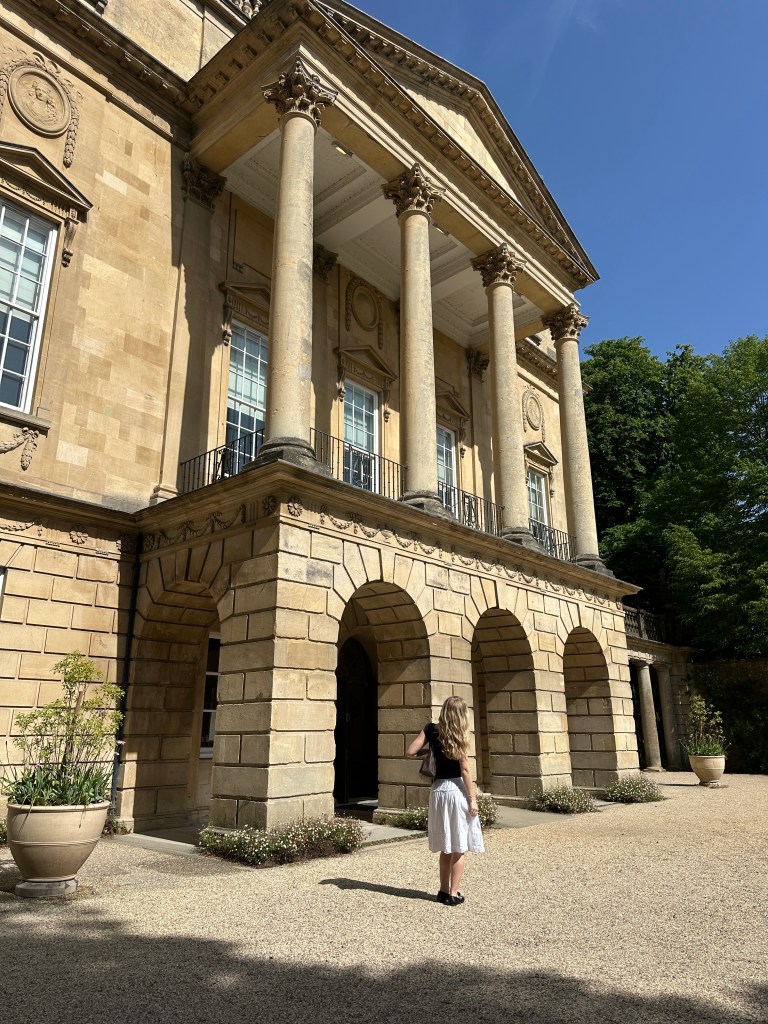
Lady Danburry’s House!!! Like are you kidding??

It was definitely an escape from the hustle and bustle of London, as right when we stepped off the train, I was met with cobblestone streets and miles of ancient stone amidst a green landscape, which automatically makes you walk a bit slower and allows you to see much farther without skyscrapers piercing parts of the view. 

I’ve had the pleasure of visiting Italy three times before, and the architecture and aesthetic of cities I’ve walked in, such as Rome, Padua, and Florence, were quite evident in Bath. However, Bath held that gentle English charm that added a sense of whimsy and storybook to the setting. I felt as if I was walking right into a movie scene, or rather, the movies I make in my mind as I read a Jane Austen novel. (So surreal!) And although seeing the Zaras, Apple stores, and modern restaurants slightly interrupted my historical lens, they also reflected the natural course of progress while existing alongside rich history. That is what I love about Europe, though, its ability to preserve the past while progressing forward. The modern setting is integrated into the bottom of the buildings, so that if you set your eyes above and keep your view on the tops of the buildings, you may be able to convince yourself you’ve traveled back in time. 

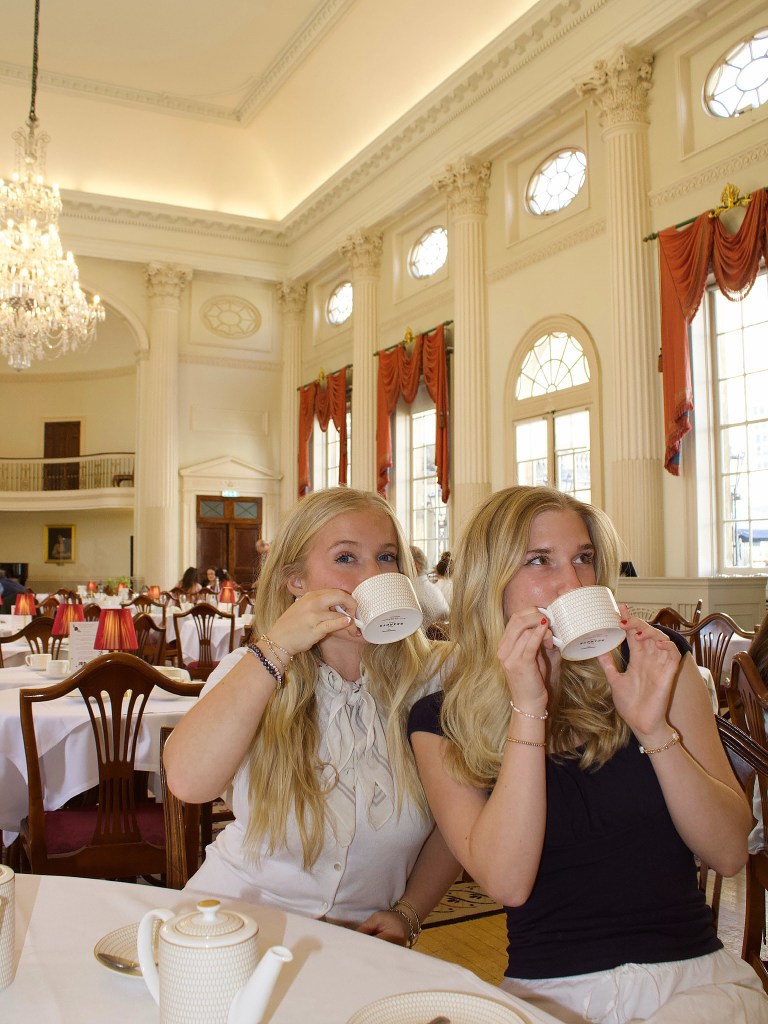
And having tea in the Pump Room, where Jane Austen herself had tea and set scenes in her very own novels, made my heart absolutely swell. It was such a joyous time with my friends at my table as we delighted in the delicious dining, the “lady whistledown tea,” and the discussions that similar groups may have had in that very corner. It was an idyllic tea party to me, and I found it quite hard to leave!

And the culture of this place, oh my goodness. The live music, the kindness in each corner manifested in the bakery owners or the dog-walkers, the tourists and locals relishing in the slowness of it all, you could tell that everyone appreciated this place and took care of it well. As my group and I explored the city, we made new friends with the two women and their dog (shoutout Juno!), having tea by the gardens, and the mother taking her daughter to the playground after they recently moved here from London to escape the hustle of the city. You can sense the calm and restful intentionality in this city that has served as a place of restoration for thousands of years, which leads me into the Roman Baths! 

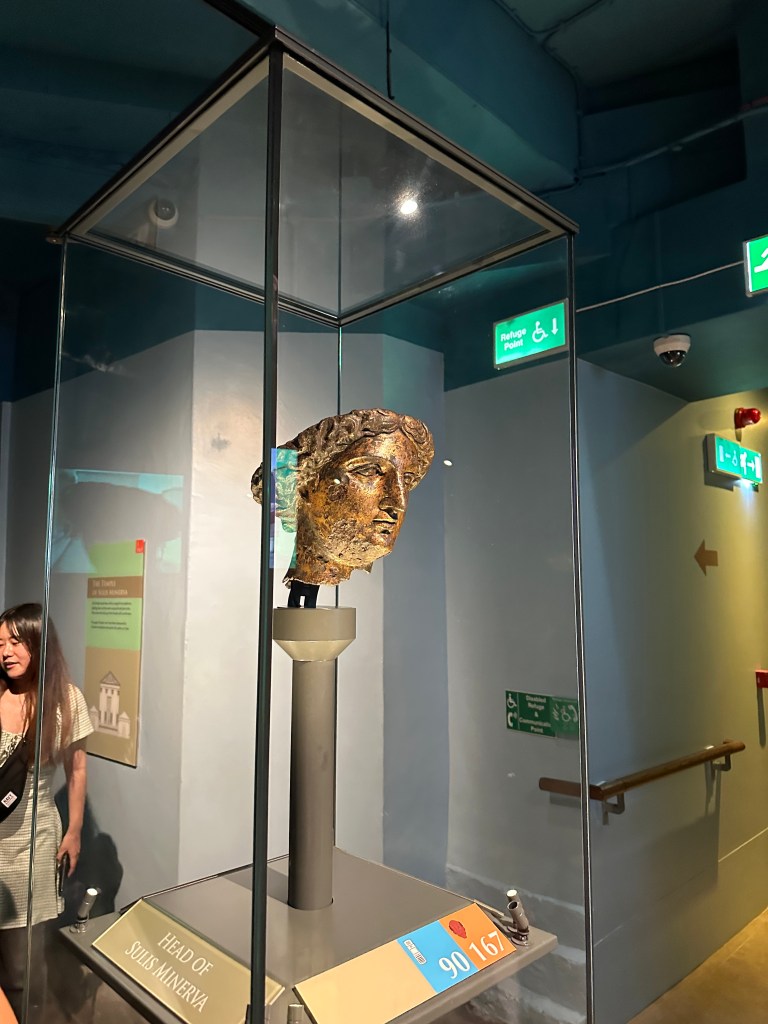
I just love stepping into real historical sites. As an avid reader/researcher fascinated by history, nothing compares to actually stepping into the settings and feeling so connected to the people who also stepped here thousands of years ago. One aspect of the Roman Baths that specifically stuck out to me was the Head of Sulis Minerva. As we were walking through the museum, I stayed behind a moment to snap a picture as it was so interesting! Known as one of the most famous artifacts from Roman Britain, it was discovered in Bath in 1727 and is the only major surviving fragment of a huge cult statue that stood inside the temple. Worshippers believed that the waters contained her healing powers, which caused people from all over to bathe and make offerings. I thought it was interesting how she is a hybrid deity essentially created to attribute the bath’s healing powers to. It always fascinates me how religious the Romans/Greeks were with deities that are so rarely worshiped today, and how that influenced so much of their day-to-day life! 

Overall, Bath was amazing and I will remember it fondly and hopefully be back someday soon!

Fixated on the Stage

I’ve long imagined what it would be like to stand as an audience member in Shakespeare’s Globe Theatre. Ever since I first learned about it in my sophomore-year English class, I’ve been fascinated by the idea of being so close to the performers that you could almost reach out and touch them, all while standing in a faithful reconstruction of the space where Shakespeare’s plays were once performed. (More on that in the blog post later specifically about the globe!) 

For years, it felt like a wild dream. So resting my hands on the very front of the stage while watching Mother Courage was both thrilling and a little daring, especially as the play unfolded in a direction I had not expected. 

I went into this play blind as well, and by intermission I found myself googling and researching everything I could because I was so intrigued in setting and the time-frame of which this play was set in, if any. When I discovered that it was written in 1930s Germany at the beginning of World War II and set in the Thirty Years’ War in the seventeenth century, I quickly realized this production was a kind of modern, dystopian adaptation, and I loved it all the more for that. 

That was when it finally clicked for me… this play, and the themes it explores, do not need to be confined to one specific time period or war. Instead, it serves as a broader commentary on war, peace, family, and courage itself. These are ideas that withstand any era or political climate. And in my opinion, that is the true measure of a play’s impact especially with the social commentary category: its ability to remain urgent, relevant, and timeless. 

And while things are quite different in today’s age and we in the United States are not in the midst of a large-scale war, peace still eludes us. 

And I think that Brecht’s use of “alienation” or “distancing” was meant to prevent the audience from simply becoming passive observers. It pushes us to think critically about what we were watching and to become active judges of the situation and the characters, their choices, and the larger message of the play.  

I thought the globe was the perfect stage. Seeing the performers exit through the crowd on the ground and pop out through the middle section reminded one that this is a show, and it is actively taking place around you. But also with proximity comes connection, and I think that standing that close provided a sense of duty for the characters, to pay attention as their stories unravel, to not blink when they look into your eyes for fear of missing their emotion, to provide them a sense of understanding that you are desperate to know what happens next. I thought that Brecht’s use of narration and directly addressing the audience did more than establish a connection between the performer and the audience, but it also gave the audience a sense of responsibility to stay engaged as the show unfolded. In doing so, the play encourages audience members not only to pay attention in the moment, but also to carry its message with them long after they have left the theatre. 

But I also think this specific production invited audiences to feel the story’s emotion at times. Through the music, the songs, and the raw intensity of the death scenes with visible faces, blood, and suffering. The production made the consequences of war feel personal and real. And I think that was needed in a day and age when we have become desensitized to these kinds of images because we see them on our screens (phones, TikTok, TV) almost every day. Sometimes, emotion is what can be the final push to action, and I think this play balanced critical distance and emotional impact beautifully!

Heels and Bath Don’t Mix

Bath was not what I expected! Before we arrived, I had only a vague idea that it was famously a Roman city, so I was caught off guard when I saw the wall and very Italian-looking architecture. It’s also such an eclectic mix of ancient and contemporary, with limestone pillars and plinths directly next to bus stops and Five Guys. It’s jarring at first, and almost appalling; I always feel indignant that they don’t put a giant gate around old, historic structures and buildings, like. But as you wander the streets of London and notice it more and more, you start to realize that it’s completely mundane here because they’ve existed long enough to accrue hundreds of buildings and sites. It’s just convenient to build a target in a 500 year old building, and the new city has just developed around the old one, so it’s almost like there are two coexisting. I don’t think people view them with the same attention as in the states, although we often destroy what little history we have, only to replace it with suburbs or skyscrapers. At least they keep their history on display. 

#barefootinbath

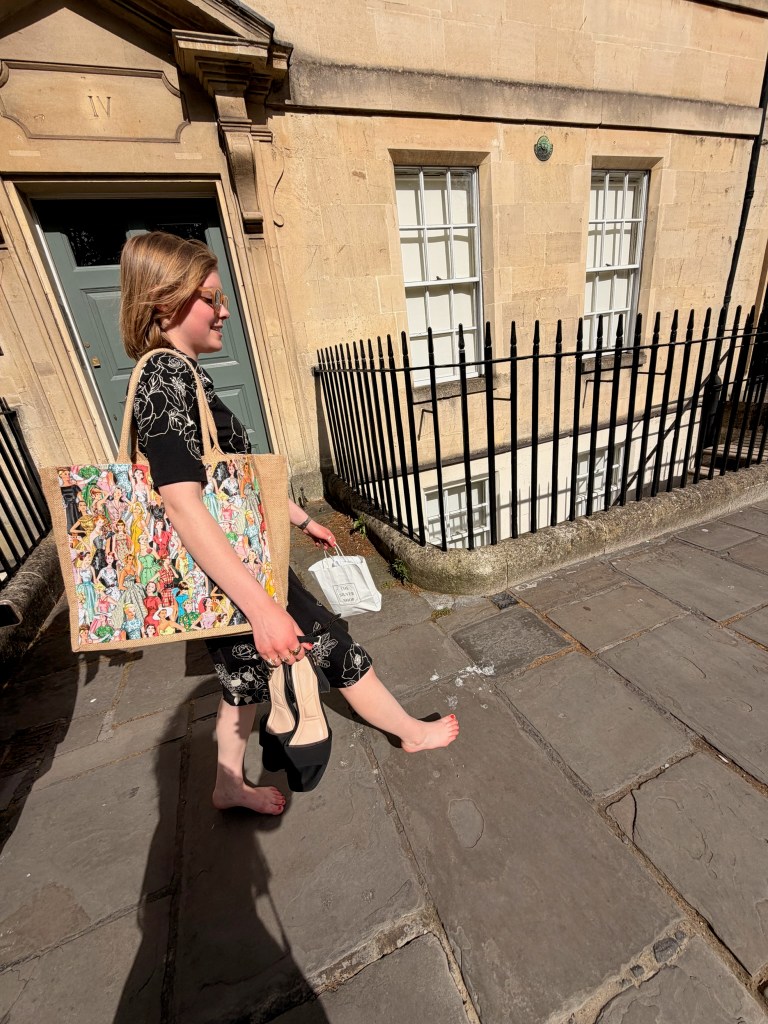
But I digress (what a tangent). Bath as an experience was a bit different than, say, the Tower of London or St. Paul’s Cathedral. Stepping through the gates was like stepping into a different country, a different region. I forget that the Roman Empire briefly extended to parts of England, and the ruins reminded me very much of the Roman Forum and Coliseum. It was also much more cobblestoney and uneven than I anticipated, which did not bode well with the five-inch heels I decided to wear. Travelling three miles on my tiptoes was a challenging adventure which ultimately ended in me walking the streets of Bath barefoot and buying a pair of cheap sandals (shoutout Primark). “Why would she do that?!” I’m sure your wondering, as my roommates repeatedly asked while I hobbled along. I’m not entirely sure what I was thinking, in all honesty, but I guess I wanted to test the durability of my shoes (spoiler alert: they’re comfortable for about the seven minute walk to the tube station). Moral of the story, for any especially fashionable future Theatre in Londoners reading: get it out of your head that you can wear heels to Bath, or mostly anywhere for that matter. Or, bring a change of shoes if you do! 

I digress again! Bath has my mind wandering, I suppose. It was a very educational and thought-provoking experience. Throughout our tour of the baths, it struck me that so many of the relics and remnants of the past were from as early as the first century AD. I kept wishing I could comprehend just how old that is, how ancient. It’s like trying to imagine the trillions of cells in the human body; it’s hardly possible for the average human brain to conceptualize that large a number. I remember looking at a mosaic floor, from one of the spa rooms or something similar, and just being awestruck that it had survived so long. But I still don’t grasp what 1000 years means, so I’ve been contemplating ways to make it significant to me. I thought maybe, if you made a timeline of major historical developments and technological innovations that have occurred since then, it might give me a better idea of how full and lengthy two millennia are. They also had actors dressed in Roman clothes stationed around the site, and that at least put my surroundings a bit more into historical context. It might be interesting if it were like a living exhibit for a day, in which costumed staff interacted with the ruins as if they were still a spa (as much as you can replicate spa activities at a public site, of course).  

And I haven’t even mentioned the Pump Room yet! What a delightful experience, afternoon tea. The delicious tray of scones, finger sandwiches, and mini desserts was complimented well by rose tea and live piano. It was a dignified affair, one that had me involuntarily speaking in a (incredibly offensive) British accent. I felt very fortunate to partake in it all the same, and I just enjoy being in beautiful places. It was fun to dress nice too, almost worth the blisters. (Just kidding; seriously, learn from my mistakes.) 

Until tomorrow! Stay classy, San Diego. 

– Reese

DON’T TAKE A BATH IN BATHHH!!!

I really liked our visit to Bath!!! I got to sit on a train and talk to Trevi, Jocelyn, and Thatcher and walk around the city with everyone! Tea at the pump room was extremely good and I now have an obsession with clotted cream. Life in Bath moves a lot slower than the city and in return we did too, we chilled in the park, walked around observing all the landmarks and buildings, and even had a little meditation session. I really loved getting to see my Bridgerton obsessed friends see all their favorite places! There was so much more grass and greenery which you just don’t see as much of in the city. In my opinion people also seemed nicer and easier to talk to, we even had locals approach us wanting to have a conversation. We ended the day getting ice cream and you’ll never guess what flavor I got, clotted cream!!!

I thought it was extremely interesting that the Romans used the baths for a lot more than just bathing. The bath’s were used for religion, medicine, working out, and everyday life. The Romans believed that the natural hot springs water had healing powers and dedicated the area to the goddess Sulis Minerva. People would travel to Bath to be healed both physically and spiritually.

The Romans were big on physical fitness. In the baths there was a literal gym, I was extremely surprised about that.They would throw balls to each other, lift weights, and many more.

I also thought the engineering of the baths was extremely interesting. The pipe system was extremely advanced, there were heated rooms, and the was drainage to control the hot spring water. The drainage and the pipe system to a point still works today and shows the thought and carefulness that was put into this system. I will say though as much as I liked the baths, it was more stinky than I thought it would be.

I Didn’t Bathe in Bath?

Bath, what a glorious day to remember. We took the train early in the morning through the English countryside to the beautiful city of Bath. Right off the train, I knew that this town was very different than London. The idea of an old town that I had in my head when thinking of London is very different from what London actually looks like. But upon arrival in Bath, the landscape was what I had thought London would look like. Bath is filled with historic buildings, a cathedral, Tudor-style houses, and quaint streets. Contrary to what you might be thinking right now, though, there was indeed no place to take a bath.

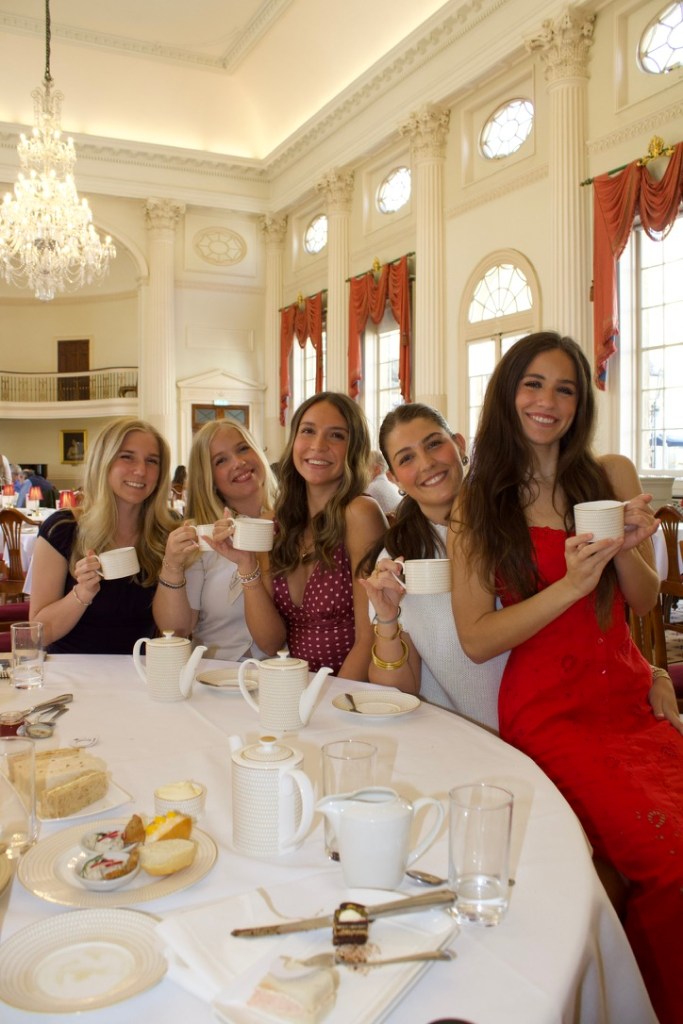
First up was the Pump Room for tea after the walk into town from the train. We walked inside with our skirts and dresses, feeling most proper and ready for tea. We ordered our tea, and as they came out, we could not help but begin to develop an accent, an old lady British one that is. My table took the liberty of naming ourselves with a backstory to add to the aesthetic of tea time; it was most fun (imagine me saying that in an accent). We continued this for a good hour after we left, just for the thrill of thinking we sounded cool.

Walking the streets of Bath was historic as the buildings were made of stone and the carvings within them were intricate and very detailed. You might be asking yourself, “Where did they go that was historic?” Well, that would indeed be all of the show Bridgerton’s filming locations as one does. After exploring the town and walking what seemed a million miles, we made our way back to the Roman Baths, where we met the group for a self-guided tour. We explored the inside of the baths and read all about the history, which was very interesting. They believed that the water had healing abilities, though this was in reality just a natural hot spring they discovered. Not only did they actually use the spring to bathe, but they also used the building they built around the baths to socialize and gossip. It is nice to know that even people back then liked to gossip around a hot tub. Going to Bath felt like stepping back in time, where the streets were quieter, the architecture was grander, and the accents were thicker.

Here is a picture of myself and my fellow ladies in waiting:

From left to right: Lady Harrington, Lady Butterfly, Lady Deers, Lady Oxford, and Lady Lashly who all have horrible British old lady sounding accents !

Bath: Can I pee in the bath?

One historical aspect of Bath that interested me was the separation of gendered bathing areas in the Roman Baths. Wow, that a lot of saying bath. Bath bath bath. Nonetheless, the ladies bathing area looks like a dream spa day. It was called the East Baths and consisted of 6 different sections. First was the swimming exercise area. This was called the Natatio. Swimming was a very importan part of physical health for the Romans so this was a common form of exercise. Next was the changing room, or Apodyterium, were women would undress and every once in a while remove their body hair. They then move into the Tepidarium, which is where wealthy women would occasionally have attendants cover them in oil to remove any dirt or sweat from pores. After preparation, they moved onto the Calderium, which was a very hot room, heated by oven stones underneath the floors. Here the women would sweat out impurities, and follow this immediately with a plunge into very cold water in the Balneum. 

The practice of switching temperatures rapidly was considered healthy for the Romans, as they beleived it would balance the elements of the body. Most of the bathing, especially in the Roman Baths, were centered around Sulis Minerva. At the spring, many people would throw coins into the water, and often times curses. They would engrave messages, usually cursing a thief or wrongdoer, and pray that Minerva being justice to them. The most beautiful example of something thrown into the spring was a beautiful golden broach. 

Outside of the baths and other tourist attractions, Bath itself was adorable. It was much smaller than London, but that did not mean there were less tourists. Many of the shops were definitely directed at tourists and visitors, and many stores had souvenirs. However, there were small pockets that felt local and genuine. 

Bath was beautiful, and being there made me eager to find a section of the UK where tourists don’t visit very often, and the only attraction is beautiful views and a quiet space. YAY BATH!!!!