I’ve long said, “I want to feel humbled walking into Church,” and when stepping foot in Westminster Abbey, I not only felt the reverence of Christ’s splendor, but also felt quite small in comparison to the nobles buried here before me. My jaw fell a little more at the turn of each corner, seeing who else lies here. (Elizabeth I, Mary Queen of Scots, Charles Dickens, to name a few, like wow?!)
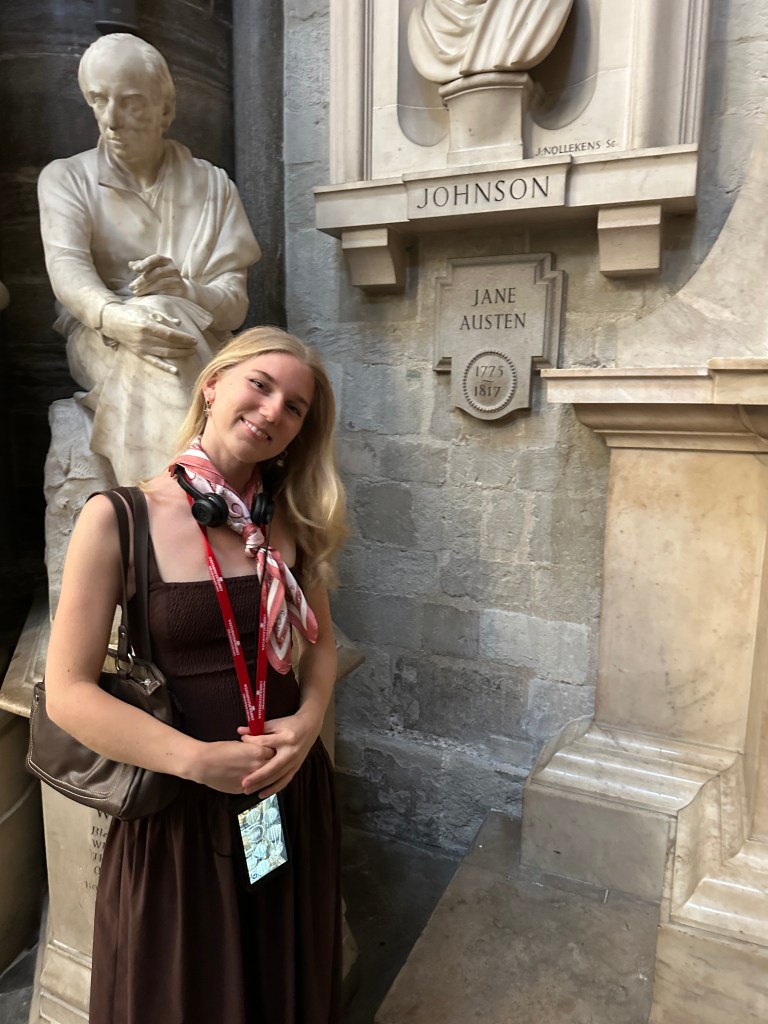
The writer’s grave at the top of my list was, of course, Jane Austen’s. It has been such an honor to walk in her footsteps these past few weeks, from London to Bath, while also buying her books and engaging more deeply with her work. Austen was far ahead of her time, portraying the realities women faced, exposing social hypocrisies, critiquing expectations, and creating strong female heroines, all while remaining rooted in her faith and quiet strength!
She is one of my greatest inspirations, and truly, without her, I may not be pursuing writing today. I especially admire her determination, how she educated herself through the books in her fathers library and turned her love of reading into a calling as a writer. I also loved learning that she had been writing since childhood, using her real-life experiences as the basis for her early stories, much like I did as a teen! And Pride and Prejudice remains one of my favorite stories because Elizabeth Bennet is independent, authentic, and unwilling to compromise herself for love. She reminds young women that they do not need to change who they are or settle to be chosen. I am thankful for Jane Austen and the path she paved for female writers and women in general. Seeing her grave was surreal, and to make the day even better, I found/bought another copy of Pride and Prejudice in a thrift store after visiting the chapel!
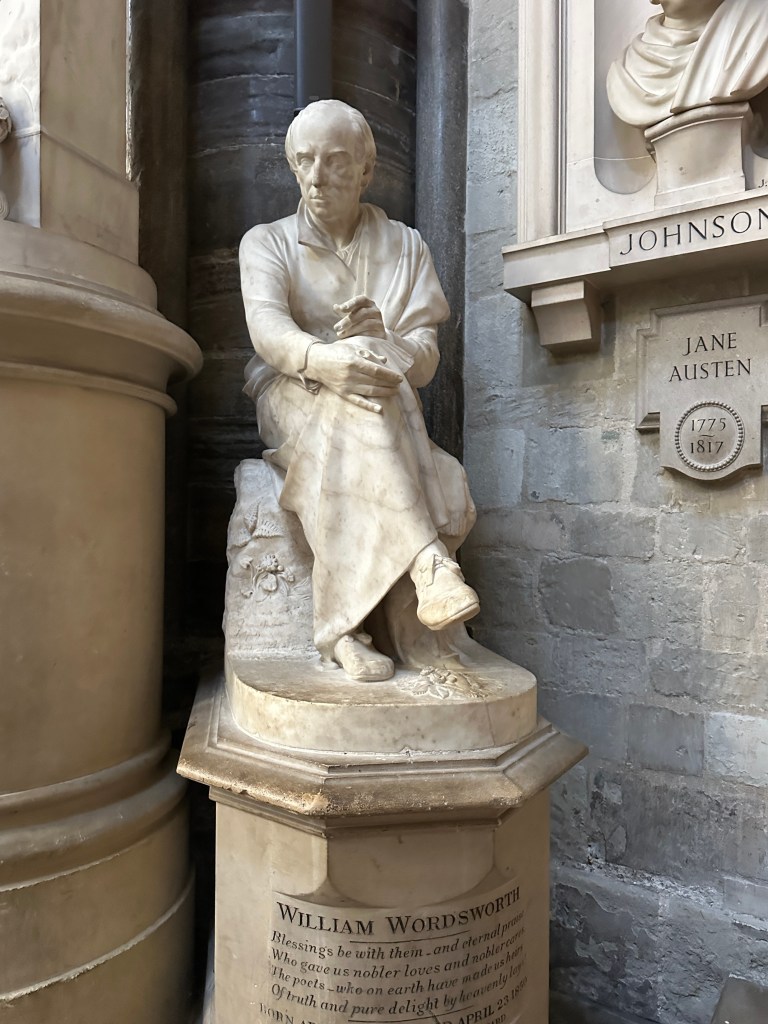
Now for another one of my favorite poets of all time, William Wordsworth! Ironically, right next to Jane Austen! I studied various Wordsworth poems in my World Literature class in the fall semester of this past year, and quickly found one of my favorite poems ever, “The World is Too Much With Us.” Another writer who revolutionized his craft, Wordsworth, along with Samuel Taylor Coleridge, helped launch the Romantic Age in English literature through their joint publication “Lyrical Ballads.” In my research, I found that through his poems, Wordsworth broke traditional poetic forms to produce verse that placed the poet’s emotions at the forefront and centered a natural, pastoral world within the words. His approach was more direct, disregarding traditional rules or tropes in favor of verses that reflected everyday speech. In doing so, he made poetry more accessible and relatable to a wider audience. Seeing his grave was, once again, awe-inspiring. It was a wild feeling to stand so close to someone who changed one of my greatest passions for the better.
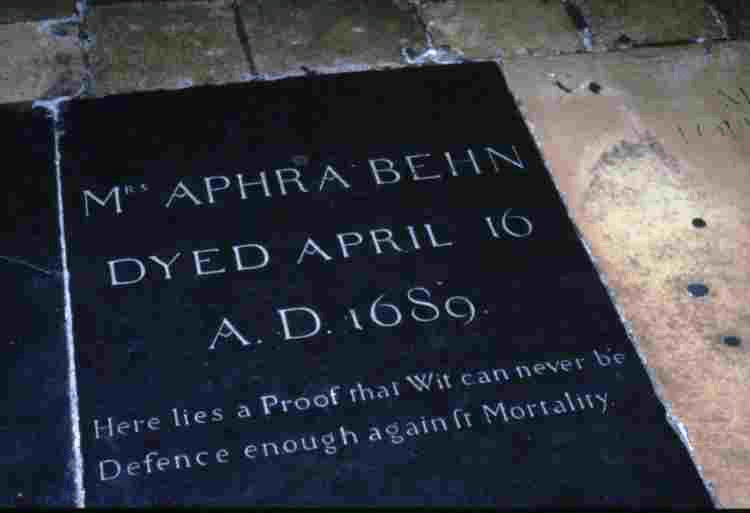
Lastly, it was amazing to hear that Aphra Behn is buried in Westminster Abbey. I studied her and her novel Oronooko in the spring semester of my freshman year, and the fact that she was one of the earliest English women to earn a living from writing is incredibly inspiring. I often think of what Virginia Woolf said about her, that “all women ought to let flowers fall upon the tomb of Aphra Behn, for it was she who earned them the right to speak their minds.” Being a feminist myself, Aphra Behn is another great inspiration. She challenged stereotypes and traditional female roles through her writings. I also thought it was fascinating how she wrote under a pastoral pseudonym, Astrea, named after the Greek goddess who personifies justice. Feels quite fitting for an early feminist exploring women’s rights, even back then!
What a wonderful visit to Westminster Abbey. Feeling so inspired and awed!

