Shakespeare? More Like Shook-speare

I think all the plays I see after experiencing a show at the Globe are ruined in some small way, just because they won’t be at the Globe! My goodness, what an experience! I was more immersed in both Mother Courage and A Midsummer Night’s Dream than I have ever been in a theatrical performance. The openness of it, both literally with it being outdoors and figuratively with the performative style, just made for an incredibly engaging time. And that’s the allure of the theatre itself: it gives the audience a sense of belonging and connection, or perhaps a feeling of having insider access to the production of the show itself. It’s a sort of magician-like involvement that I’ve never seen from a theatre, but it didn’t feel cheap or disrupt the flow of the play. It makes me wonder if other similar theatres exist, theatres that frequently break the fourth wall and, you know, literally costume members of the audience. 

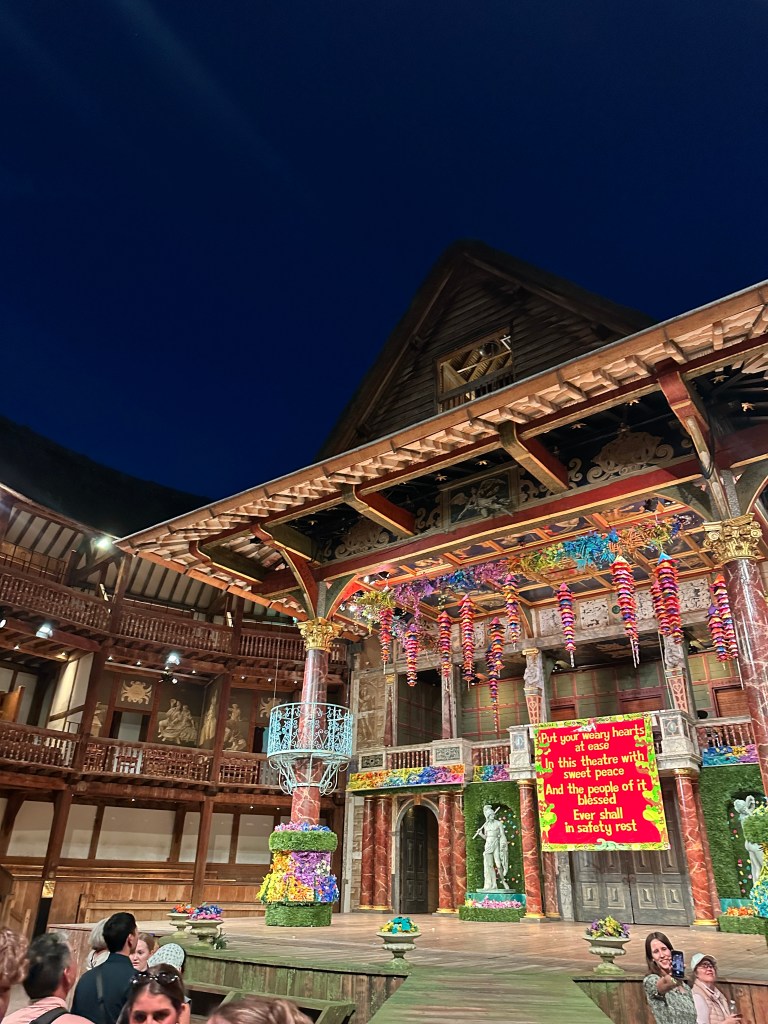
It also makes me wonder what it was like precisely when Shakespeare first constructed it. For both the shows we saw there, the stage was extended in some way. For Mother Courage, there was a giant pit in the middle of a large, circular stage, and in A Midsummer Night’s Dream, it was a bit enlarged with concert-like side stages extending outward from it. This seems different from the smaller, more intimate stage I’d imagined for the original (my perception may also have been influenced by watching Hamnet immediately before visiting). It definitely would’ve ben more smelly in the standing space too; I’m grateful that the crowd around me all had some minimal access to deodorant. There also certainly wouldn’t have been the digital light displays and sound effects used today. Still, I’d imagine it has the same grab, the same attraction to audiences, because it still, to this day, give its patrons the experience of a lifetime. 

Speaking of which, my gosh, A Midsummer Night’s Dream! This is my favorite Shakespeare I’ve read (although the number is only four, so not saying very much), and I love the double story, the comedy, the characters, all of it. I was quite grateful and excited to see this one, among all potential Shakespeare works. It didn’t disappoint, and what a cast! All quite incredible, a few from major West End productions, but they were all stars. I really enjoyed the costumes, the colors, and the liveliness of it all. And the costume changes were impressively fast and I’m not sure how it’s humanly possible to completely change from plainclothes to a vegetable suit honestly. I definitely wonder if the audience engagement of that nature was common in all plays across the West End, or if it’s a Shakespeare special. The covers for Hippolyta/Titania and Theseus/Oberon interrupted the flow a bit; I wasn’t entirely sure what that meant during the first Act, and it also made me wonder why some companies don’t have understudies. But I digress, the play itself was phenomenal as always, and Bottom was truly fantastic (apologizes, sir, for not knowing your name; just know you blew all of us away). They modernized but definitely not in an inaccessible way. 

I do want to comment on Mother Courage again, though, because I think it’s still my favorite play of all those we’ve seen. It was one of the most thought-provoking works I’ve read recently and ever, really. The challenging themes, paired with the theatre experience and the excellence of the cast and production designers, made it hyper-engaging for me. I find its painting of motherhood, of childhood, the morality of war, religion in war, and all other related topics fascinating. The actors’ interactions with the audience, though much less prominent than in Midsummer, helped me better understand Brecht’s point as well. The Globe really brought it to life! 

All in all, it’s my new favorite theatre, almost the best way to experience your favorite media, with the hands-on approach they give. Highly recommend to anyone visiting nearby, even if you’re only there for three days; I think it should be a new addition to all those “must-do” lists. Until next time! 

For Simon, 

Reese  

P.S. One of the actors (shoutout Mel) asked our names and if we’d sing with her and I’m definitely ruined for life on any other theatre.
Am I a famous actress now?

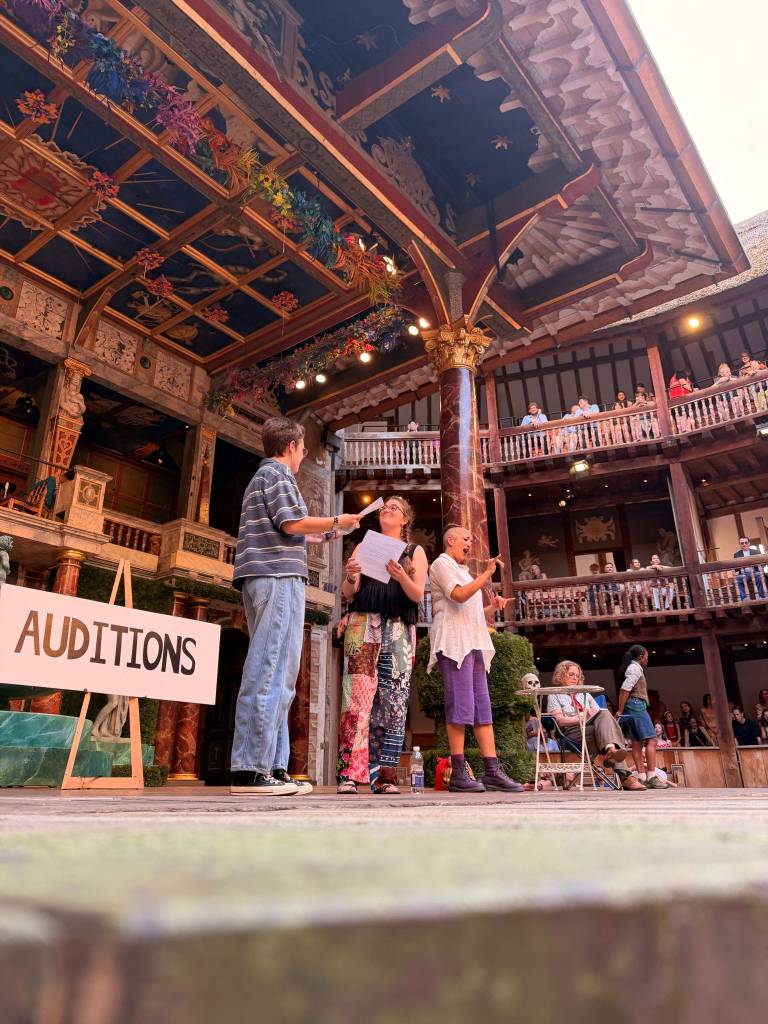
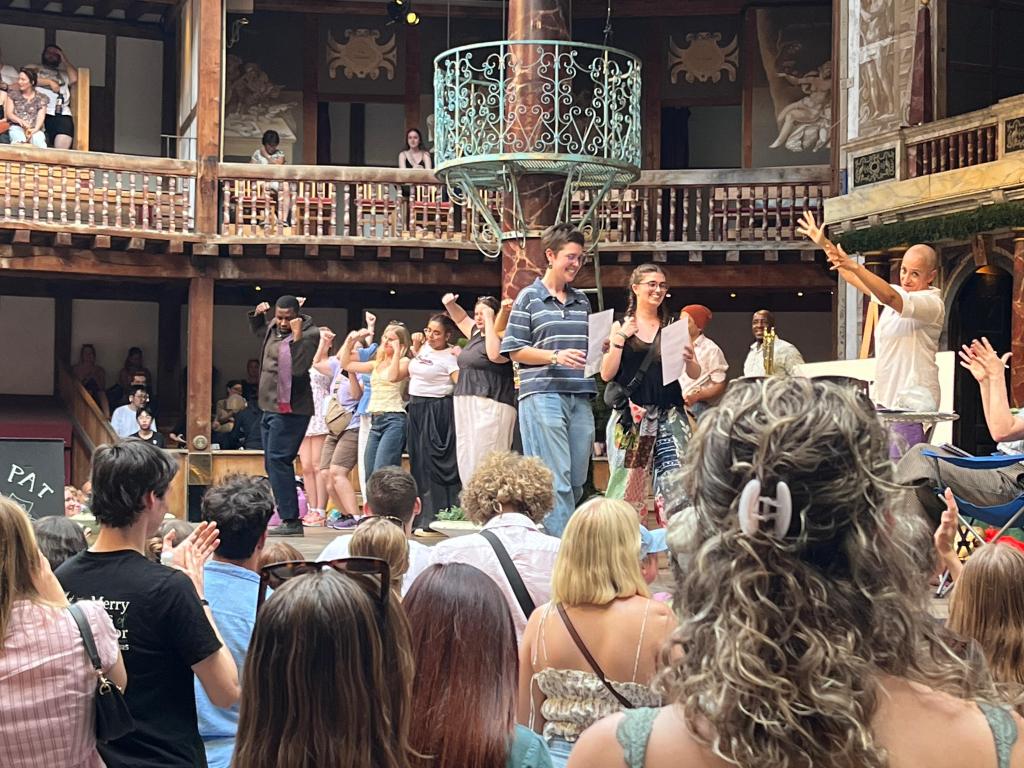
We got to go to Shakespeare’s Globe theatre. It is an exact replica of the Globe theatre that Shakespeare’s plays were performed in in the 16th and 17th century. We saw Mother Courage and Her Children and A Midsummer Night’s Dream. Both times, I was able to stand directly at the bottom of the stage. It felt so cool to stand there and watch these plays. I imagined myself being back in time in Shakespeare’s day watching these productions. I wanted to be up on stage with the actors! In fact, I actually was at some point. I got invited on stage twice during Midsummer to “audition” and do a dance. That was pretty cool! Now I can say I have performed on the Globe theatre stage. I wonder what it was like to be an actor during that time. How much time was given to learn the part? How much thought did actors put into their characters? 

I have seen two productions of a midsummer nights dream. This one at the globe, and then at the theatre at the University of Arkansas that I ran follow spot for. The differences were pretty huge. The one at the university was of course in a completely different theatre and setting. But just the difference in the stage changes the production a lot. The production in the globe was very audience interactive. The audience sang along and was talked to. My friend Lucy said that Shakespeare’s plays were meant for the people, and this production achieved that. It was for the people. I left the show in such a good mood. It was such a feel-good experience. I definitely feel that it was performed like this, or in this fashion I mean, in Shakespeare’s day. I just really loved this production of Midsummer Night’s Dream. It was absolutely fantastic, and I definitely think it achieved what Shakespeare was going for. 

Who is William and Why is He Shaking a Pear?

Getting to see not one, but two shows at the Shakespeare Globe was an amazing opportunity. It felt like an honor to see Shakespeare’s work done in his world. The theatre is meant for interaction with the audience and I love that it was so present in the two productions that we saw. In A Midsummer Night’s Dream, I got to go up on stage. If that’s not audience participation, I don’t know what is. There were so many effective breaks of the fourth wall. The acknowledgment of planes and birds in Mother Courage and Her Children was so cool. It brought the characters into our world and us into theirs. The closeness to the stage and actors made me wonder how the balcony seats were more valued.
Standing for a whole show turned out to be no half bad. I got great views for both shows, and they were not so good that I forgot to notice my aching feet and the sunlight in my eyes. Knowing that people have been standing in this theatre for centuries (recreated or not) was fascinating. I loved knowing that this has been done so many times before. I couldn’t help but wonder how many jokes we miss from the gap in language as well as time period. I pictured me within an audience in Shakespeare’s time and the different things that they would laugh at compared to our modern audience. I wondered how humor might change over time.
A Midsummer Nights Dream was done so perfectly. It added in aspects that kept it entertaining for a modern audience, while keeping Shakespeare’s story and style. Having it on this particular stage led to far more intermingling of the actors and audience than most stages would. Having multiple staircases into the audience led to more exits, entrances, and even scenes among the audience. I don’t think this could have been achieved as well in other theatres, certainly not theatres where the audience was sitting

I SHIP PUCK AND SIMON

We were so lucky to be able to see not just one, but two shows in Shakespeare’s Globe Theatre! Walking in and seeing the stage thrust out into the audience was amazing, although the lack of seats was something I had to get used to. Standing for the shows, while at first sounded like a nightmare (and for parts of them, it was), wasn’t terribly bad, just as long as you had something to lean on. For the first show, I was leaning on the stage, being extremely close to the actors and even connecting with them at certain points. The second show I was leaning against the back wall, which I preferred more than the stage, in terms of finding comfort for two and a half hours. Standing let us be more immersed in the shows that we saw, and it only got tiring every now and then so it was not bad!

Something that I loved about seeing A Midsummer Night’s Dream there was their interactions with the audience and their energy throughout the entire show, from before the show even started to when the audience left, their energy was at a high that never went down! It felt like a festival, like all of the actors in the play knew that they were performing in a show and so they played into it, like Lysander hitting the Wicked riff at the end of a song or Puck inviting his true love (a random audience member named Simon) onto the stage with him. It felt so performative and the actors were so active in their performance that it made the show much more engaging (and it made standing for it not that unbearable.)

While it wasn’t the exact theatre that was first built and used in the 16th century, and as with all of the other famous historical landmarks we’ve visited, I loved envisioning the people from all different generations who gathered to enjoy art. It’s a testament to how art can be timeless and that we live for these stories, whether we’re the ones watching them or the ones telling them.

I will say, if standing for three hours doesn’t sound appealing to you, it might be worth bringing a lawn chair.

I danced on Shakespeare’s Globe Theatre

During our time here in London we have gotten a great opportunity to see not one, but two shows at Shakespeare’s Globe Theatre! The first was Mother Courage by Brecht and the second was A Midsommer’s Night Dream by Shakespeare himself! I thought both shows were heavily geared toward audience interactions by breaking the fourth wall several times which I believe would have been very popular back in the 16th/17th century during Shakespeare’s day. I even was allowed on stage with several others to “audition” with a dance for the show they were performing in A Midsummer Night’s Dream!

My viewing experience at Shakespeare’s Globe Theatre consisted of standing the entire time in the front row with my eye level at the actor’s feet, which allowed me an interesting view for the shows. Throughout the shows, I would forget about how bad my feet were hurting and become fully immersed in the production, especially A Midsommer Night’s Dream. I can imagine how the actors and audience must have filled the stage, seats, and yard in the past and how similar it must have felt compared to my own experience.

The shows that were put on here would have differed if we were to watch them in America with how much less contemporary, they were. One thing that I thought was different from how they used to put on shows in Shakespeare’s day was the experience of watching the shows was better if you got a seat and were watching it from a distance rather than standing up close. Through my experience, standing was the best place to be for these shows. The actors could interact with you and even pull you on stage if you’re lucky enough. If I were to have a sitting spot during either of the shows, I would not have had the special experience that I did!

Gluten-Free in London eats!

I’ve never really considered myself a foodie; being gluten-free doesn’t exactly make that easy, but after being in London, I can confidently say I’ve tasted some of the best food I’ve ever had in my life. London is clearly a city full of passion in every form: theatre, history, art, music, business, literature, government, and so much more. Food was not one of the things I expected to stand out so strongly, but it absolutely has, and I have loved every bit of it!

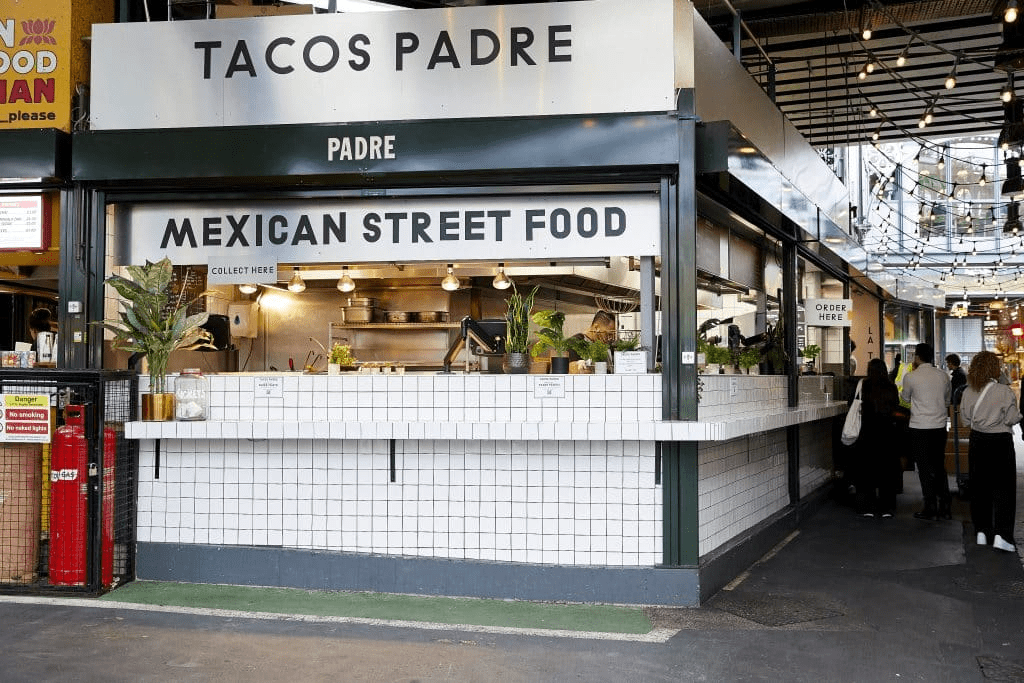
Seven Dials Market was a bustling, modern, and incredibly versatile place for food lovers to gather. I was lucky enough to find a great gluten-free option: a taco from one of the vendors on the bottom floor. My friends and I found a table upstairs, where we all sat together with our completely different dishes.

We don’t really have many food markets like that where I’m from, if any, so it was exciting to see everyone able to choose something unique to their own taste while still sharing the same space and experience. My taco would have been perfect if it had not been extremely spicy. I probably should have expected it, but for some reason, so many things on this trip have been unexpectedly spicy, and I am definitely not someone who can tolerate much heat! Still, it was delicious; I just needed a lot of water, or maybe milk, to survive it!

Borough Market felt like a whirlwind, especially because I experienced most of it on my own. I had a meeting with a UARK alum that morning while everyone else was getting food there, so I arrived about thirty minutes late. By that point, almost everyone had either finished eating or already left, but luckily, my roommates were still there.

Before I could find them, though, I had to face the challenge of finding the perfect gluten-free meal. I wandered around aimlessly for a while, because the market truly felt like a maze. I kept reaching little dead ends in the form of stopping to read menus, realizing there were no gluten-free options, and turning right back around to keep searching.

Thank God for the internet, because I quickly searched “best gluten-free booths in Borough Market” and immediately found more than enough options. I began my search for Tacos Padre (yes, tacos are the go-to when gluten-free lol), though I was quickly slowed down by the endless rows of gluten-free pastries lining the green market area by the church. If I had not been so money-conscious lately, I easily could have bought way too much.

Yummy!

What I loved most, though, was not just the food itself, but the people behind each booth. The making of it all was happening right in front of you! The smells, the movement, the careful hands preparing each dish. You could watch your meal being made by young men who had clearly started a cooking business out of passion, a middle-aged woman whose children may have once been her first taste-testers, or an older man whose hands seemed aged from years of kneading bread but who continued because it gave him life.

The people were just as much a spectacle as the food. Whether you exchanged only two words and barely held eye contact, or ended up in a full conversation about how their baking began, you could sense the pride behind each booth. It felt like serving there was a privilege, just as much as eating there was.

Overall, I think I’m going to be very disappointed having to go back to the usual processed American food that’s handed to you through a window. (Except Canes. Boy do I miss Canes HAHA) 

Best,

Siena

Wow I love Theatre

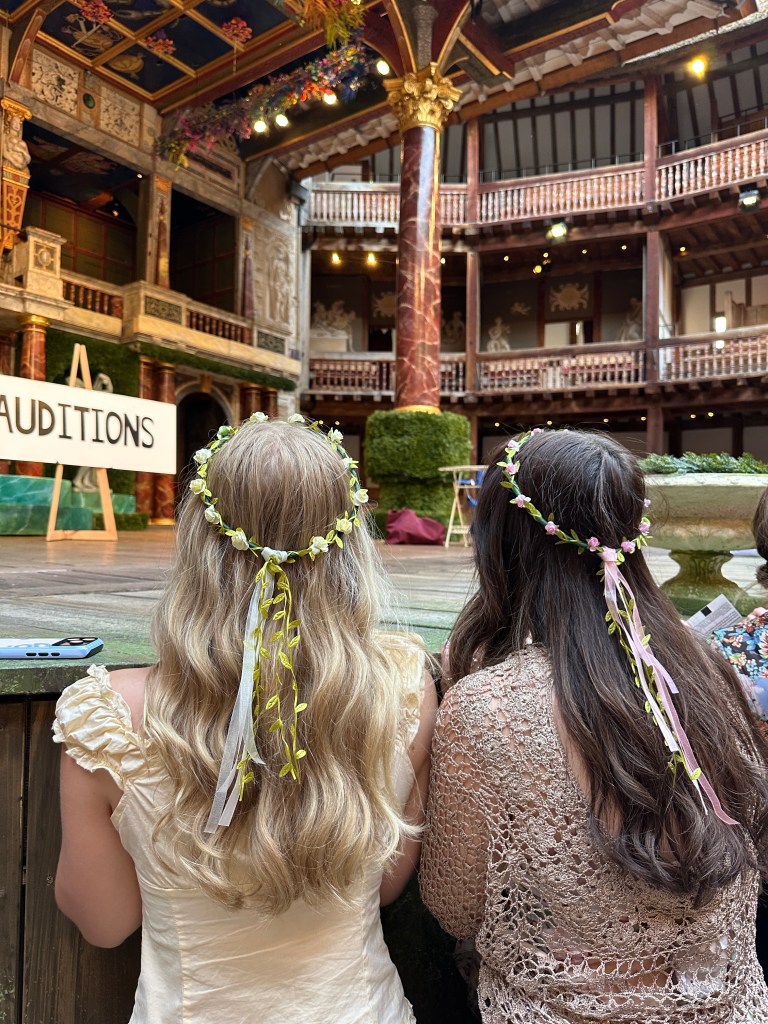
I’m still stumbling from the high of seeing A Midsummer Night’s Dream at the Globe Theatre. It was, in every way, the most perfect day. The night began in the Globe gift shop, where we bought flower crowns that felt very fitting for the play. While we were there, we spotted the actress who played Mother Courage in the first show we saw at the Globe. I was far too nervous to say hello, but her husband noticed my very obvious dropped jaw and invited me over. Jill, Emmy, and I ended up having a short conversation with her, and she was so kind and warm, which only made her performance as such a gritty character even more impressive.

After that, we were lucky enough to be first in line and secured spots almost perfectly centered at the front of the stage. I went into the play mostly blind, with my only real connection to it being Dead Poets Society, when Neil plays Puck in one of the most beautifully tragic scenes ever. But this version was not at all what I expected. It was lively, bright, modern, and playful, while still holding onto that 16th-century Shakespearean charm.

Standing there at the front of the stage, I felt so much anticipation. I was about to see Shakespeare performed in a replica of his Globe Theatre, and I could hardly believe I was actually there. Then came one of the most magical parts of the night, the hilarious and clever “Nick Bottom” invited me onstage to dance. I was practically shaking as I walked up the stairs. When I turned to face the audience, I took a moment to take it all in… the packed seats, the bustling floor, the excited faces, and the joy of being part of something that made people smile! 

It had been a long time since I had been on a stage in front of people (since senior year of high school!) Theatre had been such a huge part of my life then, from One Act to spring musicals, and by senior year I had finally stepped into leading roles. When college began, I told myself I would keep doing theatre, but freshman year became crowded with busyness, pressure, career goals, and resume-building. Somehow, something that had always brought me so much joy got pushed aside.

That is why this moment meant more to me than I can fully explain. Even though it was just a small, silly dance with other audience members, it reminded me of the joy of being onstage and the gift of theatre itself. This was the perfect show for audience engagement. The show invited them not to just witness, but to engage. They asked us to sing, learned our names, shook our hands, brought us onstage, and made us feel like part of the story.

I think that these kinds of plays differ from what we see in the States in that it feels more personal, more intimate. Of course, there are differences from the 16th and 17th centuries when Shakespeare’s plays were first being performed (for instance, the costumes, the blocking, etc.), but I think that it keeps true to the depth and meaning. Being so close to the actors at the Globe, I could see every small expression, every glimmer of a smile, and every shift of emotion. That is how Theatre was intended to be, I believe. It reminded me how powerful theatre can be. Through playing a part, witnessing a story, and feeling what others feel, we gain a deeper understanding of one another. I think that is the heart of theatre: to remind us that we are not alone, that joy and comfort are possible, and that connection can be found with the person standing beside us.

This show brought me an abundance of joy and reminded me of the reason for theatre! Theatre is such a powerful thing, and I just love being in a room with so many people who also feel that passion and allow themselves to be impacted by that power. I already want to go back!

Best,

Siena

Queen of my heart

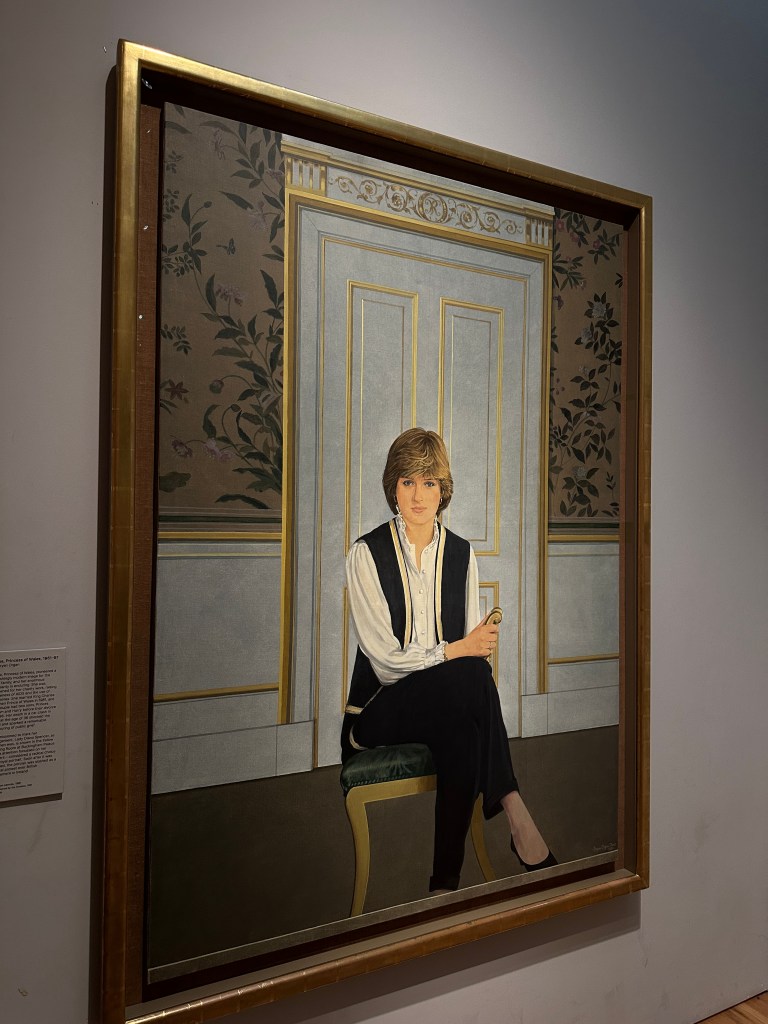
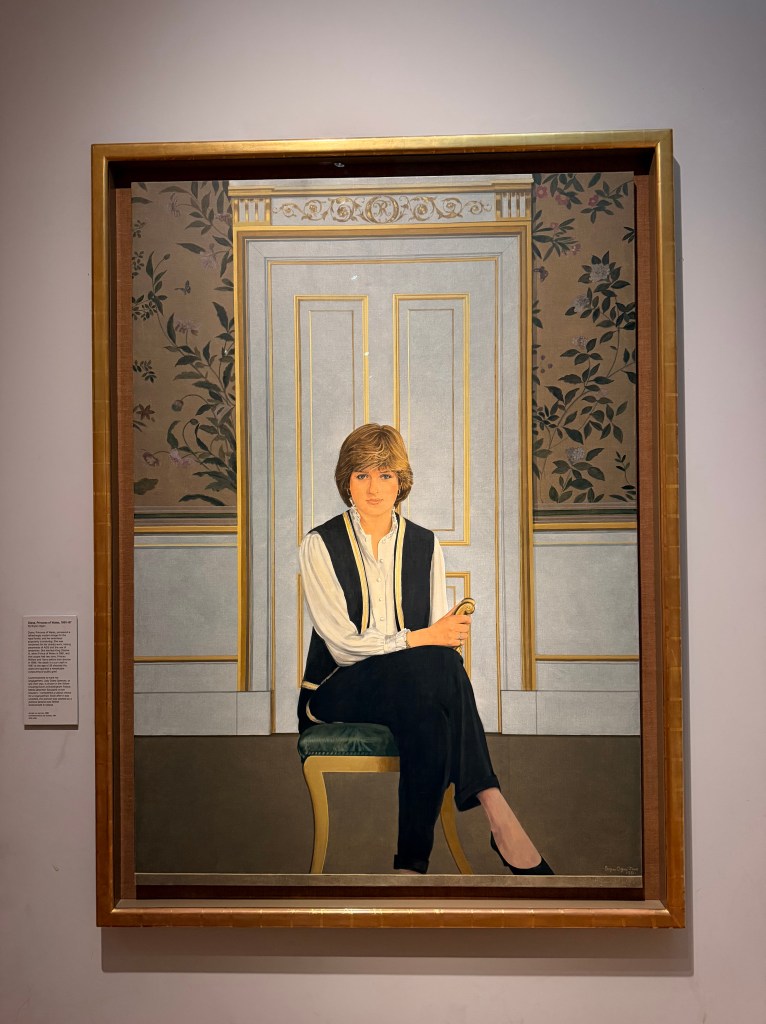
I knew from the moment I saw her face, peeking around the corner, that my feet would be glued to the floor in front of this portrait. My icon, my inspiration, Princess Diana. (And now, seeing others felt the same! Didn’t see Diana was mentioned here before I wrote this on the train to Paris with no service lol, but finished it then and just now seeing that so here is your double dose of Lady Di!) Ever since my mother gave me a book about her when I was the ripe age of six, explaining in a whimsical, almost exclamatory tone that she was a “real princess,” I have been completely enthralled by her. Over the years, that fascination only grew. After watching her portrayed in films and shows such as Spencer and, most memorably, The Crown, and after being gifted several more books about her by friends and family, my admiration for Diana deepened into something even more personal. 

So, standing in front of this image that I had seen and revered before on Google and Pinterest, was quite surreal. I found myself lingering there for several minutes, studying her expression and looking closely into her eyes. Seeing the painting in person was moving not only because it is so beautiful, but also it captures a specific version of Diana… young, hopeful, and newly positioned inside the palace she believed would be her happy home and future. 

This is a painting by Bryan Organ and was commissioned shortly after her engagement to Prince Charles. Here she sits in the drawing room of Buckingham Palace, dressed in trousers and seated sideways in a chair. She is the focal point of the image, placed directly in the center. And there is a gentle brightness coming from her, making her the source of light and attention. For a setting as grand as Buckingham Palace, the artist makes an interesting choice keeping the background relatively simple. Rather than overwhelming the viewer with elaborate royal detail, the room is reduced to a subtle gold lining, a simple floral wall pattern, and a calm almost flat backdrop. The contrast between her figure and the doorway draws the viewer’s eyes directly toward her face, her posture, and expression. The glamour of royalty is not found in the grandeur, but rather the simplicity and presence of this new addition to the royal family. 

There are also several choices in the rose that feel intentional. Her crossed legs, her sideways position in the chair, and her soft smile all create an impression that feels different from the traditional royal image. She isn’t stiff, smiling broadly, or overly formal. This portrait feels more authentic and intimate. It gives the impression that Diana might be more comfortable sitting down and having a real conversation than performing the distant fantasy of royalty. 

Diana would later become widely known as an “unconventional” royal, someone who pushed boundaries and challenged expectations. She did not necessarily cross lines carelessly, but rather redrew them. Through her advocacy for AIDS awareness and landmine victims, her devotion to children, and her warmth and authenticity when interacting with the public, Diana redefined what it meant to be royal. She brought humanity into a role often defined by distance, tradition, and image. 

I think that this portrait does a fantastic job at foreshadowing this, and was way ahead of its time. I think if I was to step inside this painting, I would not be met with the typical fluff and fancy of a royal. Instead, I imagine I would encounter someone down-to-earth, gentle, and real. Of course I very much wish I could step into it! 

I think the artist did an incredible job capturing Diana’s humanity. This portrait doesn’t present her as a princess or royal figure, but truly as a person. It humanizes her, and by that begins the humanizing of the royal family. 

Best,

Siena

Serving Looks Since 1961

The National Portrait Gallery is full of art, the art that is the Princess Diana of course. As I strolled around the gallery of art that filled the walls and sat on cases in which to be studied, I couldn’t help but be pulled in by a corner with a large portrait. On this portrait, I saw a sitter, not only was it Princess Diana, but she was also sitting. How perfect for a literal perspective of this assignment it was. After approaching, I stared at someone who was so influential to the changing of rules in the kingdom of England. Someone who changed standards, pressed for change, and broke barriers. I not only saw a princess, but I saw a role model.

After gazing at the beauty that is Diana, I began to study her features, what she was wearing, and the deeper meaning of the portrait. The clothes which Diana wore were untraditional for a Princess or any royalty at this time. She is shown wearing a pair of dress pants and a shirt with a vest. This was uncommon for royalty at this time as it was seen as “showing too much skin” and made her seem un-royal as if she were a normal citizen. She breaks the barriers of tradition and shows that royals can be approachable. This aligns with the name the public gave her of “the people’s princess”. Royalty is also usually portrayed in gowns, skirts, with jewels, or things that signify high class.

Let’s get started with her hair… I think that after Diana started wearing this haircut that the entire United Kingdom got this cut as well. She started a trend for women that still spans today but was particularly popular in the 1980s. Her soft smile and the way she is sitting also allows for the viewer to believe that she was approachable but still meant business. The lighting and background of this portrait are simple and have little color as to not take your gaze away from the wonder that is Diana. However, in the background you can see wallpaper, wall trim, and an elegant door which conveyed that she is still a royal and of class.

If I were to step into this portrait I would feel comfortable with approaching her. Her pose and face are approachable and kind. I would see the royal room she sits in and its beauty as well as hear silence or maybe classical music, something for a princess of course.

A picture says 1000 words

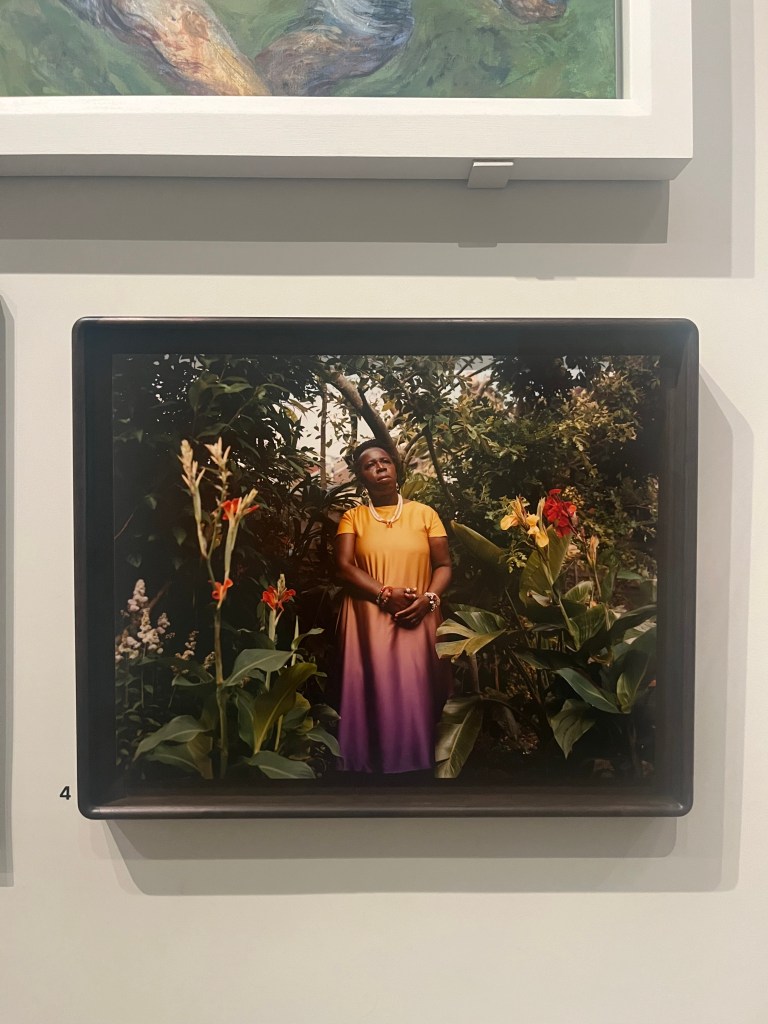
I chose the portrait of Rosamund Adoo-Kissi-Debrah by Serena Brown. She is beautifully painted surrounded by lots of plants and colorful flowers which creates such a powerful, lovely picture.

In the picture her clothing and accessories really stood out to me because they showed off her confidence. She’s wearing a dress that flows from yellow to pink to purple.The bright colors of her clothes really make her stand out in the picture while still mixing in nicely with the vibrant colors of her surroundings. Her jewelry is nice but simple signifying that she focuses less on money and more on her achievements and character. She is presented in the picture sitting upright with good posture showing her strength and determination.

The artist uses composition, color, and light to show Rosamund’s importance. She is placed in the center of the picture making her a huge focal point. The warmer tones of her clothes contrast with the greenery surrounding her to draw the viewers attention to her. The composition of the picture gives her a really commanding presence while still showing her connection to the environment. The light illuminates the thoughtful expression on her face.

The background is extremely significant because Rosamund is a huge advocate for clean air. The abundance of plants and flowers is a symbol for nature, life, and the importance of protecting our environment. The setting reminds and teaches the viewer of her campaign work and her commitment to public’s health after her daughter died.

If I could step into this portrait, I imagine I’d be standing in a garden filled with scents of dirt, flowers, and nature. I would her birds chirping, leaves rustling, and bugs around me. The atmosphere would feel very peaceful and reflective. I would feel inspired by Rosamund’s strength and her dedication to protecting our environment and changing the world.