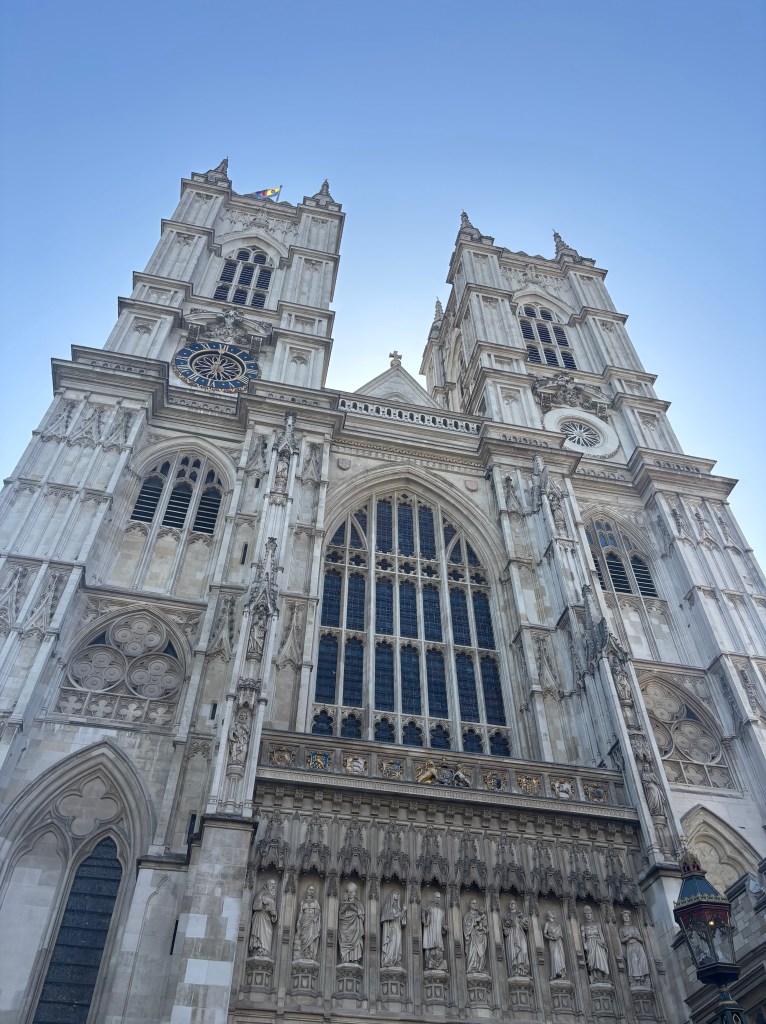
I don’t have the proper words to describe the beauty of this structure. I was breathless throughout most of the tour, just from sheer awe and wonder. Even before we walked into the building, I was amazed by the intricacies of the abbey’s outer walls, the details of the tympanum, and holy flying buttresses! I have a particular affinity for architecture as a visual art, so it really captured my attention.
But onto the interior! Poets’ Corner was a particularly captivating section. I didn’t catch the reason why it was added in the first place, but it seems an interesting edition. I saw some familiar faces—Tennyson, Longfellow, the Bronte Sisters—but there were also several names I wanted to learn more about. John Dryden, for example, an English poet, playwright, and satirist of the 17th century. He actually attended the Westminster School as a boy, and he often wrote in favor of the monarchy and to perpetuate loyalty to the crown. For this he was appointed the poet laureate in 1668, and he enjoyed a successful career in the theatre, adopting and exploring genres like the heroic tragedy, tragicomedy, and farce. He also became famous as a satirist, although he completed nearly all of his satirical works within the last two years of his life.
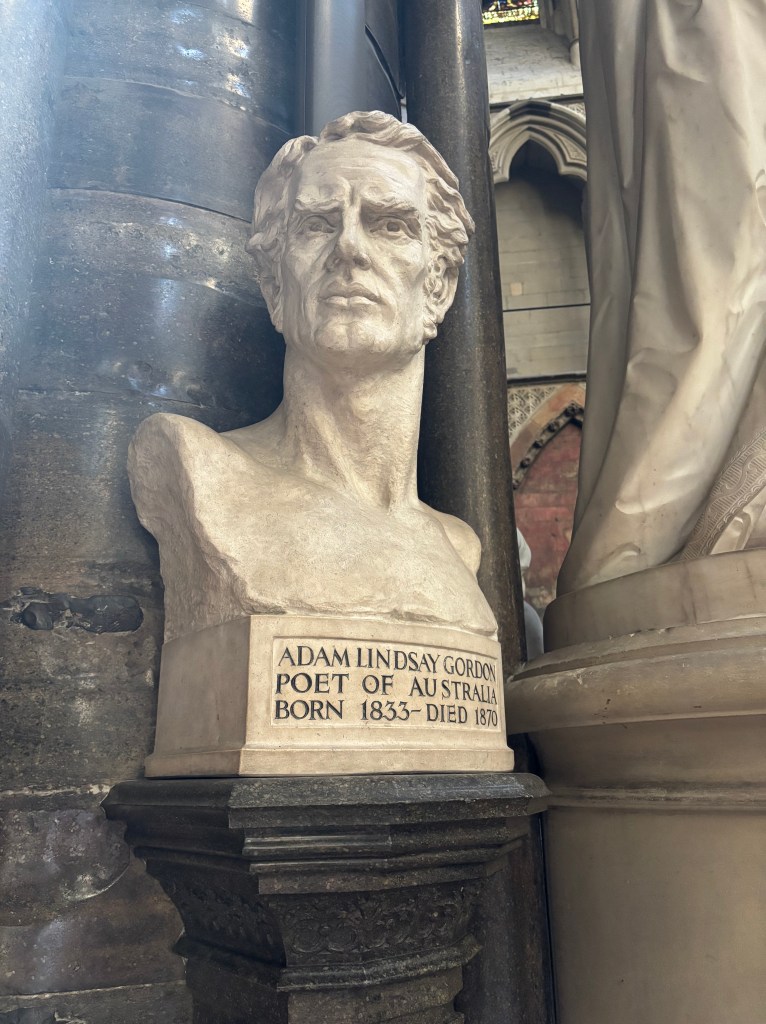
And yet another source of knowledge, D. H. Lawrence! I know him primarily as a novelist and shorty story writer, but he has also wrote lots of poems, including “All of Roses,” “Birthday,” and “Bread Upon Waters.” He’s known for his themes highlighting the effects of industrialization on society and capturing human emotion. Many of his works were censored, largely for their sexual content. Needless to say, he was a rather progressive figure of his time, one who gained acclaim largely after his time (the late 19th and early 20th centuries). Contrast him with Adam Lindsay Gordon, a poet of the mid 19th century. He was a real horseboy and became a steeplechaser, horse breaker, and was a member of South Australia’s mounted police. He apparently led a tortured life, as shortly after a copy of his poetry collection Bush Ballads and Galloping Rhymes was published, he shot himself at Brighton beach. A sad end indeed.
I also have to mention the Lady Chapel. What a ceiling! And the stained glass! And Mary Queen of Scots’ hands! Apparently some famous Italian sculptor shaped them, and the detail was quite striking. I think elaborate burial places are also a way of establishing a regime’s legitimacy and authority even after death, which was especially true given her integrating three symbols of her claims to three different thrones (the Scottish, the French, and English). I also deeply enjoyed the Chapter House; I liked the syncretic mix of stained glass, classic Medieval painting, and inscriptions with updates on its history. It’s just a beautiful place besides.
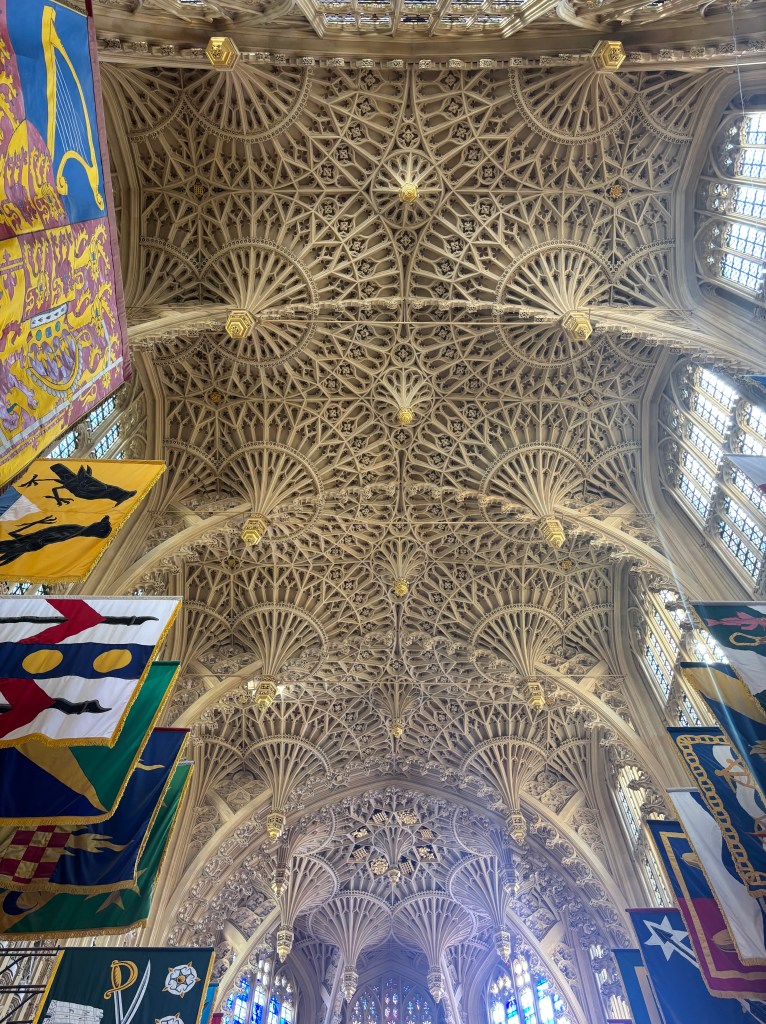
Because we’ve visited so many museums and exhibits the past few weeks, I’ve realized that I never have enough time to truly absorb the contents of these places, This is especially true of architecturally detailed sites; each stained glass window has its own narrative, each wall a new embedded statue, and don’t even get me started on the ceilings! It makes me want to start a new tradition of designating a day (as in a full, unscheduled, unbusy day) of wandering in a museum, ruins, or whatever historical institution, just to have the opportunity to explore every inch of learning. This is typically difficult when there’s a social aspect to the trip, or you’re with a group and involved in other plans, but to have the freedom to just wander through galleries, stare at busts of Greek figures, and ponder the meaning of art! What an idea.
Anyway, I hope to visit again someday, if for no other reason than to experience the reverie of being surrounded by divine art!
Stay cool,
– Reese
 Theatre in London U of A