Food and Drink

The stereotype is that British food is disgusting at worst and bland at best. While it might be harder to find spicier food here than in the States, it’s pretty flavorful. And I’m just talking about the traditional British food. I haven’t mentioned the international food all over London.

I just got back from a Greene Knight pub earlier. They’re a small chain that serves excellent fish and chips. They’re savory and flavorful and not too dry. You can tell the chips come from really high quality potatoes. They come with some funny sauces though. I’m not a big fan of tartar sauce and I’m not sure what the vinegar sauce is for…

Today I had this chicken sandwich with vinegar and “rocket” which I believe is arugula. I didn’t really like how acidic it was. I also tasted the strangest drink. I took a sip of Margaret’s pineapple cider. It didn’t taste like pineapple though. In fact, it didn’t taste very sweet at all…

The most interesting traditions about food here are differences in service depending on where you go. Generally, if you go to British restaurants, you have to demand your service since they don’t work for tips here. However, if you go to restaurants that serve Mediterranean food the service is entirely different. Grason, Leah, and I went to a Lebanese restaurant and the service and food were brilliant. It was easy to get the waiter’s attention and he was eager and charismatic. So much so that he was the only server I tipped on this trip. Later on, Grason and I went to an Italian place. I ordered this fish with a sauce. A waiter brought it out to me without the sauce, but I didn’t mind too much because it was so delicious. However, another Italian waiter passed by, took a good look at my meal and exclaimed offendedly “where’s your sauce?” For some reason I felt like I should’ve apologized for not having the sauce. She was very offended. In less than a minute she came back with the sauce and aggressively dumped it on my fish. It’s my understanding that the south of Europe values food differently than the rest. Many take pride in providing a good food experience where the people up north don’t as much. This explains the differences in service.

I’ve had shawarma for the first time here and I have no doubt Callie would love it. It’s so savory and acidic. At the Lebanese restaurant I also had a peach beer for a couple quid that tasted fantastic.

I went to a fancy restaurant with Isaac and some others a couple weeks ago. It had a brilliant atmosphere, but the service was definitely sub-par. I had this gnocchi which wasn’t really interesting, but the lemon sorbet dessert was one of the best I’ve ever had. One of the best desserts, not lemon sorbets… That was my first lemon sorbet.

I appreciate the cheap Tesco meals. All the bread here is really high quality and makes whatever you’re eating taste amazing and feel very filling. I don’t quite understand sweetcorn in sandwiches though. Also, hard-boiled eggs as a side dish is unusual, but still good.

I’d never had gelato before I came to the U.K. It’s Italian cold cream that’s produced differently than normal ice cream. I got a gelato with a great waffle cone at a place in Spitalfields called Bubblewrap. It was the best thing I’ve ever eaten.

Overall, the food here exceeded my expectations. The biggest disappointment is that it’s hard to find restaurants that you can always sit down at, especially in the city.
V&A Museum

The Victoria and Albert Museum holds over 2 million objects dating back over 5,000 years. The V&A Museum has everything from paintings in various styles from several different periods/ times to sculptures in the present day. The V&A was built and opened in 1852 then moved to where it is today in 1857 on Exhibition Road. Queen Victoria had the name changed from the South Kensington Museum to commemorate and recognize all the work that she and her husband put into the museum.  
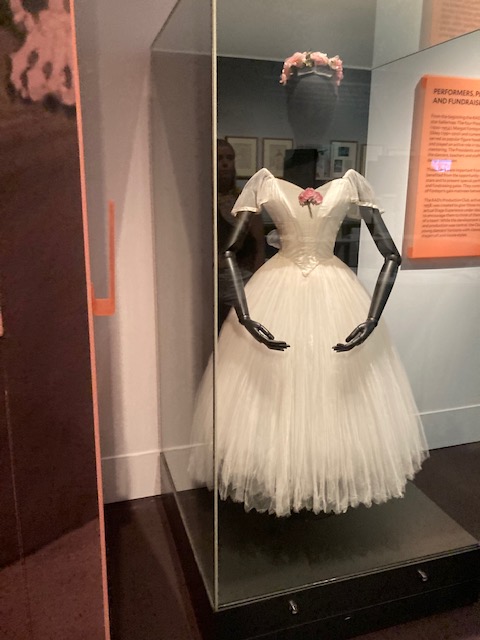
One of the items that stood out to me in the theater section of the museum was the costume for Margot Fonteyn in Les Sylphides in the 60s. This costume was an ankle-length, white puffy ballet dress with short sleeves, a pink bundle of flowers mid-chest, and a pink flower crown. On the back of the dress are a small pair of wings sewn onto the mid-back of the dress. The play itself is a romantic shown in two acts, the dress shows that very sweet delicate romance.

I chose this specific costume because it reminded me so much of the dress that we were able to see in The Glass Menagerie that Amy Adams wears towards the end of the show. In that show, Amanda’s character is always talking about her younger days and more specifically about when she would have gentleman callers. She then tells us how the white dress she is wearing was the one that she wore when she first met her husband, Laura, and Tom’s father…more than twenty years ago. The dress in the museum made me think of the “southern belle” style dress because of how similar both were. While the situations in which these dresses would have been worn are very different; the main idea behind them is the same, love.

Fringe

I have always been in love with musical theatre. I started singing in the first grade in front of my class during every show and tell day—instead of bringing something like everyone else. A fact that truly gives insight as to who I would grow up to be; the obnoxious, show tune obsessed, passionate girl you know. I won’t apologize!!!! I say this because this trip, especially the musicals, have reignited the same fire that was lit inside me as such a young person. Lift, in particular, reminded me of her and how all my life I have been searching for an outlet to express all of the things in my imagination. 

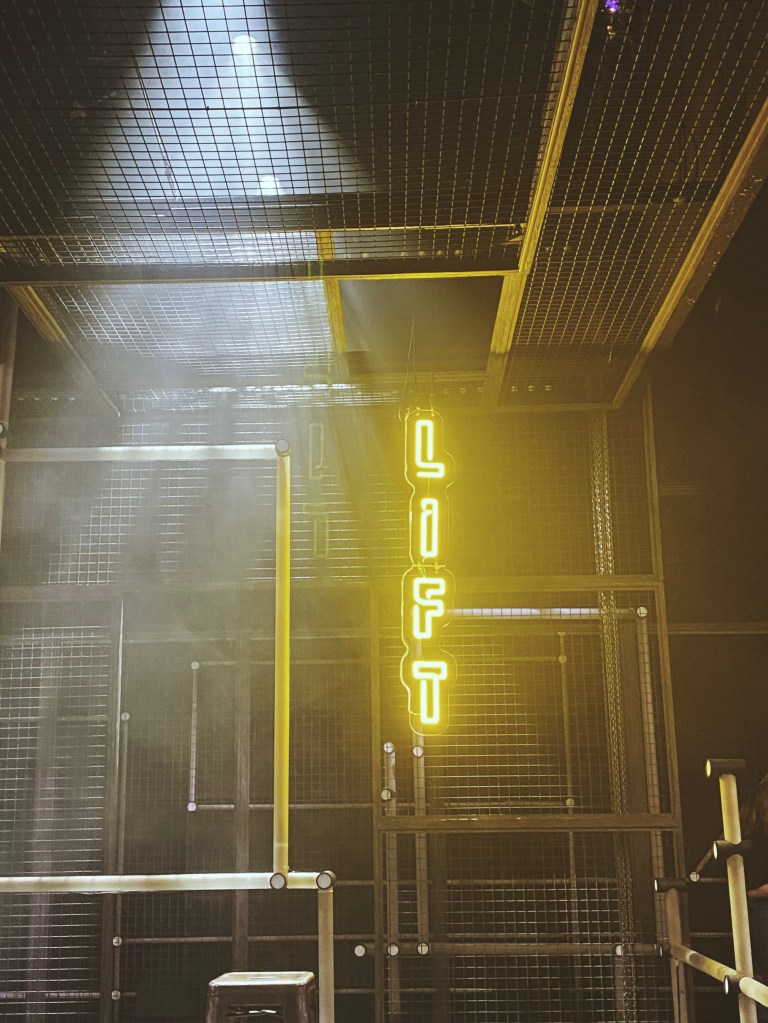
To begin, I adore shows that are performed in a black box theatre. Due to their size, it automatically forces the show to be far more intimate than if they were done in a proscenium style theatre. This intimacy creates a far more captivating experience for me, which is part of the reason why I enjoyed Lift so much. I hardly knew anything about Fringe theatre or this show before we watched it, so I didn’t know what to expect. From the title, I figured it was going to be a show about people trapped on a lift, but I was terribly wrong. Lift ended up being an abstract, complicated, and beautiful interpretation of our innate need for connection. Not only this, but our instinctual tendency to use imagination as a vehicle to understand ourselves and one another. I know that the show was very complex in the way that it was written, for some it was very hard to follow. However, from the moment I connected that the entirety of the show had occurred in the lead role’s imagination through a 54 second lift ride, I was sold. I related to it so much because I have such a vivid and explorative imagination and I am constantly curious by others. I think one of the most rewarding things about being an actor is having the opportunity to learn about all different walks of life and how we’re all so different, yet there’s always something you can discover about a person that brings you together. For me, Lift was a gorgeous reminder that in a way we’re all the same. We’re all just desiring to be understood by someone, in anyway that makes that possible. Lift explored these principals and also dealt with the conflict of misunderstanding one another, grief, and lost love in a way that pulled on all my heart strings. It was a very raw example of not knowing what someone else is ever going through, but desiring to know, even if you only stood by them for 54 seconds on your way to work. It reminded me that we all have something to offer, something to gain, and something to learn about each other. 

To add to the plot of the show, the score was so pretty. Each song was layered in harmonies sung by a cast that blended so smoothly together. The music made me teary and I felt as though its composition perfectly fit each character and gave the show this sad, but hopeful tone throughout. While this was the only Fringe theatre I watched, it reminded me of all the off-broadway shows that I love so much. There’s something special about shows that don’t make it to the west end or to broadway. I believe they all have traces of humanity that are too raw to be considered just entertainment. Lift was a perfect example of this to me and I thoroughly enjoyed it.

Fringe Theater

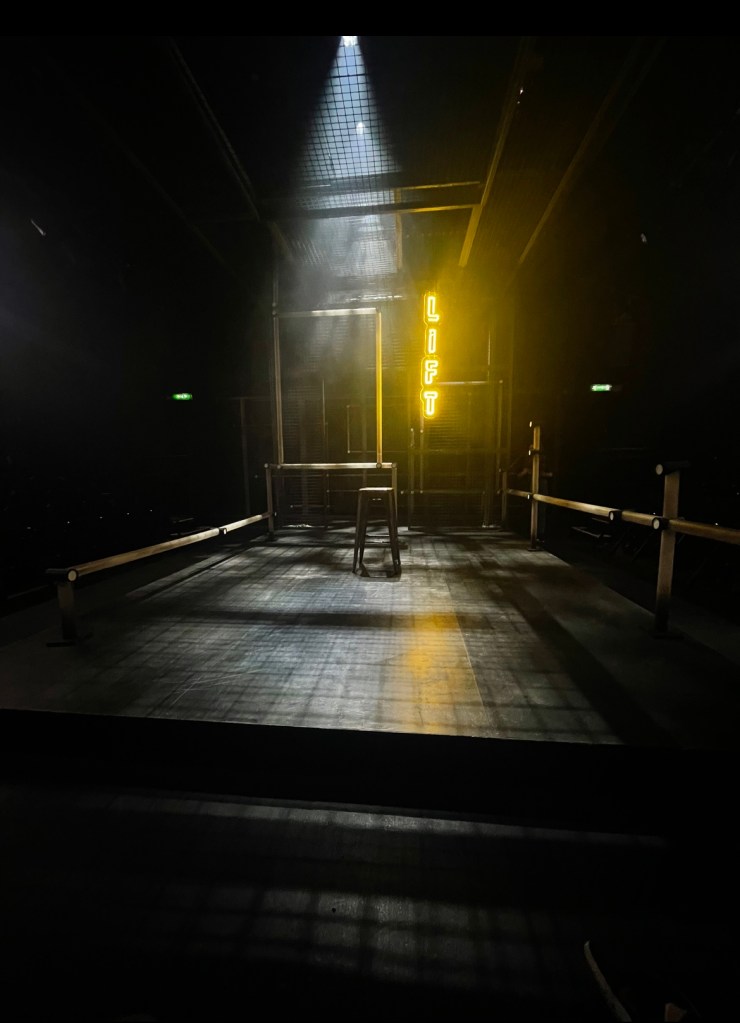
I saw many shows over the course of this trip, I think the final count will be around 15. The level design and production of those shows varied from simple plays to speaker blasting musicals. One of the show that I watched was Lift. It was a show from fringe theater, a performance that has less money backing it than many of the popular theater performance like Phantom of the Opera. Just because it was not as popular does not mean it was a bad play or performance. The play was about a guy who really likes someone he met on the lift in the subway and working out conversations that all happened in his mind I think. It was hard to follow at times on what was going on because there was nothing implying if it was in his head or not. And I didn’t know what truly was happening until after the show when someone who talked with one of the actors explained it to me. The play may have been hard to follow at time but the lighting was fun. There was use of plastic long cylinders that lit up with different colors and at different times depicted different locations and moods. With the lighting be as it was the designer did a good job of utilizing just a few fixtures here and there to light the entire performance. Several of them where moving lighting fixtures that transition to different location and looks with ease. However with the use of the moving light I felt distracted at times by the movements in the lighting. Over all Lift was a good experience for a performance giving me more to think about as a lighting designer. I also saw the performance of Girl on A Alter it can also fit into the category of fringe theater as well. This performance was much different but also used very few lighting fixtures. Like many other lighting design in London, I have found that there is a lot of side light used instead of front like. Something that came to mind during this show was how effective side light can be and, with second row seats, how important good seats may be. If you sit in the far back of the same theater it may have been hard to see some of those moments but being so close you don’t need that much light to be able to see all of the expression on the actors faces. This was a interesting thing to think about, because many of the show that we have seen use this technique. Some of the show I felt like I was missing things because it was to dark, but I also remember being very far from the stage in the back of the theater. I am wondering if lighting designer think about who can easily see the action on stage and who can not and if that effects the cost of tickets or how they design? After seeing all of the theater performances here in London I will definitely apply some of the technique that I have acquired and use them in some of my future designs.

The Roman Baths

I was unable to attend the group on their journey to Bath. I was still very sick as I had only first started having symptoms 5 days before. This bummed me out immensely because visiting the Roman Baths was one of my top things that I was excited to do. So needless to say, I was very sad about not being able to attend. 

Luckily for me, I was able to visit the roman baths over the three day break that we had. Leah, Margret and I went on Monday June 13th in the morning via train to Bath. Leah had found, planned, and bought mine and Margaret’s train tickets so that we could make it to Bath. The train ride on the way was beautiful countryside that I had not yet seen in London. Rolling green hills, small towns, and cows as far as the eye can see. The train arriving to Bath and seeing this city? Town? Place., was a beautiful view. 

We walked around the town for about 30 minutes and found this amazing little shop of hard carved wooden statues or boxes or sculptures. It was such an interesting experience to hear this man talk about how he had been making things for thirty five years! He also talked a lot about how he loved this very specific type of wood that is only found in Africa. 

I had got tickets for Margeret and I for 12:30, and we finished our tour around 3 PM! We spent two and a half hours exploring and listening to every single audio guide. It was one of the most enjoyable experiences I have had on the trip. One of the craziest parts of the whole experience was seeing just how deep into the group the Roman Baths were. They were several meters lower into the group. Layers and layers of sediment and dirt and rocks that have been stacked over thousands of years. So that was super neat. How the Roman baths work is also very interesting. It is a natural spring that is under pressure; the heated water rises along fissures and faults in the limestone, until it bubbles up from the ground into the baths. The Romans then created a series of tunnels to get through the ridges of the ground to create a slightly slanted pineline so as to not stagnant the water.

Afterwards we went to the Jane Austen Museum and had afternoon tea! It was delightful and quite lovely. It was filled with Scones, cream, jams, cakes, macaroons, finger sandwiches and (for myself) hot coco.

The Glass Menagerie

The Glass Menagerie a play that I have read many times but never seen a production of until recently at the Duke of York’s Theatre in London. I have read this play multiple times and discussed it in a few of my classes, it was interesting to finally see it performed on stage. I have watch parts of a performance on YouTube but this show at the Duke of York’s Theatre was a very interesting performance. This play is a memory play, and they used this to their advantage by having the narrator who is the son in the play be a separate person who watched and reacted to all of the events happening on stage. I idea that he is actively reliving these moments with the other actors adds a new feeling to the show. It is almost a constant reminder that it is a memory but at times I felt more interested in him while I should have been paying attention to the other action on stage. However having him there was very interesting and having things that are located off stage was very helpful to the play. For the most part the acting was good, with famous actor Amy Adams. There was one part in the play that I feel felt off and it was when the unicorn’s horn was broken off. It felt clunky and off, while reading the play it felt like that was one of the biggest moments of the plays. I was hoping for more out of this moment, I don’t know exactly what I was expecting but it felt like it was not very important that it broke to the actors. Other than that I performance was very nice. I took notice to the lighting like I do for every show that I have seen in London. Like many of the shows here they rely on much less light than what I am used to, and it can sometimes work very well. In this performed I felt like I was wanting more out of the lighting design. I enjoyed the use of fixtures on the stage that fit into the world of the scenic design. Because it was a memory play I was hopping for more in the lighting diversity leaning more into spectacle. It was still very interesting lighting design and had a few moments that I really enjoyed. One specific moment that I really enjoyed was when the sister was looking into the mirror right after her mother left. When the mother left the narrator shifted the mirror so that the light that was hitting the mirror and bounced off illuminated the sister making her glow beautifully. This was a very powerful effect that I greatly enjoyed and really enhanced the moment. There was projections in this performance as well with the goal to add more to the performance with shifting colors or images but it was sometimes hard to see from my seat and from what I did see I realized that missing it would not effect the visual of the play. It was a interesting performance of the play and I am happy to be adding it to my catalog of plays that I have seen here in London.

My Food Journey

Spitalfields Market

June 17th

Moroccan

Finally, a whole blog devoted to food and specifically the markets that I have been able to visit. I got to explore Borough, Spitalfields, and Camden Market. Our group did not visit Borough Market, but I wanted to stop by and see it in action. It reminded me of the Seattle market with all the seafood stalls. All I ordered there was a raspberry donut which I ate with a cappuccino in a Moroccan café. Next is Camden Market which had the busiest vendors and most expansive space. I had classic Chinese food there and fantastic orange juice. It was a bit too crowded and loud for me, but it was an impressive place of business.

Taiwanese

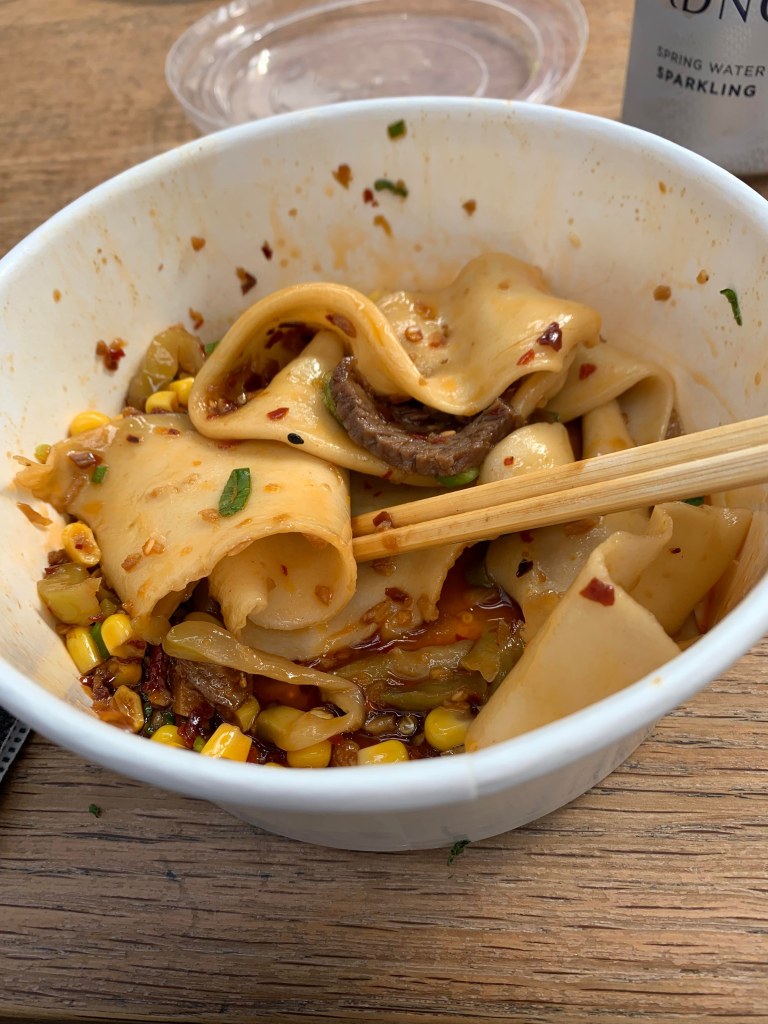
I wanted to save Spitalfields for the end because it was my favorite market, and I am going to expound upon every meal. This market had the best food vendors, and I loved the atmosphere. It was bustling but it was spread out. There was fresh air from outside but there was a clear covering to protect from the elements. I went to Spitalfields three separate days and enjoyed it every time. My first visit I had Sri Lankan Lamb Paratha. It was a lamb curry with some salad and dipping bread(paratha). This stand pulled me in with their free samples and the curry was perfectly spiced with the paratha soaking up the juice. I also had a cinnamon roll cupcake and matcha bubble tea. I had three bubble teas in Spitalfields, and they were amazing. My last dish from the market was hand pulled noodles from Thailand. The noodles were cold, but the beef and corn stir fry warmed up the dish. The sweetness of the corn complimented the pepper flakes that spiced up the meal.

Thai
Sri Lankan

The experiences with ordering were fairly simple but with diverse food stalls it can be hard to understand the lenders. It was mostly card payments so I wouldn’t advise bringing cash. Sometimes you just need assert yourself in line. Also, you may end up standing while you eat but most of the time you can find a seat. It was my first-time trying Sri Lankan, so I just picked something from the menu that I knew had their authentic bread and curry. I loved Spitalfields Market and it is a must eat in London.

-Tabi is Booked

The Victoria-Albert Museum

The Victoria Albert Museum had very shocking pieces. Everything in that museum was interesting and represented a profound cultural moment. I wish we had seen some Shakespeare while we were here, because there were so many historical pieces I was obsessed with. For example, there were costumes worn by Lawrence Olivier and Judi Dench for their Shakespearean performances. However, the most interesting piece to me was the War Horse puppet and costumes. I’ve never seen the show, but its puppetry has no doubt paved the way for other theater works. The team who worked on the puppet of Richard Parker won an Olivier award for their performance. Indeed, the puppets for that show were phenomenal. I haven’t seen War Horse so I can’t know what that theatrical experience was like, but Life of Pi was something I never imagined could be possible on stage. The acting, both animal and human, was amazing. There was a technical bit with the hyena and the rat that made me smile. The hyena snaps up the rat in a fluid motion. In fact it’s the puppeteer playing the hyena lifting the rat with his other hand into the mouth of the canine. There were so many moments that defined the animals as real characters. The subtlety of Richard Parker’s movements. The way his relationship to Pi changes. The ultimate moment when Pi tames him which was the greatest moment in theater I had ever seen. Perhaps will 

Another tie-in to Life of Pi from the Victoria Albert museum was the connection to God. Pi’s character is interesting because of how his relationship to his faith changes throughout the action of the play. The museum contains many works of Christianity and Islam, both of which Pi subscribes to. The VA museum had some of the most beautiful stained glass I had ever seen. They reminded me of how the stage floor of Life of Pi was divided. I couldn’t tell if it was how the stage itself was fractured or a lighting trick or both, but the stage floor was divided in curves and edges that reminded me of stained glass.

Life of Pi was a beautiful show. One of the most interesting parts of the show is when Pi compromises his third belief, Hinduism, in order to survive. He eats alongside Richard Parker, his animal ideal to show that he has taken another step in transforming into this creature. The VA museum had a noticeable lack of Hindu objects.

Another piece that I loved were the three lions. Their posture and relationship establish them as members of a pride. They reminded me of the proud Richard Parker. I wish I could climb on them. Disappointed.

#6 Cake Was Enjoyed. I Didn’t Die. Win, Win.

Borough Market.

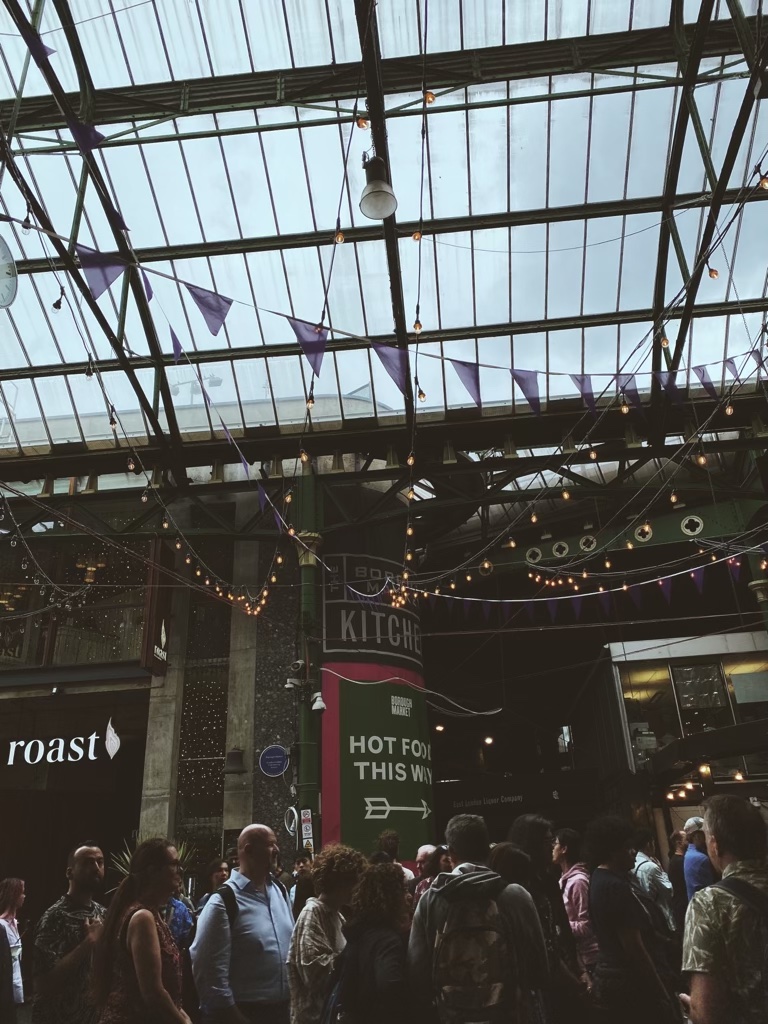
Burough Market has an entirely different vibe than Spitalfields. The pace at which crowds wander through is a bit more frenzied, a bit more rushed, and in general, more goal oriented: the goal being lunch. Everyone is hangry, and there is no time to doddle. My first stop took me to a fruit stand selling fresh-pressed juices. The cups of juice were literally sitting amidst gorgeous piles of the fruit that they were made of. I opted for watermelon, which was lovely but a little homesickness inducing. It made me think of those oppressively hot Arkansas Fourth of July’s where the day stretches on a little longer before finally giving in to the dark. Part of me wanted to be sitting in a flimsy, fold-up chair watching fireflies rather than walking through a busy street. 

Watermelon Juice!

            I can’t always eat adventurously because I have a gluten sensitivity (womp, womp), but one goal that I had for this trip was to find some allergen friendly fish and chips. Situated at the bend of a narrow intersection at the edge of Burough Market was the loudest, smallest fish and chips shop you’ll ever find. The words “Fish! Kitchen” glowed as an unnecessarily self-explanatory beacon in the distance. Every order was a yelled relay between cook and cashier with little reminders to help the two cooks keep-up. Yet, they still managed to get order after order out in just a couple of minutes and for the correct customer. I stood back a little to watch the rhythm of how they worked. As a barista, something about the dance that people in the food service industry do every day to get through the rush is fascinating to me. At “Fish! Kitchen” it went something like this: 

Cashier: (Looks searchingly through the crowd for customers. Asks for their order before they have too much time to think about it.) “What d’ya want, love? Wheat free, sure. You know we can’t guarantee…”

Head Cook: (Raises eyebrows imploringly. Spins. Batters a piece of fish to toss in the fryer. Looks again at cashier as if to say, “yes, and?”)

Other cook: (Spins. Fills five cups with mushy peas. Turns to check the steadily bubbling cod that the head cook has just forgotten.)

Cashier: “Gluten-free Haddock!!!” 

Head Cook: “Did you tell her that we can’t guarantee…..?!”

Cashier: (to customer) “We can’t guarantee that it’s allergen free.”

Cashier: (yells across fryer) “She said it’s okay!!!”

Head Cook: (yells back across fryer) “She said it’s okay?!”

Cashier: (yells once again with the barest hint of an eye roll across the haze of steam gathering over the fryer) “She said it was okay!!!!!”

Other cook: (Boxes orders and hands them to customers. Looks back at head cook concerned. Fills five more cardboard jars with tartar sauce. Triple checks a piece of cod in the fryer.)

Head Cook: (Listening to another order) “No! No!” 

Head Cook: (Waves hands desperately like he’s in a movie theatre trying to catch the attention of a friend who snuck in late.) “No more haddock!!!”

An unreasonably cute cardboard tin of mushy peas.

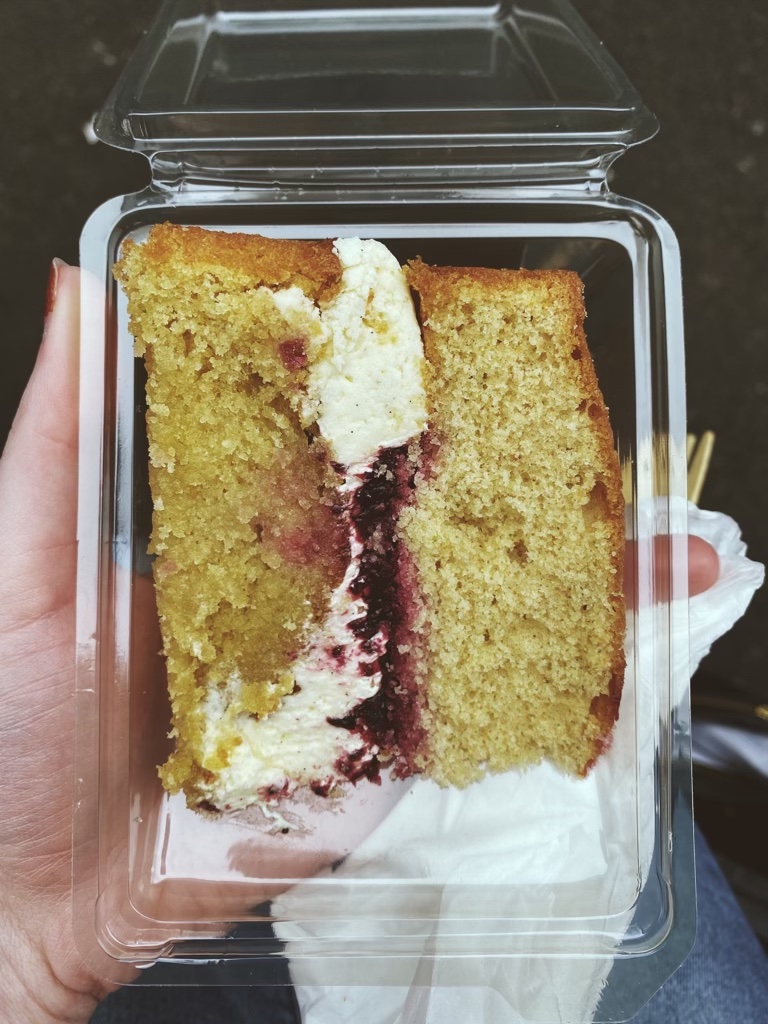
            Both my order and the next customer’s order were taken and made within the span of about a minute with just enough time for the guy next to me to ask, “you get the haddock?” I nodded. He sighed a small sigh of defeat, or maybe resignation, and looked down at his shoes. “Looks like that was the last piece haddock,” he said, and we both stood there awkwardly until a gleaming box of fish and chips was slid across the counter. I trailed past the clatter of the fish and chips shop and towards the outer perimeter of the market. Everything was quieter here as the lunch and dinner stands were replaced by small booths of pastries. I managed to find a small stand run by the “Free From Bakehouse” that sold allergen free sweets, and snagged a slice of Victoria Sponge and Passion Fruit Cheesecake. Oh my, that Victoria Sponge did not disappoint. I don’t think I’ve ever had gluten-free cake that’s as light as that was. The fish and chips were pretty miraculous too even though I forgot to order tartar sauce. Overall, the food that I got at Burough Market was probably the best that I had on the trip. Even though I didn’t get to branch out into different cuisines, I was happy to have found some British classics that accommodated my dietary restrictions. 

Glorious Victoria Spongecake.

Final Score

Watermelon Juice: 10/10

Fish and Chips: 8/10

Mushy Peas: indifferent

Victoria Sponge: 12/10

Passion Fruit Cheesecake: 9/10

Back again soon,

Kath

# 12 The Ups and Downs of Fringe (ahem…Lift)

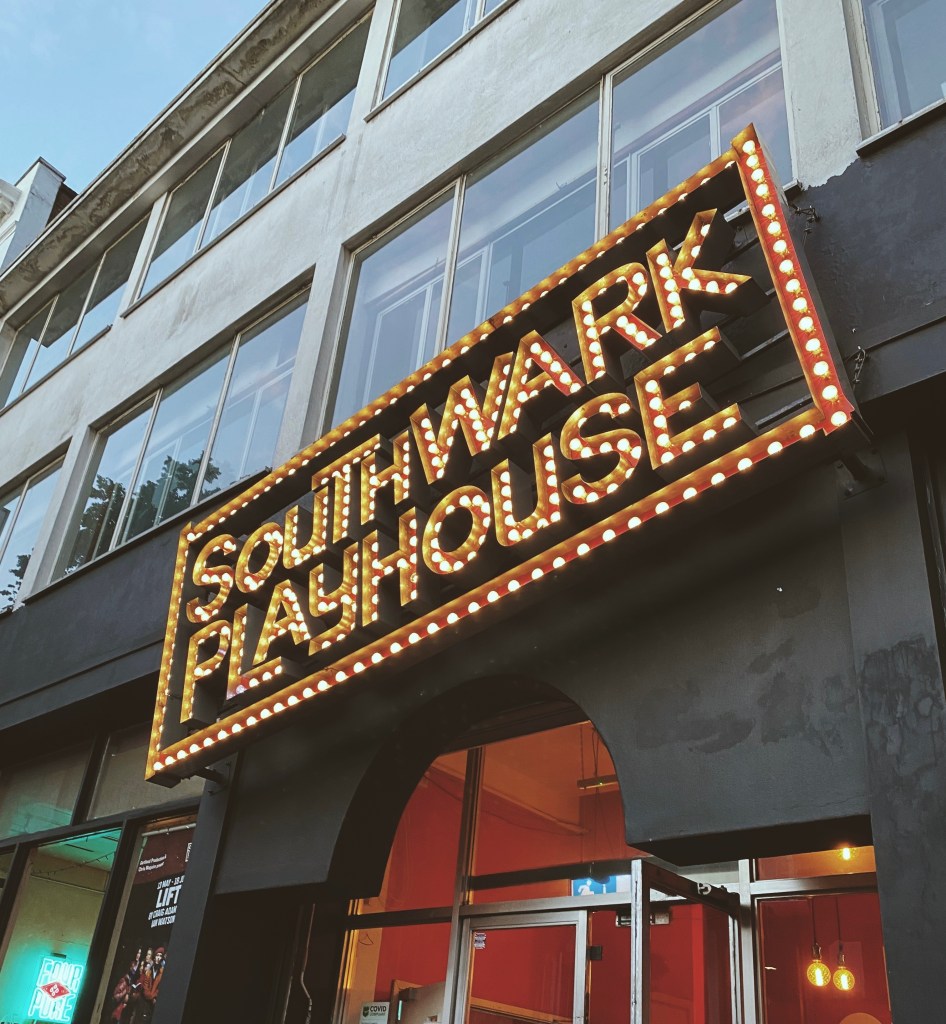
Fringe theatre is something that I have very little experience with, but seeing Lift made me curious about how other fringe shows make use of small spaces. The Southwark Playhouse had a very intimate, community-oriented atmosphere. Even the waiting area, situated in a kind of L-curve surrounding the bar, allowed for seating that encouraged conversation between strangers. It still surprises me, somehow, that theatre is as common as a source of entertainment in London as movie theatres are in America, and so much so that it can feel laidback and familiar in spaces like this. Something that I liked about Lift was the use of color. The set itself was little more than a few railings on an otherwise empty stage. However, each time the point of view between characters would shift, the lighting would switch from green to blue to yellow etc. I’m sure part of the simplicity of the set design is due to the necessity of working with a smaller budget. This use of color as a device was interesting because it would change the cast of light within the whole room and across faces in the audience. 

However, without a concrete set it was difficult to distinguish between characters. The whole premise of Lift seems to be that the people we come in contact with every day are reflections of ourselves. In other words, the stranger next to you in the elevator contains multitudes of stories and thoughts just as human as your own. Consequently, many of the characters shared the same name (Sarah, Kate, Angel, Gabriel), and their stories all drifted together, which made it really difficult to figure out what was going on. For most of the show, for instance, I assumed that the Dominatrix character was who the busker was writing to, but apparently it was Kate the secretary? I think? I’m still not totally sure. One advantage of performing a show like Lift as a small, fringe production was that it allowed the vocal performances of the actors to shine. They would drift through the audience on their way to the stage, and it felt like they were gathering us together to take part in what was coming next. Around fifteen minutes before the show started, the character of the busker started playing guitar as if we were all just passersby on a street corner, and for a second, I almost thought we were. For me, this is what fringe theatre succeeds at: building a community from the audience. Even if Lift lacked clarity, it did manage to engage me as a viewer. 

On the other hand, I felt that Girl on an Altar would have benefitted greatly from a larger budget/production. The play itself, a retelling of the myth of Clytemnestra, was largely told in monologues to the audience where the characters would recount events that happened off stage. The death of Clytemnestra’s daughter, for instance, happens entirely through the words of Clytemnestra. We watch as war, death, sacrifice, and the history of her life with her husband pass across her face. Yet, the stage itself contains little to involve the audience in this narrative. There is no altar in the distance as the battle rages, no army, and little representation of the prison that Clytemnestra is eventually cast into. Instead, the stage consists of a bed, a pile of ashes, and a dark room whose door opens from time to time during the play. 

This isn’t to say that the space in Girl on an Altar wasn’t used in a clever way. To be able to tell a story as broad in scope as Agamemnon and Clytemnestra’s and with such a small cast was impressive in itself. However, despite my enjoyment of the ways in which the character’s monologues mimicked the oral storytelling devices of mythology, this style of narration did grow confusing after a while. I also would have preferred the literal and metaphorical distance that a bigger production would have provided. The scenes of abuse seemed even more real and raw in such a small auditorium, and I wasn’t exactly prepared for it. While I liked how fringe productions that we saw engaged with their audiences, I can understand how things like budget, the size of a cast, set design, and lighting can make or break the reality of a moment. With productions like Girl on an Altar, the actual material seems to work better on a bigger scale.