May 29: Sleepy Joy, Healing Water, and Fancy Tea

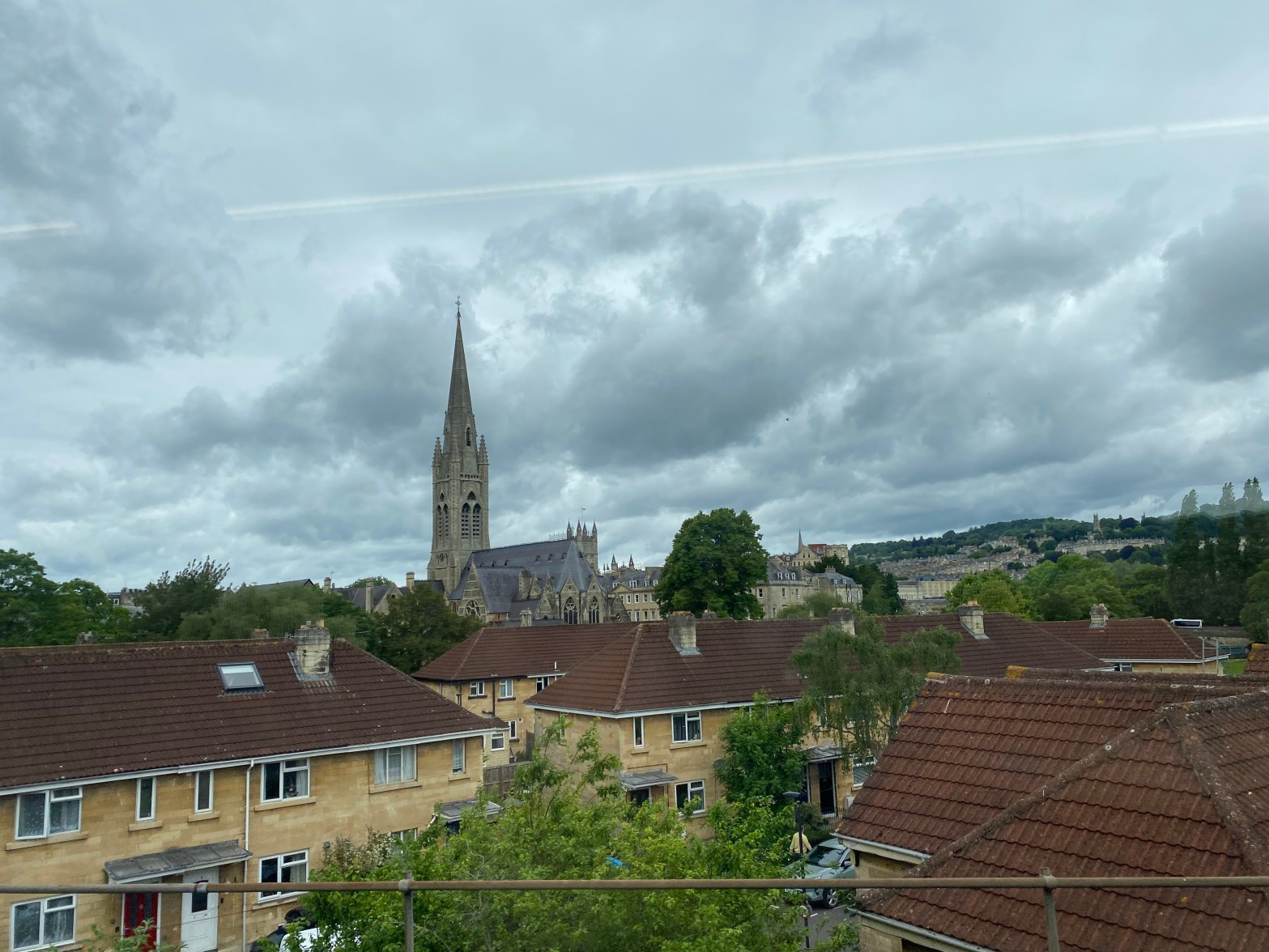
This day started out with a lovely train ride, in which I realized just how much I enjoy transit. Staring at the world passing by, listening to music, resting against the window, I felt at peace. So at peace, I started to nod off. 

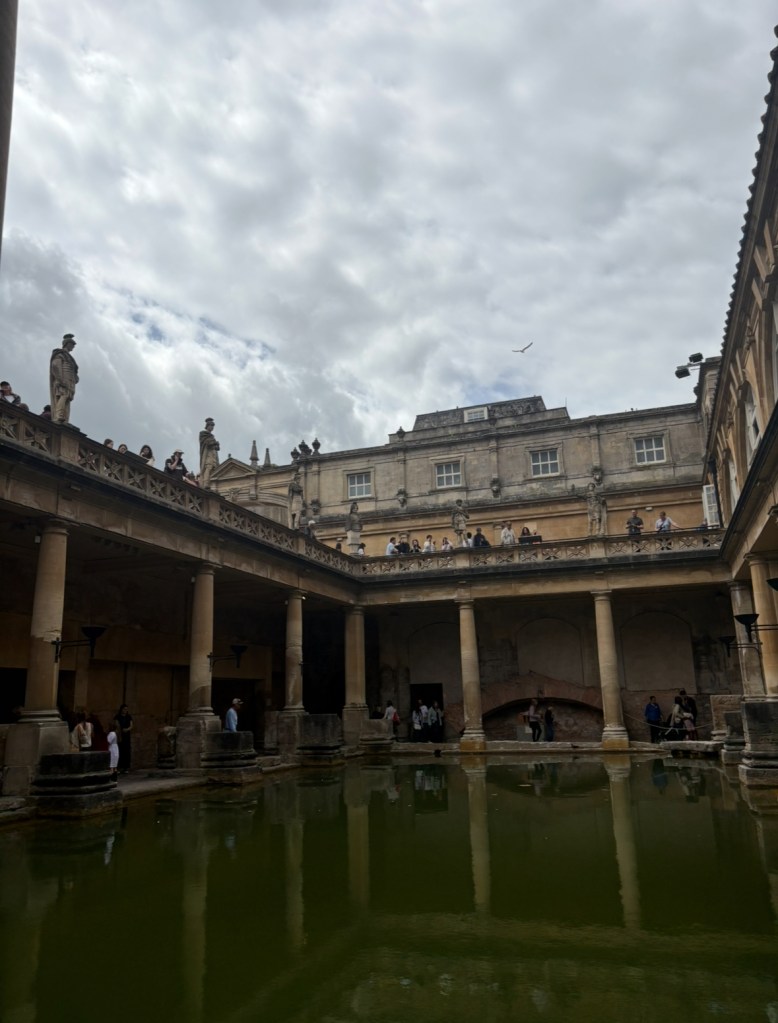
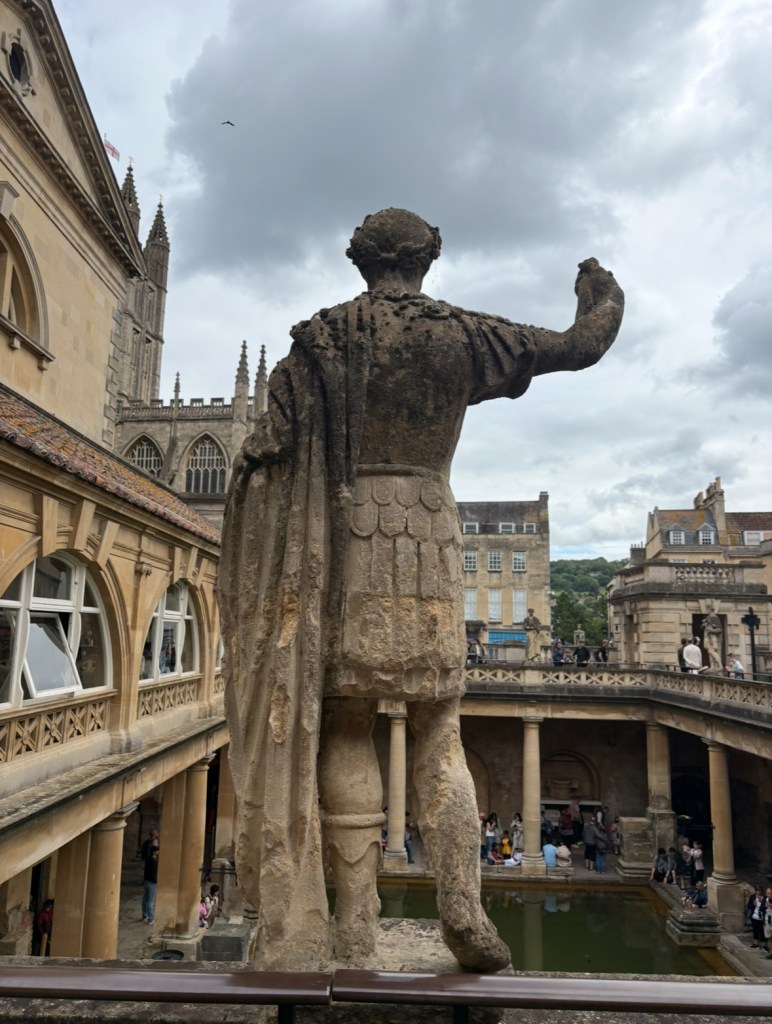
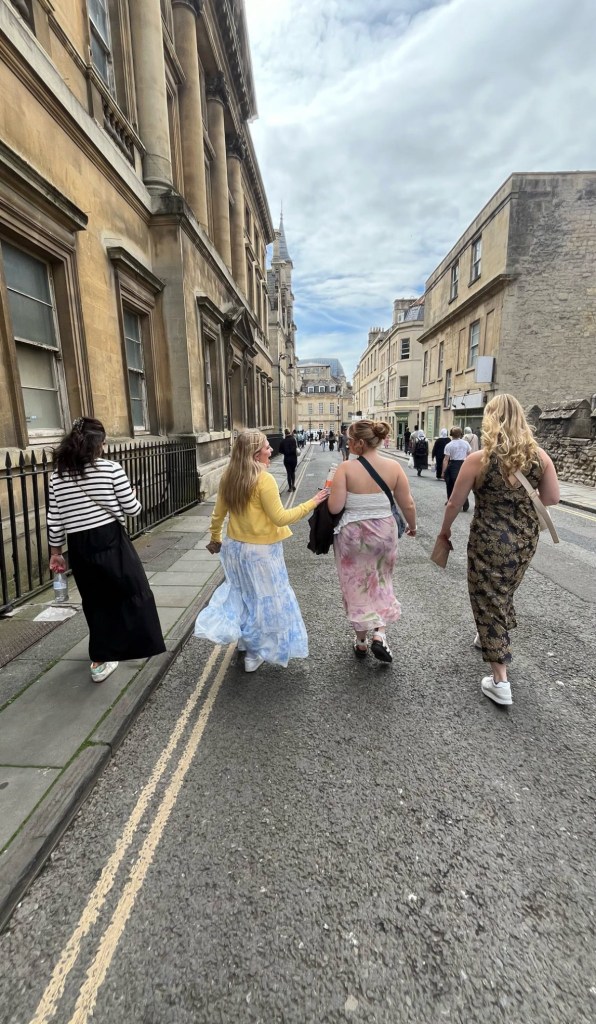
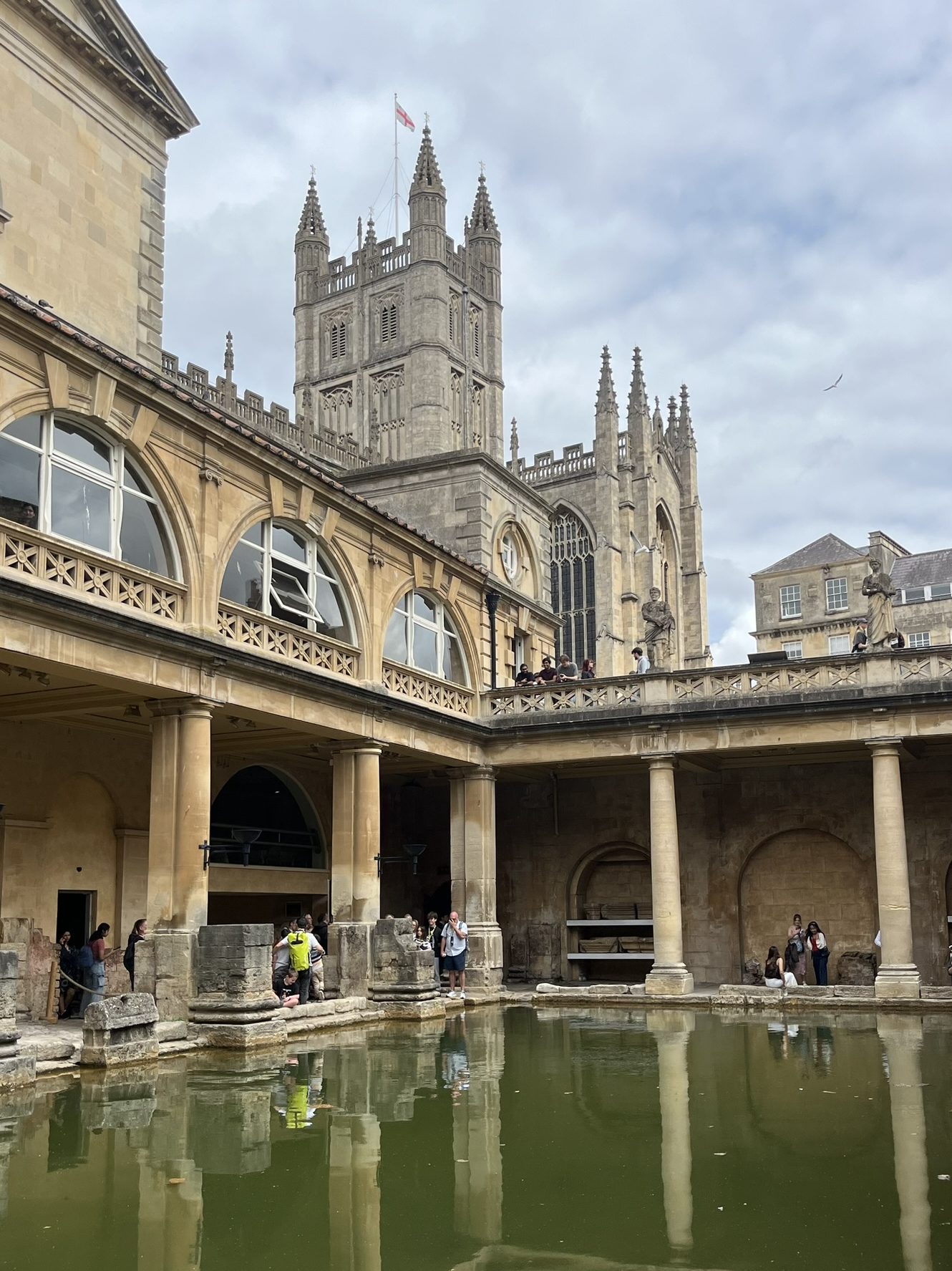
Bath was beautiful. It was almost as busy as London, but with less cars and shorter buildings. The crowds moved with less direction, content to see what may come around the next bend. The shops were less expensive, and I was later able to find multiple thrift stores within a small radius. Oh, and there was ornate architecture absolutely everywhere. It got kind of overwhelming within the first 10 minutes. Luckily, I was given something to focus on in touring the roman baths.
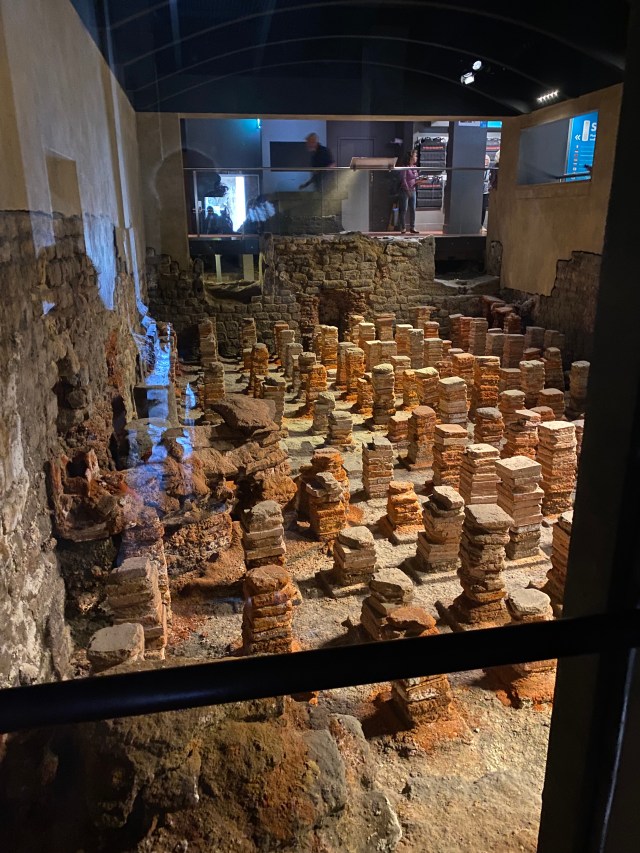
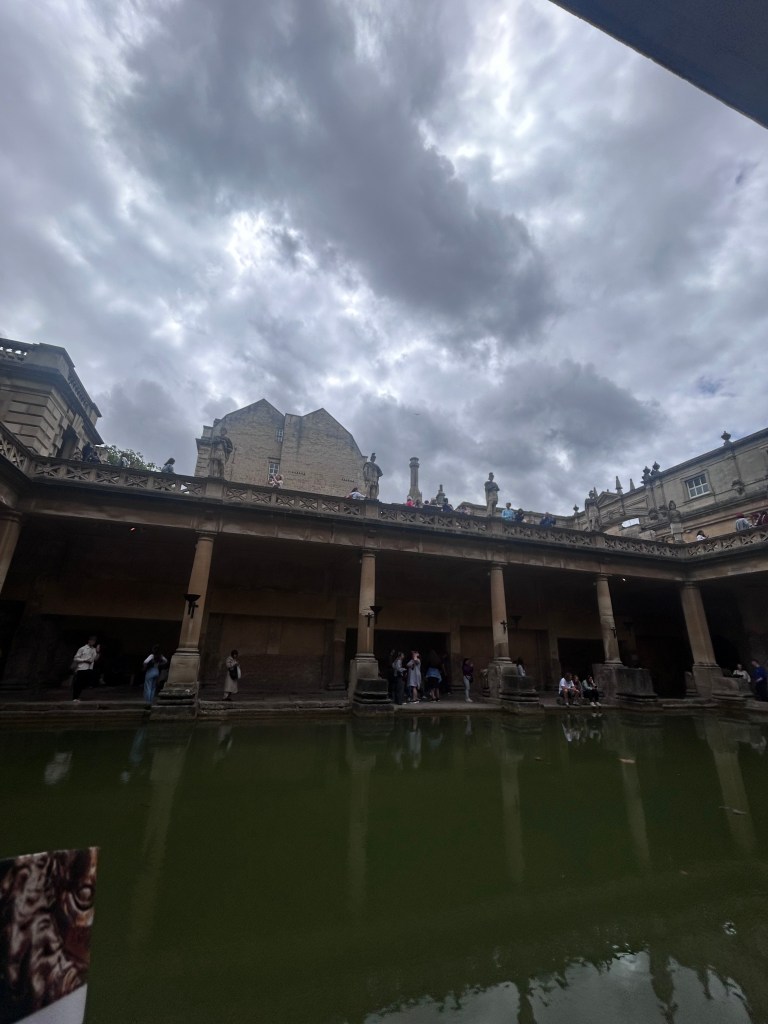
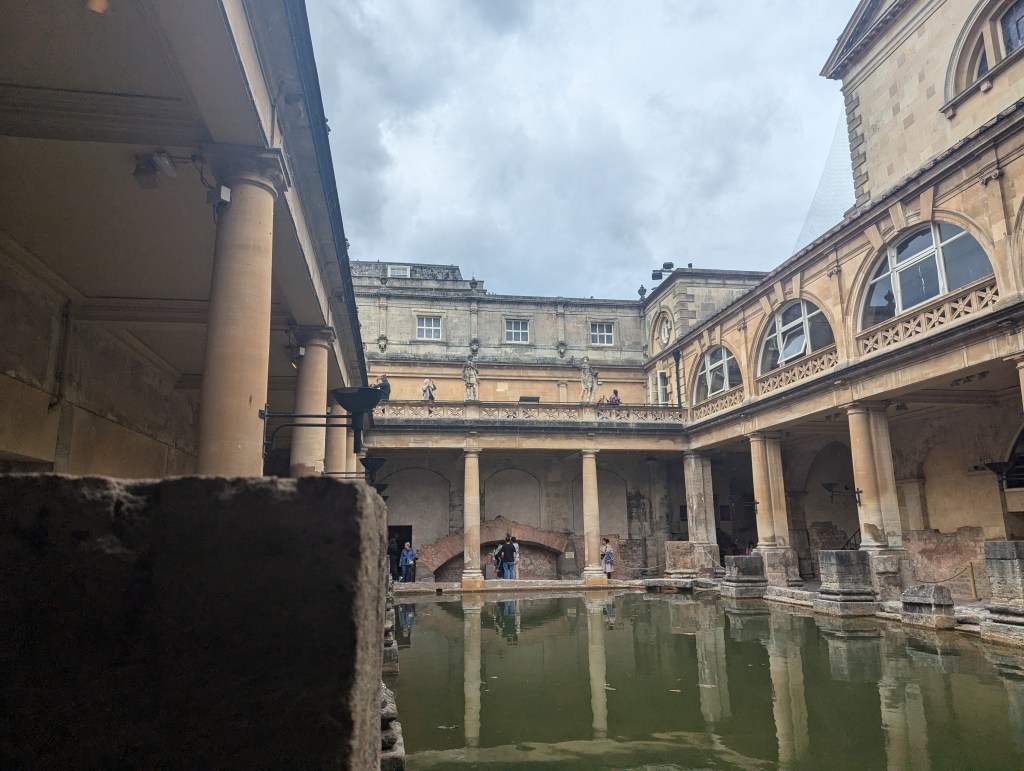
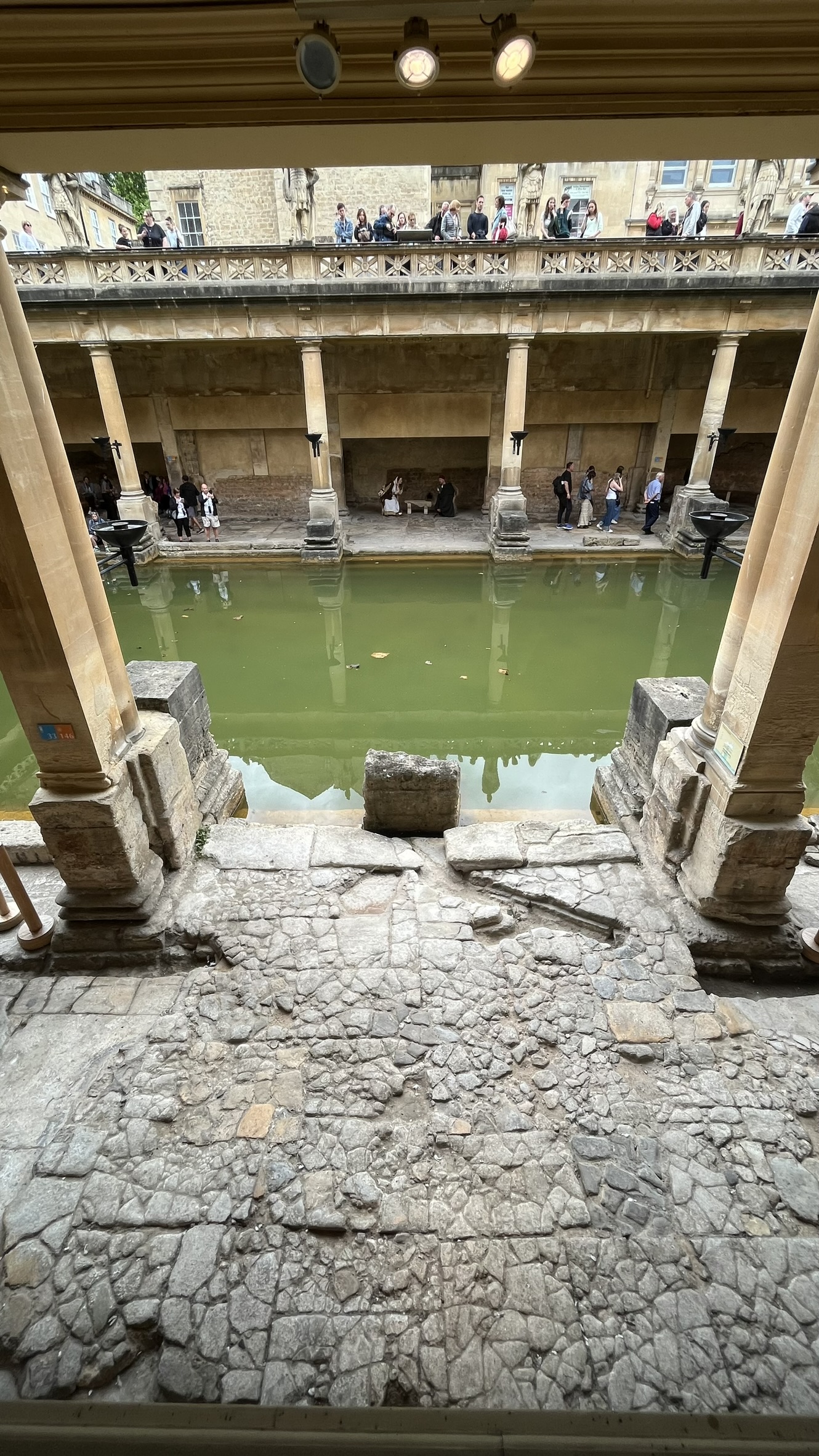
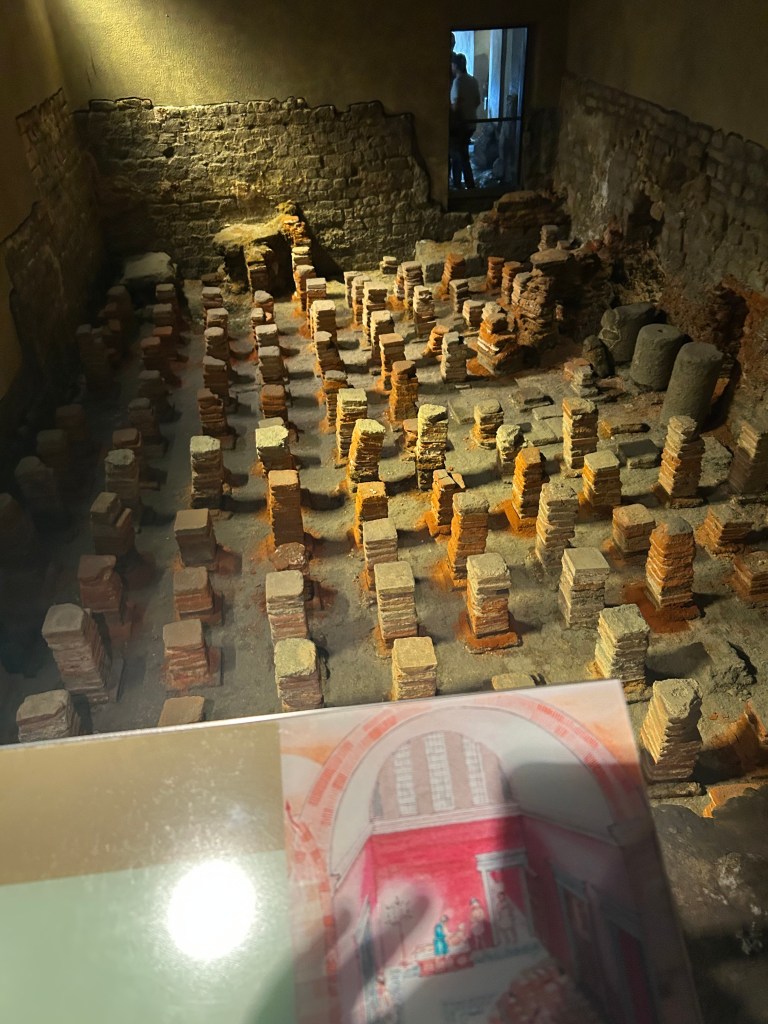
The Caldarium under-floor, where a fire would be lit and fill the area between the columns with hot air. above these, a stone floor would dissipate the heat throughout the room.

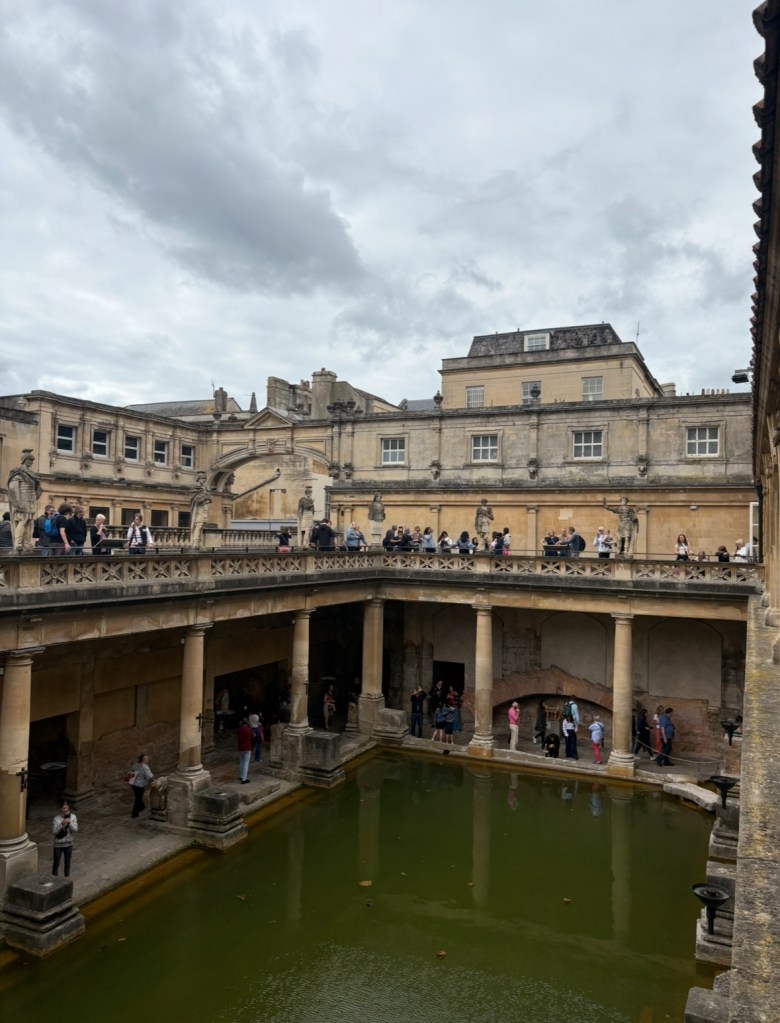
I studied Rome last semester, so I had a bit of academic context for the structure and meaning behind a roman bath house. I was proud to recognize the order of the rooms, the flow between Apodyterium (changing room), Palaestra (exercise area), Frigidarium (cold bath), Tepidarium (warm bath), and Caldarium (hot bath). The order would then alternate or reverse, leading back to the start. I was most interested in the design and architecture of the Caldarium. I love a hot bath, and the idea of getting into one of those terribly hot saunas fueled by fire and hot springs sounds like an interesting experience. I know public baths still exist in some forms, but I wish they were a more prominent feature of society at large. Most leisure spaces are expensive and private, meant as a short escape from “the grind” before getting right back into it. Or they are loud and bombastically social, with social codes preventing deep conversation. A bath sounds like the perfect place to have a long, thoughtful conversation, and recharge in a healthy, lazy way. Leaving the baths, I had a sip of the available spring water, said to have healing properties. It was some of the water I’ve had in my life now, that’s for sure.
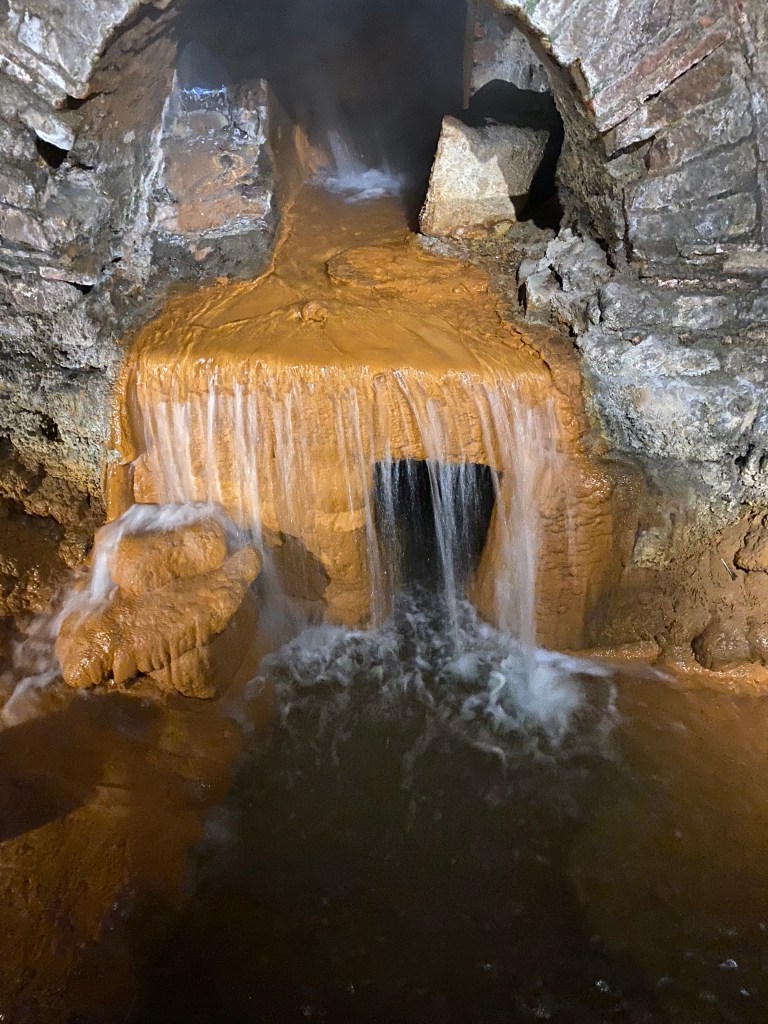
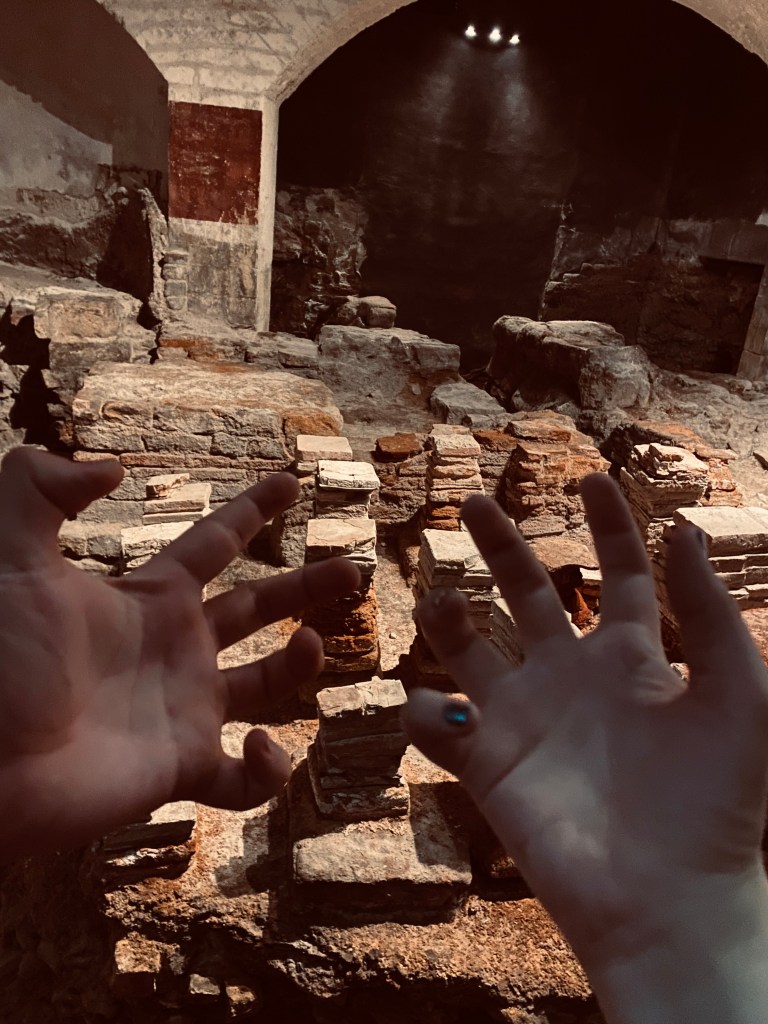
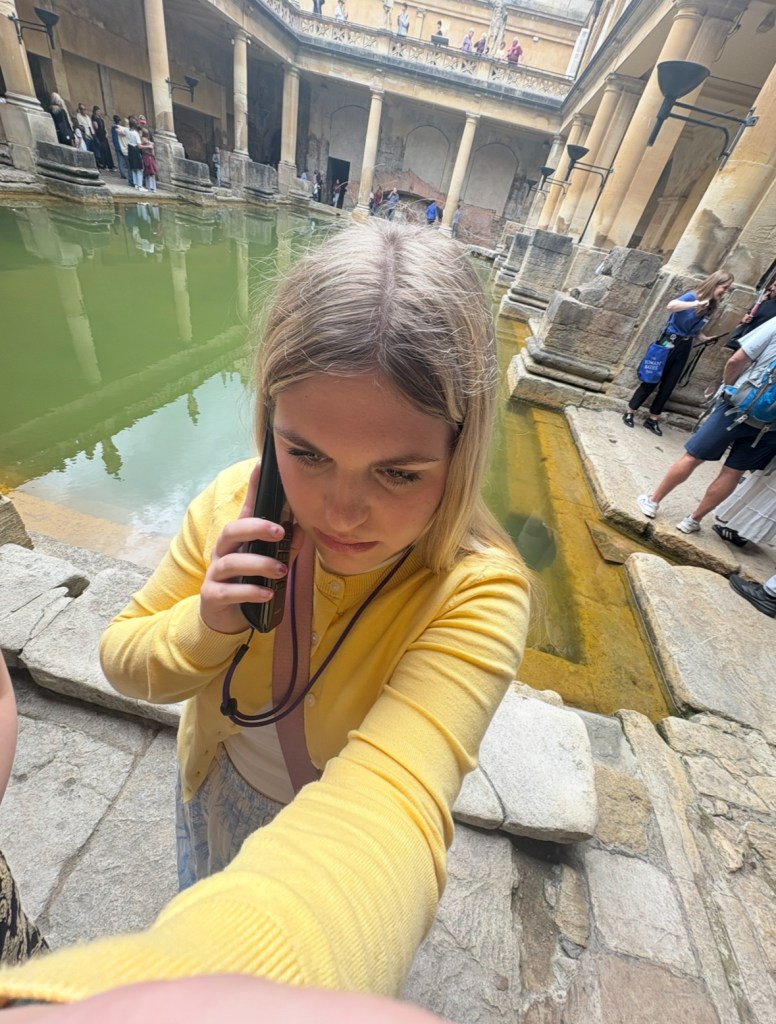
“Argh! So hot!”

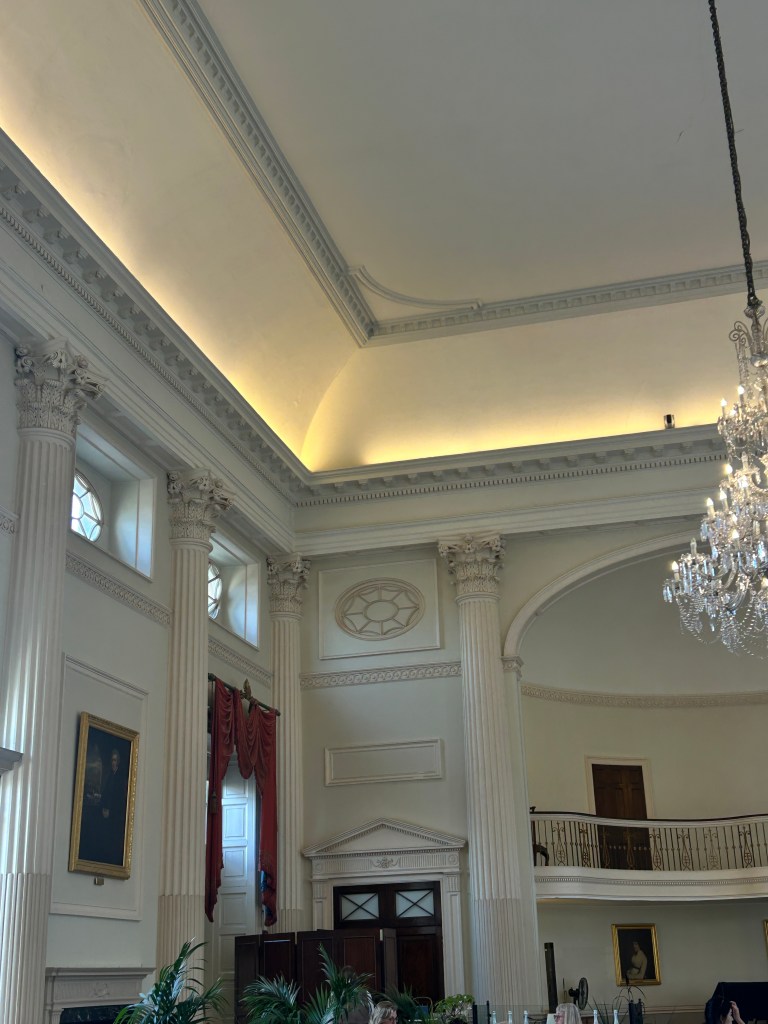
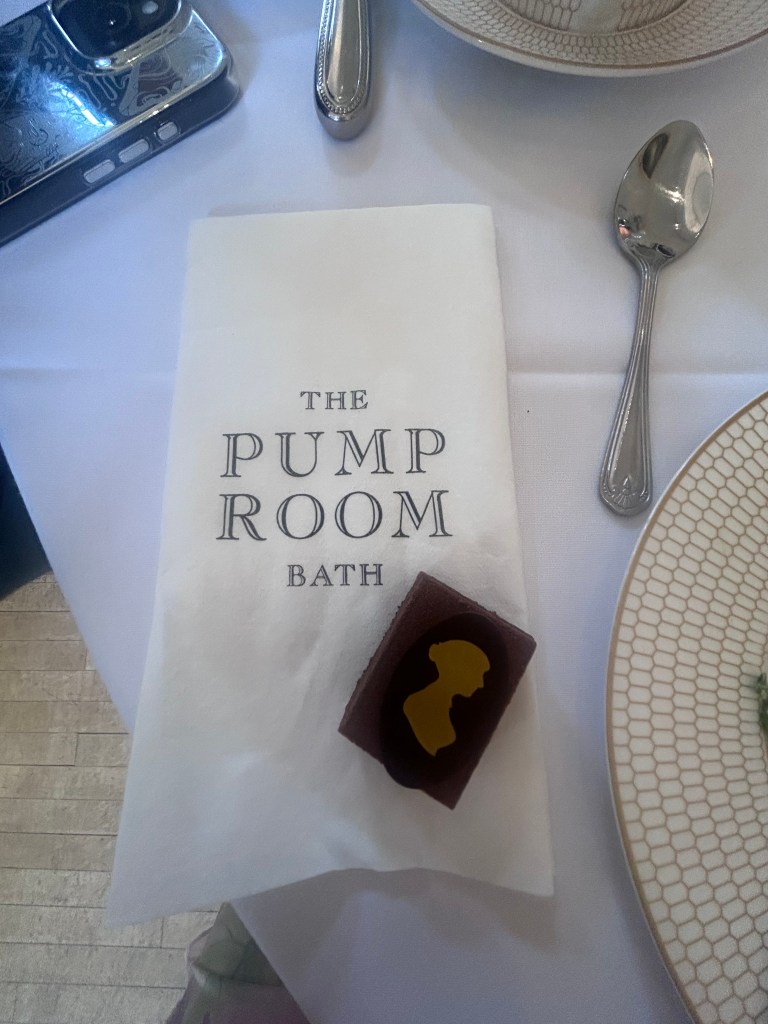
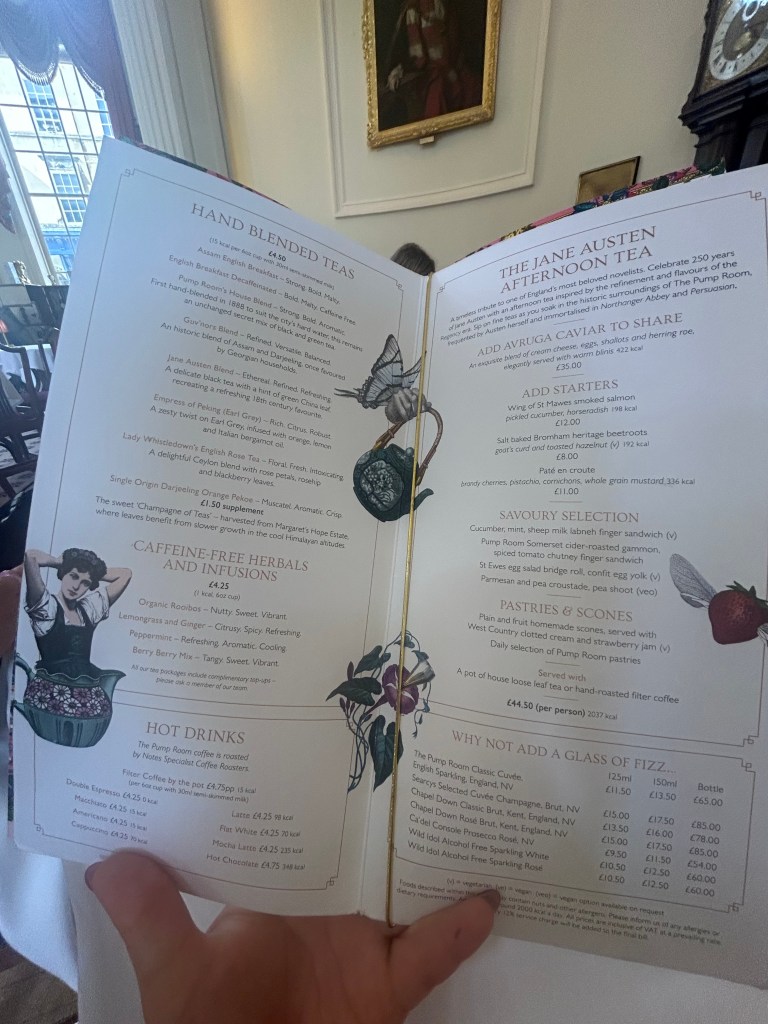
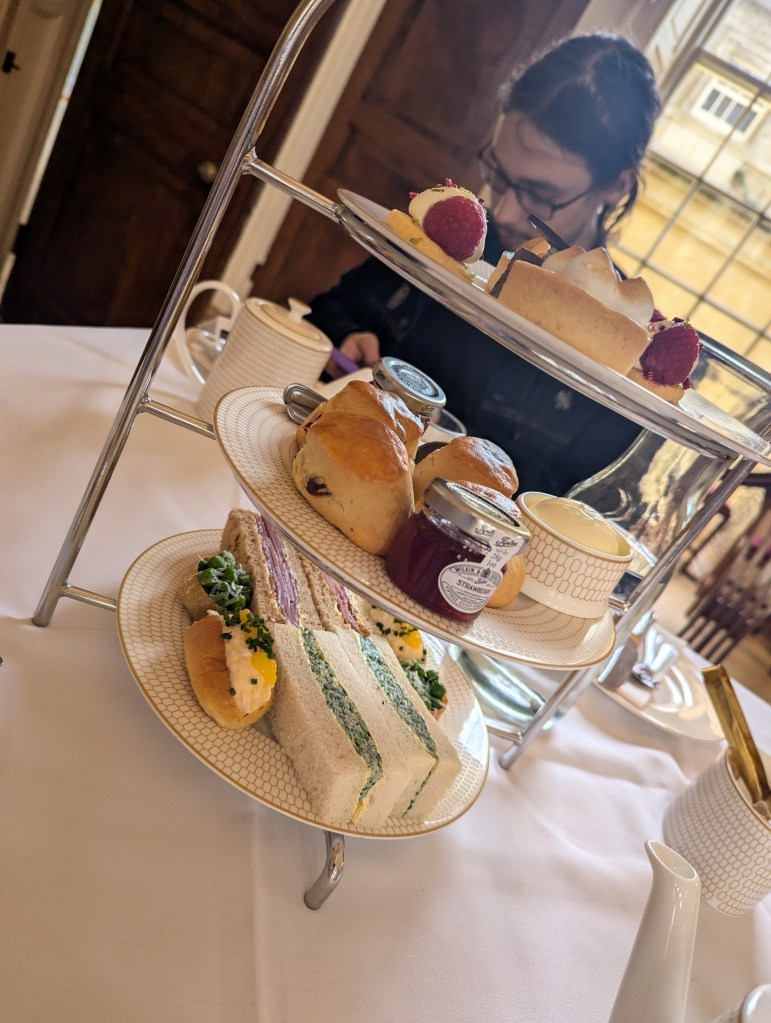
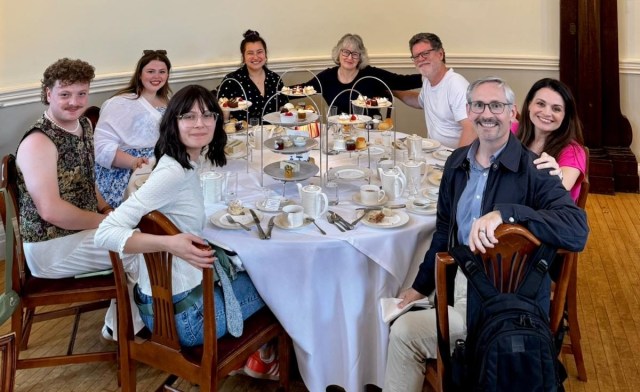
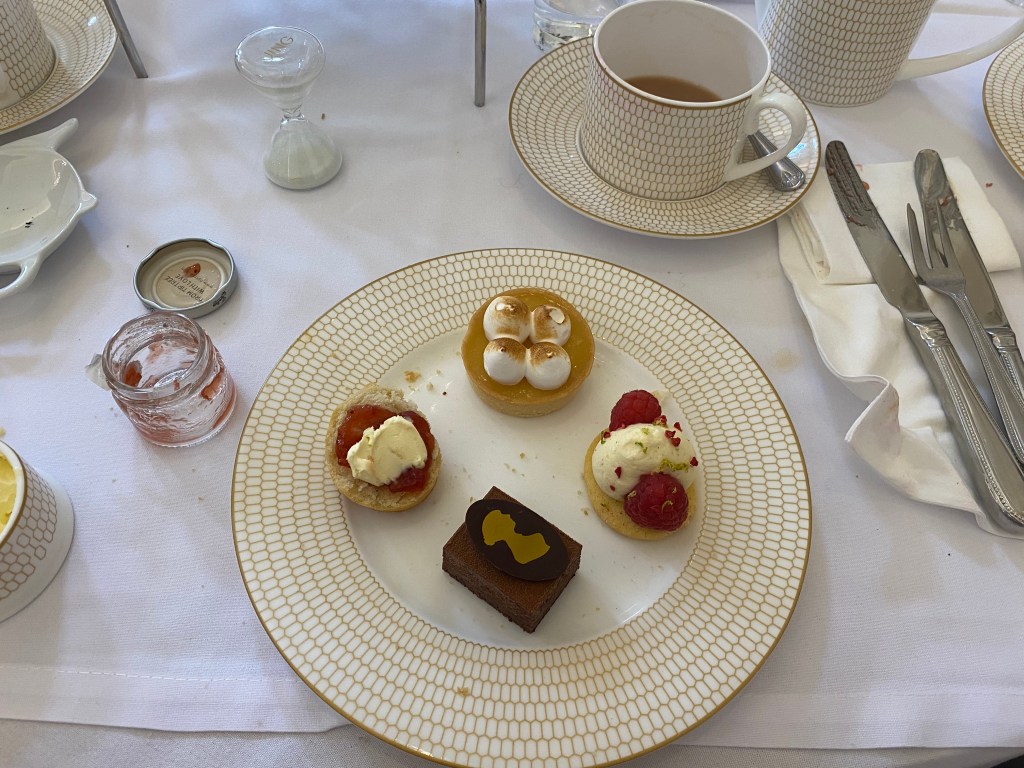
After the baths, we had afternoon cream tea in the Pump Room. I had the house blend, which was nice but nothing astounding. The treats accompanying the tea were unexpectedly extravagant, though. I most enjoyed this little lemon tart, which was almost sickly sweet. I think most dishes here in Britain have less sugar than their American counterparts, so my palette was more susceptible to the joy a small burst of sweet could bring. This tea event was absurdly expensive, but otherwise exactly what I want from something like the baths. A space to relax, indulge, and share time.
The train ride back was another indulgence for me. The same process of music, brooding, and nodding off. lovely.
Splish Splash, I Spent A Day in Bath

Anyone who knows me knows I’m a HUGEEE history nerd. Some of my favorite time periods to learn about are the ancient Romans, and Jane Austen’s Regency era. Bath is basically both! Spoiler alert, I LOVED it there. Everything from the museum, the town, and the train ride from Paddington Station (even if I didn’t realize it was an hour and a half train ride and I didn’t bring my airpods).

Once we arrived in Bath, we went straight to the ancient Roman baths. These were SO cool. A lot of the architecture was Victorian, as a lot of it was rebuilt during that era, but the original Roman architecture was my favorite. I liked getting to walk around and learn about the people who lived in Bath before the Roman’s took over Britannia. Can you imagine living back then, and all you know is your town, and then all of a sudden these guys pull up and say they’re taking over and they just combine their god with the god you believe to live in the holy hot springs your town is based around? That must have been SO scary.

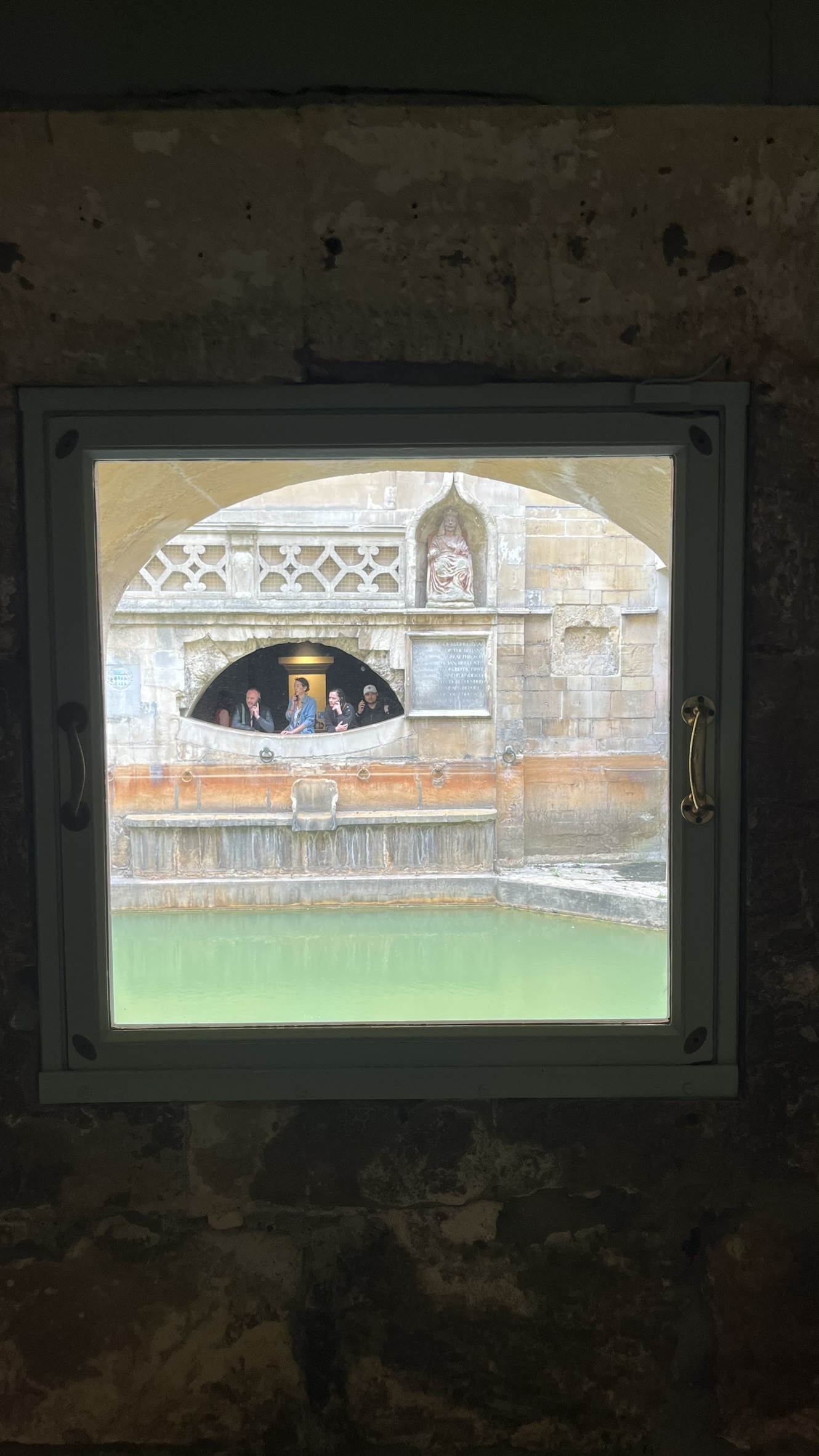
Once we got down to the actual baths portion of the museum, Sophie and I dipped a finger in the water and rubbed it on our jewlrey. Both British and Roman women would toss jewlrey into the baths and springs as offering to the goddess Sulis Minerva, so it felt like some form of good luck. I did convice myself my finger felt weird afterwards though. Still waiting on the brain eating amoeba to get me.

Once we left the baths, we were all HUNGRY! So we strolled around the town, looking for somewhere to eat lunch so we didn’t have to wait till we got to the Pump Room. We found a place where I could get gluten free pizza, so we stopped in there. It was SO good, though I did overstuff myself.

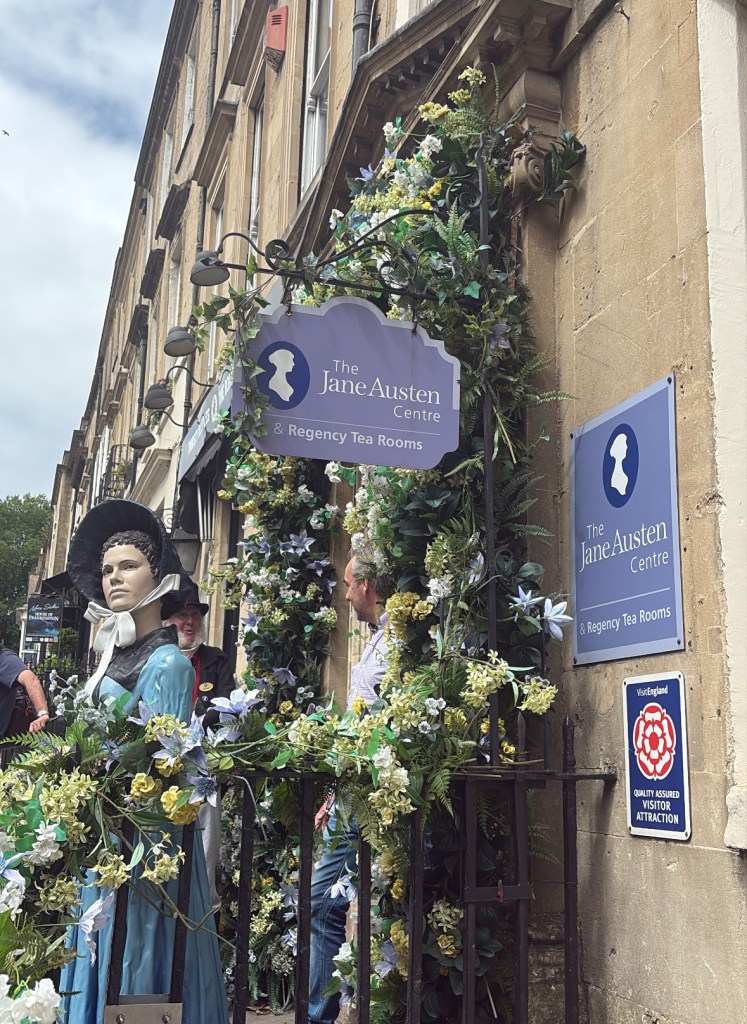
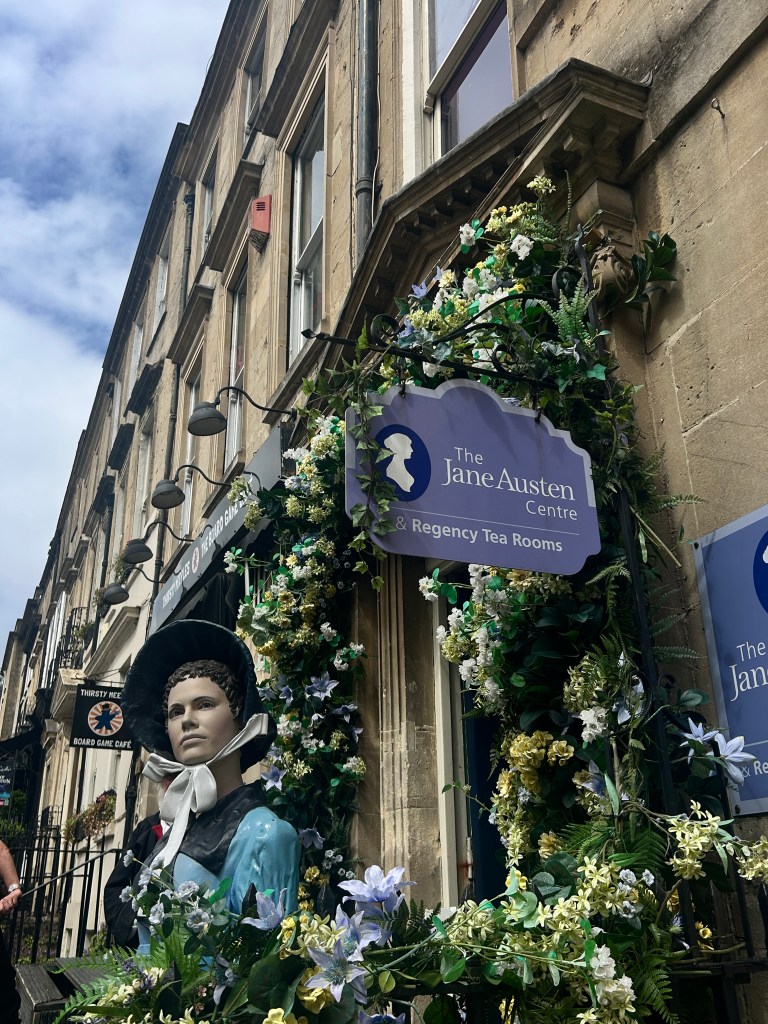
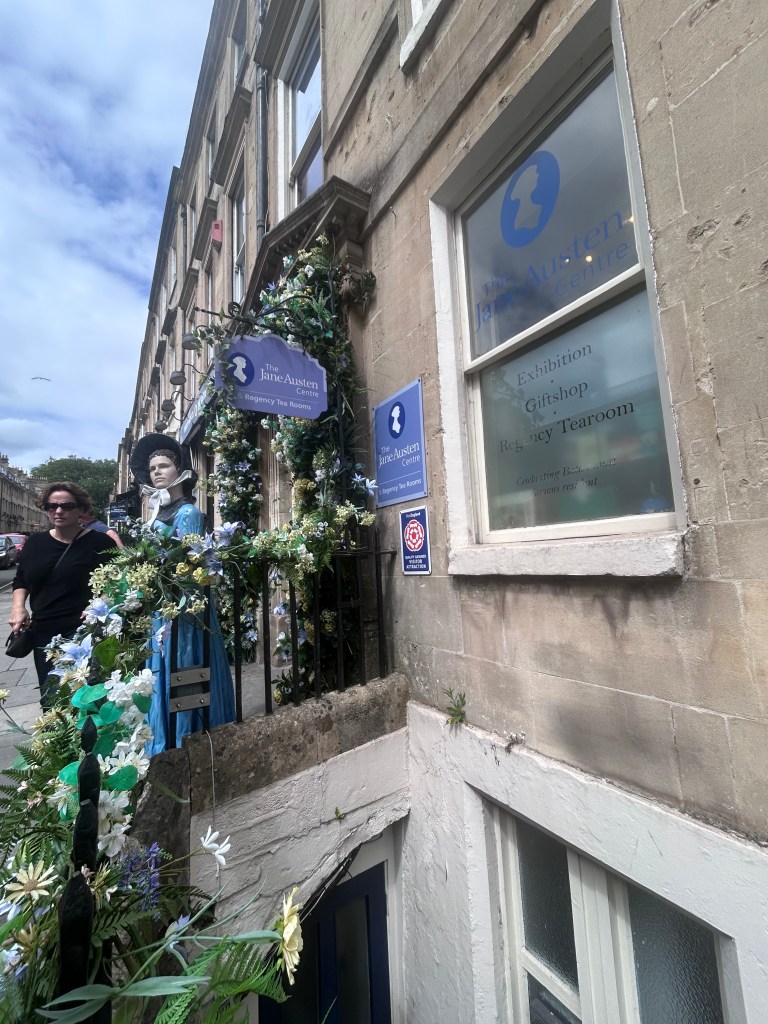
We walked down to the Jane Austen Centre, but didn’t have time to do a tour. As much as I love Jane Austen, I was okay with that because I worried about it being a little touristy. So, we just decided to be Jane Austen herself and stroll around Bath. As we walked and I took in the architecture, to more I realized how much I genuinely liked Bath. It’s really a beautiful town, and it felt like a quaint town in the country side (while also having an Anthropolgie and Lulu Lemon). Maybe it was because you could see the hills and tree through the buildings.

After our stroll, we made our way to the Pump Room. I got a whole gluten free tea tray to myself and it was honestly really good. Did I eat a lot of it? No. I was still stuffed from lunch, but I ate more of my tray than I should’ve. I got a yummy-licious berry tea that I would honestly drink every day.

After the Pump Room, we made our way back to the train station where, once on the train back to London, I took a semi-decent nap. Overall, I really liked Bath. It had a certain charm that reminded me of a costal town in the states, or maybe even a ski town. Anyways, I wonder if anyone has ever jumped in the Roman baths.

BAAATTTHHH!!!! but not in a tub!!

took a big bubble bath on Thursday!! actually, we couldn’t touch the water because it was untreated and would probably infect us – but just seeing and learning about the Roman Baths was enough for me! Wowowow. I had no idea what these were before getting to them in real life, and I had no idea how extensive and well designed and beautiful they are. It was shocking and stunning and all of the above.

Something that really enthralls me when I see historical sights, especially something so old, is thinking about the people who really lived and walked in this place. They were people just like me, and they all came to the Baths for a different reason. I thought it was so interesting how the museum showed projections of what would go on in the different rooms, with real actors and placed at the level of the floor where it would have take place. In one part of the Baths, there was a projection for the women’s steam room, where they would get warm before getting into the cold baths, and they would use oils to open up their pores. They mentioned how some of the ladies would take this chance to pluck out all of the hair on their body. This brought me into thinking about beauty standards for women in this era – clearly body hair was not considered attractive, but I know in other cultures at this time, it was considered incredibly feminine and attractive. It was so interesting to think about how these women (and men) conformed to different standards and ideas just like we still do, and in some ways, the baths were part of that. I also found it so interesting how the baths were mostly a health/self care ritual for those who used them. Ive heard a lot recently about cold plunges, and everyone knows the hot sauna/cold shower routine, but I guess I didn’t realize how far these trends, and this knowledge of the body, went back. The audio guide was incredibly informative and provided so much background into everything we saw, and overall te experience at the Baths was incredible.

Tea at the Pump Room could not be forgotten!! How cool to sit in the same room where many famous people once sat, but especially Jane Austen and Charles Dickens, that was amazing to hear! For this experience, besides a couple pictures of the room and the treats, I put my phone away and tried to be as present as possible. Honestly, I spent the first 20 minutes just sitting listening to the music and looking around the room, imaginging what it must of looked like 200 years ago, with the dresses and the chatter and the status of it all. It must have been quite a scene! I love daydreaming like that. The coffee (not a hugeeee cream tea girl, so coffee it was for me) was amazing, and so were the little treats! The scones and raspberry shortbread were my personal favorites. I was so glad we got to experience this room in all its glory!

I could have spent at least 3 days in Bath. I thought the town was so charming and quaint, but still packed with great shopping and restaurants and of course amazing sites to see. I wish we had more time there, but it was so great to go for the day that we did! It was the perfect break from London. Still a little busy later in the day, but was so much quieter and smaller than the big city, and definitely felt so relaxing. I would 100% return to Bath, and I cant wait to see what I find next time Im there!!

xo, jo

The Beauties of Bath (Not Shower)

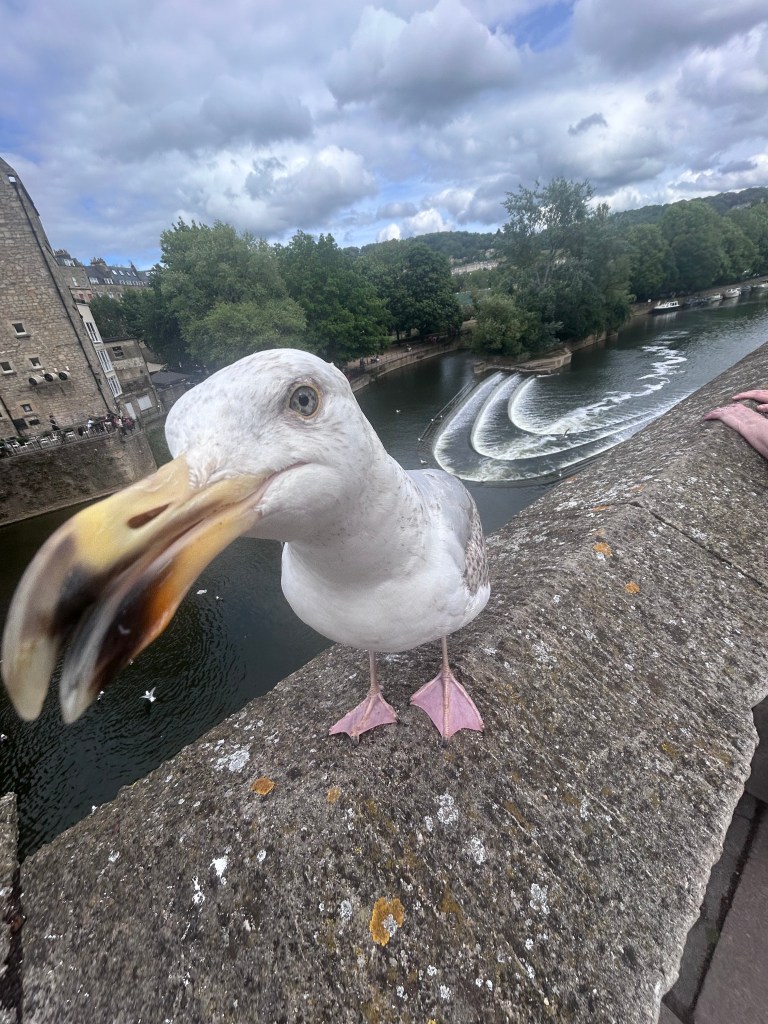
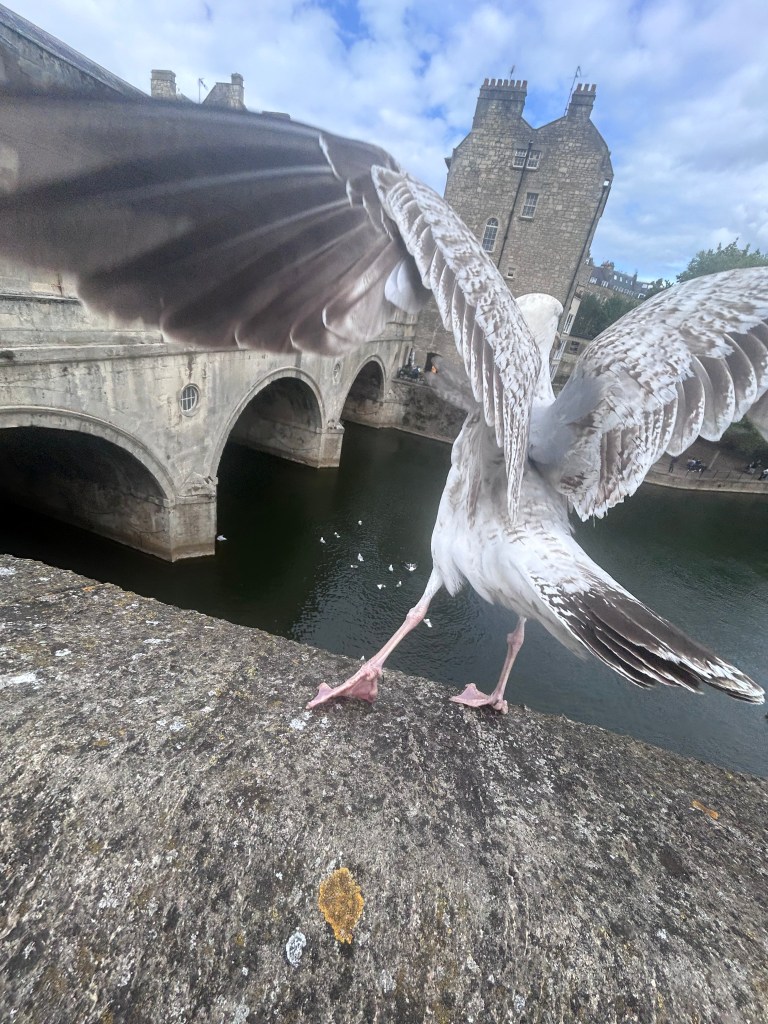
As the sworn president of the Insane People Jane Austen Stan Club, I will admit that my opinion of Bath might be a little biased. However, Bath was one of the most incredible places I have ever been to, and that is a hill I will die on. Between the Jane Austen Museum, the Roman bathing pools, posh tea, and gorgeous view from the bridge, I found myself wishing I could have stayed there for days. 

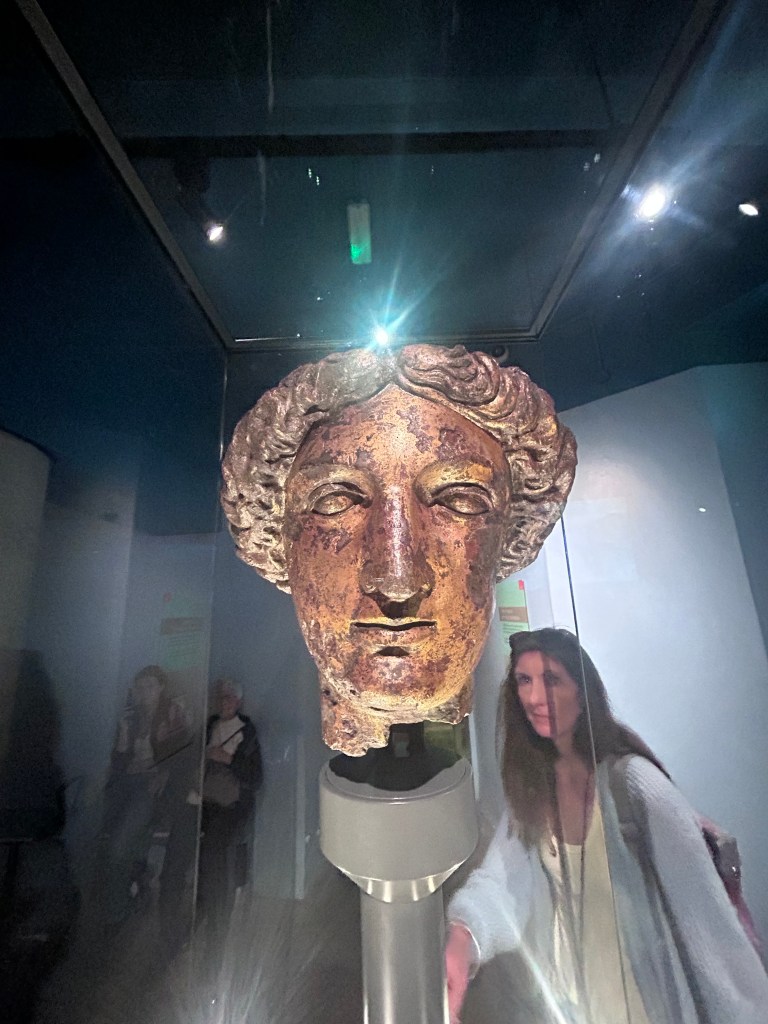
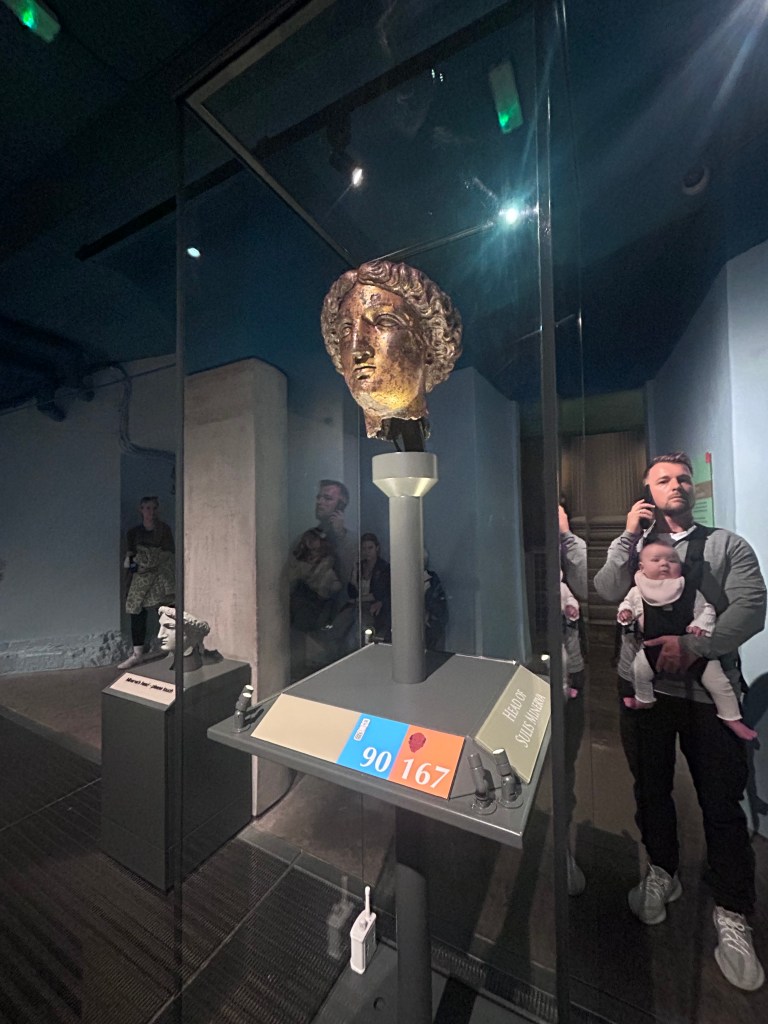
The baths of Bath were created during the reign of the Roman Empire in England and were crucial aspects of daily life: worship, exercise, hygiene, and medical treatment. While it was all interesting, the part that intrigued me the most was the creation of Bath’s patron goddess, Solis Minerva. It is the culmination of cultures between the Saxon and Roman people that bonded the people of the region. Solis was a goddess of the Saxon people. She was the goodness associated with the protection, water, and healing. The Minerva in her name stems from Roman mythology: the goddess of wisdom, crafting, and strategy. Seeing the similarities in the two traditions, the different cultures combined their goddesses into one person they worshiped together.

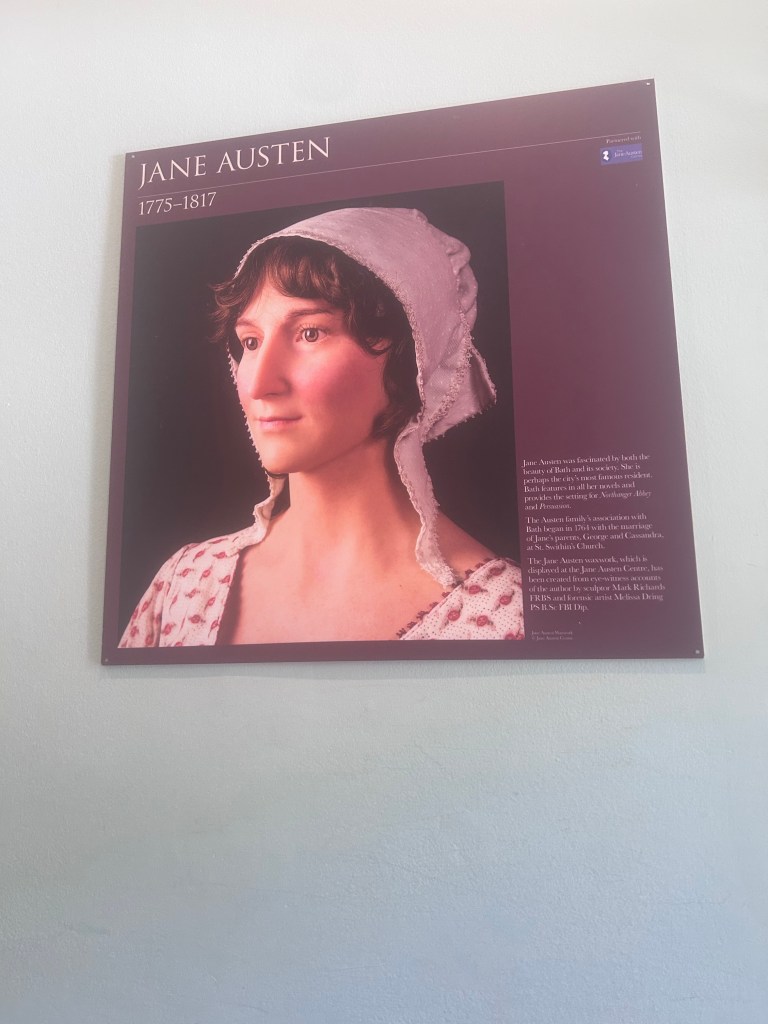
My other two favorite activities from Bath were The Pump Room and the Jane Austen museum. The experience of afternoon tea was everything I hoped it would be. I felt very posh by the end, and I am slightly surprised I am not still walking around with my pinkies up. It was crazy to think about the fact that I was standing in the place Jane Austen took her tea. Speaking of Jane Austen… I am really upset that I did not get a full tour of the house because it was extremely cool. However, even what I did see made me feel giddy by the end. The fangirl in me was dying to say the least. 

Oh, and everyone say hello to my bff 😛

Bath!!!!

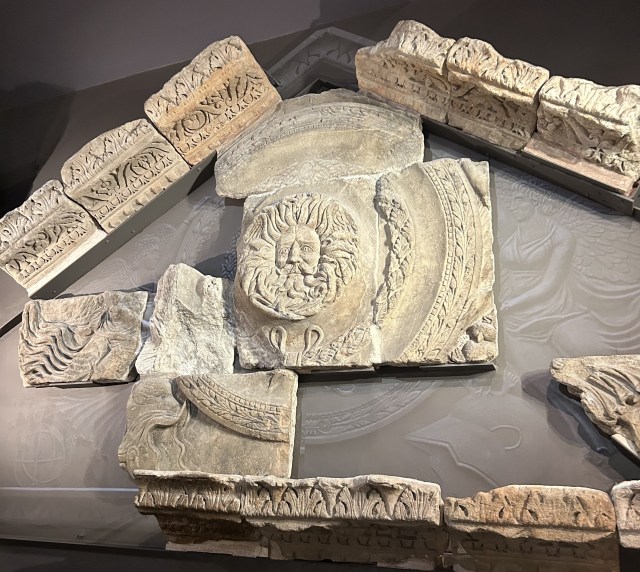
The Roman baths were a beautiful architectural site, and while the history was not an area of particular interest to me I was still able to appreciate the work put into the construction of the site. By far my favorite part of the baths were the carvings and statues scattered throughout the building. The one that struck me the most was that of the gorgon, which is etched in great scale in the baths. Upon further research I have learned that its history and the cause of carving it are still somewhat debated today. Even calling it a gorgon is a somewhat controversial statement, as some historians reject this claim on the basis of the gorgon being a female character, and the carving not being feminine in appearance. The primary reason that people do believe that it is meant to be a gorgon is the ties of the creature to the goddess of Athena, who was worshiped at the roman baths under the name Minerva (source: https://www.romanbaths.co.uk/temple-pediment-and-gorgons-head). While its exact origin may still be unknown it is a truly striking image, and left the biggest impression out of the items in the baths. The second largest impression would definitely be the water from the baths springs, which was offered at the end of the tour. It was quite the unpleasant, although not unexpected, mixture of warmth and metallic flavouring that did not live up to the tales of health and rejuvenation it was said to bring

After touring the baths I took the opportunity to explore the city. While still very tourist centered, it was a lot less busy and crowded than London, especially when it came to the roads. The people also seemed slightly more polite, probably because they were in less of a hurry than the majority of London seems to be in. I had a lot of fun looking around at the local charity shops to see what sort of things were donated in that area, and it gave me an opportunity to talk with some of the people from the city. I was quite surprised to learn from one store owner that Arkansas has a somewhat dangerous reputation. After telling him I was from Arkansas he said “oh it’s pretty rough over there isn’t it”. Assuming he was referring to an aspect of its population size or politics I gave a fairly neutral “it’s alright”, only for him to talk about how dangerous he had heard the state was. I was very surprised by this as while I have heard many not so great things about the state of Arkansas, dangerous has never been one of them.

The highlight of the day though by far was tea time. Never in my life have I felt so fancy and elegant. I was very glad I decided to buy a slightly nice shirt from a charity shop before going in, because the environment felt so posh and otherwise I felt like I would look out of place. While not having paid it myself I can not say for sure if the cost was worth the experience, it definitely felt very extravagant. The portions, while small, were very filling and each item brought a unique flavor or texture. The most surprising thing was the cucumber sandwich. As a staunch cucumber hater I was hesitant to even try it, but I was extremely glad I did. It had a very smooth and refreshing taste and flavor that I would not have expected from such a hard vegetable base. My favorite though would have to be the scone, which while relatively simple was made extremely well and was paired with a very good pair of clotted cream and preserves.

While I did enjoy the roman baths tour, getting to have a proper, extremely posh, British teatime has been one of the highlights of this study abroad

May 28: My Master Builder – Review

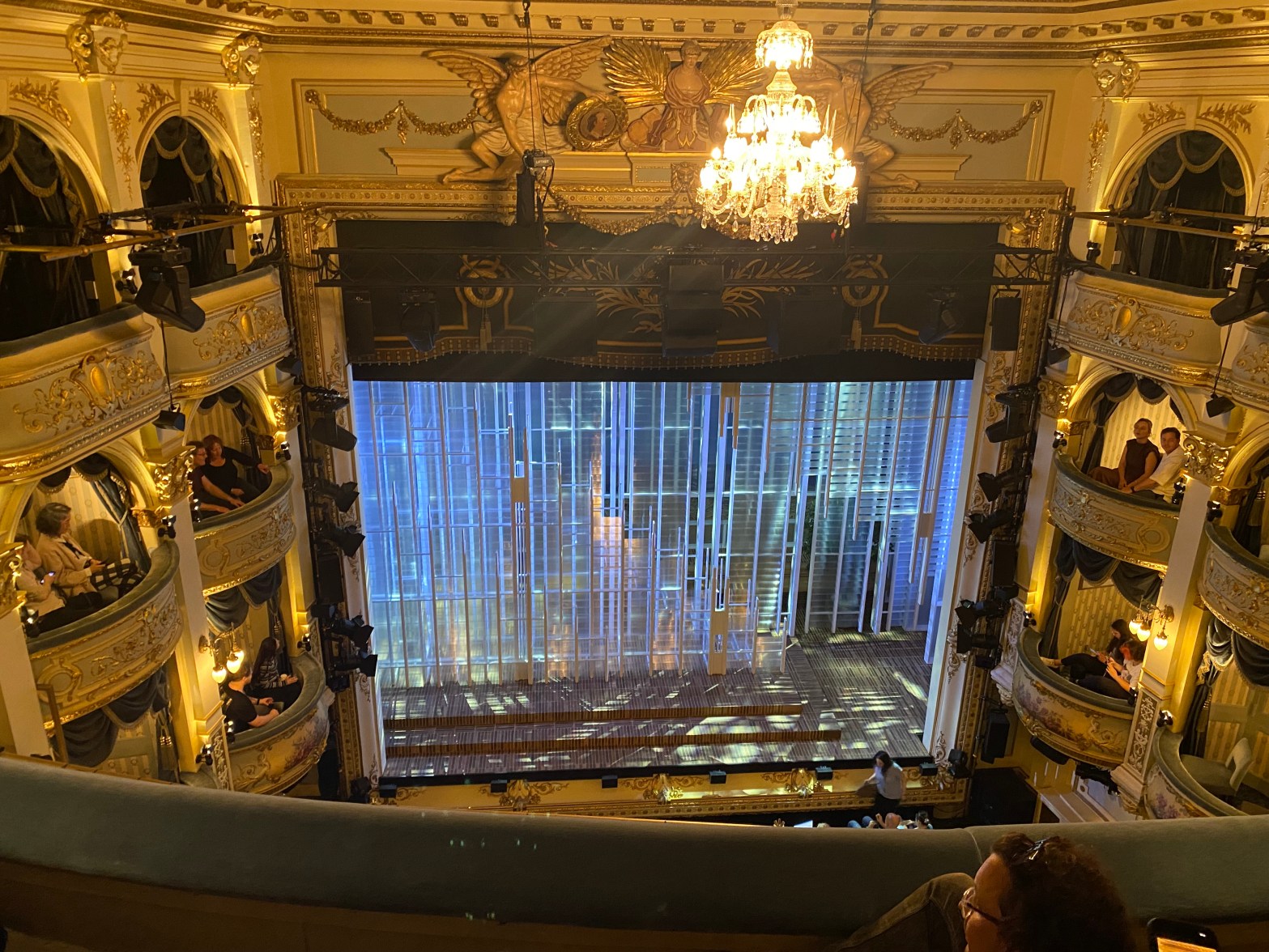
I was excited to see how this modern adaptation of The Master Builder by Ibsen would be handled. I wanted to see complex social dynamics, the contradictory depths of an artist’s mind, and the manipulations people use on each other. Instead, I watched a dramatic prime-time television series play out on stage. I’m sure 2 seasons of My Master Builder would be an intriguing watch, but my 2 hours at Wyndham’s Theatre failed to pull me into the world it wanted to show. 

I felt like the play was written with the goal of tackling some pretty big issues: Power imbalance, class struggles, sustainability, history, guilt, and most importantly, female empowerment. Sadly, it fails to effectively explore or discuss most of these topics. Mostly, it was about sex and gender roles within the context of power struggle. The characters of Elena (Kate Fleetwood) and Mathilde (Elizabeth Debicki) often had frank discussions about what it meant to be an upper-class woman. It was a very particularly upper-class struggle the characters worked through, and one that adds very little to the wider discussion of this issue.  Reading other reviews, this play’s author, Lila Raicek, apparently based the play off of a real-world dinner party with similar dynamics. Because of this perspective, there were many true things the characters could not, nor would, ever say. Overall, the first act had me excited to hear interesting discussions and see the folly of power on-stage, and the second act let me down.

I liked the sexual tension. I liked the silent standoffs and loud arguments. I even liked the slightly out-of-place and pithy monologues from Henry (Ewen Mcgregor). I guess I’m trying to say, not all of my thoughts about the show are negative; in the moment, it was entertaining! But in the hours after the show, I couldn’t pull any strong feelings out from my experience. It simply did not stick with me. I will not think about this performance much in the future, honestly.
May 27: The Tides are Timeless

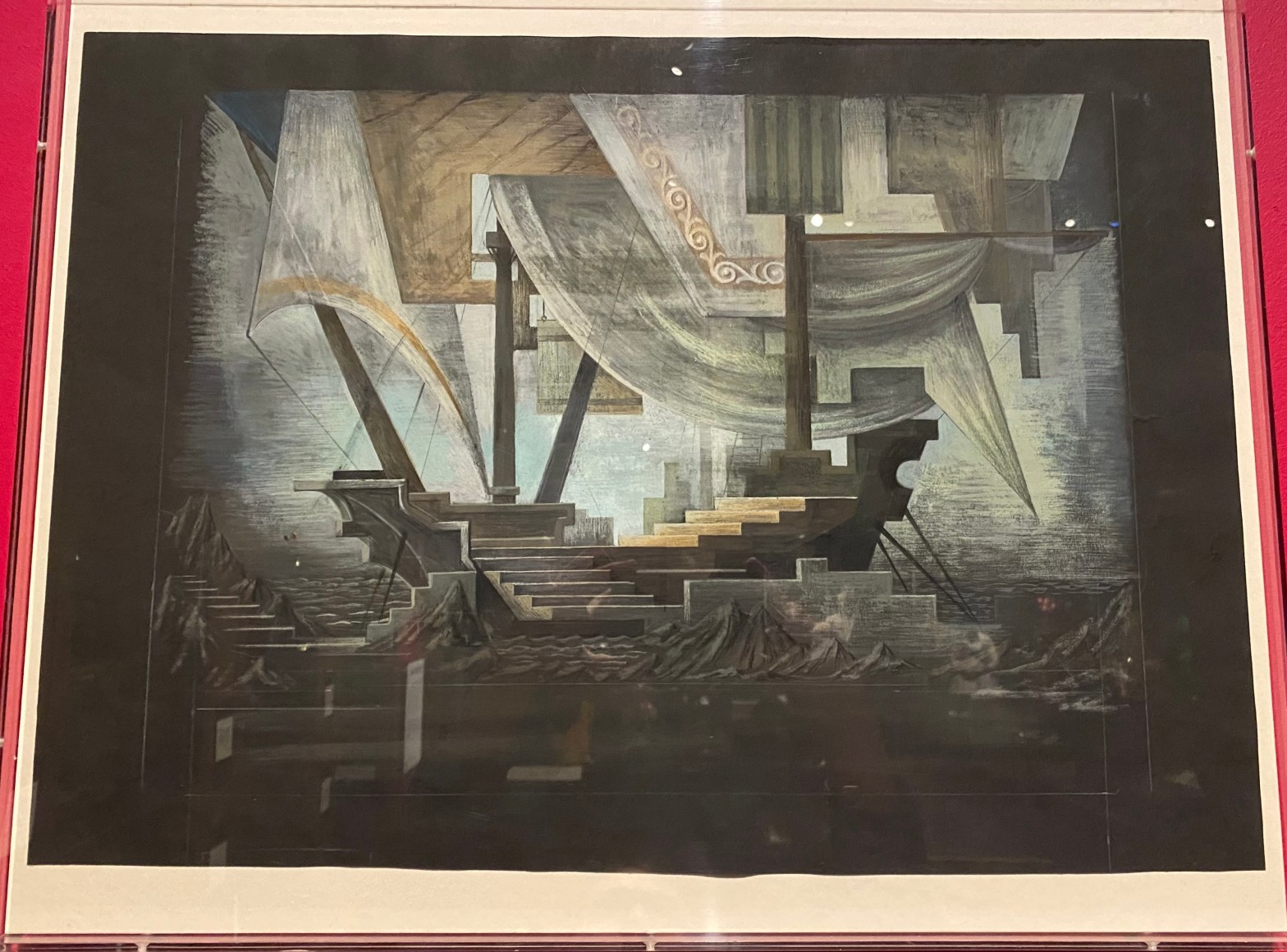
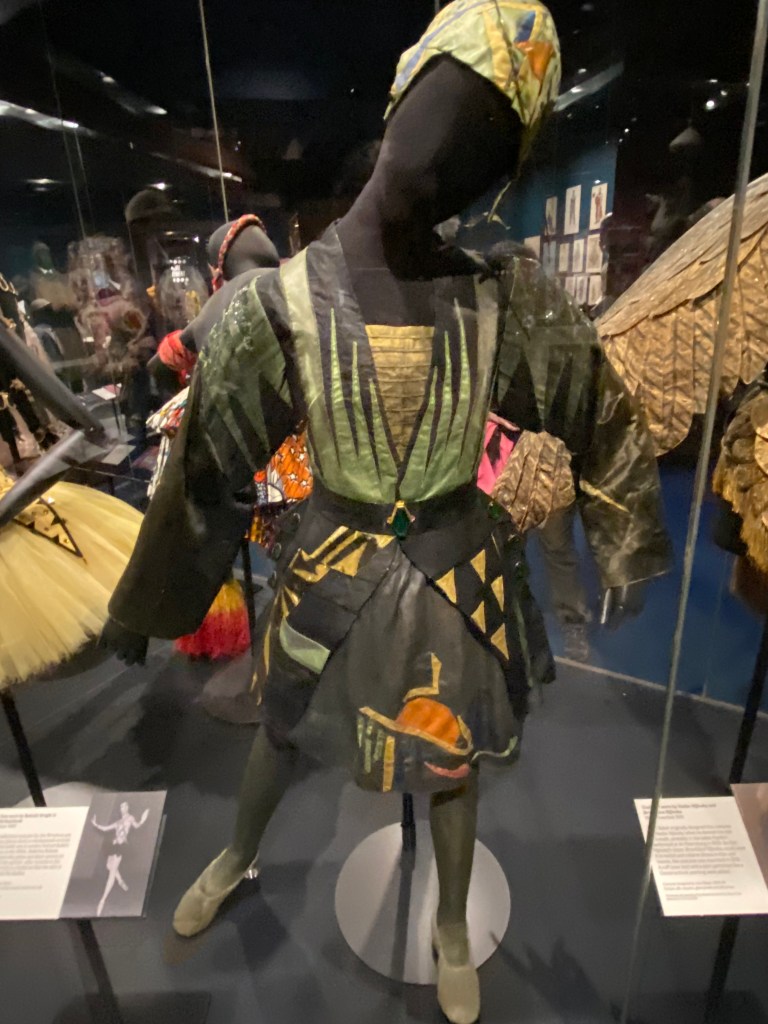
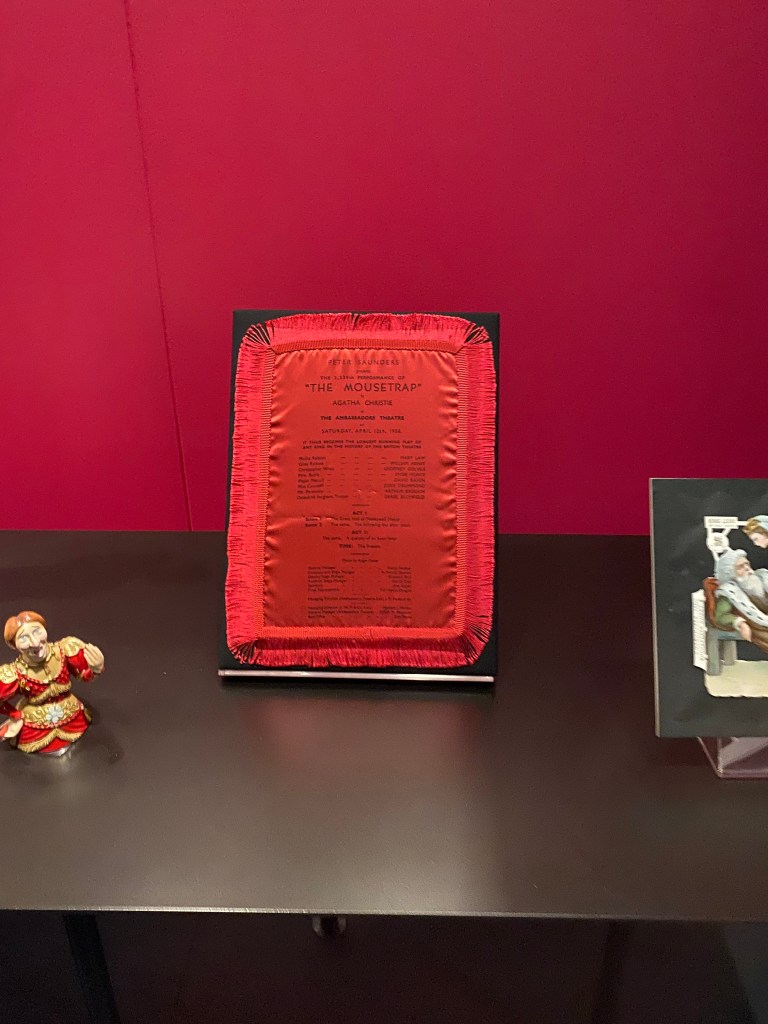
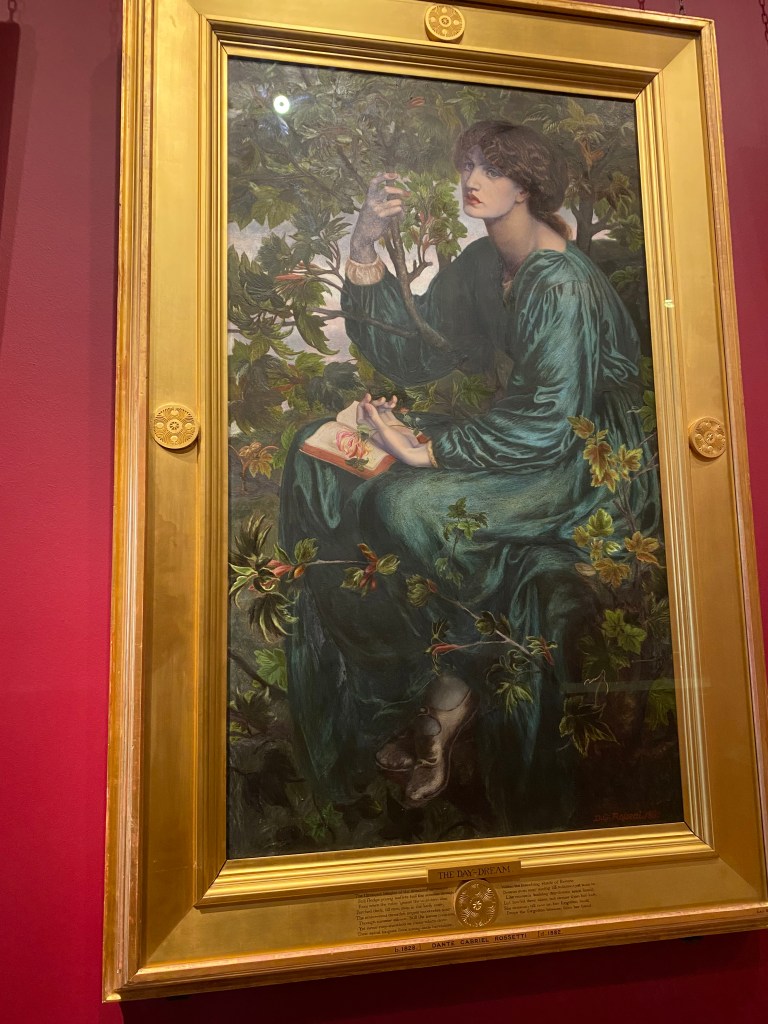
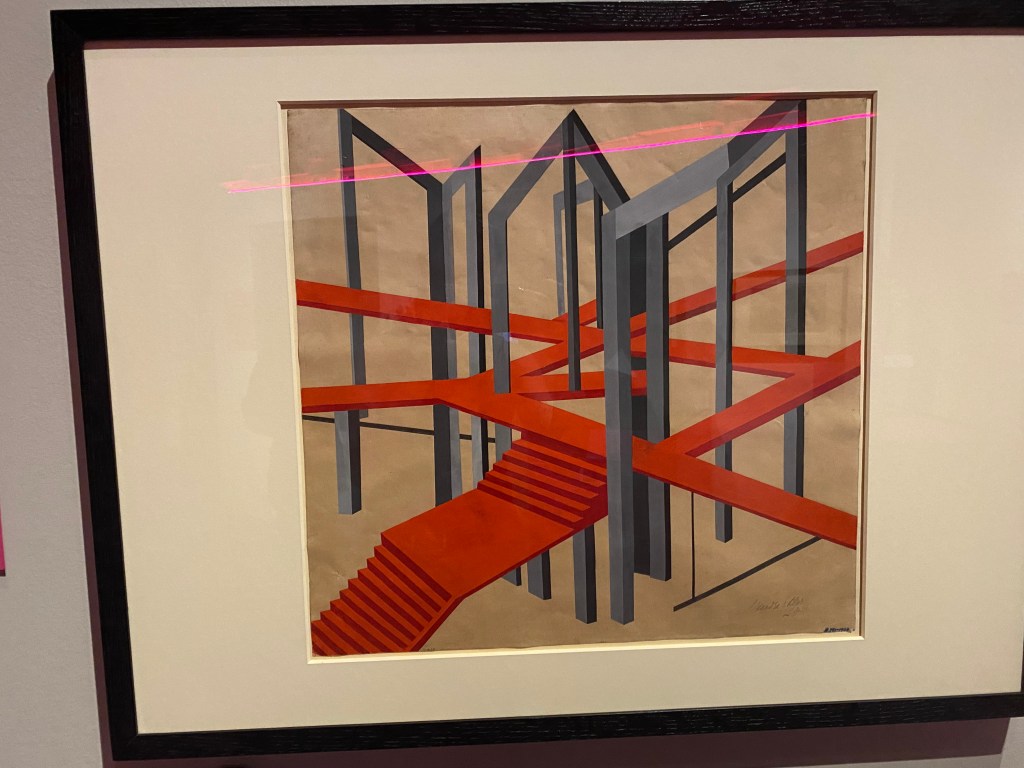
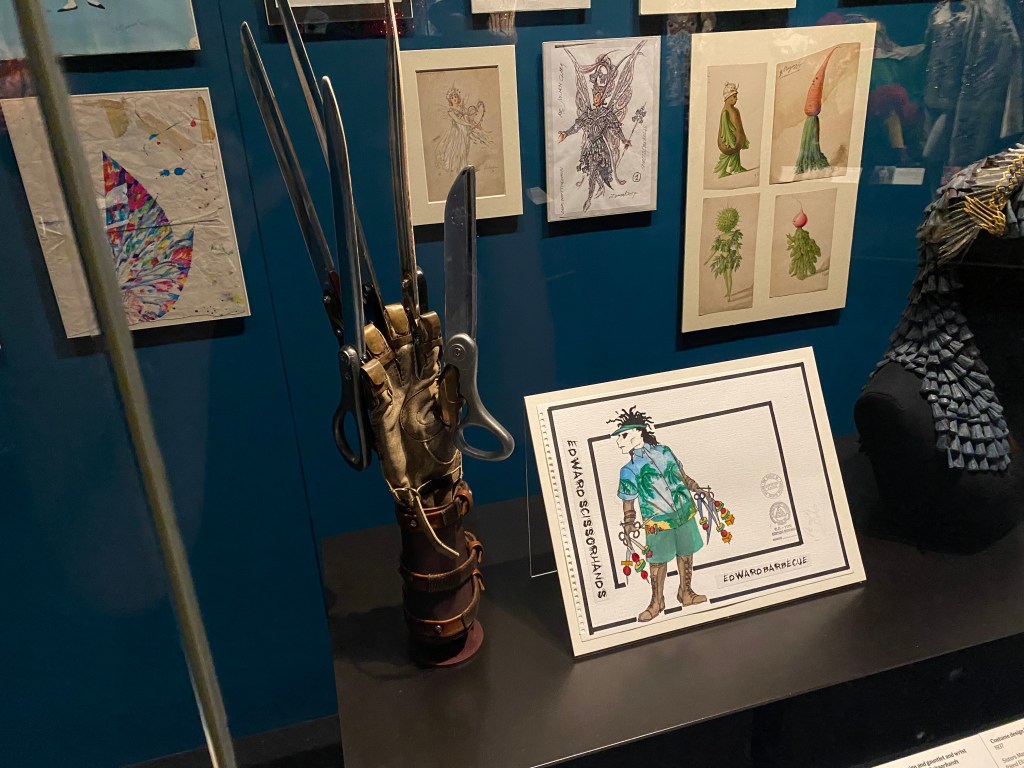
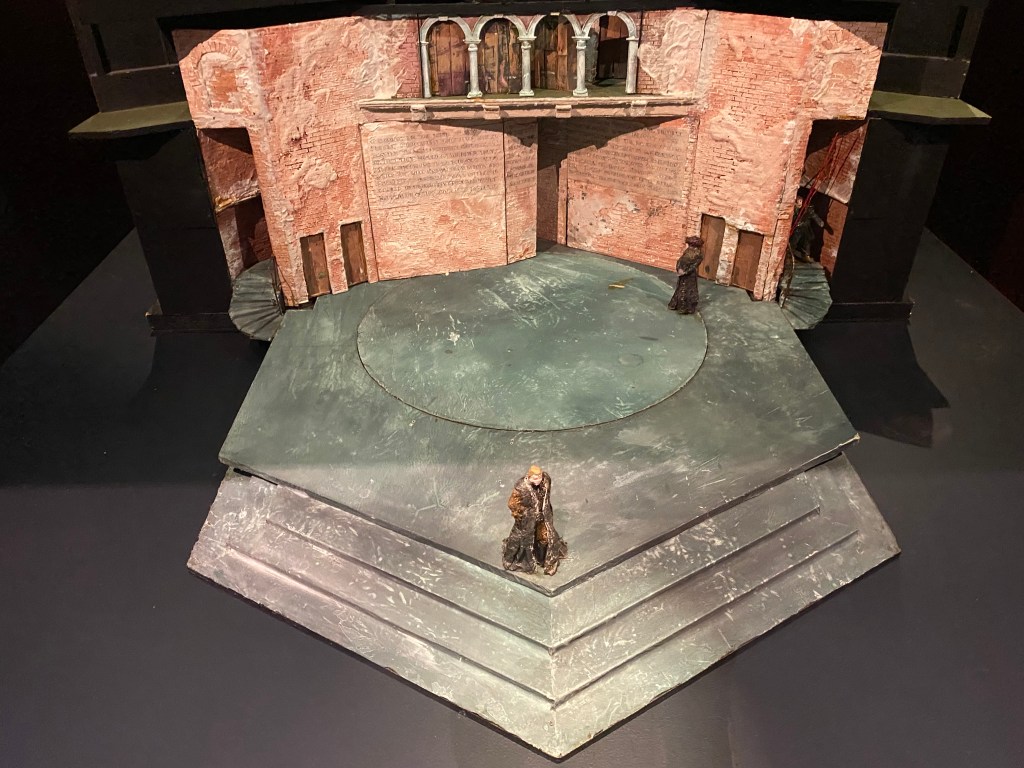
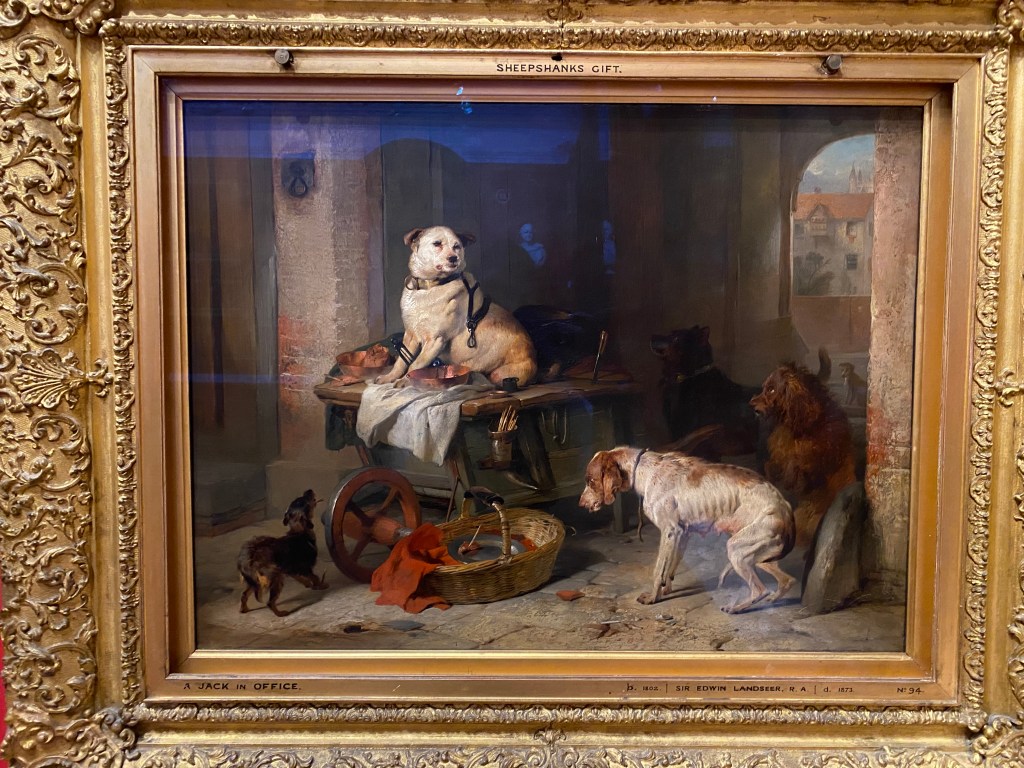
We were given a Quest at the Victoria and Albert Museum: Find an object, and tie it to a play we’ve seen. We started at the Theatre and Performance section. I was at a loss at first. Instead of finding something there, I wandered, moving from gallery to gallery, taking photos of intriguing objects. I have a little gallery of interesting items to share here. Eventually, though, I made my way back to the Theatre area, and found my object.

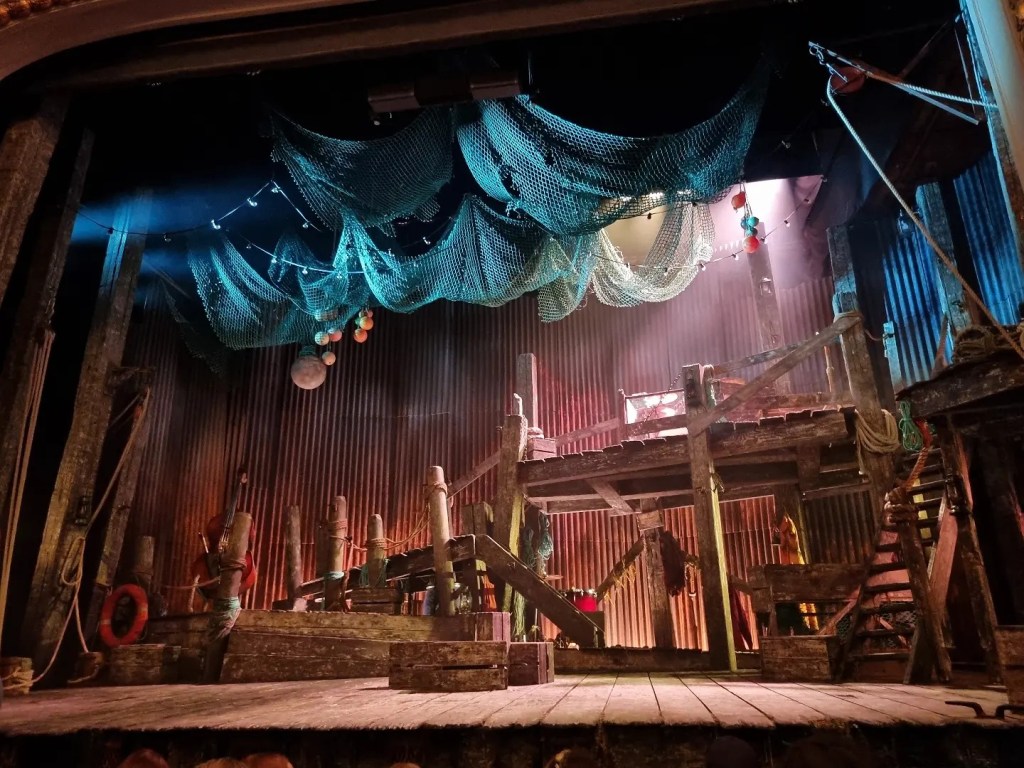
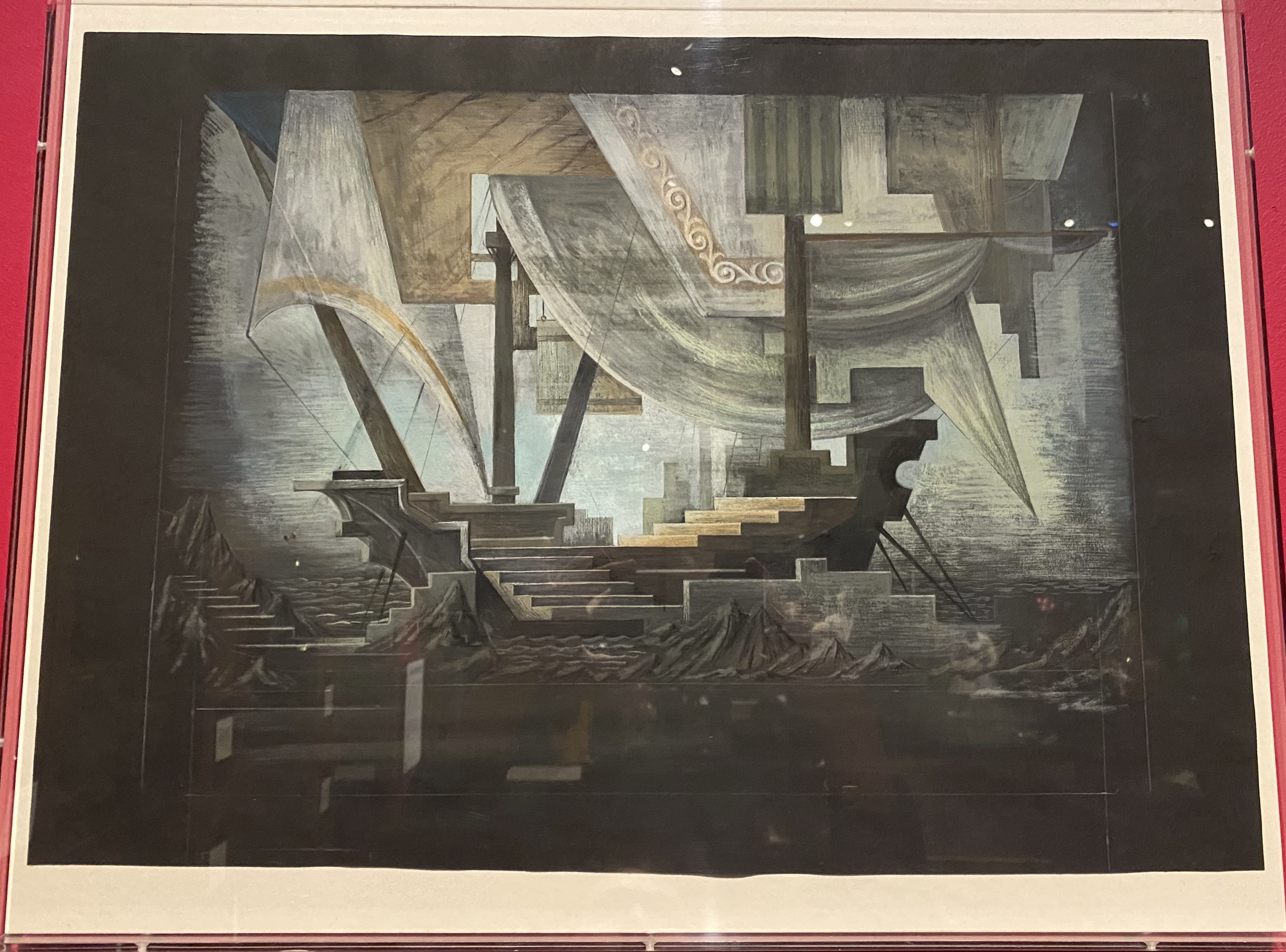
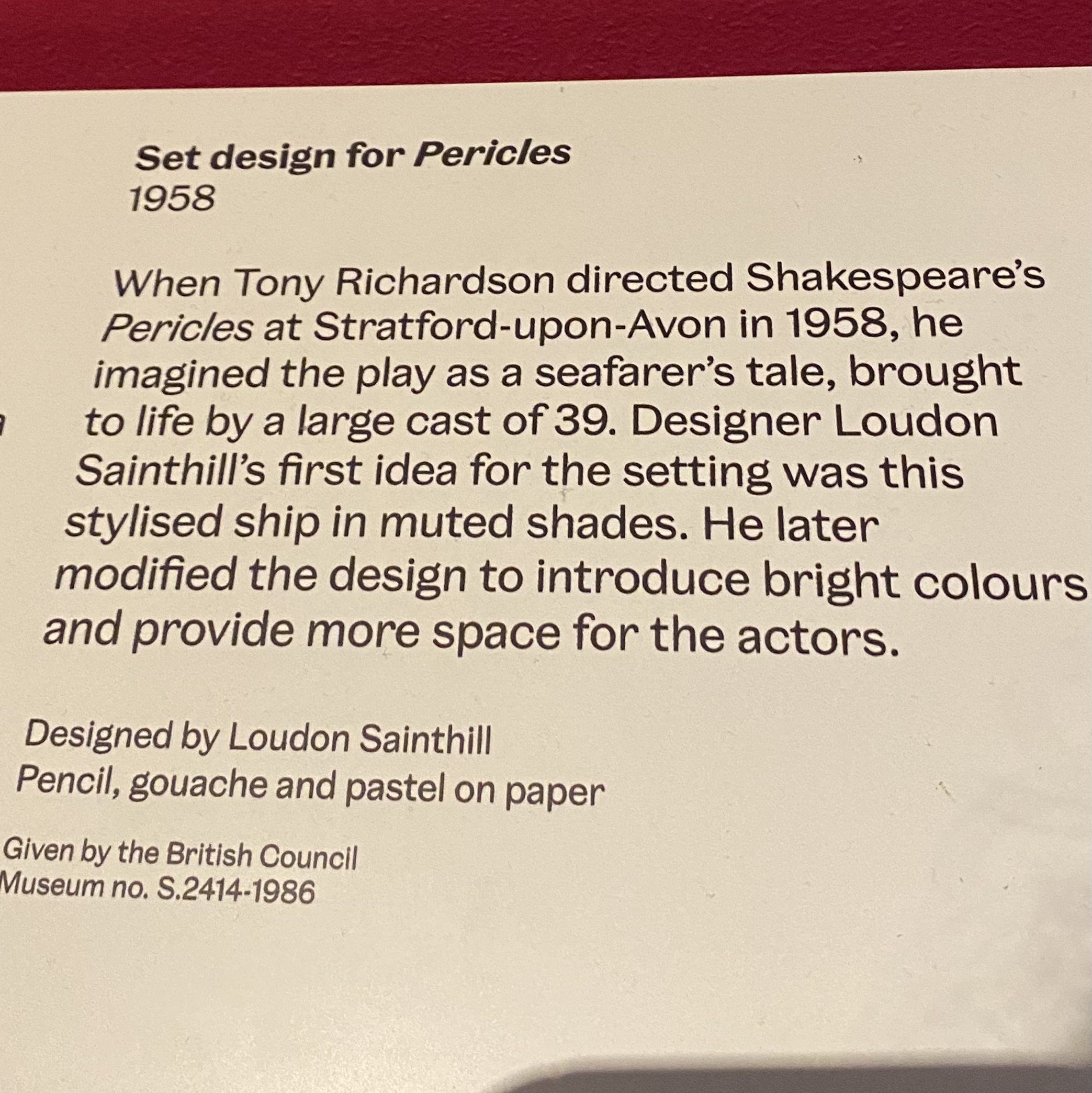
This is a set rendering for Shakespeare’s Pericles, designed by Loudon Sainthill. Reading the plaque reveals the director’s vision for this version of Pericles was as a seafarer’s tale. This isn’t a massive leap to make for Pericles, where many notable moments occur at-sea. Modifying The Curious Case of Benjamin Button to be a seafarer’s tale, with a very similar set design philosophy, was a much farther leap to make. Making the set a port or docks evokes scenes of travel, contemplation, and danger at sea. It encourages the designers to use specific colors of paint and light, and use a commonly understood set of natural and human sounds to fill the world. Within those wide bounds, though, there are massively different histories of sailing to pull from, which can be seen in the differences between Pericles’ Mediterranean-inspired architectural beauty set in rocky outcroppings, and Benjamin Button’s rough-shod Cornish docks. In both cases though, the themes of change and distance, time and space, push themselves to the forefront

Set design by Jethro Compton, Photo by Mickey Jo Theatre (www.facebook.com/MickeyJoTheatre)

All of this is to say, I don’t think there will ever be an era where sets like these do not strike a deep resonance within audiences. The car is ubiquitously upsetting, and the plane is ephemeral. The train is falling out of fashion and comes with hefty thematic baggage. But the boat? Eternal. When humanity is ending, be it climate catastrophe, war, or a journey into space to become something else, we will be setting these stories on a boat of one kind or another. 

Scrub-A-Dub Dub! A Glimpse of the Romans’ Bath Tub

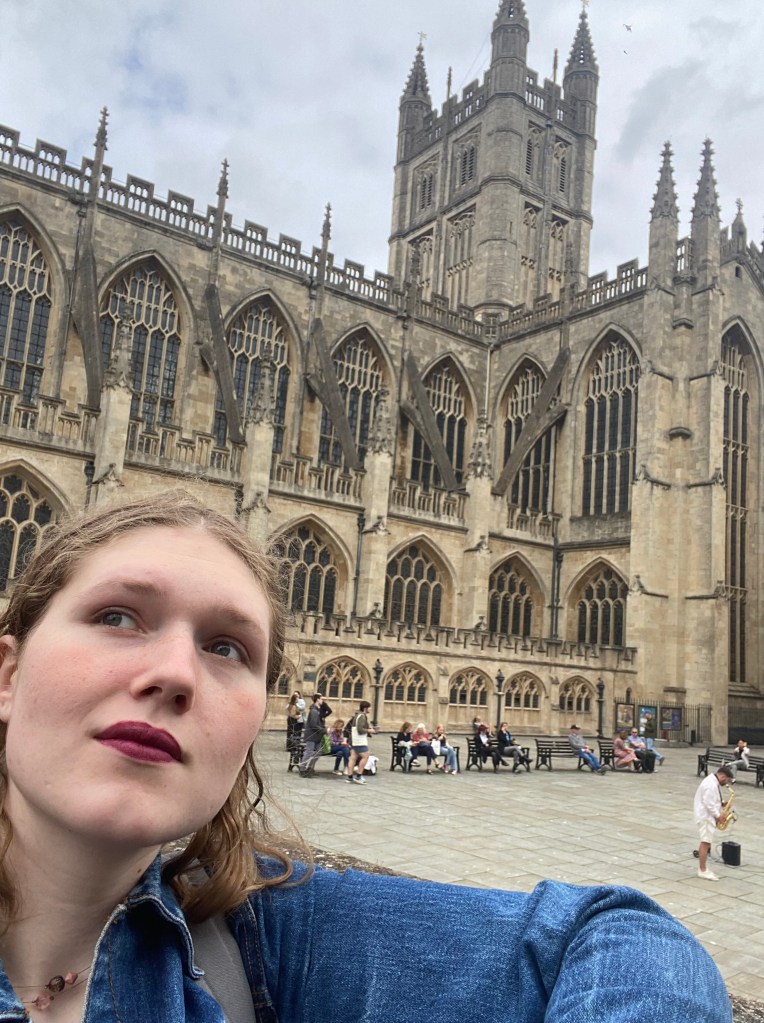
On Thursday, May 28th, we took a day trip to see the Roman Baths in Bath, England. We rode a tube, then a train, and then we walked through the crooked streets of Bath to our final destination. Just outside the entrance, we paused for a moment to appreciate a man playing the saxophone. 

Once we got settled inside, fitted with an old phone-looking device on our wrists, we scattered to explore the old grounds. Every once in a while, there would be a sign with a number that, if you plugged it into your phone device, would allow you to listen to a brief historical synopsis related to whatever area or artifact was nearby. It was very much a choose-your-own-adventure museum experience. You did not have to hear about anything that did not interest you. On the other hand, if anything caught your eye, you were welcome to explore and sometimes hear more if your interest persisted after the first recording. 
As I traipsed along the same paths the romans took hundreds of years ago, I was delighted that I could still hear the jazzy saxophone-playing man. I wonder if they ever had musicians come around the baths all those years ago to enhance the experience. I know I had a better time with the addition of music. 

Despite how incredibly old this place and its people are, they were very advanced for their time. I found myself struck by how modern it felt. The style is outdated, but the methods they used to create the beautiful and strong infrastructure were similar to today (or as close as they could get with less-developed tools). Additionally, the activities they engaged in were very contemporary. Getting a massage, women plucking their body hair, men working out in the gym, and more were very common at the Baths! These are also things that most people do almost every day now.

The section of the historic baths that interested me the most (perhaps due to my major) was the engineering section. They invented the “Lewis” bolt (pictured below) to help them lift heavy materials when constructing buildings and other large structures. I probably stared at this for way too long, but I was fascinated that somebody thought up the design for this bolt out of thin air. It brought up a couple of questions, though. How would they cut into the stone in order to apply the bolt? Also, once the stone was in place, would they fill the hole and how? This bolt was just one of many engineering feats the Romans accomplished when constructing the Baths.

– Hadley ❤

Splish Splash, We Were in Bath!

Bath was a lovely reprieve from the hustle and bustle of the city of London! I was feeling a bit under the weather but was determined to not let that stop me from having a good time. Our first stop were the ancient Roman Baths around which the city was built. I’ll give you one guess to figure out why the city is named Bath! This sprawling structure was built around a natural hot spring making it an obvious choice for people to settle in dating all the way back to ancient Celtic peoples. In the museum you can even drink from the springs! The water was very warm and tasted a little funky, but it was amazing to think that people thousands of years ago were drinking water from the same source. At this spring they worshipped a goddess named Sulis, who they connected both to the natural spring and the sun. Then, the Romans came.

As the Romans were wont to do, they quickly overtook the settlement which they turned into a town called Aquae Sulis. This is when the Roman Baths that we got to see were built – around 60 or 70 CE. The baths were more than just a place to bathe; they also held a temple to the goddess Sulis Minerva who was a combination of the aforementioned Sulis and the Roman goddess Minerva. The artifact that pulled me in the most was this temple pediment.

As you can see, not all of the pediment has survived, but some wonderful artists have completed a rendition of what it probably would have looked like that was projected over the missing areas (theatre is everywhere!). The pediment itself tells the story of Rome’s overtaking of Aquae Sulis. On either side there is a winged Victory, which is convincing evidence of some sort of battle or conflict in which the Romans came out on top. Getting closer towards the center, there are wreaths of oak leaves that evoke similar wreaths that were presented to victorious commanders in ancient Rome. Finally, in the center there is the face of a man with hair spread out all around himself, almost as if he was partially submerged. Upon closer look, the hair is not, in fact, all hair. There are snakes woven in, which leads scholars to believe this is a gorgon. Gorgons were deeply associated with the goddess Minerva (in Greek mythology, Athena) who both created the gorgons – most famously Medusa – and had Perseus seek vengeance against them – again, most famously Medusa. This is the final nail in the coffin to prove that Romans had taken control of Aquae Sulis. An unarguable symbol of their goddess was now at the entrance to the baths.

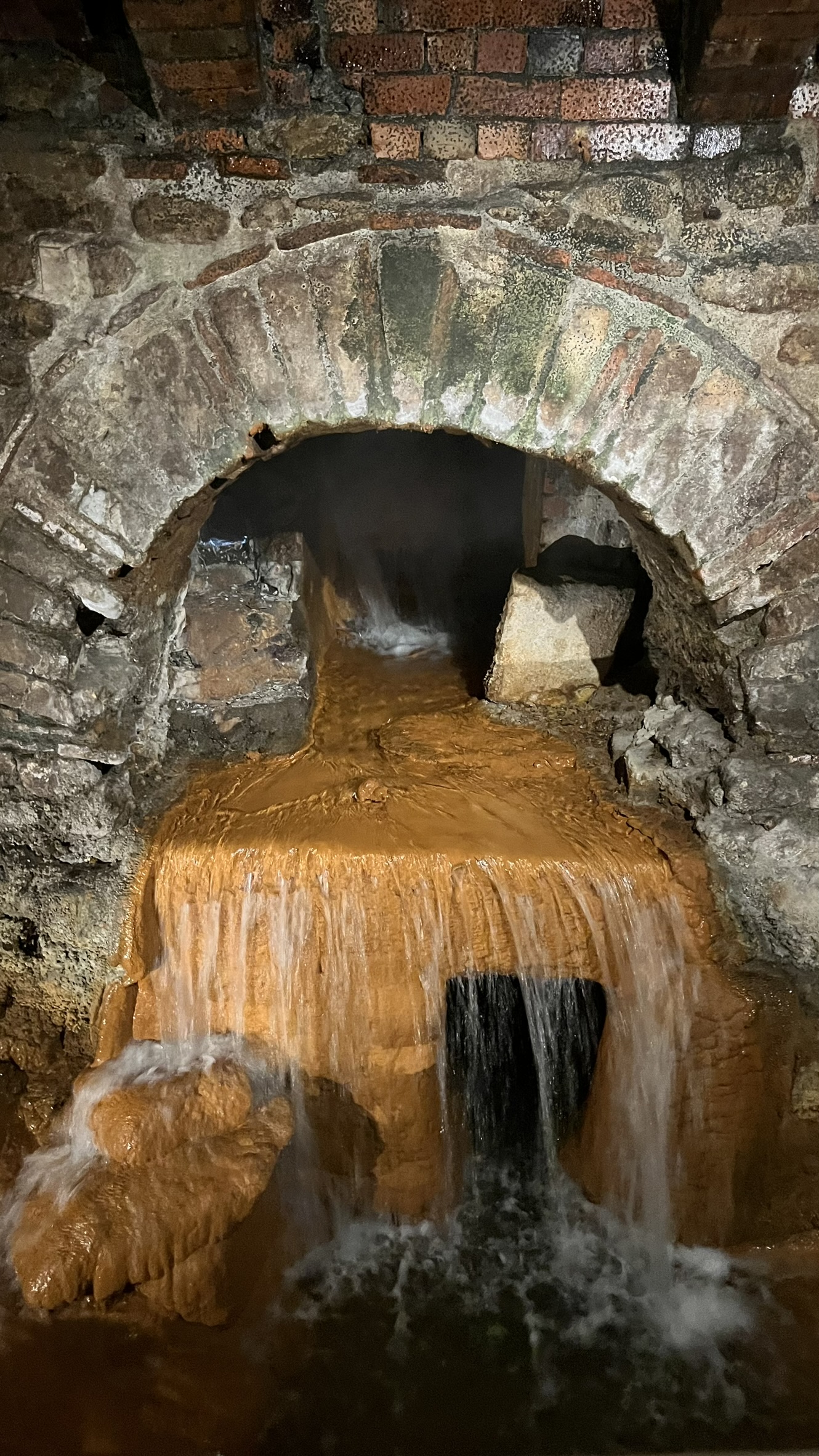
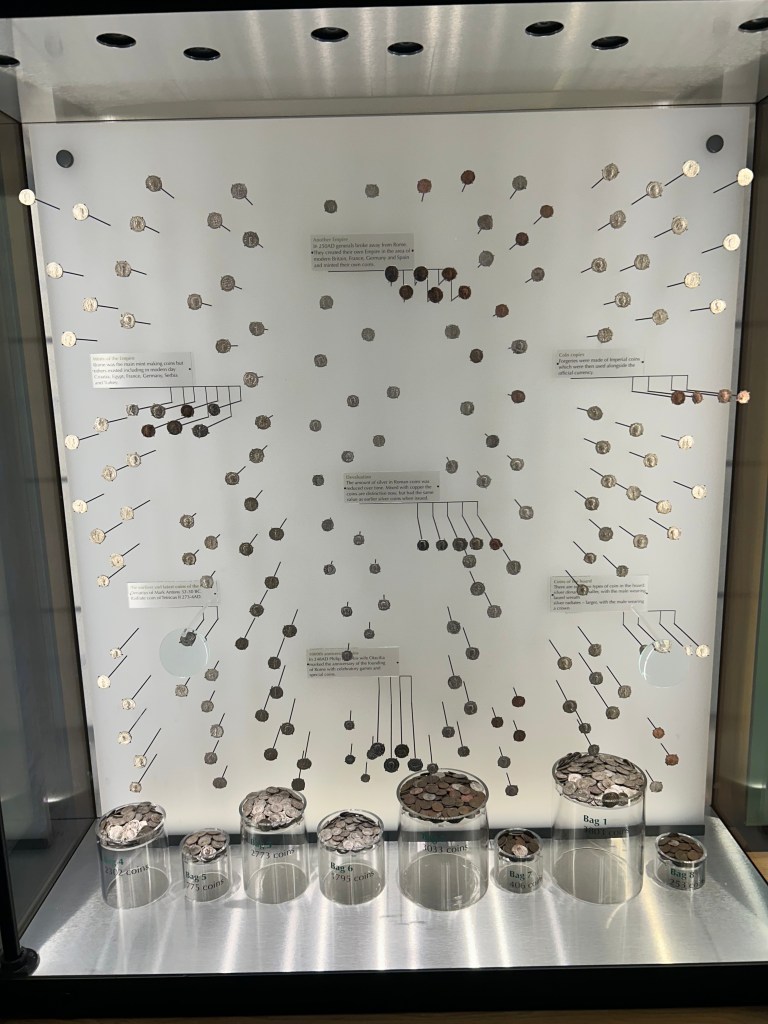
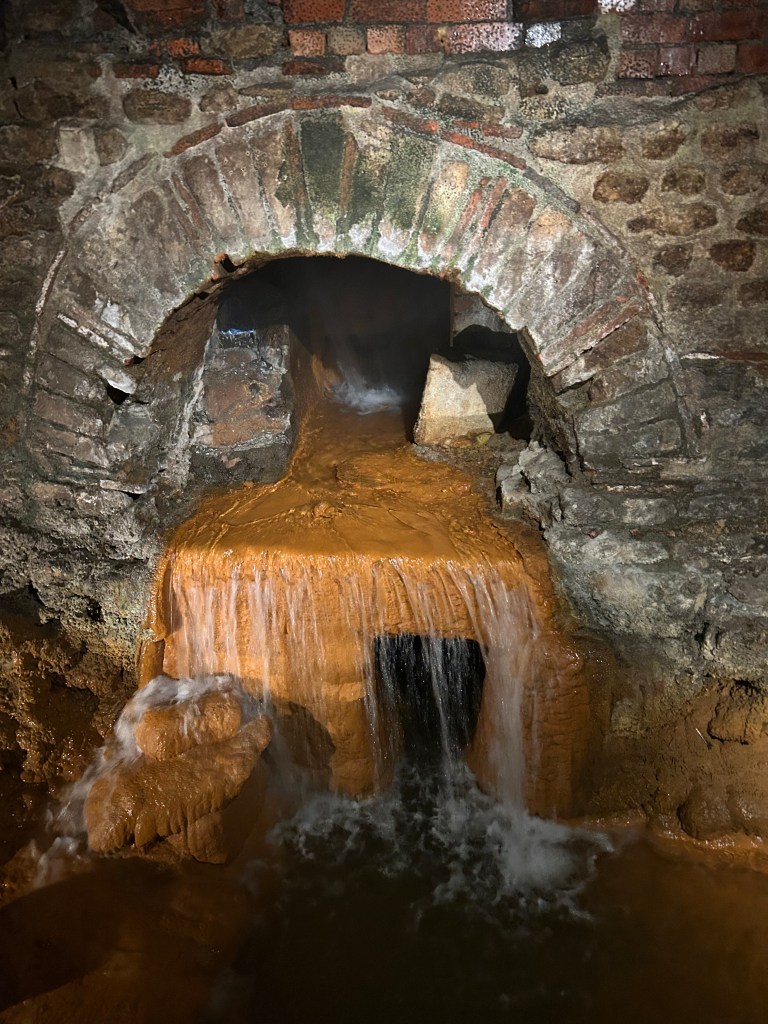
The rest of the baths were incredibly cool! I loved seeing all of the coins they had fished out, the ways that they had set up the plumbing for overflow water, and these stacks of stones upon which tile floors were once laid.

After the baths I had a slow afternoon. As I said earlier, I wasn’t feeling the best, so I spent some time in a park and some time in a pub. It was lovely and calm, something we haven’t experienced too much of since arriving in London (I’m definitely not complaining, though!!).

To finish off our trip we had afternoon tea in the Pump Room back at the baths. It was so fun and I felt so proper! My cotillion training definitely kicked back in, and I kept having to remind myself to keep my hands and elbows off the table. All in all, a very successful day trip!

A Day in Bath

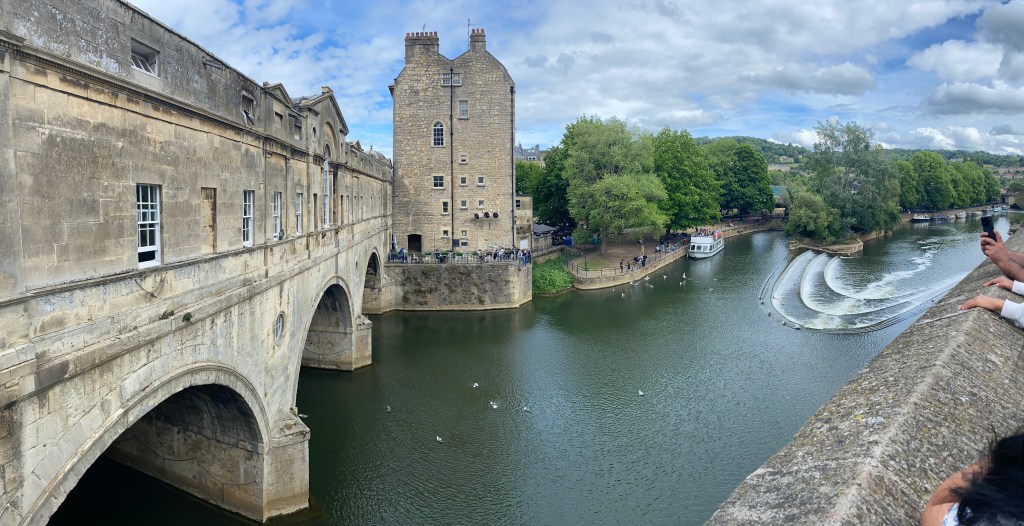
I had very little expectation for what awaited us in Bath. I was far more focused on Bath as a home of Jane Austen instead of the Roman Baths the city was named for. As soon as we stepped off the train it was obvious just how unique bath was. The architecture feels ancient, it almost feels like the train was a time machine. If it weren’t for the crowds of people holding cell phones and moving with the speed and ferocity of the 21st century I would have believed we were in a different time. Columns cover the fronts of the shops feeling so Roman that I could have believed we were in Italy. The architecture felt Roman on the first floor and then very British up the rest of the buildings. This melding of ancient and classical architecture should have felt confusing, but in Bath it just makes sense.

As I said earlier, the Roman Baths were not the draw of Bath for me, and quite frankly they were overcrowded and I found it hard to enjoy the museum being pushed around by unaware tourists who refused to watch where they were going. I found a moment of refuge in a mostly empty side room dedicated to the information on Minerva Sulis. I’m very familiar with Roman and Greek mythology, and know quite a bit about the goddess Minerva, but had never heard a surname. I was immediately intrigued. This room is where I spent most of my time in the baths. Minerva Sulis is a goddess is specific to Celtic polytheism which was only practiced in Great Britain. She was a local goddess only celebrated in the thermal springs in bath. The baths we explored are her one and only temple. She was celebrated as a goddess of healing, both physical and mental. It is said the thermal springs were blessed by her and bathing in the waters would bring whatever cure you were looking for. Her cult practiced in the temple until mid fourth century CE. There were several parts of the ruins of the altar that lead us to believe that worshipping the goddess required sacrifices. There was also a place where it assumed people laid down significant offerings to the goddess. These ranged from coins, gemstones, jewelry, and curse tablets. There are 130 curse tablets that were recovered in the baths, curse tablets, I learned, were a way of asking the goddess specific requests, whether that be the return of items that were stolen or lost, or revenge on someone for some level of wrongdoing. Most of what we know about the Cult of Minerva Sulis is conjecture as most of the relics of her are said to have been destroyed by barbarians in the 5th century.

All in all I enjoyed my time in the baths, the overwhelming crowds aside. There is so much wonder is walking through the ruins of an ancient world that almost doesn’t feel real. As if it’s so old it’s out of the grasp of my understanding of time. In most ways it couldn’t feel more different than London. The cobblestone walkways, the ancient architecture, the almost non existent roadways for cars. But there was a Slim Chickens, and a Primark, and a Boots, which sometimes would be very jarring. Bath has become an amalgamation of the ancient and the modern. On one street you’re transported back in time, and then you turn the corner and it feels like you’re in a square in London. Bath has become a city that has it all, a modern age pub, ancient Roman ruins, the home of Jane Austen, and everything in between.