Just . . . wow. This is my new favorite so far, maybe ever of the plays I’ve seen (and I’ve seen at least 20).
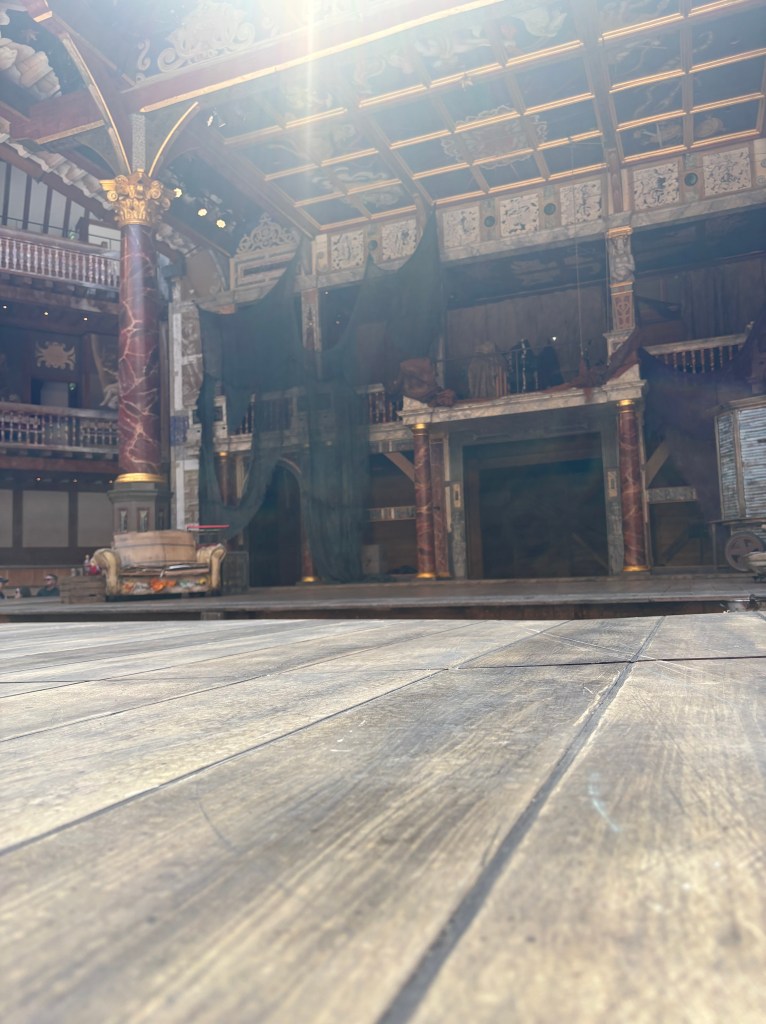
So much of its appeal comes from the design of the theatre itself. Because it’s open air and we had groundlings tickets, I didn’t get the sense that I was watching a rehearsed, written, carefully planned performance; it’s almost like you’re viewing a series of private conversation through a keyhole (except, of course, there are also explosions and a cart rolling around). The actors speak directly to the audience, point to people in the crowd, and walk around on the ground, making it seem like you are a part of the action, a character in the story in a way. It was the most immersed I’ve ever been in a theatrical performance, and my soul honestly just soared. (Side note: fuzz, dust, and pigeons naturally drifted across the stage and in the air, making the atmosphere seem more war-torn. So cool!)
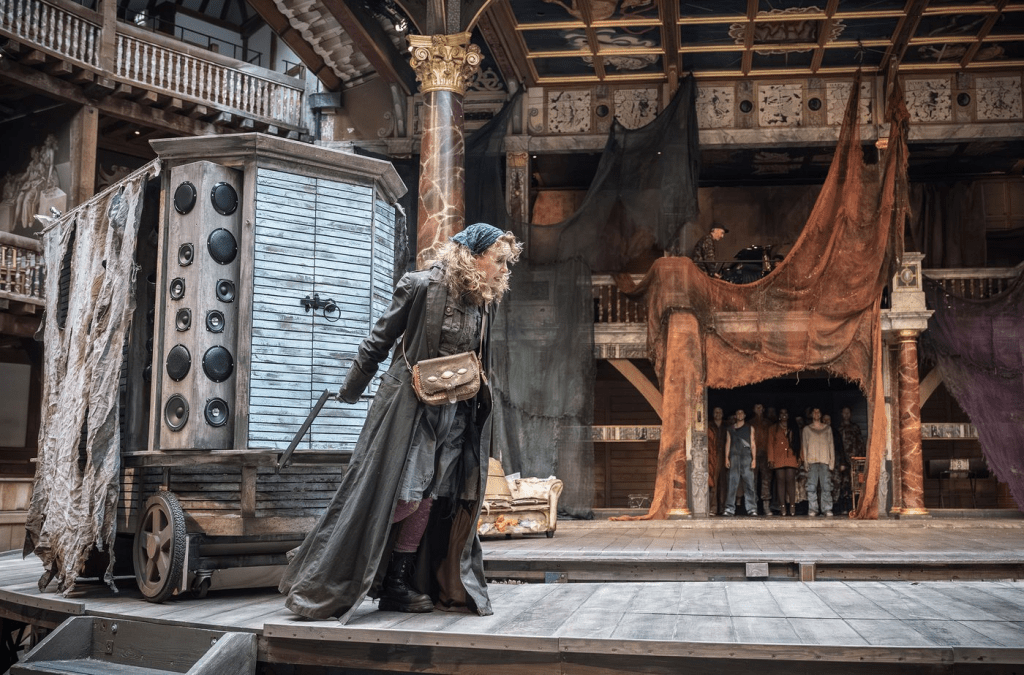
Because of this, however, I think the Brechtyness of it all was lost a little bit. Brecht intentionally disassociated all emotionality from his characters, so the audience would critically engage with the themes and symbolic imagery of his plays. With this adaptation’s particular engagement and the compelling performances, the plot is more personally impactful than the script alone. The fact that I could reach out and touch Courage’s cart, that breaking of the fourth wall, also degraded any sense of apathy I would have toward the play’s characters. I think this was especially clear in the closing scene, when Mother Courage drags her cart around the stage alone, bowed over with the strains of living. She stops midway through her journey, and it happened to be the exact spot where I was standing against the stage. Seeing the pain on Michelle Terry’s face, the utter shock and despair, from about three feet kind of eliminated the possibility that my brain could ignore the harsh reality that Brecht’s play presents.
As to that reality, I think Brecht described the universally dehumanizing effects of war quite well. Although his original script technically depicts the 30 Years’ War, the Globe adaptation works as a commentary on modern warfare just as well. I especially enjoyed the sense of godlessness and absurdity that pervaded the show. Haven’t eaten in three days? Let’s pretend she’s my wife and she’s collapsed from hunger, that ought to get someone’s attention. One of Courage’s children dies? Well, back to my cart, have to carry on with the business. The endless profiteering and pursuit of wealth was also an interesting theme, and it was incredible to see how Mother Courage used it as both a coping mechanism and a livelihood. The Globe’s reprisal is almost less tragic than Brecht’s original work, despite the augmented emotional effects. Brecht very much highlights how mundane the atrocities of warfare and conflict are in the modern world, to the point that the reader is supposed to feel apathetic toward the contents of his play. When the message becomes personal, as with the Globe’s production, it doesn’t communicate the tragedy of desensitization in quite the same way.
What a privilege it was! I’m just incredibly grateful to have had the experience, and I am so looking forward to seeing A Midsummer Night’s Dream in a few days. Shakespeare in Shakespeare’s Globe will be quite different from Mother Courage, I’m sure, but no less transformative and engaging.
Until next time, take courage, and serve your fellow man or something (sheesh, that was a heavy play).
– Reese

