A Stranger Lock I Never Will See

The Victoria and Albert Museum is filled with one of the strangest assortments of artifacts and objects that I have seen in a museum on this trip. While it may not have a collection as big as the British Museum’s or as grandiose a selection as the National Gallery’s exhibitions, its presentation and variety of objects and displays made this museum truly fascinating and definitely one of my favorites to walk around. I mean, I personally can’t name another museum where I could see Michelangelo’s David and then walk about thirty feet down to see a Hello Kitty toaster given just as much reverence. The museum also had a very good emphasis on interactivity, with displays allowing visitors to feel different materials that the objects before them are made out of, create their own etchings or crests, and even try on a replica of a knight’s gauntlet (which is surprisingly easy to move in, I might add).

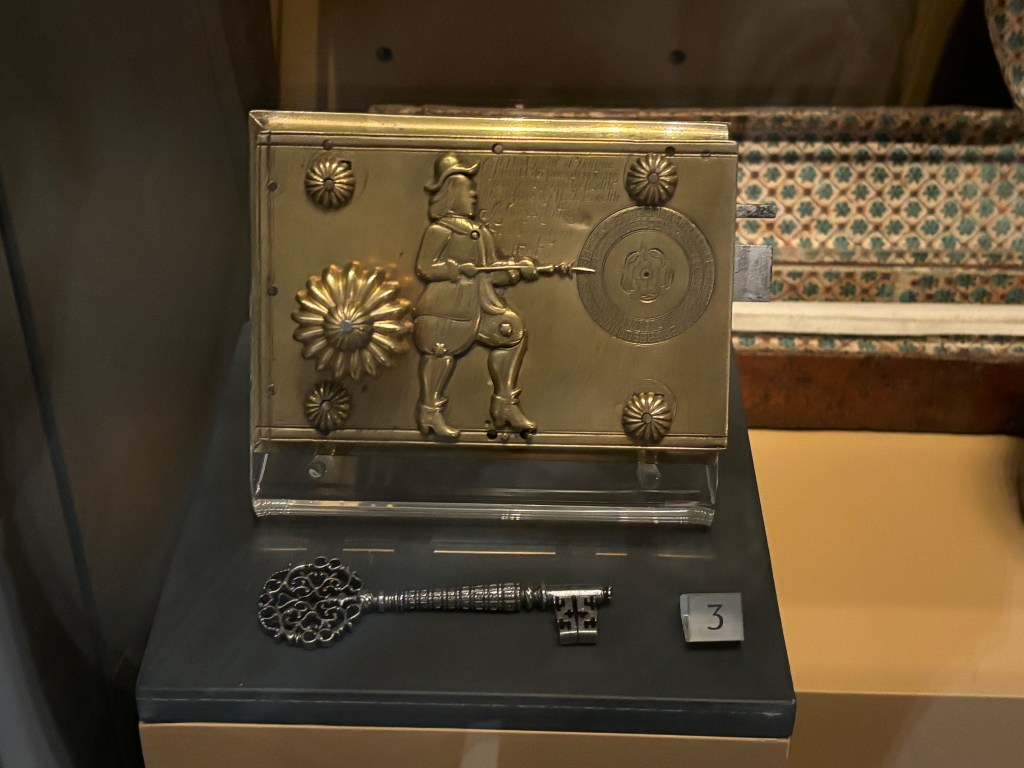
And this museum had so many oddly specific objects calling out to different eras across the world. Whether it be ancient Greek statues, a brief history of comedy, or even an entire exhibit dedicated to contemporary glass work, the museum feels as if it has something to catch the attention of anyone that visits. One thing that caught my eye in particular was an artifact in one of the Britain-based exhibits called the “Detector Lock.” It’s a lock that one would likely place on a door or a safe, and its main selling point I assume was that it would count the amount of times that lock has been opened, keeping itself shut when that counter reaches a hundred. The thing that intrigued me about the lock was the overall design of it, with this overly complicated and well hidden system of buttons and keyholes built into the decorative aspects of the lock. 

It depicts the image of a soldier mid-march, with his spear pointing towards a large wheel of numbers on the side, which is directly pointing to the amount of times the lock has been opened. When the soldier’s hat is pressed down, the lock mechanism shoots out and keeps the door or whatever is being kept behind this stalwart soldier’s post safe. Lifting the soldier’s forward leg reveals a keyhole, engaging the deadbolt. When the counter reaches 100 and the lock refuses to open, the owner can press a small button on the soldier’s chest that resets the counter and allows the lock to be opened again (which I feel goes against the idea of the lock in the first place, as the button is out in the open for anyone to press and it invalidates the threat of getting locked out that the countdown carries). This lock shows a lot of detail and craftsmanship, with so many intricacies and mechanisms working in tandem as safety measures to keep the owner’s secrets safe. 

When looking at this lock and all the work that was put into it, I was reminded of the show Operation Mincemeat. The lock’s many failsafes and countermeasures felt similar to the kind of planning that the agents of MI-5 would have done normally and underwent for the plot in the show. This comparison to Operation Mincemeat also plays in with the ornateness of the lock overall, keeping up a fancy, distracting facade to draw your attention away from the hidden buttons and levers of the lock, which is exactly the same as the plan to distract and keep the Germans out of Sicily. Looking at that Detector Lock, it feels exactly like the kind of thing that Montague would have in his own home in some way or another, which is what I think most reminded me about the show.

Overall, the Victoria and Albert Museum was a wonderful and highly immersive location to visit, and it might be my favorite museum that we have gone to on this trip.
The Detector Lock

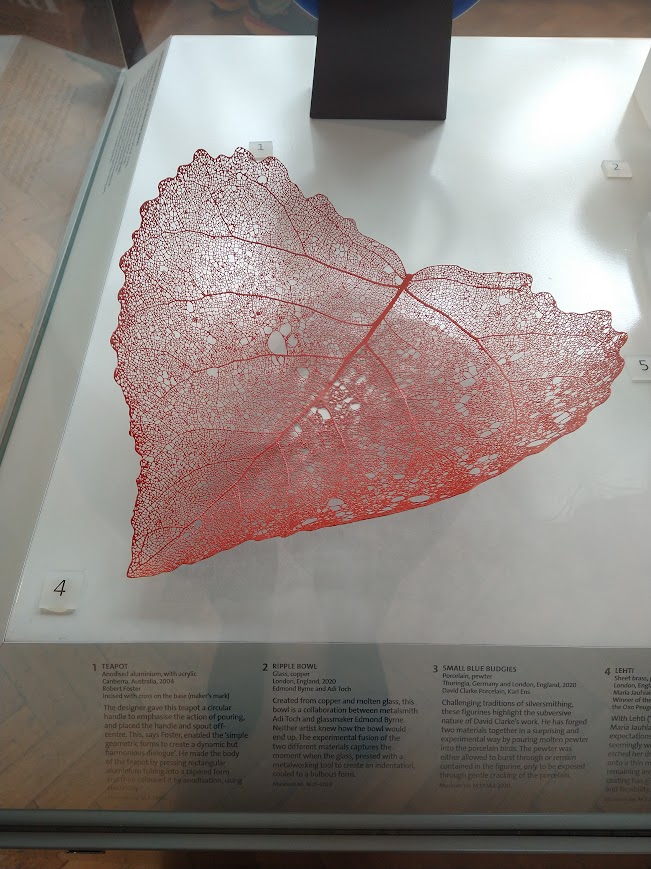
13. Michelangelo’s David? No, leaf.

Blah blah blah, stop creeping around and watching me even though you and I both know I love the attention. But you didn’t hear that from me.

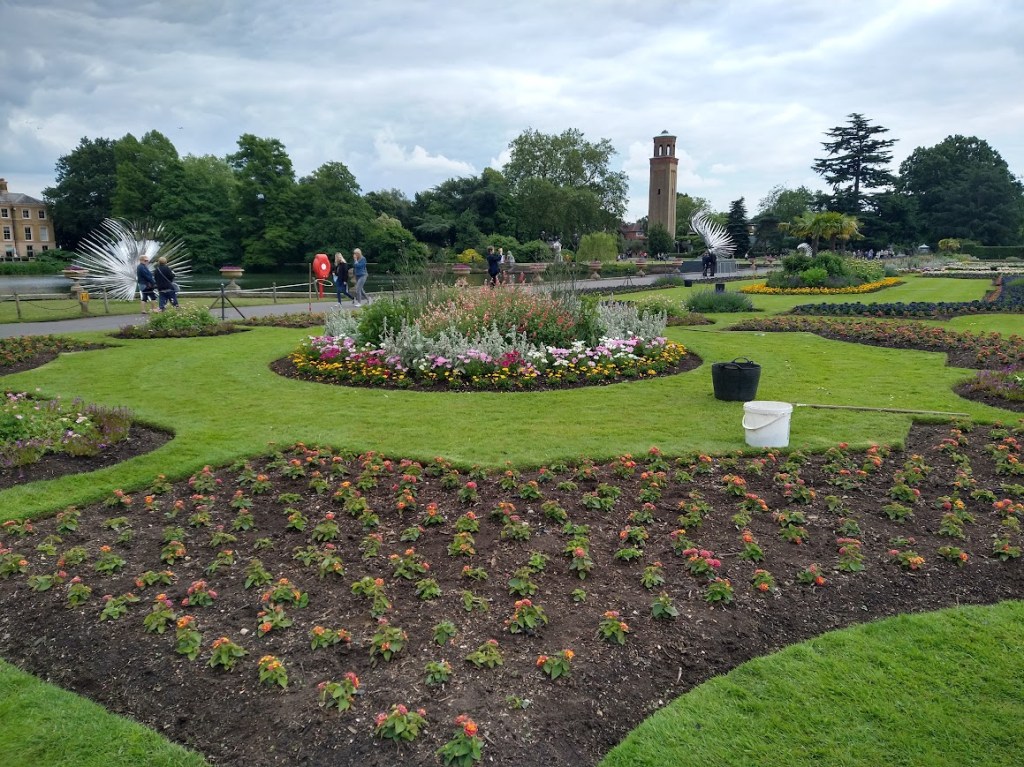
With that being through, I feel that it is now time to get caught up to today. The bullet points are, I went to see Hamilton at the Victoria Palace Theatre, then promptly went to Amsterdam for four days before visiting Kew Gardens, whereafter I saw Bluets, which I talked about in my last blog post. Finally, and most importantly for today’s blog post, this morning I visited the V&A Museum in South Kensington, which houses a variety of very compelling and unique historical artifacts.

Kew Gardens!

We were supposed to start out with the theatre portion of the museum, but it was unfortunately closed alongside the tapestry section, so we started off with fashion. Over time, I worked my way into the sections that house the sculptures, primarily the sculptures that are casts of famous works. One thing about me: I am a lover of high-relief sculpture. The act of being able to see figures emerging from rock is just so magical to me. Don’t get me wrong: I fully respect works that are fully carved from the rock or rest just on the surface, but as an artist I am a huge fan of seeing the process, and the life in the result of the work done. It would be an understatement to say that I spent most of my time in this section of the museum (and I spent a very long time in the museum in general as well!).

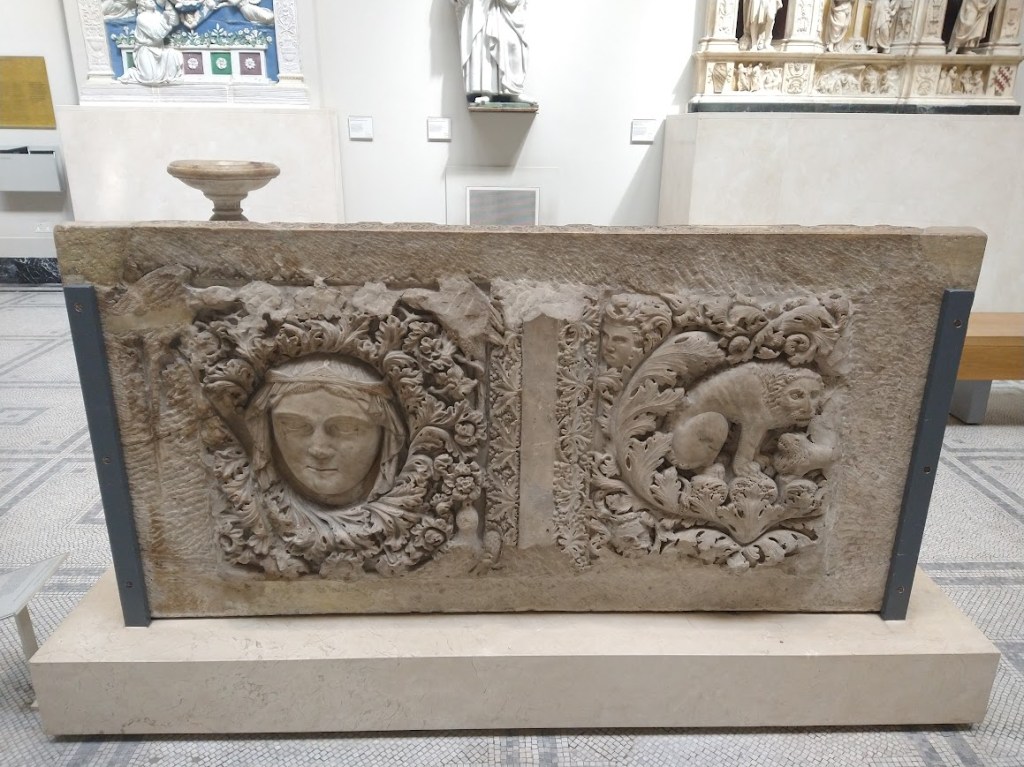
Nothing that I saw in the museum initially made me think of any of the shows that we saw, but in reviewing my photos I found a metaphorical meaning in one of the pieces that really intrigued me. Earlier in the trip, Kaylee, Emma, and I booked tickets to see Machinal at the Old Vic. It was a very interesting show, but something that is prominent in the show is that the main character is imperfect. She does not live up to society’s expectations of her, and in watching the story of her life over this period of time, you can see the hand of the sculptor. The environment molds her and she molds it in a turbulent chain of events. That concept was what drew me into this production of Machinal initially, and it similarly was what drew me to this sculpture.

A picture stolen from Emma, because I refuse to take my own pictures ever!

Throughout the piece, you can see the sculptor’s hand if you look close enough. This is the case for any artist, but some more than others. I believe personally that if you are unable to see the hand of the artist, then you are not looking closely enough. I love that you can see the picture that is conveyed–a lion and a woman–as well as the places where the sculptor(s) chiseled away at the rock with various tools. In the places where there are masses or lines of circles of different depths, the sculptor had to use a punch to carefully and repeatedly create each hole. You can almost trace the way that it progresses as you watch it. The same way the result of the sculpture can be observed through each individual motion used to create it, the story of theatrical pieces like Machinal show you the steps used to create the ending, which in the case of this show is much more dramatic.

To round this post out, I did find a lot of other things that intrigued me. I went to the contemporary glass section, then the section that housed the paintings and drawings, and found a lot of things that intrigued me. One of them was a leaf made out of bronze that the artist Maria Jauhiainan photo-etched onto a bronze sheet, then dissolved the cells using acid. I love experimentation in art more than anything else, and I love that so many pieces in this gallery showed people pushing the boundaries of what is possible.

Signing off from Stratford-Upon-Avon!

CW

Fringe Theatre – London’s Hidden Gems

Hello, hello!! This post is coming to you all a little late, so allow me to take you back in time to before we left London. It’s time to talk about some fringe theatre!! The fringe theatre scene in London is spectacular, and I was lucky enough to see three different fringe shows outside of our group excursions! I also had the privilege of watching Bluets, our one group fringe show, just before leaving London. The long story short of my experience at these shows is that fringe theatre is where it’s at!! I was so excited to see a smaller show because it’s incredible to see the potential those productions have and watch how they use smaller spaces tell a compelling story. For this blog, I will be focusing on the three shows I saw outside of the group excursions. Bluets was a really cool experience, but I think I need more time to collect my thoughts on that piece before reviewing it. So buckle up, and get ready to hear about Sophie’s Surprise 29th, No Love Songs, and English. Spoiler, all three of them were spectacular!!

Sophie’s Surprise 29th 

Okay, this show was a wild ride! From start to finish, my jaw was on the floor, and the skill of the performers was unmatched. This show is a cabaret style piece in which the different characters perform incredible, daring, and at times scandalous acrobatic feats. There was stand up comedy (in the nude), aerial acrobatics, roller skating like you’ve never seen before, and more. While the plot was very loose, as this show is more about the stunts, it was still there and was very humorous. The performers did an incredible job staying in character, and the audience interaction was next level funny. They were so compelling, and it takes a lot of skill to look like a dead inside, emo boy while flying through the air doing flips. (Seriously, go see this show if you can.) The lighting for this show was extravagant in the best way, and it set the scene for each performance perfectly. The sound design and music choices were also wonderful (if at times a bit loud). Overall, this show was rip-roaring, good time. If you want to be completely immersed in a show (more so than you’ve imagined before) and are looking for a fun night out, this show is the one for you. 

No Love Songs

This was perhaps my favorite of the fringe shows I saw. Performed at the Southwark Playhouse Elephant, it tell the incredibly moving story of a couple having a child and facing the challenges and victories that come with that. The story is told largely through the music that the characters say is the soundtrack to their lives, and it makes for some beautiful moments. Music is powerful, and this production uses that to its advantage in a way I’ve never seen before. The space this show was set in was a very small, intimate blackbox, and Kaylee, Cori, and I were lucky enough to be upgraded to the front row because there were extra seats. (I’m not sure how there was an empty seat in the house with how incredible the show is.) But no complaints from me because it was an amazing experience. The script for this show is so moving, and the lighting design was excellent. I was particularly impressed by the lighting design because it can be difficult at times to do what you want in a small space like that. While the story and tech elements were spectacular, I think it was the actors that made this production. They were some of, if not the, best actors I saw on the trip. Their performances were incredibly compelling, their voices were stunning, and they had an incredible grasp on how to use the music to play action and tell a story. They were never just singing, and they were alive every second they were on stage. In short, this was one of the most compelling shows I saw in London. 

English

Oh my word! This production was so moving, funny, inventive, and all around wonderful. The plot centers around a group of Iranian students who are taking an English class in hopes of passing the Test of English as a Foreign Language. Each student has their own personal reasons for wanting to learn English, and their conflicts and shared goals make for a compelling story that effectively builds empathy in the audience. The students must grapple with their desire to learn another language and their fear of losing themselves and who they are. It is a beautiful story and one that talks about a subject matter not often addressed. The actors all gave incredible performances, and they masterfully switched between accents throughout the show in order to differentiate when they were speaking Farsi and when they were speaking English. The use of accents to make this distinction was a clever and very effective way to show the audience when languages were changing while still remaining in a language the audience would understand. The actors were also so alive, and I couldn’t help but sympathize with all of them. The set, lighting, and sound design for the show were also wonderful. I could not see about 1/3 of the set from the side, balcony seats, but I was warned about the restricted view when I bought the tickets. I do not think there is much that could be changed in the set design to make it more visible without cutting out half the playing space, but it could have been angled slightly better. Despite the restricted view, this was one of the best shows I saw in London, and it reminded me of the incredible power and responsibility theatre has to tell stories of impact. The representation in this show is so valuable, and the story brings an experience that likely very few people in the London audience have had to the spotlight in order to build understanding and empathy.

I have loved all my fringe theatre experiences in London, and watching all these incredible shows has inspired me to make more theatre whenever and wherever I can. The impact of these productions proves that you don’t need a large, magnificent space to put on a good show. You just need a good story and people who care enough about it to put it in front of people. 

Till next time!!

Am I … Royalty ?

London is a bustling city, and there is adventure everywhere you turn. As much as I love being in the city, I’ve learned that I love going to the countryside. Where the air isn’t inherently filled with cigarette smoke everywhere you turn.

Hampton Court Palace was exactly what I needed. I learned so much history over the monarchs who lived there, and got to walk the halls and rooms of royalty. But my absolute favorite part of my visit to Hampton Court Palace was walking through the Hampton Gardens. 

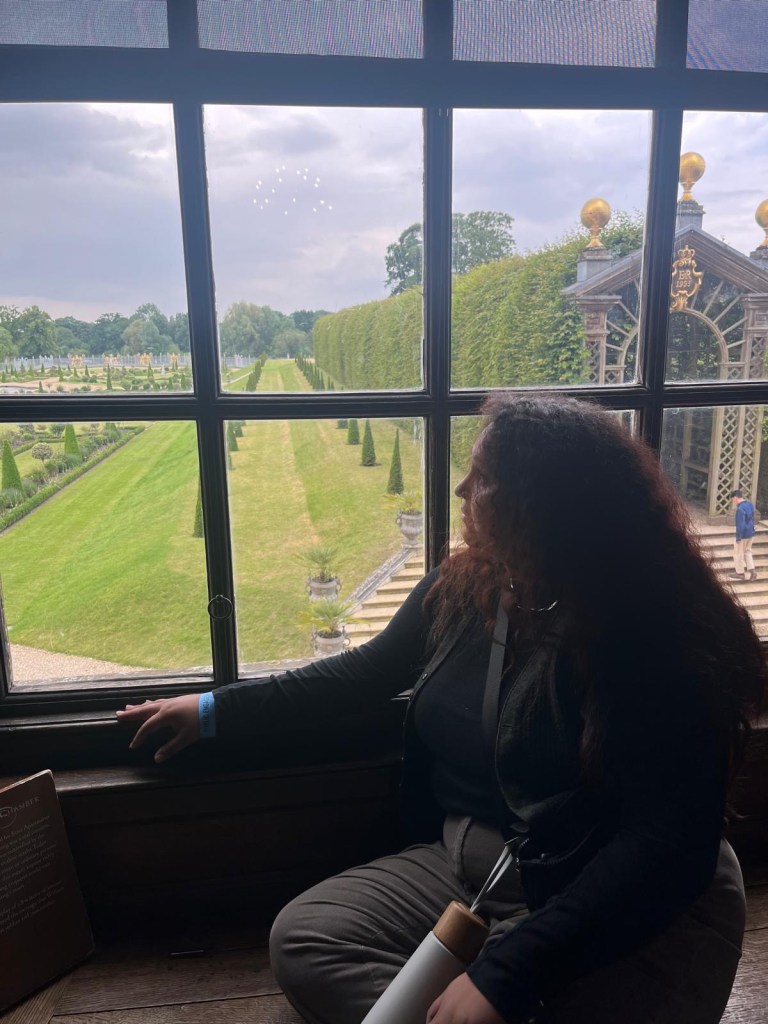
I first spotted the privy gardens as I was walking the rooms of William the third and his wife, Mary the second. The gardens looked so beautiful from the little window I was sitting by. I was so excited by that view, that I quickly looked at the rest of the apartment and made my way to see the gardens!

We all know that the British were colonizers, so of course the garden had a variety of plants and flowers from around the world. It turns out that Mary’s collection was made up of 2000 different species during her time. I first spotted orange trees, which she happened to have 200 of them at one time in the privy gardens. 

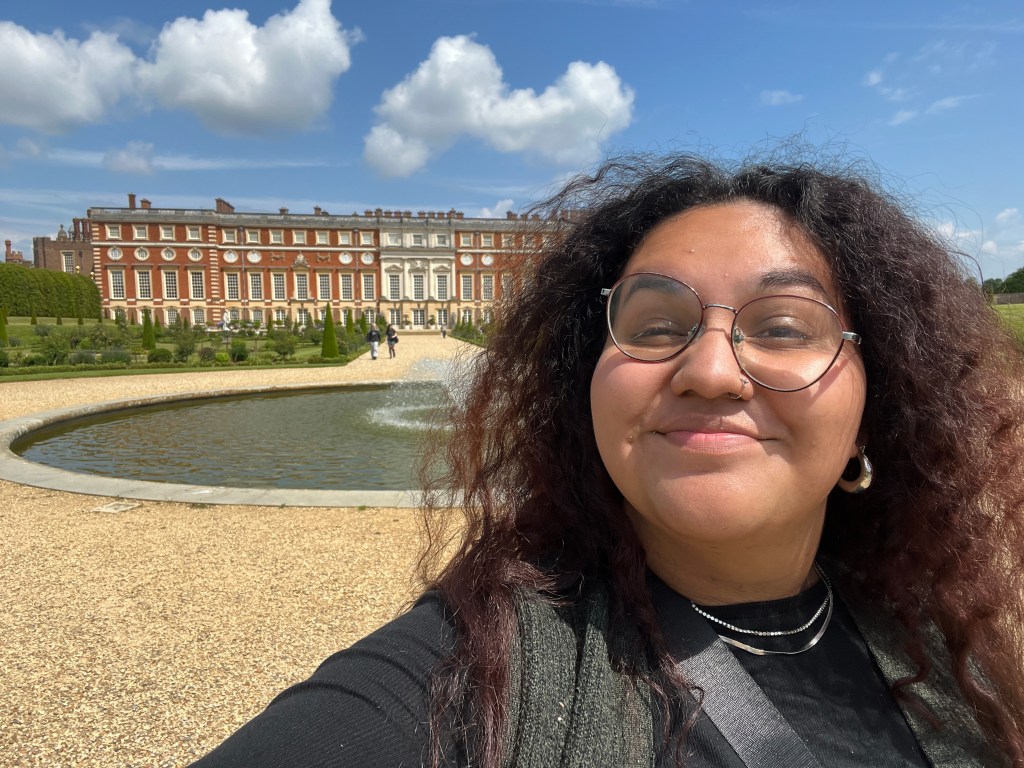
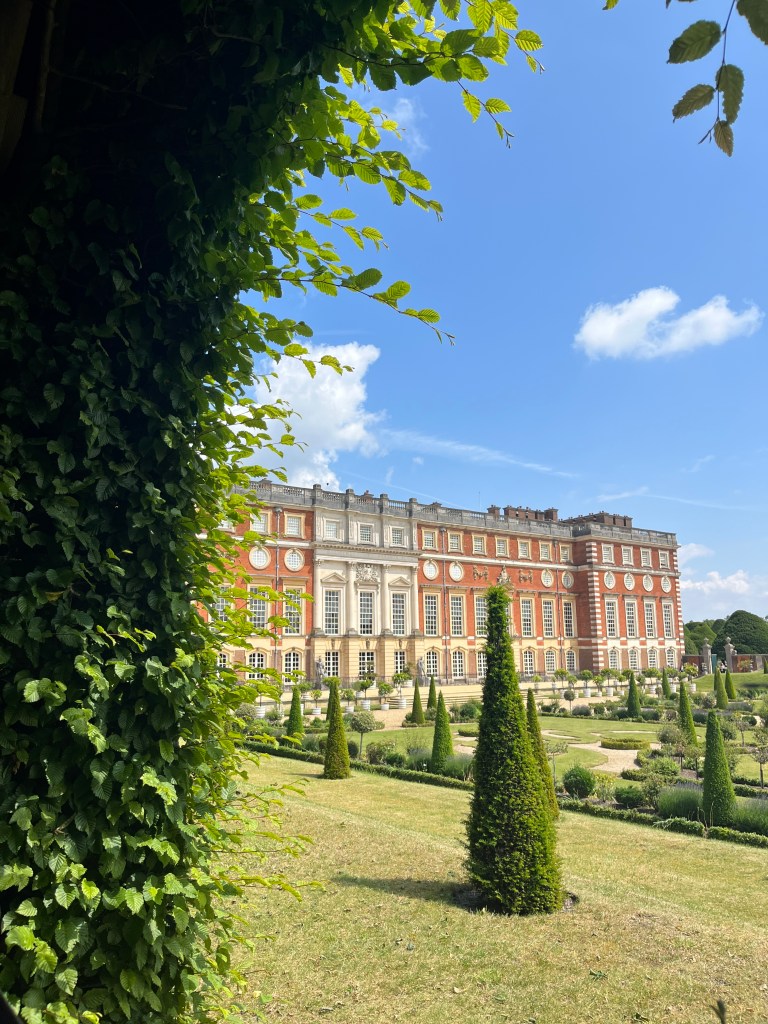
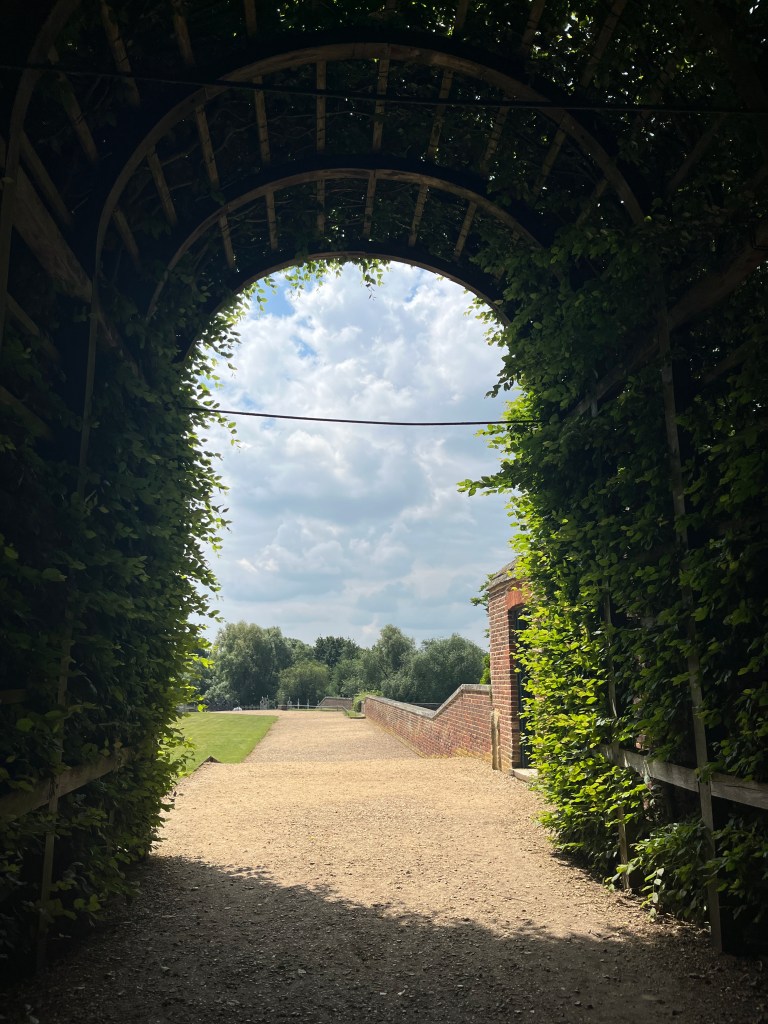
I walked around the gardens, with the palace as part of my background. I happened to be with Skoch, and we both marveled at how beautiful our view was.

We both felt like we were transported back in time, and felt sort of noble walking through the gardens. We both started talking in British accents, and pretending as if this stroll along the palace was just another day for us. I was actually living my bridgerton dream. I moved differently through the gardens, with more ease and confidence. As if I was part of the noblest of families. Skoch and I gossiped over our fake prospects and suitors. We whispered over the scandal in the ton, making up stories and characters as we went along. I walked through the gardens with such poise and elegance, admiring the flowers. I can’t explain how much fun it was.

I wondered why this place felt so magical, and even familiar. It’s turns out, that some scenes from the Bridgerton series were filmed in the Hampton court palace gardens! 

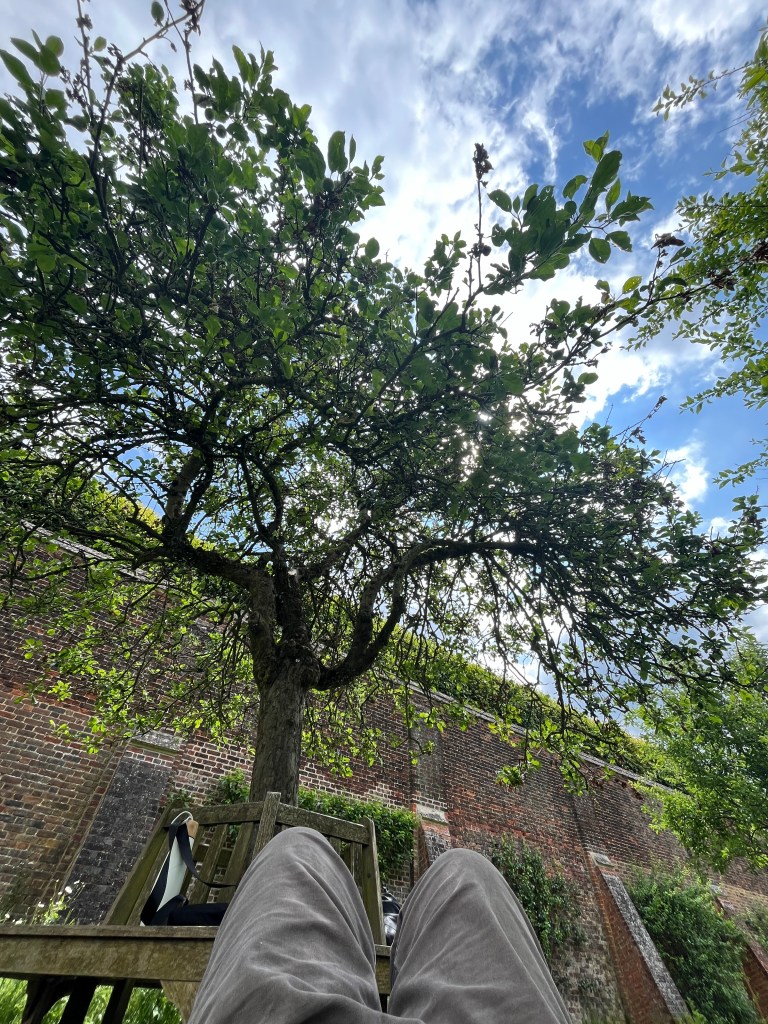
After we walked around most of the gardens, we found a smaller area. It was secluded, a brick wall separated it from the main garden. The weather was so nice and fresh, we decided to lay down at the grass and look at the sky.  It was so calming to just lay and enjoy nature. Even though the occasional person would pass by, it didn’t bother me. The area was so secluded, I genuinely forgot I wasn’t in my own palace.

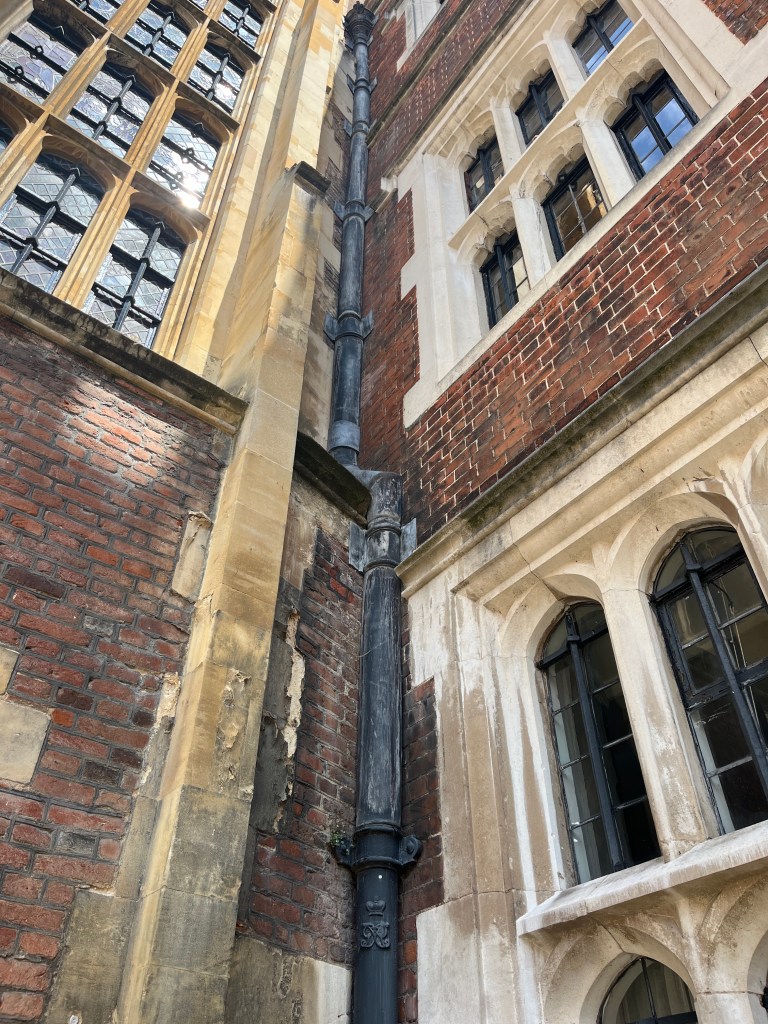
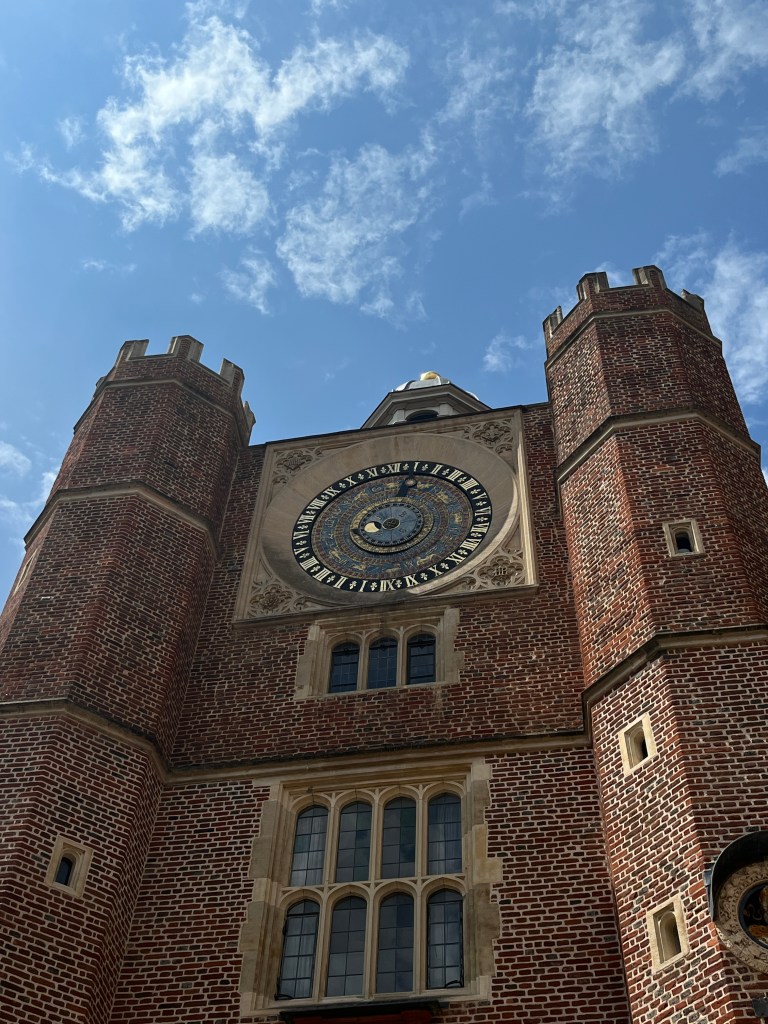
While I admired the beauty of the gardens, I also admired the different styles between Hampton Court Palace. I thought the history of why the two styles came together was very interesting. The older more antiqued side, the Tudor Palace, was thought to be old fashioned. When William the third and Mary the second came into power, they decided to forgo a huge rebuilding of Hampton Court. At this time, everyone was trying to compete against King Loui XIV’s Versailles. There plan was to actually demolish that whole Tudor building little by little, as they slowly constructed the modern palace. About half of the Tudor palace was demolished, and they became King William and Queen Mary’s apartments. But after Queen Mary died, the king wasn’t interested in further renovating. We ended up with a Hampton Court Palace, a mix of Tudor and baroque architecture.

I love how even though the palace has two very different styles, the color of the bricks bring these two styles together. It connects them, and it makes the whole building even more special. I really admired seeing how different the design of the brick was used, through color and shape. Below are some pictures of the architecture that I found interesting!

Farewell friends!

Victoria, Albert, and a T-Rex

I’ve been to a lot of museums in my day, but the Victoria and Albert Museum was the first museum I actually got lost in while trying to find the exit. I underestimated the size of the museum and watched the halls all grow longer with artifacts, costumes, and paintings from all different kinds of places. My favorite artifacts I saw today were made possible by revolutionary women and I thought that was pretty neat.

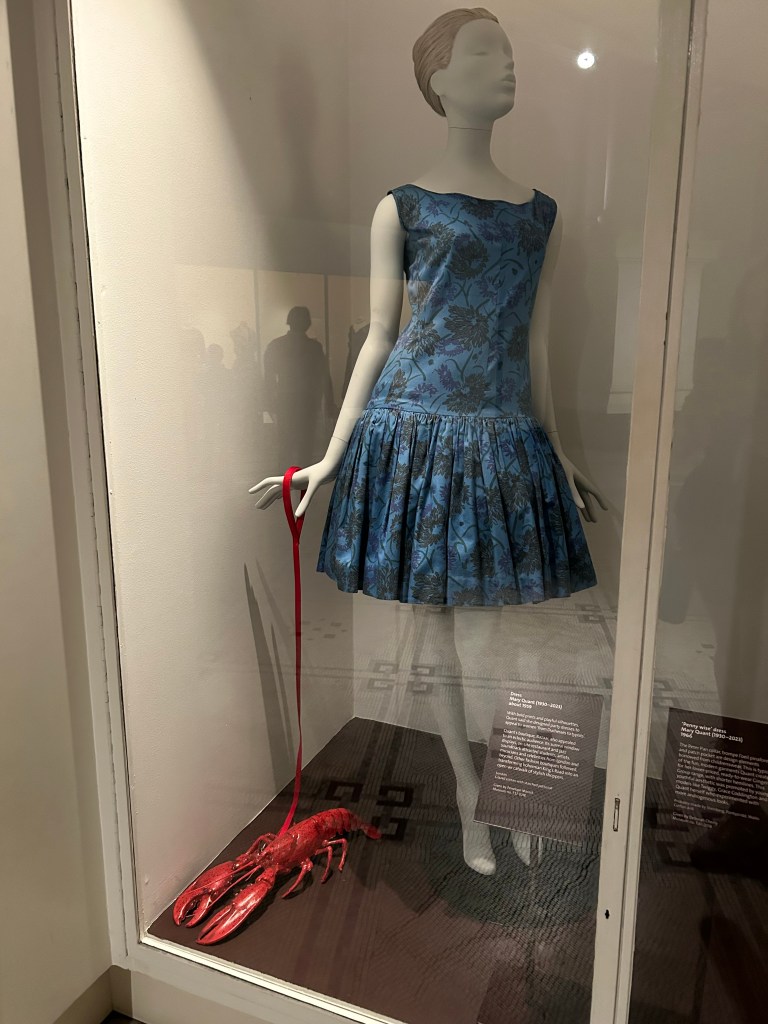
The first object that caught my attention was a party dress from around 1959 made by Mary Quant. The goal of this fashion line was to push the boundaries of what women could wear “outside the home.” This bizarre boutique became extremely popular in London in the sixties and even led to the rising popularity of the miniskirt. To really emphasize the bizarre aspect of this fashion line, the mannequin in the dress is carrying a leash attached to a pet lobster. This combination of beautiful and bizarre strangely reminded me of Operation Mincemeat. In that show, there was a storyline about the woman on the team wanting to be respected the same as the men. It was a real moment of feminism in an otherwise wacky show. 

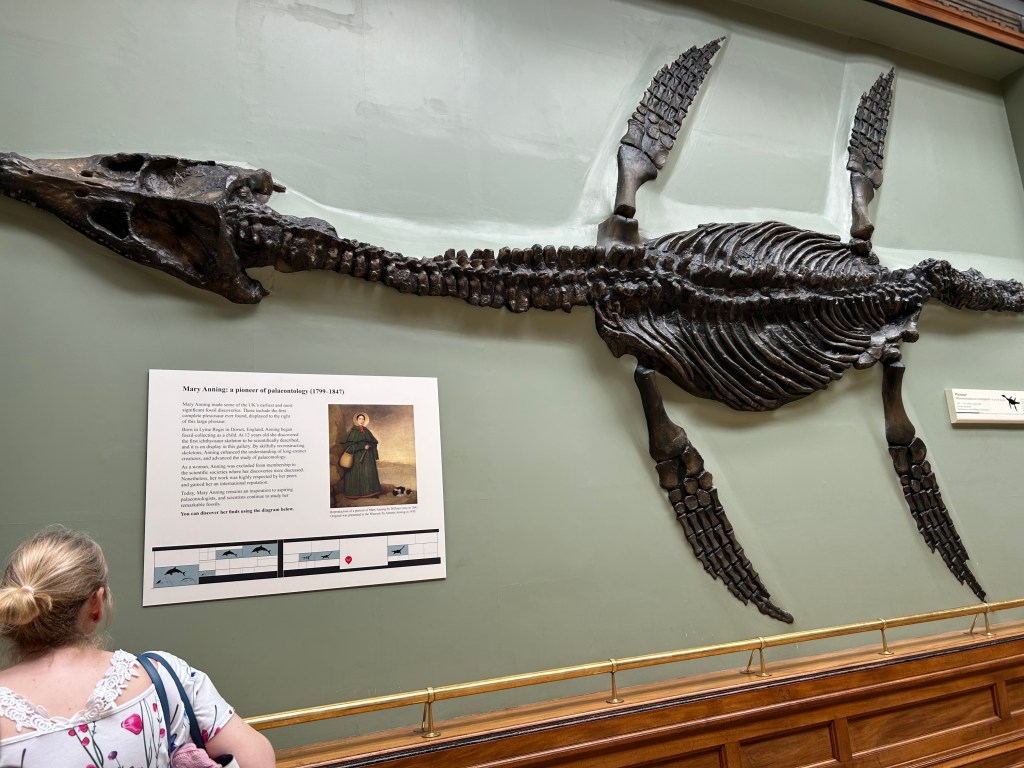
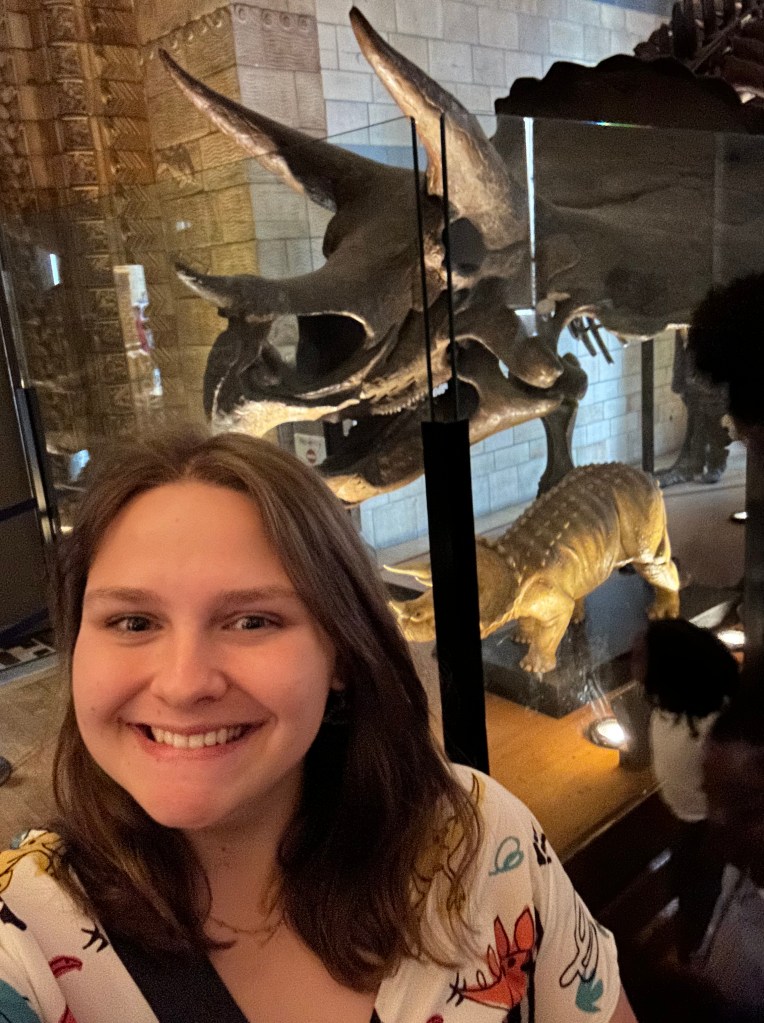
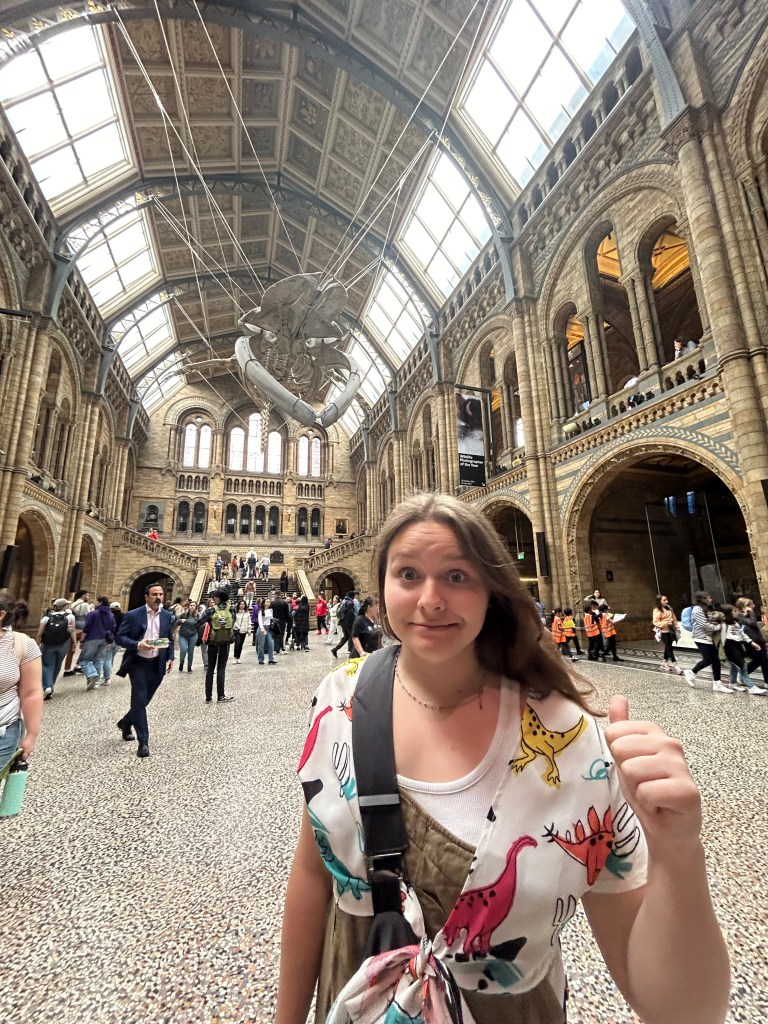
The rest of the museum was also very interesting, but after I got through most of the exhibits I noticed that I could also go into the Natural History Museum right next door for free! I looked down at my dinosaur shirt and then back up at the stegosaurus skeleton in the main lobby with immense joy. It was at this museum that the second object caught my attention. There was a giant fossil of the first plesiosaur ever discovered on the wall with a plaque about the scientist who discovered it. Paleontology is often a male-dominated field, but in this case, the scientist who made this incredible discovery was Mary Anning. Although she was excluded from being a member of the scientific societies where her work was published, her fossils are some of the most studied and appreciated in the community. Dino Dan has nothing on Mary Anning!

I am sad to say that this is my last blog post in London as we are traveling to Stratford for the last few days. However, the journey isn’t over yet! 

Cheers!

The V&A / My Last Day in London 😭

Greetings, all!! Yesterday was our group outing to the Victoria and Albert Museum, and it was a great way to end our time in London (though I am still in denial about the fact that we are leaving – even though I’m on the coach out of town as I write this). Despite my sorrow at leaving this incredible city, full of excellent theatre, museums, and food, I am so excited for our next destination. 

Now back to the topic at hand – the V&A Museum!!

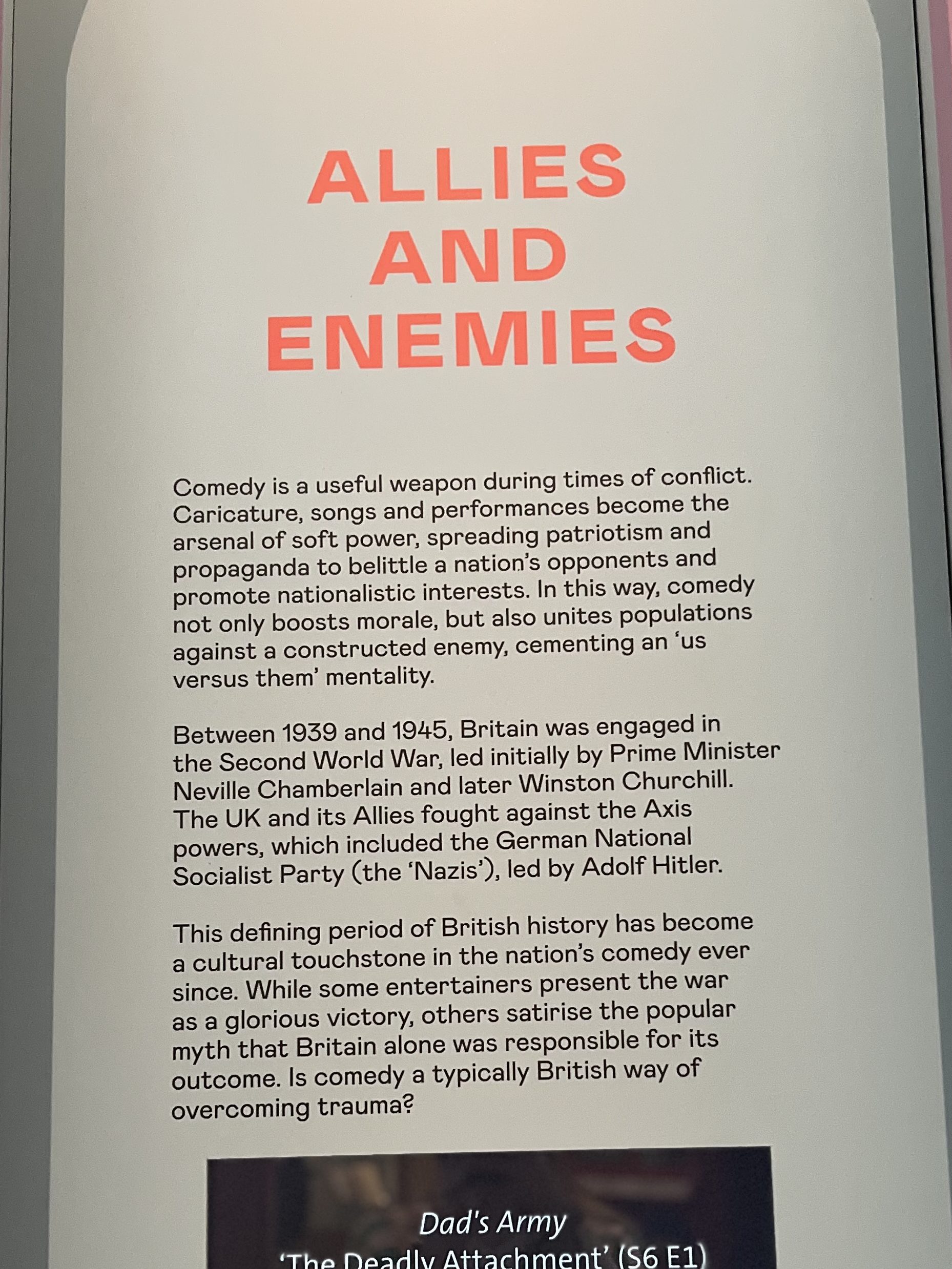
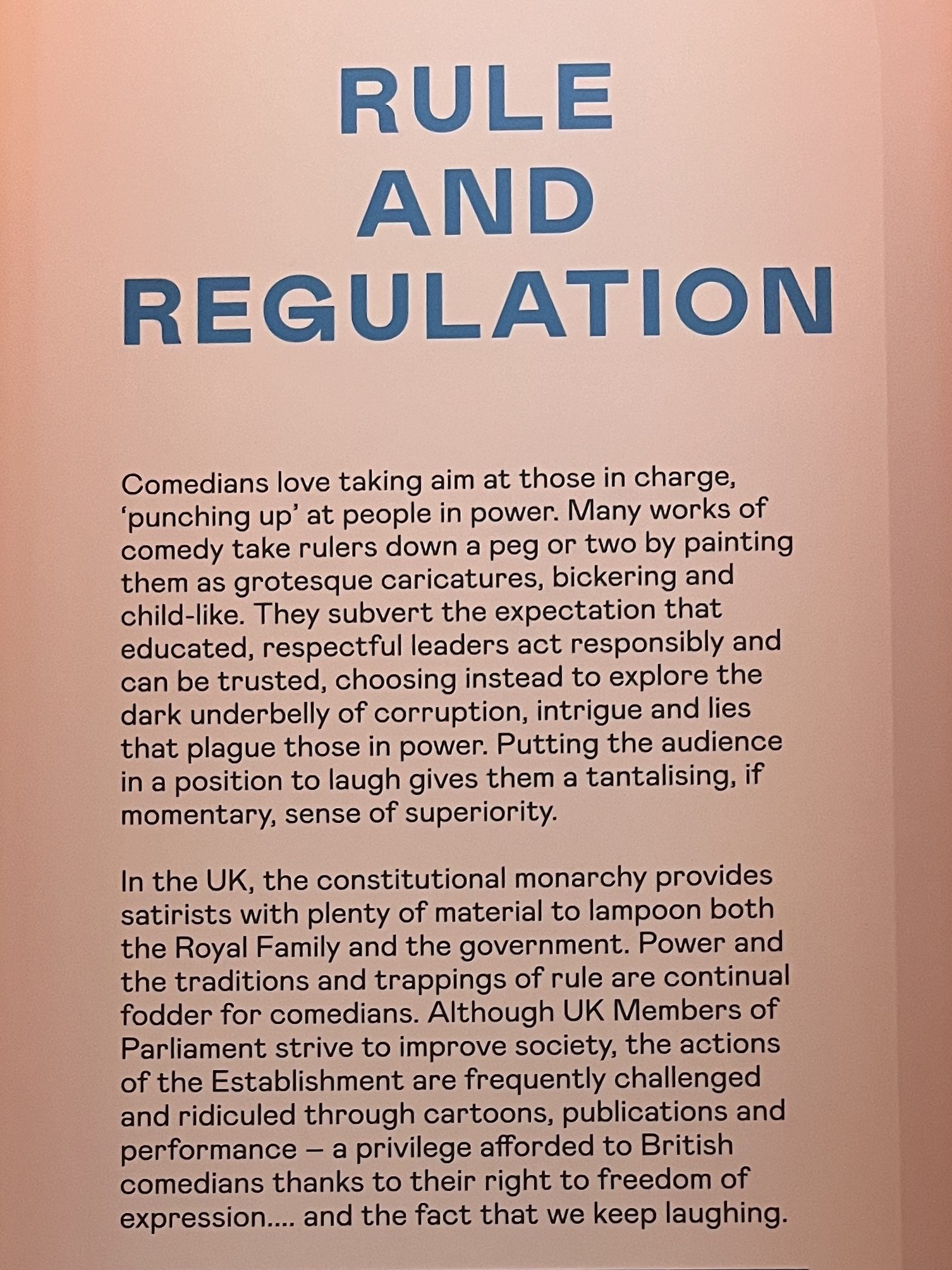
There was so much to explore here that I did not even get to see the whole museum before leaving. However, I was still able to see so much incredible art and history. Unfortunately, the theatre exhibit was closed. I will admit that I was very saddened by this revelation, but thankfully, theatre is all around us, and many random artifacts and exhibits I saw reminded me of shows we’ve seen and ignited my theatre brain. The British Galleries contained a lot of historical pieces that reminded me of Shakespeare, and I could see many of those artifacts being used in his plays as set pieces, costumes, etcetera. However, the exhibit that I feel connected to theatre and a show we’ve seen the most was the Clore Study Area room in the British Galleries that discussed how comedy has been used as a political and satirical tool for ages. The room contained multiple objects and had different historical comedy videos playing that demonstrated how comedy was (and still is) used during times of conflict.

The specific artifact I want to discuss is a 1930s hand puppet that was on display. The puppet (photo below) was used to depict multiple tyrannical political figures of the day. This included people such as Hitler, Stalin, and Mussolini. According the the V&A website, this puppet reduced those figures to comedy characters and was used to ridicule them. There was a sign in the Clore room that discussed how comedy can be used to boost moral and unite people against an enemy, and one could see how these puppet shows may have done just that. In addition, the sign discusses how WWII, specifically, has been a major part of Britain’s comedy since it began. This made me think of Operation Mincemeat and how it uses comedy to tell a not-so-funny story from WWII. The show uses comedy to its advantage to make emotional moments more impactful, and the comedy also highlights the flaws and moral shortcomings of the people who took part in the operation. The comedy surrounding how the nazis in the show are presented is perhaps the best example of using comedy to demean terrible, political figures and make them face ridicule. Overall, Operation Mincemeat is an excellent example of how comedy can be used to face serious issues and stories and to cope with trauma.

I had a great time at the Victoria and Albert museum, and I would love to go back and see the rest of it if I’m ever in London again. (And I hope I will be!) Kaylee and I also made a brief excursion to the Science Museum next door after spending a few hours at the V&A, and I would definitely like to go back there as well. The exhibits were so cool, and many of them were interactive. I also saw Watson and Crick’s DNA model, and the science nerd in me geeked out just a little. I am devastated to be leaving London, but I am so grateful for all the incredible experiences I’ve had here. This trip has taught me so much about myself, and it has further strengthened my love for theatre. I will forever be grateful that I’ve gotten to see as much as I have in this short month, and I’m already looking forward to returning sometime in the future. 

Last Day in London! :o

Today we went to the Victoria and Albert Museum! It is a very cool Museum full of a wide array of artifacts. From Rafael paintings to Greek statues to one of Mick Jagger’s performance outfits, it was a broad selection. They are supposed to have a Theatre and the Arts exhibit, but it was currently closed unfortunately. We started instead in the fashion section. The dresses and outfits accessories and shoes were all very interesting to look at though. I then continued around the rest of the museum. There were some very odd things in there as well. I think one of the reasons I found some of the objects weird, like a very creepy puppet of Margaret Thatcher, was because there were some exhibits specific to British culture. The Victoria and Albert Museum was beautiful both inside and out. The architecture was very nice but also in the middle of the building was an outside space that was very pretty. It had a strange , shallow pool of water and seats around where you could eat from the cafe. I did not get any food there and it was a bit cold but there were other people out there and I know it would have been a nice place to sit around. Inside there was a statue of a dog pinning down a striking snake. It is called “The Faithful Friend of Man” and was commissioned by an Earl of Dudley that sadly died before it was finished. He had it sculpted in the likeness of his Newfoundland dog Bashaw in 1832 and it was completed in 1834. The plaque said “it was subsequently scathingly criticized by John Ruskin.” I do not know who John Ruskin is, I don’t know if I am supposed to, but I thought it was so strange both that they felt the need to put that on the description of the piece and that Ruskin would even carry that opinion in the first place. I think it’s such a moving sculpture even though it is just a dog and it’s completely not my style of art. Since that was the object I had focused on to write about, and it doesn’t really relate back to any of the shows we have seen, I looked up the theatre exhibit collection online. Apparently, they would normally have a film costume from Fred Astaire, costume from Swan Lake (Moscow 1901), 1994 Lion King costumes, a Brexit pantomime costume (which was actually there and I saw), original Elphaba witch hat worn by Idina Menzel, Elton John outfit, Prince’s shoes, and a lot more. It sounds like a cool collection so it is a bummer, but there were already so many things to see. I also went to the Natural History Museum next door, which I enjoyed even more though that may be because it is in more of my wheelhouse (Anthropology). They had lots of skull and bone artifacts from Hominin species and it was so cool and interesting to see them especially because I recognized a lot of the specific ones from talking fabulous them in my Biological Anthropology class not that long ago. There was also lots of interesting facts about space, geography, and birds. Because they currently have a special exhibit on Birds they had a smaller collection to try and draw you into buying tickets. So there were lots of taxidermy birds of all shapes and sizes—Penguin, Flamingo, Owl, Dodo, etc. That was interesting to see but also makes me sad for some reason. Overall I liked the Natural History Museum, but the Victoria and Albert was also an amazing experience!

Museum day \

To answer the prompt I found these Japanese theater masks in the Victoria and Albert museum and I pictured a recreation of a Long Day’s Journey Into Night. I picture them being used much like greek masks are used concealing the character while also giving a stated frame of their mind. I pictured a Japanese themed set including costumes and set and even choreography. I imagine the demon mask being used to represent addiction and addiction itself becoming a character that has no lines but would creep in and stalk the characters like a ghost. I picture the choreography being much more paced, almost like a dance with swaying. I also think the only way it could work would be to edit the script to fit with the setting more otherwise it wouldn’t flow neatly enough to be plausible. After the VA museum I took a stroll across the street to the Natural History museum. It was terrific and awe inspiring. There was so much spectacle in the museum from the Vault of crystals to the huge displays of animals past and present. The exhibits were amazing, the giant skeletons and recreations were superb and had me smiling the entire time. I also went to the science museum which was full of really fascinating exhibits based around the advancement of technology and the process by which we use them to improve lives every day. The exhibits there were much more informative and interactive. They really let you experience and learn from each display. I went a little wild at the gift shops and got so many crystals and other neat things I could put on a desktop or display table. My favorite though is the grow your own crystals set, which I am looking forward to doing once I’m back in the USA.

Peace Comes At Last

The Victoria and Albert Museum knew that our insane group of theatre kids (and Shawn, Courtneay, Susan, Tim and Jason) were coming, so they decided to go ahead and close down their theatre exhibit. This wasn’t the end of the world, however, because this museum has a substantial amount of art and history to pick apart. Luckily, we still got to see (most) of the fashion exhibit, and some other cool things.

On my trek to the toilet, after examining all of the iconic fashion pieces, a specific sculpture caught my eye. It was a woman, sculpted in white marble, lying on a chaise lounge and looking down at a piece of paper.

She is endowed in a robe, vividly spilling over the front of the sofa, with wrinkles that look almost tangible.

Lawrence Macdonald created this piece in monument to Emily Georgiana, Countess of Winchilsea. In a neo-classical style, this sculpture shows the Countess draped across the bed, similar to Canova’s portrait of Pauline Bonaparte.

What initially drew my attention was the poetry engraved on the sides of the sculpture.

On stanza’s three and four, it reads:

“All my life coldly and sadly

the days have gone by.

I who dreamed wildly and madly

am happy to die.

Long since my heart has been breaking

its pain is past.

A time has been set to its aching

peace comes at last.”

Emily Georgiana died on July 10th, 1848 at the age of 39.

She fell very ill and had no hope for survival. Without the privilege of modern medicine, Emily was forced to come to terms with her inevitable death, which became an escape from the endless suffering she endured.

Some of the shows we have studied have maintained this theme of death as an escape. A resolution. A conclusion to a monotonous chapter of life.

What does it mean to wish for an end? How much pain brings a person to wish for nothing?

This inscription, and the circumstance of the muse for which the sculpture was created, reminded me of Edmund’s character in “Long Day’s Journey into Night.” Plagued with consumption, his body fought and tortured itself day after day. Fighting sickness with no support system, Edmund’s mind fled to poetry and translated his misery into words. One quote that stuck out to me in his soliloquy is:

“I was set free! I dissolved in the sea, became white sails and flying spray, became beauty and rhythm…I belonged, without past or future, within peace and unity and a wild joy, within something greater than my own life, or the life of man, to life itself!”

Edmund describes the feeling of becoming something separate to life, dissolving into a place with no timeline, only joy. It seems as though the place Edmund is talking about is death itself, an escape from the pain he feels every day.

When looking at the sculpture of Emily Georgiana, the narrative of her welcoming death reminded me of how it must have felt for Edmund Tyrone to feel hopeless in getting treatment for his illness.

This passage also reminded me of the main character in “Bluets.” The playwright described their overwhelming desire to end the pain they were in– death seemed like the only escape. While grim, I think that this is a compelling and timeless feeling that has been allowed to emerge through art.

On a happier note, after visiting the Victoria and Albert Museum, I visited the Natural History Museum (for free) and was reminded how the absurdity of human evolution. We are so unique, yet unoriginal, as a species.

And our species has evolved to allow us to tell stories in costumes, under lights, and against imaginary settings.

The gift of theatre is so wonderful!

Goodbye, city of London,

xoxo Homo sapien girl

A Touristy Breath of Fresh Air

Walking through Hampton Court Palace, I felt as if I was walking through the main attractions of three separate towns at once. From the entrance’s “Ye Olde Township” nature, to the decorum and luxury of the palace’s interior, to the sprawling and beautiful gardens that surrounded it all, it was a strangely all-encompassing site to explore. 

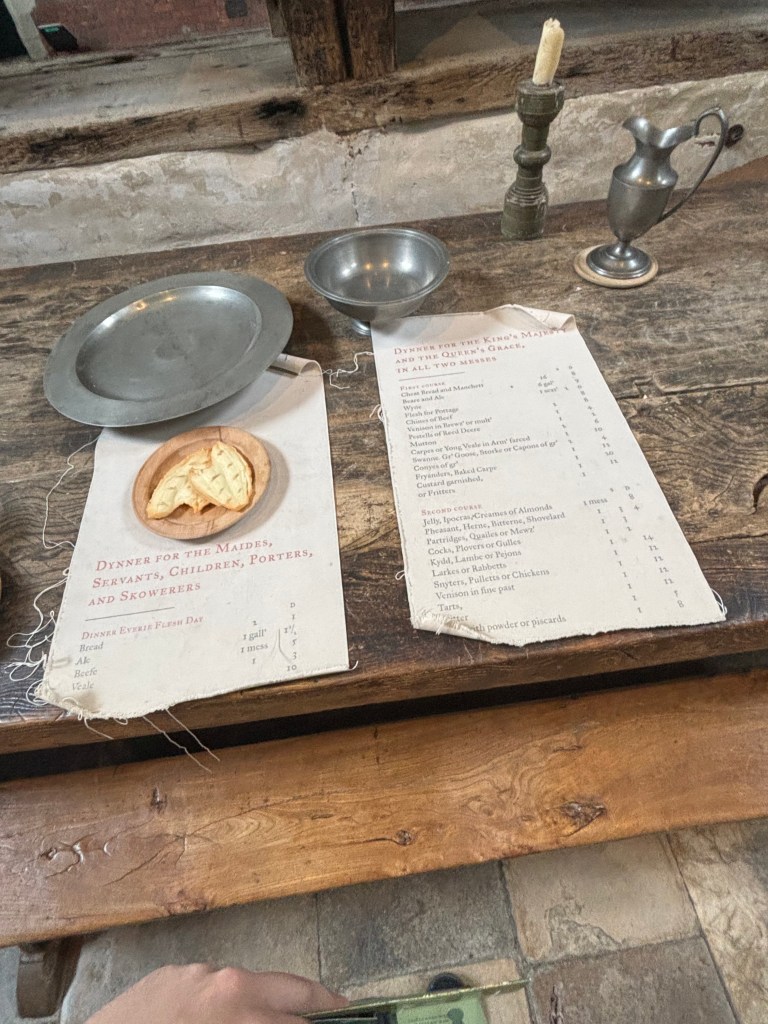
Starting from the entrance, it felt like walking through a recreation of an old medieval castle town, despite just being the kitchens. The narrow cobblestone alleyways and the decorative wheelbarrows filled with bags of grains helped to create the medieval living atmosphere, while pictures of actors in time-appropriate garb put up in the windows of buildings and walkways made the location feel like a vaguely and unintentionally scary tourist-trap. Walking through the kitchens kept this recreation feeling at a maximum, with the walls covered in writing and images depicting the kinds of meals that would have been served in the palace and the ways they were prepared or laid out on the table. It had tons of prop foods and decorative cookware placed around to help set the scene, and all in all it made it a very informative, if somewhat inauthentic, display to walk through. 

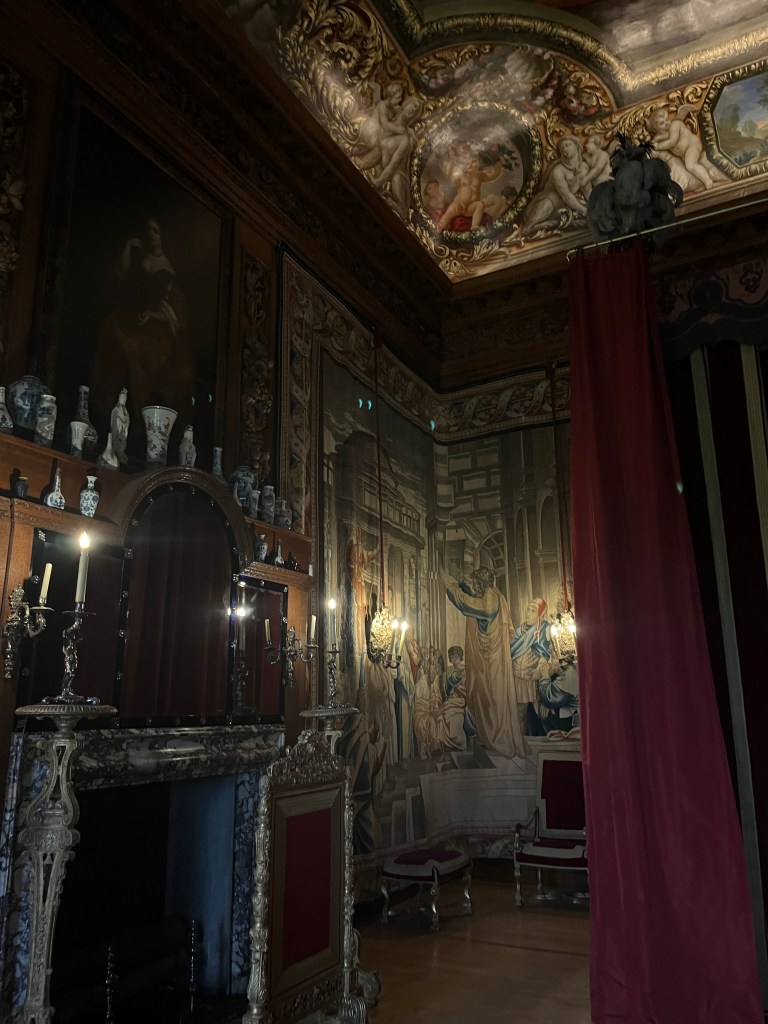
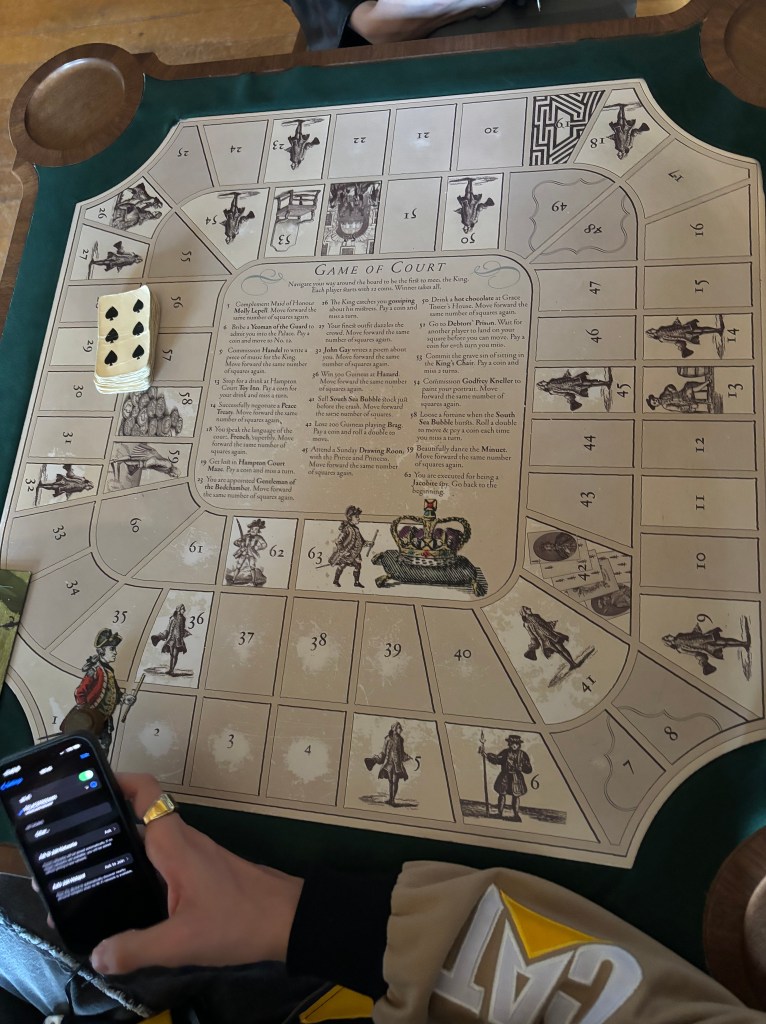
The actual palace kept this exhibition design, however walking through it felt more like a beautifully built museum than a touristy recreation. The architecture’s ornate design and exquisite color palette and the designs of the garden and fountain areas around the interior of the palace were truly something to behold, and seemed befitting of a royal palace. The church in particular was an awe-inspiring sight to behold, with its intricate ceiling showing the stars in the night sky and the overall sense of grandeur within the room giving it this air of divinity that made me scared to make a sound for fear of committing an act of disrespect. Besides the architectural styles of the palace being something to behold, the structure also held a number of artworks and artifacts belonging to the royal collections of Henry VIII as well as William and Mary. The palace held writings of and about Henry VIII’s wives, large pieces of religious artwork, two out of the nine pieces of Caesar’s Triumph (the first six of which are at the National Gallery, and the last one I have no idea where it is because I have not seen it), intricately folded dinner towels, examples of clothing styles that would have been worn around the palace, and even some tables in the Drawing Room dedicated to different (kind of terrible seeming) board and card games. 

The most impressive part, and the part that I wish I had spent more time in, of Hampton Court Palace to me was the garden. After exploring the palace in its entirety, I exited the back to see a sprawling expanse, inhabited by trees, statues, fountains, and ducks. Walking through the gardens was very refreshing, especially after having spent most of the time in London either walking through the streets with tall yet skinny buildings towering above me and slightly polluting the air or inside of surprisingly cramped museums and theaters. The openness and natural beauty of the gardens was (quite literally) a breath of fresh air for me, and felt incredibly nice. The gardens were also home to many different little walking paths, with its own greek/roman inspired statues dotting the paths or little courtyards hidden between massive hedge walls. I know that I was unable to explore the whole area, as while leaving I saw signs for cafes and a hedge maze far past the extent of where I went, but the area that I did see was still truly breathtaking.

Overall, Hampton Court Palace was an incredible site to visit, giving more insight into the daily lives of past royals, and I hope I can return one day to find my way through that hedge maze.

Feast Fit for a Servant
Tasted Like it Too
I Think Elliot Won This in like One or Two Rolls