The Curious Case of Benjamin Button was unlike anything I had expected. I suppose I expected it to mostly be like the original story, but honestly I don’t know why I would’ve thought that. When do adaptations literally ever do that. But, I will say, it’s different in a GOOD way. With the narrative, the story stays in a very fixed perspective. We see everything in the father’s perspective briefly, sure, but then it focuses solely on Benjamin. With the musical, however, it’s not just Benjamin’s world, it’s everyone’s. It goes further into depth with the lives of the other characters, and actually builds a world to get immersed in.
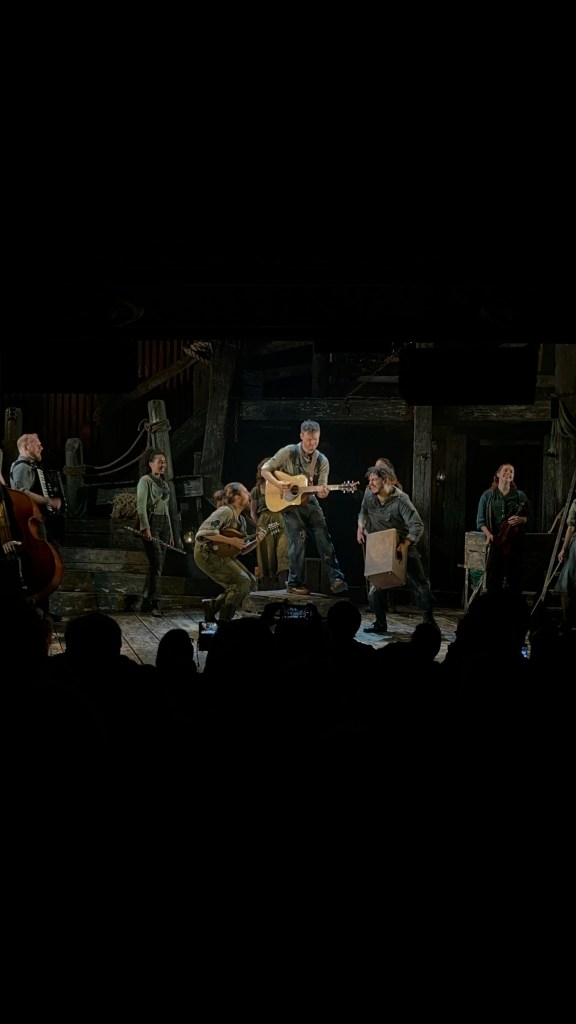
I also adore how the cast plays instruments themselves, rather than having an ensemble to accompany them. Every character (save for Benjamin) has a song to play, and something musical to contribute to the world. Unlike the narrative, the people surrounding Benjamin truly matter as well. Without them there would be no song, no toybox cast of characters, and arguably, no meaningful story to tell. Which I think supports the overall theme of how important it is to value others around you. Loved ones are truly what makes life worth living.
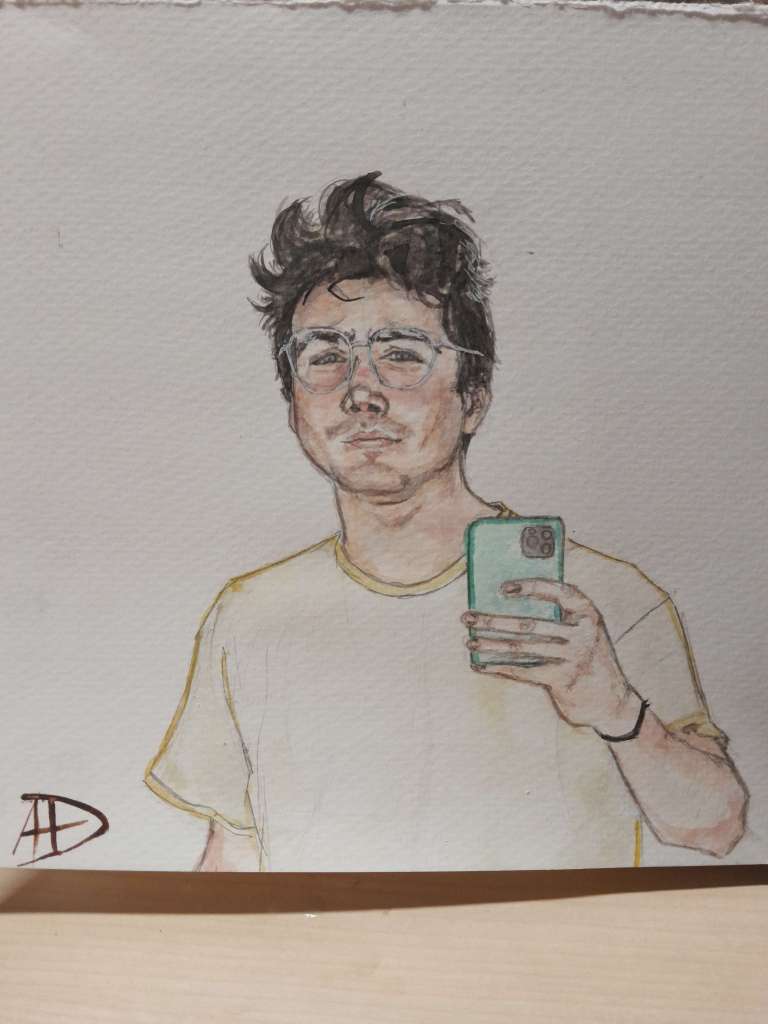
Oh, also, art! I finished the little watercolor painting, the one I only had a sketch of in the last post.
I’m still learning how to paint skin please don’t look at him closely.
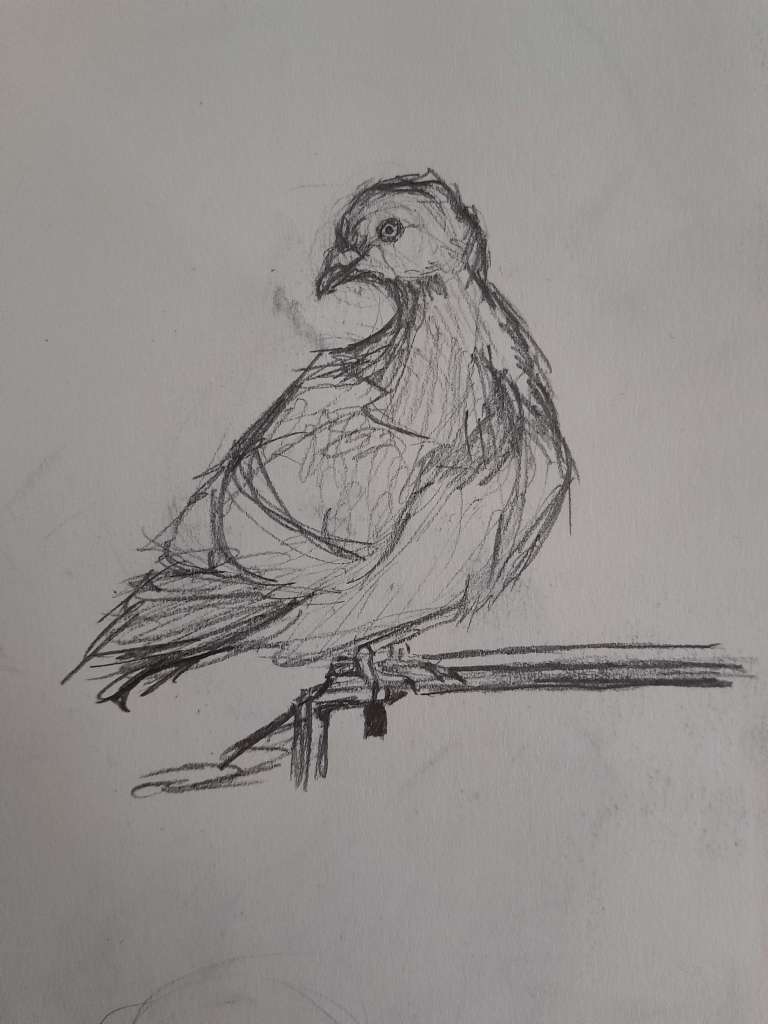
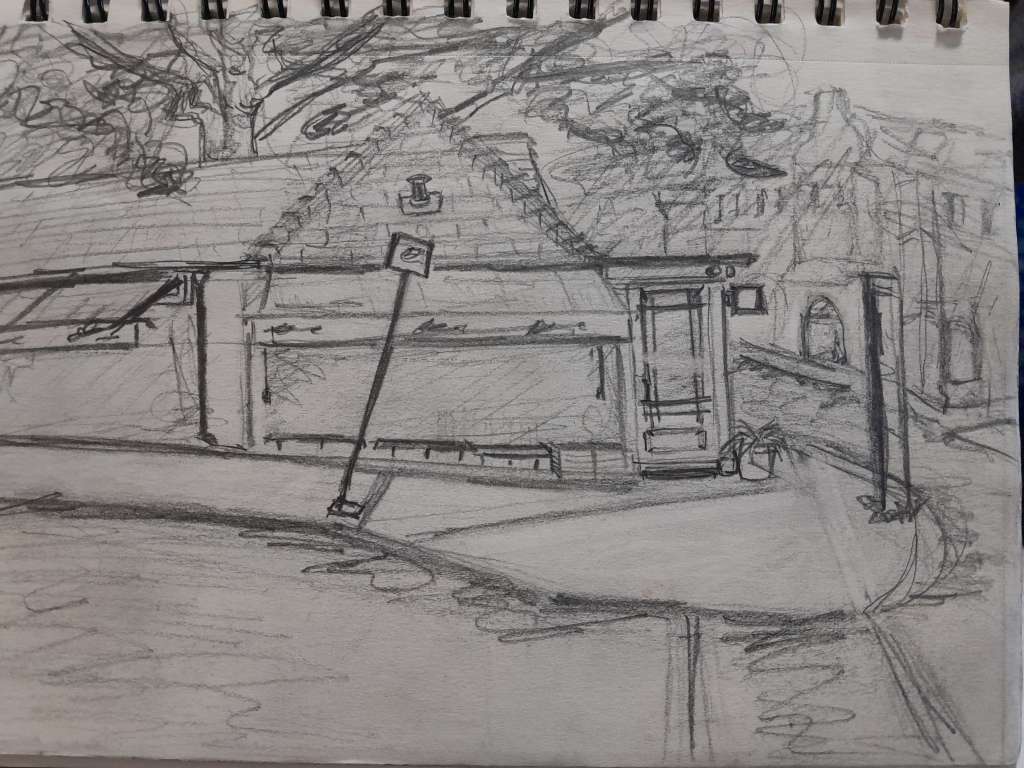
I’ve also done a quick sketch of a pigeon (just for fun) and practiced drawing some architecture. The view for the landscape study was a scene drawn from a table at a cafe :)) The mocha coffee I had there was life changing by the way. Drawing the buildings, I felt so out of my element, and it made me realize how little I understand perspective. I need MUCH more practice. But hey, you can tell that they’re buildings! That’s gotta be something, right? Right? Right. Right??
The Curious Case of Benjamin Button – one of the greatest shows I’ve ever seen, and a truly perfectly wildly different adaption of the original F. Scott Fitzgerald short story. I say perfectly different as it completely deviated from the short stories in all of the right ways. With the difference in location, characters, the addition of music, the time period, and the overall message, mood, and ending of the show, it was highly impactful and left me with the feeling that this will without a doubt be the best show I see on this trip.
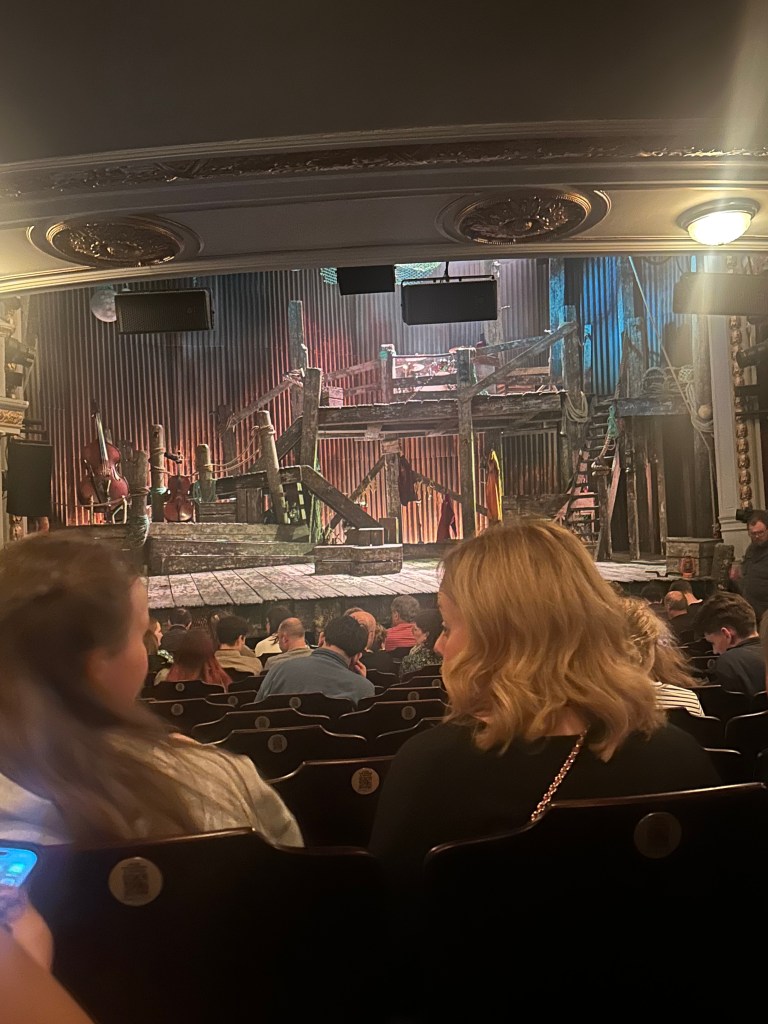
First off – the set transported me into the world of Cornwall immediately. The pre show sounds of seagulls and waves were a perfect touch, and made it so clear that we were on a coastal town – and not just for no good reason – this deviation from the original text made so much sense in the context of the musical as a whole. The music and lyrics mirrored the setting perfectly, as it was (and our very own Claire Wewers put this perfectly today at the museum), almost a sea shanty sound, with a folky twist. Obviously went well with the setting, but also with the whole tone of the show – this sort of naturalistic and perfectly whole meaning made a lot of sense with the context and sound and feeling of the entire score. It was genuinely just beautiful.
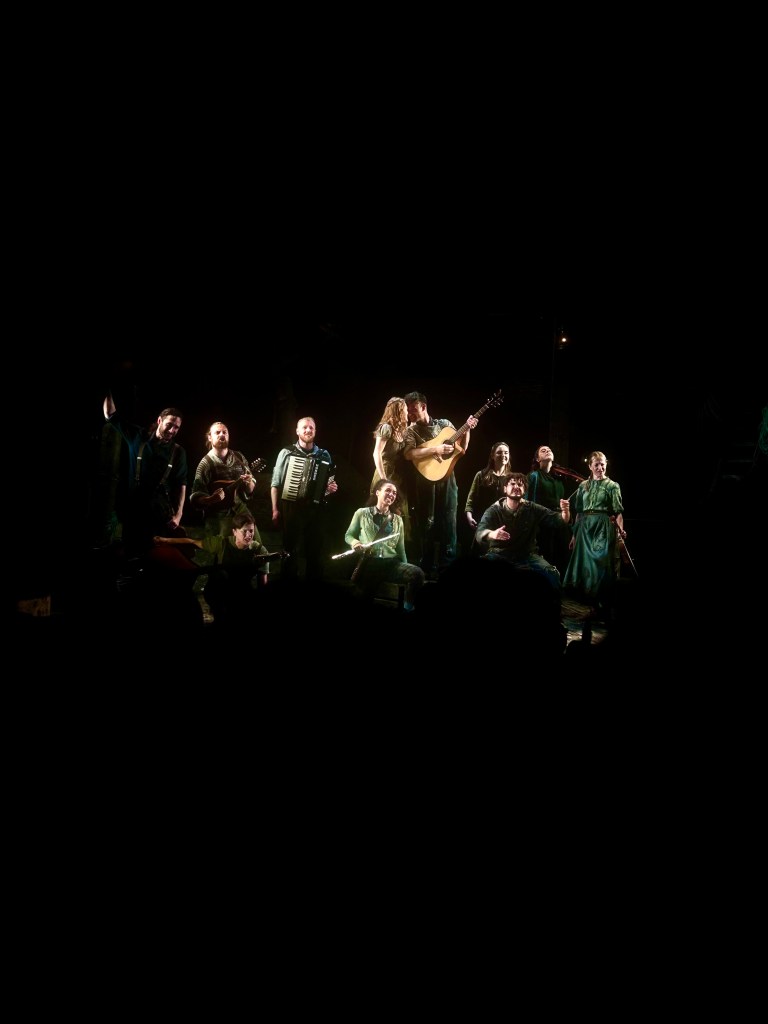
My particular favorite part of going to musicals is hearing the different voices and seeing what I think about the different ways people might be trained, or what their background in the voice may have been before they got to this particular show. As soon as the first note was sung in this show, I was stunned and shocked and so content – the voices worked so well together. They sounded so simple, so fresh!!! This group had an incredible sense of togetherness and that showed through their work as actors and as singers and especially as musicians, as they were all simultaneously the singers and the orchestra. This was incredibly impressive and added so so much value to the production.
I could not stop thinking about this musical – my voice teacher and I even went on and on and on about how beautiful we both think it is, as she read the synopsis and listened to the cast album. We talked about how even though we wish it would come to America, we both agreed that the setting of the UK and the audiences here probably receive this musical much better, and that there is almost nothing that could make this production even sweeter. It was wholesome, haunting, and devastatingly real. Hearing Elowen sing about how she still has time, and then dying in the next scene, but only after finally seeing the moon landing together at last with Benjamin, was an absolutely overwhelming and crushing moment. This show made me feel every feeling, which was very different from the short story, which had no real “meat”. This adaptation was full of it. I wish I could see it every week!
I feel like a bit of an outlier with my class, as I actually did partially enjoy the original The Curious Case of Benjamin Button short story by F. Scott Fitzgerald. Obviously there are things that aged poorly (as it is over 100 years old), but it was the idea of a life lived in reverse that really stuck with me. So, I was very eager and curious (haha) to see how it would be adapted into a musical. All I knew was that it was very different from the short story, so I was going in blind.
I did not expect to love it as much as I did.
Let me explain. I didn’t expect it to be bad. I almost never go into things expecting them to be bad unless the overwhelming public opinion is that whatever I’m going to see is bad. All the good words I had been told about this show from our professors were absolutely true and warranted.
I love the idea of time. I love the idea of the ocean. I love the idea of home. What I especially love is how the musical combines all of these ideas, relates them, and makes them almost interchangeable. Water flows. Time flows. Your idea of home flows. These concepts all share the same heart, which I think this adaptation taps into perfectly.
I liked how, rather than having different actors portray Benjamin’s ages, it was the same actor the whole time (well, except for when he was a literal baby). This allowed the character development to really flow and blend together in a way using multiple actors might not have.
This blog post probably makes no sense, which is because I think I’m still processing this musicals effect on me. It takes me a long time to sit with things till I can fully comprehend all of my feelings. Maybe I’ll come back through and edit this! Check back with me in a few months.
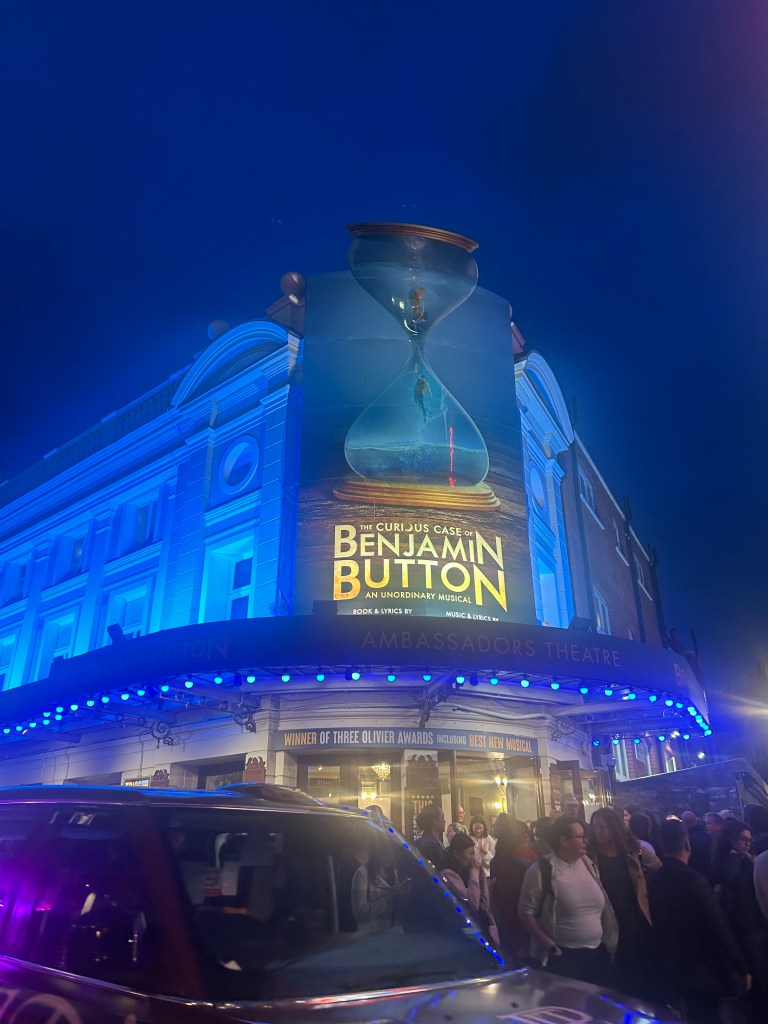
On Monday, May 26th, 2025 at approximately 7:30 pm within the Ambassador’s Theatre on West Street, London, England, a crowd of people hushed their voices as the lights began to dim. Then, from above, bright lights suddenly lit the stage as a small cast of musicians, singers, and actors began to tell the story of the Curious Case of Benjamin Button.
I first walked into the theatre pondering how such a complex story could be converted into a musical stage adaption. I was excited and intrigued but I tried to keep my expectations low to avoid any possible disappointment. However, I am extremely proud to say that every expectation I had been vastly surpassed once I viewed this production. This musical deeply stirred me to the point where I sat in disbelief during the intermission. I had gotten the sudden realization that this would be a story I would remember forever.
The storytelling, music, plot structure, character development, and character interactions were all carefully crafted and wonderfully done. The folklore method of storytelling based on traditional Cornish music set against the salty atmosphere of Cornwall, a country known for its gorgeous coastline, gave a unique and fantastical feel to the story.
Although the setting and time-period were altered from the original story by F. Scott Fitzgerald, I would say the biggest difference I noticed between the original story and the musical adaption was Benjamin Button’s emotional commitment and investment towards his family. The musical changed the story’s direction to best portray Benjamin’s qualities involving his inner turmoils alongside his undying love for his wife and home. This inner conflict was demonstrated by not only the progression of his youth but by the progression in his discovering who he was meant to be.
The overarching themes that resonated with me the most included the notion of never allowing your insecurities to consume you, nor your relationships and life path. At the beginning of his journey, Ben’s father made him feel like a defect because he was unordinary and different from the rest. He made Benjamin feel unworthy of love and attention because he didn’t fit into the role expected of him. Benjamin adopted feelings of low self-esteem and once he was shown unconditional love, he fled, thinking he was too ‘defective,’ thus unworthy to accept it.
The second, most apparent theme involved time, which was ever-present throughout the story. Benjamin counts the years, hours, and minutes during the entirety of his life. He lets it consume him rather than embracing it. This story serves as a cautionary tale towards all of us to instead of belonging somewhere in the future or past, we must live in the present because it is all we have. The rest doesn’t matter because it is gone. When we share the ‘now’ with our loved ones, it is the epitome of time well spent. It is how we gain true happiness and contentment.
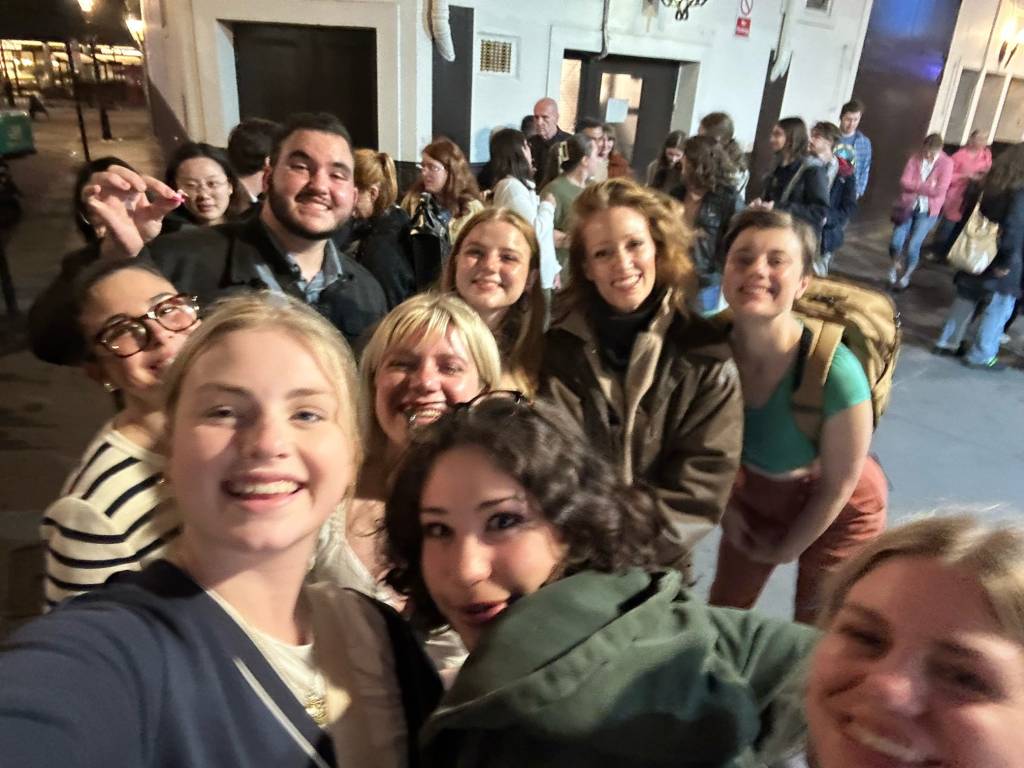
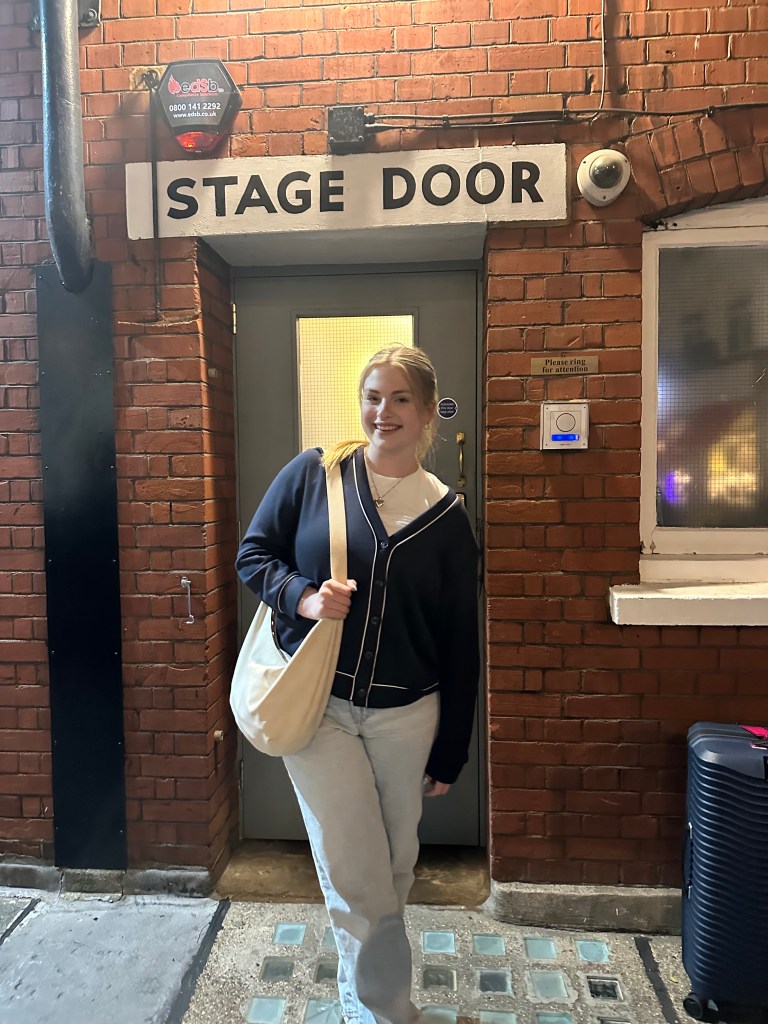
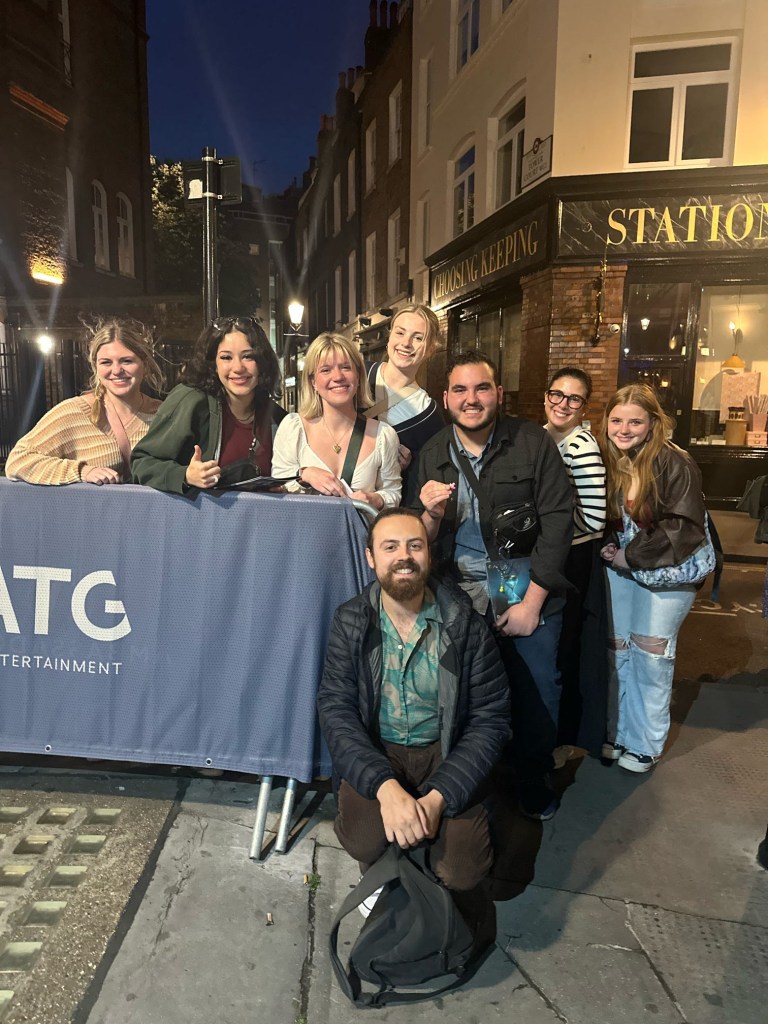
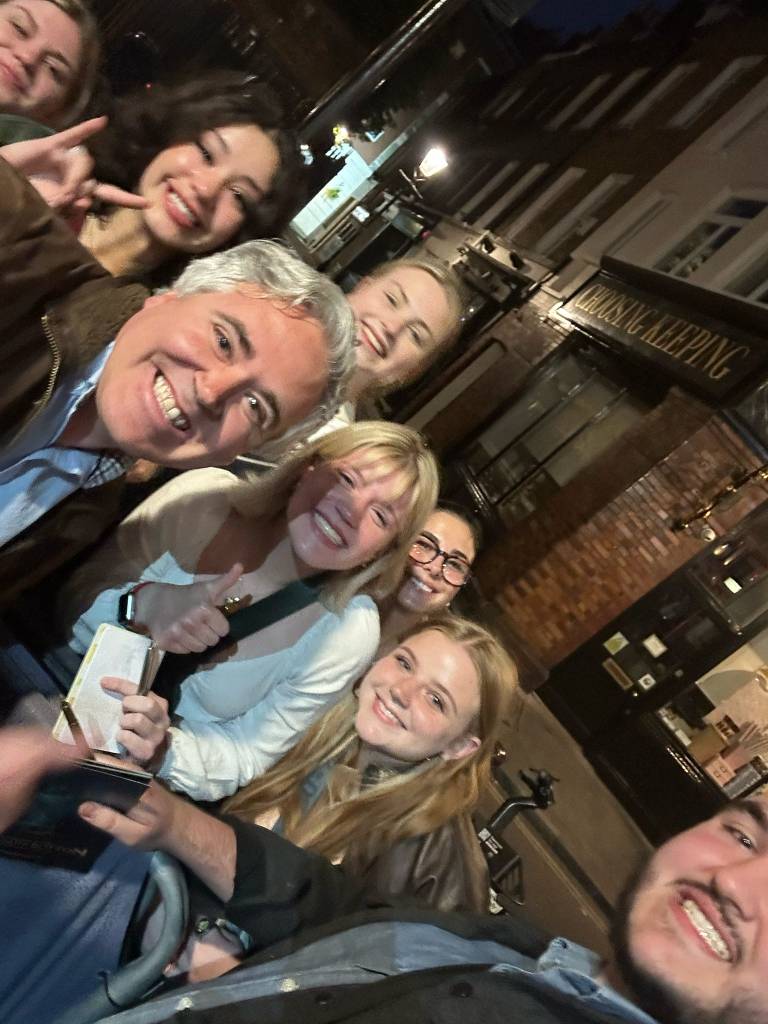
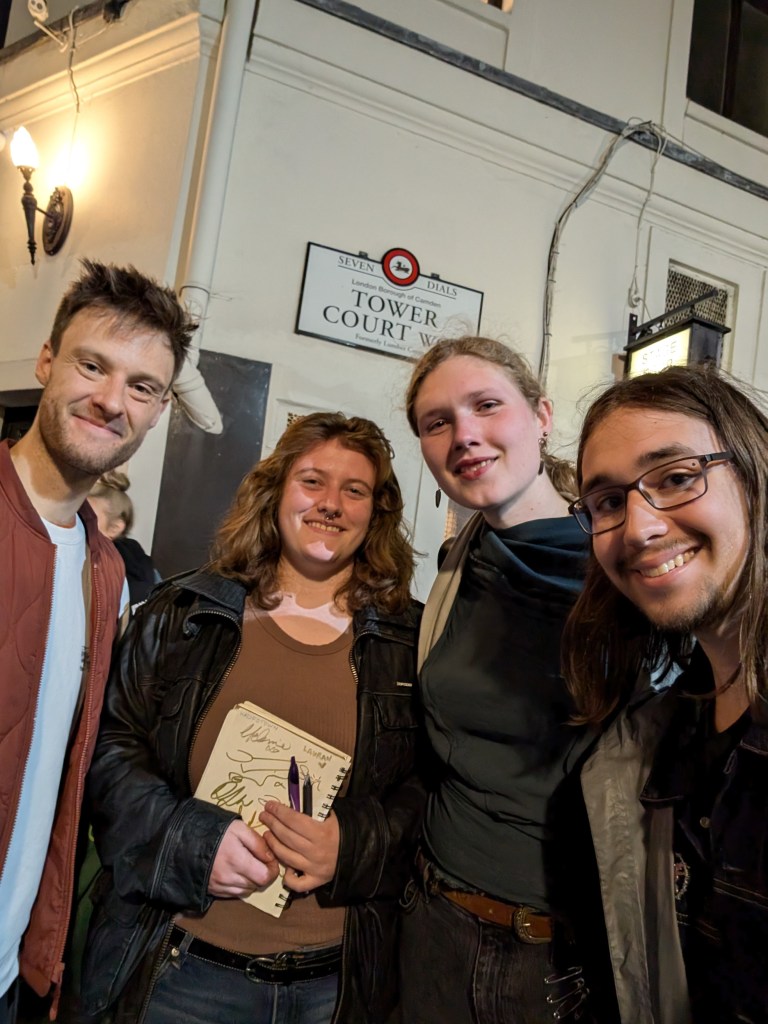
To put it simply, this show moved me incredibly. Once I met the cast at the stage door after the show, I even began to cry. It was an unexplainable reaction that I wasn’t able to decipher until much later. This musical is a prime example of the type of theatre I want to create. A collaborative group of not only talented musicians but storytellers who work together to create a narrative artwork piece by piece by utilizing creative elements at their disposal.
Each component of the set and lightning design supported the cast through their journey. Each element within the show helped immerse the audience even deeper into the character’s world. As I grow throughout my experience as a theatre student in the University of Arkansas, I hope to create something as impactful and profound like The Curious Case of Benjamin Button: The Musical.
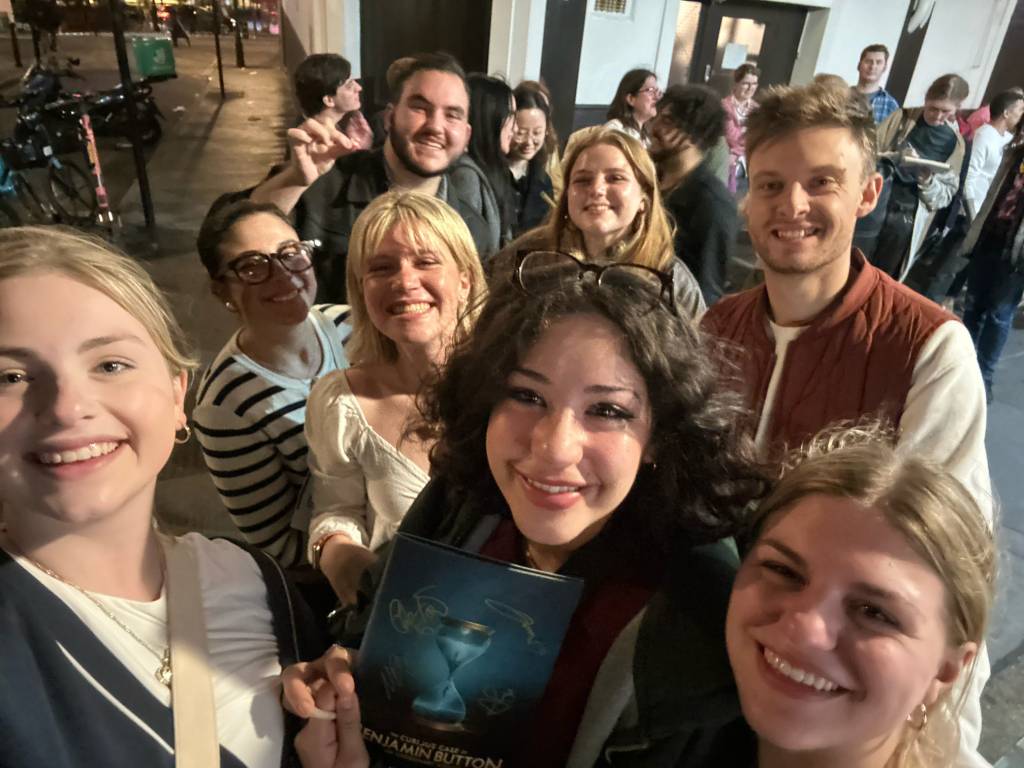
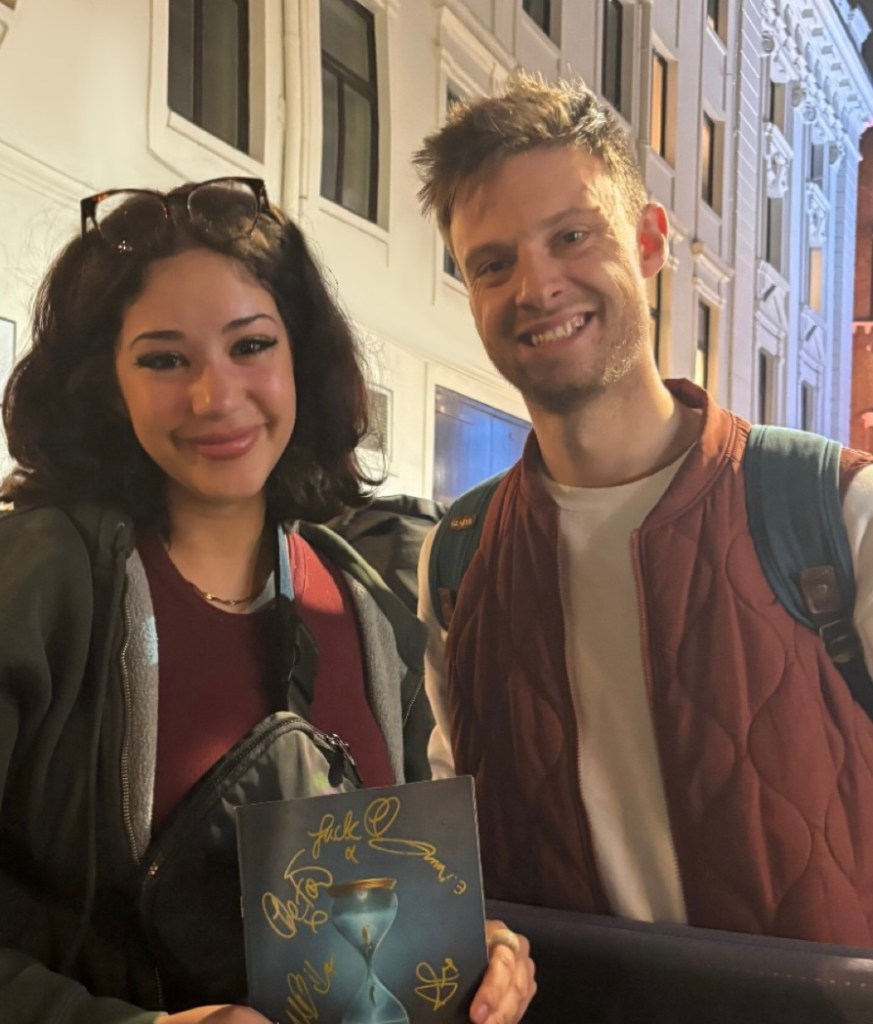
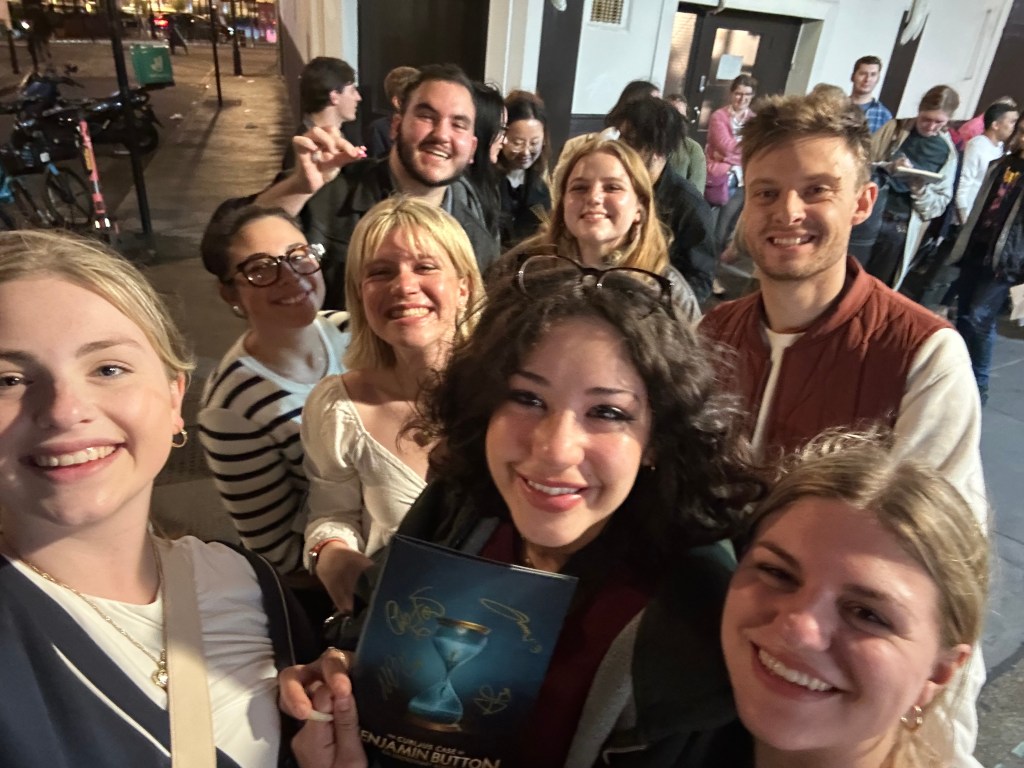
This very moment was captured by Tucker of me with my signed playbill at the stage door.
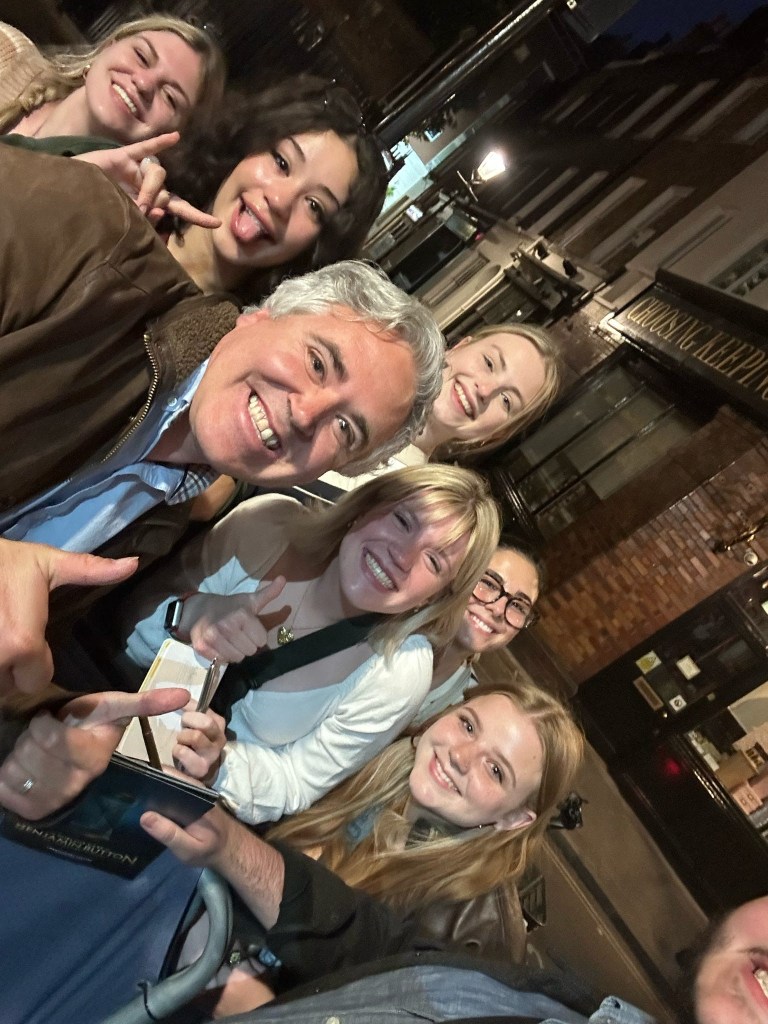
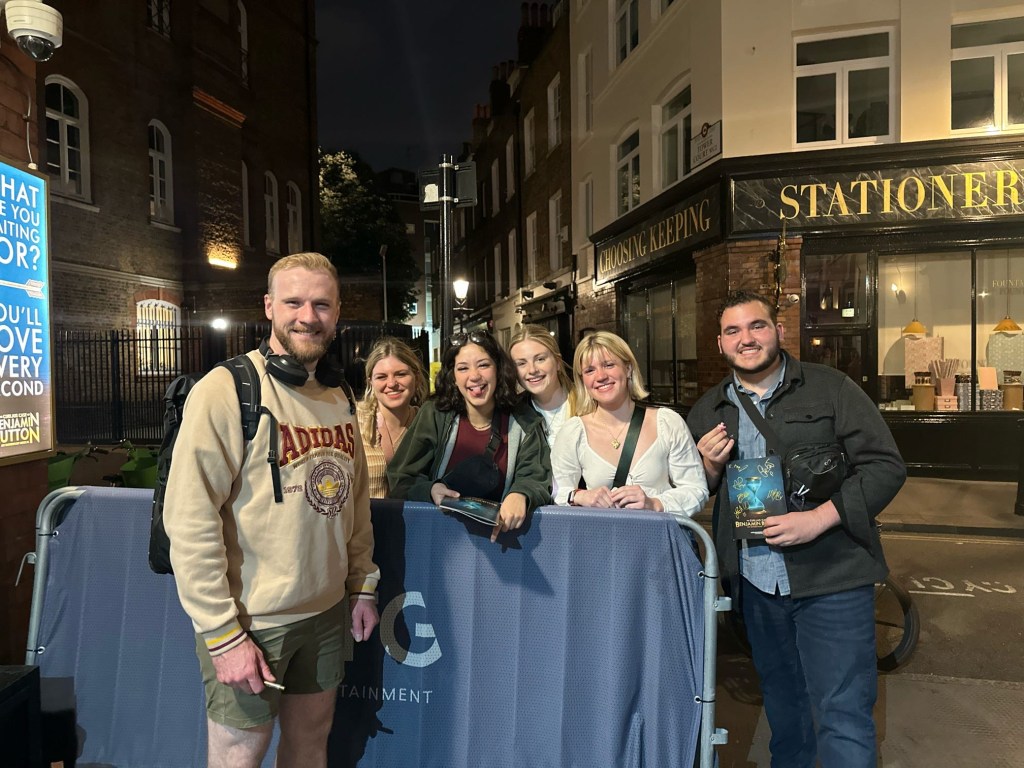
Photo with the man himself: Matthews Burns, who portrayed Benjamin Button!! He was very kind and humble and even offered a hug when I cried. When I composed myself we took a photo!
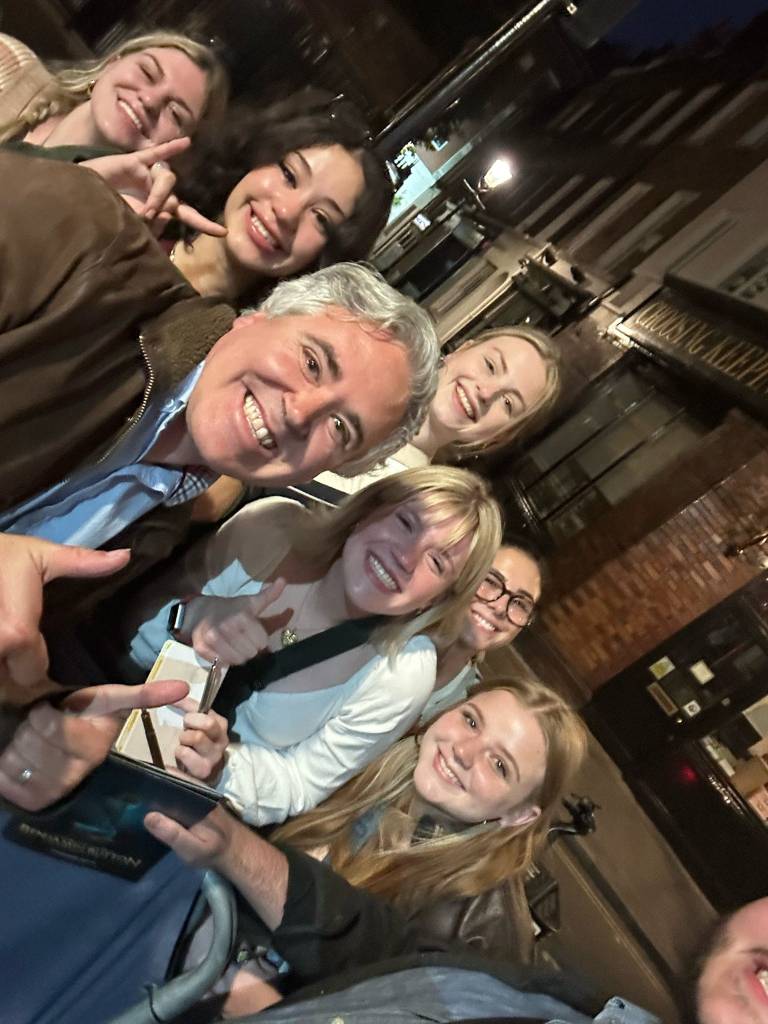
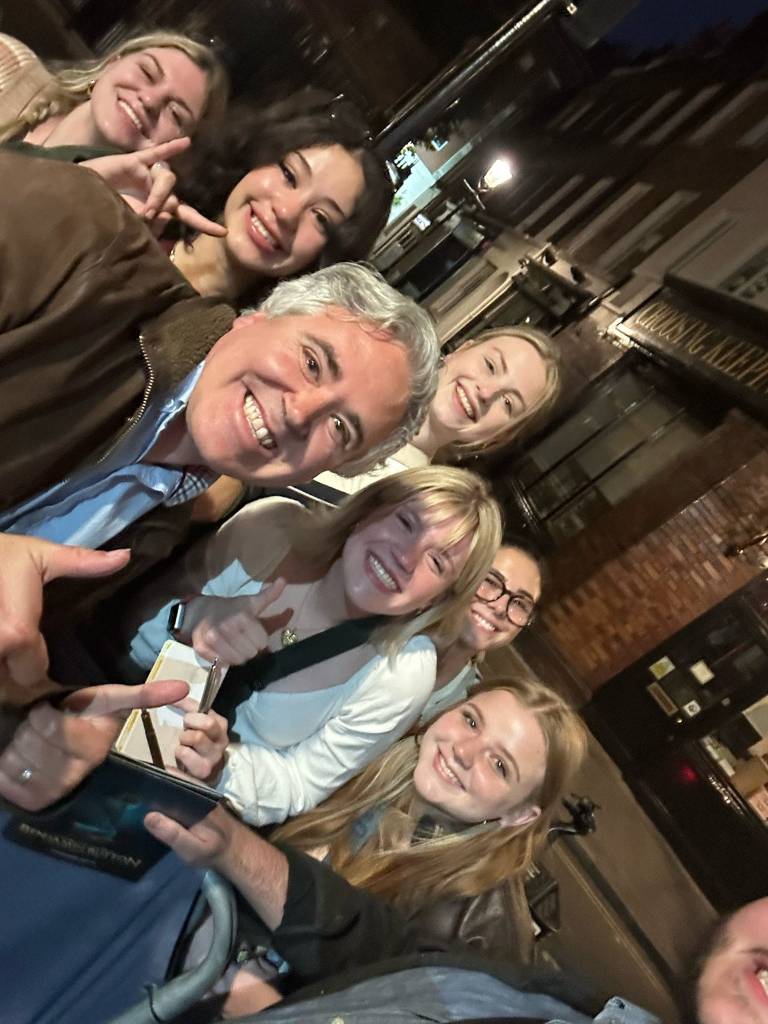
Photo with the musical’s composer!! Very cool, kind guy who took a photo with us although he was running late to catch his train.
Last night I had the absolute pleasure of watching The Curious Case of Benjamin Button. It was one of the three works we studied during our class week, but was only about 30 pages and I knew ahead of time that the musical was quite different so I went in mostly blind. I think mostly different was an understatement. Other than him aging backward, his father not really like him, and the fact that at some point he had a wife, it was nothing like the short story. The biggest difference I saw was the tone. The short story was pessimistic and dreary. I don’t mean to use those words and imply that the story was bad, but it was not the happiest thing I have ever consumed. The musical on the other hand was uplifting and heartfelt and neither of those things existed in even the smallest amount in the short story. When we were discussing it as a group after, I believe Shawn mentioned that the creative team loved taking something so negative, breaking it apart, and weaving their own story out of it. And wow, did they do that so beautifully. The creative team had the advantage of cultural familiarity with the general idea of Benjamin Button, but very little deep understanding. Most people know that its a boy who ages backward, but couldnt say much more than that, which means people are attracted to a title that they have a connection to by tno expectation.
Though, even if they had high expectations I almost bet they would’ve been surpassed. The person in front of me was blocking basically the entire ⅓ middle of the stage (a.k.a. where 90 percent of the action takes place) and I would still say it is a top five best shows I have ever seen and cried the entire last 15 minutes. The way they utilized the set and props, specifically during the last past and the first part was wonderful. A couple moments that stood out were when he was pulled under the water and the other actors held the wood planks to make it seem like the stage was the river. Chefs kiss. Same with nearer to the end when the swaddles were unraveled and out came the children. That will stick with me forever. I would have loved to be in the room when all these innovative ideas were being created.
Another one of the most impactful parts of the show was the ensemble. The stories they told as the villagers were by no means necessary, but absolutely made the show. It made the whole show feel like it came full circle, and like we were immersed in the world. I feel that often shows try to cut story lines that dont direct add to the plot or could be easily be cut, but this show did the opposite and it worked so well.
The last, and to me the most important, was Benjamin. This show should be studied by actors who want to understand the impacts of physicality and how to do it right. When we saw Benjamin for the first time, the actor didn’t look quite 70 ish and so I thought I could tell he was about 50 year old. It made me wonder how they were going to do the rest of the transformation. But then, he kept. Getting. Younger. The man ended up looking 25. I was in such shock. And with no prosthetics or anything. Just his movements. Insane and deserves every award ever.
All of this to say, I thoroughly enjoyed the show and will be recommending it to anyone who wants heartfelt and beautiful story.
I’ll be honest, when I first read The Curious Case of Benjamin Button, I didn’t connect with or really like it. The concept was interesting to me because it was about a man who ages backward and how society sees that. But the story felt distant and almost made me mad about some of the choices that were made. The characters seemed to go only one direction, and the story almost made Benjerimin Button this mean man. I found it more confusing and weird at times. I understood what the theme that was trying to say about time, aging, and social norms, but it felt distant and unemotional. So, I didn’t have high expectations when I went to see the show live. I was expecting it to be very similar to the short story and not very personal. But, Oh Boy, was I wrong.
Seeing Benjamin Button performed live changed everything. I fell in love with this show and everyone in it. On stage, Benjamin wasn’t just aging in reverse; he was trying to find love, connection, and identity in a world that didn’t understand him. Through the actor’s body language, expressions, and voice, I finally saw the emotional layers that were missing in the short story. I was able to see the heart and soul of every character and watch him struggle and learn to accept his identity.
Watching his relationships unfold with his parents, his wife, and his child brought the heartbreaking truth about his condition. I loved how there were so many metaphors in the stage production and how everything kind of came full circle. I loved being able to see his relationship start with Elowen and how they both left their homes to find each other. I also enjoyed the added element of when she knew he was dying his hairgrey and getting thicker lenses so he appeared older. Bringing this story to the stage and making it come to life in a more beautiful way was so amazing.
Even in the dialogue, the play revealed Benjamin’s thoughts in a way that the story never did. Instead of being told how people viewed him, I got to hear how he felt and his confusion, fear, and acceptance of his identity. It was authentic, painful, and real. I didn’t expect to cry during this show, especially after reading the short story.
Overall, I loved this production so much. It has to be one of the best new musicals I have seen in a long time. The actors did an amazing job, and they are all so talented. Each one of them was able to play multiple different instruments and still performed so beautifully. I was in awe of everyone and they beautiful messages throughout the production. I especially loved how real every scene was such as the death of his daughter, and the relationship and death of his wife. That scene where they got to see the mans first step on the moon together before she died was breath taking. I can’t believe how much I loved it! I still can’t get over this show!!
I write this as I still emotionally recover from the mental wreckage this show put me through. The music, acting, and adjusted storyline all evoked a response from me that I had not prepared for going into the theatre. At least with my other shows I went in knowing I would get emotional; here, I had no choice but to sit unexpectedly as the knife was driven into my heart. (I complain as if the soundtrack isn’t playing in my headphones at this moment) The Curious Case of Benjamin Button is like nothing I have ever experienced. This production somehow felt like watching best friends invite me into their living room as they performed, but it was also so well produced that the screen-like view from my seat made me forget I was watching live people. Truly, for any readers, I can not recommend this musical more.
I would also like to add that the English major in me had a particularly great time, since this was a terrible adaptation of the original text. However, as the incredible Professor Szwydky said in my adaptation course last fall, exact text-to-medium adaptation is not only boring, it is impossible. Therefore, I did not find it necessary to stick to the cannon of the short story. When transferring written media to a stage like this, there are so many more elements that have to be added for the functionality of the production: lighting, music, costuming, stage design, etc. However, what makes The Curious Case of Benjamin Button so special is that all of these choices intentionally try to create a completely new layer to the original story. Honestly, the only part of the story that was the same was Benjamin aging backwards, but it ultimately felt like a more whole tale.
Below is a list of my favorite additions/ changes from the original story:
Music- the sea shanty/ Cornish folk music was so easy to become enraptured in. The music was fun, the vocal performances were incredible, and asking the audience to join in the closing song highlight such a beautiful theme of community
Elowen- Just Elowen. Her storyline, her acting performance, her voice. Someone give my ginger queen an Olivier PRONTO. I was right next to her when her actress was taking a picture with us, and I was literally shaking btw.
The village characters (particularly the Gladstones)- These little side quests were hilarious. Not only did they not feel forced, they became almost integral.
INCLUSION OF WOMEN- The exploration of Benjamin’s mother (who was not even named by Fitzgerald) and the character development of Elowen (beyond the disposable girlfriend trope) modernized the classic in a way that helped me connect to the story more.
More context to the phenomenon- While there is no explanation for the science or magic as to why Benjamin was born abnormally, there is an indication that it was connected to the sea and moon, and it shows that more than just Benjamin was affected.
By the end of the musical I had cried, laughed, and nearly broken out into dance in my seat. The themes of community, accepting your abnormalities, not letting your insecurities hurt those around you, and love/found family creates a production that kisses a brick and then throws it at you.
I was very nervous about how the story of Benjamin Button would be portrayed on stage. First of all,the source material is fairly short, about thirty pages, and it was going to be stretched over two and a half hours. Also the original story was fairly mean spirited, and did not really give any reason to care about or root for the titular character. Benjamin married a much younger woman, dumped her when she started to get older to become a big football star, and was generally just not particularly nice to anyone around him. It did a good job of giving a fairly believable account of what could happen if someone began aging backwards, it felt like nothing more than that. It focused more on describing the series of events rather than telling a story
The musical greatly adapted the short story by almost completely ignoring it. It maintained the key plot and characters, but besides that much of the story is original, and I feel like that was absolutely necessary. They made Benjamin a sympathetic character and made his story a lot more compelling. They also really flushed out the character of Benjamin’s wife a lot more. In the book more than anything else she was just a story device to further demonstrate Ben’s regression, while in the play she was one of the central driving forces and felt like a real person rather than a piece of the setting. They also flushed out the story by adding multiple characters that did not exist in the book at all, which created a much more engaging and believable world.
One of the biggest plot points that was completely cut from the musical was the animosity that Benjamin’s son felt towards him, and their troubled relationship as he grew younger. While there was still some turmoil between the two in the play, it was caused by him leaving to try and cure his reverse aging and was fixed before the end of the play. I feel like cutting this section was a very good decision, as in the story it just felt like another way for the author to say how terrible everything is and how mean people are while not really adding much new to the plot.
Converting such a pessimistic and downtrodden short story into a musical was not a decision that I would expect when taking the story from page to stage, but I feel like the production pulled it off very well. Altering the setting to be based out of Cornwall gave the music a very specific folk sound which made the whole musical feel like a retelling of a generational tale rather than just a live series of events. This folk tale feeling was also aided by the mysticism added into the story, specifically in the explanation of Benjamin’s birth. While not explicitly given a reason, the musical built up some mystery and magical elements around his situation by describing how in places surrounding the birth strange things were happening with time as well.
The only thing that I believe did not carry over great from the original story to the stage performance was the repetition of specific time periods. In both the play and the story there are multiple times where they describe a length of time as a specific number of days, hours, etc. while I did not like this gimmick in the book, it was fairly easy to ignore but in the play when it took up more time and happened more often because of its extended length, it began to grow somewhat tiresome. While sometimes it had a powerful effect, by doing it so often it started to become slightly annoying. overall, despite this one minor annoyance I thought the show was truly wonderful and is definitely my number one favorite staged musical (I have only ever seen one other, so it was not a super high bar, but I still really liked it)
The Curious Case of Benjamin Button was a wonderful musical. The acting was superb, the music was amazing, and it was so emotional that I spent the rest of the evening reflecting on it. What it wasn’t, however, was a good adaptation of the original short story by F. Scott Fitzgerald, and that was the key to its success. In fact, other than the name of the main character and the general premise of someone who is born old and ages backwards, almost nothing was the same.
Firstly, instead of starting in 1860s Baltimore, it begins in a small fishing town in Cornwall during the early 20th century. In my experience, many shows I’ve watched which change the setting do so in a way which does not better the show and only serves as an easy way to make it stand out from other productions. Thankfully this was not one of them, and the difference in time and place were used masterfully to tell a unique story that wouldn’t be as effective if set elsewhere. The village itself had a personality, and its much smaller size gave the musical a more intimate feeling, everyone knowing everyone else. Additionally, being a fishing village gave it a connection with the sea, which became a major theme throughout the show. It being set more recently meant the show was able to use more well-known historical events and changes in technology to give the audience a better sense of the passage of time.
Secondly, the characters were also heavily altered. There was a whole new ensemble of characters, which, unlike in the original, all had their own names, personalities, and goals. They were also present throughout the whole show, and the contrast between their aging and Bejamin’s growing younger was a powerful way to show the passing of time and reinforce the differences between a “normal” life and one like Benjamin’s. The show also did a fantastic job showing female characters (in a non-misogynistic way), which was of the originals biggest flaws. This was especially evident with Benjamin’s wife Elowen (named Hildegarde in the short story. Instead of being reduced to “nagging wife”, she had an actual personality, and we got to see her and Benjamin’s interactions. She was a very sympathetic character, and Benjamin’s treatment of her, both good and bad, also helped to make him feel much more like a real person rather than a concept.
Lastly, the plot itself was heavily revised. It was more tragic and intense, eliciting a heavy emotional response from the audience, unlike the rather dry, almost vignette style storytelling of the original. A change like this was necessary for the show to be able to succeed theatrically, which it of course did. Whereas the original was mostly “what would the life of someone who aged backwards look like”, the musical focused on how that would actually affect the feelings of that person, and the feelings of those around them. It was much more humanizing, speaking to me personally, making me think about myself and aging, in a way that the original simply didn’t.
Even as I am writing this blog post I’m still not done reflecting on the show. I want to simultaneously see it again and push it out of my mind entirely. I was slightly skeptical of the show at first, unsure how they were going to turn the original short story into a musical. The show then proceeded to rip that skepticism away and make me feel foolish for ever doubting it. If you ever get the chance, I highly recommend that you see it, and please don’t be mad at me if you do. Anyways, this has been the third of my travel blogs, goodnight, morning, or afternoon, and I hope you’ll read the next one.
Built out of mudstone and rocks, the Tower of London remains standing strong since the year it was founded in 1066. The Tower of London is a historic castle on the north bank of the River Thames. It served as a royal palace, prison, arsenal, and even as a menagerie for exotic animals. On May 23rd I was able to view the legendary site. For my blog post today I’d like to share with you about what I learned.
On 1066, an arrow altered the making of British history. King Harold of England was pierced with an arrow and perished, which gave way to King William the first, also known as, ‘William the Conqueror.’ His Norman army took over and he soon became the ruler of England. The civilians of England didn’t wish to see a new dynasty begin with William as king, whom had seized the throne by military conquest rather than legitimate succession.
To project his new power to detain the threat of united resilience, he had the White Tower built. The White Tower is considered the main landmark of the Tower of England structure. The Tower of England includes the Bell Tower, the Wardrobe Tower, the Lantern Tower, and the Garden Tower which was renamed as the Bloody Tower. The Bell Towers had warning bells installed to be rung to warn in the case of an invasion. The wardrobe tower held all the king’s refined garments and clothing and the Lantern Tower provided light for navigating ships.
The grand monument painted a picture for royal architecture hundreds of years ago that strived to demonstrate the monarchy’s vast amount of strength and power. However, now it is mostly known for housing the Crown Jewels and for its infamous prison tales. Although witnessing the Crown Jewels’ splendor was an astonishing site, I found that learning about the stories of the people whom were imprisoned was much more fascinating.
The dark truth behind the Bloody Tower follows an array of individuals whom were kept, executed, or tortured on the very site where many roam today. The story that stood out to me while touring the Bloody Tower exhibit was the execution of Sir Roger Casement. Casement was a British diplomat who became famous for his early ground breaking reports on human rights abuses in the Belgian Congo and Peru, which also confronted King Leopold the second’s cruel ruling. He wasn’t afraid to stand up for those whom didn’t have a voice. He even tried to gain German support when attempting to gain independence for the Irish during the First World War. Imprisoned, the government leaked his personal diaries and released information on his private life. He was then discredited, convicted of treason and hanged.
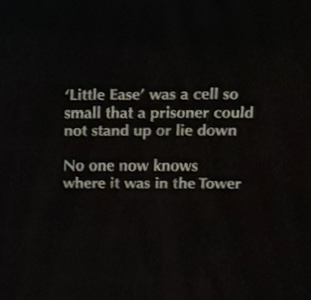
One of the most shocking and heartbreaking details located in the Bloody Tower were the markings made by prisoners on the stone walls. Messages written about life, regret, and the grace of religion are all stained with sorrow and acceptance. These were the etchings, the scriptures of people whom knew that their lives were bound to end soon, with little to no hope left to escape their doom.
I hold onto these stories and feel for those who met their untimely, gruesome ends. Remembering people such as Sir Roger Casement helps future generations hold tight onto justly morals and the sense of understanding that absolute power corrupts. Corruption leads to tight grips on control that lead to unjustly killings that benefit those only whom wear the Crown.