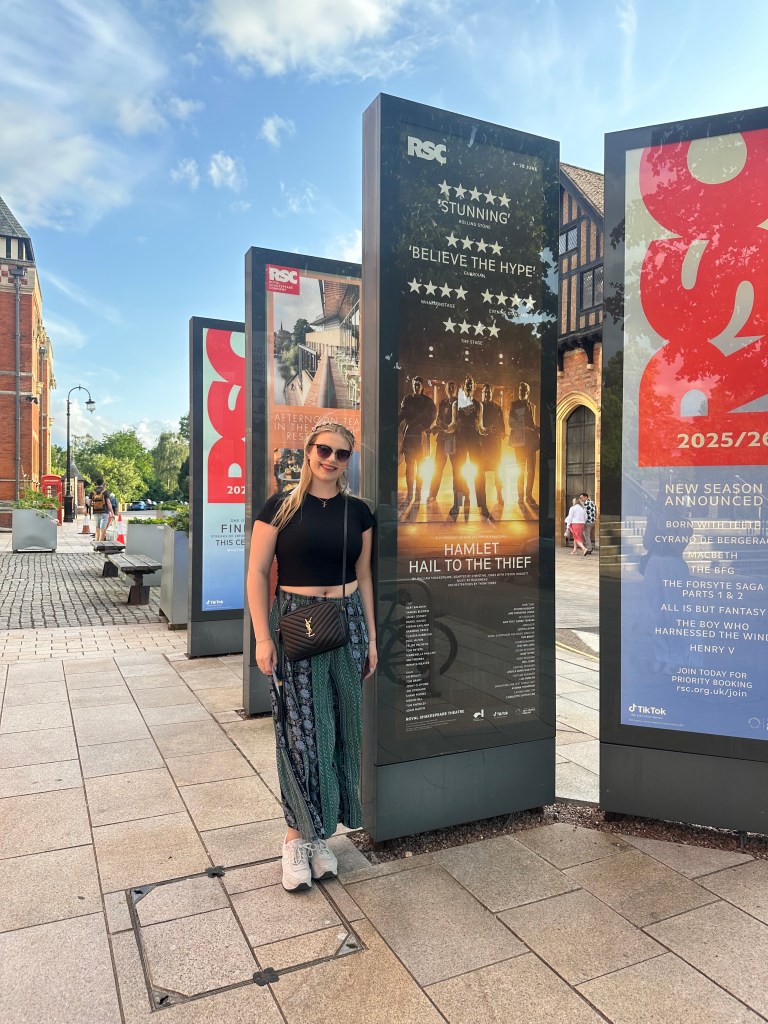
Hamlet hail to the Thief

Before I begin my critique of hail to the thief I feel like it is important to lay out some of my biases that may have affected my feelings towards the production. I am in no way a fan of interpretive dance. I recognize the skill it takes and believe it is a perfectly valid piece of art, but it is something that I have a very hard time understanding and do not particularly enjoy. This is particularly relevant for this show because for a relatively short run time a decent chunk of it was made up of interpretive dance.

My biggest problem with the play was that it felt like Hamlet for people who already knew the story of Hamlet. It hit all the big plot points of the story, but between the cut out sections and the portions of the story told only through dance, the play alone did not give strong reasons to feel attached to or care about the characters. Knowing the story and knowing the characters going into production, I was able to piece together what the dance was trying to show, but I feel like without that previous knowledge I might have trouble following the plot fully, but more than that I would have trouble connecting to the plot as the characters had not been fully explored. While I do not believe that to tell the story of Hamlet each line needs to be read word for word, I feel like there is a happy medium of a 2 to 2 ½ hour hamlet that fully gives the story without dragging too long or cutting too much. To me it felt like the spark notes of hamlet. You get all the big plot points and famous lines and speeches, but so much outside of that is lost. I get frustrated on occasion with the inaccessibility of theatre and I feel like this show was a strong example of it.

I also felt like the inclusion of the radio head music did not make the story necessarily any more impactful. That may have partially been because with my proximity I could not very well hear the lyrics, but there seemed to be a sharp distinction between the chunks of dialogue that progressed the plot, and then the chunks of music and dance that were more just performance. The performances confused me about the plot and character dynamics more than they explained things. There would often be characters behaving aggressively towards each other or even romantically towards each other in ways that did not seem to be reflected or at least not explained in the plot. This may be part of me having trouble with understanding interpretive dance but I feel like much of it did not read as plot relevant and was just put in to create a striking visual, which I feel like by itself is fine but when trying to fit a sometimes 4 hour long story into a 1 hour 40 minute show you do not really have time to do things that don’t progress the plot. 

While there were parts of the story I did not like, the visuals on the show were very good. I did not like the decision to put every character in black because I feel like it takes away the impact of Hamlet staying in somewhat mourning attire, but outside of the story they created a very striking image and I was impressed with the variety of costumes and silhouettes that were used despite all the characters wearing primarily black. The projection was also some of the most impressive I have seen, the ghost of Hamlet’s father was actually scary which I feel is very hard to do in a live show. Using the haze as part of the projection screen and warping his face, with it contorting in and out and sometimes just being a large eye, made me truly unsettled when the ghost appeared.

Overall while it was not my favorite show, it did have some very interesting elements and has definitely raised my interest in how projections can be used more effectively in the theatre.

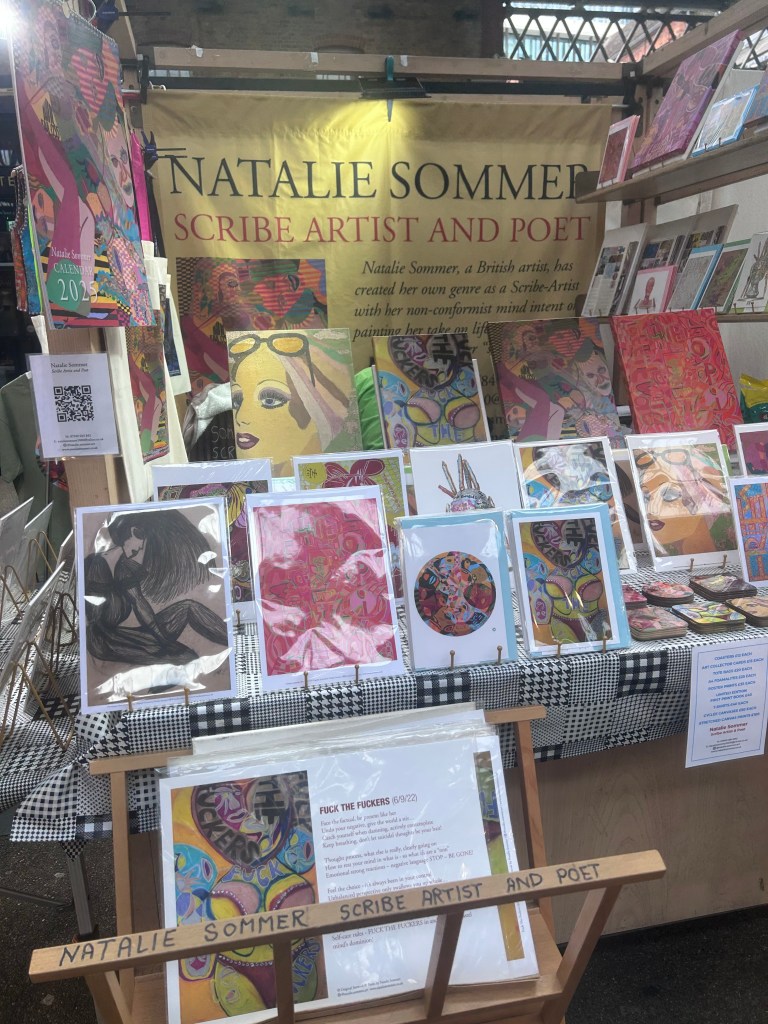
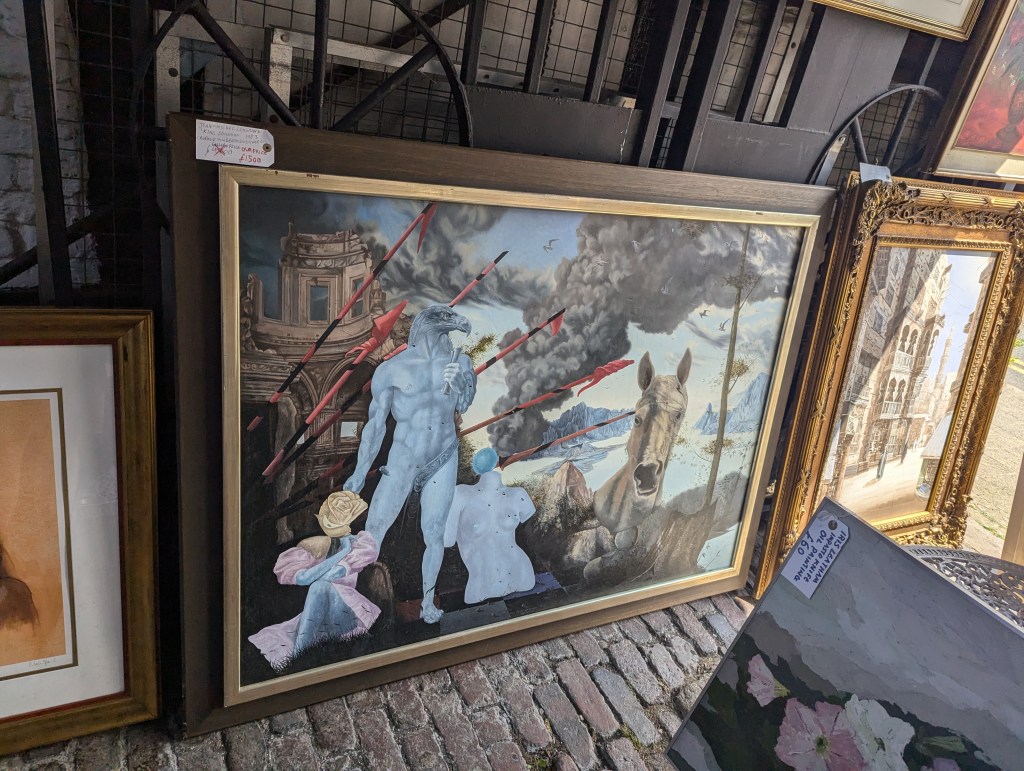
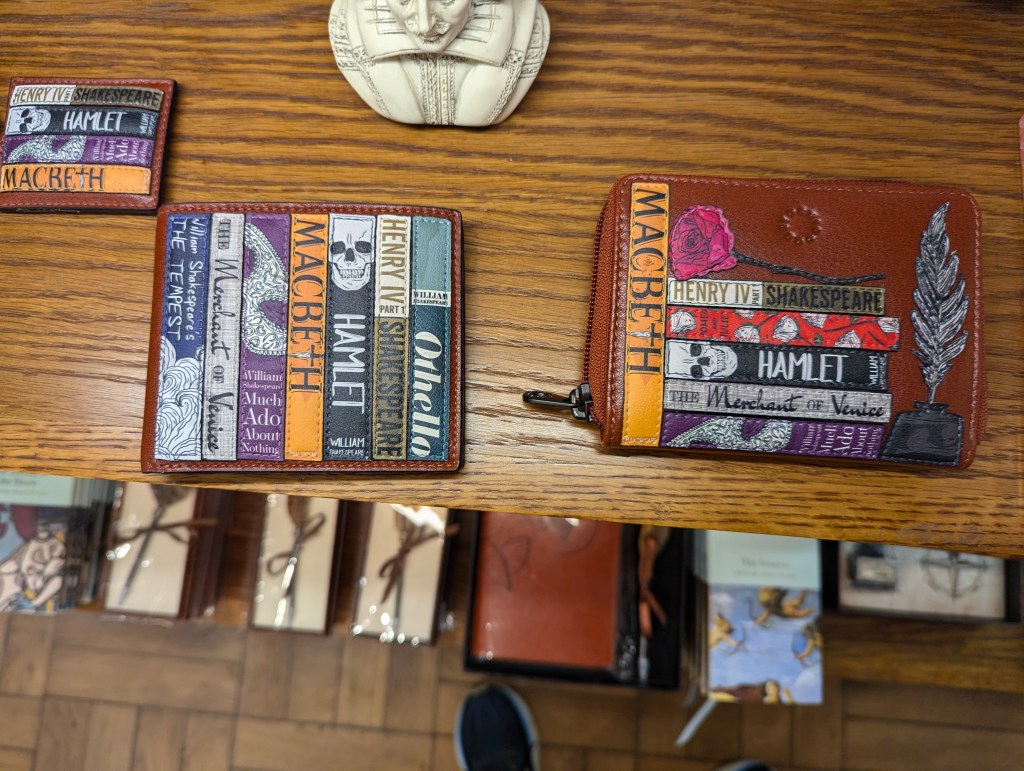
(P.S. I forgot to take a photo of the stage before the show, so attached is a picture of a cool looking wallet I saw in the giftshop and a fun painting I saw earlier in the day)
To Hear or Not to Hear: Hamlet in High Volume

In Hamlet: Hail to the Thief, the Royal Shakespeare Company delivers a bold, electrifying adaptation where Shakespeare’s tragedy collides with the haunting sound of Radiohead. Going into the theatre, I didn’t know what I was expecting because I knew nothing about Radiohead, but I actually really liked this adaptation. The music isn’t just background but a vital part of the storytelling. Radiohead’s experimental and emotionally charged tracks are woven directly into the story of Hamlet, creating a powerful atmosphere that enhances every moment of tension, confusion, and grief.

Right from the beginning of the play, the music creates the feeling and emotional tone of Hamlet’s world. The sound pulses like the heartbeat that makes the audience feel nervous, alert, and like something bad could happen at any moment. This sets the tone for a world on edge, where characters are constantly watched, judged, and pushed toward emotional extremes. The songs are not just layered under the dialogue but become part of the action. The characters sing, scream, or move in time with the music, blending Radiohead’s lyrics with Shakespeare’s words in a way that feels natural and urgent.

Hamlet’s inner turmoil, a central theme of the original play, becomes even more intense when mirrored by the music. Radiohead’s themes of alienation and distrust are a perfect match for Hamlet’s journey. When Hamlet questions reality, loyalty, and life itself, the music seems to echo his spiraling thoughts, making his emotional descent feel all the more raw and immediate.

Ophelia’s arc is also transformed through music. The moments between her and Hamlet are given new weight through sound, sometimes soft and intimate, sometimes chaotic and distorted. She eventually unravels and becomes not just a quiet tragedy, but a loud, almost painful emotional explosion underscored by crashing sound and movement.

Overall, music in Hamlet: Hail to the Thief is not just a background. It deepens the emotional stakes, draws out the characters’ psychological struggles, and creates an atmosphere that pulls the audience deeper into the play’s themes of paranoia, corruption, and loss. This adaptation was a great one, and I enjoyed it so much.

Blog Post 10: Hampton Court Palace, Fit for a King?

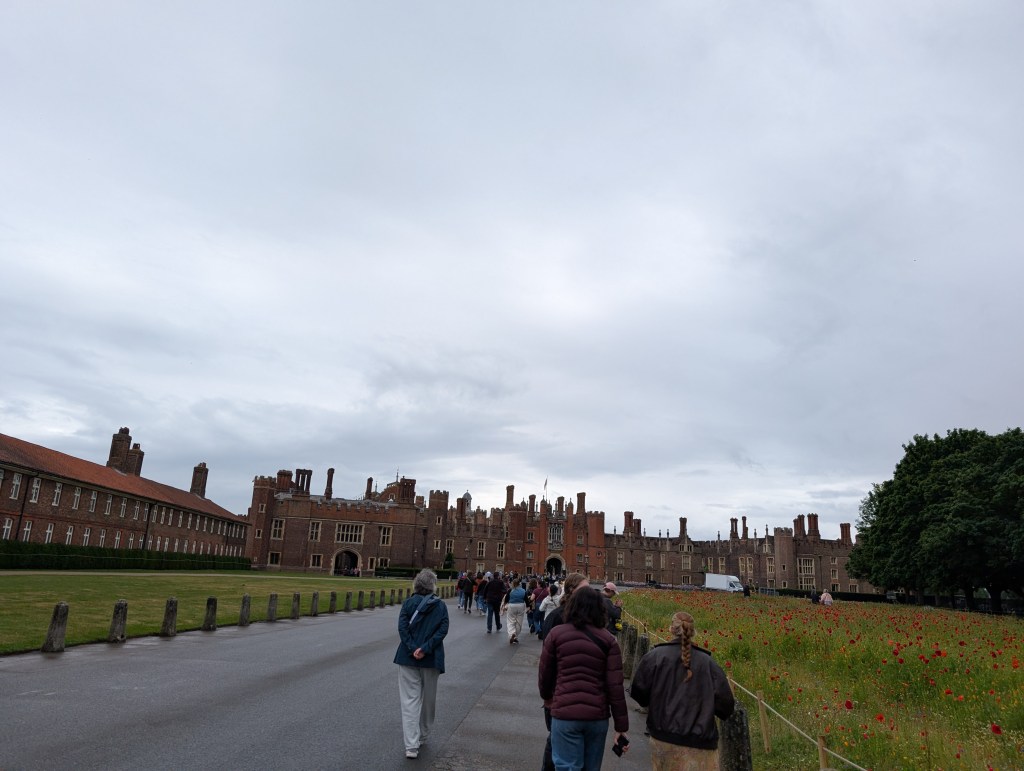
I had a wonderful time visiting Hampton Court Palace. To be honest, I was a little underwhelmed at first. The outside of the palace looked relatively plain compared to many of the other historical sites we had visited before, and although it was massive, none of its features really stood out to me. While impressive, the mass of red and brown bricks wasn’t as ornate as I expected from the palace of King Henry VIII. However, while the outside may not have intrigued me, what I found inside the palace most certainly did.

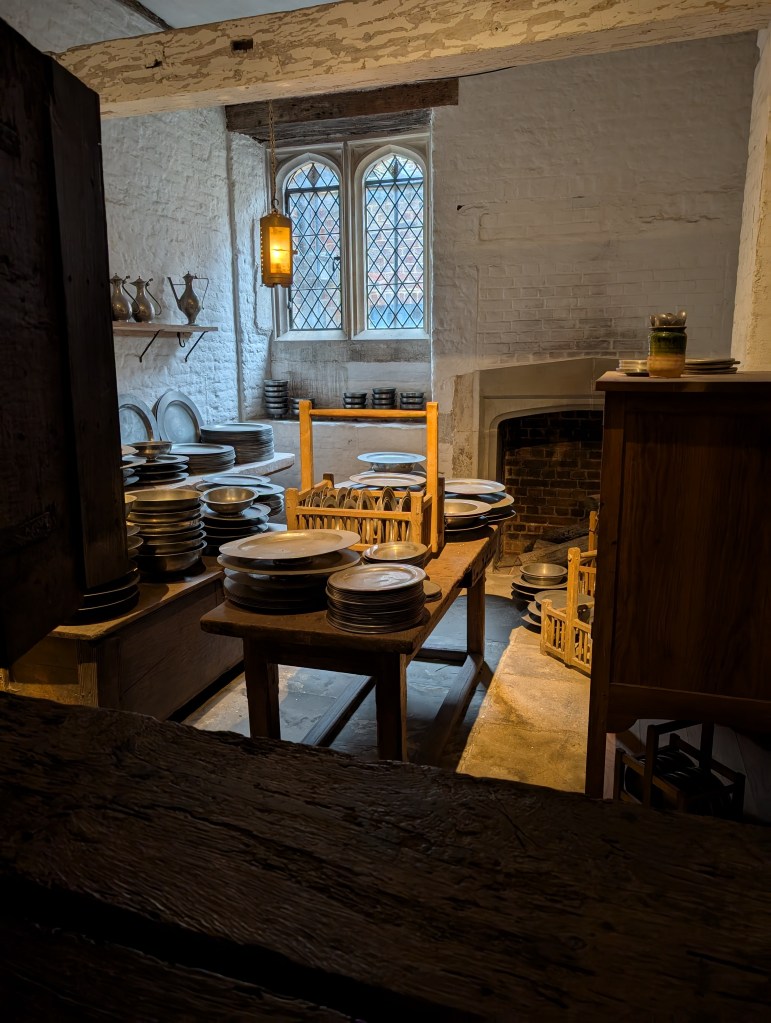
Equipped with our audio guides, the first part of the palace we visited were the kitchens. The sheer amount of storage areas, dishes, cooking utensils and more were a testament to the gluttony of the court. It must have been hellish to work there, preparing food for so many people, each with insatiable appetites. Of course, King Henry had his own private kitchen and dining materials, and I am glad I don’t have to deal with the pressure of cooking for a man who executed his own wives. While quite large in their own rights, the kitchens were only a small fraction of the palace as a whole, and so after walking through the massive cellar only used for alcohol, I went to explore what else the palace had to offer.

This, as it turned out, was not an easy task. The layout of the place meant that I spent much time looking at my map trying to figure out where I was and walking through rooms I had been to before. If the goal was to make it confusing for potential attackers, then it was quite effective. Additionally, since so much of it looked the same, it was often difficult for me to tell if I had been in a room or not already, and the guiding signs weren’t as helpful as they could have been. Despite this, I was able to somehow find my way around and visited the great hall.

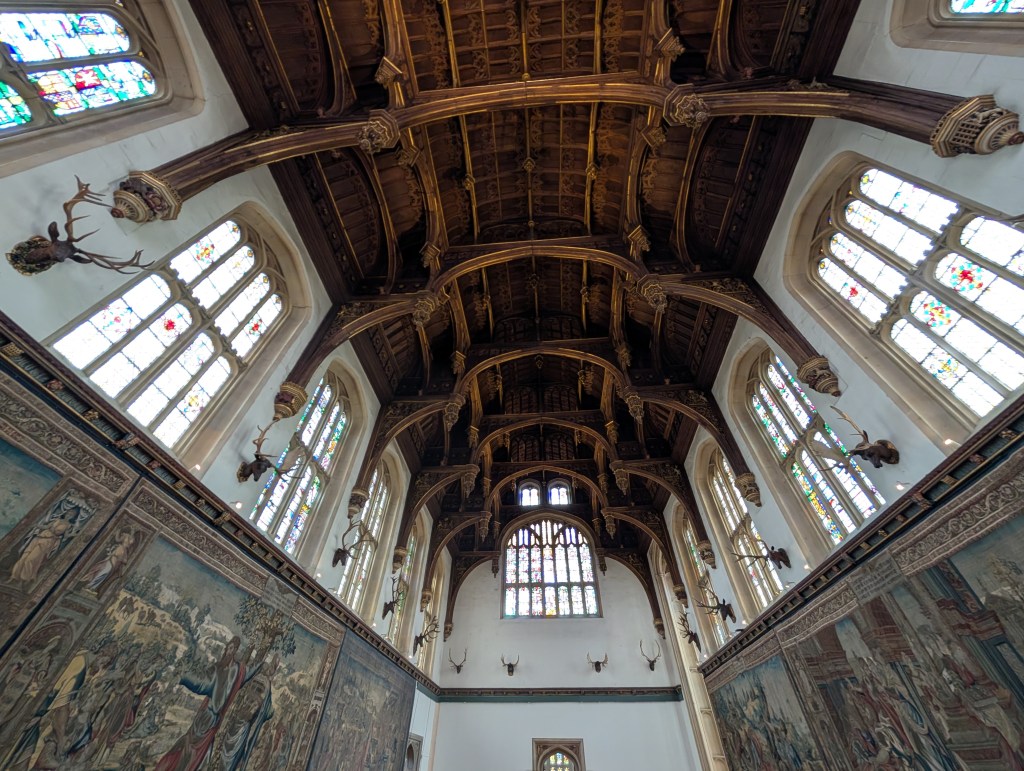
The room was quite large, and its walls were covered with massive tapestries, just a few out of the thousands in Henry’s collection. The room was quite crowded with a group of schoolchildren, being guided by someone dressed up in a costume fitting the palace. By eavesdropping I was able to learn that apparently the room had been used as a theatre for William Shakespeare when he visited and put on a play, who seems to be truly inescapable over here. After giving the children enough time to get a good bit ahead of me, I continued my tour.

I made my way to the room where people would wait for the chance at an audience with the king. Fittingly enough there was a room that had once been a bathroom nearby, though at some point it had been taken out of service. People would be waiting for hours there and so they needed some ways to entertain themselves. One of which was apparently board games. There was a set for a game called Fox and Geese, which pits a single fox against a flock of geese. I played a game as the fox against another student and lost. I am glad I didn’t have to wait in the room playing that game all day, since it seemed like it would get old fast.

I continued my journey, and after seeing many bedrooms and hallways, I was ready to get out. I was greeted by the grounds outside the palace, with their fountains and trees. I enjoyed a nice calm walk there, finishing off my trip to Hampton court in a quite pleasant way.

-Jack Duncan

Blog Post 9: National Portrait Gallery, a Picture of Tragedy

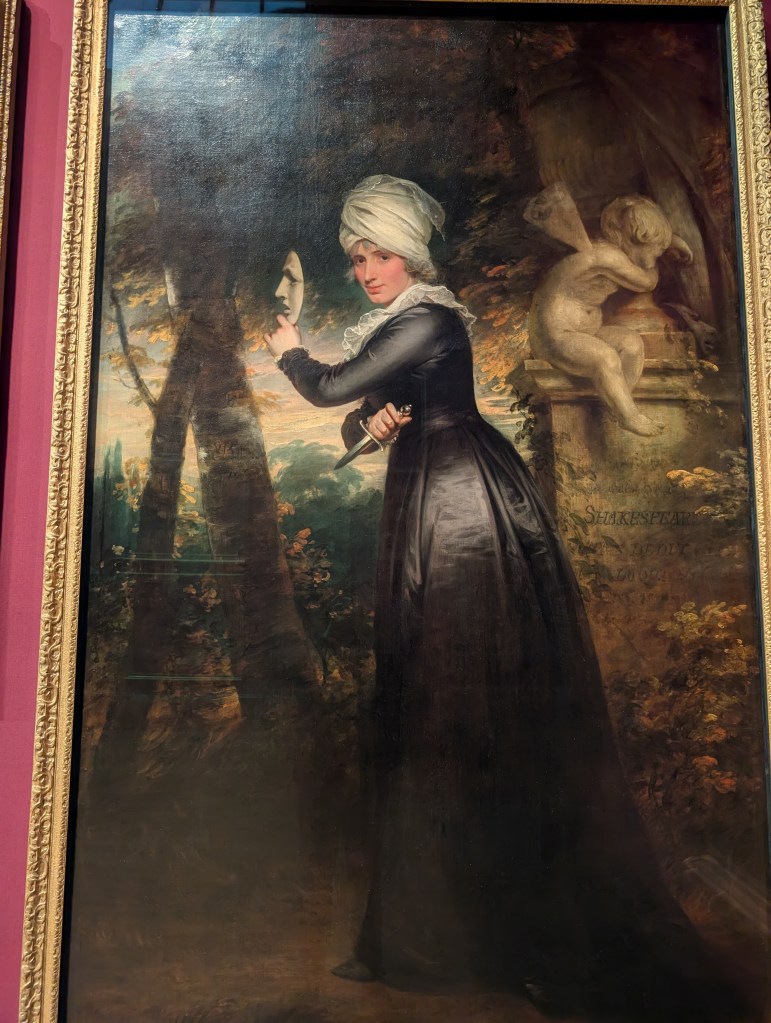
When I visited the National Portrait Gallery in London, looking for an artwork to write about, nothing caught my eyes at first. While many of the paintings were very beautiful, and I could see their masterful creation, the nobles and knights just blended together as I walked through the museum. That was, until I walked into a room and the first piece I saw jumped out at me and I immediately knew I had to write about it. The piece I saw was titled Mrs Siddons with the Emblems of Tragedy by artist William Beechey. Compared to the rest of the portraits, which consisted mainly of the sitter looking forward, Sarah Siddons’s body which faced away, and arms wielding a mask and dagger was so much more intriguing. It felt so mysterious and fascinating, in a way that no other portrait made me feel.

The mask in one hand, being raised up to her face, and the dagger in the other immediately made me think that she was an actress, and my thoughts were confirmed upon reading the brief description of the portrait provided “This leading actor holds the emblems of tragedy – a mask and a dagger”. Researching Siddons further revealed that she had been dubbed “tragedy personified” and was most famous for her portrayal of Lady Macbeth. This is further reflected in her black dress, which almost merges with the shadows beneath her.

In fact, much of the portrait is cloaked in darkness, both above and below her. The remaining colors are mostly drab, emphasizing the feeling of sorrow. The little light that is present serves to highlight her face, and her props, drawing the eye to the most important elements of the portrait. This lack of light in color helped to make the portrait further stand out to me, as it contrasted with the vibrancy of the other portraits in the room. Many of the other paintings also consisted of just the upper body, so seeing Sarah Siddons in full was again unique. Her posture was also different to the other paintings I saw. Many of them had the sitter facing directly forward, yet Siddons’s body was turned to the side, with her head twisted to look forward. This gave it much more mystique, and made it feel much more dynamic, and I almost felt like she was plotting.

The background of the portrait was that of a forest. However, there was one element that stood out, elevating the painting as a whole. Behind Siddons there is a stone angel crying over a gravestone or monument. On that stone reads the name “Shakespeare”. This connects Siddons with her most famous role of Lady Macbeth, a character from one of Shakespeare’s most well-known tragedies. It also raises many questions, is she there to honor the man who wrote so many of the plays she acted in? Why is there a monument to William Shakespeare in the woods? The questions go unanswered, adding to the tragic atmosphere of the portrait.

If I could step into the portrait, I imagine that it would feel quite somber. The air feels cool and bitter as it mournfully blows through the trees. The sounds of wildlife I expect from the forest aren’t there, leaving an uneasy silence. This silence is broken as Siddons begins to speak, reciting one of Lady Macbeth’s monologues, becoming “tragedy personified”.

-Jack Duncan

Ilaria’s Pub: London Food

Since I consumed a variety of different foods during my time in London, I will be going over my absolute favorites!

  1. Bad Boy Pizza
    Probably the best pizza I’ve ever tasted was from a stand called, ‘Bad Boy Pizza,’ from Seven Dials Market. It had a thin, crisp crust with quality flour and a very unique flavor. The tomato, pepperoni and cheese were fresh and of high quality. The slices were also huge.
  1. Spicy Yung Num Bowl
    This Korean dish consists of fried Yangnyeom chicken in a sweet, spicy and savory sauce. The name, Yangnyeom itself means ‘seasoned’ or ‘marinated’ in Korean. The Young Num bowl also contained a side of salad and sticky white rice along with some sesame seeds on-top. I had the dish with a canned water in Spitalfield market. It was one of the tastiest dishes I’ve ever tried. The crunch of the chicken accompanied with the blend of the sauces added the perfect contrast of textures.
  1. Sweet and Savory Crepes
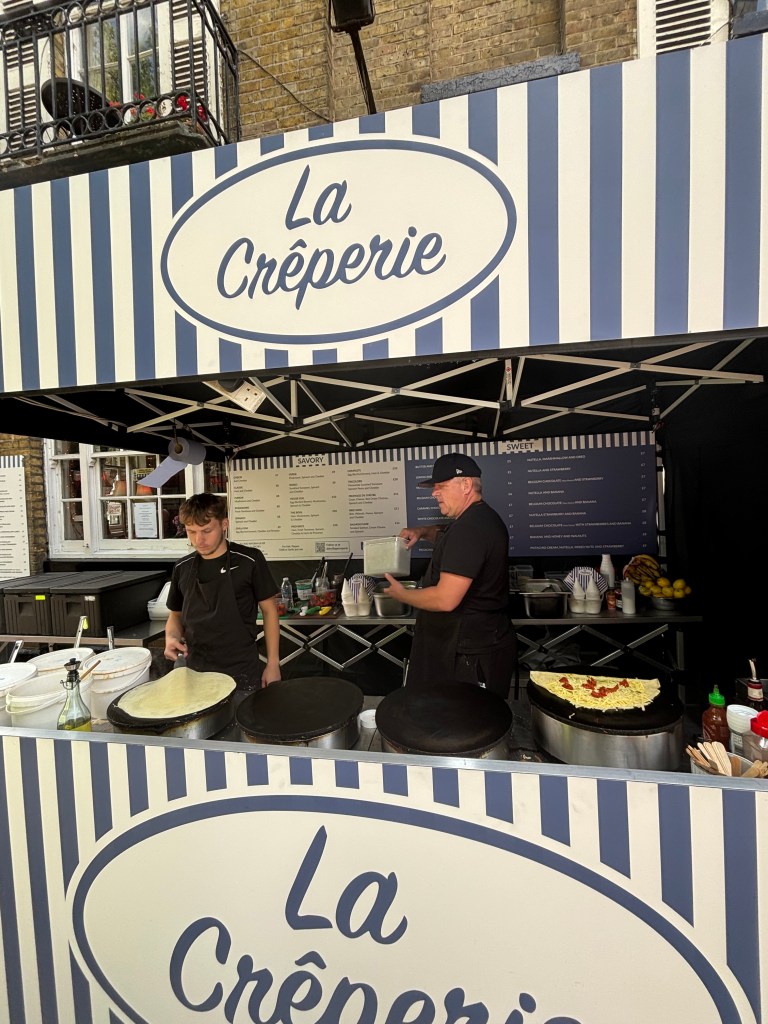
    My friend, Katerina from the Czech Republic visited me during our long weekend with no planned itinerary. We decided to take a day trip to Hampstead where we tried these two different types of crepes at the famous stand, ‘La Crêperie.’ We ordered a crepe with tomato, pesto and mozzarella and then the other crepe with bananas and Nutella. The warm, thin flour tortillas were perfect for the high quality ingredients in each crepe. This meal tasted immensely tasty, was affordable, and perfect for holding while walking around town.
  1. Dishoom
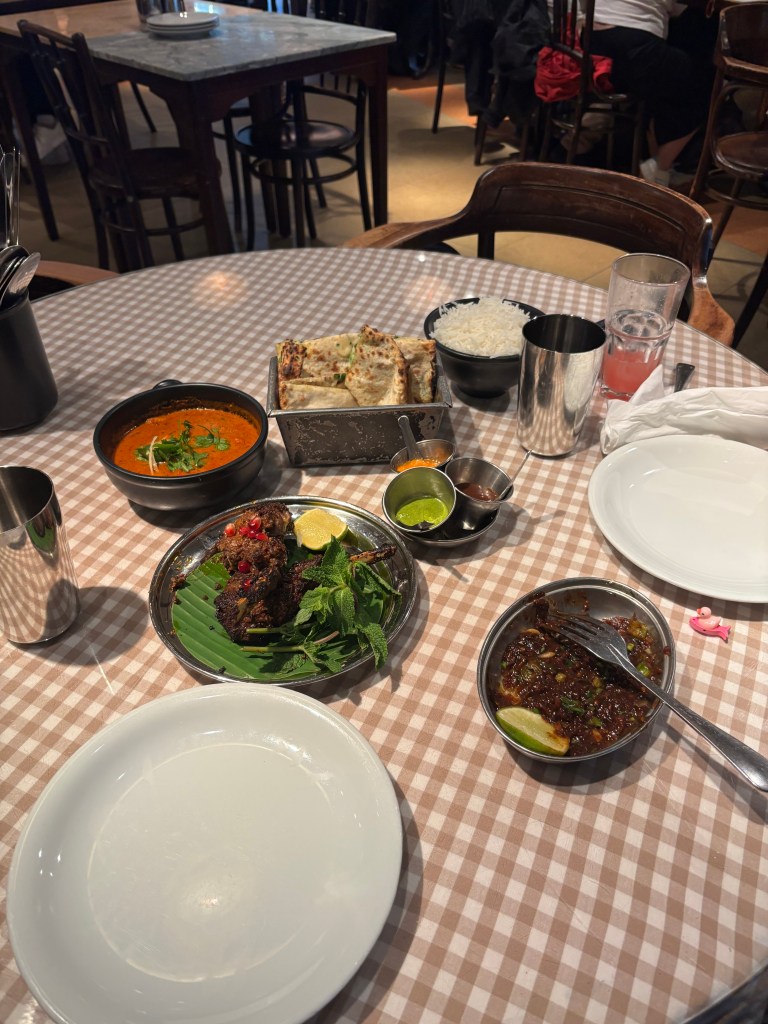
    Dishoom has several different locations all over London and one in Edinburgh. I ate twice at the Covent Garden location and spent a total of 70 dollars there and it was absolutely worth it. Dishoom pays homage to the old Irani cafes of Bombay with it’s immersive restaurants scented with fargrant incense and traditional decorations. It serves the food of Bombay with a vast menu crafted carefully like, “Biryani to the curries of Mohammed Ali Road, and the famed grills of Colaba, along with first-class Small Plates, Breads and Rice.” I enjoyed sharing plats with friends while experiencing some of the best Indian dishes I’ve ever tried. Although I enjoyed everything I tried, my favorites were roasted lamb topped with pomegranate, red chicken ruby curry, and the house chaat (which included both warm, cold, sweet, and tangy ingredients with golden fried swat potato, cool greek yogurt, pomegranate, beetroot, radish, and carrot).
  1. Lady Macbeth Cocktail
    Katerina and I were taking a walk alongside the South Bank and when we reached Shakespeare’s Globe, we got tired and went to The Swan for a quick rest stop and drink. The interior of the bar/restaurant was gorgeous and very classy. I ordered the Lady Macbeth cocktail and expected not to like it. However, I was unexpectedly proven wrong. This drink was one of the most refined cocktails I have ever tried. The silky drink consisted of Hayman’s sloe gin, Martini Rubino, Campari, and lemon. The taste was not too strong and a great blend of all the flavors combined, complimenting each other flawlessly.

Crown Jewels, Powerful Fools, & Chronicled Cruel(ties)

WOOHOO! LONDON!!!!!! YEEEESSES!
Now that I’ve gotten the unprofessional, but justified, giddiness out of the way – Okay, yeah, London has been pretty rad.
Over our first week in the city, we have trekked to many-an interesting spot, seeing an array of markets, theatres, and pieces of architecture and history. This culminated in our visit to a site where Britain keeps all it’s secret magical artifacts, where they’ve imprisoned and executed many figures of history, and also where the Minions try and steal the crown from in the hit 2015 movie, “Minions.”

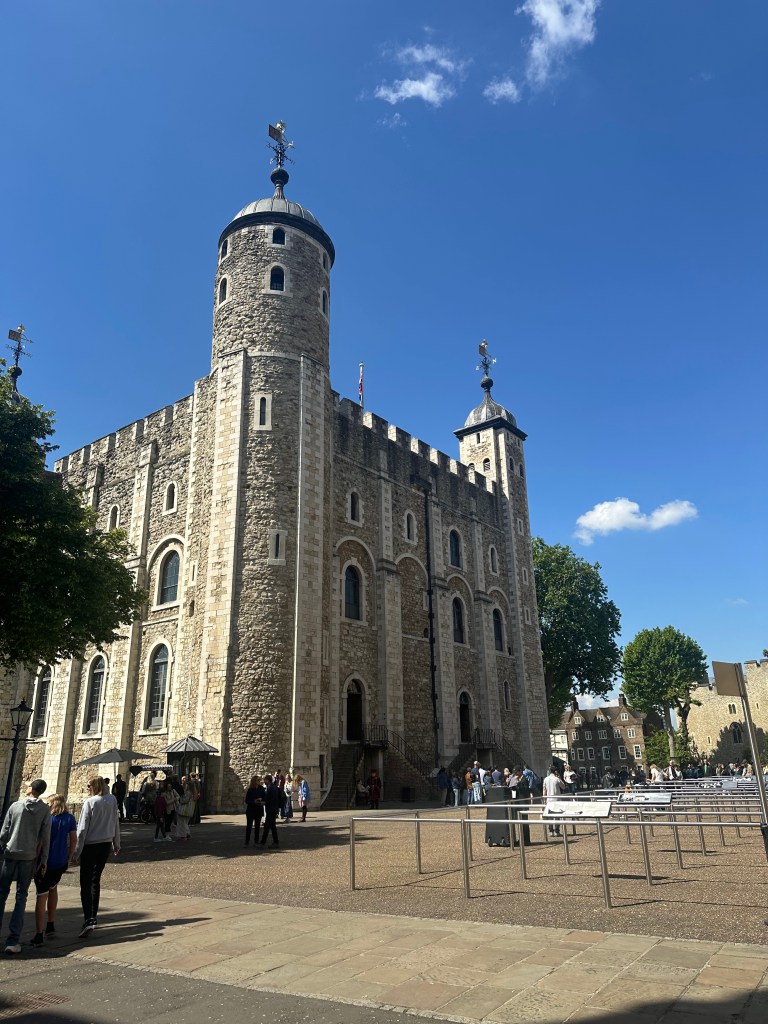
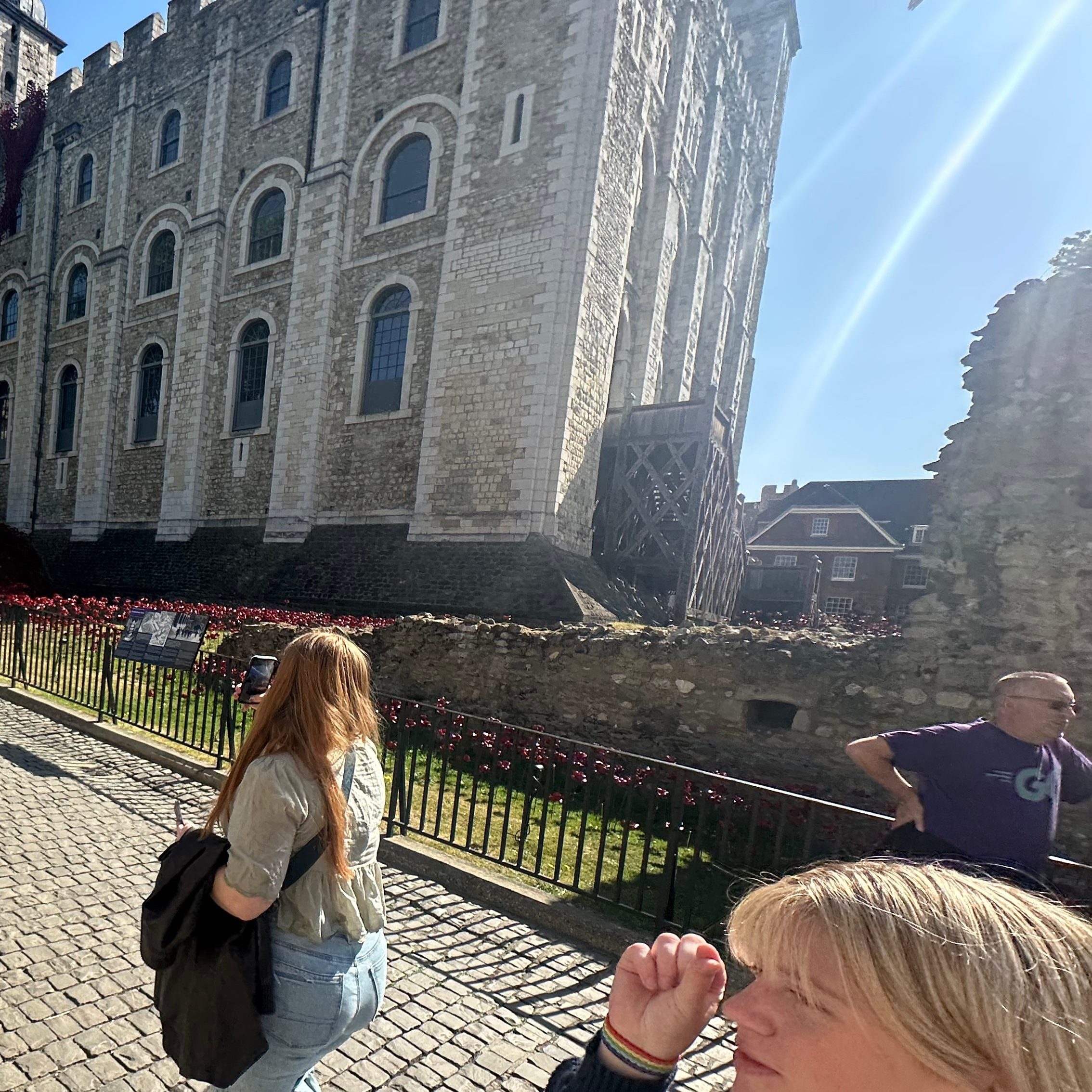
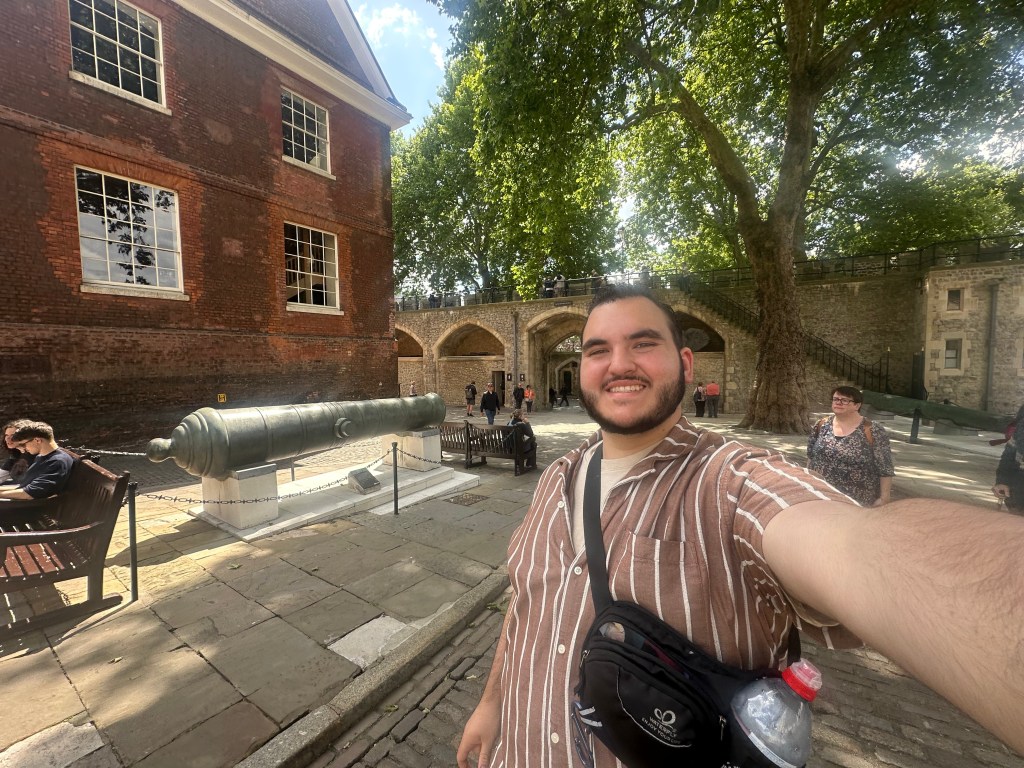
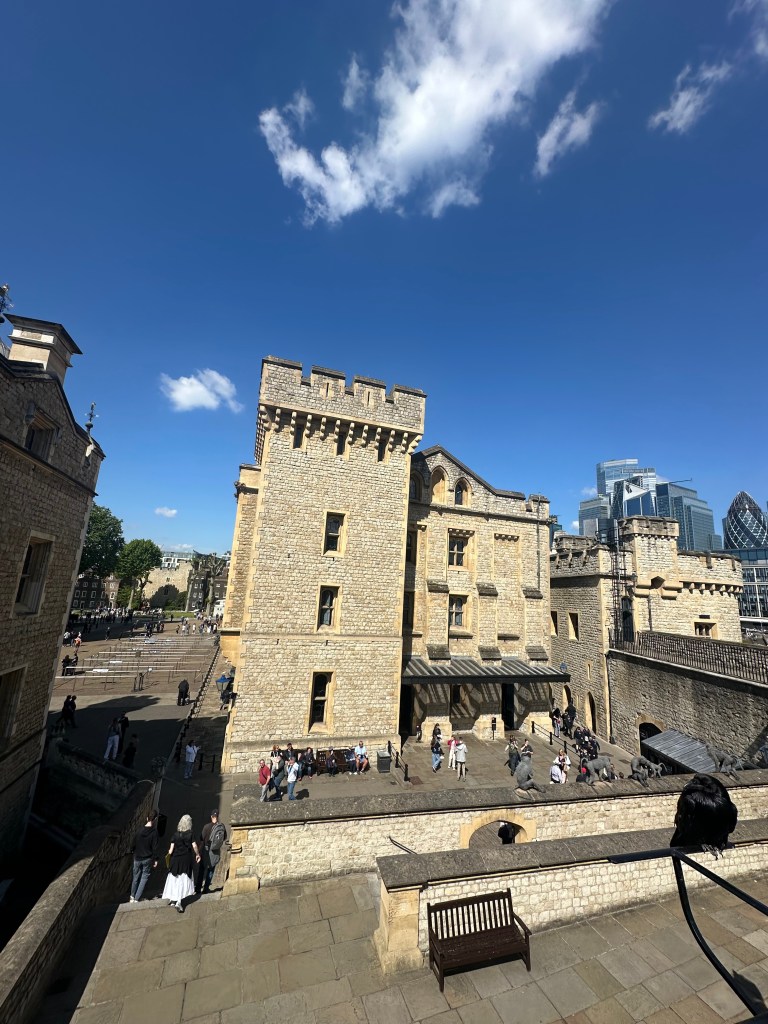
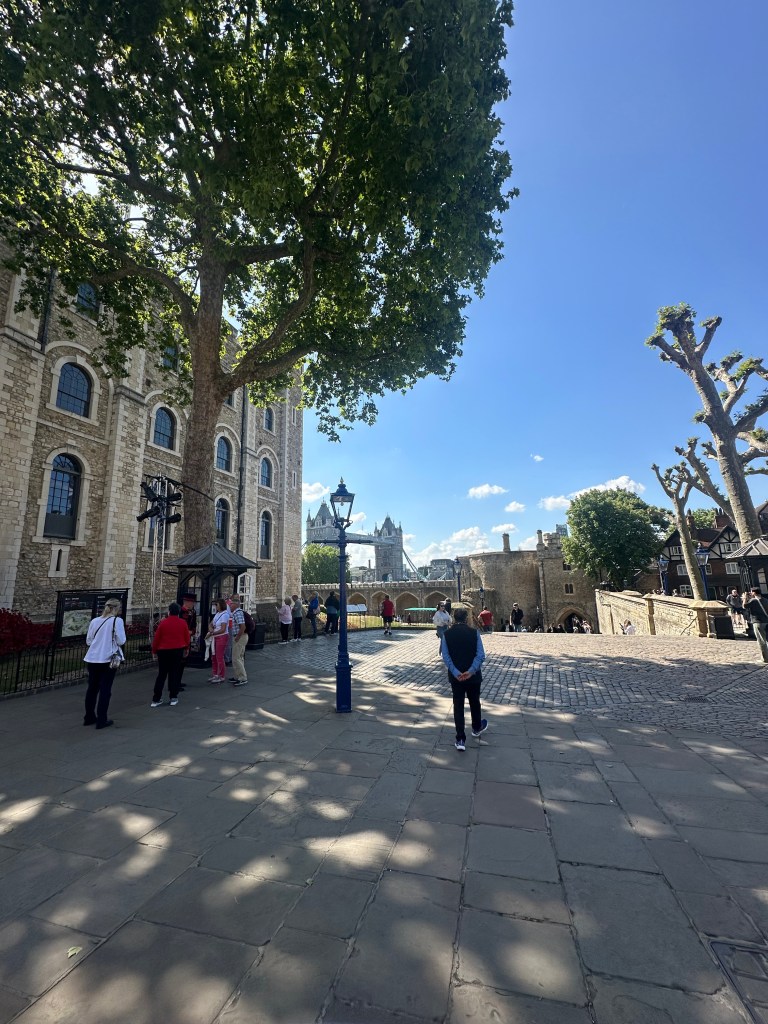
My silly jokes and all aside, our trip to the Tower of London taught me a lot about British history and allowed me to see some absolutely beautiful sights. Even just the view of the tower from afar was quite a sight to behold. The previous pictures show a large range of these sights. Many of these pictures show our view as we journeyed between specific sites. There are a few in specific I’d like to speak about, the first of which, our group gunned right towards as to beat the crowds: The Crown Jewels.

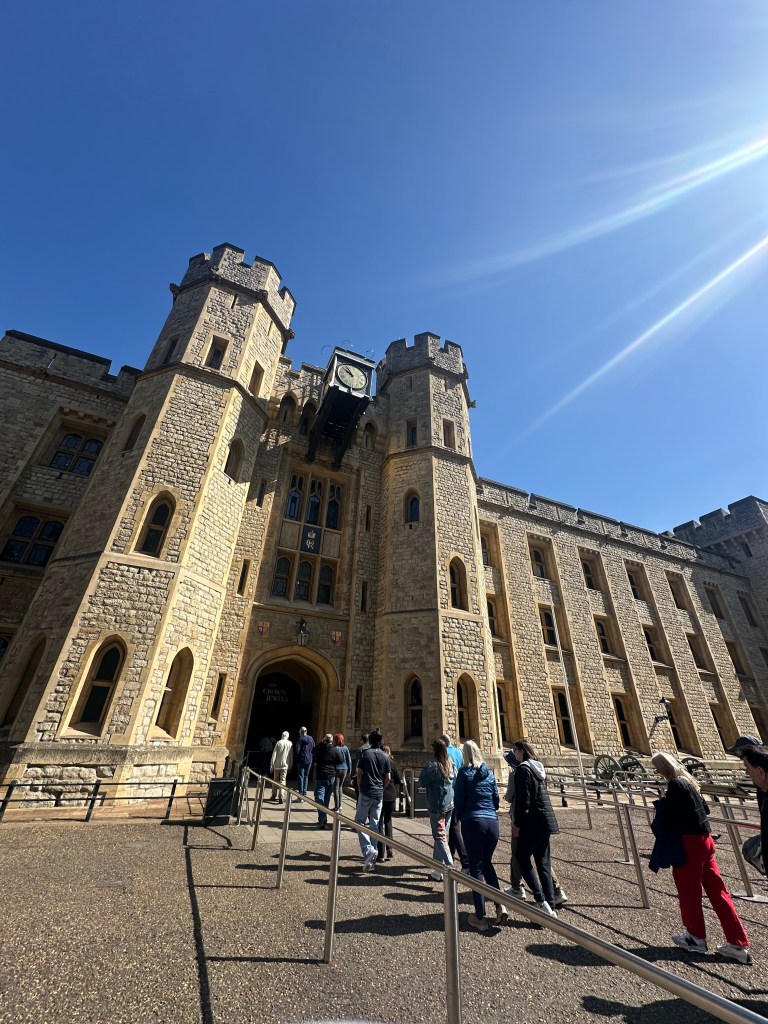
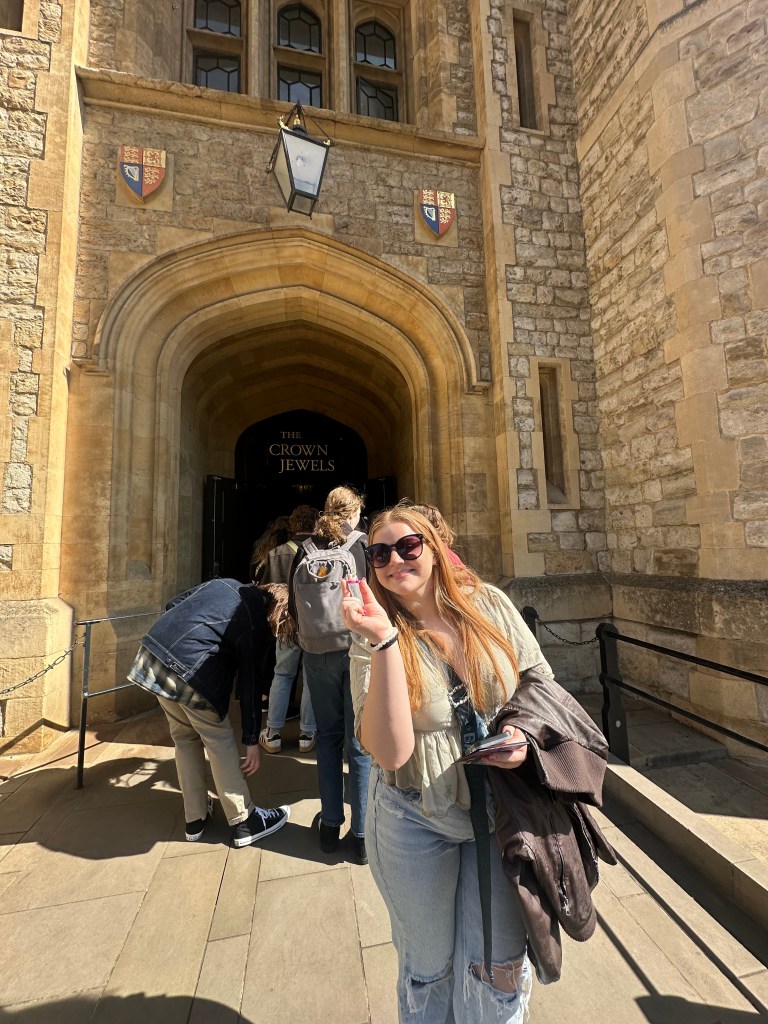
As this artist’s interpretation shows, these artifacts were quite well protected. So well protected that I was unable to get any pictures of them. The other two pictures are the entrance and exit of the room to give a bit of context. The actual items within the room ranged from being the actual crowns of English rulers to their ceremonial swords and maces. There were also outfits and artifacts used in the coronation ceremonies of these historic royalty. My favorite items were certainly the swords; however, I also quite enjoyed all the crowns that were adorned in some bits of purple, including St Edward’s Crown and The Imperial State Crown among others. There was really a sort of magic to the room and to the fact that I got to see it all with my own eyes. Right outside of the Jewel House was the next spot on our journey: Martin Tower.

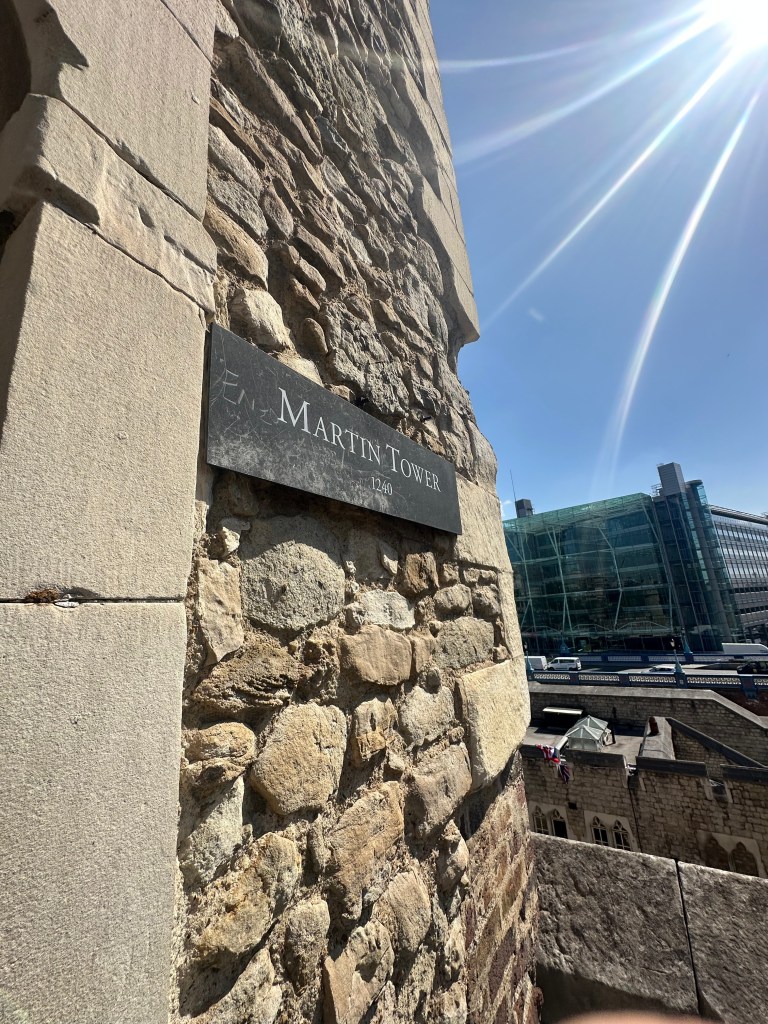
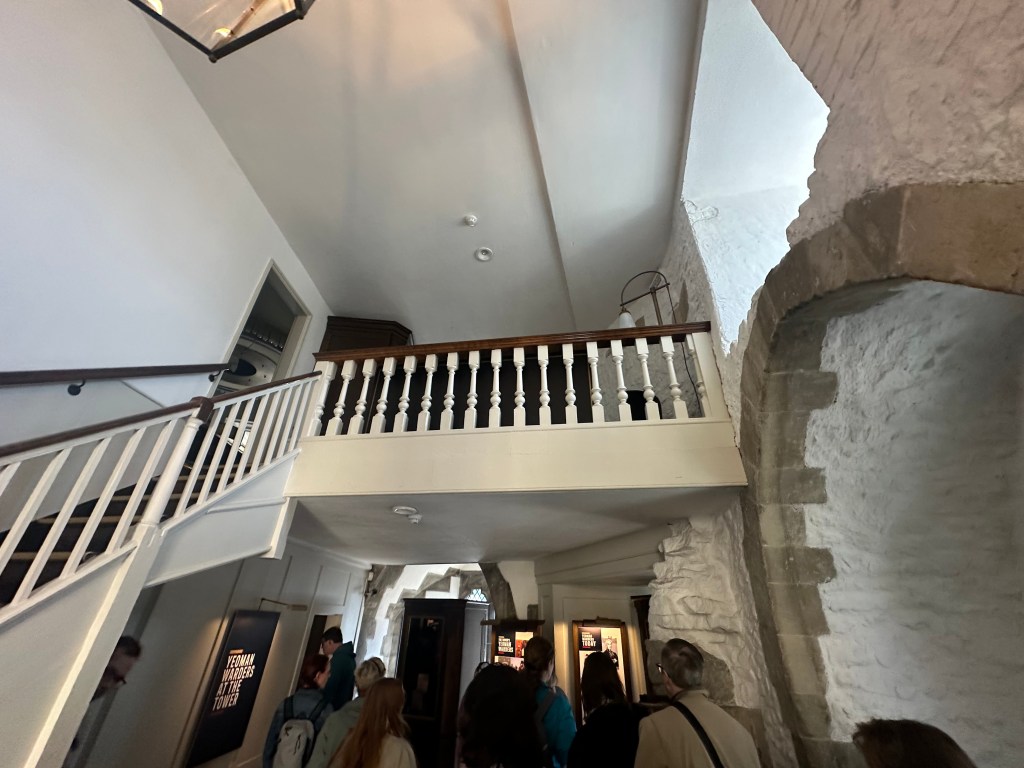
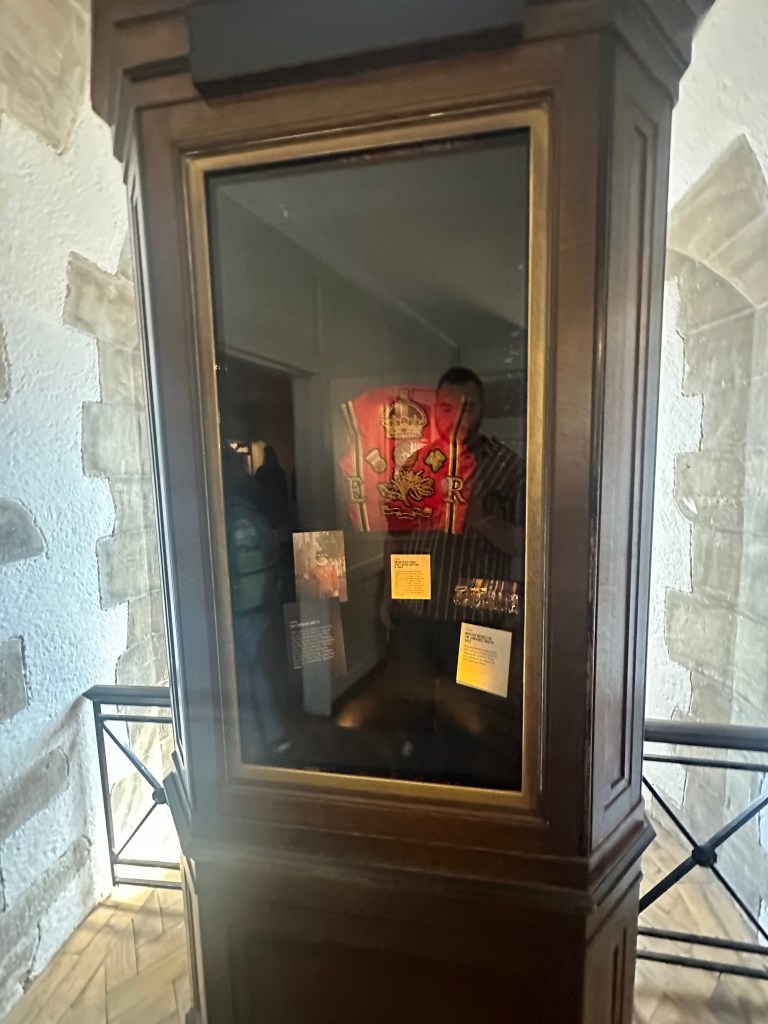
One of the other cool sections was Martin Tower. Being built to originally hold the crown jewels, the tower eventually ended up being used as a prison for centuries and now holds a lot of the history of the yeoman warders, guards of the Tower of London since the Tudor period.

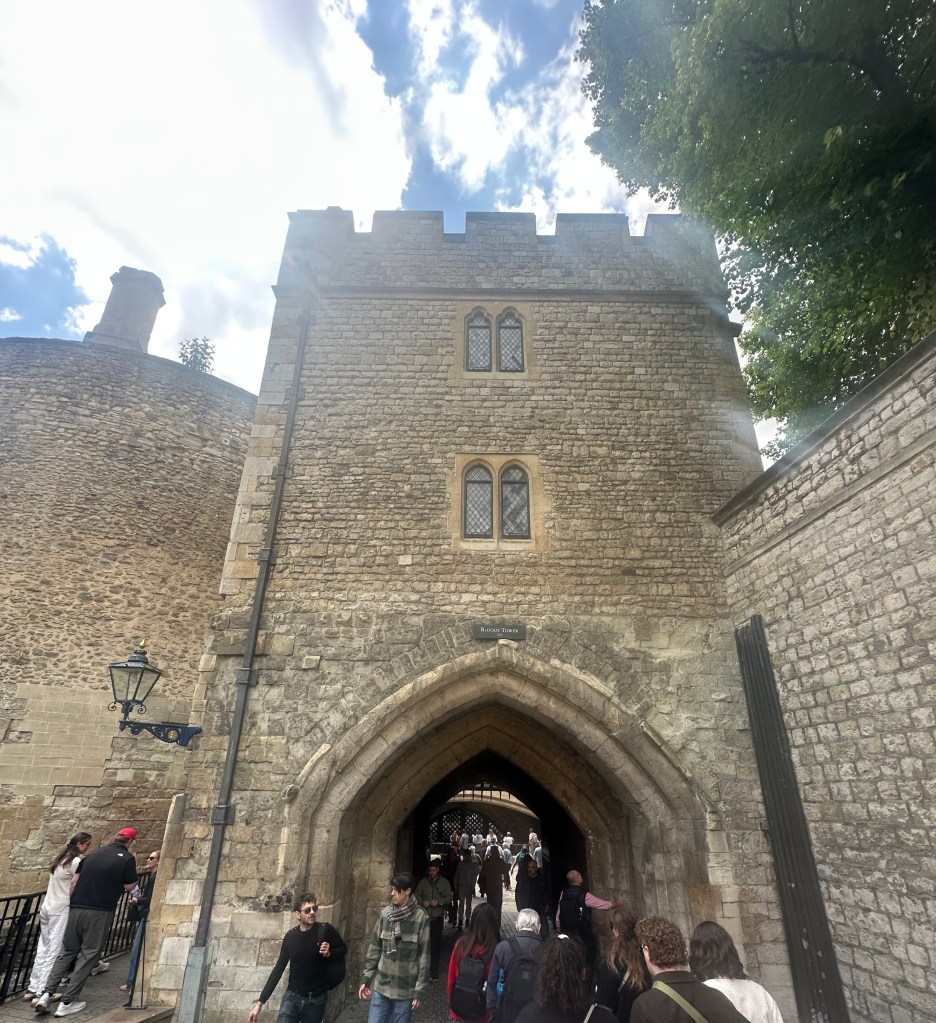
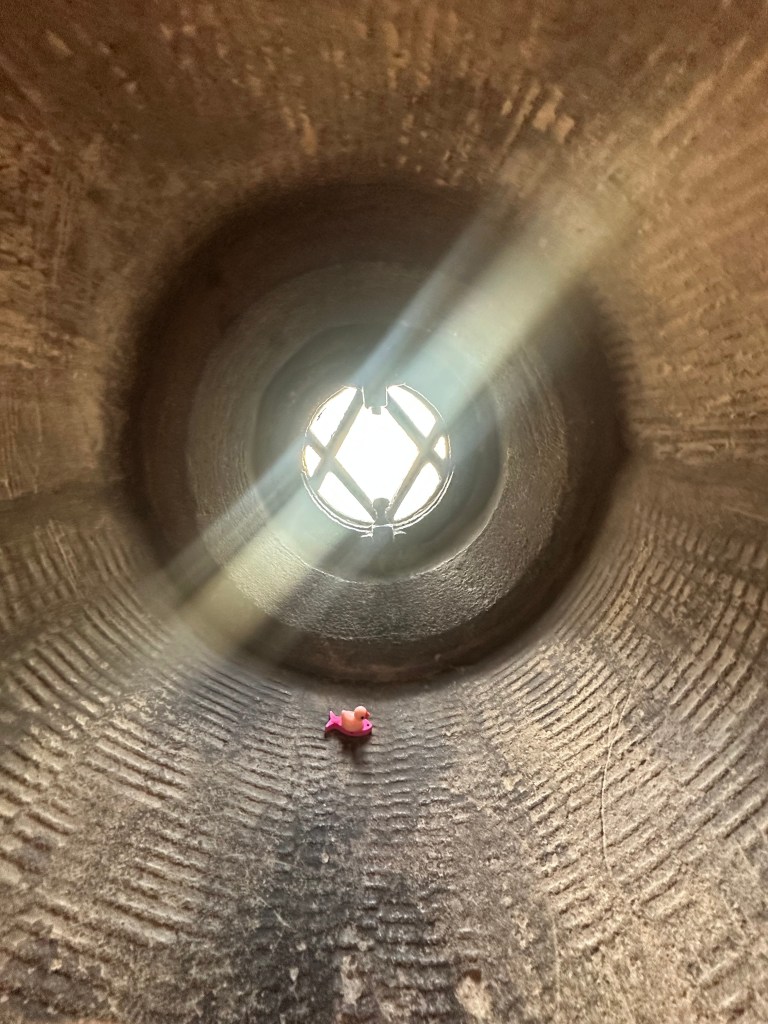
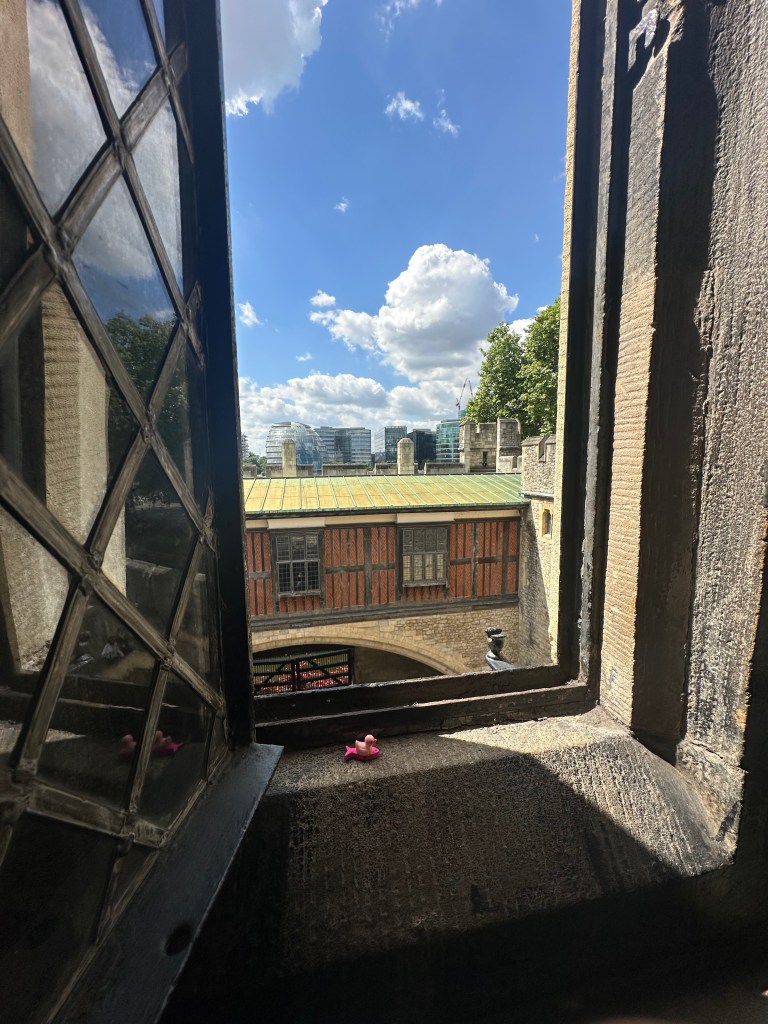
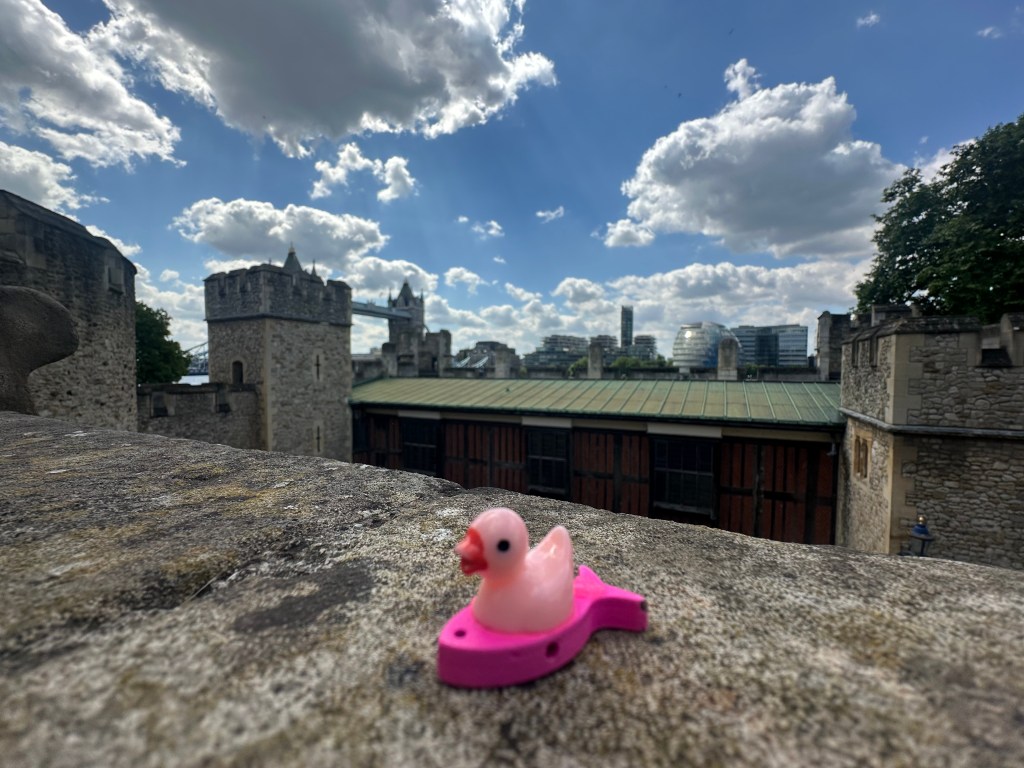
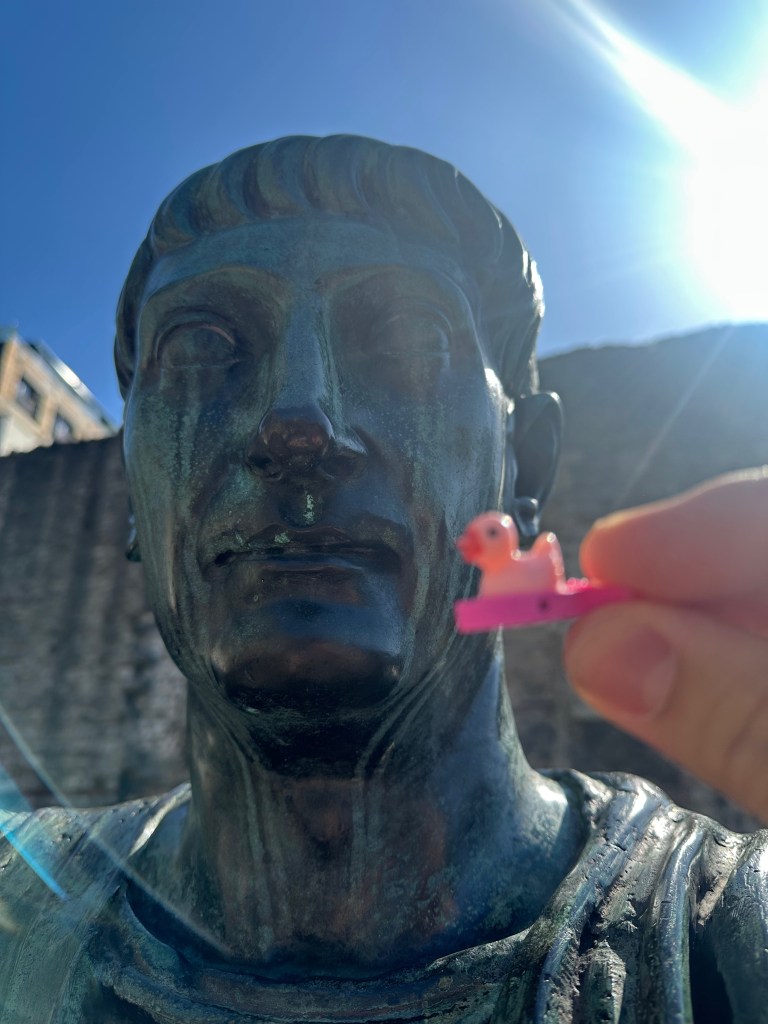
My favorite exhibit was the Bloody tower. I unfortunately did not get any pictures of the inside including the mechanisms of the portcullis below, Sir Walter Raleigh’s study, and the room (with a voice acted projection) of the two princes. What I have as a replacement are pictures of the exterior and the neighboring buildings as well as pictures of squirt sitting on various windows and one wall (he’s quite the model, I know). This building was my favorite largely for the history it has and the mystery surrounding it. Though the story of Sir Walter Raleigh is very interesting, my interest is largely on the two princes. These princes, under the care of their uncle, were placed in the “garden tower” for their “safety.” Over their summer stay, their uncle was named King Richard III while the children “went missing.” 200 years later, 2 skeletons, seemingly belonging to children, were found under the tower. Because of their stay in the garden tower, the princes and their possible (or proboble depending how you look at it) murder saw the garden tower renamed to the Bloody Tower. This story was told through black and white projection on the walls of the princes room at the tower. It had a child voice actor narrating it. That room and projection alone is the reason it was my favorite. An interesting tid bit we were told just outside the tower (right after I took the picture of the houses nearby) is that one of the steps in the narrow spiral staircase is intentionally taller than the others as help trip up (literally) attackers who had never been in the Bloody Tower. Because of this warning, it didn’t quite catch us!
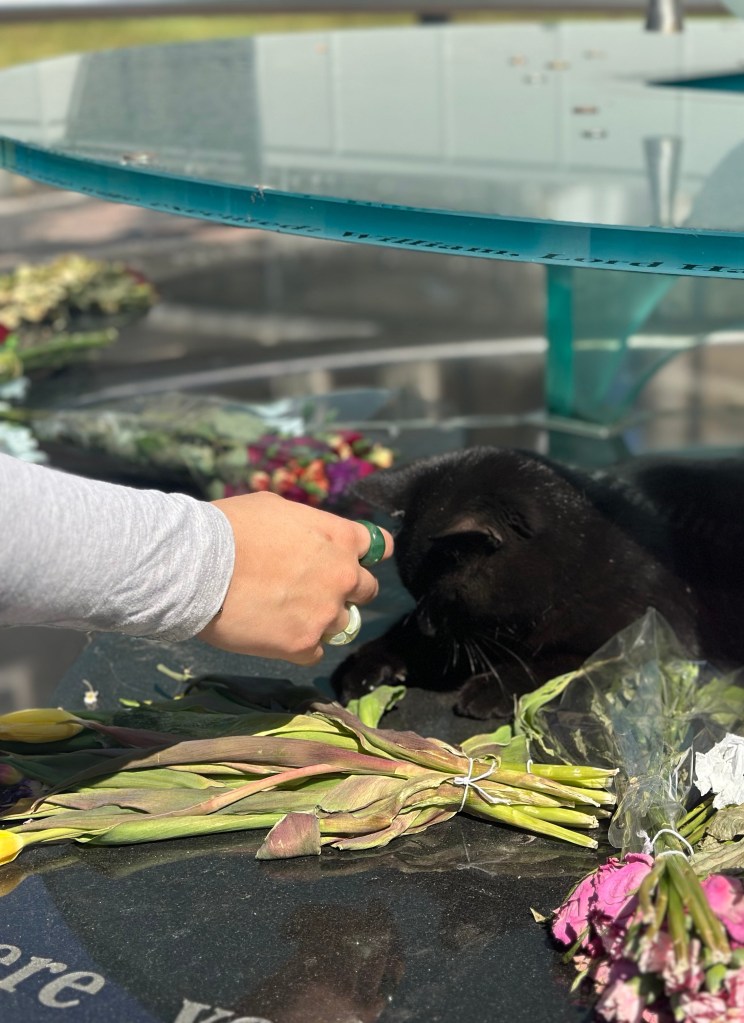
A lot of famous (and infamous) people have been imprisoned and/or executed at the tower. Anne Boleyn’s short stay and execution is a particularly famous one – the site of which had a feline intruder on the day of our visit. A quick search online finds that this cat is named Nyxie and is an official resident of the tower with her own Instagram account!

Right beside the site of Anne Boleyn’s execution (and Nyxie) is the main site of many of the Tower of London’s imprisonments: Beauchamp Tower

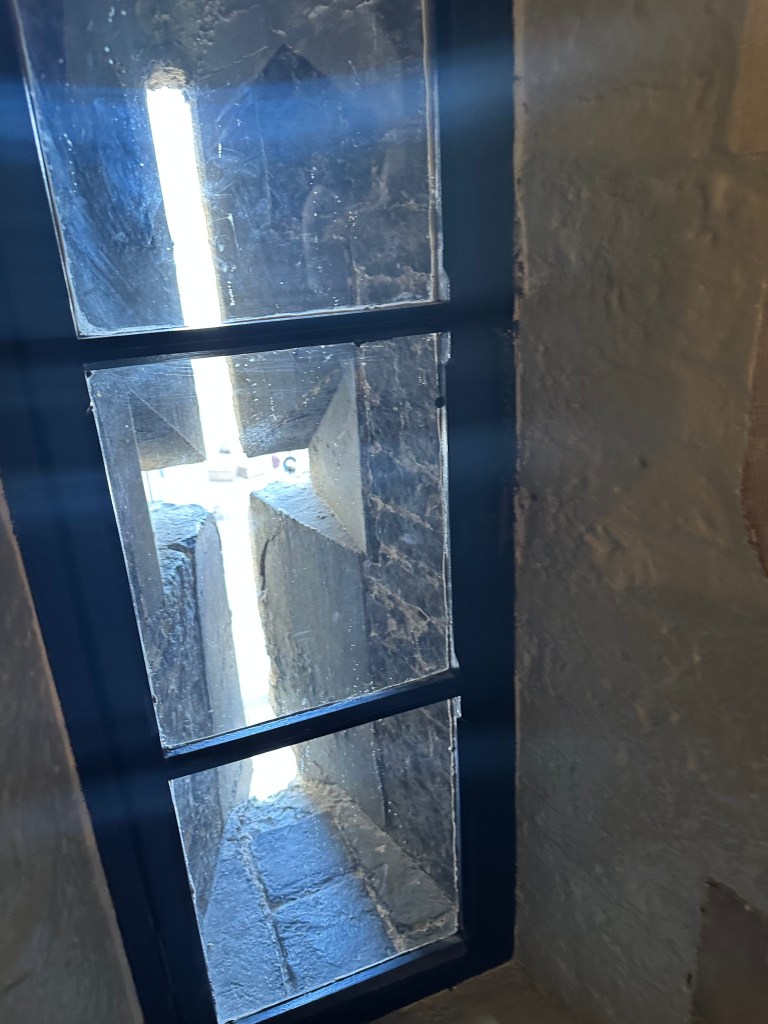
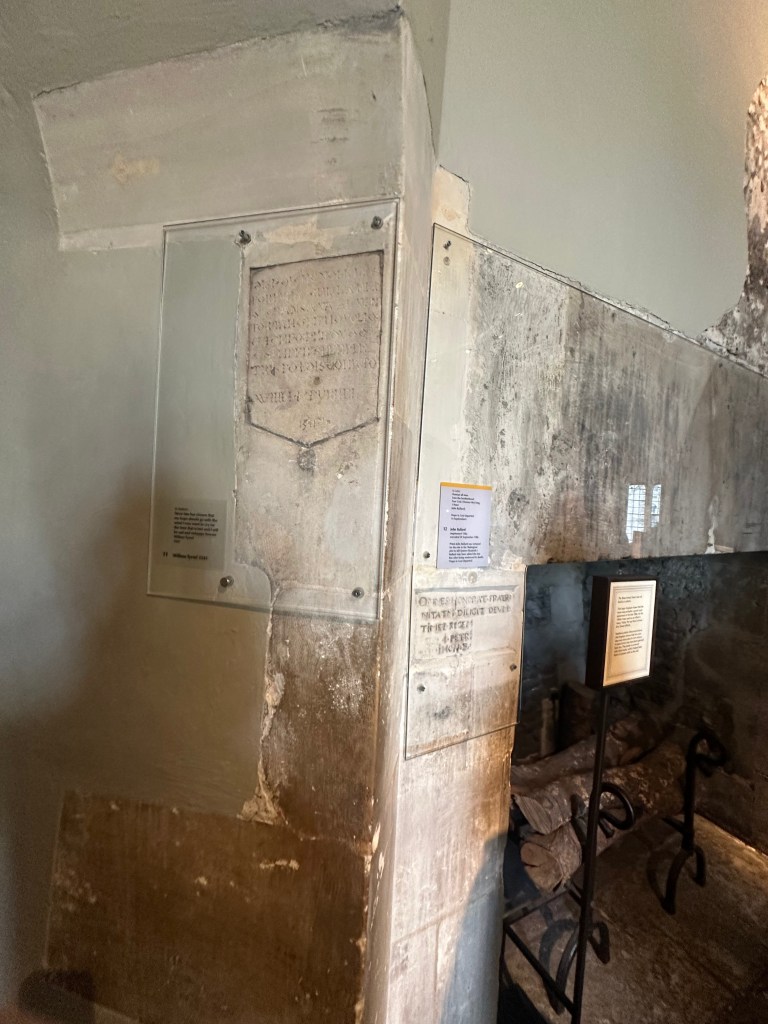
As said, this building is where many of the tower’s prisoners stayed. We see more examples of defensive architecture with the arrow slits (allowing archers to shoot out without projectiles getting in). The second picture show a section of carvings one of the many prisoners did on the walls of the tower. These carvings ranged from prayers to just leaving behind a sign of ones existence. Just like the carvings, these prisoners’ different stays varied greatly. One of the prisoners got some particularly good treatment while he was there.

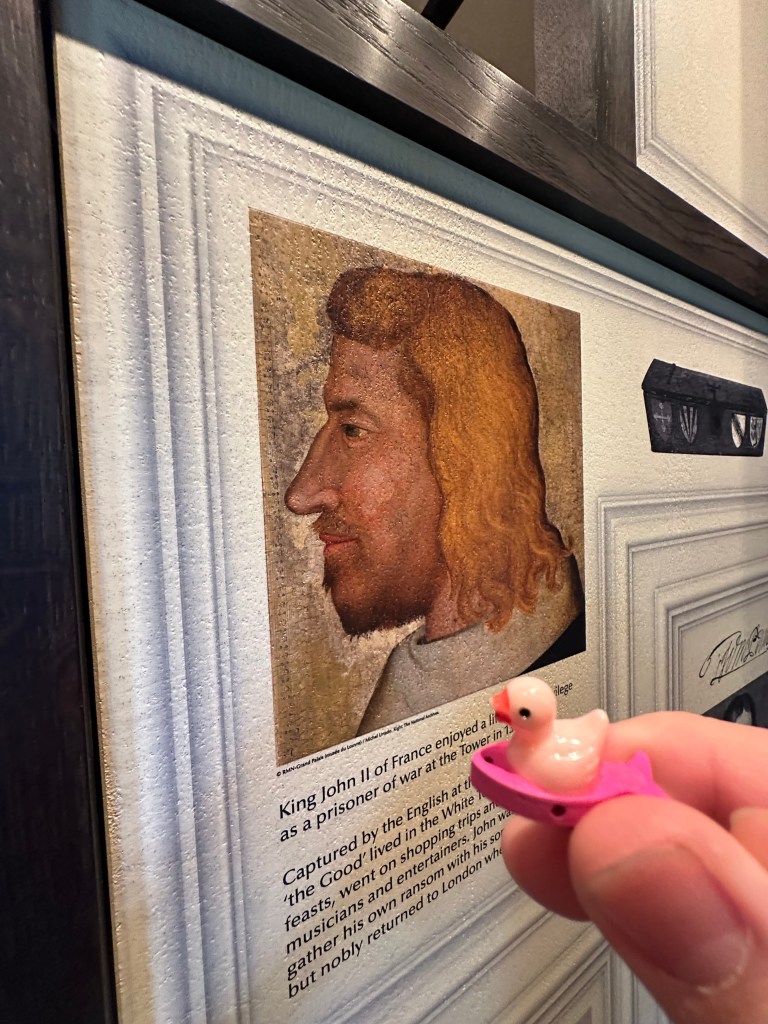
As is written below this beautiful portrait, King John II of France is the title of one of the many persons at some point imprisoned in the tower. In accordance with the previously mentioned title, “John the Good” was in fact King of France for 14 years (1350-1364). During his reign, John (we’re on first name terms) and France suffered through a few especially tough periods. The Black Death killed a large percentage of France’s population, The Jacquerie revolt ravaged the nation (Revolution! In France! This can’t be!), and conflicts with the English led to France losing the Battle of Poitiers. As a result of this loss, John found himself captured and eventually imprisoned in the Tower of London.

John’s stay in the tower was considerably more pleasant than many others. I mean, he was a king, so I suppose that afforded him certain privileges. These included (as the painting’s label states) his ability to hold feasts, go on shopping trips, and have “servants, musicians, and entertainers.” I’m sure the tower’s other inhabitants were kicking themselves for not also becoming royalty of a large European nation before being imprisoned. But eh, what can you do. John was released for a large ransom and a trade of several hostages (including one of John’s sons, Louis). John returned to France, made a new currency, and ruled for a few years. However, after being told of his son’s escape (thereby breaking the deal of John’s release/ransom), John decided to return to captivity as a sign of honor. Unfortunately, within 3 months of arriving, he fell ill and died of some unknown disease.

Squirt and I had quite a fun time at the Tower of London! Although the history learned was at times quite dark, it was all so interesting and fun to learn about. And oh my goodness were there some beautiful sights. Altogether, a great tour of one of the gems of London’s history!

Ilaria’s Pub: Hamlet Hail to the Thief

Hamlet: All Hail to the King has easily become one of my favorite shows that I’ve seen on this trip. The tragic storytelling portrayed through contemporary dance set alongside the emotive music from the rock band, Radiohead’s 6th album was explosive. The complexities of the new King, Claudius’s corruption, Gertrude’s emotional entrapment, Ophelia’s despair, and Hamlet’s declining mental health surged with a lust for vengeance, made the narrative captivating. All these aspects were justly interpreted and expanded upon in this unique adaption. 

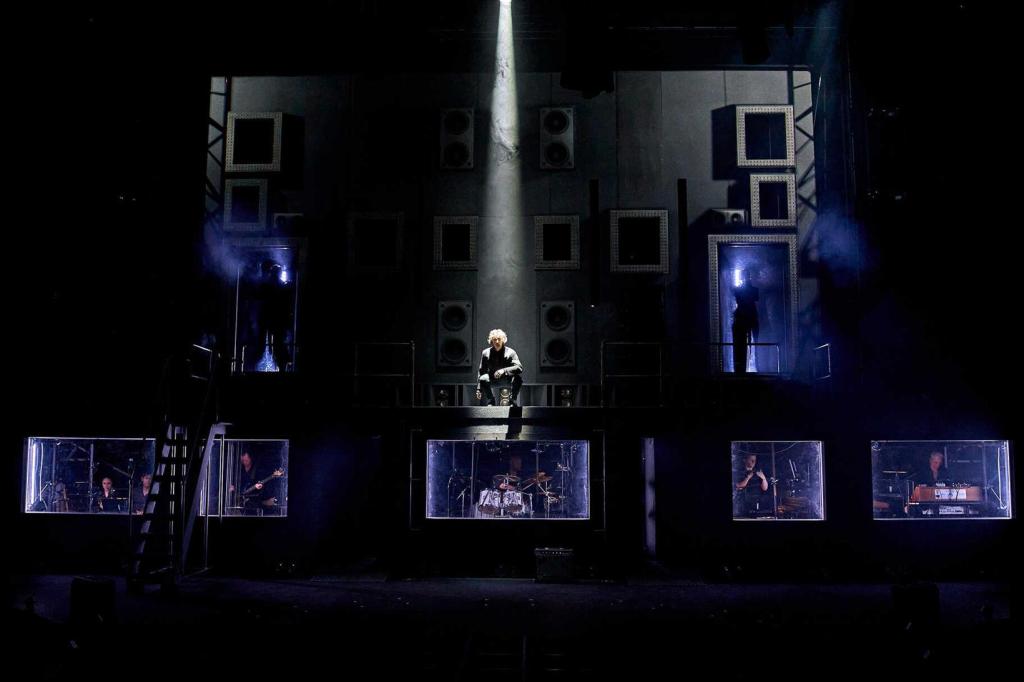
Hamlet can be a rather heavy and long piece of theater, ranging to 4 hours long if spoken every piece of dialogue from its original text is. However, this production condescends the work into a 1 hour and 40-minute production filled with both the gravity and comedy tidbits from the original work. I was on the edge of my seat for the majority of the whole performance while still having time to catch my breath and sit back during some of the sentimental parts. I loved the interpretation of the scenes and the demonstration of different relationships between the characters and each character’s unique struggle. All the parts from the original Hamlet that I wanted to be fleshed out and explored could take life on this stage. The set was mysterious, decorated with fantastic lighting design and intentional set pieces as hanging black coats to give a dystopian vibe. Each actor understood their character vastly, displaying clear objectives and motivations. 

Aside from the stupendous acting and dancing, the music added incredible weight to the emotional retelling of Hamlet in the Royal Shakespeare Company. “Radiohead front man Thom Yorke has reworked the band’s critically acclaimed album into a deconstructed score that illuminates the text and is performed by live musicians.” Music was able to explore the emotions that the characters were feeling when they were unable outright to explain the complexities of their inner worlds through spoken words. 

Fantastic Food, Marvelous Markets (I told y’all I love alliteration)

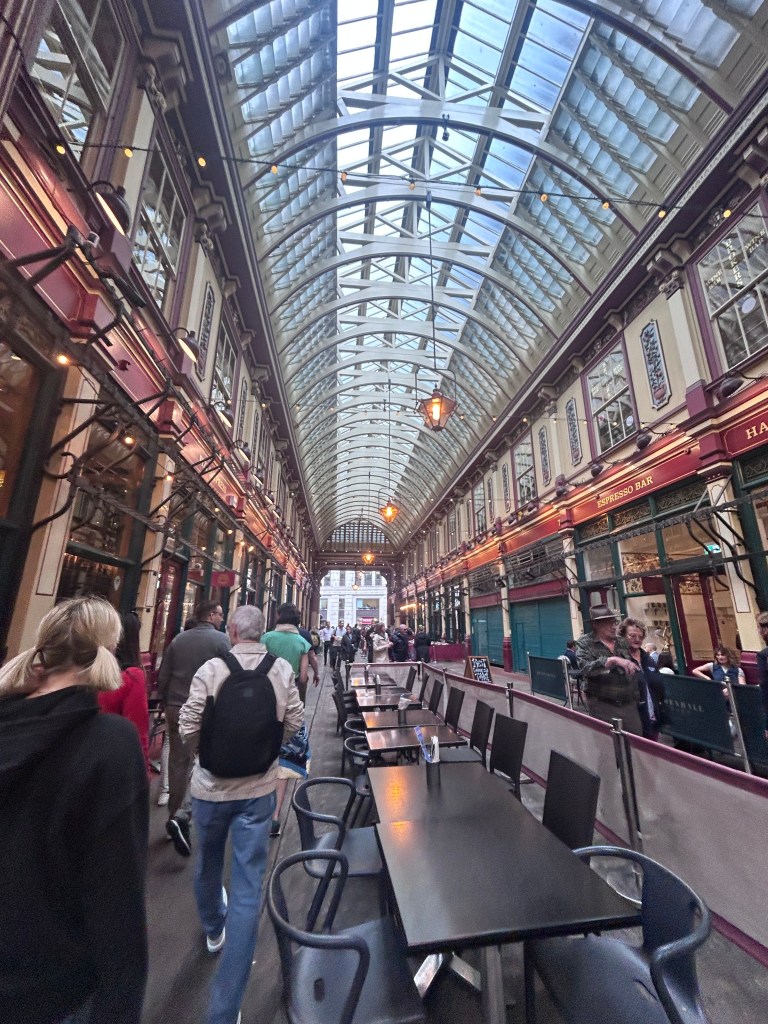
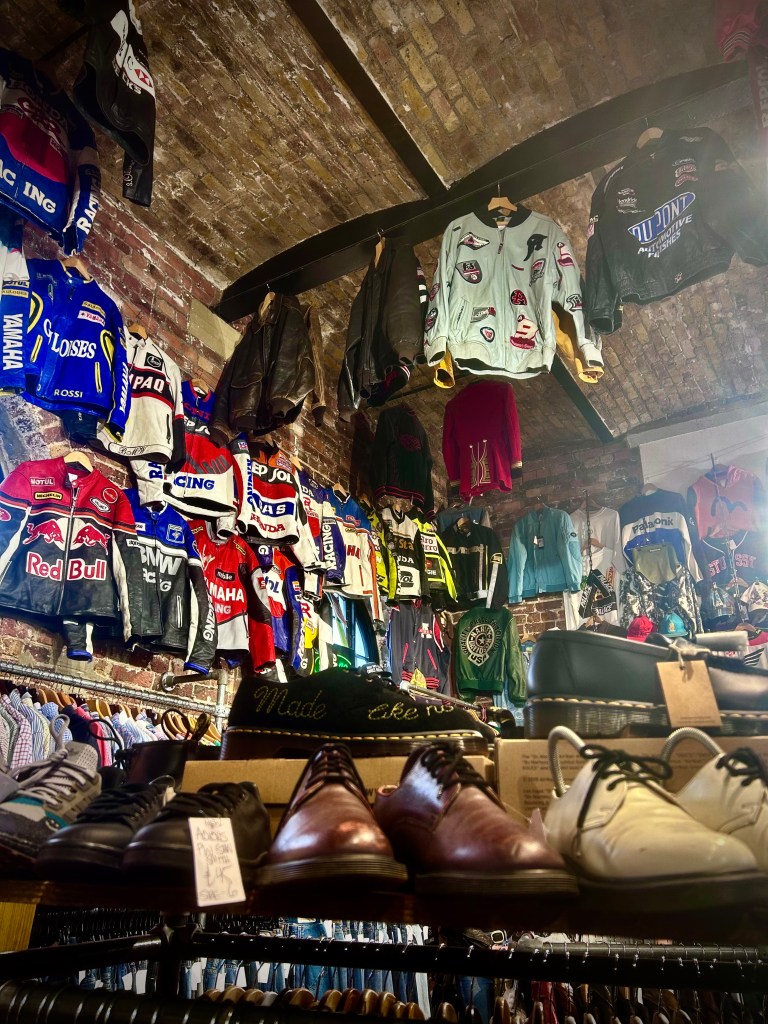
The markets of London are like nothing I have ever encountered before. Within one square mile, there are more cultures represented than there are within 50 miles of my home town. From Egyptian jewelry, to Indian fashion, to Palestinian pottery, to Jamaican cuisine, one can find almost every sector of the world showcased in their own unique ways. 

While it is a tight competition, my favorite market was between Camden and Borough Market. Every time I thought the markets had no more to see, there would be another row of vendors with new and interesting items to explore. After every visit I was leaving with a fuller belly and emptier bank account, but every penny was worth it. These were the markets where I found all of my favorite jewelry and souvenirs (including the clock watch I have been wanting forever). I also had a variety of food: Indian, Thai, Jamaican, and whatever one would consider the pork sandwich place (is it British food??). 

While Borough and Camden were my favorite markets, they are not where my favorite item was, nor were they where I spent the most time. The market I got my favorite item in was Covent Gardens Market. My lychee and rose tea from Wittard’s Tea House (my beloved) was no joke my purchase of the entire trip. Seven dials was the place I visited the most because of its proximity to the hotel (and its fireeee cacio y pepe). 

However, it is important to point out that my most favorite meal was not in a market, but at Dishoom. Before this trip I had no access to good authentic Indian food. This restaurant was probably my biggest cultural branch out. I went in feeling pretty indifferent to Indian food. Boy was I in for a surprise. By the end of the meal, I was about to start licking my plate and my fork was nearly on fire from the speed I was trying to get the ruby chicken in my mouth. 

Of all the things London has given me, authentic access to new cultures is probably what I am leaving the most grateful for. 

The Fringe Ones

I love scrappy theatre. I love low budget theatre. I love a theater where a group of individuals take a script and make something out of so very little. Don’t get me wrong, I love the glitz and glamor and awe of a high budget show as well. But there’s just something magical about having to create something with nothing. Making the script and the acting speak for itself. Having to reach a new level of creativity due to the budget or space you’re working with. So needless to say I was really excited to see some Fringe theatre in London.

I had the opportunity to see two Fringe shows in London, The Mad Ones and Plied and Prejudice. I have been trying to hunt down a production of The Mad Ones for a very long time. In 2015 I discovered the first iteration of the show which was then titled The Unauthorized Autobiography of Samantha Brown. I heard a song “Run Away With Me” from the show that Aaron Tveit had sung in his 54 Below concert. I loved it, fell down the rabbit hole and found Kerrigan and Lowdermilk’s incredible story of friendship and loss. I lost a very dear friend when I was in middle school and the story became unbelievably healing for me. The story in both iterations revolves around Samantha Brown on the morning she is supposed to set off for college, but she finds herself stuck. She can’t decide if she wants to go to college at all, or if she wants to spend some time finding herself or what the hell she wants to do with her life. But she’s frozen in her driveway, until the ghost of her recently deceased friend, Kelly shows up. Kelly takes Sam back through her senior year to process the hurt, grief, and loss that she’s struggling with to help her find her next steps in life. From beyond the grave Kelly wills Samantha to carve her own path, to follow her own intuition and to build a life that she wants for herself, not what her parents or her boyfriend want for her. In 2018 Kerrigan and Lowdermilk workshopped the musical again and renamed it The Mad Ones. It isn’t much different, minor changes such as Sam and Kelly being in the same grade, in Unauthorized Kelly was a year older and had already left Sam behind for college. In the first iteration there was a 5 person cast, Sam, Kelly, Sam’s boyfriend Adam, Sam’s mom, and her dad. In the latest iteration it is a four hander, cutting Sam’s dad out of the musical completely.

When the opportunity to see The Mad Ones at The Other Palace Theater came up, I was nervous to see it. Not only because of the subject matter being so personal to me, but also because a script and story I loved so much, with music that sometimes feels like it was written just for me, but also putting that precious experience of seeing it onstage for the first time in the hands of a theater company I knew nothing about. Would they take care of the story? Would it be as exquisite and cathartic and necessary as the first time I ever listened to the cast recording? It’s a lot of pressure to put on a group of strangers for sure.

When we got to theater, we were led down three flights of stairs into their basement studio space. The space was tiny, the rows of chairs were so closely packed to each other that to move through a row you had to move the chairs out of the way. A triangular shaped stage thrust into the audience, with nothing but the front half of a car sitting a top it. The back wall of the stage was shattered glass, knowing the script already I knew it emulated the windshield of the car that hit and killed Kelly. It was haunting, but strange to know the secret as everyone in the audience speculated about the interesting design choice.

As far as the acting and singing go, the performance was immaculate. It was everything I had hoped it would be. I was a wreck the entirety of act 2. It was this massively cathartic experience that I didn’t know that I needed until this show gifted it to me. The way the actors used the music to heighten their storytelling had me taking notes in my phone for my upcoming directorial musical debut. The only complaint I had, was the lighting. Dear god was it dark. At climax of songs we would have characters in the absolute dark belting their faces off. It wasn’t as if the actor had just gone rogue and was standing outside of their light, the light was just simply not there. There were a few moments I had to fight to stay invested in the story and the world of the play because the lack of lighting kept trying to take me out. What is also true, is in those moments the actors always brought me back in. Even if the lighting was working against them, they were strong enough storytellers that they were always able to reel me back in.

I’ve been thinking about this show since we saw it on May 25th. It has healed me in places that I didn’t realize were so hurt. Losing a friend at a young age and facing your own mortality when the rest of your peers are reveling in childhood invincibility is one of the hardest things I have done in my life. Having a show like The Mad Ones made me feel seen and understood in ways I don’t often feel when I think about that time in my life. At one point in the show I heard Taylor’s laughter in my head urging me forward, letting me know that she was loving watching me go on, and that I never moved on without her. She’s just in the other room waiting for me to knock on her door when it’s my time.

Ilaria’s Pub: Westminster Abbey

Strolling through the gorgeous and historic church, Westminster abbey was a glorious sight to see. While making our way through the vast interior, I came across a few burials and monuments dedicated to people whom are worth writing and learning about.

  1. Stephen Hawking

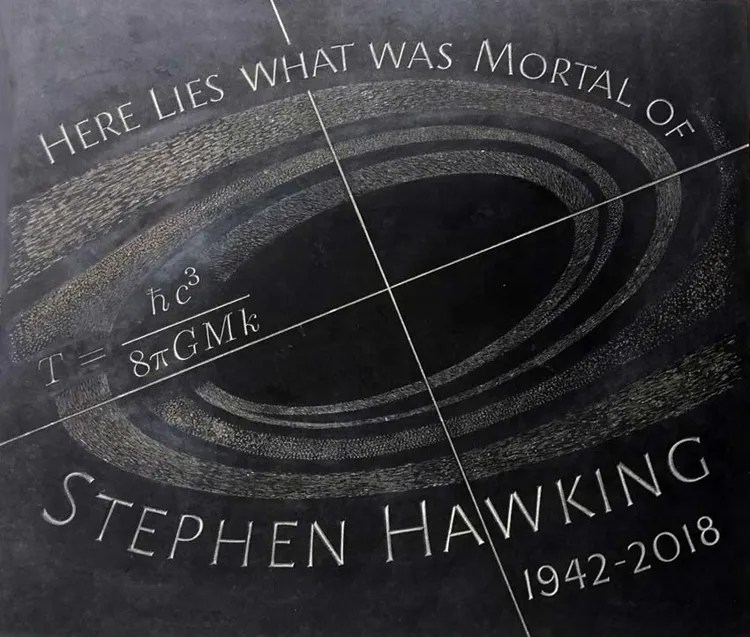
Between the graves of celebrated scientists, Charles Darwin and Isaac Newton, the ashes of Stephen Hawking were buried to honor him as one of Britain’s greatest scientists. The grave stone’s inscription is an English translation of a phrase which appears in Latin on Newton’s gravestone: Here lies what was mortal of Stephen Hawking. I found that this phrase serves as a lovely testament to his life work and is meant to represent the notion of his soul being other worldly. His grave stone depicts an engraved image of a series of rings, surrounding a darker central ellipse. The ten characters of Hawking’s equation express his idea that black holes in the universe are not entirely black but emit a glow, that would become known as Hawking radiation.

Stephen Hawking attended Oxford and Cambridge. In his 20s he was diagnosed with motor neurone disease and given only two years to live. He married Jane Wilde and their children were Robert, Lucy and Timothy. “Hawking became a research fellow at Cambridge and won the Adams Prize and began his work on black holes. He was elected to the Royal Society when he was just 32, and in 1979 became Lucasian Professor of Mathematics at Cambridge University, a post also held by Newton. His best known work is A brief history of time. He set up the Stephen Hawking Foundation to help continue his scientific work and research into the universe and motor neurone disease. He died on 14th March 2018 aged 76.”


Over his entire profound career, Hawking reshaped scientific thinking of the universe, especially black holes and their illusive properties. His discoveries, such as Hawking radiation, unified concepts from multiple fields including quantum mechanics, cosmology, thermodynamics and informatics.
“The intellectual legacy Hawking leaves with us is eclipsed only by the imagination and wonder he inspired throughout his life,” said Michael Moloney, CEO of the American Institute of Physics. “Even his earliest theoretical frameworks remain at the core of discoveries in cosmology, mathematics and physics being made today. Though we have lost a truly remarkable mind, and he will be missed greatly, Hawking’s genius will remain with us through the science he revealed and the public he inspired.”


He inspired millions throughout the world to go after their dreams and search for the answers to the questions that itched at them. No matter his physical challenges, he strived to answer the big questions, he refused to give up on his life and continued to thrive in his scientific journey.

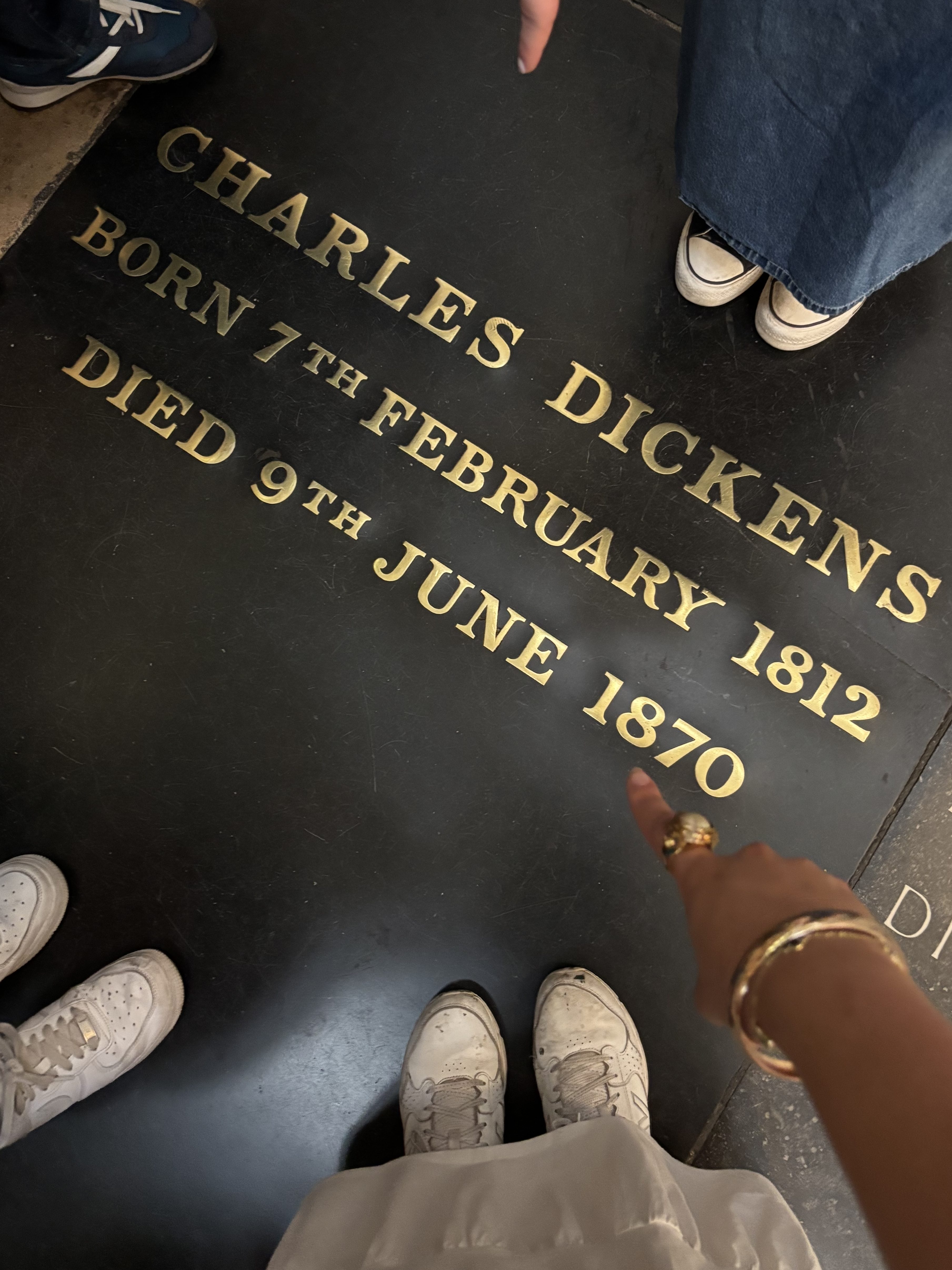
2. Charles Dickens
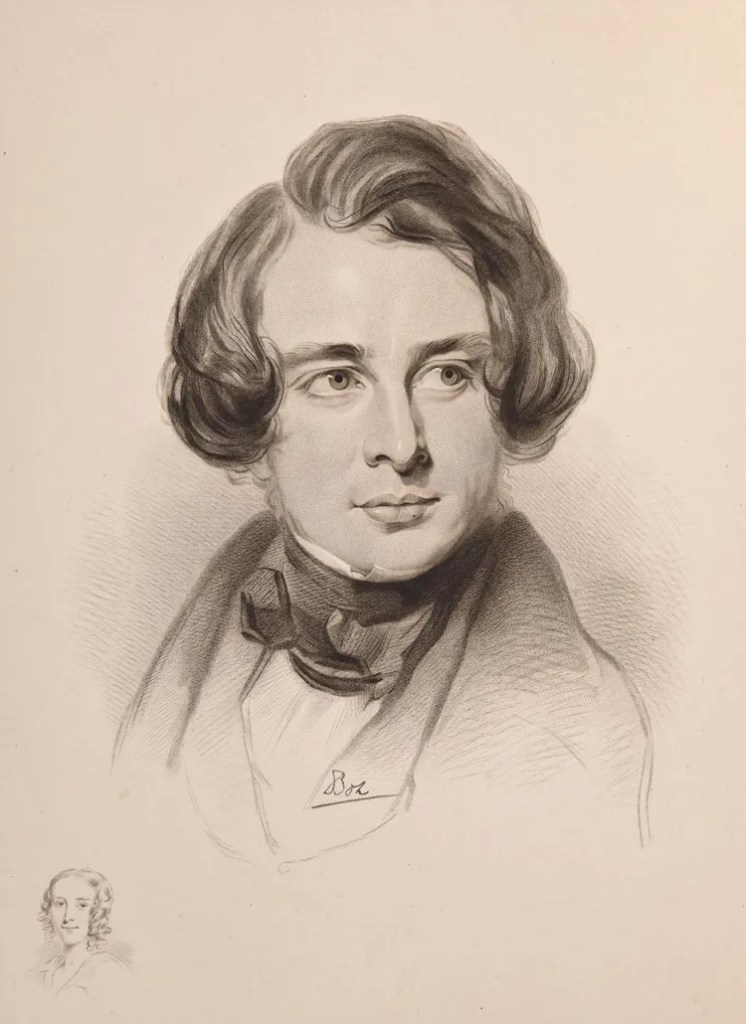
Charles Dickens, the celebrated novelist took great pride in his accomplishments, having written in his will, “‘that my name be inscribed in plain English letters on my tomb… I rest my claims to the remembrance of my country upon my published works…”’ His grave is located in the Poet’s Corner in Westminster Abbey. Charles grew up with seven siblings. At a very young age he had to pause his education to work in a shoe-polish (blacking) factory when his father was arrested for debt in 1824. “Later he became a legal clerk and then a reporter in the House of Commons. His first writings appeared under the signature his brothers pet name, ’Boz.’ The Pickwick Papers was his first major success and Oliver Twist and Nicholas Nickleby soon followed.”


Charles Dickens was more than just a talented writer, he was a social critic. He wasn’t afraid to comment on higher powers and their unjust treatment towards the lower class. The saw flaws within the system’s infrastructure and he unapologetically pointed them out repeatedly. In early 19th century Britain his voice in fact helped inspire reforms and charitable organizations take place. “His works were widely read by the rich and the poor and what he wrote and said had impact on society. Dickens presented the reader with the humanity of the ill, the deformed and the disabled. One cannot but be empathetic to characters such as Tiny Tim. These people were not to be shunned but to be accepted and helped” (National Library of Medicine).


“He was a keen observer and his character descriptions were so accurate that among his many ‘medical’ achievements he described many of the clinical features of sleep breathing disorders at least 120 years before medical science started to recognize such sleep disorders… He was instrumental in facilitating the development of homeless shelters for women, the first pediatric hospital in the United Kingdom, and the development of orthopedics” (National Library of Medicine).


Dickens was an amazing figure that contributed not only to classic American literature but to the advancements of the modern world.

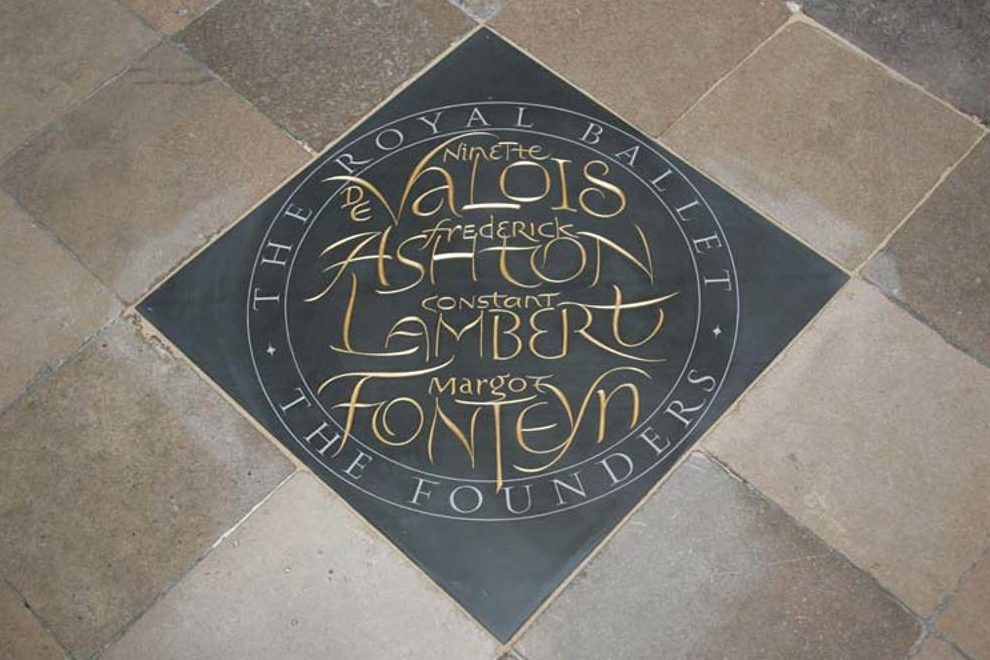
3. Ninette de Valois, Frederick Ashton, Constant Lambert, & Margot Fonteyn

The fine gold lettering of the memorial stone caught my eye. At first, I assumed that the sentiment was dedicated to a singular person with a very long name. But upon further investigation, I came to find out that the memorial is dedicated to the first four founders of The Royal Ballet. The fine, spacial design of the letters themselves were meant to represent movement to commemorate the founder’s works.


Dame Ninette de Valois was a professional dancer and choreographer who went on many tours during the Second World War and became director of the Royal Ballet School, being made a Dame of the British Empire in 1951. She also ran her own private school in several theaters while continuing her dance career. Sir Frederick Ashton was also a dancer and choreographer whom faced a trouble some coming of age marked with his father’s suicide. However, he was able to preserver the tragedy and become an extremely accomplished dancer and individual. After serving in the Royal Air Force intelligence department during the Second World War he created ballets for Margot Fonteyn (coming up soon) and many other works. In 1962 he was knighted.


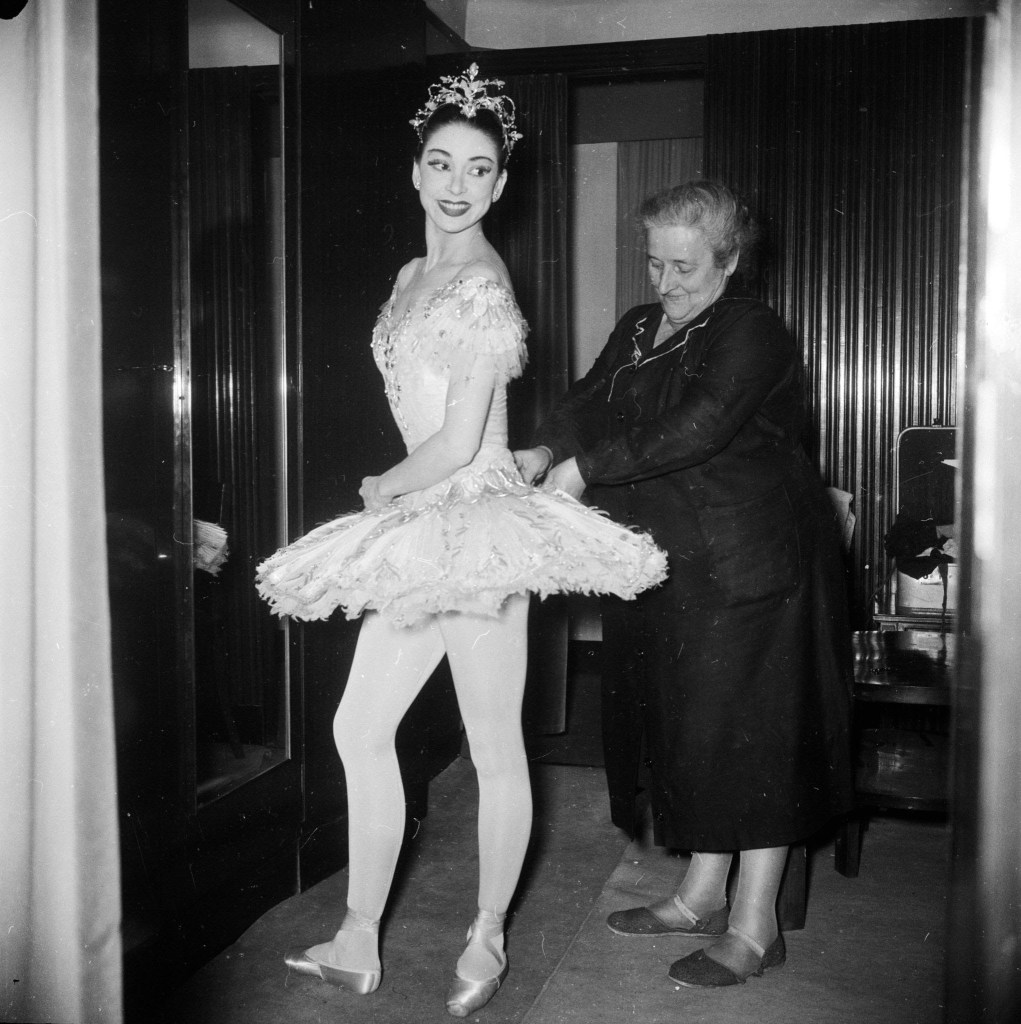
Leonard Constant Lambert was a musical composer and conductor. The Russian Diaghilev ballet company commissioned a ballet from him and he later composed songs, piano and orchestral works. While touring in Holland he narrowly escaped capture by the Nazis when they invaded. Dame Margot Fonteyn was named to be the greatest ballerina of her generation. She was made a Dame in 1956. Her exceptional talent and dedication quickly propelled her to the prestigious role of prima ballerina – a position she held for an unprecedented 23 years.


Although highly successful, Ms. Fonteyn faced severe strife in 1964. Fonteyn’s husband, Panamanian politician Roberto Arias, was shot during an assassination attempt and became a quadriplegic (paralyzed of all four limbs), requiring constant care for the remainder of his life. In 1979, she was announced to be a supreme dancer of the utmost category and talent at England’s Royal Ballet company. She retired at age 60 to Panama. Unfortunately, she acquired ovarian cancer but her days were well spent doing what she pleased. She took time to write books, raise cattle, and care for her husband.
These 4 founders were remarkable people who’s work and dedication set an example for each generation to come next. They remind me to put my all in my passions, for if I am able to do that, I will always take pride in what I do and be accomplished no matter what.

January 1957: British ballet dancer Margot Fonteyn (1919 – 1991) in Milan for a production of the Nutcracker at La Scala. (Photo by Enzo Graffeo/BIPs/Getty Images)