VICTORIA AND ALBERT MUSEUM X WICKED!!!!!!

Before I begin, I would be remiss if not to explain how deeply I love Wicked, and for how long I have deeply loved it. This is truly my dream show, my dream music, my dream costumes, my dream story – what could possibly be better than telling the story of two women with an incredibly sincere friendship and growth story together?!?! Literally nothing. 

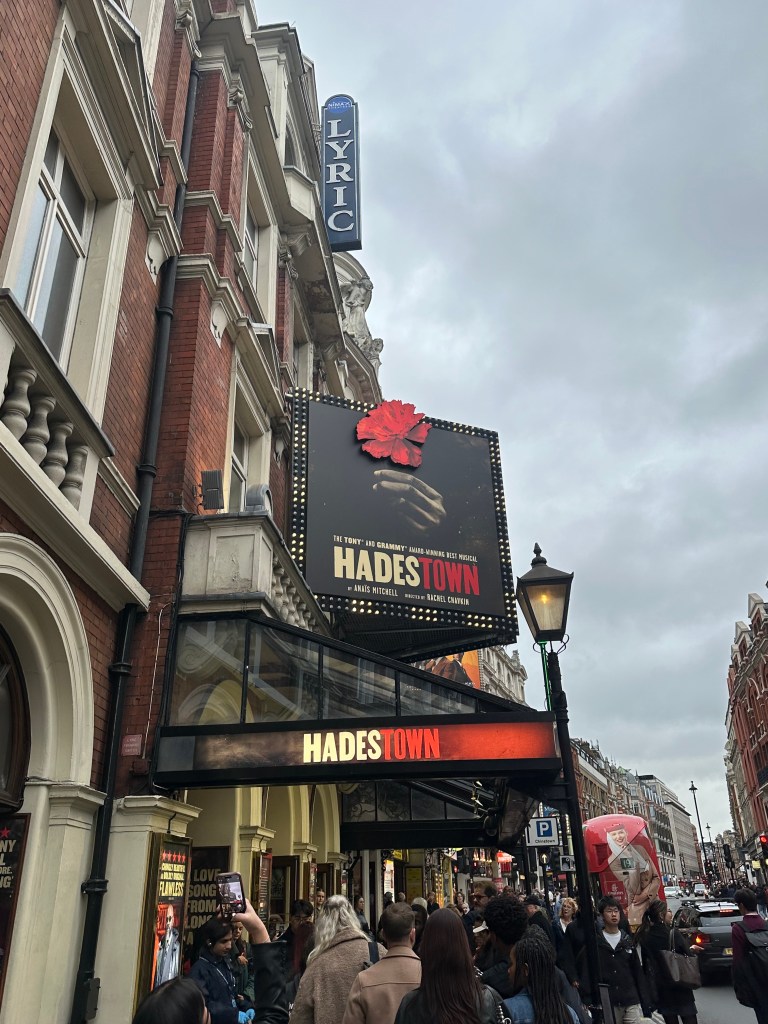
Ever since I saw it for the 3rd time in New York in November of 2023, I have grown to absolutely fall in love with the Land of Oz and this story and these characters. It is so much apart of how my dreams became my dreams, and why I continue to train and audition and work hard for them! This show is one of the biggest sparks in my fire for sure. 

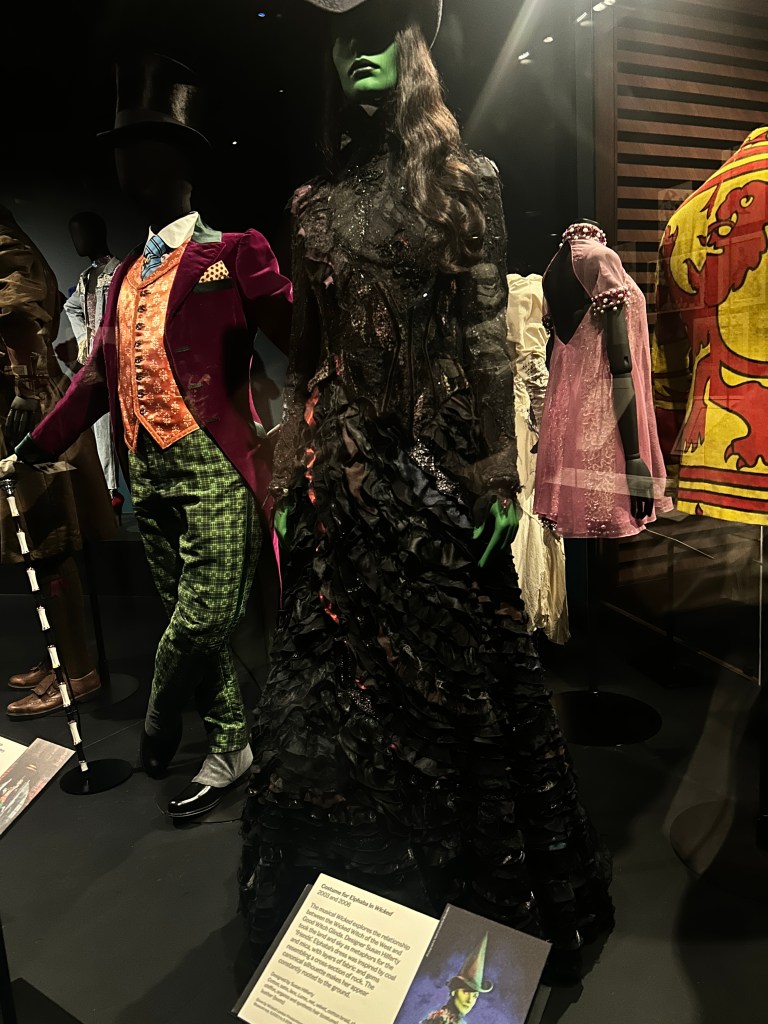
This costume in particular I chose because it is directly related to Wicked (its literally Elphaba’s costume) and I saw Wicked on the 23rd here in London! When Shawn told us this costume was in the exhibit, I almost shed a tear and I knew I had to find it as quickly as I could. When I entered the second room of the exhibit, and saw the black witch hat peeking through the glass, I knew this was about to be a perfect moment!!! There she was in all her glory – the Act 2 Elphaba Dress. Now one of the best and most symbol – ridden  parts of Wicked as a whole is the costumes. They are full of nods to the original book, the 1939 movie, and of course rich with character symbols and key characteristics that help the show along in a beautiful way. This dress, along with all of the costumes in Wicked, was designed by Tony Winner Susan Hilferty, who actually won her Tony from her designs in Wicked. They are superb and perfect and I wish I could wear them every day. I literally dream of donning the Glinda Bubble Dress at least once a week. 

What makes this Act Two Elphaba dress so special is that is signifies Elphaba’s journey as a person so deeply and thoughtfully. It shows her connection to the earth and to her natural powers by the layers of different earth-toned fabrics, and the almost nature – like patterns and textures that cover the entire dress. This dress is also a nod to the huge transformation that Elphaba makes between Act 1 and Act 2 – with her power, her confidence, her status, and her acceptance of her title as “Wicked”. This dress is paramount for the continuation of Elphaba’s story and character arc, and shows the immediate difference between where we left her at Defying Gravity and where she is when she first enters Act 2 in her scene with her sister, Nessa Rose. I genuinely could stare at and analyze every single costume in this show for probably hours. 

Do I wish Glinda’s bubble dress (or any of her costumes for that matter) were also in the museum? Yes, I so do. But I could not be more thankful that I got to see this dress so up close. It is stunning and was such a cool opportunity!!!!

xo, Jo!!
Ilaria’s Pub: The Victoria and Albert Museum

  I woke up on Tuesday morning to the subtle pitter-patter of rain from outside my window. It started out as a cloudy and cool yet peaceful rainy day. It was the perfect day to spend indoors, so it was extremely fitting that we took a visit to The Victoria and Albert Museum where we were able to roam freely underneath the grand ceilings. “The Victoria and Albert Museum is the world’s largest museum of decorative arts and design, housing a permanent collection of over 4.5 million objects. Named after Queen Victoria and Prince Albert, it was founded in 1852, and has since grown to cover 12.5 acres and 145 galleries” (Gov.uk). 

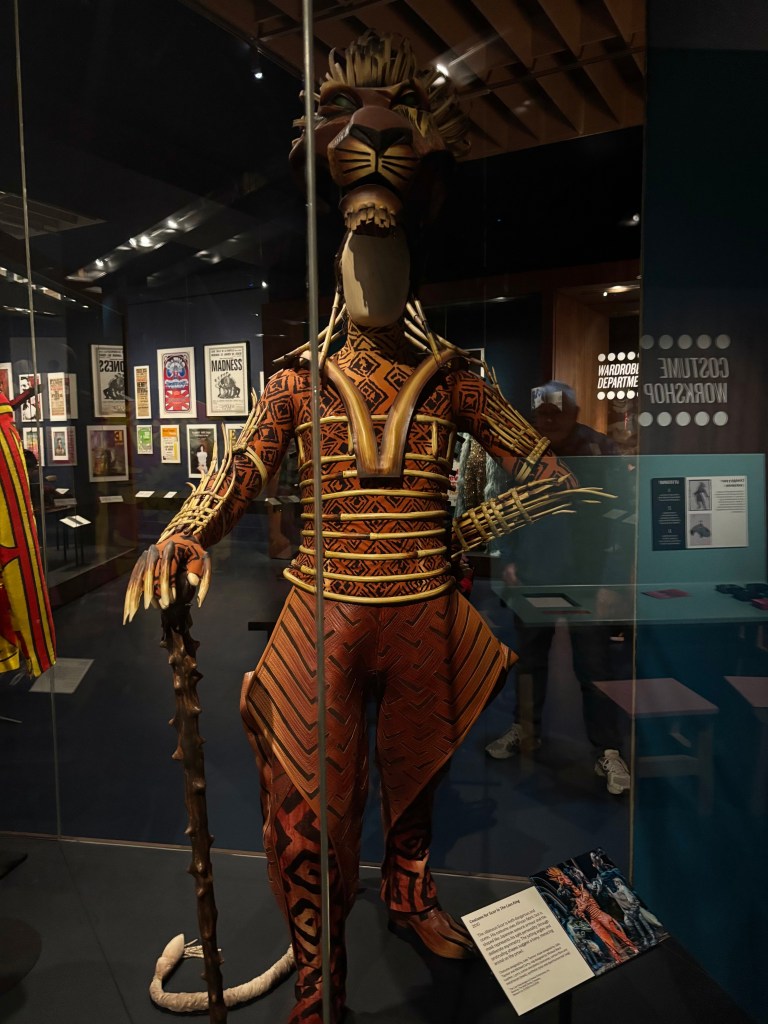
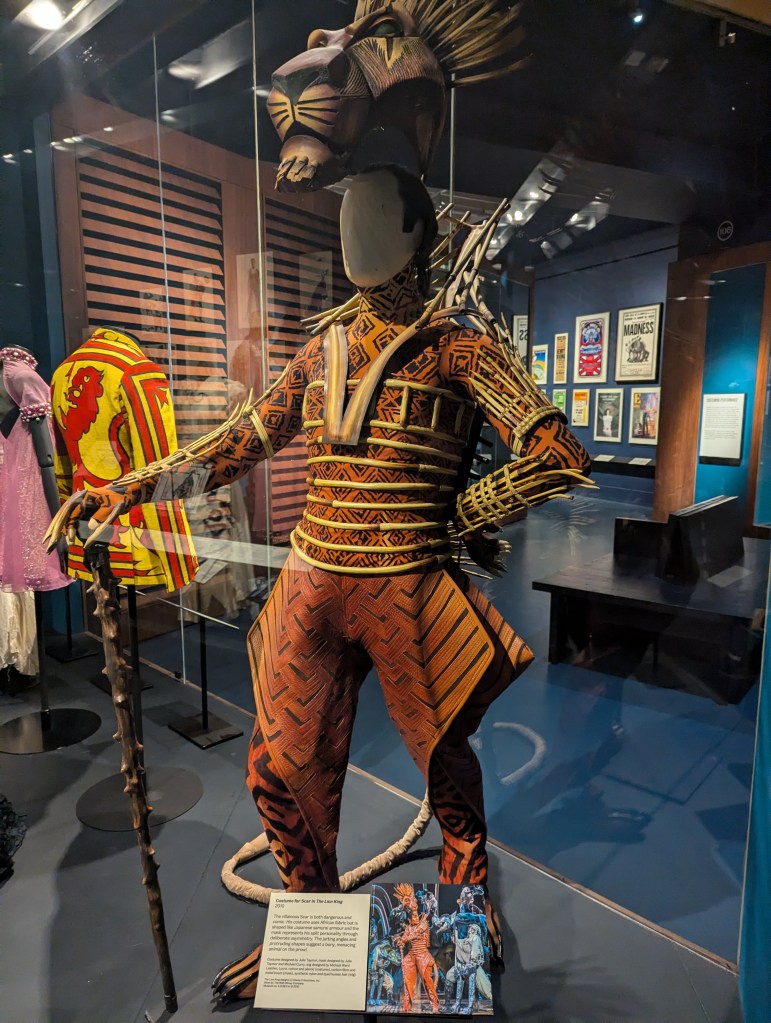
While exploring the theatre and performance section of the museum, I came across a specific costume that caught my eye. The main antagonist, Scar’s costume from the adored musical, The Lion King. The musical of The Lion King is based on the classic 1994 Disney film.“The costume consists of a full body leotard worn under tightly fitting corset and includes leather boots and a tail. The surface of the orange leotard is digitally printed with interlocking black diamonds and stiff leather covered piping has been attached to the corset, arms and hands. A stiff leather ‘cage’ is worn over the top of the upper section of the costume.” 

“Scar is the primary villain of the story and plots to steal the throne from the hero, and rightful heir, Simba.” His vicious persona is reflected within the costume’s rigid structure, especially in the sharpness of the leather piping. “The silhouette of his costume is based on that of a traditional Japanese samurai. This reflects his nobility but also presents him as a ruthless warrior. The outer layer is made of bamboo which depict bones and ridges and show Scar to be a frail and skeletal character.”

Scar’s costume was designed by the musical’s director herself, Julie Taymor. The mask worn with the body suit was also co-designed by both Julie Taymor and Michael Curry.“Julie Taymor is a director and designer and has worked with both stage and screen productions. She received two Tony Awards for her work on The Lion King, one for direction and one for Original Costume design, making her the first woman to win a Tony Award for directing a musical.” Overall, Scar’s original costume from The Lion King musical showcases significant advancements in musical theatre in the industry. It also serves as a prime example of how creative exploration and research behind each element of a theatrical production enhances its impact as a whole.

May 26: Time and Tide

I had never fallen so deeply into a story as when I watched The Curious Case of Benjamin Button unfold before me. By the end, I was holding back openly bawling in the theatre, trying my best to pay attention through blurry eyes. The book the play was based on was intriguing and evocative, sad at times, even. It held the grain of a life-changing thought, a strong thesis that could twist one’s outlook on life into a new, prettier shape, but it didn’t act on it.

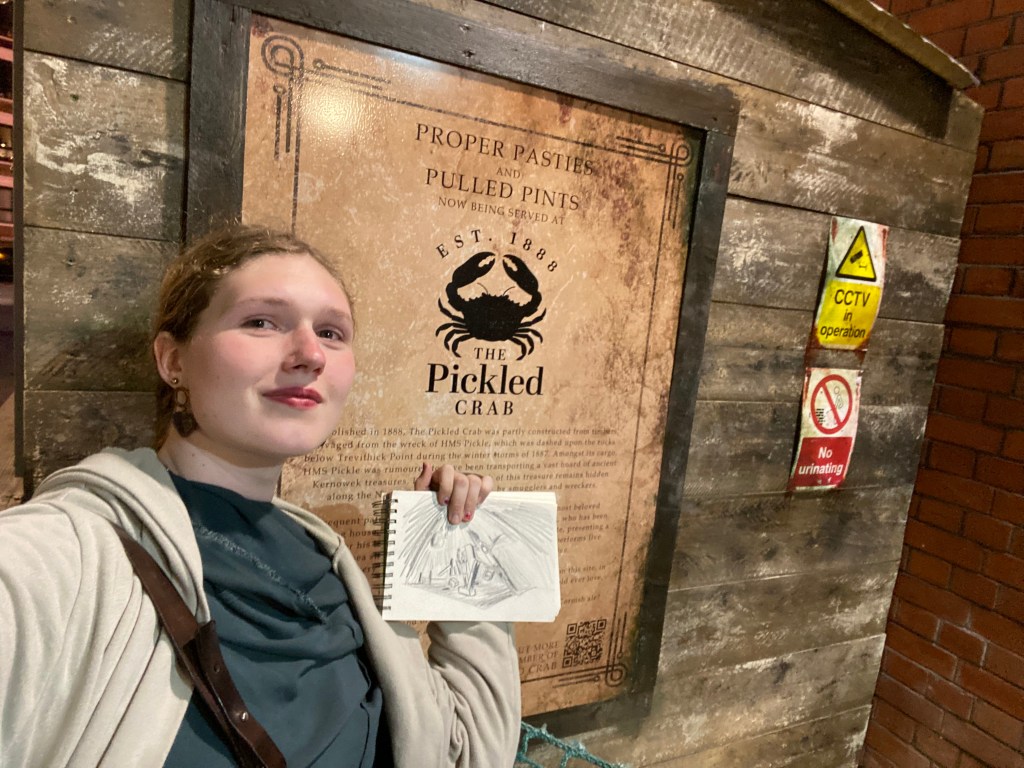
A quick little sketch of a specific moment of the play, started during intermission but finished by the stage door.
Proud of my little sketch, at The Pickled Crab, a location within the world of the play

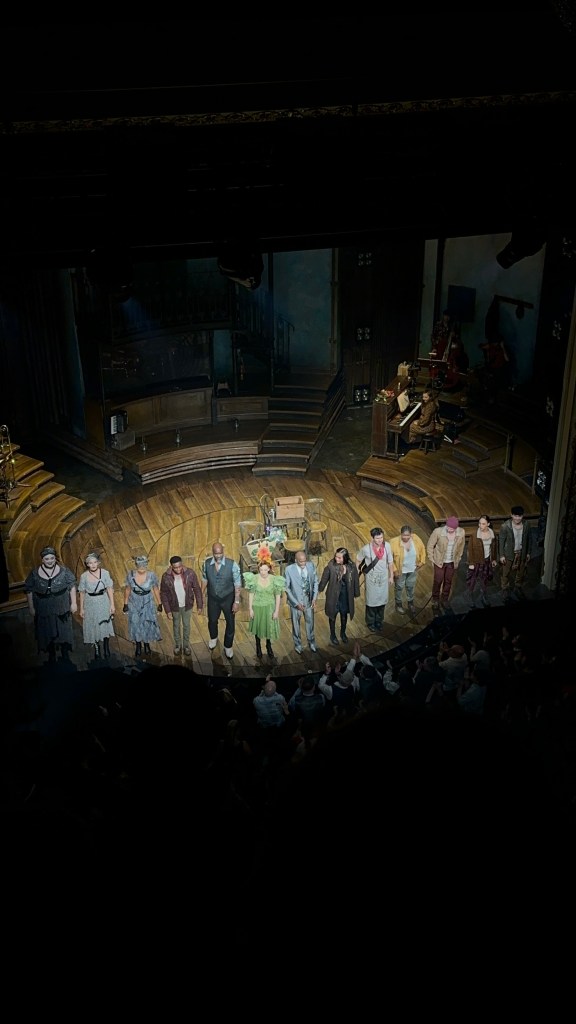
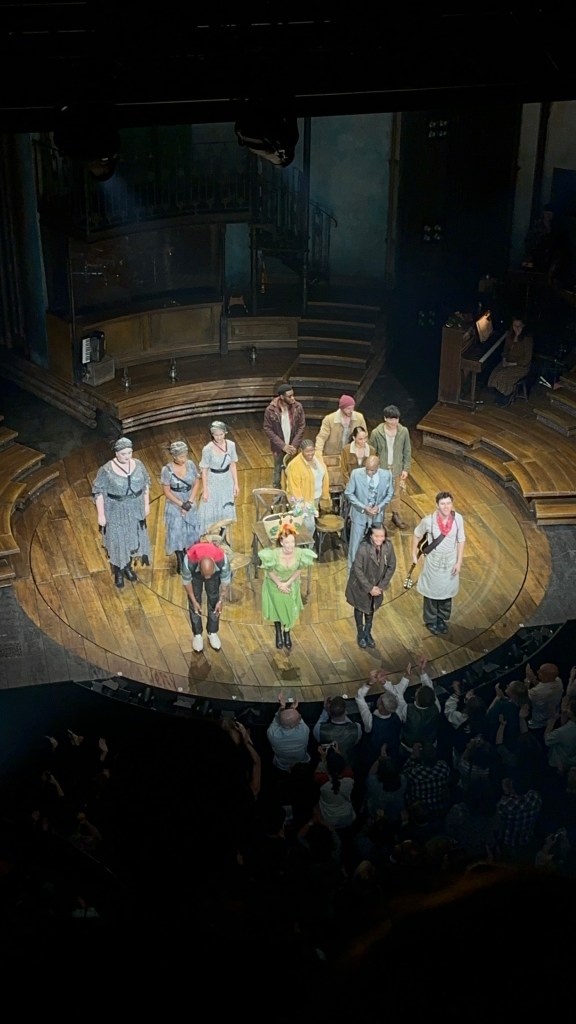
Damn, if the cast of Benjamin Button didn’t ACT. They communicated the story and expressed complex feelings with more than their bodies and voices: their instruments filled the space with a world of intensely evocative sound. I find that music can be a singularly powerful tool for opening my heart as an audience member, no matter the medium. To that point, the few museo-actor shows I’ve seen (The Band’s Visit and this one) have stayed the longest in my memory and had the greatest overall effect on me. It’s hard to pull off, but adapting the story of Benjamin Button into this format was a wonderful move. 

Having the ensemble cast, The Strangers, playing instruments throughout the show makes their explanatory dialogue feel more connected to the world of the show. They aren’t just speaking or singing a story to us, but performing a tale of extraordinary circumstances. I think it would feel a bit impersonal if they simply sang the show. This is a strange take to make, but perhaps casting actors that can also play instruments selects for some particularly world-weary souls? Every museo-actor I have had the pleasure to speak with seems very, very well-traveled and experienced, no matter the age. This would give them some natural sources to work from in putting together their characters for the show. 

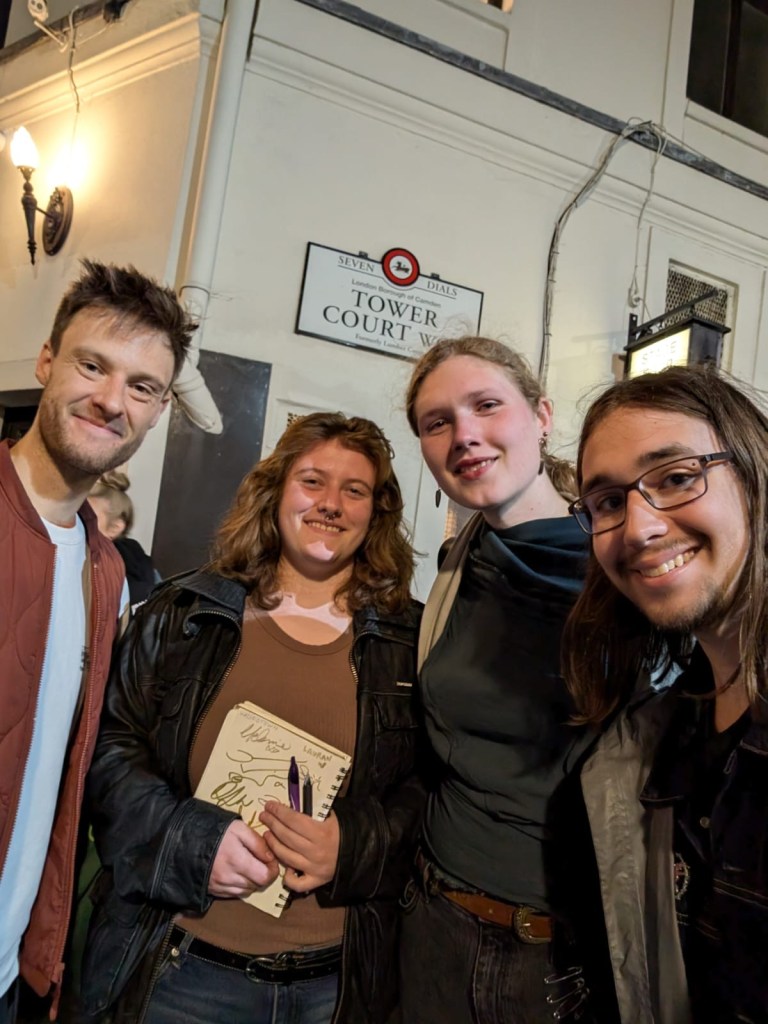
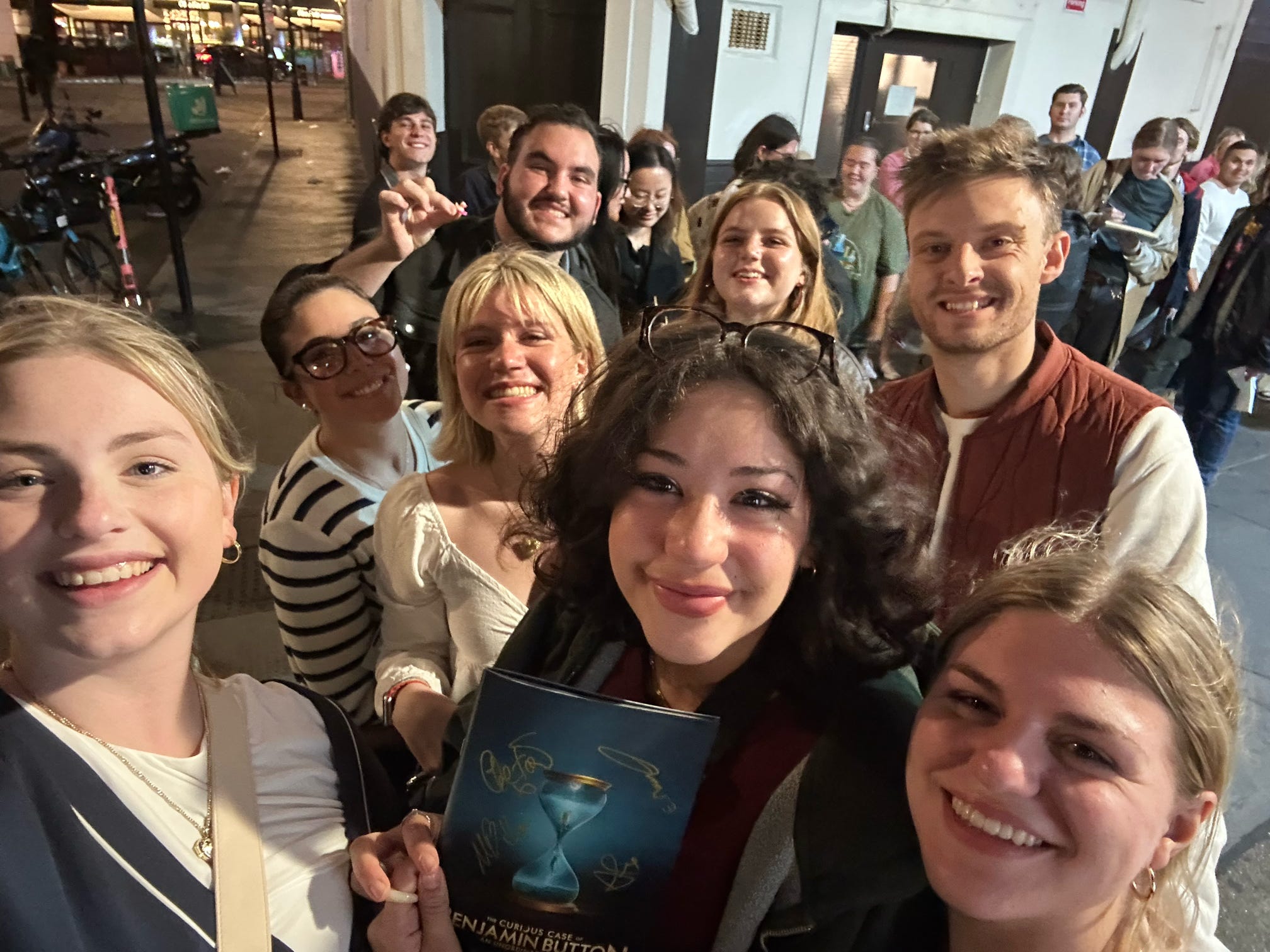
Left-right: Matt Burns (Benjamin Button), Aleah, Azlon, and Jack!

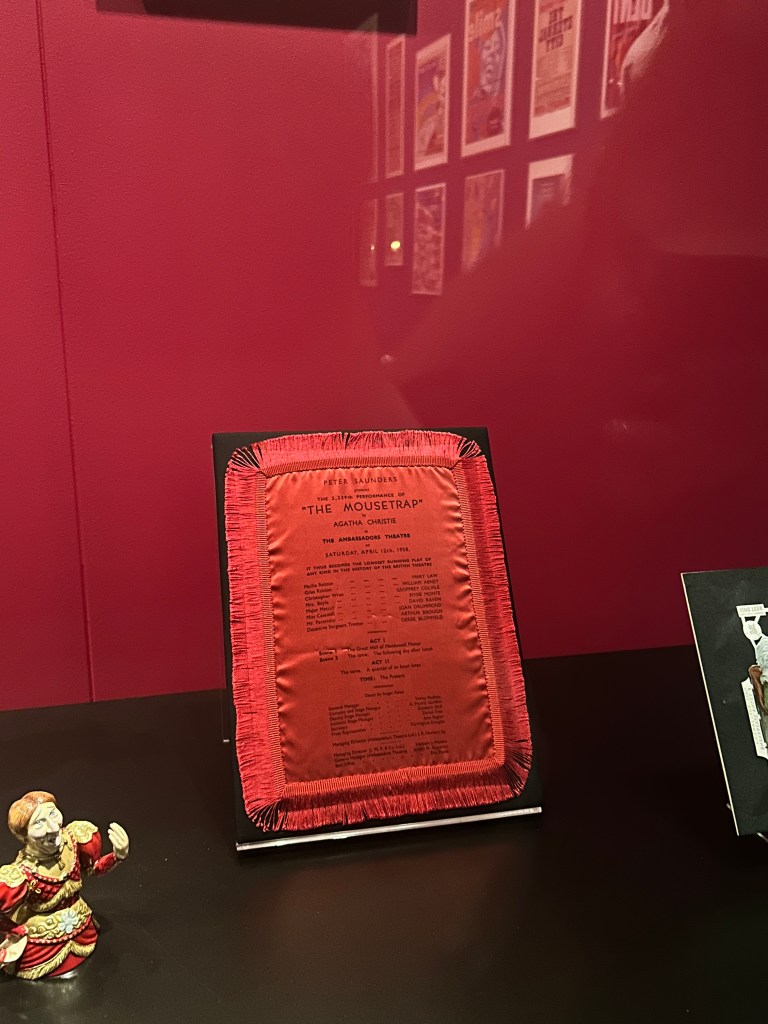
Monumental Mousetrap: The Display of a Silk Playbill from The Mousetrap’s 2239th Performance

The Victoria and Albert Museum has a vast array of insane theatrical and performance displays like David Bowie’s handwritten lyrics, to a recreation of Kylie Monogue’s dressing room, and Sweeney Todd set designs. The newly renovated Performance and Theater exhibit was every theater kid’s dream. Moreover, the other incredible art, architecture, and jewelry exhibits quickly made this one of my favorite stops of this trip so far. 

Among the displays, a crimson-colored, shiny rectangle became visible to me. A closer look showed me that it was actually a playbill from the 2239th run of Agatha Christie’s The Mousetrap. Specifically it commemorated the show’s five and a half year running point on 12 April 1958. An incredible accomplishment, one that now looks meager in comparison to the 72 years it has been performed as of this year. Additionally, the show also holds the record for the most performances still to this day. This playbill is a beautiful testament to the life and vibrancy of good theatre. It is no secret that the arts are not being valued as they once were; however, The Mousetrap shows that theatre is not a dead industry. 

In addition to The Mousetrap playbill, one of my other favorite exhibits was the Wicked Act II Elphaba dress. The detailing of the dress up close was more intricate and beautiful than I could have ever imagined. There was also an incredible selection of other types of art. In the more traditional painting section, there was a work hung called St Cecelia and the Angels. The sculpture Theseus and the Minotaur was one I already knew was in the museum, and it was even better than I expected.

By the end, The Victoria and Albert museum had made me cry with their gorgeous, unexpected, historically rich pieces. For those coming to London who want to go to a museum (and even those who don’t) please go and see these incredible works!

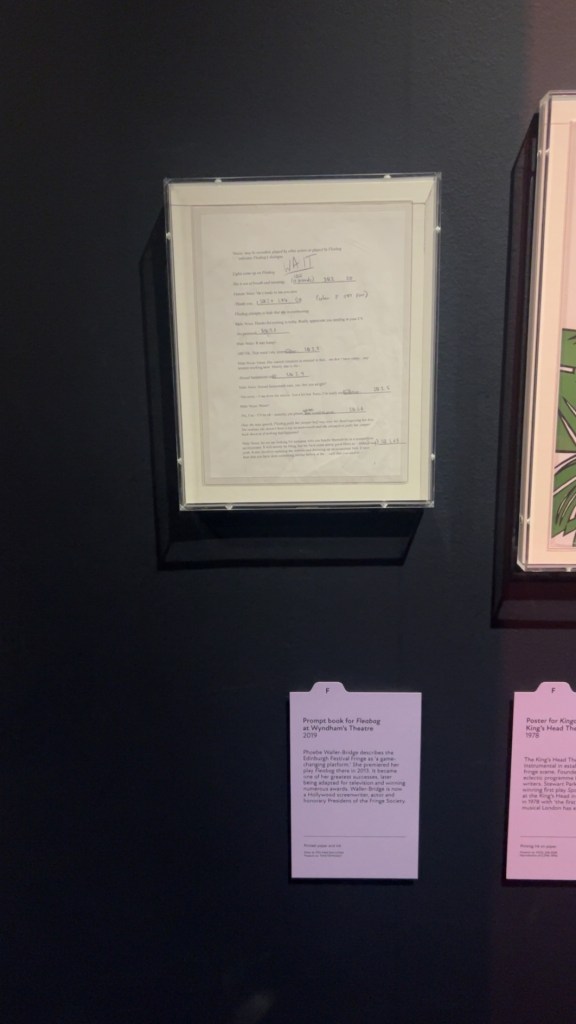
Fleabag in the flesh!

I thoroughly enjoyed my time at the V&A yesterday. I spent about an hour in the theater exhibit looking at every piece, reading the cards, and watching all the videos. Unfortunately, I didn’t have the time to do that with the rest of the museum, so I tried to take in each piece of art at a quicker pace, and was still only able to get through to about half of the second floor before calling it quits at 3. I absolutely love this museum and feel that it is so wonderfully curated. I particularly loved the spaces that were reconstructed rooms from the past. They were beyond beautiful and made me feel like I had been transported to a completely different time and place. 

As for the theater exhibit, I had a blast. There was one particular piece that stood out to me, which was a page of script from the show Fleabag. It had the writing of Phoebe Waller-Bridge (who wrote and acted in the play) and her notes on the scene. It was interesting to see, as I have never seen the stage play but have seen the television show based on it. I snapped a picture because it is one of my favorite television shows ever, and I wanted to go back and watch the proshot of the play later.

Along that television line, there was a lot of television-related material in the theater room, but it was all from Netflix. Clearly, they wrote a check to help fund the space, so the first part when you walk in had a huge screen playing a behind the scenes of the Crown, and then the case directly next to it was about Peaky Blinders, and then the case next to that was about another Netflix show that I was unfamiliar with but had read the book for and didn’t overly love. I think they needed that hook to get people in the door, which I totally understand and I know that not everyone loves theater, but for a space with theater in the title, I wish it would’ve been more present at the beginning. 

I did find it interesting as well that they put all the super famous costumes all together in one section. I feel like spreading them out a bit more could’ve kept people engrossed, but I know they wanted to break up the exhibit by department. Costumes tend to be the thing that have the easiest and most obvious visual interest (the second being scenic models) so having those with a wee more space between each other, and instead having the exhibit as more of a timeline could’ve also been interesting. That being said, basically, the rest of the museum is in some sort of timeline in each exhibit, so I understand why they wanted to do something different in this space. After I left the theater space and went into the rest of the museum, the amount of objects was overwhelming. I particularly felt overwhelmed by the cast rooms on the right side of the building. The scale was intense yet so stunning. I loved that there was art there that wasn’t accessible to those in England, but was then made accessible through recreation. I am sure it is a very controversial topic, but I enjoy anything that makes art easier for people to access, so this was a win in my book. Also, while it was a lot of space, it was barely a fraction of the entire museum, the rest of it being dedicated to new works, so I thought it worked out wonderfully. 

CjYKMlNuYXBjaGF0LzEzLjQyLjAuNDcgKGlQaG9uZTE0LDc7IGlPUyAxOC4xLjE7IGd6aXApIAI=

Benjamin Button on Stage

Monday night, we went back to the Seven Dials area to watch the Curious Case of Benjamin Button at the Ambassador’s Theater! Much like the show itself, it was a night full of emotion, music, and love.

The story originally comes from F. Scott Fitzgerald’s short story with the same title from 1922. Co-writers Jethro Compton and Darren Clark didn’t turn the story into a musical until almost a hundred years later. The framework story of both pieces is about the same: Benjamin Button is born a 70-something year old man and ages in reverse. Somewhere along the line, he meets a woman and falls in love. There is also a small time when he goes to war. He has a fairly good life especially as he reaches the typical peak age for a man at the time (around the 20s and 30s), but as his life goes on and he gets younger and younger, he slowly fades away into nothingness. However, Benjamin’s two tales also differ on multiple accounts due to form in which the story exists and how audience interacts with it.

In addition to the story’s setting, each portrayal of Benjamin Button’s life were distinct forms of media that are consumed differently. When you read, you get to create your own characters, based on whatever description is given, from their crooked knees to the way they smile. You also do all the staging, lighting, and any music within your mind. It is like creating a play that only you can see within the confines of the story in front of you. Plus, you control the timing since you can go back and reread or even skip around the story. So, while the words and the story are always the same, how you interpret it can change with time.

In contrast, a musical is different each time because of the natural human tendency to adapt and change. You cannot pause or rewind the people on stage. You cannot go back and see a certain part of the performance once it is over or stop to admire the little pockets of beauty in a musical like you can when reading a book. The story progresses whether you want it to or not, and this can cause you to miss things. In a way, that is the perfect mode for the story of Benjamin Button as told in the musical. The entire story is about enjoying your life because it is the only life you’ve got. Now replace the word “life” with “musical”. It still makes sense. A musical is temporary, so you must soak it all up in the moment.

After furiously writing down all of the thoughts that were fighting each other to get out of my brain, I decided to dedicate the next page in my little yellow flower notebook to signatures from the Benjamin Button cast!

After the show, a lot of us waited at the stage door to meet the actors. Not everyone came out, but the ones that did were happily approachable. Clare Foster (played Elowen) immediately went into caring-mother mode when she came out and saw all our tear-stained, puffy faces. Jack Quartan (played the accordion and a stranger) stayed and talked with everyone the longest and gave us a piece of advice too: “when someone pushes you, fall over.” We also lucky met the composer wh0 was kind enough to take a selfie with us before he had to run to catch his train.

– Hadley ❤

Finding Hadestown in the Halls of the V&A

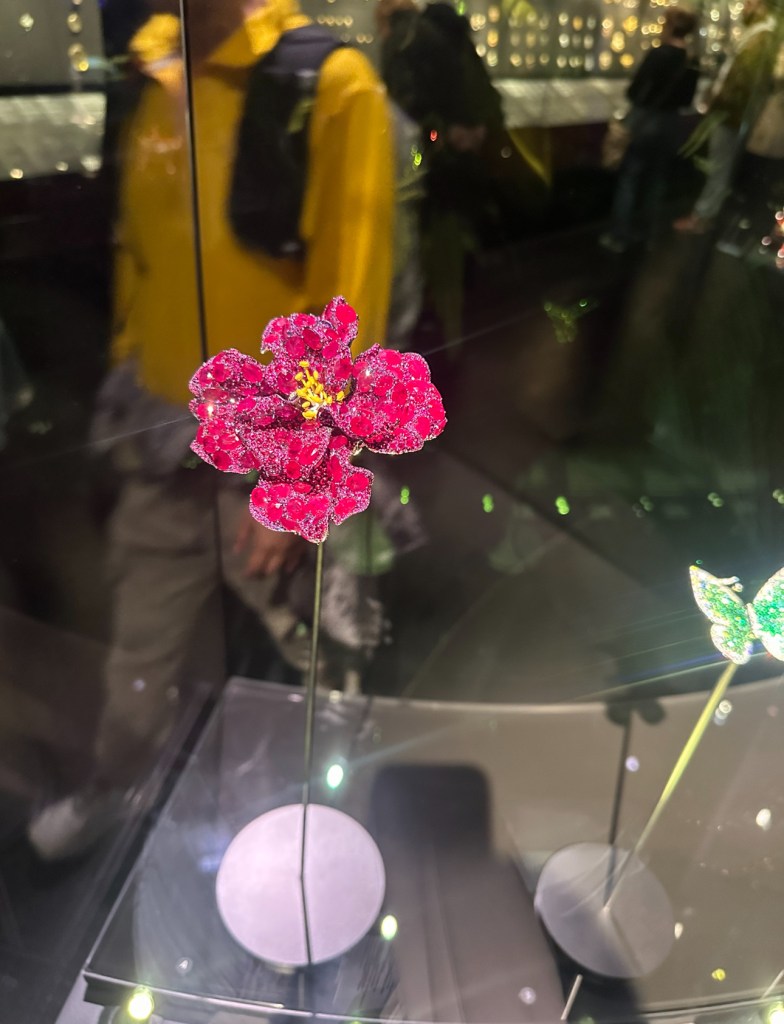
While wandering through the Victoria and Albert Museum, I came across a small, jeweled red flower glimmering inside a glass case. I thought it was so beautiful. It was delicate, detailed, and sparkling with bright colors. It started to reminded me of the red flower in Hadestown. It reminded me about the symbolism behind the red flower and the soul of the show. It takes me back to the heartbreaking love story of Orpheus and Eurydice. 

In Hadestown, the red flower is a symbol of spring coming again, hope, and most powerfully, love. When Persephone disappears into the underworld, the world above turns cold and colorless. And then, when Eurydice leaves, so does love and hope. But Orpheus never gives up fighting for his love by going down there to find her and using his song to set her free. He sings for love into the world, and that love takes shape not only in the melody but for nature. He wants to bring back the color and the warmth of spring through his song. My favorite and pivotal moment in the musical was when Orpheous sings his unfinished song and a red flower appears. It’s like magic. A single flower blossoms in a place where it shouldn’t be able to grow. It becomes a symbol of spring returning, and of love’s power to change even the darkest places.

This flower I saw at the V&A reminded me of the rose and that feeling of love. It wasn’t just pretty, it felt like it had a purpose or a meaning. It could’ve been that flower that was left behind in the Underworld after Eurydice’s final goodbye. Almost like a final trace of her. A trace of what Orpheus brought to life with his music. Even when they were torn apart again, the flower remained, symbolizing that love existed there, even in a place built on shadows. The show tells us, “It’s a sad song, but we sing it anyway.” This flower felt like that song: sad and beautiful at the same time. It doesn’t erase the loss, but it reminds us of the love that once bloomed. Seeing this rose in the museum made me feel like the story of Hadestown was still unfolding in the world around me. It reminded me how powerful a symbol or an object can be and all the memories and meanings it brings. A single flower can mean hope, love, and new beginnings.

The Victoria and Albert Museum

While I am not usually a fan of classical art museums, the Victoria and albert museum had some very interesting displays, my favorite of which unsurprisingly being the theatre and film exhibit. The first thing that really caught my eye was the miniature sets on display, showcasing the scenery in a way that would be hard to do with just a photograph. I was also really captured by some of the costumes that were on display, especially the costume for scar from the lion king play. I have always had a fascination with puppetry and find it really interesting how the play merged elements of puppetry into the costumes to create more animalistic and animated appearances. Being up close to the costume also made me realize the intricacy of the patterning of the fabric used for the costume. It has a gradient throughout with checkered-esque pattern that further sells the illusion of a lion’s coat

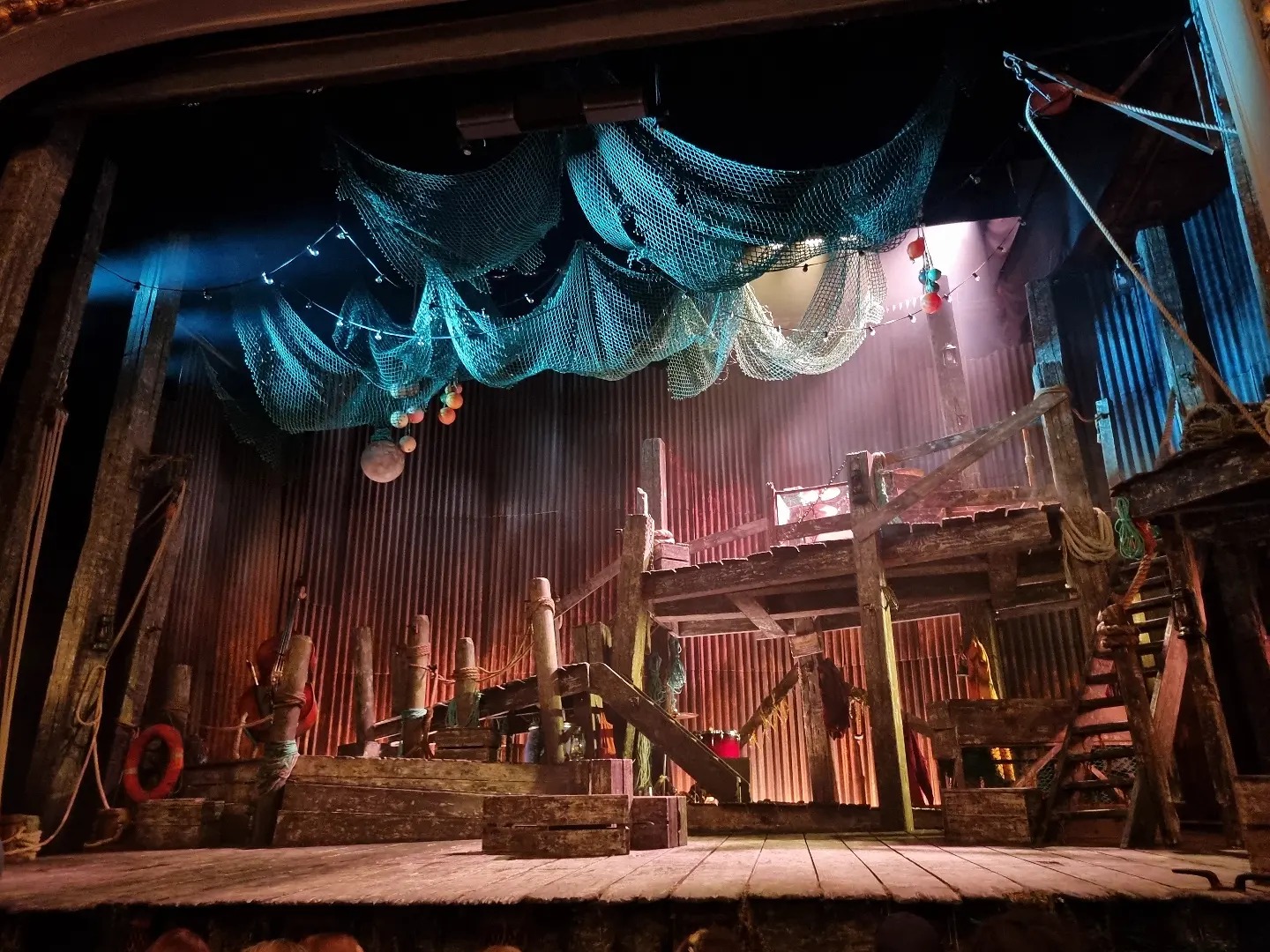
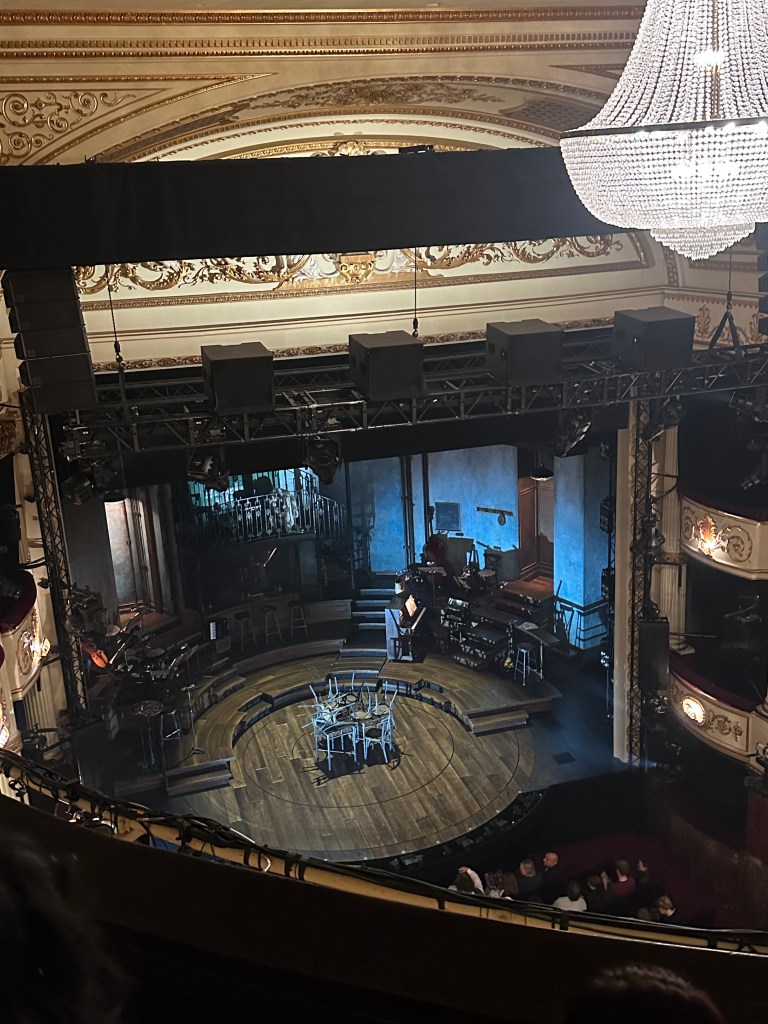
While not directly related to the production, one of the set models that I saw (pictured below) reminded me a lot of the set of Benjamin Button. Both seem to have a broken down nautical theme, which by incorporating elements of the ever changing sea and the dilapidation caused by time related strongly to core components of the story.

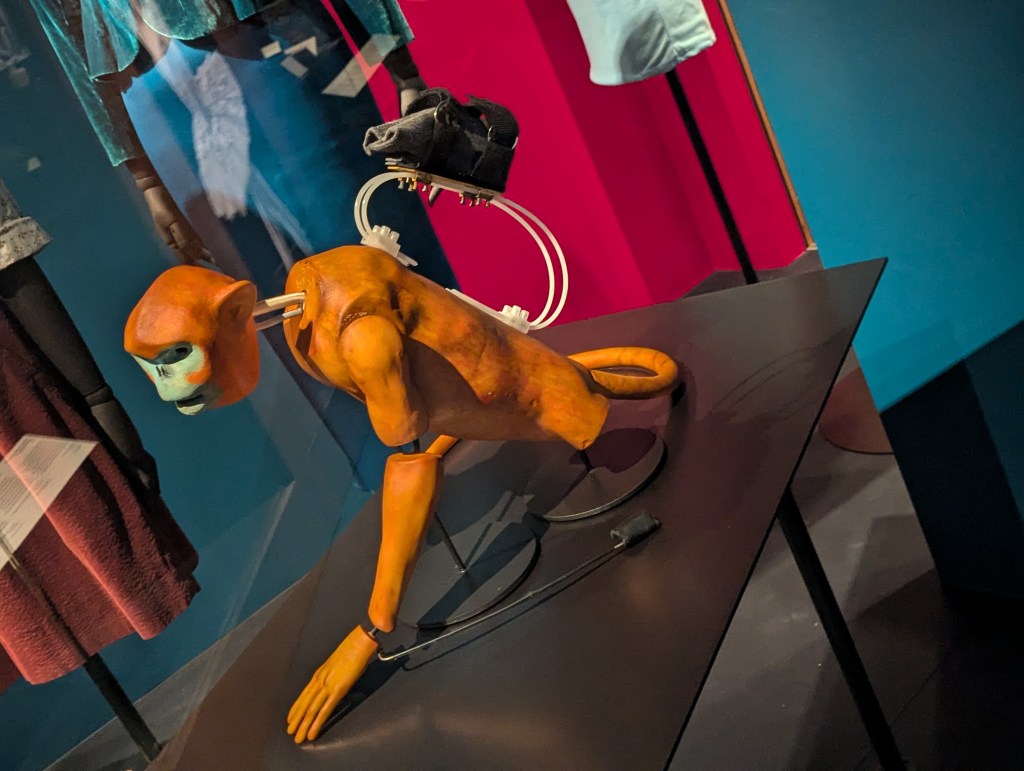
On the television side of things I really liked the His Dark Materials displays. They had puppets that were used as stand in’s during the filming of the show that were then replaced with CGI. I was very impressed with the construction and effort put into building these puppets despite the fact that they would not actually show up on screen. This was especially true for the heads of the animals, which were extremely detailed and well painted. I believe that this level of effort was put in to give the CGI artists a good reference point for lighting and shadows when creating the scenes.

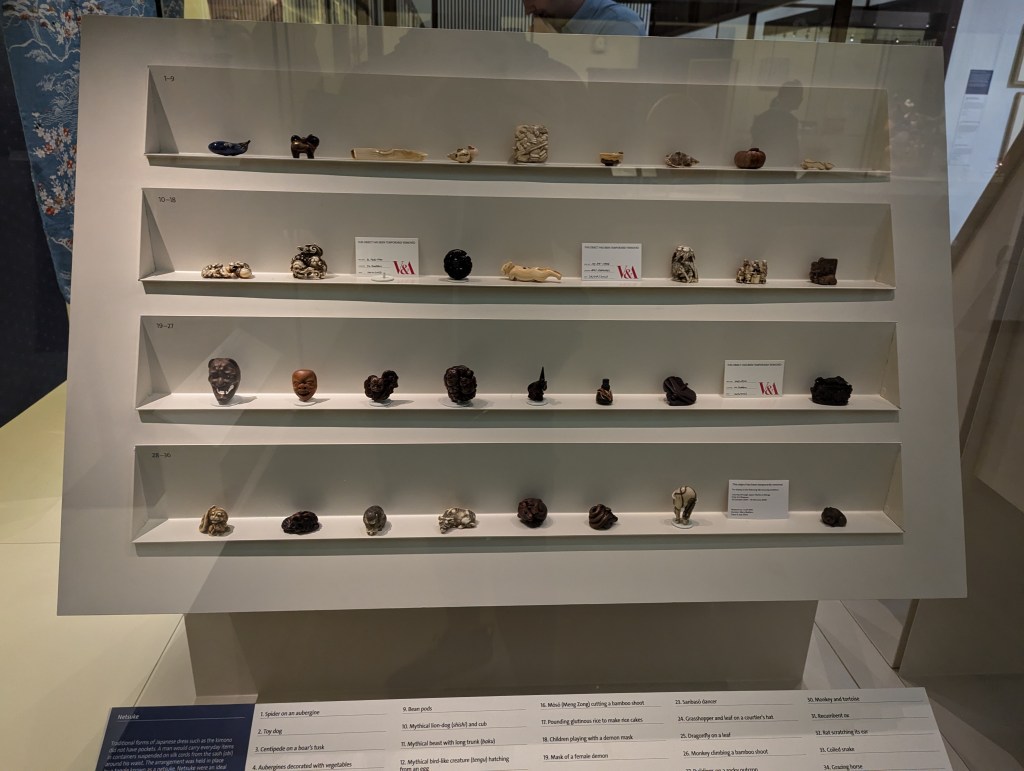
Outside of the theatre and film exhibit I really enjoyed walking through the Japan exhibit. While somewhat small compared to the others in the museum, it had some really interesting pieces. I really enjoyed looking at the netsuke, which are little statues that used to be used to keep cords tied on kimonos. They had quite a large collection of these, and they all depicted different things. I was surprised at the diversity in styling, material, and subject matter among these relatively small statues.

The afternoon after visiting the Victoria and Albert museum I went independently to see a play called the House of Games. While not terrible it was definitely my least favorite out of the shows I have seen here so far. I am not sure whether it was the plays writing or acting, but the dialogue felt very off for much of the play. It also relied heavily on a character being very charismatic, but that did not transfer to the stage very well and it ended up just feeling very awkward. The plot also hinges on there being a great amount of chemistry between said character and the main character, which is unfortunately not achieved. I feel like part of the reason that the show disappointed me as much as it did is because it focussed on subjects I am really interested in, psychology and games, but I feel like it did not handle them well. This was especially prevalent in how it handled the main character, who was a psychiatrist. Either little research was done into the career or she was meant to be a very bad psychiatrist, but in her sessions she did very little to help her client and outside of them she behaved very inappropriately interfering with his personal life. However the play still had some good moments and the climax was fairly entertaining. I really liked the set, which was a double layer with the therapist’s office on top and a shady dive bar on bottom. Overall while it was not great I would say it was worth the 10£ I spend just to get out and see a show

Hamlet Set at The V&A

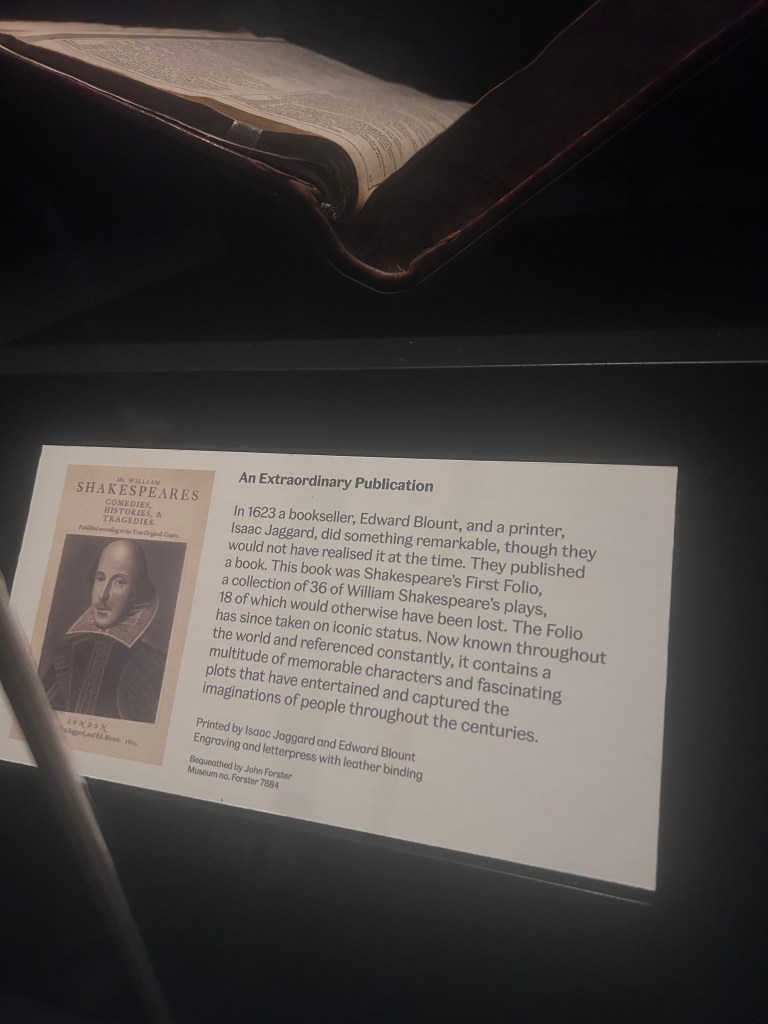
Shakespeare’s Hamlet is perhaps the most well known piece of theatre of all time. There have been countless renditions of this play from theatrical summer camps to the stages of Broadway to the silver screen. This is hardly surprising; beyond the plot chock full of ghosts, love, murders, and madness, Hamlet (like many of Shakespeare’s works) also includes a deep exploration of the inner life of humans. Throughout the history of these productions there have been many different takes on the world in which this story exists. The picture below, taken at The Victoria and Albert Museum in their theatre wing, shows a set model from a 1911 production.

The plaque below it reads “Early 20th-century audiences expected plays to be performed in naturalistic scenery. Edward Gordon Craig reacted against this stage realism. For his production of Hamlet at the Moscow Art Theatre, he designed an abstract setting of moveable screens, lit from above by coloured light. Though the production suffered from technical problems, Craig’s ideas on design became very influential.”

I believe that, as theatre makers (and artists in general), we are drawn to pushing against the status quo. Theatre as an artform is all about enacting a change in the audiences who attend. Sometimes this comes in the form of a raucous comedy meant to uplift spirits and build community. Other times one sees a lavish musical meant to incite passion and awe. Other times still, and certainly in the case of Hamlet, it comes in the form of a drama meant to move and spark curiosity. Dramas are the backbone of theatre, dating all the way back to ancient Greece and even before then to ancient Egyptian and Chinese performances detailing the stories of deities. These stories are meant to teach, yes, but they are also meant to make the audience question. Some questions will be answered and others will stay open for each person to draw their own conclusion.

It is this questioning – a quality so present in Hamlet – that makes this set design work. By pushing against the grain of what audiences had grown to expect in theatres of the early 1900s, Craig started the questioning as soon as people entered the room. What could this abstract world hold? How would it transform from place to place within the story? Am I even in the right theatre? (Okay, maybe not that last one, but it would definitely be a thought that passed through my brain!) These audience members have been primed to dig deeper, to be curious, and to find their own meaning before even seeing an actor onstage or hearing one word uttered.

This set also works with the inner lives of the characters in Hamlet. Much like the empty and dull stage seen above, Hamlet’s life has become barren and full of grief since the death of Old Hamlet, his father and the former king. Nothing for him feels bright or fun anymore, which can be seen when not even his two best friends, Rosencrantz and Guildenstern, could infuse him with joy. I also believe this set touches on the idea of madness – of losing one’s mind. Perhaps these barren columns weren’t always so barren. Perhaps they were once filled with paintings and trinkets, but have become empty as these characters have lost sight of themselves. The lights try to fill it, but light is a fickle thing that moves and changes and disappears in an instant.I will say, at first glance I didn’t think much of this set design. To be quite honest, I’m sure I would’ve been one of many doubtful audience members. However, looking into the way that this set ties in with so many thematic elements present in Hamlet, I can only imagine what it would’ve been to see this up on a real stage.

Collaboration and the Beauty of the Ensemble Show

At the Victoria and Albert Museum we had the incredible opportunity to see and learn about some of the most iconic pieces of entertainment. From Elton John’s music note sunglasses, to the Act 2 Elphaba dress, to Laurence Olivier’s Hamlet costume, this exhibit had relics of all areas and time periods of entertainment.

The first thing that caught my eye was a plaque on the wall titled, “COLLABORATE”. It read “Theatre thrives on collaboration. Creative teams are made up of many people with specialist skills, from directors and producers, designers and makers, to choreographers and performers. Some teams work together over many years developing a distinctive style, while new collaborations can spark fresh approaches.” Collaboration is my favorite part of theater. The ability to come together and share in the creation of a beautiful piece of art. To me, that is where the magic of theater is born. The melding of distinct and unique voices into one singular story. Finding the compassion and empathy to raise others voices and others finding that space to raise yours. I immediately thought of The Curious Case of Benjamin Button. From the ensemble story telling, to the musical instruments they played together on stage, it is a feat of collaboration.

Across from that plaque was a mask from Sleep No More. Sleep No More is an immersive theatre production that was created by the British theatre company Punchdrunk. The base of the story is William Shakespeare’s MacBeth but also draws upon the genre of film noir and the lore of witch trials throughout history. The production has very little dialogue and takes places in the dimly-lit, 1930’s McKittrick Hotel. The audience members are each given a mask when they enter, the same kind of mask that was on display at the museum, and are given instructions to not remove them during the performance. They are then sent into the hotel to interact with the props and watch the performers and the scenery , while being mostly ignored by the performers. What always amazed me about Sleep No More was how intimately aware performers and crew had to be of each other and the story they were telling in order for it to work. With hardly any dialogue they are telling the entire story through movement and body language. They have to work together as a singular unit, otherwise the story would be unclear and the whole experience would fall apart.

This brought me back to thinking about The Curious Case of Benjamin Button, the story was absolutely dependent on the intimate collaboration between the actors. Unlike Sleep No More there is plenty of dialogue, however, if not delivered correctly it could be quite hard to follow. If the Strangers were not a well oiled machine, the waters of the story would become muddied. They have to meld into one narrator with distinct voices. They have to keep time and rhythm as they play all of the orchestrations for the entire show. There is no space for any of them to be disconnected from the group or the story. It is truly a feat of teamwork and collaboration. After having some time to sit with my experience at The Curious Case of Benjamin Button I think that is what I found so moving about the piece. It is a story told by a close knit community of extraordinarily talented people. Every time they take they stage they are not celebrating their own talent and work, they are celebrating the talent and the work of the group. It’s truly beautiful to witness what happens when collaboration takes flight.