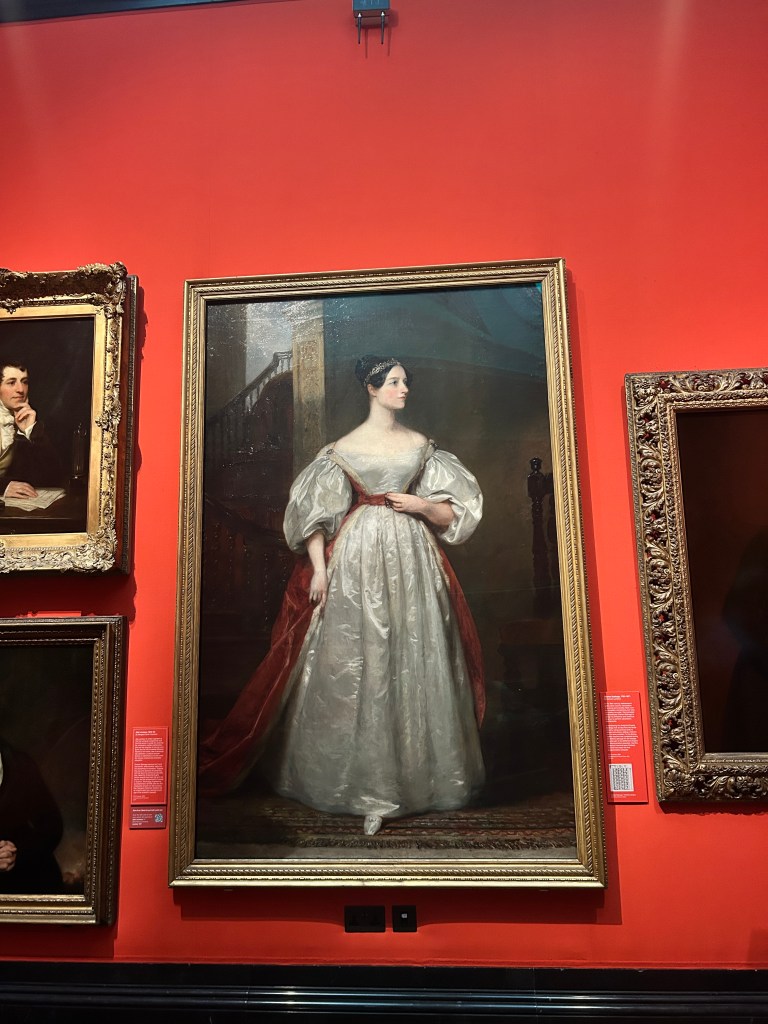
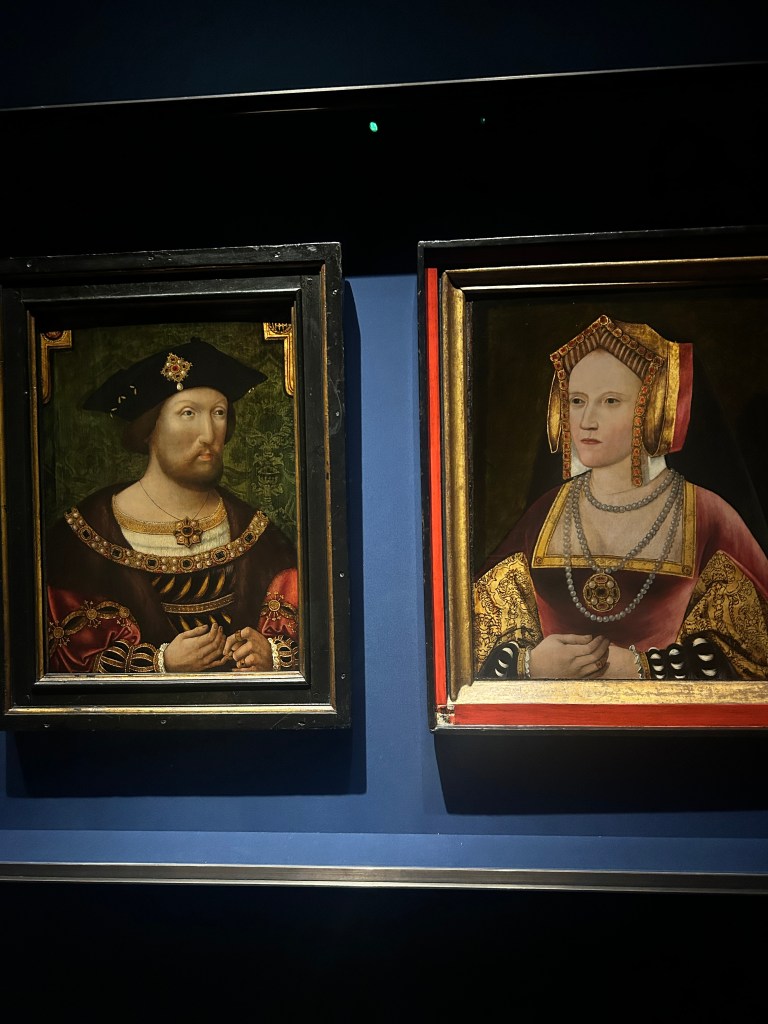
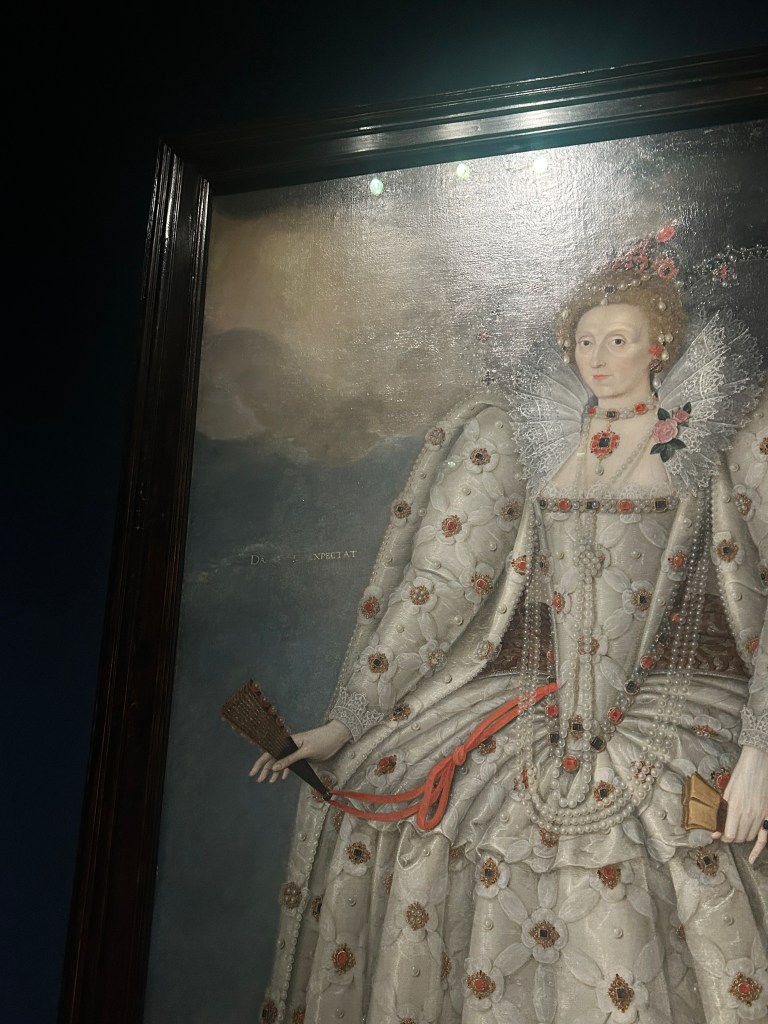
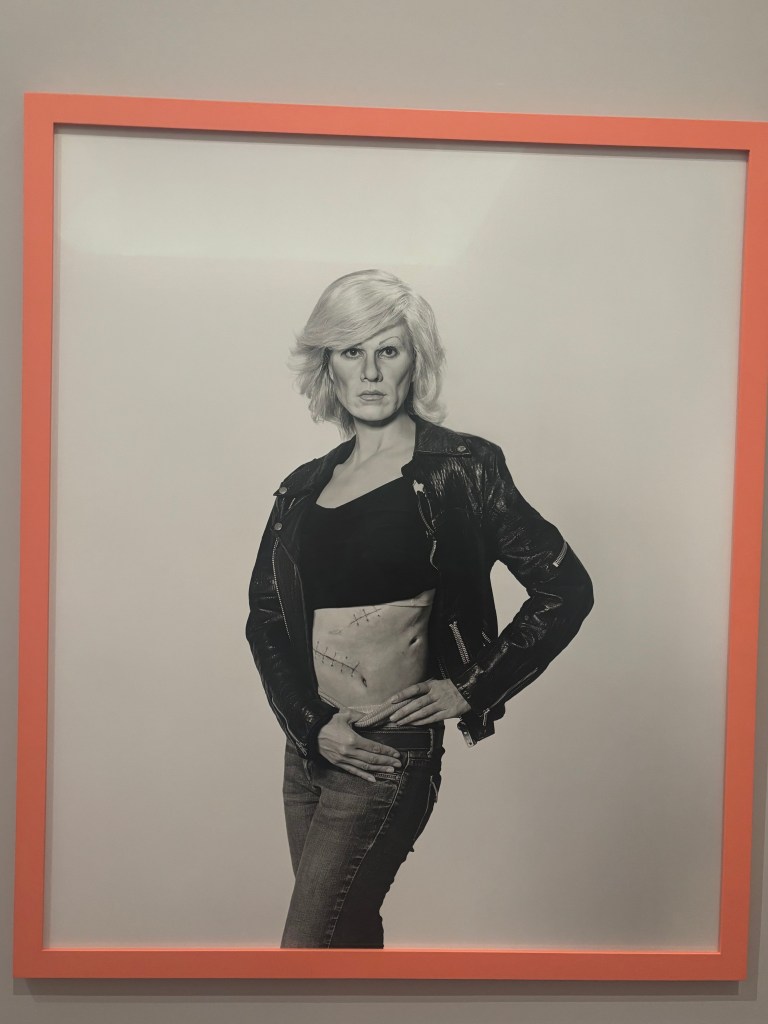
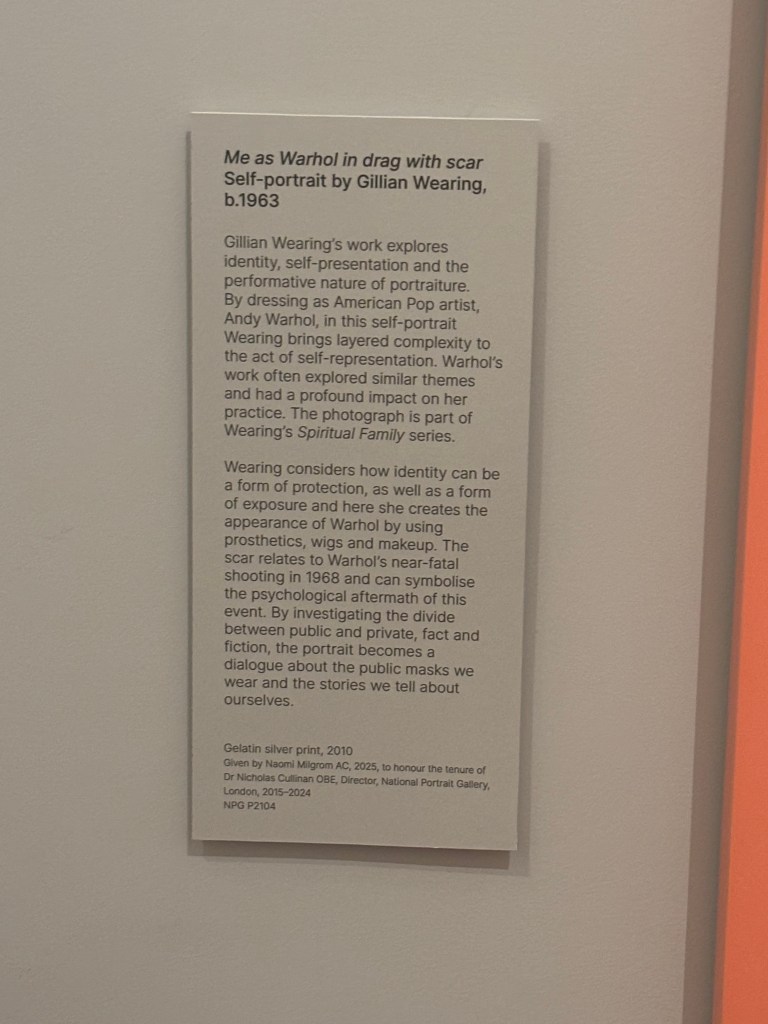
The National Portrait Gallery was a treasure trove of art ranging throughout human history, with even a small section on contemporary artists. Going in I was worried that I would find much of the museum uninteresting because I thought that having a museum containing only one type of painting would get repetitive, I was pleasantly surprised by the variety there. While There were still many paintings that felt very similar in subject and style, there were a lot that used the portrait format and did something really interesting with it, be it through style or interesting outfit or alterations made to the subject
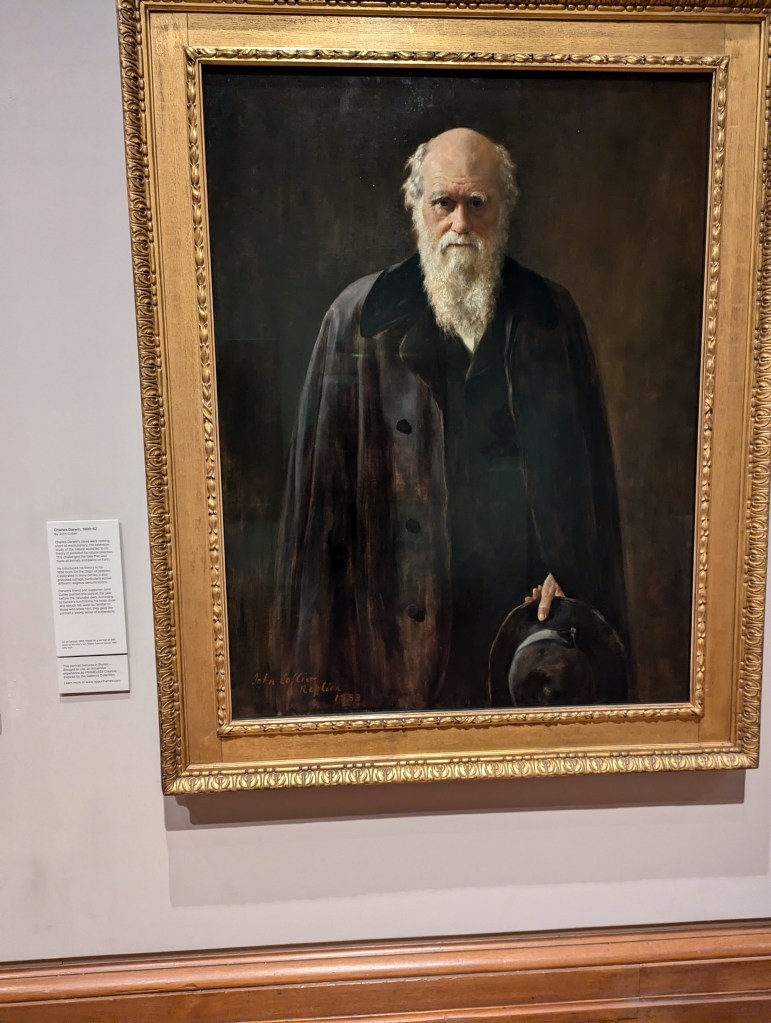
While there were many intriguing pieces of work at the national portrait gallery, the one that stood out to me the most was the portrait of Charles Darwin by John Collier. Charles Darwin was a scientist and author of “The Origin of Species”, which introduced the theory of evolution to the world. This idea was very controversial, and remains so somewhat today, largely because of its contradictions of the church’s teachings. The idea even challenged his own beliefs, as before he was a christian and throughout his life seemed conflicted on his views on religion. He spoke of how the pain and suffering he saw in nature contrasted with his views of an omnipotent god, but to his deathbed never claimed to not believe in one. John Collier shared uncommon religious views for the time, although to a higher degree. He completely disagreed with the idea of a god and religion, saying “I am looking forward to a time when ethics will have taken the place of religion”. This painting was created one year before Darwin died, and portrayed him in a more casual outfit that according to his son was “familiar to those who knew him”.
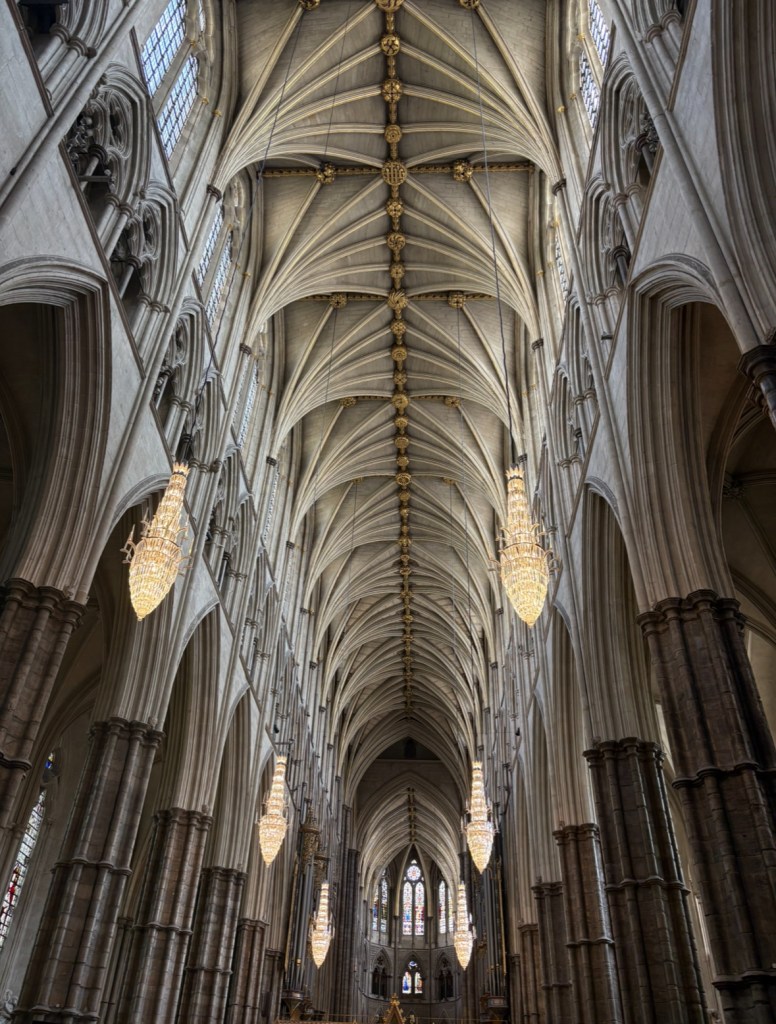
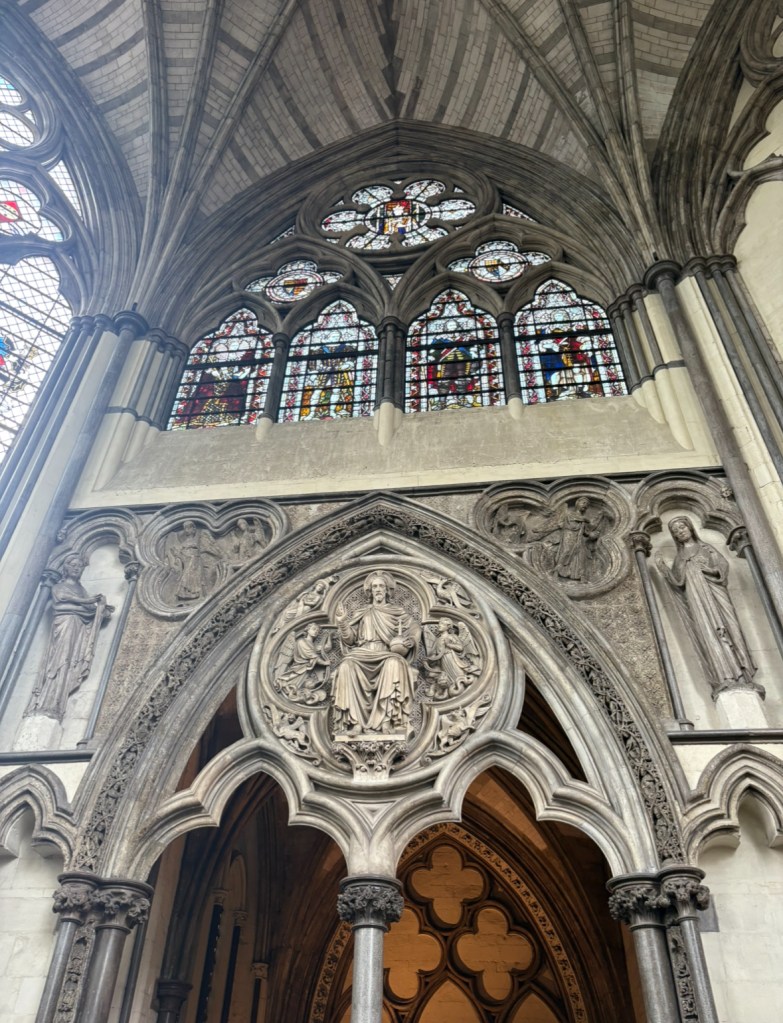
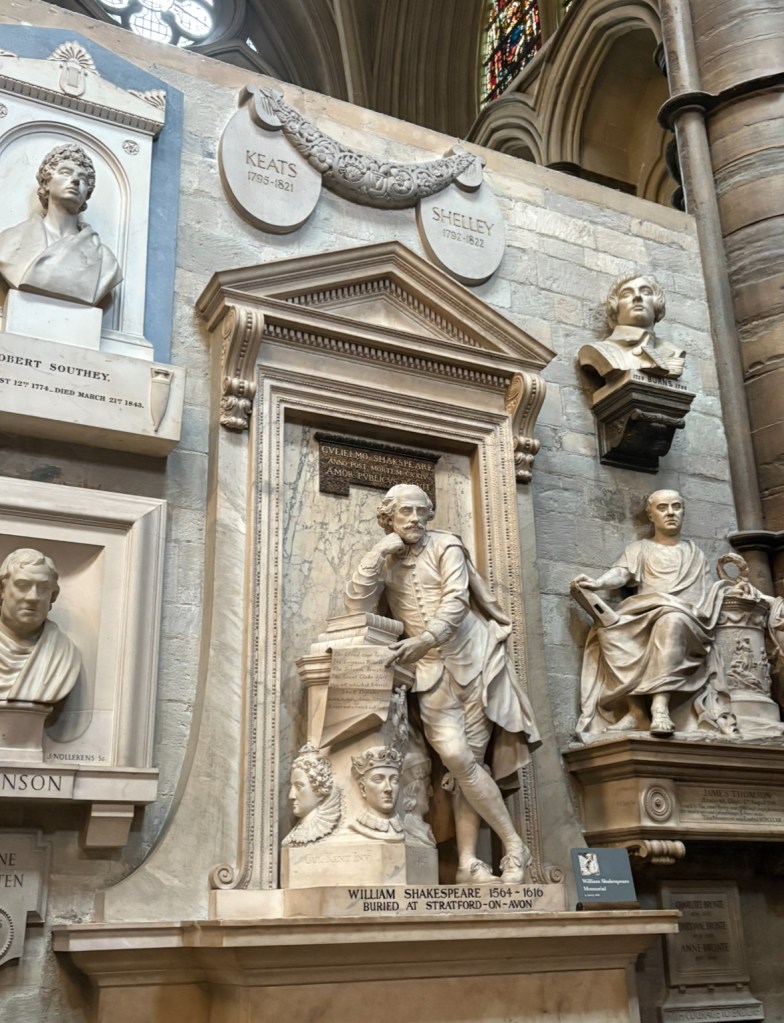
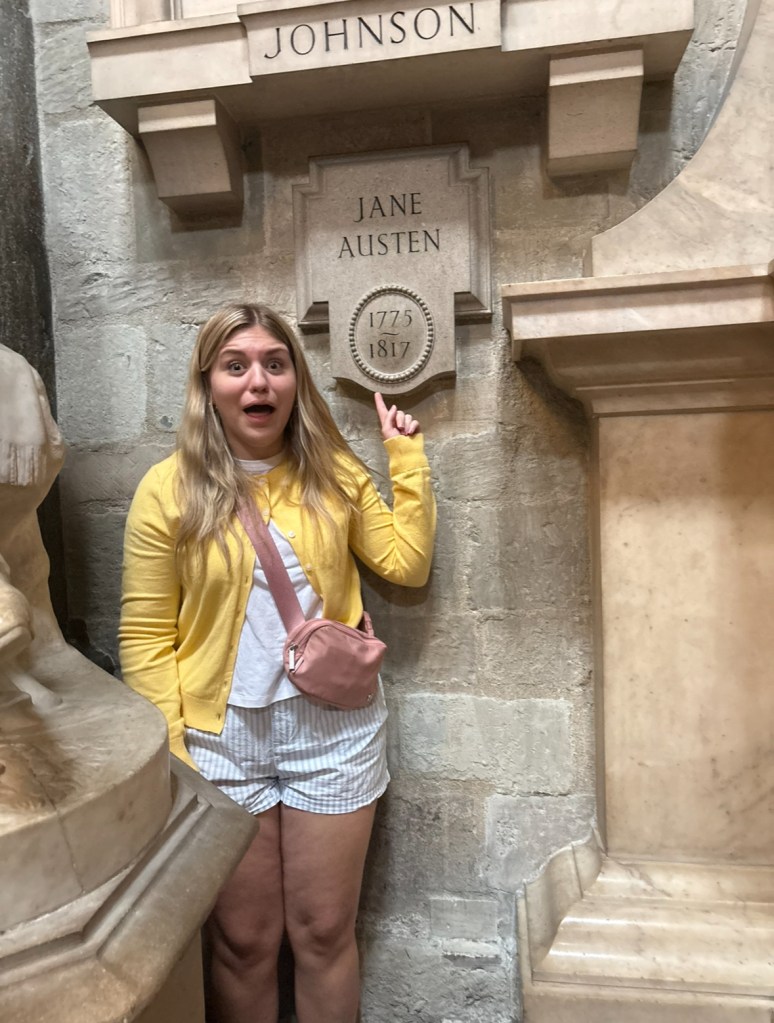
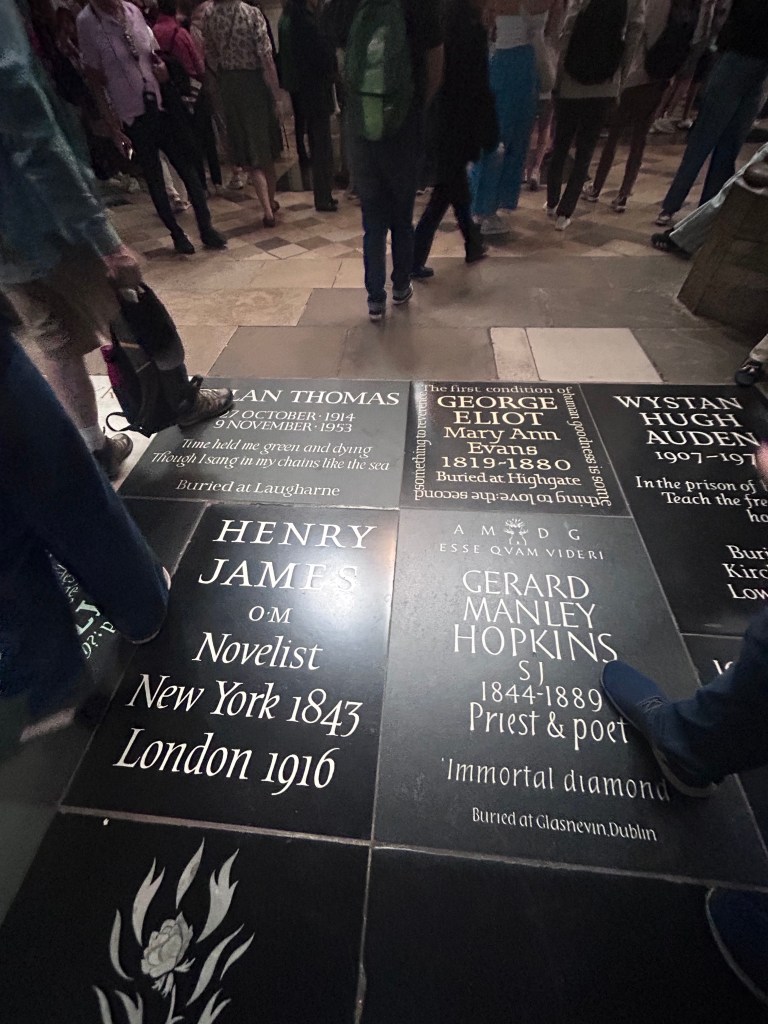
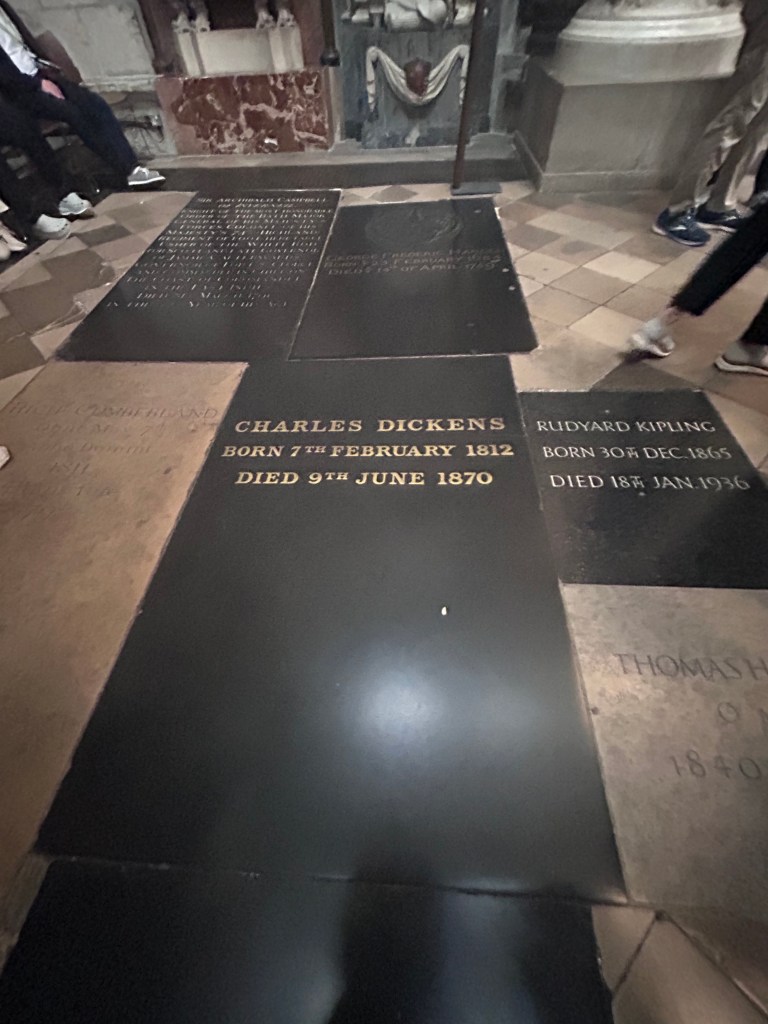
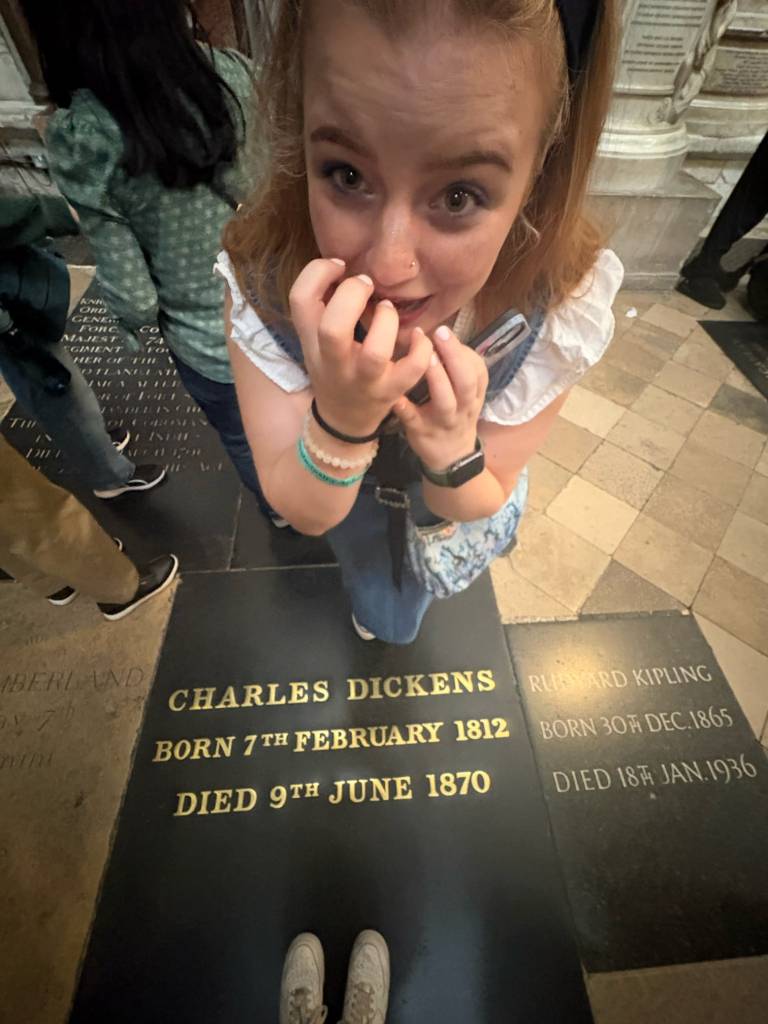
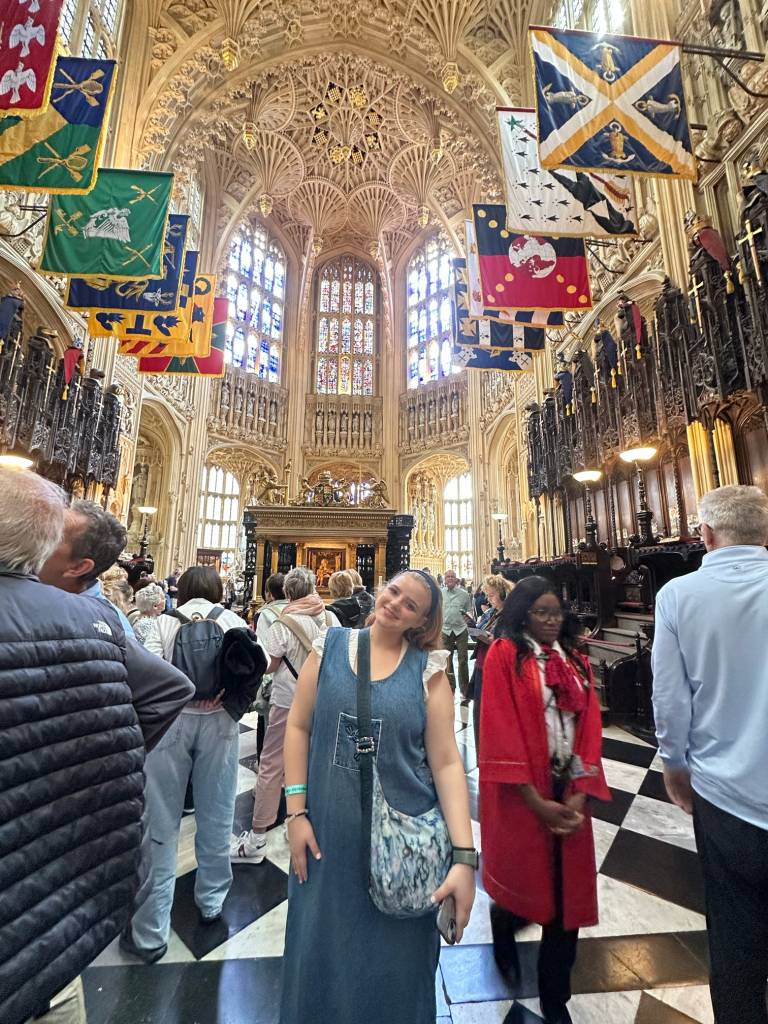
The thing that strikes me the most about this painting is the expression on Darwin’s face, which I can not quite pin down. He was a man who spent his life in the pursuit of controversial truths, and I feel like something about his face captures that. There is wisdom and knowledge in his eyes, but also a certain amount of sadness. The lighting on his face adds to this feeling, which leaves his eyes in deep shadows. His worn down coat and hat humble his appearance, but his posture and silhouette have a certain regalness to them, with his coat almost giving the illusion of a cape. I feel like this contradiction matches who Darwin was as a person. He had to juggle his scientific research and the religious beliefs he had held his entire life prior. He wanted to spread information and knowledge, but received scorn and hatred for doing so. It is somewhat ironic that despite how religious institutions have historically viewed his work he was buried at such a religiously important space, Westminster Abbey.
The plain muddy looking background blends in somewhat with his closing, really bringing all attention to his face, primarily his eyes. By using more muted colors for his clothing and the background, the artist may have been attempting to force the audience to avoid thinking too much about the surroundings and circumstances of the painting, and just on the man portrayed.
Viewing this portrait spurred me onto my next outing of the day, which was to the Hunterien Museum, which is a surgical museum that focuses on the intersection between human and animal biology. Reflecting on Darwin’s work after seeing the painting, I feel like I was able to better connect the ideas presented at this museum, and better appreciate the interconnection between all organisms (at the request of the museum, no photos of its displays can be shown, but if you are at all interested in biology or anatomy I would recommend it) .




 Theatre in London U of A