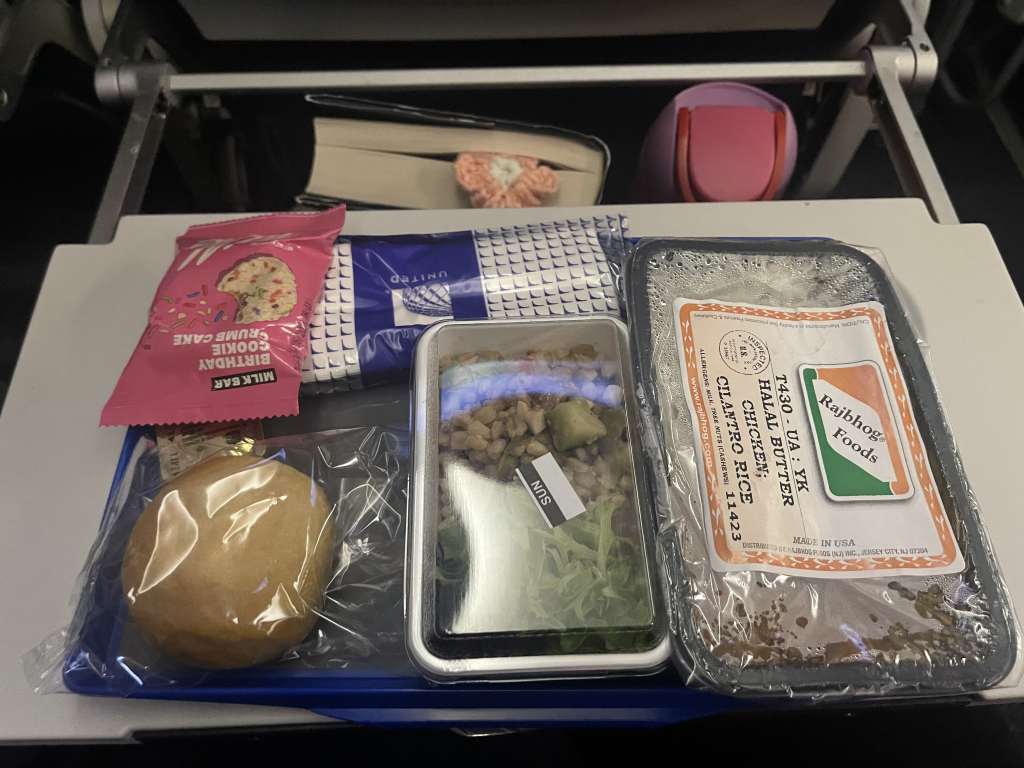
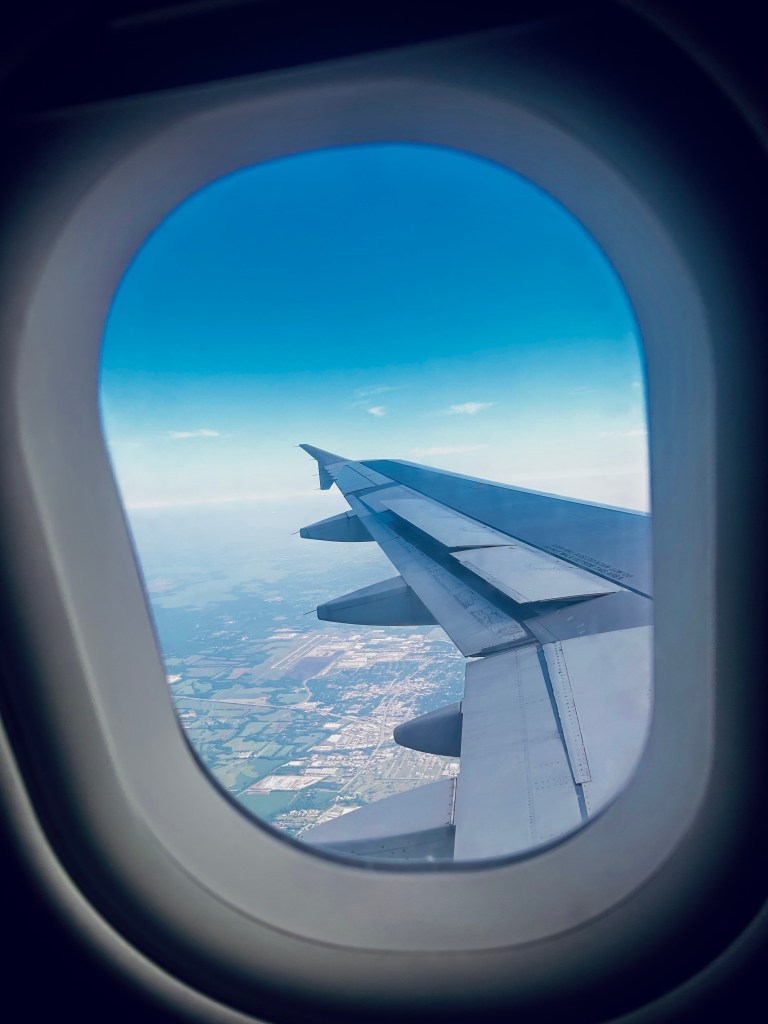
My first impressions of London were great! I embarked on a journey of traveling for more than 24 hours but it was so worth it. Traveling separately from the group was interesting and a bit lonely, but I got to read and sleep a lot so it wasn’t so bad. I had the best butter chicken I’ve ever eaten on my flight, which was definitely unexpected but welcomed.
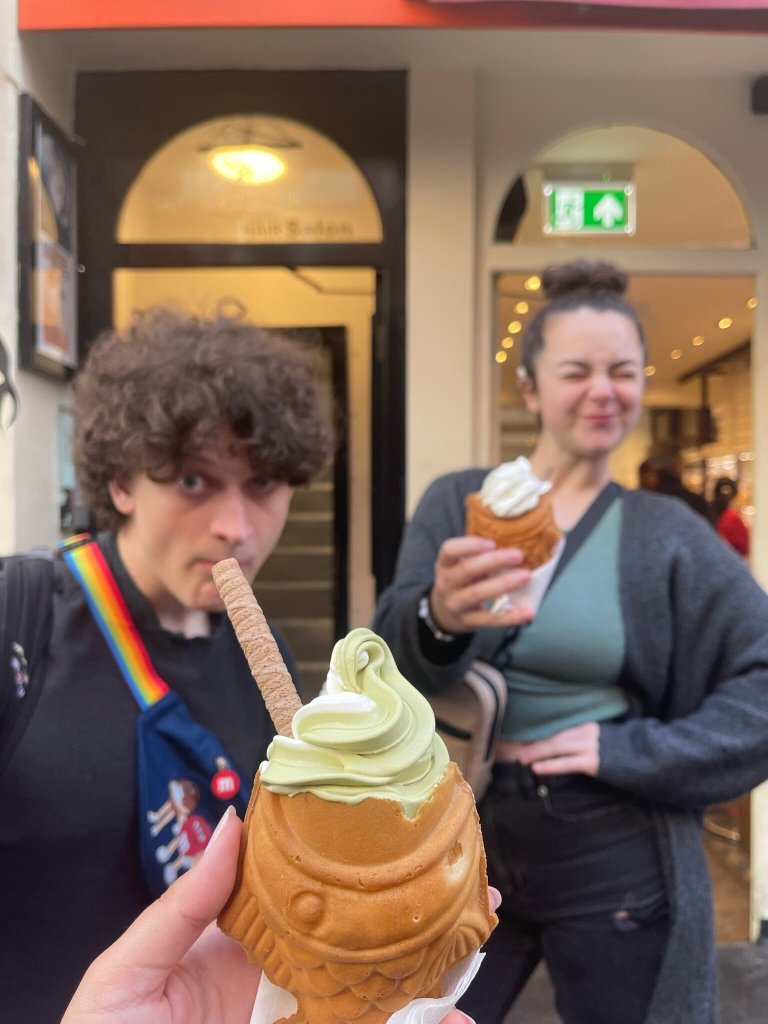
What we’ve seen so far has been beautiful, even if jetlag has made everything feel like a fever dream. Once we got to the hotel and settled in, a bunch of us grabbed food and had a picnic at Russell Square Gardens. The park was covered in beautiful flowers and the weather was perfect. One thing I really enjoy about London is that the air feels super clean. I was expecting it to be similar to NYC air and be smelly, but it was actually very fresh. I’m excited to spend time exploring outside. A few of us went to Chinatown, got taiyaki, and walked around and there was so. much. food. I’m excited to try it all with all of the friends I’m making and getting closer to.
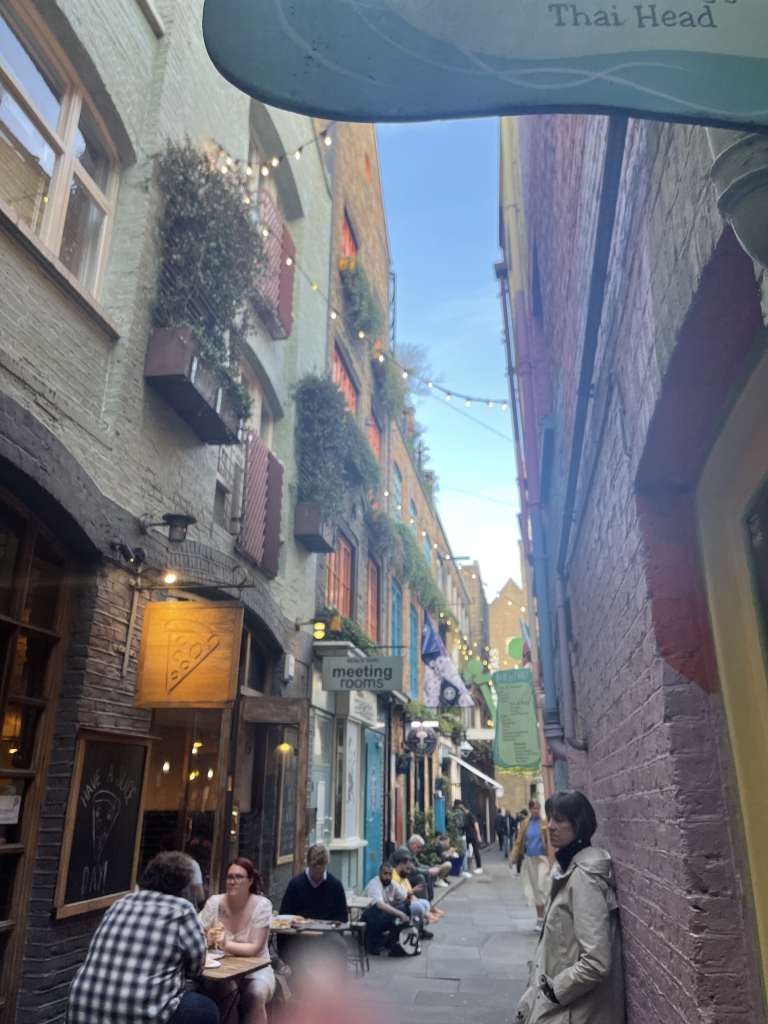
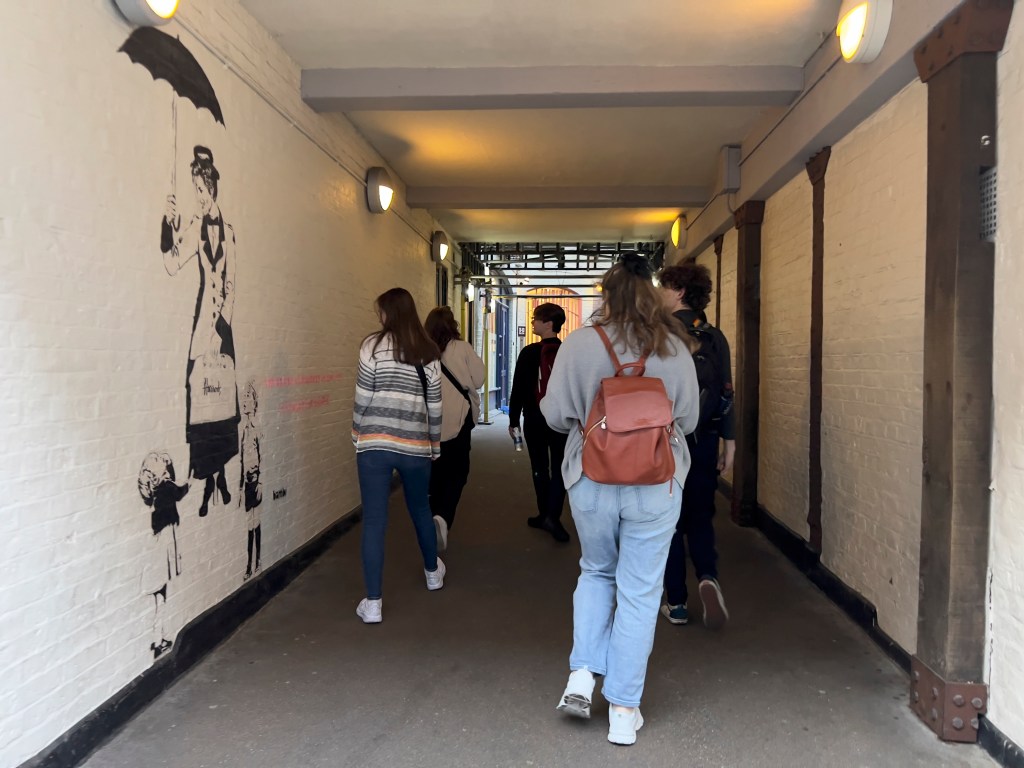
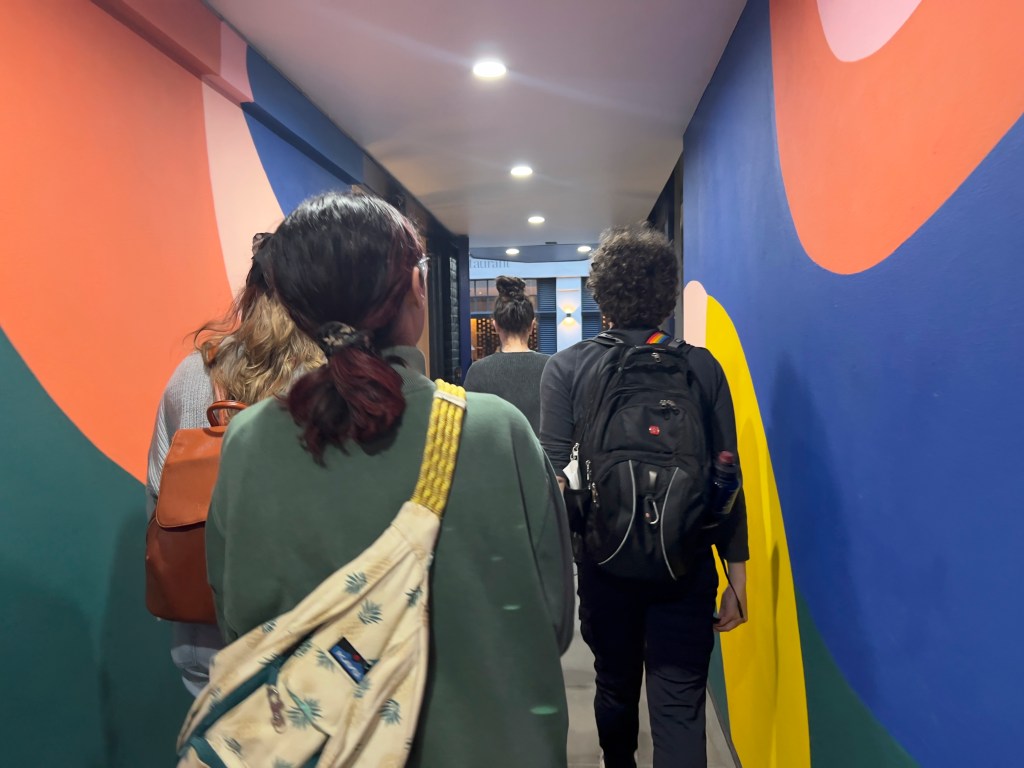
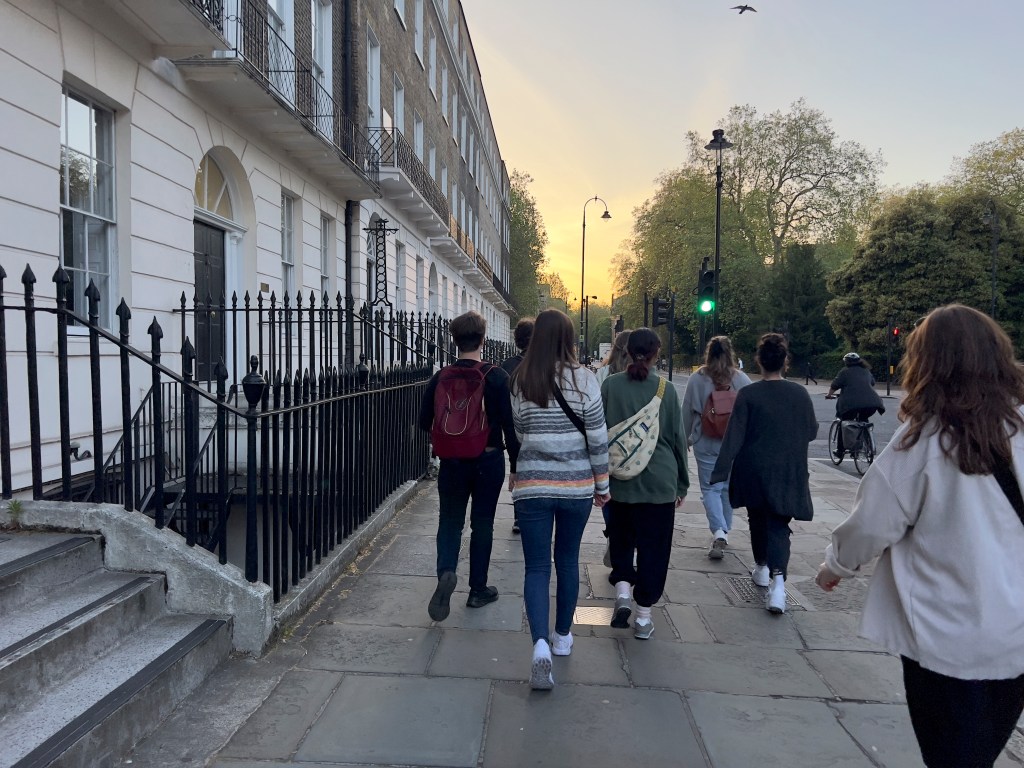
Leaving, there was a carriage playing ABBA, and a block away from that we listened to an older man sing Dancing Queen. I love ABBA and saw that as a good sign of things to come. Afterward, we walked back to the hotel rather than taking the tube and explored all the parts of London that caught our eye. There was a colorful alleyway with storefronts, parks with cute dogs, a closed storefront with medieval armor in the window, and so much more.
After all of that, I should be exhausted, but I’m so excited for it to be tomorrow that it’s hard to sleep. I’m off to try now, goodnight all!
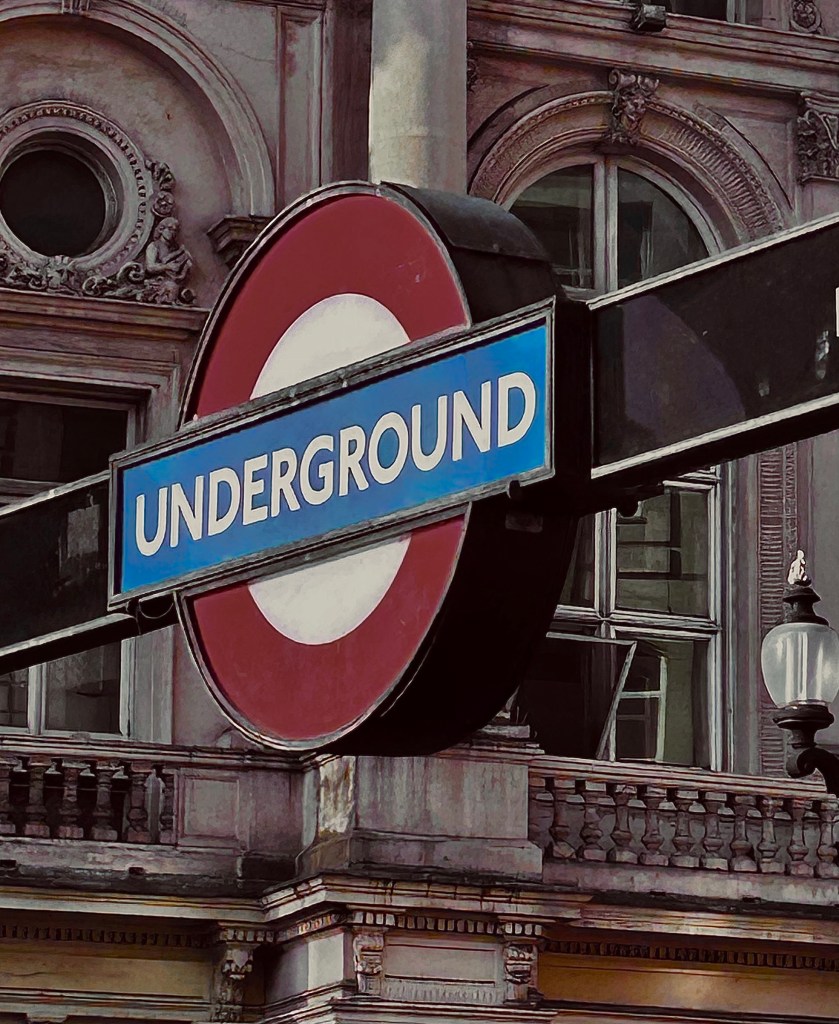
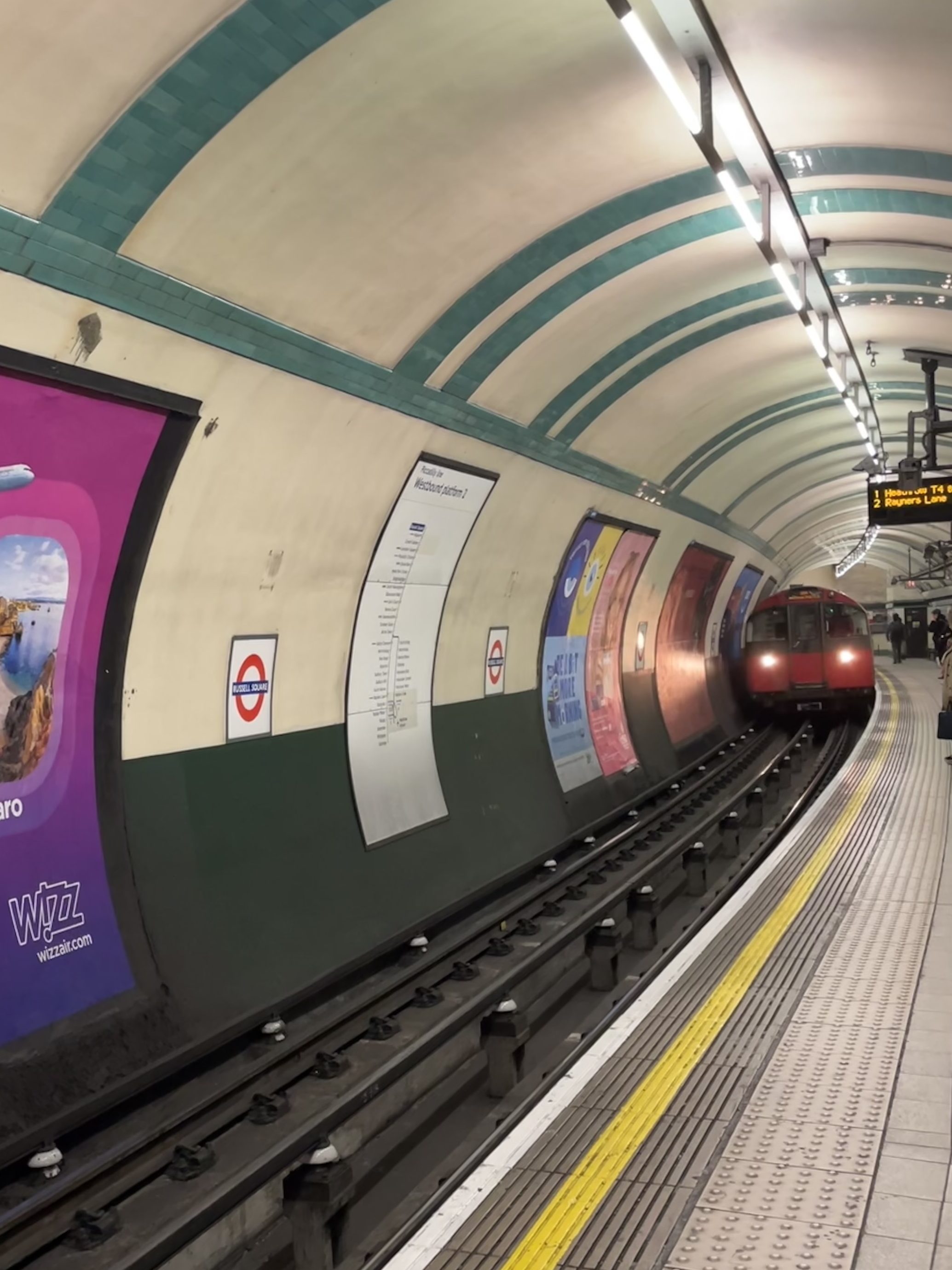
It’s our first day in London! Even with constant waves of exhaustion and zero sense of direction, I made it off the plane. I survived my very first international flight, and I can’t wait to venture out into the unknown. Today, as soon as we got to our hotel and settle, we decided to explore our neighborhood and hit the station. With our brand-new oyster cards, we went to Russell Station and made our way to the train on the Piccadilly line. The ceilings were low, and the tile was colorful with a hint of tasteful filth. I can’t help but say everything looks like Harry Potter or every other British movie/show ever made.
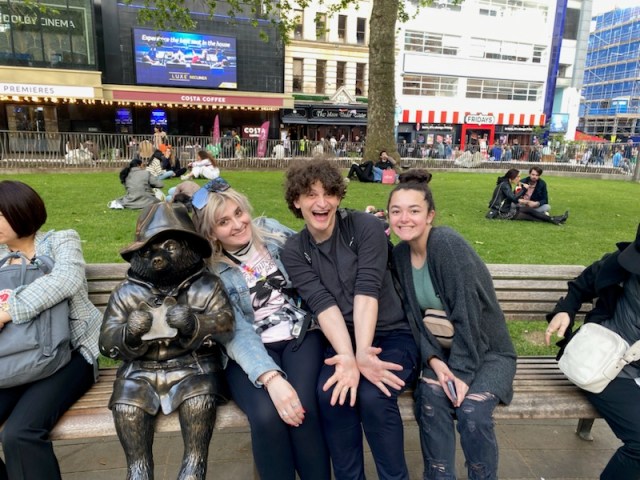
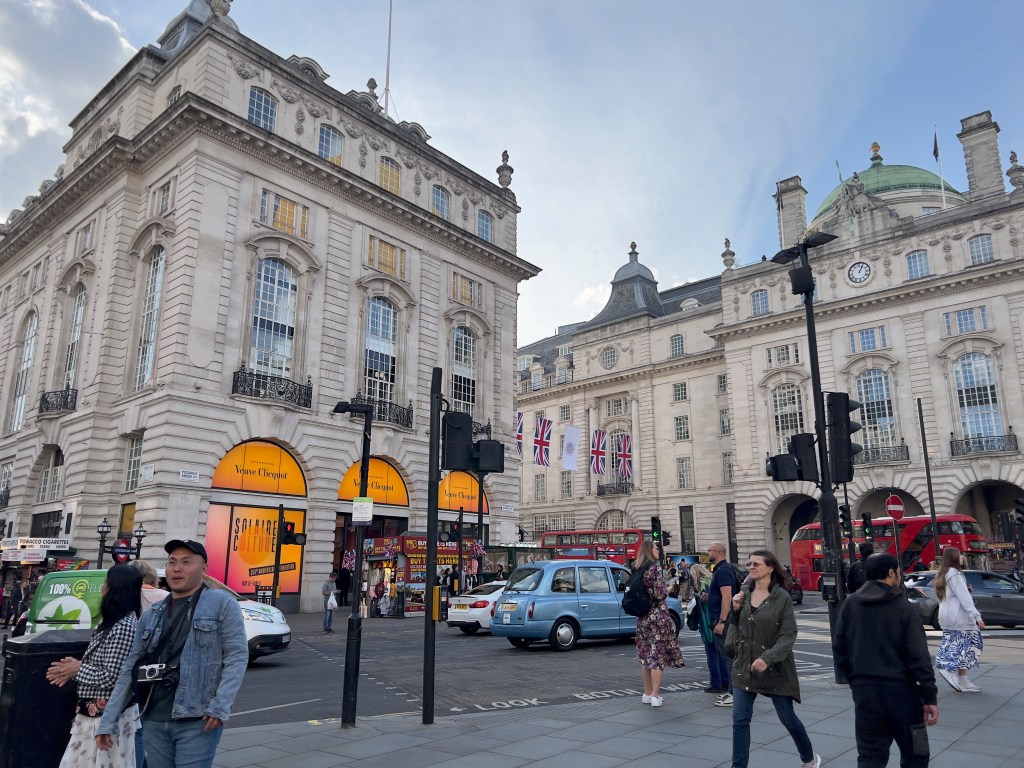
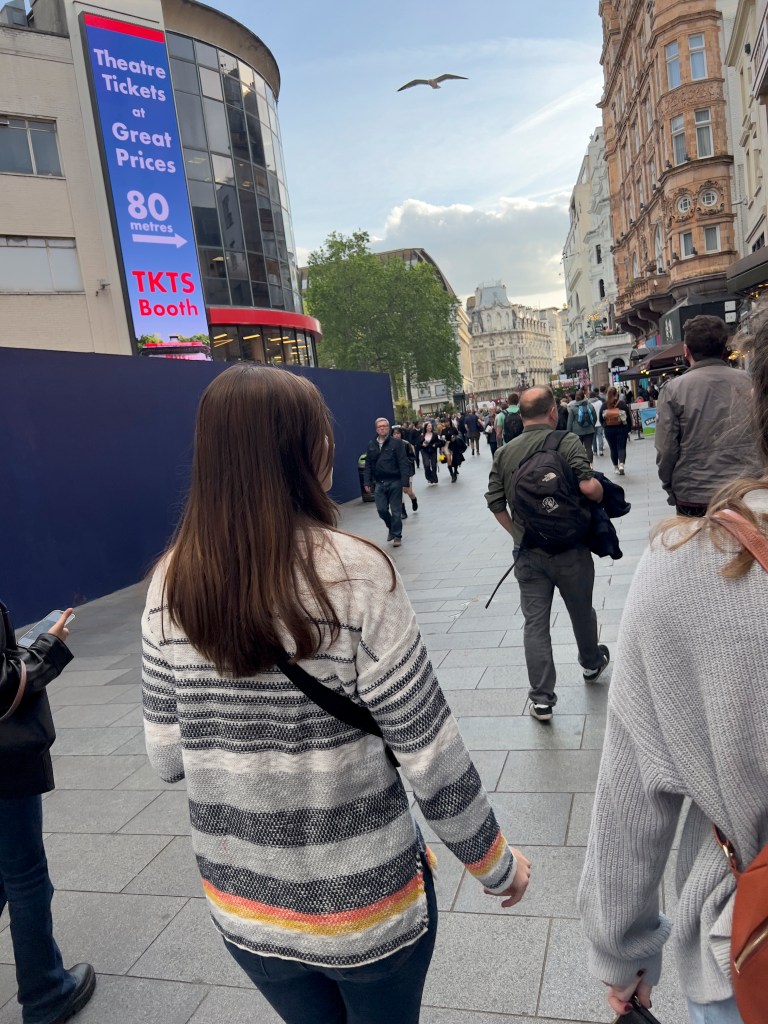
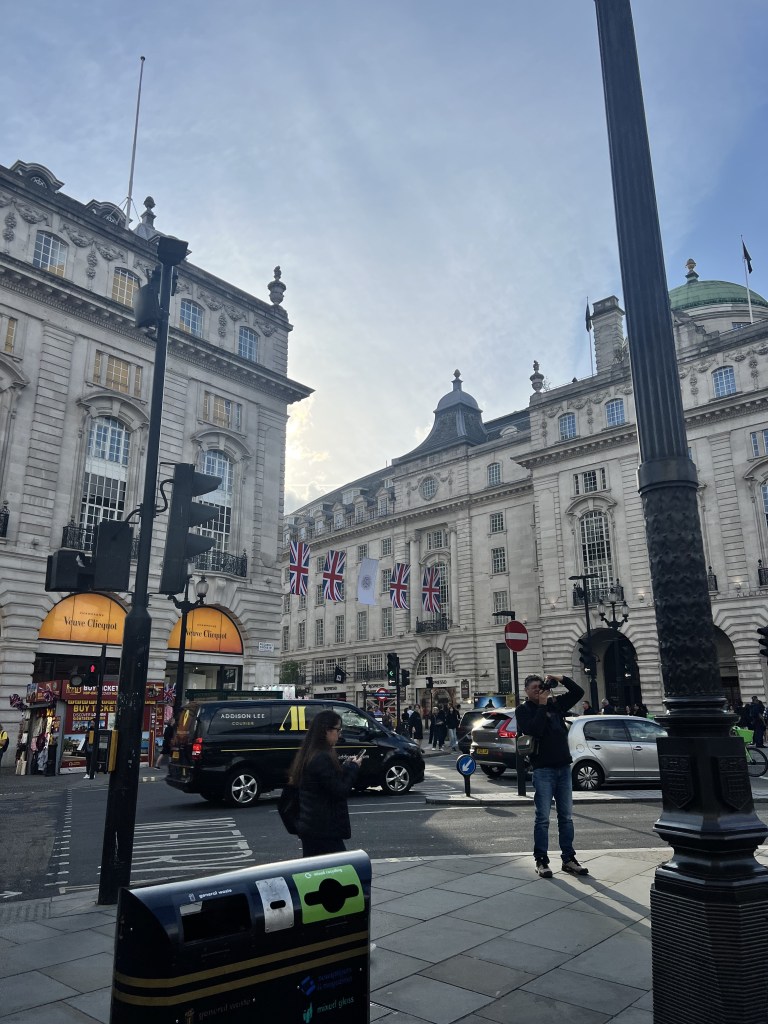
After a few short stops, we made our way to Piccadilly Circus, London’s more clean Times Square that reeks of passion and marijuana. With a mix of Georgian architecture and hundred-foot-tall jumbotrons, Piccadilly Circus may be the happiest place on earth. As a professional window shopper, I was overwhelmed with opportunity once I noticed a four-story burger king and hundreds of different shops and restaurants around any and every corner. We walked around Leicester Square and saw the Bard himself, but more importantly, Paddington Bear! We traveled to the TKTS booth where we learned how to get theatre tickets at a good price.
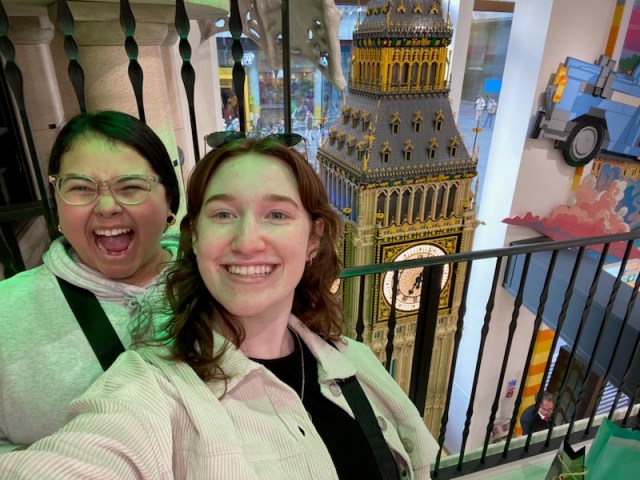
Afterward, a small group and I decided to stay in the square and venture on our own. There was just too much to look at, we couldn’t end the night there. We traveled to the most elegant establishments like the huge M&M store and Lego store where I was amazed by all the colors and options. Then, some of us diverged into Chinatown where we got lost in the extremely abundant amount of food options for roads on end. After finally deciding where to get some quick Taiyaki ice cream, we decided to walk back to our hotel and see more of the city and our neighborhood as the sun set on our first night in the United Kingdom.
At last! We are finally here in the beautiful and historical city of London! This was my first time traveling to another country and surprisingly, my flight experience was better than I had anticipated. I slept most of the way from Dallas to London. I now have a crick in my neck despite my best efforts to bring a neck pillow.
After our flight, we took a coach to the Royal National Hotel, where we will be staying for the next few of weeks. The rooms are quite nice with a pleasant view of the city streets. I decided to freshen up and rest a bit before our first excursion out into the city.
At 6:00, our group met in the hotel lobby so that we could all go together to learn the Tube System. We are provided with something known as Oyster cards that allow us access to this type of transit all throughout London. We took the Tube to the Piccadilly Circus where we roamed around looking at all the unique shops and restaurants. Some are not quite as unique as one may expect, for Americans are sure to find the familiar chain restaurants and stores that they know and love from back home. I found myself quite shocked to see that London had a Slim Chickens and Pizza Hut. What I found most interesting was how all of these modern restaurants and storefronts are in old historic buildings that have been around for centuries. One can feel the heavy history of London in their soul as they stroll the cobblestone streets. As I walked along with the group, I enjoyed looking at all the flowery windows of shops and flats. The architecture is so detailed in a way that truly gives the atmosphere deep character.
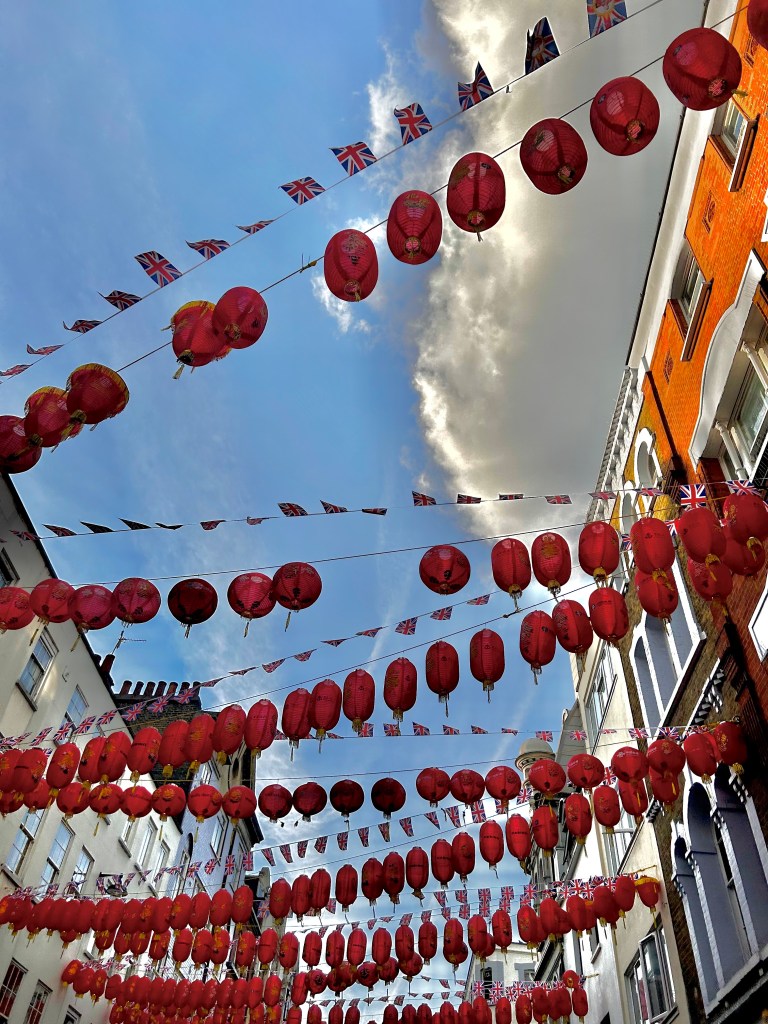
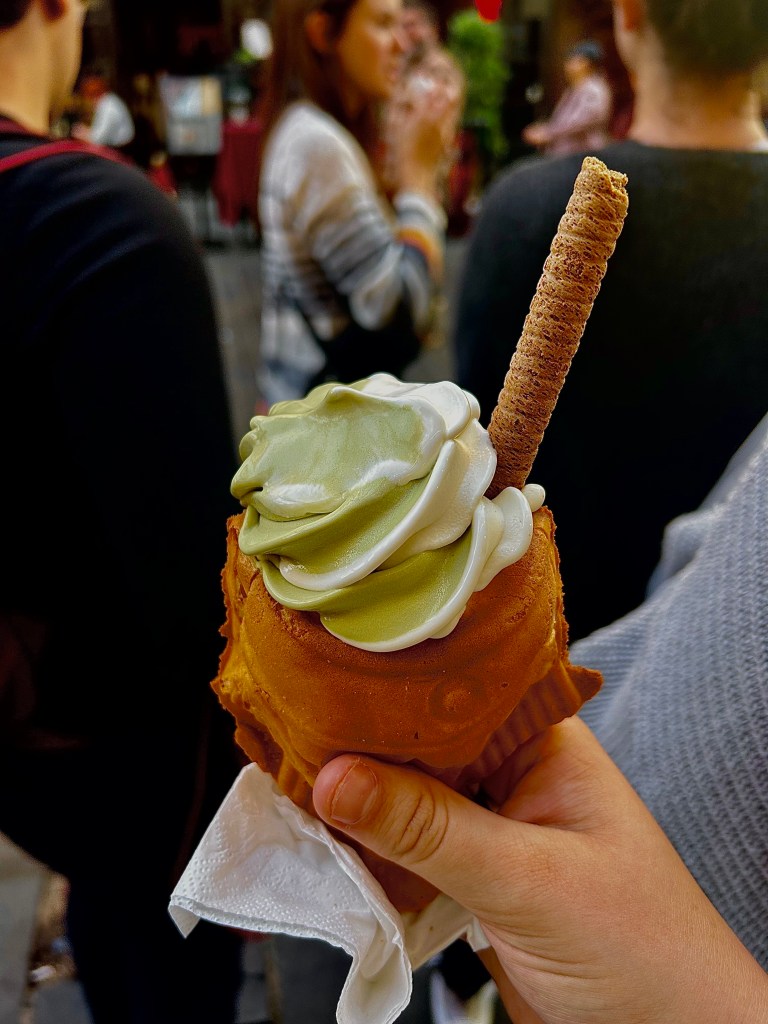
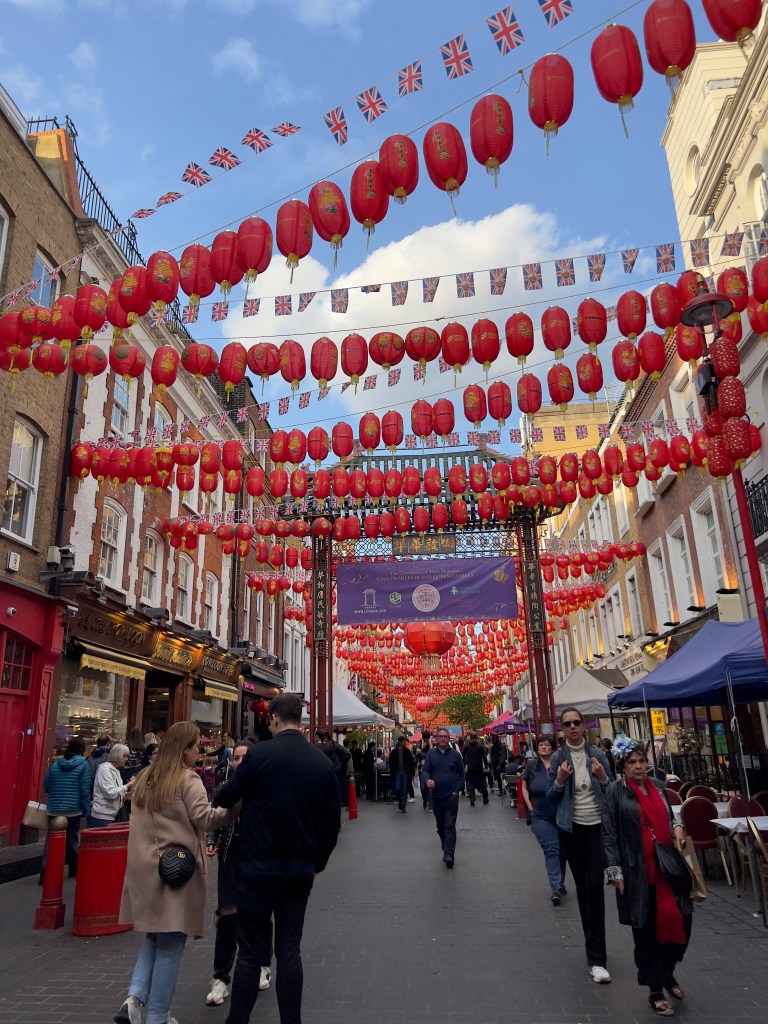
One of my favorite places that we visited was China Town which is right next to Picadilly Circus. I loved looking up and seeing all the beautiful red lanterns hanging over me as I walked. There were more Chinese restaurants than there were people in the streets. Our group had a difficult time deciding where to eat because of this and also because our dinner schedule was a bit thrown off track due to the drastic time change. Many of us weren’t heavily hungry so we decided to go inside a China Town Bakery and try Green Tea Ice Cream and Pork Pastries. The Green Tea Ice Cream was so tasty. The texture was very smooth and the flavor had a matcha, earthy taste to it that I loved. The ice cream came in a cute waffle cone shaped like a fish. I can’t wait to try more foods as we continue this trip.
After having explored all of Piccadilly Circus, we decided to walk back to our hotel. It was so enthralling to walk back and see all of the beautiful buildings. I am so excited to see all that is in store for us during the next couple of weeks. So far, we are off to an amazing start! I cannot wait for what tomorrow’s adventure brings!
London Through The Lens
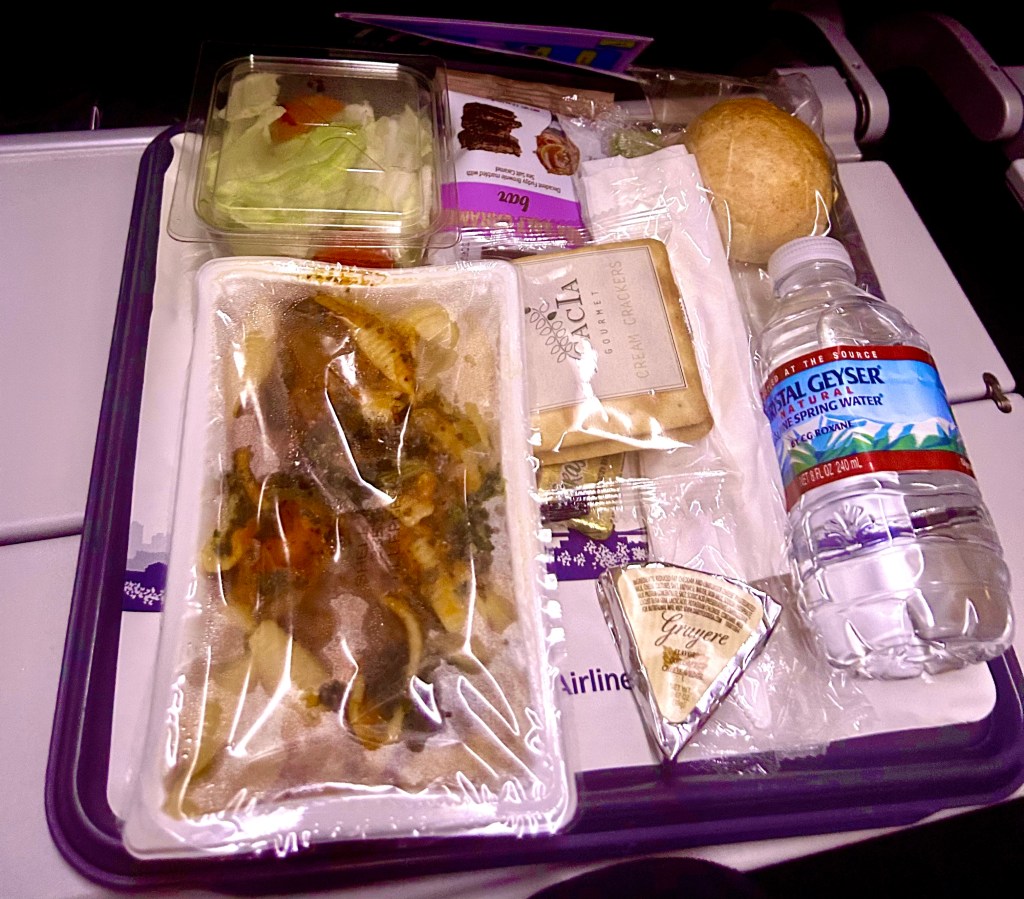
Dinner on our flight to London! Vegetable pasta with sides of salad, a roll, cheese, and a chocolate bar for dessert!
Before beginning serious thoughts and reflection in prose, here are those same concepts expressed in a poem:
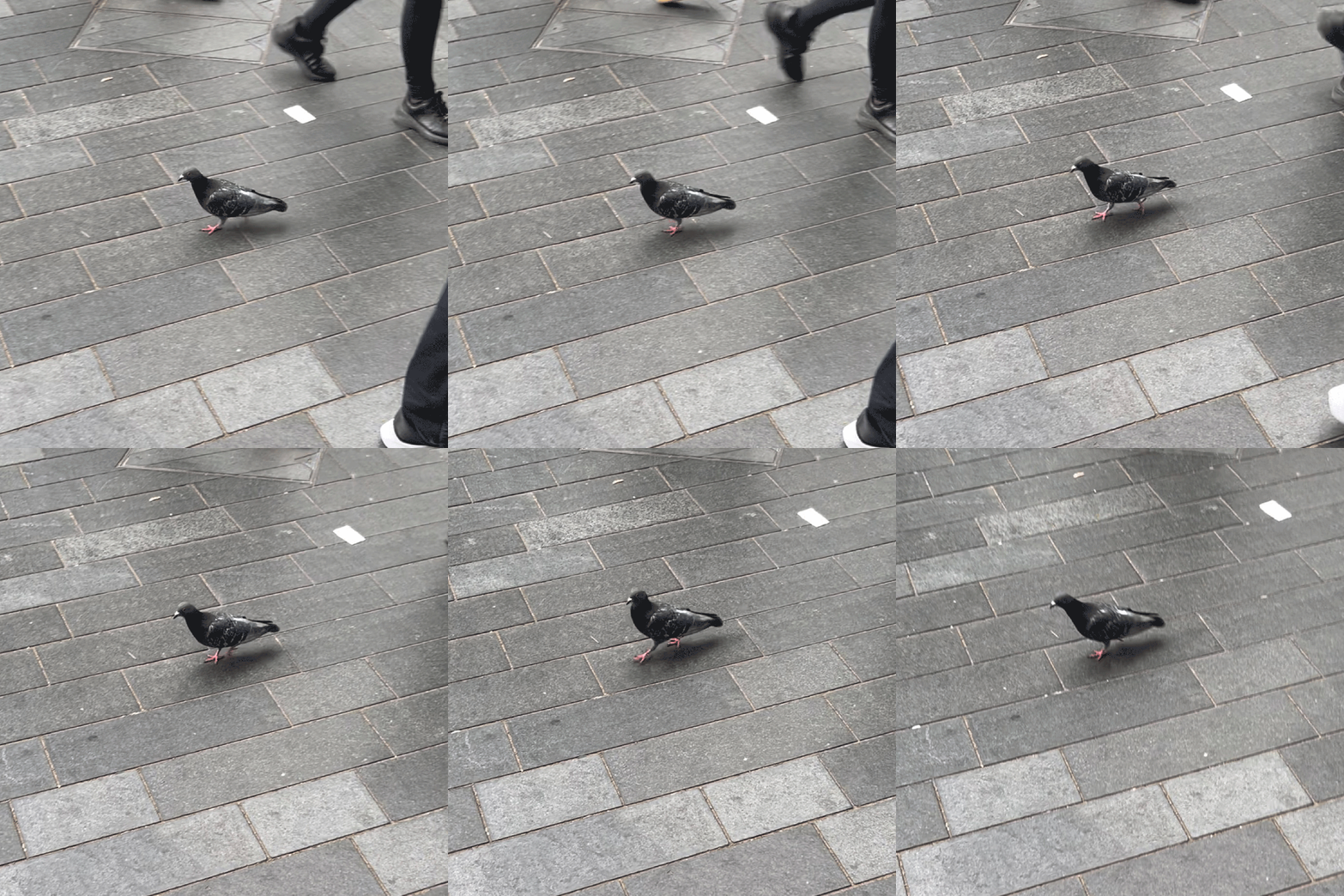
I love a thing called sky rat
head bobbing, bouncy, buoyant-looking birds,
pigeons of Piccadilly Circus, I pick you
street scrap stealing, statute standers, you
lively little, likely unloved, you
silent tiptoe, road running, startled start-to-flight takers, you
plump gray plume preening, but of clouds doom seeming, you
rock dove, rock pigeon, you rock
of London brick roads, brick buildings, you
make a city, take a city, clean a city, decorate a city,
dirty a city, regardless, my body’s of joy from you
Piccadilly Square was busy, but still very enjoyable even around many people.
London is a place for people with anxiety or people with anxiety like mine.
The idea of crowds of people was nerve-wracking at first — I cannot handle being at Walmart during busy times — but something about these massive groups of people lacks the anxiety-inducing aura groups of people in America emit.
At first, I thought that maybe because a lot of places here are outdoors, so perhaps that is why I feel better, but even at a busy outdoor mall in America, I still become on edge. And the indoor areas here that are extremely busy are also not overwhelming.
There are two reasons I think that I do not feel anxiety, first, I am just so amazed by all the new sights that my brain no longer has room for my usual anxiety, or the structure and quick pace of Londoners are just what I needed in my life where I must have a lot of control to thrive. I lean toward the second one because these people do not like to wait around, and I love that so much.
After riding the tube to Piccadilly Circus, our group used escalators to exit the tube station, and the etiquette here is to save the left side of the escalator for those who want to walk up rather than ride it — that is genius! In America, I just take my time riding up escalators, and never did it occur to me that I could walk up the moving stairs; I mean, I knew I could, and nothing is against the rules to do that, but I had never seen anyone do it before. That might be something I will continue to do in America because who wants to wait for a machine to take them somewhere when their legs move quicker.
There was so much to see on the way to the Russell Square tube station and in Piccadilly Circus and Leister Square. The pigeons took most of my attention and words, so I will just use some of my favorite photos from the short excursion to exemplify other parts that caught my eye.
I will also include photos from when we split into small groups after the tube introduction; we had a lot of fun exploring China Town and then walking back to the hotel.
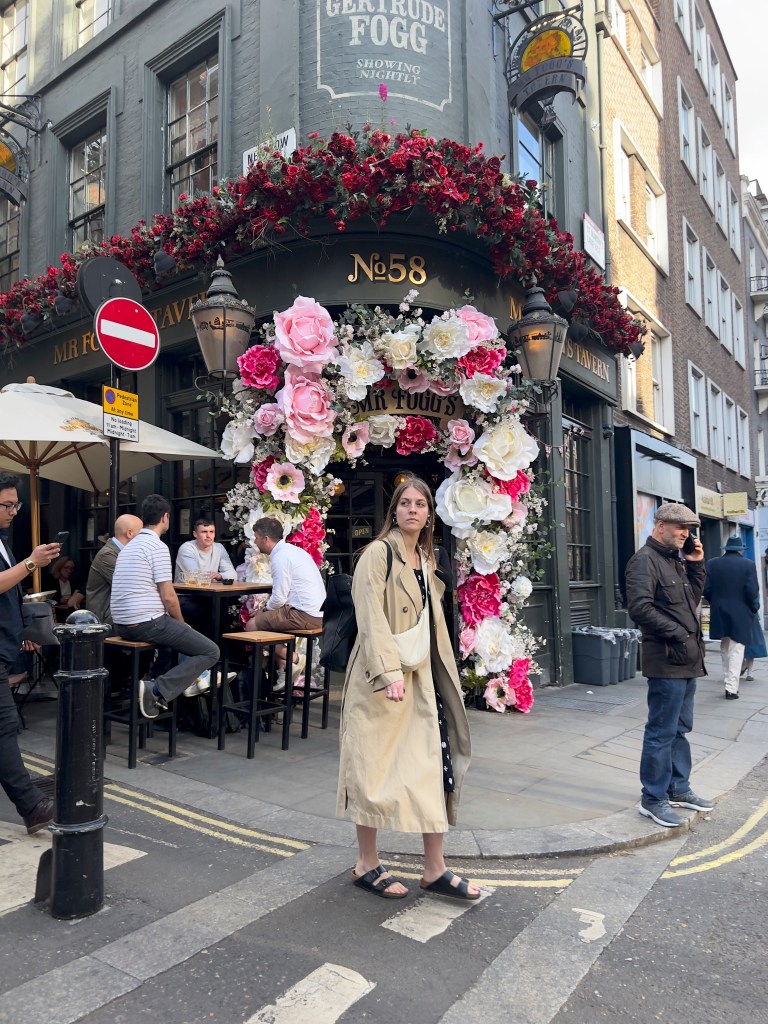
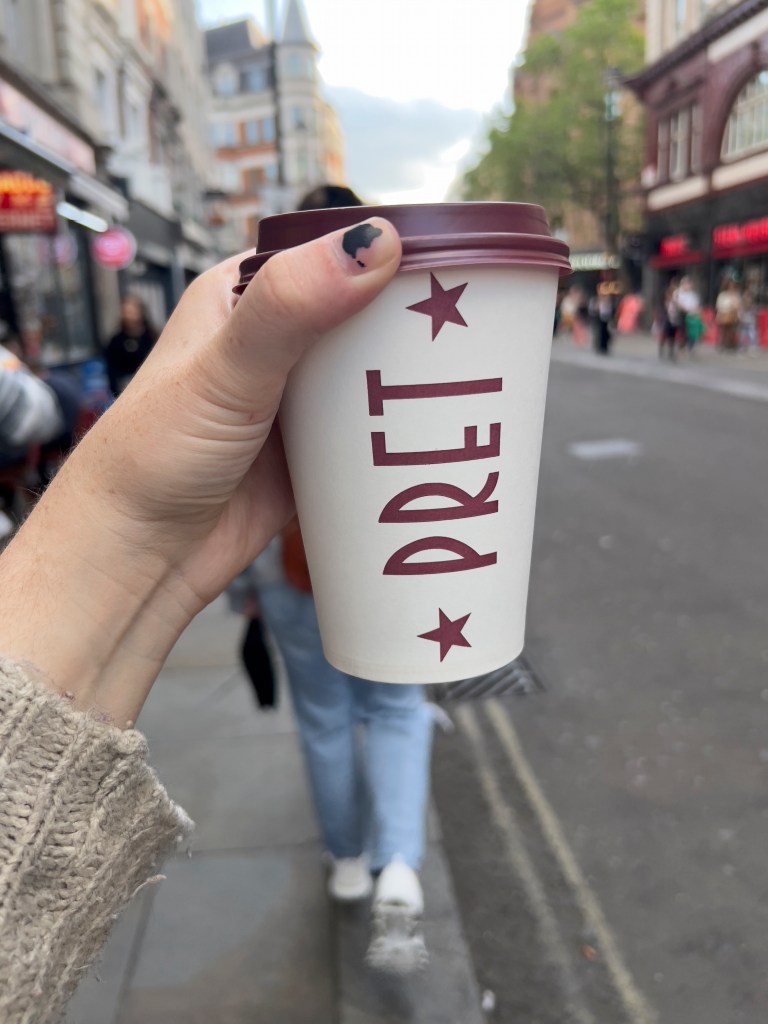
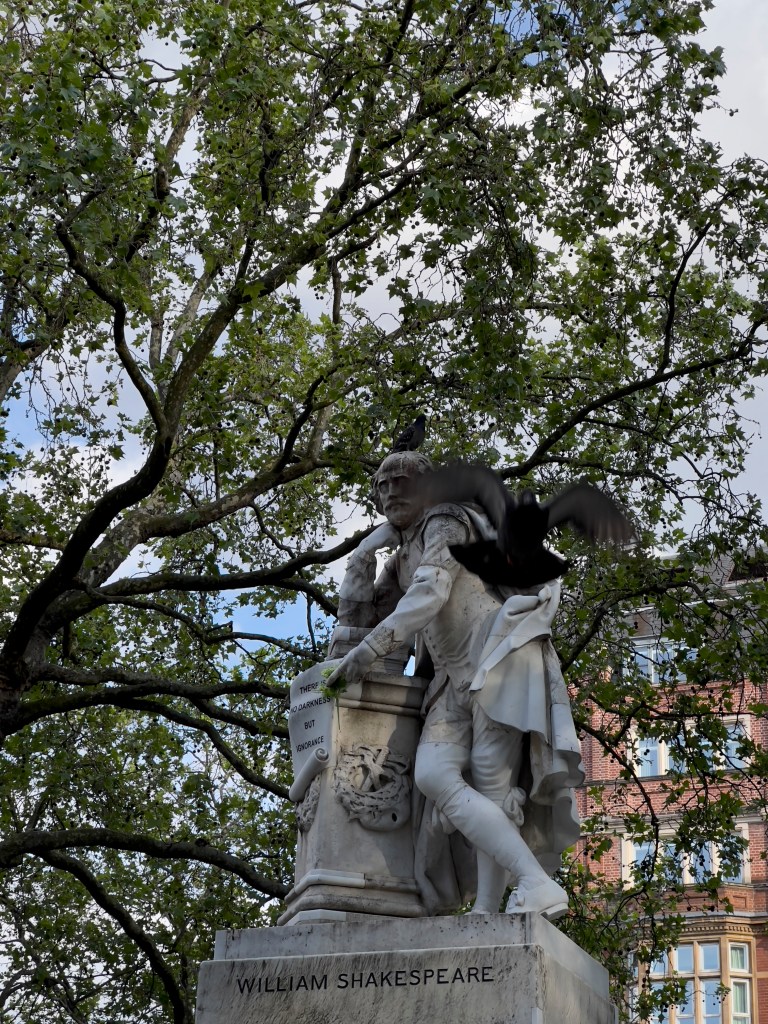
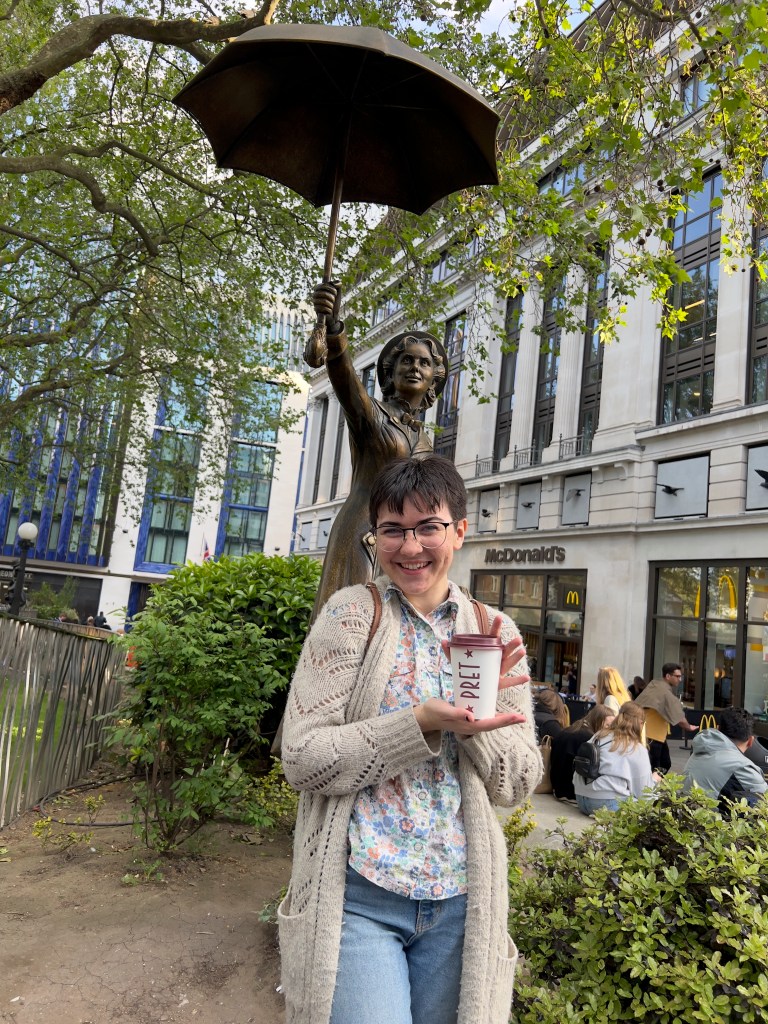
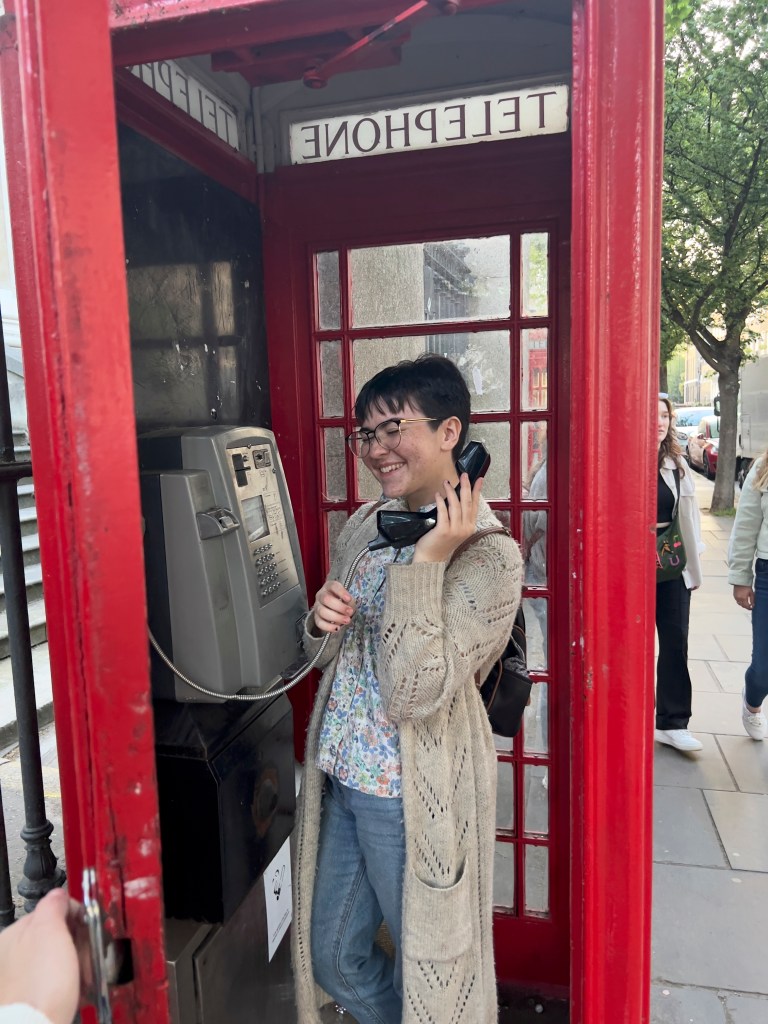
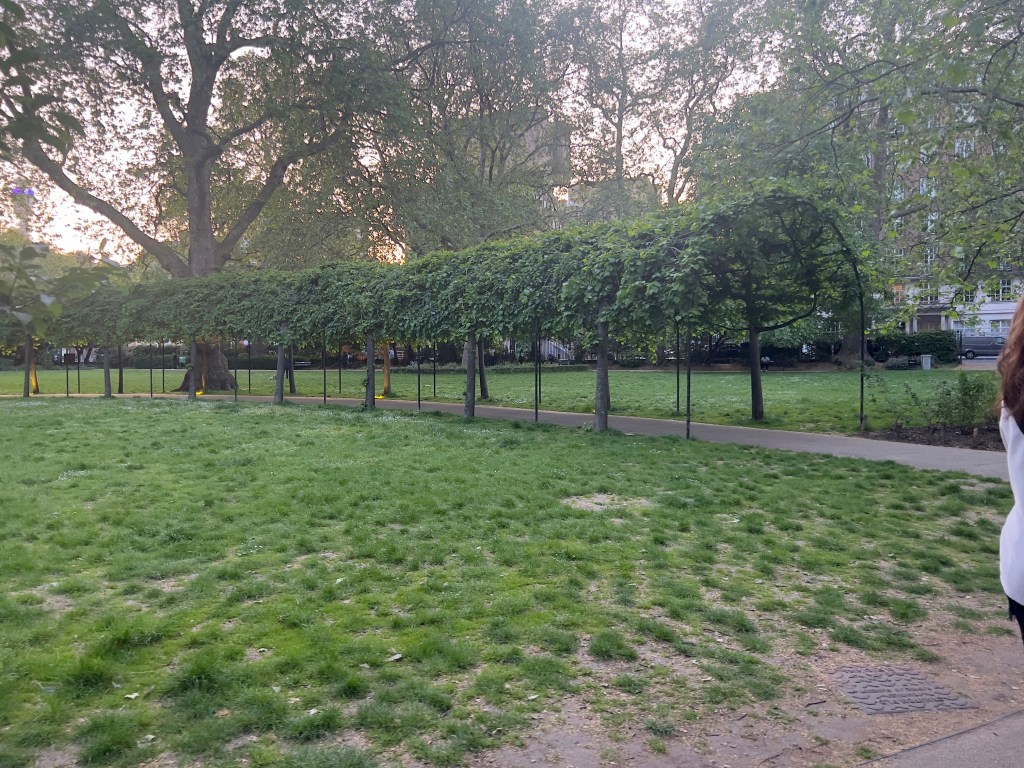
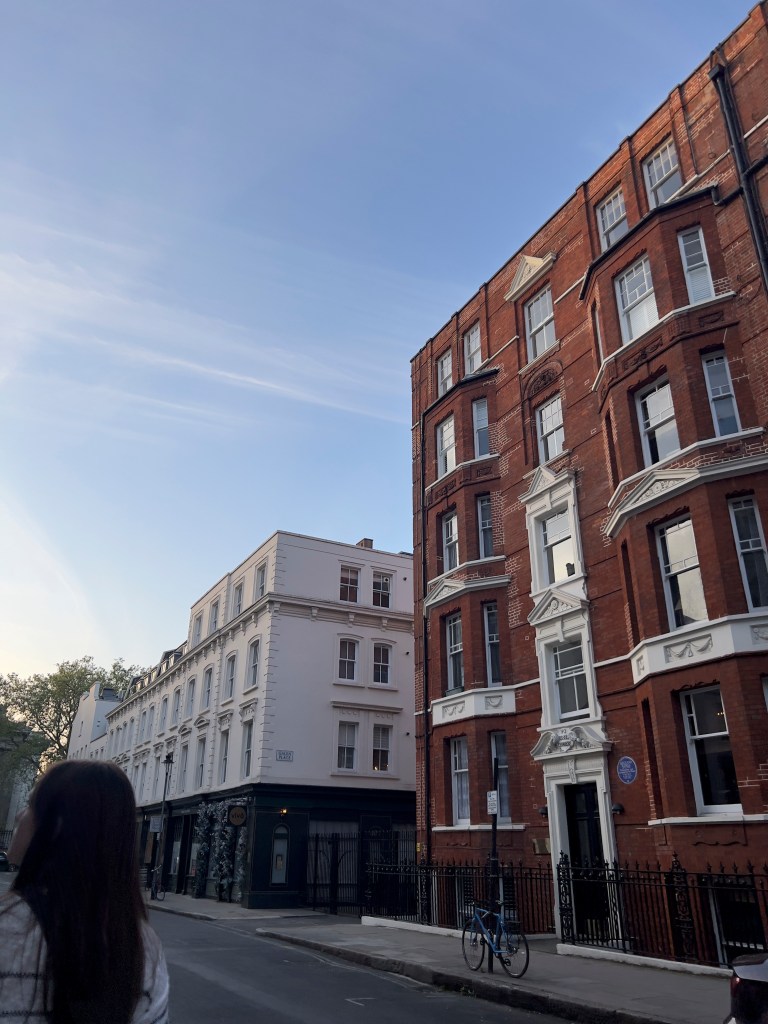
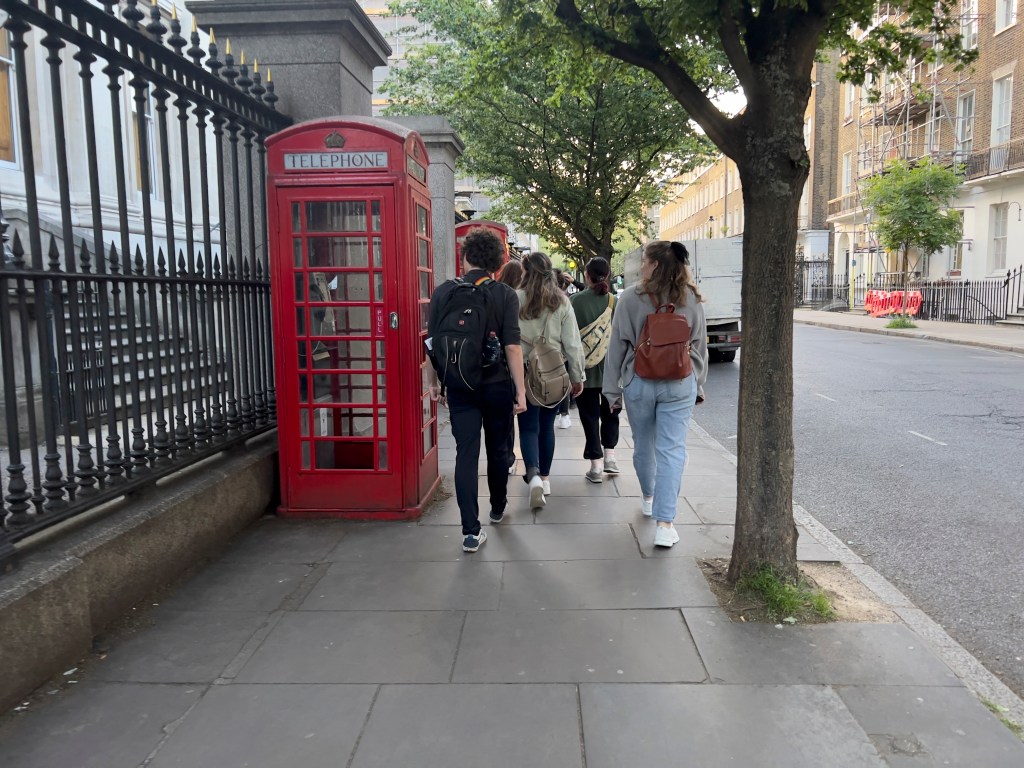
I liked this candid photo of a stranger — I just wanted a photo of the flowersThis chai latte from Pret was really good!A pigeon flying above me while I admired ShakespeareI really liked this latte, so I needed to pose with it, of courseExploring and watching a bird fly above meMadison pointed out these bird signs because I could not stop expressing love for the chubby sky ratsExploring as a small group, we found a tunnelThese lanterns are gorgeous, so happy I experienced thisAnother tunnel, except this time colorfulThe love of my life answered my call — well, that is the story I ascribe to my smile in this scene while hoping it was true Right outside our hotel is Russell Square Gardens, I would spend the rest of my life hereBuildings I saw on our way back to the hotelTracking our journey back to the hotel with picturesThe weather is so nice here, were enjoyed our walk a lot
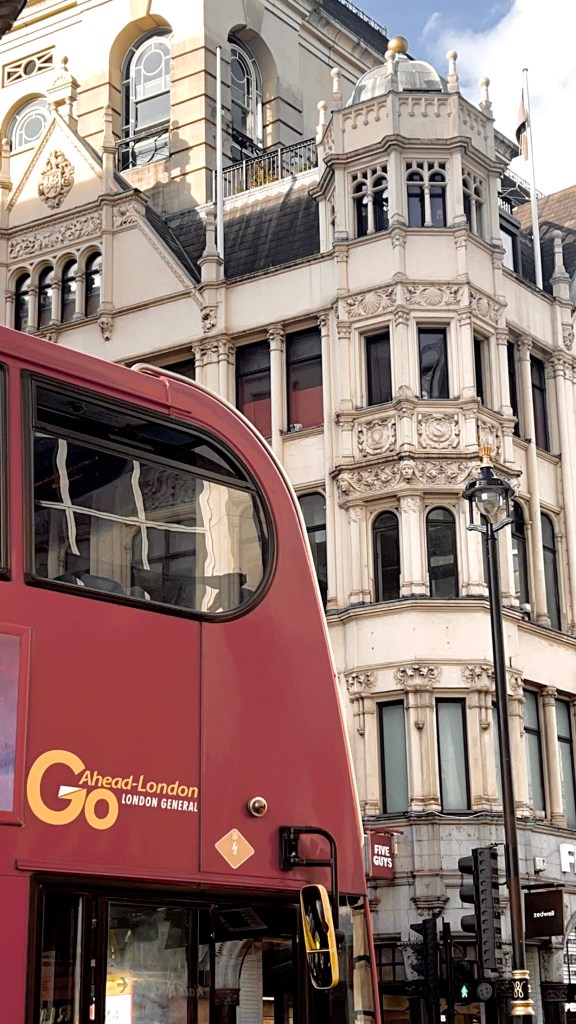
After that horrendous 9-hour flight from DFW, I finally made it to London. Although I was extremely jet-lagged and exhausted, that didn’t stop me from noticing London’s beauty. When my new friends and I were trying to find a place to sit down and eat, I was mesmerized by the old and detailed buildings that surrounded Russel Square. I’ve always heard that London was beautiful, but this time I was finally able to see it for myself. Since I am used to America’s young history, I wasn’t used to seeing Fast Food restaurants in tall, gorgeous, century-old buildings. The buildings looked a little out of place with the huge, fluorescent “McDonald’s” sign attached to it. But that’s a minor thing to get used to.
One thing that will be harder to get used to is taking the tube. Riding the tube to Piccadilly Circus was a bit stressful since I’ve never been on the tube (subway) before. What if I miss my exit? What if I get lost and can’t find my way back to the hotel? Those thoughts were running through my mind but thankfully, none of that happened. The tube was a bit easier to navigate than I thought, and I made it to Piccadilly Circus and back to the hotel safely.
Speaking of Piccadilly Circus, although it was extremely crowded and loud, I thought it was incredibly fun and architecturally magnificent. I wanted to take so many pictures. I really enjoyed looking at all the shops and exploring the M&M building and the Lego building with some of my new friends. I loved seeing all the metal statues of iconic British characters such as Mary Poppins, Paddington the Bear, and Mr. Bean all sprinkled around Leicester Square. I really wanted to explore Piccadilly Circus more but, unfortunately, as the sun started to set, the jet lag caught up to me again. I felt like falling asleep on the tube back to the hotel. Hopefully, I can fight off the jet lag by getting some good sleep tonight. I enjoyed the adventure today and I’m looking forward to more adventures this month while I’m in London.
Today, we landed at London Heathrow airport at around 12:30 pm after a nine-hour flight and we wasted little time before we began exploring the historic city. Driving into the city, we were treated to quintessential English architecture including an interesting multi-story brick McDonald’s.
Our stops for our first day were the tourist geared Piccadilly Circus and Leichter Square which bleed into each other. To get there, we took the tube (don’t worry I made sure to “Mind the Gap”). Though it has been over a decade since I was last in New York City, between my own scattered memories, television, and stories, I can say with certainty: the Tube is easier to navigate than the subway. At every stop, a voice clearly articulated the stop’s name and if there were any lines you could transfer to at that stop. It definitely helped that for our introduction to the Tube we did not have to change lines. Russell Square and Piccadilly Circus are both on the Piccadilly line with only three stops in between them. A unique aspect to the Russell Square station is that you get on an elevator to go underground. Getting on the elevator was a bit like being herded cattle and every bit the hurray to get on the actual Tube.
After I got off the Tube, I felt as if my body was still being pulled to the side, the ground moving beneath my feet. Thankfully, the escalator out of the Piccadilly Circus station was nowhere near as steep as the nearly vertical one I took out of the subway in Washington DC.
Piccadilly Circus is only to London as Times Square is to New York City in the sense that it caters to the masses of tourists that visit the city. The buildings do not tower into the skyline and there are not digital screens plastered everywhere you look. There is however, plenty of American fast food staples to enjoy, including a pizza hut with a by the slice option, another nontraditional McDonald’s, and a M&M world to explore. While some of the group checked out the M&M store, a major city tourist staple, I went with a group to try coffee from the juggernaut chain Pret a Manger whose proximity to their own stores can give Starbucks a run for their money. Every store front seemed to be either a restaurant or a souvenir shop with a theatres and even a casino sprinkled in for good measure.
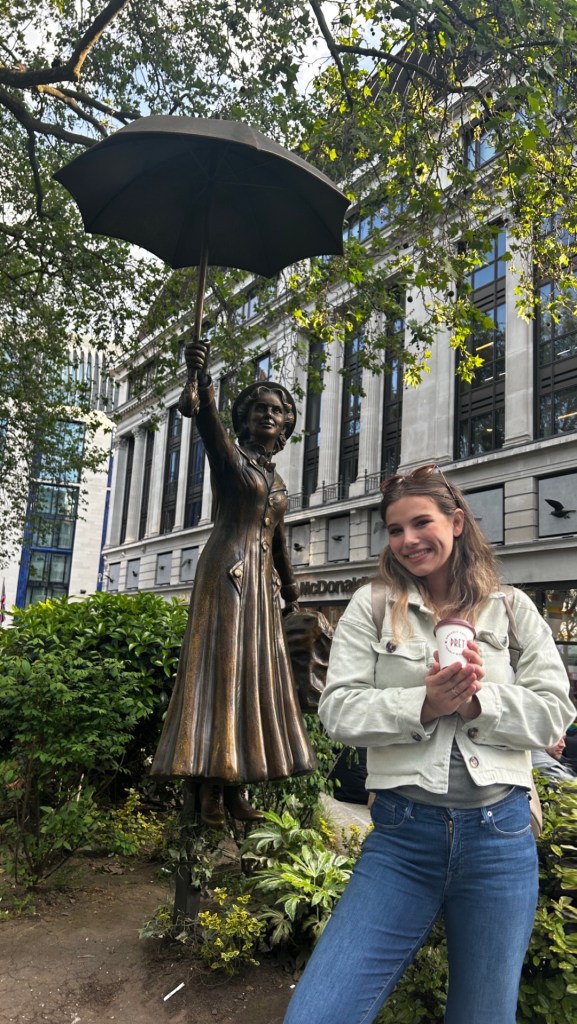
In Leichter Square, there is a small park outlined with statues of classic characters from Bugs Bunny to Mary Poppins, who I got my picture with. In the middle of the grassy clearing, stands tall a statue of the bard himself, William Shakespeare; somehow, someone had placed a fresh flower in his stone hand despite a moat surrounding him on his at least six-foot pedestal.
For dinner, a group of us wandered around China Town which is right next to Piccadilly Circus. Lanterns hang between all the buildings and there are couple intricate gates that mark the small food district. One person in our group remarked that there were more restaurants than people in the area. We ended up grabbing food from a small bakery. I had a flakey pastry filled with pork that pleasantly surprised me. Bonus: it was only £2.50!
Instead of taking the Tube back to the hotel, a group of us walked the twenty-five minute walk back to our hotel. It was fun to navigate the slightly twisting roads of London on foot. We stumbled upon an alleyway of shops and walked slightly aimlessly despite the GPS guiding us. It was nice to stretch my legs after being stuck in the small plane seat just hours earlier. To finish off my first day, I went on my first Tesco’s trip to buy water.
I cannot wait to explore more of London both on foot and by way of the Tube.
A lot of firsts have happened already for me upon arriving in London:
I have completed my first overnight flight.
I have successfully traveled out of the country.
I did not set off the x-ray machine at DFW.
I have only peed since I have been in the states.
A random person on the street told me they loved me.
I couldn’t find Powerade or Gatorade anywhere.
I ate a subpar sandwich with amazing crisps.
Multiple strangers tried to sell me various items.
I learned that Ryan Baker is more terrified of birds than my mother.
I can comfortably hold both Grace Killingbeck and Alyssa Martinez’s hands while I sleep in the middle of our three beds.
Nine hours in the air is no small feat and neither is the jet lag that I am feeling, as I am typing this blog post at a mere 10pm but it feels like 1am. The flight was one that was filled with restlessness, Netflix, and counting down the seconds until the flight was over. But as soon as we landed and London’s cool breeze and faint smell of cigarette smoke hit me, I knew the discomfort would be all worth it.
All of that being said, if you have come off a nine hour flight and are desperate for a Gatorade/Powerade and google told you that you would be able to find them at Tesco, they lied. The closest I could find was a sports drink called, Lucozade. It wasn’t terrible and definitely did refuel my electrolytes and put the pep back in my step, but the bottle is American proof. At first I thought you had to untwist to be able to suck out of the top of the cap. But turns out you just have to drink from it really hard to open it up, so after a few trial and errors of attempting to open it the correct way I finally figured it out. This drink was a part of the Tesco meal deal, which is where I had my subpar sandwich and amazing crisps. These Brits aren’t playing with their crisp game, but the sandwiches are lacking the flavor that their crisps have.
The Brit’s birds aren’t playing either and they love to get in your personal space, along with all of the fellow commuters. Your space is shared with anyone in your vicinity. The same goes with lodgings, Grace, Alyssa, and I will make sure to hold hands tonight to commemorate our first sleep in London. Everyone had a sense of closeness whether that be proximity or not, that brought out a gentler nature, that I would only assume makes the Brits and London so well loved and adored. I can’t wait to experience more and more.
Today (well I guess technically yesterday), I began my journey across the ocean to London! I made it to the Fayetteville airport three hours early for the flight to Dallas, and then we got on the nine-hour flight to London Heathrow Airport. I had a bit of an anxiety attack when the face scanner that the gate for the London plane didn’t recognize me, and then while I was walking to my seat, my phone alarm went off while I had a bajillion things in my hands. All was well when I got to my seat and Brittney was in my row. We made a new friend from the Czech Republic, and had some fun conversations about different quirks about our countries. It was a long flight, but we survived, and we touched down around 12:30pm London time. We took a coach (bus) to our hotel, and I was blown away by the architecture right off the bat. The houses reminded me of cozy cottages (some of which had solar panels which looked a little silly), and the facade treatments on the larger buildings closer to the city were breathtakingly intricate.
After a quick nap, we headed to the Tube (subway) for the first time to use our Oyster cards! Before I get to how the rest of the evening was, I would like to say that London is one of the most beautiful and clean cities I have ever been to. Everything is much shorter than the buildings you would find in New York or Los Angeles, but the height makes the space feel more intimate and less anxiety-inducing. Personally, when I am surrounded by large skyscrapers, I tend to feel claustrophobic. Since being in London, I haven’t felt that way at all. There’s a lot more nature than I was anticipating, and the air feels cleaner (minus the clouds of cigarette smoke. There’s a lot of that). Not only is it cleaner, but so far, it feels like one of the safest cities I have visited. When I go to big cities in the US, I feel like I am constantly having to look over my shoulder, and not that I don’t have to be careful in London, but I feel much more relaxed.
Continuing on to how the rest of my day went, we got on the Tube and took it a few stops to Piccadilly Circus. This was basically like the Times Square of London but with a lot less billboards and tall skyscrapers. There were a ton of people, pigeons (sorry Ryan), and entertainment. Theaters and restaurants lined the streets calling out to passers by. In the little park right outside the Piccadilly Circus stop, there were multiples statues of famous characters unique to London including Mary Poppins, William Shakespeare, Paddington, and Harry Potter. We explored some beautiful alley ways, got coffee, and explored China Town. A group of us stopped at a small bakery in China Town and got Taiyakiya, which is custard in a fish shaped waffle cone.
After getting our custard and listening to an old man street performer sing Dancing Queen, we decided to walk back to the hotel instead of taking the Tube to get a better feel for the city. We passed more fantastic buildings and theaters, and we explored a few more alleyways. It’s almost like a maze the way this city is set up, but it’s definitely exciting turning the corner to find another cute boutique or coffee shop. We finished our walk by taking a stroll through a park next to our hotel and admiring a cute dog that happened to be freely roaming around the park.
Overall, it was a really successful first day, but I am 100% ready to go to sleep after only getting three hours of sleep on the plane over. Thanks for reading and goodnight ❤
We finally made it to London for our study abroad trip! After we got to the hotel, which felt like forever! We had a few hours off to unpack, find some food and explore the city before we all gathered back up to go learn the tube, see Picadilly Circus and Leister Square. A few of us met in the lobby and headed out on our first adventure, finding food! Unfortunately, we couldn’t find where we originally were trying to go some of us went to go get burritos and nachos, and the other half went to get Pret A Manger for coffee and sandwiches. We all met back up in Russell Square and had a good time eating and seeing the sights. We were supposed to meet back in the lobby at 18:00 or 6:00 pm to go to the tube and Picadilly Circus and Leister Square. It was very chaotic trying to get 20 people to the tube, especially with all of the other people trying to get where they were trying to go. We got on the tube no problem and headed out to Picadilly Circus, we got to walk around there for a while which was very hectic fun super interesting because there were so many different people there, speaking different languages, it was very cool to observe. We got to see the TKTS booth and then we all split up and went our separate ways. We ended up going to the M&M store and the Lego store, then walked through Chinatown for a little bit, then we decided to take the tube back to the hotel, but stopped to sit in Russell Park again because we enjoyed it so much the first time. I would say that it was a great first day in London, can’t wait for many more!
We finally made it to London! After traveling for what feels like a lifetime we made it to Central London. The trip from DFW to here wasn’t so bad, the air condition on the plane was amazing! We were served dinner around eleven pm and I decided to get the chicken and rice. It low-key made my stomach hurt for the next couple hours, but I’m not complaining too much. When we got off the plane we got into a coach to bring us to the Royal National Hotel. Emily and I were pleasantly surprised when we saw that we were the only two in our room. SO AWESOME!
After we settled in, we decided to go out to grab dinner with some of our other peers. Out of all the places here we decided to go to a place named “Tortilla”, it’s like a very distant cousin of Chipotle. It wasn’t bad but it wasn’t the best. We got it to go and sat in Russell Square Park and had a picnic with everyone. Then we headed back to the hotel to meet with everyone and learn how to ride the tube. It wasn’t as hard to use/ understand as I thought it was. It was kinda of easier to navigate than NY. We went to Piccadilly Circus station and Leicester Square. We walked around for a while when we got there. We saw some really cool statues, lots of birds, and the M&M store. I ended the night riding the tube back with some others and hanging out in the park before heading back to our rooms
We are back in our room now, and getting ready for bed. Super tired, but excited to see Buckingham Palace tomorrow. Also, loving the weather here so much. Until tomorrow everyone, bye!