Big Day for Merritt: Hampton Court Palace

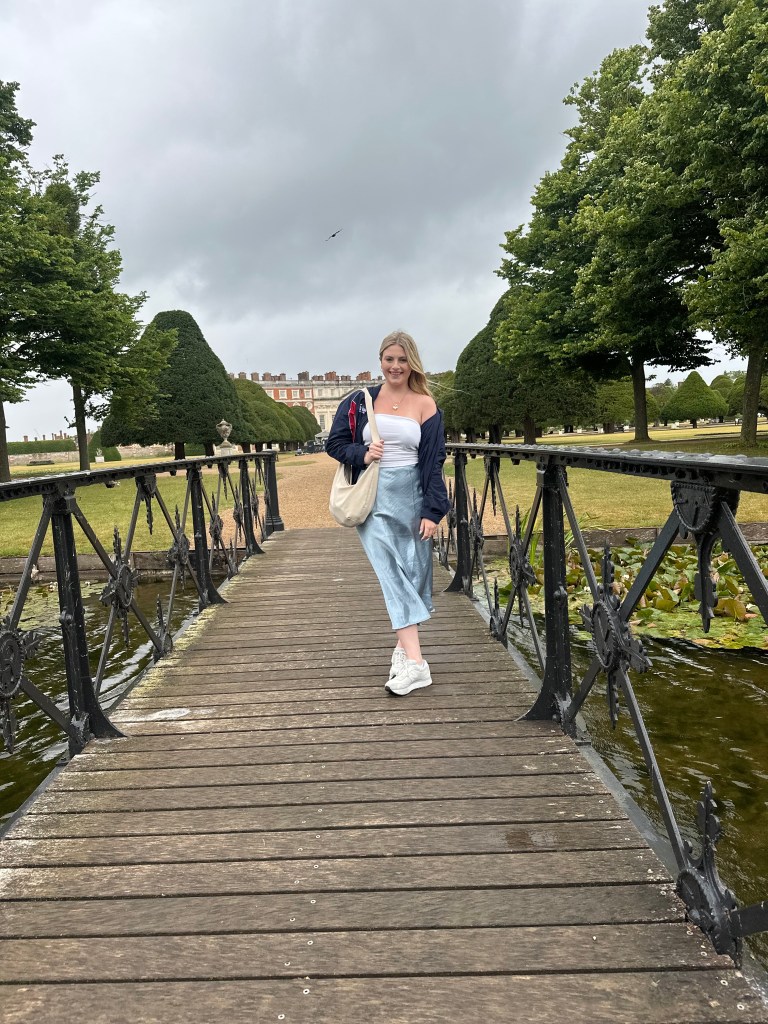
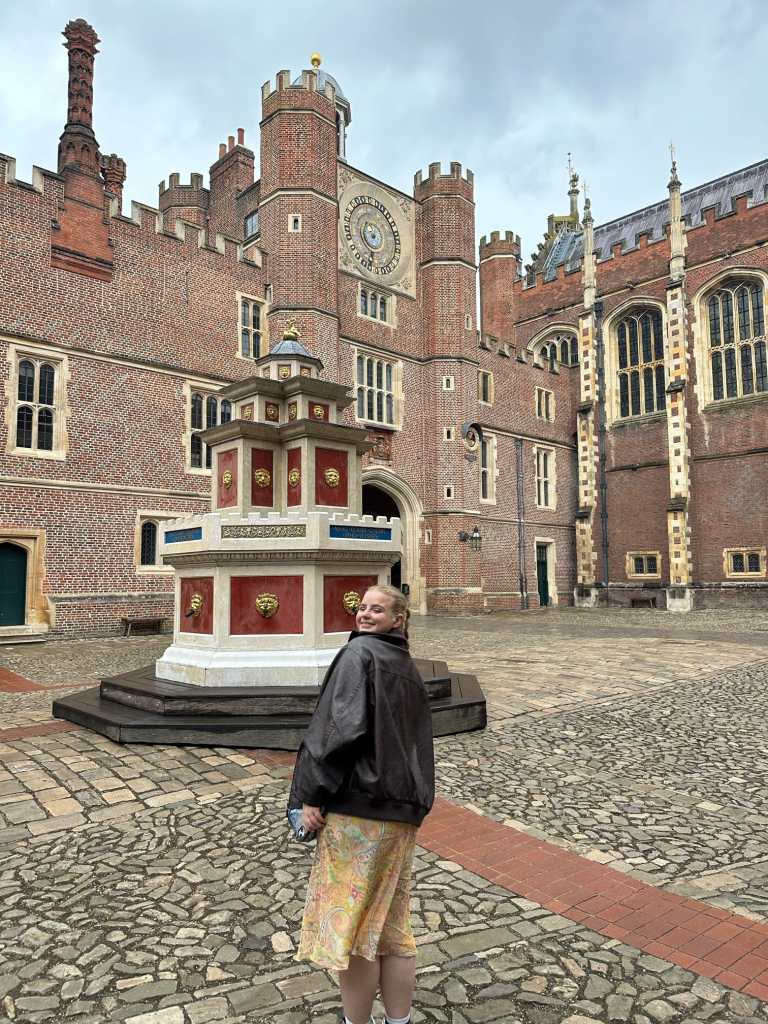
Much like the Tower of London, I had previously been to Hampton Court Palace. Let me tell you: it was good to be back at my old stomping grounds. I once again got to give “the Merritt tour”, aka lead everyone around as we listened to audio guides and randomly chipping in with fun facts.

We started in the kitchens. The part that really struck me about the kitchen was the wall above the fireplace that they always keep burning. There was so much smoke damage on the walls and ceiling from years of smoke. There are six fire places in this specific part of the kitchen that weren’t like this, but I wonder if this is due to restoration. Also, the Tudors ate like CRAZY! Something said they might eat 5,000 – 9,000 calories in one day. HUH? Liters on liters of beer, wine, and ale. There was a portion in the kitchens that cleared up that the Tudors did in fact drink water, which is good obviously, but it was definitely not enough. Not to get gross…but I know their pee was an insane color.

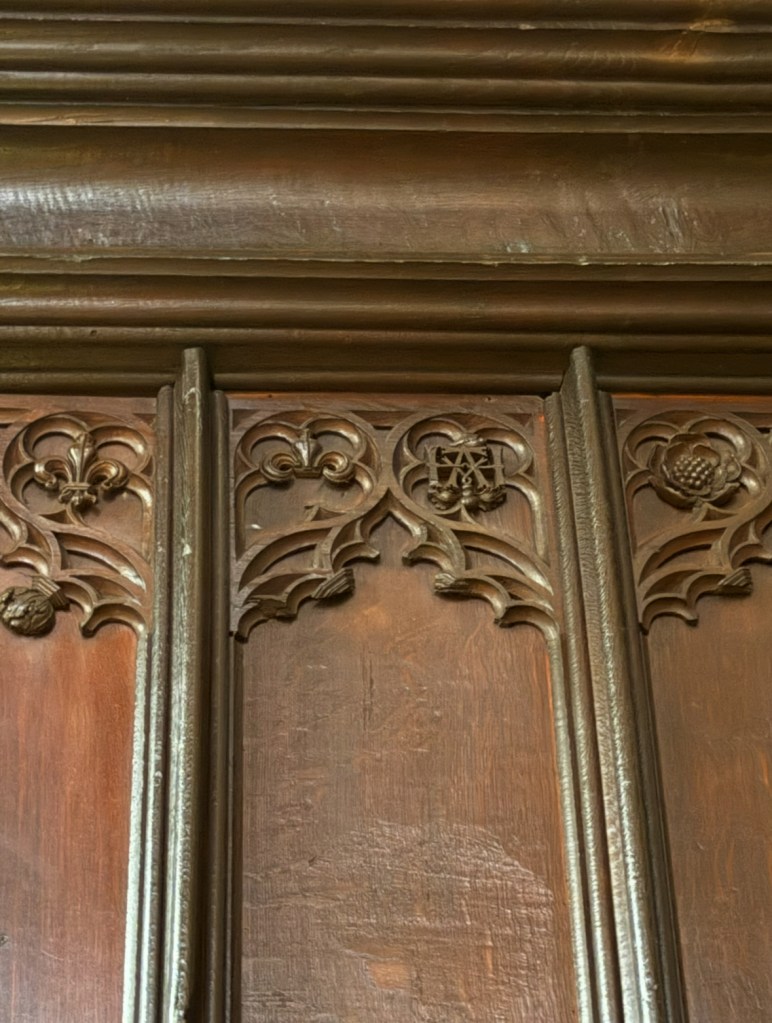
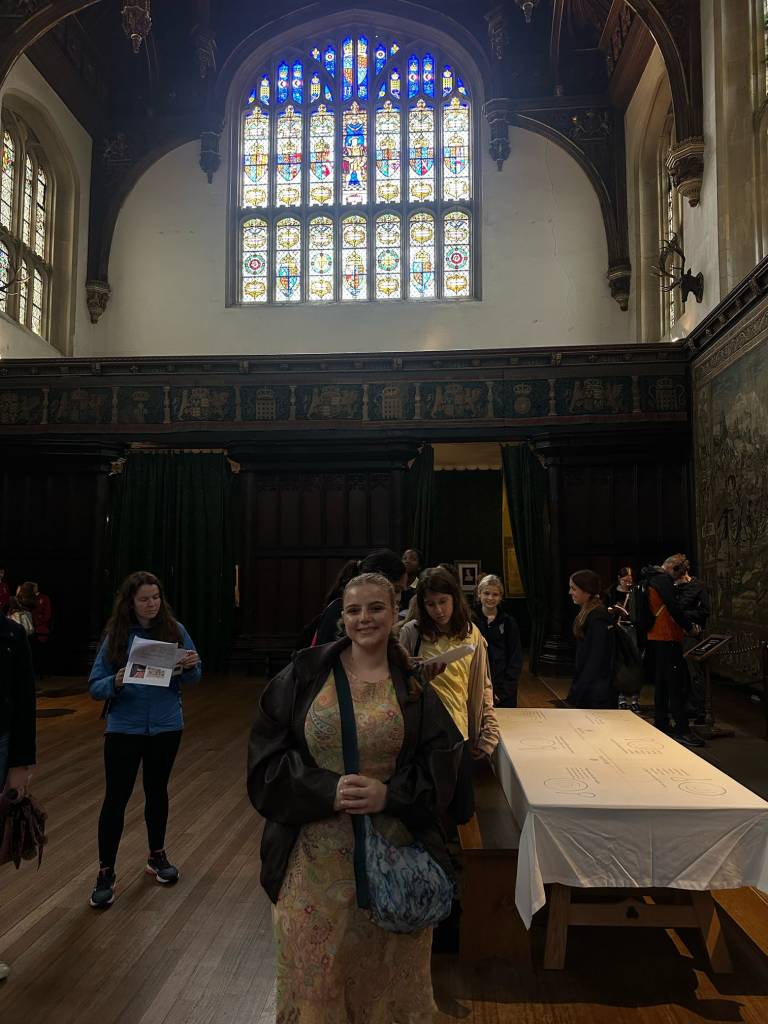
After the kitchens, we went into the palace. OHHH YEAHHHHHHH. First room we went into was the Grand Hall, which is indeed very grand. My favorite part of the room is how you can see some surviving H + A monograms that survived after Henry VIII had them knocked down after Anne Boleyn’s execution. The Grand Hall connects to another room which has a name I can’t remember, but it’s where the courtiers would wait to catch a glimpse of the king. This room is attached to what would’ve been Henry VIII’s and the Queen’s apartments, which for some reason you can’t see. BOO!

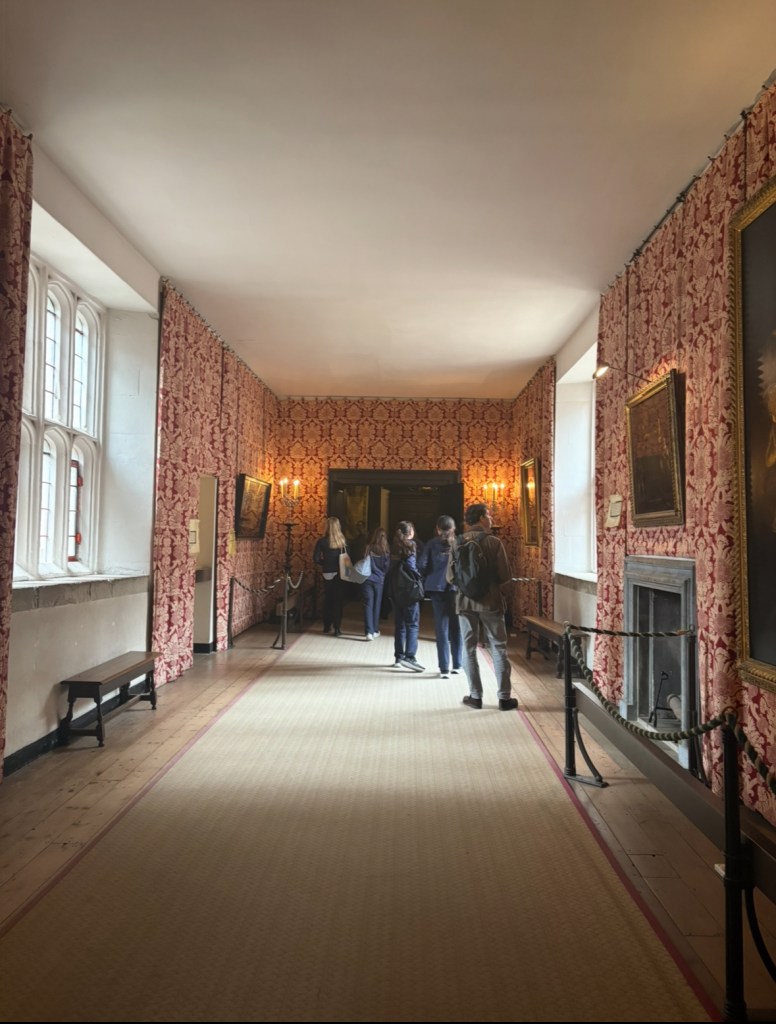
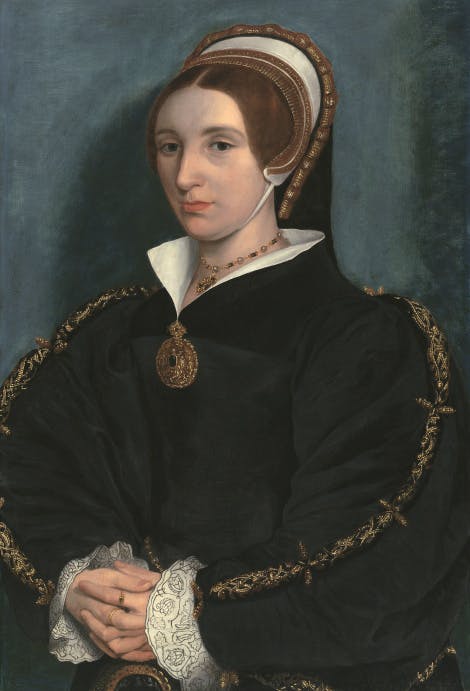
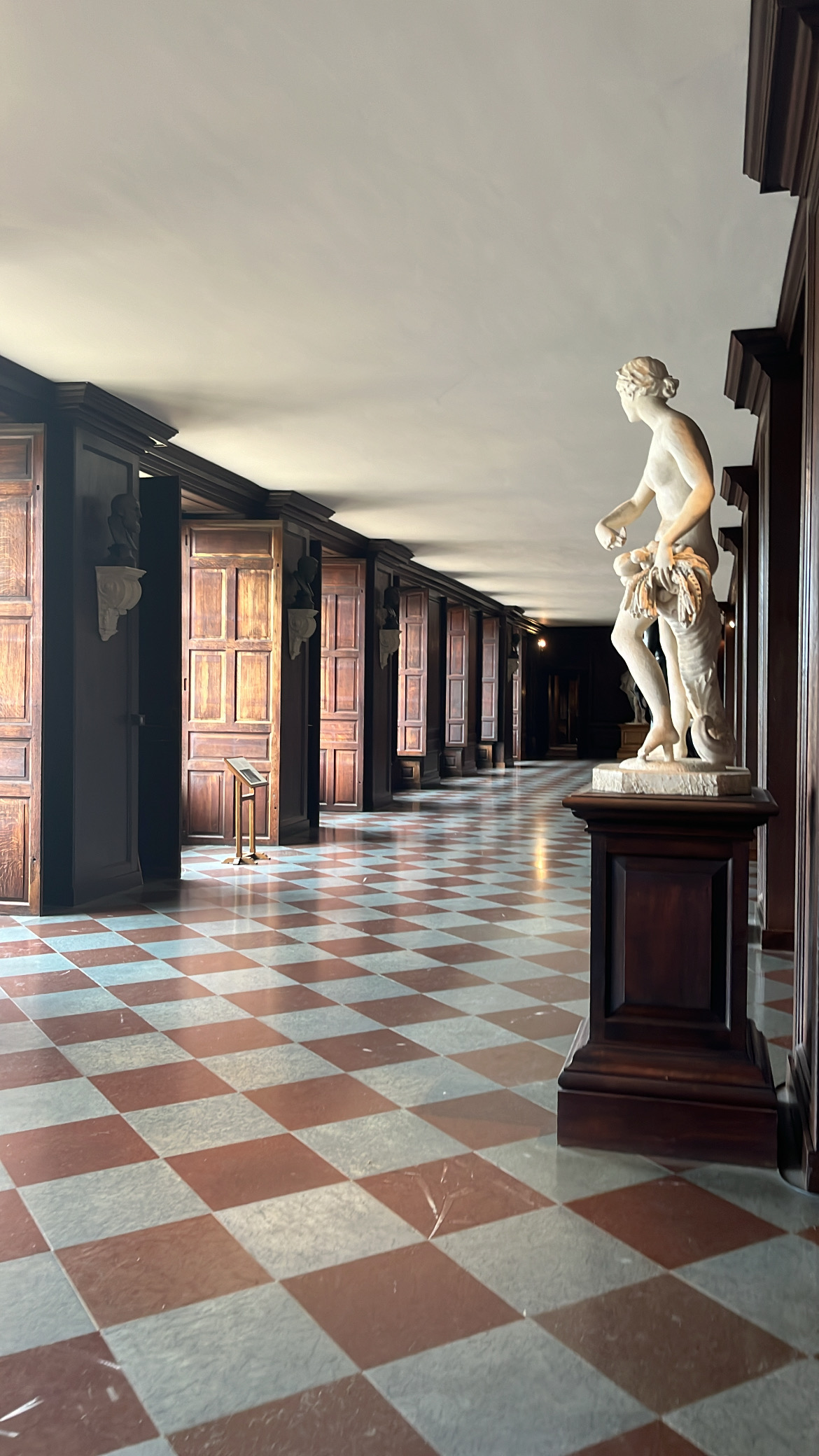
My favorite portion of the castle lays just beyond this room…THE HAUNTED GALLERY!!!!!!!!!! It gets this name because it’s said that after poor miss Katherine Howard was imprisoned in her apartments due to accusations of adultery, she briefly escaped and tried to run to the chapel (where she thought Henry would be) to beg for her life. She was caught while in this gallery and dragged back to her rooms, kicking and screaming. They say that you can hear her screams echoing through the gallery to this day…I’m not going to lie to you guys, Anna and I heard screaming. Make of that what you will.

Anyhow, after haunted gallery we saw the many other rooms in Hampton Court, including the Georgian side I hadn’t gone through before. It was very pretty and interesting, but I’m a Tudor girl through and through. Once again, thanks Mom!
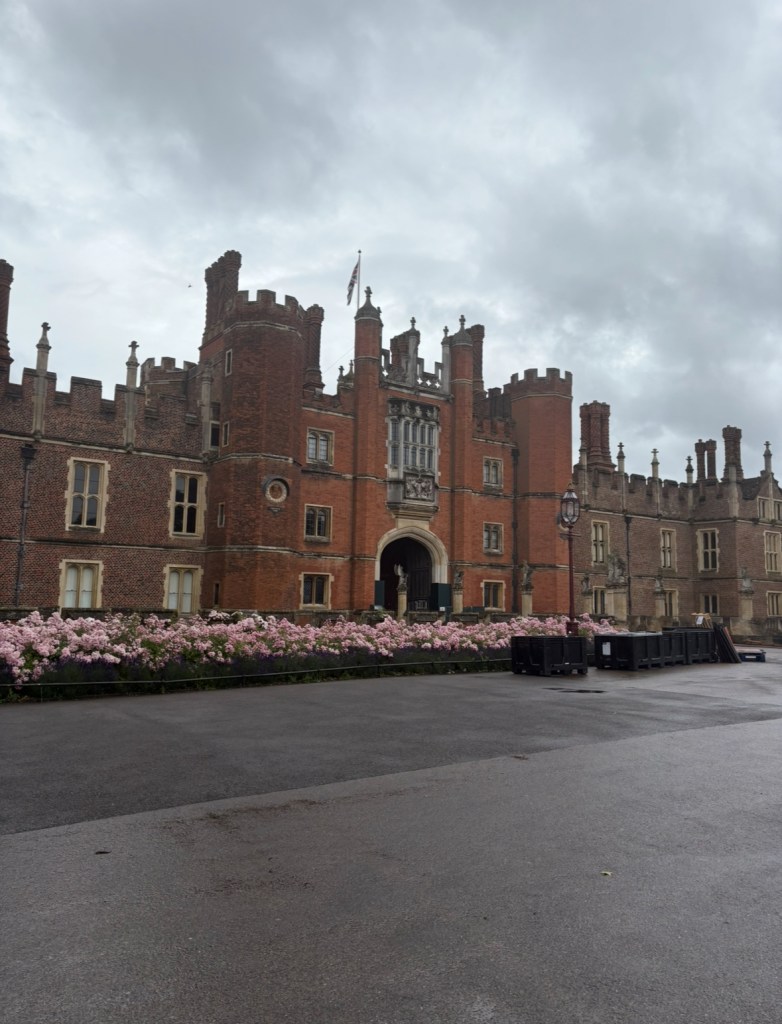

Exploring the History and Beauty of Hampton Court Palace

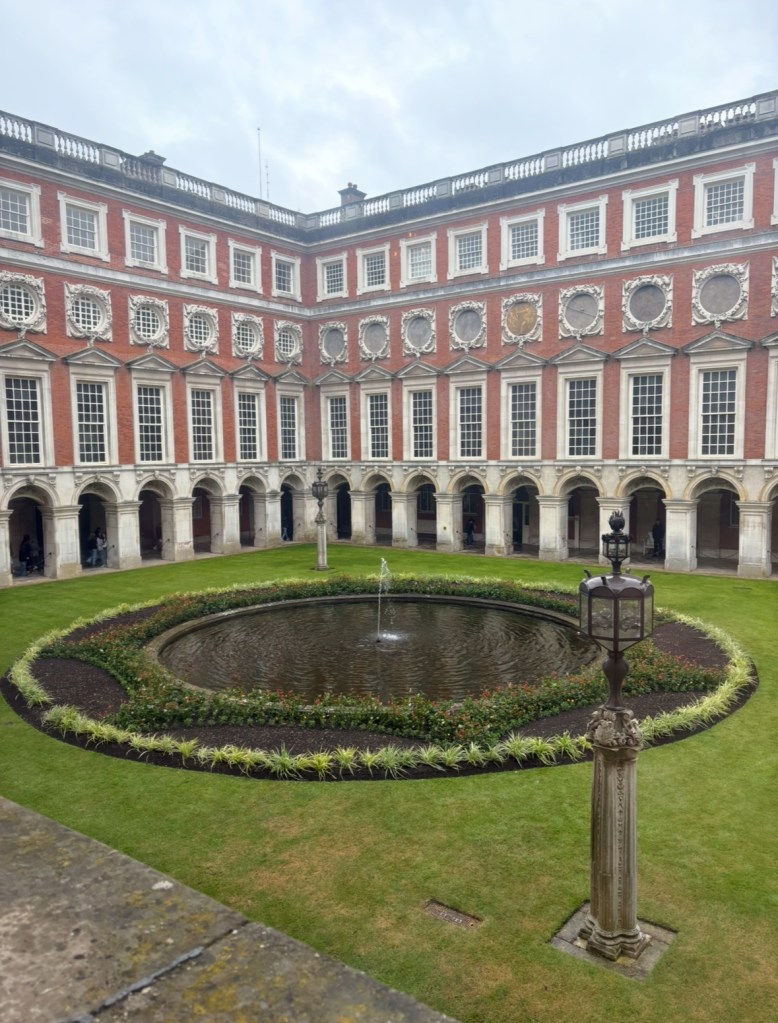
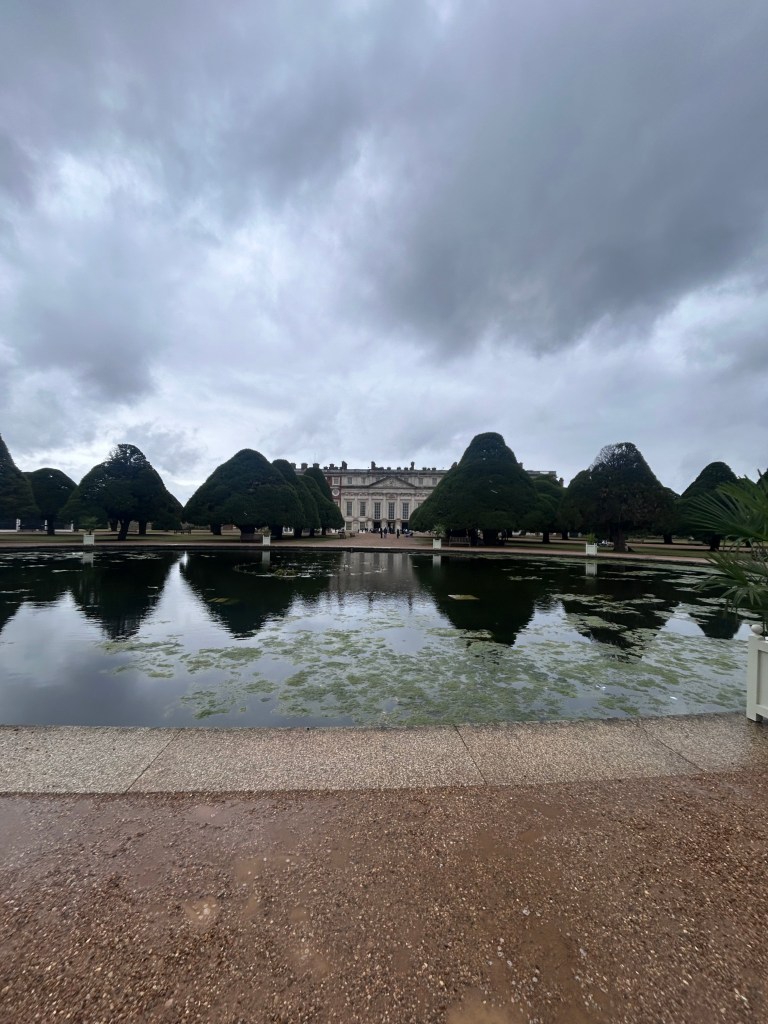
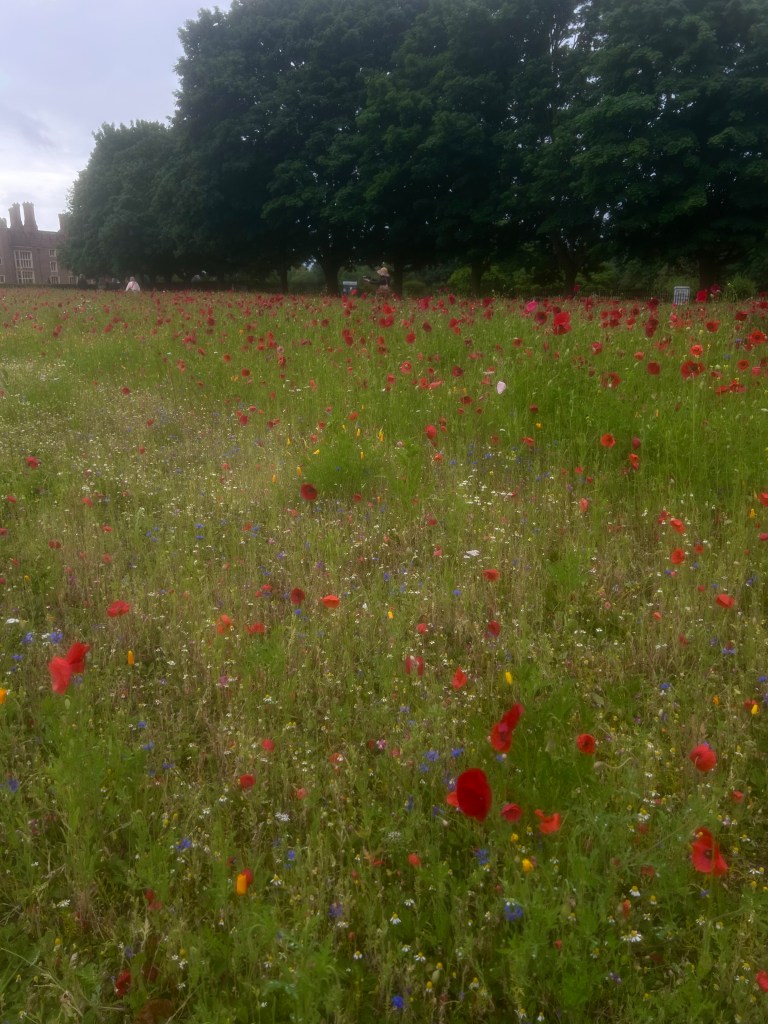
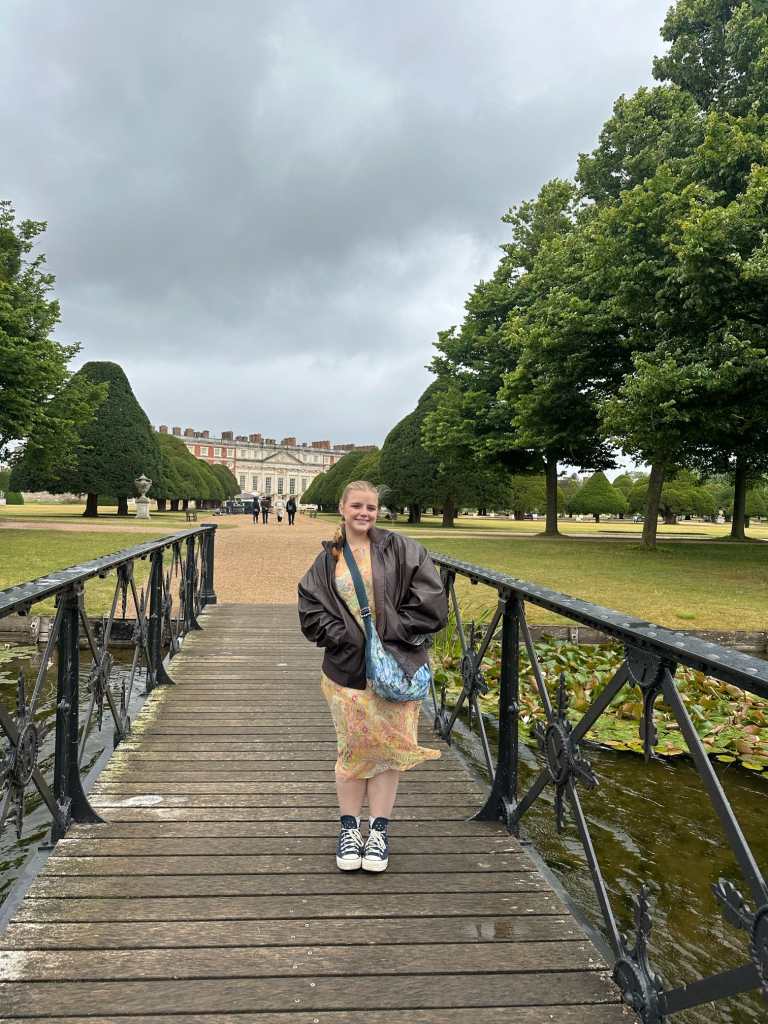
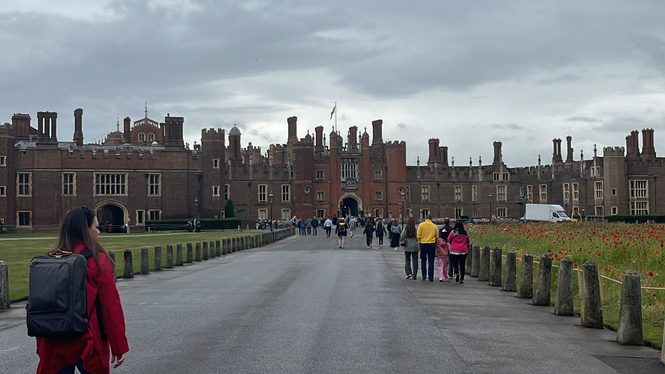
Visiting Hampton Court Palace felt like stepping back in time. This grand palace sits by the River Thames and has been home to many famous kings and queens, including Henry VIII and William III. As I walked through the main gates, I was amazed by the castle’s walls and the beautiful poppy gardens leading up to it. This was King Henry’s most loved home, and it was one of his main homes. It was sp gorgeous and very interesting to learn and walk through everything. 

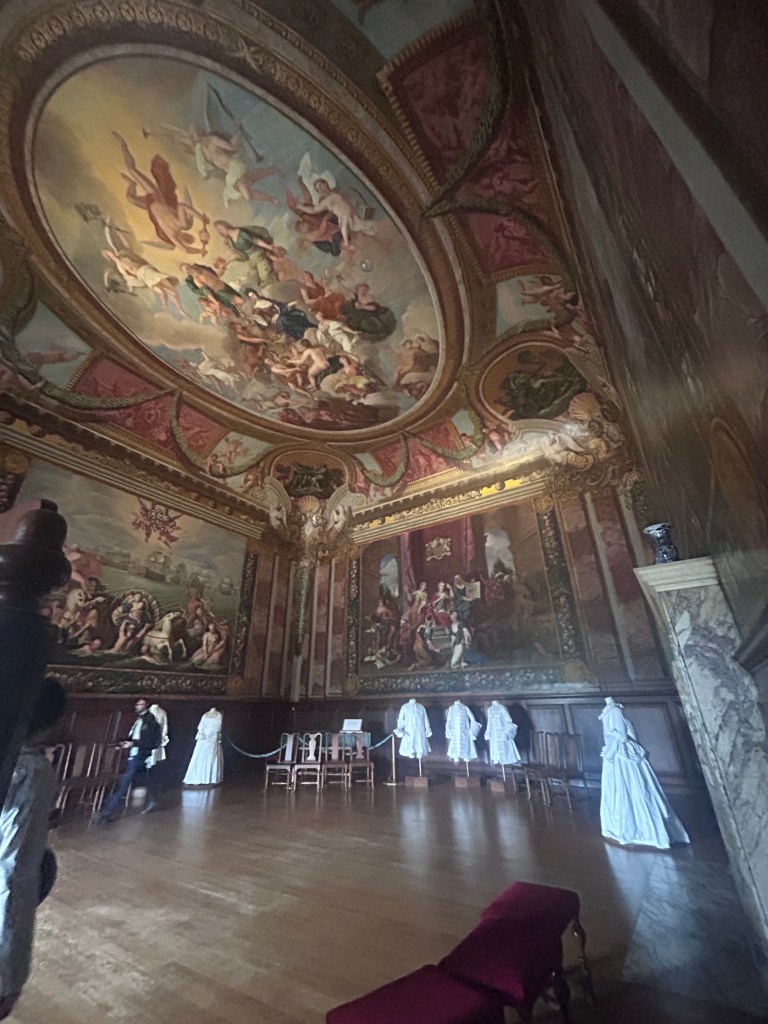
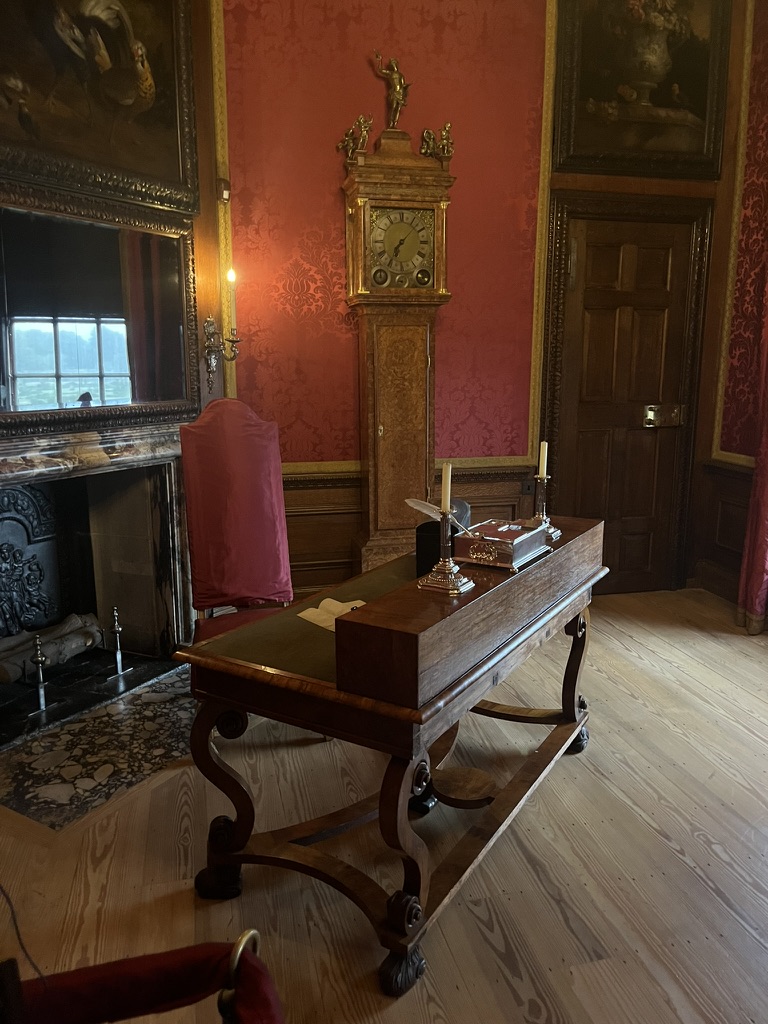
The Tudor part of the palace was bold and impressive. The Great Hall, with its wooden ceiling and colorful stained glass, shows how powerful Henry wanted to look. While taking a walk through the kitchen and state apartments, I could almost hear the sounds of feasts, music, and people trying to win the king’s favor. But as I continued exploring, the palace changed. Suddenly, I was in a completely different style: neat, elegant, and bright. This part was added by William III and Mary II in the late 1600s. They wanted a more modern palace, so they hired Sir Christopher Wren to redesign parts of it in the Baroque style. The rooms here are full of marble, gold, and perfect symmetry. It feels more like a calm, royal home than a place of power.

I kept wondering what it was like to live here in the days of Henry VIII. The court must have been full of drama, with people watching their every move. In William and Mary’s time, it may have been more polished, but still full of rules and power. I loved Hampton Court. My favorite part  was being in the council room; I really enjoyed learning and hearing about their conversation. It really should be the process of the council and explained a lot to me that makes since. Overall, I had a wonderful full time at Hampton Court Palace. 

Howard’s Haunted Hampton Hall (sorry guys I love alliteration)

As an avid lover of Bridgerton (minus season one, we don’t talk about her) and Tudor history, Hampton Court Palace is by far one of my favorite experiences of this trip abroad. From the beautiful back gardens, to the delicately detailed art adorning the walls and ceilings, and the interactive exhibits from the Tudor era of the palace, walking the halls of this massive structure felt like I was literally being sucked into a different time or world of some sort. 

When looking at the directions for this assignment, I love that I was asked what it would have been like to be Henry VIII or William and Mary. After precisely 15 seconds of thinking about it, I realized I actually don’t care how they felt. There is only one person whose experience in the castle haunts (hehe I’m so funny) my thoughts: Cathrine Howard. 

When Cathrine Howard was a 17 year old girl she was forced to, in the words of Merritt, “marry stinky, gross, evil Henry VIII.” However, their marriage did not last long. After only 18 months Cathrine was charged with committing adultery and executed for treason. In the castle, you can walk through the halls that Cathrine ran screaming through after being arrested, and now, to this day, halls are said to be haunted by her ghost. 

As we have discovered through the course of these blogs, I can not be normal about anything, so walking through this hall did elicit an emotional response for me. I felt my heart drop the second I realized what hallway it was, and I nearly started crying. Cathrine, a young girl forced to marry, begging for her life before it had even begun. My heart aches for the young Cathrine, even though it has been 600 years. I think about the soul trapped, still begging for someone to save her. If Henry VIII has no haters, I am dead. Cathrine, girl, get behind me pleaseeeee. 

So, basically, The Fall of The House of Usher.

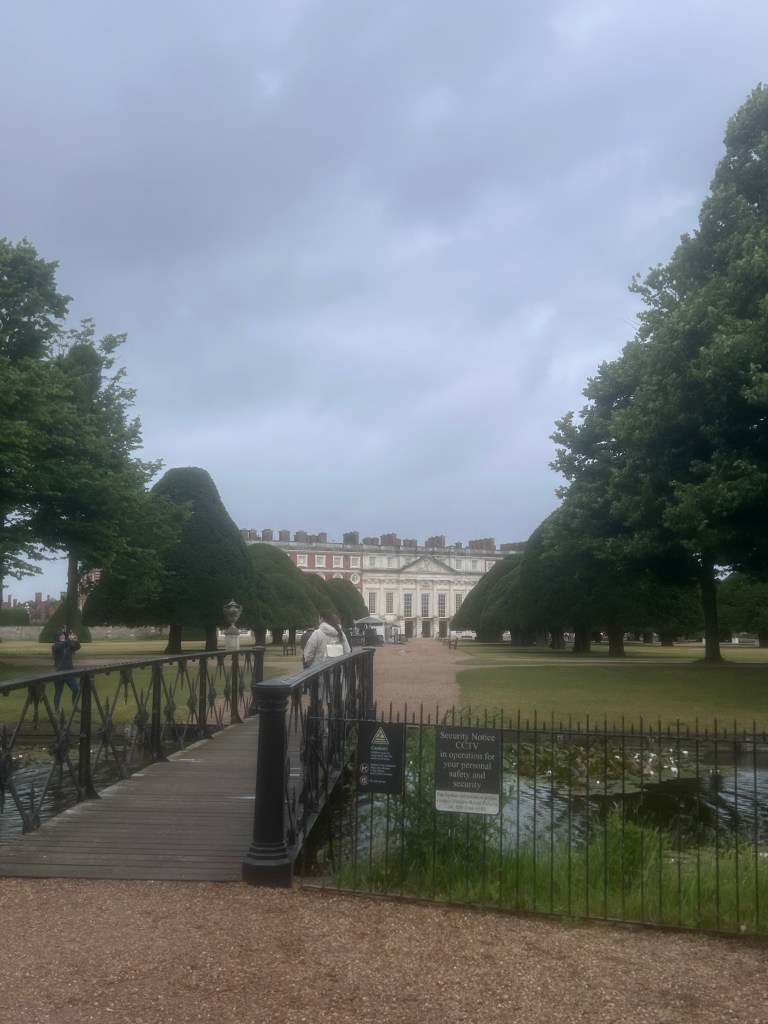
Last Thursday, we took a delectable day trip to Hampton Court Palace. The train ride was quite a bit shorter than the one that we took to Bath, which had its positive in that we got to spend more time being active, but the downside is that there are very few things as pleasurable as staring out the window while riding on a train. After arriving at a very small and heavily under construction station, we took the shot walk to the palace. The walk-up was beautiful and had a much different view and architectural style than I expected. The photos I am familiar with are of the opposite side of the house with the gardens, what I came to learn was the Baroque part of the castle. The side we entered was Henry VIII’s side, which was in a Tudor style and just under a hundred years older than the additions by William the 1st. Even though there is less than a hundred years between them, the styles are quite distinct. 

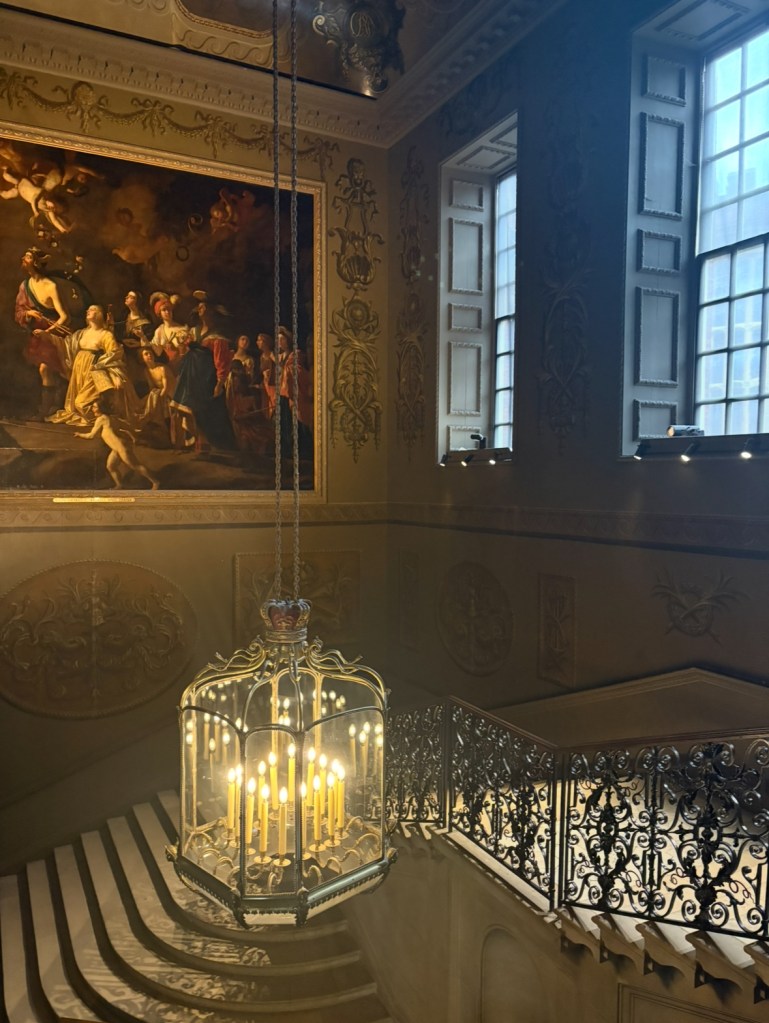
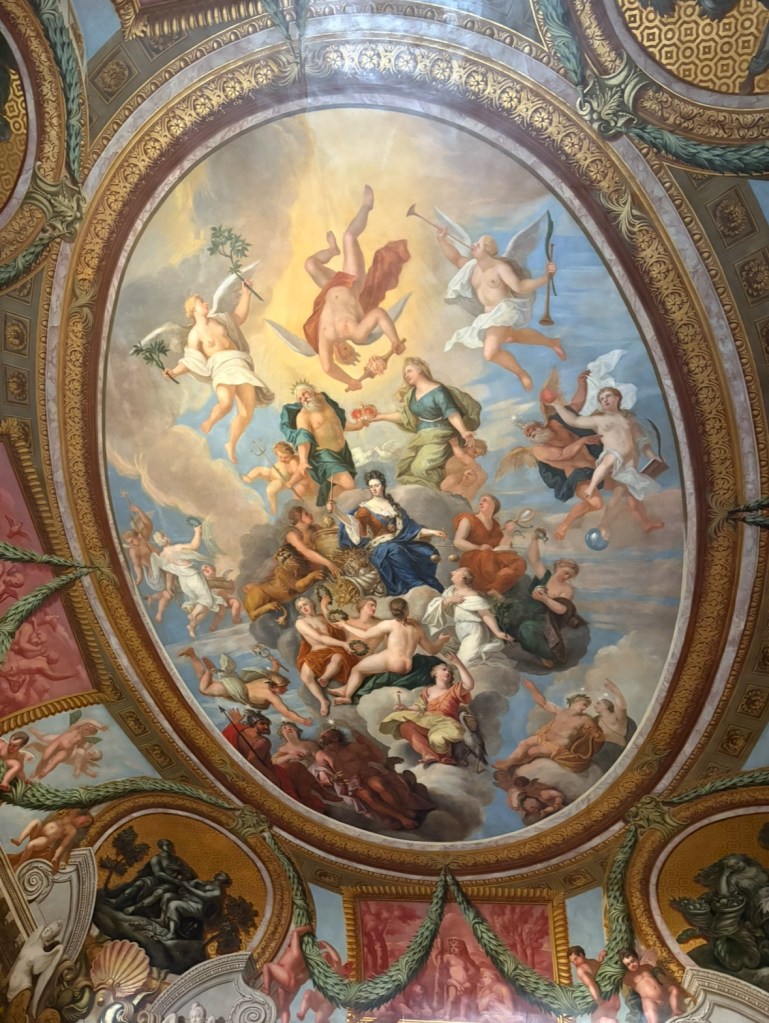
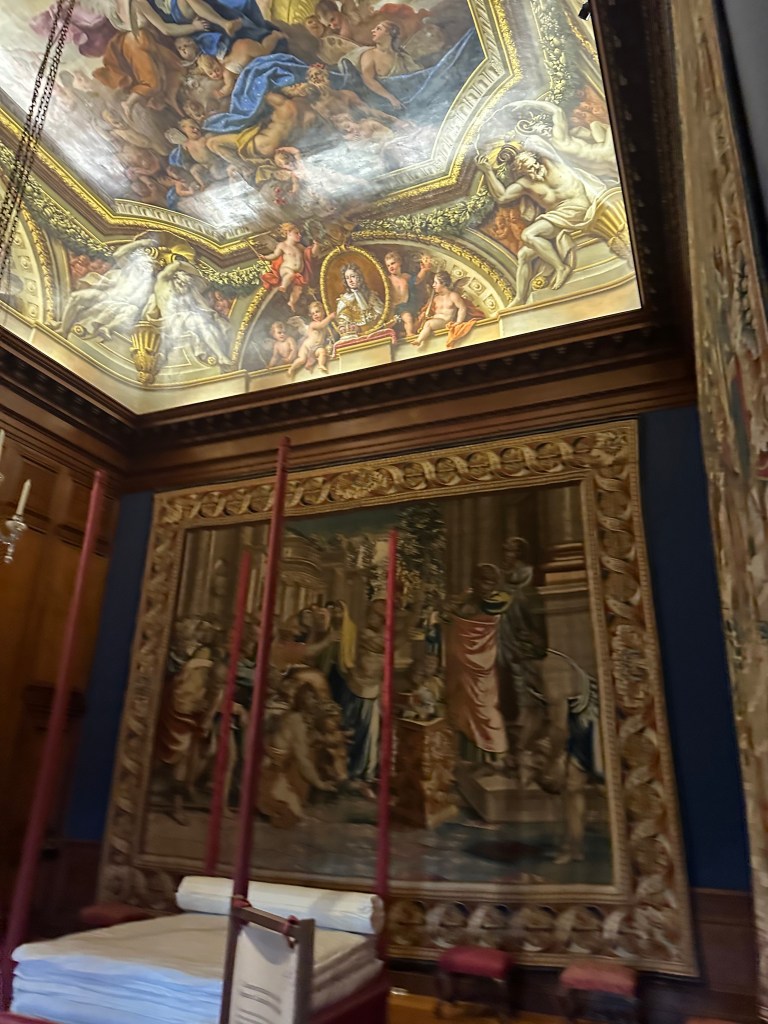
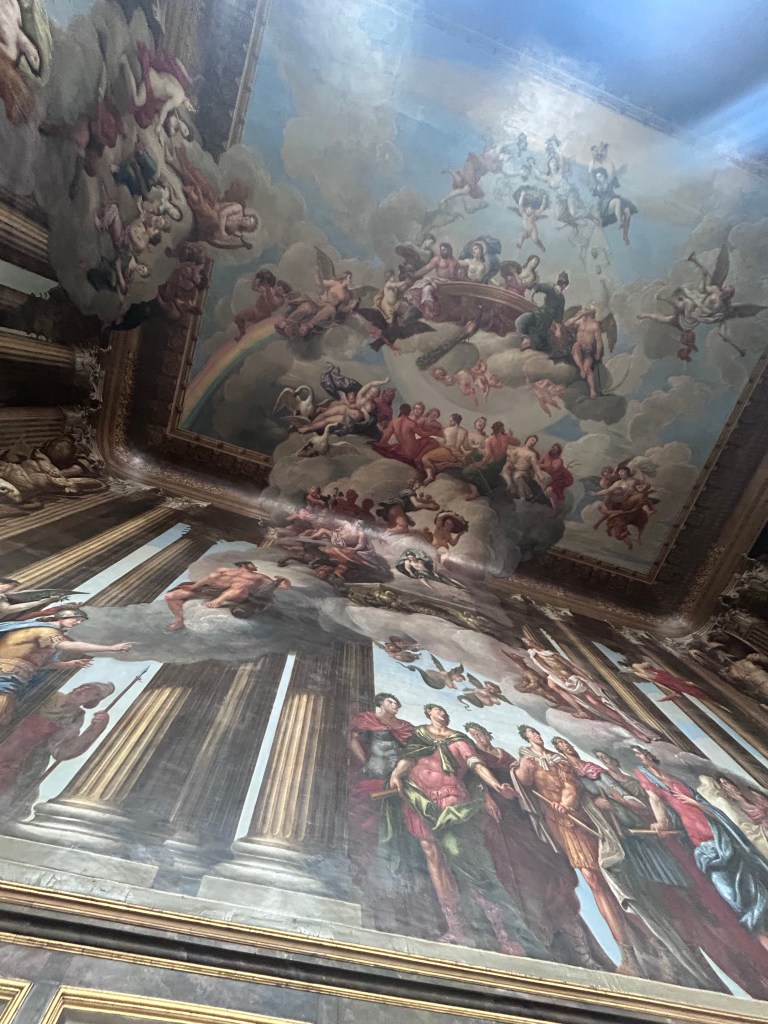
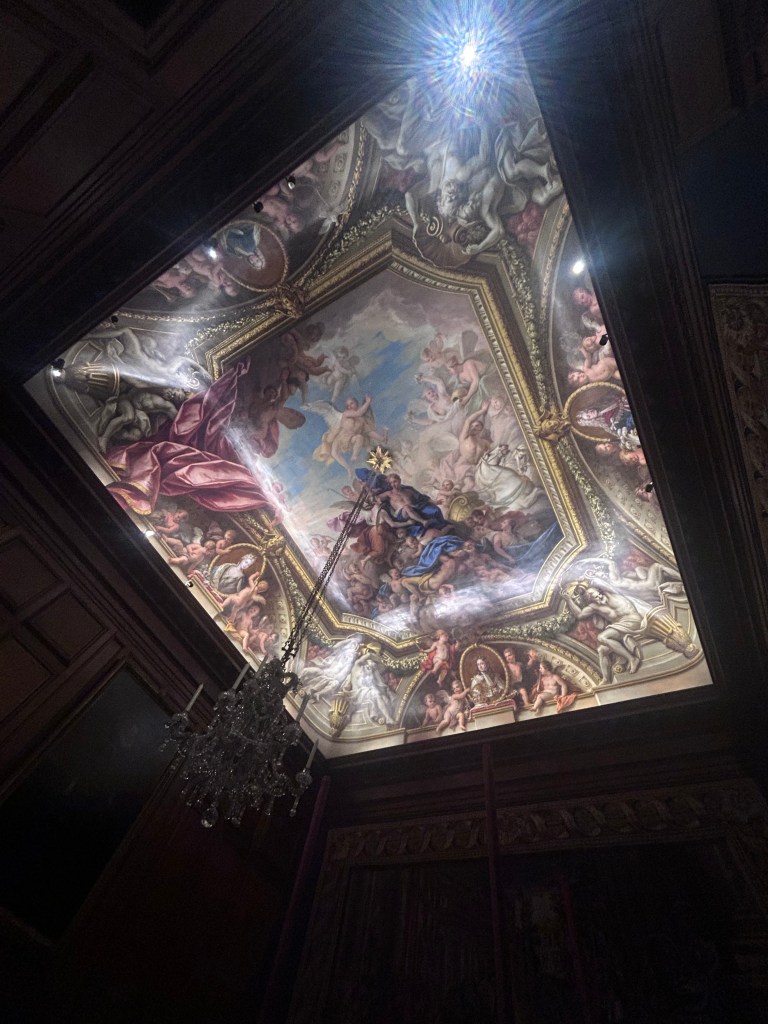
Walking into William I’s side was one of the moments on this trip that truly took my breath away. There is a door that says it is closed to keep the integrity of the room intact, and when we pushed open the door, I don’t think there was a single person who didn’t gasp. It was a massive room, with a ceiling at least 30 feet high, that had beautiful paintings covering every inch. The room held a massive staircase that wrapped around it and led us to the main part of the apartment. It was here where we saw a room that had hundreds, if not thousands, of guns and knives, formed in patterns, almost like wallpaper, above the 10-foot-high chair railing. William has two bedrooms, one that was fittingly grand, and one that felt actually quite small for a bedroom. Apparently, his servants had a door that they could enter which blended in with the wall so that they wouldn’t bother him by using the main door. I can’t imagine being so riched that you are announced enough by servants to build them a separate entrance. Crazy. 

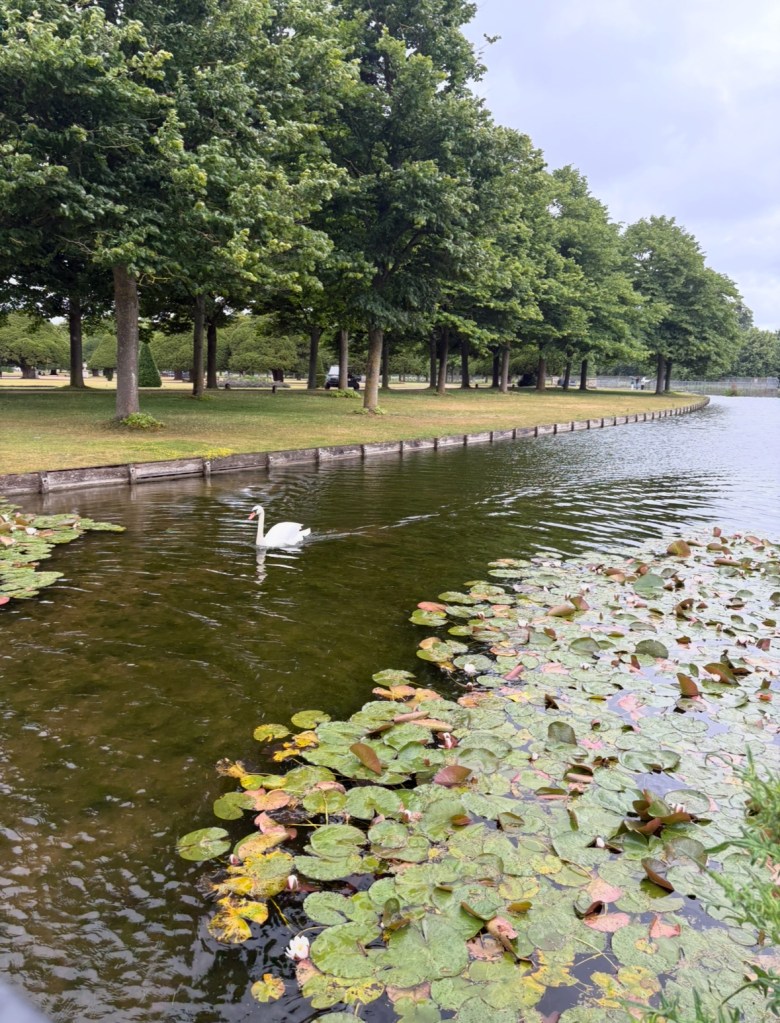
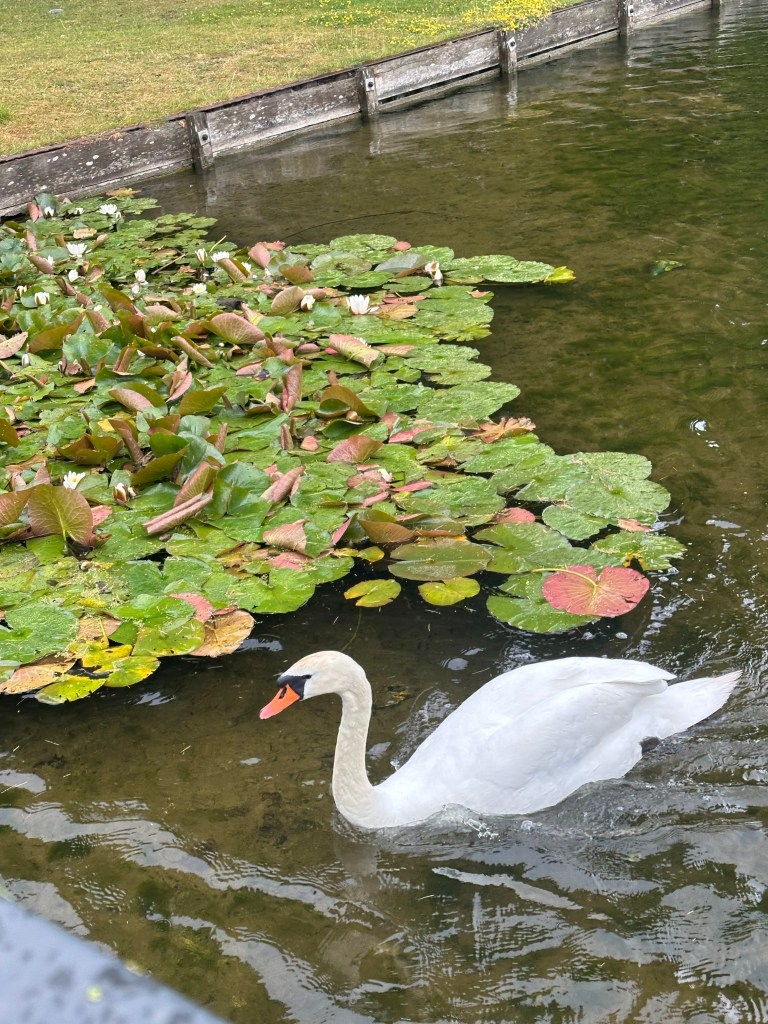
After leaving the apartment, we walked out into the gardens. It had been raining on and off all morning, so the ground was soaking and we all needed umbrellas, but it was so much fun. The rain wasn’t depressing, but instead oddly comforting. There weren’t a ton of people walking around outside, so it felt like we had most of the space to ourselves. I could very clearly imagine the ladies promenading around the gardens and chatting about whatever was on their minds when this was a place for only the elites in fancy clothes and hats. Most important, we got to see the ducks in the pond. We spent way too much time taking to the ducks and cheating them on while we were there. They were the cutest ducks ever. It was two parents and three babies, and at one point one of the babies and one of the parents got into a screaming match and the parents bit the baby and the baby tried to bite them back. It seemed to be more annoyed than violent, but they were clearly going through something serious and we definitely eavesdropped. I won’t tell you what it’s about though, the duck’s private life is theirs only. 

After our time in the palace, we had a wonderful lunch at Pizza Express where we all indulged in the wonder of a dough ball (shoutout to the vegan dough balls that were everything and more.) and then went back to the station to meet up with the rest of the crew before our few days off. What a wonderful last day before our long weekend!
Ada and I (National Portrait Gallery)

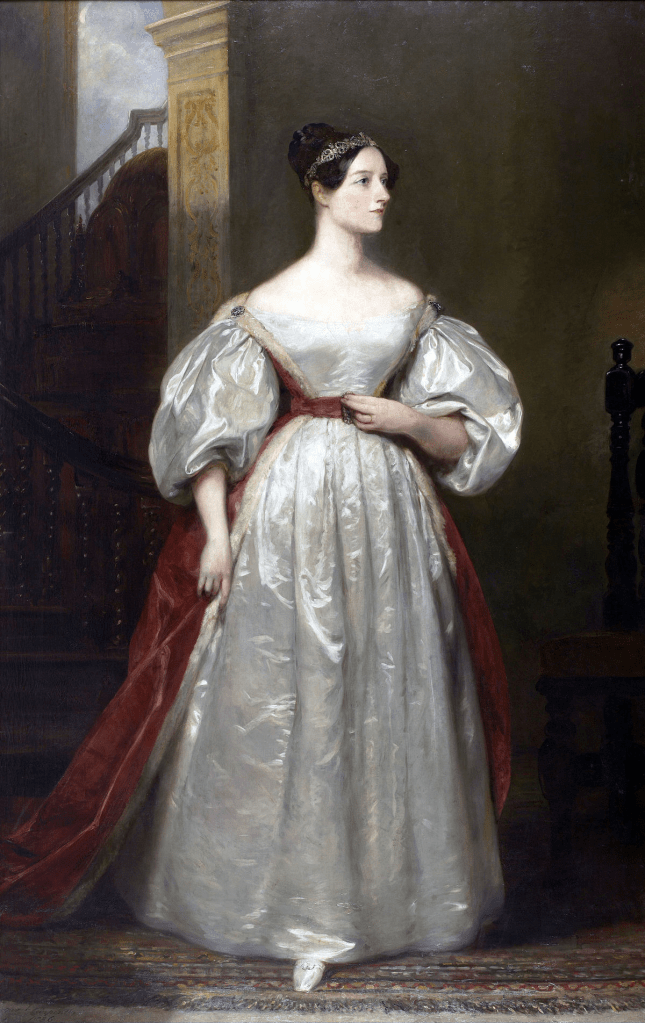
This portrait of Ada Lovelace was painted by Margaret Sarah Carpenter in 1836. She was born in 1815 with the name Augusta Ada Byron – the only child of Lord Byron with his wife Anne Isabella Milbanke (Lord Byron had many other children out of wedlock). Lord Byron left her mother only a month after she was born. Throughout her childhood, Milbanke encouraged her daughter’s interest in mathematics. Ada married William King in 1835, who was made Earl of Lovelace. This is where we get the name by which she is known today, Ada Lovelace.

Lovelace is widely considered to be the first computer programmer. She worked closely with Charles Babbage on his Analytical Engine, which is thought of today as the first programmable computer. Lovelace was the first to consider tasks outside of computation for this device, setting her ahead of any other person in the field at the time. Babbage dubbed her as the “Enchantress of Numbers,” and she herself described her approach as a “poetical science,” which further reinforces the ways in which she approached science and mathematics differently than her contemporaries.

This painting, however, was done a year before the first concept of the Analytical Engine, which was described in 1837. She was already working closely with Babbage at the time and had been married just a year prior, yet these facts of her life are not what dominate this capture of Lovelace. There is a thin wedding band around her finger that, from afar, almost becomes invisible. There is nothing that ties her to her work at all. This portrait to me is a clear representation of the way in which women view women.

Lovelace stands elegantly centered in the painting. Behind her you can see a grand spiral staircase half hidden behind a wall, and under her feet lies a carpet. It is clear that this is a place of wealth – the wall has ornate carvings, and the pattern on the carpet is reminiscent of the most expensive Persian carpets. However, all of this is put to the background, painted in dark shades that nearly disappear when looking at the true subject of this portrait.

Lovelace appears to be glowing in a white satiny dress with red and lace details adorning the sides and waistband. It gives the impression that she herself is the source of light in this room. She is incredibly feminine with her hair done in an updo with a tiara, and her white shoe is decorated with a small white bow. Lovelace looks elegantly off to her left, her eyes seeing something that we will never get to see. Perhaps it was her husband. Or her cat. Or one of her many notebooks. I think it was something bigger than all of these options – I choose to believe that she is looking towards the future, towards something that only she knows is possible.

This portrait makes you want to jump into it to know more. The STEM nerd inside of me wants to pick her brain about all things mathematical and scientific. The artistic nerd inside of me wants to know what she spends her days thinking about, what it is to be a badass (excuse my French) woman in a time when women weren’t supposed to be that way. I want to know the way her dress feels and put my bare feet on the carpet with her. Mostly, I just want to get to know her in the way that women have the privilege to know other women. I want to see her the way that Margaret Sarah Carpenter did all those years ago. Not just as this snapshot, but as the whole human that lives within.

National Portrait Gallery

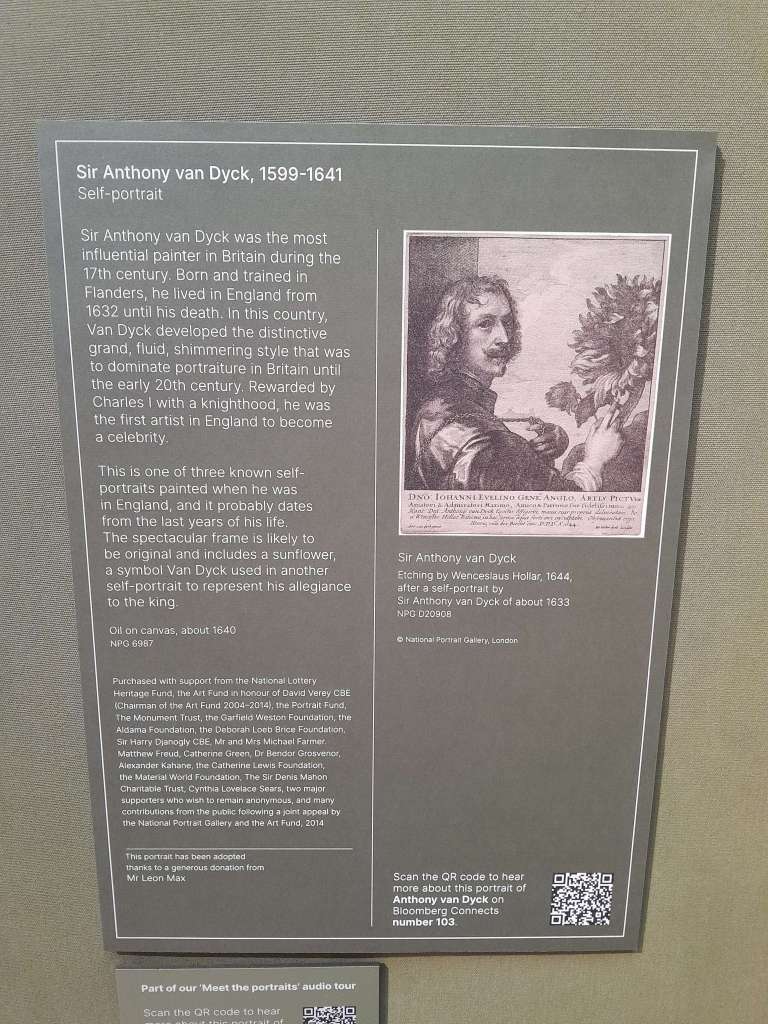
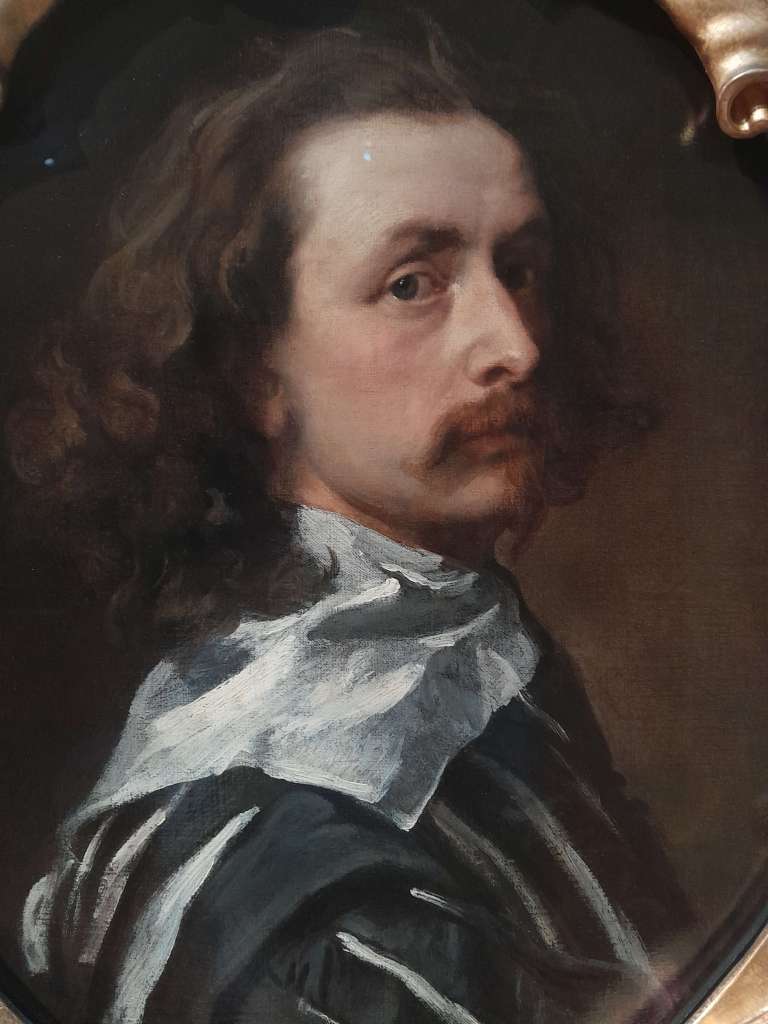
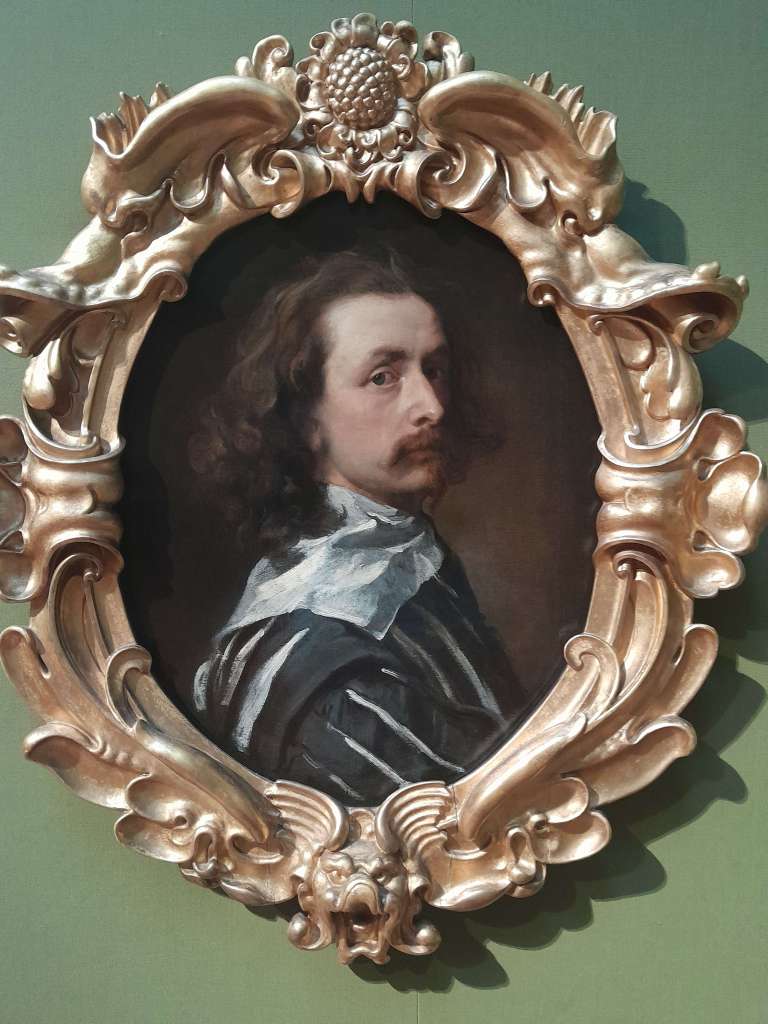
At the National Portrait Gallery, I consistently found myself drawn to self portraits. It was entirely unintentional as well; one would catch my eye and I would wander over to inspect it, only to discover it to be a self-portrait. In fact, most of the options I ended up giving myself for the subject of this assignment were self-portraits. I can’t for the life of me articulate why, either. I did end up choosing a self-portrait, specifically one done by Sir Anthony van Dyck:

It’s so… stoic. The man has a sort of relaxed confidence about him suggested by nice posture and the ease in his shoulders. There’s a calmness in his eyes as well as a hint of intrigue. He looks approachable, honestly (Maybe due to the raised eyebrows? There’s some sort of attentiveness to him, right?). Perhaps that’s why I was drawn to the portrait. Another thought, with the frame it almost reminds me of looking into a mirror, which I find neat.

Everything about this portrait is soft, too. The hair and face specifically. It contrasts with the clothes, which for a lack of a better word, look a little crunchy. I think it has to do with how simple the clothes are compared to the complex layers of the face and hair. This portrait is just overall the most beautiful thing ever, and I would actually sell my soul to capture people that well. 

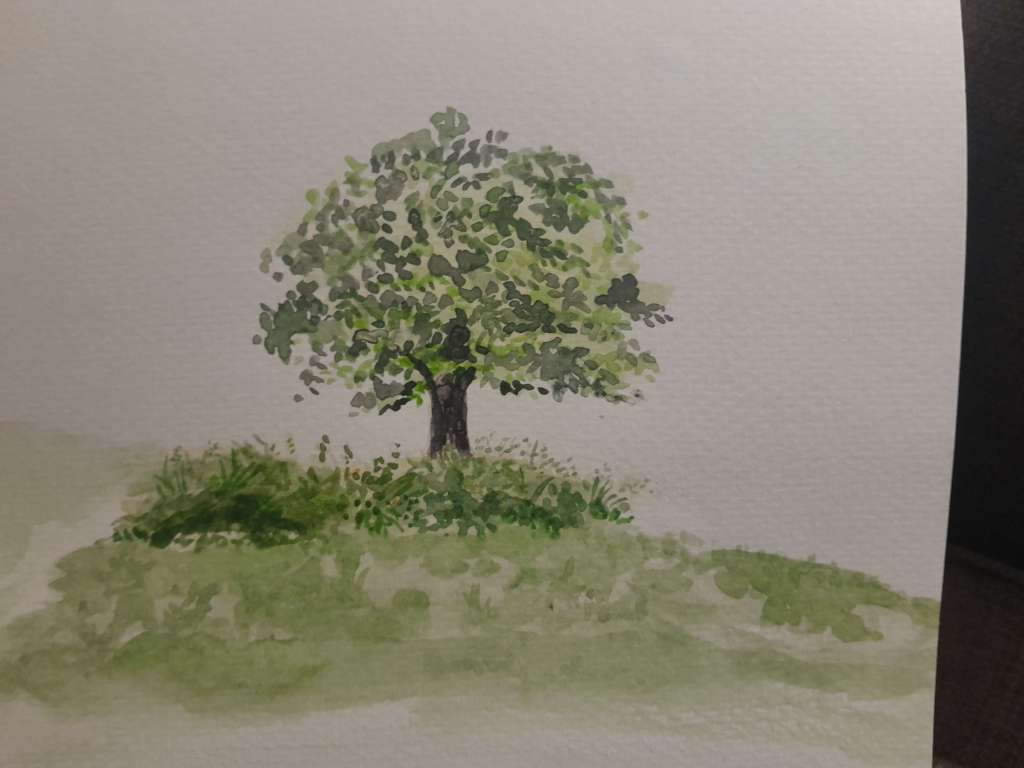
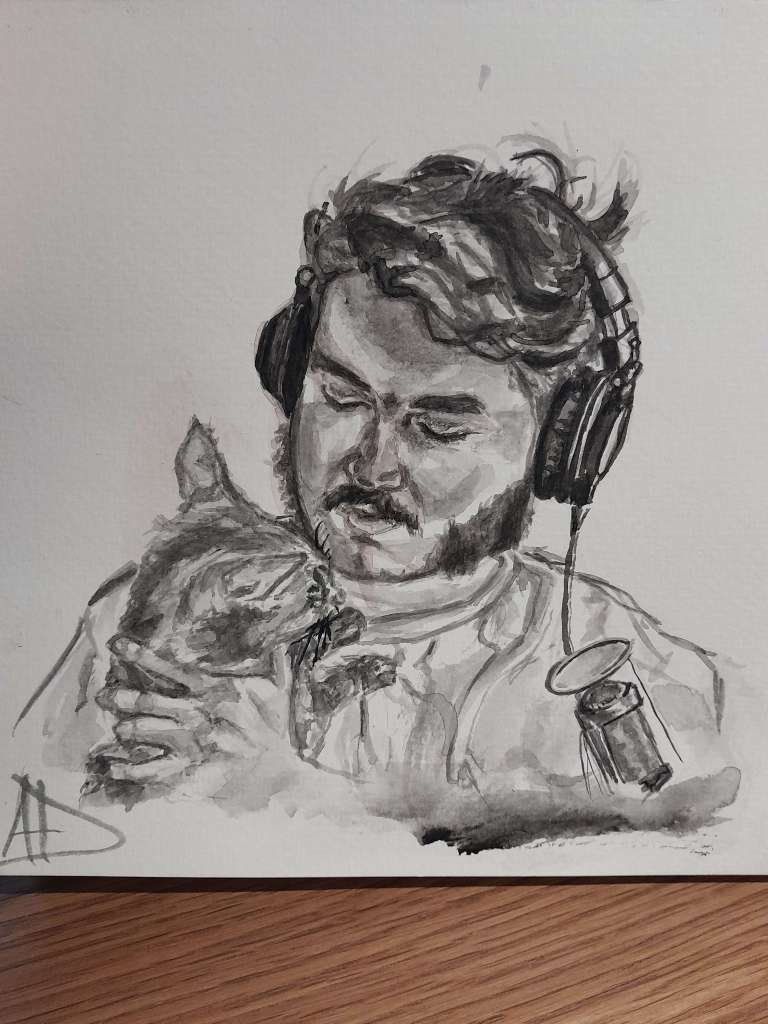
Speaking of capturing things through art:

I consider the landscape one to be unfinished, and I’m rather unsatisfied with it, but I learned a LOT from it so I can’t really complain. I dislike the tree, but I actually know what I would do differently next time. Instead of dotting every leaf like I did, I would probably render the leaves a little differently. More subtle?? I don’t know, I can see it in my mind but cannot for the life of me properly articulate it. I also really like the various dots, lines, and shapes of colors I did to replicate the bush. It almost looks like there’s a bit of depth to it? I think next time I paint a landscape I’ll play around with a similar technique, but go about it more carefully so it’s hopefully not as messy. 

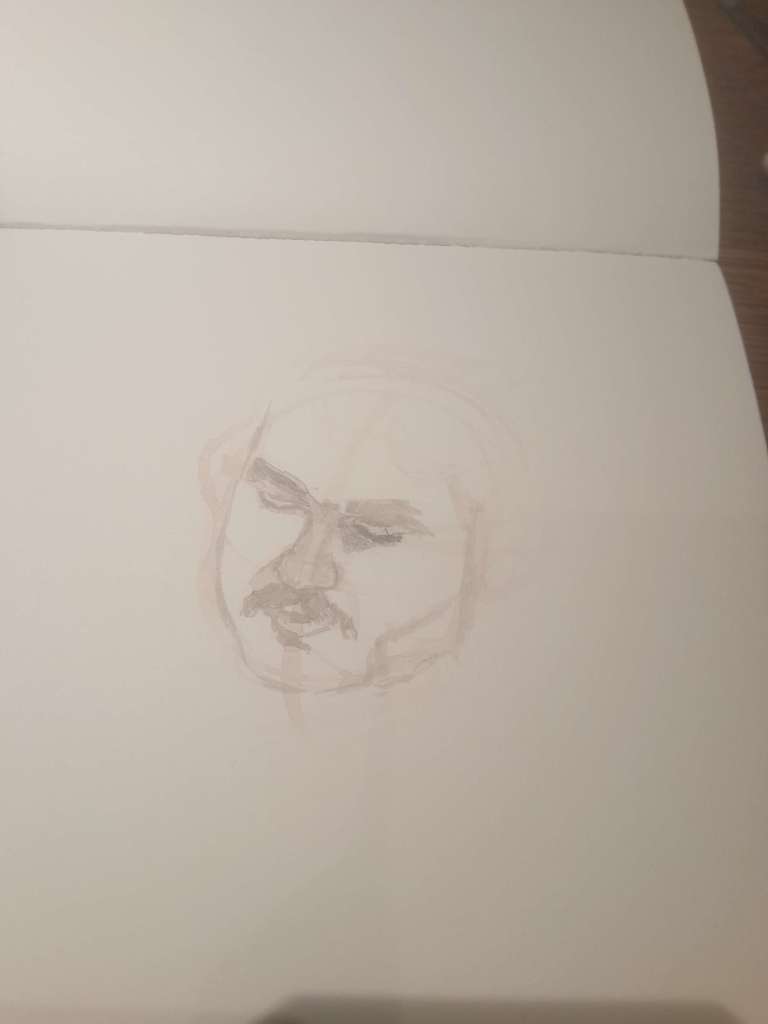
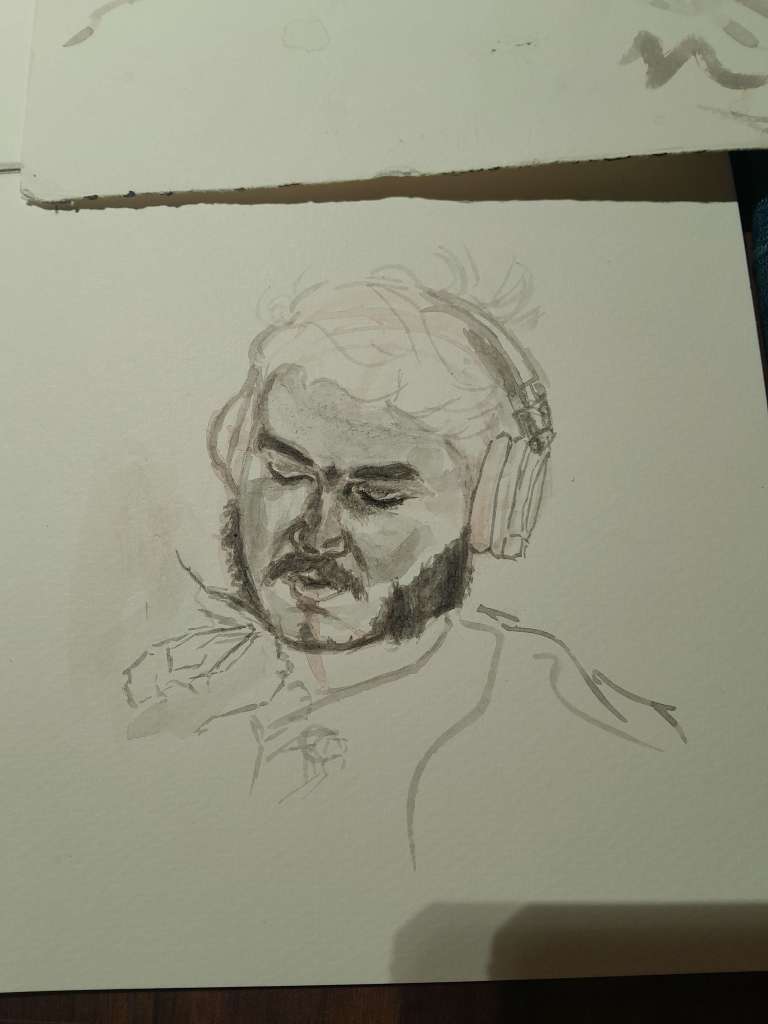
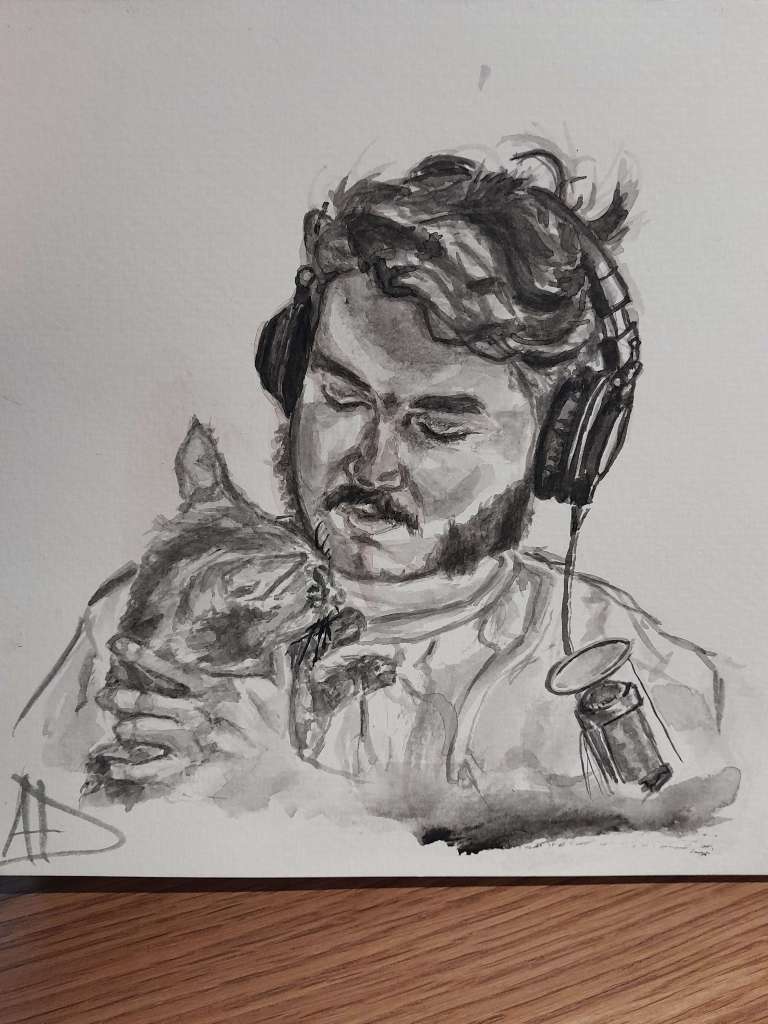
As for the black and white portrait, I was upset at my past portraits for being too grey and not having enough bold colors in them. So naturally, instead of trying to push the boundaries of color, I took it away entirely. Which is totally the right approach to art (it’s not). God do I love value studies, though. I couldn’t help myself! I painted this one without sketching first, so I felt this one out as I went. This took away the pressure I think, because I approached it as just something “fun” more than technical? Which I think helped me out a lot. I also took my time with this one and completed it over the course of five days. On my fifth and final day, I was working on it in a cafe (in Wales, how romantic is that??) and a group of women approached me and asked if I had a website. When I replied with no, they said I NEEDED to make one, and I could make money doing this. Which is an insane concept to me, because I don’t perceive my skills to be good enough to make money off of? Sometimes I wonder if we’re complimenting the art itself, or the potential of the artist that we can see. Or is that just me? Regardless, it was a very kind thing to say, and it helped me feel a little less unsatisfied with this portrait. People are so nice, ugh. 

Actually, if for some reason you’re interested in seeing my weird process for this one, I took photos along the way. You really do have to live by the saying “trust the process”, because the first photo is genuinely the most unpromising start to a portrait I’ve ever seen. 

Okay, that’s all! Bye ;)) 

Westminster Abbey

One of the graves that intrigued me was the grave of David Livingstone.  Livingstone was born in Blantyre, Scotland in 1813. He started working very early on (around 11 years old from what I recall) and developed what seems to be an appreciation of academics. I can often be a sucker for the “rags to riches” stories, despite the message of pulling yourself up by your bootstraps to be a rather unrealistic one. Especially in current times. However, I still find myself drawn to people with backgrounds like that, and David Livingstone’s story is no different. While he started out poor, the man became a doctor and an explorer. From what I’ve gathered, most of his exploration happened in Africa, where he became an abolitionist after witnessing the horrific reality of the African slave trade. He was married in Africa and died in Africa. His body was transported to Westminster Abbey, but his heart was buried under a tree in Africa, which I found to be fascinating. 

Another that caught my attention was the grave of Isaac Newton. Newton was born on Christmas day in 1642 with no father (the man died before his birth). His mother, however, married again when he was three and left him to be cared for by his grandmother. Newton grew up to become a key figure in the Scientific Revolution, and is most commonly known for formulating the laws of motion and universal gravitation. The man himself intrigued me, but I also simply liked the sculptures. 

Lastly, I was interested in Charles Dickens. Dickens was born in Portsmouth and left school at 12 years old to work in a boot-blacking factory. After three years he returned to school, then later began his career as a journalist. His success began with the publication of The Pickwick Papers, and continued on with his novellas. Dickens’ installment format of his stories not only allowed him to gauge audience reaction to adjust stories and maintain success, but the cliffhangers left readers (and listeners, for the illiterate poor people) in suspense, and inspired a new generation of readers. 

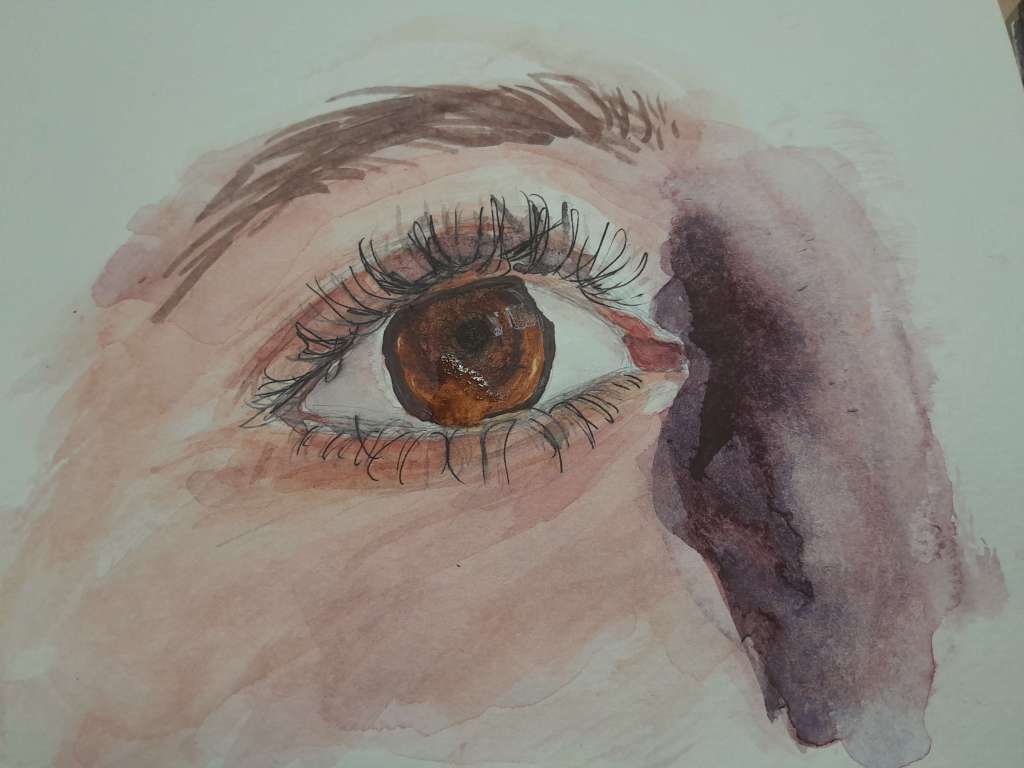
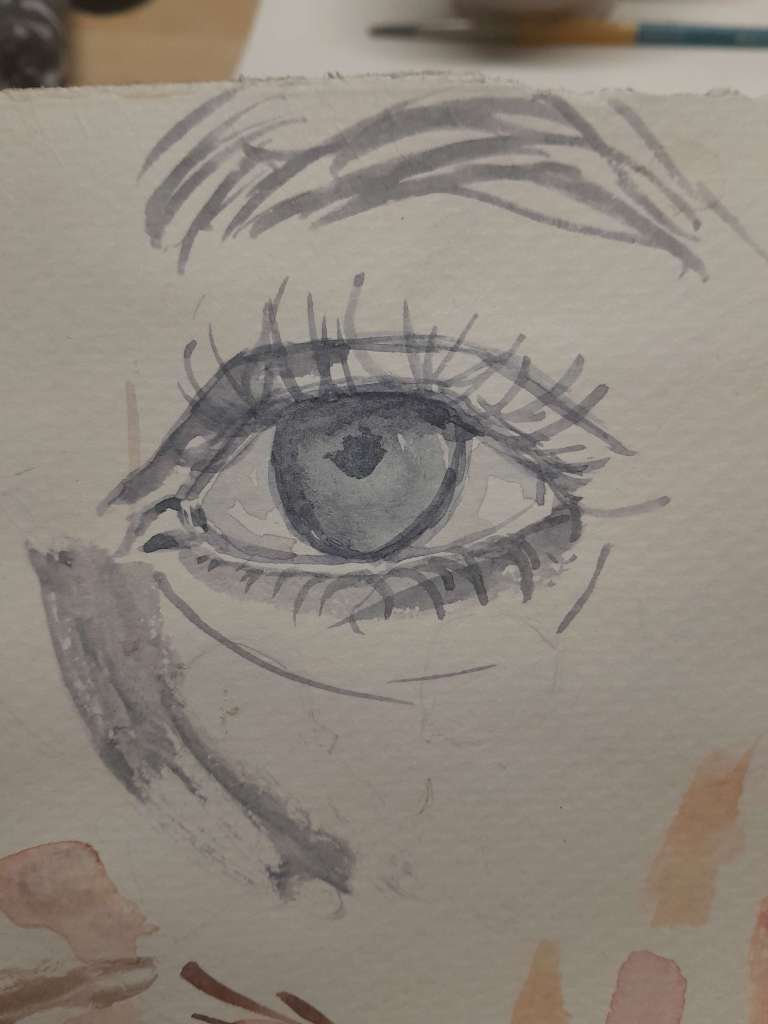
Okay, art: I’m still not very skilled in painting skin tones, so I practiced with a portrait of John Lightbody, the actor who played Friar Laurence in the production of Romeo and Juliet we saw. I tried to incorporate more color and be braver in my choices, but he still wound up a little too flat for my taste. I also played around with painting eyes, more to pass the time than anything. 

That’s it. Peace!

Home-Turned-Museum in London

Hampton Court Palace | June 5, 2025

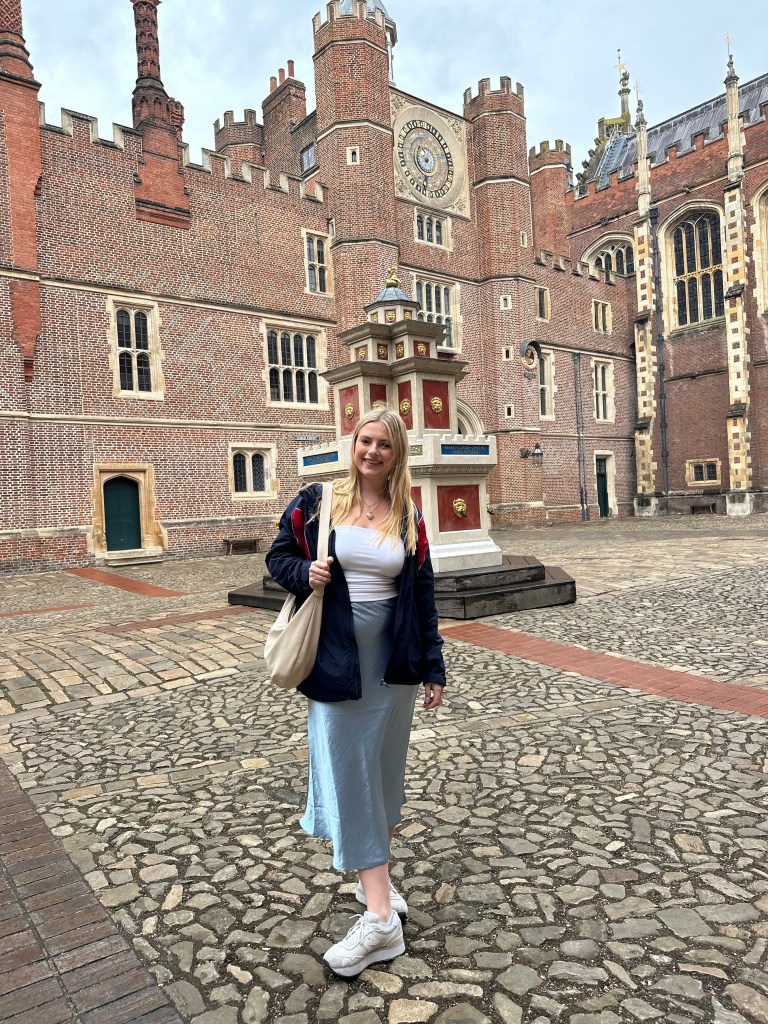
I was slightly underwhelmed walking up to Hampton Court Palace. It was a dreary, rainy day, and the palace was very far away so it looked tiny. It hardly compared to the great Westminster Abbey and Tower of London we had seen in days or weeks prior. It didn’t glow in the sparkling sunlight or shoot up into the heavens above, but inside the palace was much more intriguing! And you know what they say, it’s what’s on the inside that counts. For one thing, the palace seemed to go on and on forever. The long and narrow hallways were lined with door after door after door, each leading to perhaps a room or another hallway of doors. 

We walked the very same footsteps that Henry VIII and William and Mary walked when they were alive. It was really cool to see all the different rooms and luxuries they had as royals back then. For example, we walked through Henry’s kitchens and learned that he would eat multiple three-course-meals a day! They had multiple fires that would be going at all times to cook all the food. I was shocked by how much the king is said to have eaten, and I feel bad for the cooks who were confined to the room for hours at a time while multiple fires were burning with no A/C. There was only one fire burning when we were in there, and even standing on the same half of the room as the fireplace would become uncomfortable after a bit of time.

We were given headphones with a device similar to an iPod that told the history of the various sections within the palace. On these devices, we learned a lot more than the environment could tell us just by looking. For example, the royals would often have dinner where the public was invited to come and watch them eat. However, one of the kings did not like this practice and rarely had dinners as such. We also walked through the Tudor house and learned a little more about Henry VIII’s six wives.

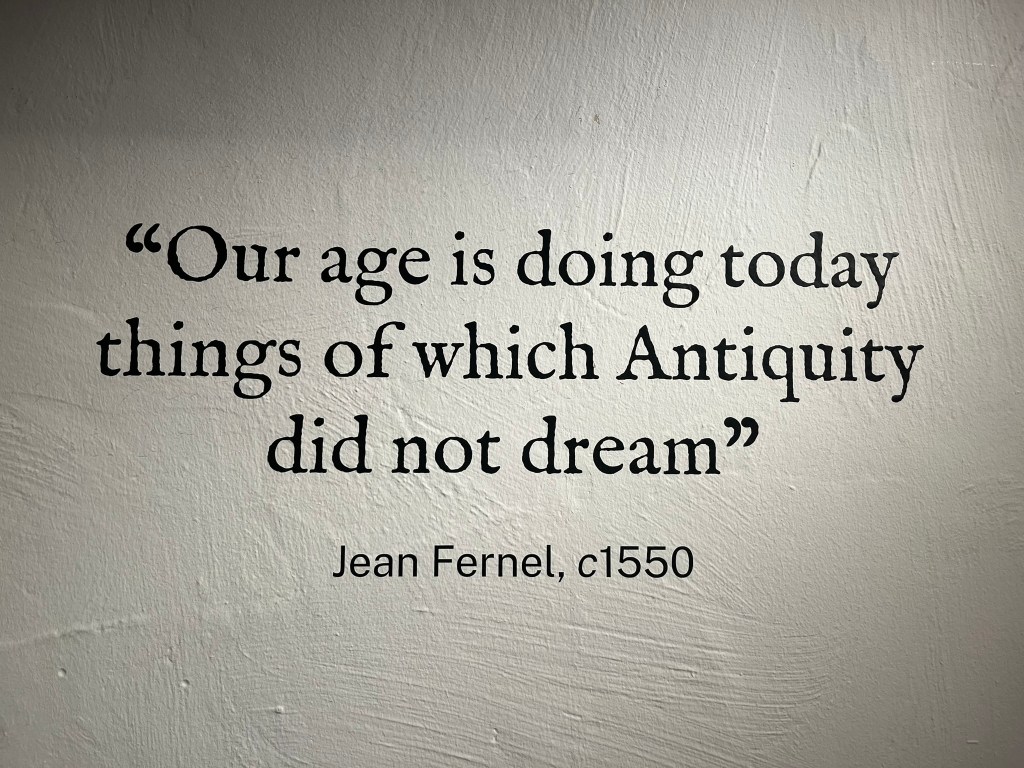
This was plastered on the wall of the area of Hampton Court Palace dedicated to the Tudor Dynasty’s history. Although French physician Jean Fernel said it in 1550, it also applies to today’s age. As I go through all of these historic places in London, I see how similar their lives were to ours even though it was so many years ago. People have always been people. So, did they ever imagine the world as it is today? Did Henry VIII or Mary or anybody back then ever dream that people would travel from all over the world to walk through their home? That we would marvel at everything to which they never gave a second thought? It is something to think about, especially as we look to the future!

– Hadley ❤

Ilaria’s Pub: The National Portrait Gallery

Although the British Museum was fascinating, especially when I had the chance to see the Rosetta Stone in person and view the various grand, Egyptian and Roman sculptures, when I think of my favorite museum in London that we’ve visited thus far, I would gladly give that title to thew National Portrait Gallery. Whilst roaming the National Portrait Gallery, I was able to learn about key influential figures of Britain from the 15th century until the 21st century. I felt truly in touch with British culture and history while gaining knowledge of the lives of incredible people. Visiting the National Portrait Gallery has become one of my favorite activities that we’ve partaken in thus far in London. While walking through the oil paint exhibition, the story behind a specific portrait and how it sparked controversy from within the museum deliberators caught my attention. Gertrude Elizabeth Blood, Lady Colin Campbell by Giovanni Boldini, oil on canvas from 1894.

“Lady Campbell commissioned this magnificent life-size portrait from Italian painter Giovanni Boldini. Boldini pays special attention to Campbell’s black satin evening dress and the way it clings to her body. The elongated lines of her anatomy are reminiscent of both the sinuous contours of the contemporary Art Nouveau aesthetic, and elegantly exaggerated fashion drawings” (National Portrait Gallery). The regal nature of Lady Campbell gave me the immediate impression that she was of higher or noble status in society. Her golden bangle jewelry and long, silk extravagant gown show signs of wealth. She wears a small smirk with a calm expression, resting her head against her arm on a sofa in a dark lit room. Lady Campbell looks healthy and radiant with fair skin and rosy cheeks. She seems calculated, intelligent but comfortable and self assured. The dress has a low bust cut, giving a slight rebellious appearance to her figure.

“Lady Colin Campbell had gained notoriety in high society with a scandalous divorce case in 1886. Although she later had a successful career in the world of editorial magazine publishing and authored a number of books, there were concerns for the Gallery. Was she famous enough? Was she too scandalous as a public figure? On the other hand, would it be wrong to turn down such a brilliant portrait? The Gallery turned to its neighbour, the National Gallery, for help, who were persuaded to display the painting for ten years.”

“The reaction was instant. The dispute even made it to Parliament, with the Secretary of the Treasury urged to have the picture removed to the Victoria and Albert Museum, or “some equally suitable place of exhibition”. Despite the outcry, Boldini’s portrait is very popular with today’s audiences and is regularly subject to loan requests from institutions around the world. As Holmes sagely noted, “Time alone can decide the final importance of such acquisitions.”

If I were to step into the world of this painting, I would feel regal and powerful. Perhaps I’d hear classical music play, a symphony of keys and strings in unison for my enjoyment. I could hear chatter and the clinking of glasses and silverware from the next room of a dinner party. I might smell the burning of candles and firewood.

This portrait alone was able to cause major upheaval within British society amongst hundreds of people. If I were in Lady Campbell’s shoes, I’d feel amused, entertained and effortlessly in control.

Styles: Vogue Solo Star

The National Portrait Gallery contains portraits from all types of peoples: royals, aristocrats, celebrities, and common people. Originally, I went in extremely excited to see the Ziggy Stardust portraits of David Bowie. However, I quickly found out that the portrait had been retired. Though I was sad, my mood was brightened when I saw the first set of portraits: one of Andrew Scott and (more importantly) THE Harry Styles.

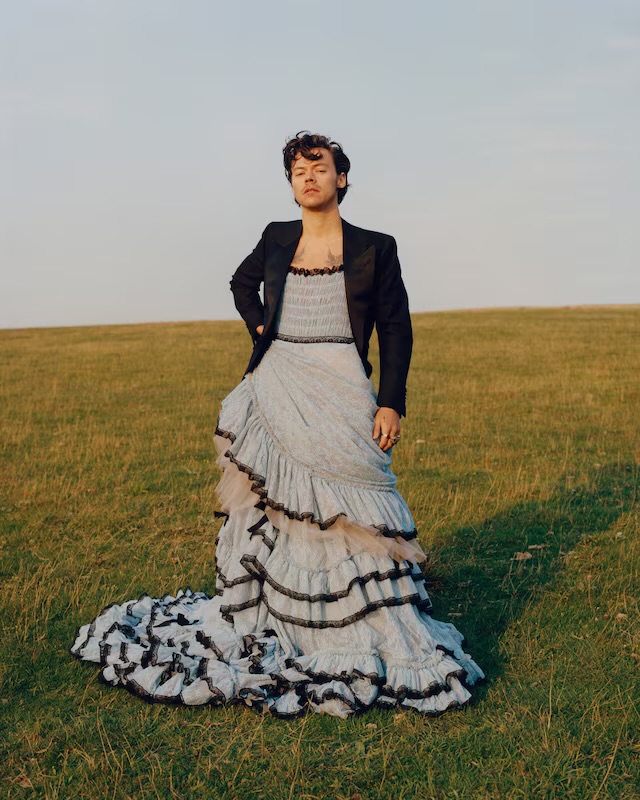
The portrait of Harry styles is a photograph by Tyler Mitchell, taken for the December 2020 issue of US Vogue. For those of you who are normal and did not obsess about Harry Styles’s every movement for years, the following is some context for this shoot. In the magazine’s 127 years worth of issues, not once had there ever been a male pictured solo on the cover. At this point in Harry’s career, he was coming off the high of a wildly successful number one album, and he was actively being praised for his subversion of gender in fashion. However, when this shoot was released it sparked major controversy. An entire movement broke out to “bring back manly men.” It was a crazy time for the Harry girlies. We were going to WAR on twitter. 

When looking at the portrait in a vacuum, you see a traditionally male presenting person wearing a dress. He wears no makeup, one can see little jewelry, and he has very messy hair. The sitter stands in an empty field with soft light daylight illuminating the portrait. He stares down the camera, almost daring the viewer to say something about the way he looks.

The question of what I would feel if I were in the portrait was really intriguing when I first read it. This is not something I had ever really thought about. I’ve seen the behind the scenes footage of the clip enough to know that I would have felt sporadic gusts of wind, the grass beneath my feet, and sun on my face. I’m sure I would have been a little overwhelmed by the amount of people there to help the shoot run smoothly. More than anything I would probably be screaming, crying, and throwing up that Harry Styles was right in front of me.