June 2: Time. Space. War.

I wish for the abolishment of time as we know it. The timepiece is a cruel mechanism demanding the allocation of human time into chunks far too small to be healthy. That said, clock mechanisms themselves are really, really cool to me. The aesthetic of gears and catchments, spinning, ticking, pulling, whirring; it’s all so lovely to me. 
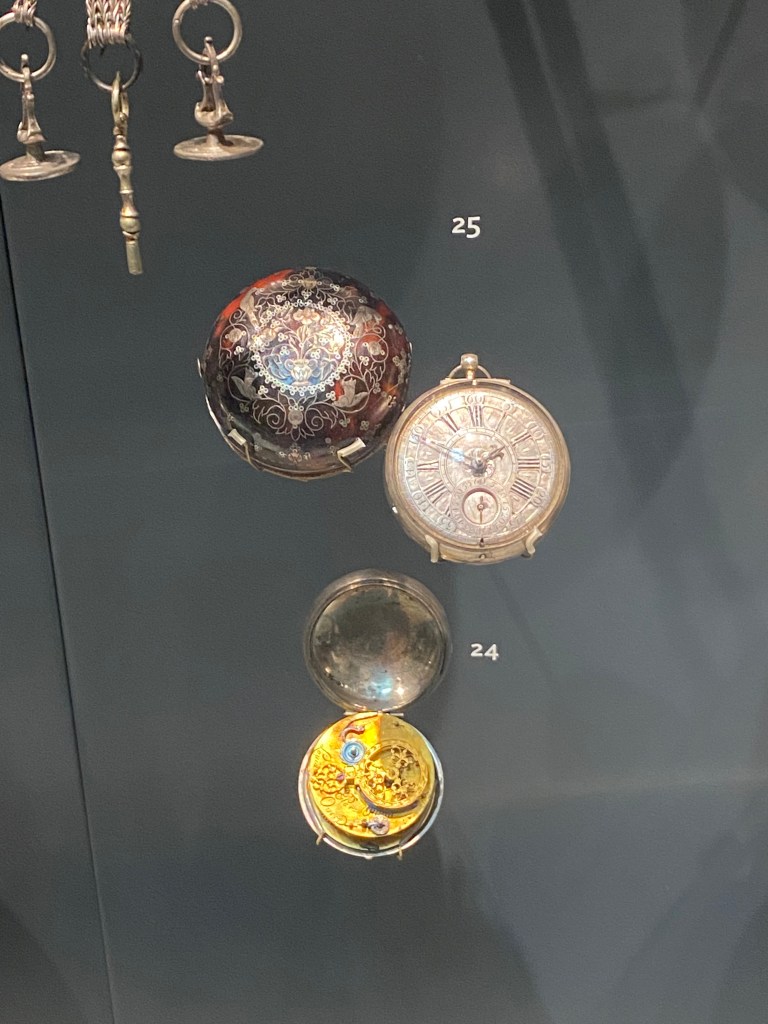
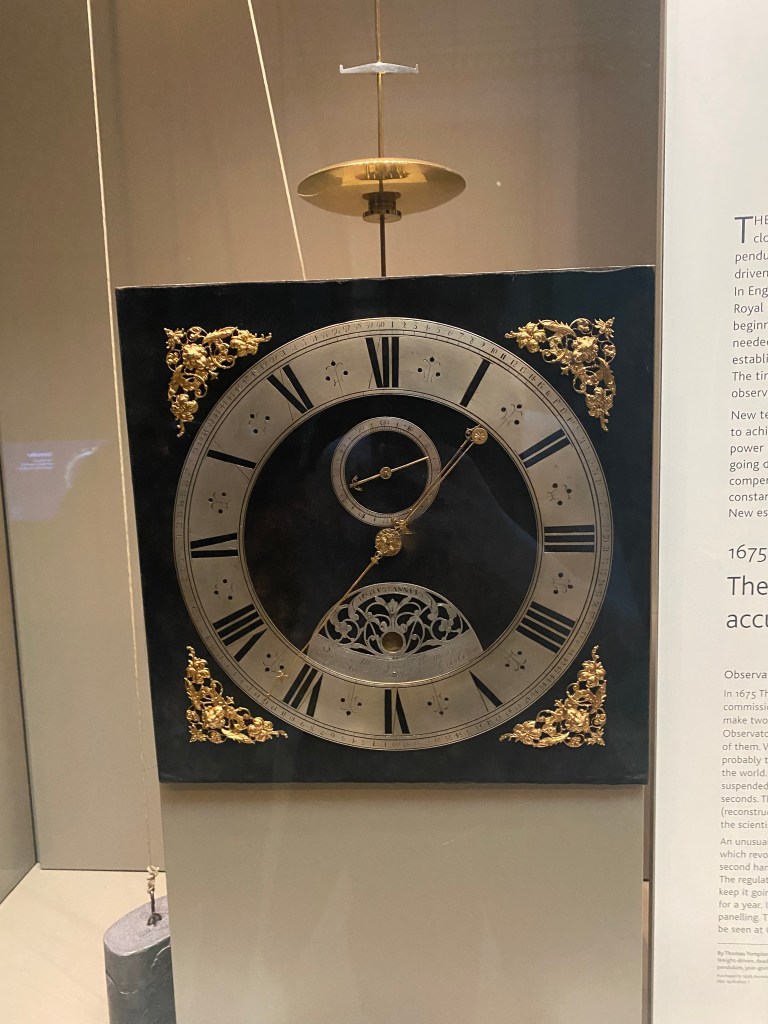
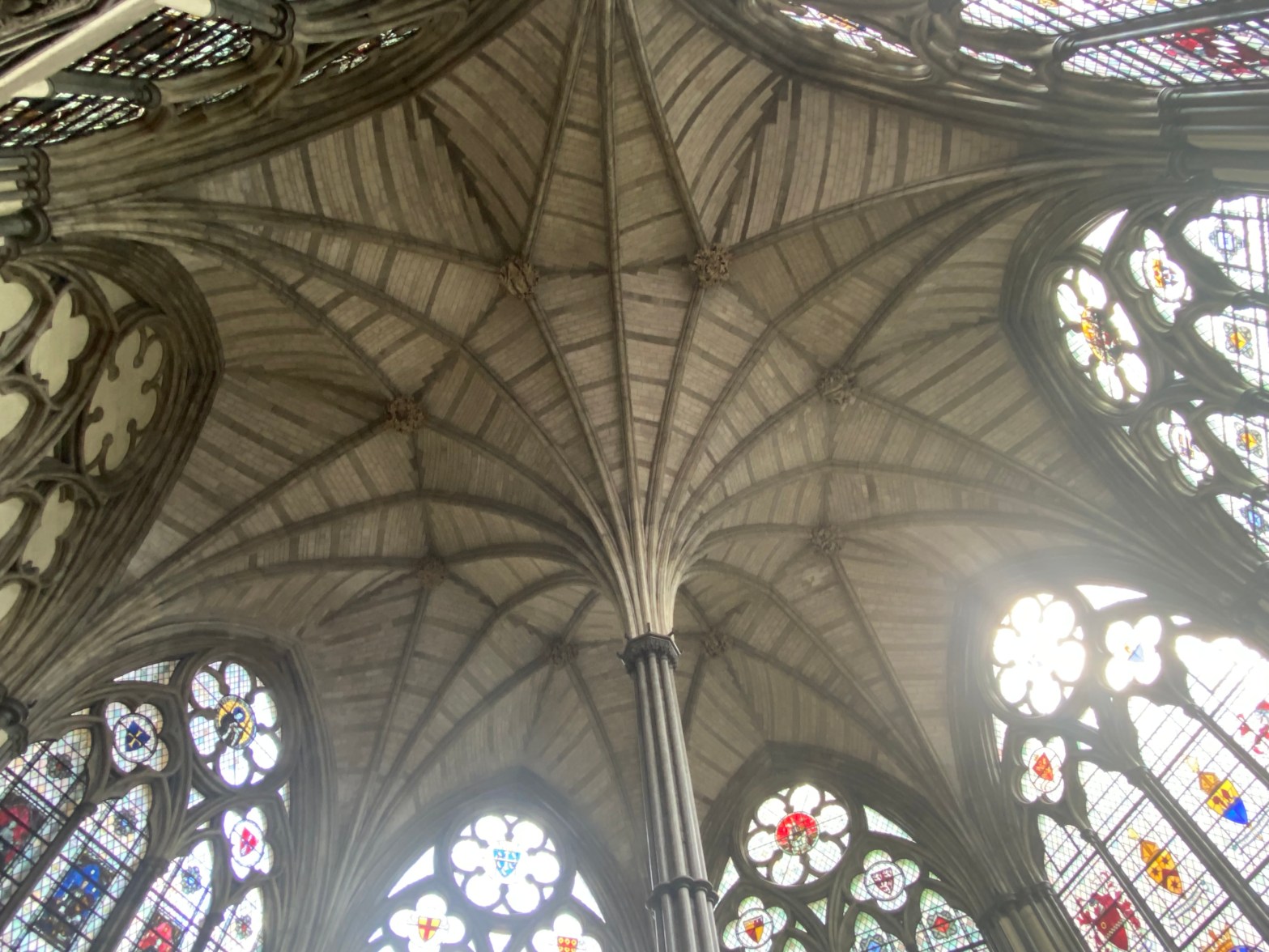
While exploring Westminster Abbey, I came across the grave of Thomas Tompion, a pioneer in accurate timekeeping technologies. His pieces were made accurate by his own machinations, but they were made beautiful by the Huguenot workmen who crafted their faces. He was excellent in his craft, known today as the “Father of English Clockmaking”. He is an example of a person who dedicated his whole life to engineering, and in death is remembered.

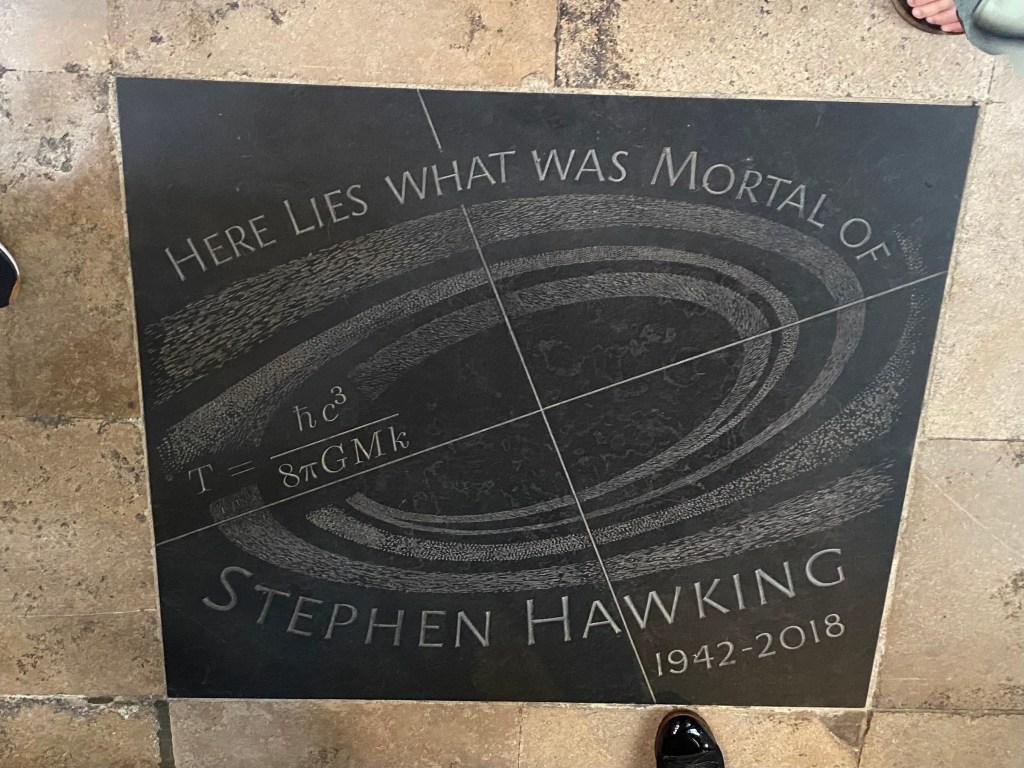
If time is cruel, space is tricky. Where time is mostly a matter of perception for humans, space is a little more insolvent than that. To grapple with physical science for one’s whole life sounds to me like trying to count infinity: a Sisyphian task. Stephen Hawking was interred at Westminster Abbey not far from Thomas Tompion. His modern headstone is a lot cooler in my opinion. It shows a portion of his equation describing the radiation black holes emit, called Hawking radiation after the man himself. He committed much of his life to this work, and in death is remembered.
More tricky than space, and crueler than time, is war. The Grave of the Unknown Warrior is front and center at Westminster Abbey. Soldiers often don’t get the chance to spend a lifetime studying a particular topic. They aren’t afforded the time or the space. Seeing this grave, I feel fortunate for my opportunities to devote myself to art and science. To learn every day. To visit London to experience the best my craft has to offer and grow as a result. While the Grave of the Unknown Soldier is dedicated to World War 1 in particular, it evoked in me thoughts of all wars past and present. I doubt I will ever be called into service, but I know many who could one day. I dread the thought. If war ever comes our way, will we have spent enough time together? How far apart in space will it put us?
The Mad Ones – Fringe Theatre

One of the most exciting parts about the London theatre scene is all of the theatre that exists outside of the West End. Don’t get me wrong, the shows that we’ve seen on the West End over the past few weeks have been exciting, and they’ve all been marvellous on a technical level because they have the budget to do so. Fringe theatre, however, is much more reminiscent of the type of theatre that I grew to love in the first place. It’s still incredibly professional, much like regional theatre back home in the US, but they don’t necessarily have access to the glitz and glam that we have seen so often on the West End.

I had the pleasure of seeing The Mad Ones at The Other Palace Theatre in their blackbox space, which was simply called the Studio. The book, lyrics, and music were written by the amazing writing team Kait Kerrigan and Brian Lowdermilk, and this production was directed by Emily Susanne Lloyd. The writing itself is incredibly evocative which helps to push the story forward at a steady pace. The music includes motifs that build throughout the score in an exciting way that left me feeling fully satisfied by the end of the show. The direction shone through the clear relationships and connection to the story that every actor brought onstage. While the scenic design was excellent and the costumes did what they needed to do, I was left with many questions about the sound and lighting.

The Mad Ones mainly follows Samantha Brown (played magnificently by Dora Gee), a recent high school graduate, as she tries to figure out which path to take. Before her senior year, she had always known what path she would go down. But everything changed when her best friend, Kelly (Eliza Bowden), was hit and killed by a car. Most of this play is a memory play with Kelly helping Sam relive key moments throughout the year prior including conversations with her mom, Beverly (Thea-Jo Wolfe), and her boyfriend, Adam (Gabriel Hinchliffe).

The space itself was incredibly interesting, and the set, designed by Reuben Speed, gave hints of the story before the show even began. The stage in the Studio is in the shape of a triangle with one side being the back wall and the other two sides having seating banks. I’m not sure if there is a name for this theatrical setup, but I’ve decided to call it a corner stage. The back of the set for The Mad Ones was made up of mirrors that had been broken into pieces and put up in a way that resembled a fractured windshield. Not only were the mirrors interesting to look at, but they helped with sightlines as there were many moments where I could only see someone’s face through one of the mirrors. There were two mirrors that became see-through at times, which helped add to the ghostly quality of memory. The only set piece onstage was the front half of a car with the two front seats. It stayed onstage the whole time and transformed into whatever a scene demanded. The most exciting transformation in my opinion was when they laid the seats down and seamlessly turned it into a bed.

The sound, designed by Tom Bedworth, unfortunately, was not as strong. House was held for about 15 minutes before the audience was let into the space, which I believe was for audio issues. Sadly they were not able to get all of those smoothed out, so there were several mics that kept going in and out, and overall the mixing wasn’t great. 

The lighting, designed by Joanne Marshall, honestly pissed me off. The four performers up on stage were singing their absolute hearts out (and on some pretty dang hard music, mind you), and I swear that for about a quarter of the time their faces weren’t lit. It was clear that the actors had put tons of work into living truthfully, and it was frustrating at times to not be able to see them shine. I’m very curious as to what the tech process looked like for this production

.Despite my issues with the lights and sound, I am so glad to have had the opportunity to go see this show. Anyone who has dealt with loss, especially in a transitional moment of life, will have something with which to deeply resonate. And anyone who has had to grow up at all will find something to relate to. Absolutely hilarious at moments and absolutely devastating at others, The Mad Ones took me on a journey I am not likely to forget.

Hampton Court Palace

Walking up to Hampton Court Palace was not what I expected. I expected to have to walk quite a ways from the train station to get to the palace. I imagined walking through fields and fields before we finally saw a structure in the distance. From everything I know royals liked to live very separate from the common folk and the city. So I was very shocked when it was only a five minute walk from the train station and there we are standing at the gates. I can imagine that when the palace was inhabited by royals the town of Hampton Court was significantly more rural and farther away from the palace. But across our entire trip I have been taken aback by the modern world cohabitating with the deep history of England.

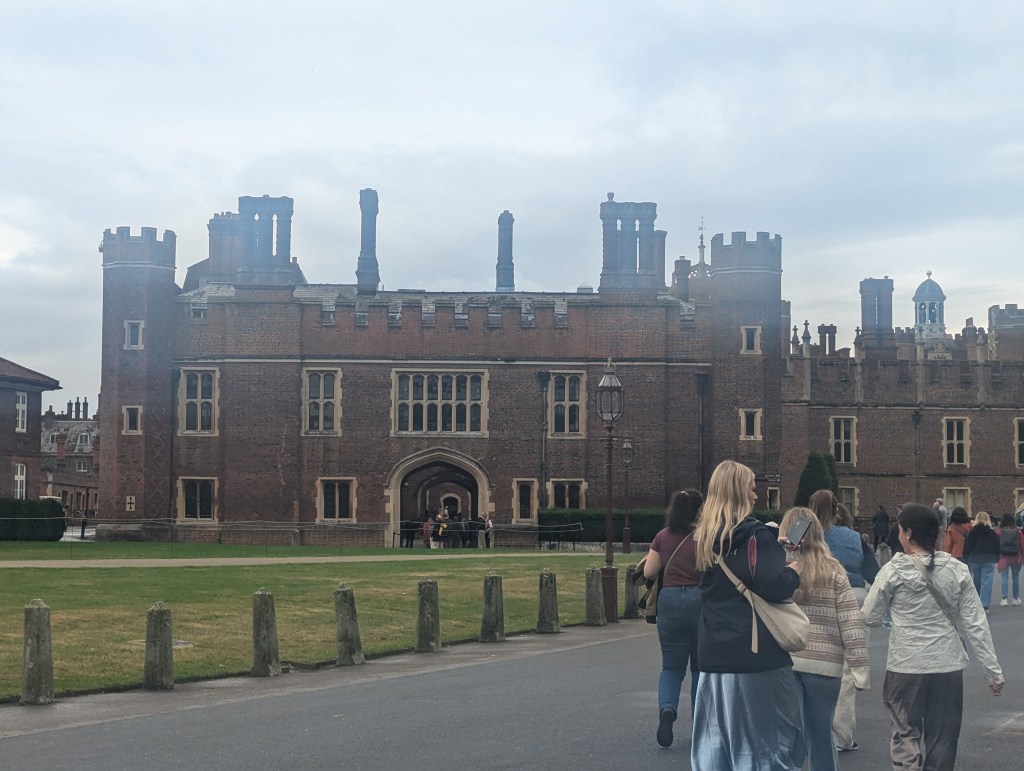
Upon first glance I noticed how big the structure was, but felt it was significantly less opulent than I had expected, until I figured out that the entrance is by the kitchens where the servants and working class citizens would have existed in the palace. It seemed that the route of the tour takes you from the more practical spaces building on the opulence as you move from room to room until finally you end up in the apartments or the massive gardens that seem to go on for miles and miles.

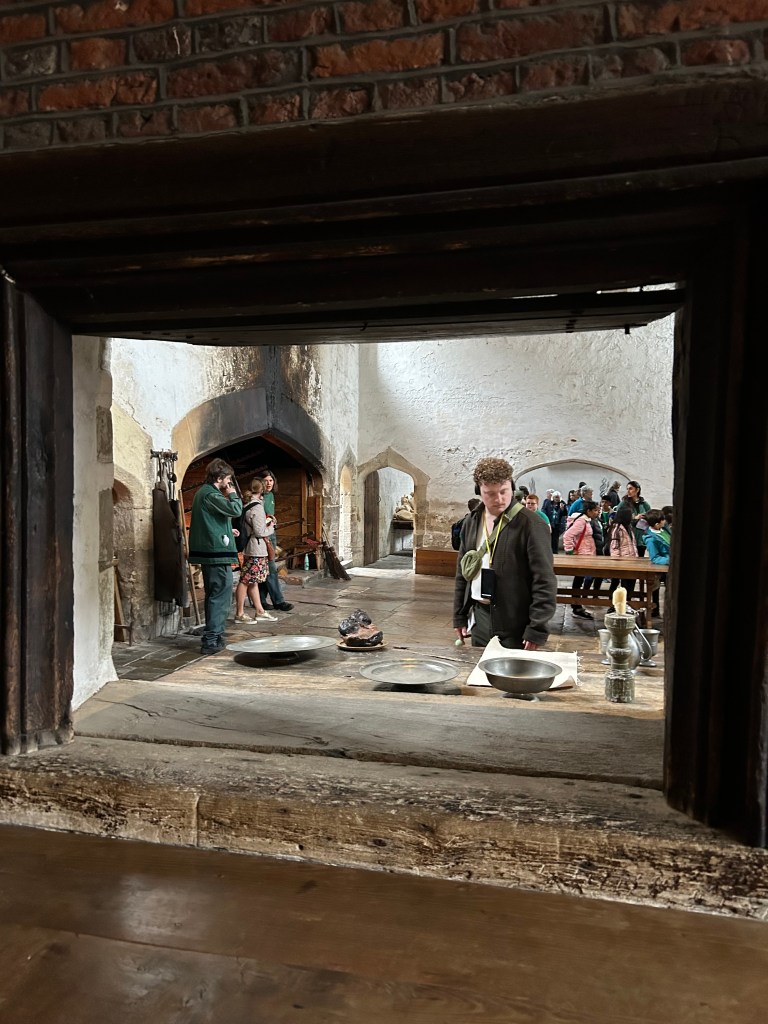
As someone who deeply misses her kitchen and is desperately craving a day to cook for myself when I get home, I spent a lot of time in the kitchens. Personally, I also find the lives of the palace workers far more interesting than the lives of the royals, so I tend to gravitate to the working spaces in places like these. I think what shocked me the most was just how vast the kitchens were and how organized they were. There were separate rooms for specific food preparations. There was a room that was completely dedicated to the fresh herbs and vegetables. A room solely dedicated to the multiple fires that had to be burning to produce the outrageous amount of food that was demanded of them. A room solely for plating and preparing the food to be served to the royals as well as a space for the workers to eat.

I can imagine how grueling the work in these kitchens were. The heat from the fires, the processing of the meats and harvesting of the vegetables and fruits, the timing of the preparation to ensure it was still hot by the time it was served, it’s all so daunting. Especially when you consider the fact that any misstep could cost you your livelihood.

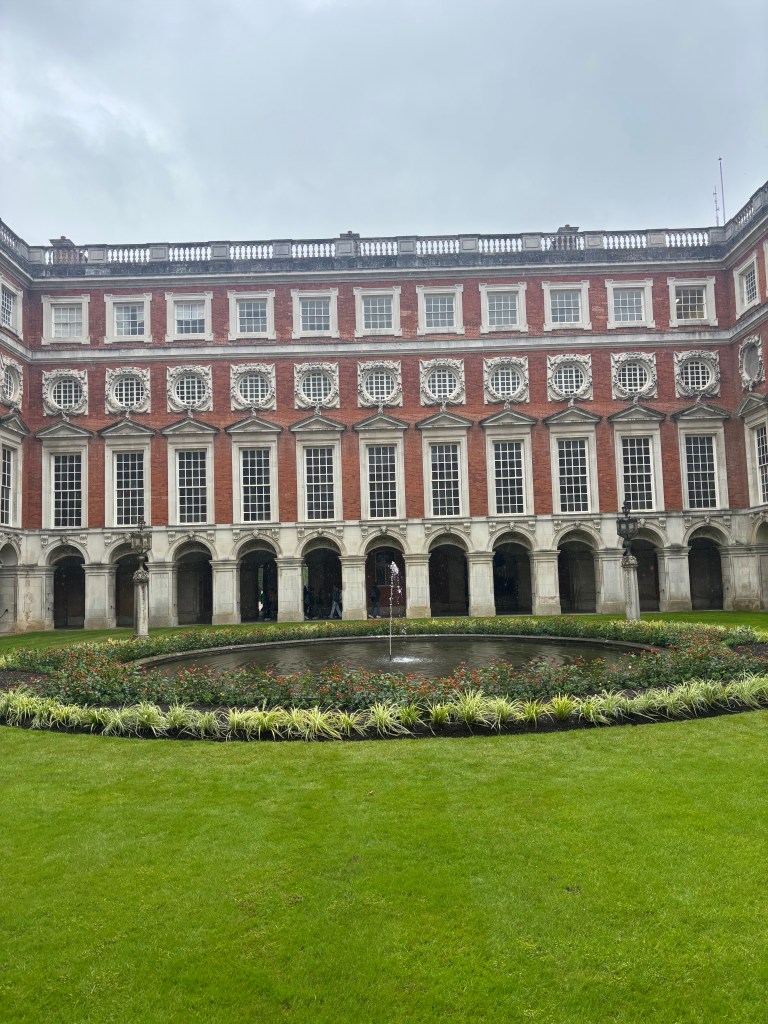
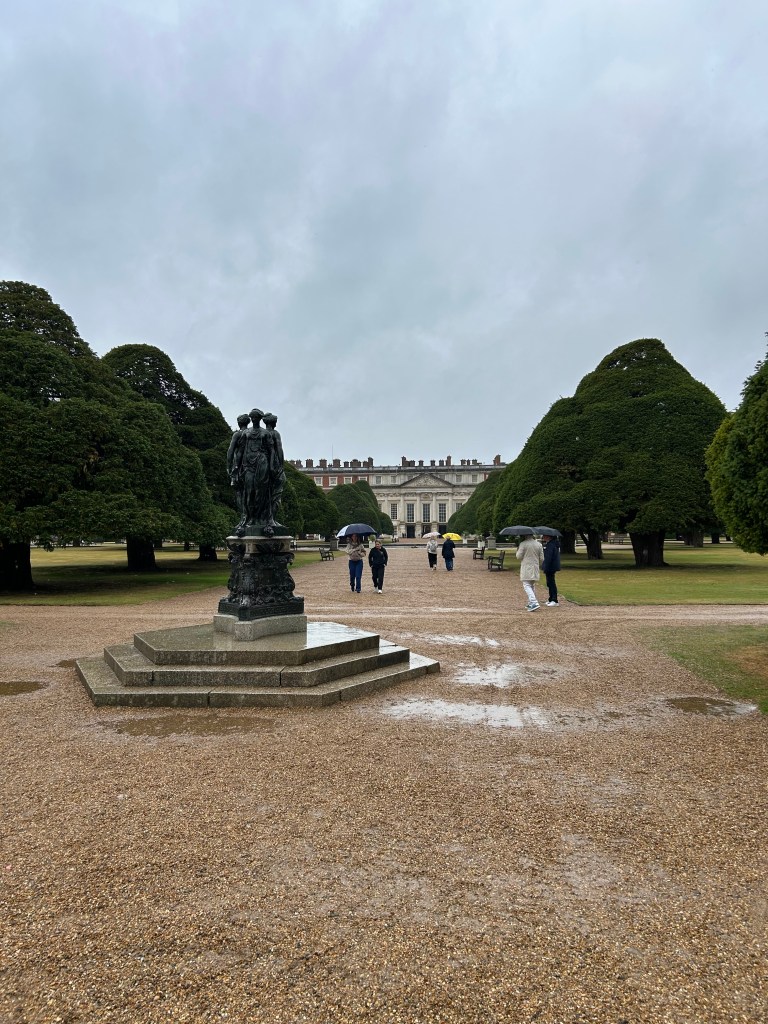
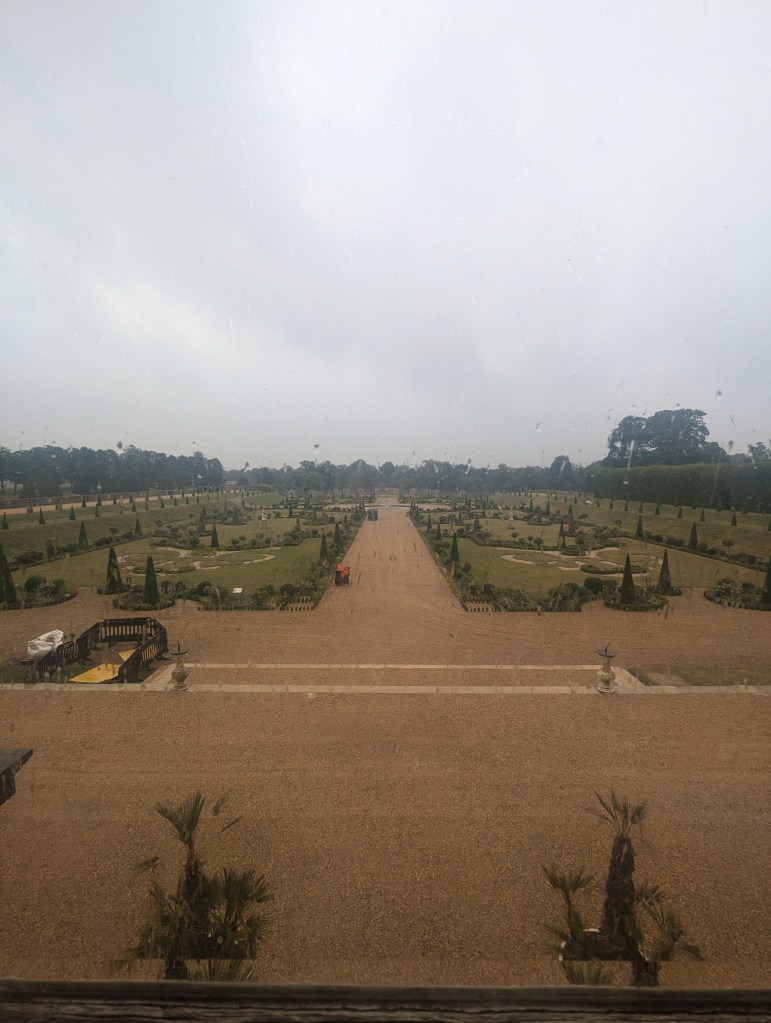
Then when we reached the gardens I couldn’t help but think of the people who were tasked with up-keeping them. The gardens seem to be never ending when you stand under the arch of the courtyard and look out at them. I couldn’t help but wonder how many people shared the responsibility of their maintenance. The trees were immaculately trimmed and grew in the most perfect of ways, like even the trees didn’t dare upset the royals. I could imagine the long hot days grooming row after row after row of flower beds with the utmost precision, all while trying to stay out of the way of the royals as they used the gardens for their afternoon strolls.

Hampton Court Palace

Hampton Court Palace is an amazing piece of architecture and is a beautiful time capsule of the time of its creation. What really made the tour of the palace engaging was the audio tour that was provided. I often feel like audio tours have awkward pacing, having you stand in one spot for a long time that may be unrealistic when the museum is popular, or going something you were interested in very fast while getting bogged down on something that is less important to you. This audio tour ignored these pitfalls by having good, fluid pacing, and by providing separate tours for different sections of the palace and different areas of interest. They also provided extras within the tours that you could optionally click on to gain more detail, without bloating the length of the main tour.

The tour that I found most interesting was the one discussing how the palace has been used heavily in films and television. Hampton Court is apparently relatively accessible to film and tv sets compared to other palaces and courts, so is a popular site for filming. Many of these were period dramas about the time when the palace was in use, but the one that surprised me the most was its use in Pirates of the Caribbean. It also discussed the interesting way of how historical preservation interacts with the entertainment world. Because no changes could be made to the buildings, all sets had to be free standing, and there were strict weight requirements for set and camera equipment to avoid damage to the floor or the tunnels below.

Visiting Hampton Court Palace at this point in the trip was also very interesting because I got to see the setting of so much history we have learned about while we were here. Prior to this Study Abroad I knew next to nothing about British history, but through multiple museums and historic sights I was able to pick up a lot of information which makes every new site we visit that much more interesting because It is just building upon the history we have learned throughout. The aspect of British history that has stood out to me the most on our trip has been King Henry VIII and his many wives. While I knew some about him before, specifically his changes to the church, it has been really interesting to learn more about him and I have gotten much more invested in the story of that time period, specifically surrounding Anne Bollin

This interest in particular was brought on by the play 1536 along with information learned in museums and the tower of london. While not directly shown in the play, Anne Bollin’s imprisonment and eventual execution is used as a mirror of what the characters are experiencing and as a driving background narrative. It highlighted Anne Bollin’s story in a way that made it feel a lot more real than most museums are able, and connected it to a lot of modern problems and still existing systems of oppression.

After the palace I took a little bit of time to explore the surrounding town, which so far has been one of my favorite parts when we go anywhere outside of central London. I love getting to see what little shops are in the area and see how the city’s layout and contents differ to that of the much more populated central London. I have noticed in the areas outside of London where there are a little less people, the people I do encounter seem much more talkative and open to having a conversation, which I believe is because everyone is not in so much of a rush and having to deal with moving around a bunch of other people.

The town was very nice and quiet, a big leap from London’s busy streets, and the palace was absolutely gorgeous. It was definitely a sight worth seeing while over here.

Dame Tracy Emin

I was really inspired by the portrait entitled “I Just Felt Hurt” by Dame Tracy Emin. It was a part of a four print series that relate to four massive bronze portraits that covered the National Portrait Gallery’s front doors. These portraits represent “every woman throughout time”. They are a celebration of the common bonds of womanhood that binds all women, no matter their age, race, class, or culture. They were also conceptualized as a response to the lack of representation of women in historical art collections.

Dame Tracy Emin is an English artist who creates mostly autobiographical or confessional work. She uses a myriad of mediums, sculpture, paint, drawing, film, photography, neon text and sewn applique. She was once given the name “enfant terrible” of British art, meaning the “terrible child”. Her art was known to be disruptive, chaotic, and confrontational. She forced people to come face to face with harsh realities and the ways in which people negatively impact each other and the world around them. One of her most chaotic works was entitled “Everyone I Have Ever Slept With 1963-1995” which was a tent appliqued with the name of ever person she had ever slept with and was presented in an art show at the Royal Academy in London.

She caused a bit of a scandal in 1995 when she appeared on national tv exceedingly intoxicated and kept repeating several swear words. She was known as uncontrollable force, who would always create the art she wanted, how she wanted to, no matter if it was proper, or deemed appropriate. She seems to emulate the quote “well behaved women rarely make history”.

I’ve always admired women who push the boundaries of what women are “allowed” to do in society. They dare to live as their most genuine and authentic selves, whether or not the world will accept them. They live with reckless acceptance of who they are and never seem to question whether or not there is space for them in the world. If there isn’t space, they’ll create it themselves.

I think that is what called to me in the portrait. I could see how honest Emin was in her portrayal of every woman at their most hurt. She wasn’t afraid to show the vulnerability and emotional turmoil of what women experience living in a world that is dominated by men. There’s like an automatic sadness that women are born with, that they must over come to experience the beauty and joy of being a woman. I feel like she so perfectly captured the days when I feel like the world is working against me and I can’t find my way to my own joy and happiness. There was something so incredible about seeing myself in a portrait that was intended to encapsulate all of woman kind. I felt seen and understood in a way a work of visual art had never made me feel before.

The other works in this collection consist of “There is No Fear”, “This is Forever”, and “I’m Still Beautiful in My Mind”. All of the titles of the works are said to be what Emin was feeling at the time when she painted them. “There is No Fear” was a portrait of women when they understand how truly powerful they are. Women when they finally understand they are an unstoppable force, who can achieve anything she sets out to do. “This is Forever” was one of her darker pieces when she contemplated women as victim to sexual and domestic violence and how our society seems to have taken so many steps backwards in securing protections for women. Lastly, “I’m Still Beautiful in My Mind” came from when she was face to face with aging. When she was trying to reconcile her own aging face and body with the woman she is and how young she still feels.

Tudor?? I hardly know her!

At the end of last week, we had the pleasure of getting to take a day trip to Hampton Court Palace. I honestly had no idea what to expect. I am not a big tudor history nerd like a lot of my classmates, so honestly, I was just excited to see the pretty palace and the gardens. And needless to say that goal was definitely met. I was astounded by the incredible architecture and murals that hung on so many of the walls. Getting to walk through the halls that so many royals onces walked through was such a cool experience.

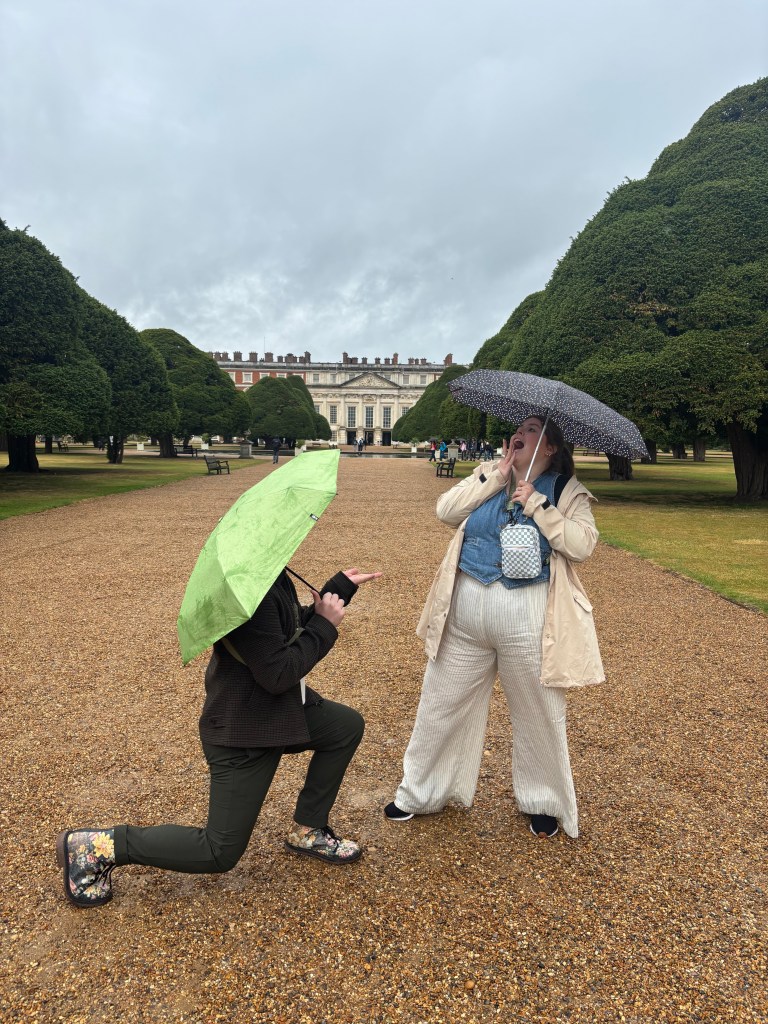
It was super easy to envision what a day in the tudor life would have looked like. I imagine it started out with a fancy breakfast of some sort. We got to see the kitchens, (yes that kitchen is plural), where they would have prepared these meals for the royal family. I would then imagine that they would have a morning walk through the gorgeous gardens that are right outside their front door. Getting the walk the gardens myself was such a surreal experience. We didn’t walk the entirety of the gardens, just because it was a little rainy and we were getting hungry, but we walked alongside the pond and took cute pictures under the tree. I feel like if I were a novelist or a poet, I would have such a fun time getting to create these magnificent stories in this place.

            Getting to learn about all of the different Kings that lived here was especially cool. I’m always fascinated by the Henry VIII of it all, so getting to see where he lived was so cool, but also very chilling.

            Throughout this trip, I have always felt a sense of reverence for these spaces. I have felt so honored that I have gotten to walk through all these places that are loaded with history. I can already tell that these experiences are going to shape the art that I will make in the future, and I can’t wait to see how experiences like Hampton Court Palace have an impact on me and my art.

-R

Blog Post 7: Shakespeare’s Globe, Romeo and Juliet at High Noon

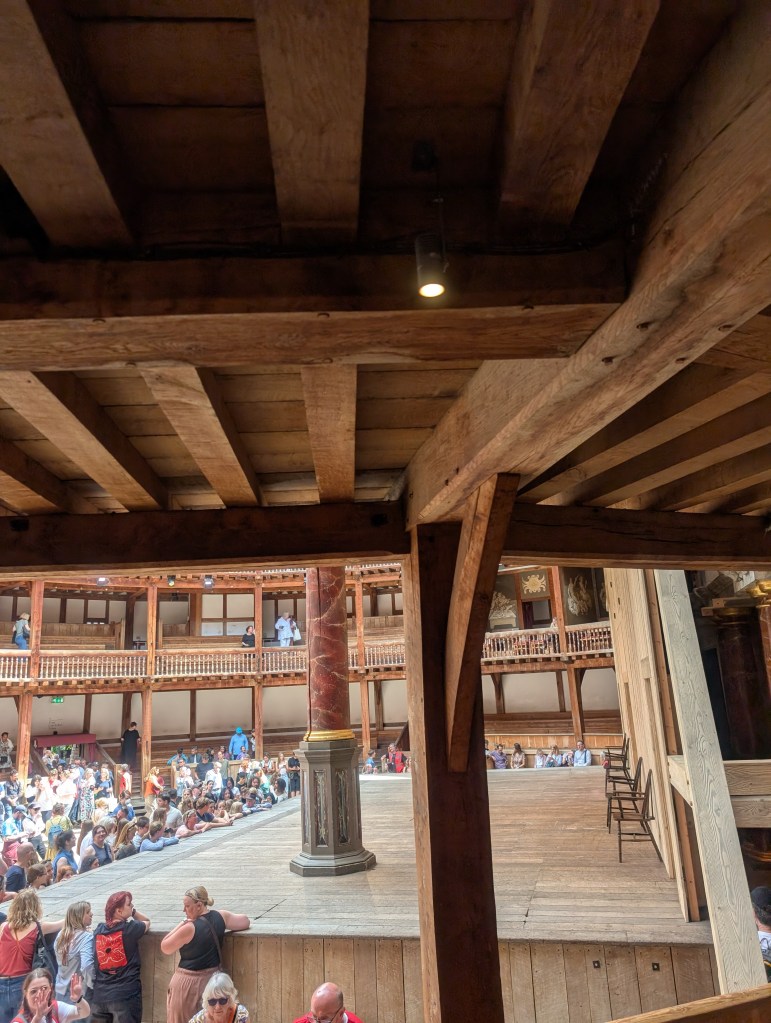
Out of all the theatres I knew we were going to visit, Shakespeare’s Globe was the one I was most excited about. Despite being much younger than most of the other theatres, it felt ancient, a recreation of the original that burned down hundreds of years ago. The theatre space itself felt very warm and inviting, whereas the other theatres had everyone in individual chairs, the Globe had benches or standing, and it felt like a much more communal experience.

The theatre was open air, with no roof over most of the house. This meant that the space was lit almost entirely through natural light, meaning no fancy scene transitions. I was very thankful that I was in the seated area, with a roof over me, since the sunlight was pretty intense. Additionally, I am thankful that if it had rained, I would not have been affected, since the shows do not stop for the weather. Sitting down did have some disadvantages though. There were points when it was difficult to hear the actors, especially when they were facing away. This wasn’t helped by the fact that they didn’t stop performing during outside distractions, and multiple helicopters flew over during the course of the play, drowning them out.

These minor grievances didn’t matter though, because of the play itself. We saw Romeo and Juliet. This was not my first time seeing Shakespeare live, this was not my first time seeing Romeo and Juliet live, however, I can confidently say that this was the best performance of Shakespeare I have ever seen. The first reason for this I think is that it was actually funny. Yes, one of Shakespeare’s most famous tragedies was hilarious to watch. The actors didn’t portray Shakespeare with a sense of reverence, drawing out every word, they performed Shakespeare as it was meant to be performed. For the first time I was actually able to understand the humor in the story, so many jokes that didn’t register for me as jokes hit me, since the actors were properly delivering them. Additionally, the actors were interacting with the audience, acknowledging them, intermingling with them, which made the whole production more engaging.

There was one major departure from the source material though. It was not set in sixteenth century Italy, but rather, the American wild west. This was evident throughout almost every element of the show. The back wall was made to be reminiscent of a saloon, the characters wore cowboy hats with pistols on their sides, some of the dialogue was slightly altered to acknowledge the new setting, and there was a lot of country-western dancing. However, most of the dialogue was unchanged, and most of the characters spoke with a British accent, which was a little bit jarring at first.

This change in setting did alter how the play felt though, and I think that is mainly due to the use of guns. Instead of dueling with blades, the major fights used pistols, that produced real smoke and gunshot sounds. This made many of the scenes feel more brutal, especially when Romeo would shoot someone multiple times, even when they were on the ground dying. This ended up making him seem like much less of a sympathetic character. When he repeatedly shoots Tybalt, there isn’t a sense of it being an accidental thing in the heat of the moment, it feels like an intentional and bloody action that is uncomfortable to watch. This ends up making Juliet feel even more tragic, as she is giving her life up for a murderer.

-Jack Duncan

Blog Post 6: Bath, Ancient Waters and Fancy Tea

Visiting the city of Bath was an interesting experience. The city itself was an interesting contrast to London. It was quieter, more open, less rushed. It was to have a break from the fast pace and slow down a bit. I can attribute part of that novelty to the fact that I did not have time to grow accustomed to Bath like I have London, I was only there for less than a day, so it would be disingenuous of me to act like I know the city well, especially since it wasn’t the city itself that we were there for.

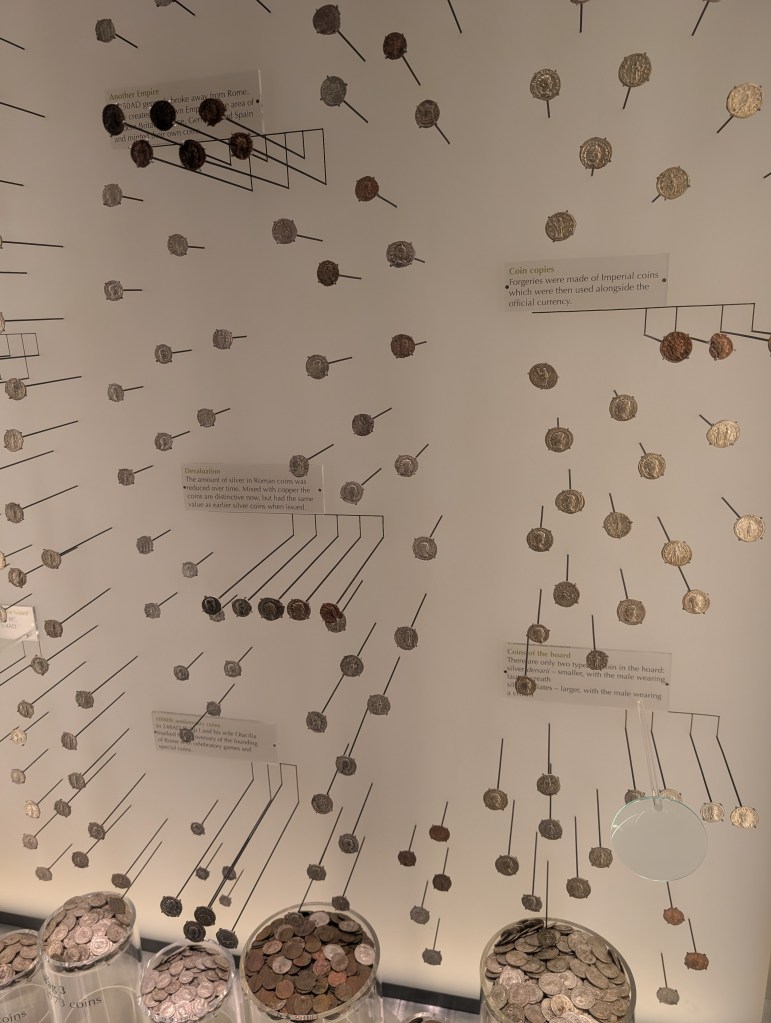
That is not entirely true though. We were there for the city, but not the modern one. Instead, we were there to visit the remains of the ancient Roman city of Aquae Sulis, which Bath was built on top of. It was an ancient spa town that people from all over the Roman empire would visit. Getting to walk through the remnants of this place was a truly marvelous experience for me. Through my classical studies I have become familiar with the fact that many towns across Europe are built upon Roman ruins, but to see it for myself was something special. While many of the buildings in London are old, the Roman baths dwarf them, dating back almost two-thousand years. I’ve seen so many buildings here older than the United States, and yet they are infant compared to the baths.

Inside the museum there were so many interesting objects. A variety of coins from different ages, tools, and even human skeletons. What caught my eye the most though, were the curse tablets. There was a collection of lead tablets that were offered to the goddess of the hot springs that asked for curses against an individual who had wronged someone. Many of them were for theft, as getting your belongings stolen while bathing wasn’t an uncommon occurrence. I find it fascinating that the only trace of some of these ancient humans is the fact that they committed an offense against another, and a question as to whether or not they faced retribution for it.

After spending a long time walking through the bathhouse, I reached the end and was offered an opportunity to drink the water that had long been used for healing purposes. One sip was enough for me to be thankful for modern medicine, as the taste and temperature was not pleasant. Luckily though, I would get a palate cleanser as later that afternoon we had afternoon tea at the Pump Room.

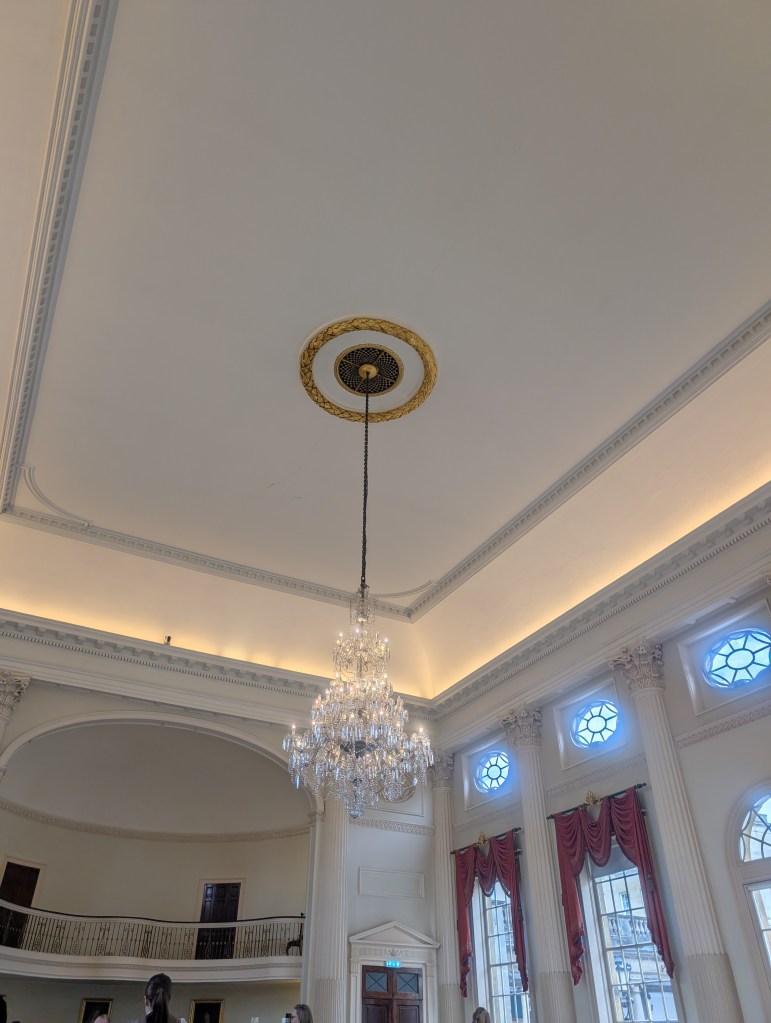
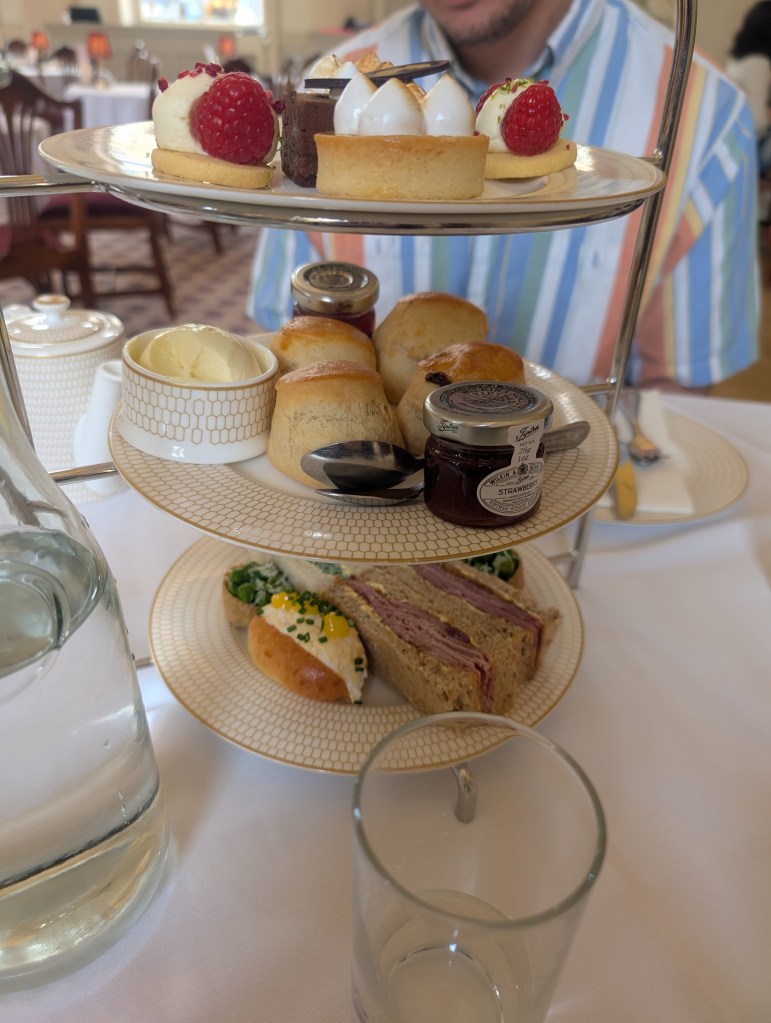
I felt rather underdressed wearing cargo pants and a denim jacket when I sat down at the same place visited by Jane Austen and Charles Dickens. The presence of a live orchestra, and more forks than I was used to, made me feel quite fancy. I ordered a rose tea and was given an hourglass to time the steeping process. The tea itself was wonderful, and so were the variety of scones and other treats that came with it.

After this we left Bath the same way we came, by train ride. It was so nice to be able to relax on the train afterwards, not having to drive or be stuck on a bus. I truly wish that rail travel was better back in the US, because I’m getting used to it here, and I’m definitely going to miss it.

-Jack Duncan

A Palatial Day Trip

Our day trip to Hampton Court Palace was absolutely delightful! It was a short train ride from London – only 30 minutes or so. There is nothing quite like riding a train out of a big city and into the countryside. I love watching the ways that the buildings change and diminish in size; the world transforms so quickly before your very eyes. Trains do often put me to sleep, though, so I was glad to be sitting and chatting with friends.

Upon arrival we were greeted by a train station under construction, which has apparently been that way for over five years. I guess some problems permeate international boundaries and large oceans. The palace itself was a short walk from the train station tucked behind two ornate gates and a long driveway. There was a field to our right as we made our way towards the palace with poppies planted all over. Poppies have been present at several of the historical places we’ve visited, and Merritt told me that they are the flower used for remembrance of members of the British Armed Forces who died in battle.

The palace itself is grandiose and splendid! Despite knowing the era in which it was built, I was still surprised by how old it looked. Our self-guided tour, complete with audio guide, began in the Tudor part of the palace, which was built by Cardinal Thomas Wolesy starting in 1514. King Henry VIII fell in love with the palace and acquired it in 1529. My favorite area in this part of the castle was the kitchens. There were several school groups there at the same time as us, and the hustle and bustle of children and adults alike really added to the experience. In one moment I could imagine just how many bodies and how much food were put into these rooms. Of the several fireplaces, only one was lit. That fire created enough heat on its own that I can only imagine how hot it would’ve been with all of them going at once.

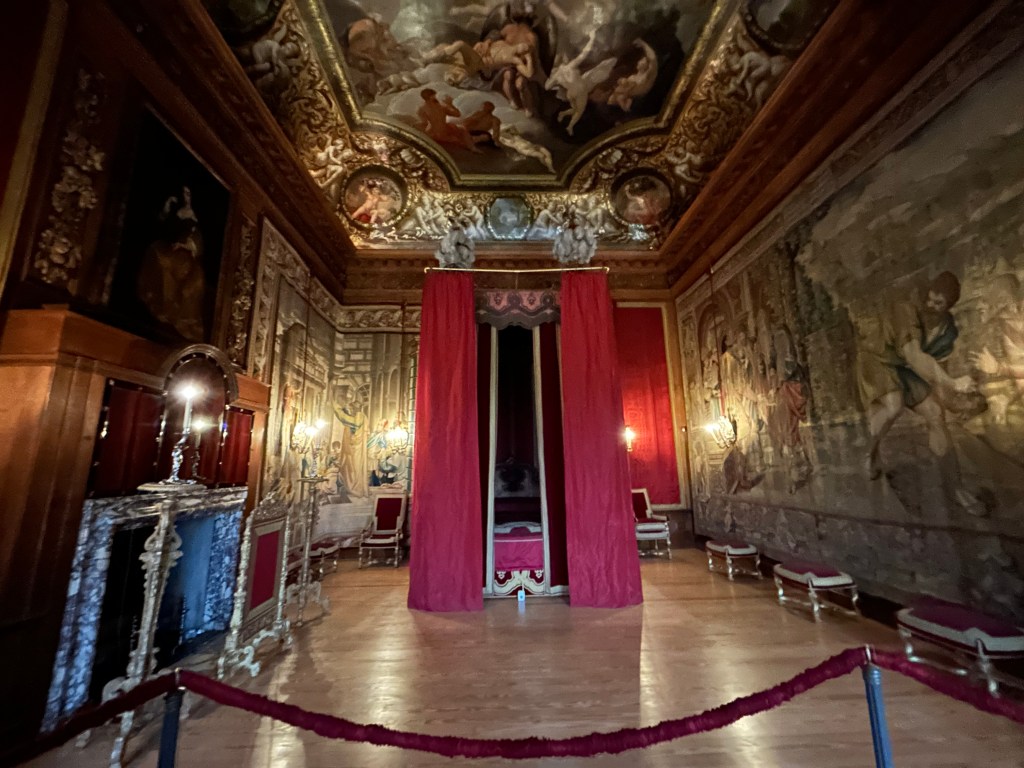
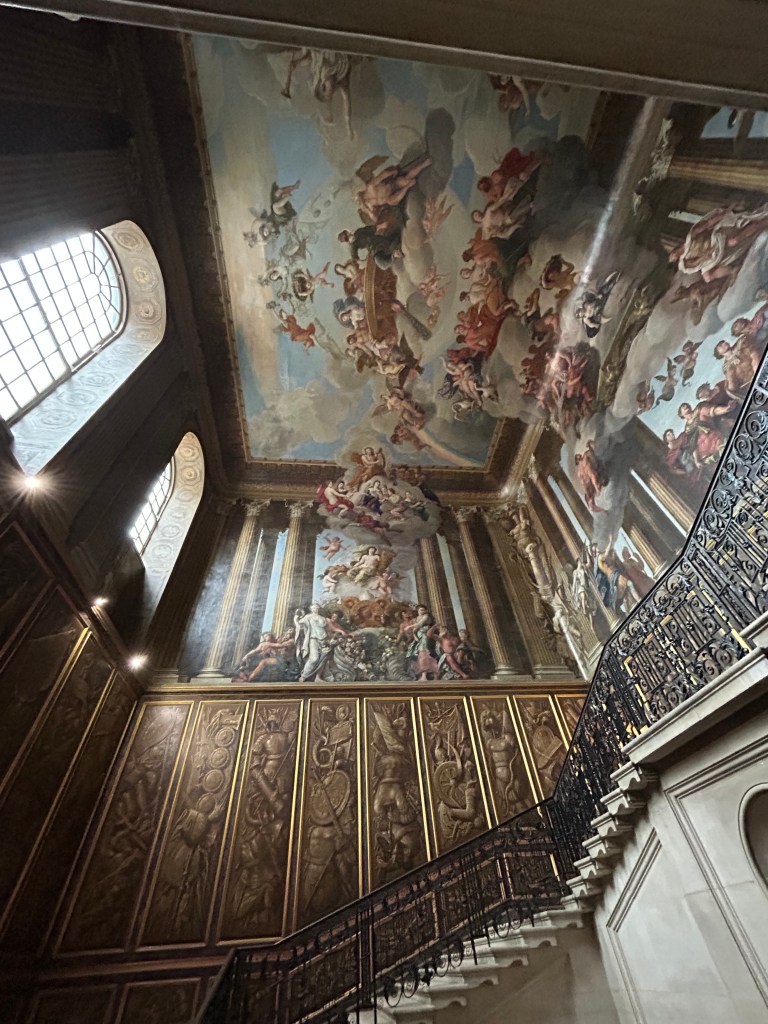
Over a century later, in 1689, William III and Mary II commissioned Sir Christopher Wren to build a large baroque addition to the palace. It was interesting to see the way that the architecture shifted. While it was clear that they were from two different time periods, it was clear that Wren only wanted to grow the reputation of the palace. High vaulted ceilings were present throughout, and beautiful paintings adorned the walls (though I’d imagine they had different decorations up in the 1600s).

My absolute favorite part of the palace was the gardens! I don’t think I’d ever want to live in a palace so vast, but If I did the gardens would be where I spent most of my time. We were there on a drizzly day that made me want to put on a flowy dress and frolic through the mud, though I’m sure there would’ve been hell to pay for ruining a perfectly good dress. The gardens had these large trees that had either been pruned or grew naturally in a big bulbous shape – kind of like the top half of an egg. The first branches were above head height, and the density of the foliage kept the light drizzle at bay like a natural umbrella. There was also a large pond in the garden, and some friends and I spent a long time watching the ducks. One of them even quacked at us!

The day trip finished up with lunch in the town near the palace, right near where the train station dropped us off. The train ride back was equally as lovely. Overall, the trip was the perfect start to a long weekend!

HAMPTON COURT PALACE IN REVIEW!!!

If Hampton Court palace were added to Zillow I cannot even imagine the billions of dollars that it would go for. This palace is completely incredible and an absolute national treasure – we were so lucky to see it!

From the get, before we even got to the palace, I didnt know much about it. I had no idea that this is where Henry VIII lived with his 6 wives, and I didn’t know the historical value that this palace held. I just thought it was another random palace. But that is far from the truth!!! This was one of my most favorite visits of the entire trip, and it was rich in so much history and information.

Upon arrival, the palace seemed to be smaller than I anticipated – as the view from the front was much less grandiose than the view from the center or from the Georgian side of the palace – but still very beautiful. As we began to walk the halls of this palace, I instantly noticed the smell. It smelled old, but in the best way possible – damp, dark, and slightly mildewy is the best way to describe it. But I like when old things smell old. Who would want old things to smell new? Its part of the charm, in my opinion. The entire first part of the palace, the Tudor part, all had the same vibe which was very stoney and cold, but still grand and royal. Seeing the Tudor kitchens where Henry’s food was prepared for him and his Queens was completely surreal. I love seeing these details as it makes their lives feel so real to me, like they weren’t just someone who existed in a portrait. We saw the beautiful grand room for dining and partying which I would assume Henry spent much of his time, and there were so many incredible details, like the H&A’s carved into the wall, standing for Henry and Anne (Boleyn), whom he later beheaded. The tapestries on the walls were huge, and I could tell that back in the 16th century they would have been vibrant and beautiful. We learned so much about the Courtiers of the palace in this time, which seemed like it would either be a great gig or the worst job ever, I guess depending on who you’re serving. But Henry VIII didnt seem like the greatest King, so I dont think it would have been much fun unless you were in his good graces. Seeing the hallway where it is said the Katherine Howard fled her captivity and was eventually caught by guards and dragged screaming back down the hall gave me chills, and reminded me that she really was just a child when that all happened. I couldn’t believe that I was standing in a spot where she once had some of the worst moments of her very short life.

The rest of the palace was equally stocked with incredible stories and lore, and seeing the stark difference between the Tudor side and the Georgian side was mind boggling. I felt like I was in two completely different palaces – I still cant believe they were that different. The Georgian side was stunning – and absolutely my dream world. The fashion, the decor, the elegance, all perfect. The architecture on this side is a complete 180 from the Tudor side, as it is insanely grand and gold and colorful. It was a totally different era of fashion and style. It was so interesting to hear about the royals that I dont hear of as often as the Tudors, like Charlotte, George, Caroline, and the poor Queen Anne. Her story is so sad and so interesting, I had so much sympathy for her as I learned a little more about her life.

Overall, Hampton Court Palace was the perfect immersive experience to see and learn about so much royal history. I walked away knowing so much more than I ever planned on, and I could go back and visit 10 more times before I even began to get bored. It gave me such a unique glimpse into the royal life in this era and I absolutely loved it. 10/10 from me!!!

onto our final week in london – I cant believe it! making the most out of this week and eating all of the favorite foods I’ve found here before we head to Stratford! YAY!

xo, jo!