Living Up To The Name (Not In A Good Way)

Long Day’s Journey Into Night is a very interesting play. Written by Eugene O’Neill and loosely based on his own life, it follows a day in the life of the Tyrone family, and all the arguments and misfortune that befall them. The play lends itself to a more serious and dramatic tone than the kind I usually go to see or have seen before on this trip (for reference, I saw Back to the Future: The Musical the night before seeing this show), so it was an interesting change of pace for me, and I was very intrigued going into the show. Many of the people on the trip I had talked to said that this show was the one they were looking forward to the most. The show also starred famous and talented actors like Brian Cox and Patricia Clarkson. And even though I still had a few worries going into this show, other shows on this trip like London Tide shocked me with how much I enjoyed them, so overall I was going into this show with some mild expectations. I thought that maybe the script and story would not exactly be my thing, but overall it would still be a very good show.

This show was not another London Tide for me.

To start things off, the performances from each of the actors were amazing. Everyone made good choices that I felt fit the characters well. The lines were read very clearly, and the accents were equally as clear and understandable (especially since they were doing American accents). I found a couple of the choices made by Patricia Clarkson and Daryl McCormack to be a bit out of place at the beginning of the show, but they worked a lot better later on and helped to show the descents of those characters throughout the day. I really enjoyed Laurie Kynaston’s performance, thinking that he gave Edmund a lot of emotion and depth as he changes throughout the show. Louisa Harland did very well, and left a very good impression, with her parts being some of my favorites throughout the play, even if they were relatively short compared to the stage time of everyone else. Overall, The acting and performances given in the show were all incredibly well done.

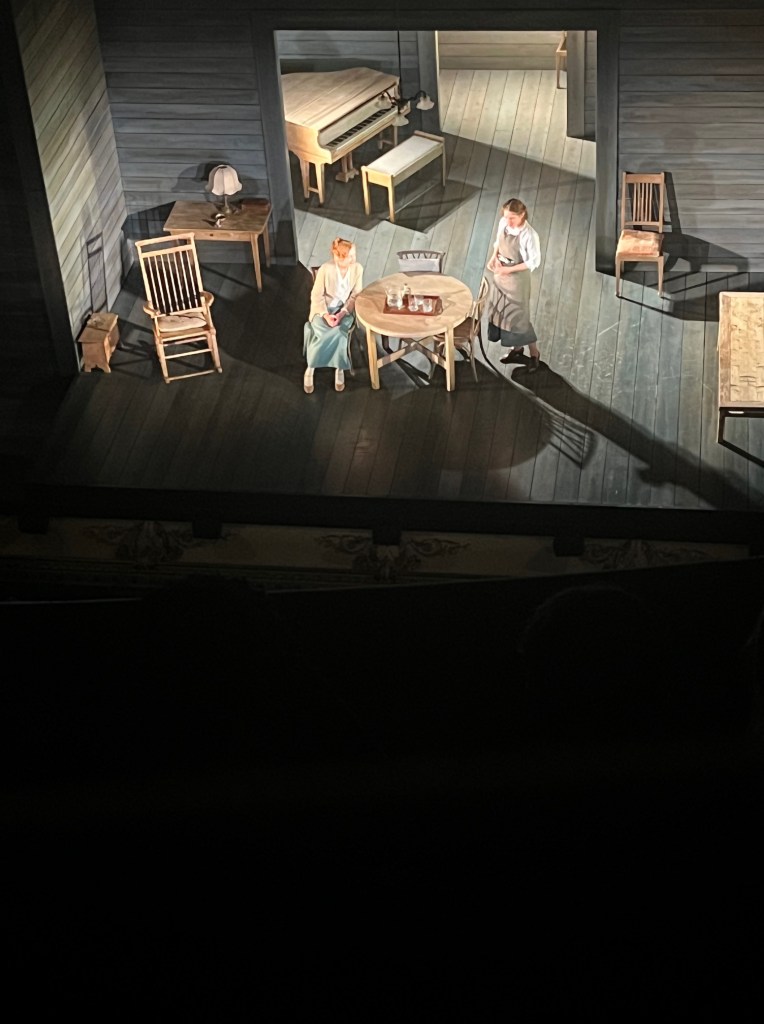
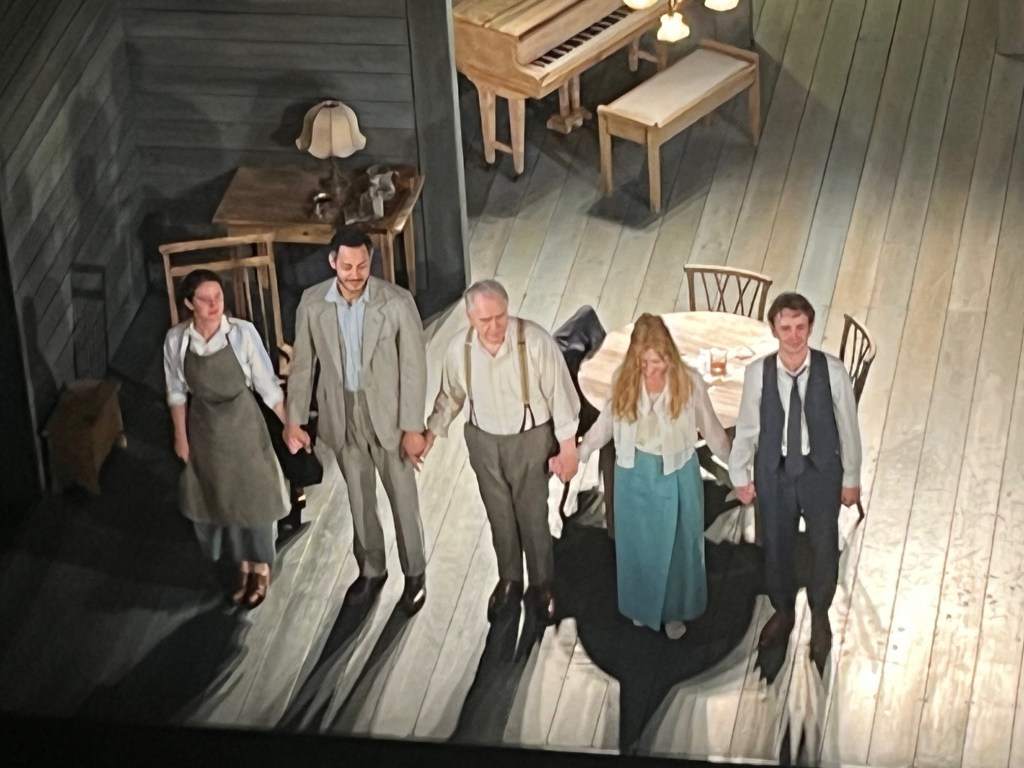
The design for the show, however, made the show truly feel like a long journey into night, and not in a good way. The set design for the show is somewhat bare and bland, which, while fitting to the idea of the show where the father is particularly frugal and does not care for the place much anyway so he does not put much money into the decoration of it leading to it looking bare and abandoned, comes off almost lazy, as the script provides a very detailed description of what the set and the house should look like. The set design feels more like it is driven by necessity rather than creative and thematic choice, which makes the show’s set boring to look at.

The lighting did not help much with this sparse set either. The lighting cues throughout the show were inconsistent, occasionally inaccurate to how the light would work, and sometimes left noticeable dark spots onstage that impeded my view of the action. It particularly annoyed me in the latter half of the show, where the characters would continuously turn different lights on and off, and the amount of light given off by even the same light source would be completely different than it was before it was turned off then back on again. The lighting from outside at the top of the latter half that shines through the window, with the way that it changes from afternoon to sunset to evening, almost seemed like it showed the fog retreating, which went against what the script and the characters were saying. 

Another element that continued the muddled, strange design choice trend was the sound design. The sound design for this show on paper is not the most interesting, as it would only realistically include some foghorn sounds and a piano. However, the sound designer added other sounds on top of these two sounds, which could have worked, but the execution did not feel natural or really fit with the scenes. The foghorn sound was strange to listen to, as it had a weird wind-chime echo that played after the actual foghorn would go off, which lasted very long and drew me out a bit when it was played, which was many times throughout the show. There was also a weird angelic choir that would sing out during certain, more religious monologues and scenes of the show, which not only sounded out of place when you heard it, but actively drew attention away from the very important scene happening onstage.

The direction of the show as a whole felt very mismatched and strange, with design elements that hit you over the head with the meaning to where the meaning was lost, and blocking that felt strange and somewhat unpolished. In particular, there was one slap during the second half of the show where the actors were a noticeable distance away from each other and no noise was created, making the entire motion obviously fake. Now, it may have looked better from the ground rather than the Grand Circle where we were, however it is the director’s job to make sure that it looks believable from any angle that any audience member could be sitting at, so to ignore the view of the Grand Circle is an underperformance of their part in the process.

Overall, while the performances and story are fantastic, the design and directorial decisions of the show dragged it down, making it feel much longer than the three hours it already was. 

The Most Gorgeous Place EVER: Hampton Court Palace!

We had a nice and early start to the day today! We took da tube, switched, and then took a train out to Molesey. Molesey is located roughly 12 miles out of London, along the River Thames. The air was fresh, crisp, and a wee chilly. Just how I like it! We were then off on our adventure into the palace with our headsets.

Costa Coffee with Cori feat. Belinda’s beautiful face.

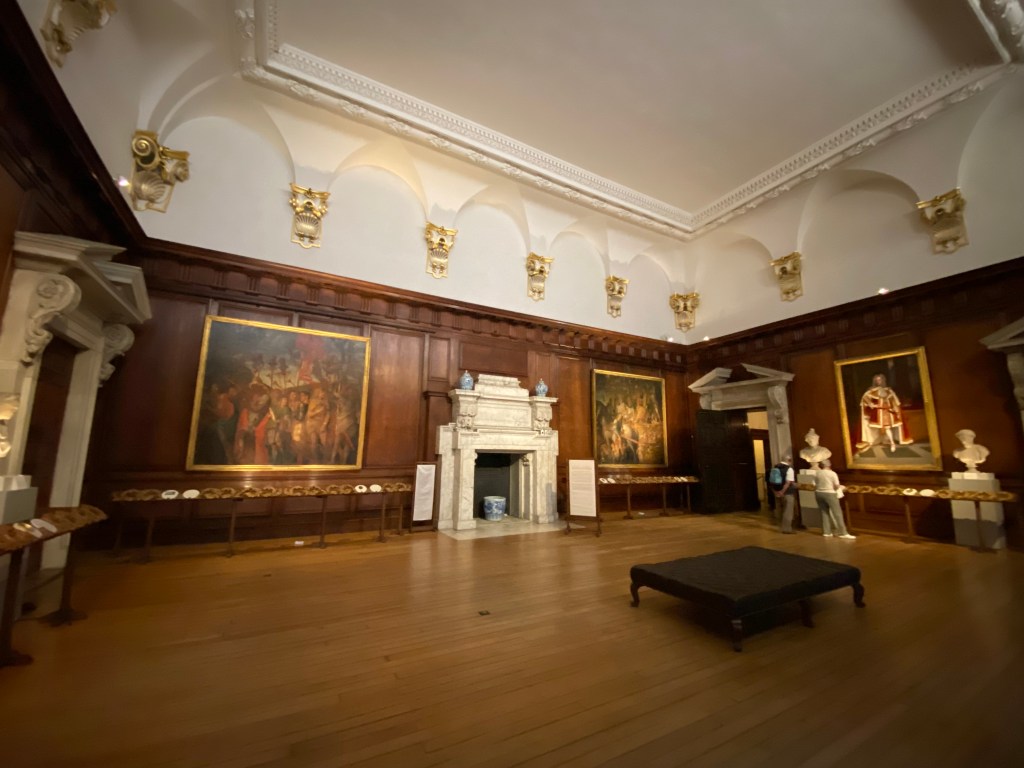
When walking down the halls of Hampton Court Palace, you cannot help but feel tiny. Regardless of the different blends of architecture, the rooms and spaces are massive in size and often do not hold a lot of items. The headset guide explains that the spaces are kept similar to that of the palace when occupied by different royals. This was because parties were often thrown and they would need all the space they could get. These rooms would be stuffed full of moving bodies, which would be sweaty and smelly. Hm. Fun.

Georgian Story.

Regarding architecture, the reason why there is such vast differences is because the palace was not built all at once. The original Tutor palace was first began around the 1500s by Cardinal Wolsey. Tutor architecture often consists of steep gable roofs, massive and rectangular windows, and carved detailing on panel walls. He wanted to be able to host King Henry VIII and other important members of society. That most definitely would have included us common folk too, right? HA. The Great Hall, an absolute massive room, was used as a theatre…and prison. In this space, Kings Men by Shakespeare was performed. This space was added by Henry VIII himself and was the last addition during his time.

Great Hall.

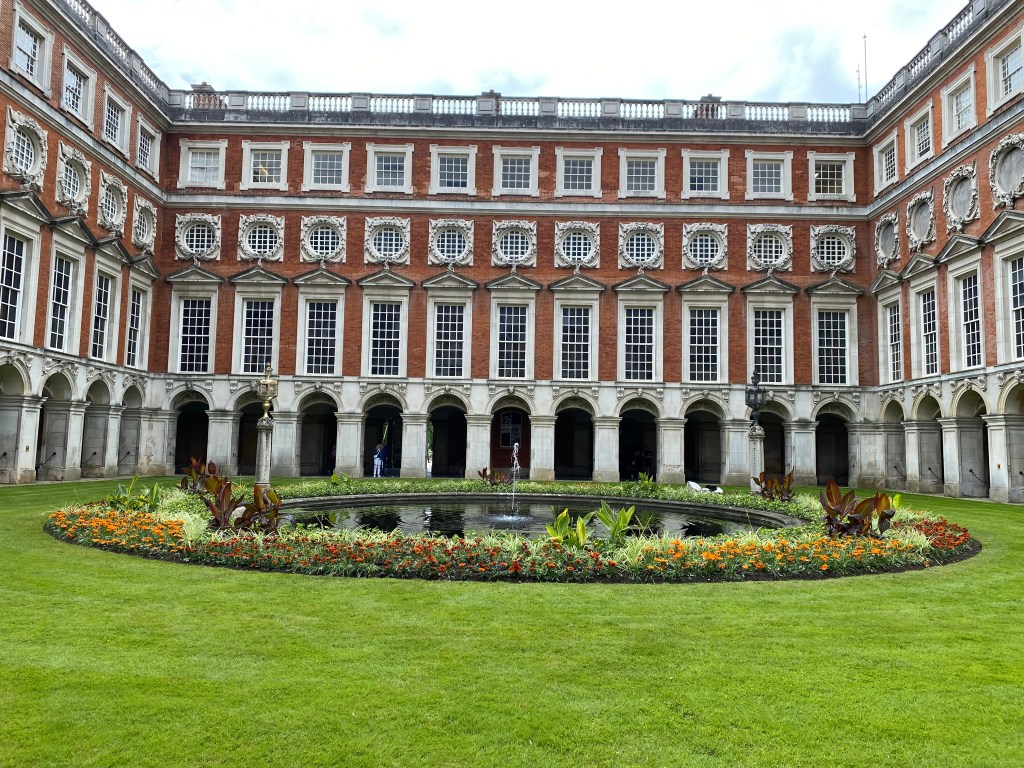
Moving along to the late-1600s, William III and Mary II wanted a space of their own. There were talks of tearing down the tutor palace and rebuilding an entirely new palace in place, but instead Christopher Wren created Fountain Court, a baroque style court for the two. Baroque architecture is grand and theatrical. Baroque architecture is created in a circular or round nature; to evoke feelings of heavenly elation. Believe me when I say when I stepped into the different rooms that had baroque paintings I felt heavenly elation. It was incredible!

Fountain Court.
Baroque painting on the ceiling of the Queens drawing room. Painted by Antonio Verrio.

If you have been reading along from the beginning, you would know that I love flowers and gardens. I also love giant paintings. So, imagine how happy I was when stepping foot into Hampton Court Palace!

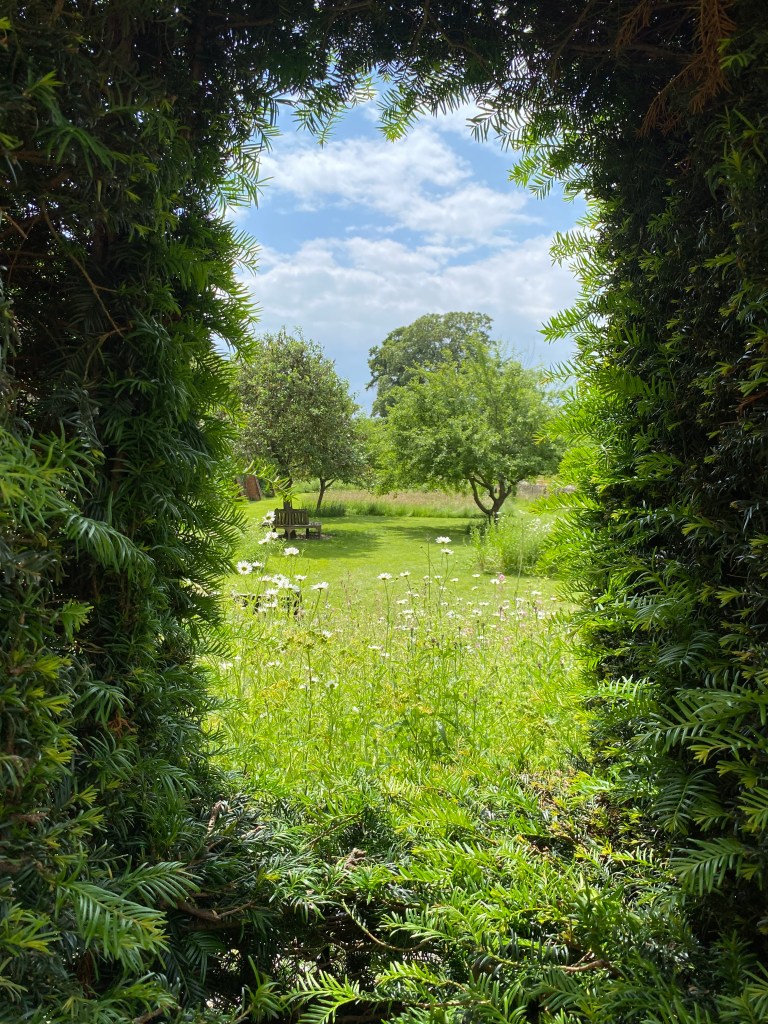
There are multiple gardens located within the palace as well as outside the palace. My favorite had to be Privy Garden. If this space looks familiar to you and you are a Bridgerton and Queen Charlotte: A Bridgerton Story fan, parts of both shows were filmed at various locations at Hampton Court Palace, but specifically Privy Garden.

Thanks for reading my ramblings of my favorite stop thus far. We shall meet again.

Cheers!

Remembrance of Westminster

Standing next to the high altar of Westminster Abbey, we were listening to our tour guide discuss the history of coronation and the area itself. The time was nearing three o’clock, which I did not notice. What I did notice, however, was a man in a priest’s robes with a red stole, evidently an important figure in the abbey, approaching a booth directly above and behind where our tour guide was standing. When the clock struck three, the priest began to speak, asking the people in the abbey to join in an hourly prayer, and accidentally putting the fear of god in our tour guide. 

Westminster Abbey was a very interesting location to walk around, full of beautiful architecture, decorum befitting a dragon’s hoard, and an overall sense of grandeur that leaves an almost divine impression on those who venture within. Gold plated furniture and intricate stained glass murals depicting saints and all things biblical could be found at every turn. Giant statues and finely carved tombs were sequestered between halls for prayer and study. Between the religious iconography and terrifyingly sudden practices, the abbey acts as a final resting place to many of Britain’s finest, particularly royalty, throughout history, and is a monument to even more whose fame and achievements long outlive themselves.

From monarchs to soldiers to scientists to poets, Westminster is a memorial to great lives and minds that deserve to be remembered. The Poet’s Corner, which features many different famous writers and actors, included many people who I found interesting, such as: 

  • Geoffrey Chaucer, who was an English poet born around 1340, commonly considered to be the “Father of English Literature” with his most famous work being The Canterbury Tales. He also wrote many other books such as The Book of the Duchess, Anelida and Arcite, and A Treatise on the Astrolabe. He also worked as a public servant for much of his life (which is why we know so much about his life compared to many of his contemporaries).
  • David Garrick, who was an actor manager in England, with his breakout role being a portrayal of the titular character of Shakespeare’s Richard III. He was said to have a more relaxed, natural style of acting familiar to what we would see in theatre today but completely foreign at the time. His unique acting style drew the attention of crowds, and got him working as a theatre manager at Drury Lane, where he would direct and continue to influence other actors of his generation, likely leading to his style of acting becoming the one most seen today.
  • Noel Coward, who was a writer and performer, both theatrical and lyrical, with works such as Cavalcade, Blithe Spirit, “London Pride”, and “Poor Little Rich Girl.” He also worked as apart of the Secret Service during WWII, creating propaganda works in order to encourage American assistance in the war effort and to bring up morale. He supposedly would have been knighted for his work, but was ultimately not given the honor due to his “flamboyant lifestyle.”

Overall, Westminster Abbey was a very interesting landmark to visit, and serves as a fantastic monument and memorial to many great figures.

Westminster Abbey

Today We all went to Westminster Abbey and marveled at the incredible architecture and history contained within the structure. The abbey has hundreds of famous writers, artists, scientists, and great figures in Britain’s history. One thing I thought was both funny and also a little messed up was the way that Charles Dickens was moved to Westminster against his wishes. He had left specific plans for him to be buried at a private cemetery where most of his passed family reside but the royals of England decided that a man of his stature was too great and that he must join the rest of the accomplished within the grounds of the abbey. I just think it was a bit selfish considering they didn’t do the same for Shakespear. I know that Shakespear had a “curse” written onto his grave but that seems like a low bar considering its the same people who constantly raided tombs and ate mummies. I did however find it far more interesting that many different kinds of accomplished persons were entombed there, especially renowned scientists such as Steven Hawking, who I didnt even know was british. Steven Hawking of course being a revolutionary scientist evolving string theory and physics as we know them. Also he rose above the challenges given to him from birth namely Lou Gehrig’s disease. There were also many dead military figures who served their nation buried there one of which was Stringer Lawrence who was a Major general who assisted the East India Company’s endeavors. While the actions taken by the EIC arent looked at in the brightest light for good reason, it was interesting that even regular people who didnt achieve a great advancement or work of literature could still be counted among the honored due to their valor and dedication.

The British Museum

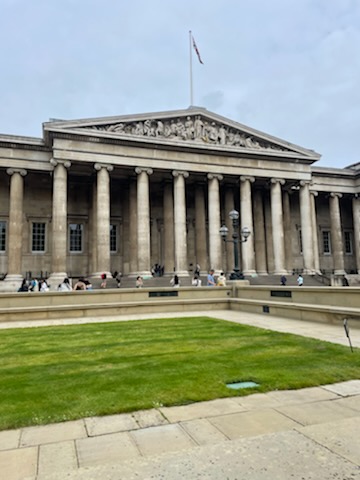
The British Museum is located in the Bloomsbury area of London and is dedicated to the documentation of human history and culture from its beginnings to current day. I found it interesting that the British Museum was the first national public museum and opened in 1759, well before the United States became a country.

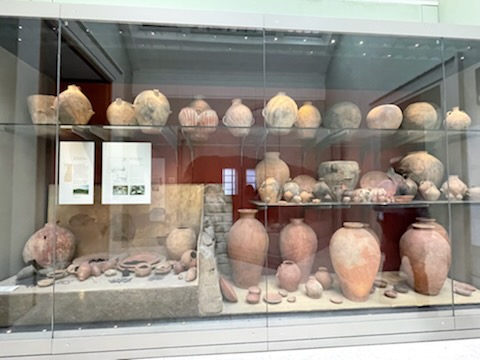
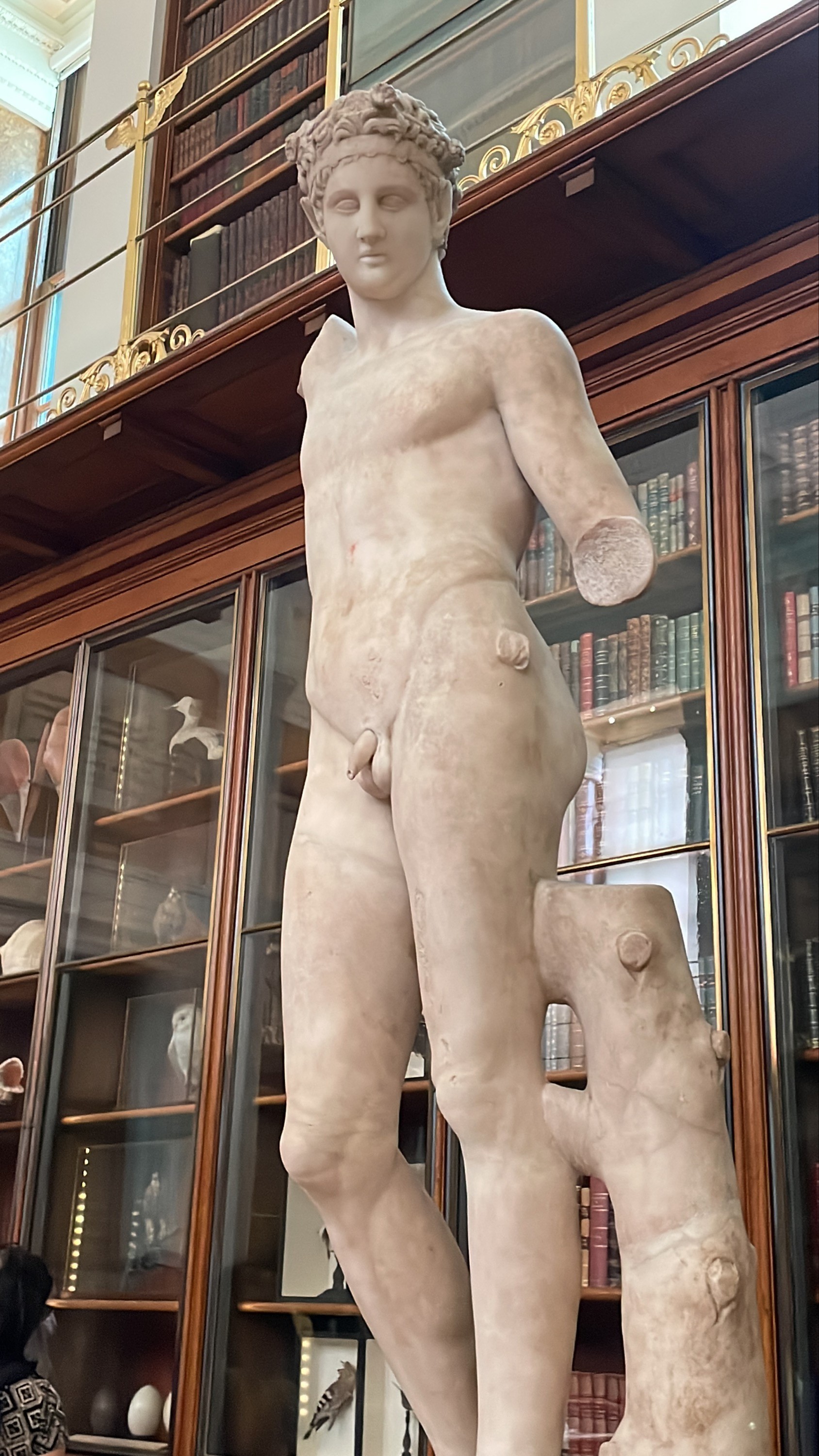
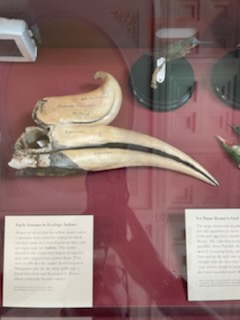
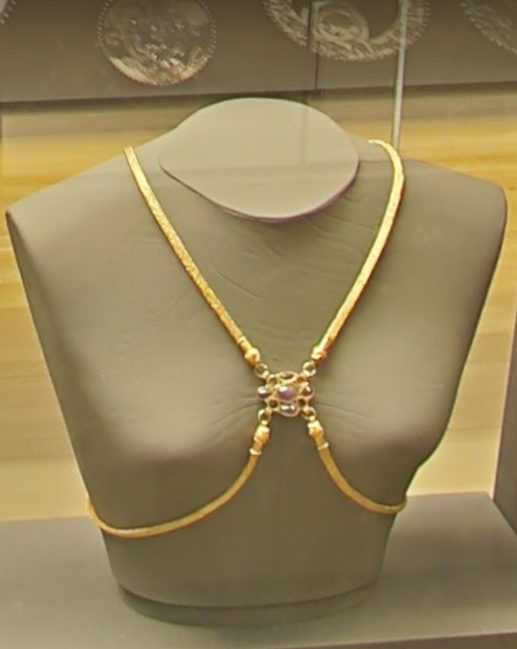
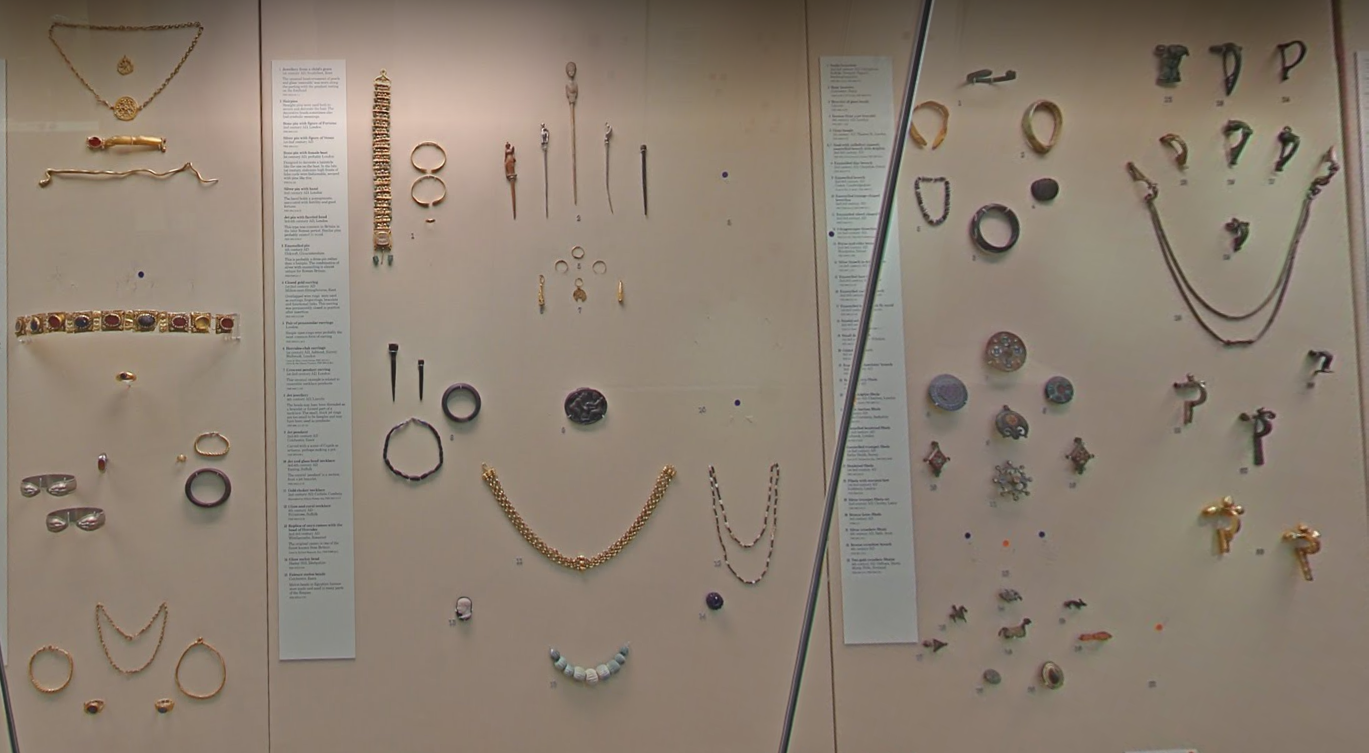
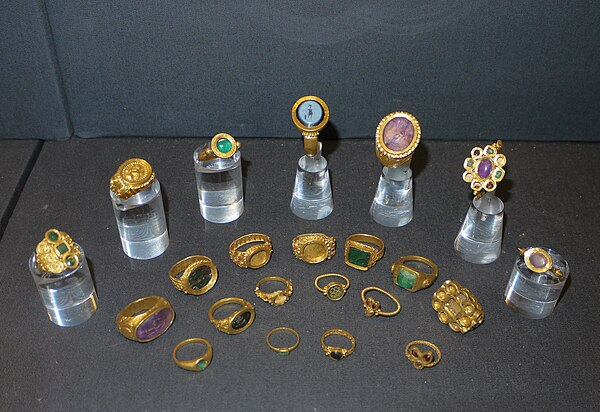
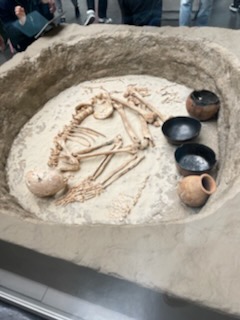
I saw many different exhibits and types of artifacts while at the museum: Jewelry, pottery, small figurines, metalwork, weapons, human bones, animal bones, literature, paintings, hieroglyphics, fossils, rocks, statues, busts, random trinkets, many items I don’t even know the name or purpose of, and tons of other things I can’t remember.  The age of the artifacts varied between the different exhibits. Within the exhibits the ages still varied but to a lesser extent than between the exhibits. While I enjoyed the many different artifacts, the ones I enjoyed most were the fossils, jewelry, and the items in the Ancient Egypt exhibition.

The fossils were in the enlightenment gallery and there was an entire dedicated section to fossils, rocks, and minerals. There were so many incredible specimens. Bones from giant animals and what I think was a large piece of petrified wood. There were lots of big fossils and multiple shells cut in half so you could see what it looked like on the inside. One spiral seashell was half my size. I also saw many small fossils which are common, but the fossil to rock ratio heavily leaned toward the fossils. There was only a little bit of rock holding a huge number of small fossils together, instead of only a small number of fossils in a lot of rock, like I am used to seeing.

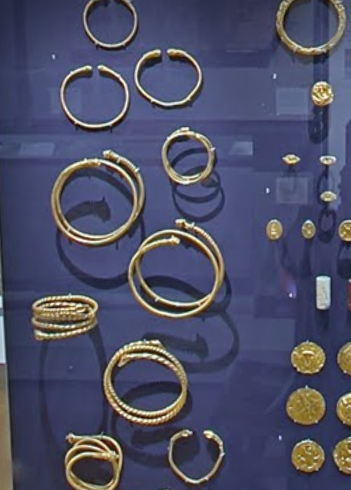
So. Much. Jewelry. I think there was at least some jewelry from each culture. Some exhibits had more jewelry than others. It made me wonder, was the difference in the amount of jewelry because of cultural differences or because some are older than others or maybe a combination of both.  I noticed that there were lots of necklaces, bracelets, earrings, rings, and some broaches. Most jewelry was made of various metals but there were some beads made from wood and I think I saw a few rings made from bone. While there were a lot of gemstones set in the pieces of jewelry, there were just as many precious stones used.

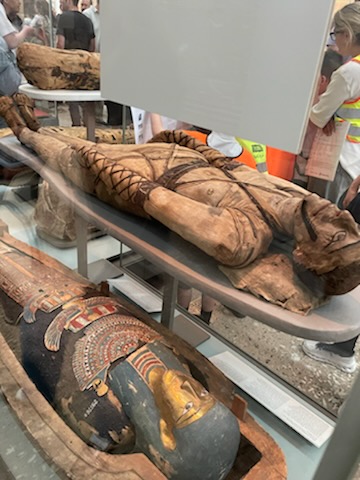
I have always enjoyed learning about ancient Egypt so the Egyptian gallery was a must see. When I finally found the Egyptian gallery I started looking around and reading about all the artifacts. I was most interested in the funeral and mummification processes. I liked reading about how they would remove a person’s internal organs and place them into separate jars to be preserved. They talked about removing the brain through the nose cavity and how the bodies would be buried in salt and left to dehydrate for 40 days. Various oils and resins would be put on the body and then finally wrapped in bandages. Once the mummification process was finished the mummy would be put in either a tomb or a grave and surrounded with their belongings and several other items to help them get to the underworld including mummified animals and small figurines called shabits. They had a few mummies and sarcophagus. They also had many table slabs with hieroglyphics on them.

I really enjoyed looking at everything and I definitely want to go back and visit all the things I didn’t get a chance to see. I would also like to bring my family to the museum so we could look around together and discuss what they liked and just have a good time. I wanted to learn more about the British museum, so I looked online and found their website. The website was really cool and easy to use, most of the exhibits even have a virtual tour option where you can go into the museum and walk around similarly to google maps street view.

I Journeyed for a Long Day

A Long Day’s Journey Into Night by Eugene O’neil is a tragically realistic play about a family that brings itself up and tears itself down. When we read the play for class, I really enjoyed the script. The characters are so interesting to me and the descent we see as everyone succumbs to their own poisons by the end of the play is fascinating to watch. However, my expectations for the show itself were not as high as some of my fellow theatergoers. While I enjoyed the script, I read it more as a novel than a play, so I knew there would be a lot of long monologues without much action happening throughout the play. 

Upon arriving at my seat, I was a little concerned. While the view of the stage was alright, I could feel my legs slowly falling asleep and to make matters worse, my eyes wanted to follow suit. We had just spent the majority of the day in the British Museum, so I had to keep  myself from drifting off a few times. At last, the show began and I was able to focus on the dialogue and see the story come to life.

All of the actors did such a fantastic job acting drunk. At the end of the play when everything sort of falls apart, the relationship between the father and his sons comes through in such an honest, devastating way as they all speak from hate and love. One of my favorite moments was when Jamie tells Edmund how he tried to sabotage his little brother in order to make himself look better even though he “loves his guts.” I also enjoyed seeing the gradual transition in Mary as she slowly uses more opium and becomes increasingly distant and incoherent. The only problem I had with her character was how the first transition happened. I don’t think the nervous, drug-free Mary at the top of the show and Mary after her first use were very different. The only reason I knew that she had used it was because the character says so. 

I was also a little distracted throughout the show because of the children’s American accents. The only reason I could tell they were using accents was because they would occasionally use the British pronunciation. Whenever Edmund would say “been” as in “where have you been?” he would pronounce it as “bean” instead of “bin.” This is so trivial and it shouldn’t matter, but I would be taken out of the moment wherever I caught a mistake like that. 

I enjoyed the show for the most part, but it is definitely not my favorite. I didn’t agree with all of the choices, but at the end of the day, I took a long day’s journey into a lovely play.

Cheers!

I don’t have any pictures of the play, so here are Nick and Ace

Long Days Journey Into Night

Last night we saw Long Days Journey Into Night, a play written by Eugene O’Neil. We had read the script already for class in Fayetteville, which I had really liked and had made me very excited to see the play. I was also excited to see Brian Cox and Patricia Clarkson—actors who I knew were very talented from some of there film work. When reading the script, I did notice some benefit to reading over watching. The italicized lines (any non-dialogue, really) were so insightful to the story to me, and I knew that they were things I would not have distinctly picked up on in a performance. So, I really felt for this play specifically that reading it was helpful. Also, I found out I knew one of the other actors, Louisa Harland as Cathleen, who plays Orla in Derry Girls (such a good show, I highly suggest!).

When the play started, I wasn’t immediately as impressed as I thought I would be. I do not mean to hate on the show or any of the performances, because overall I really did enjoy it and the actors. I think I just may have gone in with very high expectations and at first thought I was going to be disappointed. I won’t put in writing the specifics of what I may not have liked about the performances, because I really don’t want to dog on the actors like that. I talked about it the day of, things I was a bit underwhelmed with, but looking back I honestly think I was too quick with my judgement so fresh out of the play. Now that I’ve been able to sit with it a bit more and probably forgot some of the details already, I don’t really have anything to complain about. They all performed their roles well, and I thought their relationship dynamics were really very powerful, which is such a key part of this story. The love-hate relationships they kind of all have between each other is so emotional and powerful. They all have self-loathing and guilt, but all push blame onto each other, which fuels this resentment between them. I thought their performances of drug and alcohol use were well done, efficient, and tasteful. It was certainly not overdone—something I think is a big risk in a lot of media. In fact, Patricia Clarkson’s transition to sober to using was so subtle I almost didn’t catch it. While she was not on stage so much in the second half, when she was, she was incredible. The men, I felt, also preformed drunk well. It wasn’t for comedy, which is an important distinction from a lot of other portrayals. They weren’t staggering all over the stage or anything, Brian Cox even stood on a table twice while he was supposed to be pretty drunk. (I was actually so nervous he was going to fall and get hurt, that would have been so scary!) They also didn’t slur their words, and I could still understand them. Instead, it was more subtle variations—they would occasionally sway a bit or a small stagger—but nothing over the top. Brian Cox even slipped into a Irish accent, something detailed in the script that I feel he did a great job implementing. But speaking of accents, that was honestly my biggest complaint. The character Jamie, played by Irish actor Daryl McCormack, had a great performance but not so great American accent. I don’t know how to explain it, he still spoke with powerful emotion and I could understand him clearly, but it was almost monotone. Whatever it was, it was unfortunately distracting at times and did detract from his performance a bit for me.

So, while I was not quite as impressed as I thought I would be by intermission, by the time I am writing this I am more satisfied with it. Either way I am very glad I got the chance to see it and would still recommend it to other theatregoers!

Brian Cox made my Night

About a year ago, I started watching a show on HBO Max called Succession. It’s about a dysfunctional family. What d you know? And who was the main character of this show? Surprise surprise, the man, the myth, the legend, Brian Cox. So when I found out that we were going to be watching a show starring him, I was for lack of a better word, shook. He was the highlight of that show so the idea of seeing him in the flesh made me super excited. And then I read the play for the class and I realized that he is absolutely perfect for the role of James Tyrone. He’s a man with a temper and has a bit of evil in his bag. But it’s justified in his own way which I thought was great.

I do believe that “bad” characters work only when they are justified. At first, we are led to believe that this man values his wealth more than the well-being of his family. But when he gives monologue to Edmundson, you understand why he is the way he is. He grew up extremely poor to the point where his family couldn’t eat sometimes. It makes you feel for him in a way that isn’t understood at the beginning of the show and his character needed it.

This show deals with very real and heavy themes. The struggle of addiction takes the main spotlight during this show. I didn’t even realize it when I first read the show. I don’t know how I missed it, but every body in the family is dealing with addiction problems. James is clearly an alcoholic and we know this because he denies that he ever gets drunk. If you know anything about alcoholism, that’s one of the main red flags. Denial. Jamie and Edmundson are following in the foot steps of their father and of course, Mary Tyrone with her addiction to Morphine.

I do recommend this show because it’s shines light on addiction in a way that’s far more realistic that I’ve ever seen. It’s not over-dramatic and its not overtly violent. It’s just another day in the life of addicts and its super heavy in that regard.

Me and My Hero

Brian Cox is Just a Sweet Old Man

Last night, we went to Wyndham’s Theatre to watch “Long Day’s Journey into Night,” by Eugene O’Neill. I was so excited to watch this show because the play means a lot to me, and I was prepared for this heavy and long night. The theatre space we watched in was chic and beautiful, and I loved observing the environment before the show. As soon as the lights came up, I was giddy to watch Brian Cox. After seeing him in Succession, I knew that he would be perfect in the role of James Tyrone and couldn’t wait to see how he portrayed it. I was not disappointed!

While reading the play, I was interested to see the set design of this production. I liked how there was a center room where the main action took place and how the piano was situated just barely out of view in the room behind, alluding to its importance later in the action. I was a little confused because the room seemed like a dining room and they kept mentioning going to eat, so I was wondering if there was another room they were supposed to be eating in. I am not sure how I pictured it, but when reading the play, I thought there was a living room or den where the central action was taking place, with the kitchen/dining room being off-stage.

It was intriguing how minimal the set was, with no decorations and little furniture. I feel that this was a deliberate choice by the designer to represent Mary’s complaint of their house not feeling like a “home.” The muted and matching tones of the wall and floor were also interesting and gave the room a cabin-like feel. The lighting design worked in tandem with the set design to provide a bare and pale persona to the actors, which made the room feel stuffy and empty at the same time. Between each scene break, there was a complete blackout, which was an interesting and exciting choice for me because it created a stark contrast between the scenes. The lighting designer could have chosen to have a smooth lighting transition between them, but I felt this was a deliberate decision to leave the audience in the dark as to what was to happen next.

The sound design was eerie. I enjoyed the cues during transitions– they created even more suspense for the audience. The foghorn was an important motif, and I was glad they incorporated it into the sound design. Also, the creaking when Mary was pacing upstairs added to the family’s apprehension.

One thing I was especially looking forward to seeing was how the actors would embody their slow decline into substance abuse. Overall, I would say that they did a great job. Mary’s character definitely had a journey and throughout the production, it was obvious when the drugs were creating a fog over her mind and turning her into a different person. I liked how Patricia Clarkson played Mary’s character with more mini energy– her motivations came from internal obstacles and were not always overt. Laurie Kynaston, playing Edmund, had great dynamics in his acting and allowed things to weigh on him until he couldn’t take it anymore and exploded with frustration. Of course, Brian Cox did brilliantly, as I knew he would. I was interested to see how he could demand the stage with his voice, especially when yelling at his children, yet still remain soft with love for Mary. I feel like that Cox might have related to his character strongly because his monologue telling his life story had me in tears. The whole show had me in tears, (poor Shawn had to hear me suck my snot in for 3 hours), but that’s neither here nor there.

The only actor that slightly drew me out was Daryl McCormack, as James Jr, because I felt that his American accent caused him to lose energy in his voice and took emotion away from his acting. I still think he did a great job, but it was obvious that he was putting on an accent, so as an American, it was hard not to pay attention to it.

Overall, I believe I would recommend this play to everyone, even non-theatregoers. Especially if they have experienced living within an addictive household/knowing someone who has struggled with it– it is cathartic to be able to relate to art. However, this play was also hard to watch at times. While it is a great release to feel seen through theatre, when watching productions with heavy material, it is important to try and separate your reality from what you are watching. Plays addressing trauma are important, but boundaries are more important.

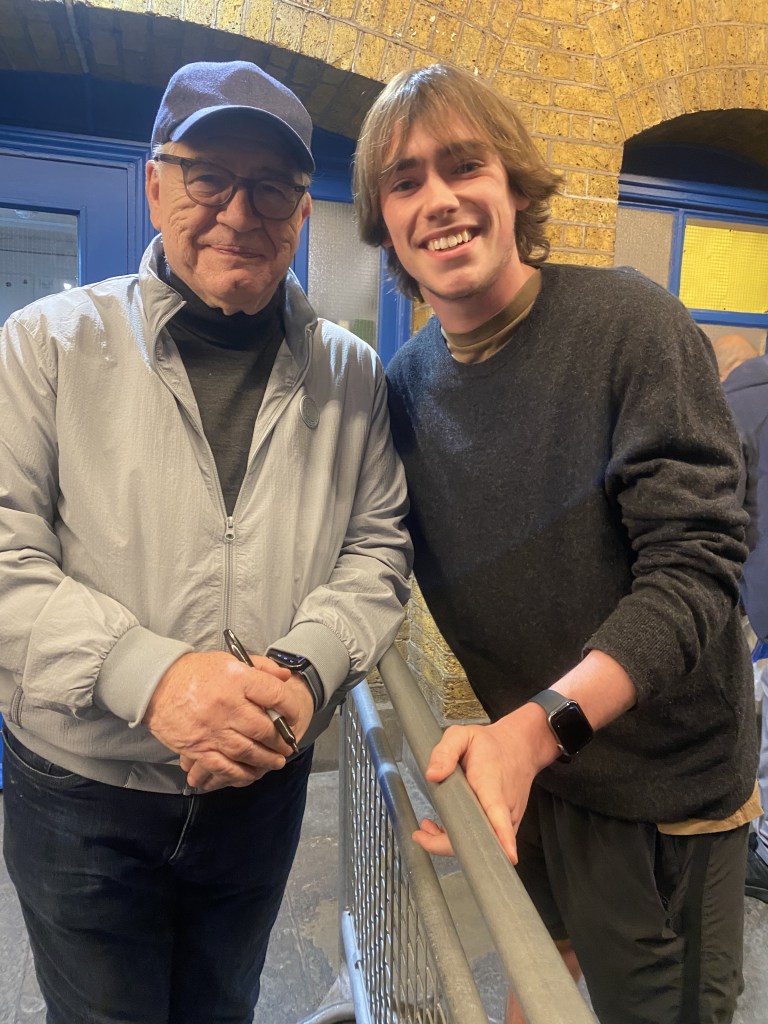
Also, I got to meet Brian Cox! He was a very sweet Scottish old man, entirely different from the raging father I have seen him play. I talked to him a little bit about theatre, and he listened! At least, he successfully pretended to.

All for now,

xoxo Brian Cox’s biggest fan

So Many Edmunds in the Audience…SMH.

I would be careful to recommend this production of the play to other theatergoers. It would completely depend on the theatergoer because this is such an artistic and desperately tragic story.  There are some people in my life, family and friends, who could not watch this play for the difficult topics, their lived experiences, or their lack of attention span. I do not believe this play exists for entertainment. This play is for the poor souls who struggle and need to be seen. The topics of this play are addiction, escapism, blame, trust,  coping mechanisms, festering in the past, life, and death. Most of the story is told with tediously long and impressive monologues. It is hard to get through, and we do need works of art like this that display realism in difficult situations. Plays that make us a little uncomfortable at times, so we can ask ourselves “Why?”.  

This production as a whole is well done. The director and designers paid attention to Eugene O’Neil’s overly specific stage directions to an impressive degree, especially with the casting. Mary had her signature faded reddish brown hair that she reminisced about for so long. Jamie didn’t look at all like the rest of his family, while Edmund looked like he really could have been a son of Mary’s. James Tyrone didn’t seem the older but devilish silver fox he was described to be, but was played very well by Brian Cox. I probably would have made the same casting decisions.

The following sentences are some of the other things I saw that were good but I would have designed differently. The fog horn in the background was a good touch and was played only in moments of clarity and truth. I saw the significance as the characters navigated through their individual fogs. However, I wish I saw more fog. Way more fog. I would have flooded the stage with fog that crept in through windows and doors. Simulating the hazy tortured living the characters endure at the end of every day. The music was very interesting. Very very minimal. I think there could have been more, more instrumental climbs and falls would have made the monologues more interesting and simulated lyrics of poetry.

The lighting with windows and sun angles were really cool! I thought the sun angles were very cool and accurate if we assume the audience is facing true north. The sun in the morning crept through the east window and set early afternoon through the west window. I really liked the white light at the end casting the family’s distorted long black shadows. It gave the ending this haunted uneasiness. 

The set did well, I would have liked maybe a little bit more. Bookshelf, formal unused dining ware, or pictures maybe. But perhaps that ties to the theme of a house not being a home. The plainness of the room was notable and forced the audience to pay more attention to their words and expressions than the set design. I thought it was creative and important in the plot to center the action on the parlor, but in the play, it was supposed to be a little more decorated for mere appearance because that is just the pride and shallow ways of the Tyrones.

As far as the writing goes, I think that this retelling could have been made more modern. The monologues were too long for me to stay immersed in the story. It has been the only show of the trip that I have wanted to keep watching my invisible wristwatch. 

–I thought Mary and Cathleen were the best parts of the play. Cathleen gave the play much-needed life and moments of comedy. To myself, Patricia Clarkson is now Mary Tyrone. She played the part very well and brought attention to some of Mary’s habits that are very important to the story. For example, her shaking hands and denial of addiction. There was a part in particular where Mary broke the 4th wall while dangling her feet off the stage to talk to the audience. Genius. Loved how in the context of the story, she’s talking to people who aren’t there because she’s hallucinating. So to her other fellow characters that makes her look crazy, but to the audience it feels like she can finally see what the others cannot. Like she seeing beyond the sad repetitive world. But like I said, to her sons and husbands, she just seems to be on another plane of reality and out of touch.

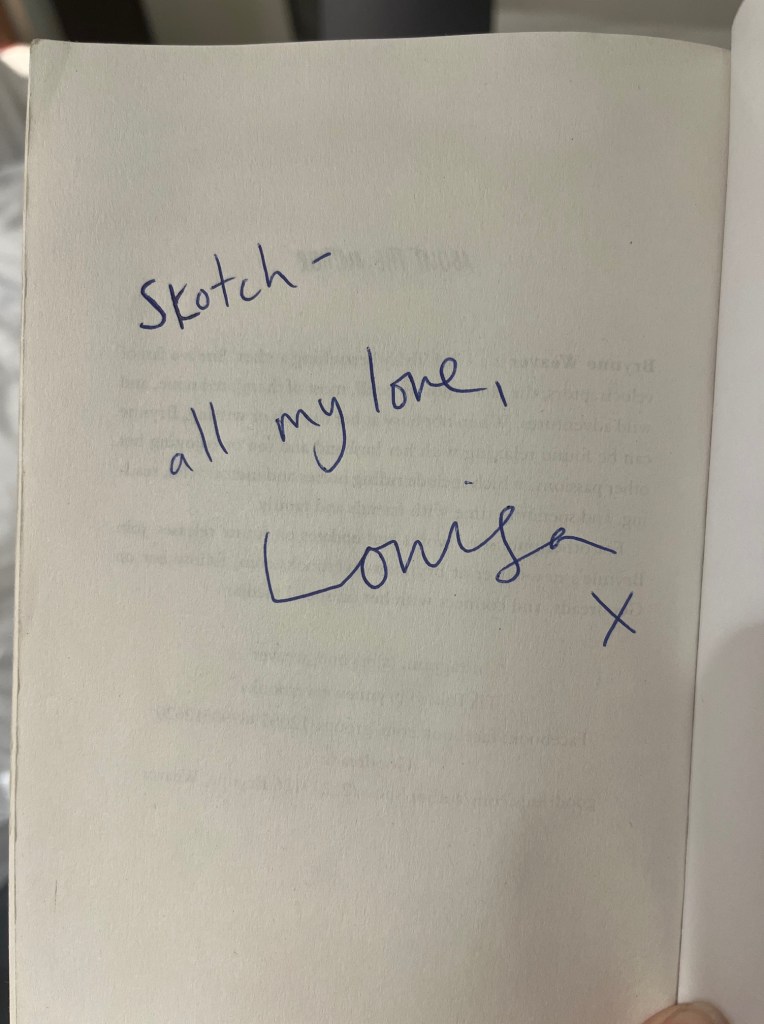
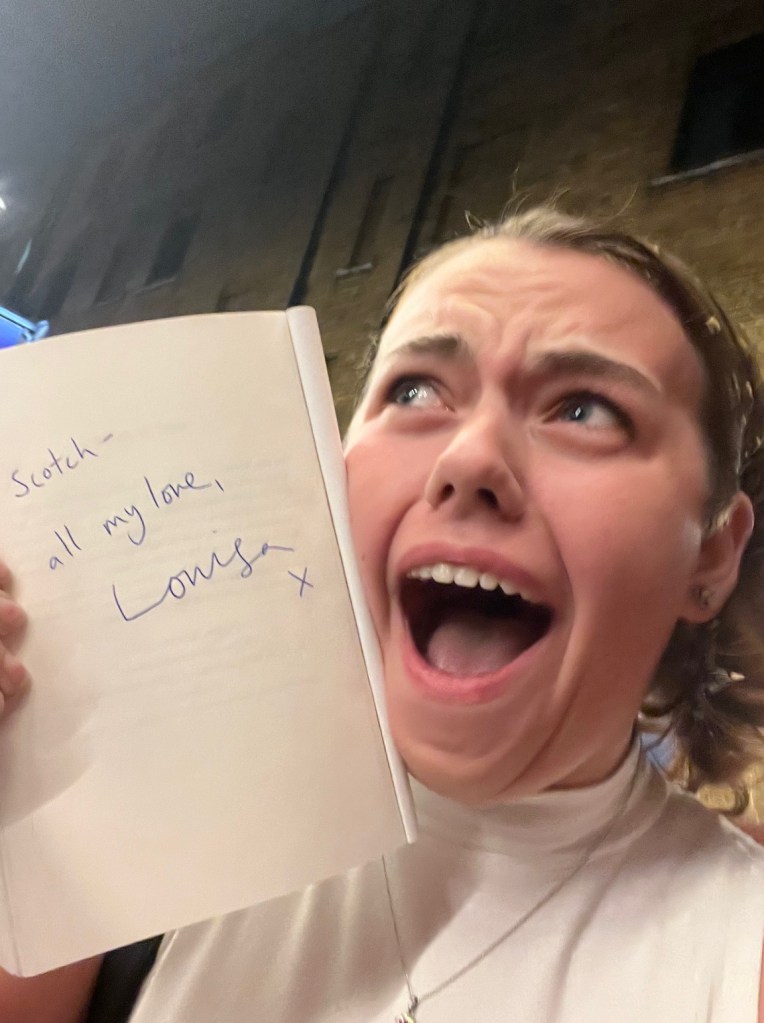
All in all, good production, but I think some elements needed to be work-shopped a bit more. I still can’t believe I met Louisa Harland!!! Ahhhhh. Best part of the night besides the final applause of the show.