The Victoria and Albert Museum

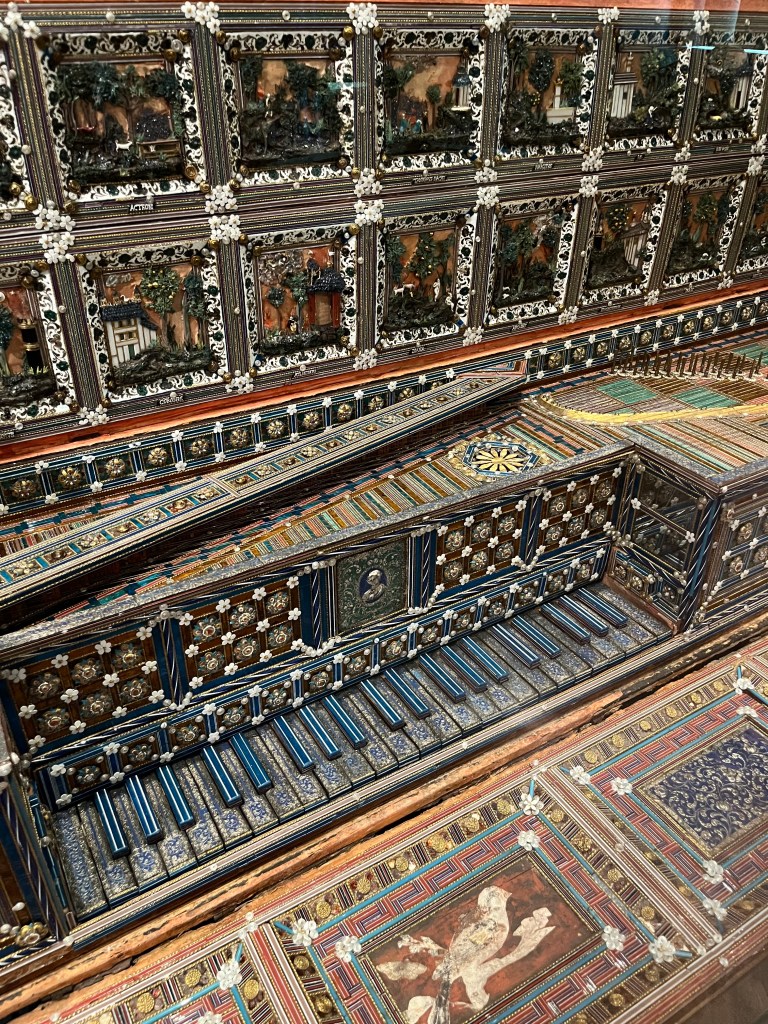
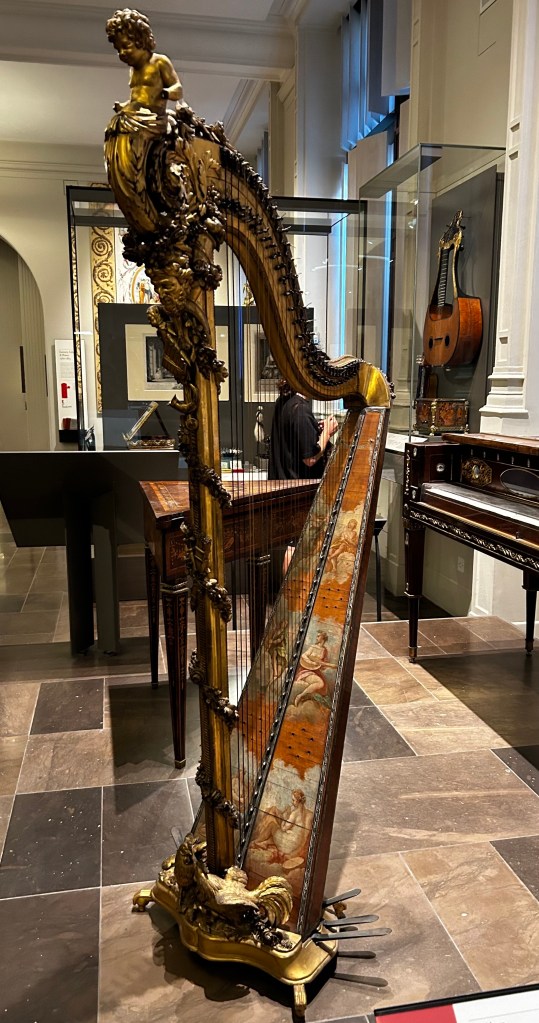
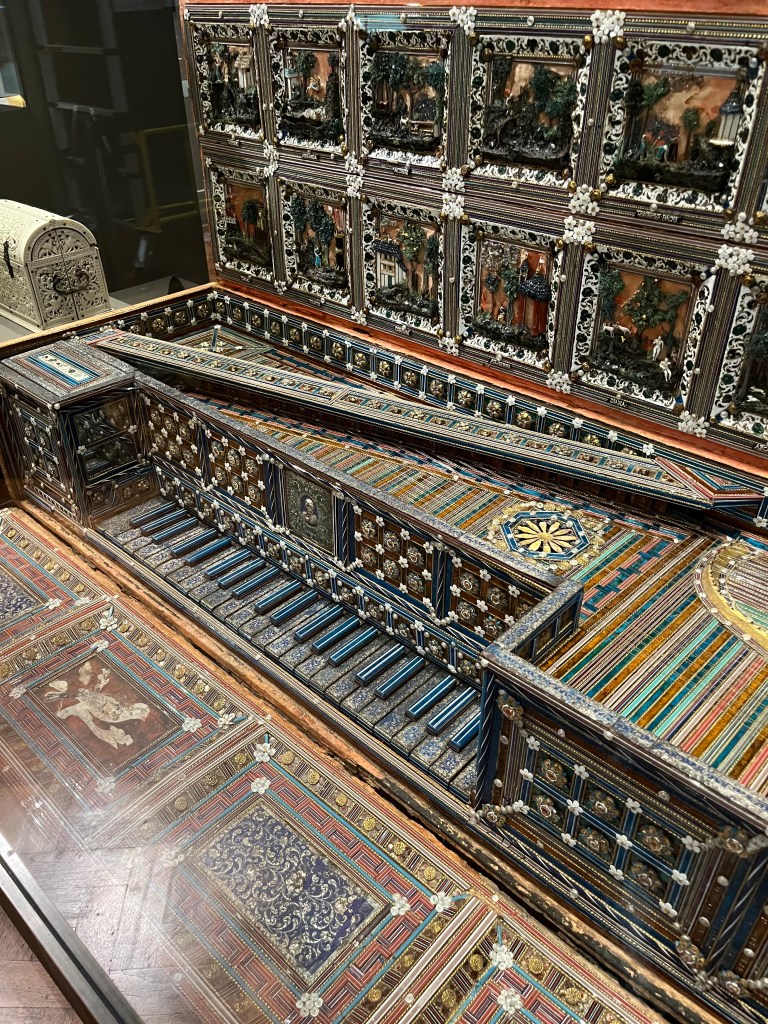
At the Victoria and Albert Museum I came across this beautiful piano in the Victorian era rooms that to me resembles something Gene Wilder may have played to unlock the doors into his chocolate factory. To relate this piano to Willy Wonka and the Chocolate Factory, specifically the 1971 film musical, the colors on the piano remind me of his candy garden that is filled with an abundance of colors. The scenes depicted on the back of the piano feel like images that could resemble the Oompa Loompa’s homeland. Each scene tells the story of their migration to the factory and perhaps maybe even a shrine to the cocoa bean. The harsh lines of color feel like a very amiable co-existence of the seventies flair of this Willy Wonka and the industrialized side of his factory.  

I can imagine Gene Wilder even playing this during his song Pure Imagination if I were to reassemble the original musical. The moment he sits down with his tulip teacup this piano would fit perfectly next to him as the song comes to a truly somber end. Gene Wilder used to scare me as a child and this piano almost does the same. So much clutter and color are a lot to take in and that is what this musical is. Radical chaos cloaked in a fun children’s game when in reality it is depicting the story of the shell and home of a lonely and sick man trying to gain the attention of a crumbling society. This piano even has a plaque right in the center of the base that shows a crest of a man and that could perfectly fit into the design of Willy Wonka and the Chocolate Factory.  

This piano teaches me that Willy Wonka truly had so much running through his mind his entire life. And all that chaos while beautiful and interesting can be overwhelming and too much to take on as a single person. The detailing on the outline of the keys is so precarious and done so thoughtfully and that is very similar to how Willy Wonka set up his tour and game for these children and adults. Everything was purposeful, everything was planned to a tee, and all of his beautiful chaos made so much sense if you were truly paying attention to what he was saying and doing. I believe that is why he scared me as a child. I could tell he had intention with everything he said and the moments he had to go off script for Charlie and his grandpa in the bubble room was truly terrifying because his chaos and intention now became unpredictable.  

This piano, although beautiful, is almost too beautiful to touch, not unlike Willy Wonka’s factory. Having to destroy his forest of candy floss and creams was difficult to watch. Beauty is oftentimes thought to only be perceived, but if there is a God, I believe the beauty in which our world is filled with is meant to be enjoyed and experienced. And experienced with others. A golden ticket was meant for a single person and a plus one. Willy Wonka knew the walk through the factory would be too much to go through alone, too much beauty to keep one’s head on straight, so this piano and this world and his factory is meant to be indulged in with others. Sharing the wealth and beauty of our world is the most benevolent human thing to do and I believe we all must strive for that. Kindness within all this chaos.  

But really, I just want to see Gene Wilder play Pure Imagination on this piano. It would be heavenly. 🙂 
The Victoria and Albert Museum

Today we went to The Victoria and Albert Museum, to be honest I liked looking around at all the different things that the museum had to offer, but I had a really hard time finding things that I could relate to any of the shows that we have seen. Eventually I found a few!

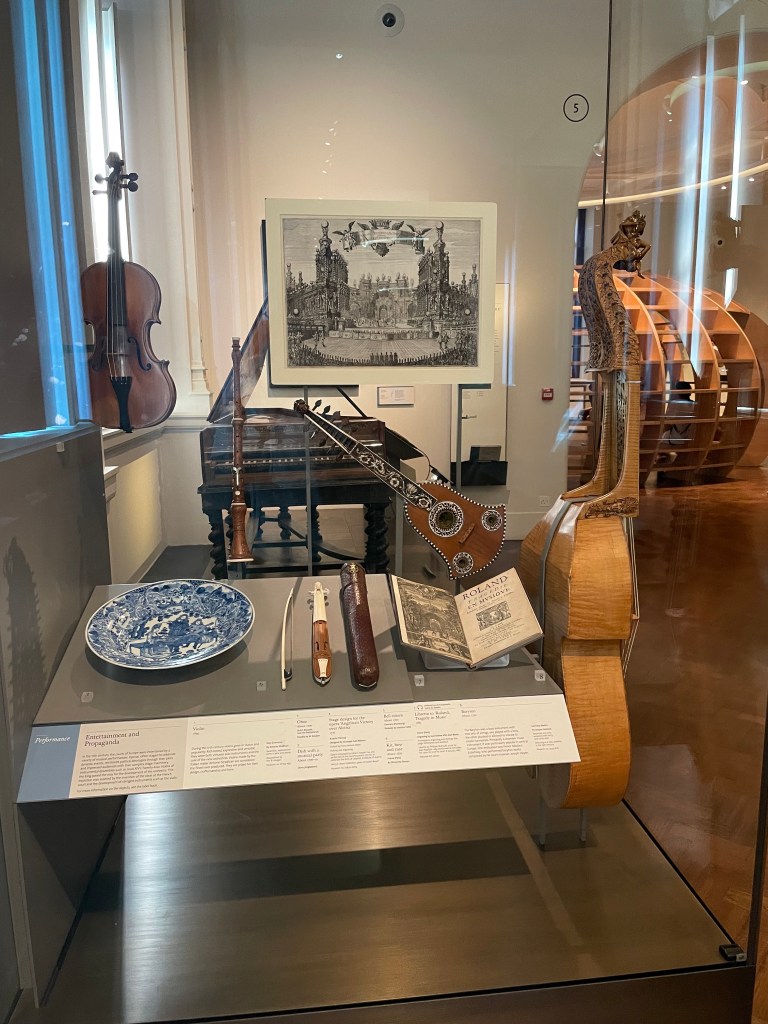
The first thing that I found was a case of instruments that reminded me of when I saw the musical The Curious case of Benjamin Button. It had a violin, a Cello, and what looked to be an older Clarinet. This reminded me of this show because all of these instruments and more where in the show, and multiple people play multiple instruments. I think that’s why I liked the show so much because the roles where fluid and everyone was so talented with playing the instruments, and singing and dancing. 

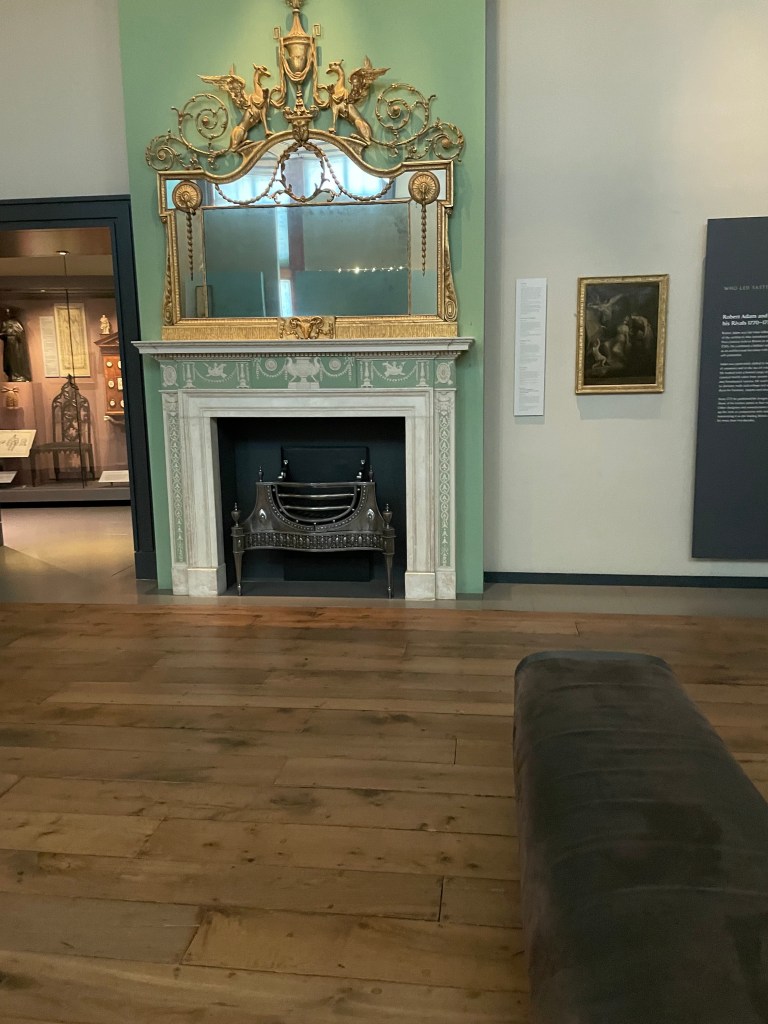
The next thing that I found was a fireplace that reminded me of the play The Mousetrap. Tonight Madison and I finally got to see the ending to The Mousetrap! I won’t spoil it for anyone wanting to still see it or watch the movie. All I have to say is that I think it’s a great show and it was very well put on, I can see why the show has been running for 71 years.

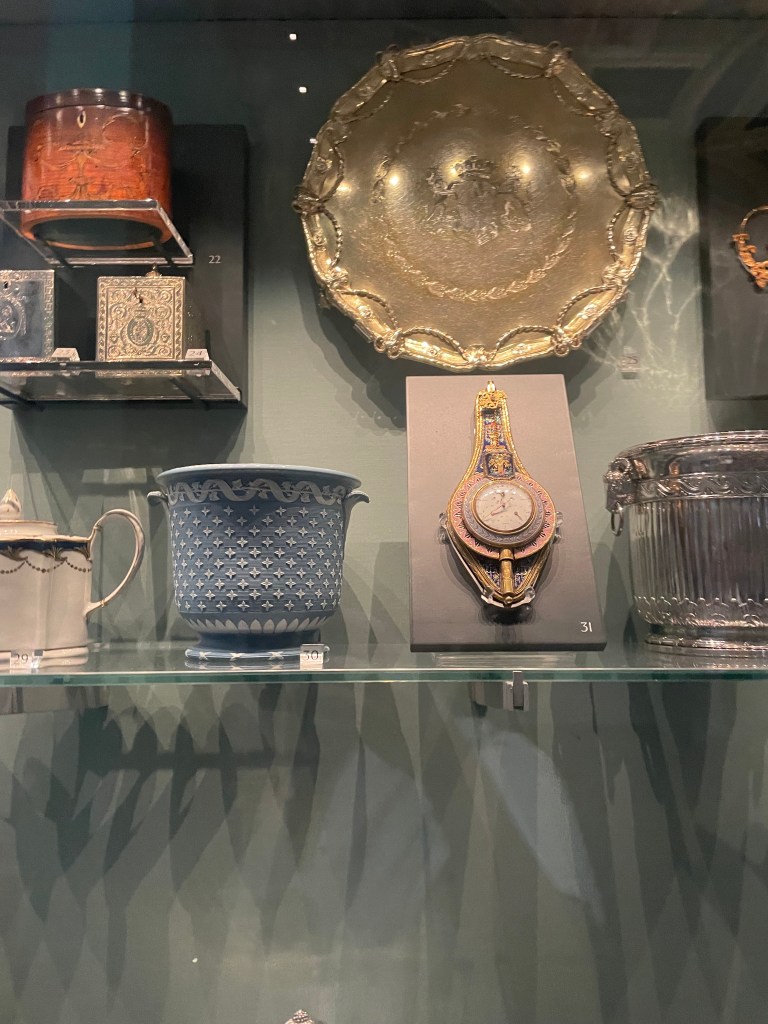
The last thing that I found was a clock, it reminded me of The Curious case of Benjamin Button. There was not a physical clock anywhere on stage in the show, but they really emphasizes the concept of time. They would always say the exact amount of time that had passed between two events and the musical took place over a lifetime, about 69 – 70 years. 

The Victoria and Albert Museum has clothes I want in my wardrobe 

By Brittaney Mann

The Victoria and Albert Museum had so much art, clothes, jewelry, furniture, and so on. I enjoyed every moment of walking around here. I spent most of my time looking at the clothes and admiring (also wishing that I had) the many beautiful, elegant dresses. The art piece that I picked was not an article of clothing though, I found something that reminded me of two of the plays we watched together. 

Volksempfänger (People’s Receiver) was the art piece that struck me the most because it reminded me of Dancing at Lughnasa and The Mousetrap. The most obvious reason is that this piece is a radio, and Dancing at Lughnasa and The Mousetrap both included radios as important props to the stage. This piece has a darker context that I am going to dive into later in the post after exploring the radio in general. 

In Dancing at Lughnasa, the radio brought something new and from the present day into a house and city that had not caught up with the rest of the world in industrializing everything. Radios were such an important part of sharing the news, but also for various forms of entertainment. In Dancing at Lughnasa, the audience gets to experience how people would have received entertainment through music from the radio, but The Mousetrap (at least in the first act before they could not continue the performance), showed all uses of the radio. 

In The Mousetrap, the radio is first used shown being as a source of news as the voice coming from it describes two killers and a murder that happened. The other times the radio sounded during the first act were for entertainment purposes. The first time it was for music and the second time for a story. 

In both of these plays, the radio seamlessly sounded songs or somber news, and I could not believe that it was simply a prop. The characters looked like they were actually controlling the knobs and searching for a station on the waves and finally finding it. I feel like that is a bit of a hard thing to accomplish because timing of each movement and sound is so important to making that action believable. In both these plays though, I remember how well the characters did standing at the radio and looking like they were actually using it, and I loved it. 

This piece reminded me of two films I watched in my Media and Society class. First, “Empire of the Air: The Men Who Made Radio,” and “Citizen Kane.” I do not remember every detail of this films because I watched them three years ago as a freshman, but I remember they beautifully and emotionally exemplified the importance of the radio. I remember when I watched “The Men Who Made Radio,” I cried because I did not realize how emotional at story about radio companies would be, but man, it was a very good film. 

This piece also freaked me out a bit because the description of it mentioned that with this radio, which was more affordable than many other radios, the Nazis were able to spread propaganda to many houses in Germany — two-thirds of homes owned one of these radios. 

Technology keeps progressing and becoming easier to have access to. In some ways, this is great; it lifts barriers for creative people to have a platform, news organizations can share breaking news immediately and people do not have to be in front of a television to hear it, we can connect with others all over the place, and the benefits go on. At the same time though, we have Twitter, Facebook, and various sites where people can share and consume extremist material, and for some disgusting reason, some of it is still Nazi or fascism oriented.

A Connection and Collection of Costumes

Today, our group spent our last full day in London by visiting the Victoria and Albert Museum. This. is the world’s largest museum of applied arts, decorative arts and design, housing a permanent collection of over 2.27 million objects. It was founded in 1852 and named after Queen Victoria and Prince Albert. 

When we arrived at the museum we were given the tasks to find objects and somehow connect and relate them to plays that we have seen during our trip. There were so many beautiful objects to choose from and I was amazed by how so much was in great condition. I really enjoyed looking at all the furniture such as the ornate beds and dressers. My favorite things to look at were the outfits. I found it quite difficult to find a connection between other objects and plays that I have seen. However, many of the regalia and outfits that I saw reminded me of one play in particular that I saw on my own during my stay which would be Les Miserables. 

Les Miserables was not on our group’s itinerary. However, I love the show so much that I decided to buy a ticket and go see the play during my free time. One of the great novelties of viewing Les Mis is getting to see all of the beautiful costumes. There is no escaping the visual identity of 1815 France through costumes ranging from regal to raunchy, from comedic to tragic, relaying a whole 30 years of 19th Century fashion, the story stretching from the year 1815-1848. It is, for a story decidedly bleak, alive with visual charisma. 

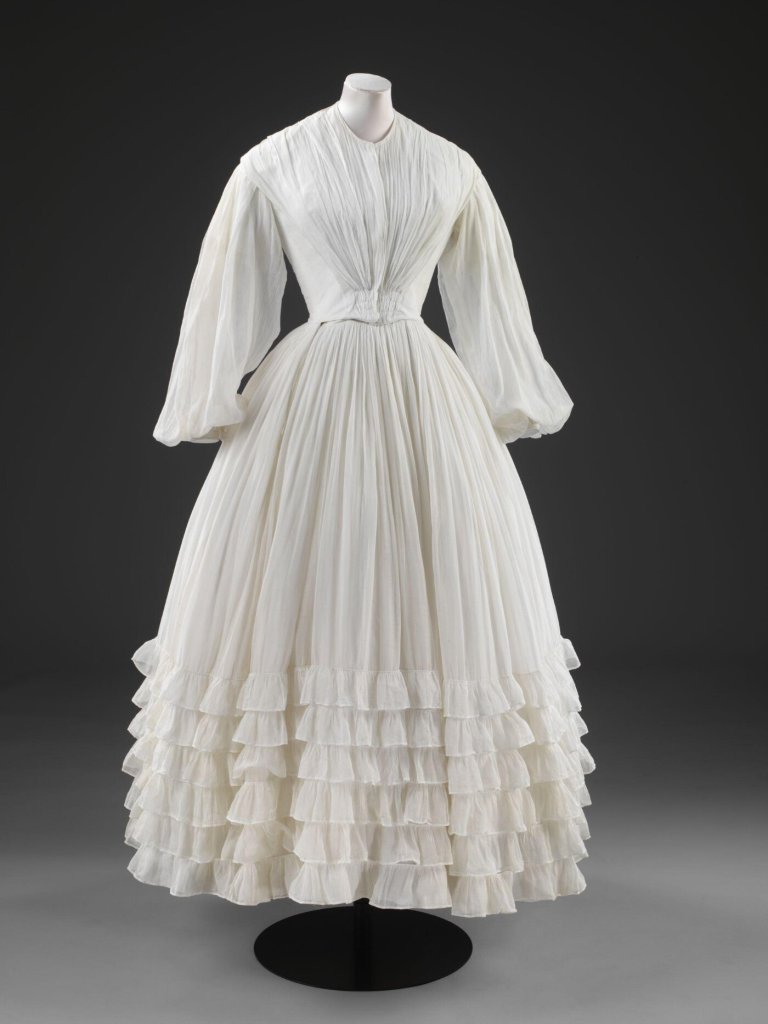
One outfit that reminded me of Les Mis was a wedding dress paired with a petticoat made in Englsnd during 1851. The dress and petticoat are associated with a horsehair lace bonnet. This collection is linked with the marriage of Eliza Sneath to Joseph Candlin in Sheffield in 1851. Both the dress and the petticoat are made of cotton and the sleeves are made of bobbin lace. I most especially enjoyed how the flowery pattern and red color of the petticoat contrasts with the solid white of the dress. 

The reason that this dress reminds me of Les Mis is because at the end of the play one of the characters, Cosette, gets married to another character named Marius. The style of this dress really reminded me of the style of her dress in the play. Seeing a wedding dress from such a long time ago in the past also immediately brought my mind to Les Mis because it is the only play that I have seen that features a wedding. I loved studying all the beautiful detail of the dress and it really reminded me of the extravagant way people would dress during such a time and how that luxury shows in the production of Les Mis. We see a variety of peasantry wear in the play, but we also see extravagant dresses worn by Cosette. It was very interesting to make such connections between an outfit from 1851 and the production of Les Mis. 

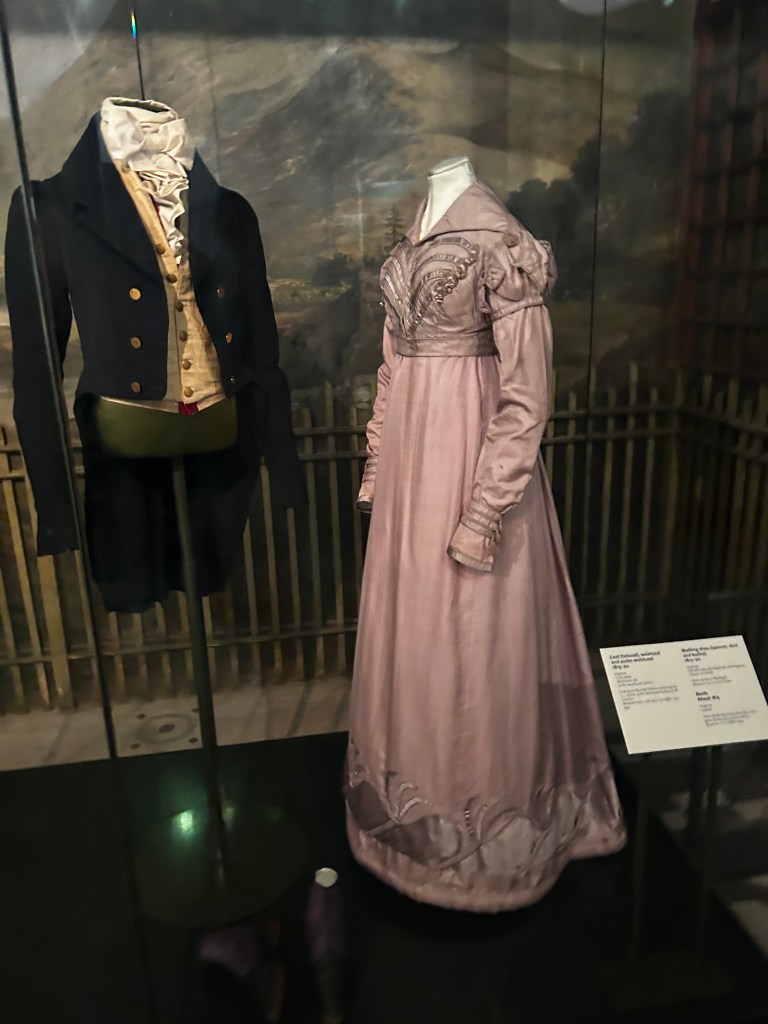
While I did not get my own picture of the wedding dress, I was able to capture other images of outfits that also reminded me of Les Mis. There were many male outfits in the museum.  that reminded me of costumes worn by characters such as Marius and other men in the play. I also enjoyed seeing all of the other beautiful dresses that somewhat resembled the outfits worn in the set of Les Mis. Searching for objects throughout the museum to connect to a play was very entertaining because it felt like a scavenger hunt. However,  when one is not studying theatre and simply in London to learn of England’s history, one should still pay attention to the objects in museums and consider not how the objects connect to a theme of fantasy in a play, but how they connect to the themes of reality in their own lives. 

Some Cool Glass at the Victoria and Albert Museum

The Victoria and Albert museum was a labyrinth of historical archives and art pieces that I feel like I barely explored even though I never retraced my steps in the couple hours I was there. There were several cool things to see even with the theatre exhibit unfortunately being temporarily shut down. For instance there was a really interesting video exhibit called the Zizi experience, which featured a recorded drag performance run through a series of AI filters to essentially deconstruct and reconstruct the image in various ways. It was super cool, and I’m not really a fan of AI in the art world, but this was an interesting exception because it was being utilized to actively critique AI rather than embrace it. 

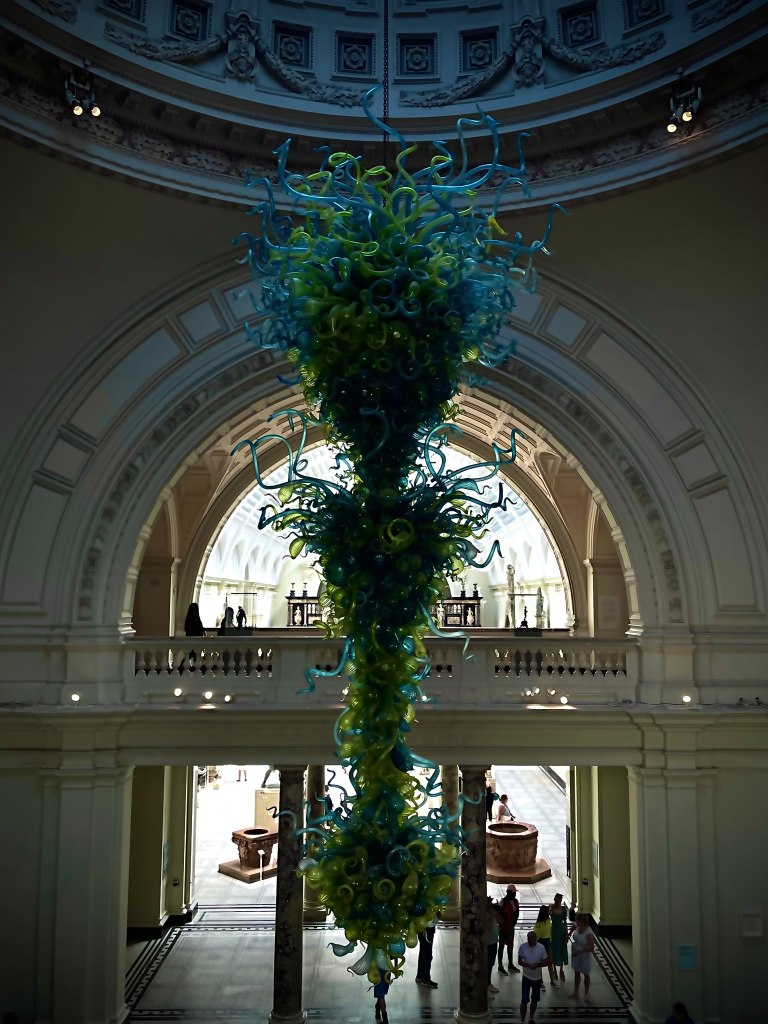
However, probably my favorite thing I saw was the massive Chihuly piece that they had hanging in a large opening near what I felt like was the center of the museum but was in reality likely far from it. Chihuly is a glass artist who I have gotten the opportunity to see the work of several times over the years. The first time was during his exhibition several years ago at Crystal Bridges, of which some of the pieces have joined the museum’s permanent collection. Then the most recent time I can remember was last fall in Las Vegas, where there was an exhibit of ceiling mounted glass art in the Bellagio’s lobby.

This may seem weird, but seeing this Chihuly piece in specific reminded me of The Curious Case of Benjamin Button which a group of us went to see earlier this trip. For me it was the color scheme of the glass as well as the sense of movement it conveyed, somehow I felt it captured the essence of the mood that surrounded Benjamin Button. It felt like a splash of water, reminiscent of the water that Benjamin tried to save his daughter from, or the water that he tries to end his life in before returning home. The show was beautiful and intricate and took so much skill to make happen, and Chihuly’s work is very similar in those regards. At the end of the day art is meant to make you feel something, and though the mediums of glass and theatre are nowhere close to each other I still felt a similar feeling from both pieces, and that’s a beautiful thing.

Visiting The Victoria & Albert Museum

It is my 24th day in the United Kingdom and today I visited the Victoria and Albert Museum!

The Victoria and Albert Museum (which is named after Queen Victoria and her husband Prince Albert,) is located in the Royal Borough of Kensington and Chelsea, London, United Kingdom, and it is the world’s largest museum of decorative arts, designs, architectures, paintings, photographs, fashion, jewelry, metalwork, and many more. The Victoria and Albert Museum, formally known as the Museum of Manufactures, or South Kensington Museum, was founded 171 years ago in the year 1852. The museum covers 12.5 acres of land, and it holds 2.8 million objects in 145 galleries. Its collection spans 5,000 years of different types of art, from ancient times to the 21st century, from all over the world. Many of the artworks are from Europe, Asia, North Africa, and North America. The museum holds the largest collection of metalwork and ceramics from China, Korea, Japan, and the Islamic world. The Victoria and Albert Museum also owns the world’s largest collection of post classical marble sculptures. Many of them are from the Italian Renaissance. The most famous one being Michealangelo’s David. The Victoria and Albert Museum is one of the United Kingdom’s most renowned tourist attractions, seeing approximately 1.2 million visitors each year. It is considered to be one of the best museums in the world!

When I stepped foot into the Victoria and Albert Museum, I was unaware of how massive the museum was since I entered through the Underground entrance rather than the main entrance. It wasn’t until I walked through the grand hall and saw the many corridors and stairwells that lead to different rooms was when I realized how large the building was. I got my steps in today. While peacefully strolling through the museum, and analyzing every artwork I saw, I stumbled across a room labeled “Georgian Period (1714-1837).” The room was filled with artworks, instruments, furniture, weapons, and clothing from the Georgian period. One of the artifacts that caught my attention was a dress from the Dutch Republic, (now the Netherlands.) It was an English-style dress that was popular across Europe in the 1770s-80s. It was a beautiful cream-colored dress with white lacing on the neckline and the sleeves. It had a vibrant pattern of different lovely flowers painted onto it. The reason why it caught my attention was because it remined me of the females’ costumes in Shakespeare’s play, The Comedy of Errors. The style of the dress was like the dress The Courtesan at Ephesus wore but, this dress was a little less extravagant than hers.

I enjoyed my time at the Victoria and Albert Museum and if I ever visit London again in the future, I would love to go to the museum again and see the other rooms of artwork that I was unable to see.

Hirschy Highlight: Victoria and Albert are music to my ears.

Today we went to the Victoria and Albert Museum from which I gained many things. Yes, this means plenty of souvenirs, but also a lot of insight and self-reflection. I have realized many times on this trip how insane it is to think about people actually using items or living in locations we have seen or visited. When we went to Bath, it took me a long time to really accept that I was walking the same paths that other people have walked in the past. I love to compare it to realizing everything I’m seeing is real and not a set piece. I think I’m used to a fabricated reality of something that could have been real, that when I actually live or walk on the same stones that previous people have walked, I get confused. I’m not sure if that’s a form of culture shock, but anyways.

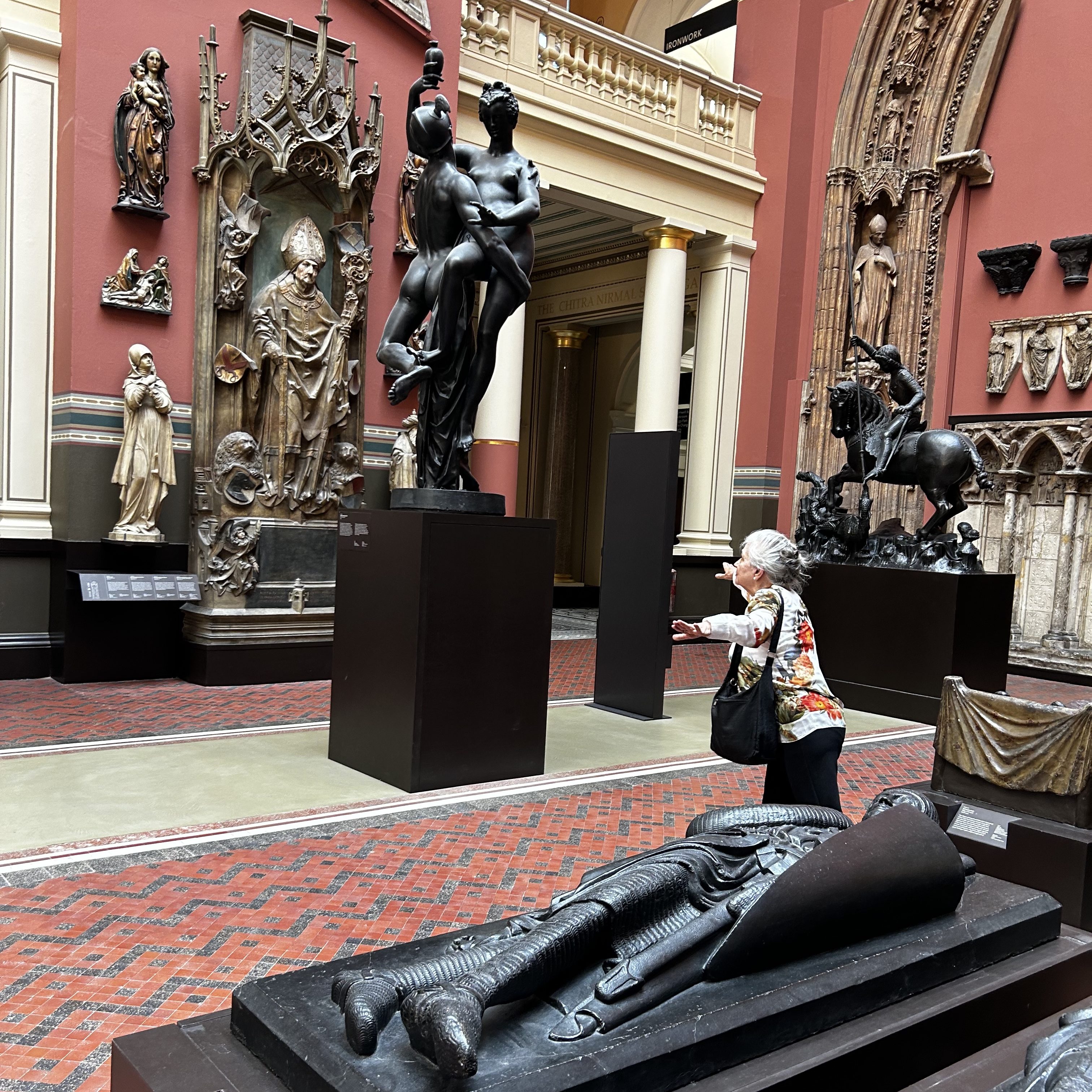
While in the museum, I encountered many dresses, gilded furniture, and statues (so many statues). I realized that based on the location, depictions of the crucifixion look different! In medieval times, Jesus’ feet were resting on a slanted podium that was part of the cross and the feet were side by side with a nail in each foot. But, in all crosses and depictions of the crucifixion that I have seen, Jesus’ feet are crossed with one nail through both pinning them directly to the cross.

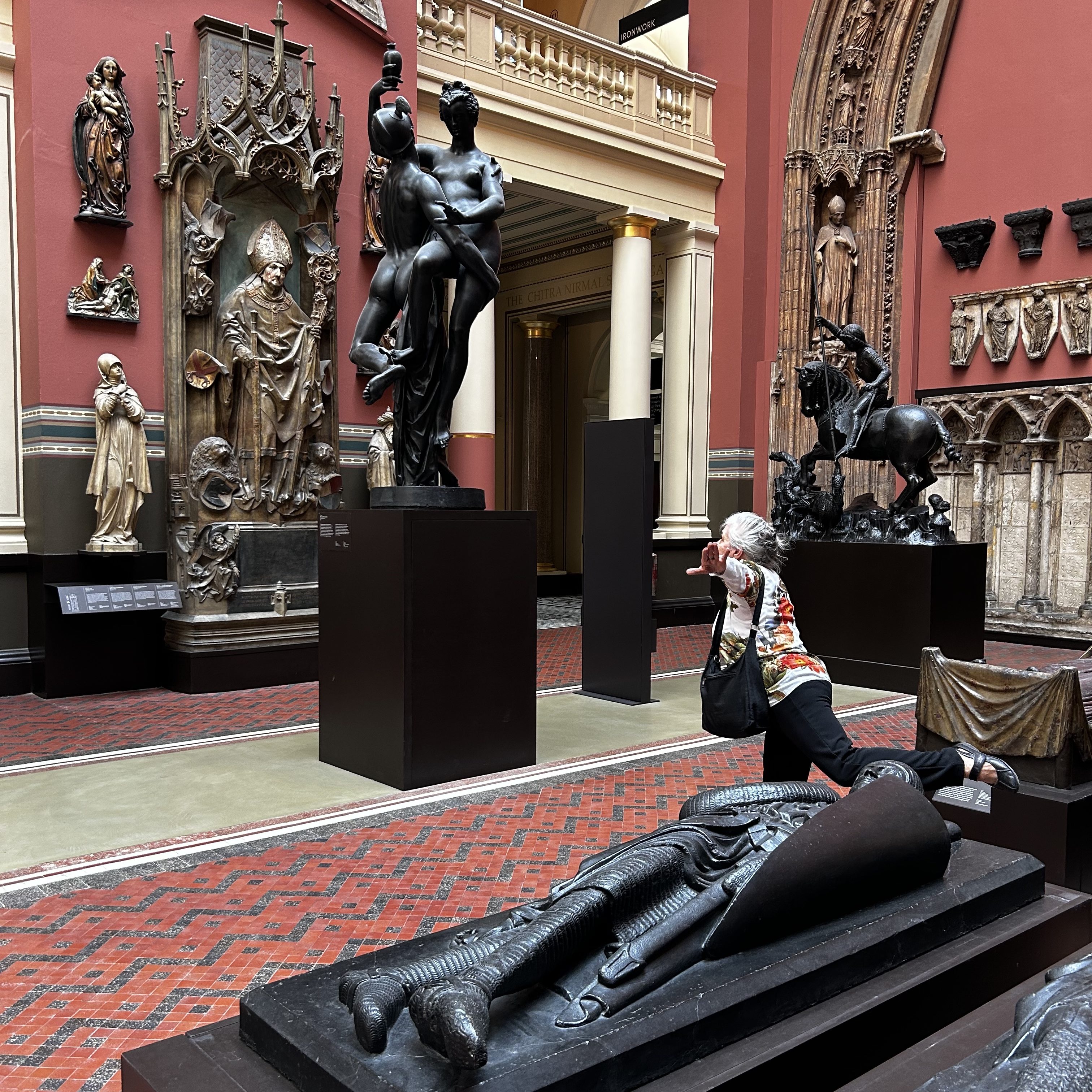
I also saw so many instruments ranging from pianos to string instruments. This made me have a moment inside the European wing that drew a little more attention than I had hoped.

While on this trip, we have obviously seen more than a heaping handful of shows and performances. In each show, there has been music. Some shows have more interactive music like in Rocky Horror Show and specifically The Secret Life of Bees and The Curious Case of Benjamin Button. Other shows utilize music to add more emotion or emphasize a moment within the production like how they used a radio in Dancing at Lughnasa. But what made me have a slight breakdown is realizing how music was so guarded and utilized differently in these previous time periods.

I can’t imagine a world without music and I learned that there were many people who experienced music through others. I have been fortunate enough in my life to be able to be a part of the process of creating music and the beauty of singing and playing other instruments. But, those who didn’t have the luxury of affording an instrument may have never experienced anything like it.

The two shows that have been my absolute favorite because they create such an amazing and emotional experience have been the shows that the cast plays some form of instrument. When watching The Secret Life of Bees, even though it was a concert, I was blown away by the amount of emotion that was produced in such a unique situation. Some of the cast had their own instruments they played, like a cello or drums. There is an entire song that is acapella other than hand clapping and stomping and that song made me feel so connected to the cast. It created a human experience that even without instruments, we can all come together to make something beautiful.

The Curious Case of Benjamin Button is by far my favorite show I’ve ever seen. The cast all played a variety of different instruments and most of the cast played more than one character. They were their own band and ensemble and it was such a beautiful experience. So many talented people all in one place and I can’t imagine the amount of rehearsal time it has taken them to get to the place that they are. I can tell they are all extremely connected to each other which is why the story is so powerful. Music has created this amazing connection that has provided a platform of storytelling. That is why I was tearing up in the museum today, but it is an experience that made me feel more human.

I wish I knew what she was dancing for.

Fading Stained Glass at the V&A

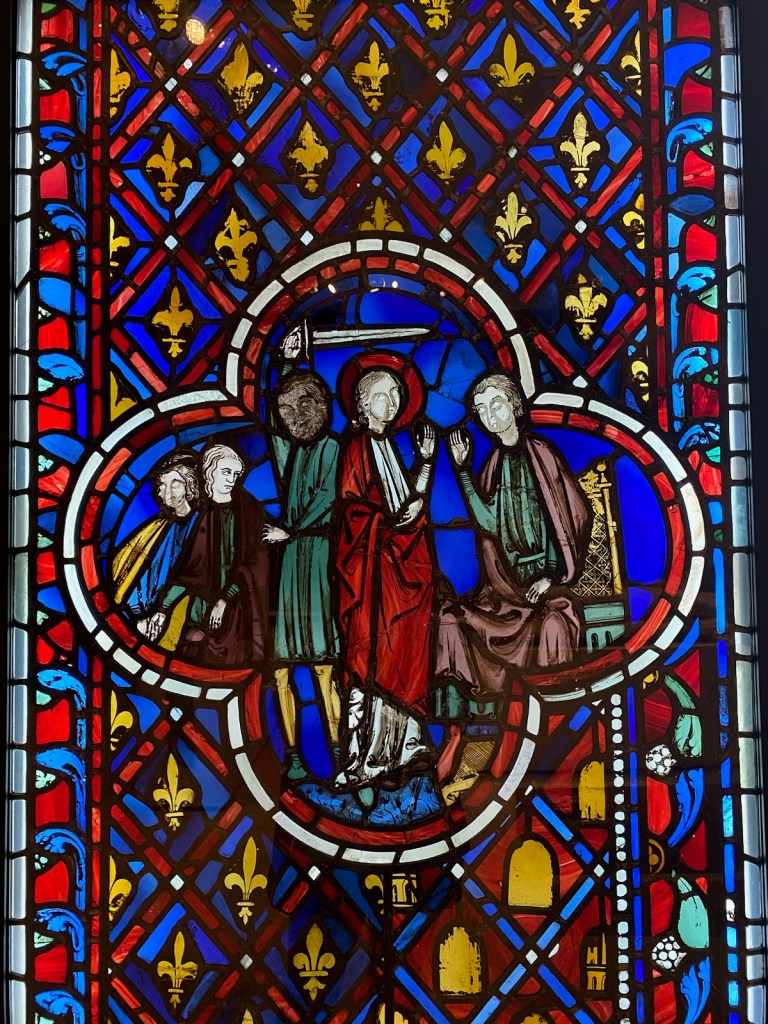
Today we ventured through quite a long tunnel to arrive at the Victoria and Albert Museum. This museum carried thousands of years of culture and tradition from hundreds of countries. I found myself stuck in the medieval sections that focused specifically on Christian art, tapestry, and sculpture. I noticed this stained-glass carving above and was immediately drawn to the faces of the figures within the glass. This stained glass depicts a biblical story, but their faces are faded as this piece was created in the 1500s. Their faces almost look scratched out, but their figures obviously still represent action in how they interact with each other. This piece reminded me of the relationships that are depicted in 2:22, the horror play that we saw on the West End. I thought of Sam’s character, in which he was interacting with his wife and his friends. He could represent the figure holding the dagger, as he chose not to believe his wife or friends and was consistently negative throughout the play, becoming the villain or antagonist character. However, though he interacted with the rest of the cast throughout the play, he was truly never there as he was only his ghost who had been haunting his wife for a week. His body showed action, movement, and conflict, but Sam’s face was fading all along. However, he had no clue of the time that has passed or what had happened to his stained-glass portrait, as the viewer is the only one who sees him disappear. The colorful reds and blues in the glass also reminded me of the bright LED tape surrounding the proscenium in 2:22 that glowed neon red in every transition. Both pieces are powerful and bright with deeper meaning within them. They both depict how people and pieces can wear down over time, ultimately creating a new meaning or impression within that person or that artwork.

Victoria and Albert Museum- Day 25

1. Got a bagel and smoothie from Noxy Bros. 

2. Wore my Harry Styles Merch from his concert the night before.

3.  Took a photo of Paddington for Pride Month.

4. Had the most FABULOUS conversation with a VA staff member about the LGBTQIA+ community.

5. Went to Leather Lane Market with Brittaney and ate the spiciest stir fry EVER. 

6. Got my hair done in London, Treat yo self (I’m currently writing this post while sitting in the salon chair and sipping on wine 💅🏼) 

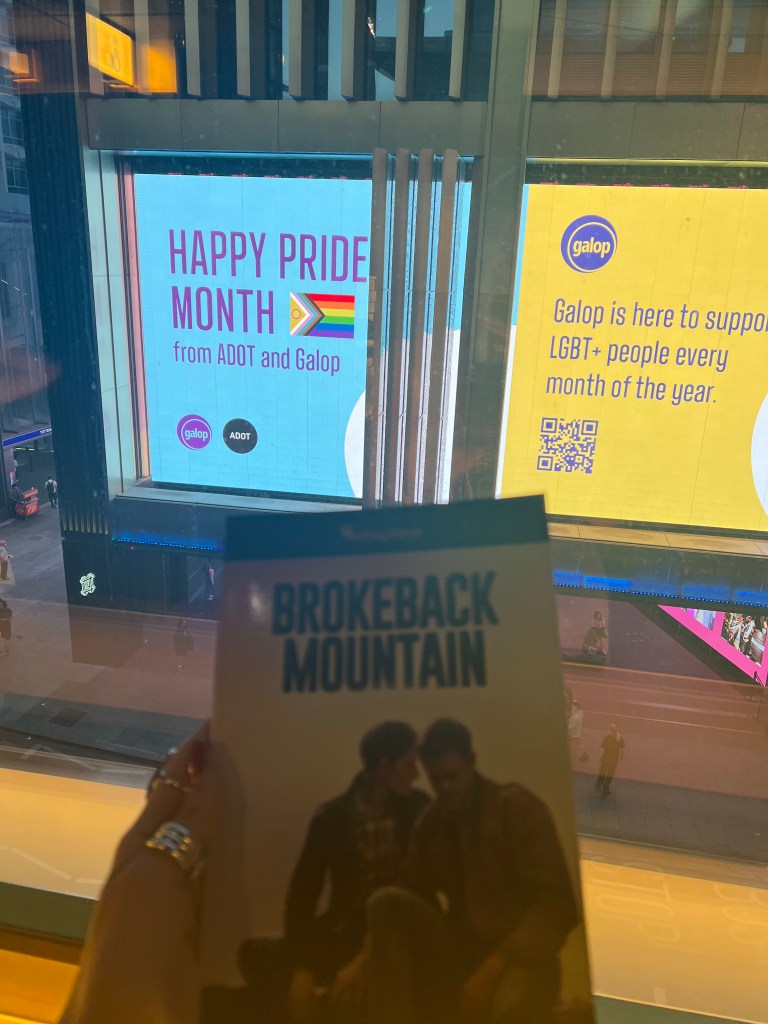
7. Saw Brokeback Mountain with Alyssa and Amelia. And met Mike Faist and Lucas Hedges. 

8. Had to pack up for Stratford Upon Avon (not looking forward to lugging my suitcases around, still not all the way done. Gotta pick up some laundry early in the morning)  

9. Went to Nonna Selena for the last time!! 

10. Ended the night in my feels because this city is fucking amazing and there’s so much more I want to see and do with the people on this trip. 

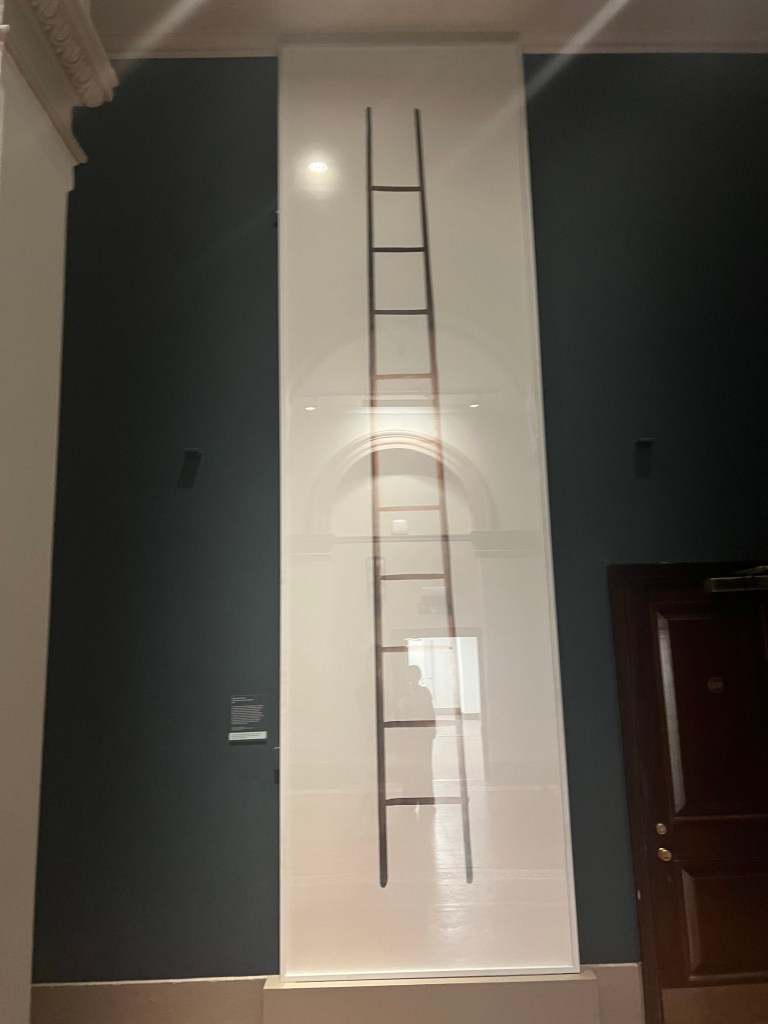
At the Victoria and Albert Museum there was one piece  of art that stuck out to me and reminded me of a show that we have seen. It really hit the nail on the head for this assignment, as it was literally the main prop of the show and the metaphor for the entire show. It’s quite literally on the nose. A painting of a ladder, I sadly cannot find the name of the piece or the artist as my photo is too blurry and it will not come up on the website anywhere. But when I saw this piece of art I instantly associated it with How To Succeed in Business Without Really Trying. Not only did they climb up layers (only a few times might I add, I expected them to use the ladders to their advantage much more) but they also used their ladder for a conference table which I thought was very fun and creative. But the entire show is literally about climbing the ladder on success, so it had double meaning for me. Though this piece didn’t move me in any big way it was an awesome experience getting to run through the museum almost playing a treasure hunt to figure out which piece of art fit with what show. And I have plenty more I could talk about, but the ladder just made waaayyyy too much sense not to write about. But overall my favorite experience came from Alan, a sweet man who stopped Brittaney and I after we took a photo of Paddington wrapped in a Pride Flag, to chat about where we are from and LGBTQIA+ stories,politics, experiences, etc. Getting to have that conversation with him and hearing his life and his mottos were worth way more than any art exhibit, it became a living breathing art exhibit for me. And in the wise words of Alan “Fuck em all, you’re with you at the end of the day. Make sure you’re happy, all the other buggers can go to hell. Because it’s way more fun to be true to yourself”. And I think we can all learn something from Alan and maybe with his wise words we can climb up our own internal ladders to the top! 

6/15: The V and A Museum is a Funny Name and (Out of Nowhere) Opinions about Hunting

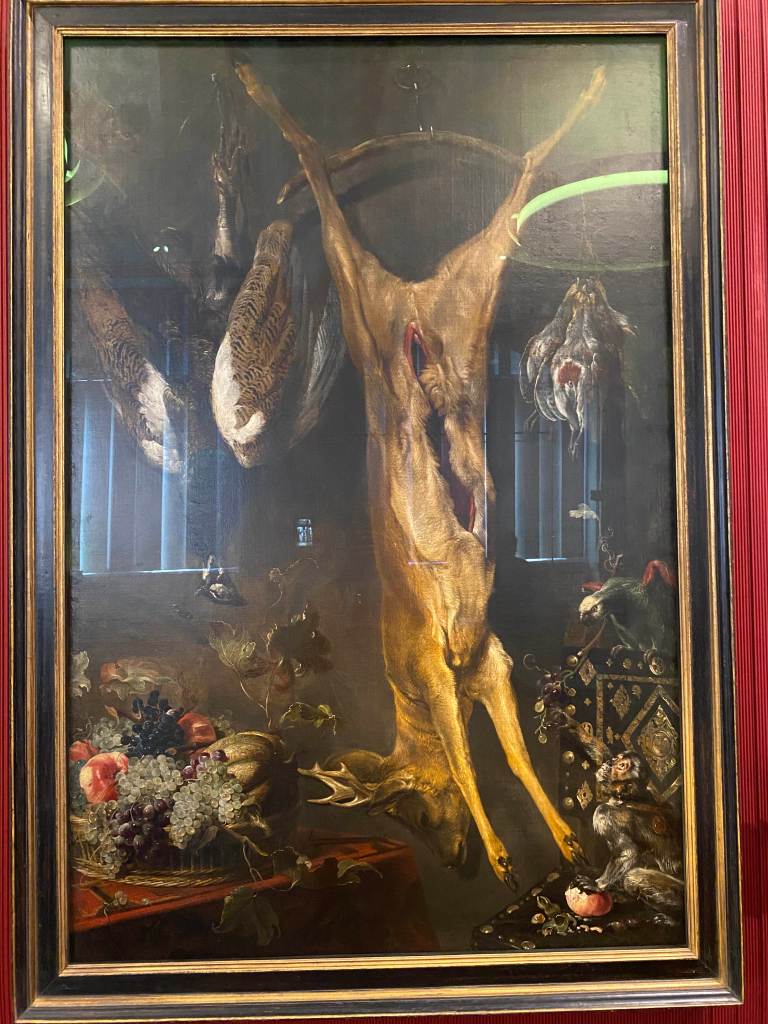
When first strolling through the museum, I was desperately looking for clocks so that I could talk about Back to the Future: The Musical, which is one of the best musicals I have seen since Kinky Boots. Instead, I found a painting called “Still Life with a Dead Stag” and as soon as I saw this, I instantly thought of PunchDrunk: The Burnt City. I was a little disgusted, once I took a step back and realized that it was a painting of a gutted deer carcass hanging among other dead animals, but that quickly faded when I thought of The Burnt City, and specifically Artemis. Artemis was one of the twins in that show, who wore matching outfits with her brother, Apollo, and I followed her around for a large portion of my time in the experience. While I never followed her to Troy, I did follow her back to a quieter room, where the actress was (more or less) able to recoup for a moment before beginning the loop again. In this room, there was a small cabin that one would be able to crawl through, and this cabin was adorned with lots of animal skins and hides. The inside of the cabin was similarly decorated but had animal tusks and horns strewn around the floor and on the walls as well. This is what made me realize that I was following Artemis, the goddess of the hunt. This painting reminded me of that room in particular because when I approached it, I actually thought that it was representing Artemis in some way, however after reading the plaque, it is more representative of “worldly pursuits” and “fleeting pleasures.” That line really spoke to me regarding hunting in general, and how it can be seen as a sport, rather than a necessity and that people treat the killing of these animals like a game and, personally, I feel like that is very against – for lack of a better phrase – how nature should be interpreted. Anyways, there is a funny little monkey in the corner of the painting too that “represented greed” but I just thought he was a funny little guy. The End. (classic ending).