Westminster Abbey was a very fun experience for me!
Unfortunately before we got there I thought it was a castle for some reason but was politely corrected when we got there.
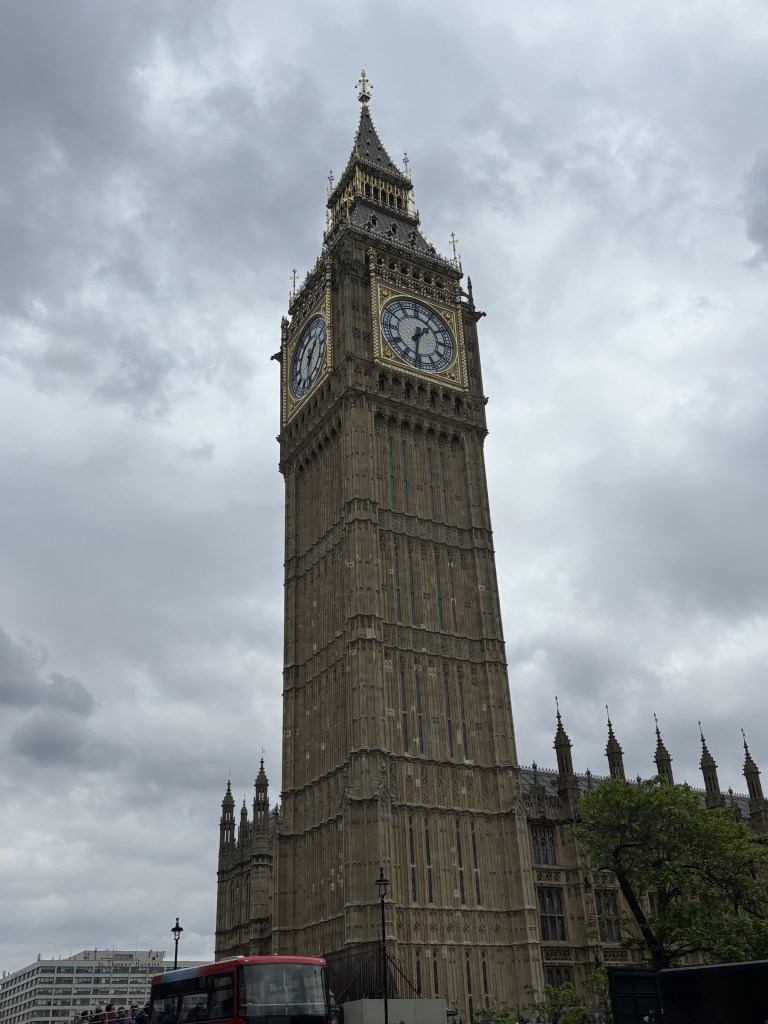
I also had no idea Big Ben was outside of it I thought that was super awesome. It was much bigger in person and the detailing on it really stood out more in person as well.
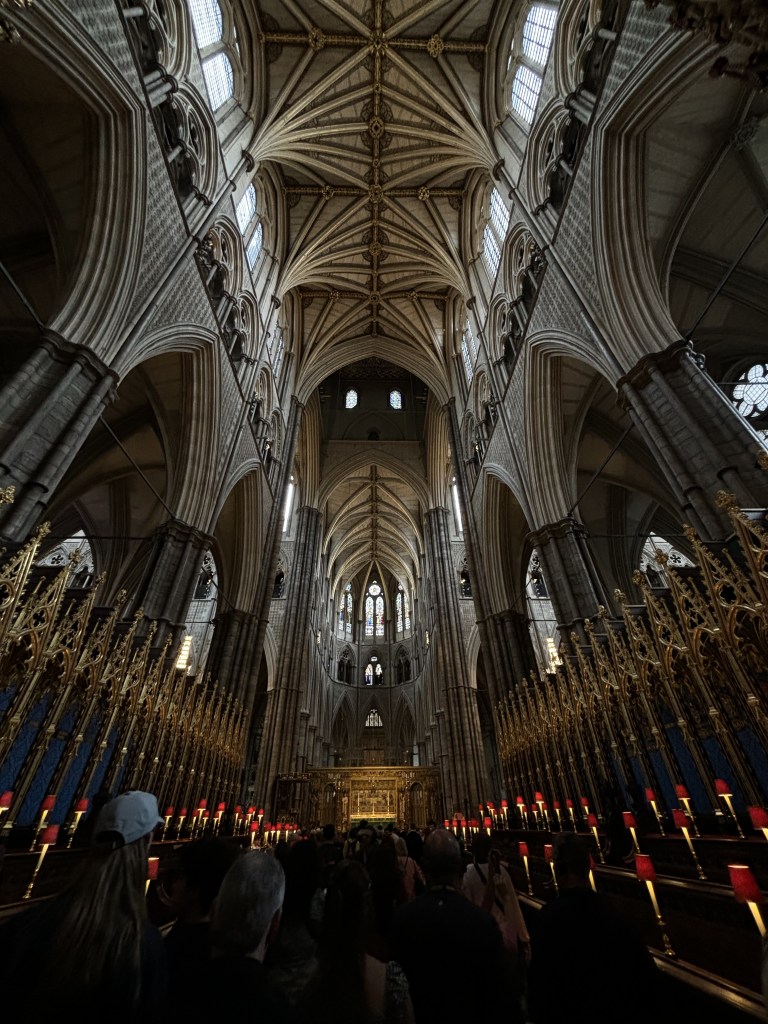
Once we got into Westminster Abbey I was so flooded with feeling! I don’t know why but beautiful architecture does something to me I love! It makes me feel overjoyed with thankfulness for some reason. I think it is just because so many important people have been in these places and I just feel very thankful to be standing in the same places they stood.
In terms of people that are buried there, I think one of the most exciting for me was King Richard 11 but since we have to write about actors/ writers I’ll just leave that there.
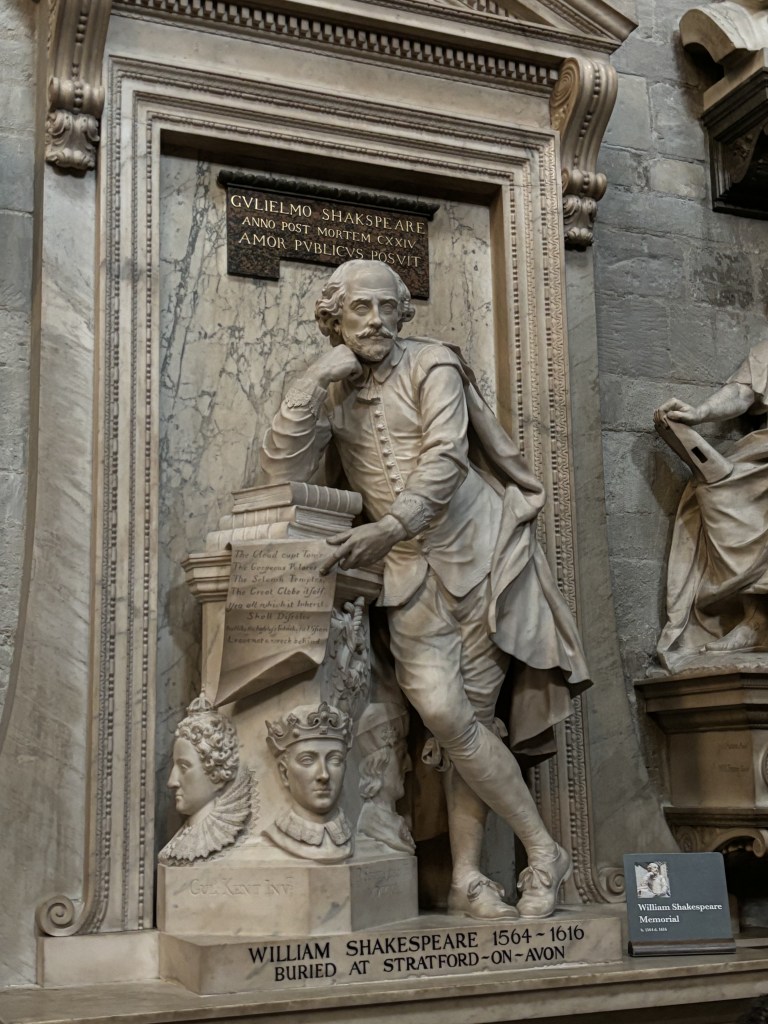
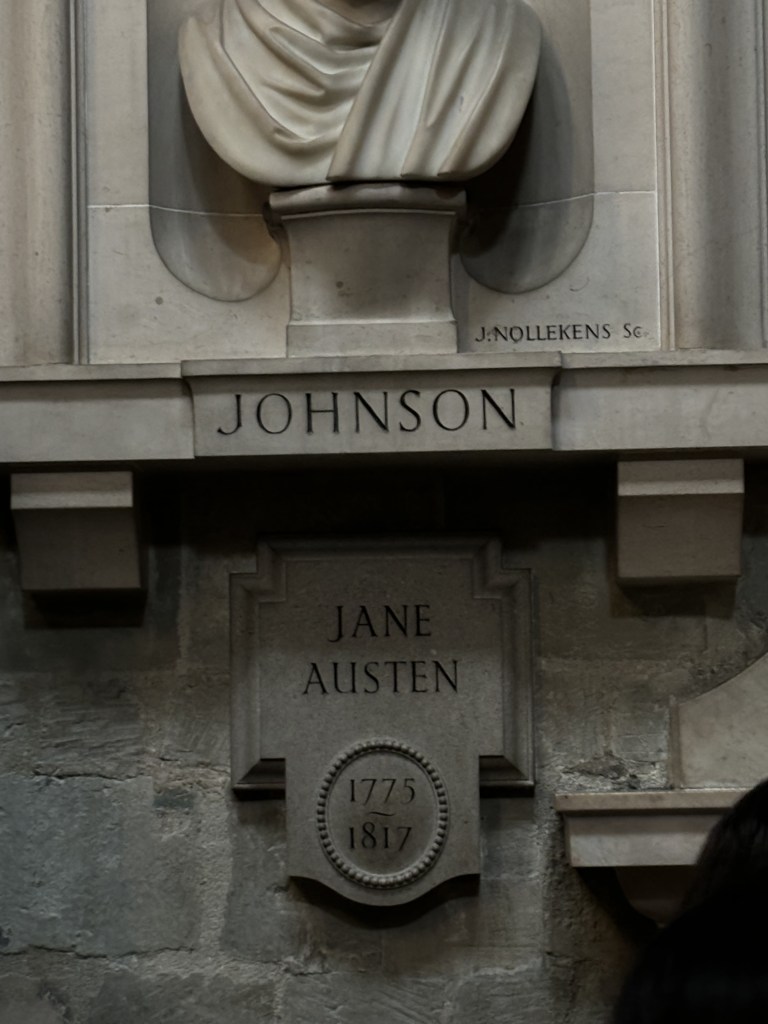
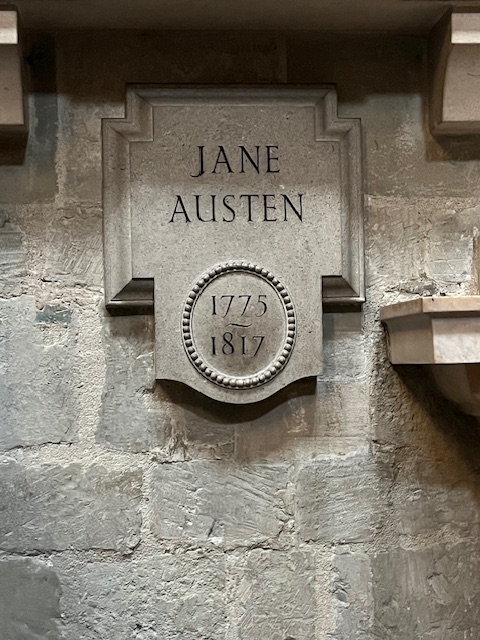
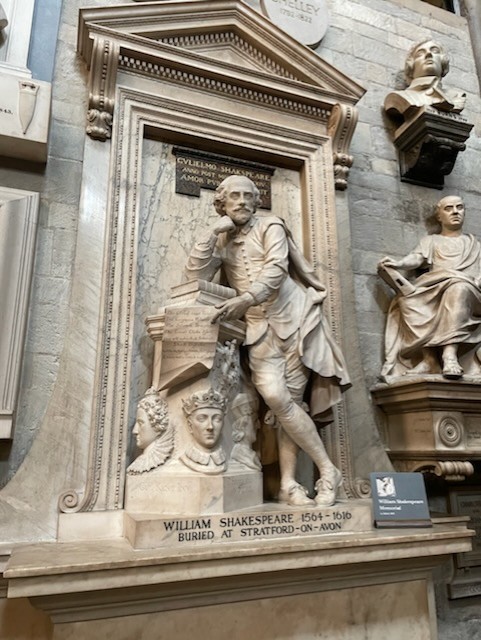
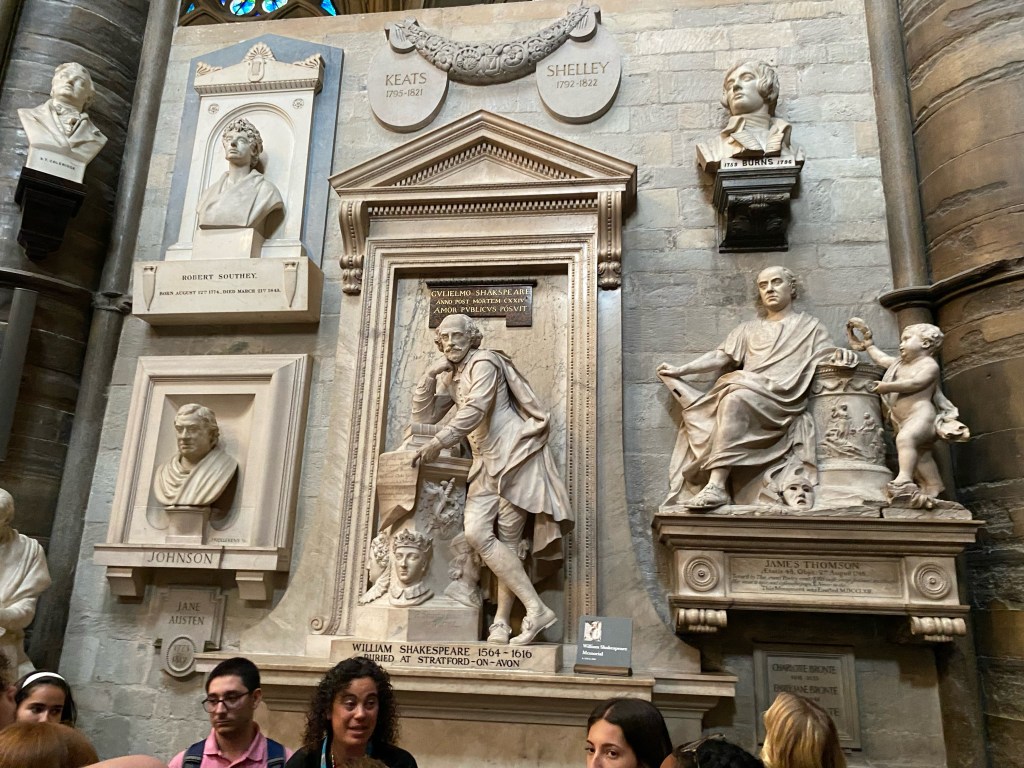
Jane Austen was there just as someone that was to be remembered and I thought that it was lovely. She was right next to Shakespeare who is also not buried there but had a memorial because of how influential his work was. Both of these amazing writers were remembered here because in their times, everyne knew their works, including royalty.
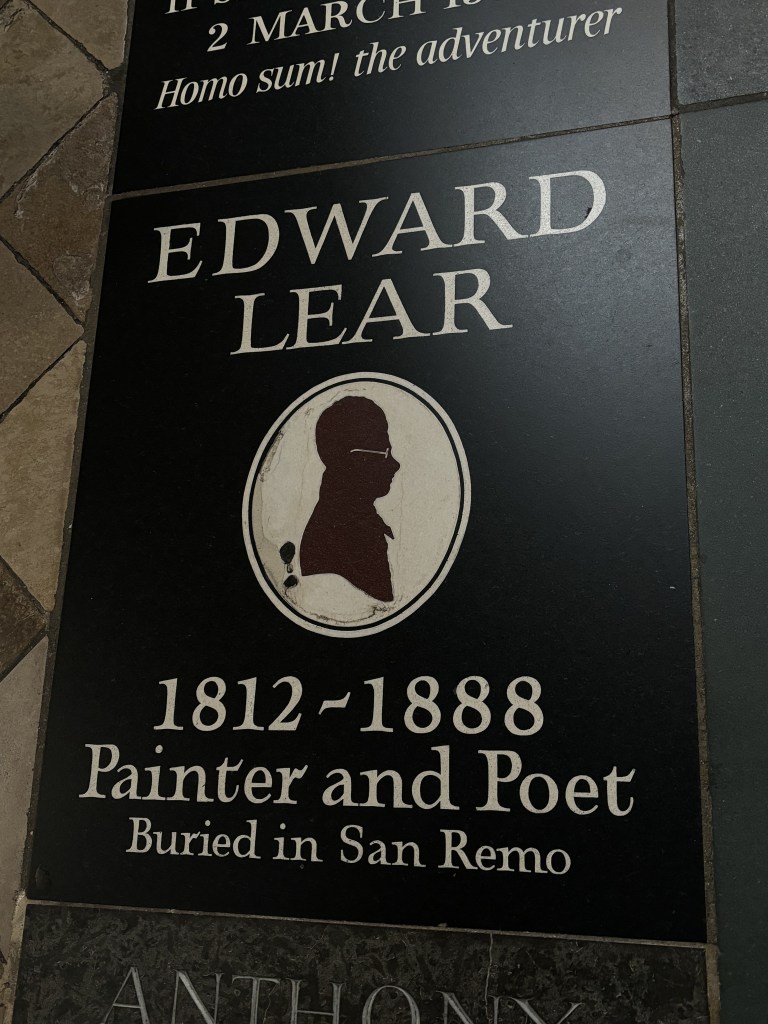
Edward Lear was another person that stood out to me, honestly it was more because of the name Lear not that I knew him but he was a painter and a poet that was very comical and timeless. He told children’s stories in his poems but is very known for his limericks.
Overall this place was so awesome to see and again I really just couldnt be more thankful that we got to experience this lovely place where SO MANY kings and queens are and have been to.
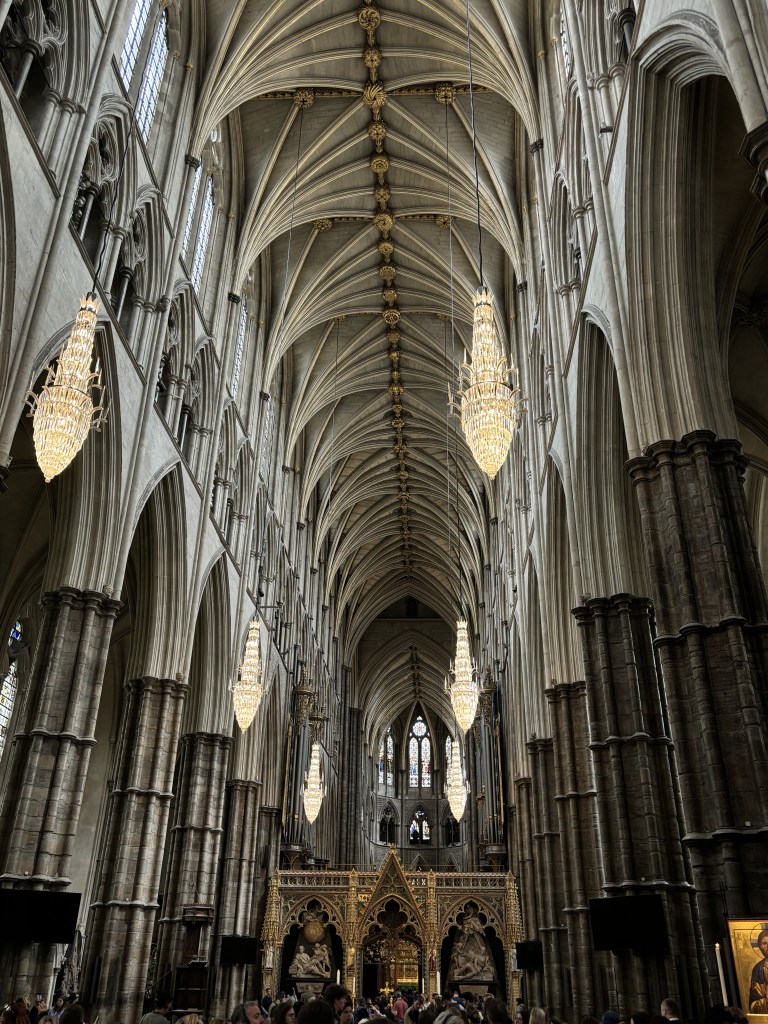
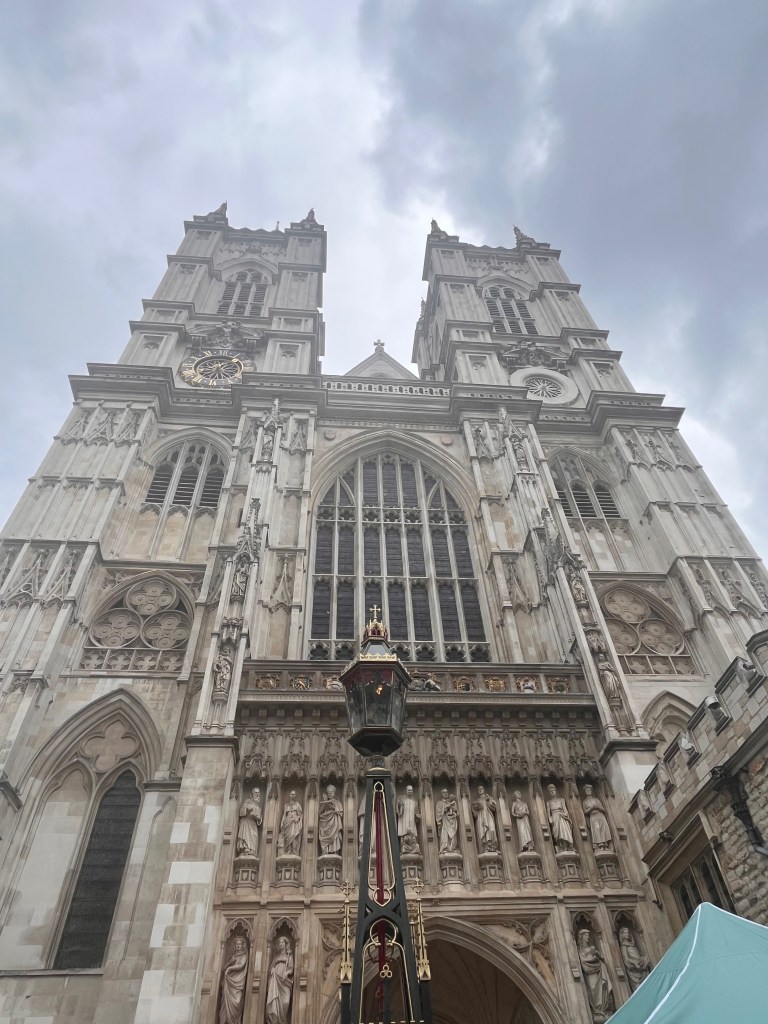
Westminster Abbey. Arguably the most infamous church in the entire world and reasonably so. This church is a spectacle to look at. The old english architecture is nothing like I’ve ever seen in a building. I’d imagine it’s what drugs would look like if it were a building, it’s that crazy to look at. I had similar thoughts when visiting St. Pauls Cathedral. Like how in the hell people build this structure with modern technology? After doing some research, I found out that the ceiling are 85 feet which just makes me question how they could have possible built it in the year 1269. I question if aliens came to earth and placed this structure it’s so beautiful but anyways, lets discuss some cool facts that I found out about.
There are many notable people who were buried in Westminster Abbey. Many who I’ve never heard of, and some that had no intention of being buried there, but were anyways. The most recent burial sight that I saw belonged to the late Stephen Hawking. This was the only difference I remember from Westminster Abbey as I visited in 2016, and he passed away in 2018. He was buried right next to another very famous mathematician who you might’ve heard of, Sir Issac Newton. I initially believed that only the “ancient” legends of Britain were buried in Britain. But clearly not as an icon of our generation was buried there.
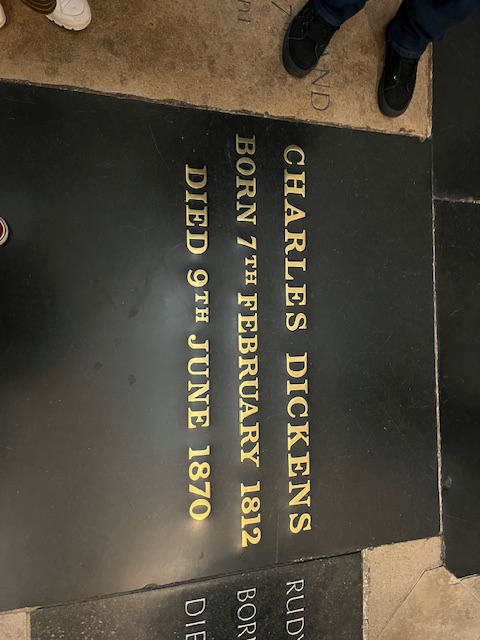
Another big name buried in Westminster Abbey was Charles Dickens. But this story is quite surprising as he actually didn’t want to be buried in Westminster Abbey at all. But if the queen wishes it, you better believe it’s going to happen because sure enough, his body is buried in Westminster Abbey. They didn’t do Shakespeare as dirty though. He promised curses among anyone who moved his grave so the queen didn’t bother with that at all.
I love our tour guide Molly. She is such a kind, gentle, and sweet lady and I wanted to giver her a big hug after she said, “same time next year?” If I ever come back, or know anyone visiting London, she will be who I recommend without hesitation.
We took a time machine back to the 13th century and visited Westminster Abbey today and discovered that it is quite a hotspot for dead people. As a time capsule in British history, Westminster Abbey is holding grounds of Royal Coronations since 1066, as well as a plethora of memorials and tombs of influential people in history.
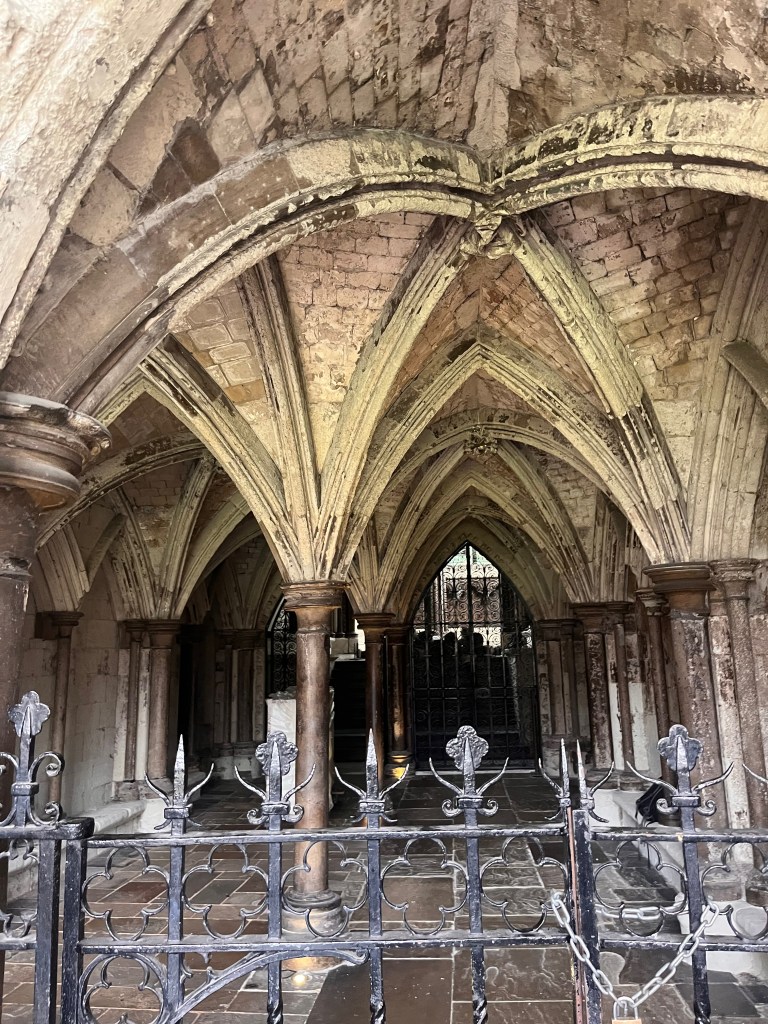
Before walking into the cathedral, we saw the Pyx chamber, one of the oldest parts of the Abbey. Built around 1070, this small chamber is underneath the monk’s room. Pyx was preserved and made a valuable piece of history in the 12th and 13th centuries. The floors still hold remnants of the same medieval tiles from when it was first built. In the center of the room is a crucifix, which creates a focal point that dictates the room’s purpose– to worship. The minimalism of the room was unexpected but respectable and interesting.
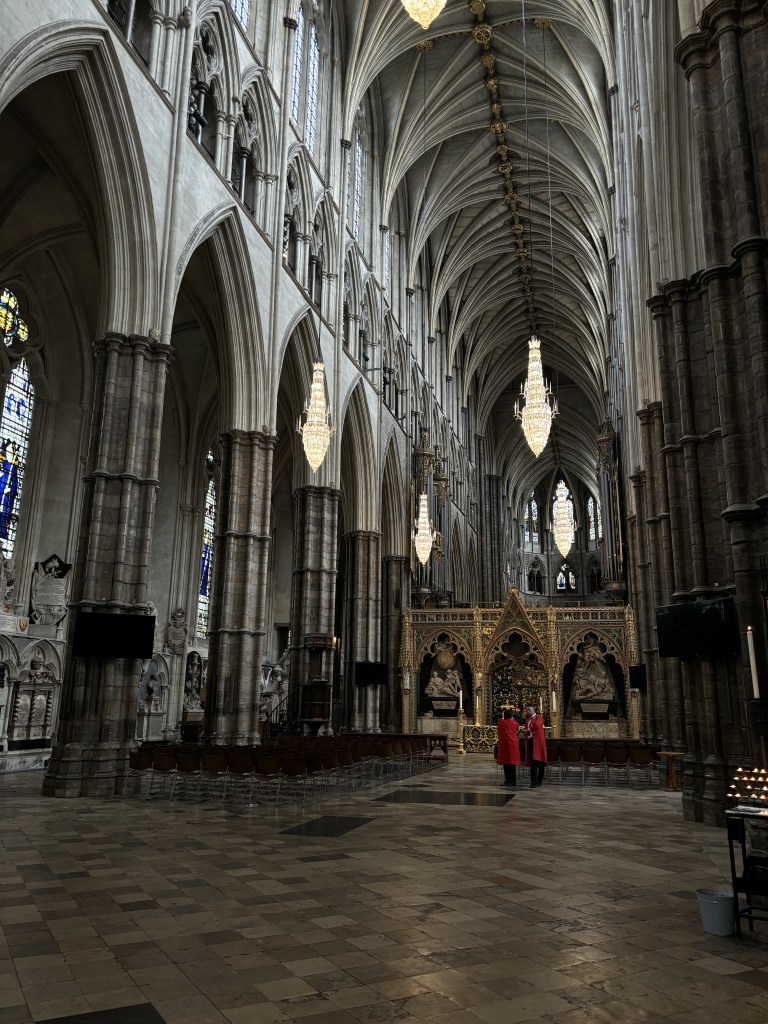
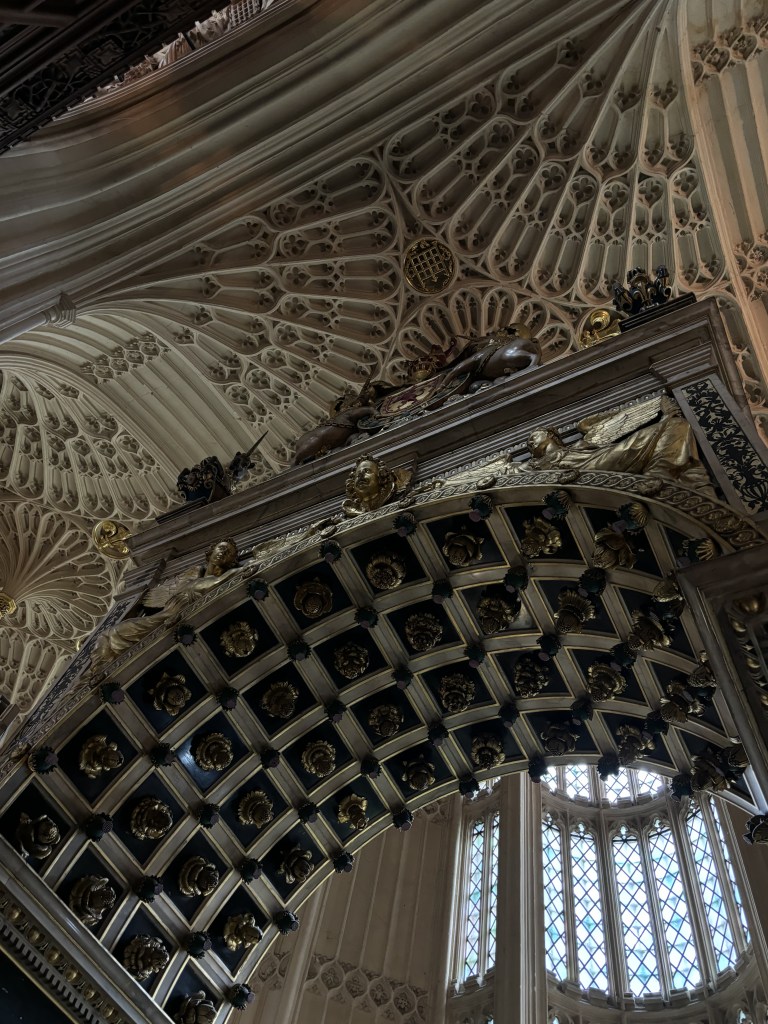
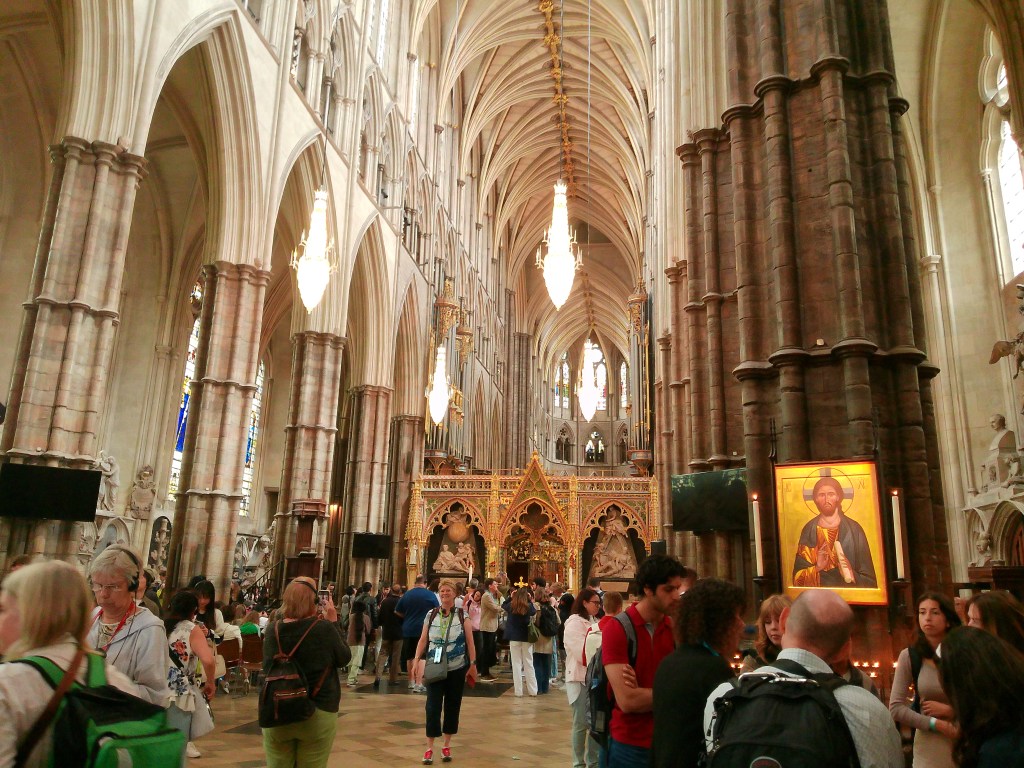
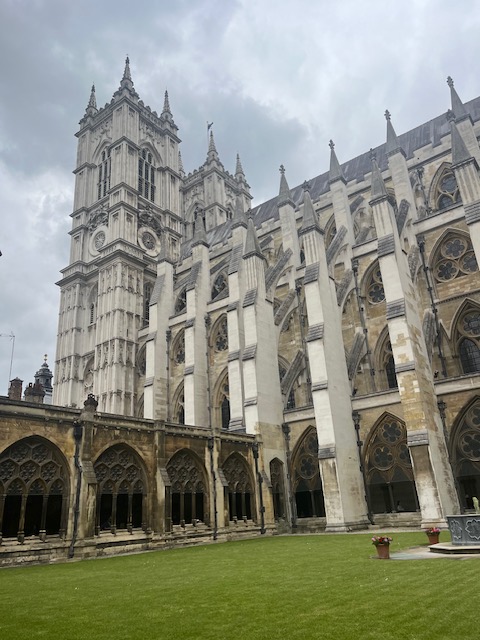
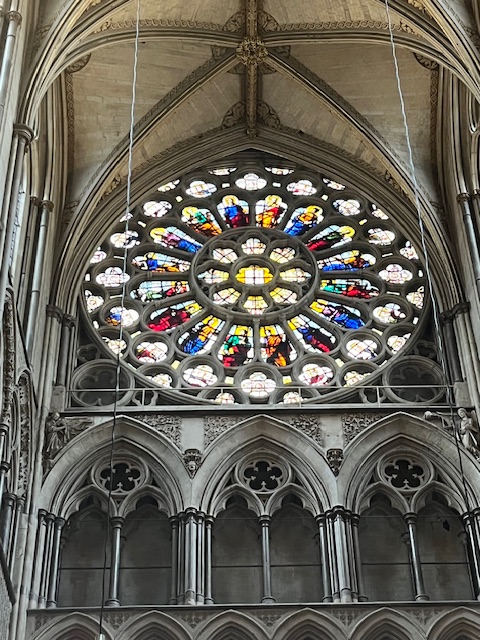
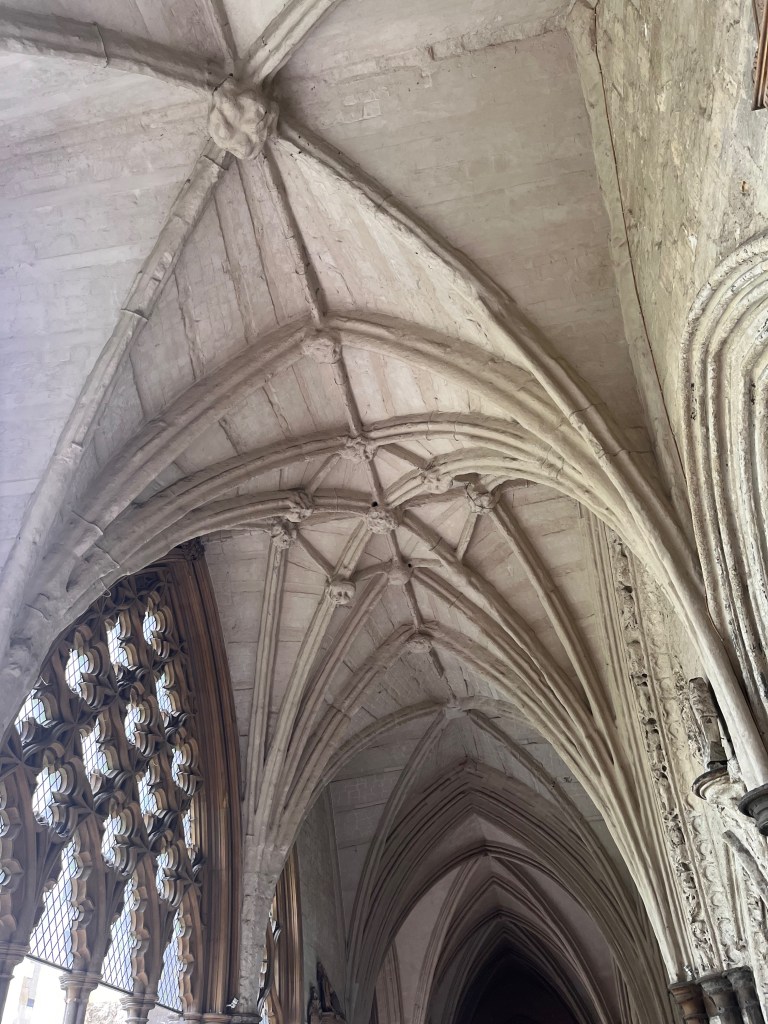
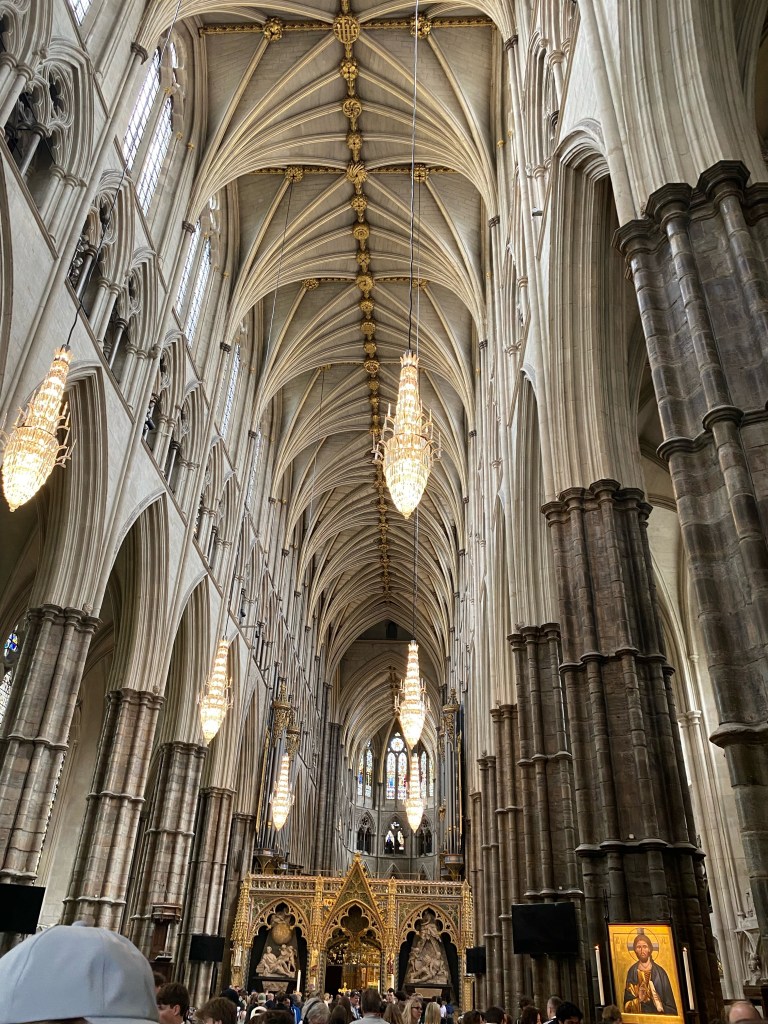
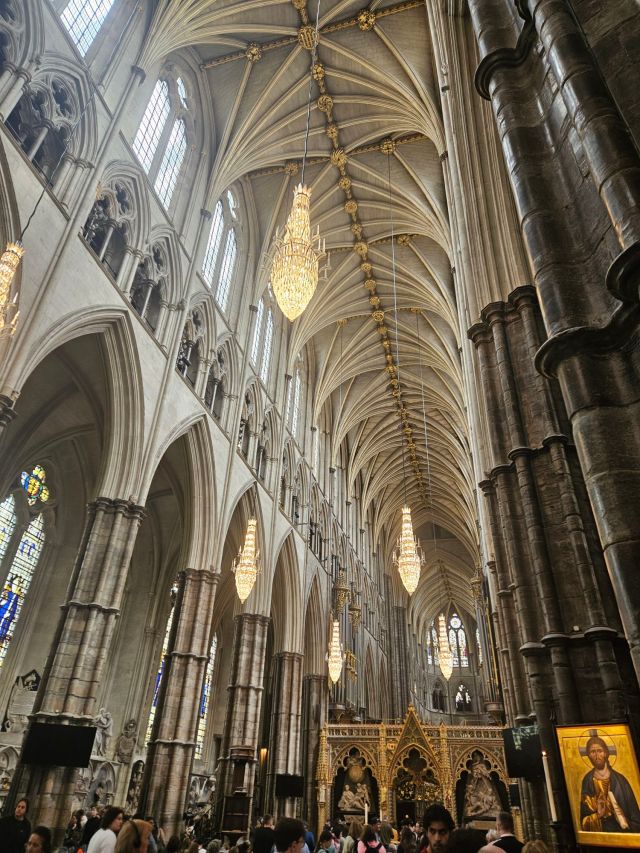
Walking into the Abbey, I got struck by the fabulous vaulting on the ceilings that seemed to almost create a rich pavilion that you feel like you could almost float on. Adorned with intricate details and gold ornaments, the main room of the Abbey embodies Early English architecture and represents the lavishness of wealthy royalty.
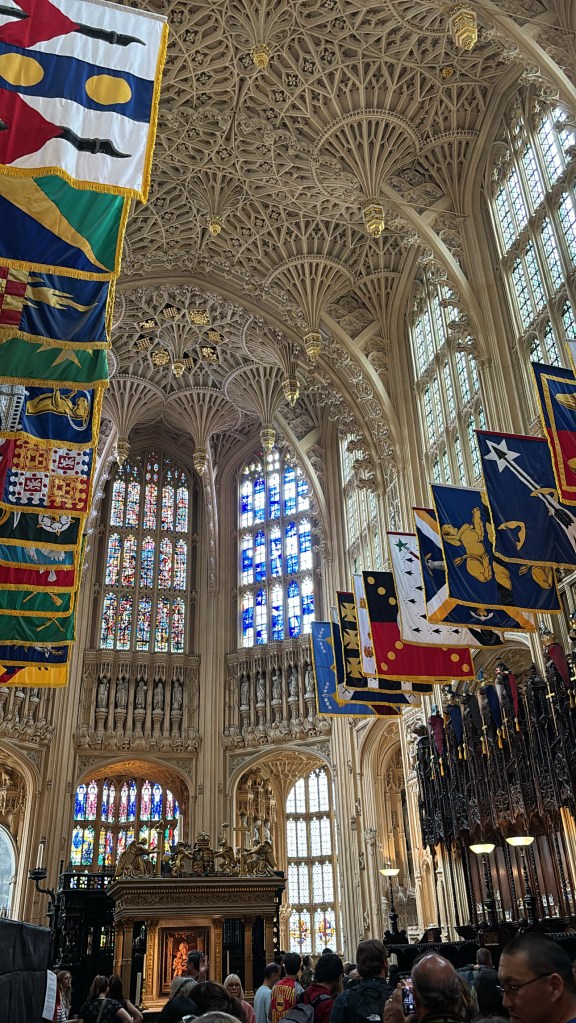
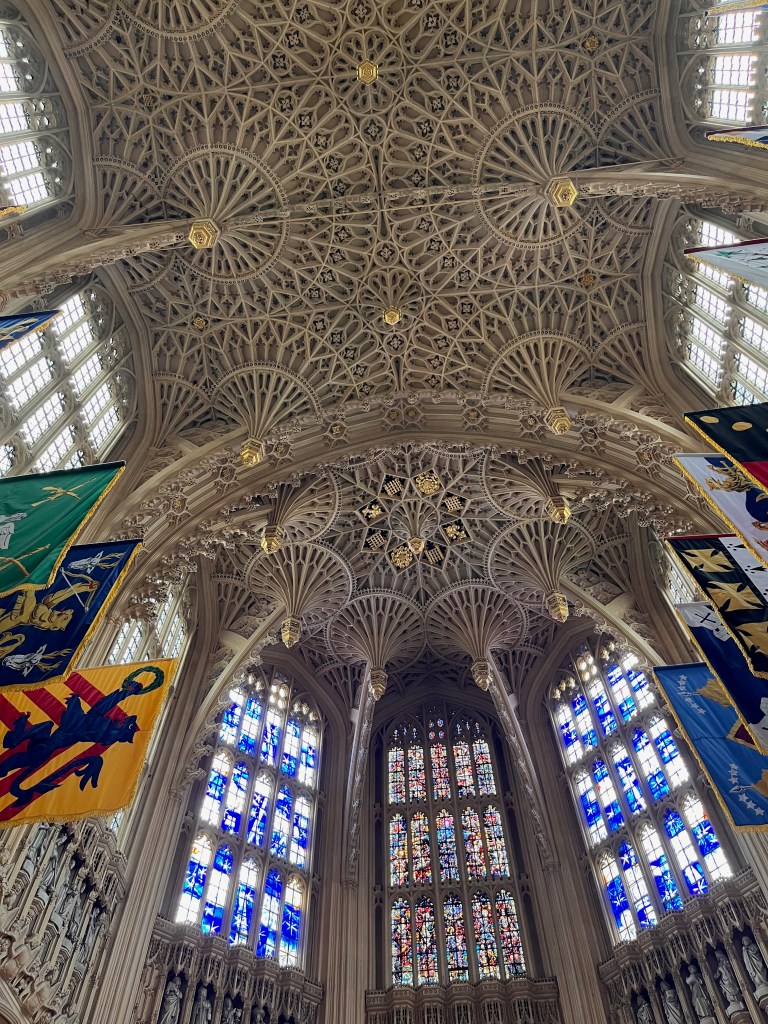
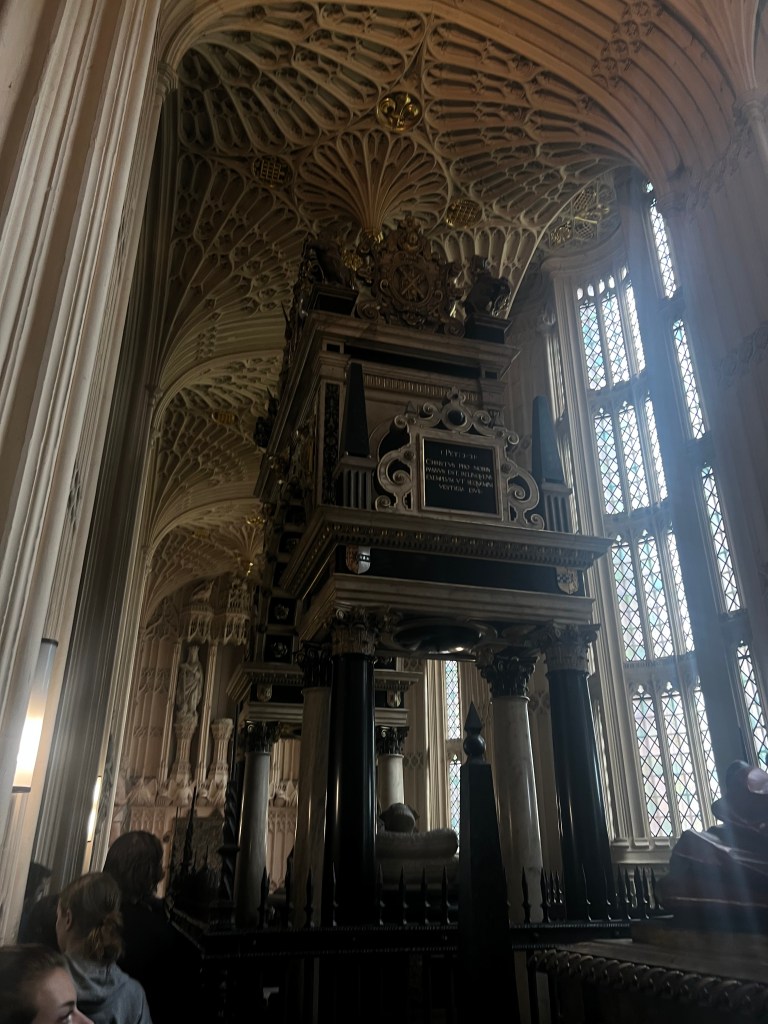
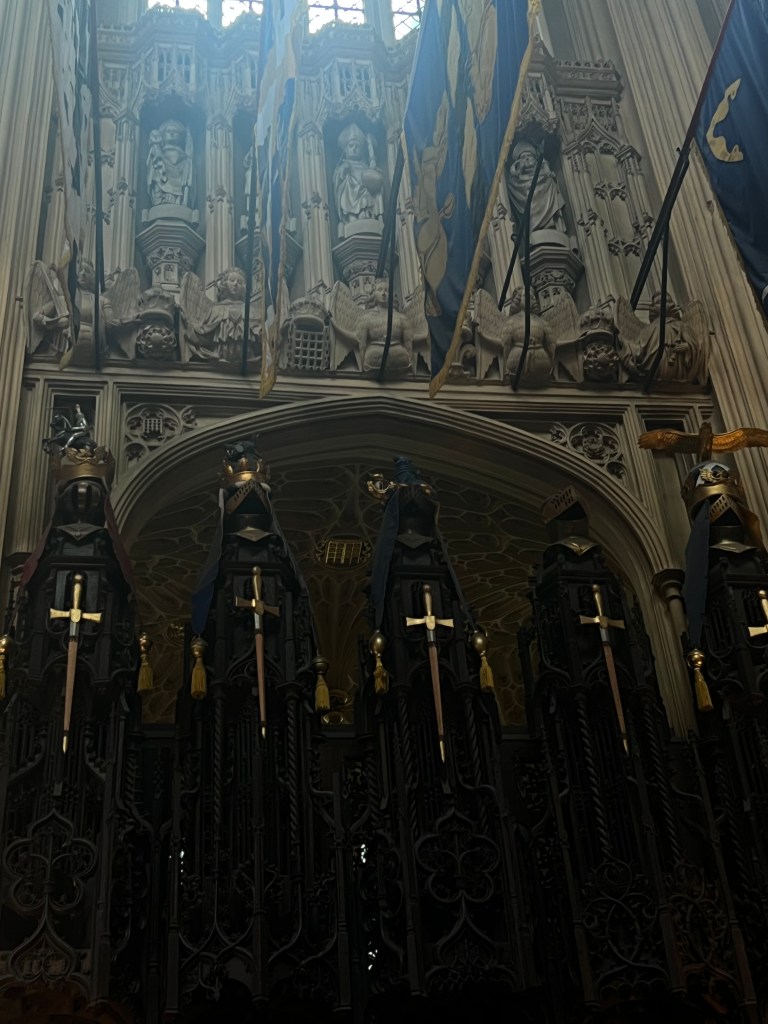
I loved the Lady Chapel, which was added by Henry VII in the early 1500s. Its large, eggshell vaulted roof looks different than the rest of the Abbey and is discreetly constructed. All of the arches fit and wrap around each other in a sophisticated and beautiful way which can be admired for its class and elegance. The stall seats have the flags and emblems of the knights that are in position currently– their emblems, whether that be a dolphin or a dragon, represent something unique about them. When a knight dies, their flag and emblem are taken down and remain vacant until another knight will fill their position.
Apart from the breathtaking architecture, Westminster Abbey holds a heavier purpose than just showing the talent of artists, builders, and architects– it serves to commemorate influential people to the culture and history of Great Britian, and the world alike.
A unique memorial/burial is the grave of the Unknown Warrior. During the First World War, Reverend David Railton discovered a grave in France with the words, “An Unknown British Soldier,” scribbled on it. He contacted Herbert Ryle, the Dean of Westminster, about putting together a memorial for these strong, yet unknown men. British servicemen searched and found an unknown fallen soldier to place in the chapel in 1920. King George V unveiled this coffin and had a service to commemorate the burial, and the grave still resides in Westminster Abbey, surrounded by red flowers. This burial is meant to represent the many men who gave their lives to their country during this war, and for the rest of history, and conveys a strong message that all lives deserve to be recognized, regardless of rank or circumstance.
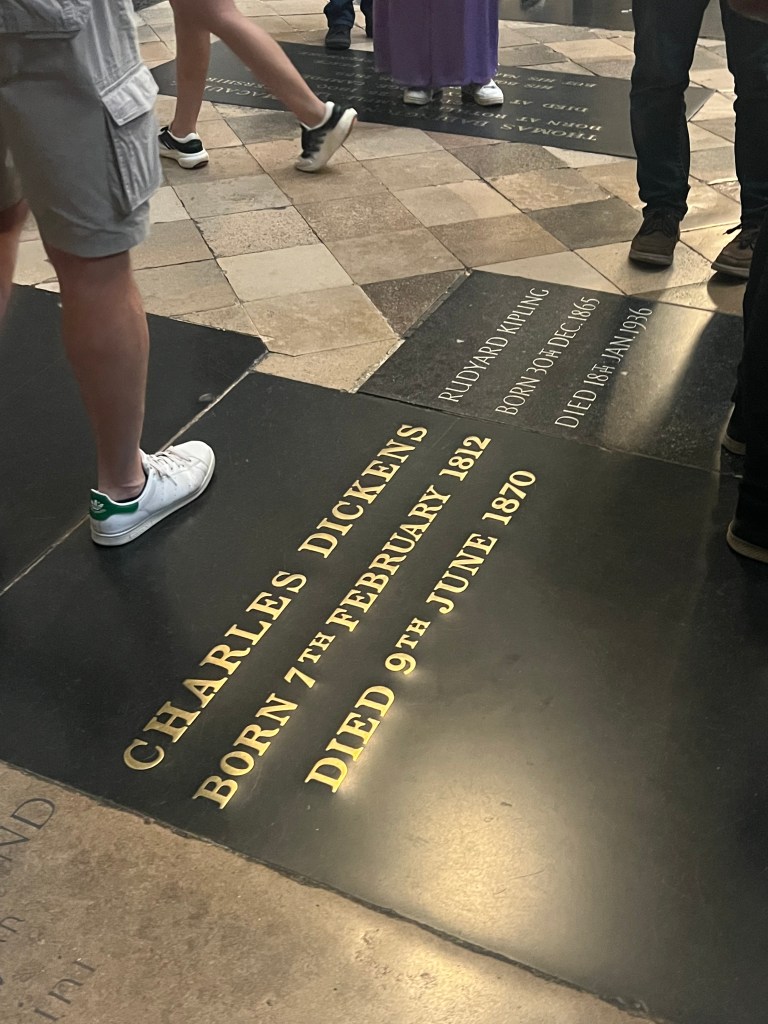
Nestled in the poet’s corner of Westminster Abbey lies the great Charles Dickens. Being one of the most influential writers of the 19th century, Dickens is highly acclaimed and has held precedence in English literature since the 1800s. You may recognize some silly little books he wrote like, “Oliver Twist,” “A Christmas Carol,” and….(wink wink)….”Our Mutual Friend.” Charles Dickens was so honored that Queen Victoria demanded that he be buried in Westminster Abbey, even though he wanted to be buried in Highgate with his family.
Lewis Carroll, (really Charles Dodgson), was a man of many talents who was most known for his literary works during the 1800s. Have you ever heard about this girl named Alice who falls down a hole and meets a crazy bunny and a creepy cat? Yeah, he was that guy. He’s also buried in Westminster Abbey! I walked over him today, as well.
Aside from time traveling to the 13th century at Westminster Abbey, I also traveled back to 1985 watching “Back to the Future.” How did they get the car to do that?
Well that was the coolest fact I learned today. Was that one of the oldest rooms in Westminster Abbey stored some beer the Monks would make when they resided there. Sounds lit. Now to talk about the famous dead…
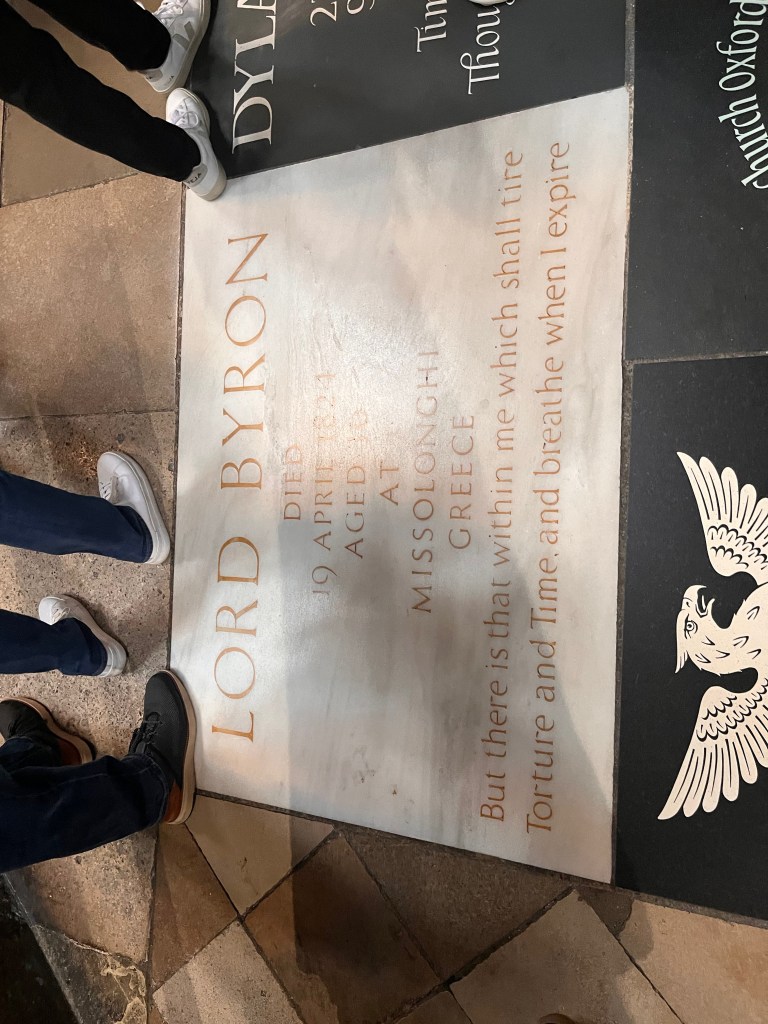
There were so many memorials of people who contributed greatly to the world at Westminster Abbey. Isaac Newton, Stephen Hawking, Charles Darwin, Michael Faraday, Henry Wadsworth Longfellow, Lewis Carroll, Robert Browning, C.S. Lewis, Lord Byron, William Shakespeare, and Sir Henry Irving to name a few. But I was extremely excited to write about Jane Austen, Dylan Thomas, and Charles Dickens today.
Jane Austen
I’ve read the works of Jane Austen including the spin-off called Pride and Prejudice and Zombies. (Which is actually my favorite, sorry Jane.). Jane Austen had an amazing and accomplished life. She deserved a more elaborate memorial like her male counterparts received at Westminster. Hers looked begrudging compared to the others.
Jane Austen was born in 1775 and died in 1817. She was an English writer who wrote about love, realism, society, class, and reputation. Austen was versatile and wrote in comedic, gothic, and romantic styles. She distinctly depicted the life of the middle class of the 19th century. Austen was bold to be a female writer in her time. She did not use a pen name but did publish her novels unanimously, all signed “By a Lady”. Her only sister Cassandra did watercolor illustrations for her novels while her brothers helped supply her funds to publish. Her family was lively and warm. Her family supported each other a lot. Her father was a clergyman and school headmaster. He educated Jane Austen, having her read novels from the abundance of books in their collection.
Austen went her own way in life and lived what she wrote. Even using her own life, family, and lived experiences as inspiration for her work. In 1802, she received a proposal for marriage by the heir of the Hampshire fortune. It is said that she was either so shocked or nervous that she accepted, but after being given the time to think it over she refused him the next morning and left with her sister. It was very scandalous then, but she didn’t look back.
Dylan Thomas
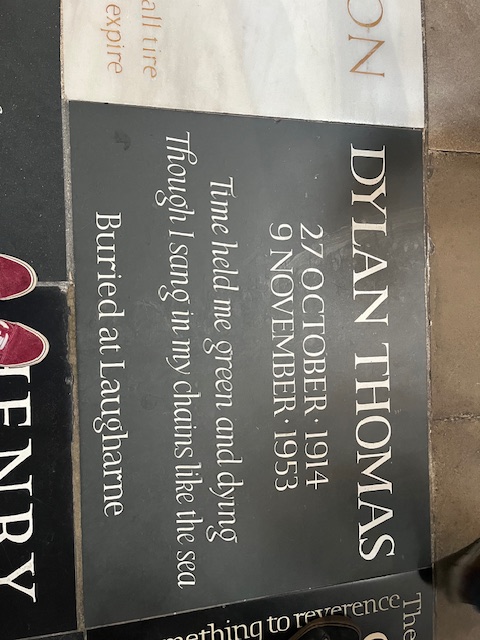
I’m not going to lie, I was extremely excited to see Dylan Thomas’s memorial at Westminster. I have heard of and read a few of his poems, which are extremely interesting to read with their distinct imagery, tones, and distinct tension that hold real originality. My favorite works of Dylan Thomas are Fern Hill, Love in the Asylum, and Do Not Go Gentle Into That Good Night. However, his mention in Taylor Swift’s Tortured Poets Department album made me curious to research his life.
Dylan Thomas was a Welsh poet, born in 1914 and died in 1953. He was a tortured poet with a few psychological breakdowns in his life that he refused to seek help for. His outlets in his life consisted of his work and alcoholism. Dylan Thomas’s poems had subjects of life, death, decay, nature, sex, desire, love, and grief. Dylan Thomas struggled financially most of his life. Making famous friends while in Oxford, he was able to stay afloat but stressed. His wife financed a cottage for them to live in while he commuted to London. The commute made him weary and upset. Dylan Thomas wished to immigrate to America several times as he loved it very much. In New York at the renowned Chelsea Hotel, he finished his play Under Milk Wood several hours before it was to be performed onstage. While touring in America, it is said that many took pleasure in getting Mr. Thomas seriously drunk. It seemed to be a coping mechanism for his persistent despair and jeopardized marriage. He was having difficulty breathing when he slipped into a short coma and died of what we presume to be pneumonia and alcohol poisoning. He died while living in apartment 205 of the Chelsea Hotel, far from his Welsh home.
Charles Dickens
Dickens can be considered the greatest novelist of the Victorian Era. A bold claim, I know, but he is renowned throughout literature with little else to challenge. Dickens lived from 1812 to 1870. I am excited to read my vintage copy of Our Mutual Friend I picked up in Greenwich Market. Several of his other works are referenced constantly, such as A Christmas Carol, Bleak House, and Oliver Twist. I also personally loved Great Expectations and A Tale of Two Cities. His works continued to be retold and reworked as we saw in the production of London Tide. There is a show on Disney + called The Artful Dodger, which is a must-watch and tells the sad aftermath of Oliver Twist for the character Dodger.
Dickens masterfully found compelling ways to criticize societal practices and their harmful effects. His stories tended to tie themselves into pretty bows in the end. Villains met grueling ends and protagonists found their justice after strife. Fun fact, Charles Dickson is the one who coined the term “cliffhanger”. Dickens used inspiration from the tribulations of his own life. At a very young age, he was forced to leave school to work in a factory while his father was locked in a debtor’s prison. He eventually was able to make his way back to school where he belonged. He wrote his way out to a better life. Charles Dickens fought for philanthropy, social reform, and education. He was persistent and active in writing non-fiction articles and papers as well as his thematic works of fiction.
Hello, everyone!! I’m back with lots to talk about from today’s amazing trip to Westminster Abbey. It was full of rich history and beautiful architecture! The day began with a morning class and a small group side quest to find film for Kaylee’s camera and get McDonald’s. Then it was time to set off for one of the most fascinating tours of the trip thus far. I personally loved Westminster Abbey. The architecture was stunning and continually took my breath away, and you cannot help but feel the weight of the history of the building when you stand in it and look up at the towering ceilings and gorgeous cloisters. We have been to a lot of incredible, historic places since arriving in England, but no other building (except perhaps Shakespeare’s Globe) has made me feel so close to and impacted by the history than Westminster.
When you see the old, eroded walls and the memorials that are hundreds of years old, it moves you in strange ways. The Tomb of the Unknown Warrior nearly brought a tear to my eye, and we were even lucky enough to catch the hourly prayer held in the Abbey. I was unaware that it would happen, and it gave quite a few of a us a fight when we heard a booming voice and looked up to see a preacher right above us, but I found it interesting to see how they are keeping the religious practices of the place alive through hourly moments of silence and/or prayer.
While I could go on forever about the architecture, history of the building, and general splendor of the place, I am going to switch gears and talk about some of the incredible people who are buried and/or memorialized in Westminster Abbey. Many famous poets, scientists, actors, musicians, and more are memorialized in the Abbey, and their lives were fascinating to read about. While there was not much information about certain individuals on the plagues in the Abbey, I recognized many of the names and looked them up afterwards to find some very interesting biographies.
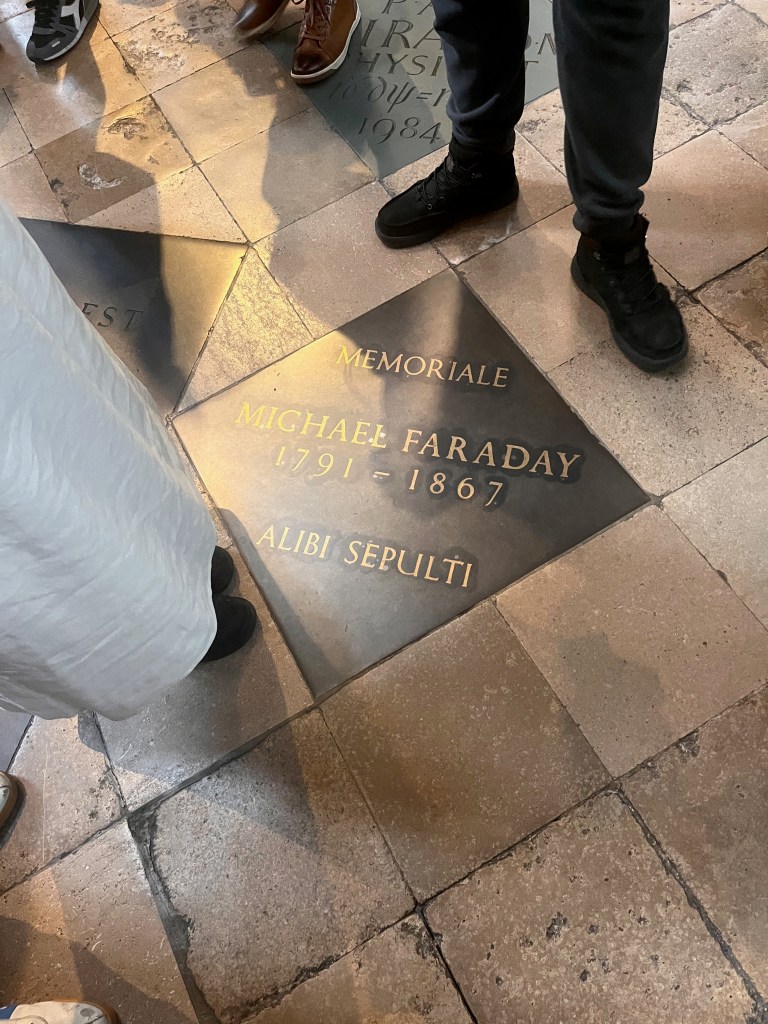
I would like to start by talking about some of the scientists buried in the Abbey because I grew up as a huge science nerd. I have always been fascinated by science and the people who move it forward, so I spent a lot of time finding the names in scientists’ corner (though it was difficult due to the crowds). Some recognizable names memorialized there include Isaac Newton, Steven Hawking, and Charles Darwin. However, I would like to focus on two of the lesser known individuals who laid the groundwork for scientists like Hawking. Michael Faraday and James Clerk Maxwell are among the scientists memorialized at Westminster, and they contributed significantly to the development of many key theories in modern physics. Interestingly enough, both of their contributions are strongly related to work with electricity and magnets.
Michael Faraday was a physicist and chemist who came from very humble beginnings and worked his way up to become a renowned scientist whose theories are still relevant today. His father was a blacksmith, and there were often times as a child when Faraday struggled to be fed. Despite this, he managed to receive a basic education from Sunday school classes, and he eventually went on to work as a book dealer and bookbinder. It was there that he read some of the books people brought in, and after reading a particularly interesting article on electricity, a new interest was born. Faraday later got the chance to attend chemical lectures given by Sir Humphrey Davy, and afterwards Faraday sent Davy his notes and asked to be his assistant. Unfortunately, his request was denied, but Davy remembered the young man who wrote him, and when one of his assistants was dismissed, Faraday landed a job working next to one of the most prominent scientists of the day. Next to Davy, Faraday learned everything he could and eventually mastered chemistry and began to work on his own theories. Some of Faraday’s many incredible accomplishments include producing the first electrical current from a magnetic field and discovering benzene. He also contributed significantly to the fields of electricity and magnetism, and his work would lay the foundations for the next individual I will be discussing, James Maxwell. At the end of his life, Faraday was offered a knighhood and use of a house at Hampton Court by Queen Victoria. While he accepted the house, he denied the offer for knighthood, as he wanted to remain regular old Mr. Faraday till he died.
Similar to Michael Faraday, our next scientist, James Clerk Maxwell, also worked a lot with electricity and magnets. Born in Scotland, Maxwell is the scientist who developed the theory of electromagnetic radiation. He grew up in a middle class home, and his mother died when he was young. Even more tragically, Maxwell would die of abdominal cancer (the same thing that killed his mother) at the exact age she was when she died. Despite this tragedy, Maxwell still accomplished many great things. He was a professor at King’s College, London for years, and he invented the color photograph. In terms of his connection to Faraday, Maxwell stated in the preface to one of his papers that his main goal was to take Faraday’s ideas and convert them to a mathematical form. I think it is incredible to see how all of the scientists in that corner of Westminster are connected because they all built on each other’s theories. Science does not advance if people are not willing to make bold choices, explore seemingly impossible theories, and try new approaches. The scientists buried in Westminster represent some of the best minds in history, but none of them could have accomplished what they did without the work of the others. The connections between Faraday and Maxwell are just a few of the many that can be found there, and I loved exploring them all.
FaradayMaxwellHawking
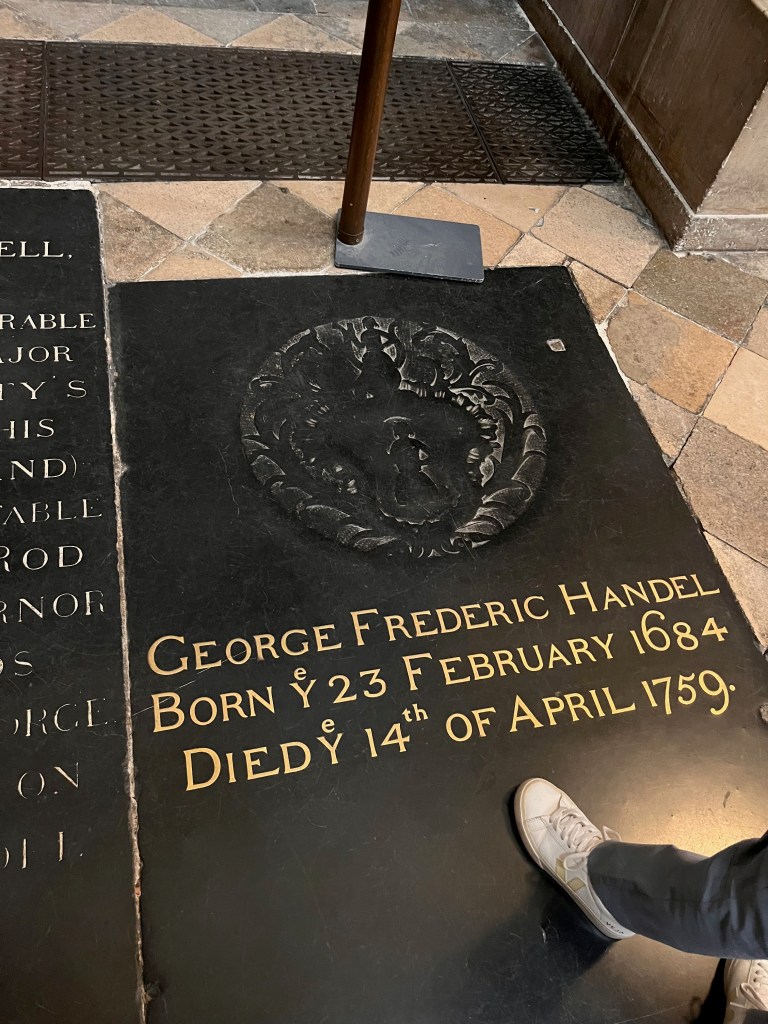
Before I wrap things up, I would also like to talk about one of the incredible people buried in Poet’s Corner, George Frederic Handel. In poet’s corner, you will find names like Shakespeare, Chaucer, Jane Austen, Lord Byron, and more. All of these people have made incredible contributions to the arts, and I was in awe at the number of people memorialized on the walls there. It really gives some perspective as to the impact English writers have had on artistic and cultural history. I chose the talk about Handel, specifically, because I am a lover of music, and his compositions are unparalleled. I also recently had the opportunity to learn all of Handel’s Messiah in choir, and I loved it so much!! That piece is beautiful, challenging, and great fun for any musician to work on. Getting to see where the composer was buried after all the hours spent with his music was amazing, and I wouldn’t trade the experience for anything. Handel composed primarily during the baroque period, and Messiah is likely his most famous work. It is a stunning example of an oratorio, something Handel made quite popular during his day. Handel grew up the son of a barber-surgeon, and his father died when he was just 11 years old. Something I found interesting in my reading is that Handel actually went to law school before finding great success as a composer. He was also different from other composers of the day because of his ability to capitalize off of what was popular at the time. He knew how to create work that would be appealing to audiences, and after finding great success in London, Handel eventually became a British citizen. Some other pieces he wrote actually included the Coronation Anthems for George II and the Funeral Anthem for Queen Caroline.
HandelChaucerByron
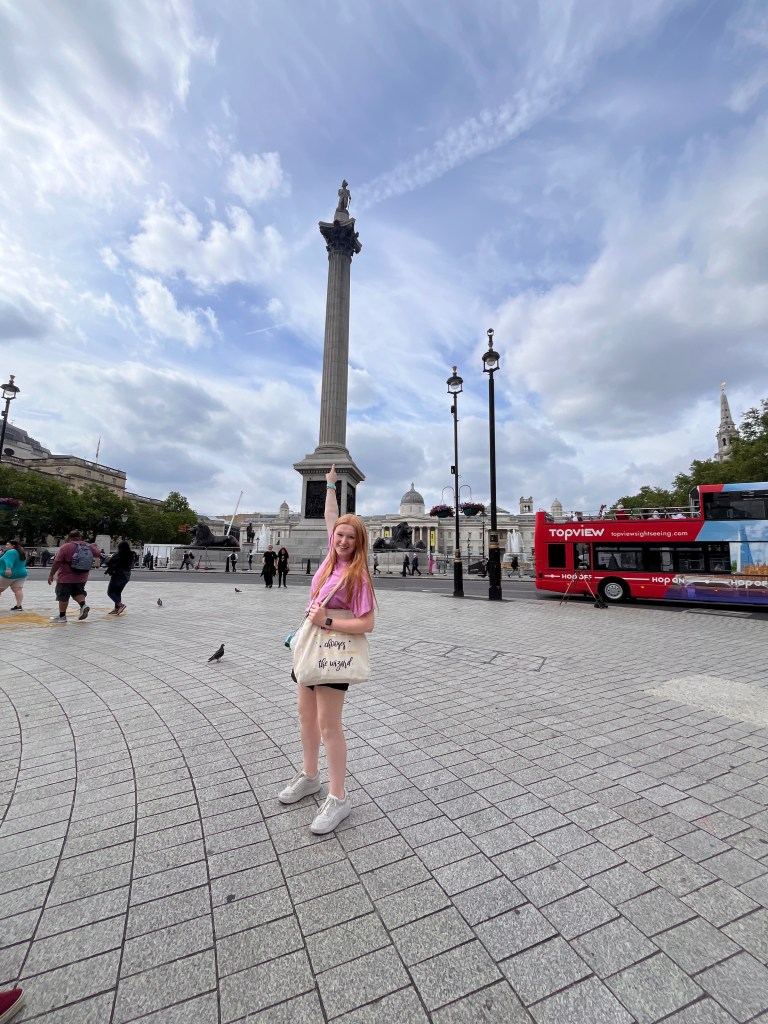
Now that I have rambled far past what anyone probably wanted, I will wrap things up by saying that Westminster Abbey was an incredible experience. It is a beautiful place, filled with rich history, and I loved my few hours there. I also enjoyed the quick walk back to Leister Square after touring Westminster. We got to see Parliament House and some other neat things, and I also finally got a picture at Trafalgar Square!! (thank you, Kaylee!!)
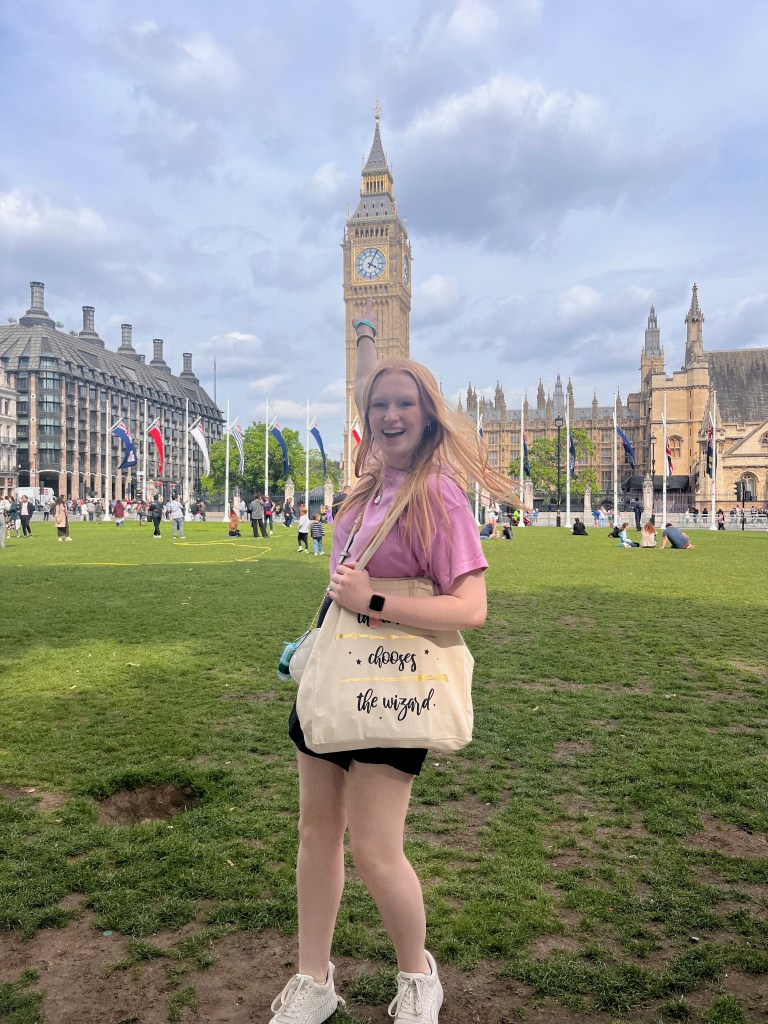
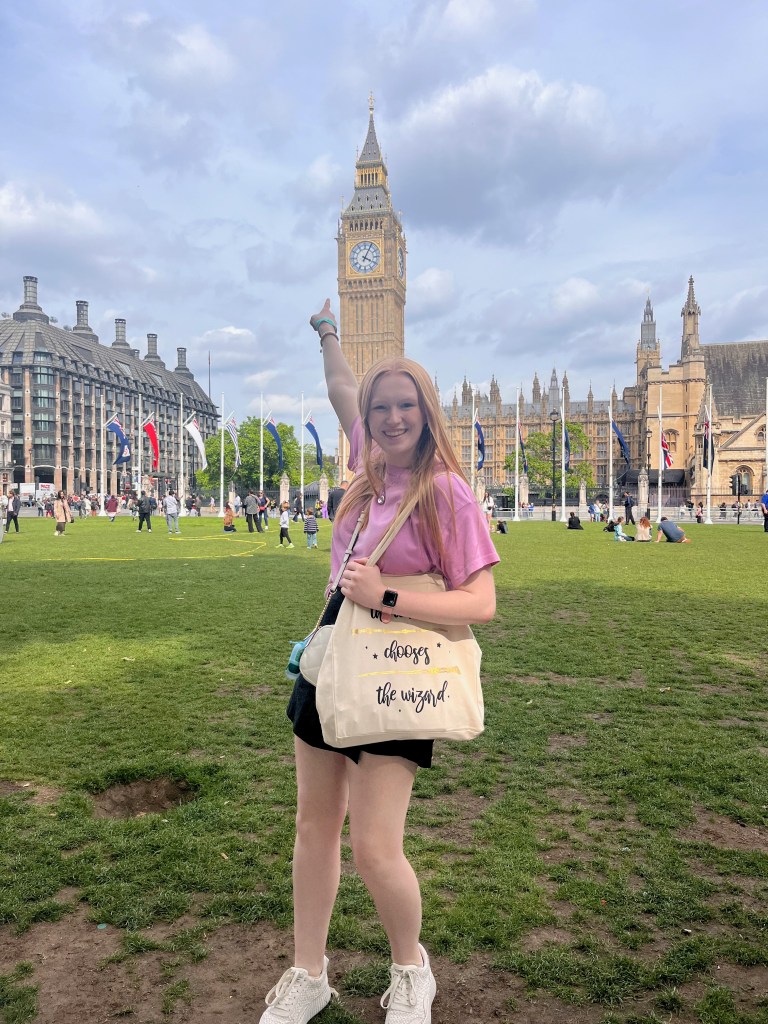
Oh! And we finally saw Big Ben!!
Big BenBig BenTrafalgar SquareTrafalgar Square + The WindTrafalgar Square
I enjoyed my visit to Westminster Abbey. I did not realize how many famous people were memorialized or buried there, such as Stephen Hawking, Charles Darwin, and William Shakespeare.
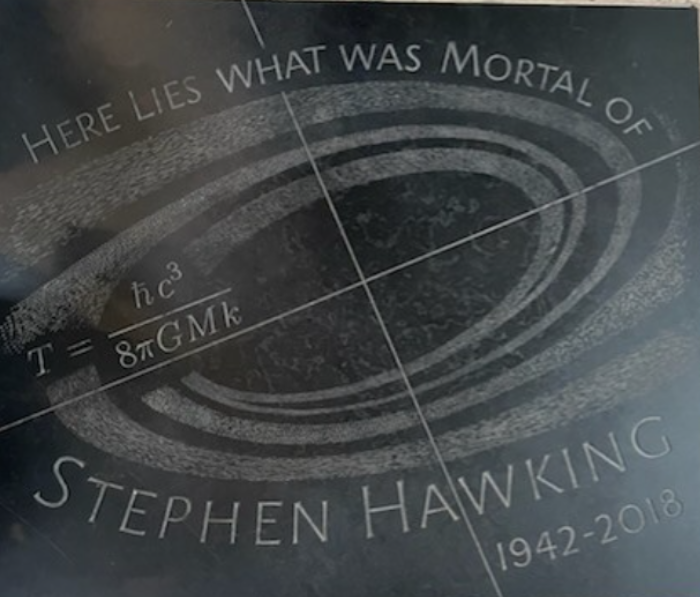
Stephen Hawking was a famous English theoretical physicist and author. Despite being confined to a wheelchair after the age of 21, he made many discoveries in the areas of space and time. Stephen was married twice. His first wife was Jane Beryl Wilde Hawking Jones. His second wife’s name was Elaine Mason. Stephen had three children with his first wife: Lucy Hawking, Timothy Hawking, and Robert Hawking. He had a disease called Amyotrophic Lateral Sclerosis (ALS) which slowly caused him to become paralyzed. He grew up in Highgate, London and St Albans, Hertfordshire and worked as a professor at Cambridge. While he is most known for discovering black holes emit radiation, he has discovered a number of other things and has contributed to countless other scientific breakthroughs and has written many scientific books. Stephen Hawking has received a great number of awards, medals, and other prizes for his work. He was born in 1942 and passed away in 2018 at the age of 76. We lost a great mind but heaven gained a great man.
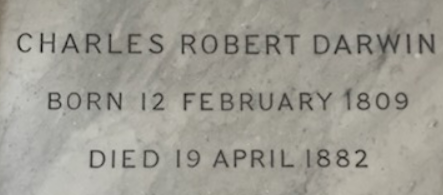
Charles Darwin was an English biologist and naturalist recognized for his contributions to evolutionary biology. He married his first cousin, Emma Darwin, and they had ten children together but only seven lived to adulthood. He lived with his wife and children just south of London in the Kent countryside. Charles Darwin was a naturalist, philosopher, geologist, plant biologist, explorer, and travel writer. Charles spent over forty years suffering from multiple medical issues including vomiting, skin problems, and headaches. He was diagnosed to have a type of panic disorder as well as psychosomatic skin disorder. Despite his medical troubles he still made major findings that most of the world today consider a fact. Charles introduced the theory of evolution by natural selection, commonly known as ‘Survival of the Fittest’. He first had the idea, during a trip to the Galapagos Islands, when he studied different types of finches and how they lived. He continued his work by creating artificial evolution with pigeons using selective breeding. He lived from 1809 to 1882. At the age of 73, he sadly died due to a heart attack.
William Shakespeare was a famous English playwright in the 16th and 17th centuries. Shakespeare married his wife Anne Hathaway when he was only 18. This caused a bit of a scandal due to Anne’s age of 26. They had three kids together: Susanna, and twins Judith and Hamnet. Shakespeare was an actor, a poet, and a playwright, but is most widely known for writing plays, his most famous two being Hamlet and Romeo and Juliet. He lived in between Stratford upon Avon and London. In total Shakespeare wrote thirty-eight plays. Shakespeare’s cause of death is unknown. He is not buried at Westminster Abbey but instead lies in the Holy Trinity Church at Stratford upon Avon in Warwickshire. Shakespeare lived from 1564 to 1616 and passed far too early at the age of 52.
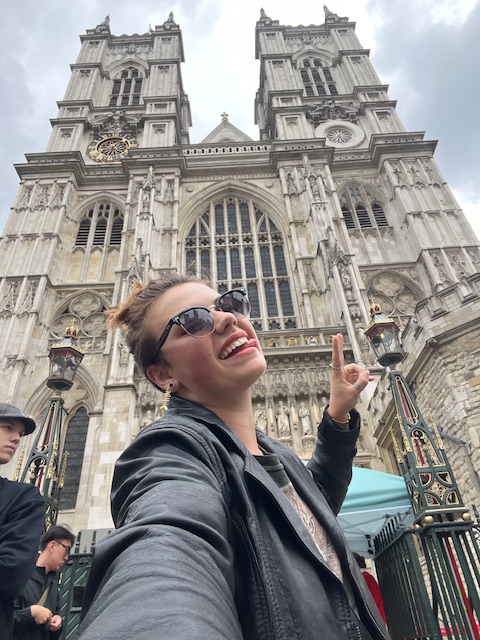
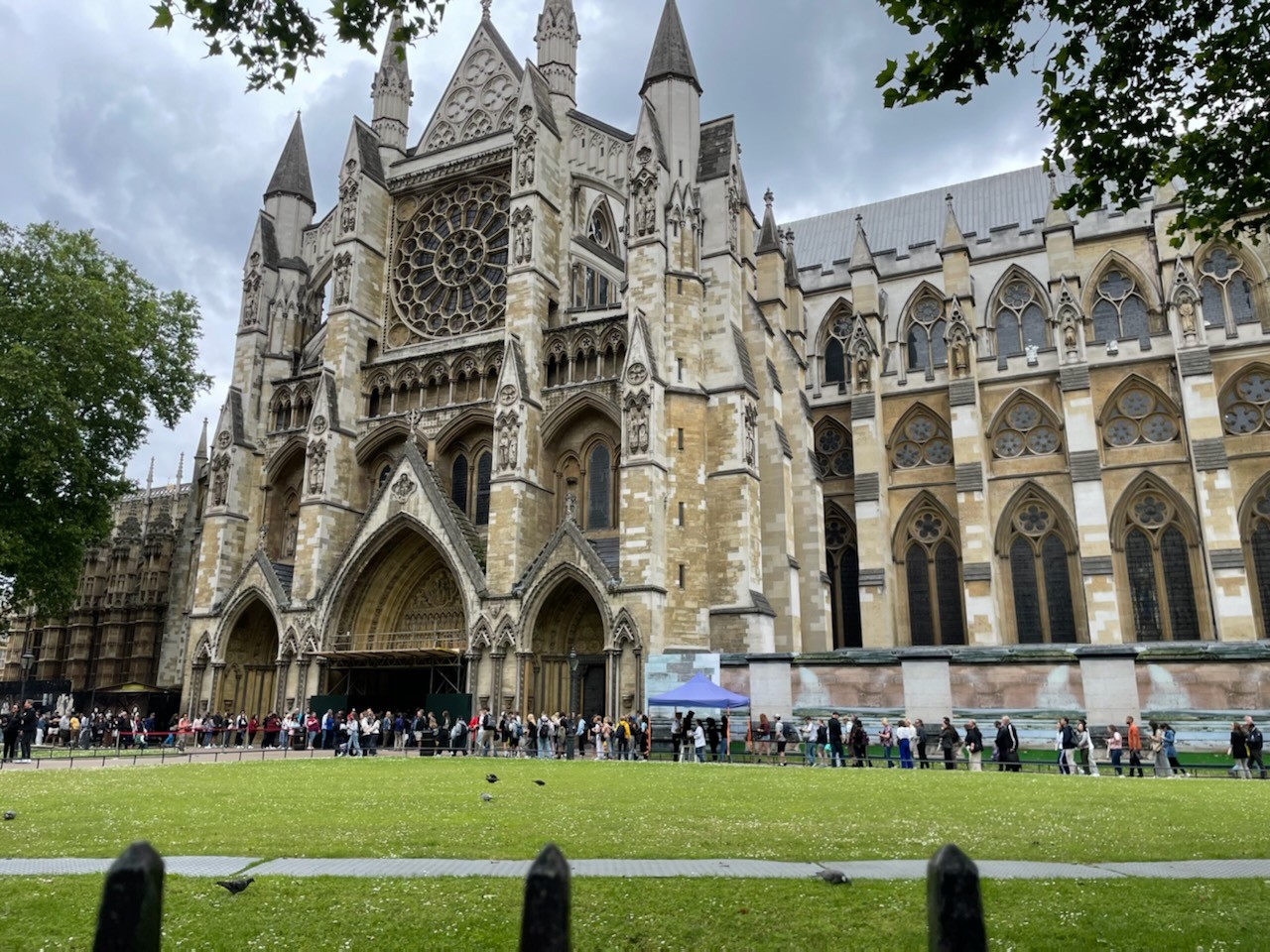
I have been waiting this whole trip for Westminster Abbey. I might not know a lot about architecture, but boy do I love me a dramatic gothic structure. I was under the impression we were not allowed to take pictures in most of the locations, but found that photography was allowed as long as there was no flash. So, there will be lots of photos throughout my blog, just know that these do not do this beautiful space justice!
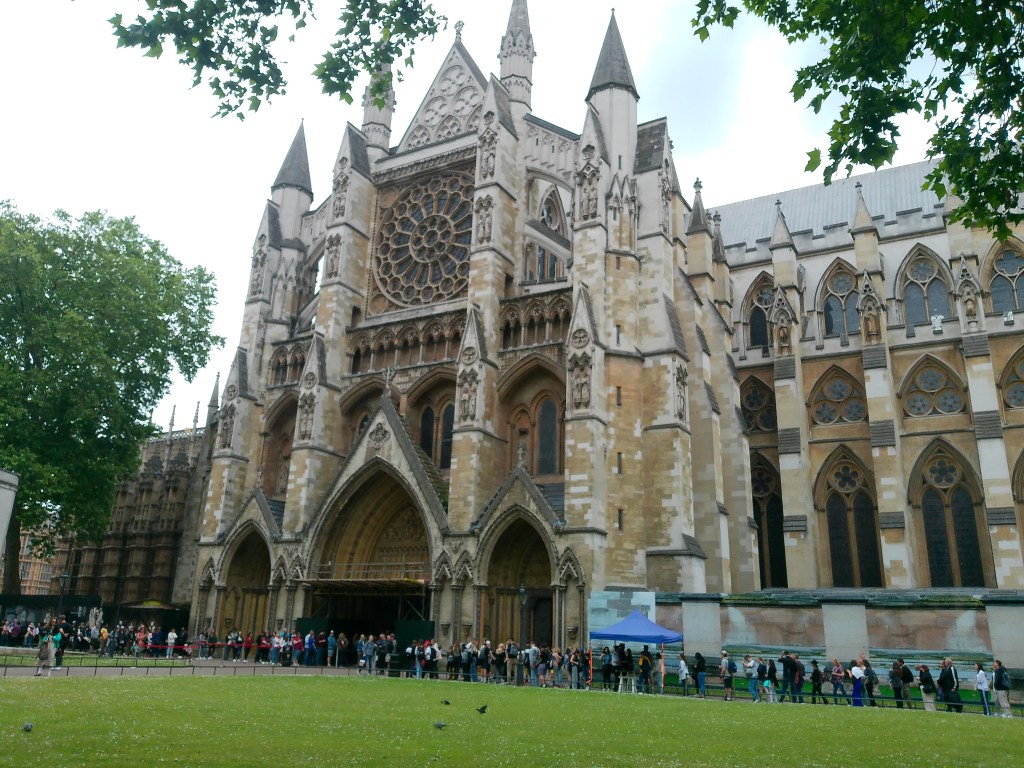
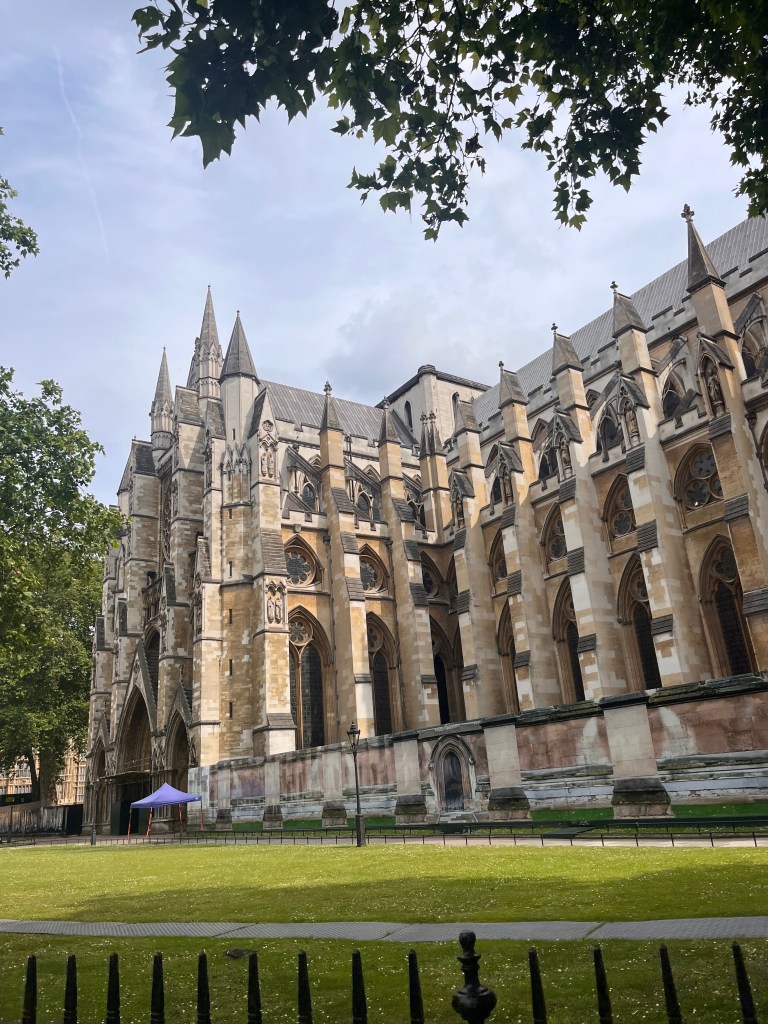
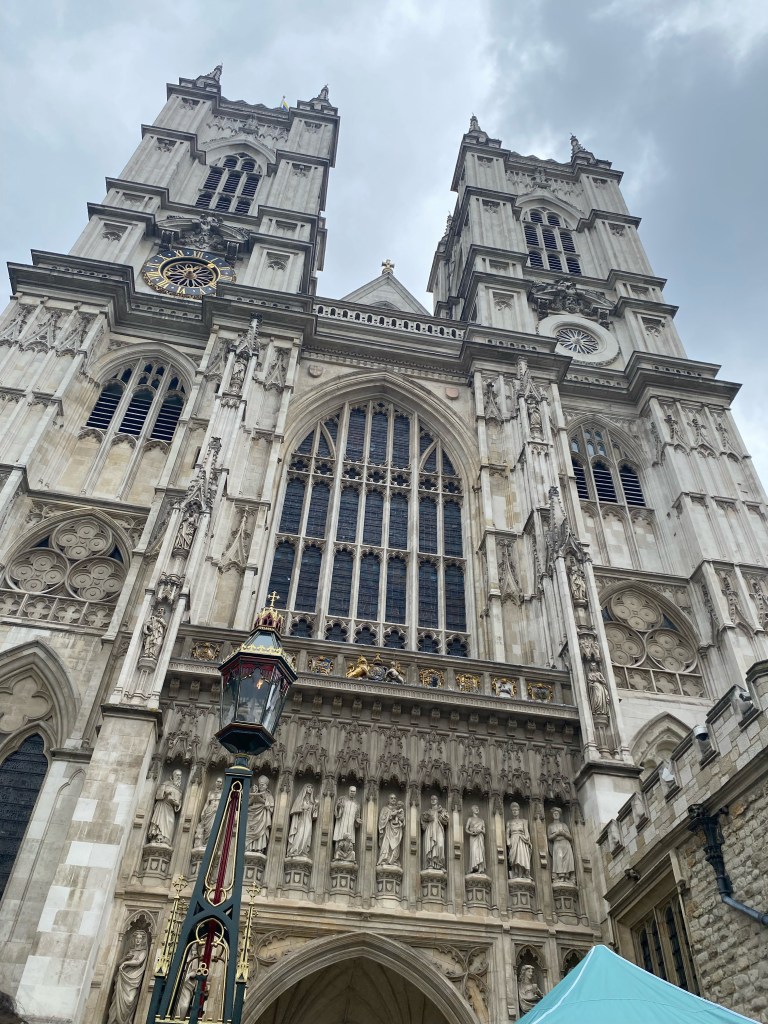
The outside of Westminster Abbey.
One of the most interesting aspects about Westminster for me is the fact that so people individuals were laid to rest here. Yes, Saint Pauls Cathedral is the resting space for many, but Westminster has over 3,000 people in their crypt. Why do so many of these churches have crypts full of dead people? I thought it was weird but it is very normal here. Cool…
Inside of Westminster Abbey.
Not only are there religiously relevant people buried here, there are also actors and writers laid to rest and/or honored via statue erection! Does the name Laurence Olivier ring a bell? Born May 22nd 1907 in England and died July 11th 1989, Laurence was an incredible actor and director. His major roles include: Brutus in Julius Caesar, Kate in Taming of The Shrew, and Hamlet in Hamlet. He was such a talent and force that the Society of West End Theatre Awards was renamed to The Olivia Awards to honor him. These awards honor great theatre on The West End in London. Olivier’s ashes are laid to rest in Westminster Abbey in Poet’s Corner. Poet’s Corner is a section in Westminster Abbey where playwrights, poets, actors, and writers are buried and/or have a statue erected.
Poet’s Corner. Maybe you see a familiar face and name!
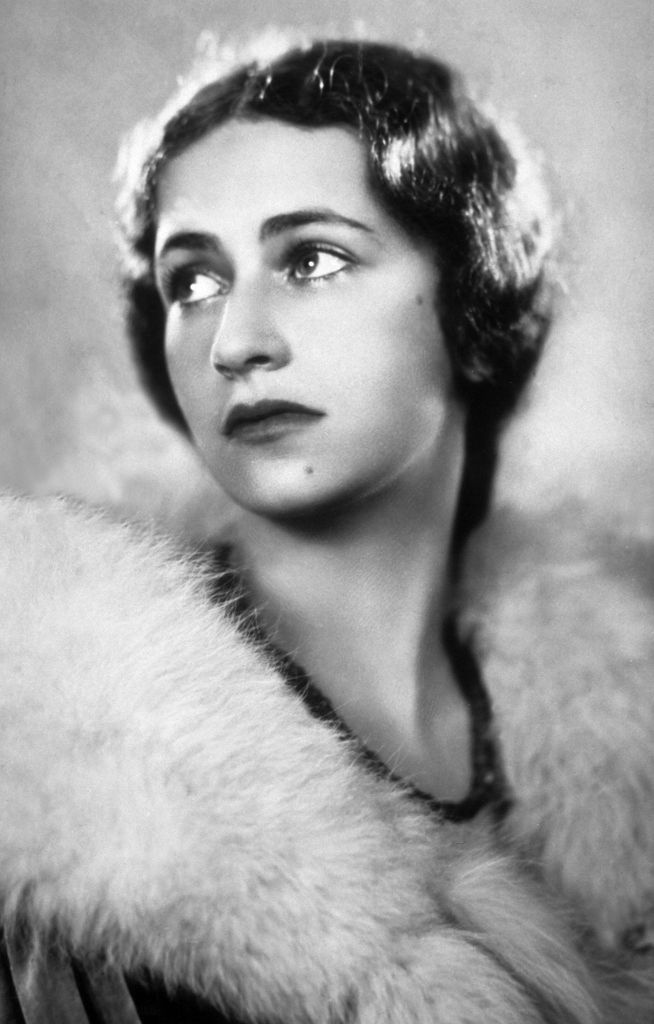
Another stand out is Peggy Ashcroft, a West End actor whose work spanned over 50 years! She was born December 22nd 1907 (we share our birthdate!) and passed away June 14th 1991. She grew up in London and attended Royal Central School of Speech and Drama. She loved to work for the Old Vic, but did work with The Royal Shakespeare Company and National Theatre as well. She was a Shakespeare focused artist, but enjoyed modern theatre and did work in these productions. She had several awards including three BAFTAS, a Golden Globe, and an Academy Award. She has a statue commemorating her at Westminster and there was a memorial service held to honor her when she had passed away. To have a career like Ashcroft would be an absolute dream!
circa 1930: Actress Peggy Ashcroft, (1907 – 1991), as she appeared in the play ‘Jew Suss’ at the Duke of York’s Theatre, London. (Photo by Sasha/Getty Images)
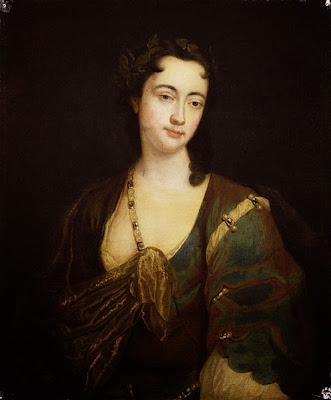
Anne Oldfield is another actor of interest that was buried in Westminster. She was born in London in 1683 and passed away in 1730. She was first a seamstress who adored theatre. When she was visiting a family owned tavern, she recited lines from The Scornful Lady. George Farquhar, a dramatist, happened to be in the crowd and enjoyed her performance. He ended up casting her in several of his comedies, giving her the much needed kick start to her career. She worked at Drury Lane often in both tragedies and comedies. She was loved by many and her fans mourned her death.
Anne Oldfield from the Westminster Abbey website.
Many artists are laid to rest here at Westminster Abbey. It seems to be where the greatest and some of the most famous individuals have found their final resting ground. I think about whether there will be anyone we know of today whose remains will eventually make their way here, or if they are no longer allowing for more to join the massive list. The most recent being Stephen Hawking in 2018, maybe he was the final to join!
I am sure you will be hearing from me again soon. I am off to battle technology and to hopefully get some rest.
Today we went to Westminster Abbey. Molly was our tour guide again, and she took us through the abbey and told us about all we were seeing. The architecture was so beautiful! I loved the style, which she said is “Early English”. Particularly the ceilings, I love that interesting shape. I also love stained glass windows, so I liked looking at the incredible detail that was all throughout the abbey. There were gravestones everywhere on the floor, as well as rooms housing the tombs of Elizabeth I, Mary Queen of Scots, and a few others. While I was told beforehand that there was a lot of people—scientists, artists, poets, etc., I was still surprised by just how many were squeezed in there. There was practically no free space, all of the floors had plaques dedicated to someone or another. A lot of names I did not recognize, but some I did. There were a few names I did not expect to see there and found it very interesting.
Next to a beautifully intricate statue for Issac Newton, on the ground, there was a relatively small piece for Steven Hawking. It displayed a black whole, along with a formula he is known for figuring out about black holes, his name and dates of birth and death. It wasn’t big or showy, which is part of what surprised me. I expected all the people I recognized to have bigger memorials simply because they must have been important enough if I recognize them. But his, along with a few others that surprised me, was small and simplistic. I’m embarrassed to say that I did not know Steven Hawking was English, I guess I knew at one point (I’ve seen The Theory of Everything), but forgot and just assumed he was American? I don’t know, but it only furthered my surprise to see him there. His memorial stone says “Here Lies What Was Mortal of Steven Hawking 1942-2018.” His ashes are buried underneath, between Issac Newton and Charles Darwin.
Charles Darwin was another interesting person to see there. Known for his theory of evolution and writing On the Origin of Species, I would not have guessed the church would want him there. His view of evolution was challenging to the ideas of the church. I know he was highly criticized by the church during his life, so it is interesting to see him there in death. His memorial stone just says “Charles Robert Darwin Born 12 February 1809 Died 19 April 1882”, and it is right next to John Herschel’s grave.
There was also author Rudyard Kipling. He is buried in Poet’s Corner in Westminster Abbey. His grave is next to Charles Dickens and Thomas Hardy. It too only has his name, birth, and death dates— “Rudyard Kipling Born 30th Dec. 1865 Died 18th Jan. 1936.” (I was born exactly 69 years after his death!) He is known for writing The Jungle Book. He was born in British India, which was the inspiration for his books. He was awarded the Nobel Prize in Literature, and he was offered a knighthood but denied it. I knew The Jungle Book was a very famous and popular book, but I didn’t know how beloved Kipling himself was.
I though Westminster Abbey was such a beautiful and interesting place. The tombs were beautiful, and I loved that they had statues of some of the bodies like Queen Elizabeth I. When the priest spoke to announce the prayer, and it scared poor Molly, I thought that was really funny! I also liked getting to see Big Ben and Parliament today!
Westminster Abbey was a grand and beautiful place to walk through and soak up the history. It’s crazy to think that I was standing in a building that has been around since 1066. Before America was even a thing.
The architecture alone was wildly impressive. The carvings and paintings were so intentional and delicate. I loved the patterned flooring in the main church that nobody knows what it’s supposed to be. Some think that it’s supposed to represent the heavens, and others believe it’s there to tell people where to stand. Regardless, it was intricate and breathtaking.
I also loved where they had the statues to represent the current knights. I find it sweet that they include something that represents a unique personality trait or interest of each knight. I also really loved the way they recognized one of the fallen, before he is replaced with a new knight.
Out front, there is a statue of William Shakespeare. They wanted to have him buried with the poets at Westminster Abbey but he said no and was very specific that he only wanted to be buried in Stratford-upon-Avon. Of course, poetic in death that damn Shakespeare guy. I think it’s nice that they at least made a statue to memorialize him as one of the greats.
I also saw that Charles Dickens is buried there. I am a new fan of his after London Tide has put me onto his work. It’s cool to know that he was also recognized by the church by one of the greats, and honored in his death.
Maybe my favorite part was seeing the tomb of Mary Queen of Scotts. I have been obsessed with the show ‘Reign’ that is based off of her for years and I felt like such a little fangirl. I think her story is so interesting as well as her death at the hands of her beloved Queen Elizabeth.
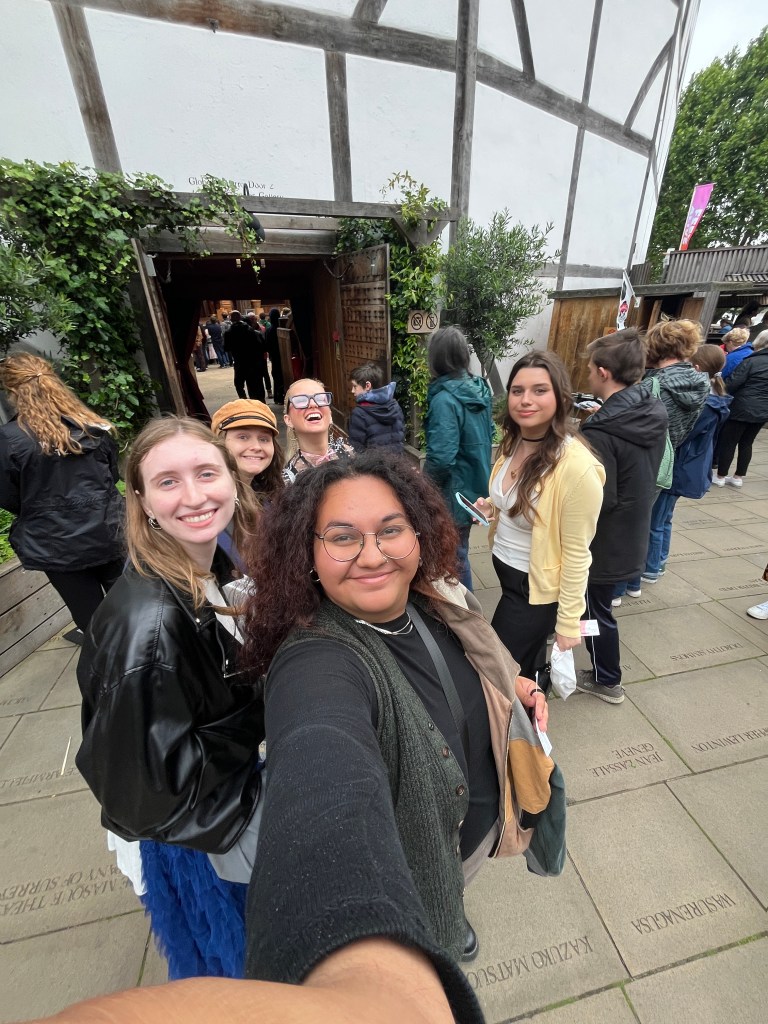
When I walked into the globe, I was so nervous. I had seen so many photos and illustrations of this space and now I was finally getting a taste of it. I cannot explain how beautiful it was to feel like I had been transported through time. It was such an inviting space, filled with joy and excitement. It was also nice to be inside, away from the cold wind. The weather was perfect. Cold enough to be fresh, and warm enough standing in the pit, surrounded by all the people.
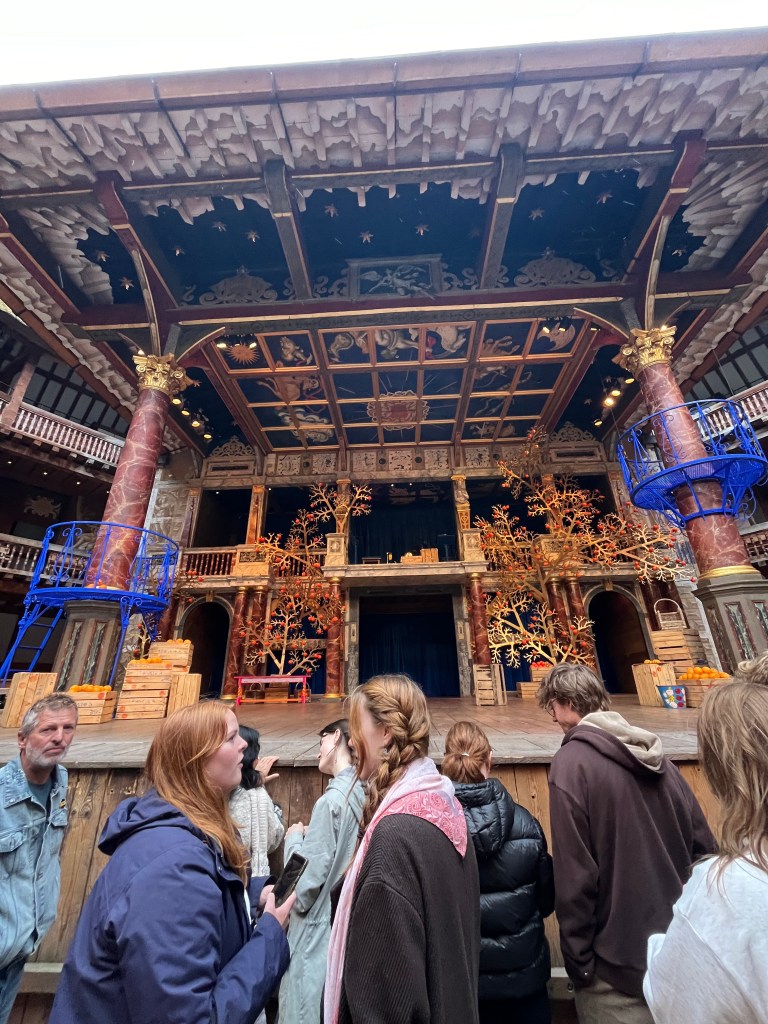
My first thoughts were when I laid eyes on the stage. SHAWN WAS WRONG. I fully went into the globe, with the expectation of absolutely no set or props. Instead, the stage was beautifully set, with an abundance of oranges in crates, gold orange trees, and bright blue balconies. The stage itself was beautiful in its architecture, its detail and color made it so unique to all the venues we have been in. Which made the set pieces on top of the stage, stand out even more.
The composition of all the colors on stage was so rich, from the dark red and gold of the columns to the dark blue-green of the curtains backstage. The gold of the trees and the yellow of the wood blended so well with all the gold of the stage itself. The only piece that stood out from the composition of the stage, was the bright royal blue balconies. But I didn’t mind it at all. The color added a touch of fun, which added to how fun this show is.
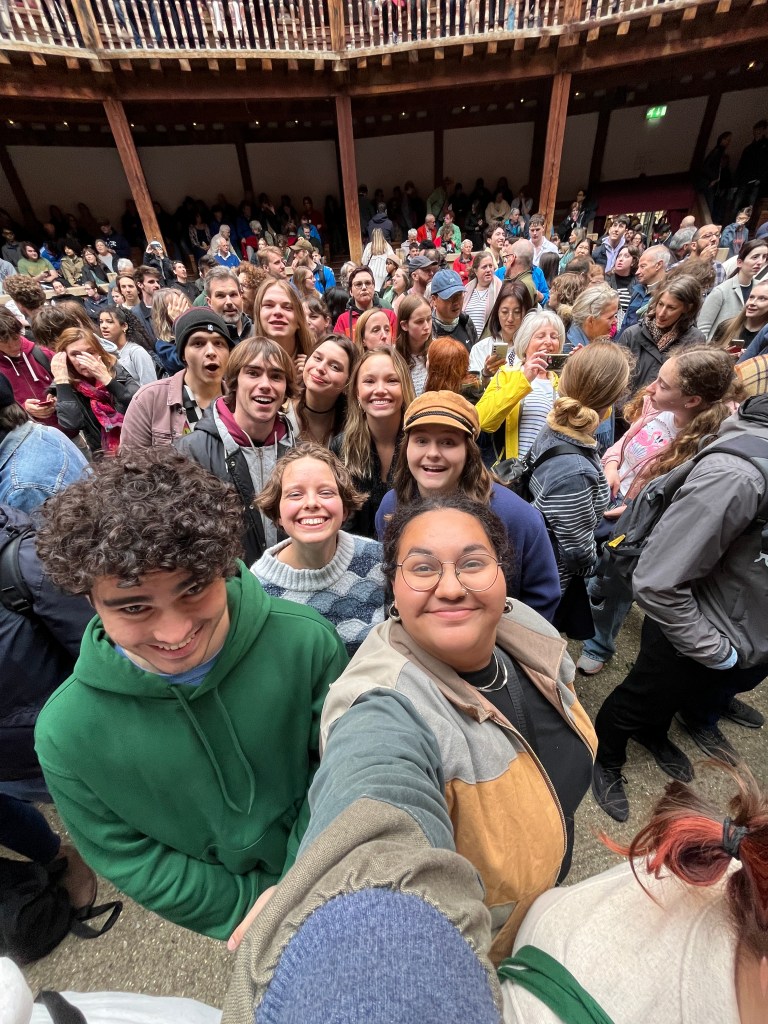
After admiring the set and the globe as a whole, I was getting more and more excited. I knew from the beginning that I was going to be standing in the pit. And after I saw the stage, I knew I couldn’t watch this show in the corner where we had our seats. We got inside the globe at a great time and secured a spot right in the center. We were close enough to see and interact with the actors, but far enough to get the whole action of the stage.
I have only ever watched one production of Shakespeare before, The Tempest. I watched it the summer before my senior year, and it was the reason I realized Shakespeare might actually be enjoyable. But this show has converted me to a Shakespeare lover.
Watching Much Ado About Nothing, at Shakespeare Globe was lifechanging. I realized that I wanted to make theatre like that. It was so interactive, and funny, and I laughed out loud! Like an actual LOL in real life. I understood what they were feeling and saying, even when I couldn’t comprehend the words that came out. The audience interaction was such a huge part of why it was such a success. It didn’t feel like the actors were bound to the script, but just living truthfully. Their performance reminded me of why I love acting. I love the interaction and feeding off the audience to create those magical moments. Like is this what live theatre should be? The dancing and singing during the show were one of my favorite parts. It was so lively and beautifully choreographed. When the father of Hero, Leonato, sang his song and then included everyone in the audience to sing it with him. We started singing and it felt like we were all connected. I could not stop smiling, my mouth actually started hurting. I felt like I was part of a community, and we were all experiencing something so magical. That moment in that time could not be recreated, and I got to enjoy it with my amazing peers.
I had so much fun being a groundling that afternoon. I was so happy and joyous, and filled with inspiration. This production made me question what live theatre should be, and I am so grateful for that. I can take this experience with me, and apply it to the theatre I want to make.














 Theatre in London U of A