I have really enjoyed these last few days in Stratford-Upon-Avon. Was much as I loved London and it’s hustle and bustle, the small community town vibe of Stratford has been a relaxing change of pace. We have the cutest little Bed and Breakfast, I wish we had more time to spend here if just for the room! Plenty of outlets and a kitchen for us to use, its so nice. The owners make a delicious breakfast, English or what I got which is a giant croissant they bake. Tea, of course, which has been so yummy. And I will miss the milk here in England, it doesn’t even compare to our sad, watery, drugged up milk at home. Stratford is such a nice place to be, with so many cool Sharkespeare sites. We have gone to Shakespeare’s birthplace, his graveside in Trinity Church, and his wife Anne Hathaway’s cottage. These were very cool to see and be around, and I know only more exciting for those of our group that love Shakespeare so much. To be honest I have trouble imaging him walking around in Stratford, but I have been trying to picture it. I can however understand why he spent so much time here though. When I was walking around near the river, I thought how nice it would be to read here. I know that if I was a writer I would find Stratford the perfect environment for my creative juices. I can totally understand the peace and tranquility that fueled his mind to write his comedies, histories, and tragedies. We got to see The Merry Wives of Windsor and King Lear (performed in Ukrainian, which I talk about in another blog. Merry Wives of Windsor was really fun! The costumes and set were more modern than Shakespeare’s day, and like someone said it really did feel like a 50’s sitcom. So while it wasn’t a classic rendition, it was still very entertaining. I particularly liked the relationship between Mrs. Paige and Mrs. Ford. When the characters were putting on their schemes that were so funny, the actresses seemed to be genuinely cracking at their own joke. It really felt like they had a lot of fun putting on this perfection, which is something that really makes a show for me. The other actors were brilliant too. I was initially hesitant about Falstaff, but he won me over once the Wives started tricking him. I think he did a great job and don’t want to detract from his performance at all, but I couldn’t help but think after we saw Ian McKellan portray Falstaff in Player Kings, what his performance of this show would have looked like. But I digress. We had great seats too, apparently better than they’ve ever had according to the surprise and glee from Shawn. That helped the performance too of course, to be able and see the actors faces closely. (Though it’s not a big theatre it wouldn’t be too bad from anywhere.) I am so happy we’ve ended on Stratford, I think it was such a great note to end on and allowed us to start to say our goodbyes in an more peaceful, beautiful place. However I will say if you ever want to do a little rowboat on the Avon, don’t. Get a motor boat if you can because rowing sucks and I literally got a blister on my hand. But memories, that’s what I told myself to feel better! And do I have some great ones. This was such an unforgettable experience and I am so grateful to have shared it with these people I love. Now I have to stop writing or I will cry and I cant, I’m about to go have a delicious Sunday Roast!
King Lear
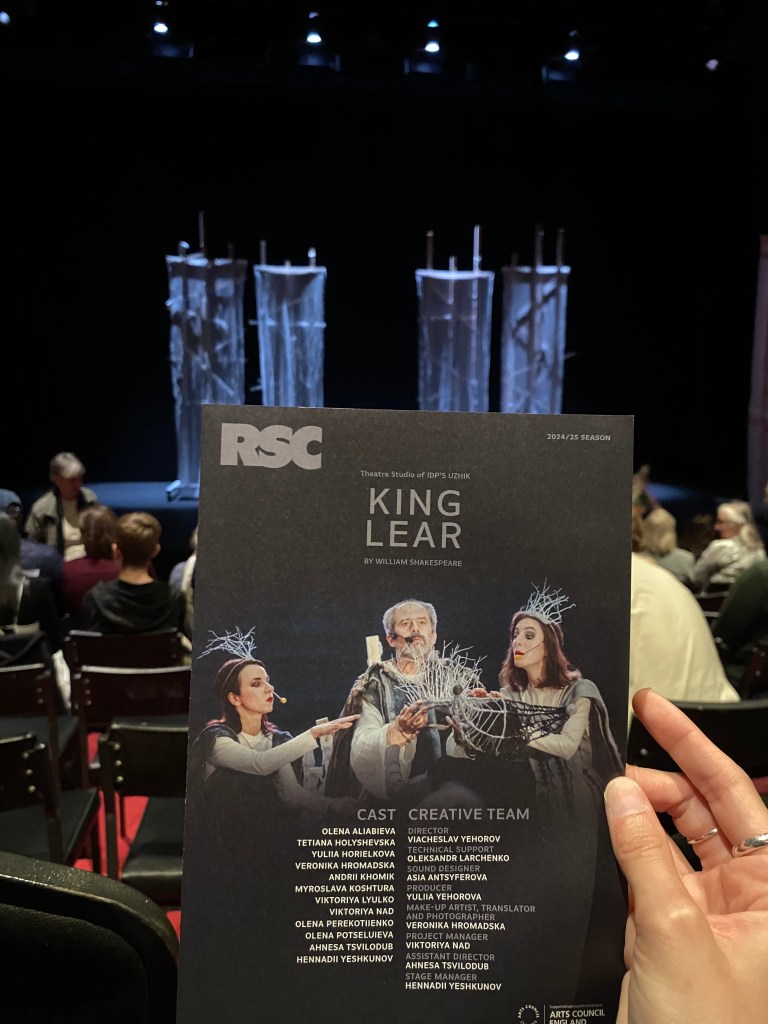
Today we watched King Lear at the Royal Shakespear theater company, The Other Place. It was an interesting experience that was worth watching. While I didn’t understand much I could follow along with the events of the play because of our class discussions and could even interpret some lines due to the expressions and movements of the actors. The king and jester both were so compelling in their speech, despite not understanding them they commanded my attention with the intensity of their voice and the purposeful movements they made. I found the costume to be minimal but very interesting in their design being the white under garments and burlap covers. The crowns were also very interesting because though they too were simple they allowed the viewers to keep track of the characters through these head dressings and even interpret when a character was trying to steal power or crown themself. The set was also very minimal, being only a few rolling set pieces that they used in different formations to convey a change in setting. The lighting was very good and really it was what I would say was the peak of the show. During the war scene and storm scene both the way they used lighting was very impressive considering how minimal everything else had been. This Ukrainian version was able to capture the essence of the King Lear tragedy through the wonderful acting, expressions and tone used by each character. The effect of seeing a play in an unfamiliar language was interesting as it was both interesting and boring. I say this because though I was paying attention it was hard to know what moments were supposed to be deep and which were supposed to be funny. It did allow me to pay much more attention to the acting detail and talent demonstrated by each actor.

15. That’s all she wrote.
Here it is: the end of the road. It’s our last day in Stratford-Upon-Avon. Tomorrow morning we’ll be packing all of our things onto a bus and heading back to Heathrow. It doesn’t feel real. I don’t know when it will. That seems overdramatic, but this trip has genuinely been one of the best things to happen to me. The number of new experiences, new determinations I have, and the new friends I’ve made or at least become closer with… it’s overwhelming to think that all of that has been in the span of a month.
We aren’t here to reminisce yet, though, so I’ll pull myself together. Today I’m going to talk about Stratford, and what I think of being here.
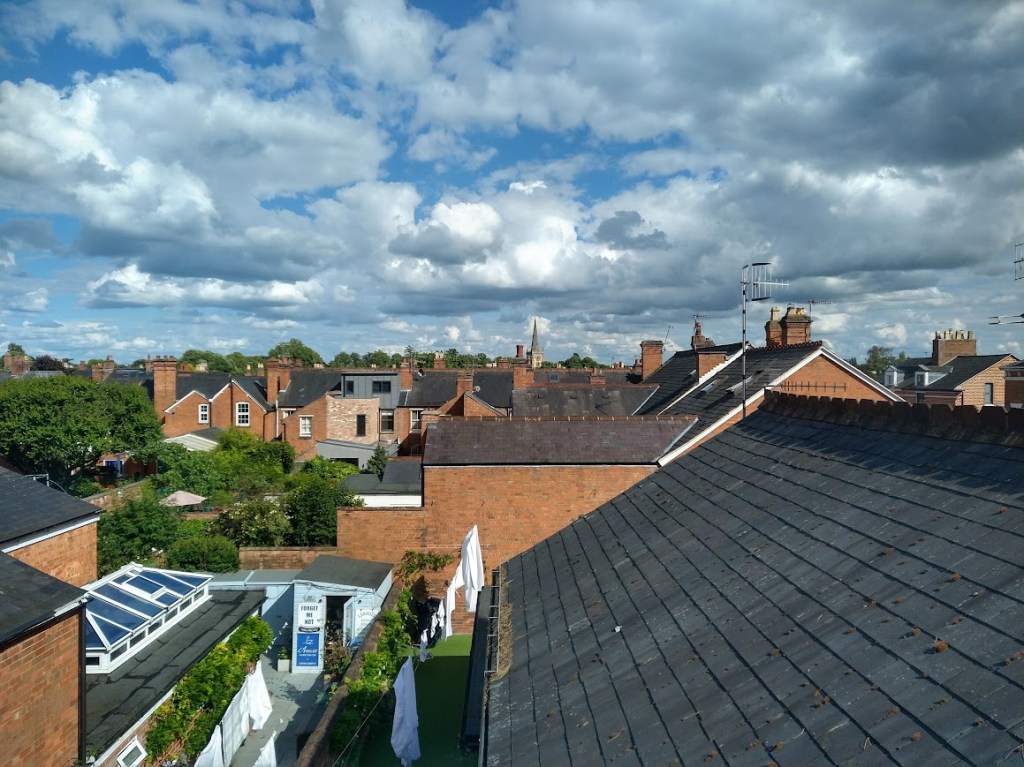
My first impression is that it’s very small. While we were driving away from London, I got the pressing feeling that everything I’d done in the past month was so small; it was so confined. Within fifteen minutes of being in the bus, I couldn’t see anything I recognized, even though I’ve spent the past month exploring the city. I saw the names of overground stations I’d never visited before, but had seen at the end of lines. I understood for the first time since being here how truly small London itself was in the grand scheme of things. It can seem so vast when you’re in the middle of it, but leaving it, you realize your life was confined to ten square blocks or less in any given direction.
What I didn’t anticipate is precisely how much smaller Stratford is. If not for the tourism Shakespeare brings in, it truly is just another rural town. Everything in town closes before seven if it isn’t a theatre, a pub, or McDonald’s. Nothing opens before ten. It’s utterly quiet.
I’m not used to leaving our lodgings so late. In London, we were able to leave between 8:30 and 10 at latest. Everything was always open. Here, we’ve departed to do things at 10 at the earliest, and today we left at 11:30. It’s started to feel like noon is already the end of the day in London, but in Stratford the day is only starting. I enjoy being able to get up at 6 and have the city be awake; I don’t know what to do with myself here. There’s only so far I can walk before I go in a circle or leave the town–in London I can walk for miles.

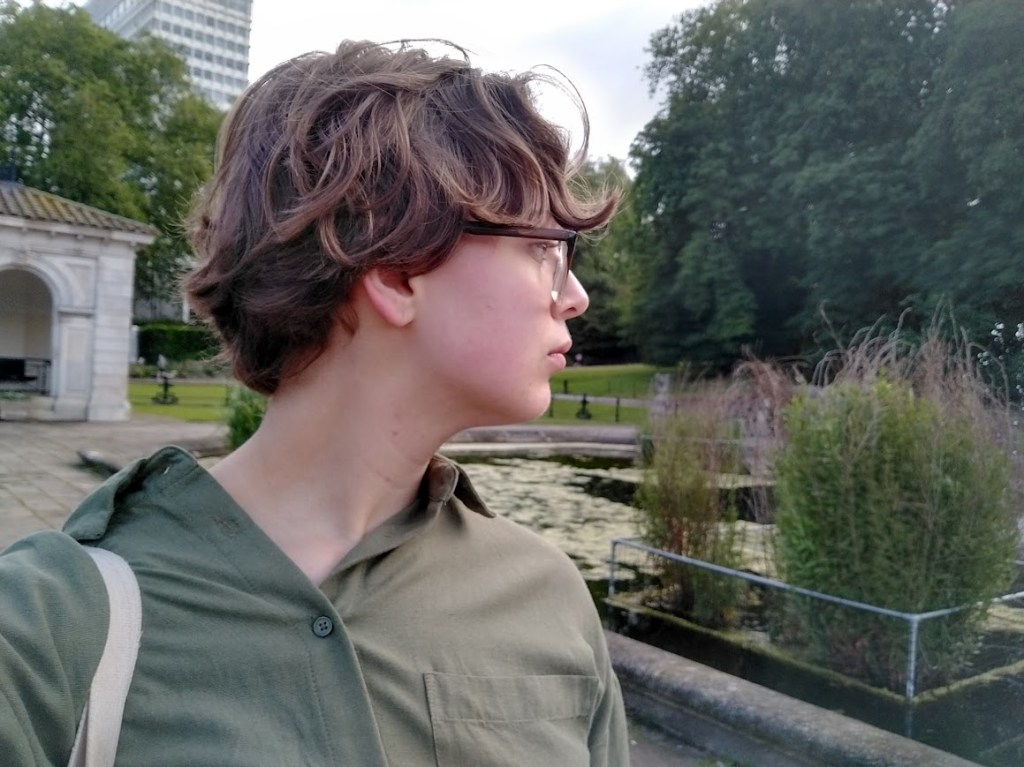

I don’t know that I’m ready to go back to living out of London. Even Stratford, while I’m still across the ocean, feels just like home, and not in a way that I’m enjoying fully. The buildings are different, and much older. The shops are English, not American. The feeling is the same, though. I like to hear the birds again. I miss real, sprawling parks that go for more than a block. I miss the tube. I miss Oliver’s Falafel. I miss getting coffee at Bloomsbury Coffee from the man who doesn’t know that we won’t be coming back on Monday. I miss the little life I made for myself there, in the time between activities.
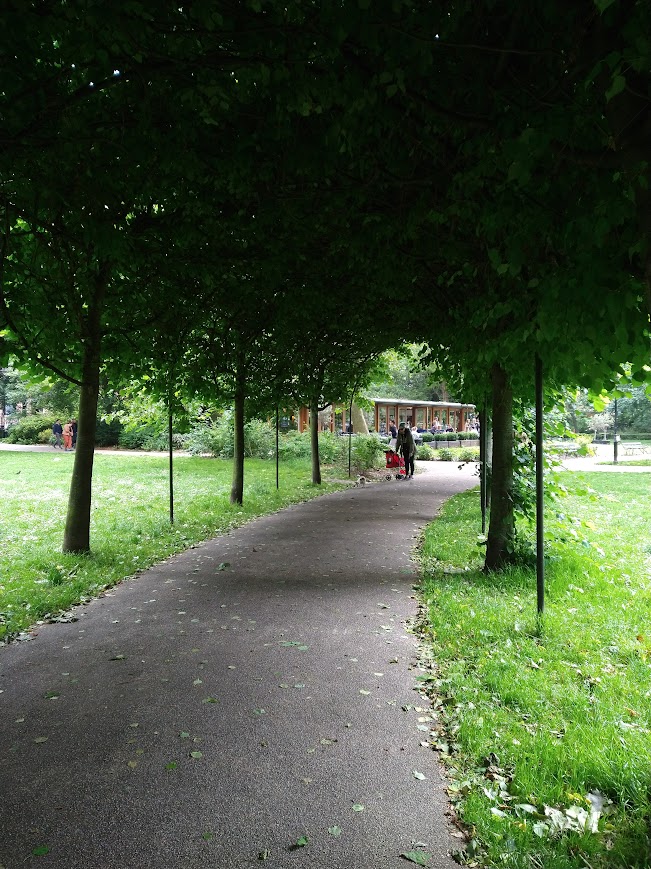

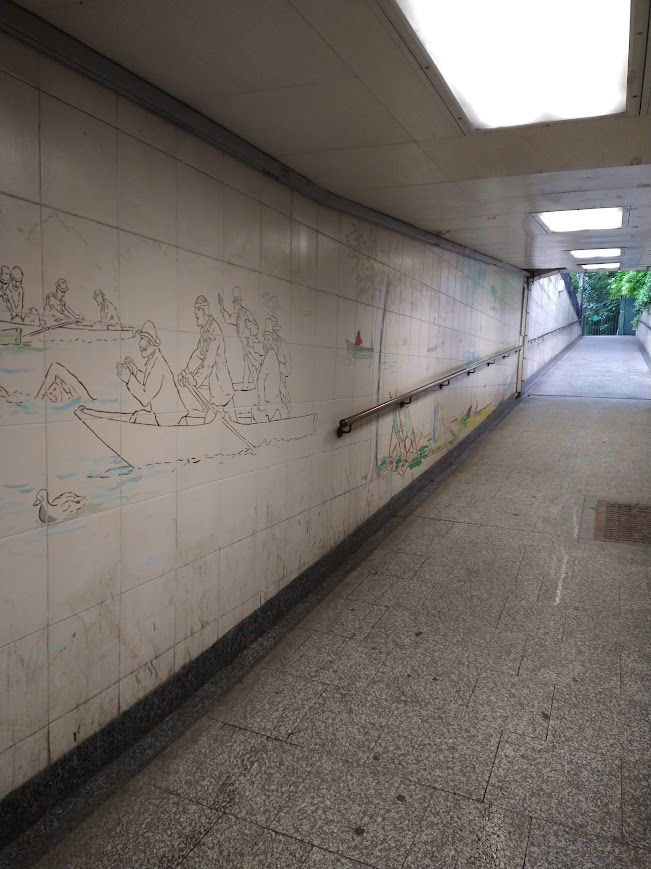
I’ve found it difficult to be excited about being here when the end is so near. We’ve seen Shakespeare’s birthplace, and the place where he and his family lie in Trinity Church. We’ve seen the New Place, where he lived. We went to see Anne Hathaway’s cottage today, and tonight is dinner at the Windmill Pub. With all of these things being such appealing attractions, I thought I would be excited, but with no London on the other side, it all feels slightly lackluster.
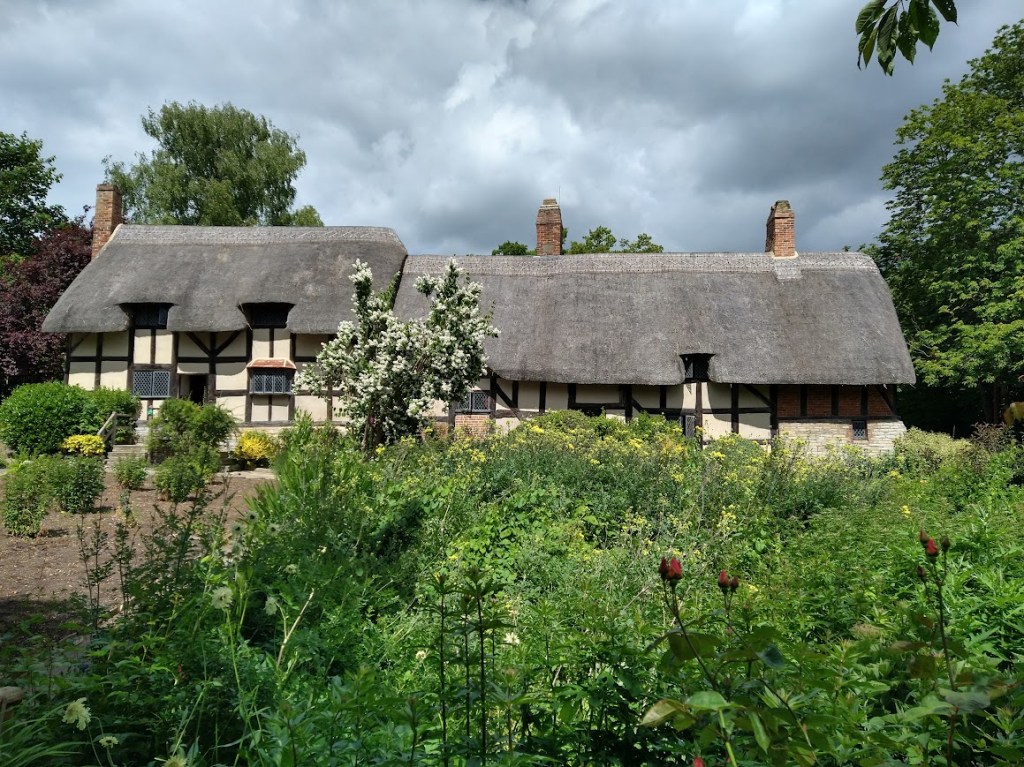
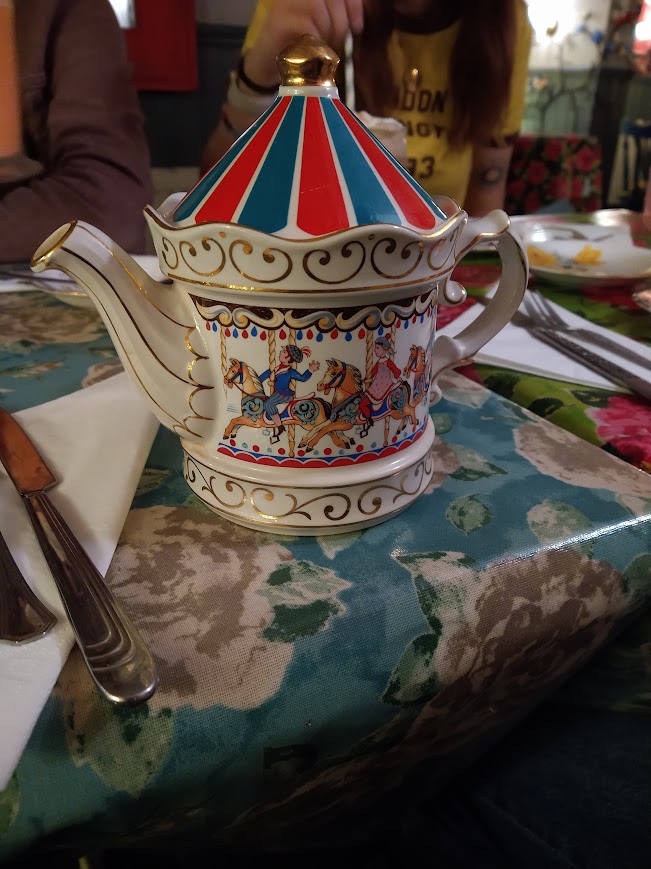
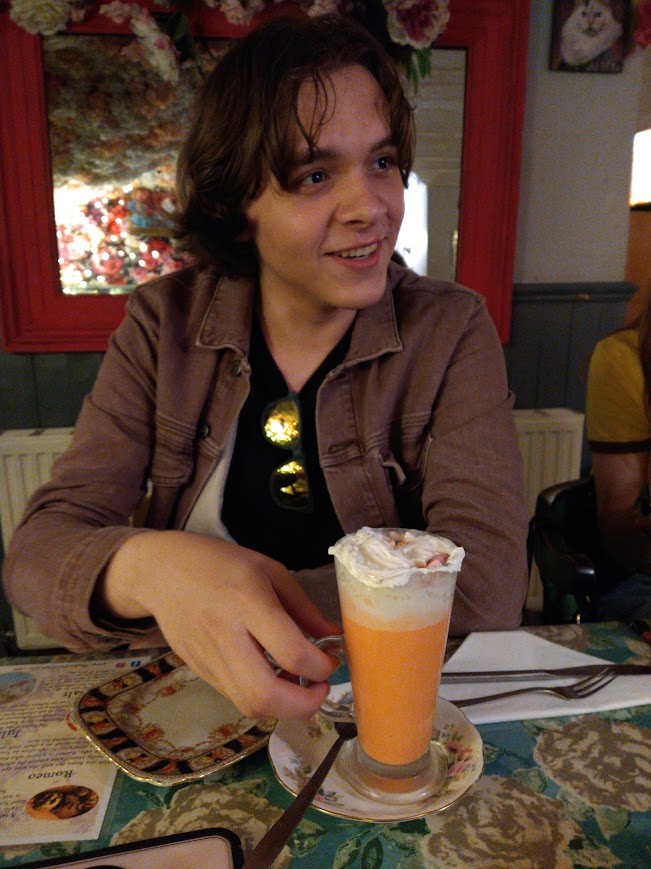
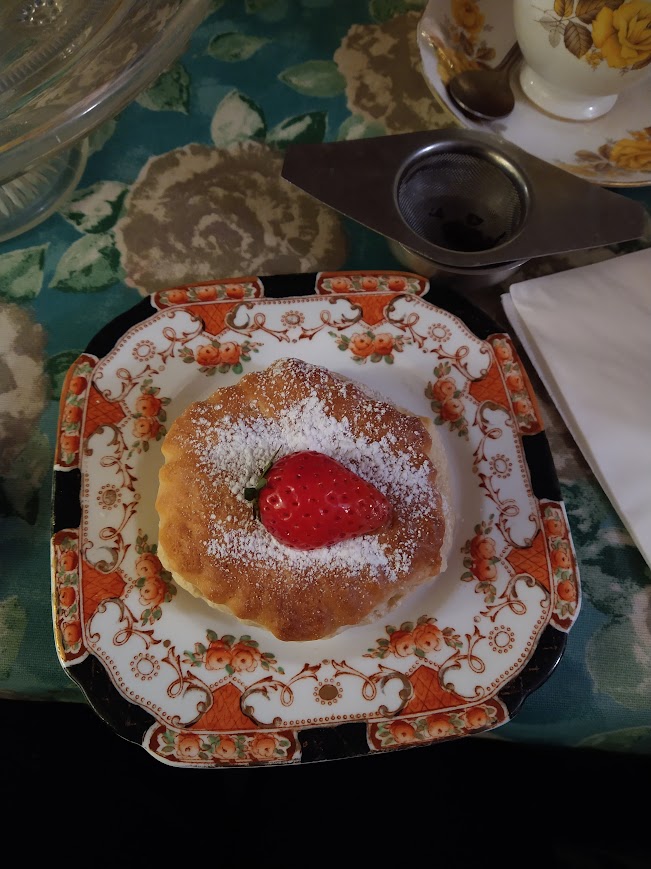
I’m not entirely put out about being here; I really have found it interesting. I am just a person who needs things to do. And we have done things: we went to a cat cafe yesterday, and had afternoon tea there; we did all of the aforementioned Shakespeare tourism; we have learned the inside of the Stratford-Upon-Avon McDonald’s very well. I just miss the rush of the city. I think I will forever, even if I do come back, because it won’t be the same. Places that move this quickly never are.
CW
A look into Shakespeare’s life

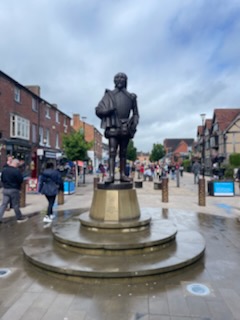
The last stop on our tour is Stratford-upon-Avon. This charming little city is very different from London, and I can definitely tell I’m not in the big city. Stratford-upon-Avon is a lot smaller and quieter than London. There are hardly any police sirens, which is really nice. There isn’t really any car honking either. There’s also a LOT less people and it isn’t very touristy. There aren’t really any big and/or tall buildings. I think I could walk through all of Stratford in just a day or even an afternoon. Of course that’s just a walk, not stopping to visit any of the historical sites. It also feels like I’m closer to the countryside.

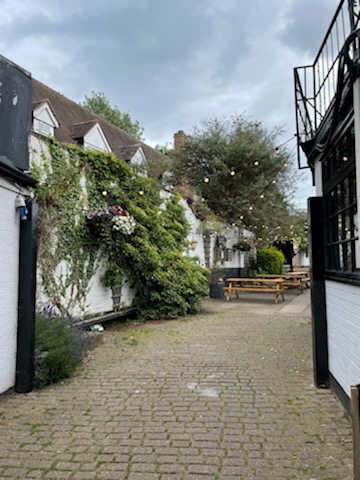
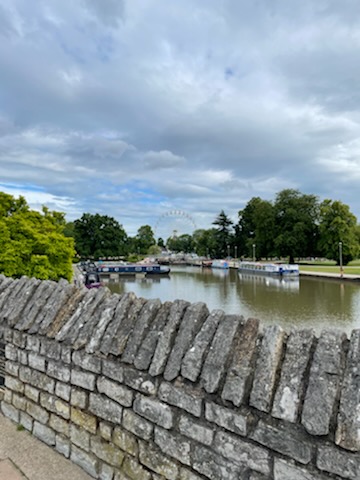
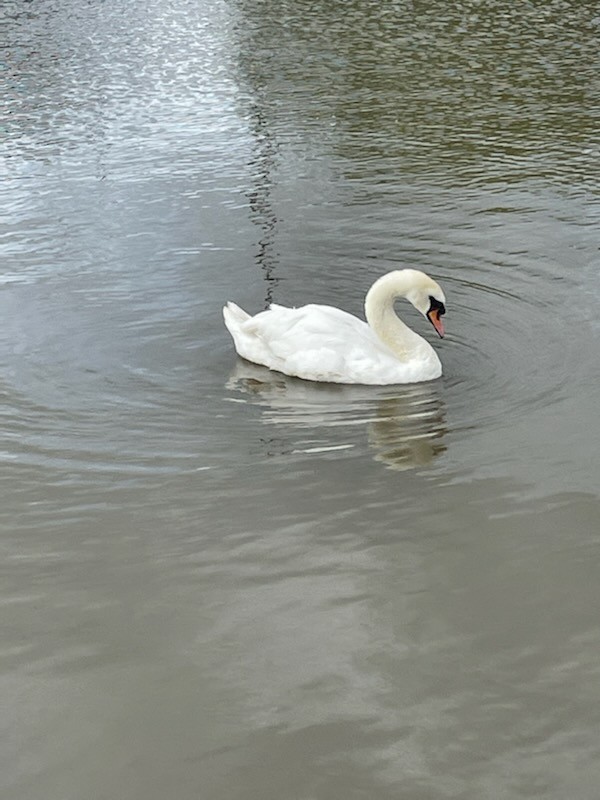
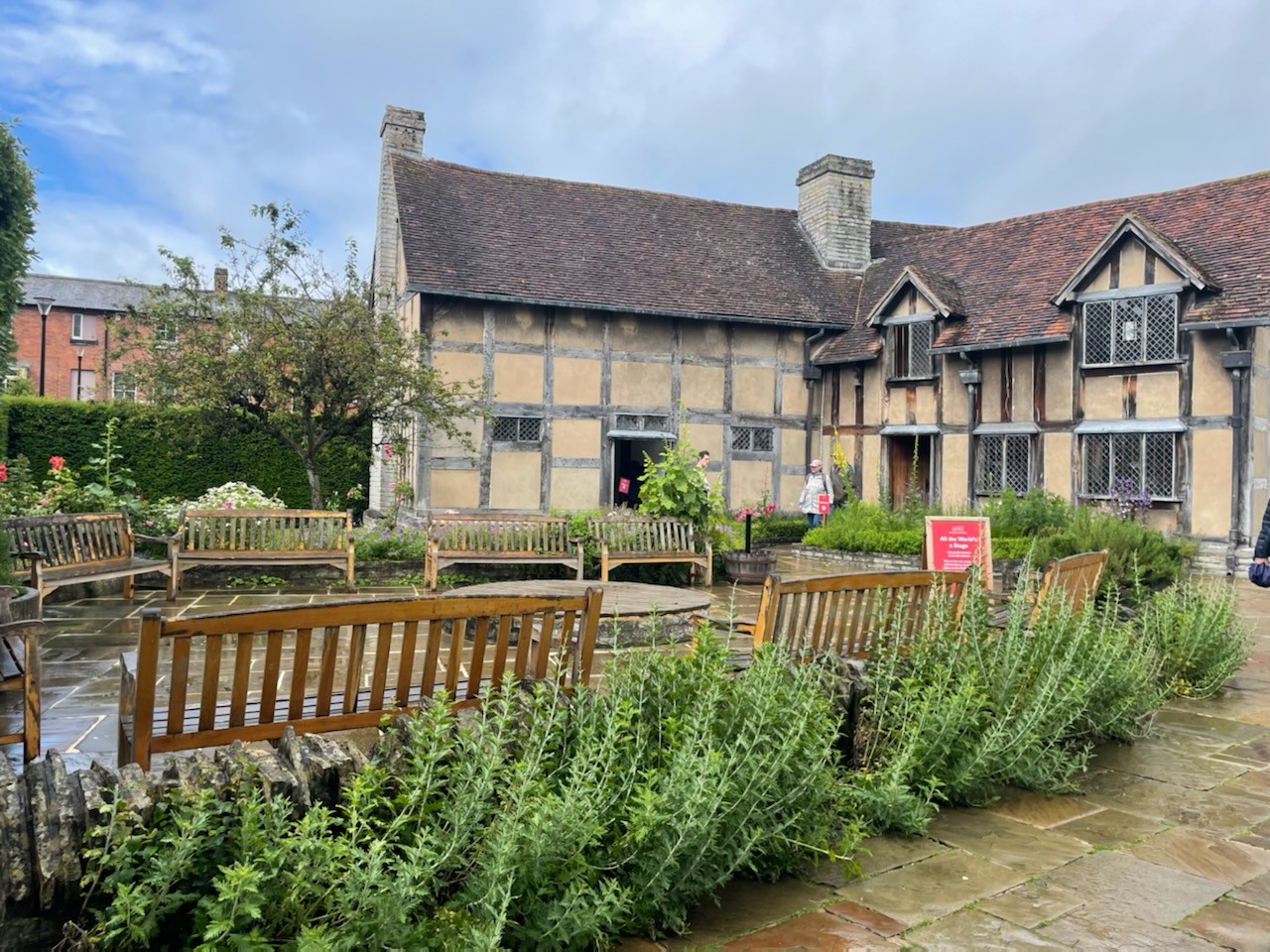
I am grateful for modern transportation. In today’s time, the journey between London and Stratford-upon-Avon only takes two and a half hours, but back in Shakespeare’s day it would have taken him three days to travel between his two homes. Because of the time it took to travel from one place to another, Shakespeare would often stay at the place he had traveled to for long periods of time, usually years.
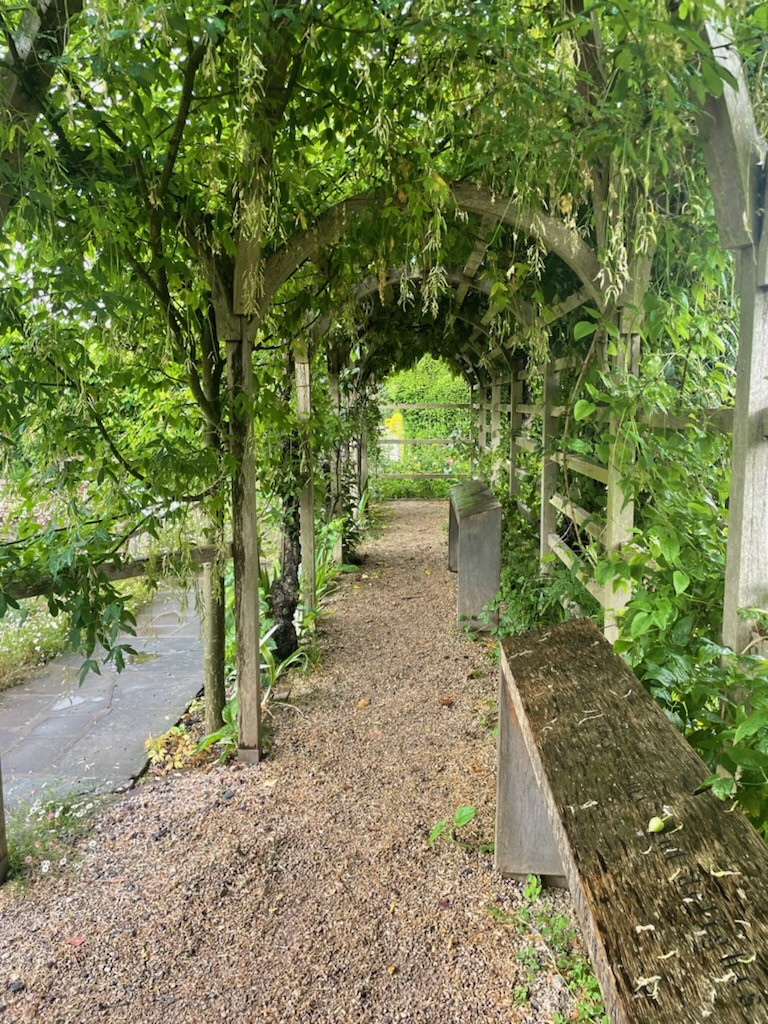
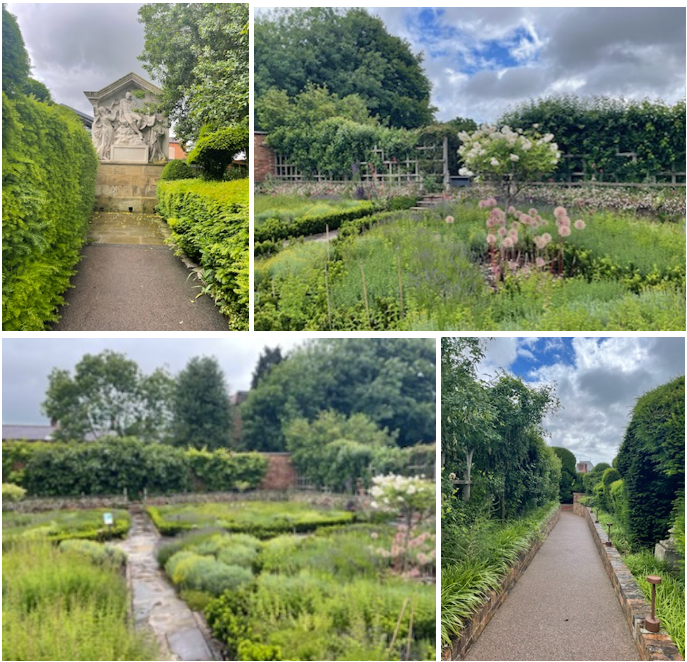
It was so cool looking around and exploring where Shakespeare was born and where he lived as well as learning about his earlier years. Before our trip here I had no idea that his father was a glove maker and William could have been one as well if he hadn’t married Anne. I didn’t know that William Shakespeare had kids or that he had married only at the age of 18. I also didn’t know where he lived or where he was born. I enjoyed visiting the houses Shakespeare had lived in, and I loved exploring the different gardens at each house, especially the garden at the house Shakespeare shared with Anne and their children. It was a lot bigger than I would have thought with a large open lawn at the end of the garden. I also loved walking through the arched trellis walkway. It was covered in greenery and some of the vines even had fruit on them.

Unfortunately, our trip to England is coming to a close with our trip to Stratford-upon-Avon. I was not sure that I wanted to leave the safety of my comfort zone to travel across the ocean for four weeks without my family, but I survived and had a great time while I was here. I saw many different theater productions, found a Ukrainian vegan pastry cafe, made some friends, and saw so many interesting museums and artifacts. I loved visiting the different palaces and seeing the crown jewels. I liked going to the parks and I enjoyed going everywhere we went as a group. I liked most of the shows we went to see as a group and the show I went to see by myself. I’m glad I had the opportunity to see and do everything I’ve done during my study abroad adventure.
Shakespeare can be universal.
I almost didn’t notice the second language cause Shakespearean is a second language. Expressive acting carried the plot and the costumes and lighting were full of mood. I knew what was happening not because I’ve read the play, but because there was so much symbolism and meaning behind the costumes and props. “When Russia invaded Ukraine, thousands of people found refuge in the small town of Uzhorod in western Ukraine. Local director Vyacheslav Yehorov saw the parallels between the refugees’ experience and the themes of King Lear, and involved them in the creation of his play.” stated the Royal Shakespeare Company’s website. I think theatre is beautifully powerful when productions can be adapted and share themes with modern events globally. I can see very plainly that there was a lot of pain in the story of King Lear which is reflected in what is happening in Ukraine. The themes of the play such as betrayal, family, insanity, recompense, blood, loyalty, and death. Scratched and worn tin suitcases were used in the production to bring in the costumes. Tin suitcases that looked like they had been used in war and carry a history with them.
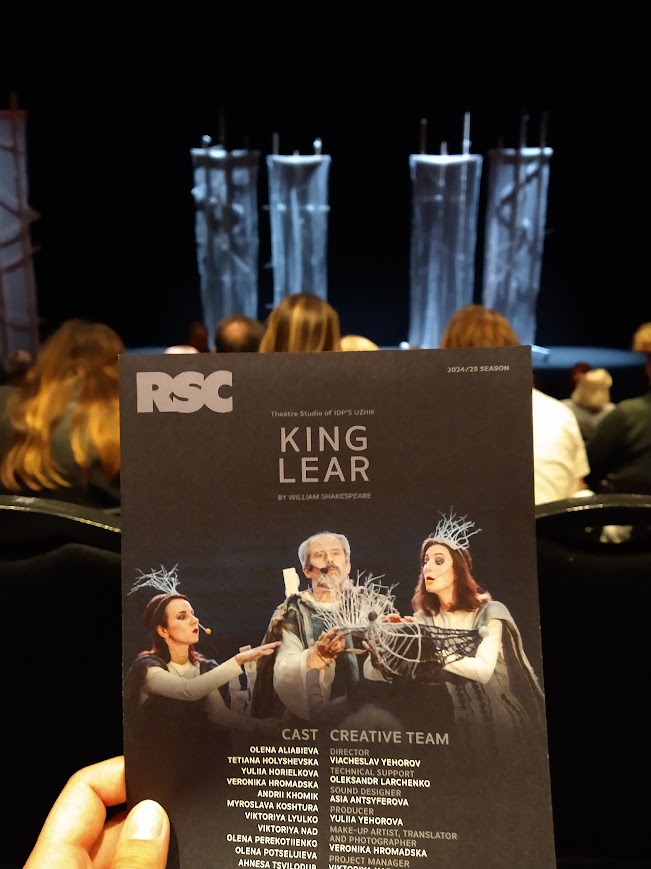
This production had a lot of aspects that reflect a more folklore style. It was the most minimalist production I have ever seen between the set and lack of props. Simple set design with thrown-together pillars and white banners reflected color lighting. The four pillars are representative of the four characters and four rulers (past and present). Their stripping of white sheets is a moment of truth, bareness, weakness, vulnerability, and trust while their clashing of pillars is conflict and clashing of powers. The lighting is indicative of the rising of the sun and the fall of night. It is also a way to change the setting of the different kingdoms with the pink, blue, lilac, and red color changes.
Nature is a very big part of this production and the folksy theme. Haze and fog set in when the characters are immersed in moments of confusion. I made a list of all the sounds in the background: trumpets playing, birds chirping, dog barking, wind whooshing. Drip, fire cracking and popping, breeze, bugs, owls, silence, flapping of wings, pan flute, flies, drums, swords clashing, wolves howling, and metal creaking. Weather affects mood and revelation and is prominent in expressing emotion with strobing storms and peaceful settings. Lullabies that weren’t in the script are added and sung in the native language, which adds a sense of culture that could not have been reproduced in this definitive production of King Lear.
The actors were introduced in white linens and when they accept their costumes they accept their roles. The characters go through a lot of trauma and hardship that is afflicted onto them by their status. Cordelia is dressed in real linens, as is the jester because they have no status. Burlap is equivalent to unfit royalty and status. The king is stripped of his burlap when he loses his land and position when he divides his kingdom between two of his daughters. The daughters eventually betray the king and each other, which was conveyed with the crown. The crown imagery is prominent with the combining of the two into a larger crown. Between the stick and twine jester’s cap, crowns, and burlap overcoats, the play felt like they were children playing pretend. The burlap being so worn and ugly, signals a message that power isn’t necessarily beautiful. Stripped of status is stripping the burlap and therefore the character is stripped of an ugliness. Those who seek power are unworthy of it.
чудовий сюрприз
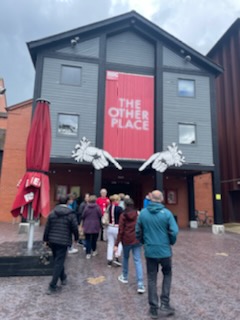
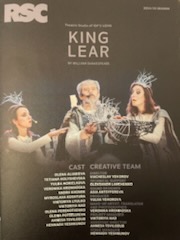
We saw Shakespeare’s King Lear performed by the Royal Shakespeare Company in Stratford-upon-Avon at The Other Place. Unlike the other performances that we have seen, this was performed in Ukrainian without subtitles. This was not the first time I’ve watched something in a different language, but it was the first time I’ve had to do it without subtitles. The way the actors spoke and acted strongly reminded me of a German show I’ve watched. Because I don’t understand Ukrainian, I thought it might be difficult to understand the play, but I was able to tell who each character was and what was happening based on age, costumes, shoes, makeup, lighting, and other context clues. It also helped a lot that we had discussed it in class.
The biggest indicators between the characters were their age and gender but there were many other clues that helped me determine who each actor was. When the actors first came on stage they weren’t in their costumes and instead were wearing either gray, nude, or white under clothes that fit to their bodies, which I thought might just be some modern costume design choice. King Lear was an older man dressed in nude colors. Goneril and Regan were also dressed in nude colors. Cordelia was dressed in white to show her youth, innocence, and good nature. The jester had dark gray clothes and mild clown makeup.
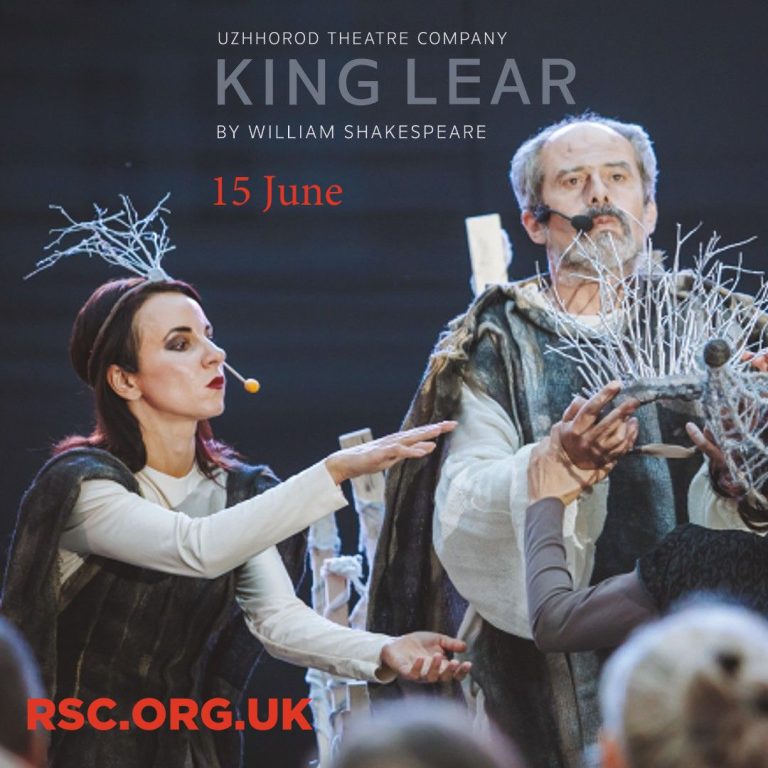
Once the actors put their costumes on it became more obvious who each person was. King Lear had the largest crown. Goneril, the oldest daughter, had the second largest crown and was wearing the most decorated dress. Regan, the middle daughter, had the smallest crown and was wearing a less decorated dress. Cordelia, the youngest daughter, was wearing a plain white dress and didn’t really have a crown but instead was wearing more of a braided cloth wreath.
I was able to figure out the mood and where the scene was taking place with the help of the lighting on the gauze covered background and sounds. For example, when we see Goneril kicking her father out of the castle the gauze was lit with red. When King Lear and the jester were outside, the gauze was lit with a light blue, and you could hear bees buzzing and a dog barking. During the war scene there were war drums being played but I also heard a jaw harp. I wondered if this small detail was because it was Ukrainian.
The director cut a lot from the story, and I actually questioned multiple times if I remembered King Lear correctly or if I was mixing two different plays together. After the show I thought about how much was cut and I decided it was about half. I then realized this made sense because the show was only an hour and a half long, half the length of a regular show. In addition to scenes and plot lines, the director cut important characters. Of the usual ten important characters there were only five in this performance, King Lear, Cordelia, Regan, Goneril, and the jester. This also made the play easier to understand.
I think my favorite character was the jester because of the funny way she moved and spoke. All the actors did a really good job. I wasn’t expecting this because I thought our group leader said they weren’t necessarily actors. Overall, I really enjoyed this performance and did not really have any difficulty understanding what was going on, despite the language barrier.
King Lear
Greetings again, all!! Today I am back to talk about the last show of our trip.😭Last night, we saw an abbreviated production of King Lear at The Other Place, and it was a very interesting experience. The show was performed entirely in Ukrainian and was put on by a group of non-professional actors who were forced to flee their regions of Ukraine after the Russian invasion. Despite all they went through, this group stayed in their home country and decided to make art that could impact and help people. They could have done any number of things with their grief, but they used it to tell an important story, which connects to their current situation. They provided people with entertainment during a terrifying time while still telling a story about war and its consequences, and I think that is beautiful.
As someone who does not speak Ukrainian, I was very curious to see how I would respond to this performance and if I would be able to enjoy it, understand it, or be impacted by it. I was excited by the experience but was also, admittedly, a little hesitant. Sitting through and hour and half of Shakespeare in a Language you don’t know sounds a little daunting and exhausting. (And I say that as someone who loves Shakespeare. The words are just so important to his plays that it is difficult to imagine watching his plays when you can’t understand said words.) However, I was pleasantly surprised by how much I enjoyed the production. I have my qualms with it, which I will discuss in a moment, but I was not as lost as I thought I might be, and I enjoyed some of the performances a great deal. It takes a lot of work to make a character compelling and understandable to an audience that doesn’t speak the language of the character, but the Fool managed to draw me in throughout the show.
Before discussing the Fool’s wonderful performance, I want to address the things I struggled with because I’d rather end with the good stuff.
Some of the acting was a little hard to follow throughout the show. This was obviously in part due to the language gap, but the Fool proved that it is possible to convey the general meaning and intent behind the words across languages, and some of the other actors struggled to do this. For untrained, non-professionals, they were spectacular, but there were a lot of unnecessary, dramatic pauses that dragged the performance on for about 10-15 minutes longer than the planned 90 minute show. The pauses took me out because all the empty air made it hard to stay engaged and feel the importance of each moment. Some of the performances also felt a little two dimensional. The older sisters were, at times, putting on a persona of “mean girl” instead of playing action with clear motivation, and that made them feel less human and more like a caricature. I struggled to understand their desires or feelings past the surface level, and that made it difficult for me to take an interest in their part in the story. However, I will say that the caricature-ness of the performance kind of helps the audience to understand who they are to the story since we couldn’t understand the language. It can also be difficult to add the nuances to the characters when doing such an abbreviated version of the play, so I was not as hung up on the acting as I might have been in another show.
My only other big qualms with this production were the lighting and sound design. I have such conflicting feelings about these elements because there were times when they were both highly effective, but there were also moments when they made it difficult to watch the show. The lighting and sound were very evocative, and they did a great job in conveying environment, differentiating between location, and creating a tone for the piece. However, during the storm and war sequences, the lighting was flashing for far too long. I liked the strobe element at first because it created a very cool visual effect with the fabric being moved on stage, but it kept flashing once the actors started speaking. This made it very difficult to see and focus on them, and with the show being in another language, seeing actors’ body language is more important than ever. It also went on long enough that it started messing with my eyes, and I was on the verge of getting a headache from it. I loved the concept, and I think the strobe sequences can still work in the show, but the length of time they went on made it very difficult to enjoy those scenes. I lost a lot of important moments because of that.
Likewise, the sound design during these moments was very loud. While that is arguably a great choice during the transition, as it envelops the audience in the sounds of the storms and war, the sound did not fade out enough once the actors began speaking again, so it was difficult to hear them. While I would not understand the language either way, I think I would have understood and kept up with parts of the story more if I had been able to better hear the actors’ inflection and voice changes. This was also an issue during some of the more mundane scenes as well. I loved the forest sounds during outdoor scenes and the sound of the flute when they were at court. They added ambiance, and they helped with differentiating location. However, when you make a decision to have sound underscoring a whole scene, it needs to be at a low enough volume level that it is not distracting and does not cover the actors’ voices, and this production had the sound going a little too loudly the whole time.
I know that was a lot, but I do want to emphasize that the production was still so cool to watch. While I lost the impact of some moments due to the issues mentioned above, there were still scenes that had great emotional impact. The Fool did an incredible job, especially considering they were not a trained actor, and despite the flashy lights and loud sound, those design elements did help set the scene well throughout the show. I think the reason I enjoyed the Fool’s character so much is that the actor used physical comedy and body language very well. As I previously mentioned, when you don’t understand the language someone is speaking, the way they carry themselves becomes so much more important to understanding what is happening and what they are feeling. The Fool seemed to have a great understanding of that, and they leaned into the physical elements as a result. They always stole the spotlight in every scene, they had the best pacing, and they were the most fun and compelling character to watch. The Fool was also the main reason I could follow the show as well as I did because they did a good job in setting the tone of each scene, and they had the clearest relationships with each character.
When it comes to capturing the essence of King Lear, I would say this production did a relatively good job. There were definitely moments of confusion regarding what was happening and how I or the characters were supposed to be feeling in response to the events. However, some of the stage pictures, particularly of King Lear and Cordelia, were beautiful and clearly conveyed tones of love, loss, tragedy, and the terrors of war. Whether I fully understood and loved the production or not, I could not help but be affected by what this theatre company is doing. They took their pain and tragedy and turned it into art, with the hopes of helping others. And they still brought stories of war into the light so people might understand a taste of the devastation they have faced. The actors were clearly grateful to be up on stage performing, and they had something to say. That alone made this production stand out among others I have seen, and I am glad I got to experience theatre in a new way.
14. The Loudest Thing in Stratford-Upon-Avon
What’s up, strangers? The clock grows ever closer to midnight, which means that soon enough you’ll have to hear the stories from this trip from my mouth and not just my blogs. Scary, right? Soon enough I’ll be on the 4000 mile journey to turn back into a pumpkin.
Until then, there’s still plenty to do in Stratford-Upon-Avon. Well, that’s disingenuous; there’s some things to do in Stratford, and I am going to do all of them because there really isn’t much to do here. It is a very quiet, small town, which is somewhat refreshing, but I miss the city more than I could ever convey. I’ve already had enough of small towns in my life; I’ve found that I like to live life in the fast lane. But for now, we’re taking it slow. Winding down.
Last night, we saw King Lear which is currently running at the Royal Shakespeare Company’s The Other Place theatre. The twist: the entire thing was put on in somewhere over 90 minutes, in Ukrainian, without surtitling. The most context for the story that the average theatregoer has is the description of the story on the back of the free program, which is skillfully pared down from the original script. Considering that nobody on the trip speaks a lick of Ukrainian, this show was a trip. It’s pretty startling when the only words you can understand in a play are the words “yes,” “crown,” and your legal name.
It was very interesting to see, and I think that seeing this show is a testament to how much proper acting matters. Usually the words of a script can speak for themselves, and give the audience some idea of what a character is. When that is done away with, the audience is left only with the action of the characters to understand what is going on, which becomes difficult with non-professional actors. An interesting and important part of this show is that none of the people acting in it were professionals–this show was a passion project by people who previously had almost nothing to do with theatre. This lends itself to the heartfelt nature of the piece, but does take away from understanding in the English audience, which is, decidedly, the target audience for a show put on in the UK. I could be wrong, but I assume that the majority, if not all, of the people in that audience could not understand the dialogue. This puts much more pressure on the actors to be practiced and know how to portray their characters in an effective manner.
The production was not given surtitles due to a want to present the story in the most authentic way possible, meaning that it was performed in its original condition. While I respect this idea, I do not think that it was necessarily an effective choice. Movement pieces are very often effective ways of telling a story, but they rely heavily on the confidence that the actors can convey what is going on solely in their actions; the actors in this production were very clearly playing character rather than action, which made it difficult to follow a lot of the time. The actress who played the Fool was the only one I could follow a majority of the time. Despite having read the Shakespearean version of the script, and having discussed it in class, I was constantly questioning what part of the plot we were in at the moment.
As it was, I spent the entire time feeling like I was in a listening test in a language class for a chapter I didn’t study for. After the show, Shawn asked me to describe the show in one word. I asked if I could potentially have more words, because as someone can probably see, I have a lot of words to say about this piece. But he gave me one. The word I used to describe this piece was “overwhelming;” and it was overwhelming in more than one way. The emotional content and context of it within the modern world is heavy alone. But that combined with the amateur and confusing acting, alongside the overall too-loud sound design and many occurrences of strobing lights gave me a headache within the first third of the play. The show did not have the emotional resonance with me that it should have, and I think that a lot of that is due to the lack of dialogical context.
Even if I did not enjoy the production, I think that it was a valuable experience. Like I’ve said before, seeing theatre in any context, good or bad, is useful to the theatremaker. It teaches you what you like and what you don’t like; it shows you what works and what doesn’t.
One more post to go!
CW
King Lear
We got the incredible opportunity to see King Lear performed in Ukrainian. In Stratford-Upon-Avon at “The Other Place” theatre, created and performed by Ukrainians displaced in the war. Apparently director Vyacheslav Yehorov saw parallels between the experience of the Ukrainian refugees and the themes of King Lear. We were told it would not be just classic Shakespeare King Lear performed in another language, but a looser interpretation that was a bit more like a performance art piece. The story was definitely different, with a cast of only five playing Lear, the fool, Cordelia, Goneril, and Regan. The rest of the characters—Gloucester, Edmund, Kent, all the husbands—were all omitted. So already the storyline is vastly changed. It also was in a language I cannot understand, save for a few words like their names and “King”. I knew the original story, but this one being changed I did not understand what was happening the whole time. I loved their performances, the Fool was my absolute favorite. The way she moved—crouched down, arms floating—was so interesting to see and worked perfectly for the role of the fool. I also really loved their headpiece, I want to wear it I loved their costume. They did a really great job conveying it even to non-Ukrainian speakers such as myself with the music and their acting. But either way it did not really matter. TI loved it, not because of the plot itself so much as the emotion you could feel coming from these actors. What the have been through and what so many others are being forced to go through is something I cannot imagine. The context of their circumstances and their reason for creating this show is what really powered this experience for me. Not to discredit their acting in any way, of course, I felt they all gave incredible performances. And they are not even trained actors, they were all in other professions in Ukraine I believe. But you would never know, they delivered it with such strength and passion it was so moving. What really got me though, and made me have to internally process for a while after, was not even the show itself. Once they were done and the cast and crew all came together for final bow, they seemed so grateful to the audience. They seemed to be clapping for us as we clapped for them and their performance. Seeing their faces and their reaction to us being there was so heartrending. While I can’t imagine their experiences that have brought them to this point, I am so grateful to have been able to experience that and share that with them. I hope that even though they have been through such a terrible and heartbreaking ordeal, and being separated from their country and people, theatre has helped them in some way to share their grievances and enlighten others like myself. I teared up at the end seeing them react to us. The actor who played Lear was particularly moved it seemed and he kept motioning out to the crowd, clapping for us and calling us to stand. Unnecessary in any performance, as we are there for them and their talent, but particularly given these circumstances it was something you couldn’t help but feel for them and their experiences these last few years. I am so grateful to them for creating this and sharing this with us, and I am so lucky to have been able to experience these one of only two shows they are putting on here. I feel so lucky to have been on this trip and see all these incredible shows!
King Lear in Stratford-upon-Avon
This is my first blog post while in Stratford-upon-Avon. I will hold off on too much regarding the town because our next prompt relates to the subject. We have already watched two shows here in town at Royal Shakespeare Company in The Other Place theatre. Today, as you can tell by the title, I will be doing a little dive into the performance I saw of King Lear.
There are a couple of interesting facts about this production. First, it was in Ukrainian without surtitles. This made a few of us a little nervous about being able to understand what was going on, especially because it was not going to be word for word of the play. Second, this production was influenced by the war currently going on in Ukraine and these individuals turned to theatre as a form of release. The people on stage were not professional actors. This idea intrigued me greatly and I was excited to see how it would turn out.
The influence of war on this production felt fitting. The universality of loss, whether that be of your home, friends and family, or all of it, is at least a fear most if not all of us have. Most of us have not have ever experienced such losses as the those acting in King Lear, but anyone with a heart could feel how much impact emotional turmoil was on that stage. I was able to loosely follow the plot, at times I was confused, but never to the point where I was completely lost. When they stood at the end holding hands, and were so incredibly proud of the work they done, I got teary eyed. I could not imagine how they could relate so closely to the story. While the acting was not the best, I think having people who are not professionally trained to present this show this specific way is important. This shows how real and true the events are on stage for these people.
I would like to briefly mention the costuming, set design, lighting and sound. The characterization that came just from the costuming was fitting for each of the characters. The fact that the King started off in the grayish tan overlay that matched the Bad Sisters (Goneril and Regan) and all three had the silver crowns on, showing they have an established relationship. When Good Sister (Cordelia) came in wearing all white with the white flower crown, she very clearly stood out as someone who is different than the other three. When the King took off the grayish tan overlay that showed his change of heart as a person and towards Cordelia was a simple yet effective tactic to show us what had happened. The Set design was simple as well, the tall wooden structures with muslin-like fabric floating down. Everything was on wheels and were moved along or off the stage, making functionality important but also to show scene changes in a simple way. The lighting was great as well as sound, but often felt a little too loud and the cues felt way too long at several moments during the show. Overall, the tech was simple but effective.
Theatre is so magical. Theatre is medicine. I have been reminded time and time again throughout this trip and each time is just as exciting yet painful as the last. How lucky are we to be doing this?
See you soon.
 Theatre in London U of A