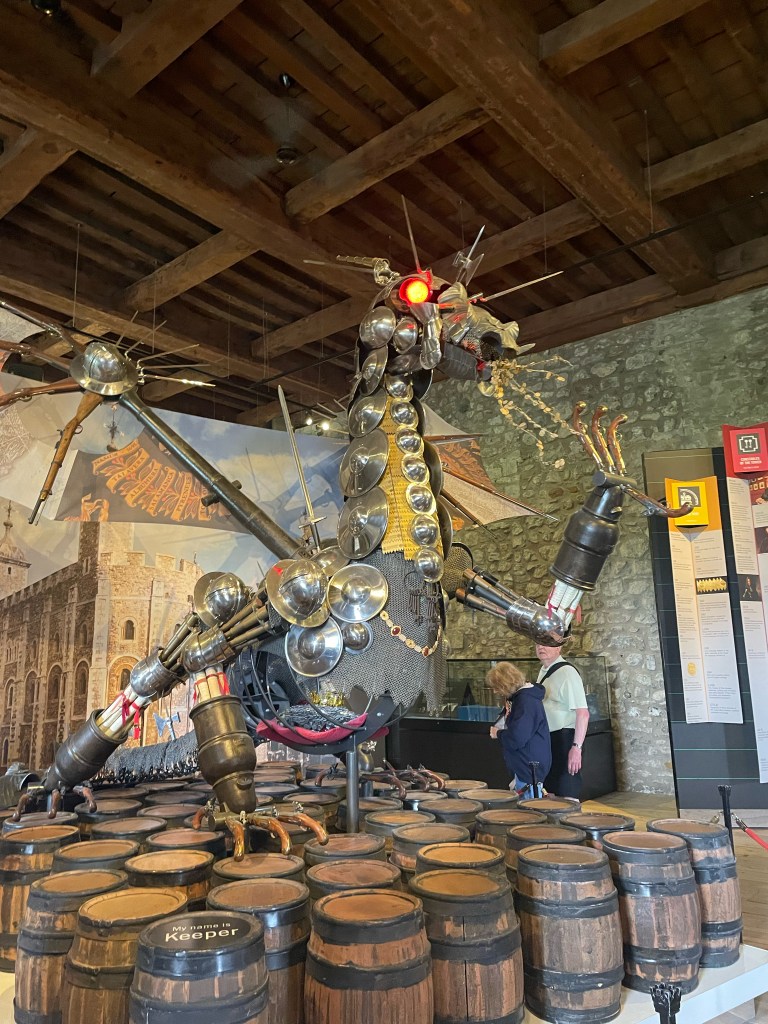
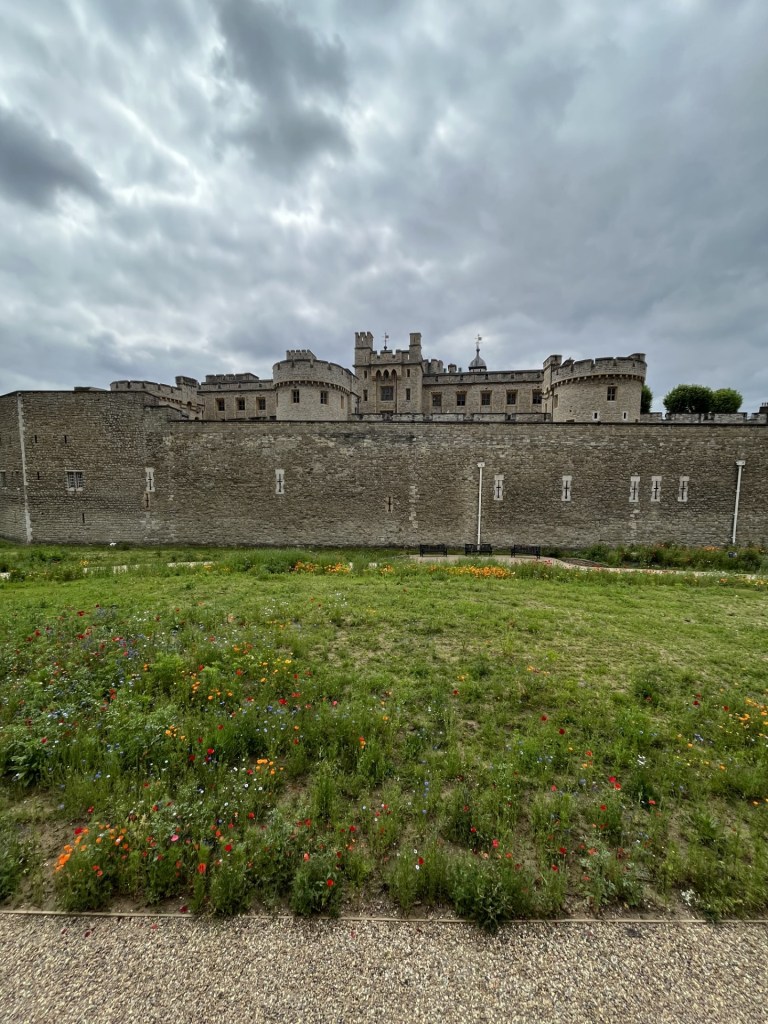
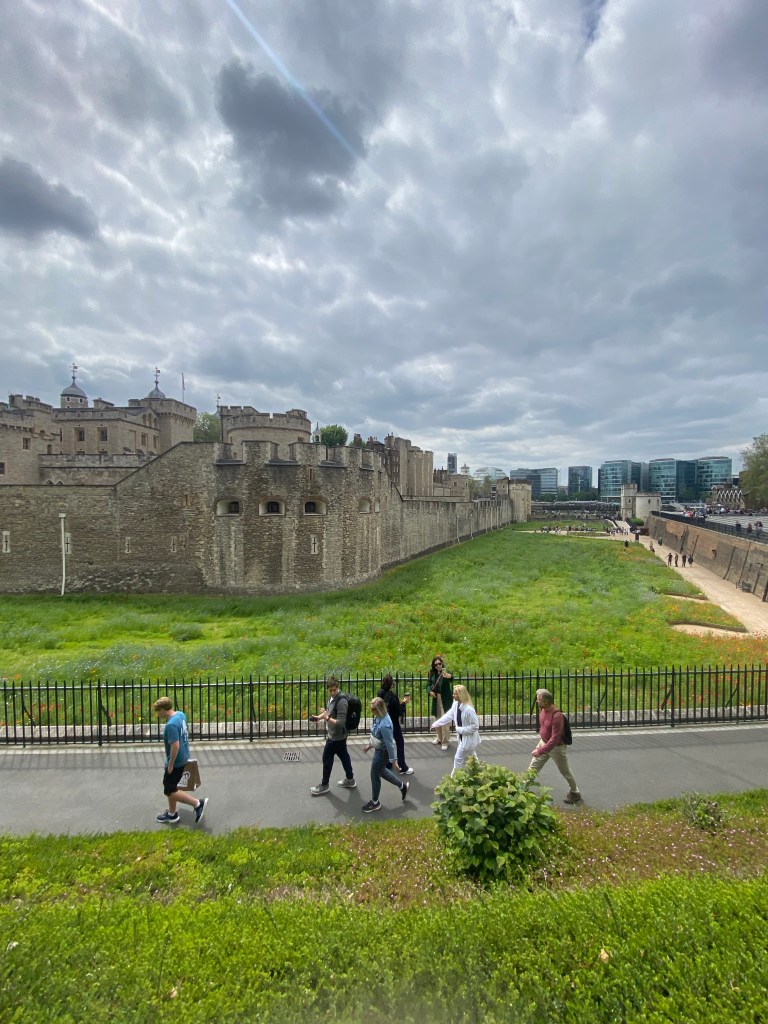
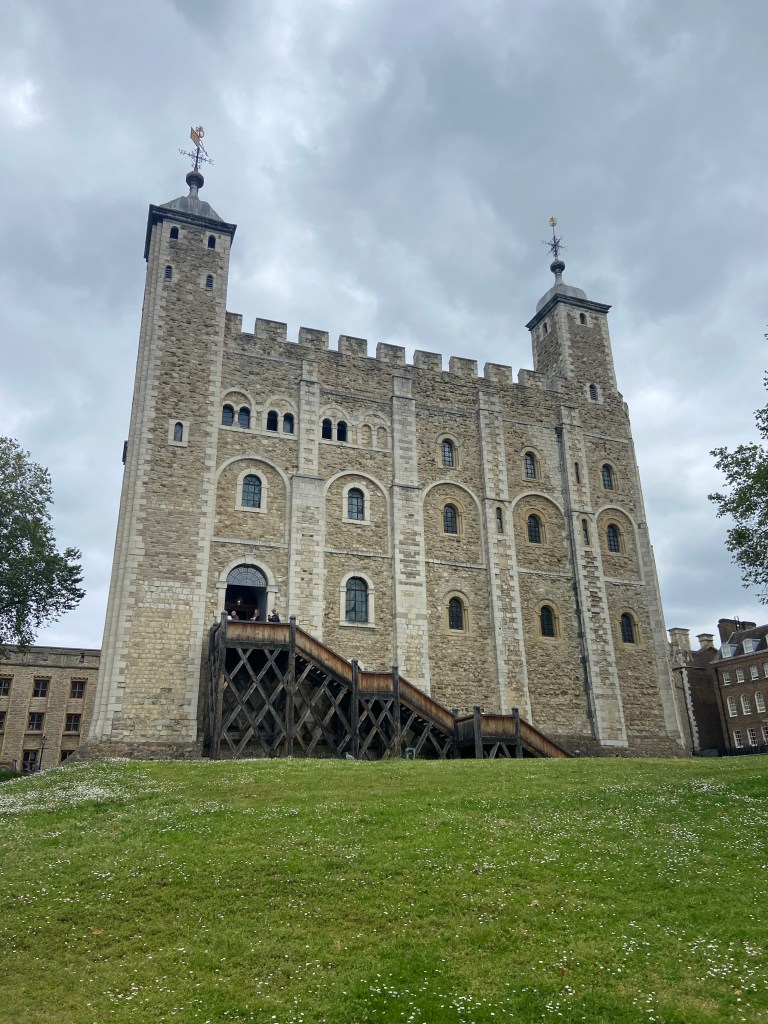
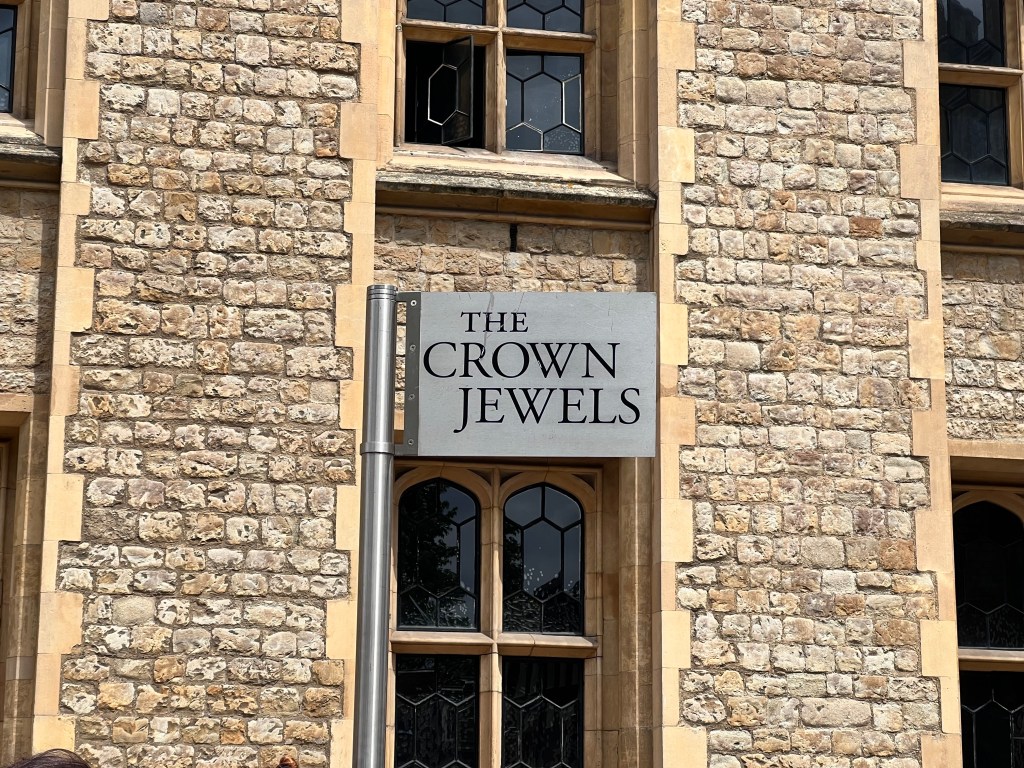
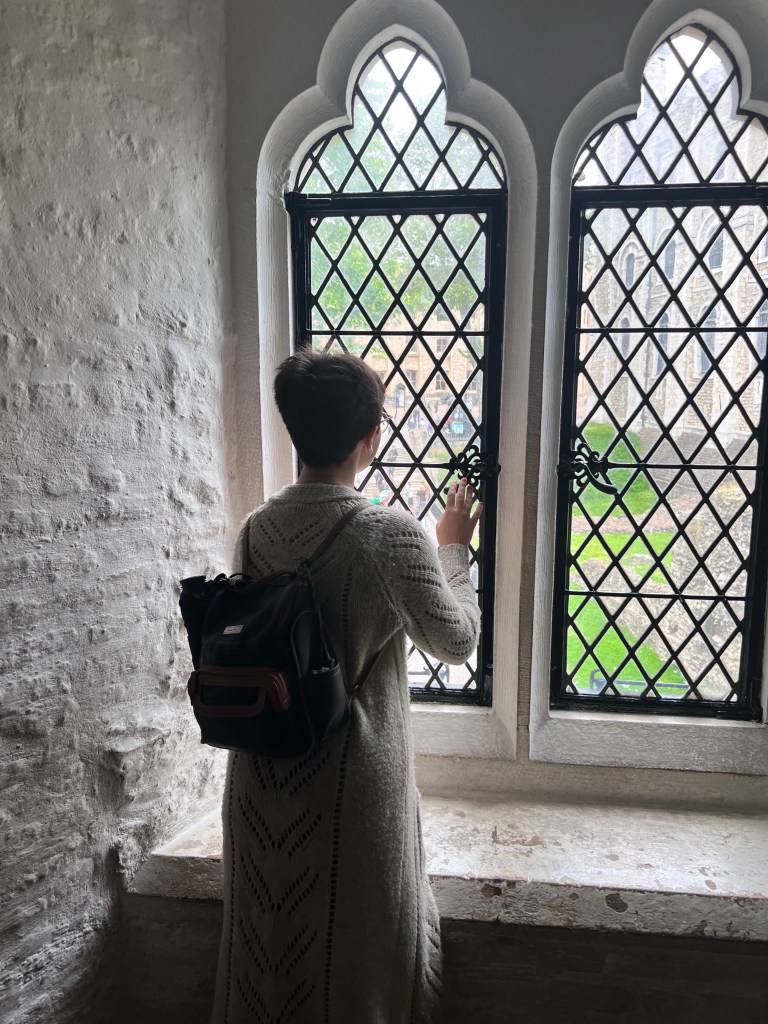
It is my third day in The United Kingdom, and I went to go see the Tower of London. I’ve never seen the Tower of London before. I was expecting one large tower but instead, I saw a palace that was at least 1,000 years old. There were multiple buildings big and small that were surrounded by this great wall and an extinct mote that the river Thames used to run trough. Now it’s a field full of vibrant flowers. When I walked through the black gates of the Tower of London, the first thing I wanted to see were the crown jewels. They were magnificent. I saw all the crowns that the former kings and queens wore on their coronation day, and the scepters they held as well. I saw a dress that a queen wore in 1100 and Queen Victoria’s small diamond crown that she wore over her widow’s cap following the death of her husband, Prince Albert. The last thing I saw when touring the crown jewels exhibit was the golden tableware that the royal family would use when they were hosting royal buffets. I saw hundreds of gold silverware, plates, bowls, goblets, and candle stick holders. I even saw a giant punch bowl that I mistook for a bathtub because it was so massive. The punch bowl even had a ladle that was made up of a golden Nautilus shell on an ivory stick. I was mesmerized by everything in that exhibit.
After seeing the crown jewels, my friends Alli and Brittany wanted to go see where Anne Boleyn was beheaded for treason in 1536. Bit of a dark turn to this blog post I know. Once when we found the location, there was a statue of a glass pillow that gave us the names of all the people that were executed at the Tower of London. Underneath the statue there was a message that said, “Gentle visitor pause awhile: where you stand death cut away the light of many days; here jeweled names were broken from the vivid thread of life: may they rest in peace while we walk the generations around their strife and courage: under the restless skies.” This is when I discovered how dark the Tower of London’s history was. Across from where the glass statue stood, there was this tall, dark brick building. I learned that this is where the prisoners were kept until they were released, or until they were executed. Inside the building, it showed us pictures of the prisoners and why they were imprisoned. There was at least 90+ people imprisoned in the Tower of London. One of those prisoners was Elizabeth I, before she was queen. She was imprisoned by her half-sister Mary I. She stayed in the Tower of London for two months in 1554 for her alleged involvement in Wyatt’s Rebellion. She was found innocent. Another famous person that was a prisoner at the Tower of London was William Penn, the future founder of Pennsylvania. He was imprisoned for seven months in 1668-69 for pamphleteering. The last people to be executed at the Tower of London was Josef Jakob. He was a Nazi spy that was executed on August 15th, 1941, by a firing squad. I didn’t expect the Tower of London’s history to be so dark. But I’m glad that I learned about it and I’m glad that I know more about London’s ancient history.
We wrapped up day three in London by seeing a Fringe show called Jules and Jim. The play was about two men who become inseparable best friends in their early adulthood. They meet and fall in love with a spontaneous woman named Catherine who they compare to a Greek goddess. Catherine wants to be involved with both men and she drags them into a toxic love triangle that last 25 years. However, that toxic relationship never tore Jules’ and Jim’s friendship apart. Even though I thought the relationship dynamic was off-putting, I knew that was the point. I loved the show. It was one of the best shows I have ever seen. The actors did an outstanding job, and it was interesting to find out that the actor who plays Jules was also in the T.V. show Outlander. I really enjoyed my third day in London and I’m excited about what’s next!





 Theatre in London U of A