Hamlet: The Musical (Not really but kind of)

Guys we did it. We made it to our final show of the trip. I have officially seen 25 shows in less than 30 days. Which is INSANE to think about and I am very emotionally overstimulated just by the vast range of shows that I have experienced.

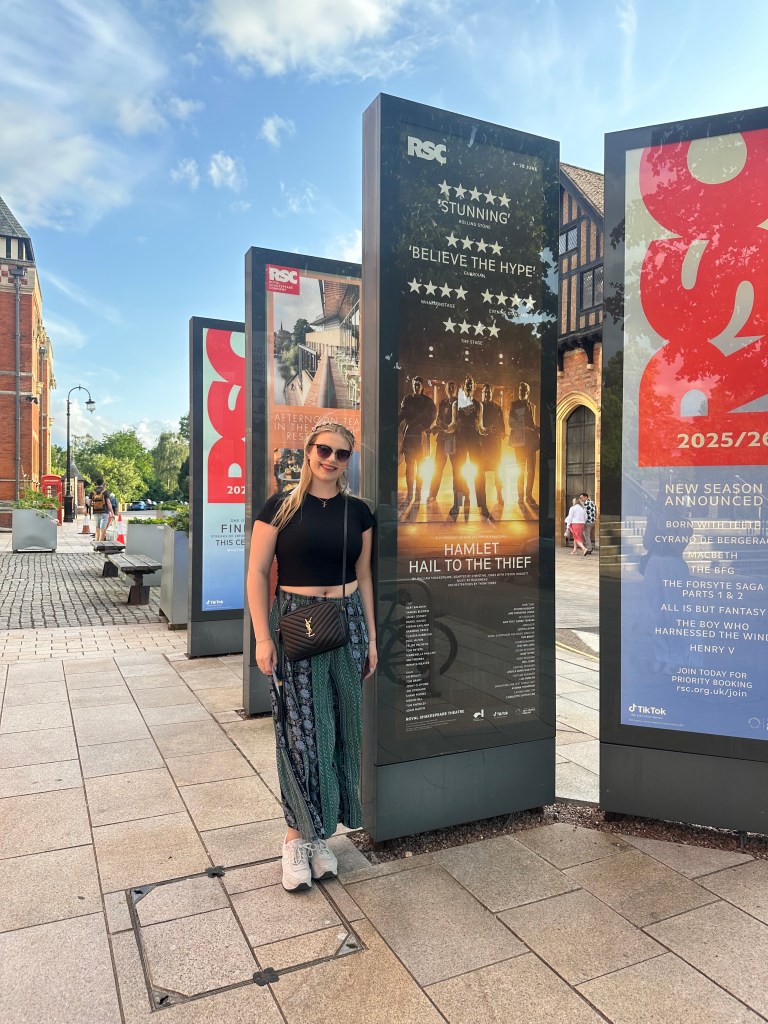
            Our final show that we saw on this trip was Hamlet: Hail to the Thief at the Royal Shakespeare Company in Stratford upon Avon. Ya’ll… it was crazy. In the best way possible. So, it was literally Hamlet… set to the music of Radiohead. Yeah. The rock band. And the crazy thing was… it worked. Really really well. I know this comes as a shock to you, but I did not know a single Radiohead song going into this show. I know. *Gasp* I had reread Hamlet prior to coming on this trip in order to prepare for our in class discussion, and was reminded just how much I loved the source material. Needless to say, I was so intrigued by how they were going to use music to tell this story that has been around for hundreds of years. Were they going to use Shakespearean language and iambic pentameter? Was it going to be the story of hamlet but in a jukebox musical format with Radiohead songs. I am happy to report it was neither of these things.

            First, the show was one hour and forty minutes… no intermission. Which, if you know me, you know I LOVE a tight 90–100-minute show without an intermission. And Hamlet is notorious for being a long show. So, I was delighted to learn that this was going to be Hamlet told at the length of a Disney movie (The Lion King?!). As for structure, they used Shakespearean text, and then a lot of the longer scenes in the source material using Radiohead songs. They had 2 main actors that sang the songs, along with a live band. They were accompanied by the actors, who would sometimes sing, but mostly interpretive danced to the song as their character would. Being a musical theatre fan, I thought that this concept did an excellent job of propelling the journey of the characters forward while not deleting any information about the plot or given circumstances. In musical theatre, it is often said that characters should only sing whenever the emotion they are feeling is so great, the only way they can process these feelings is to sing about them. And while this was not Hamlet: The Musical, I felt like the songs were intentionally placed and did not feel disjointed or out of place.

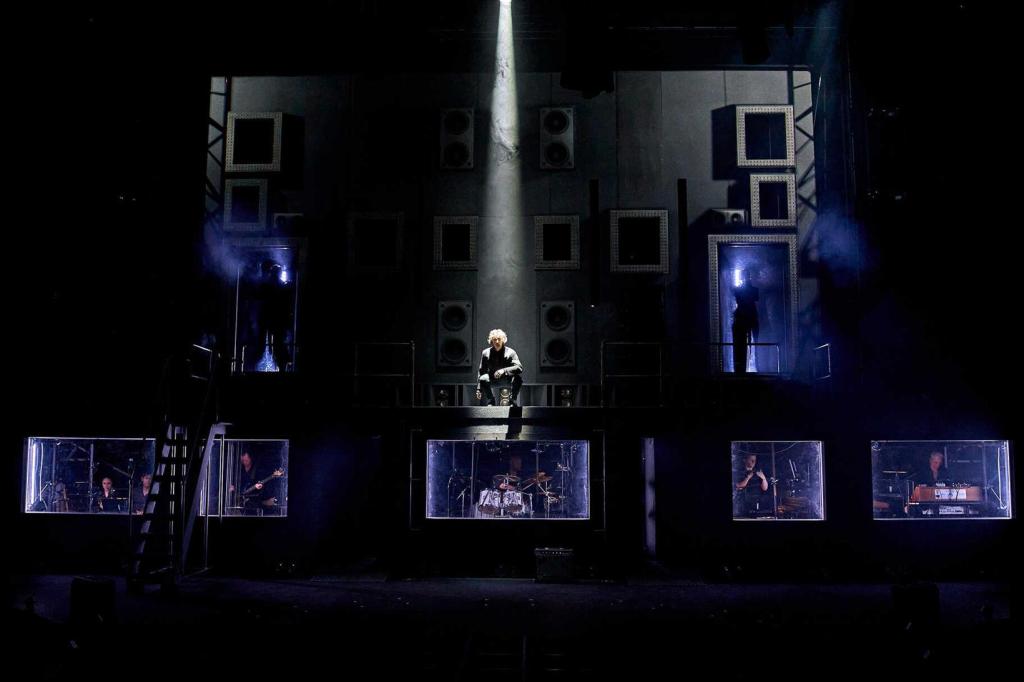
            However, the direction of the piece is what stood out to me the most. The actors used every single inch of this stage, and it was so effective in communicating the director’s perspective. The show was visually stunning, but I felt like this production was effective at asking the audience its main question: What does grief to do a human? How do different people work through grief? It honestly felt like a commentary on Hamlet’s mental health journey and how he processed the passing of his father. Not even his passing, his murder. The final image of the piece was breathtaking. At the beginning of the show, there are multiple suit jackets that are hanging on stage. They fly out right when the show starts, and we don’t see them again until the final scene, where they fly in again. It was at this moment where you realize that they are flying in at the exact places they were before. Only this time, they are hung above all the people who were killed in the final fight. This use of foreshadowing that we didn’t even know existed was so genius and I will be thinking about it for a very long time.

            What an incredible way to end our series of shows. I truly think I will be processing and relieving a lot of these shows for years to come, and I am so grateful that I got to see Hamlet: Hail to the Thief.

-R
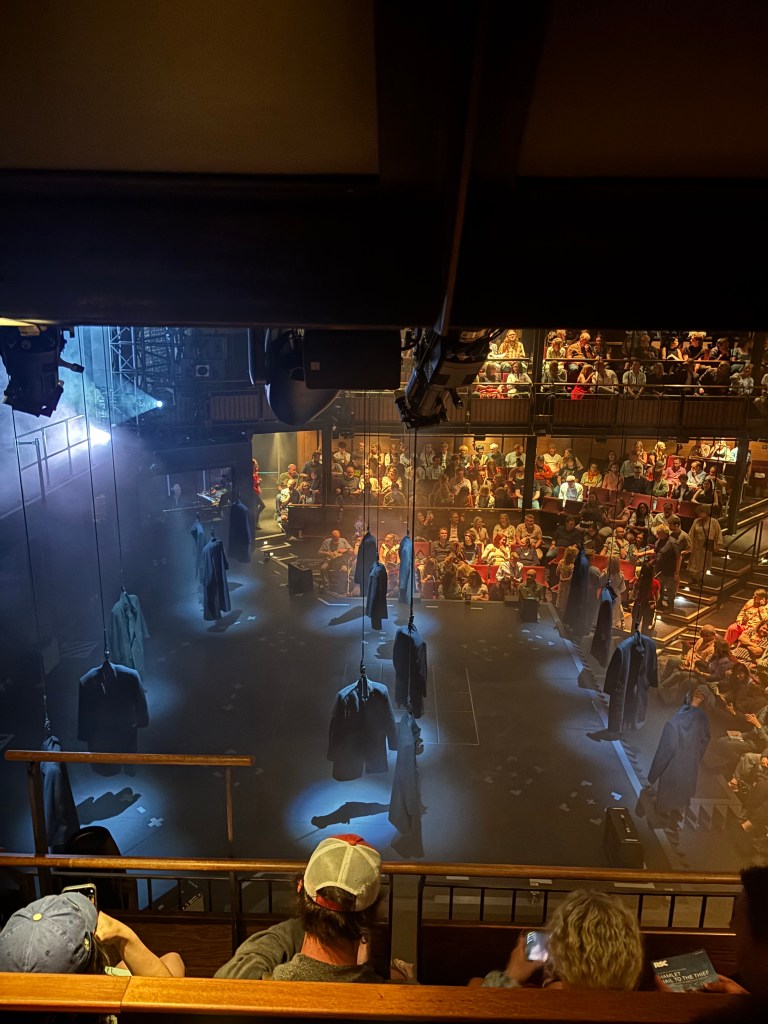
The set of Hamlet: Hail to the Thief

Hamlet Hail to Every Single Choice Made!

Our last show of the trip has come and gone! I am so happy and honored that it is Hamlet. It is my favorite Shakespeare and has a lot of personal significance to me, so getting to see it performed live for the first time was everything I could’ve asked for. This was different from anything we saw here, and honestly, different than anything I have really ever heard about or seen outside our trip. This show interwove songs from Radiohead to tell the story, and at one point had the actors on stage singing some of the songs from the show. But I am getting ahead of myself! Let go from the top!

First, I had about as good of a seat as I could’ve asked for in terms of the ones that we were all given. I was the very last seat of the first row of the circle, so I was sitting on stage right facing the “side” of the thrust stage. On the stage were a bunch of heavy coats that at the start of the show flew out. There were two floors to the set, and at the bottom of the lower floor were windows with musicians who were playing the music live. The second floor took up the entire rest of the stage and was a 20-foot tall screen that had speakers and soundproofing material on it. The visuals that were on that screen were stunning. There were three doors in the upper story, and two singers came out of the two side doors and sang during the transactions. Speaking of transitions, they were some of the most well utilized transitions I had ever seen. The show was 1 hour 40 minutes instead of the normal 3-hour production that Hamlet is, so in order to cut scenes but show what was cut to keep the story flowing and making sense, they had the actors briefly act out their interactions in one to two movements. I am not doing it justice with my description but trust that it was great. There was a really minimal set, only a few speakers which acted as stools and stands, and then a few props here and there, which were all red when they came onto the stage. The only two I remember were the megaphone Hamlet uses during his scene with Rosencrantz and Guildenstern where they see him as mad, and then the cup that Gertrude drinks out of at the end of the show. Oh, and the dagger that most of the people die by. But there wasn’t much else. 

I want to touch on some scenes I love! The “to be or not to be scene” was done in a way that Hamlet was saying it to Ophelia while they are being listened in on, so they mushed those two scenes together. It really worked. Then, when Ophelia is about to die, they have her say the monologue and it has a delayed echo through the whole theater and it was AMAZING. Also with Ophelia and Hamlet, the first scene they are in together has very few words, and was just them goofy dancing together, it was probably my favorite scene in the show because the chemistry was crazy but so was the simplicity and believability of the scene. I should now say that the acting was everything and more. There was not one actor who was a weak link, and I struggled to find a show in my memory where that was not the case. Our Hamlet was very similar to Adam Scott’s Hamlet in terms of delivery and tone, but had his own spin to it, as well as youth, that made it also phenomenal. 

All in all, I loved that this was our last show. We have seen so much theater in this last month, and I am grateful to have seen such a wide range and variety. 

Hamlet hail to the Thief

Before I begin my critique of hail to the thief I feel like it is important to lay out some of my biases that may have affected my feelings towards the production. I am in no way a fan of interpretive dance. I recognize the skill it takes and believe it is a perfectly valid piece of art, but it is something that I have a very hard time understanding and do not particularly enjoy. This is particularly relevant for this show because for a relatively short run time a decent chunk of it was made up of interpretive dance.

My biggest problem with the play was that it felt like Hamlet for people who already knew the story of Hamlet. It hit all the big plot points of the story, but between the cut out sections and the portions of the story told only through dance, the play alone did not give strong reasons to feel attached to or care about the characters. Knowing the story and knowing the characters going into production, I was able to piece together what the dance was trying to show, but I feel like without that previous knowledge I might have trouble following the plot fully, but more than that I would have trouble connecting to the plot as the characters had not been fully explored. While I do not believe that to tell the story of Hamlet each line needs to be read word for word, I feel like there is a happy medium of a 2 to 2 ½ hour hamlet that fully gives the story without dragging too long or cutting too much. To me it felt like the spark notes of hamlet. You get all the big plot points and famous lines and speeches, but so much outside of that is lost. I get frustrated on occasion with the inaccessibility of theatre and I feel like this show was a strong example of it.

I also felt like the inclusion of the radio head music did not make the story necessarily any more impactful. That may have partially been because with my proximity I could not very well hear the lyrics, but there seemed to be a sharp distinction between the chunks of dialogue that progressed the plot, and then the chunks of music and dance that were more just performance. The performances confused me about the plot and character dynamics more than they explained things. There would often be characters behaving aggressively towards each other or even romantically towards each other in ways that did not seem to be reflected or at least not explained in the plot. This may be part of me having trouble with understanding interpretive dance but I feel like much of it did not read as plot relevant and was just put in to create a striking visual, which I feel like by itself is fine but when trying to fit a sometimes 4 hour long story into a 1 hour 40 minute show you do not really have time to do things that don’t progress the plot. 

While there were parts of the story I did not like, the visuals on the show were very good. I did not like the decision to put every character in black because I feel like it takes away the impact of Hamlet staying in somewhat mourning attire, but outside of the story they created a very striking image and I was impressed with the variety of costumes and silhouettes that were used despite all the characters wearing primarily black. The projection was also some of the most impressive I have seen, the ghost of Hamlet’s father was actually scary which I feel is very hard to do in a live show. Using the haze as part of the projection screen and warping his face, with it contorting in and out and sometimes just being a large eye, made me truly unsettled when the ghost appeared.

Overall while it was not my favorite show, it did have some very interesting elements and has definitely raised my interest in how projections can be used more effectively in the theatre.

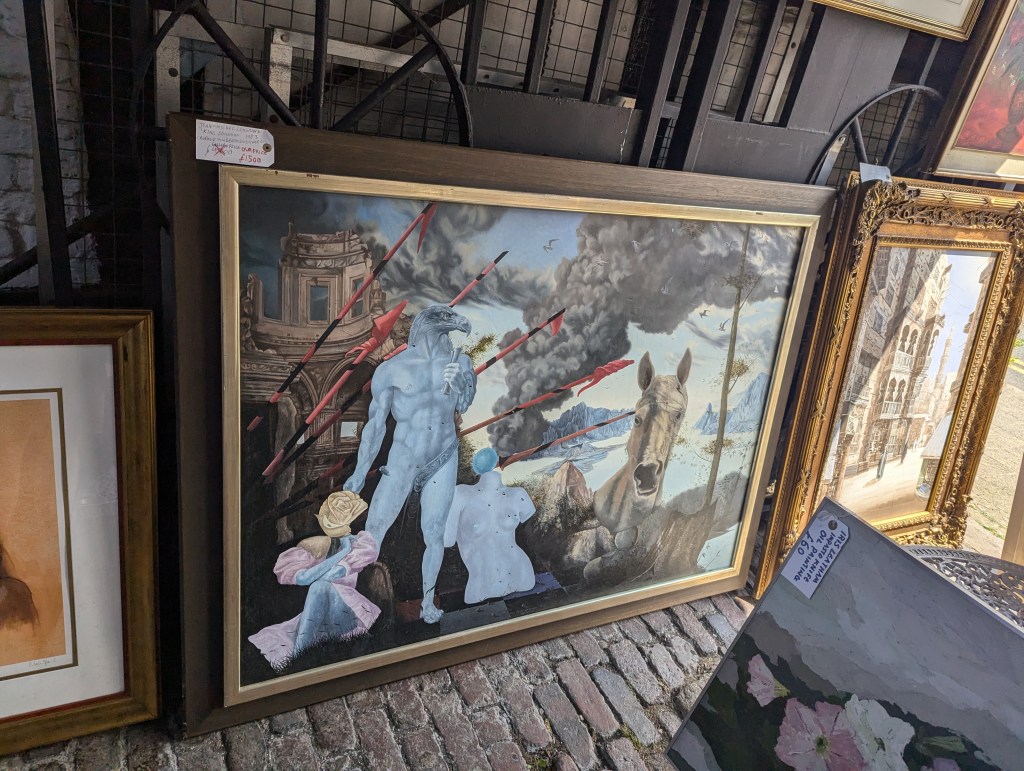
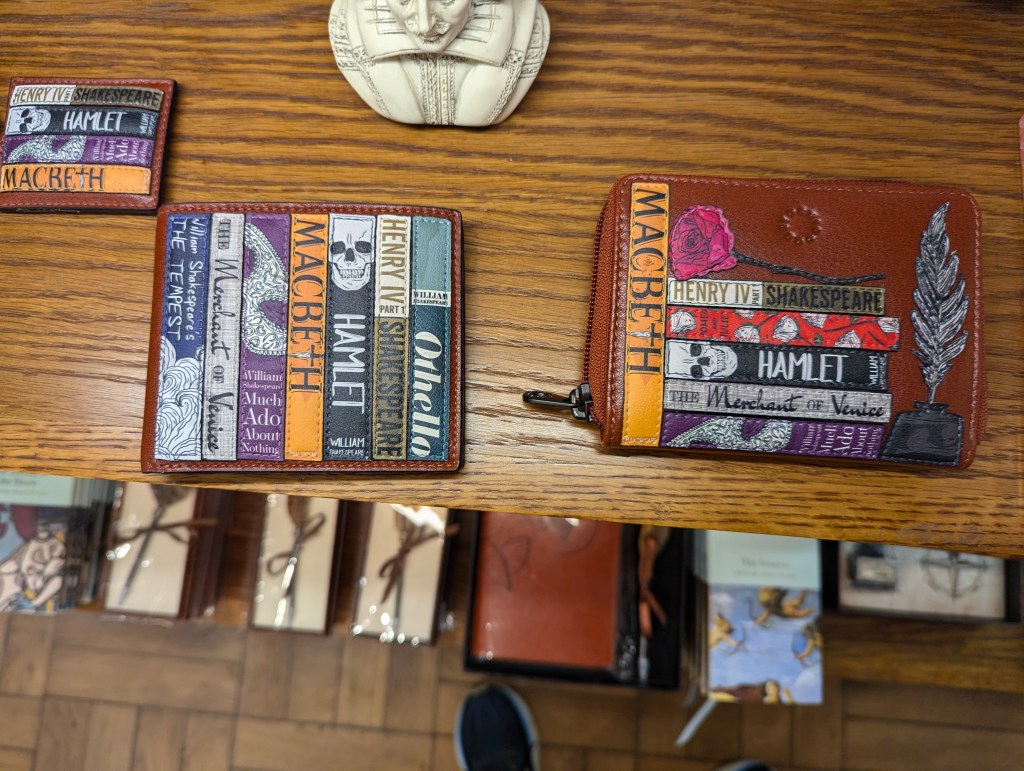
(P.S. I forgot to take a photo of the stage before the show, so attached is a picture of a cool looking wallet I saw in the giftshop and a fun painting I saw earlier in the day)

To Hear or Not to Hear: Hamlet in High Volume

In Hamlet: Hail to the Thief, the Royal Shakespeare Company delivers a bold, electrifying adaptation where Shakespeare’s tragedy collides with the haunting sound of Radiohead. Going into the theatre, I didn’t know what I was expecting because I knew nothing about Radiohead, but I actually really liked this adaptation. The music isn’t just background but a vital part of the storytelling. Radiohead’s experimental and emotionally charged tracks are woven directly into the story of Hamlet, creating a powerful atmosphere that enhances every moment of tension, confusion, and grief.

Right from the beginning of the play, the music creates the feeling and emotional tone of Hamlet’s world. The sound pulses like the heartbeat that makes the audience feel nervous, alert, and like something bad could happen at any moment. This sets the tone for a world on edge, where characters are constantly watched, judged, and pushed toward emotional extremes. The songs are not just layered under the dialogue but become part of the action. The characters sing, scream, or move in time with the music, blending Radiohead’s lyrics with Shakespeare’s words in a way that feels natural and urgent.

Hamlet’s inner turmoil, a central theme of the original play, becomes even more intense when mirrored by the music. Radiohead’s themes of alienation and distrust are a perfect match for Hamlet’s journey. When Hamlet questions reality, loyalty, and life itself, the music seems to echo his spiraling thoughts, making his emotional descent feel all the more raw and immediate.

Ophelia’s arc is also transformed through music. The moments between her and Hamlet are given new weight through sound, sometimes soft and intimate, sometimes chaotic and distorted. She eventually unravels and becomes not just a quiet tragedy, but a loud, almost painful emotional explosion underscored by crashing sound and movement.

Overall, music in Hamlet: Hail to the Thief is not just a background. It deepens the emotional stakes, draws out the characters’ psychological struggles, and creates an atmosphere that pulls the audience deeper into the play’s themes of paranoia, corruption, and loss. This adaptation was a great one, and I enjoyed it so much.

Blog Post 10: Hampton Court Palace, Fit for a King?

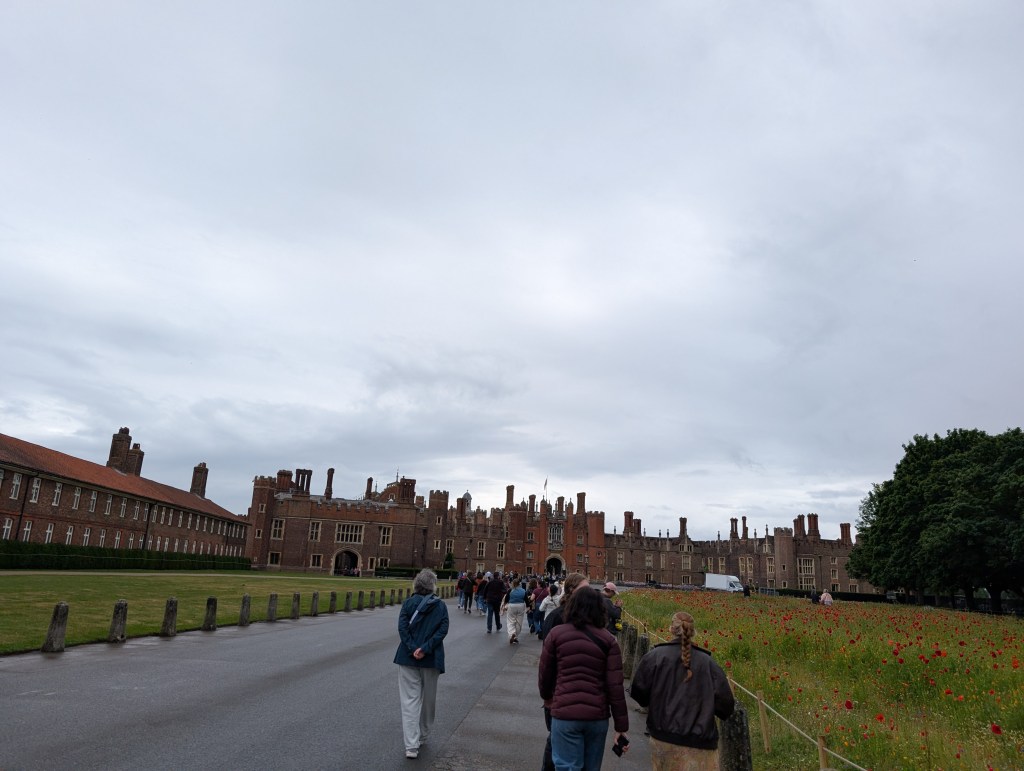
I had a wonderful time visiting Hampton Court Palace. To be honest, I was a little underwhelmed at first. The outside of the palace looked relatively plain compared to many of the other historical sites we had visited before, and although it was massive, none of its features really stood out to me. While impressive, the mass of red and brown bricks wasn’t as ornate as I expected from the palace of King Henry VIII. However, while the outside may not have intrigued me, what I found inside the palace most certainly did.

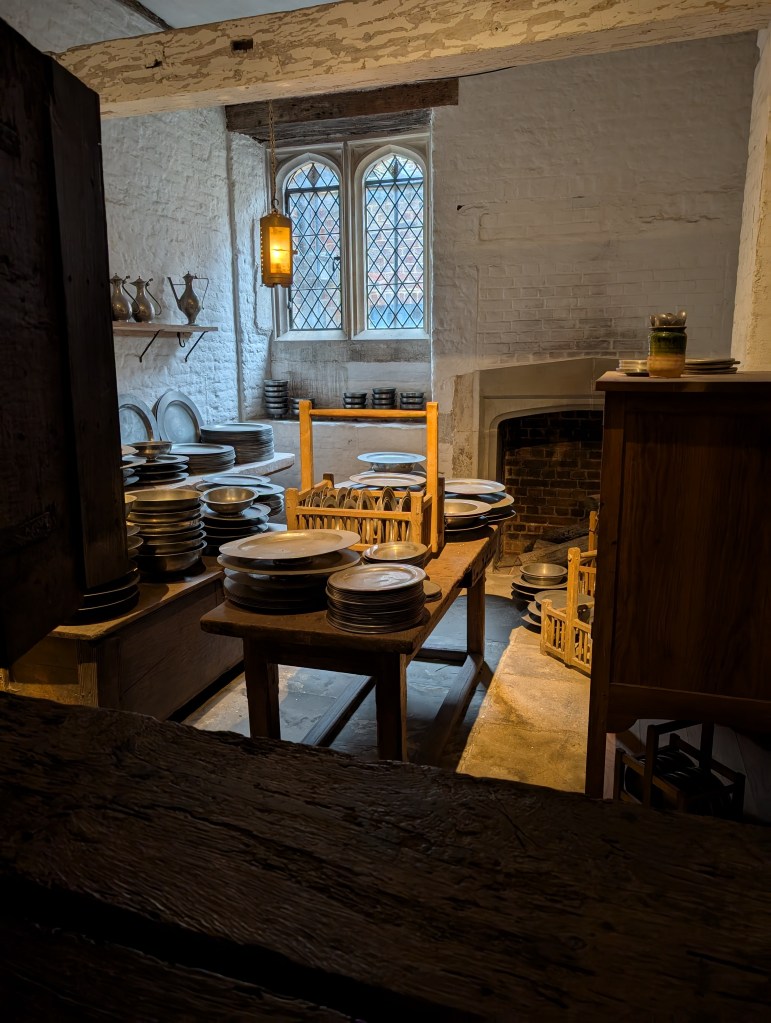
Equipped with our audio guides, the first part of the palace we visited were the kitchens. The sheer amount of storage areas, dishes, cooking utensils and more were a testament to the gluttony of the court. It must have been hellish to work there, preparing food for so many people, each with insatiable appetites. Of course, King Henry had his own private kitchen and dining materials, and I am glad I don’t have to deal with the pressure of cooking for a man who executed his own wives. While quite large in their own rights, the kitchens were only a small fraction of the palace as a whole, and so after walking through the massive cellar only used for alcohol, I went to explore what else the palace had to offer.

This, as it turned out, was not an easy task. The layout of the place meant that I spent much time looking at my map trying to figure out where I was and walking through rooms I had been to before. If the goal was to make it confusing for potential attackers, then it was quite effective. Additionally, since so much of it looked the same, it was often difficult for me to tell if I had been in a room or not already, and the guiding signs weren’t as helpful as they could have been. Despite this, I was able to somehow find my way around and visited the great hall.

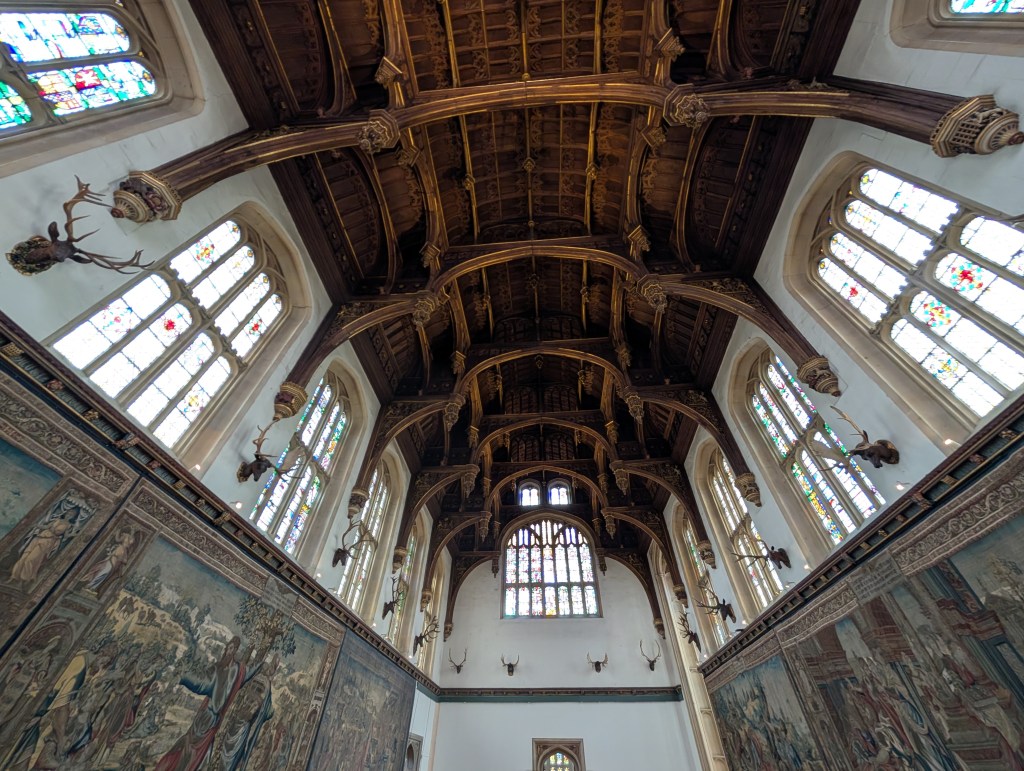
The room was quite large, and its walls were covered with massive tapestries, just a few out of the thousands in Henry’s collection. The room was quite crowded with a group of schoolchildren, being guided by someone dressed up in a costume fitting the palace. By eavesdropping I was able to learn that apparently the room had been used as a theatre for William Shakespeare when he visited and put on a play, who seems to be truly inescapable over here. After giving the children enough time to get a good bit ahead of me, I continued my tour.

I made my way to the room where people would wait for the chance at an audience with the king. Fittingly enough there was a room that had once been a bathroom nearby, though at some point it had been taken out of service. People would be waiting for hours there and so they needed some ways to entertain themselves. One of which was apparently board games. There was a set for a game called Fox and Geese, which pits a single fox against a flock of geese. I played a game as the fox against another student and lost. I am glad I didn’t have to wait in the room playing that game all day, since it seemed like it would get old fast.

I continued my journey, and after seeing many bedrooms and hallways, I was ready to get out. I was greeted by the grounds outside the palace, with their fountains and trees. I enjoyed a nice calm walk there, finishing off my trip to Hampton court in a quite pleasant way.

-Jack Duncan

Blog Post 9: National Portrait Gallery, a Picture of Tragedy

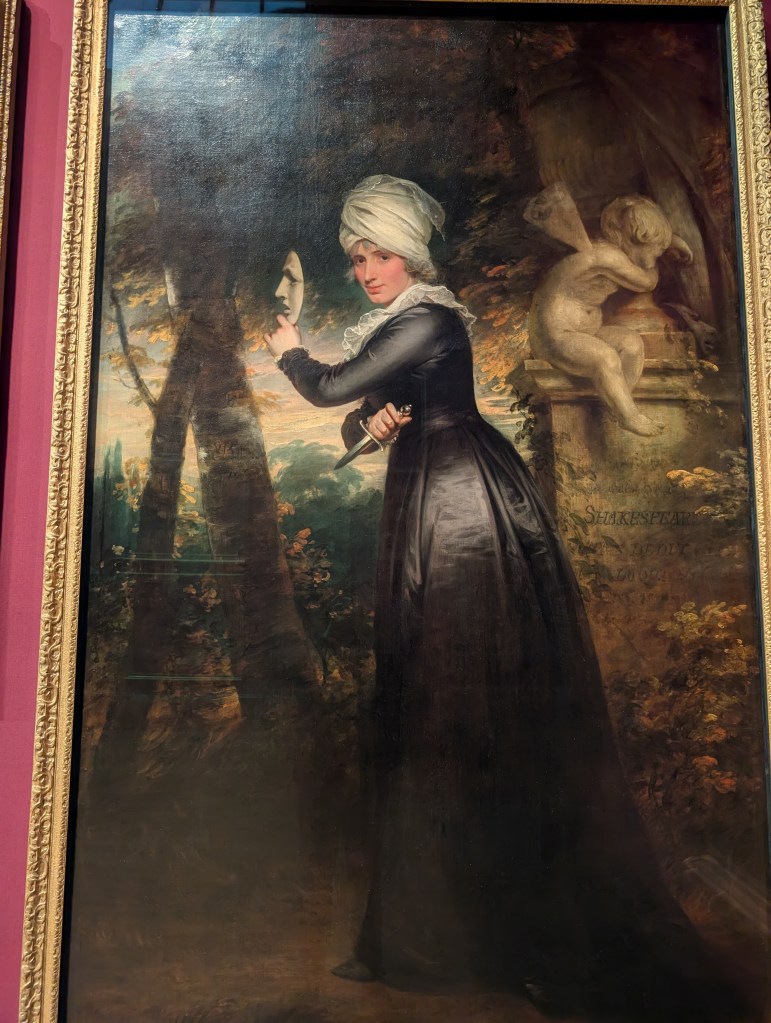
When I visited the National Portrait Gallery in London, looking for an artwork to write about, nothing caught my eyes at first. While many of the paintings were very beautiful, and I could see their masterful creation, the nobles and knights just blended together as I walked through the museum. That was, until I walked into a room and the first piece I saw jumped out at me and I immediately knew I had to write about it. The piece I saw was titled Mrs Siddons with the Emblems of Tragedy by artist William Beechey. Compared to the rest of the portraits, which consisted mainly of the sitter looking forward, Sarah Siddons’s body which faced away, and arms wielding a mask and dagger was so much more intriguing. It felt so mysterious and fascinating, in a way that no other portrait made me feel.

The mask in one hand, being raised up to her face, and the dagger in the other immediately made me think that she was an actress, and my thoughts were confirmed upon reading the brief description of the portrait provided “This leading actor holds the emblems of tragedy – a mask and a dagger”. Researching Siddons further revealed that she had been dubbed “tragedy personified” and was most famous for her portrayal of Lady Macbeth. This is further reflected in her black dress, which almost merges with the shadows beneath her.

In fact, much of the portrait is cloaked in darkness, both above and below her. The remaining colors are mostly drab, emphasizing the feeling of sorrow. The little light that is present serves to highlight her face, and her props, drawing the eye to the most important elements of the portrait. This lack of light in color helped to make the portrait further stand out to me, as it contrasted with the vibrancy of the other portraits in the room. Many of the other paintings also consisted of just the upper body, so seeing Sarah Siddons in full was again unique. Her posture was also different to the other paintings I saw. Many of them had the sitter facing directly forward, yet Siddons’s body was turned to the side, with her head twisted to look forward. This gave it much more mystique, and made it feel much more dynamic, and I almost felt like she was plotting.

The background of the portrait was that of a forest. However, there was one element that stood out, elevating the painting as a whole. Behind Siddons there is a stone angel crying over a gravestone or monument. On that stone reads the name “Shakespeare”. This connects Siddons with her most famous role of Lady Macbeth, a character from one of Shakespeare’s most well-known tragedies. It also raises many questions, is she there to honor the man who wrote so many of the plays she acted in? Why is there a monument to William Shakespeare in the woods? The questions go unanswered, adding to the tragic atmosphere of the portrait.

If I could step into the portrait, I imagine that it would feel quite somber. The air feels cool and bitter as it mournfully blows through the trees. The sounds of wildlife I expect from the forest aren’t there, leaving an uneasy silence. This silence is broken as Siddons begins to speak, reciting one of Lady Macbeth’s monologues, becoming “tragedy personified”.

-Jack Duncan

Ilaria’s Pub: London Food

Since I consumed a variety of different foods during my time in London, I will be going over my absolute favorites!

  1. Bad Boy Pizza
    Probably the best pizza I’ve ever tasted was from a stand called, ‘Bad Boy Pizza,’ from Seven Dials Market. It had a thin, crisp crust with quality flour and a very unique flavor. The tomato, pepperoni and cheese were fresh and of high quality. The slices were also huge.
  1. Spicy Yung Num Bowl
    This Korean dish consists of fried Yangnyeom chicken in a sweet, spicy and savory sauce. The name, Yangnyeom itself means ‘seasoned’ or ‘marinated’ in Korean. The Young Num bowl also contained a side of salad and sticky white rice along with some sesame seeds on-top. I had the dish with a canned water in Spitalfield market. It was one of the tastiest dishes I’ve ever tried. The crunch of the chicken accompanied with the blend of the sauces added the perfect contrast of textures.
  1. Sweet and Savory Crepes
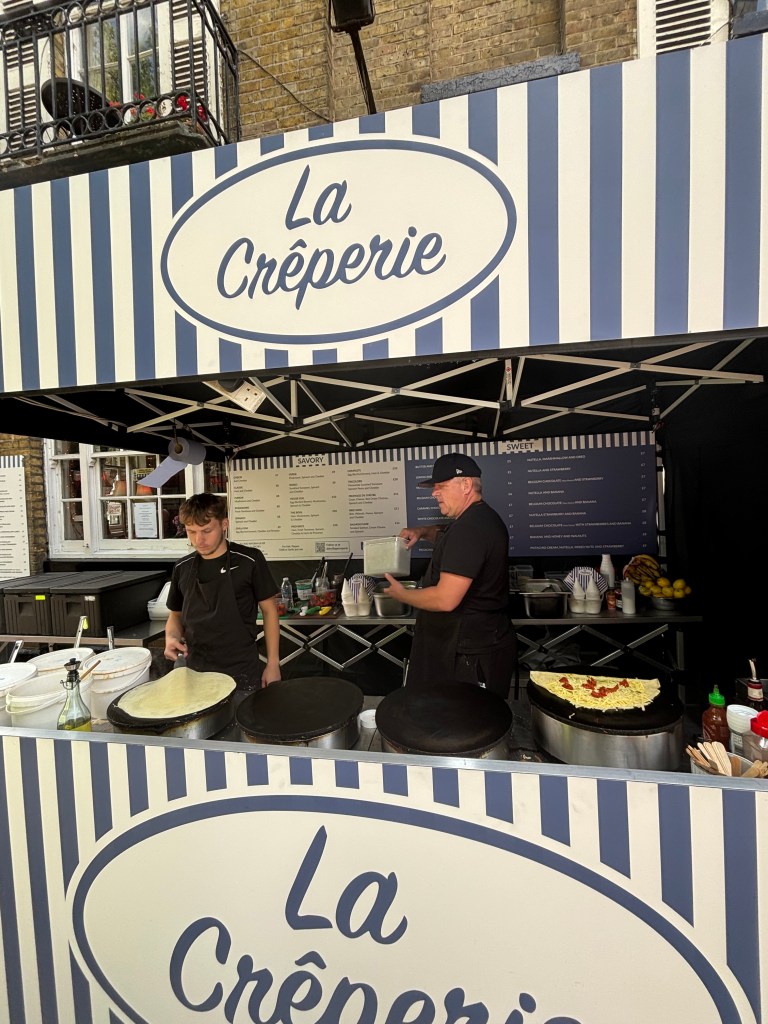
    My friend, Katerina from the Czech Republic visited me during our long weekend with no planned itinerary. We decided to take a day trip to Hampstead where we tried these two different types of crepes at the famous stand, ‘La Crêperie.’ We ordered a crepe with tomato, pesto and mozzarella and then the other crepe with bananas and Nutella. The warm, thin flour tortillas were perfect for the high quality ingredients in each crepe. This meal tasted immensely tasty, was affordable, and perfect for holding while walking around town.
  1. Dishoom
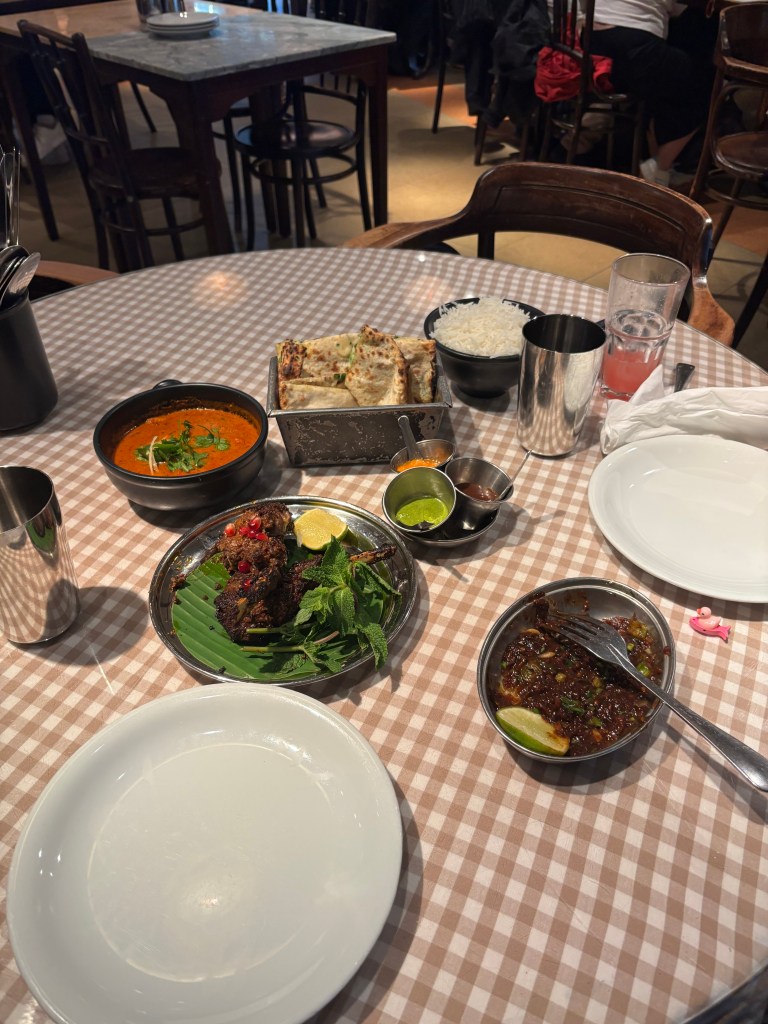
    Dishoom has several different locations all over London and one in Edinburgh. I ate twice at the Covent Garden location and spent a total of 70 dollars there and it was absolutely worth it. Dishoom pays homage to the old Irani cafes of Bombay with it’s immersive restaurants scented with fargrant incense and traditional decorations. It serves the food of Bombay with a vast menu crafted carefully like, “Biryani to the curries of Mohammed Ali Road, and the famed grills of Colaba, along with first-class Small Plates, Breads and Rice.” I enjoyed sharing plats with friends while experiencing some of the best Indian dishes I’ve ever tried. Although I enjoyed everything I tried, my favorites were roasted lamb topped with pomegranate, red chicken ruby curry, and the house chaat (which included both warm, cold, sweet, and tangy ingredients with golden fried swat potato, cool greek yogurt, pomegranate, beetroot, radish, and carrot).
  1. Lady Macbeth Cocktail
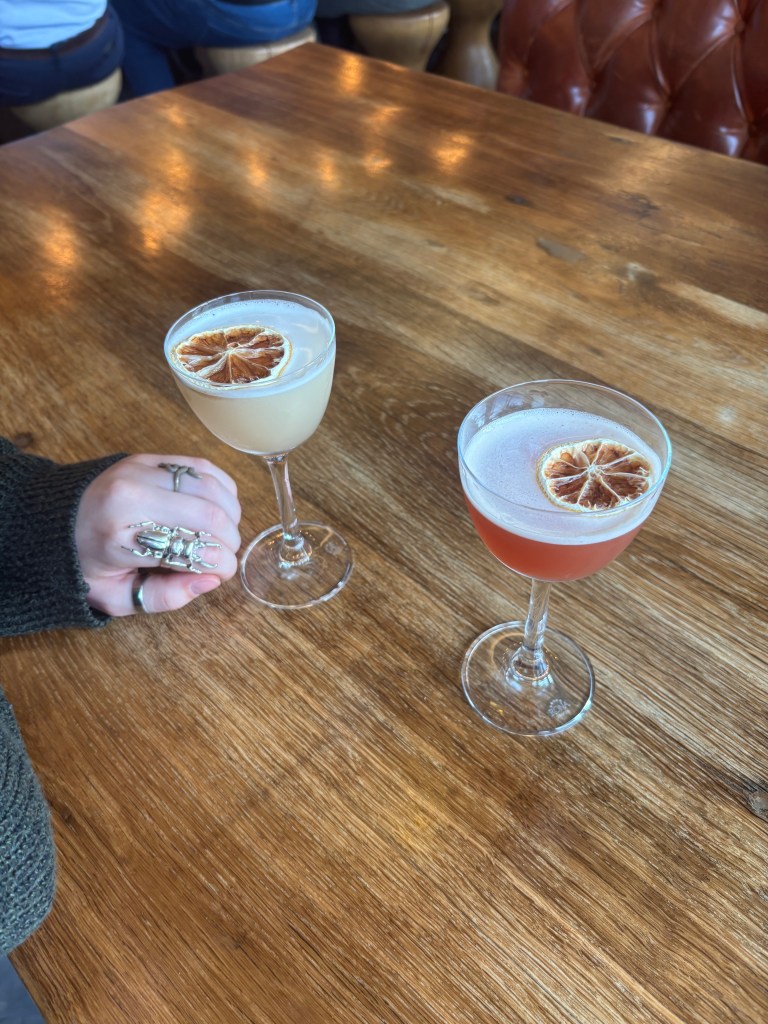
    Katerina and I were taking a walk alongside the South Bank and when we reached Shakespeare’s Globe, we got tired and went to The Swan for a quick rest stop and drink. The interior of the bar/restaurant was gorgeous and very classy. I ordered the Lady Macbeth cocktail and expected not to like it. However, I was unexpectedly proven wrong. This drink was one of the most refined cocktails I have ever tried. The silky drink consisted of Hayman’s sloe gin, Martini Rubino, Campari, and lemon. The taste was not too strong and a great blend of all the flavors combined, complimenting each other flawlessly.

Crown Jewels, Powerful Fools, & Chronicled Cruel(ties)

WOOHOO! LONDON!!!!!! YEEEESSES!
Now that I’ve gotten the unprofessional, but justified, giddiness out of the way – Okay, yeah, London has been pretty rad.
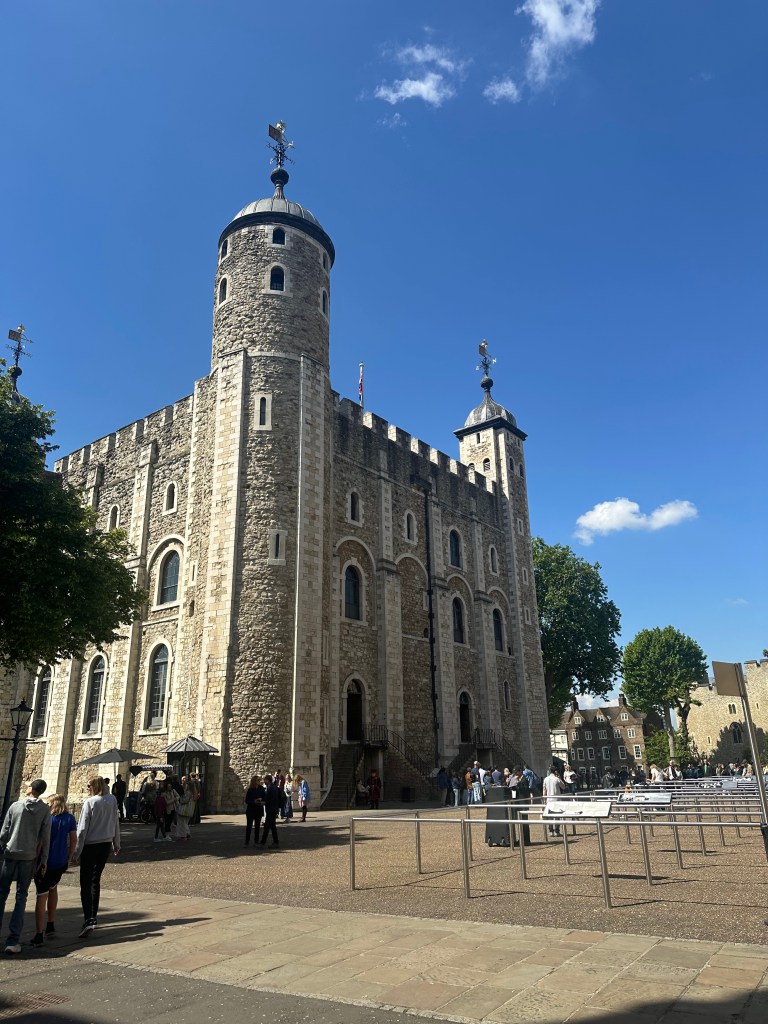
Over our first week in the city, we have trekked to many-an interesting spot, seeing an array of markets, theatres, and pieces of architecture and history. This culminated in our visit to a site where Britain keeps all it’s secret magical artifacts, where they’ve imprisoned and executed many figures of history, and also where the Minions try and steal the crown from in the hit 2015 movie, “Minions.”

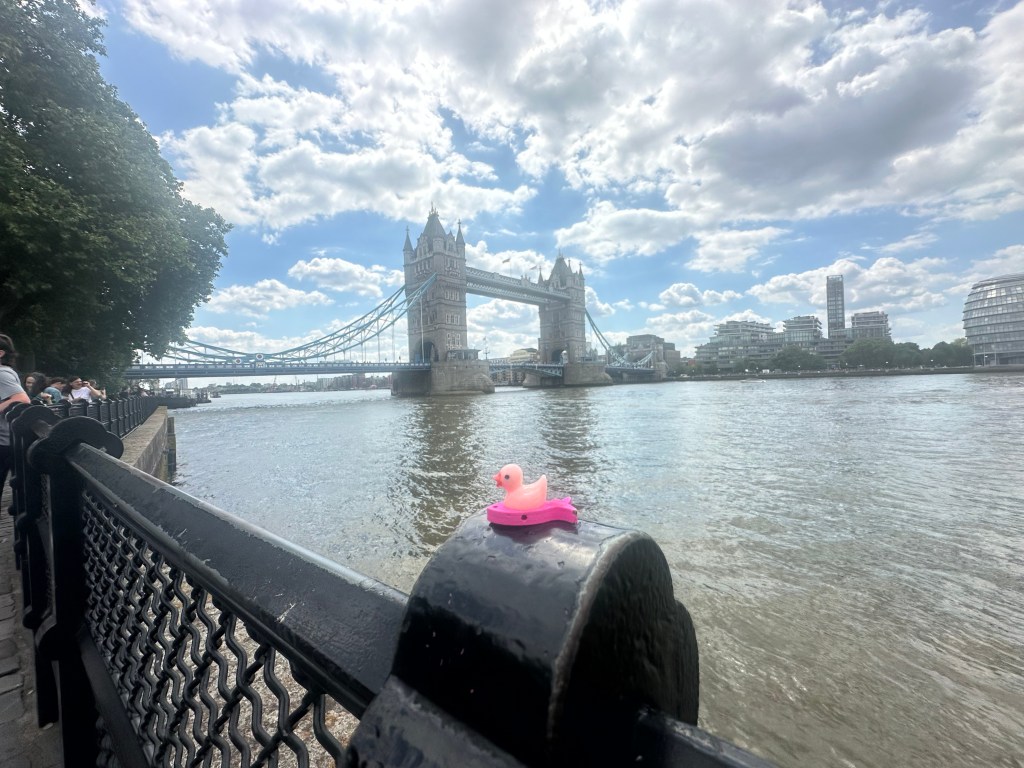
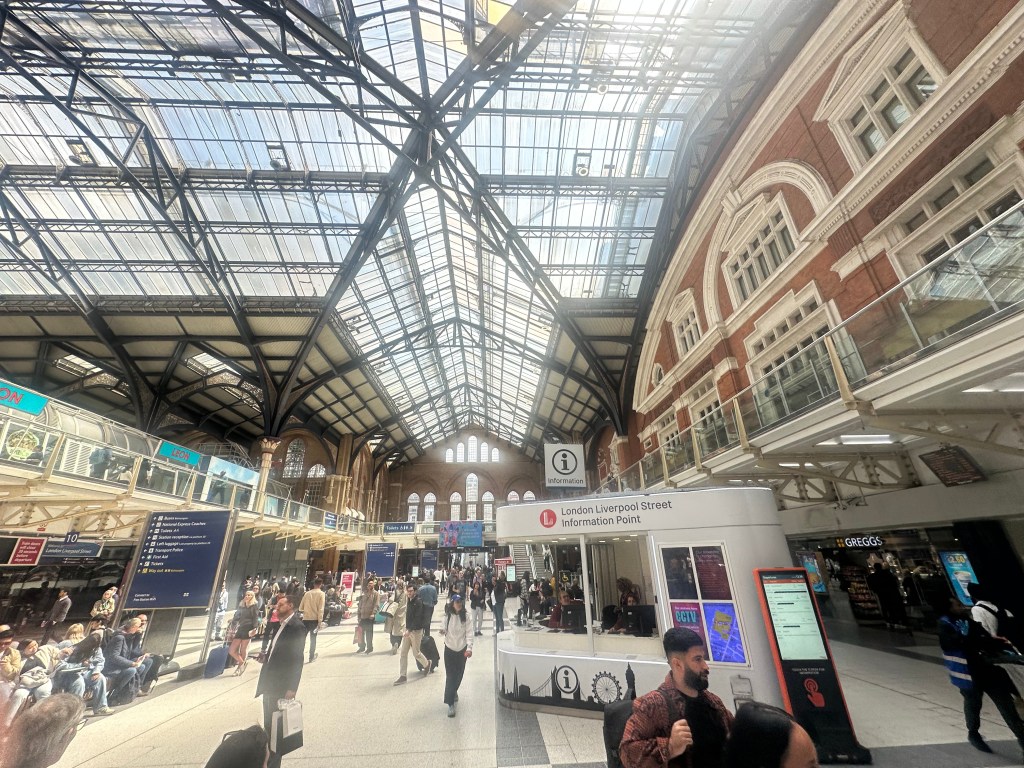
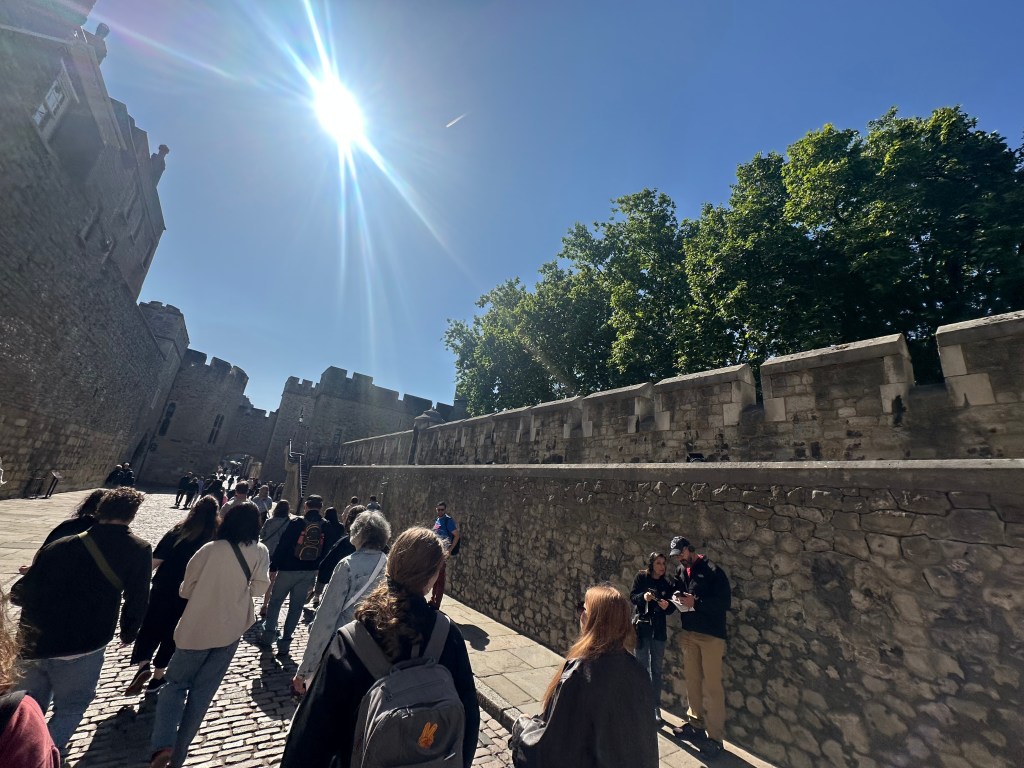
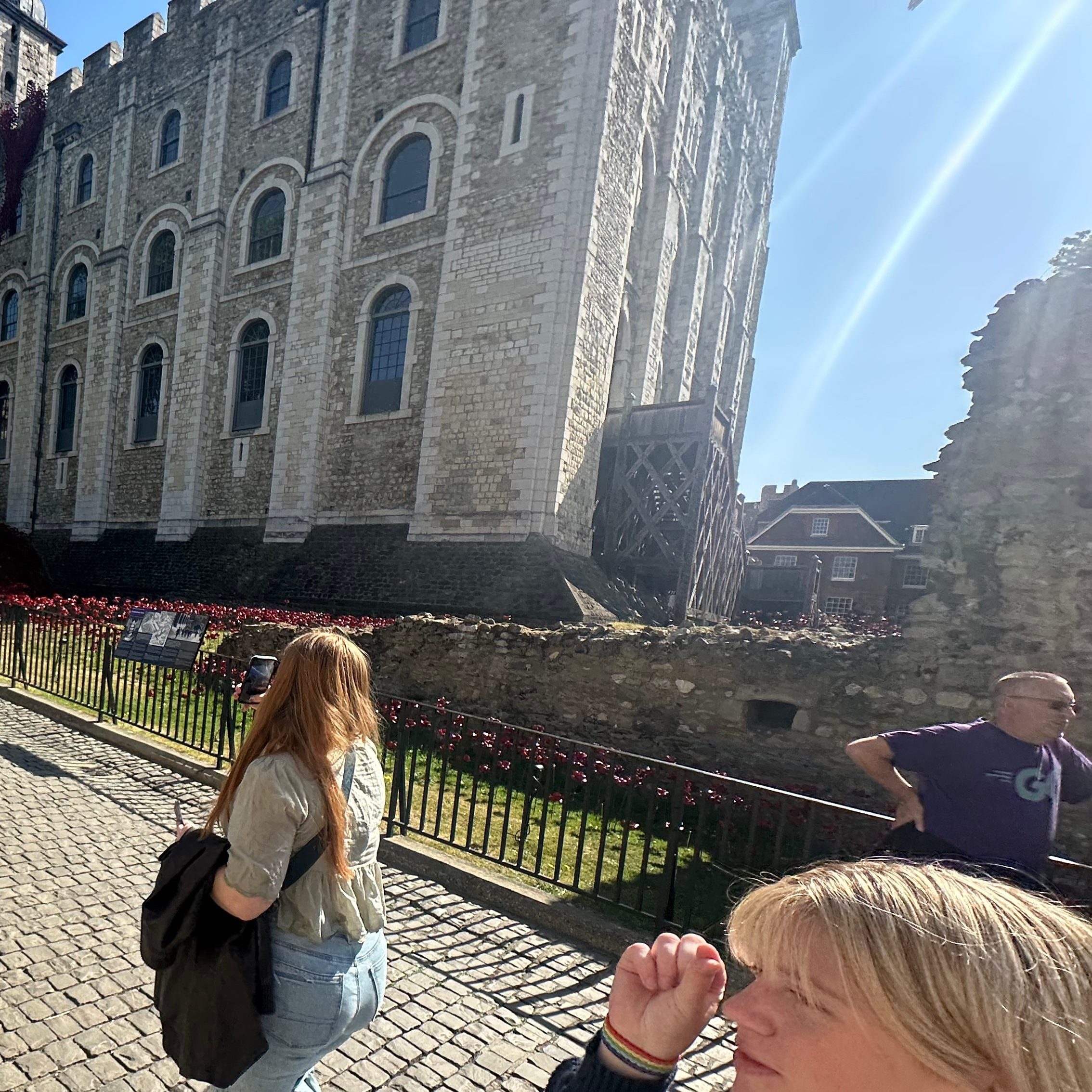
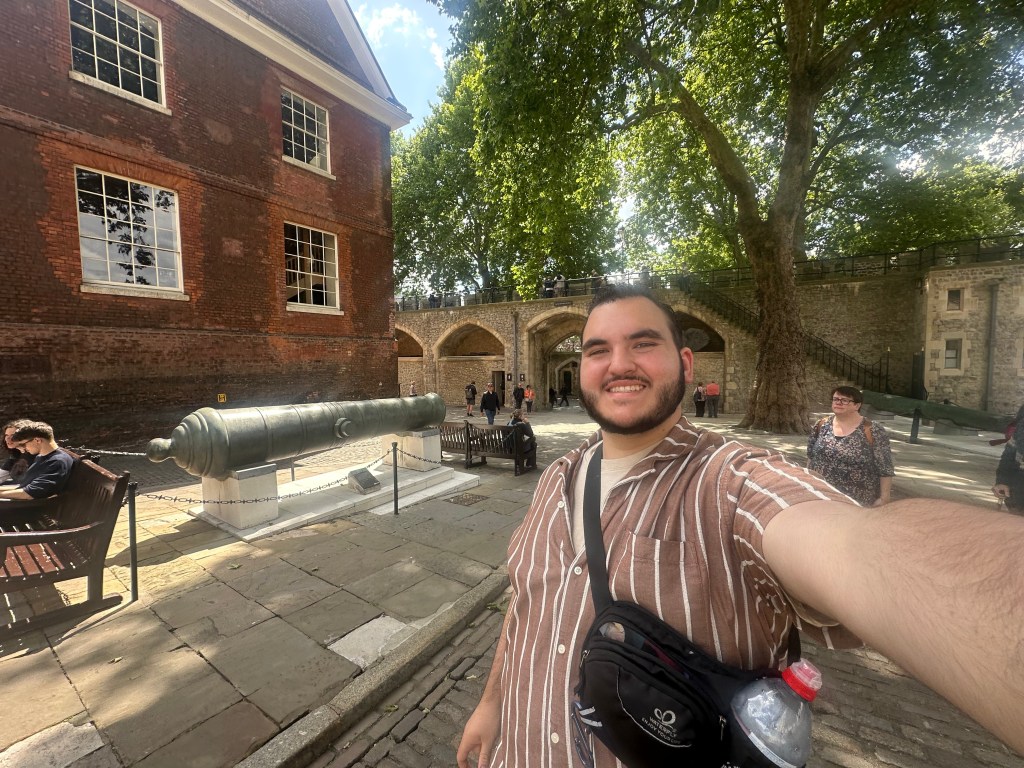
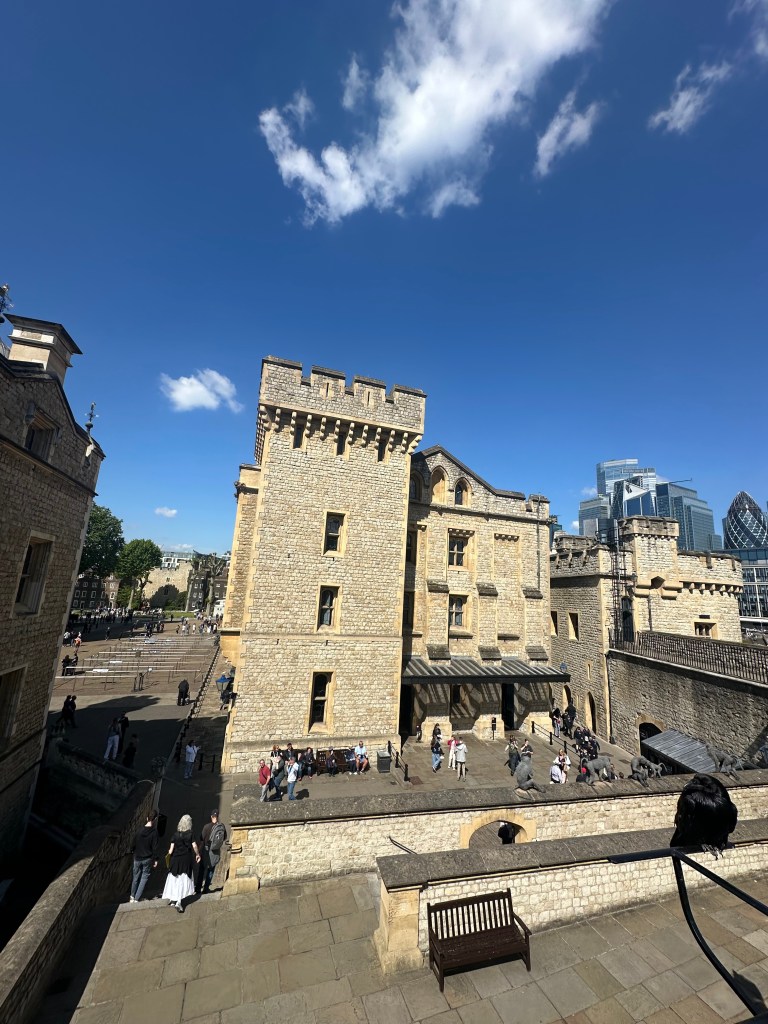
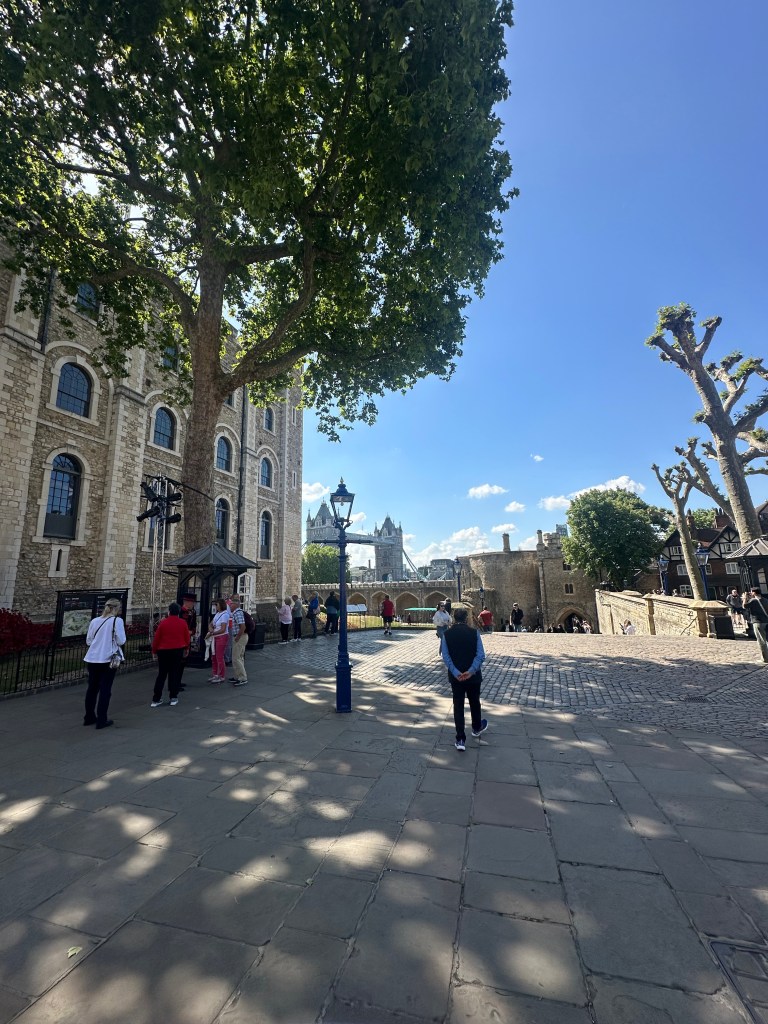
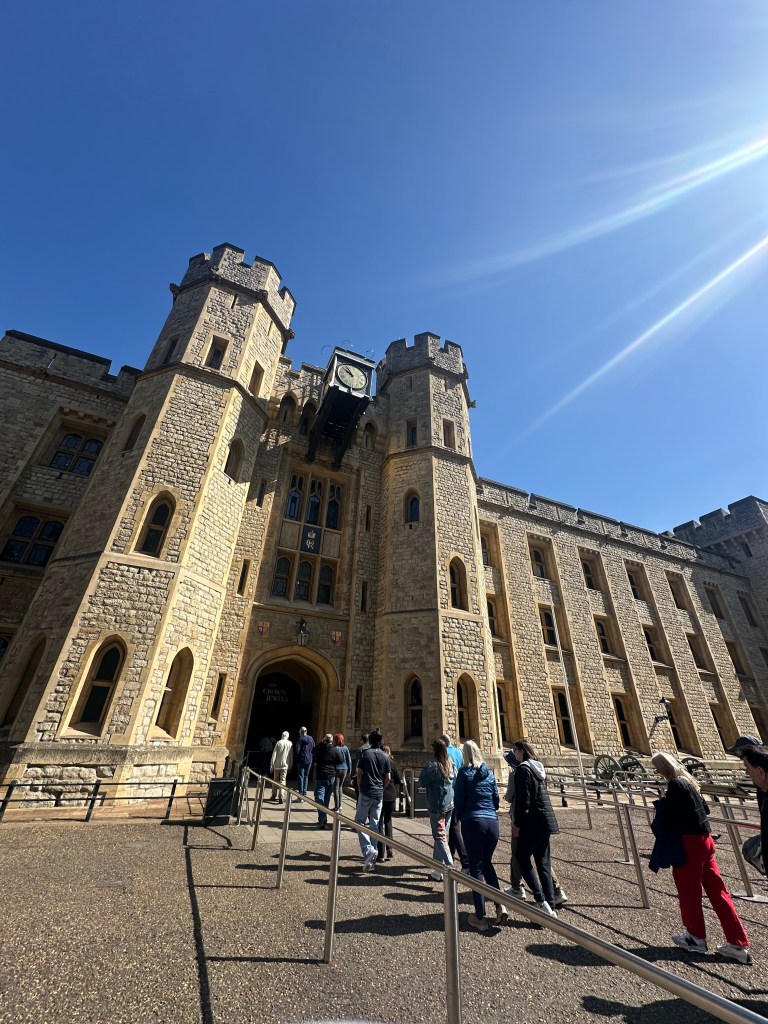
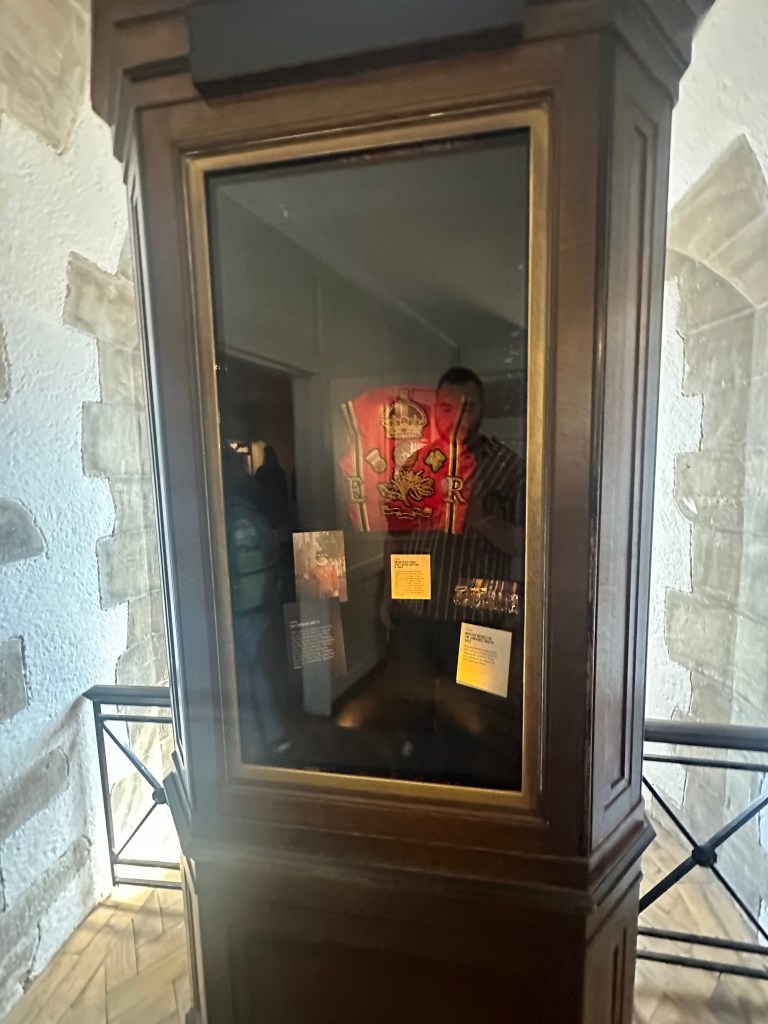
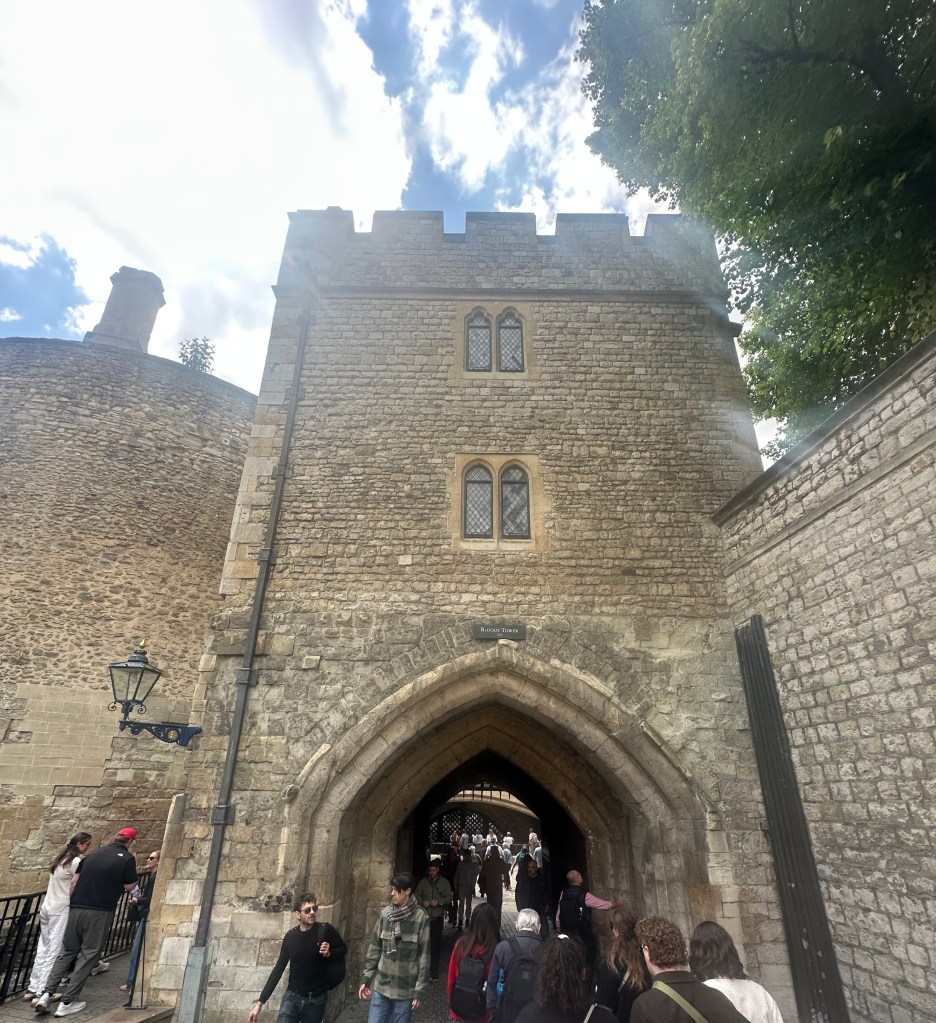
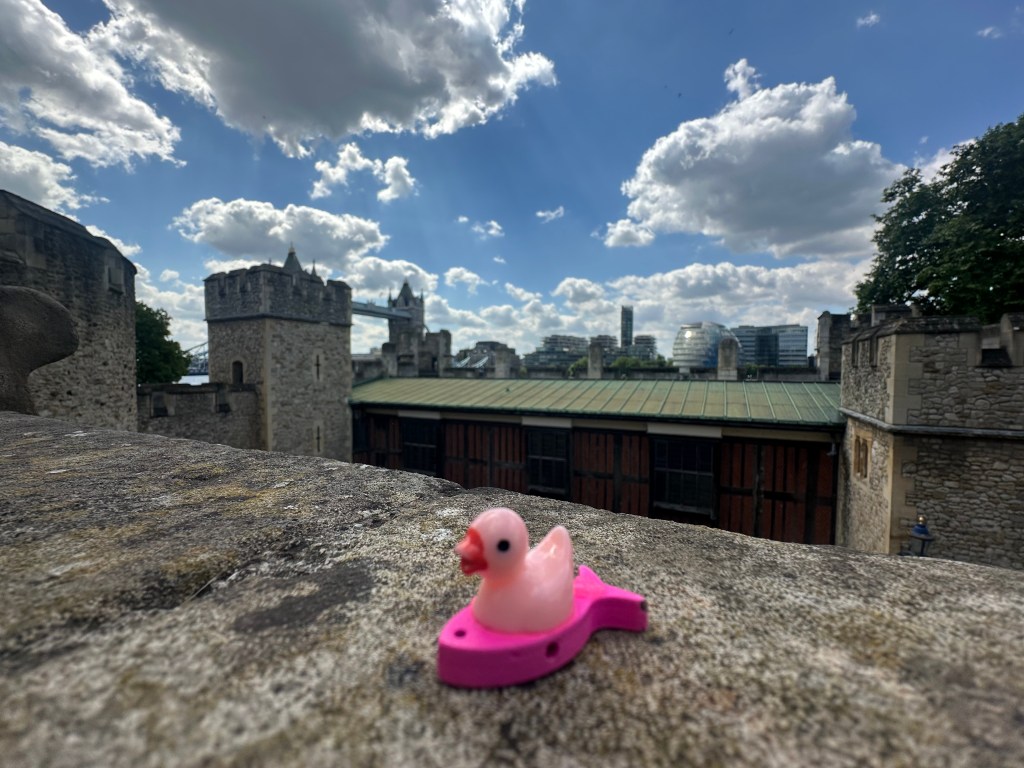
My silly jokes and all aside, our trip to the Tower of London taught me a lot about British history and allowed me to see some absolutely beautiful sights. Even just the view of the tower from afar was quite a sight to behold. The previous pictures show a large range of these sights. Many of these pictures show our view as we journeyed between specific sites. There are a few in specific I’d like to speak about, the first of which, our group gunned right towards as to beat the crowds: The Crown Jewels.

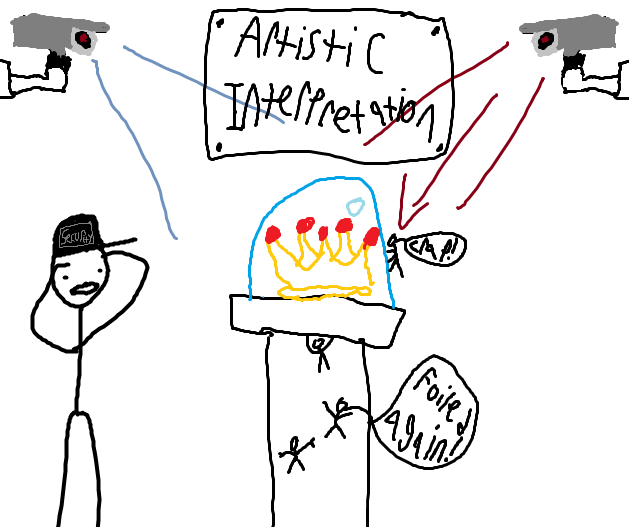
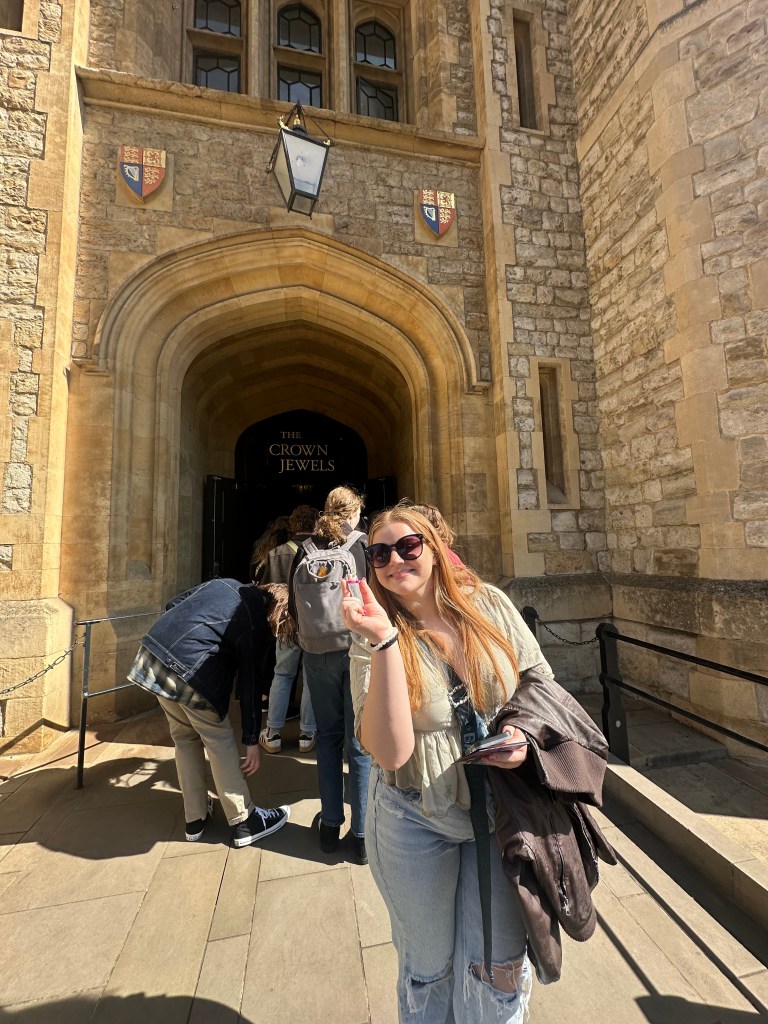
As this artist’s interpretation shows, these artifacts were quite well protected. So well protected that I was unable to get any pictures of them. The other two pictures are the entrance and exit of the room to give a bit of context. The actual items within the room ranged from being the actual crowns of English rulers to their ceremonial swords and maces. There were also outfits and artifacts used in the coronation ceremonies of these historic royalty. My favorite items were certainly the swords; however, I also quite enjoyed all the crowns that were adorned in some bits of purple, including St Edward’s Crown and The Imperial State Crown among others. There was really a sort of magic to the room and to the fact that I got to see it all with my own eyes. Right outside of the Jewel House was the next spot on our journey: Martin Tower.

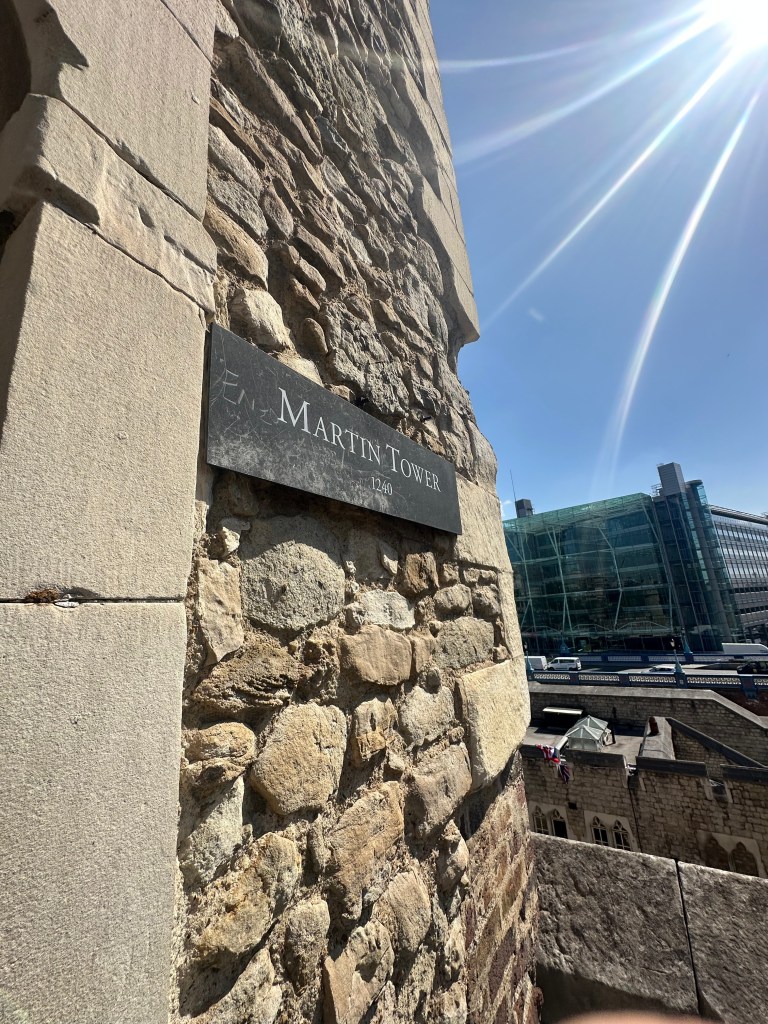
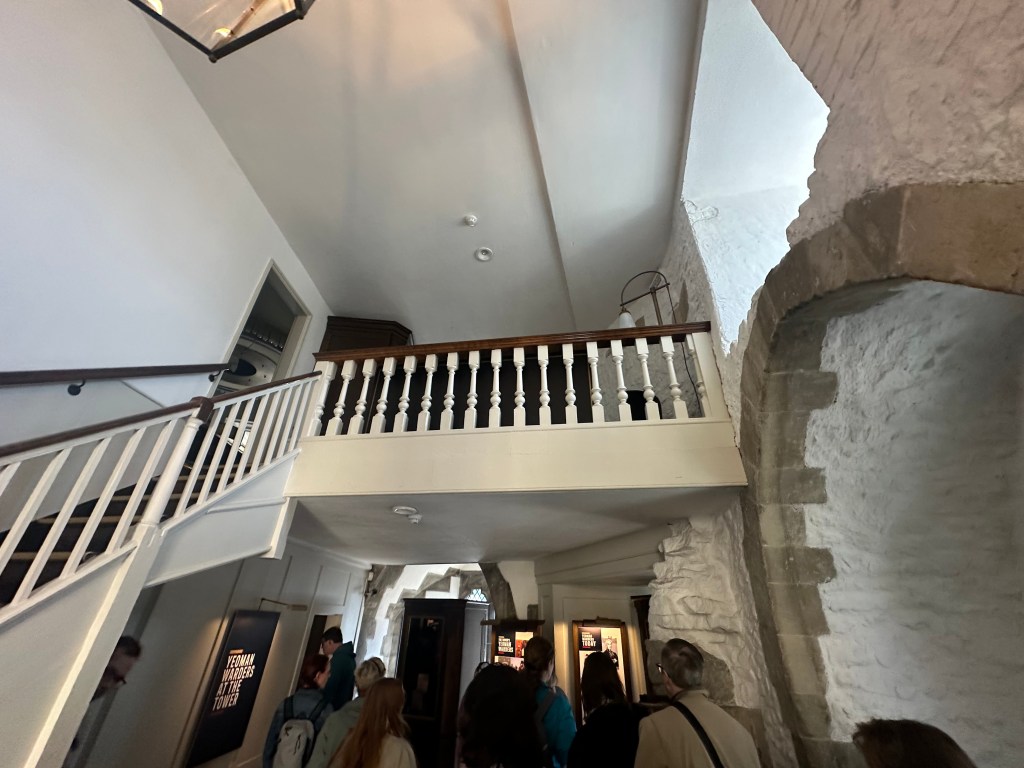
One of the other cool sections was Martin Tower. Being built to originally hold the crown jewels, the tower eventually ended up being used as a prison for centuries and now holds a lot of the history of the yeoman warders, guards of the Tower of London since the Tudor period.

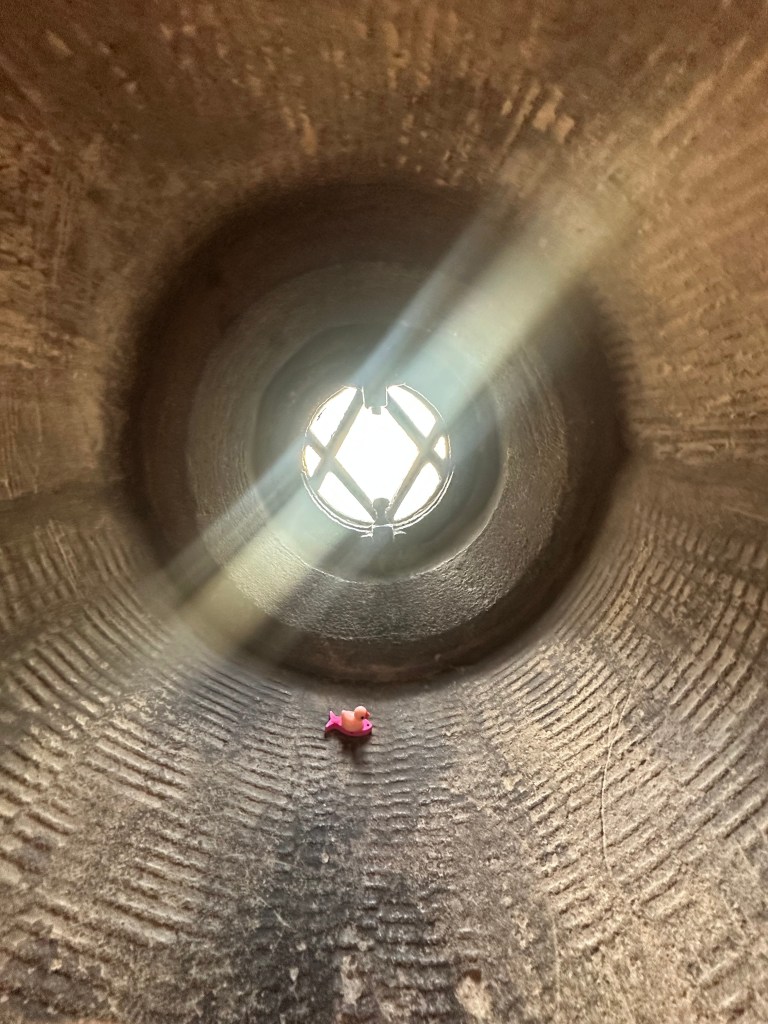
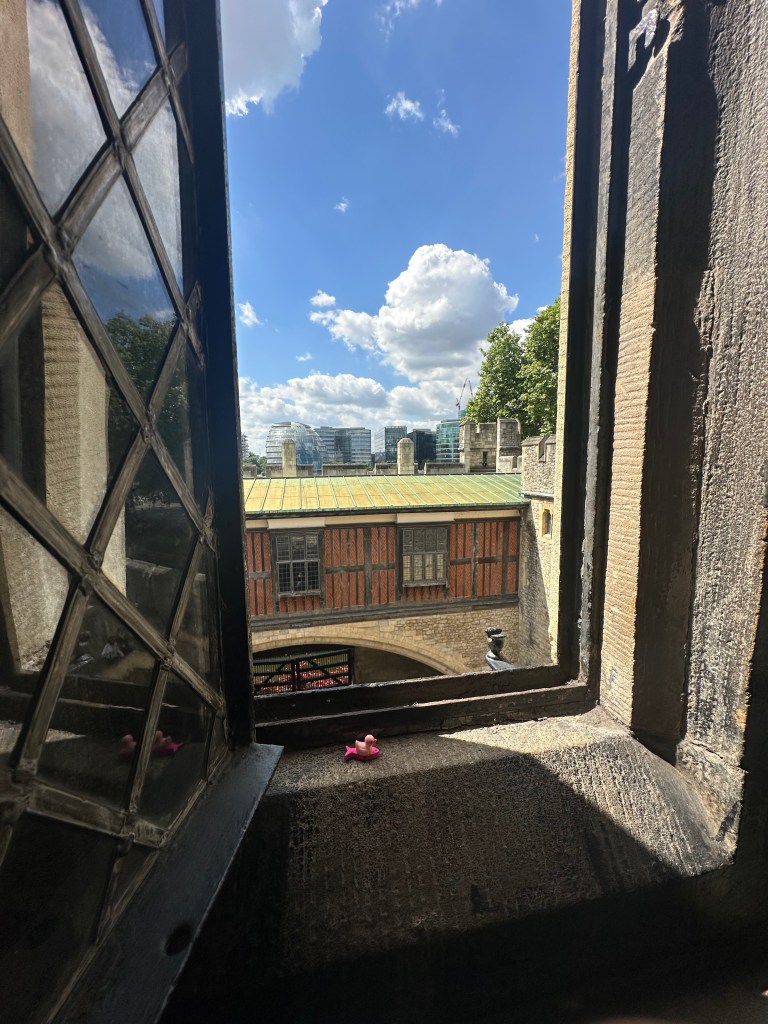
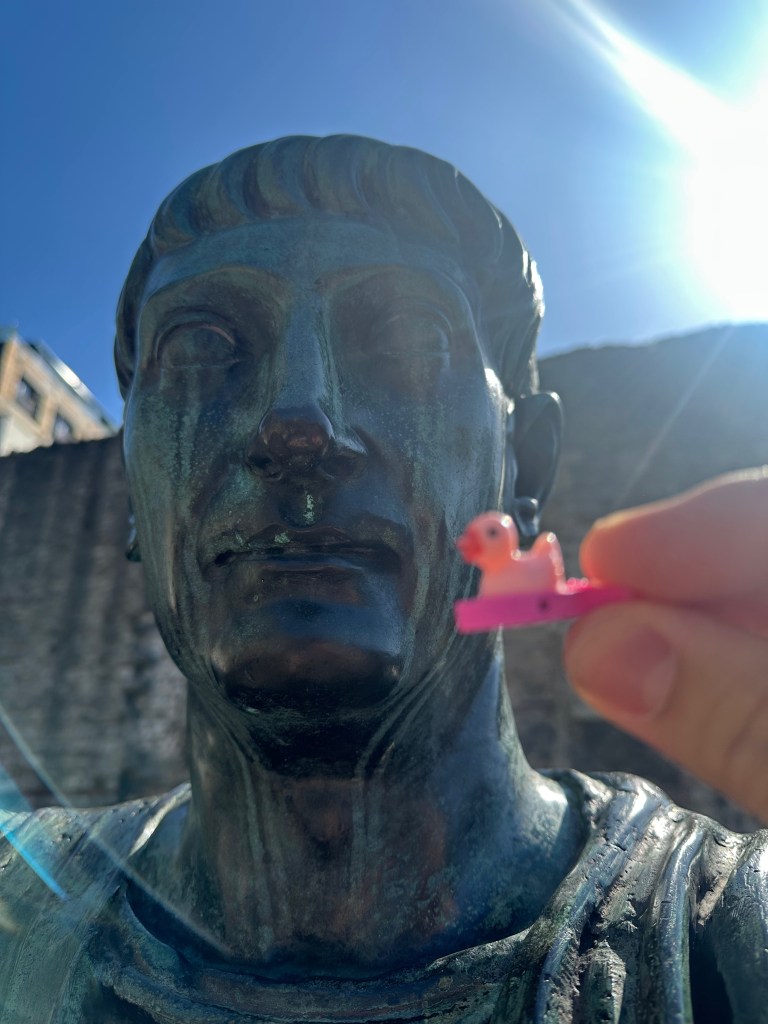
My favorite exhibit was the Bloody tower. I unfortunately did not get any pictures of the inside including the mechanisms of the portcullis below, Sir Walter Raleigh’s study, and the room (with a voice acted projection) of the two princes. What I have as a replacement are pictures of the exterior and the neighboring buildings as well as pictures of squirt sitting on various windows and one wall (he’s quite the model, I know). This building was my favorite largely for the history it has and the mystery surrounding it. Though the story of Sir Walter Raleigh is very interesting, my interest is largely on the two princes. These princes, under the care of their uncle, were placed in the “garden tower” for their “safety.” Over their summer stay, their uncle was named King Richard III while the children “went missing.” 200 years later, 2 skeletons, seemingly belonging to children, were found under the tower. Because of their stay in the garden tower, the princes and their possible (or proboble depending how you look at it) murder saw the garden tower renamed to the Bloody Tower. This story was told through black and white projection on the walls of the princes room at the tower. It had a child voice actor narrating it. That room and projection alone is the reason it was my favorite. An interesting tid bit we were told just outside the tower (right after I took the picture of the houses nearby) is that one of the steps in the narrow spiral staircase is intentionally taller than the others as help trip up (literally) attackers who had never been in the Bloody Tower. Because of this warning, it didn’t quite catch us!

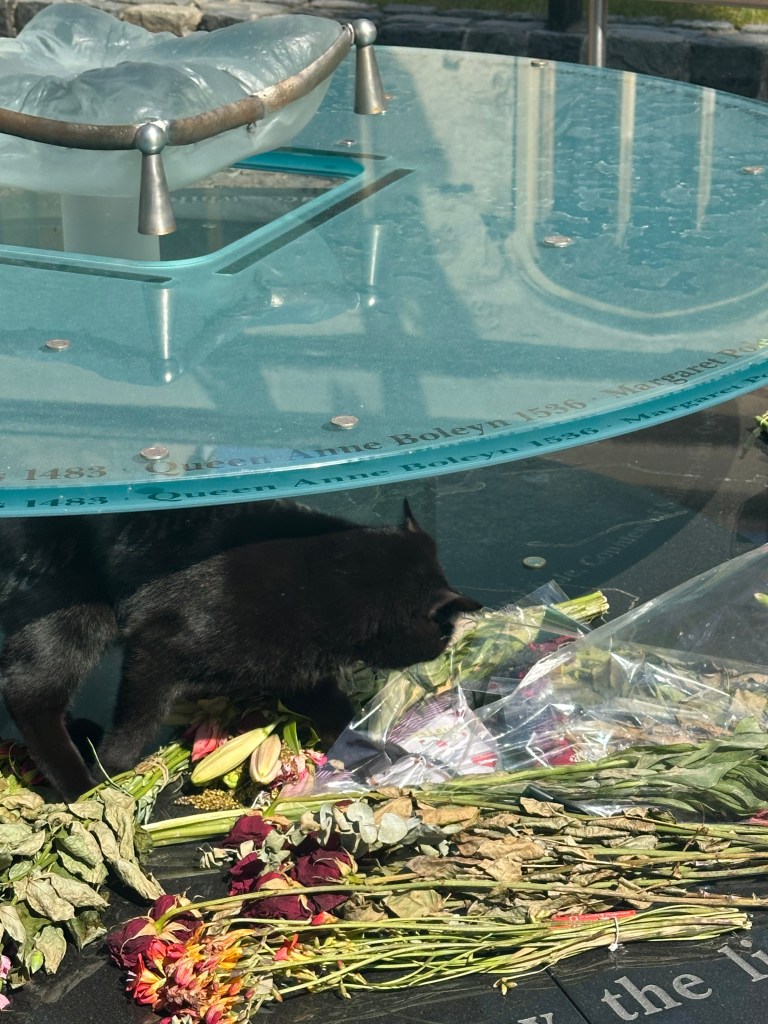
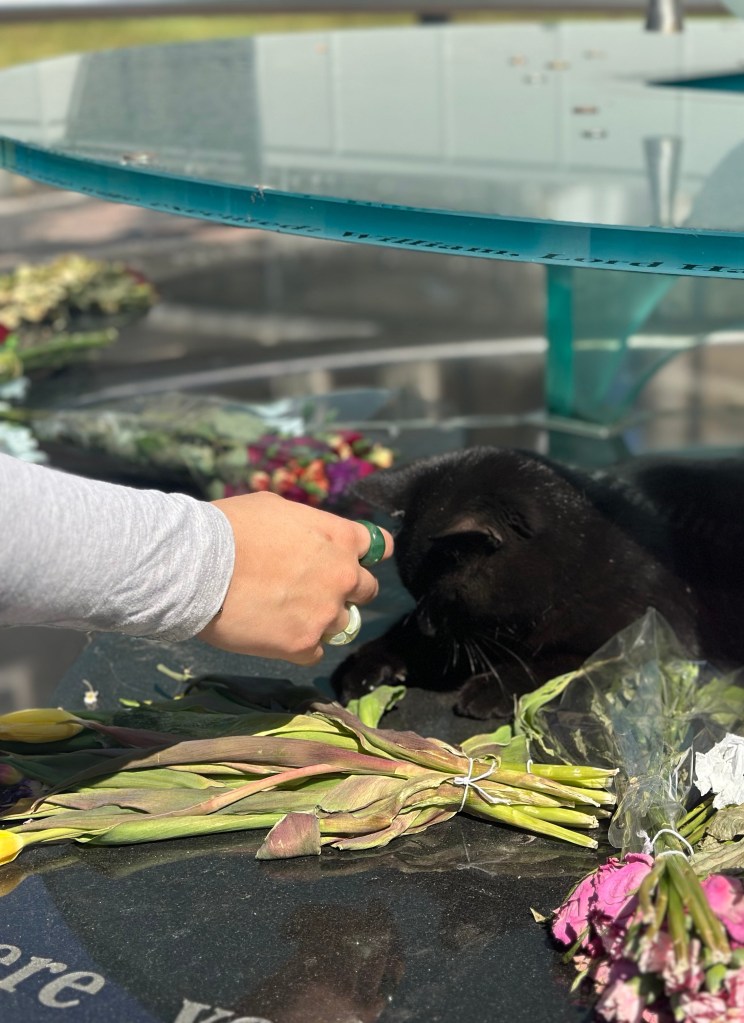
A lot of famous (and infamous) people have been imprisoned and/or executed at the tower. Anne Boleyn’s short stay and execution is a particularly famous one – the site of which had a feline intruder on the day of our visit. A quick search online finds that this cat is named Nyxie and is an official resident of the tower with her own Instagram account!

Right beside the site of Anne Boleyn’s execution (and Nyxie) is the main site of many of the Tower of London’s imprisonments: Beauchamp Tower

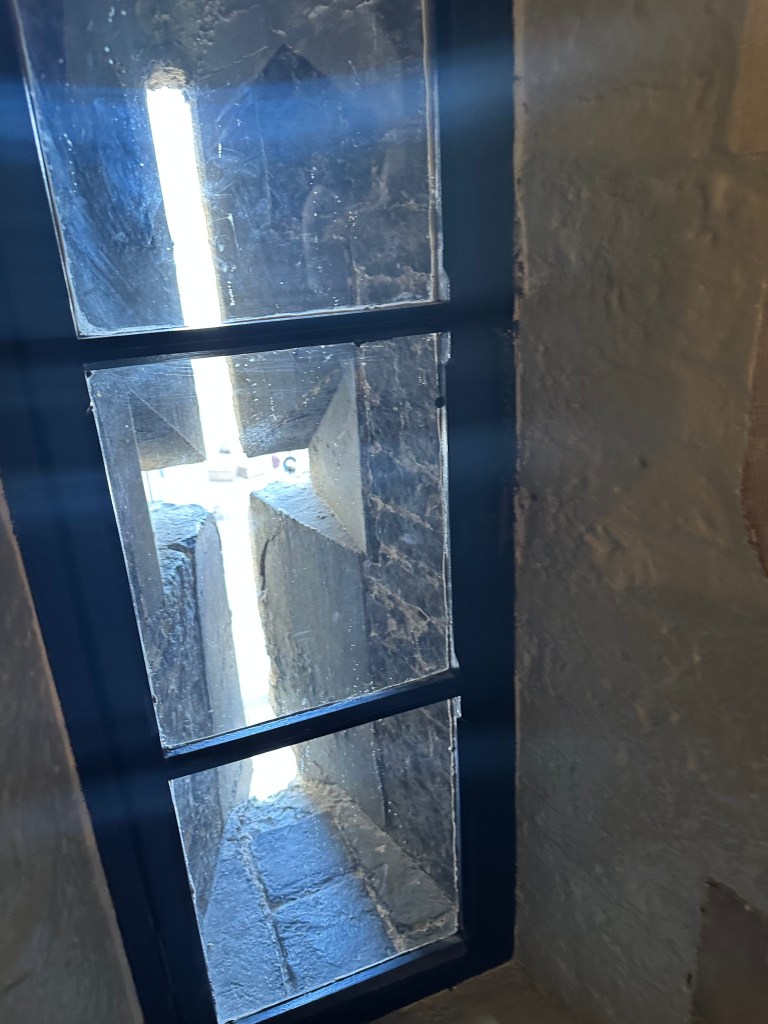
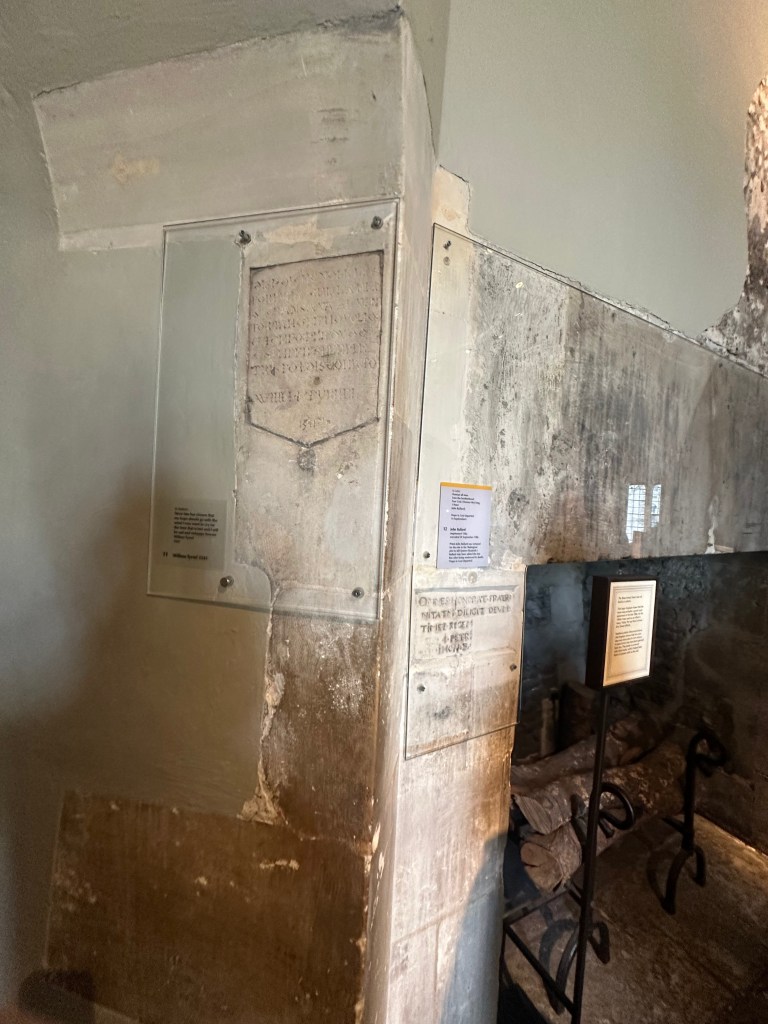
As said, this building is where many of the tower’s prisoners stayed. We see more examples of defensive architecture with the arrow slits (allowing archers to shoot out without projectiles getting in). The second picture show a section of carvings one of the many prisoners did on the walls of the tower. These carvings ranged from prayers to just leaving behind a sign of ones existence. Just like the carvings, these prisoners’ different stays varied greatly. One of the prisoners got some particularly good treatment while he was there.

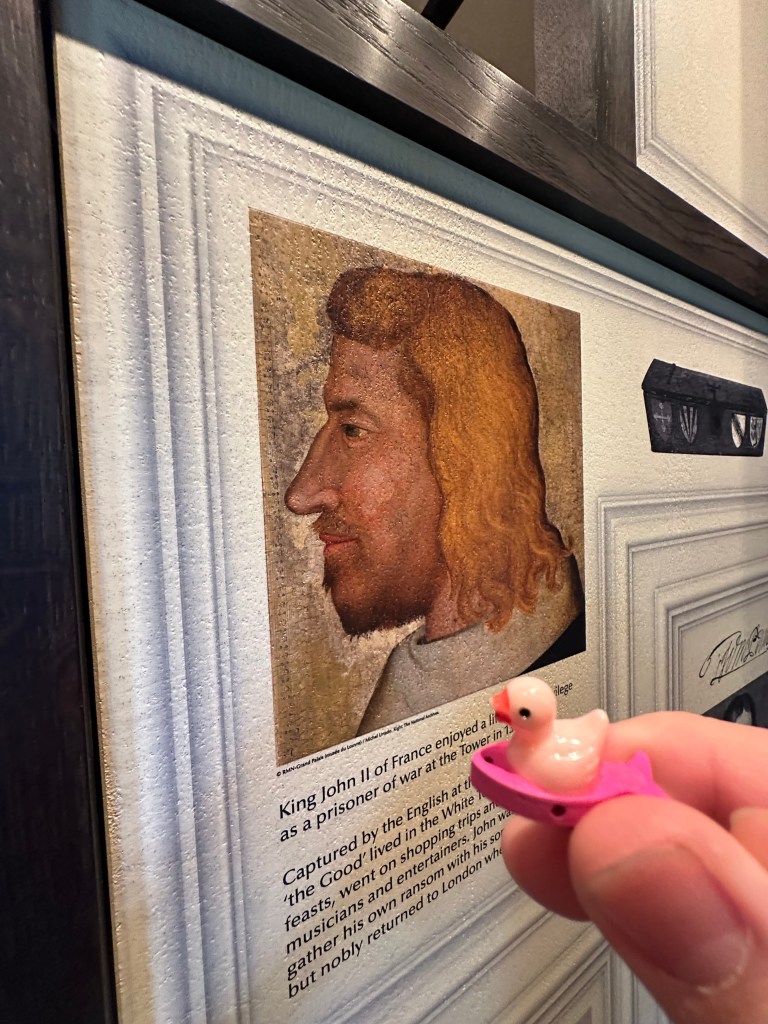
As is written below this beautiful portrait, King John II of France is the title of one of the many persons at some point imprisoned in the tower. In accordance with the previously mentioned title, “John the Good” was in fact King of France for 14 years (1350-1364). During his reign, John (we’re on first name terms) and France suffered through a few especially tough periods. The Black Death killed a large percentage of France’s population, The Jacquerie revolt ravaged the nation (Revolution! In France! This can’t be!), and conflicts with the English led to France losing the Battle of Poitiers. As a result of this loss, John found himself captured and eventually imprisoned in the Tower of London.

John’s stay in the tower was considerably more pleasant than many others. I mean, he was a king, so I suppose that afforded him certain privileges. These included (as the painting’s label states) his ability to hold feasts, go on shopping trips, and have “servants, musicians, and entertainers.” I’m sure the tower’s other inhabitants were kicking themselves for not also becoming royalty of a large European nation before being imprisoned. But eh, what can you do. John was released for a large ransom and a trade of several hostages (including one of John’s sons, Louis). John returned to France, made a new currency, and ruled for a few years. However, after being told of his son’s escape (thereby breaking the deal of John’s release/ransom), John decided to return to captivity as a sign of honor. Unfortunately, within 3 months of arriving, he fell ill and died of some unknown disease.

Squirt and I had quite a fun time at the Tower of London! Although the history learned was at times quite dark, it was all so interesting and fun to learn about. And oh my goodness were there some beautiful sights. Altogether, a great tour of one of the gems of London’s history!

Ilaria’s Pub: Hamlet Hail to the Thief

Hamlet: All Hail to the King has easily become one of my favorite shows that I’ve seen on this trip. The tragic storytelling portrayed through contemporary dance set alongside the emotive music from the rock band, Radiohead’s 6th album was explosive. The complexities of the new King, Claudius’s corruption, Gertrude’s emotional entrapment, Ophelia’s despair, and Hamlet’s declining mental health surged with a lust for vengeance, made the narrative captivating. All these aspects were justly interpreted and expanded upon in this unique adaption. 

Hamlet can be a rather heavy and long piece of theater, ranging to 4 hours long if spoken every piece of dialogue from its original text is. However, this production condescends the work into a 1 hour and 40-minute production filled with both the gravity and comedy tidbits from the original work. I was on the edge of my seat for the majority of the whole performance while still having time to catch my breath and sit back during some of the sentimental parts. I loved the interpretation of the scenes and the demonstration of different relationships between the characters and each character’s unique struggle. All the parts from the original Hamlet that I wanted to be fleshed out and explored could take life on this stage. The set was mysterious, decorated with fantastic lighting design and intentional set pieces as hanging black coats to give a dystopian vibe. Each actor understood their character vastly, displaying clear objectives and motivations. 

Aside from the stupendous acting and dancing, the music added incredible weight to the emotional retelling of Hamlet in the Royal Shakespeare Company. “Radiohead front man Thom Yorke has reworked the band’s critically acclaimed album into a deconstructed score that illuminates the text and is performed by live musicians.” Music was able to explore the emotions that the characters were feeling when they were unable outright to explain the complexities of their inner worlds through spoken words. 

Fantastic Food, Marvelous Markets (I told y’all I love alliteration)

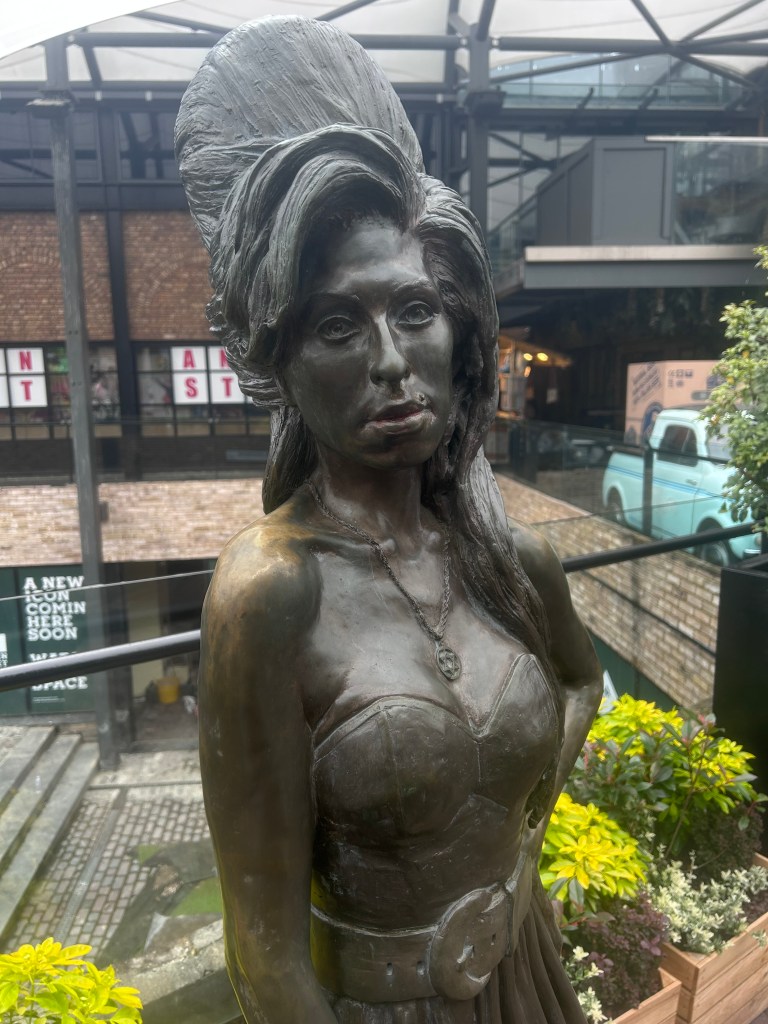
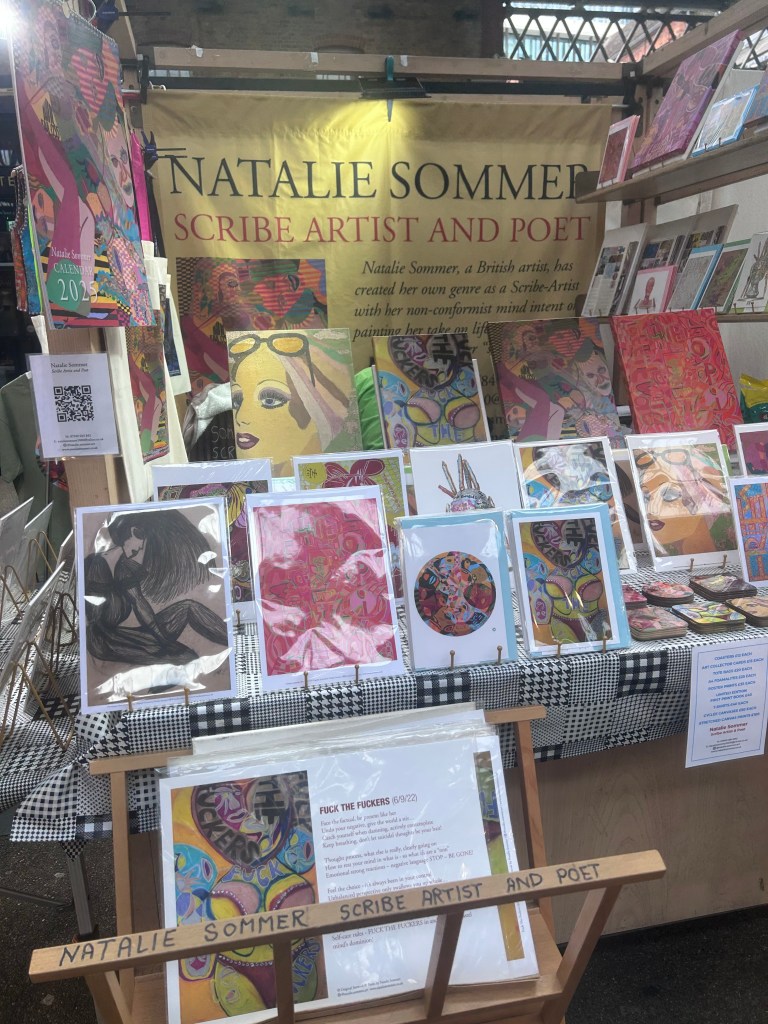
The markets of London are like nothing I have ever encountered before. Within one square mile, there are more cultures represented than there are within 50 miles of my home town. From Egyptian jewelry, to Indian fashion, to Palestinian pottery, to Jamaican cuisine, one can find almost every sector of the world showcased in their own unique ways. 

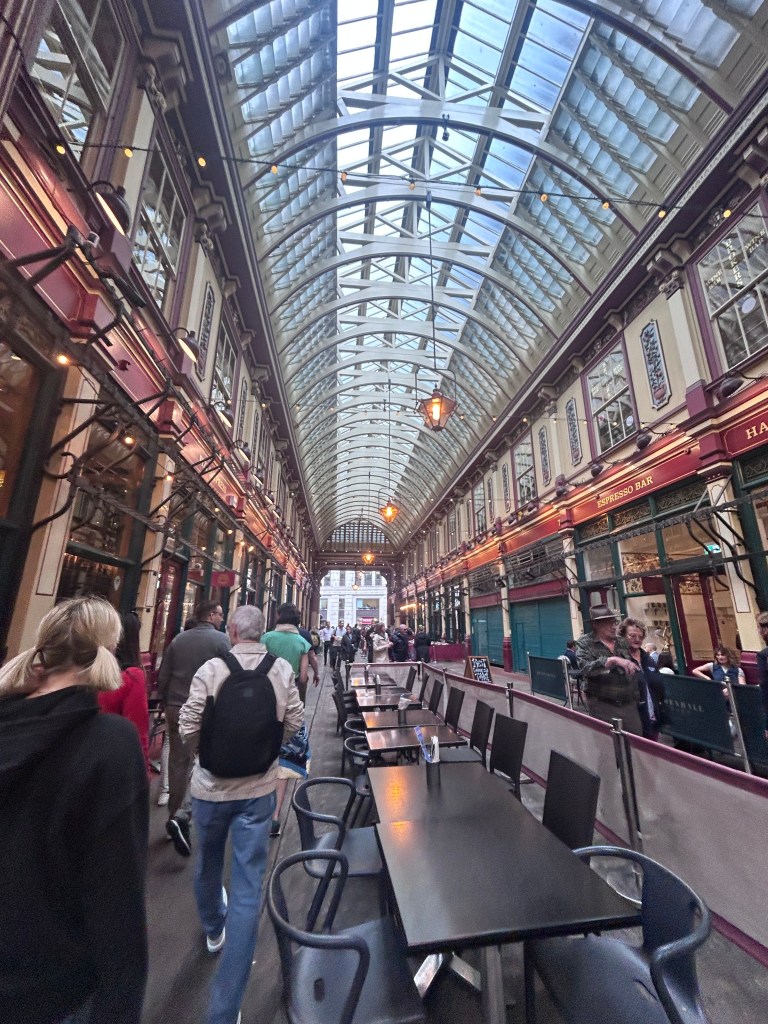
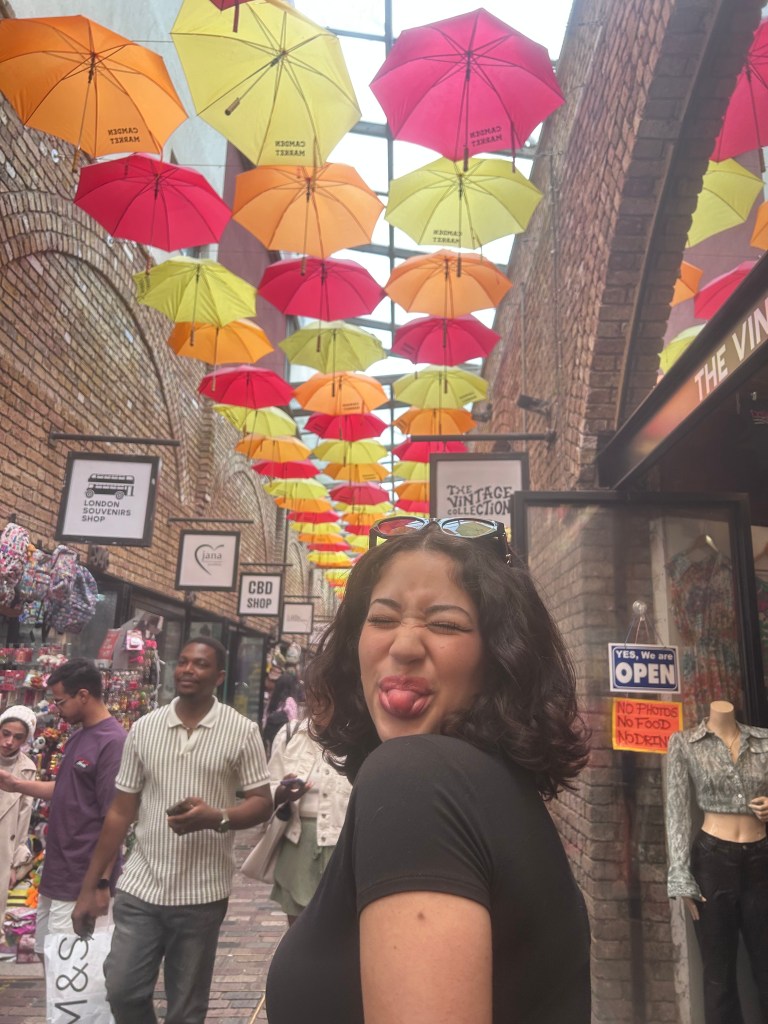
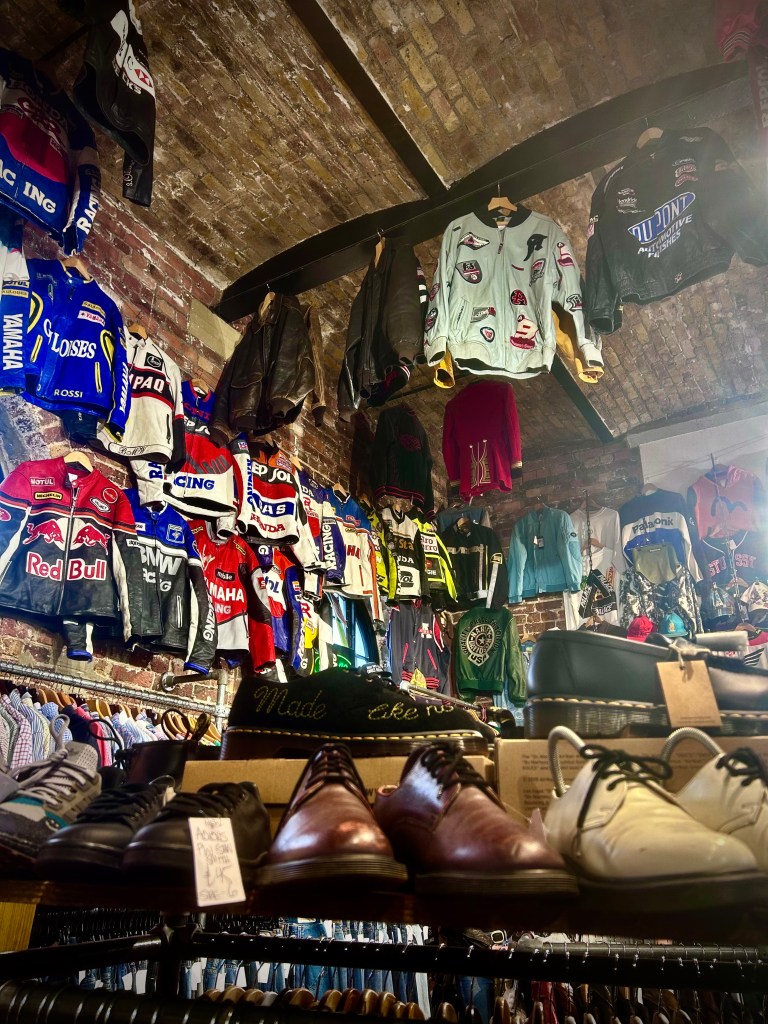
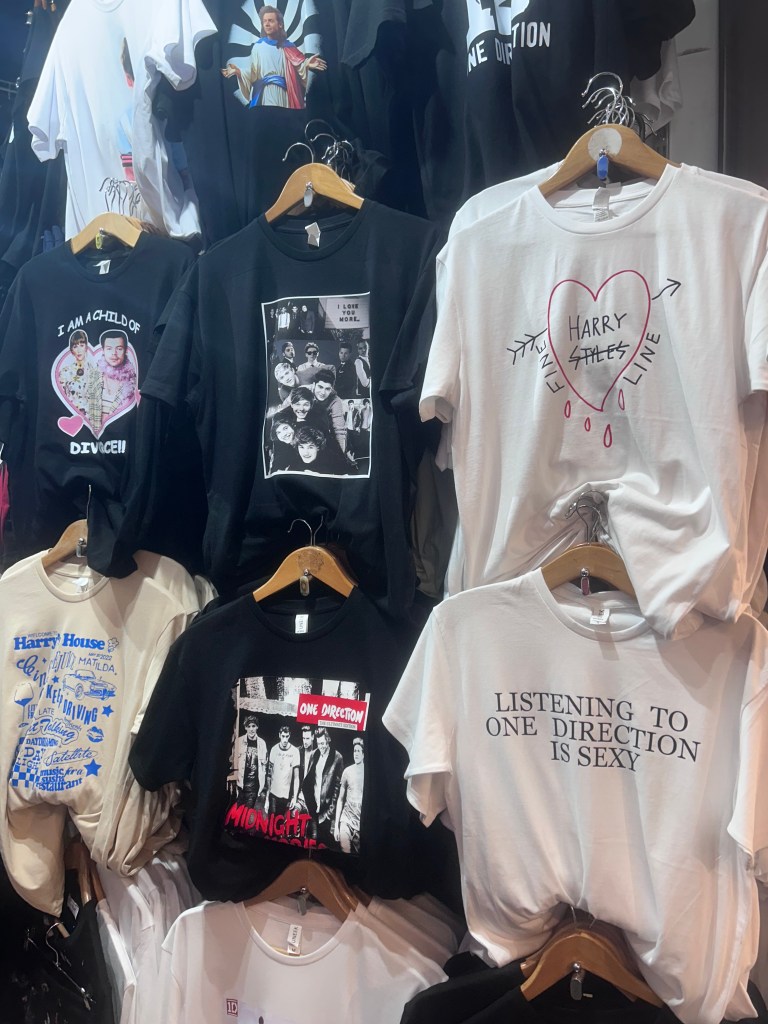
While it is a tight competition, my favorite market was between Camden and Borough Market. Every time I thought the markets had no more to see, there would be another row of vendors with new and interesting items to explore. After every visit I was leaving with a fuller belly and emptier bank account, but every penny was worth it. These were the markets where I found all of my favorite jewelry and souvenirs (including the clock watch I have been wanting forever). I also had a variety of food: Indian, Thai, Jamaican, and whatever one would consider the pork sandwich place (is it British food??). 

While Borough and Camden were my favorite markets, they are not where my favorite item was, nor were they where I spent the most time. The market I got my favorite item in was Covent Gardens Market. My lychee and rose tea from Wittard’s Tea House (my beloved) was no joke my purchase of the entire trip. Seven dials was the place I visited the most because of its proximity to the hotel (and its fireeee cacio y pepe). 

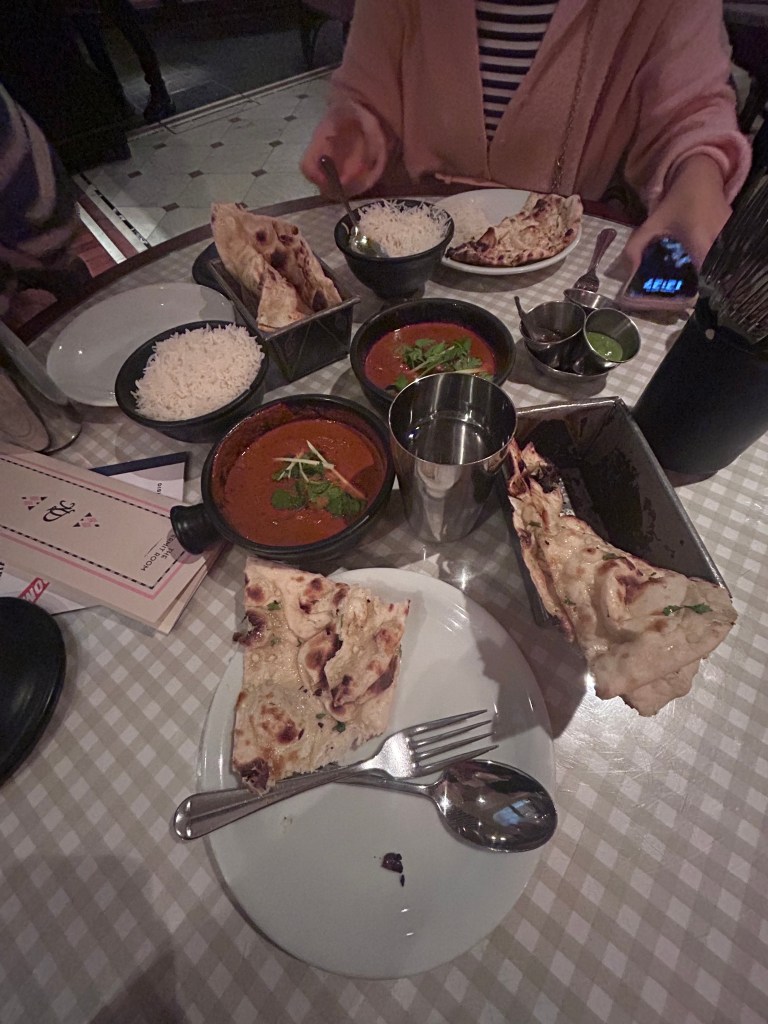
However, it is important to point out that my most favorite meal was not in a market, but at Dishoom. Before this trip I had no access to good authentic Indian food. This restaurant was probably my biggest cultural branch out. I went in feeling pretty indifferent to Indian food. Boy was I in for a surprise. By the end of the meal, I was about to start licking my plate and my fork was nearly on fire from the speed I was trying to get the ruby chicken in my mouth. 

Of all the things London has given me, authentic access to new cultures is probably what I am leaving the most grateful for.