
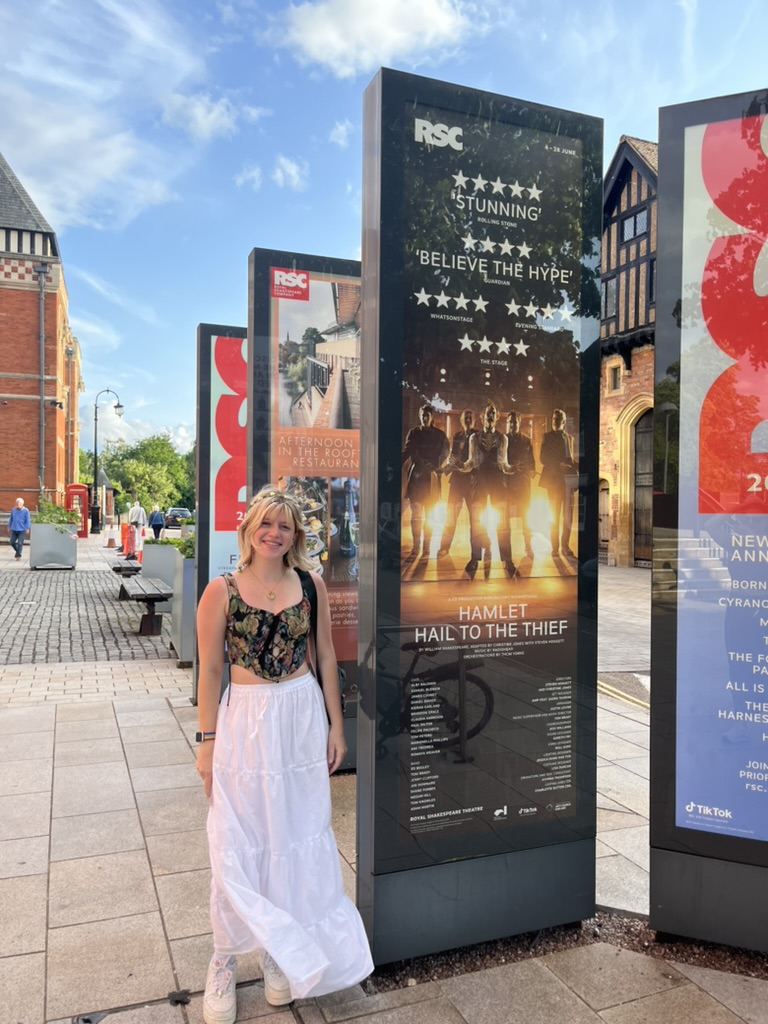
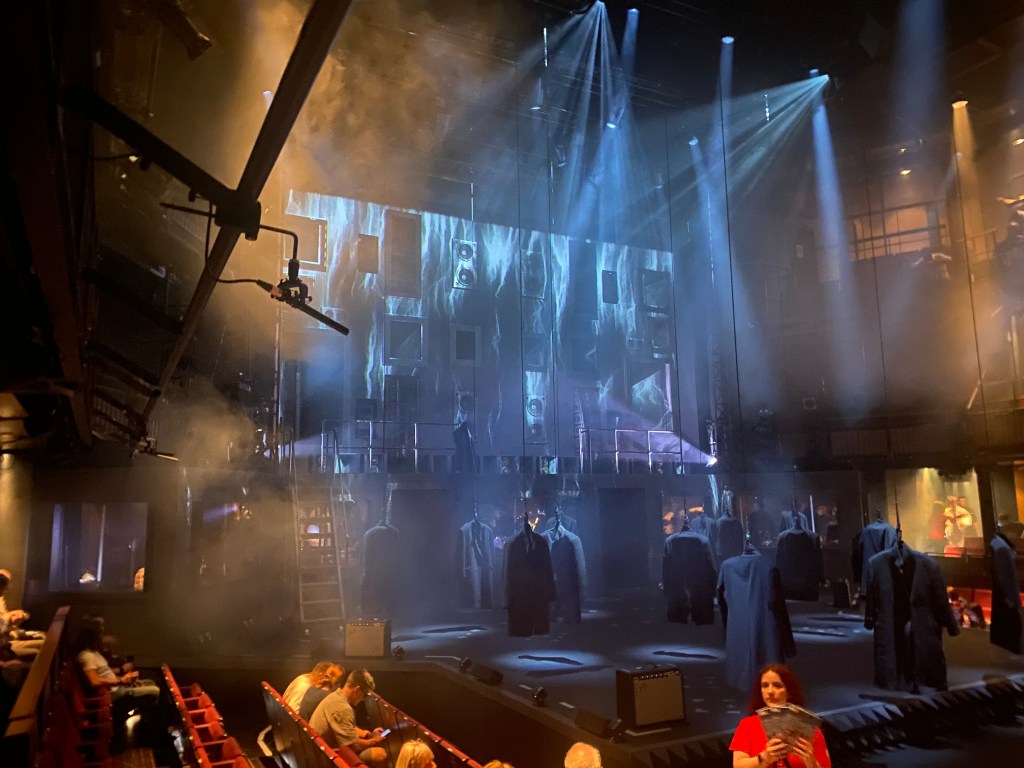
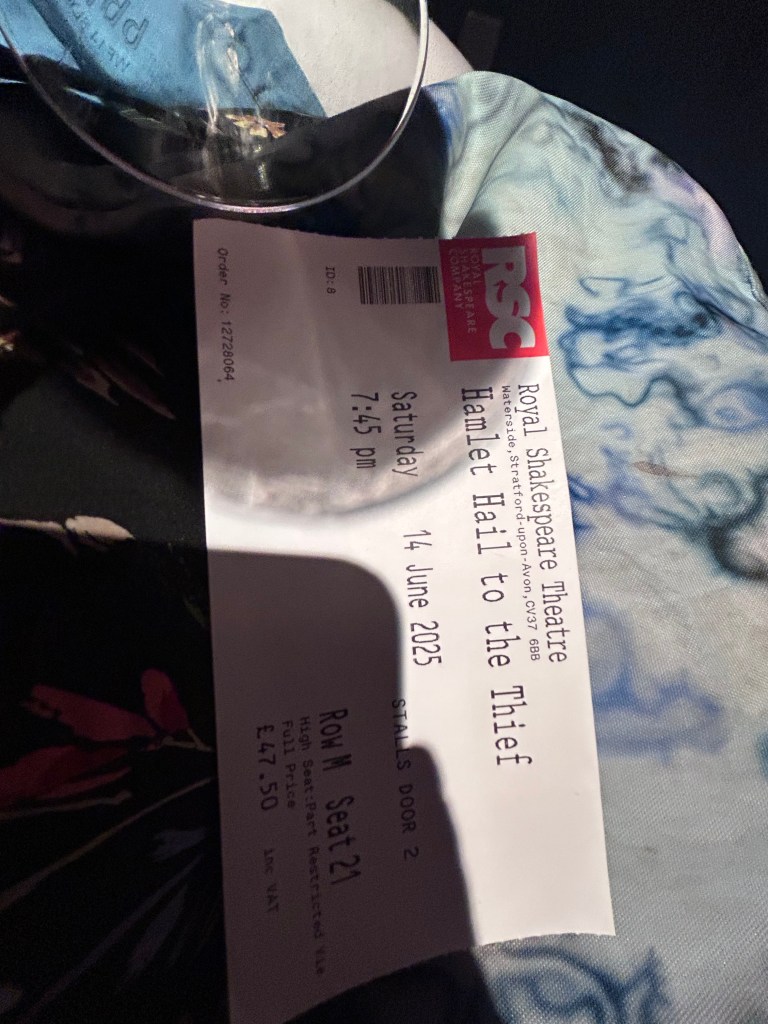
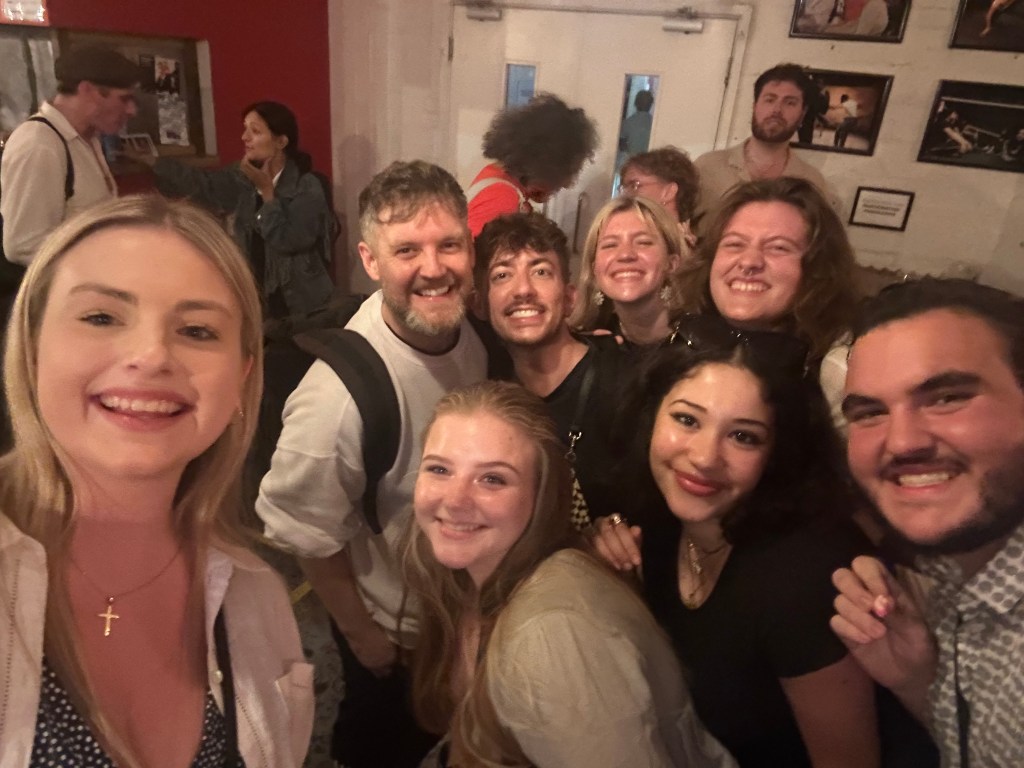
On our penultimate night in the United Kingdom, and our second night in Stratford-Upon-Avon, we ventured to the Royal Shakespeare Company to see Hamlet: Hail to the Thief. The show took Shakespeare’s classic story of Hamlet and combined it with Radiohead’s cinematic music. I wouldn’t quite classify it as a musical because most of the story is still told through spoken word, and not all of the characters sing. It is more of a play with the occasional song to help the story along. It was a shorter show with a variety of story-telling modes compared to other productions of the same story. For example, many of the smaller plot-points in the play became dance sequences, and a few of the characters sing along to the music when the lines resonated with their current state.
I read Hamlet about a year ago for my High School English class. We watched a few scenes from various adaptations as well as the entirety of the 1996 movie starring and directed by Kenneth Branagh. Most of what we watched were as you would expect a shakespearean scene to be, British actors speaking at lightening speeds like they feared they would forget the words they were saying if they said it any slower. It was an entirely different experience to watch the Hamlet: Hail to the Thief. From the way the characters were portrayed to the music and dancing, the Royal Shakespeare Company produced a whole new Hamlet.

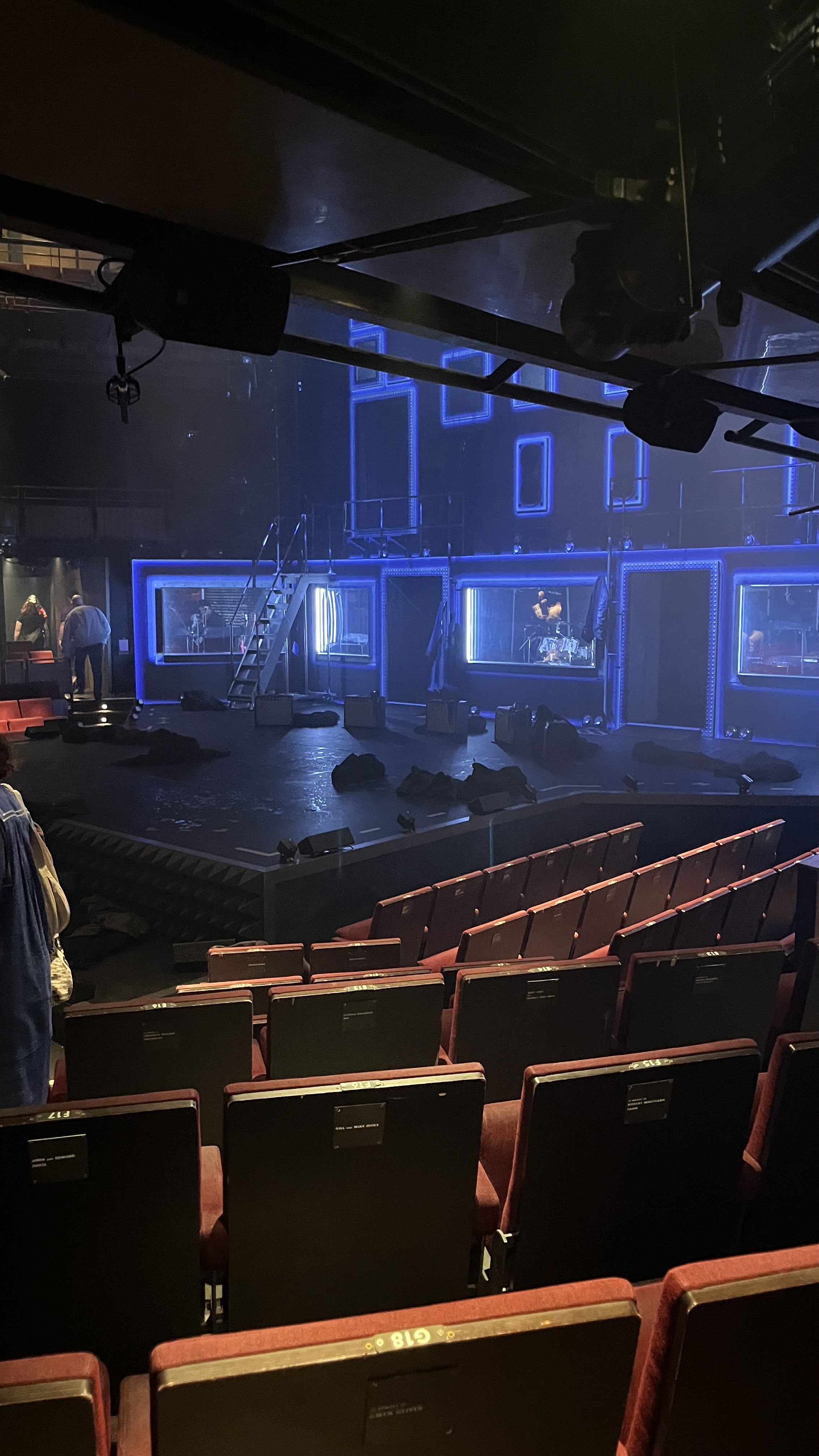
I cannot speak for those who have not read Hamlet, but being quite familiar with the main story I believe it came across quite well in this show. I was never distracted from the story, and in a lot of ways the music elevated certain themes and ideas hidden in Shakespeare’s words. It was hard for me to understand the words of the songs, and I am not familiar enough with Radiohead to fill in the gaps, but the music itself added emotion to the scenes. Many adaptations have non-digetic music to provide context and basic feel for the audience, but in this show the characters are actively telling us their story through music. It is not just background music, but the actual thoughts and feelings of the characters put to music. This gives a whole new weigh to the music. Using a popular band’s music also ties in younger audiences who may be bored by “classic” shakespeare and therefore introduces a new wave of audiences.
In addition to the music, RSC added a lot of dance in their production. Dance physically manifested the various streams of manipulation throughout the show. For example, one character who was more in control in the moment would move, and their movement would cause, or more force, the other character to move as well. Or, the characters would link in some way and then move about in all sorts of ways until they became all tangled up.
– Hadley ❤



















 Theatre in London U of A