LONDON – MY HEART!!!

What a month! If there ever was a way to completely describe my time in London, I’m sure it would take many more pages and would never quite do the experience justice, but I will try!

I was incredibly nervous for this trip. Even the idea of going to London with a bunch of people I didn’t really know was so far out of my comfort zone that I could barely even think about it before I left. It was an on a whim decision, but boy am I glad I took the leap. This has been an absolute dream and really is a time of my life that I want to remember forever. This trip carried a lot of emotional weight for me, as the reason I chose to join it was a month after my sweet momma passed away – when my dad told me that I needed something to look forward to, anything really. Just something good that I could have to keep me going. That day, I saw a poster for Theater In London in Kimpel Hall, and I figured that might be a good option. I don’t remember much from the last year of my life, but I do remember the excitement I felt as I anticipated this trip, and also the nerves…and also the fear…

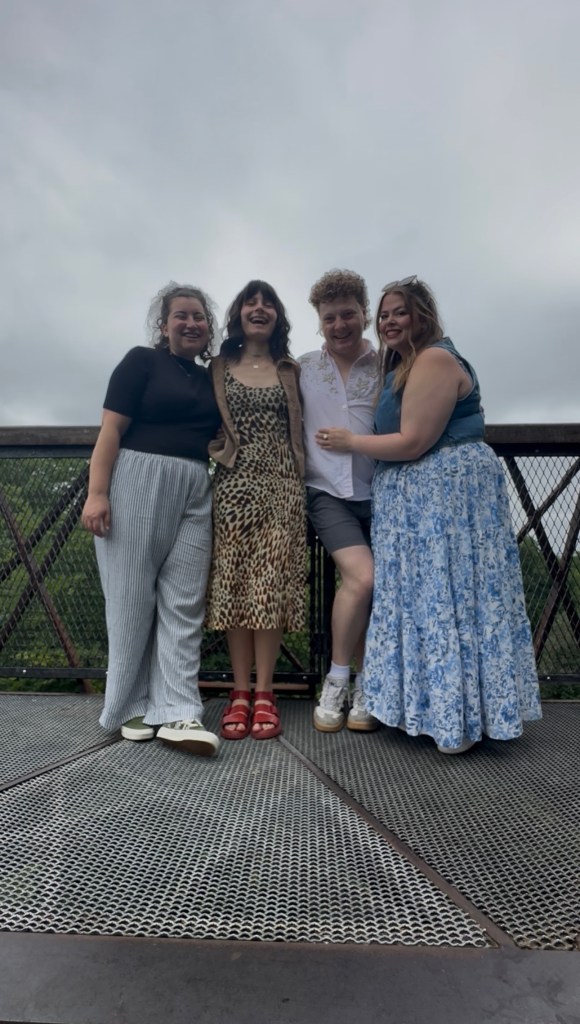
But all that to say, it truly has been one of the best choices I could have made for myself at a time when I didn’t even know how to put on foot in front of the other. This trip had hard moments – moments where I missed my mom, my family, my friends at home, the things that were normal to me! But my cup has continued to overflow with the love of the people around me, the incredible adults on this trip, and the late night talks and Tesco runs.

Part of my heart really did heal in London.

Spending the last few days of our trip in Stratford-Upon-Avon was the most perfect ending to our time together. It was a chance to calm down after being so caught up in the hustle and bustle of London, and it was just a gorgeous, quaint town with something completely unique to explore – Shakespeares birthplace!

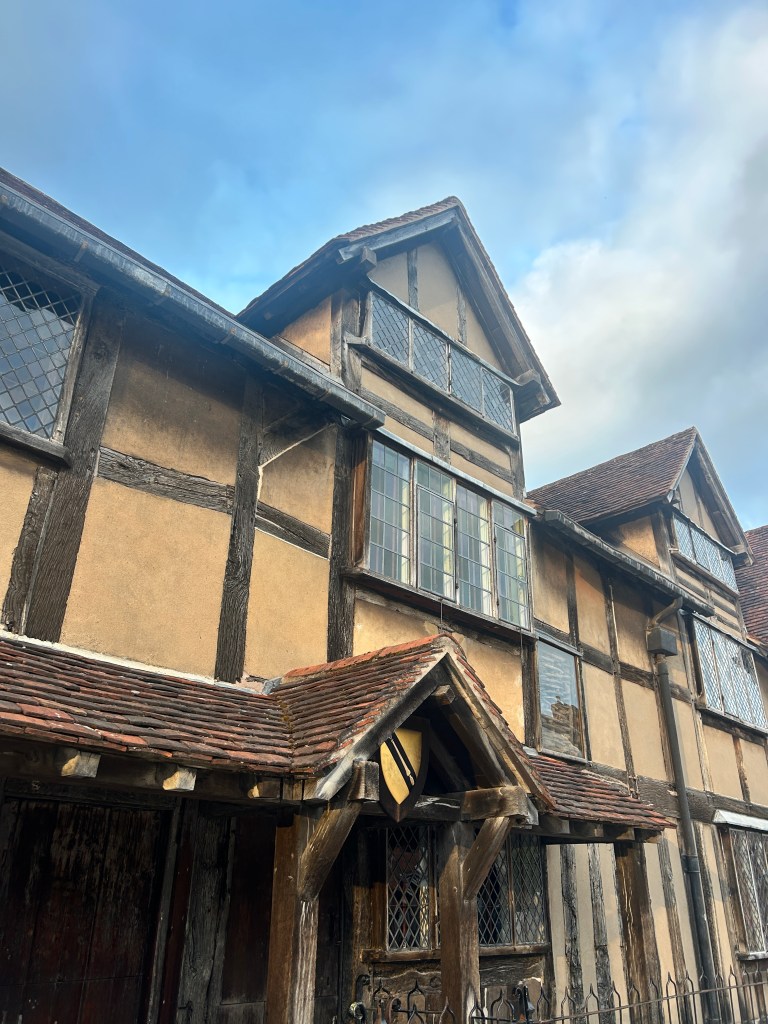
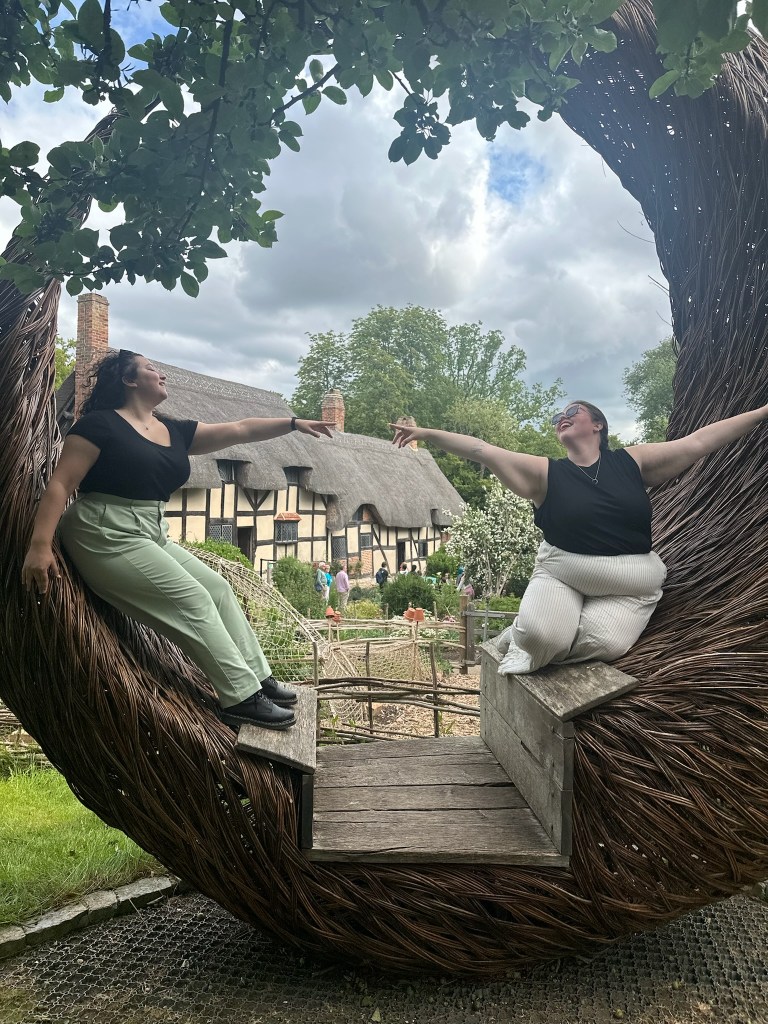
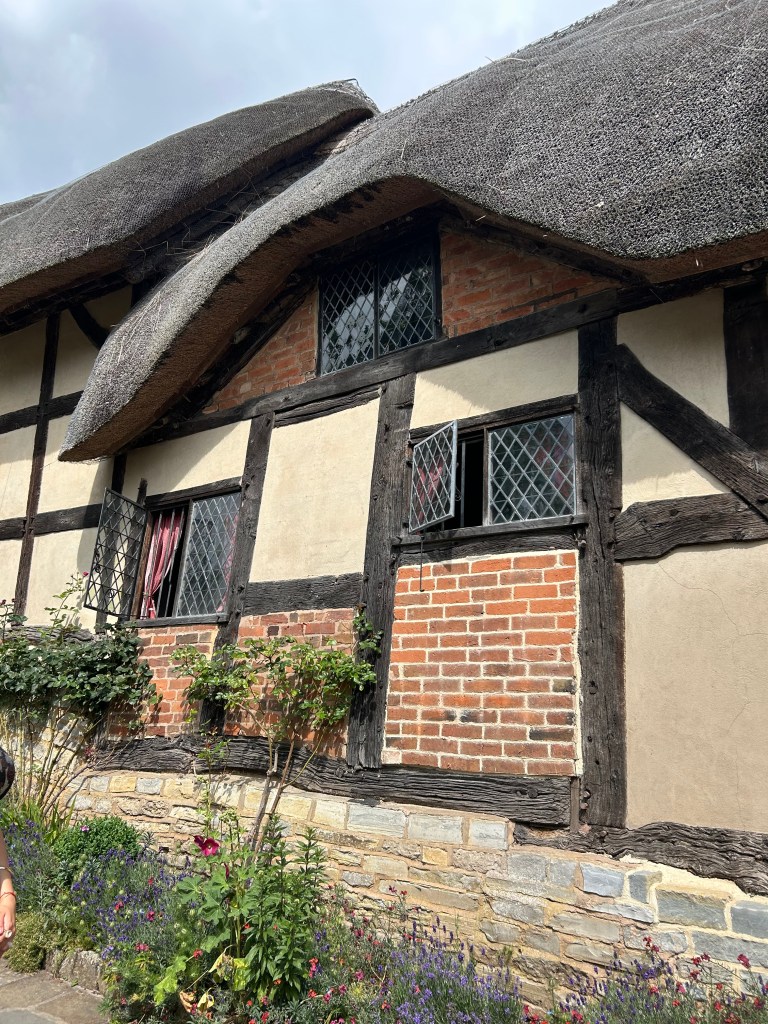
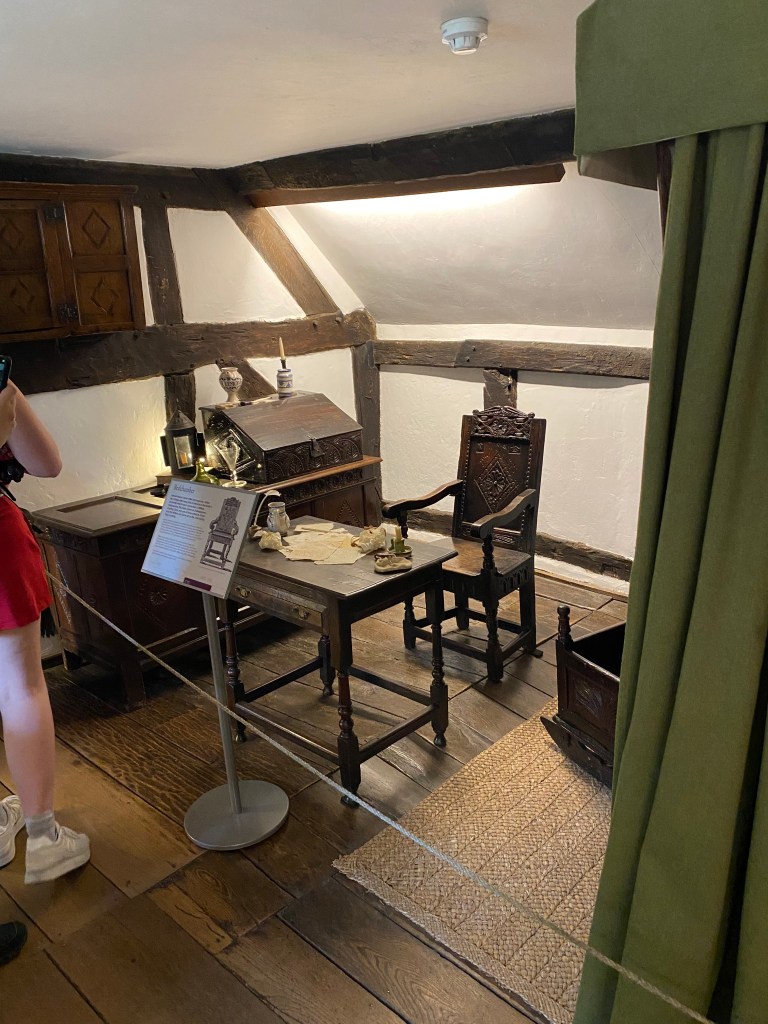
This was one of the favorite parts of the entire trip. Seeing the home, and the exact room where Shakespeare was born was an experience that I do not take for granted. It was almost impossible to imagine that he really stood in these rooms, really lived within these walls. I kept trying to look in the corners and see if I could picture him standing there, just talking to his mother, or reading a book. Its hard to imagine such an icon as a real person, especially one that lived that long ago. His home was full of real artifacts and creaky floors, and was exactly what I expected it to be. Anne Hathaway’s cottage was the same deal – just what I thought it might look like. It was a gift to see such a generational treasure for her family! We found out that they still have family reunions there, the latest one being a couple months ago, with the youngest child in attendance only at the age of one.

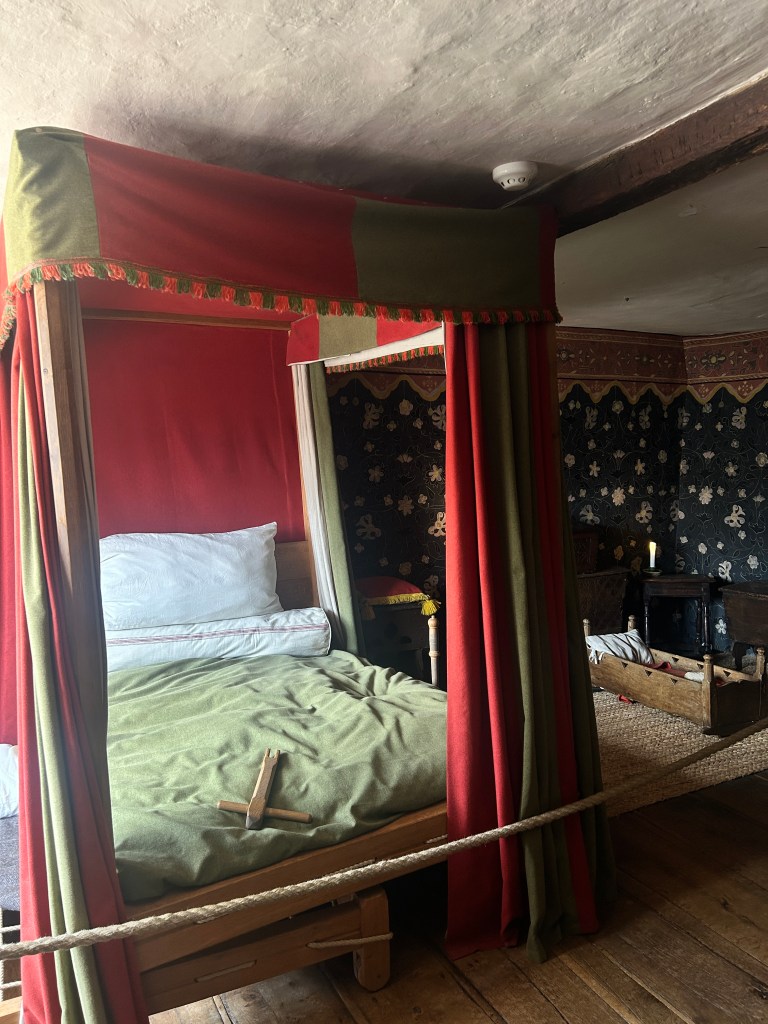
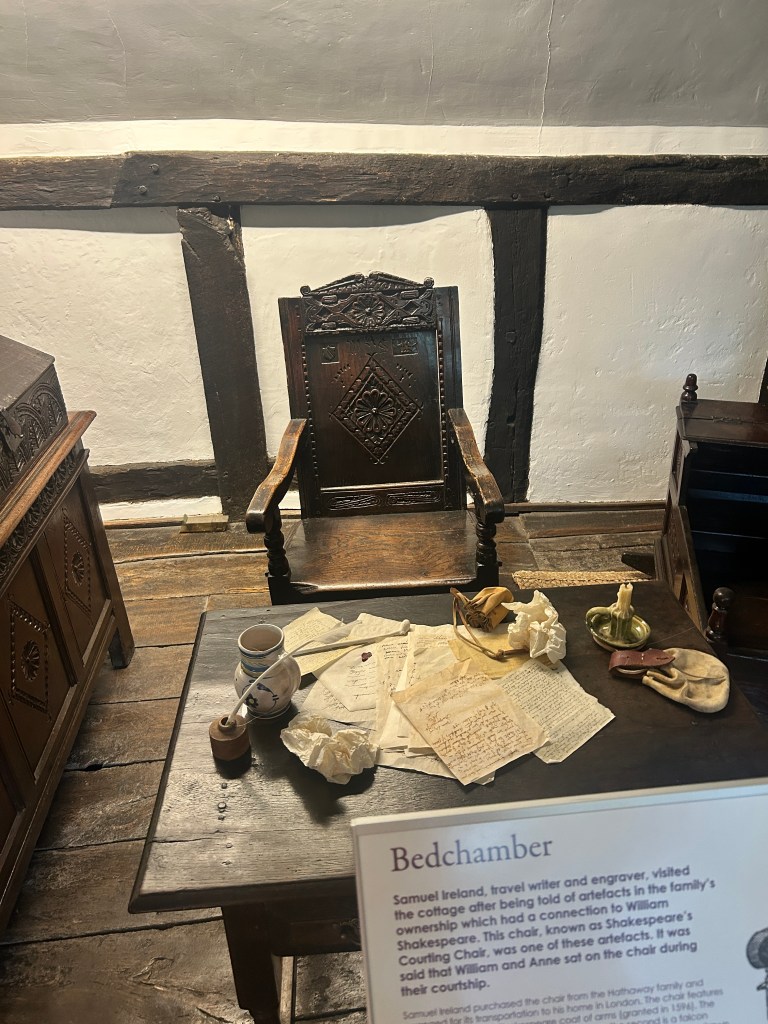
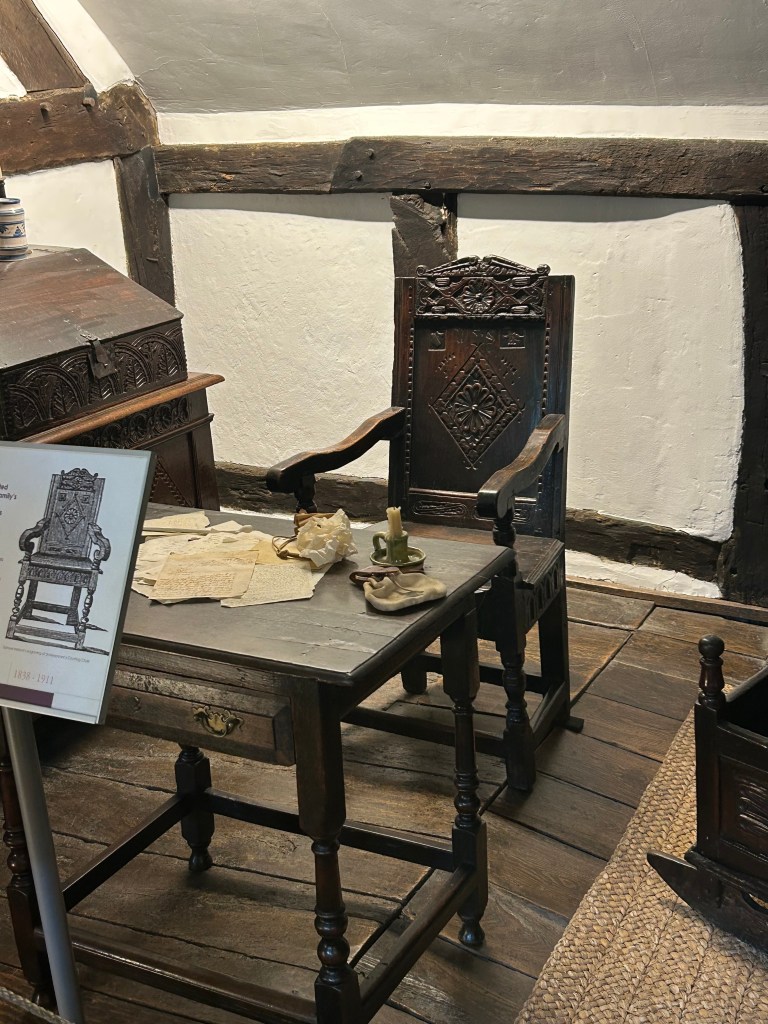
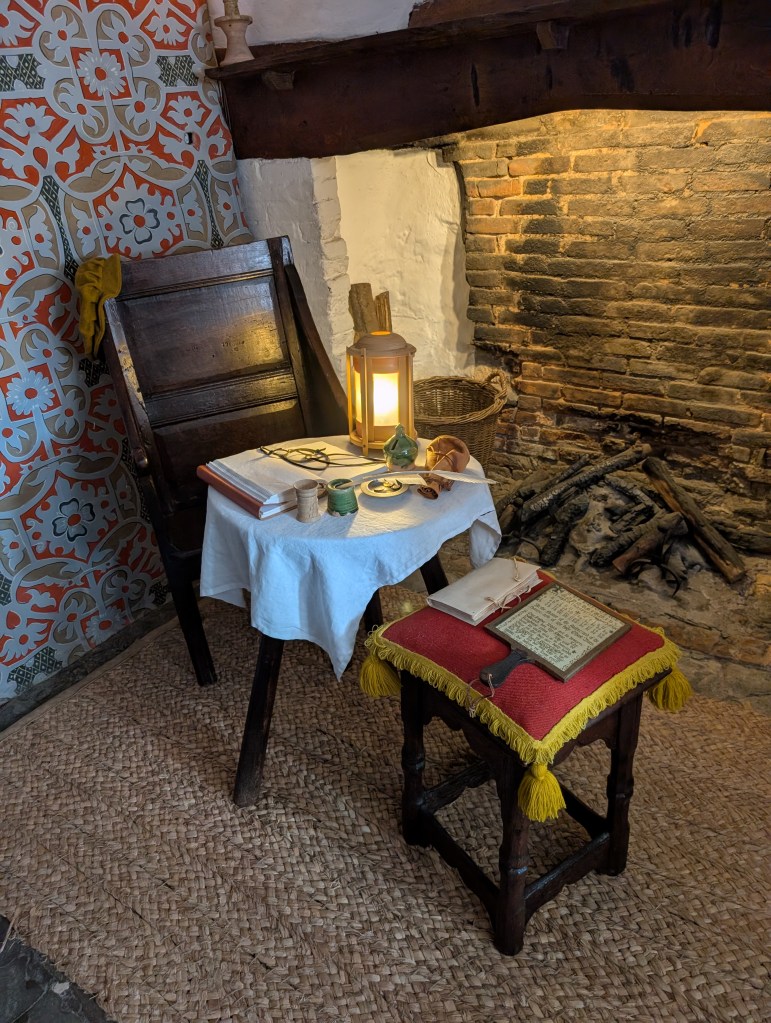
The cottage had so many pieces of furniture that were original to the Hathaway family/Shakespeare, including Shakespeare’s writing chair, and the Hathaway bed original from the 1500’s. It was incredible to see furniture this old and belonging to such significant historical figures – especially something like a bed, so intimate. It makes me wonder how they could have ever known that 500 years from their lives people would be flocking in just to get a look at their humble bedrooms and kitchens. I guess we never really know the impact we leave, and I think in a lot of ways that is beautiful. They really did just exist, and love and cry and work and then finally die, just like we all will. It makes me feel so nostalgic, even though this wasn’t my life, but almost like they’re looking down and seeing us imagine what their lives were like. I wonder what they think about that.

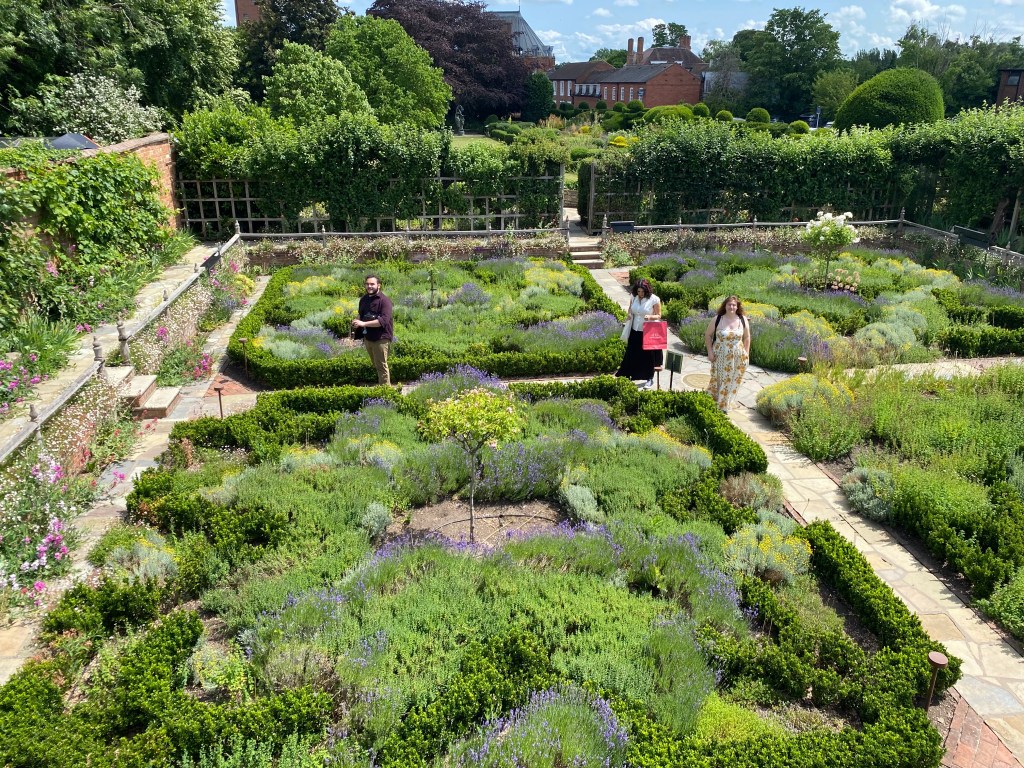
We also saw the New Place, which was bought by Shakespeare after his marriage to Anne to raise their family there. Sadly, it is no longer standing in the spot it once was, but there is a beautiful garden and a very cool exhibit there to memorialize the spot.

Our time in Stratford-Upon-Avon, though short, was enriching and fun and very laid back. We had a blast at our final group dinner all together, and had a sweet night of packing and watching Glee with my roommates!

This trip is something I want to tell everyone I know to go on. It was a growth experience in so many ways – and seeing such incredible theater for a month straight was a huge privilege. I will miss everything about this trip, but especially the late nights with roommates, getting on the wrong bus with Anna and going all the way to Kensington at midnight, the mean waiters at Honest Burger, being endlessly confused after My Master Builder and Here We Are, crying at Benjamin Button, writing blog posts at 3am, the dirty plates at the Royal National, discovering the water filler at the hotel 2 weeks into the trip, Anna falling down the stairs not once – but twice, the lady that came to our door to tell us to be quiet when we weren’t even talking, seeing Arty from Glee in person, knowing where Hamlet lives, my extra special ice cream topping, eating at Franco Manca (freaky moo moo) at least 5 times, blisters in Italy, stealing free samples from Whittard every single day, discovering Farmer J, endless vanilla matchas, and some of the funniest people I will ever know. Thankful for a month of memories that make me richer!!

Heres to London!

xo, jo

i am crying in the airport now

A Fond Farewell to TIL

As this trip comes to an end, I am incredibly grateful for all of the experiences gifted to us throughout. From a stressful arrival, to finding a groove in the city, to the last few days of a slower pace, this study abroad experience has filled my cup infinitely.

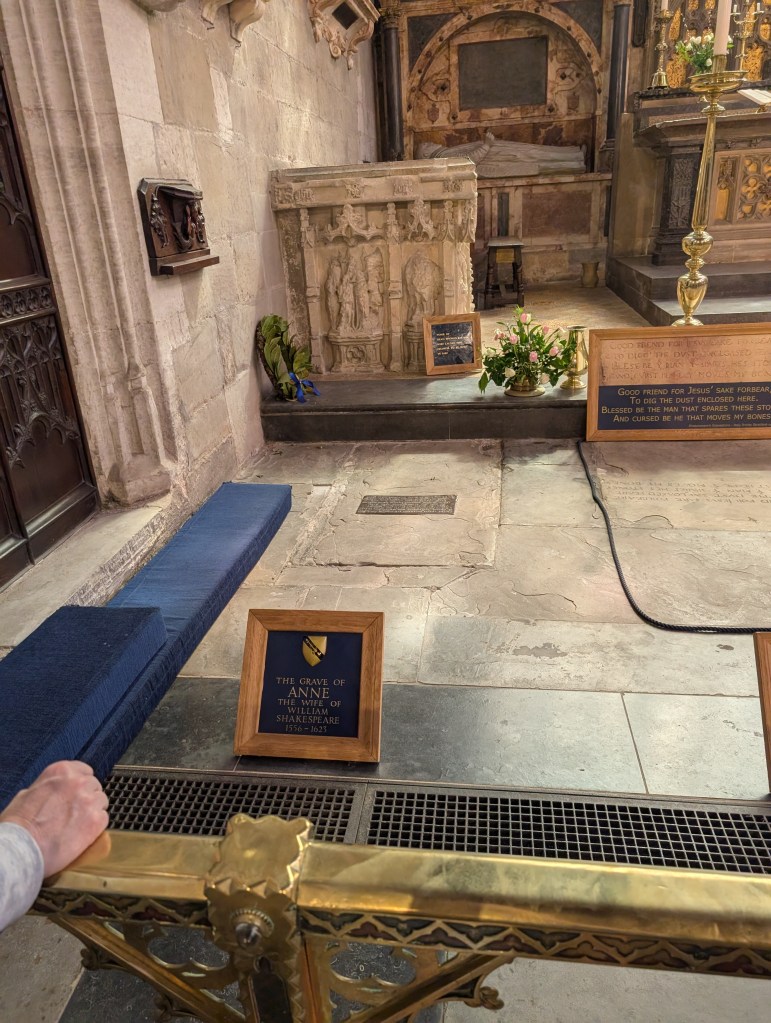
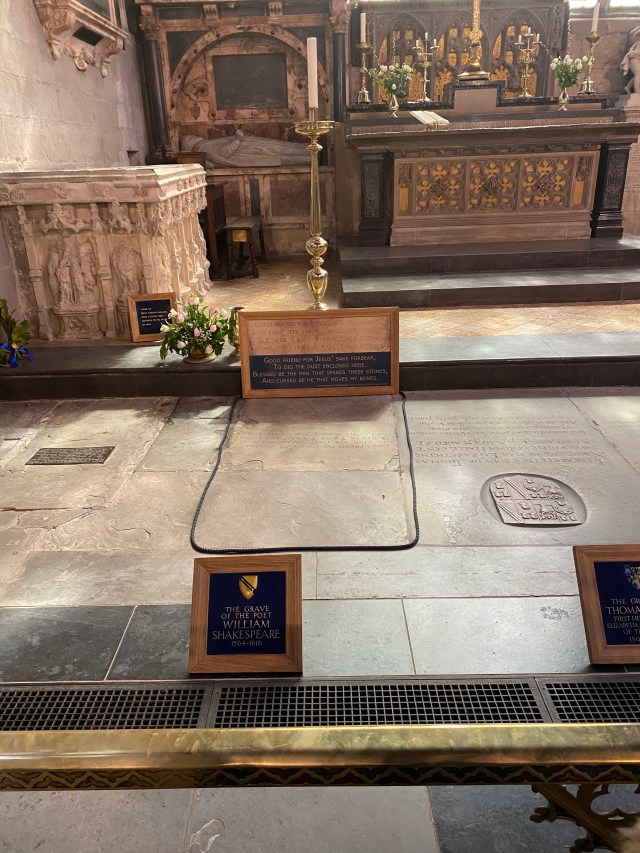
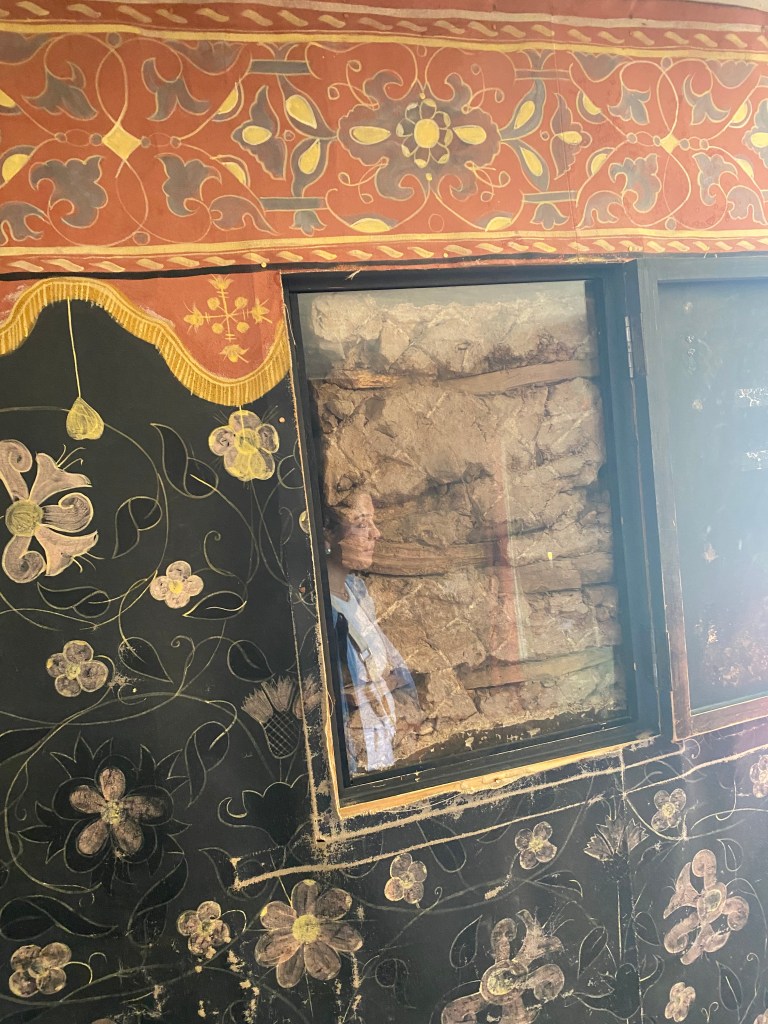
We just finished up our last few days in Stratford-upon-Avon, Shakespeare’s birthplace! While there we got to visit Shakespeare’s birthplace, Anne Hathaway’s cottage, the home he built for the two of them called The New Place, and Trinity Church where they are both buried. Both Shakespeare’s birthplace and Anne Hathaway’s cottage are still standing to this day. In many of the rooms they still had original pieces such as Shakespeare’s writing chair, bed frames, and even original windows! It is insane to think that these buildings that were built almost half a millenia ago are still standing strong enough for us to go inside. I think about the buildings we make today, the homes and skyscrapers and theatres, and can’t imagine any of them still standing 500 years from now. Some of the flooring we walked across was the original stone flooring, and I was struck by walking in the literal footsteps of Shakespeare. Because he, too, was just a man. He had no idea of the legacy he would leave (or at least certainly not to the extent he would leave it), and he was just living his life the best way he knew how. And really, what more can any of us try to do than that?

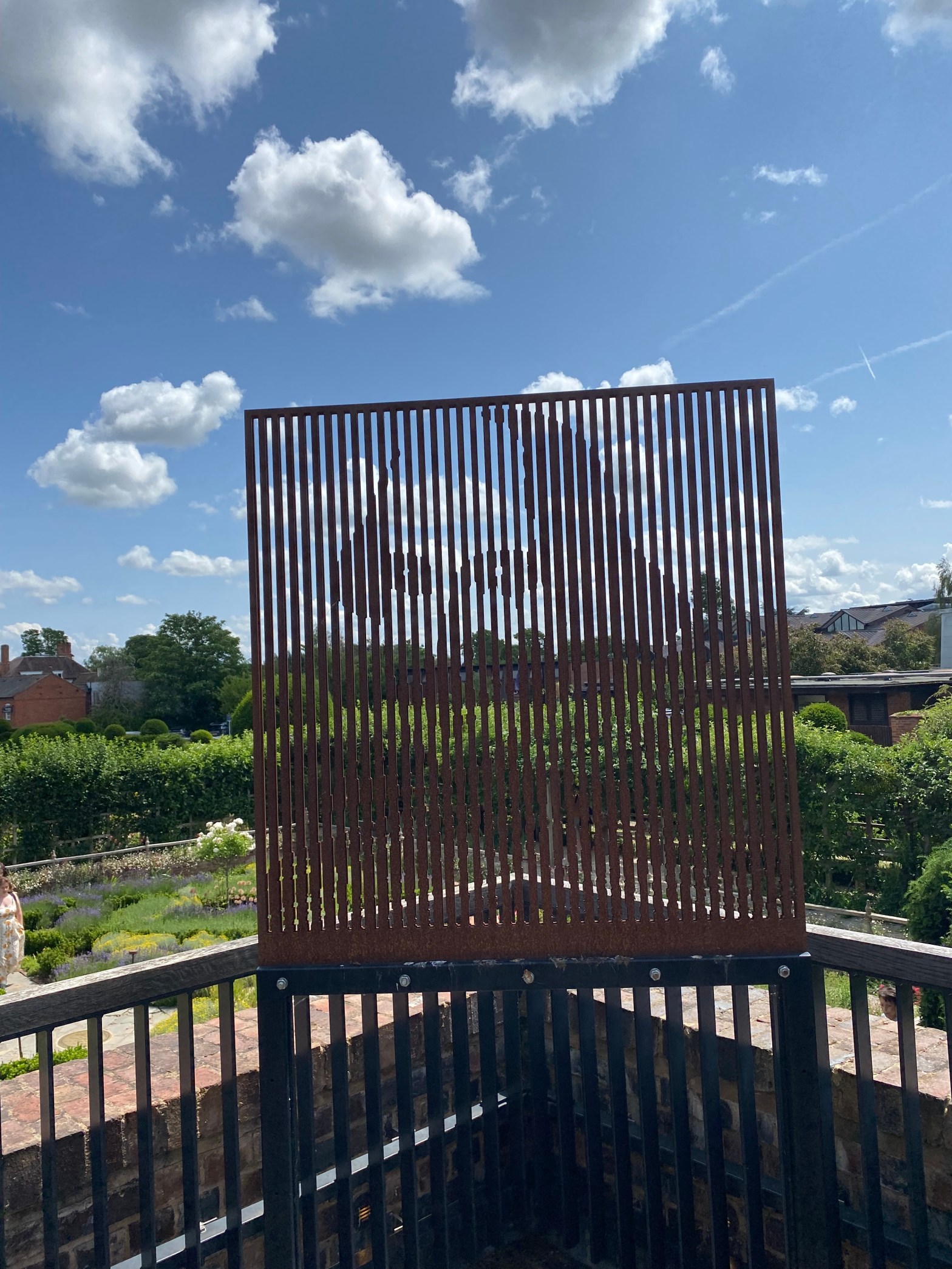
The New Place unfortunately no longer stands, though the grounds on which it was built are now covered in beautiful gardens. There are markings on the stone pavement that give an idea of which rooms might have lived in which part of the garden. Once again, I was struck by the connection to history. Only this time it wasn’t just about the connection to these historical figures, but rather to every person who had walked along this path. The friends of Shakespeare’s children who came over to play, the owners who moved in after, the ones going through the ruins once the house no longer stood, the ones who decided to plant a marvellous garden. We are all connected in ways we cannot begin to comprehend, and I am ever thankful for the way that energy flows through the universe in one never ending loop.
Trinity Church was absolutely beautiful. The stained glass, though it would not have been present during Shakespeare’s time, was marvelous. Within the church lay the remains of William Shakespeare and Anne Hathaway. There is also a bust of Shakespeare up on the wall in full color that shows him writing with a quill and ink. While these death memorial statues were common in the day, it was not at all common to have them in color or to have any notion of the person’s profession. This to me says that Shakespeare’s faith truly was in his writing and his connection to humanity, rather than to any connection to the divine. I can’t say I blame him – I’d rather be known for the ways I impacted the world around me than whatever faith to which I hold.

All in all, I could not be more thankful for this experience. From theatres to gardens to museums to quaint little towns, I’ve gotten to see the world through so many different lenses. I have learned so much about the creation of art that I cannot wait to bring into my future work. More than anything, I am grateful for the people with whom I got to share this experience. Good times are only made better by good company, and this most certainly was good company. I think Juliet said it best – parting is such sweet sorrow.

The Strait Ford Upon Avon

I was very lucky to have an opportunity to speak with Jonah one of the hosts at our Bed and Breakfast. He’s lived in Stratford-Upon-Avon his whole life and has a deep knowledge of its history and will always take the opportunity to share his knowledge to both captive and captivated audiences. There was a large map of Stratford on the wall of the breakfast room. He had asked me if I knew how Stratford got it’s name. He indicated to the map which shows 5-8 major roads that all lead toward the heart of the town. He explained that this was the only area that had a ford in the river, a shallow area that is easily crossed whether on foot, horseback or wagon. This ford was the only way for people to cross the river for several tens of miles which made it a very popular spot for tradesman and merchants. Hence how the town got its name, the strait ford upon Avon. This ford is the reason that William Shakespeare was born in Stratford-Upon-Avon, his father was a tradesman who made and sold gloves. Stratford was an advantageous location for him to be able to get his goods to either side of the river.

The town itself could not be more different that London. It’s cobble stone streets and sidewalks that wind through buildings that look like something out of the book of fairytales I used to read as a child. Stratford feels removed from the modern world, but not in the same way as Bath. Bath felt tied to ancient ruins, felt more of a time machine. Stratford felt like a portal into a fairytale. If it weren’t for the McDonald’s and Tesco Express I might have believed it. There’s a romantic element, not only in the architecture but also in the aura of the town. Everything moves a little slower, feels a little easier, the air feels brighter and cleaner. The people feel like a true community, it has the small town feel where the locals know everyone and are always meddling in each other’s business.
The people of Stratford are extraordinarily proud of their town and they should be. It’s a beautiful place that seems to thrive off the love of community and history. It is interesting that so much of William Shakespeare’s history has been preserved. It feels like not only the townsfolk, but also Shakespeare himself knew how legendary he would become. The house Shakespeare was born in stands tall and well taken care of, his grave sits in pride of place on the altar of Holy Trinity Church, much to Queen Elizabeth I’s disappointment. His funeral monument that was immaculately created has withstood 500 years and been preserved by a hundred generations of the people of Stratford.

The only piece of Shakespeare that hasn’t stood the test of time is The New Place, Shakespeare’s marital home he shared with Anne Hathaway. Jonas was all too kind to give me the history on The New Place. In the 1700s it was inhabited by a local vicar who became quite irritated by the number of people who would knock on his door asking to see the place where Shakespeare had written several of his plays. He became so annoyed that he tore down the house so as to live unbothered once more. Jonas went on to tell me that for most of his lifetime that corner lot were beautiful public gardens that the community were able to enjoy. He said about 10-20 years ago the Shakespeare Centre took control of the location and created the museum and gardens that we were able to visit. He was happy to tell me that the locals are still provided free access to the gardens as they are no longer public and only tourists have to pay for entry.

Stratford was slow, romantic, with an edge of magic that created the perfect culmination of my time in England.

Blog Post 13: Stratford-upon-Avon, the Final Act

Stratford-upon-Avon was a major contrast to all the other cities we had visited over the course of the trip. Obviously, it was much smaller and quieter than London, but even the smaller places, like Bath and Oxford, felt much more like London than they did Stratford. In fact, out of all the cities we’ve visited, this one felt the most like home. Most of the buildings weren’t very tall, it didn’t feel much of a tourist destination, and everything seemed to be a bit slower. Most stores closed at seven or eight, with midnight being the absolute latest, whereas in London I could visit Tesco any time of day I wanted. The weather was also much warmer there, with it being sunny and warm the whole time. Despite all this, there was still much to see.

Stratford-upon-Avon was the birthplace and residence of William Shakespeare himself, and much of the town still revolves around him. We visited four different locations relevant to him. The church where he was baptized and buried, and house that he was born and grew up in, the gardens that replaced the larger house he bought later and life, and the family house where his wife, Anne Hathaway, was born. It was so fascinating visiting all these places. William Shakespeare is undoubtedly not just one of the most famous writers or playwrights of all time, but one of the most famous human beings to ever live. He and those around him couldn’t have known how far his fame would reach so far after his death, and so it’s a miracle this stuff is preserved as well as it is. In fact, the idea that one of Shakespeare’s homes could just be torn down seems preposterous to us nowadays, but it’s a reminder that he was still a human being, like the rest of us.

Shakespeare was not the only thing that Stratford-upon-Avon had to offer. It also had a cat café, though it was named Shakespaw. I spent an afternoon there enjoying the company of the cats, but it reminded me of how much I missed my own, but I knew that I would see them soon.

This is because Stratford-upon-Avon was the last place that we visited on our trip. In fact, I am currently writing this in the airport waiting for my flight, reflecting on the trip. It feels very bittersweet, and I don’t know if I’m fully ready to return. I have enjoyed my time over here so much. I loved getting to see so much theatre in such a short time span, and all the historical locations were wonderful. There was also just so much to do, a month was nowhere near enough time to begin to see all London had to offer, and I already want to return. I also had a wonderful time hanging out with all my fellow travelers, I think that it was a great group, and I am sad to have it split.

One thing I’m going to miss most of all is the weather. I loved the cool, rainy weather of London. It was almost miraculous to be able to walk outside in the summer and not be soaked in sweat and mosquitos. At the same time though, I am so ready to be able to relax in a calm place and not have to deal with football fans screaming at three in the morning.

I am so glad that I chose to go on this trip. I feel like I have learned so much, not only about theatre and another culture, but about myself too. This has been Theatre in London, thank you for reading my blogs, and goodbye.

-Jack Duncan

Blog Post 12: Hamlet, Radiohead, and Dance

I can think of no show more fitting to end our trip on than Hamlet. One of Shakespeare’s best and most famous works, being performed in the town where he was born and lived. Hamlet is my personal favorite of Shakespeare’s tragedies and may even be my favorite of all of his plays. However, I was decently skeptical before seeing Hamlet, because it was not just Hamlet, but rather Hamlet Hail to the Thief, a show combining Hamlet with Radiohead’s Hail to the Thief album.

I cannot call myself a fan of Radiohead. The only time I have ever heard their music was when someone else chose to play it, and even then, it has only been their big hits. While I had meant to listen to the album before seeing the show, but I never got around to doing that, so I went in decently blind. I was worried that the music would clash with the performance, that it would feel forced, however, that did not end up being the case.

Instead, the music worked to enhance the show, helping to tell the story through performance art dance that complemented Hamlet wonderfully. The music was often eerie and unnerving, and the dance was too, often being jittery and unnatural, elevating the feeling of paranoia and uncertainty present throughout the play. The characters seemed to almost be in a trance-like state while moving across the stage, as if the music itself possessed them.

However, good dancing itself can’t make a show good on its own, all the other elements need to be working together to bring it to life. Luckily, that was the case. The music was live, and thus there was a whole band, not the real Radiohead though, playing. My seat gave me a good view of the two guitarists, who I often found myself watching. They swapped through multiple guitars throughout the performance and played them all excellently. All of the musicians were at the top of their game. The main issue I found was that I was often unable to understand the lyrics due to all the noise, however, that did not impact my enjoyment, as the singing itself was often quite haunting, and even without understandable words was very effective.

The acting was also great. The actor who played Hamlet did a wonderful job. He did a great job showing Hamlet’s youth and innocence, which faded away as he slips down into madness. All of the actors were great, but another I want to talk about is Claudius. He felt very imposing, his presence dominating every scene he was in, and I loved every scene he was in.

The design elements were also great. Almost everything was black and white, with most characters wearing all black, or just a little bit of white. This made a wonderful contrast, for Ophelia wore a white dress in the scene where she drowned herself, making her stand out among the darkness. Another glimpse of color was Claudius’s blood after he was stabbed. The red standing out as the only color in a monochrome scene.

One of the most surprising things about the show was its length. It only ran for around an hour and a half. I kept expecting an intermission, yet it never came. The short length worked wonderfully though, I think that if they tried to drag out the musical elements for too long, it would become tired. Instead, though, they presented a show that felt satisfying, not overstaying its welcome, which was a thoroughly enjoyable experience the entire time.

-Jack Duncan

All Hail to Hamlet Hail to the Thief

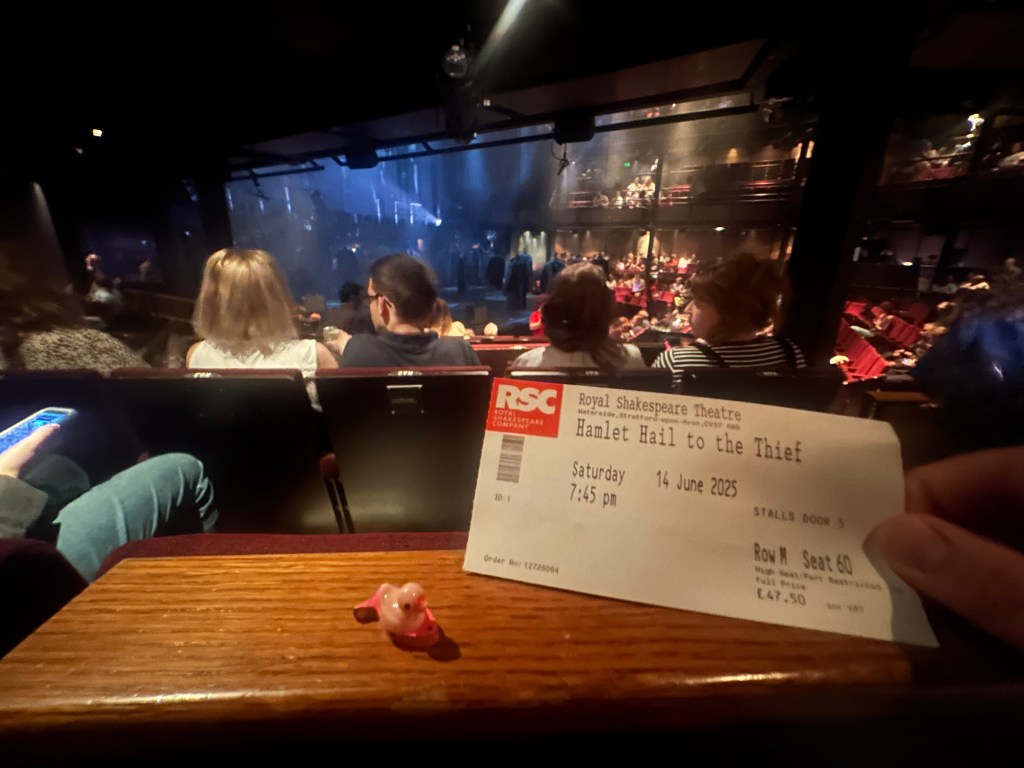
Hamlet Hail to the Thief at the Royal Shakespeare Company in Stratford-upon-Avon was nothing short of wonderful. While not my all time favorite of the shows we’ve seen on this trip (that honor goes to The Curious Case of Benjamin Button), it is a very close second. The conceit of this production is mixing text from Shakespeare’s Hamlet with music from Radiohead’s album Hail to the Thief. They were really creative with the name haha. But seriously, any lack of creativity in the name was more than made up for in the production itself!

Firstly, I loved the way they treated the text in this production. The entire show was 1 hour 40 minutes with no intermission. Obviously, this means they had to cut out a lot of text. Knowing Hamlet as well as I have gotten to, there were some moments where I was expecting to hear a bit of language only to find it had been cut. The only moment that I truly missed was getting to hear Gertrude’s final line, which I’ll talk more about when I discuss the final sequence of this production. My favorite change was adding in a repetition of Hamlet’s “To be or not to be” soliloquy (though, in this production, not so much of a soliloquy). Each of the actors knew how to expertly use the text, which only added to the experience.

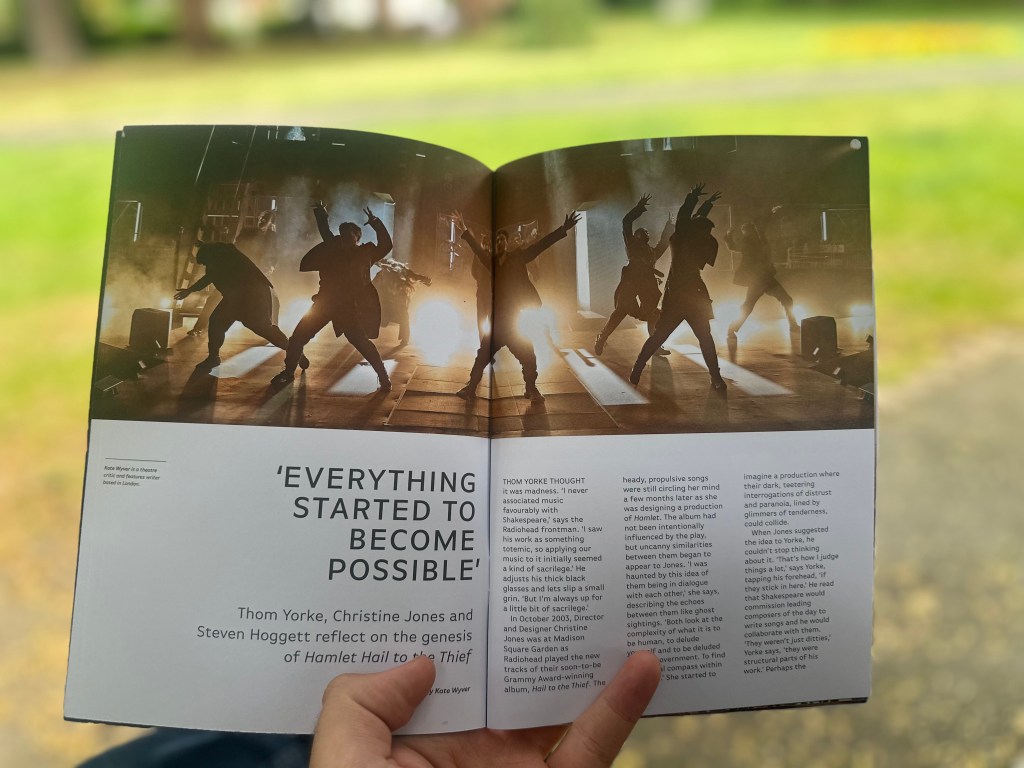
In addition to cutting and rearranging text, they also had the challenge of adding in this Radiohead music. I’ll be honest, I don’t know much of Radiohead’s music. Nothing against them, just not what I choose to listen to. That being said, I did know enough about their sound to not be too upset when I couldn’t understand the lyrics being sung. The music conveyed the feeling of the lyrics without necessarily needing to hear them all. At times it was an honest to God rock show! While these musicians were playing their hearts out, the cast all came on and danced in wonderfully choreographed interpretive pieces. I believe that this choreography is what made this production work. Since so much text was cut out, the director had to find a way to convey the story that we were missing. These movement pieces perfectly bridged the gap and even gave us extra story that is not shown on stage in traditional Hamlet productions. My favorite of these additions was the added storytelling between Hamlet and Ophelia. We got to see the true ecstasy that they felt together and then got to see how it devolved once Hamlet had been visited by his father’s ghost.

As mentioned above, the one aspect that I had some thoughts about (not necessarily negative) was the way the end sequence was done – the final fight where everyone except Horatio dies. It turned into a literal dance battle, and all of the text was cut out until after everyone had been injured and Hamlet was about to die. I think that some of the storytelling got lost here, such as the revelation that Claudius is trying to poison Hamlet with the chalice of wine that Gertrude ends up drinking. This becomes abundantly clear in the original version when she exclaims “The drink, the drink! I am poisoned.” Given how much chaos was happening onstage during the final sequence, I don’t think I would have picked up on this plot point had I not been actively looking for it.

To end on a high note, the use of the “To be or not to be” speech was pretty ingenious. To get into this, I have to discuss the treatment of Ophelia in this production. As opposed to the original text, in which Ophelia does not seem to have much agency throughout, this production portrays Ophelia as a feisty and opinionated young woman who, after going through unimaginable amounts of grief in a short period of time, devolves into madness. Hamlet’s “To be or not to be” is given directly to Ophelia in this production instead of the traditional soliloquy to the audience, and I honestly don’t think I want to see it any other way ever again. It makes so much sense for Hamlet to have been the one to put the idea of suicide into Ophelia’s mind in the first place. To make it ever more heartbreaking, they had Ophelia repeat this speech as a soliloquy right before her death. She is wandering and alone, stuttering through the words as they echo around her until a trap door opens up and she falls in. Even if the rest of the show had been bad, that one theatrical moment alone would’ve made this a show worth seeing. 

Thankfully, the show was incredible all around. I’ll be honest, this is the first time I’ve actually felt something for these characters while watching this show. The performers were amazing, the design was awesome, and the adaptation filled a centuries old script with new life.

The Shakespeare We’ve Been Waiting For

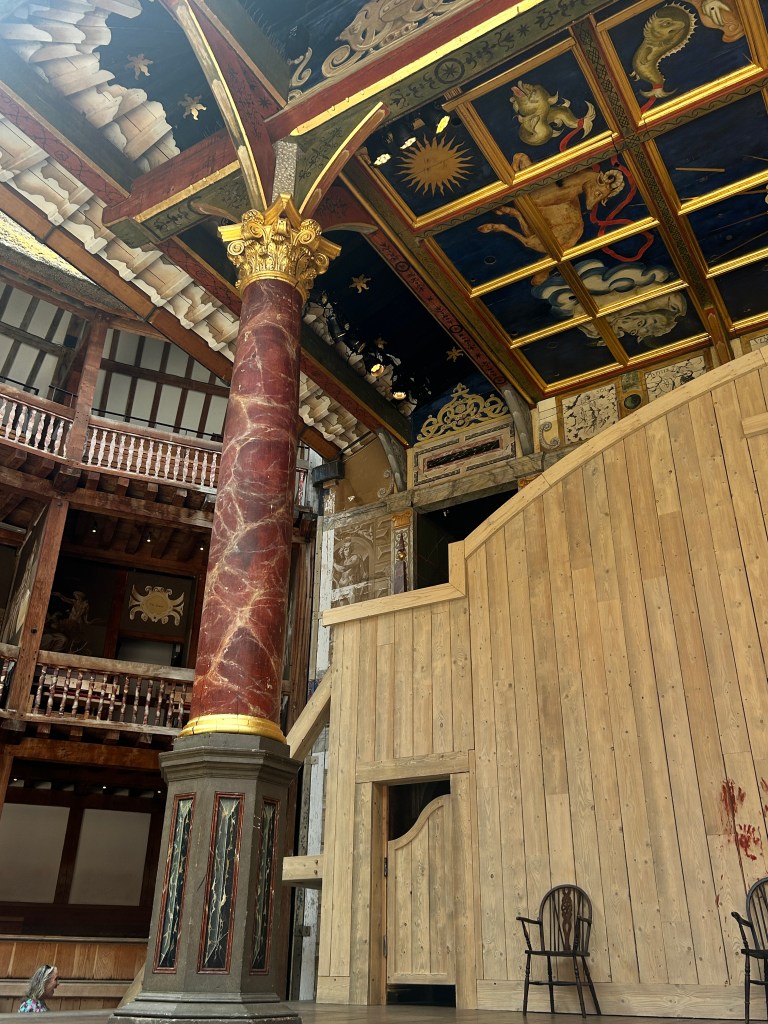
Heading into the Royal Shakespeare Company’s production of Hamlet Hail to the Theif I was struggling with my own expectations for this show. I was quite disappointed in the Romeo and Juliet we saw at The Globe. I had expected to see that show and go “Oh my god THIS is what Shakespeare is supposed to be!” and that just wasn’t the case. So now that we were in Stratford at the Royal Shakespeare Company seeing Hamlet that is conceptualized using the music of Radiohead I was unsure of what my expectations should be. I am ecstatic to say this is exactly what I wanted out of Shakespeare in England.

First, we must discuss the fact that we saw an HOUR AND FORTY MINUTE PRODUCTION OF HAMLET. To me, that deserves it’s own standing ovation. Hamlet it known to be a Shakespeare that is long, drawn out, and deeply gut wrenching. This production let go of all previously conceived notions of the play. At some points it felt like the original script was just used as source material and not the actual script for this production. They took the things that define Hamlet, “to be or not to be”, “the lady dost protest too much”, beautiful Ophelia, etc and let go of all of the fluff. In place of the fluff they wove in the music of Radiohead and the incredible use of movement and dance to fill in the gaps of the script that they had cut up.

The music itself felt like it’s own character. The band lined the back of the stage in their own sound booths that the audience could see into. The two singers had their own doorways that opened in the upper platform of the back wall that they would appear and disappear through. The music almost played the part of the Greek Chorus, while the characters used the interlude to show us what happened in between scenes or set up the upcoming scene without any text at all. The style of movement became it’s own language that was so clear we didn’t need a translator to understand what they were telling us.

The movement was somewhere between contemporary dance and true performance art. It almost felt like it’s own unique art style, as if this style of movement was created solely for storytelling with Radiohead. I was really impressed by how natural and organic this movement felt, not only in the story, but also in the body of the actors. Often times when you witness productions that play with interpretive dance or conceptualized movement it can feel awkward in the body of the actors, that was quite the opposite here. It seemed as if these actors had always told stories this way.

Watching this movement made me this about my Viewpoints class from my first semester. We used several different exercises to find our own bodies organic movements and developed not only our own physical language, but a language between the 12 of us that were in the class. We rehearsed moving as a unit using what is called soft focus, which is an awareness of yourself and the other bodies in the space. When the entire company achieves soft focus at the same time it feels like they become one unit of movement. This feeling was ever present in this production.

The show flowed effortlessly, never giving us too little or too much time to process what we were seeing. Heading into the next semester of Directing Studio I will be working with Shakespeare and this production has made me excited to find ways to make whichever play I work on feel renewed and mastered in the way that this production was able to.

Blog Post 11: Camden Market, Theatre and Trinkets

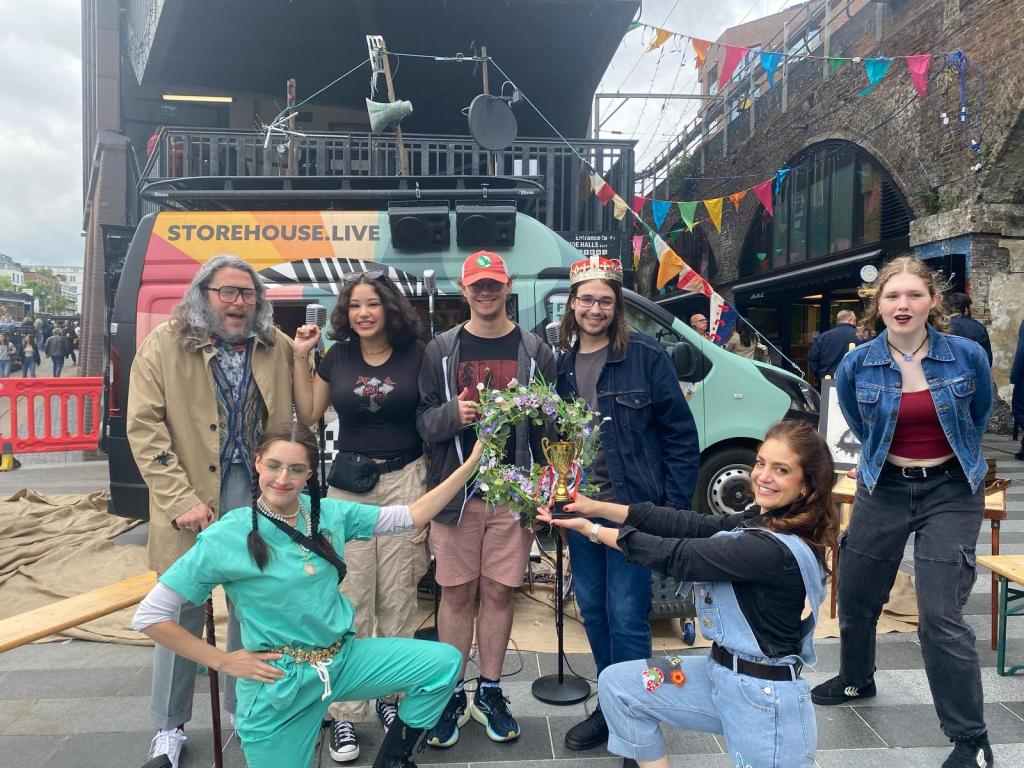
My visit to Camden Market had a rather peculiar start. I and a few other travelers had sat down on some benches while we waited for another of our group to finish using the restroom. Suddenly a voice started booming, and we realized that we had sat down right in front of a performance. It was not just any performance though, but one that included audience participation.

We were face to face with a mad scientist, his assistant, and his exasperated daughter. They first invited up a mother and father to play a game of truth or false, where they were given statements, and had to determine whether it was a fact or a lie. After that, two people from our group were brought up, and had to play a word game, saying as many different words relating to a category, without any repeats. Then came the final game, and while I had managed to avoid being brought forward for the first two, my time had finally come. I was paired up with another student and was given a deck of cards with words written on them and tried to get them to guess as many as possible by saying related words. After this we were given tea for our participation, and it was revealed that this had actually been an advertisement, a rather good one at that, for a longer live performance, which unfortunately we were unable to get tickets to, despite our interest.

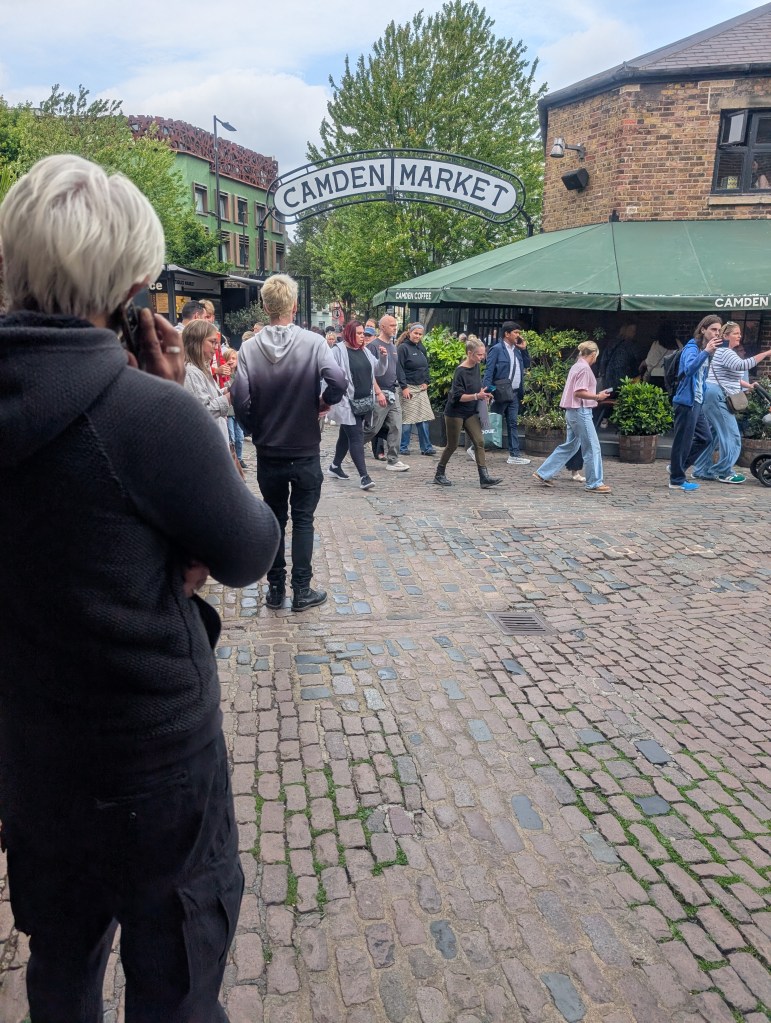
After this unexpected distraction, I finally entered Camden Market proper, and it was a lot. It was quite crowded when we visited, and the air was filled with the aromas of all different types of food. There were so many shops that caught my eye and interested me, that I didn’t know where to go first, and so I chose one to start at, and made my way down the street, going from store to store. There were places selling all sorts of over-the-top goth adjacent clothing, a wild west themed store, an anime and music shop where I bought some band pins, all varieties of jewelry stores, and a rave shop that was too loud for me to stay in for too long. I spent hours browsing through all of stalls and shops, and there was still a lot I was unable to see. At one point I got lost in a large sprawling underground section, rows of clothing acting as a maze, that took me too long to get out of.

All of this left me feeling overwhelmed, and so I took a few minutes to just relax against a wall and observe the world around me. The sounds of the people blended together as a watched them walk by me, people from all different backgrounds shopping, eating, or just walking around. It was nice to take a break from the lively market before I stepped back in, and did one more look around. After that I felt as though I had experienced enough of the market that day and made my way towards the exit.

As I left, I heard the sounds of the same actors still performing, bringing up a new group of people to the stage. As their voices faded out of earshot, I felt satisfied with my trip to Camden Market, but was ready for some relaxation time, and a nap which I thoroughly enjoyed.

-Jack Duncan

Hamlet Hail to the Thief

This production makes me feel spoiled. The fact that I am able to see one of my personal favorite Shakespeare plays (and certainly my most studied) mixed with one of my favorite albums from one of my favorite bands is… well frankly absurd. I feel unworthy of such an honor. This is the energy I went into my viewing of this production with. There was only the slightest tempering of expectations, for despite my excitement, the no-interval 1 hour 40 minute run time gave me some pause. The question that came to mind was “how are they gonna do Hamlet in under two hours with a full ALBUM of music?”
The long answer to this I will illuminate over the next few hundred words. The short answer is – bloody brilliantly.
The beginning of the longer answer is, they tell the full story, but only keep specified sections of dialogue intercut with interpretations of scenes and thematic elements through musical and dance interludes. I know, “bloody brilliantly” rolls off the tongue a bit better.

Band bowing

To structure this analysis, I am going to focus on a few songs from the album that I can distinctly link to moments in the show. Thankfully, a few weeks before watching the show and writing this, I listened to the album a few hundred times and even fell asleep to it being looped. Also thankfully, these songs are some of my favorites and also came at very memorable and distinctly important moments.

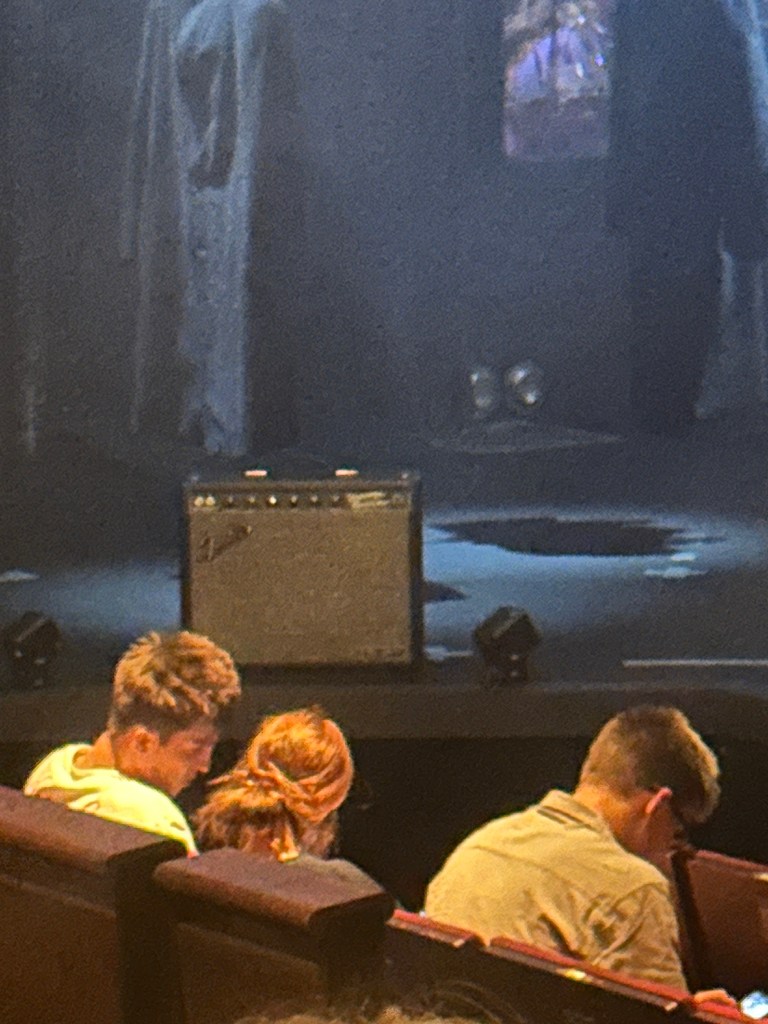
Fender Amp on stage right – visible hanging coats

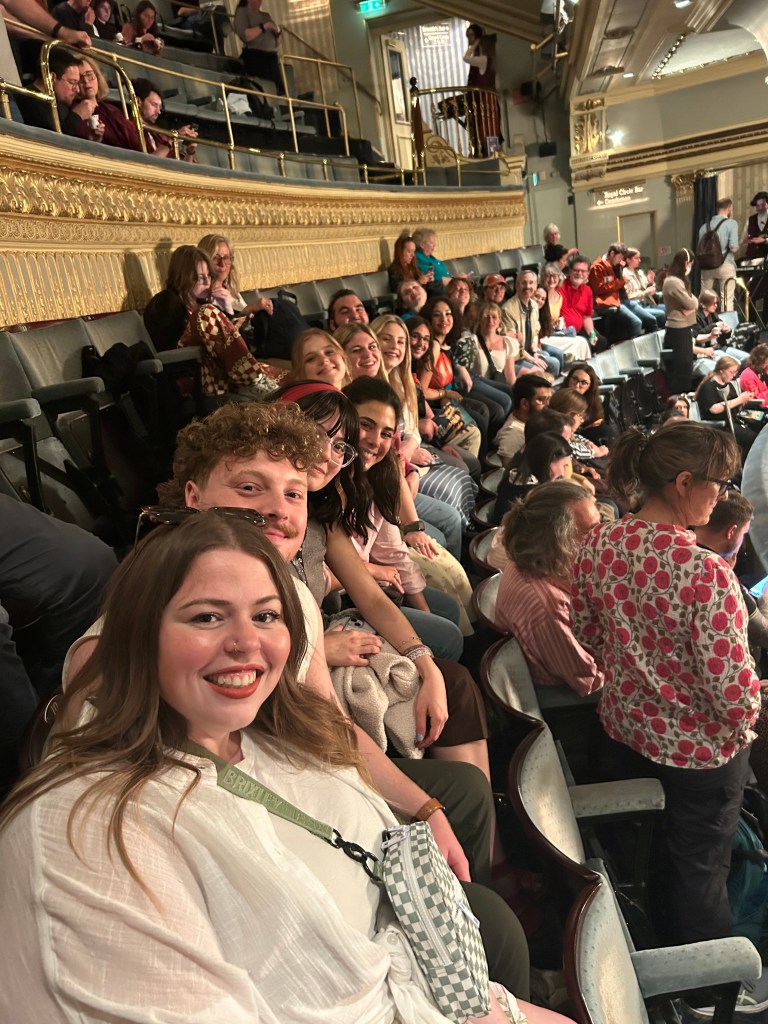
The preshow sets the scene as we see many identical suit jackets hung of wires around the stage. The set behind is metallic and dark, with rails and studs visible. The musical elements are also clear from the get go, speakers are built into the back walls, several fender guitar amps are spread across the stage, and windows in the back show the band – guitars, drums and all – as they play during the show. The show itself starts as the jackets are lifted and a repeating drum silences us chattering theatre-goers. The show properly starts with a shortened version of the opening ghost appearance of the original text of Hamlet. It features only Horatio and Bernarda (this production’s Barnardo) as they meet and are quickly assailed by the ghost of the dead King Hamlet, his entrance announced by guitar amp static. He is represented through projection on the back of the back wall which was not quite visible from my seat because of overhang. What was visible were the reactions of Horatio and Bernarda as their bodies seemed to be pulled and shaken with the ghost’s presence. With this short opening scene, the production introduced the futuristic elements and the sort of (for lack of a better phrase) mind-controlling-puppeteering the characters are often subjected to. The true puppet master often shown is first seen through the first song.

2 + 2 = 5 is the first song of the Hail To the Thief album. Fittingly, it was also the first song used in this production. The title of the song itself is a reference to George Orwell’s novel “1984.” This is one of my personal favorite books and is a definite inspiration for the theming of this production. As is clear by many of the production photos (and the general involvement of Radiohead), this production places the story of Hamlet in a futuristic and dystopian Denmark. This dystopia is ruled by Hamlet’s Uncle Claudius who, in a sense, controls the other characters. It’s represented in this song through all the characters joining in a dance. This happens at the climax of the song (marked by the repeated lyric “paying attention”). The lyrics of the song also match this idea, of the public just going along with the ideas told to them (2+2 equaling 5) and the idea that once the lies are revealed, one may still “try to sing along – But I get it all wrong.”
One of the things this production does wonderfully is showing Hamlet and Ophelia’s steady changing. They, in a sense, see past the lies of those above – Hamlet from his father’s ghost and Ophelia from Hamlet’s influence and the grief of losing her own father. A way they wonderfully showed the parallels between them is by having Hamlet do the “To be or not to be” monologue at Ophelia, pulling her away from the system. Then, when Ophelia takes her own life (a scene not seen in the original text) she repeats Hamlet’s words, as best as her memory allows, pushing against the system while succumbing to the madness inherent from breaking away.
The production also beautifully uses the song “We Suck Young Blood” twice in two very different connotations. This song provides a great example of how music can be used to illuminate the text and the meaning behind it. This song is first used by Claudius to control the rest of the cast. In the first bit of the song, there is a prominent clap heard. In the show, Claudius and the rest of the characters join in this clap. The song’s lyrics has the “narrator” represent those in control as they ask how exhausted and “torn at the seams” those under them are. Claudius benefits from characters like Rosencrantz and Guildenstern stressing over him and Gertrudes every command as they sit above. They profit from their “young blood.”
The second time the song is used is in a moment of relative silence after Ophelia drowns herself. This was one of the meanings that struck me even before analysis. With my knowledge of the music and the play, I immediately saw what idea they were invoking. Ophelia here is a victim of Claudius’s rain, she is one of the “flea-bitten, moth eaten” who suffers and whose “young blood” is sacrificed for no reason. She is a victim of this, though she does escape it all in her death.

Those are my thoughts and some details on the production and the combination of this play and album. I very much enjoyed the production and have more than a thousand more things to say about everything they did with the source materials. I hope in the future, Squirt and I will both have the chance to experience this sort of art, that mixes the classic and the new and makes something uniquely wonderful.

June 15: Stratford-Behind-Azlon

I started my journey through London delirious from a lack of sleep, and ended my time there with an excess of everything. It felt like I was a tea cup poured over the brim every moment spent out in the bustling, thrumming city. Heading to Stratford-Upon-Avon was like finally pulling back on the hot water and putting in a tea bag. I’ve had time to brew upon my experiences, and had some new ones as well.

I don’t have a particular reverence for Shakespeare. I love his works, but I don’t feel culturally or historically drawn to the figure of Shakespeare himself. After visiting his grave, his home, and his birthplace, I feel more attached to the figure. I think my previous disdain comes from his cultural deification: he was just too big, too mainstream. But seeing his home reminded me how incredible it is that this one man wrote all those wonderful words. “This chair, that bed, and these wooden beams? All supported this guy you’ve learned about.”

It gave me 2 main insights into my reading of Shakespeare’s plays: 1. He was just a man, 2. He was pretty privileged. First, since I had never considered the man behind the words, I’ve never read Shakespeare and gone “ah, Shakespeare! You’ve done it again!” Instead, I saw the text as itself and left it at that. Now, I know what kind of historical lens has to be placed over the story. It really does help me to have seen this place and know the visuals that were in his mind at the time of writing. Second, he owned the largest house in town. He was married at an extremely early age, which could have left him jobless and destitute. Instead, he was supported in his artistic pursuits, and managed to find great success. I wonder how much of his success was due to the opportunities afforded to him. I wonder how many more opportunities I have been offered than the average, and how many I have failed to take.


We’re leaving today! Big metal bird what swooshes will return us home in comfort and style. In Shakespeare’s day? Getting here in the first place would have been a weeks long journey in the first place. Likely longer than the trip itself. Time and space have condensed. It takes less time to go much farther. How much denser can we compress time and space? Should we?

I enjoyed Stratford. It was a great transitional period of calm respite before the return. I got to eat good food, take long and beautiful walks, and read in the park. I even got to pet some cats at the Shakespaw Cat Café! Hamlet is pictured below. I’m ready to go home now. I started this journey wishing to expand my horizons, develop my artistic taste, and work on finding the core of myself. I absolutely shattered my horizons, I developed a taste for some strange and wonderful art, but I failed to find a core to myself. Instead of finding a core, I feel like I’ve taken my habitus and self-concept and strewn it about around me, picking it apart not in self-destruction but in reset, cleaning. Soon, now, in the comfort of home, I can put myself back together. Idealization is an impossible goal, but one still worth striving towards. I think this is progress.