Today we visited the Victoria and Albert Museum, and I was completely blow away by how large this museum was. I still don’t think I saw even half of it after walking around for over two hours, and there seemed to be new experiences hiding around every corner waiting to be explored.
This trip has meant a lot to me getting to see how every production handles their sets. From the smallest of sets including only a table and a few chairs as seen in Jules and Jim to a whole layering technique combining multiple mediums of design seen in Back to the Future. We were asked to look at artifacts found in the museum and find ones that we felt related to some of the theater we’ve seen.
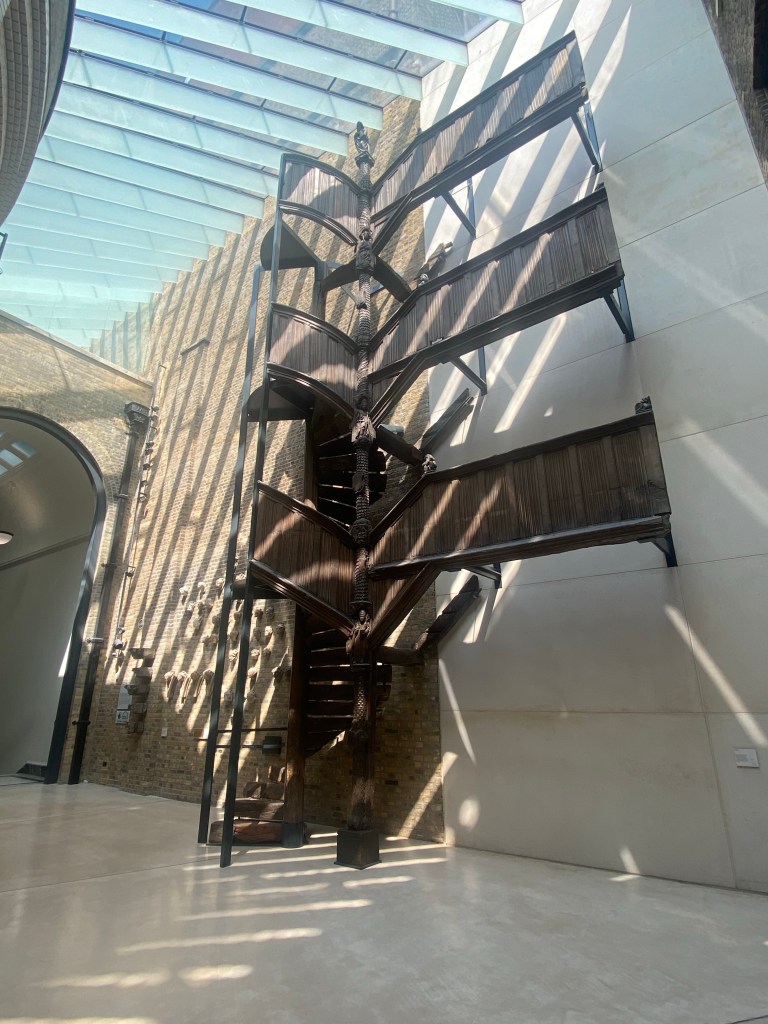
Naturally, once I realized there was an architecture exhibit, I tried to make my way to that area of the building. On that journey, I ran into a lovely space that had been converted from an outdoor alleyway into a useable museum space. Inside this space, there was a set of circular wooden stairs. They were quite beautiful, and it made me think of some of the shows we had seen like 2:22 and The Mousetrap. Both of these shows have some sort of upstairs area that is hidden to the viewers. Of course, there’s not physically an actual upstairs, but the allusion to a staircase gives audience members the ability to imagine what might be on another level. It’s quite fascinating to think about how everyone accepts that there is an upstairs even though we all know there isn’t. That’s the beauty of crafting a good set.
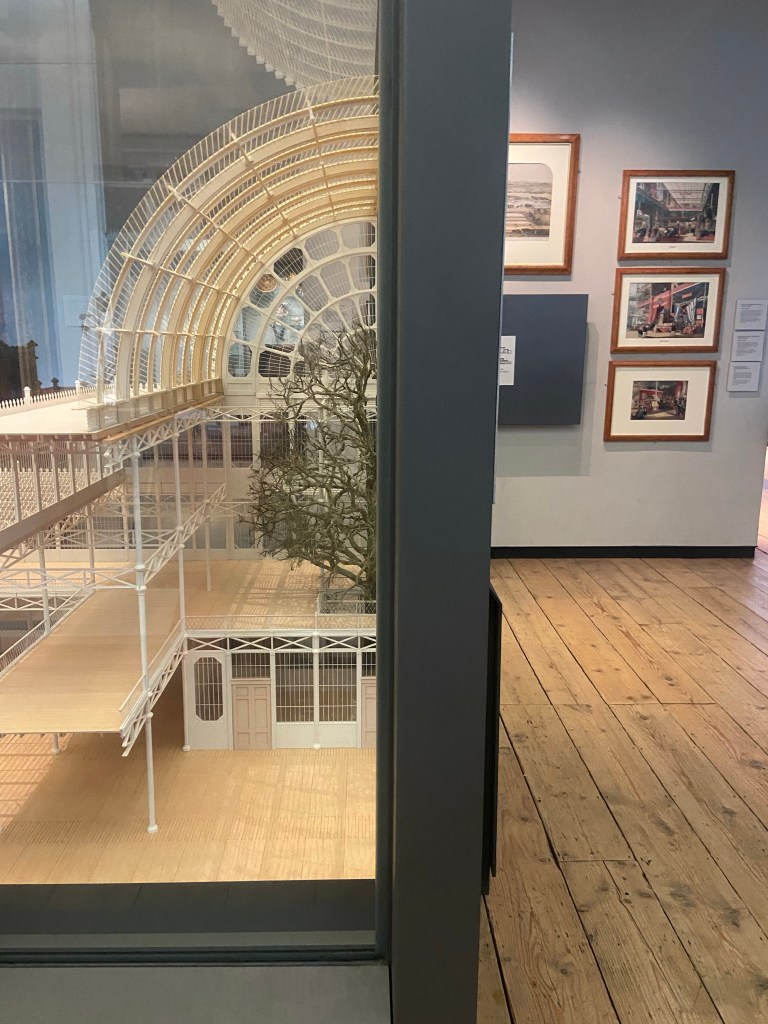
Another artifact that I found that relates to this idea of “everything is not as it seems” or sets create the playground for a story to take place was this model of the crystal palace. If you notice in the first photo below, it’s an impressive detailed model, but take a closer look. Does anything seem out of place? Then look at the second photo. Our mind does a good job of interpreting what is supposed to be there, even if it isn’t actually there.

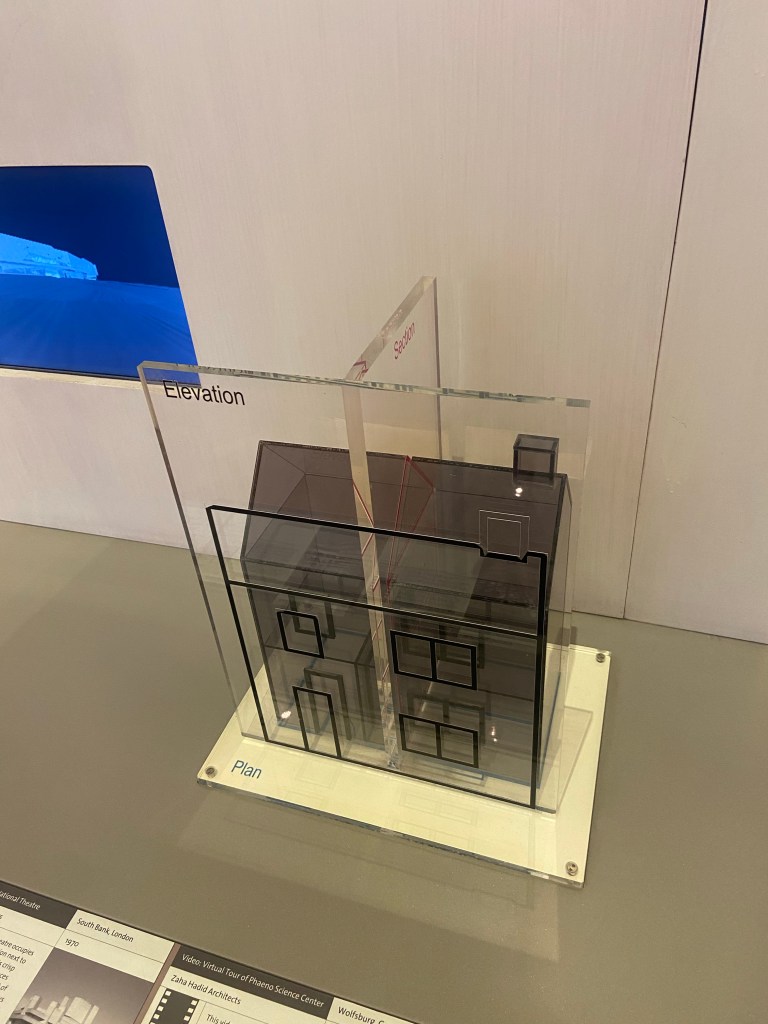
Once I finally made it to the Architecture exhibit, I found a really simple model showing the difference between a plan, section, and elevation. On their own, each drawing tells part of the story, but when you start layering them together, the fuller picture is created. This idea became apparent while I was watching Back to the Future. The set was captivating mostly because the designers did such a wonderful job of layering details, physical elements, and projections that it made the stage feel full and the story seem real. I look forward to one day implementing these same strategies to my designs.
Thanks for reading, and I’ll see you next time ❤

 Theatre in London U of A
I am a fan of museums. I could spend multiple days in a place such as The Albert and Victoria.
LikeLike