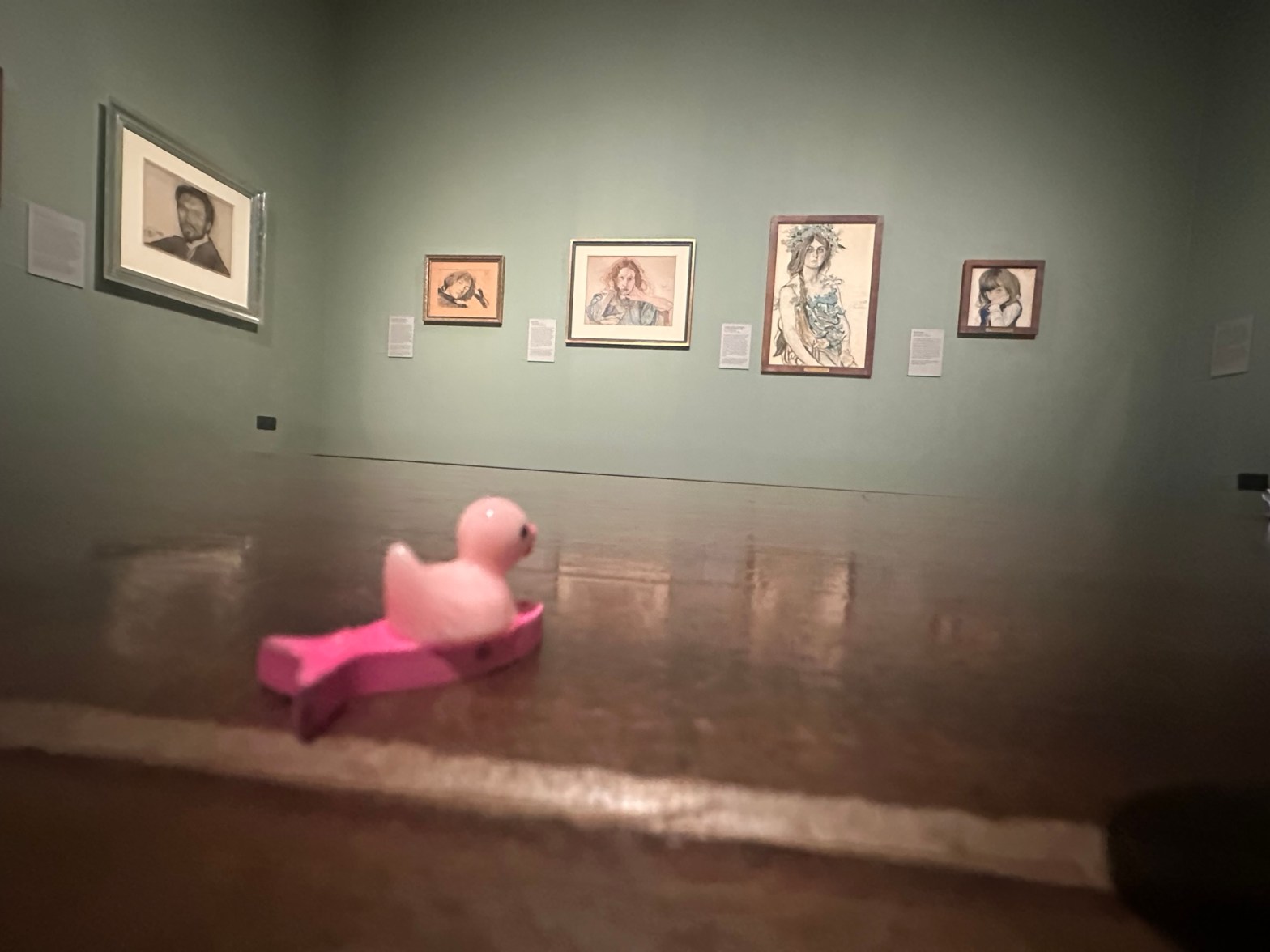
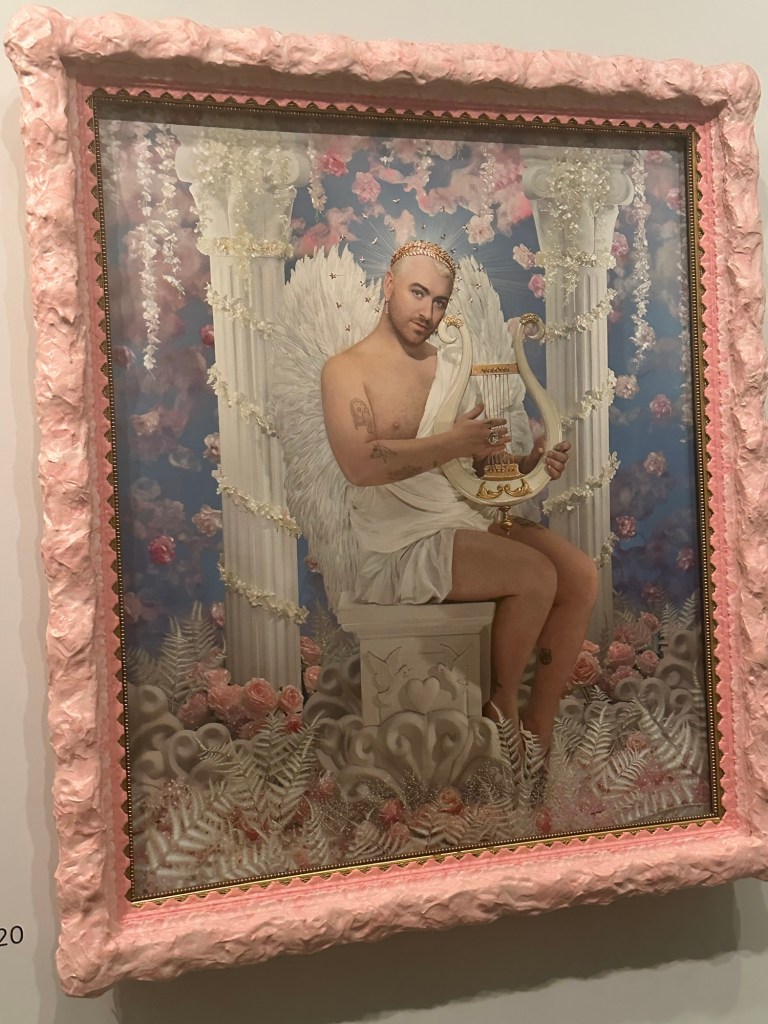
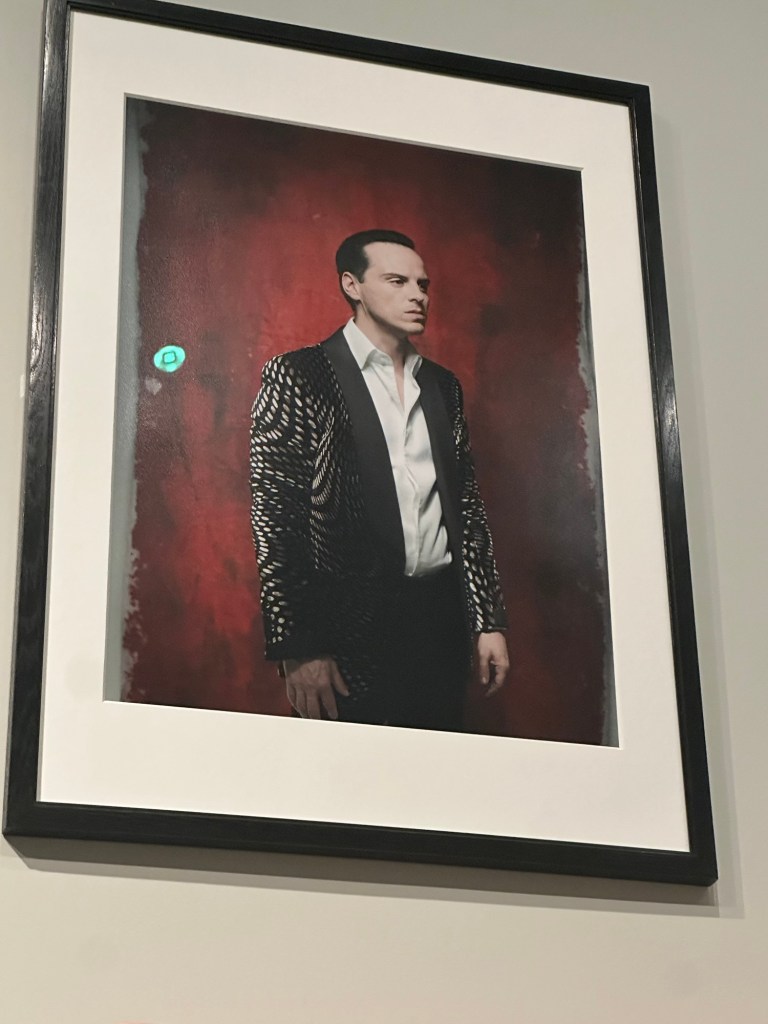
Woohoo paintings!!! More specifically portraits. On June 4th, we went on a little journey to the National Portrait Gallery, and I gotta say, it was definitely my favorite gallery or museum we went to during the whole trip. Although I didn’t quite think it would be, this gallery and the paintings inside just grabbed (and kept) my attention. I’ve always loved paintings, but actually being able to view this sheer amount of portraits FOR FREE was awesome. As a result, I ended up only seeing a fraction of the art I really wanted to. All the art was so fantastic, however, one artist kept me captivated for longer than any other. His work had its own room, one that I spent the majority of my morning inside. This artist is named Stanislaw Wyspiański.

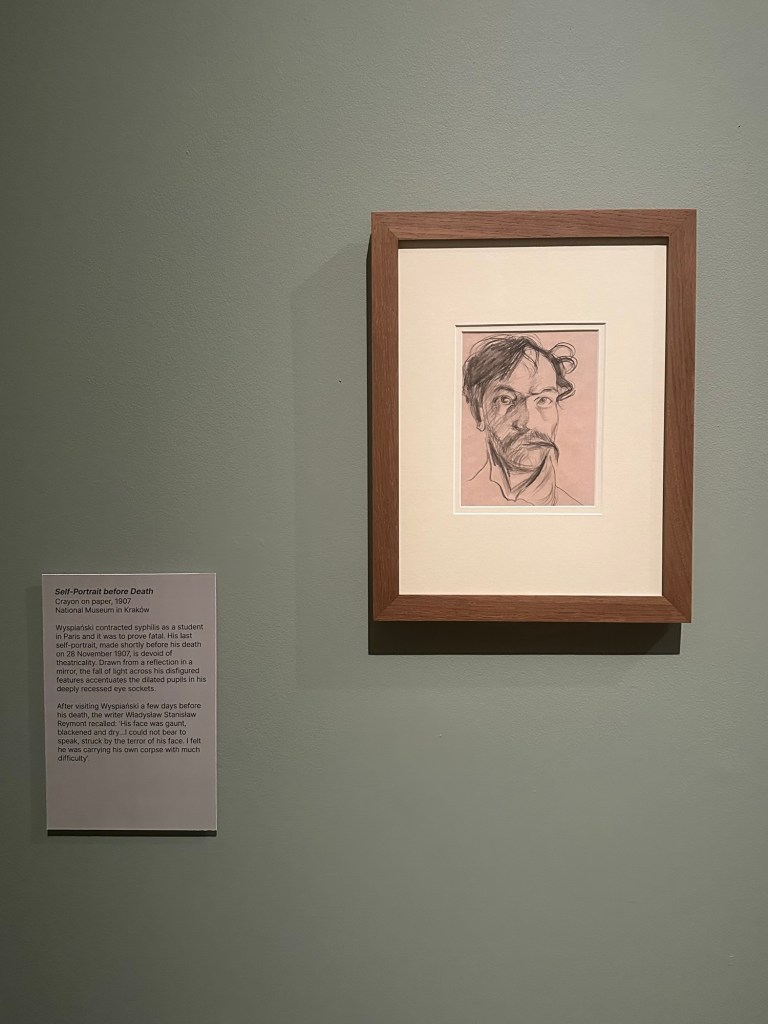
Stanislaw Wyspiański (1869-1907) was a highly acclaimed painter, poet, and playwright in Poland. He had quite an influence on the evolution of Polish theatre and many of his plays are still performed there today. Wyspiański was a large player in the “Young Poland” movement that focused on making distinctly modern art based on traditional folk styles. The gallery I had the opportunity of viewing is the first one to house Wyspiański’s work to this volume outside of Poland. Speaking of, I’d like to talk about a few of his works and his style before honing in on my favorite of his work.
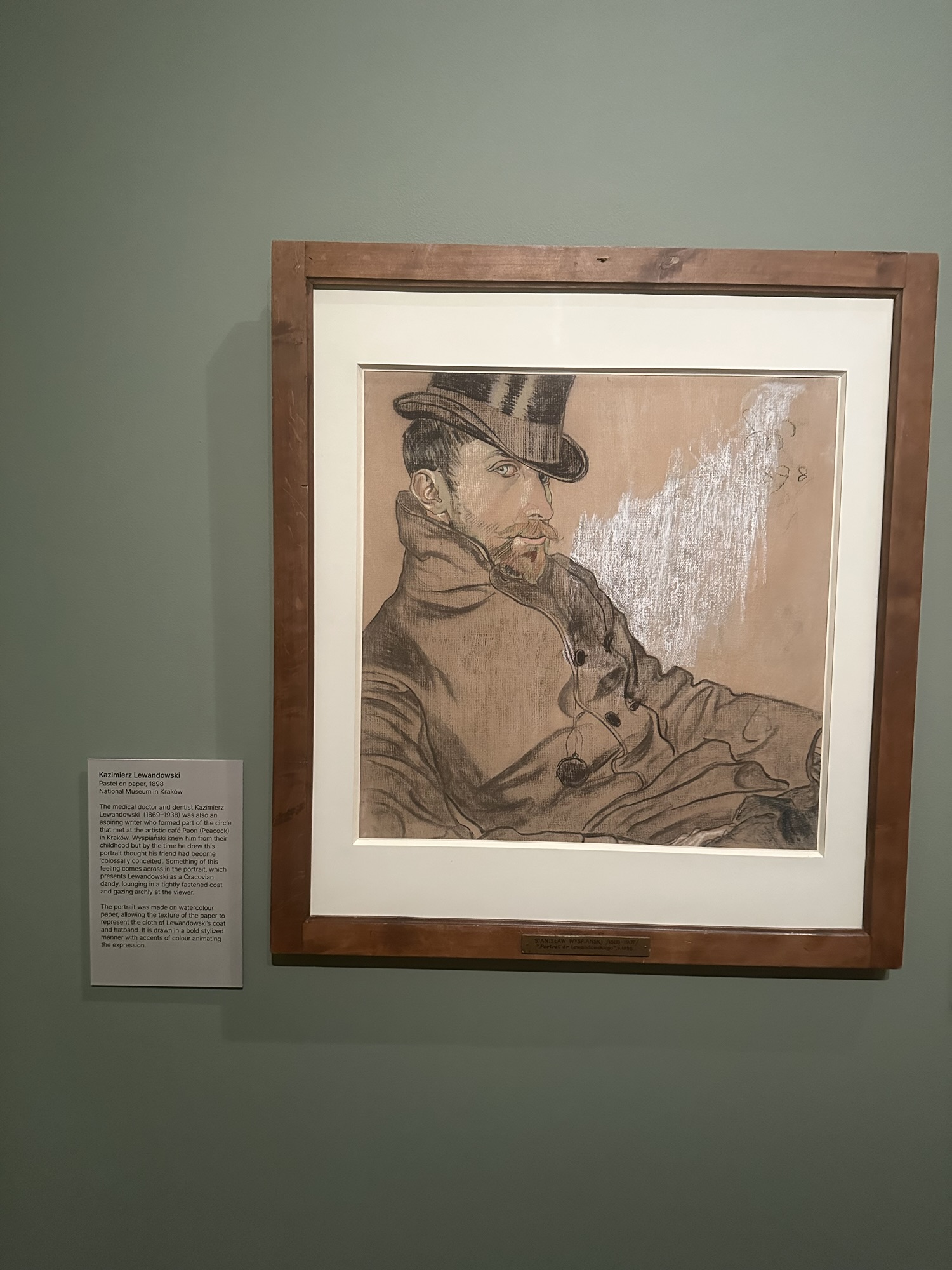
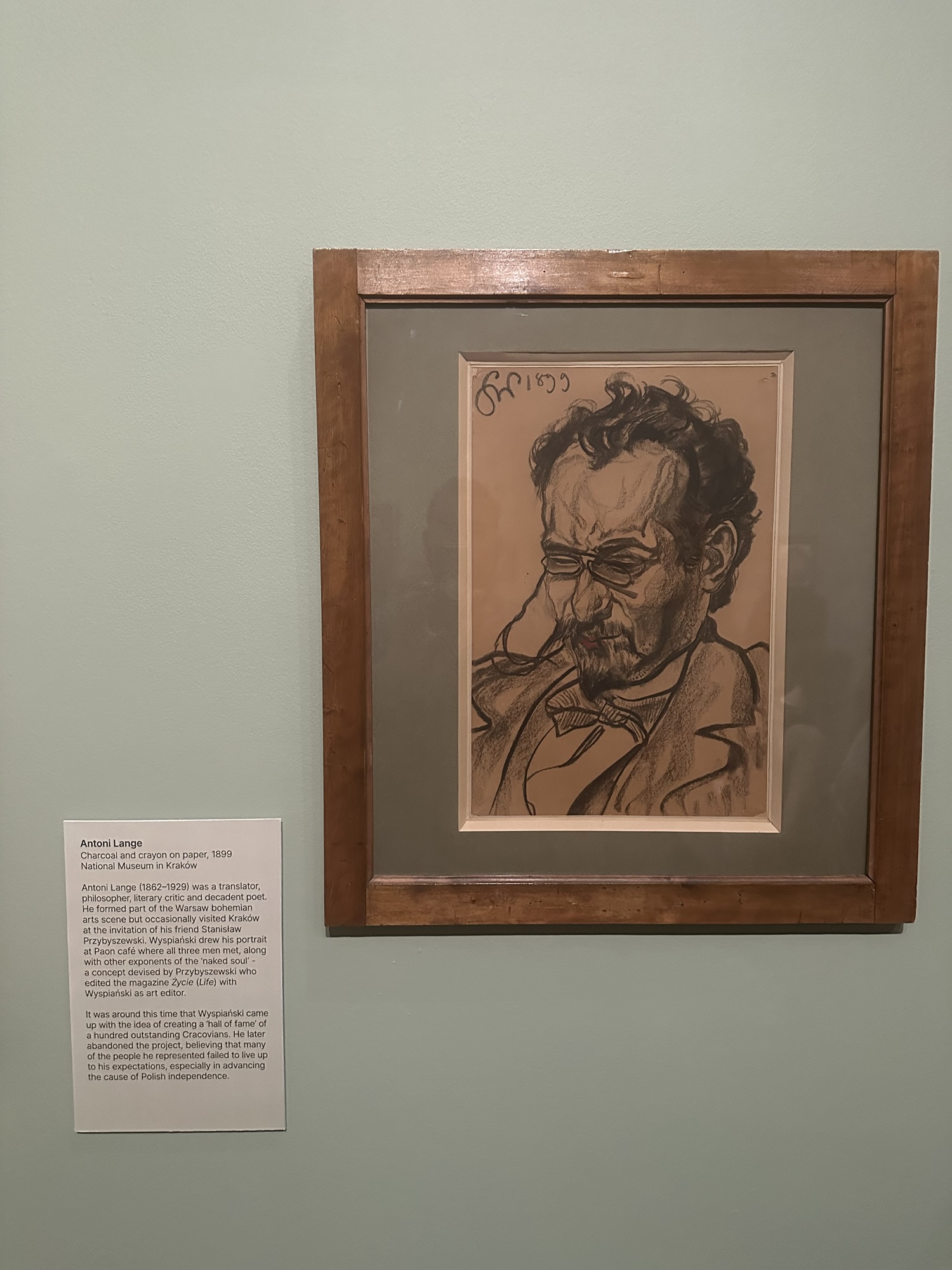
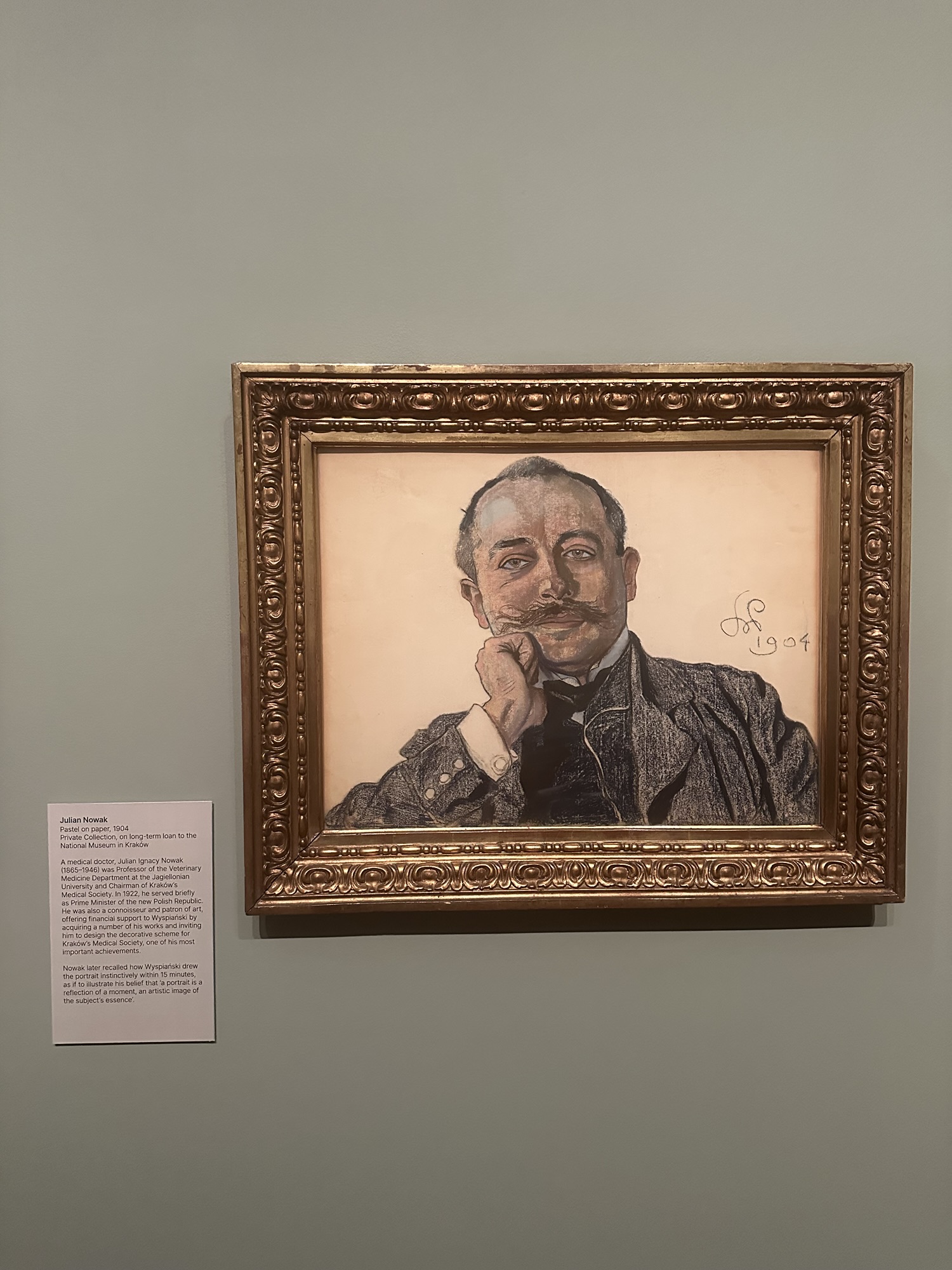
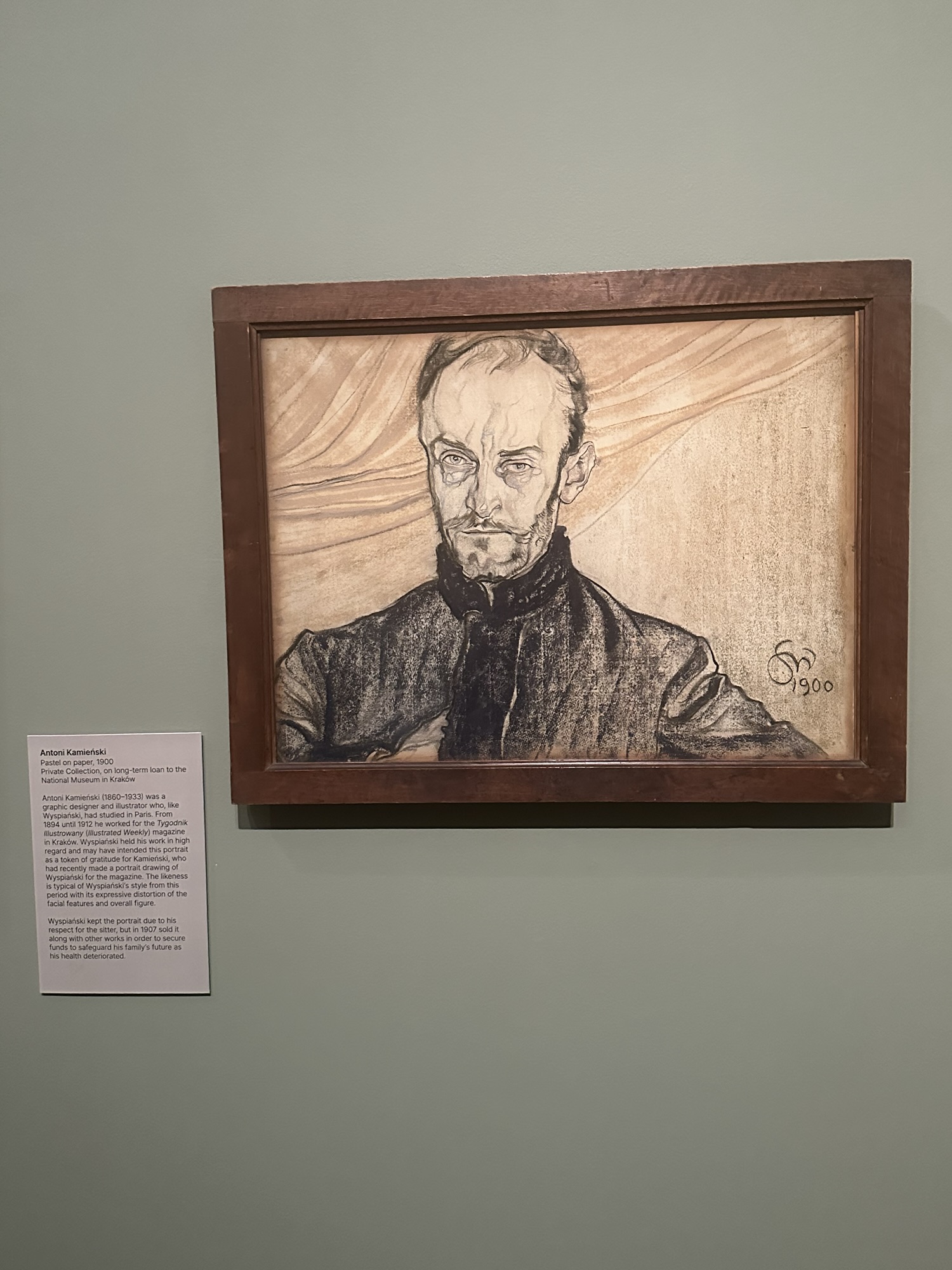
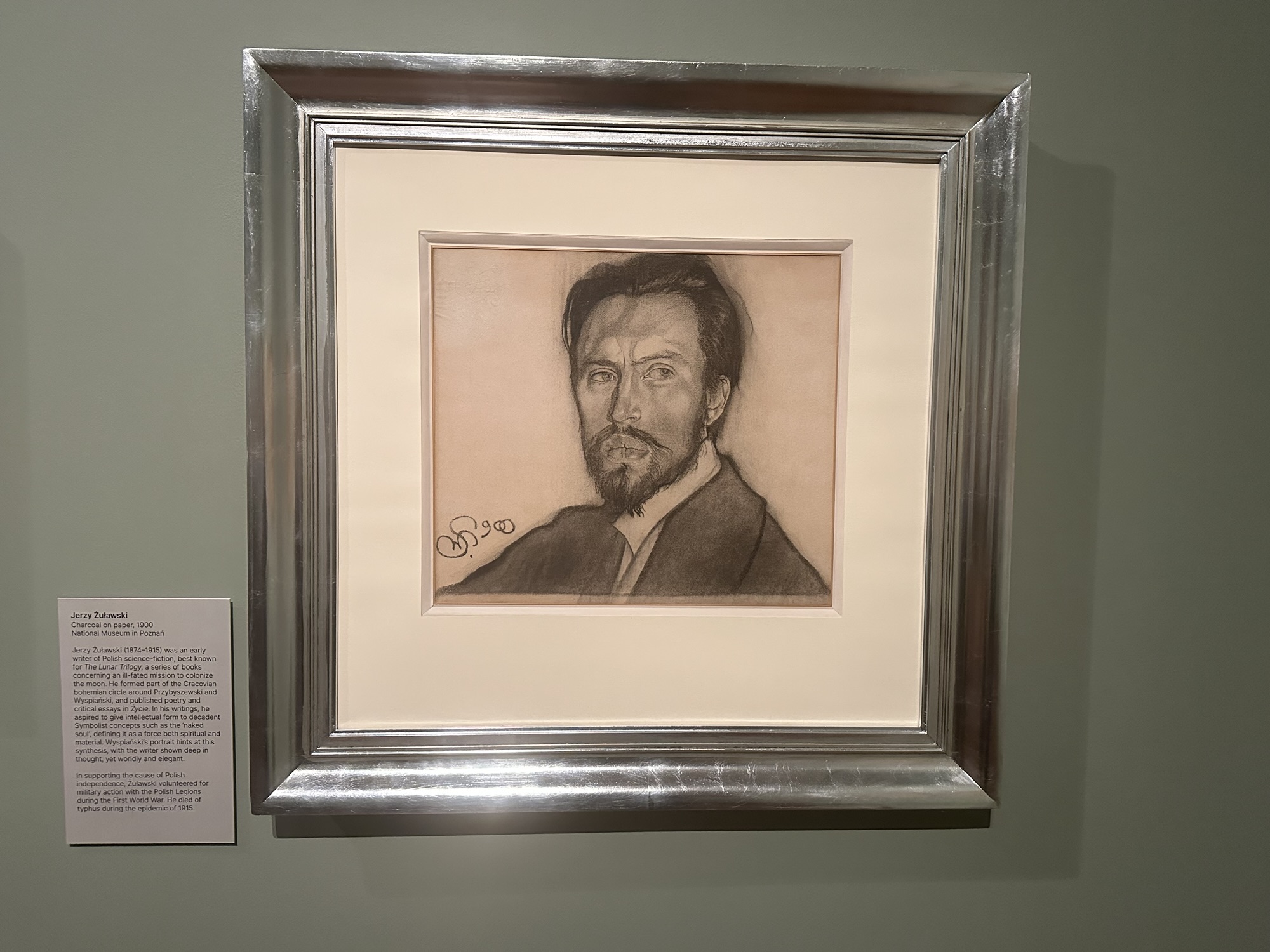
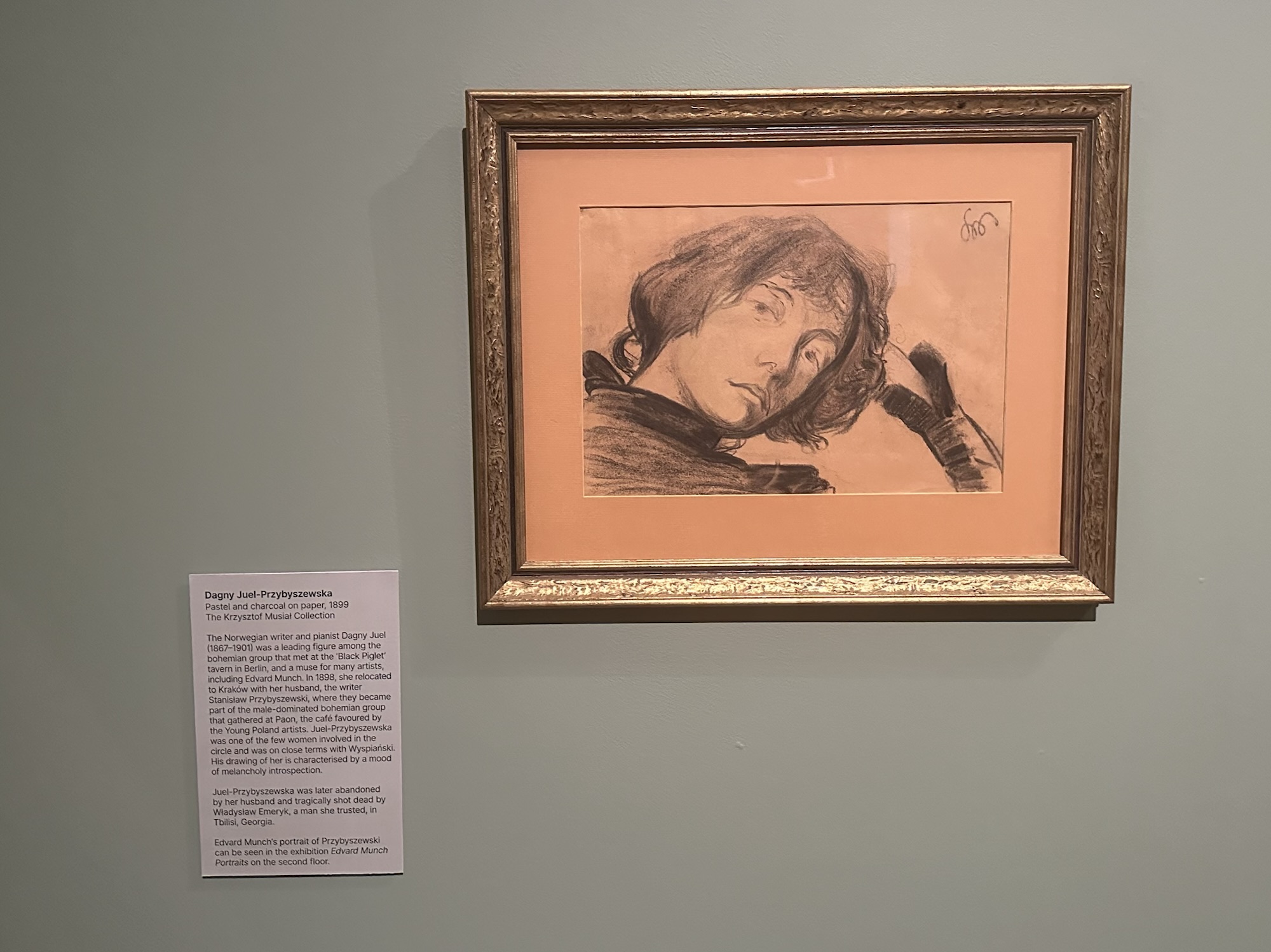
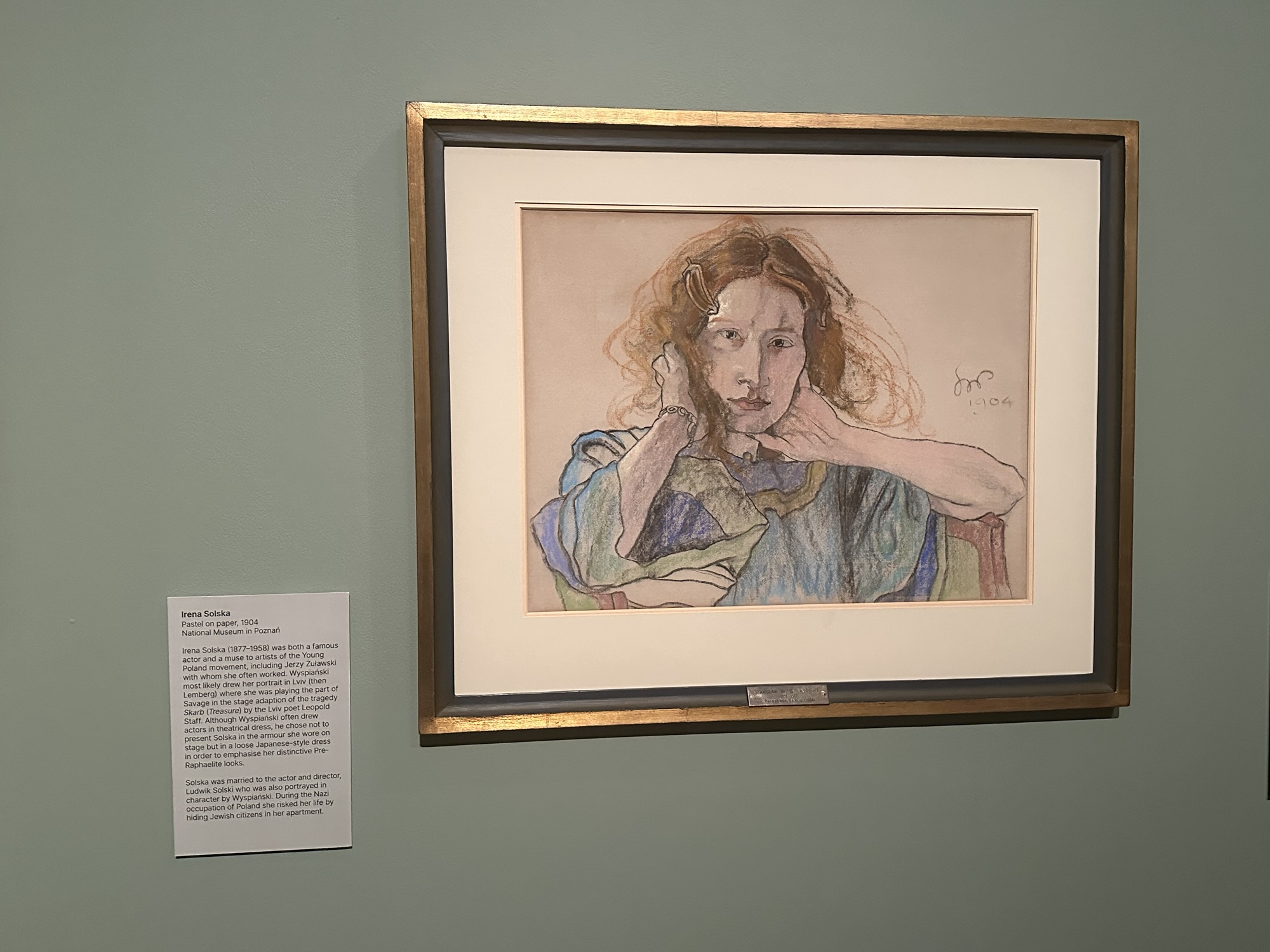
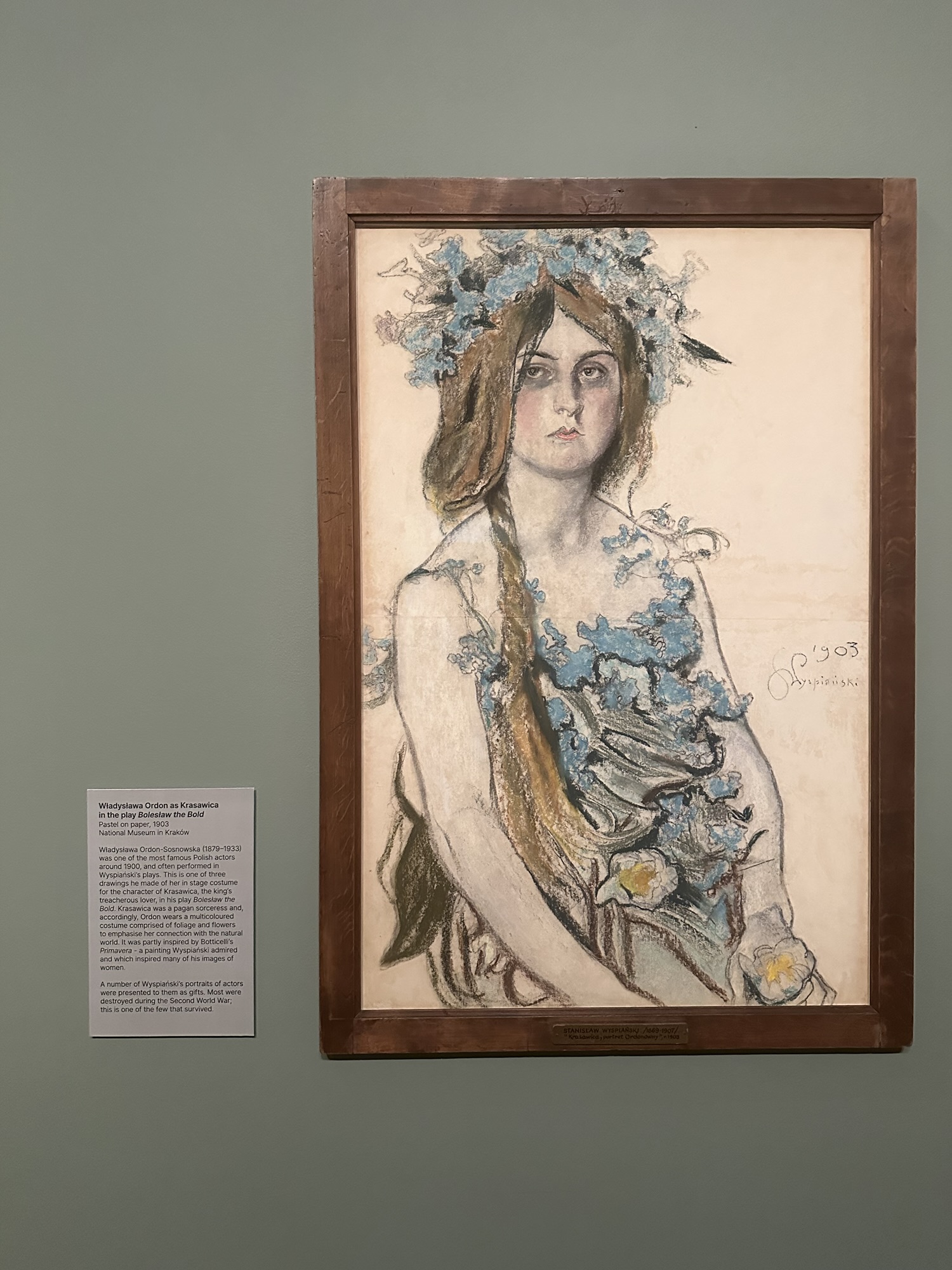
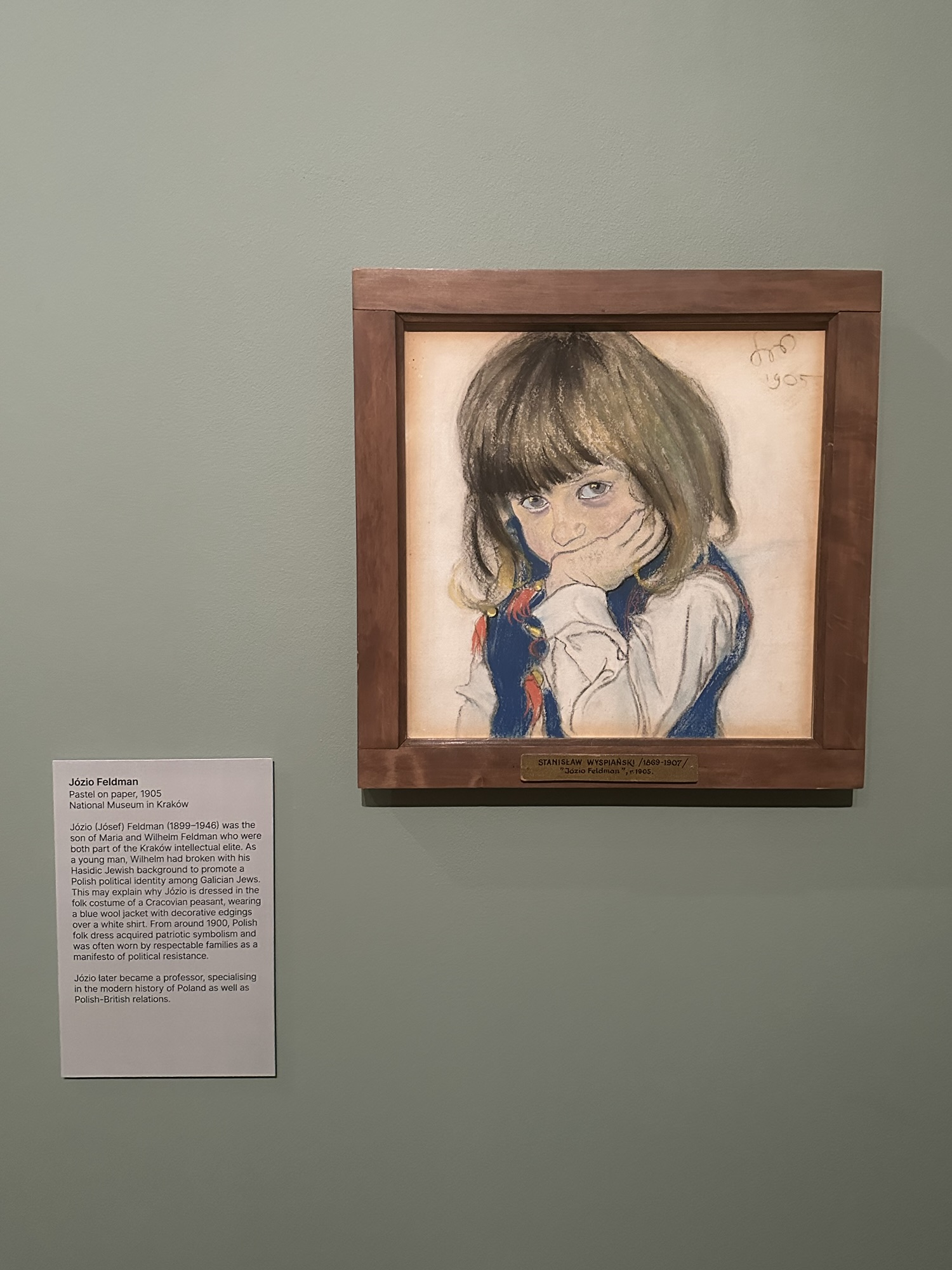
Taking up a large section of the gallery are Wyspiański’s portraits of his fellow Cracovians. Many of the sitters were also fellow aspiring writers who would meet in different Cafes as part of the Young Poland movement among others. A detail of note is that most of these sketches were done in a very short time. Julian Nowak, the sitter of one portrait, recalls how “Wyspiański drew the portrait instinctively within 15 minutes” (per the label). The final four paintings in this slideshow are of popular muses of time, many also muses of Munch. Many of them were writers and actors with Józio being the daughter of Kraków elite. An analysis could be written about any one of these portraits and how they capture both the spirit of the sitter and, especially in a few cases, Wyspiański’s opinion and level of respect for them.
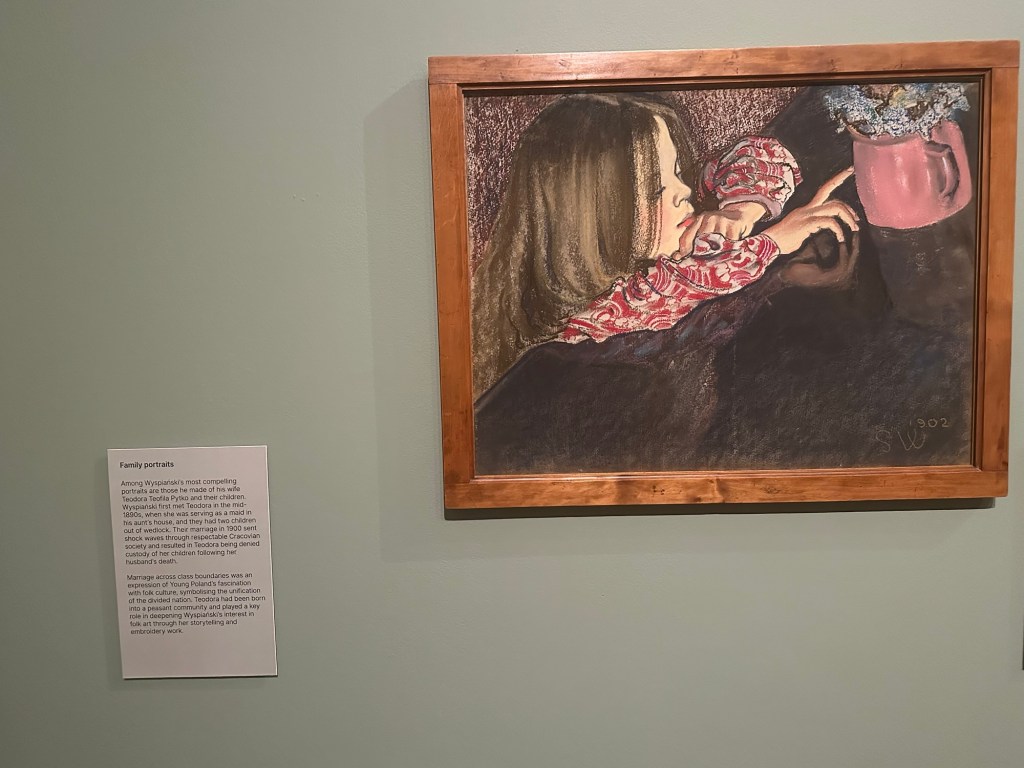
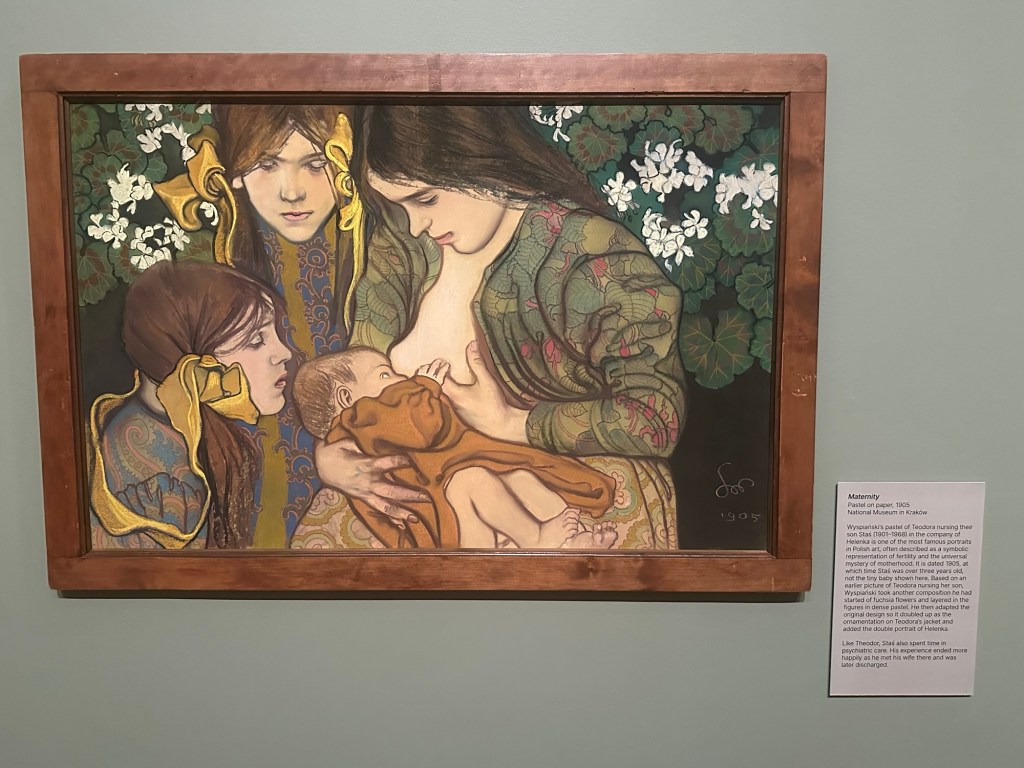
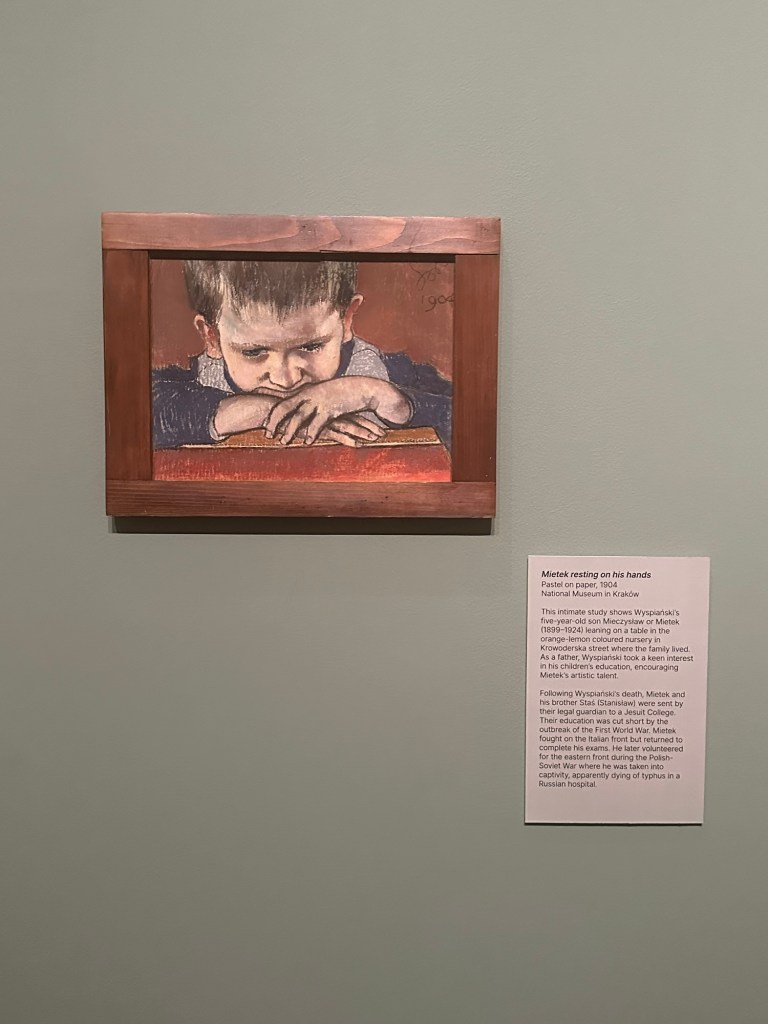
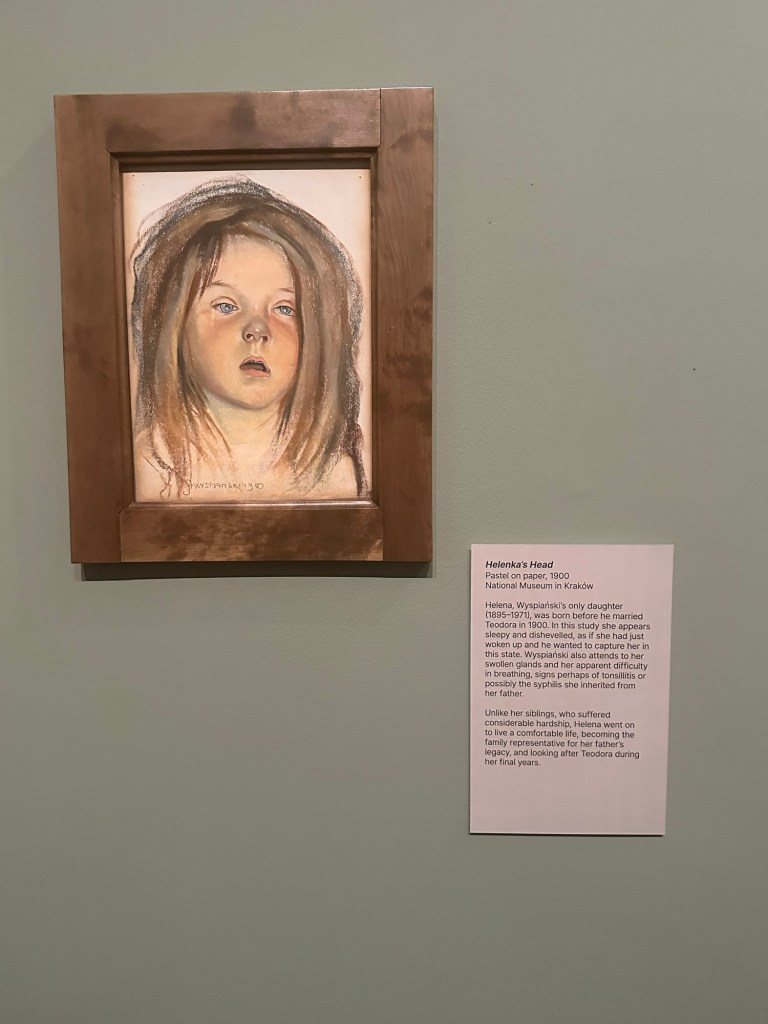
Some of Wyspiański’s most compelling and expressive work are those of his wife Teodora Teofila Pytko and their children. These portraits are all in color and often feature backgrounds and expressions that more deeply portray the personalities of his children. One of these portraits is my personal favorite that I would like to talk about at more length.
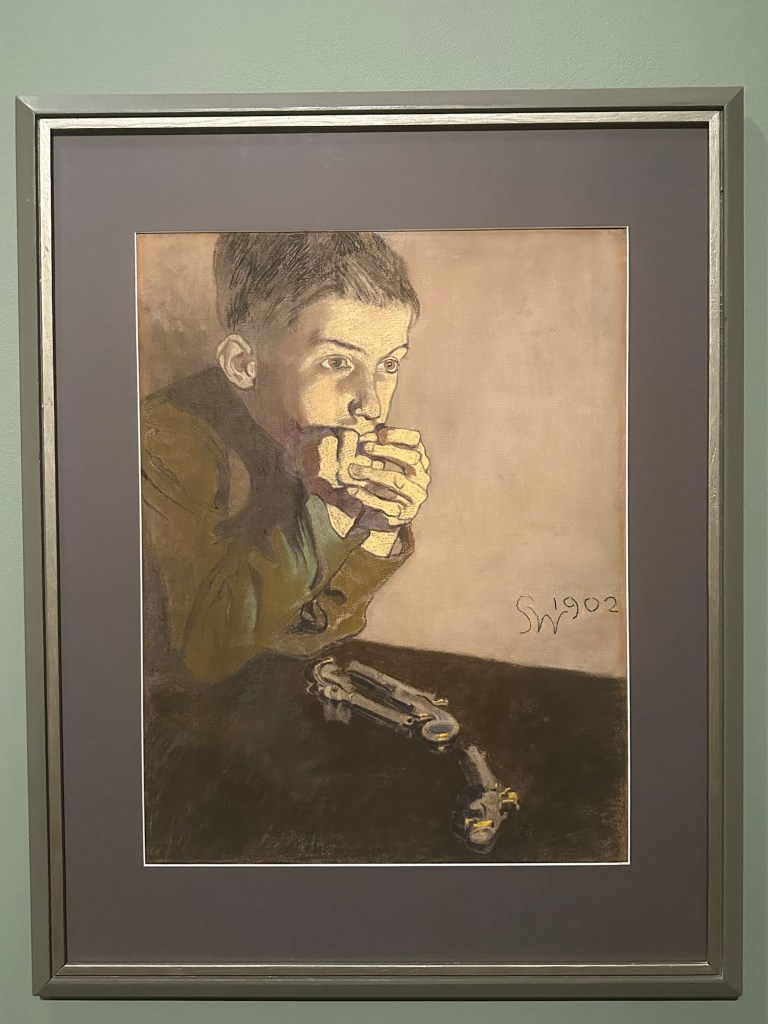
My favorite of Wyspiański’s works is his portrait “Boy with Pistols.” Out of the whole gallery, I spent the most time looking at this one. Wyspiański did this pastel drawing in 1902. The boy in the picture is Wyspiański’s wife’s “eldest illegitimate son, Teodor Tadeusz” (per the label). Like many of Wyspiański’s works, there is not much in the way of background. However, this pastel is in color. The main thing I think that can be gleaned from the portrait is the instability. Teodor’s fingers are somewhat bony as holds his hands over his mouth and stares forward. The label beside mentions him clenching “his fists in fear,” but I don’t really read as much fear from it personally. I think the situation itself influences my perception. Three pistols sit scattered in front of him, their thinness similar to that of his fingers. Teodor is not focused on the weapons, but they still sit very nearby. The portrait makes me feel uneasy. This seemed to be purposeful by Wyspiański as the main details known of Teodor chart his troubles with mental health. Though Wyspiański was Teodor’s legal father through adoption, he was not his biological father. The history and relationship between the two seem indicative of the stance of Teodor, being the only of Wyspiański’s portraits of his children to be facing distinctly away from the viewer’s perspective. I am not very knowledgeable of visual art and symbolism in portraits, so I apologize if my analysis seems somewhat juvenile. Nonetheless, I was fascinated by this pastel and intrigued by the history behind it.

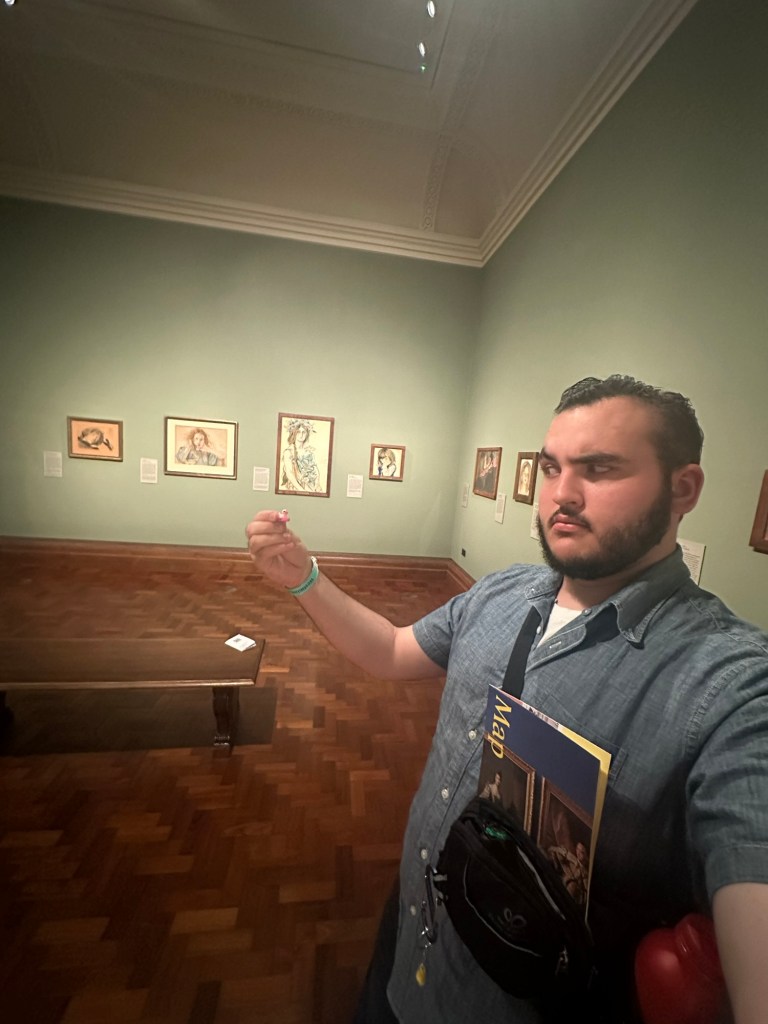
Getting to really immerse myself in one artist’s style was a very strong experience. It makes me wish I was any good at art myself. More importantly, it makes me want to try. I quite enjoyed this venture.
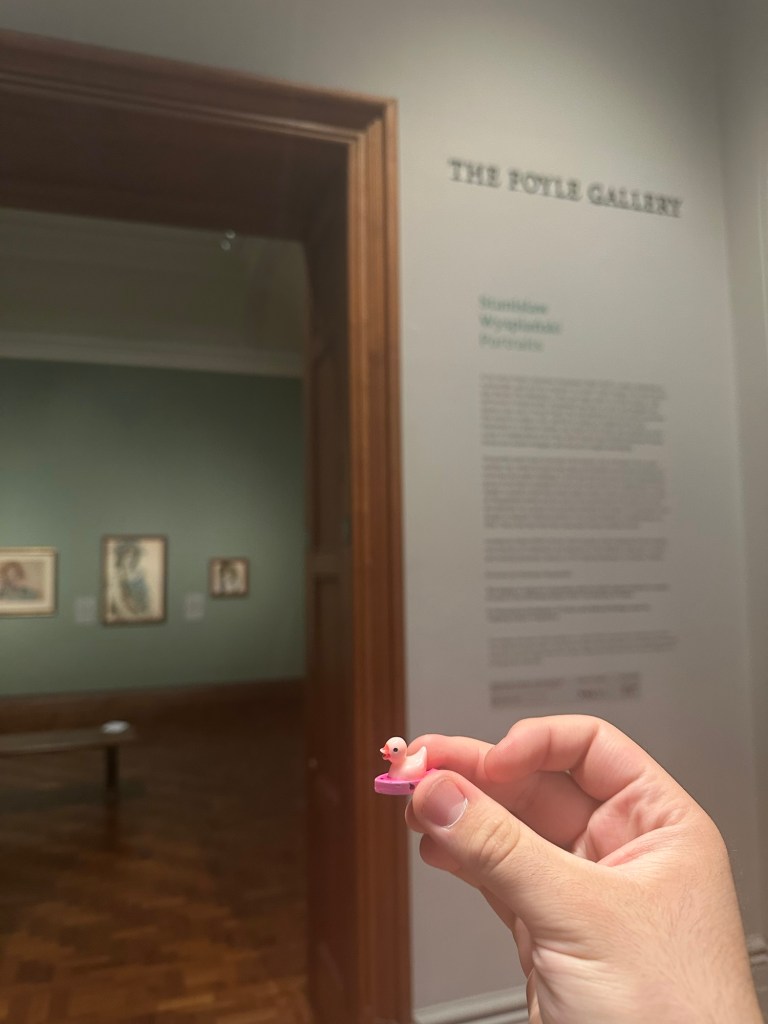
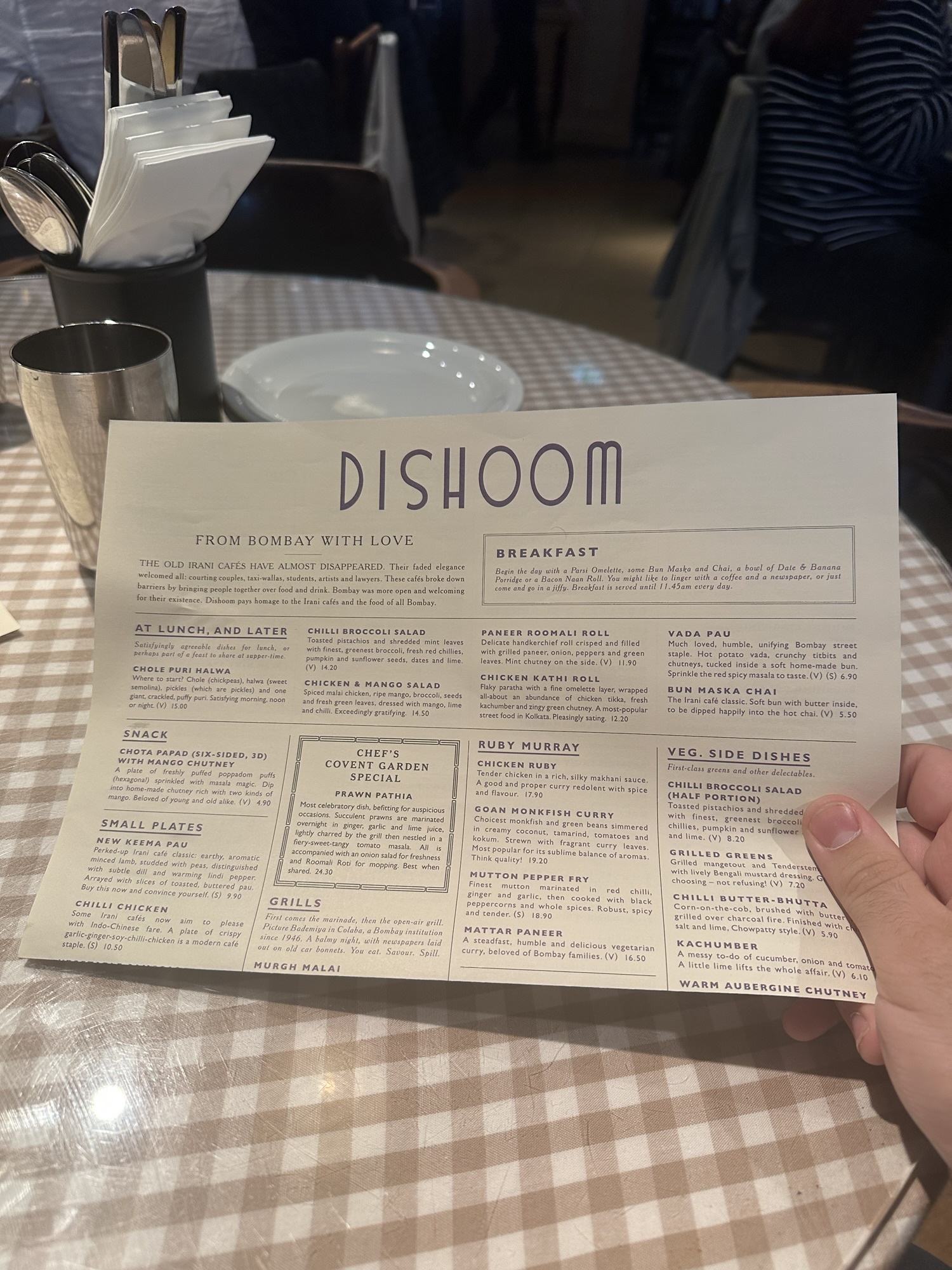
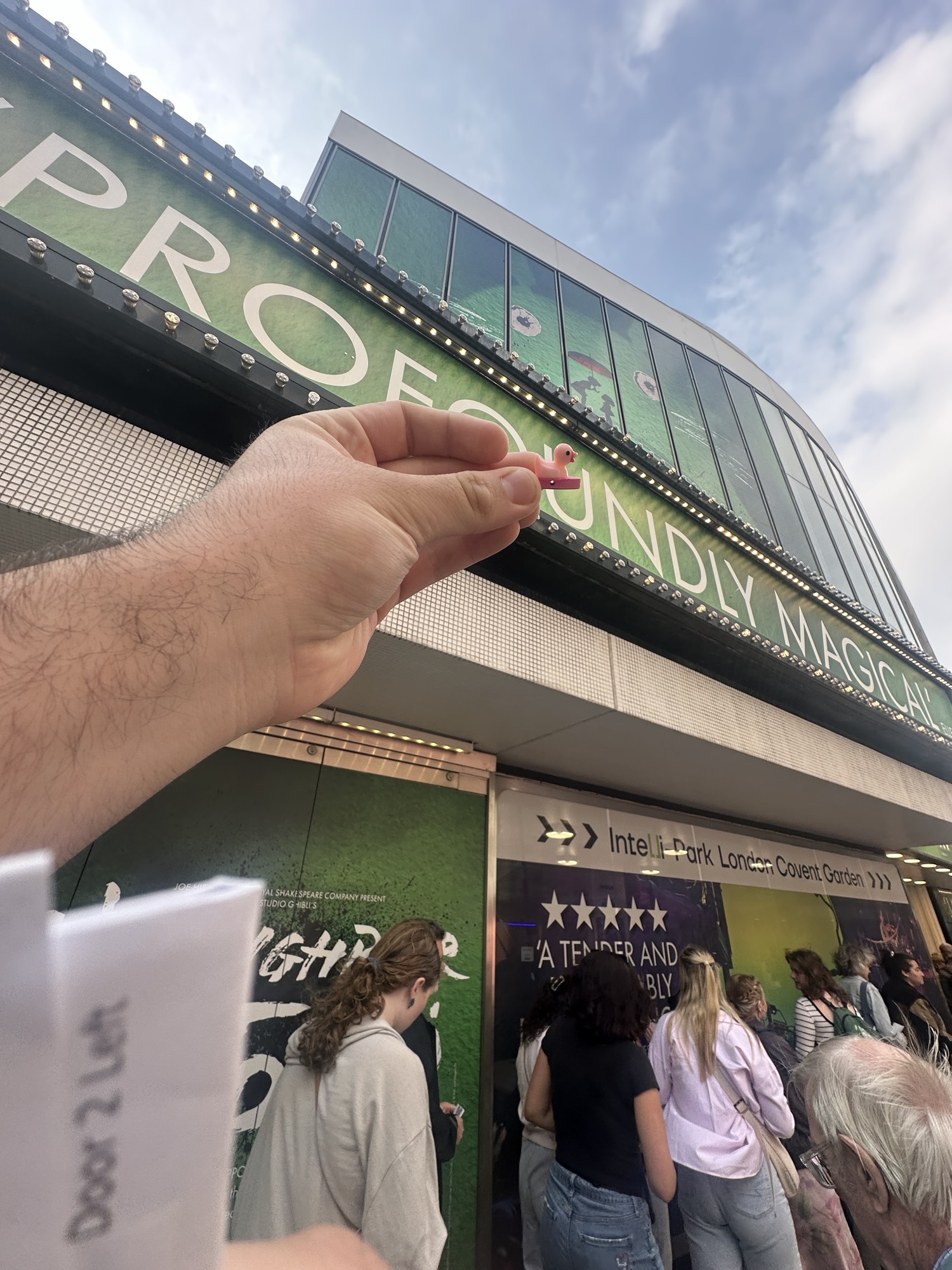
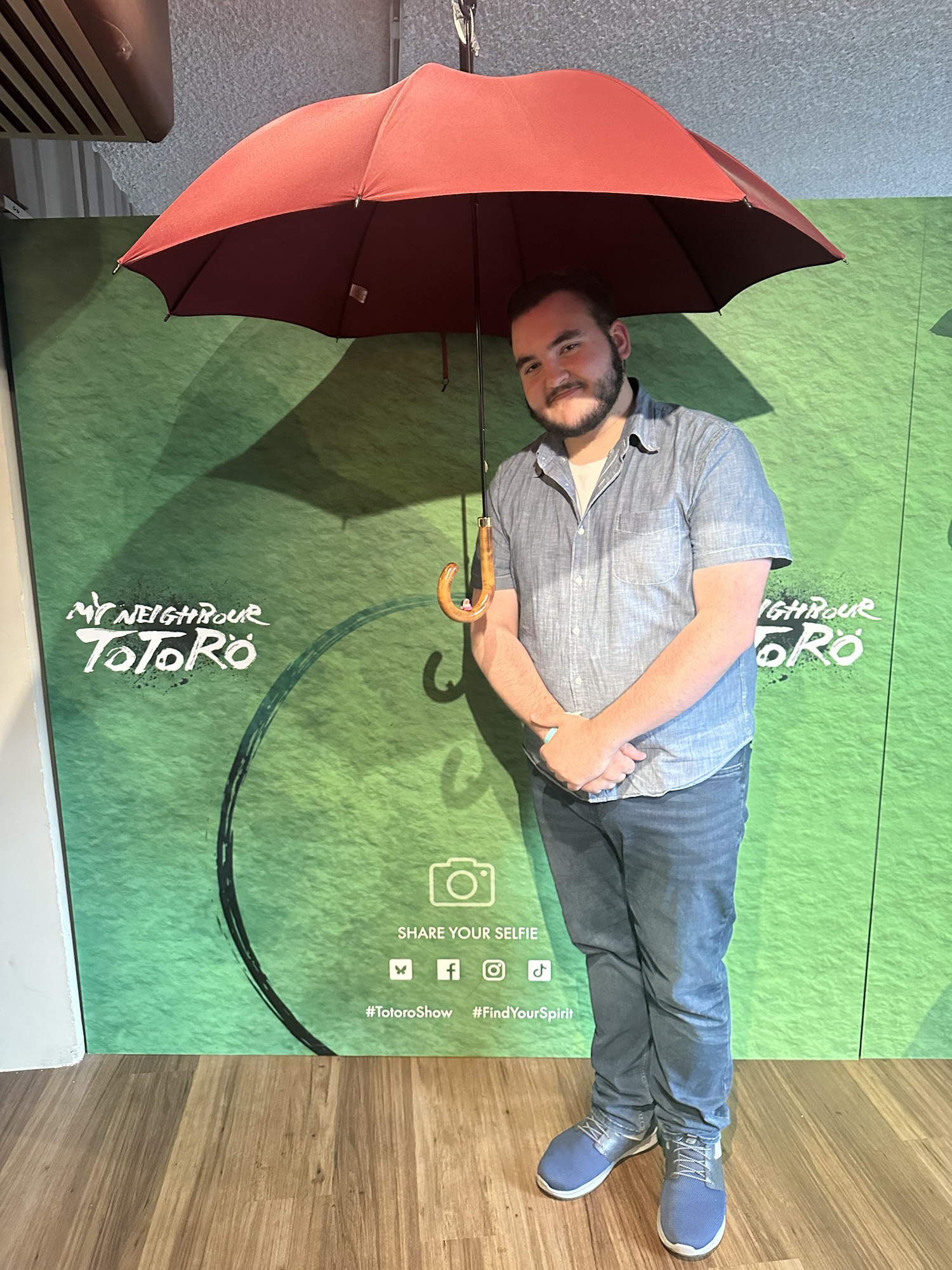
Today’s Squirt and Tucker special starts with a redirection. After viewing all these wonderful portraits, Squirt and I joined Ilaria in a visit to Dishoom, a fantastic Indian restaurant nearby. However, I will not speak any more about it, because I have already done so in my post about the markets and cuisine of London. And, so, you will have to read that (if you haven’t already) to get the full scoop. However, in the slideshow below, you may still enjoy some pictures from the pre-show photoshoot Squirt and I did at My Neighbor Totoro, which our group saw that night. No pictures are available of the set or curtain call as to keep the magic of the puppets and such used in the show. Despite this I hope you enjoy a few silly pictures of Squirt and I!

 Theatre in London U of A