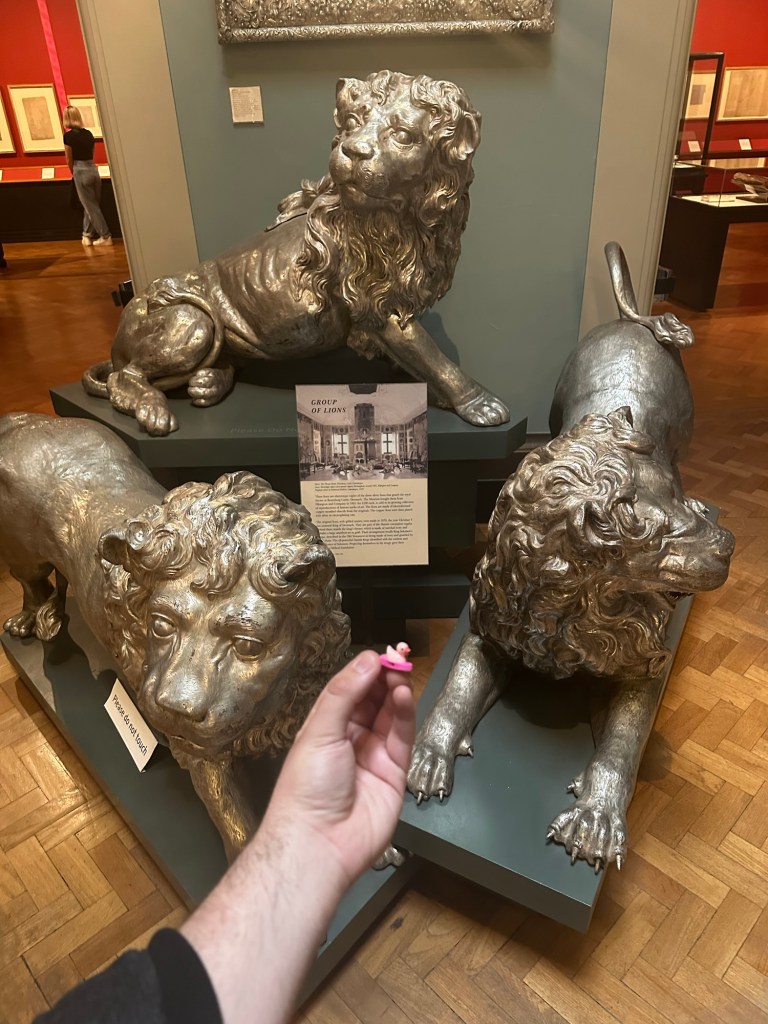
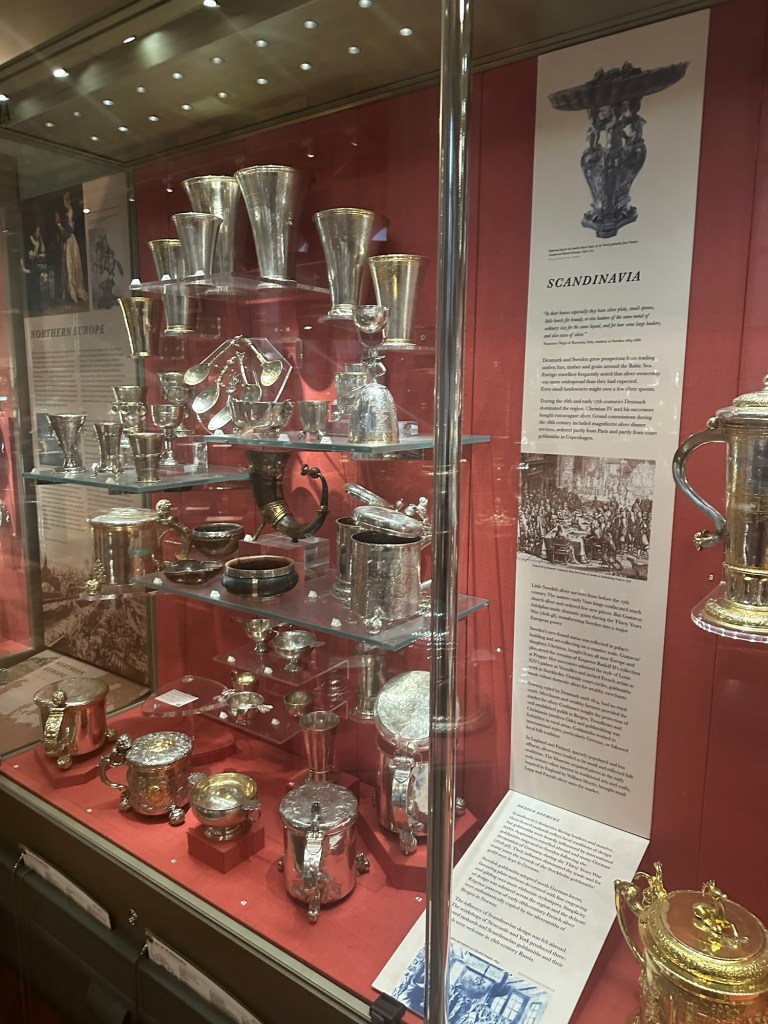
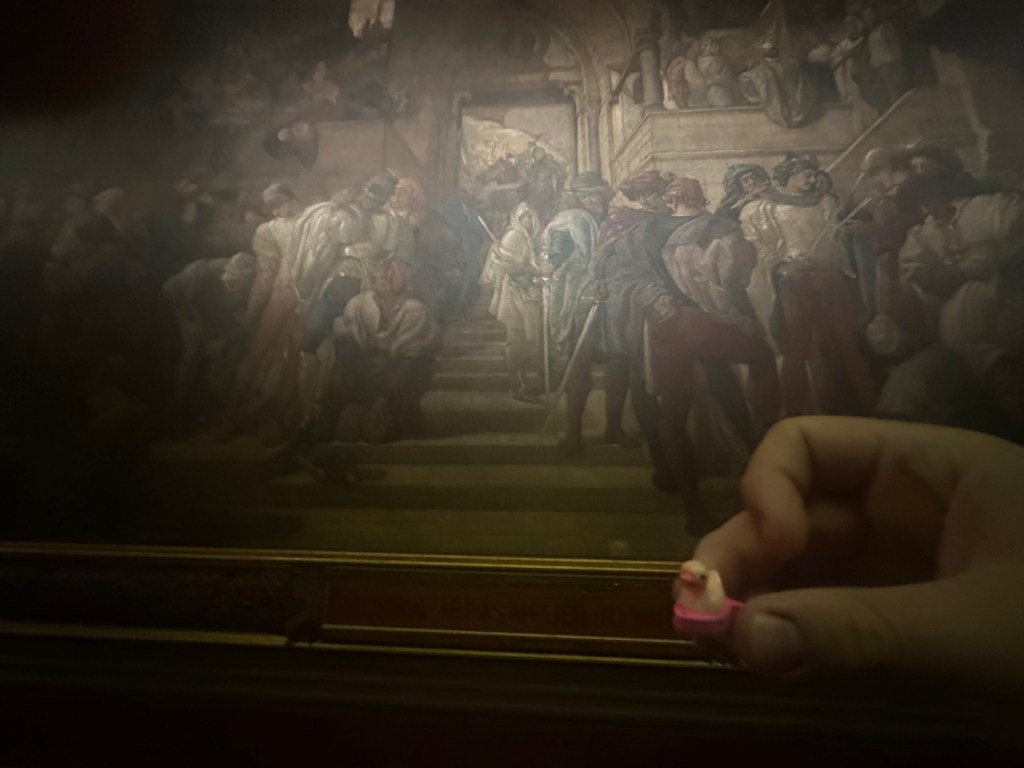
On May 27th, our group took a trip to the Victoria and Albert Museum.. We passed through halls of wonderful art and artifacts before finally ending up in the Theatre & Performance section. Now, we’ve seen a lot of really awesome plays on this trip. In addition, we’ve seen a lot of awesome pieces of history. With this museum section, we got to see both of these worlds combined into an awesome display.
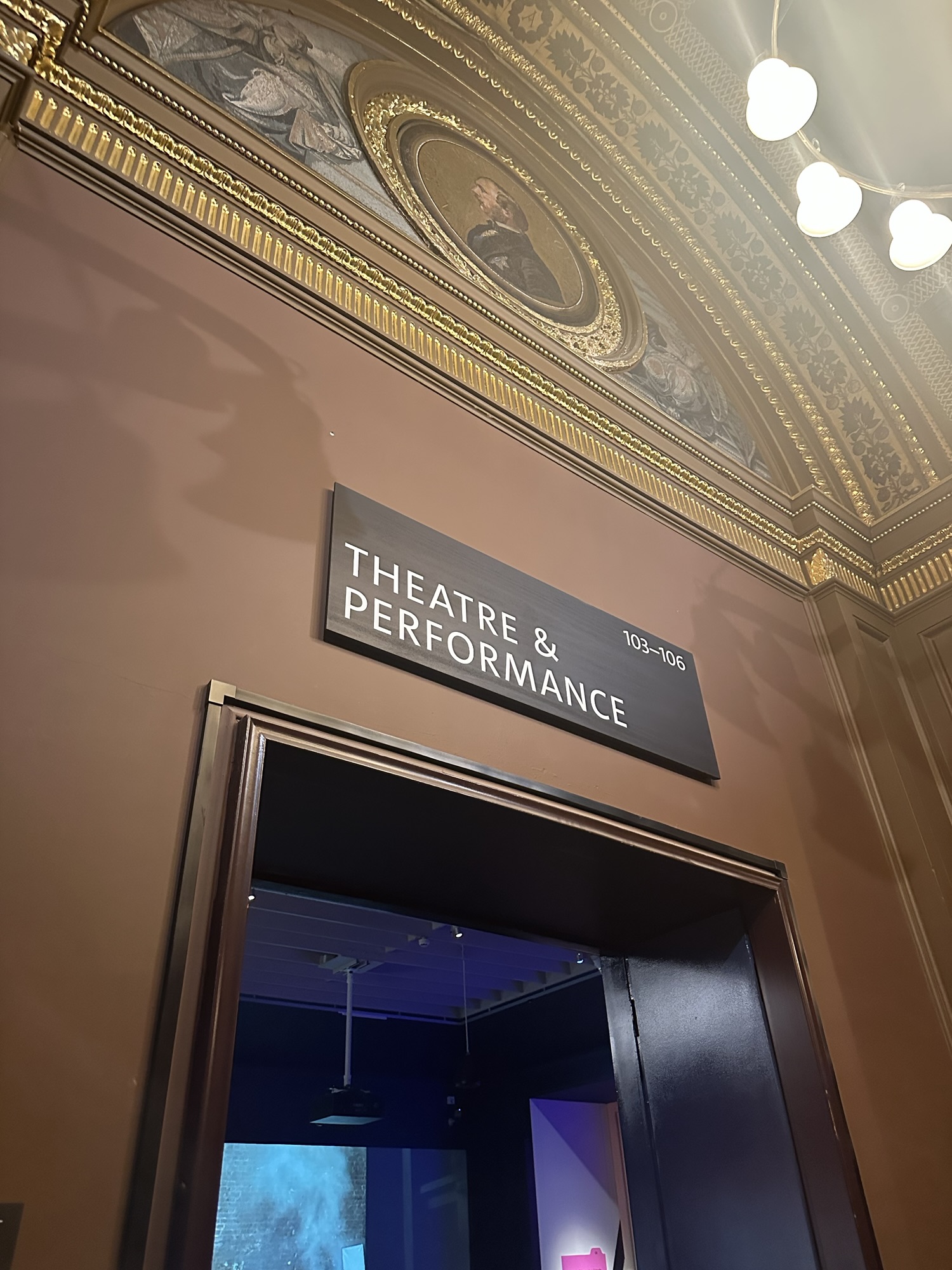
Here we are! 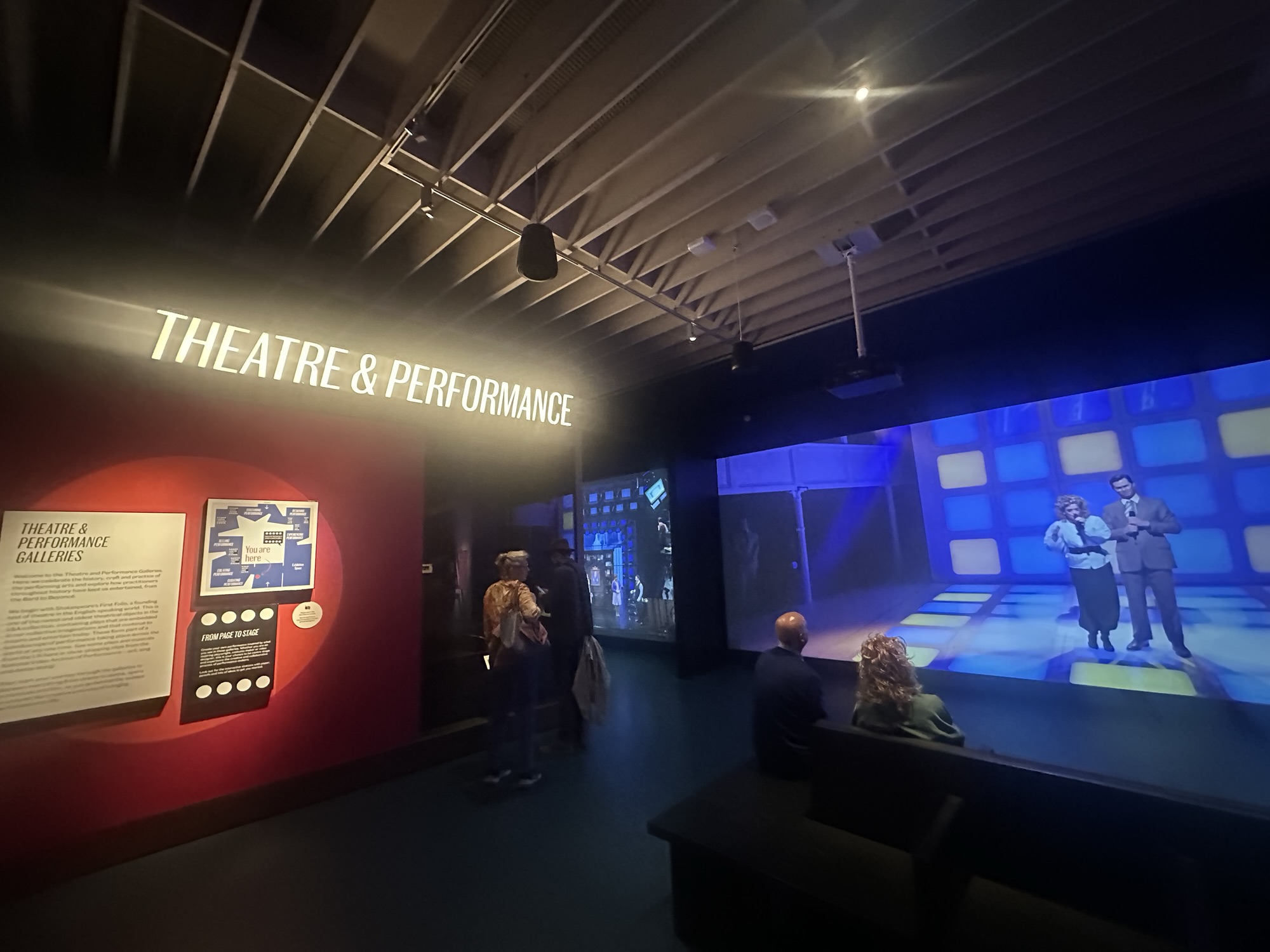
Entrance 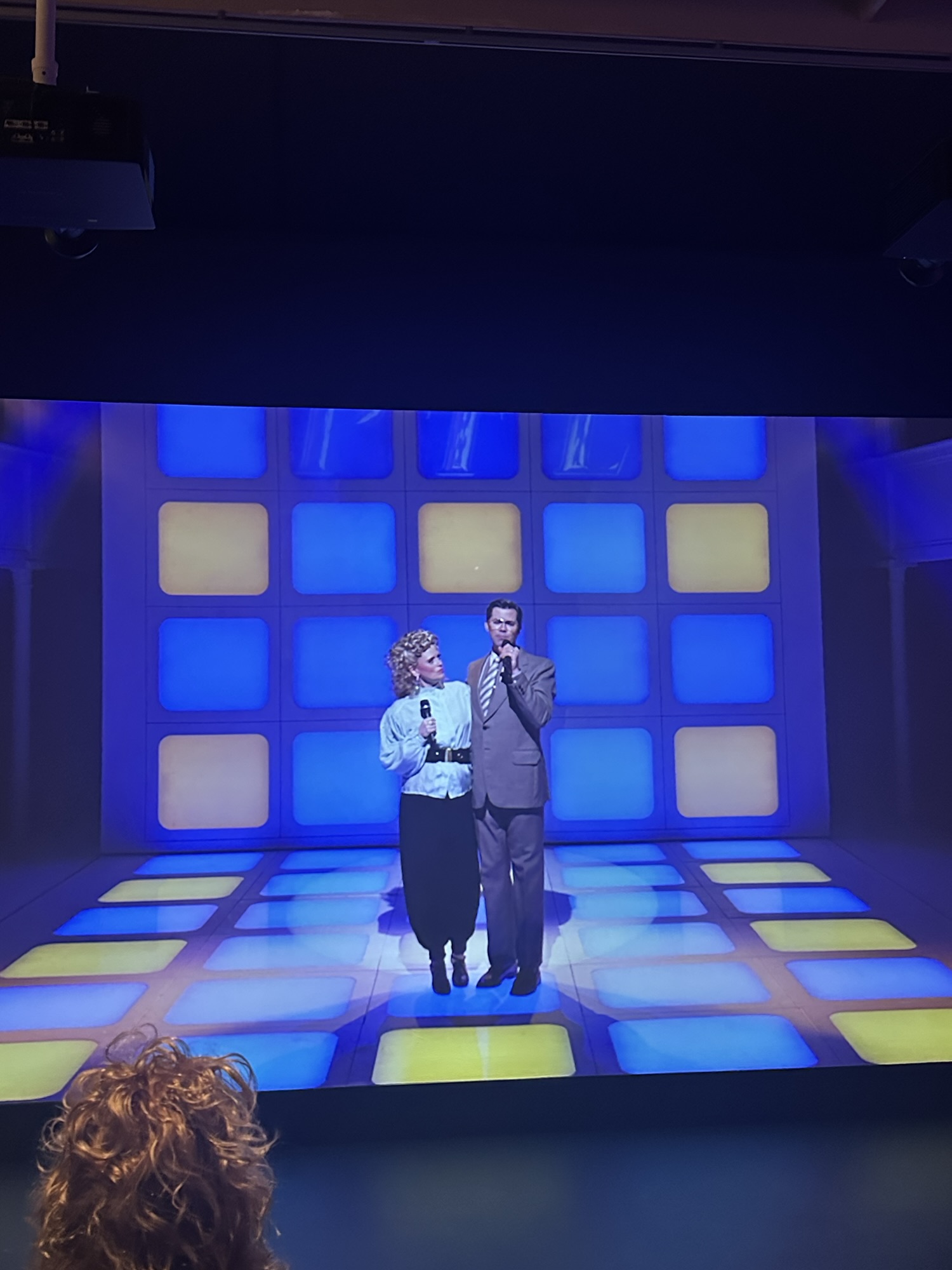
Andrew Rannells on the TV!!! 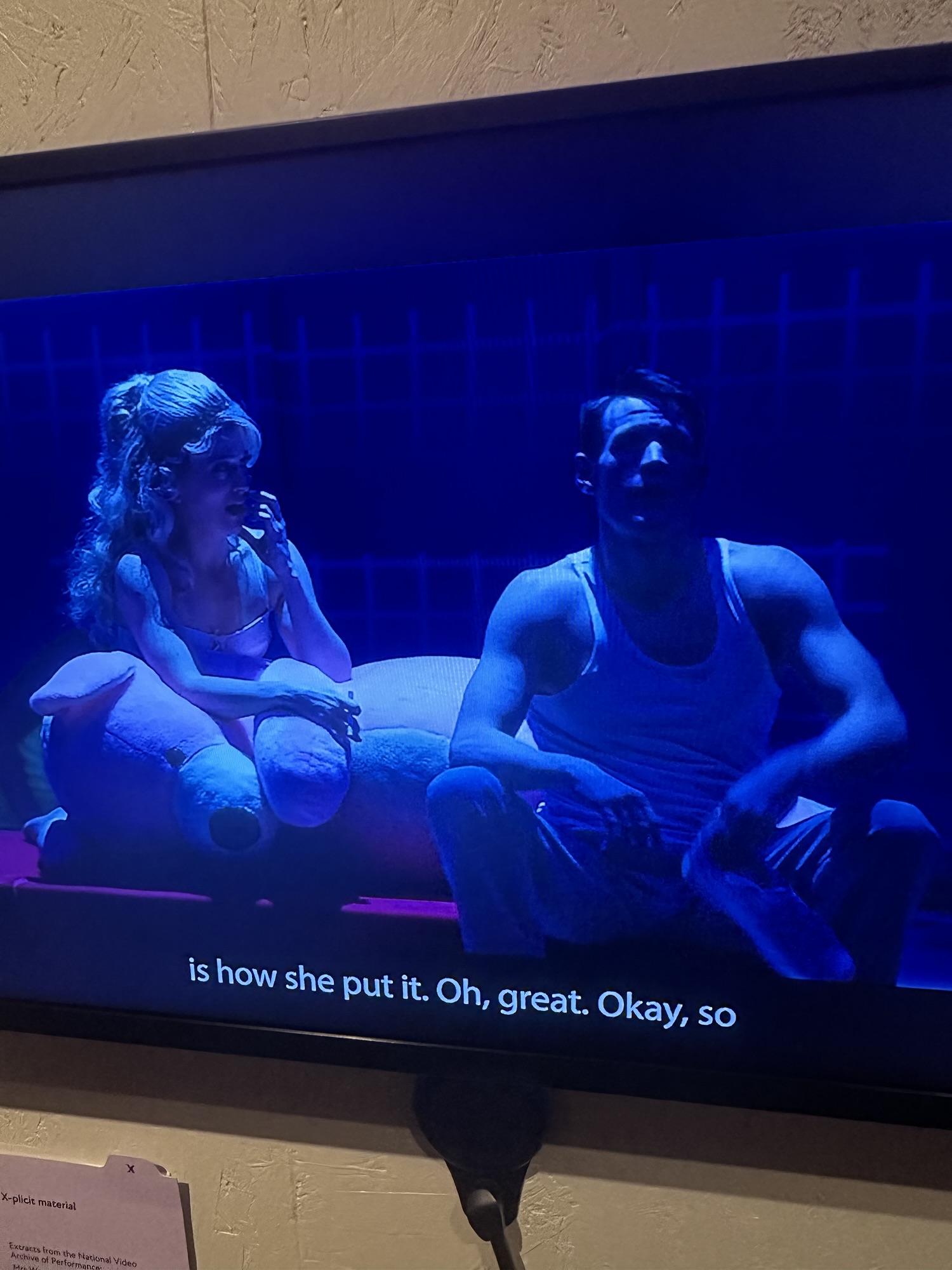
Matt Smith on the TV!!! (American Psycho musical) 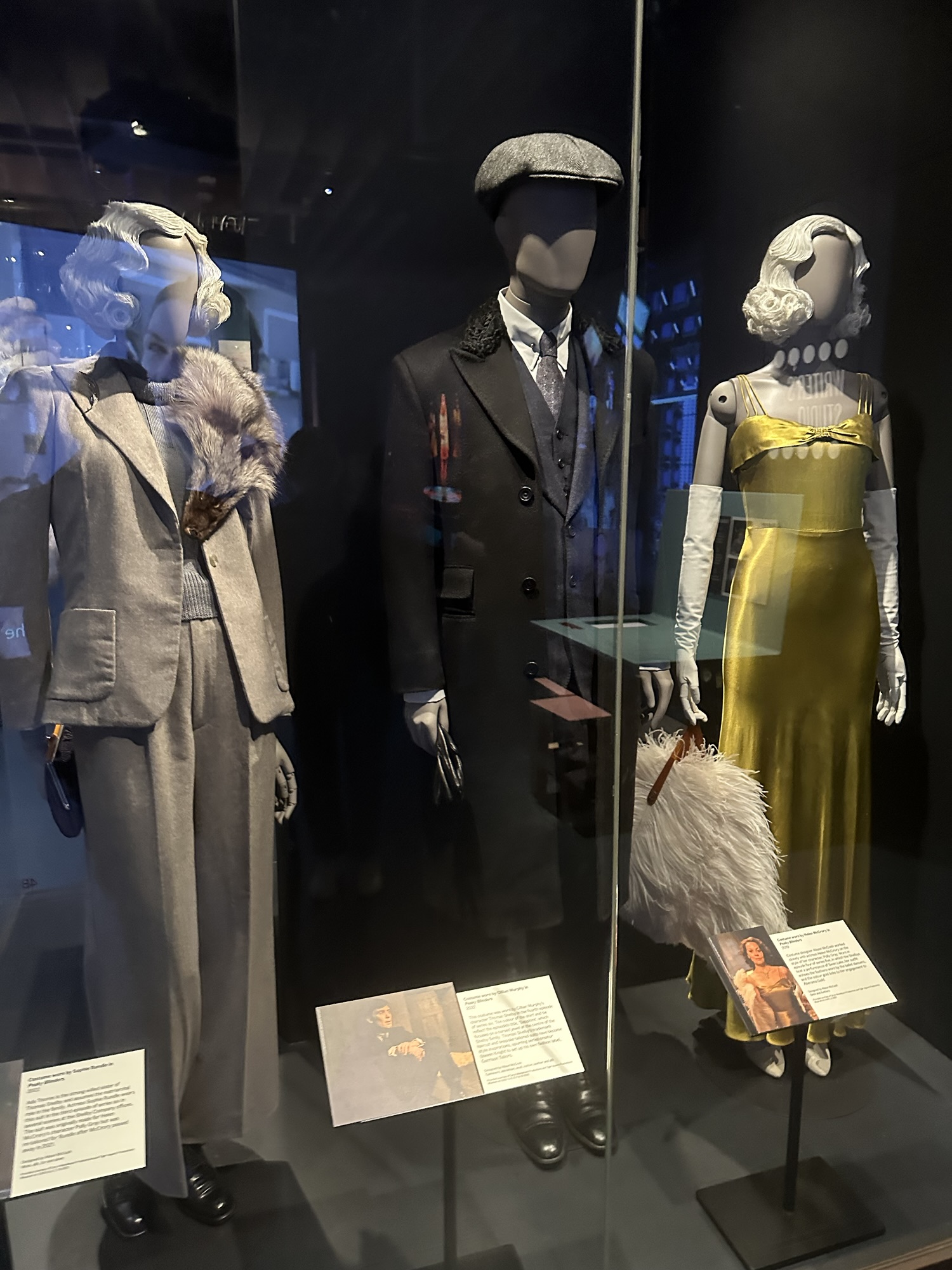
Costumes from Peaky Blinders! 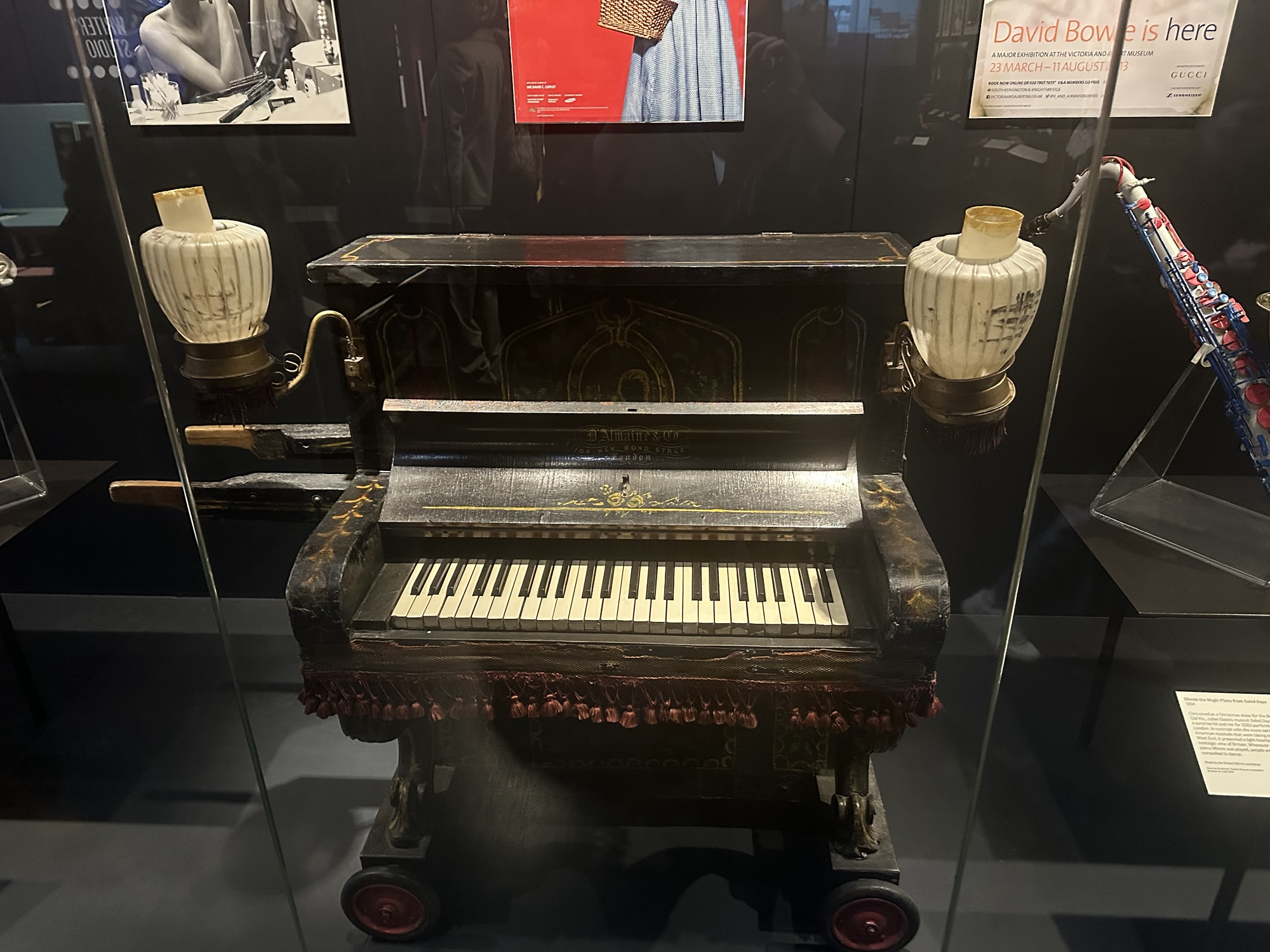
Minnie the Magic Piano from “Salad Days” 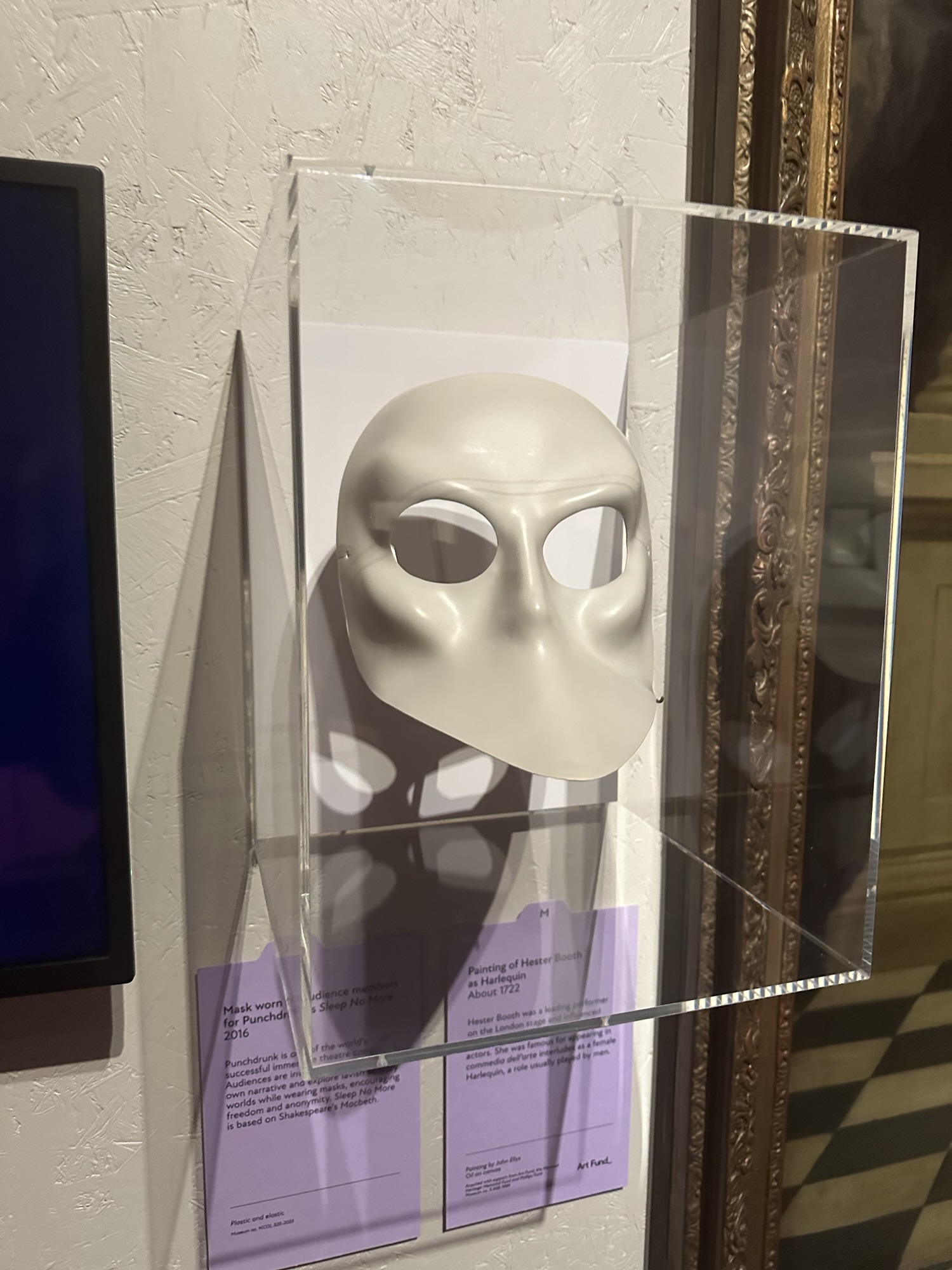
Audience member mask for “Sleep No More” 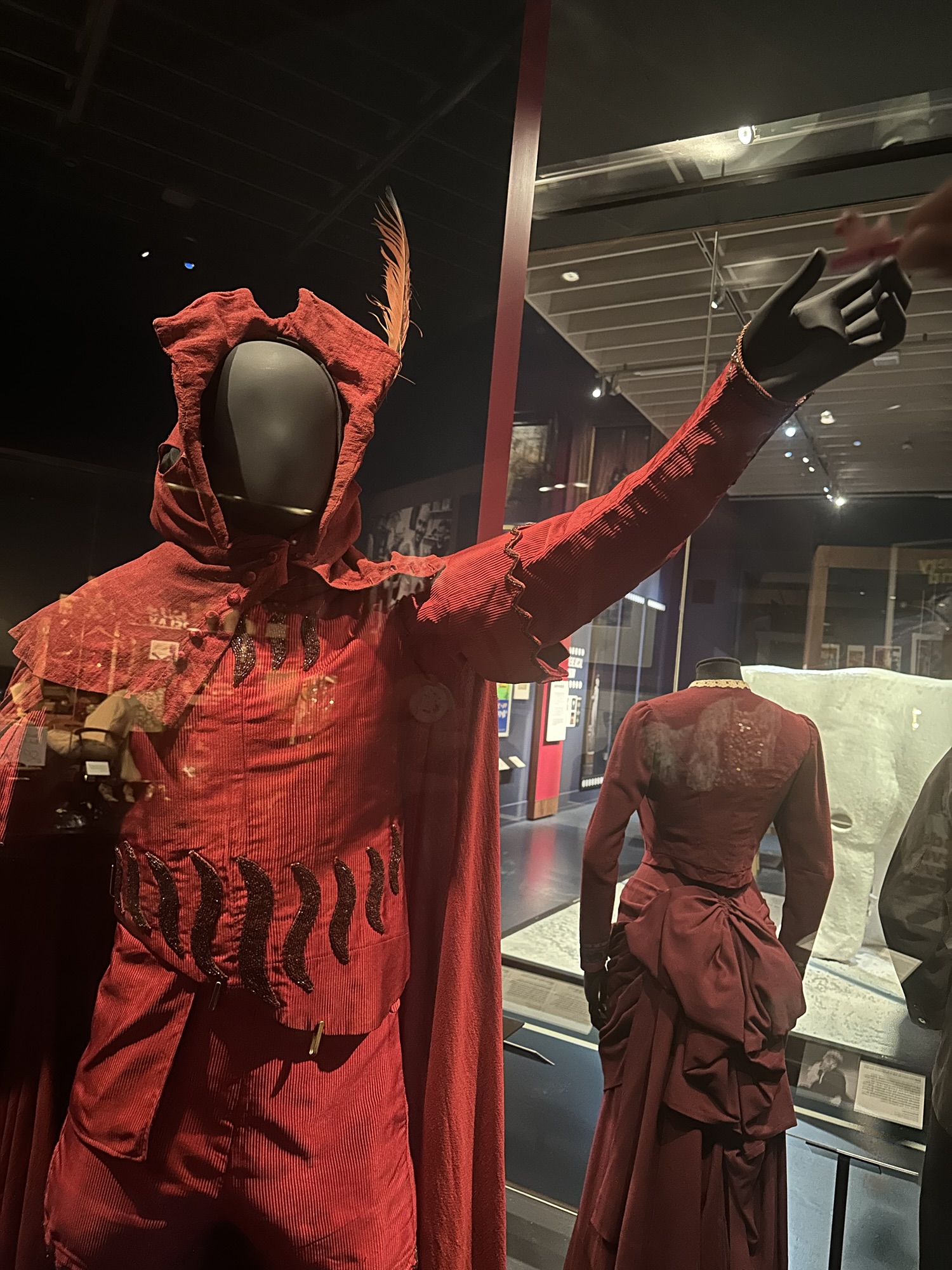
Henry Irving (1/2) Costume from “Faust” 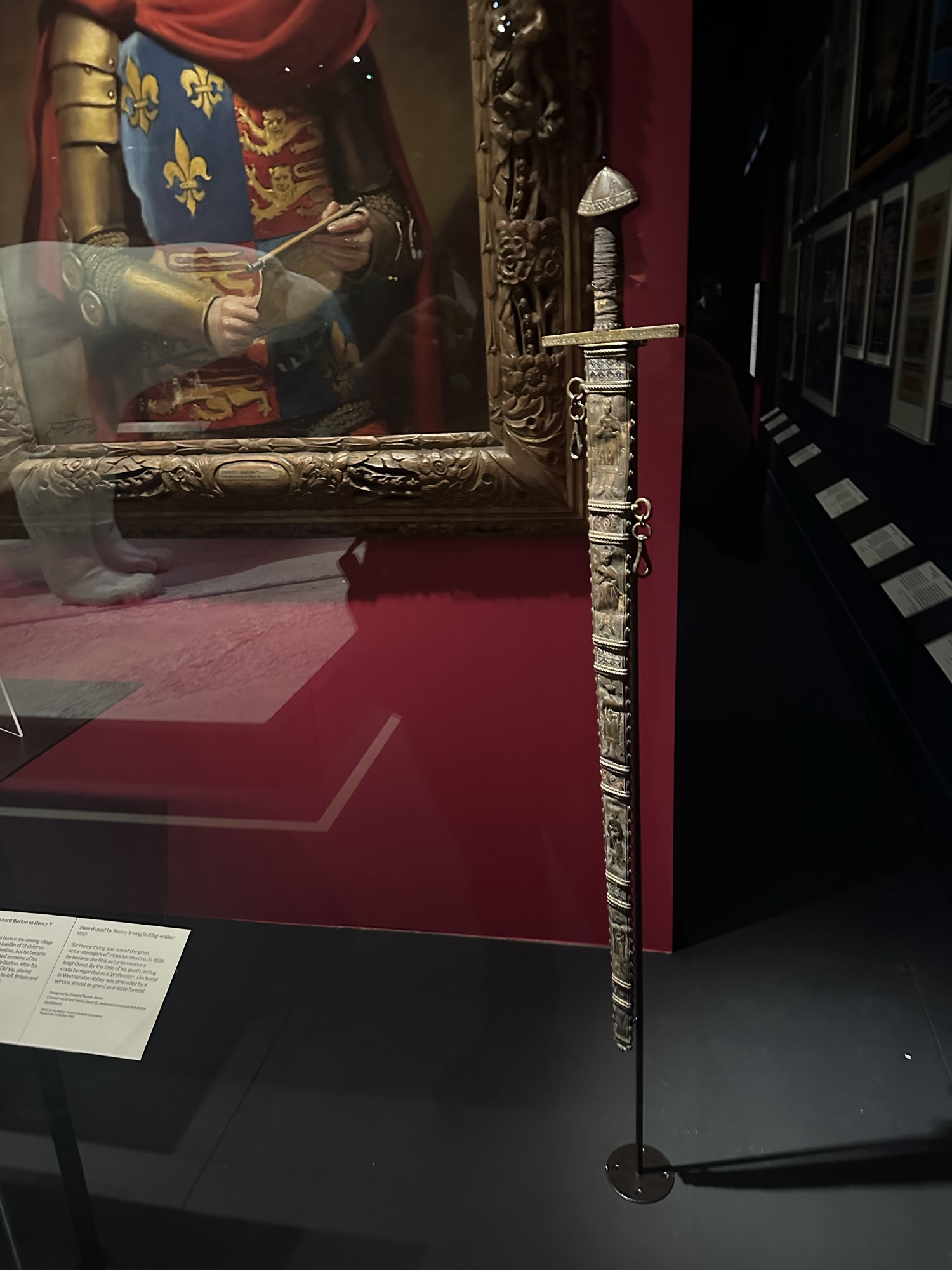
Irving (2/2) Sword used in “King Arthur” 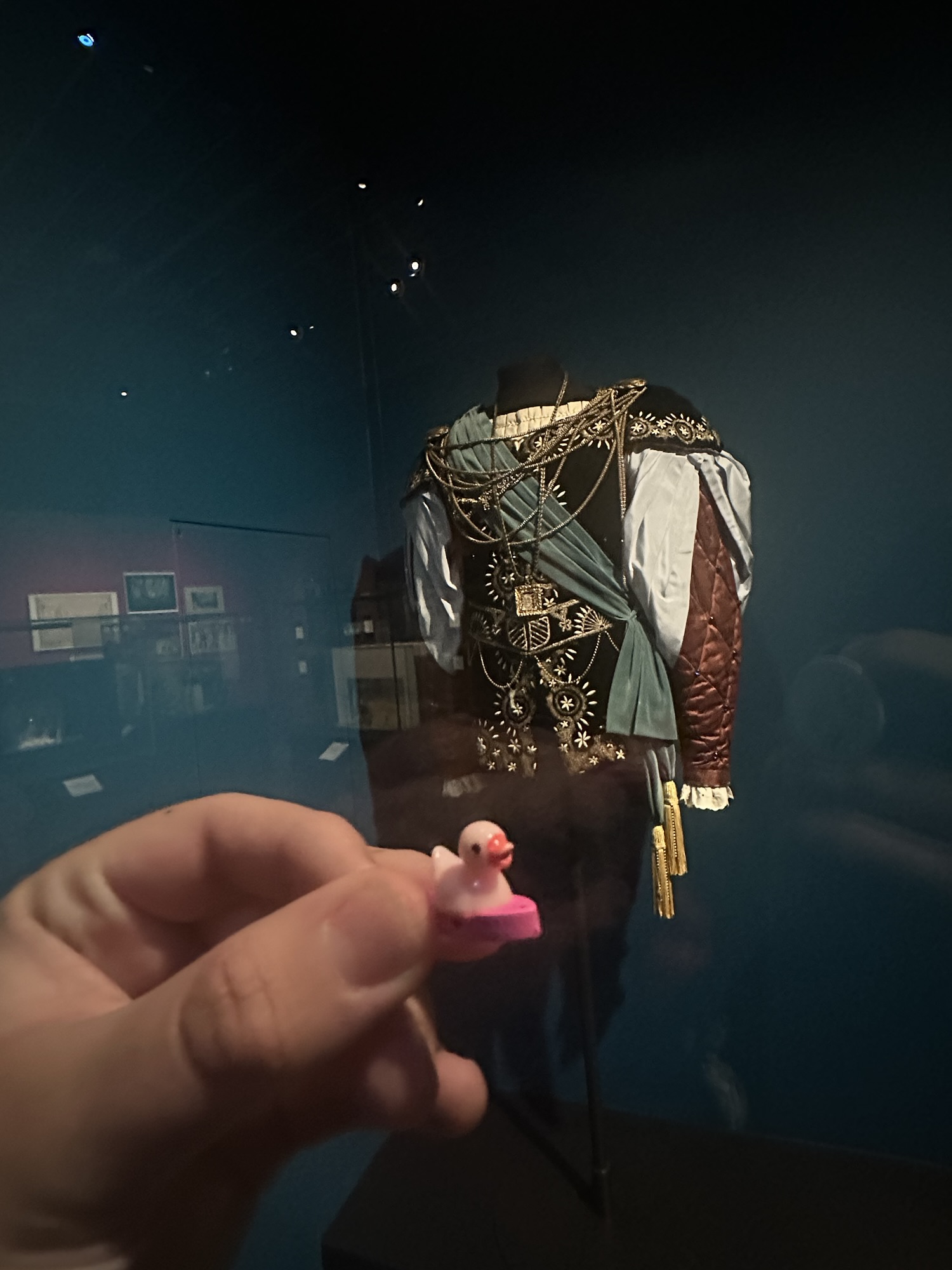
Laurence Olivier costume as Hamlet (1948 film) 
Costumes of Willy Wonka, Elphaba, and Scar 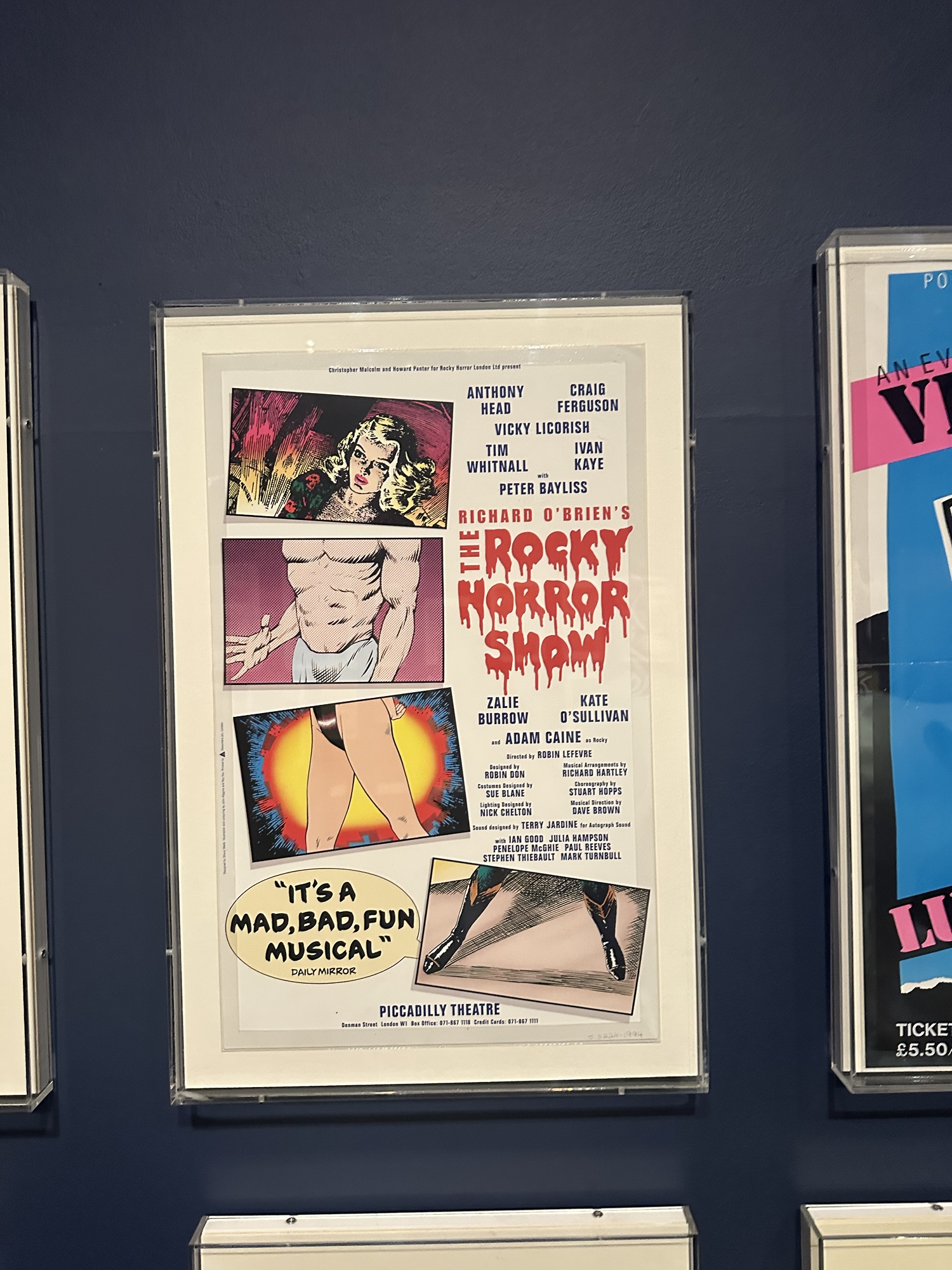
Poster from 1990-91 Piccadilly production of “The Rocky Horror Show” 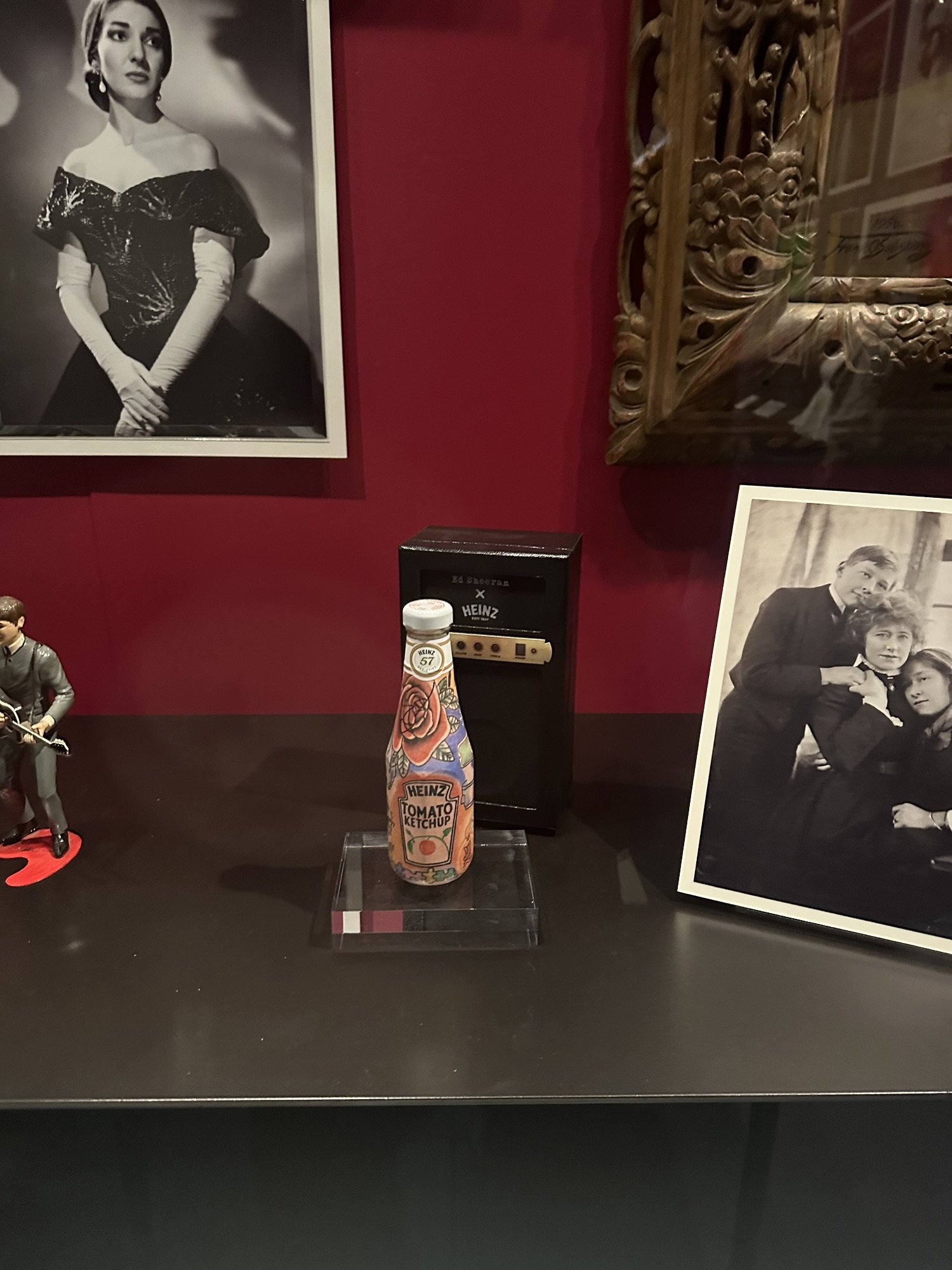
Limited Edition Ed Sheeran-inspired (and signed) bottle of Heinz Tomato Ketchup 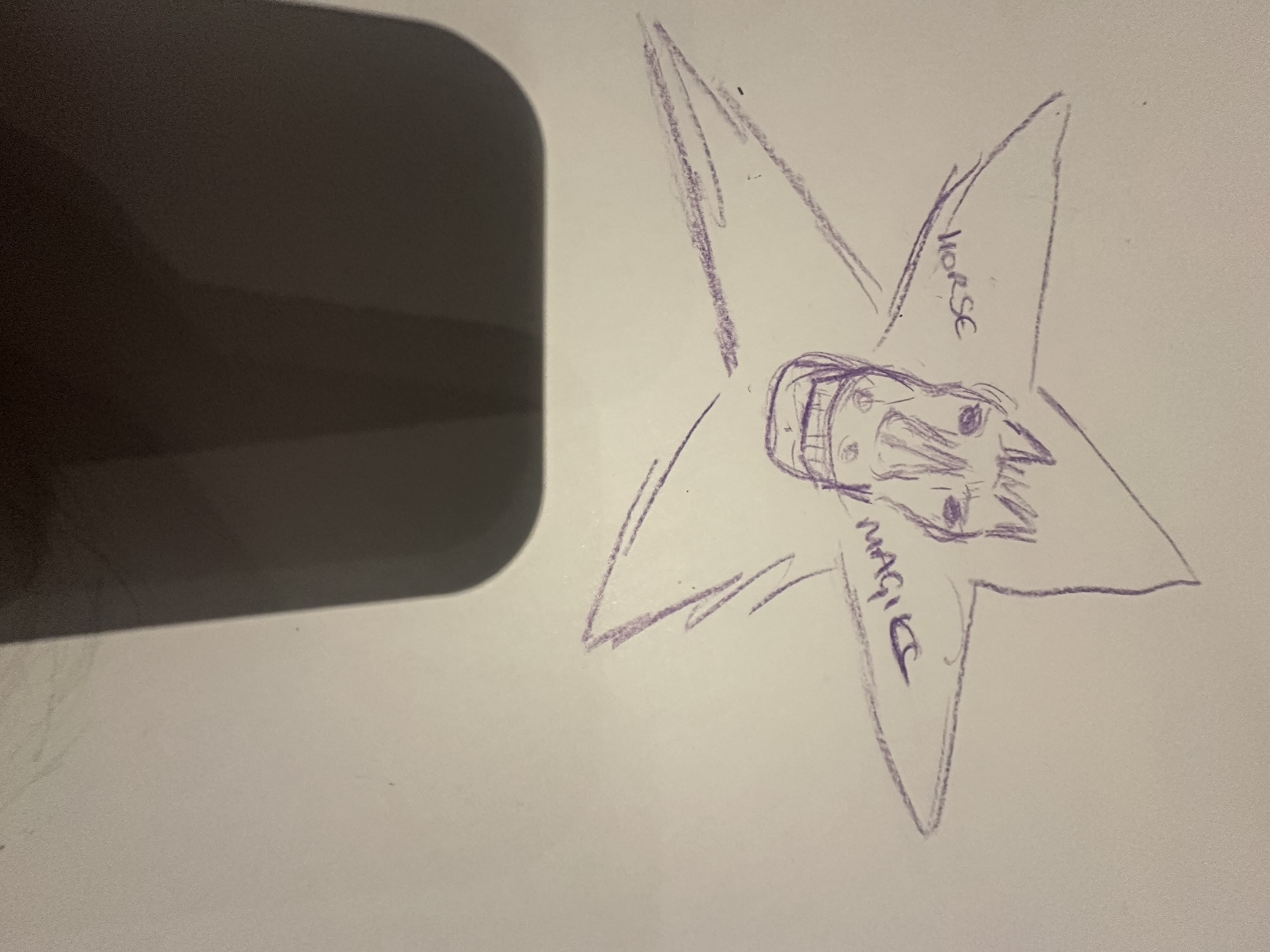
“Horse Magic” by Aleah Deckard
Above is a slideshow of many of the wonderful things on display in this gallery. These include recordings of plays, costumes from plays and TV shows, and lots of other props and pieces of past plays and art! One of the ones I was intrigued by was the mask from “Sleep No More.” This mask is from Punchdrunk’s immersive theatre version of Macbeth. In this experience, audience members wore these masks and would explore and experience the narrative as it unfolded in the building around them. This production is an especially unconventional take on Shakespeare’s work. Another display held a similar idea of interpreting Shakespeare’s work but still kept it on a traditional stage.
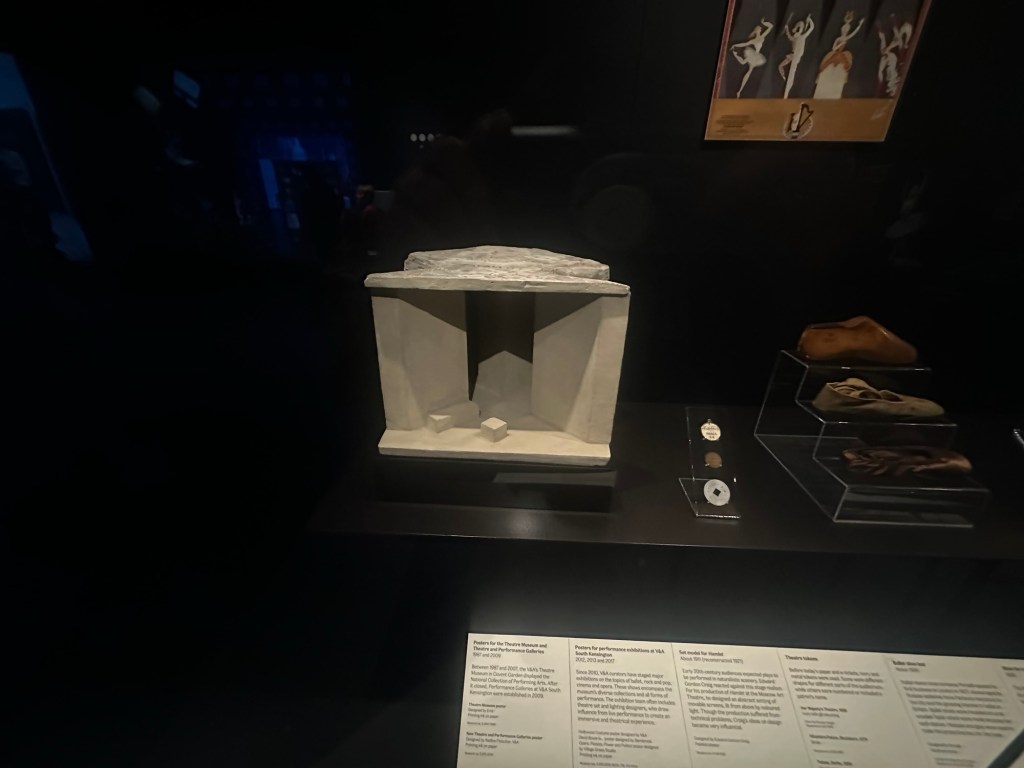
This set model (reconstructed in 1921) depicts the set of the Moscow Art Theatre’s famous (infamous) Symbolist Production of Hamlet in 1911. This set was designed by Edward Gordon Craig who worked with Konstantin Stanislavski to produce the show. The two men had very different ideas of how to take the production, Craig pushing for a more aesthetic symbolic style while Stanislavski still mostly pushed for a psychological realism for the production. However, the two of them largely agreed for the overall production to lean more towards symbolist drama. This comes clearly through the view of this set being quite bare as a whole, as Craig’s design employed the use of screens lit with colored light to differentiate scenes. These scenes also were meant to invoke the image of being memories and thoughts straight from Hamlet’s mind.
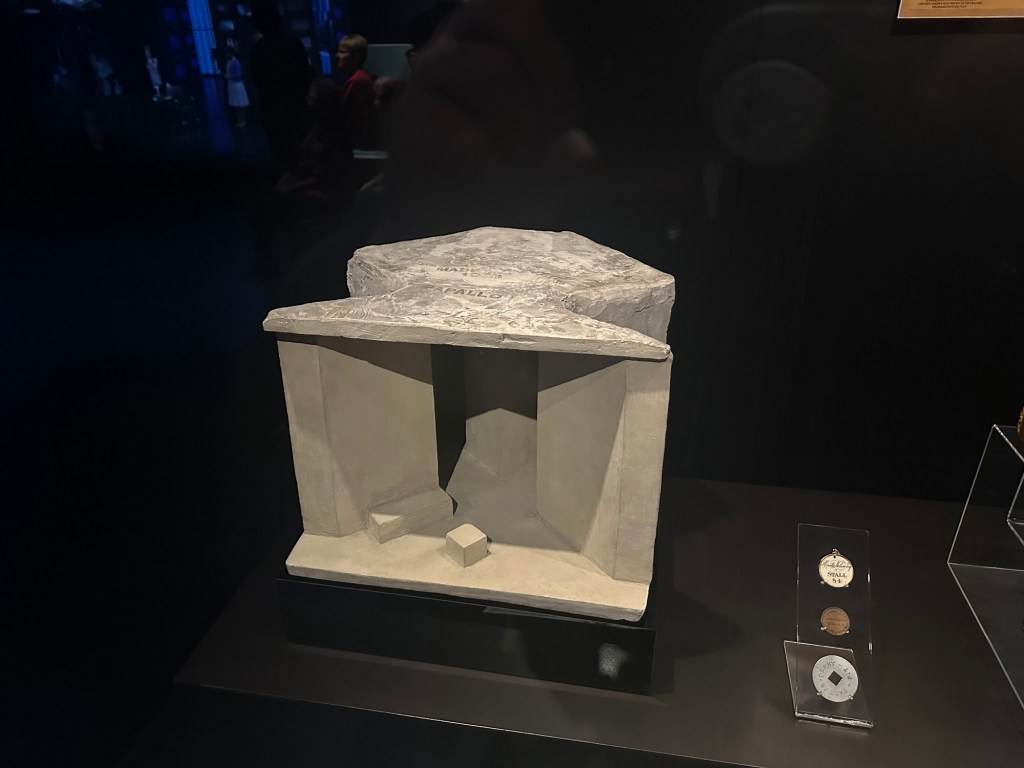
This set model and the rest of Craig’s design puts a focus on Hamlet’s mental state and his mind in general. I personally really enjoy this interpretation of the play. The progression of the play is mirrored by Hamlet’s deteriorating mental state. The idea that the scenes are just figments of his mind matches with the carelessness Hamlet often exudes while in his “crazed” state. The thing I find interesting about this is the fact that there are many scenes that Hamlet likely wouldn’t have personally viewed. This puts many of the scenes in question as to whether the plottings of Hamlet’s uncle were in fact creations of Hamlet’s paranoia.
Though this model is interesting in itself, truly the history of this production and its creation is its most intriguing aspect. I won’t go into too much detail as there is plenty more to learn about it than I could aptly share here, but I will give the elevator pitch. As I mentioned, this production was the work of Craig AND Stanislavski. As a result of the two mens’ contradicting views, it seems like the production was very limited in its presentation. Craig wanted to go pretty far in the direction of the “symbolic” but was often shut down by Stanislavski. By many accounts, this was fair. Craig didn’t work directly with actors and such often, so his demands were often highly unrealistic. On the other hand, Stanislavski was just beginning to define his “method” and was largely focused on the psychology of the actor. The two mens’ focuses were so inherently different that, to me, it’s a miracle the production got made at all.
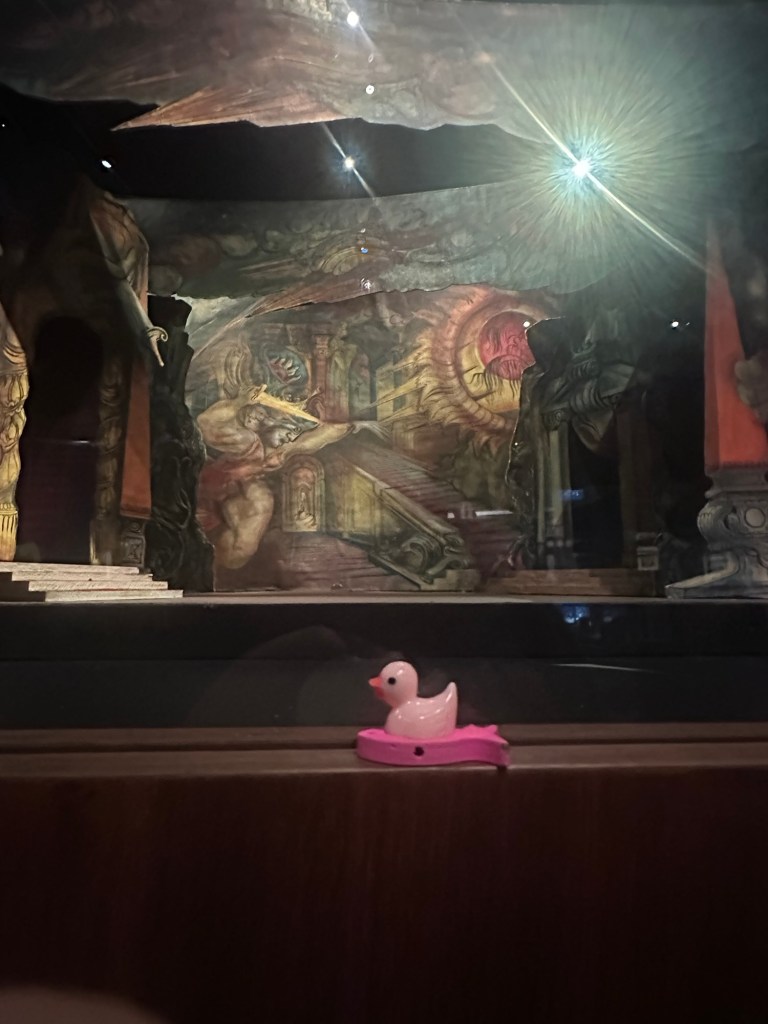
As time has moved forward, the discussions and experiments with presenting Shakespeare’s work have not slowed or stopped. In a previous blog post, I discussed a similarly psychological production of Hamlet at the RSC in Stratford-Upon-Avon. To conclude this, I would say that though Craig’s work with Stanislavski was not highly acclaimed at the time, the questions it asks and the effect it had is still asked and felt today.
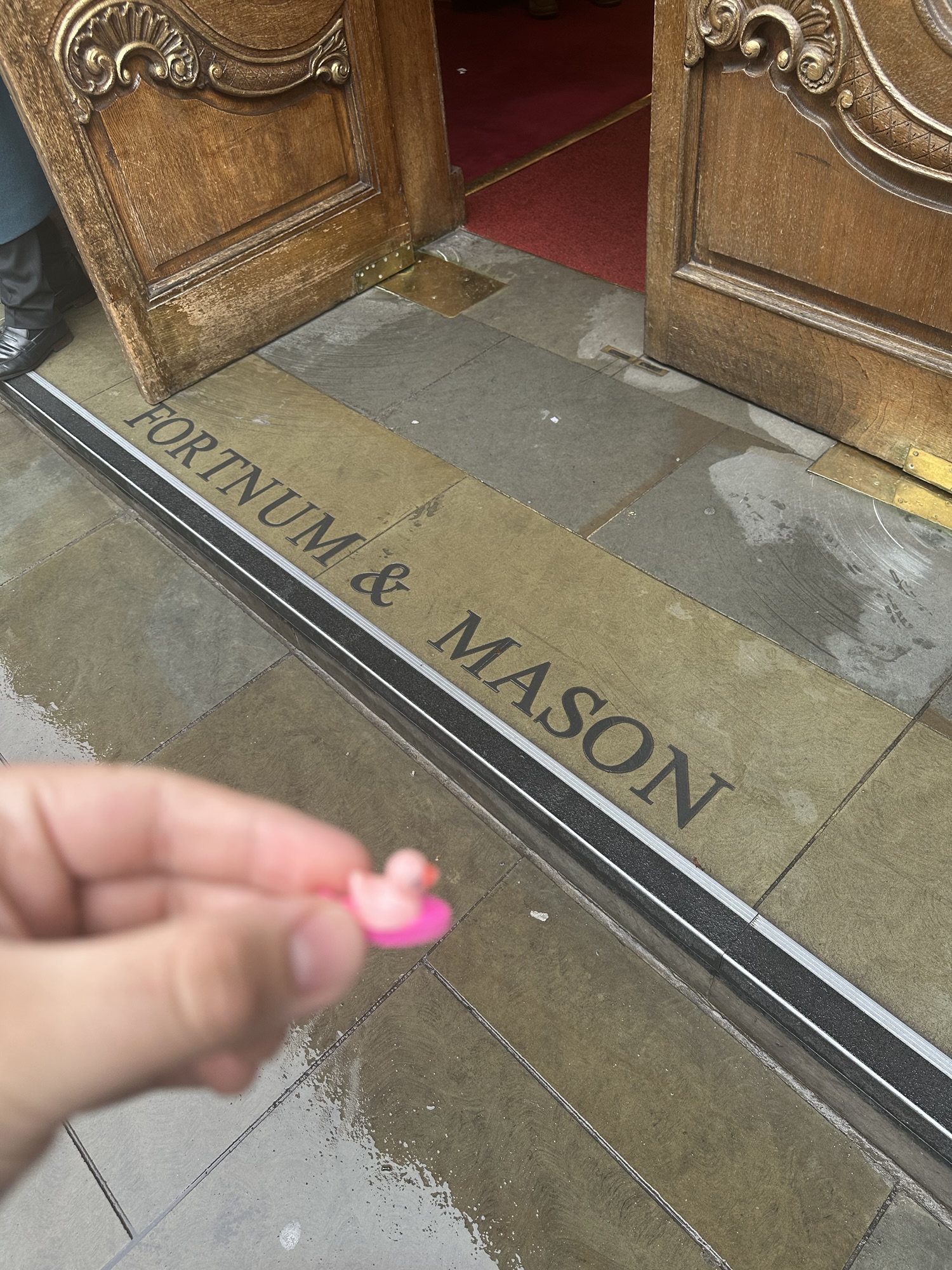
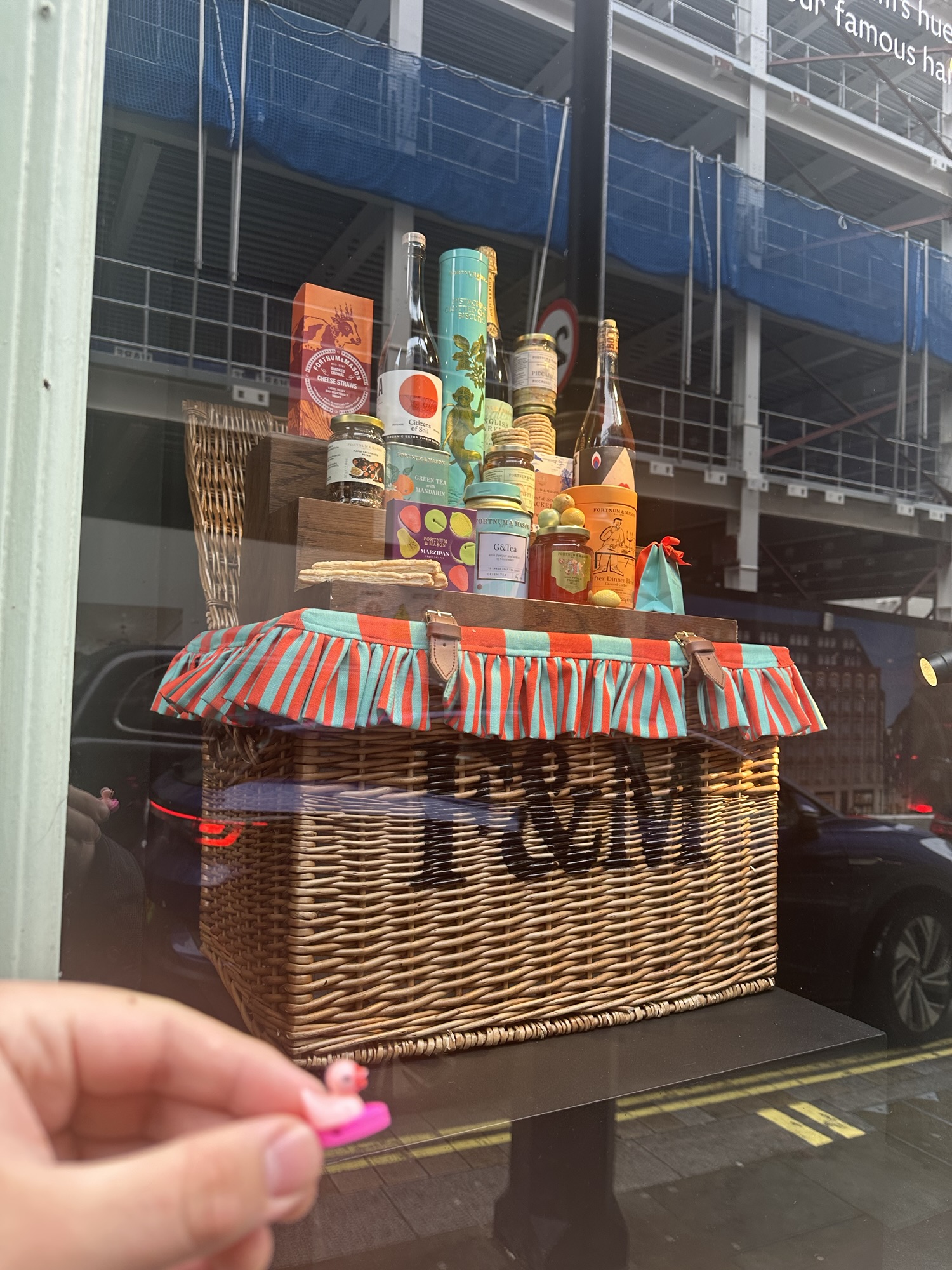
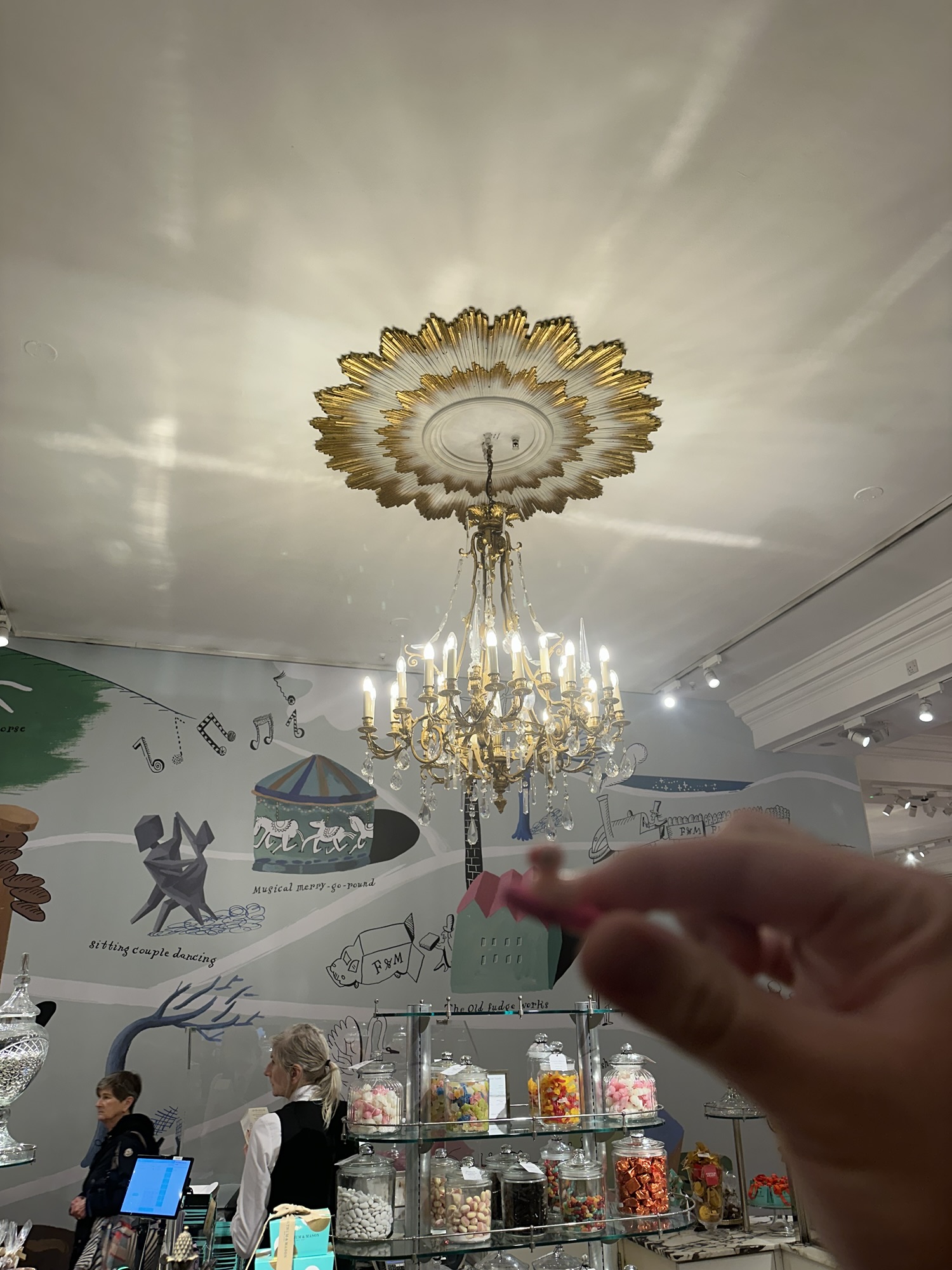
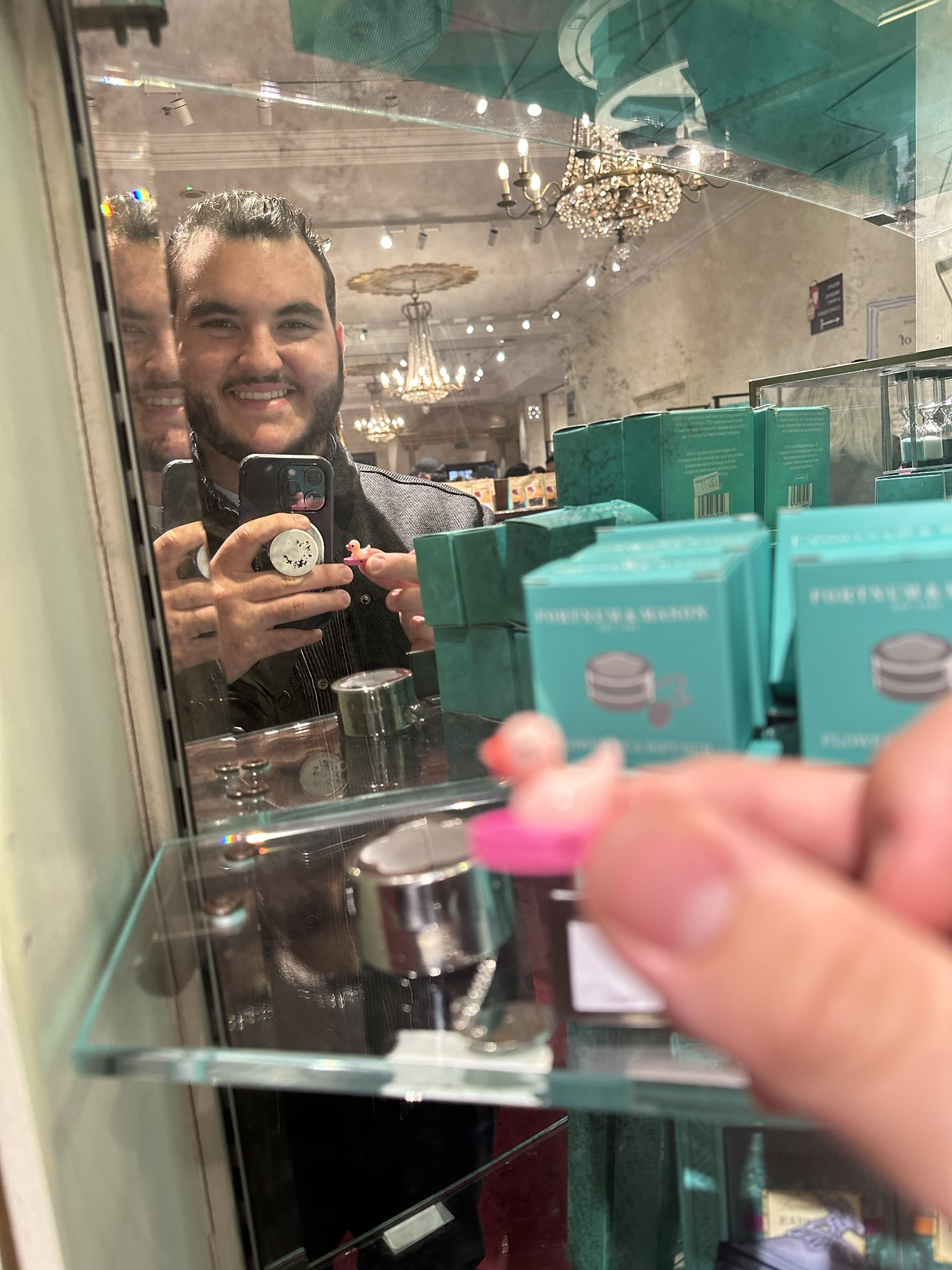
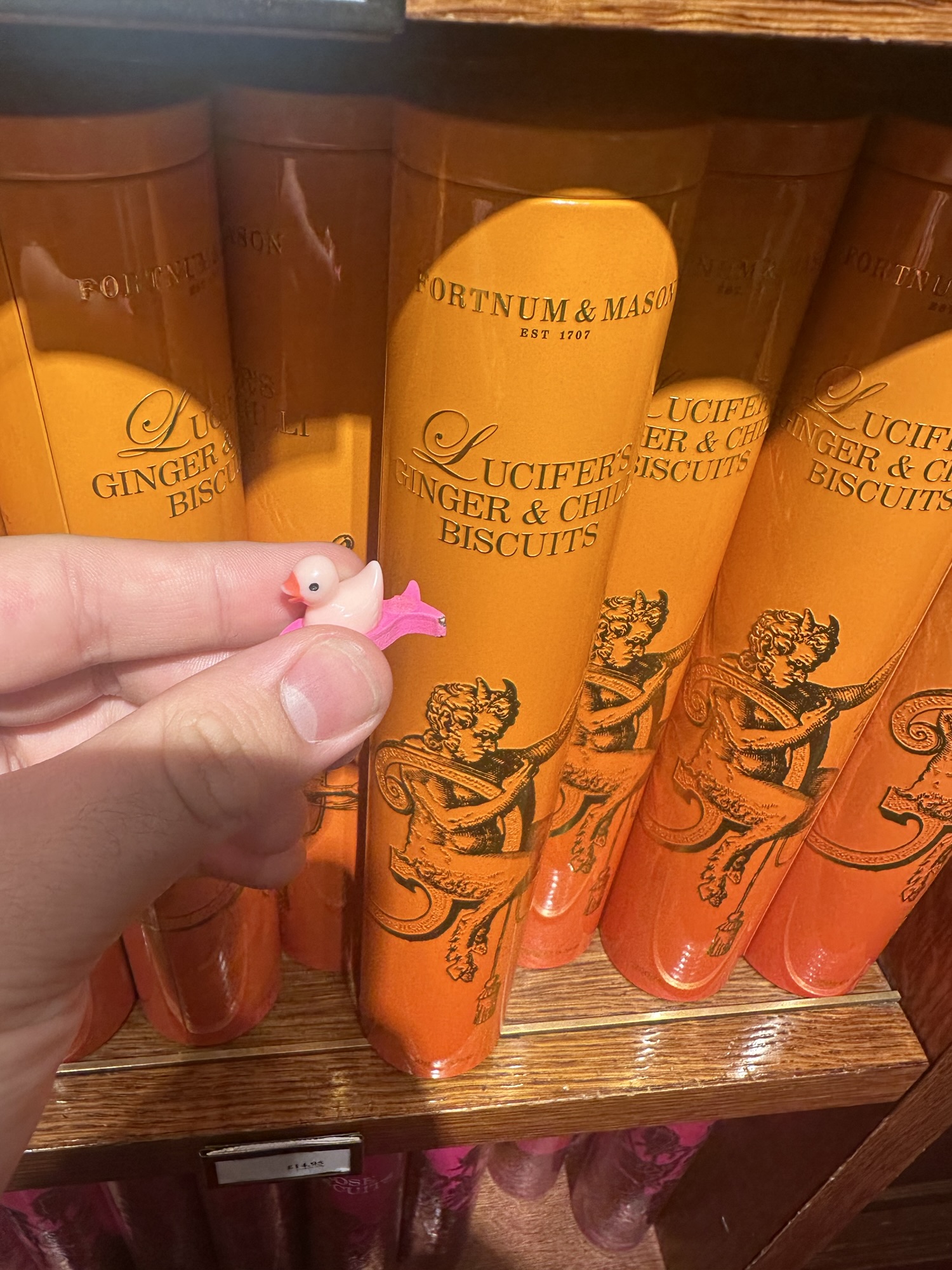
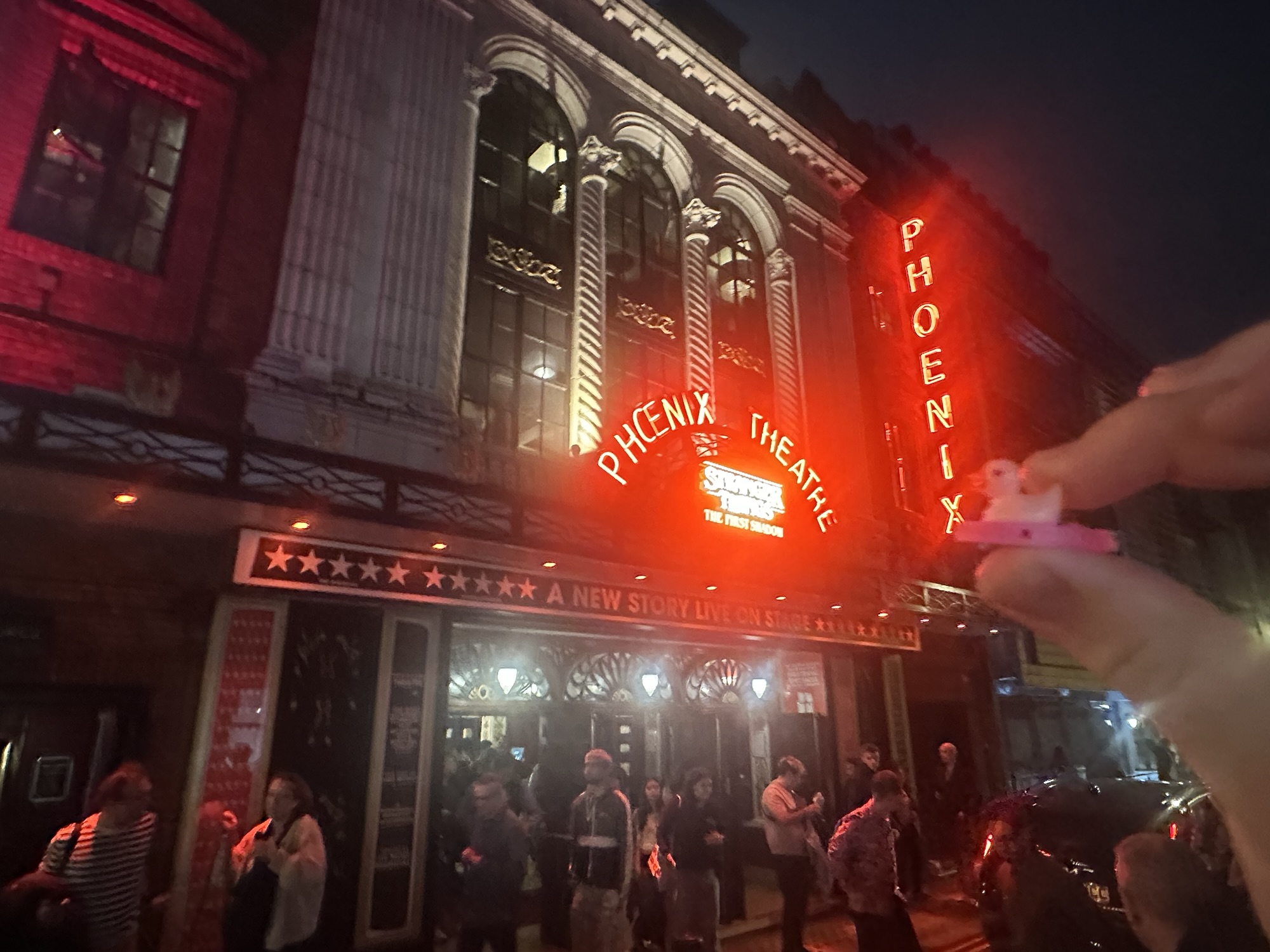
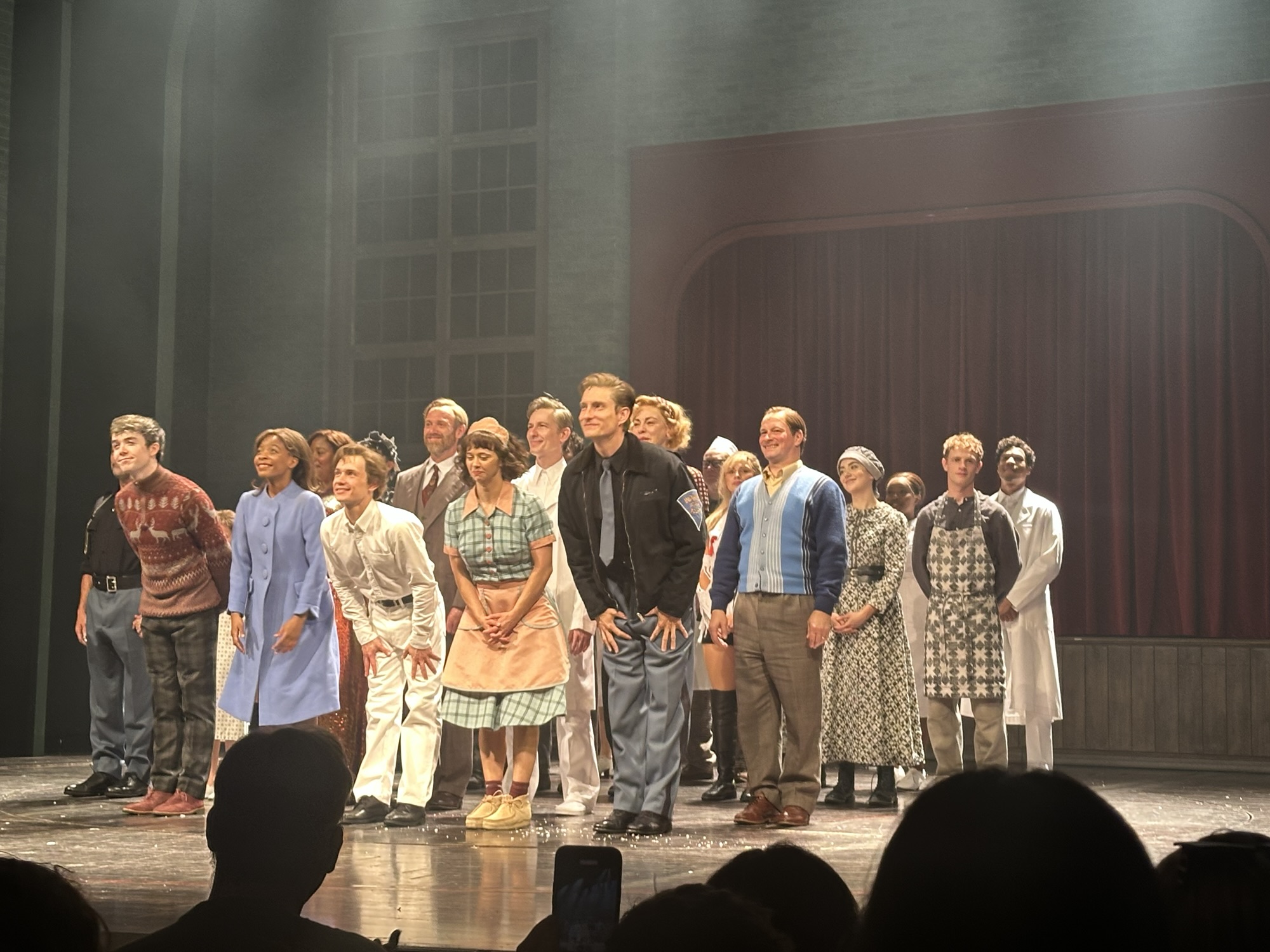
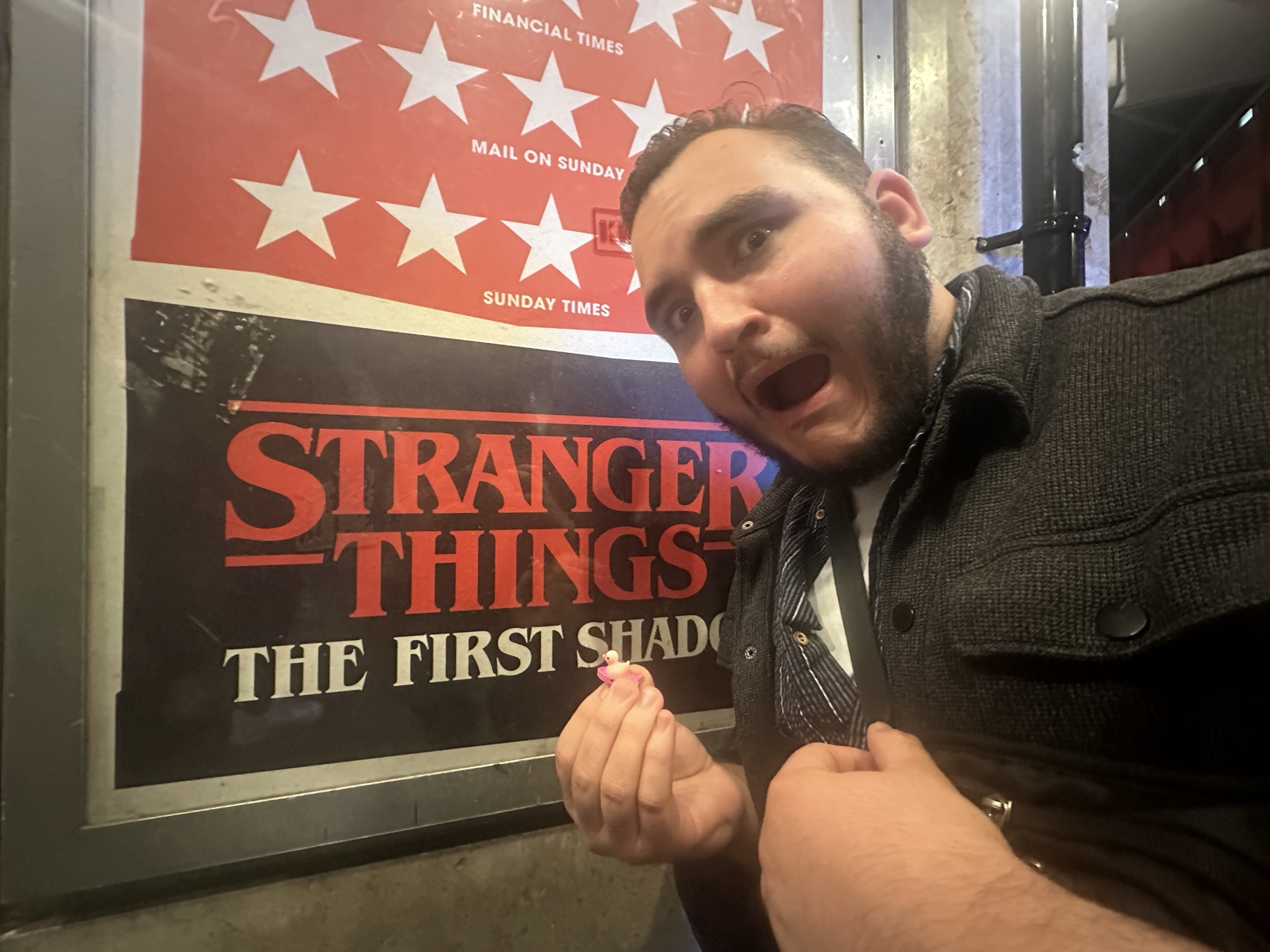
Here, I also wanted to provide a special edition Squirt and Tucker journey section. After visiting this wonderful museum, the two of us joined Susan, Tim, and one of their friends who teaches in England (I’m so sad – her name escapes me!) to Fortnum & Mason, where we got to view some wonderful (and much too expensive) teas, perfumes, biscuits, etc. That night, we went to “Stranger Things: The First Shadow” which was very spooky but a whole lot of fun. Squirt didn’t like it so much, I had to cover his eyes a few times and he had nightmares for a week. Poor little guy.


 Theatre in London U of A