Some locations feel like a portal to the past. Like by simply being inside, you are transported to a time when that place was occupied by its original inhabitants. London and surrounding England has a myriad of places like that. So much of the history is intact and able to be viewed and walked in and on. However, as an actor and general lover of theatre, stepping in the Globe Theatre was when I felt this feeling the strongest.
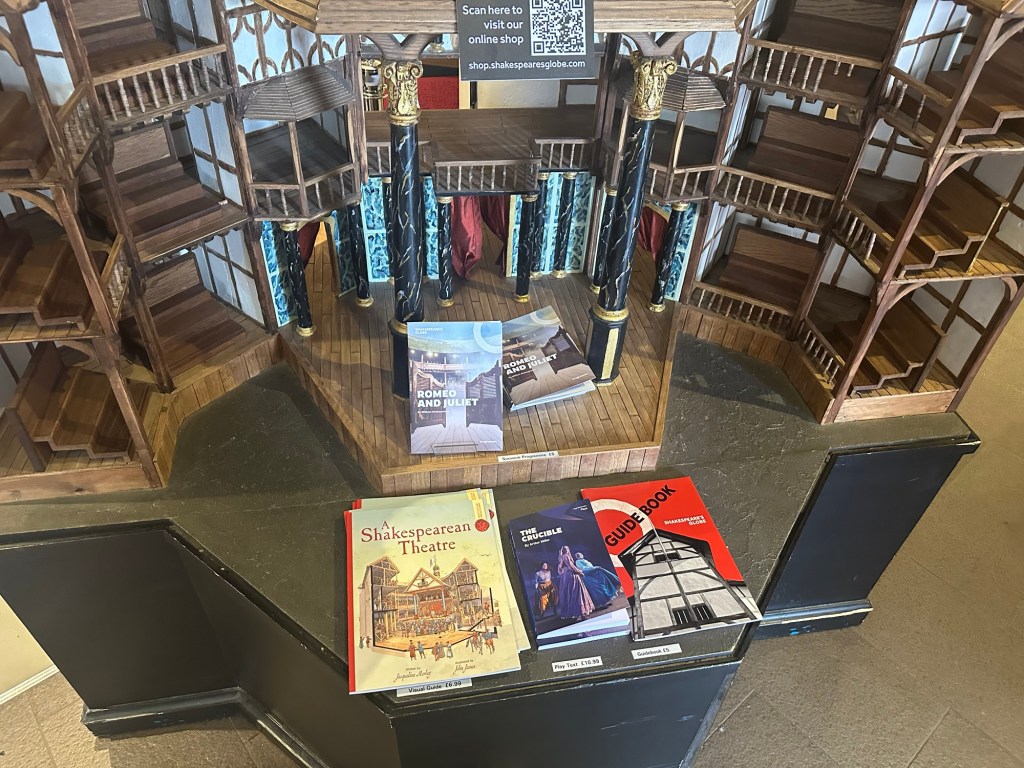
On May 30th, our group had the opportunity to see Romeo & Juliet at Shakespeare’s Globe theatre. Additionally, I was able to see Arthur Miller’s “The Crucible” at the Globe on June 7. But this is about Shakespeare! Now, of course, this isn’t the original stage that Shakespeare walked on or saw his plays performed on. His original theatre, called aptly The Theatre, was across the Thames and the original Globe on this side of the river burned down several hundred years ago. However, this one is still an exact replica of the original Globe theatre. As I stepped into the center of the area for the first time, I truly felt like I could see what it would have been like back then. I glanced up at where many people were already sat in their series of boxes in the circle of seats. I could see myself as a “groundling” of the old times, paying a shilling to stand and looking up at a noble couple fanning themselves while in their usual box. However, if I were this commoner, I would not envy the wealthy sitting above. The moment the show started, I could see the advantage of my place of viewing.
The interaction from the actors to the audience during Romeo and Juliet was the first thing that truly differentiated Shakespeare at the Globe vs anywhere else. When the Capulets first came out, one of them quite literally looked and pointed finger guns directly at me and said “bang.” I of course reacted in shock, and I think I threw my hands up slightly (which I think made the actor laugh a little bit). From the get-go, the actors were interacting directly with us. As the play went on, actors would enter the groundlings area at times and would very often say lines directly at audience members. The balcony scene was done through a balcony rolled out INTO THE AUDIENCE. Mercutio even kissed one of the people in the very front (or at least went fully for a kiss). This interactivity is what truly made me feel like I was watching a play in Shakespeare’s time. It felt truly authentic. A lot of great Shakespeare gets performed all around the world (in America as well), but I think, firstly, the relationship between the actors and the audience at the globe is how Shakespeare intended his plays to be done.
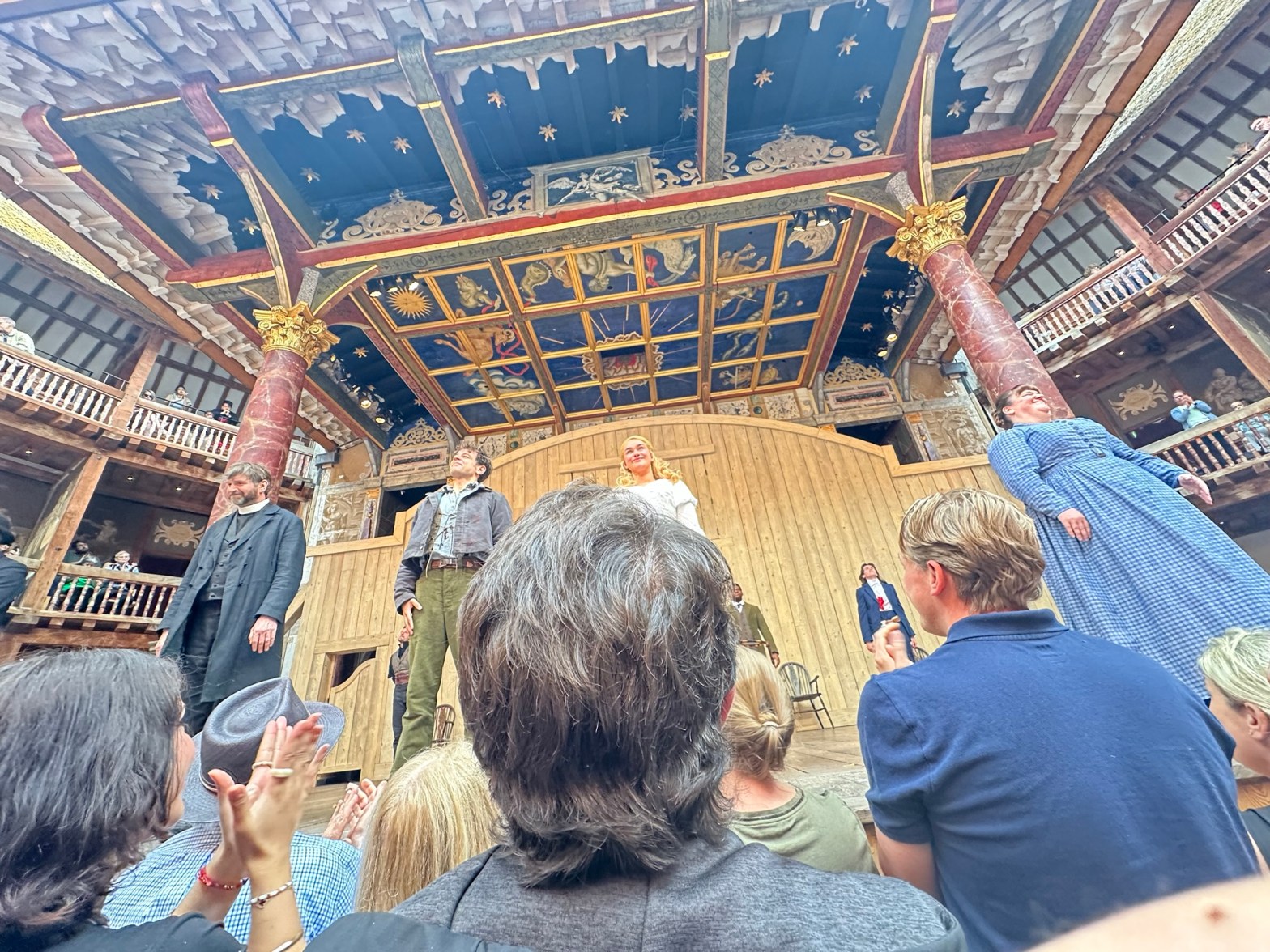
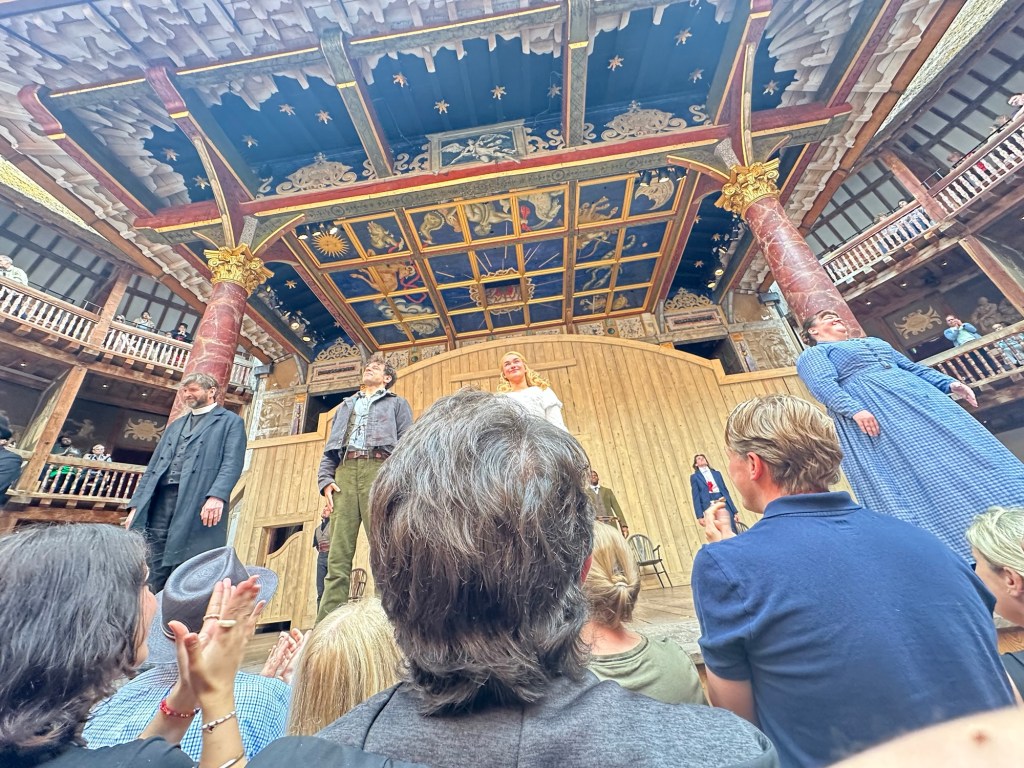
An additional aspect that I personally don’t see quite as much with especially American versions of Shakespeare now is the importance of music. Music is a huge part of Shakespeare and was intended to go with the plays since they were written. At Romeo and Juliet, a large swinging barn door near the top opened to show the live band playing the accompanying music. The picture above is meant to show the final pose of the curtain call with the barn door open and band visible, but my phone was unkind to me that day. Nonetheless, the consistent live music with actually singing from a few characters didn’t feel as much like something I’d see in America.
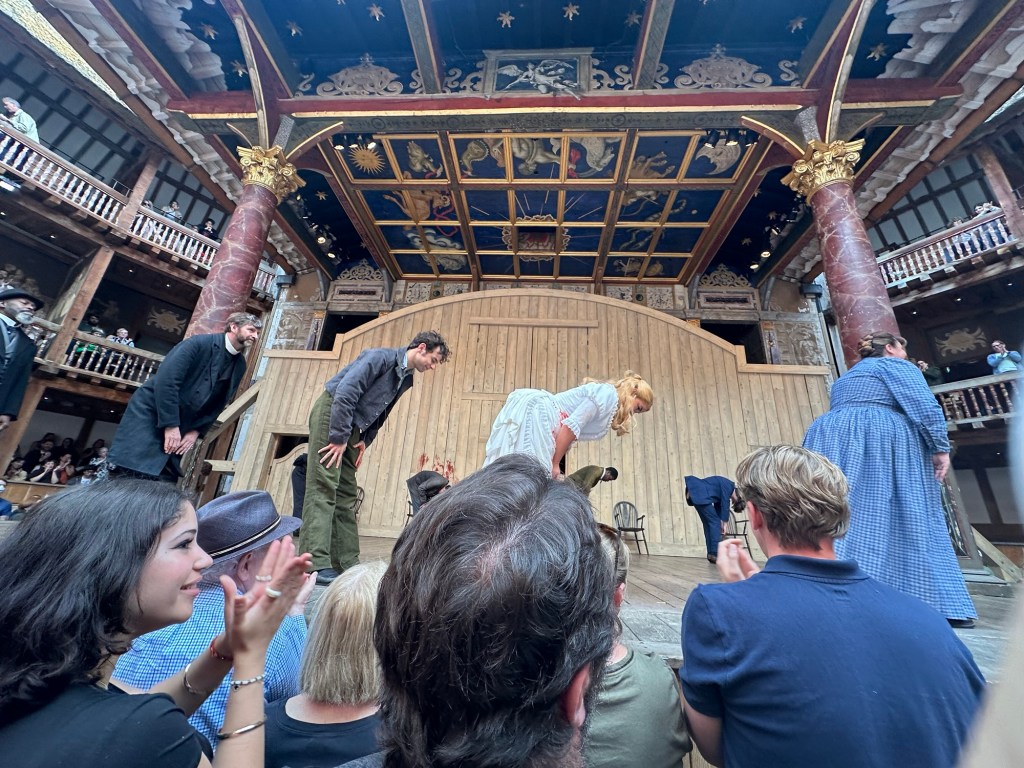
The one humorous thing about comparing this production to American Shakespeare is the fact that the director’s concept for this production was putting the show in the AMERICAN west. This I think worked beautifully for the play. The costumes were wonderful, the guns added a bit of new stakes to some situations, and lastly, oh good lord was the party scene so much fun. Having the first meeting of Romeo and Juliet be during a honky tonk style line dance was just a wonderful addition. I truly enjoyed the director’s concept and, as a whole, this production of Romeo and Juliet.

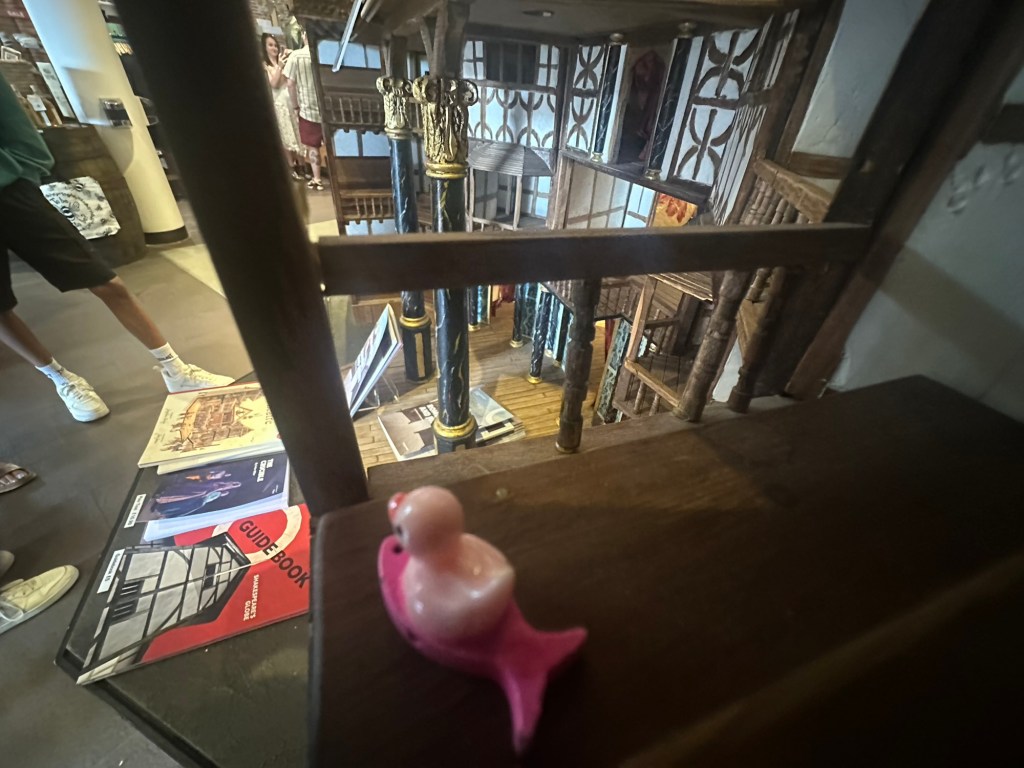
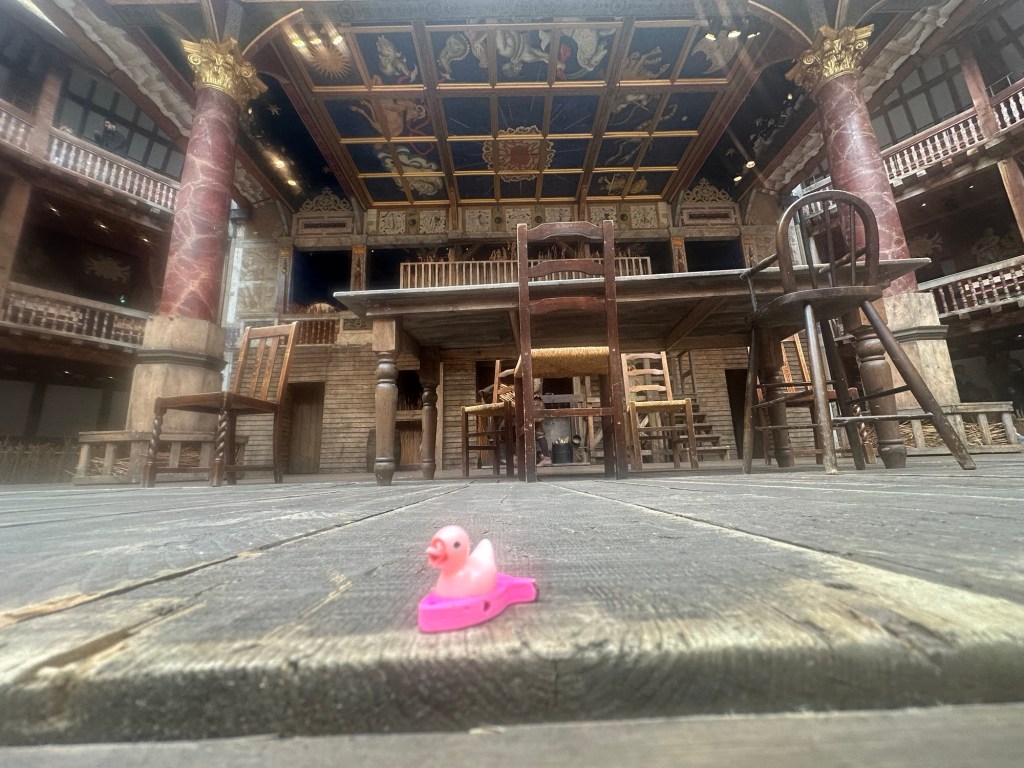
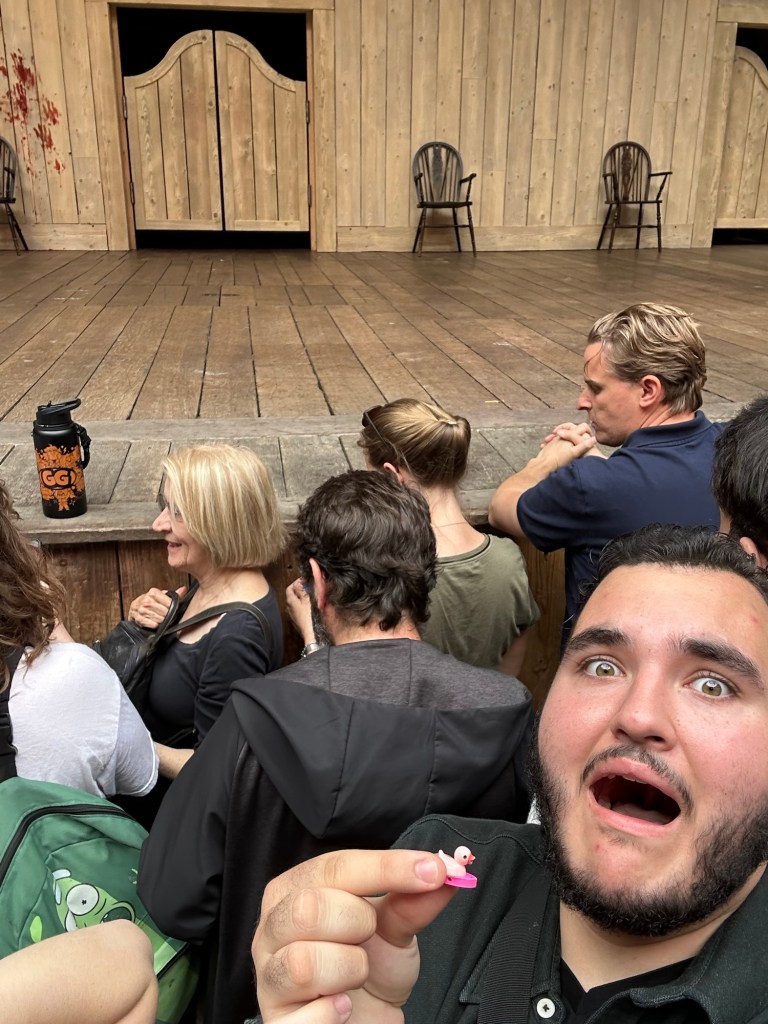
Here are some pictures of Squirt at both Romeo and Juliet and The Crucible. He enjoyed both thoroughly, however, he’s got a real love for the history of the Salem witch trials, so The Crucible was probably his favorite.
 Theatre in London U of A