
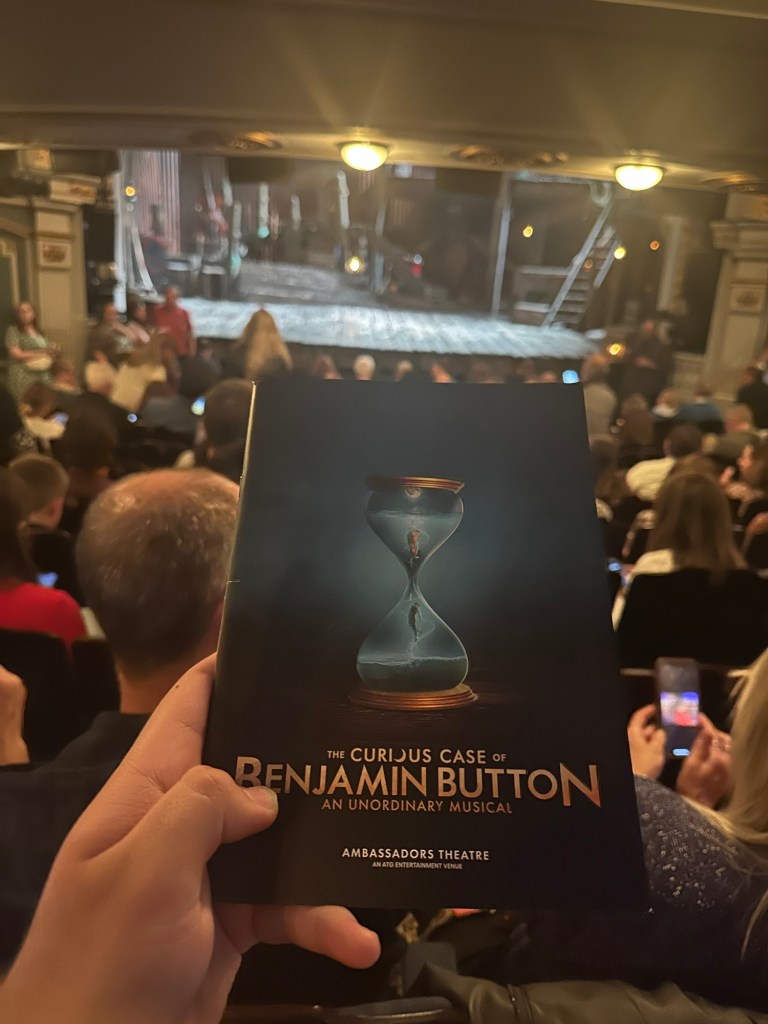
When I first decided to go on this trip, I talked to a few people who had previously attended it. They gave it high marks all around. And I mean, of course! You get to see a bunch of awesome shows and learn about the different ways in which our wonderful artform is done across the seas. However, one thing every person talked about was how the trip changed them. In the pitch Shawn gave me early on in my first semester that truly convinced me to go, he said that he always recommends theatre students do it as early as they can. Because, when you come back, you come back a different and more worldly theatre practitioner. Part of me questioned to what degree this would truly happen, but I heeded the program’s previous students’ and Shawn’s words.

Monday May 26, 2025, in the Ambassadors Theatre in London’s West End, at precisely 9:41 PM “The Curious Case of Benjamin Button – An Unordinary Musical” concluded as the actors finished their bows and walked off stage. At that exact point in space and time (Monday May 26, 2025, in the Ambassadors Theatre in London’s West End, at precisely 9:41 PM), Shawn and the other past-Londoners were proven right. I realized at that moment that I would come home a different practitioner of the arts.
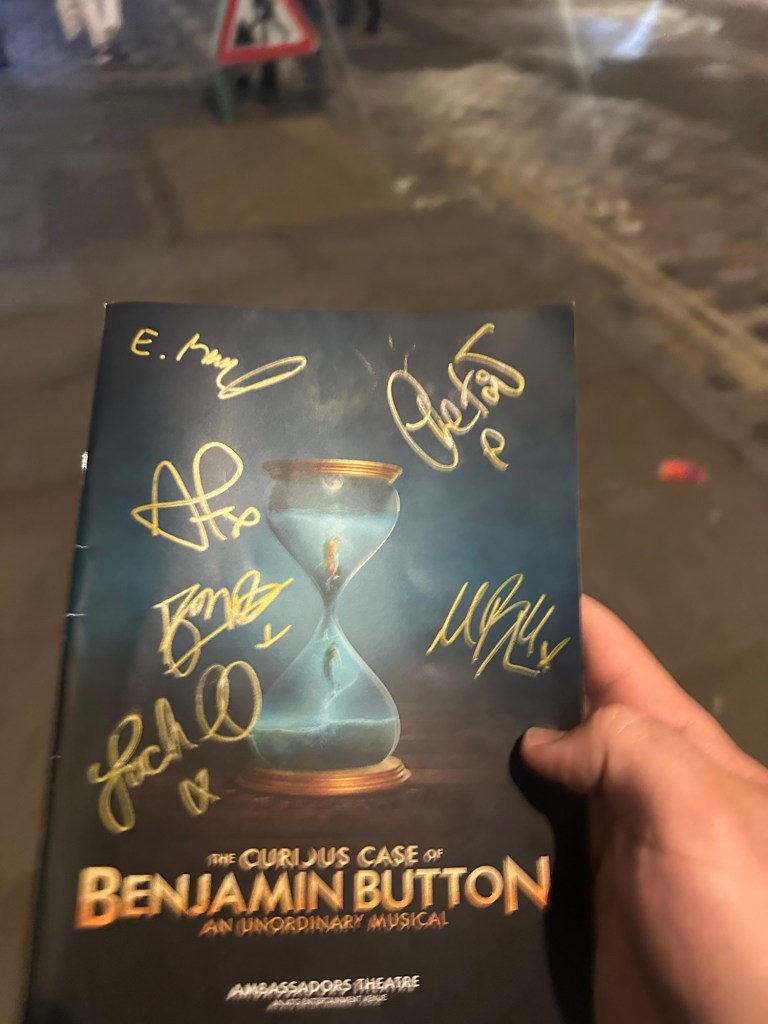
“The Curious Case of Benjamin Button” was originally a novel by F. Scott Fitzgerald. A fun fact for you wonderful readers is that I watched a musical adaptation of his even more famous book, “Great Gatsby,” the day before watching this. I digress. Fitzgerald’s book about a baby born 80 years old who ages backwards was most famously adapted into a film starring Brad Pitt as the titular Benjamin. I have not personally watched this film, but from the clips I’ve seen, they (like the musical) do quite a few things to shift the book into a more… pleasant experience. The reason I hesitate (by way of ellipses) is that I do not truly believe the original book IS unpleasant. I enjoyed reading it when prepping for this trip. However, Fitzgerald treats the concept with a nihilism that makes the main character, as well as every other character, quite unlikable. And very hard to root for. We talked about this both in class in London and back home, and Susan (our wonderful English faculty on the trip), talked about how Fitzgerald very highly valued youth and beauty (especially in women). It shows through his writing that the loss of those through age is quite a negative to him. This voice shows through the main character of the novel. As he grows younger, he begins to despise his own wife for her age.
The musical handles this theming with realism, but also positivity. “Time and tide wait for no man” is a repeated line and sentiment throughout. Although Benjamin’s clock is going backwards, there is still no way to turn back time. There is no resistance to the flow of time. With this change from the book, the characters also view it more positively, allowing for romance and for characters the audience wants to see succeed. This is one of the most important parts of an adaptation of this kind: giving plenty for the audience to follow. With the loss of Fitzgerald’s nihilism and the addition of the advent of a theatrical (and musical) adaption, the production was able to make something uniquely delightful.

While the original story is based in America, this musical is based in Cornwall, England. It is based in a fishing town. With both of these nuggets of information, I feel like one could already imagine the sort of music that this musical features. Cornish folk music is the style used throughout. The production invokes the feel of a coastal tavern where all the inhabitants sing as they drink through the night. Pushing this image, the production has the actors also be the band. Actors narrate and sing as they play.
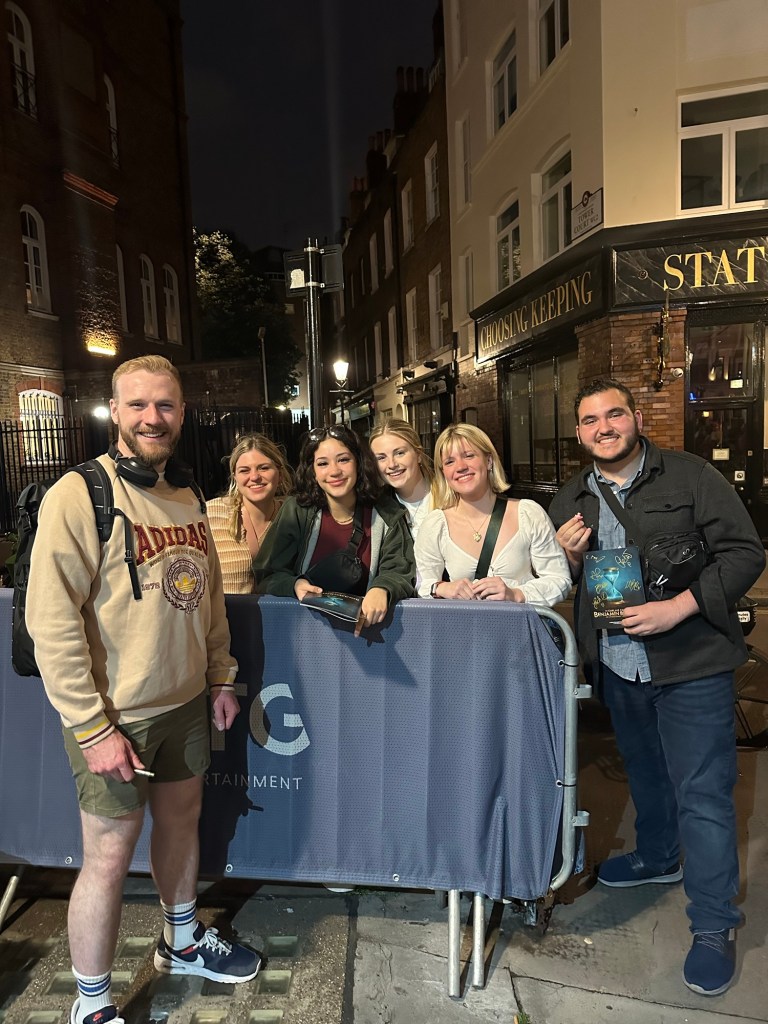
With this method of storytelling, the adaptation has a deeper sense of community. As the narration passes through Benjamin’s life, we see glimpses into the lives of recurring characters. Additionally, as most musicals do, it allows for those wonderful internal thoughts, background information, and such to be fed straight to the audience. Especially with this show, I felt that I cared much more for these characters as they interacted with cast/bandmates and felt I also understood what was driving them at each moment.
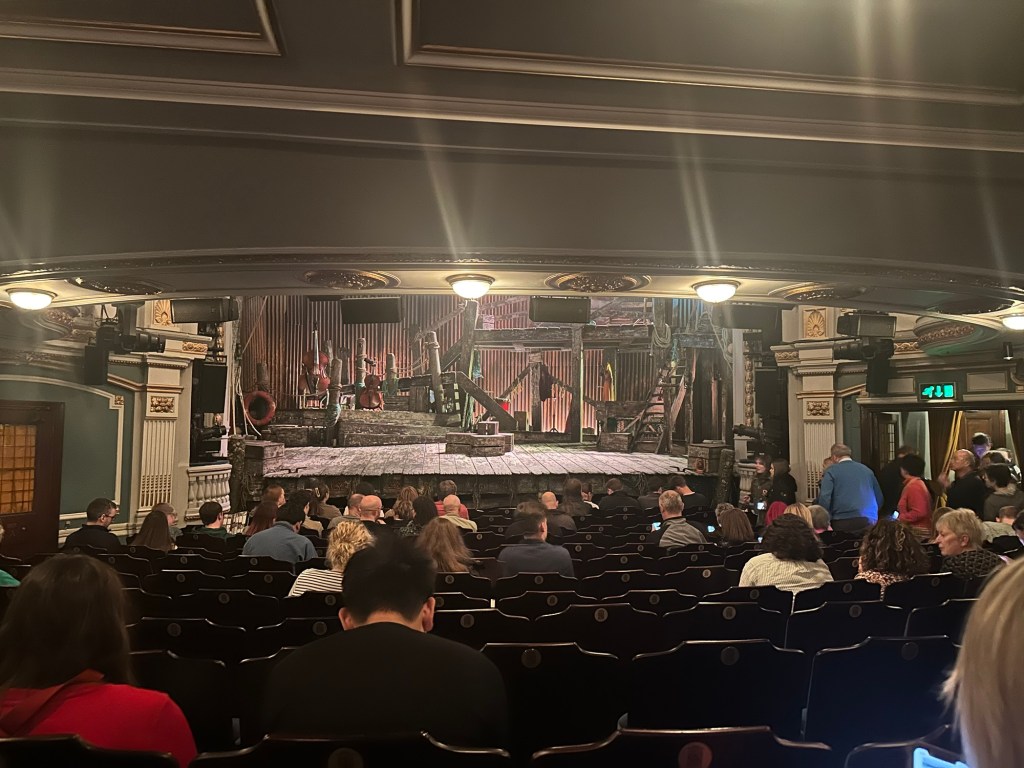
The final thing I’d like to talk about is how dealing with a story like this works as a play. That line about time and tide really speaks to the way the show flowed. Outside of intermission, there were no breaks for clapping or anything as the music (and with it the story) danced along from top to tail. This storytelling as I’ve been talking about has a certain storybook feel that, though extremely different from the original Fitzgerald novel, ends up having some essence of the original. However, the use of dialogue and true conversation between characters really set it apart from the novel. The original book is largely narration with small bits of talk between characters. The musical has constant chatter between characters as well as full scenes (without music) of true dialogue. These really help to ground the play as a story of people. The book seems like a fable, like the characters could never be real. But seeing Benjamin and the other characters in front of me and hearing their joy and pain, whether through song or speech, truly helped connect the themes right to my heart.
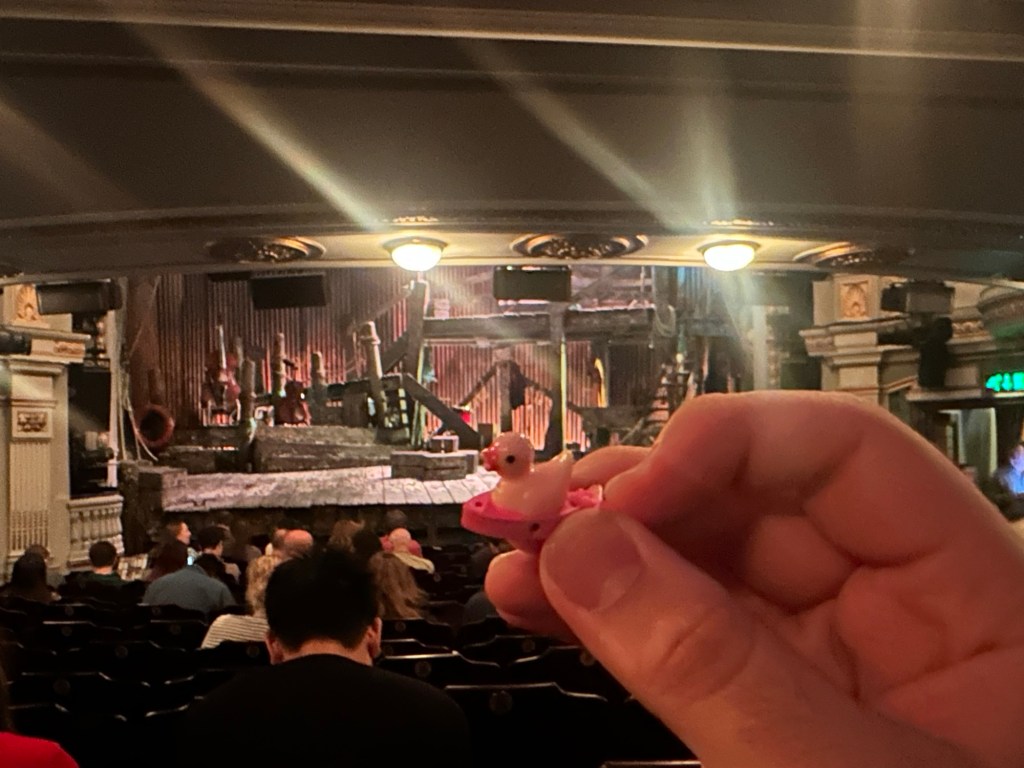
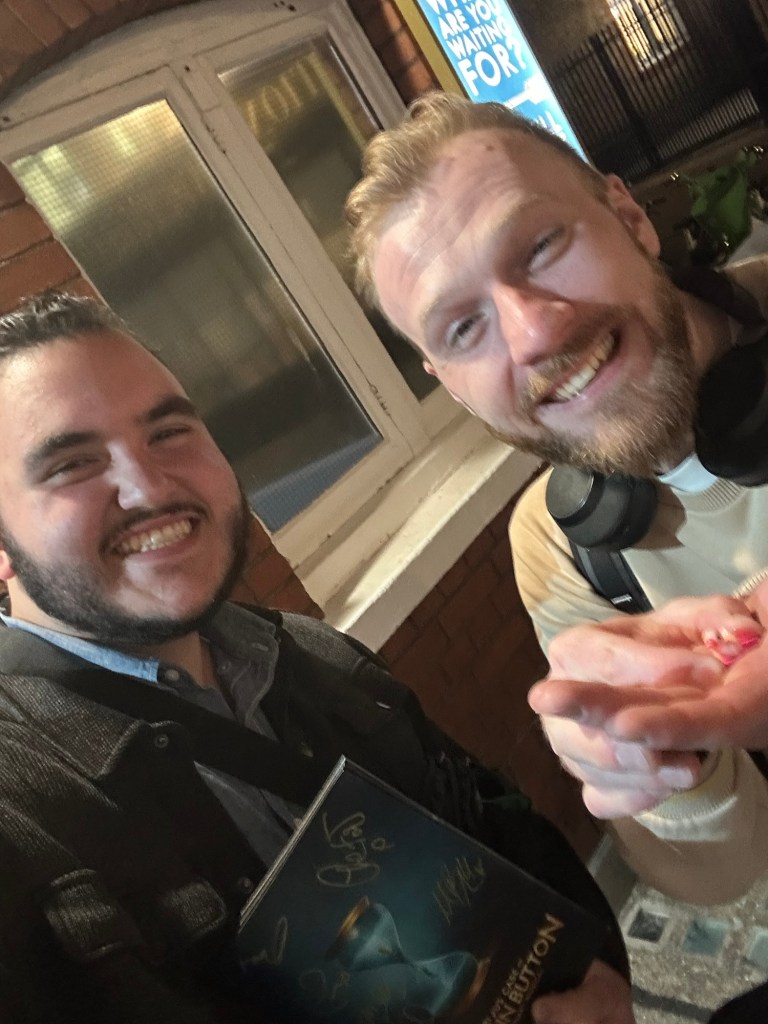
I seriously loved this show so so so so much. So much so that a group of us from this trip are planning on starting a band based off of this production. I still have to figure out what instrument Squirt’ll play. He tells me he plays a mean Glockenspiel. We’ll see about that.
 Theatre in London U of A