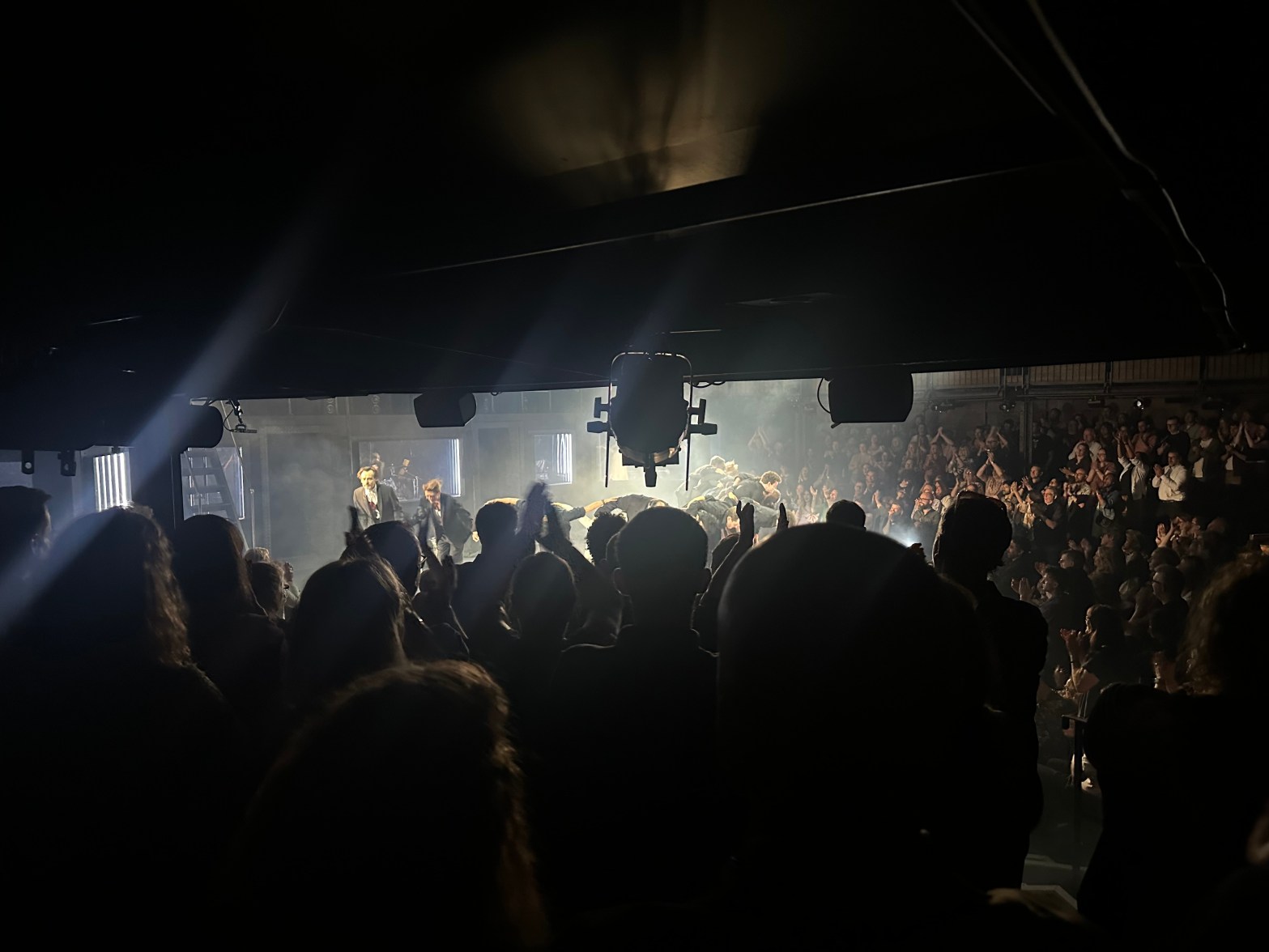
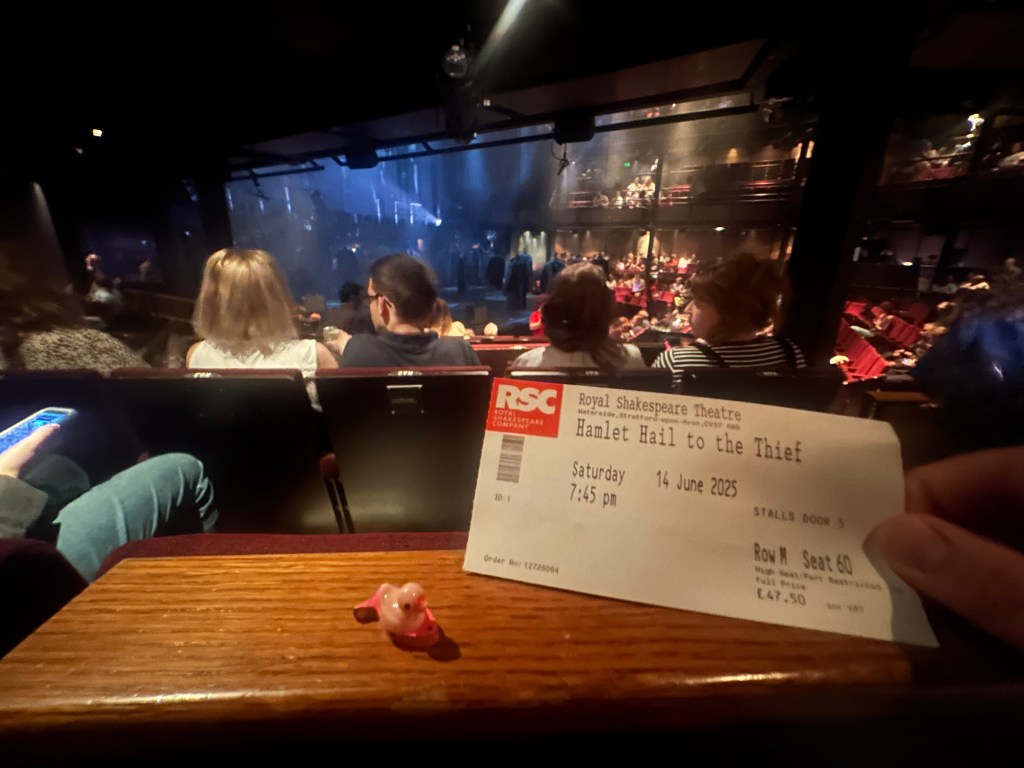
This production makes me feel spoiled. The fact that I am able to see one of my personal favorite Shakespeare plays (and certainly my most studied) mixed with one of my favorite albums from one of my favorite bands is… well frankly absurd. I feel unworthy of such an honor. This is the energy I went into my viewing of this production with. There was only the slightest tempering of expectations, for despite my excitement, the no-interval 1 hour 40 minute run time gave me some pause. The question that came to mind was “how are they gonna do Hamlet in under two hours with a full ALBUM of music?”
The long answer to this I will illuminate over the next few hundred words. The short answer is – bloody brilliantly.
The beginning of the longer answer is, they tell the full story, but only keep specified sections of dialogue intercut with interpretations of scenes and thematic elements through musical and dance interludes. I know, “bloody brilliantly” rolls off the tongue a bit better.
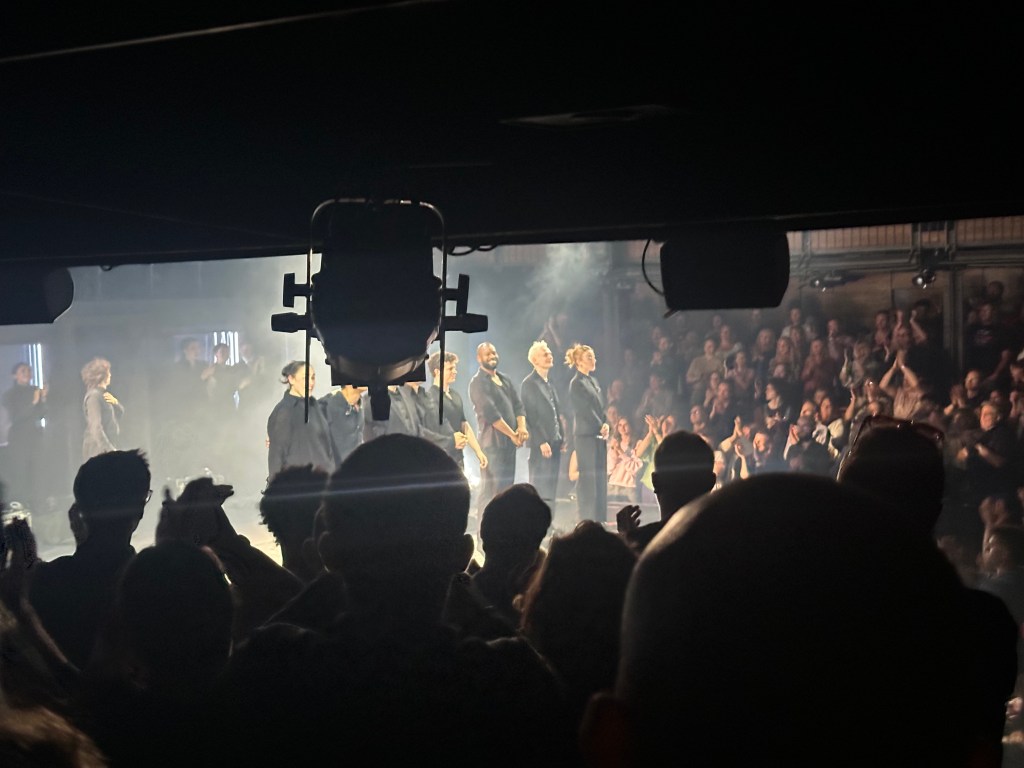
To structure this analysis, I am going to focus on a few songs from the album that I can distinctly link to moments in the show. Thankfully, a few weeks before watching the show and writing this, I listened to the album a few hundred times and even fell asleep to it being looped. Also thankfully, these songs are some of my favorites and also came at very memorable and distinctly important moments.
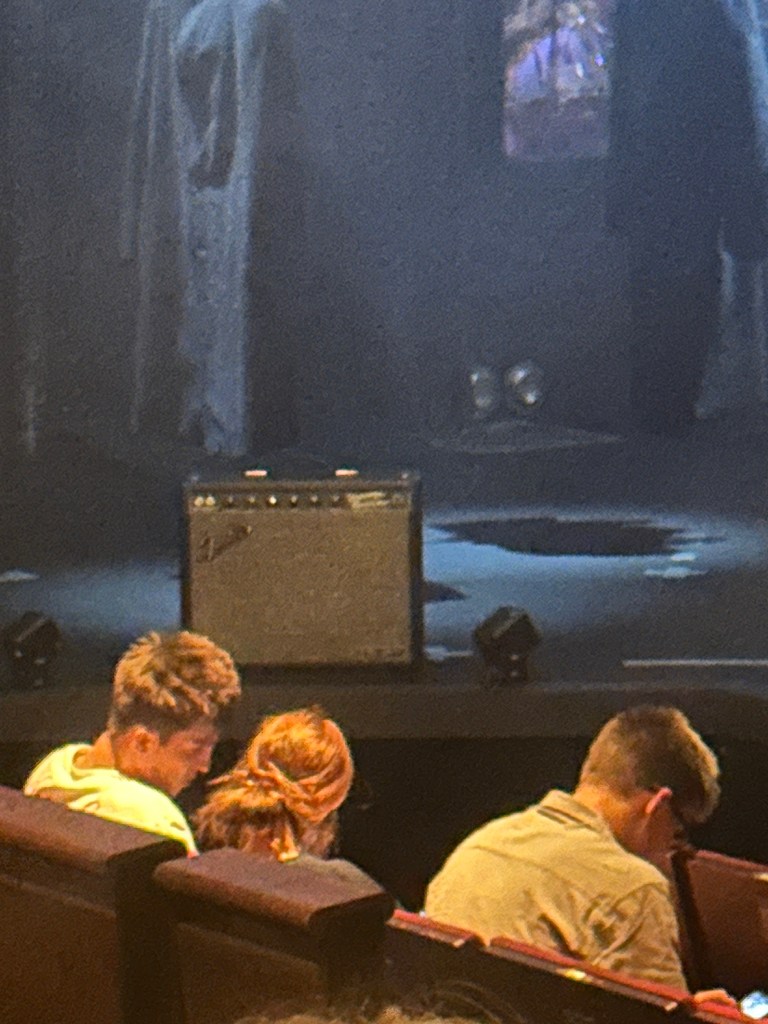
The preshow sets the scene as we see many identical suit jackets hung of wires around the stage. The set behind is metallic and dark, with rails and studs visible. The musical elements are also clear from the get go, speakers are built into the back walls, several fender guitar amps are spread across the stage, and windows in the back show the band – guitars, drums and all – as they play during the show. The show itself starts as the jackets are lifted and a repeating drum silences us chattering theatre-goers. The show properly starts with a shortened version of the opening ghost appearance of the original text of Hamlet. It features only Horatio and Bernarda (this production’s Barnardo) as they meet and are quickly assailed by the ghost of the dead King Hamlet, his entrance announced by guitar amp static. He is represented through projection on the back of the back wall which was not quite visible from my seat because of overhang. What was visible were the reactions of Horatio and Bernarda as their bodies seemed to be pulled and shaken with the ghost’s presence. With this short opening scene, the production introduced the futuristic elements and the sort of (for lack of a better phrase) mind-controlling-puppeteering the characters are often subjected to. The true puppet master often shown is first seen through the first song.
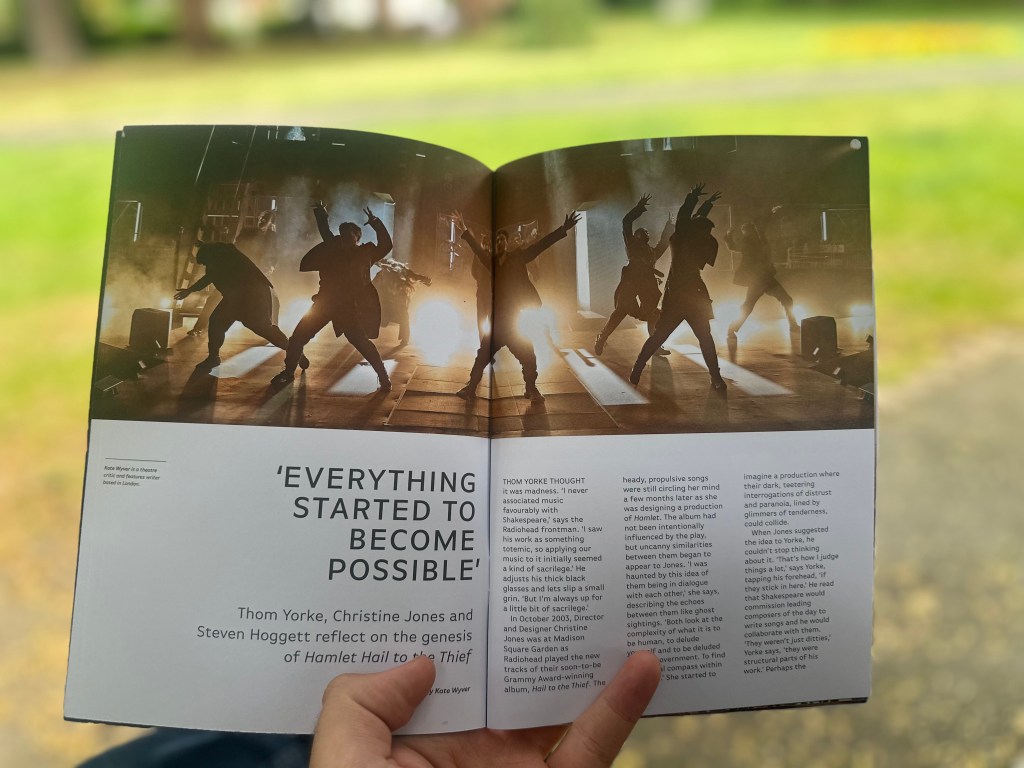
2 + 2 = 5 is the first song of the Hail To the Thief album. Fittingly, it was also the first song used in this production. The title of the song itself is a reference to George Orwell’s novel “1984.” This is one of my personal favorite books and is a definite inspiration for the theming of this production. As is clear by many of the production photos (and the general involvement of Radiohead), this production places the story of Hamlet in a futuristic and dystopian Denmark. This dystopia is ruled by Hamlet’s Uncle Claudius who, in a sense, controls the other characters. It’s represented in this song through all the characters joining in a dance. This happens at the climax of the song (marked by the repeated lyric “paying attention”). The lyrics of the song also match this idea, of the public just going along with the ideas told to them (2+2 equaling 5) and the idea that once the lies are revealed, one may still “try to sing along – But I get it all wrong.”
One of the things this production does wonderfully is showing Hamlet and Ophelia’s steady changing. They, in a sense, see past the lies of those above – Hamlet from his father’s ghost and Ophelia from Hamlet’s influence and the grief of losing her own father. A way they wonderfully showed the parallels between them is by having Hamlet do the “To be or not to be” monologue at Ophelia, pulling her away from the system. Then, when Ophelia takes her own life (a scene not seen in the original text) she repeats Hamlet’s words, as best as her memory allows, pushing against the system while succumbing to the madness inherent from breaking away.
The production also beautifully uses the song “We Suck Young Blood” twice in two very different connotations. This song provides a great example of how music can be used to illuminate the text and the meaning behind it. This song is first used by Claudius to control the rest of the cast. In the first bit of the song, there is a prominent clap heard. In the show, Claudius and the rest of the characters join in this clap. The song’s lyrics has the “narrator” represent those in control as they ask how exhausted and “torn at the seams” those under them are. Claudius benefits from characters like Rosencrantz and Guildenstern stressing over him and Gertrudes every command as they sit above. They profit from their “young blood.”
The second time the song is used is in a moment of relative silence after Ophelia drowns herself. This was one of the meanings that struck me even before analysis. With my knowledge of the music and the play, I immediately saw what idea they were invoking. Ophelia here is a victim of Claudius’s rain, she is one of the “flea-bitten, moth eaten” who suffers and whose “young blood” is sacrificed for no reason. She is a victim of this, though she does escape it all in her death.

Those are my thoughts and some details on the production and the combination of this play and album. I very much enjoyed the production and have more than a thousand more things to say about everything they did with the source materials. I hope in the future, Squirt and I will both have the chance to experience this sort of art, that mixes the classic and the new and makes something uniquely wonderful.
 Theatre in London U of A