Strolling through the gorgeous and historic church, Westminster abbey was a glorious sight to see. While making our way through the vast interior, I came across a few burials and monuments dedicated to people whom are worth writing and learning about.
- Stephen Hawking
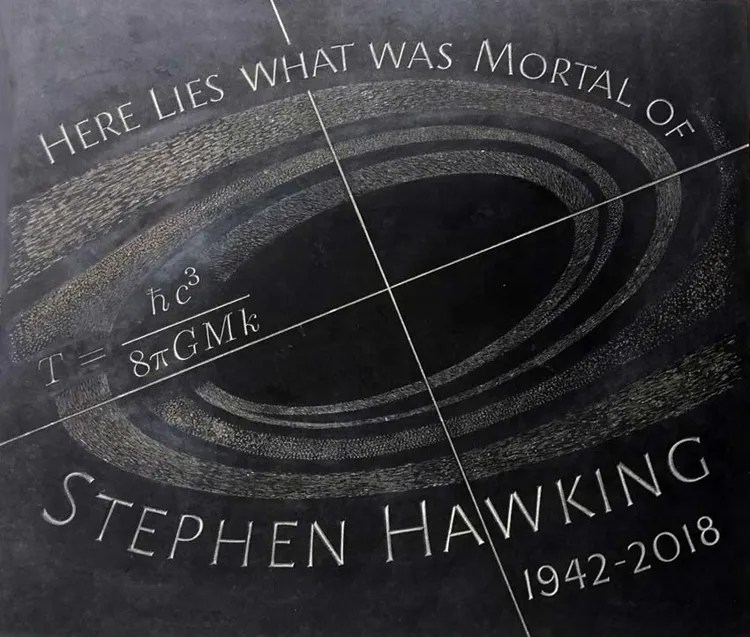
Between the graves of celebrated scientists, Charles Darwin and Isaac Newton, the ashes of Stephen Hawking were buried to honor him as one of Britain’s greatest scientists. The grave stone’s inscription is an English translation of a phrase which appears in Latin on Newton’s gravestone: Here lies what was mortal of Stephen Hawking. I found that this phrase serves as a lovely testament to his life work and is meant to represent the notion of his soul being other worldly. His grave stone depicts an engraved image of a series of rings, surrounding a darker central ellipse. The ten characters of Hawking’s equation express his idea that black holes in the universe are not entirely black but emit a glow, that would become known as Hawking radiation.
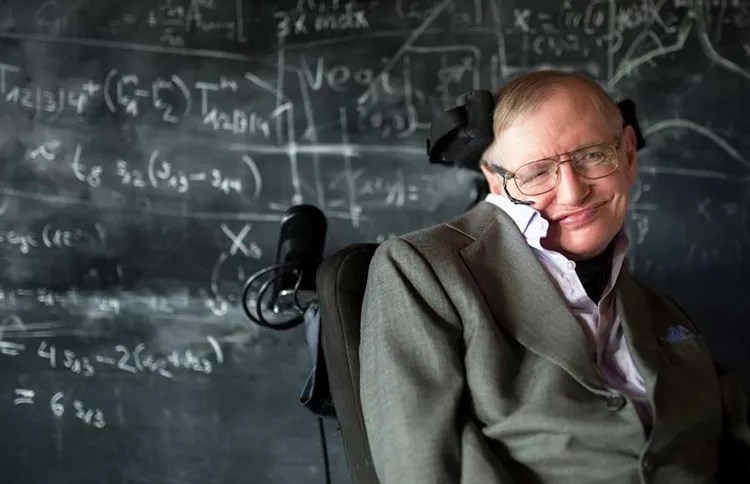
Stephen Hawking attended Oxford and Cambridge. In his 20s he was diagnosed with motor neurone disease and given only two years to live. He married Jane Wilde and their children were Robert, Lucy and Timothy. “Hawking became a research fellow at Cambridge and won the Adams Prize and began his work on black holes. He was elected to the Royal Society when he was just 32, and in 1979 became Lucasian Professor of Mathematics at Cambridge University, a post also held by Newton. His best known work is A brief history of time. He set up the Stephen Hawking Foundation to help continue his scientific work and research into the universe and motor neurone disease. He died on 14th March 2018 aged 76.”
Over his entire profound career, Hawking reshaped scientific thinking of the universe, especially black holes and their illusive properties. His discoveries, such as Hawking radiation, unified concepts from multiple fields including quantum mechanics, cosmology, thermodynamics and informatics.
“The intellectual legacy Hawking leaves with us is eclipsed only by the imagination and wonder he inspired throughout his life,” said Michael Moloney, CEO of the American Institute of Physics. “Even his earliest theoretical frameworks remain at the core of discoveries in cosmology, mathematics and physics being made today. Though we have lost a truly remarkable mind, and he will be missed greatly, Hawking’s genius will remain with us through the science he revealed and the public he inspired.”
He inspired millions throughout the world to go after their dreams and search for the answers to the questions that itched at them. No matter his physical challenges, he strived to answer the big questions, he refused to give up on his life and continued to thrive in his scientific journey.
2. Charles Dickens
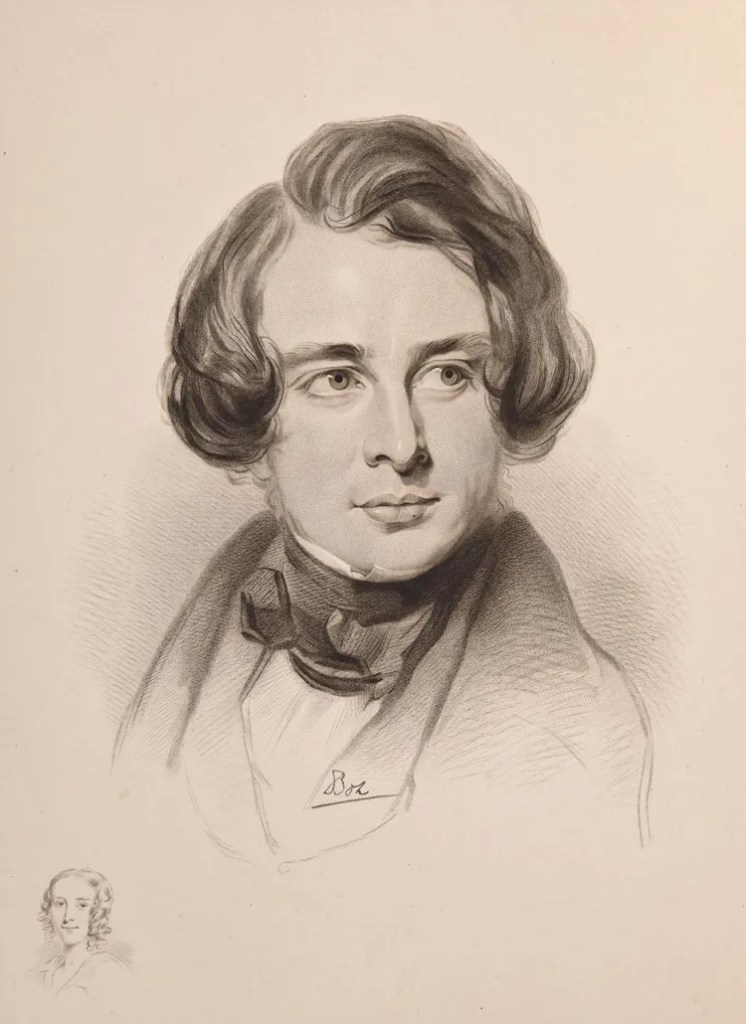
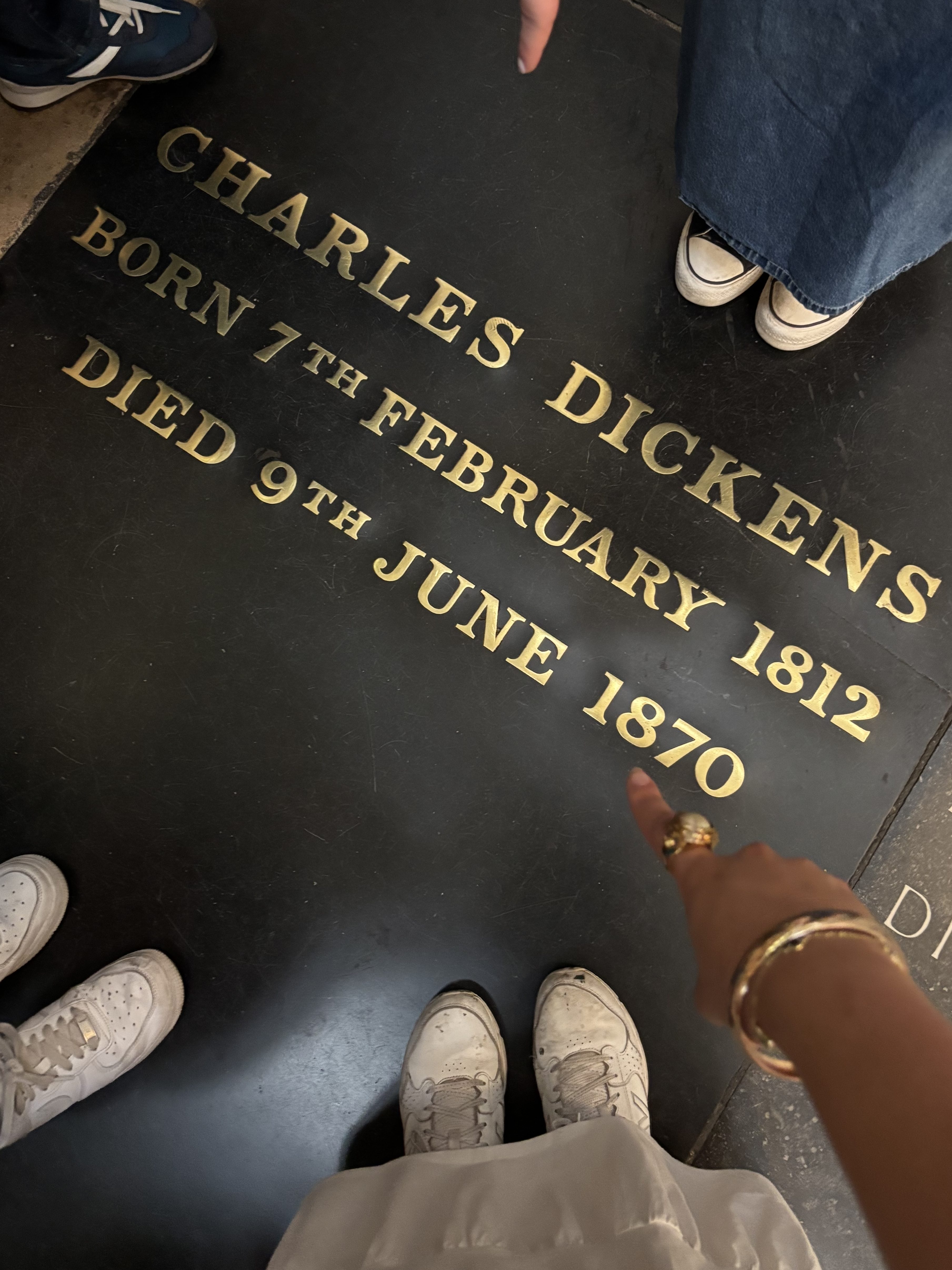
Charles Dickens, the celebrated novelist took great pride in his accomplishments, having written in his will, “‘that my name be inscribed in plain English letters on my tomb… I rest my claims to the remembrance of my country upon my published works…”’ His grave is located in the Poet’s Corner in Westminster Abbey. Charles grew up with seven siblings. At a very young age he had to pause his education to work in a shoe-polish (blacking) factory when his father was arrested for debt in 1824. “Later he became a legal clerk and then a reporter in the House of Commons. His first writings appeared under the signature his brothers pet name, ’Boz.’ The Pickwick Papers was his first major success and Oliver Twist and Nicholas Nickleby soon followed.”
Charles Dickens was more than just a talented writer, he was a social critic. He wasn’t afraid to comment on higher powers and their unjust treatment towards the lower class. The saw flaws within the system’s infrastructure and he unapologetically pointed them out repeatedly. In early 19th century Britain his voice in fact helped inspire reforms and charitable organizations take place. “His works were widely read by the rich and the poor and what he wrote and said had impact on society. Dickens presented the reader with the humanity of the ill, the deformed and the disabled. One cannot but be empathetic to characters such as Tiny Tim. These people were not to be shunned but to be accepted and helped” (National Library of Medicine).
“He was a keen observer and his character descriptions were so accurate that among his many ‘medical’ achievements he described many of the clinical features of sleep breathing disorders at least 120 years before medical science started to recognize such sleep disorders… He was instrumental in facilitating the development of homeless shelters for women, the first pediatric hospital in the United Kingdom, and the development of orthopedics” (National Library of Medicine).
Dickens was an amazing figure that contributed not only to classic American literature but to the advancements of the modern world.
3. Ninette de Valois, Frederick Ashton, Constant Lambert, & Margot Fonteyn
The fine gold lettering of the memorial stone caught my eye. At first, I assumed that the sentiment was dedicated to a singular person with a very long name. But upon further investigation, I came to find out that the memorial is dedicated to the first four founders of The Royal Ballet. The fine, spacial design of the letters themselves were meant to represent movement to commemorate the founder’s works.
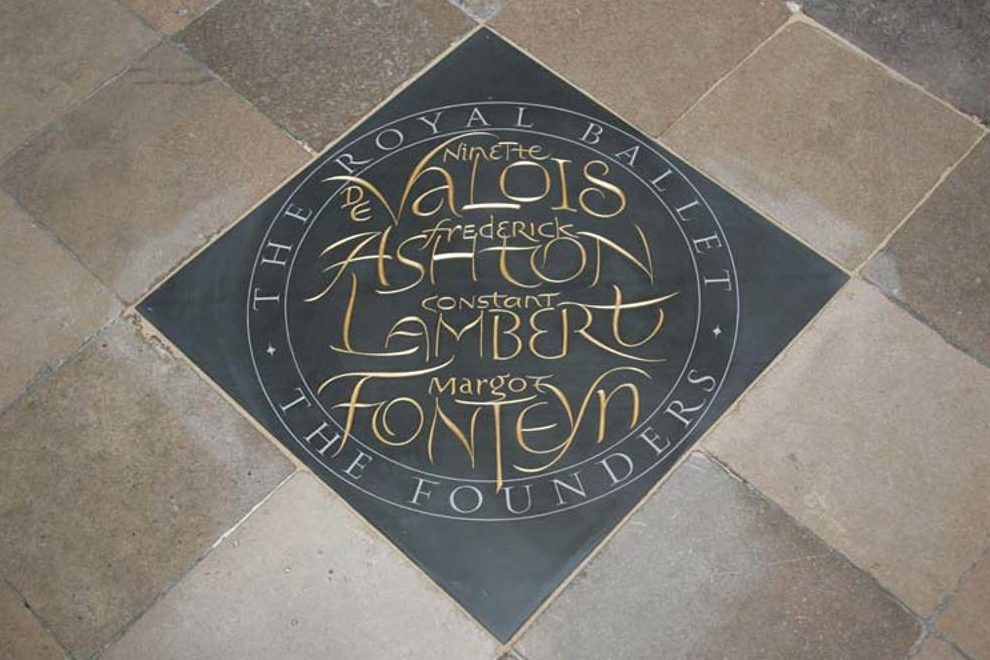
Dame Ninette de Valois was a professional dancer and choreographer who went on many tours during the Second World War and became director of the Royal Ballet School, being made a Dame of the British Empire in 1951. She also ran her own private school in several theaters while continuing her dance career. Sir Frederick Ashton was also a dancer and choreographer whom faced a trouble some coming of age marked with his father’s suicide. However, he was able to preserver the tragedy and become an extremely accomplished dancer and individual. After serving in the Royal Air Force intelligence department during the Second World War he created ballets for Margot Fonteyn (coming up soon) and many other works. In 1962 he was knighted.
Leonard Constant Lambert was a musical composer and conductor. The Russian Diaghilev ballet company commissioned a ballet from him and he later composed songs, piano and orchestral works. While touring in Holland he narrowly escaped capture by the Nazis when they invaded. Dame Margot Fonteyn was named to be the greatest ballerina of her generation. She was made a Dame in 1956. Her exceptional talent and dedication quickly propelled her to the prestigious role of prima ballerina – a position she held for an unprecedented 23 years.
Although highly successful, Ms. Fonteyn faced severe strife in 1964. Fonteyn’s husband, Panamanian politician Roberto Arias, was shot during an assassination attempt and became a quadriplegic (paralyzed of all four limbs), requiring constant care for the remainder of his life. In 1979, she was announced to be a supreme dancer of the utmost category and talent at England’s Royal Ballet company. She retired at age 60 to Panama. Unfortunately, she acquired ovarian cancer but her days were well spent doing what she pleased. She took time to write books, raise cattle, and care for her husband.
These 4 founders were remarkable people who’s work and dedication set an example for each generation to come next. They remind me to put my all in my passions, for if I am able to do that, I will always take pride in what I do and be accomplished no matter what.
 Theatre in London U of A