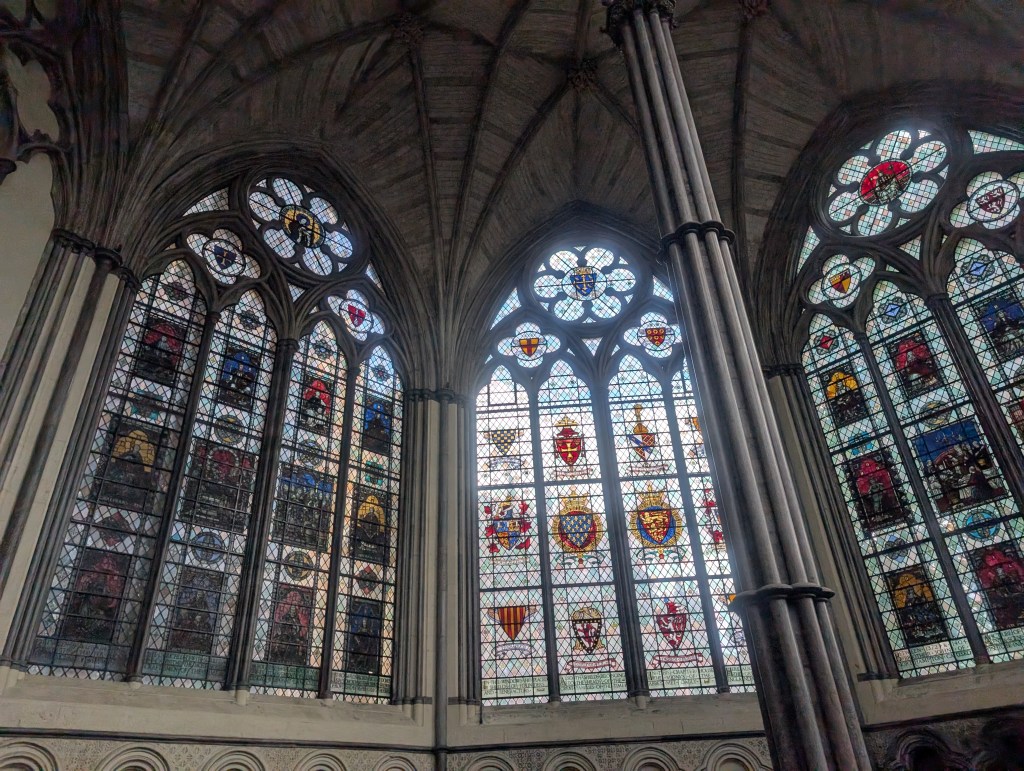
Our visit to Westminster Abbey was fascinating. It would have been worth it just to see Britain’s oldest door, but the abbey held so much more. One of those things was the people, specifically the many historical figures interred in the abbey. I walked by the coffins of so many monarchs, but it wasn’t just royalty there. Many of the people were in an area called the Poet’s Corner, where, as the name suggests, poets and other creative figures important to British history and culture are laid to rest or at least memorialized. The amounts of people I recognized honestly astounded me.
One of those figures was Laurence Olivier, a person I had already heard much about during my time in London. It is impossible to acknowledge British theatre without talking about him. He was a massive presence on the English stage during the twentieth century, most famously for his Shakespearean roles. He also founded the National Theatre, one of London’s largest theatres, and an extremely influential institution in the world of theatre. He also had an extensive film career, including works such as Wuthering Heights and many film adaptations of plays.
Another figure relevant to theatre is memorialized here, although one more infamous. This would be T.S. Eliot, whose book Old Possum’s Book of Practical Cats inspired Andrew Lloyd Webbers Cats, which unfortunately led to a 2019 movie that we would all be better off forgetting. Unfortunately, Cats is not the worst part of T.S. Eliot. While he may be a seminal figure in English poetry, many of his works featured antisemitic themes. Despite this there can be no doubt about his influence, and so it makes sense to me that, while not being buried in Westminster Abbey, he is remembered among other writers.
One of these writers actually buried there, even more influential than Eliot, is Charles Dickens, probably most famously known for A Christmas Carol. Many of his works, just like A Christmas Carol, have been adapted for the stage, including Oliver Twist, which I have seen many advertisements for here in London. Interestingly, through my research I learned that Dickens did not ask to be buried at Westminster Abbey and instead wanted to be laid to rest at Rochester Cathedral “in an inexpensive, unostentatious, and strictly private manner”. Obviously, his wish was not fulfilled, as to be honest, I can hardly imagine a more ostentatious and less private resting place than Westminster Abbey.
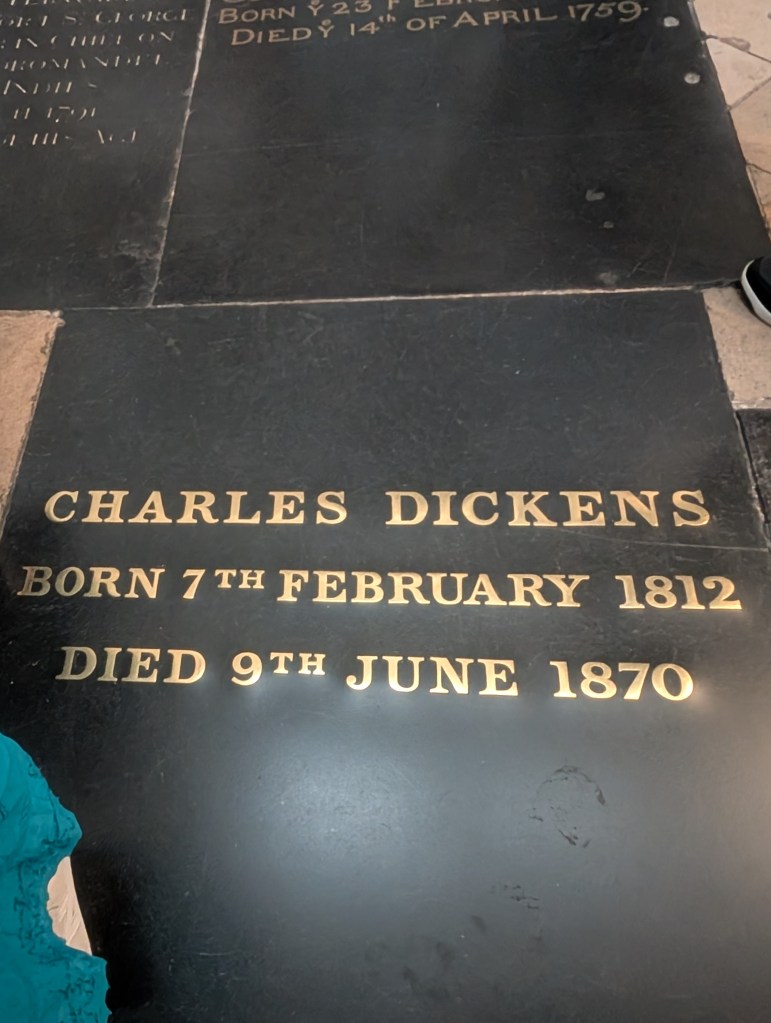
There were so many other writers buried or memorialized here that I recognized. It was so intriguing to me to look at the final resting place of people whose words I have read and even performed, along with countless others I didn’t recognize. Despite being many being forever remembered there, for every Dickens or Eliot, there was another author or actor largely forgotten to most. At one point they were famous and influential enough to be laid to rest among kings and queens yet fell into obscurity. Who else buried there that I recognized will be more obscure to future generations? An uncomfortable question that I couldn’t help but ask myself.
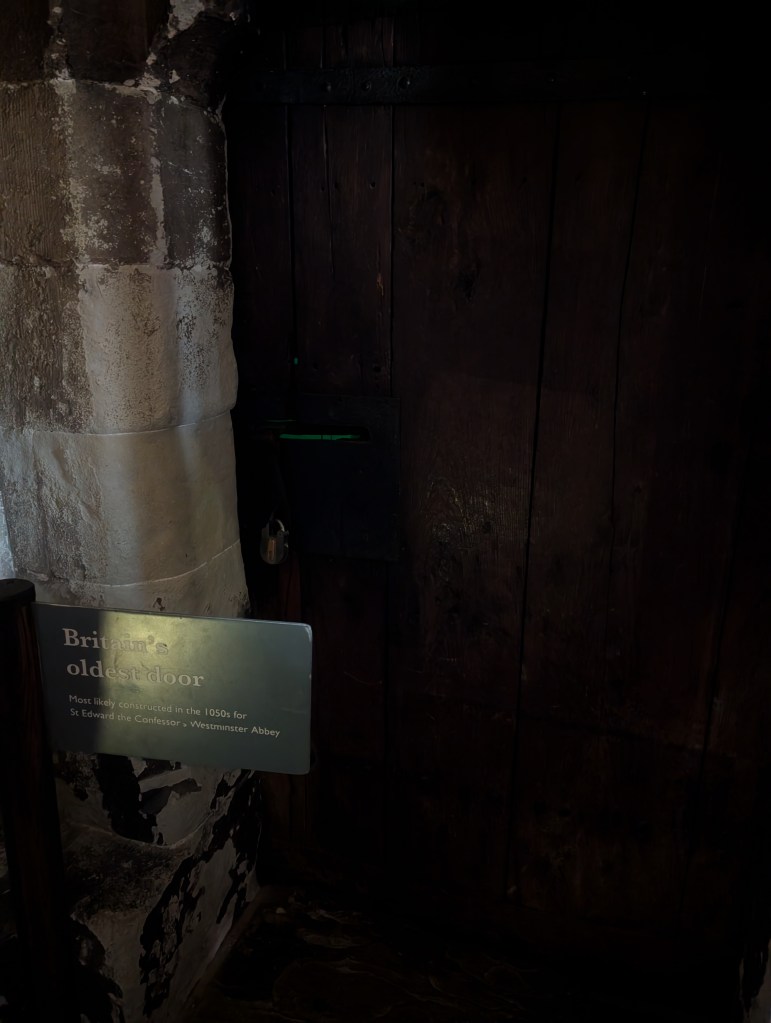
There is so much more I could write about Westminster Abbey, but I will finish this blog post talking about what I started it with, Britain’s oldest door. Dating back almost a thousand years, it still stands strong, and I think there’s something inspiring about that, and I hope it gets to stand for a thousand years more. -Jack Duncan
 Theatre in London U of A