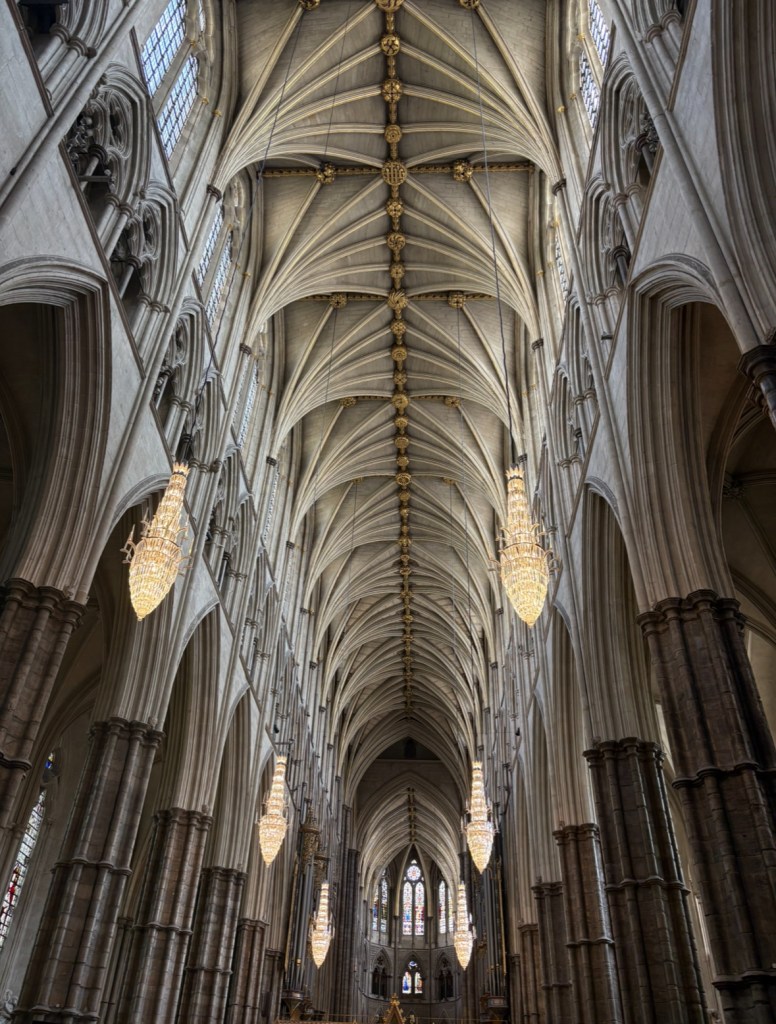
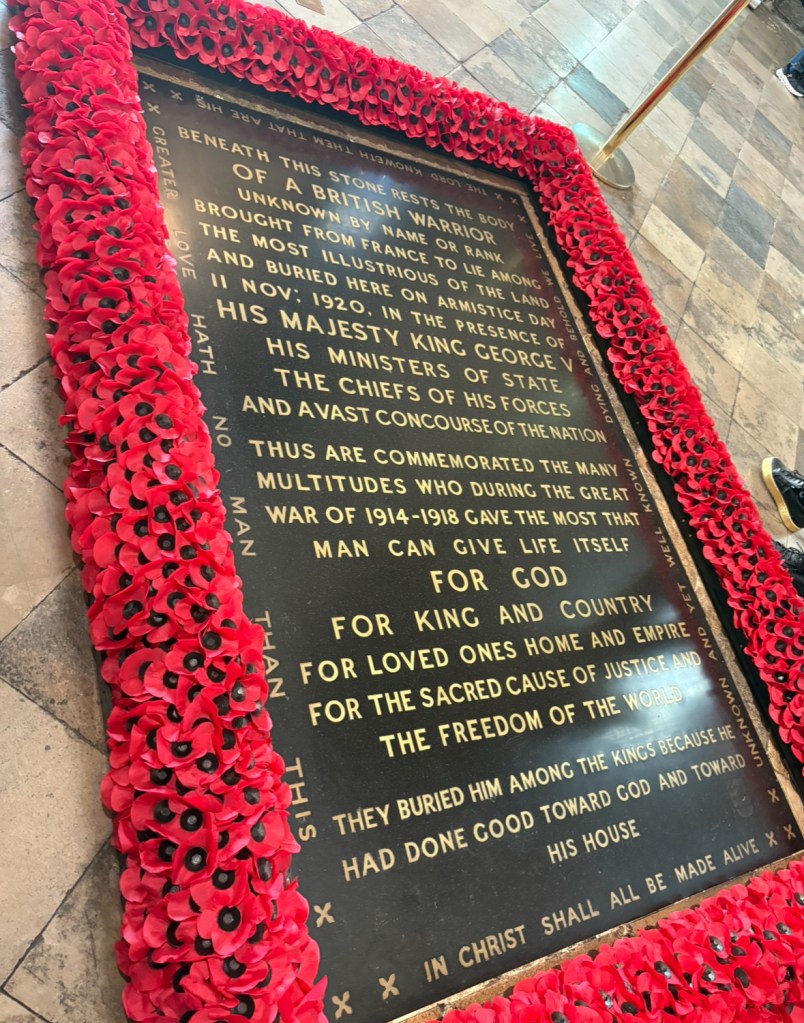
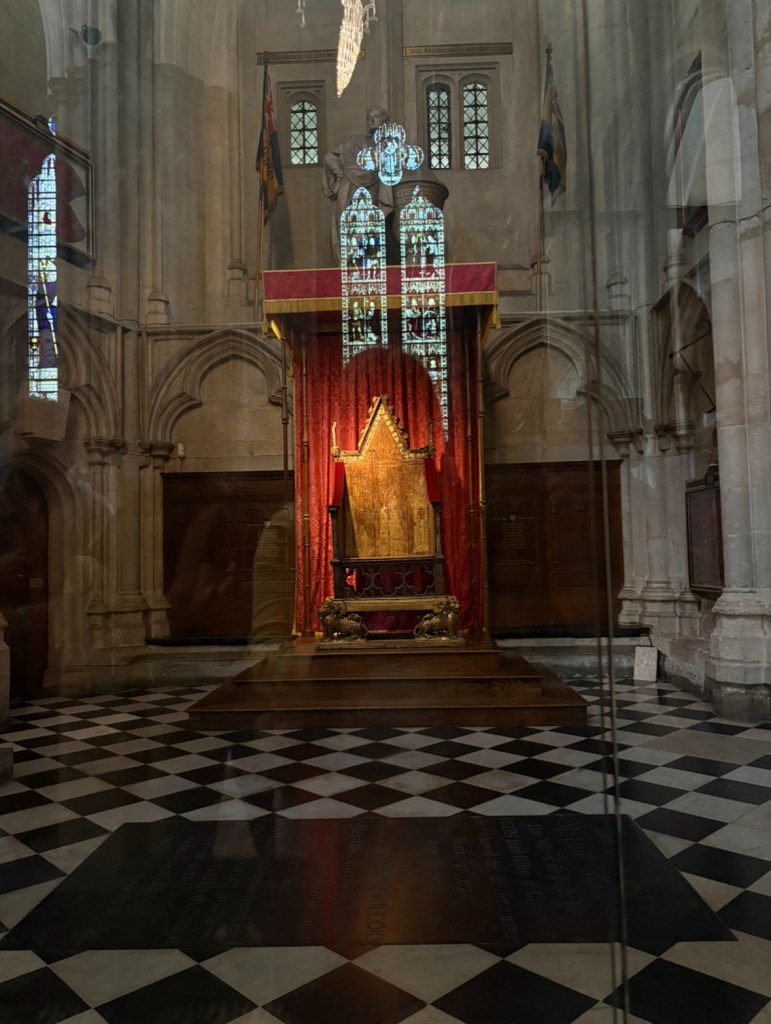
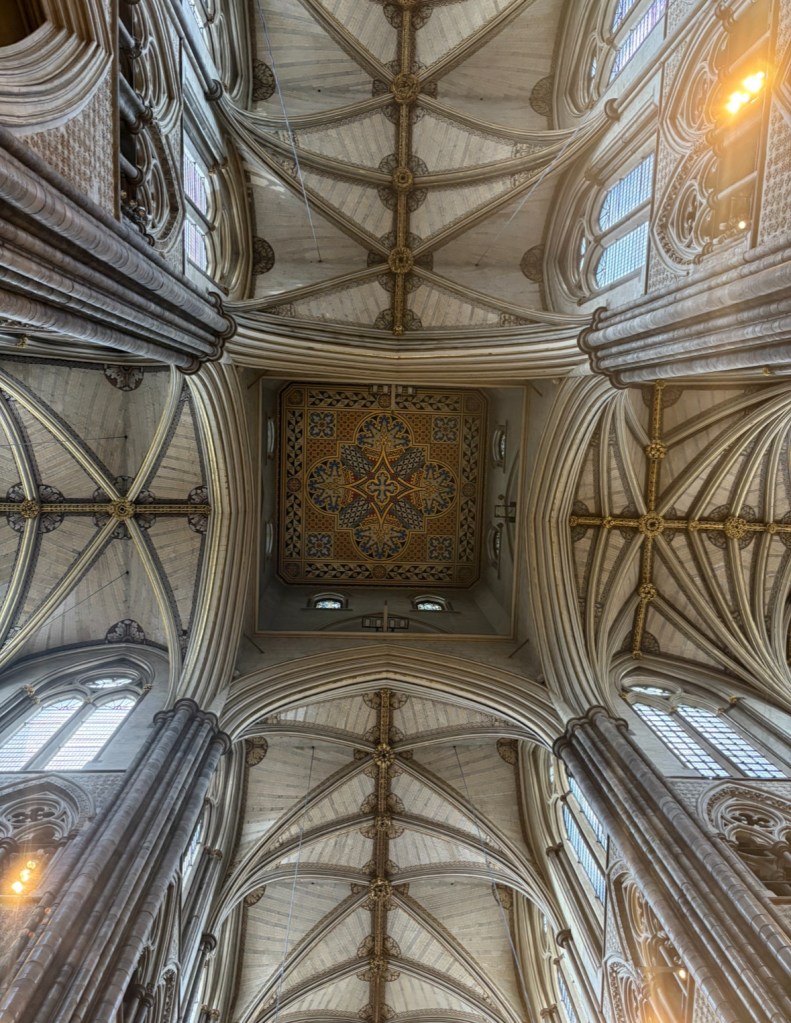
Westminster Abbey was by far probably one of the most interesting places we’ve been on this trip so far. Anything that old is bound to be interesting, and most everything in London is around that old, give or take. When we first got there we got to learn a lot about the Abbey while surrounded by graves from as early as the 1100’s. We made our way through current living quarters, till we entered the nave itself. Here we got to see the coronation chair and, right by the door way, the Tomb of the Unknown Warrior. This is their version of the Tomb of the Unknown Soldier (which you probably could’ve gathered), and if you know anything about me at all it shouldn’t surprise you that seeing this part made me cry a good deal.
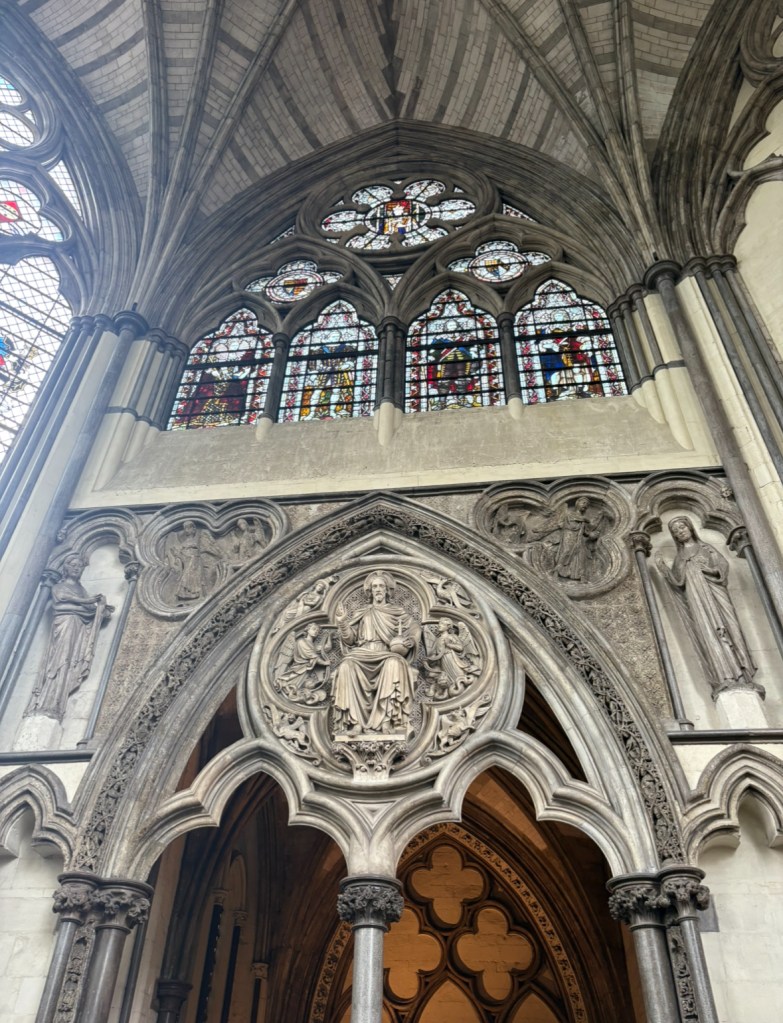
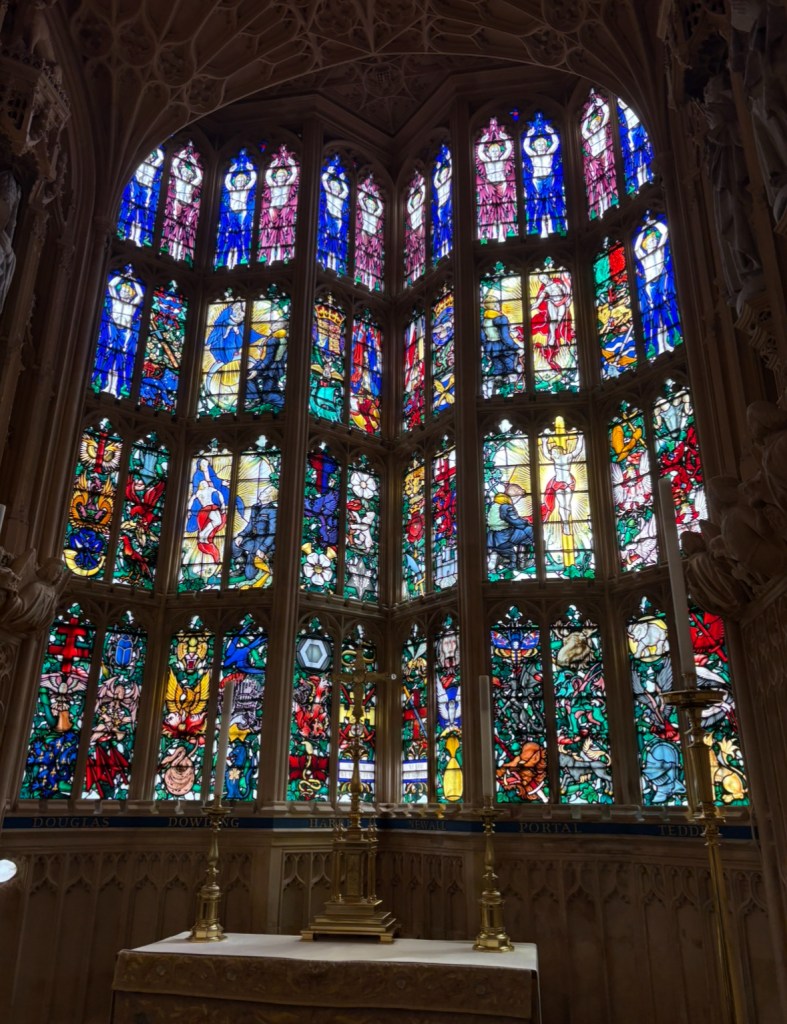
Even with all my weeping about the Unknown Warrior, we carried on through the nave. We saw the burial sights of monarchs like Edward the Confessor, Mary I and Elizabeth I, the “boys in the tower” (if it is really them), and Mary Queen of Scots. There are plenty of little chapels, my favorite of which was the Royal Air Force Chapel, which once again should surprise no one.
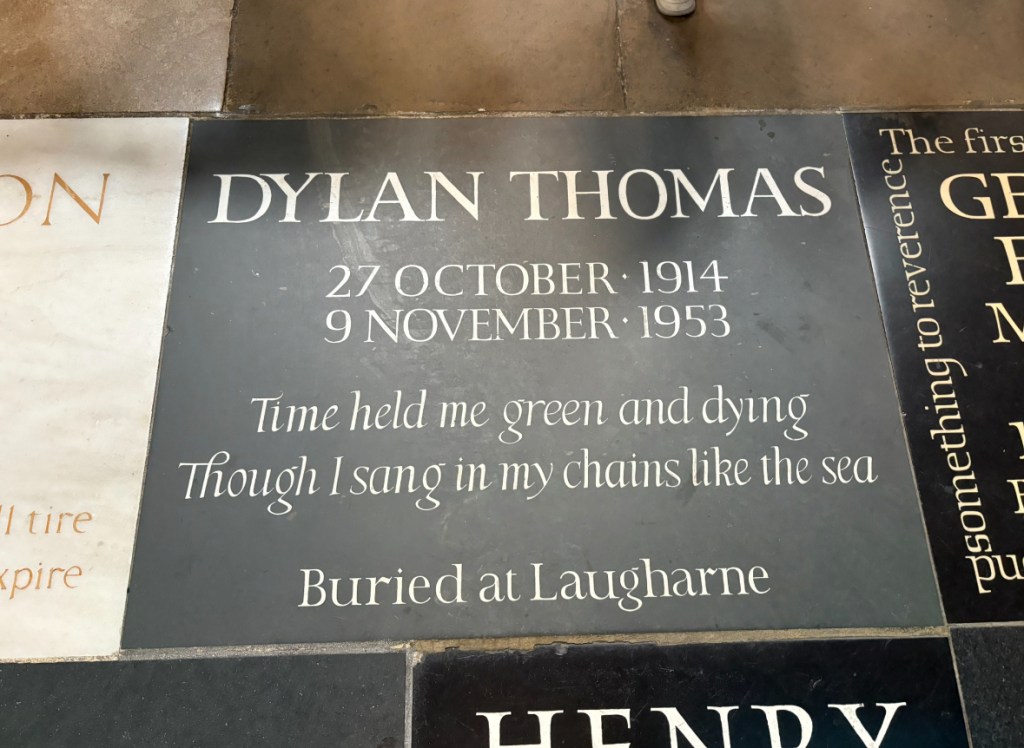
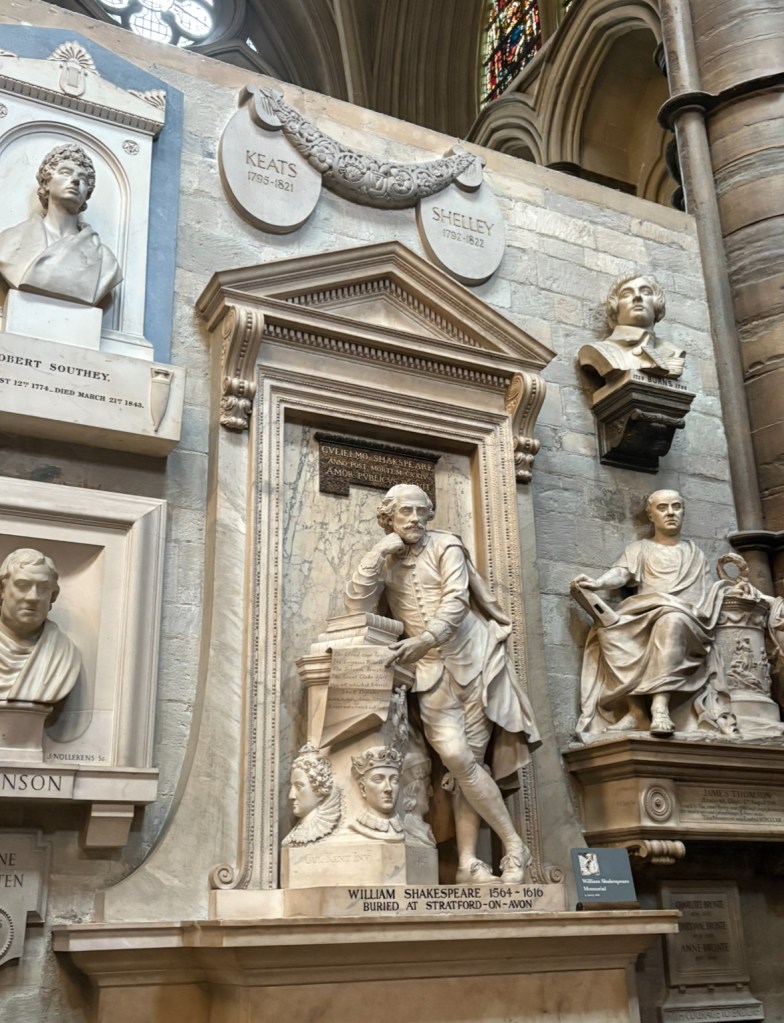
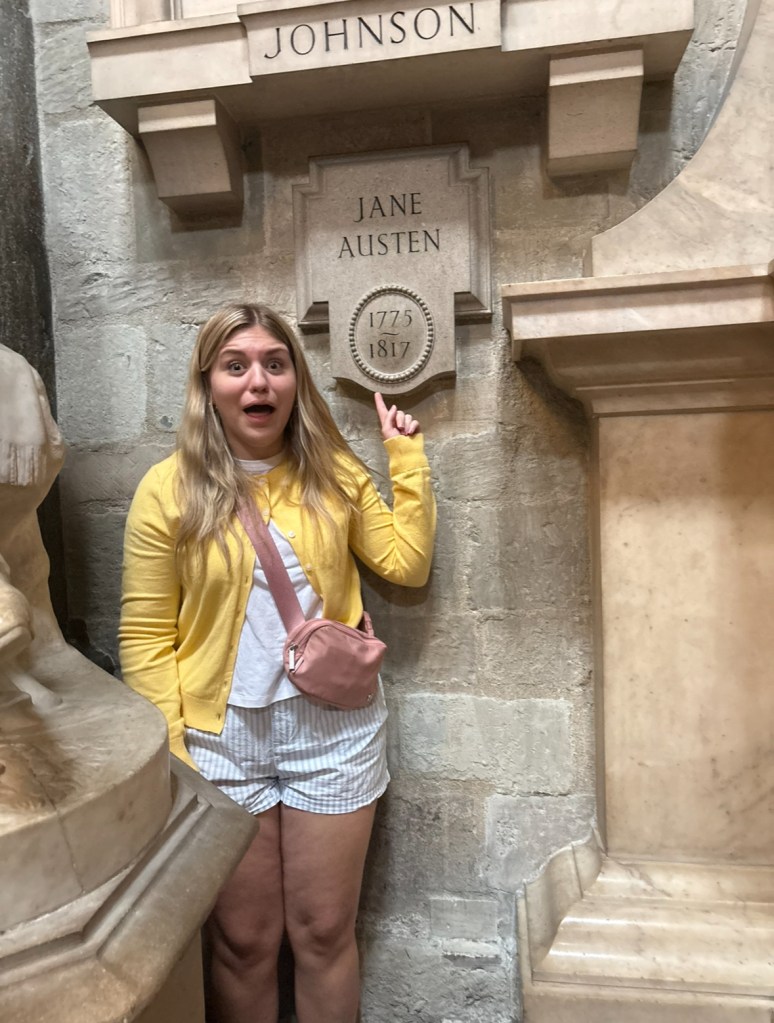
We ended our tour in Poets Corner, which is filled with either dedications or actual graves of influential British writers. My favorites who had dedications in Poets Corner were Jane Austen (duh), Dylan Thomas, and John Keats.
Jane Austen was born on the 16th of December, 1775 to George and Cassandra Austen. She grew up in an open-minded home, where complex discussions were regularly encouraged. She began writing at an early age, before eventually anonymously publishing Sense and Sensibility in 1811. She would follow this with 1813. She would die only four years later on the 18th of July, 1817. After her death, most of her works were posthumously published.
Dylan Thomas was born on the 27th of October 1914 in Swansea, Wales. His parents were Florence Hannah and David John. Thomas. He was educated in Wales before moving away at 17 to become a news paper reporter. When this didn’t work out, he moved back in with his parents. It was during this time that he wrote half of the poems he would publish in his life. He wrote propaganda films for the UK during World War Two in order to support his family. Once he became the most famous poet in the world, he started doing grueling literary tours to support them. It was during one of these tours that he died on the 9th of November, 1953.
John Keats was born on the 31st of October, 1795. Both of his parents died when he was relatively young. This forced him to live the school he was attending to intern to be a doctor. In 1816, he visited a friend who showed him Chapman’s translation of The Odyssey and The Illiad, which spurred him to start writing. He would quit the medical practice at age 21, opting to become a full time writer instead. Sadly, only four years later in 1821, Keats would die believing he was complete failure. Jokes on him, because now he has a plaque in Westminster Abbey!
 Theatre in London U of A