Westminster Abbey is a key piece of European religious history. While the Abbey has played many important roles in the church, arguably what it is most famous for is being the final resting place for many well renowned artists, writers, and royalty.
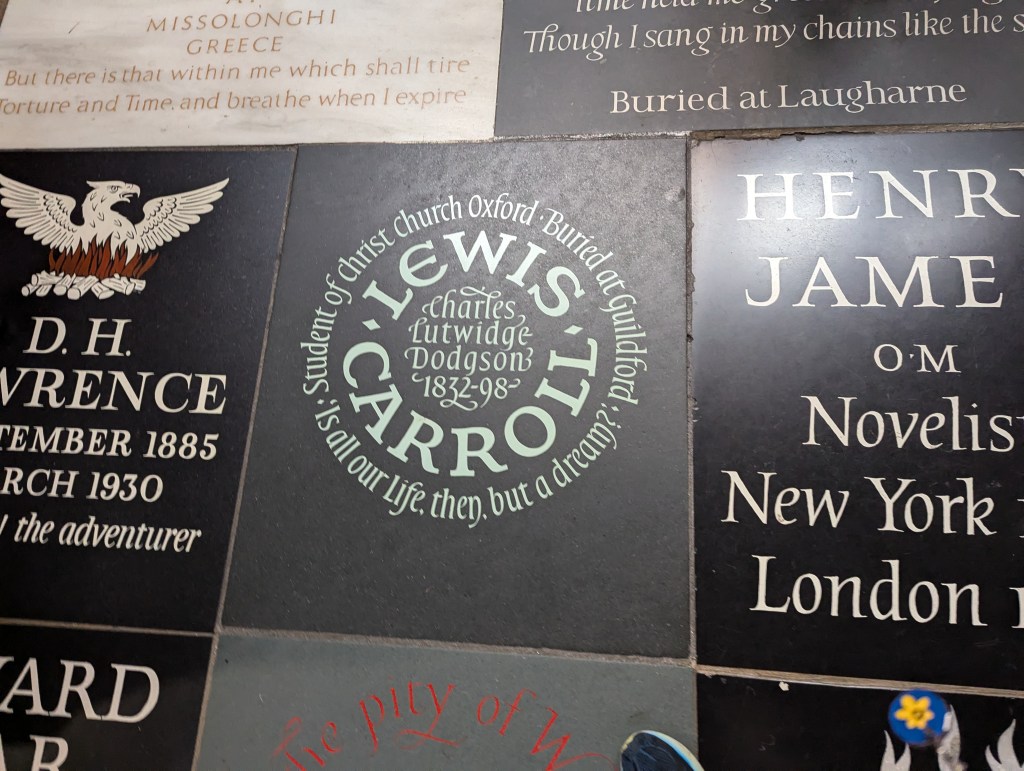
While looking through the plaques commemorating these dead historical figures the one that stood out to me immediately was Lewis Carroll, most known for writing Alice in Wonderland and Through the Looking Glass. His real name was apparently Charles Lutwidge Dodgson and was a highly religious man, which may be part of the reason he was given a plaque at Westminster aside from his renown. Upon doing further research into him I discovered that major details of his personal life, specifically relating to the Alice books, are still wrapped in mystery. The biggest detail of his life that is still greatly debated is his relationship to the girl who allegedly inspired the alice in the books. Charles was friends with the family of the dean of Oxford college, being close with him, his wife, and his children, one of them being Alice. This Alice is also the first person he told the story of Alice in Wonderland to verbally, and encouraged him to write it down. Despite having the same name, Charles refused that she was the inspiration from the book’s character, and there has been no strong evidence to the contrary other than the superficial. It was alleged by some that he had an inappropriate relationship with Alice, and that he may have been a pedophile. This idea is backed by the fact that a large portion of his photography had young girls as the subject, and in some they were not or partially not clothed. When I read this I thought it was pretty damning evidence, but some scholars argue that at the time it may have been viewed as a common practice and that child nudity was supposed to symbolize purity, though this point is still debated. A large part of the reason it is hard to come to a conclusive answer to their relationship is because of how private of a person he was, and that large portions of his diaries and photography were destroyed by unknown people, although it is presumed that part of it was his family trying to keep their name in good standing.(I recognize I went off on a little bit of a tangent I got a bit swept up in the research) This mystery and his possible troubling relationship with children makes his legacy very confusing, but his work in the creative field can not be ignored
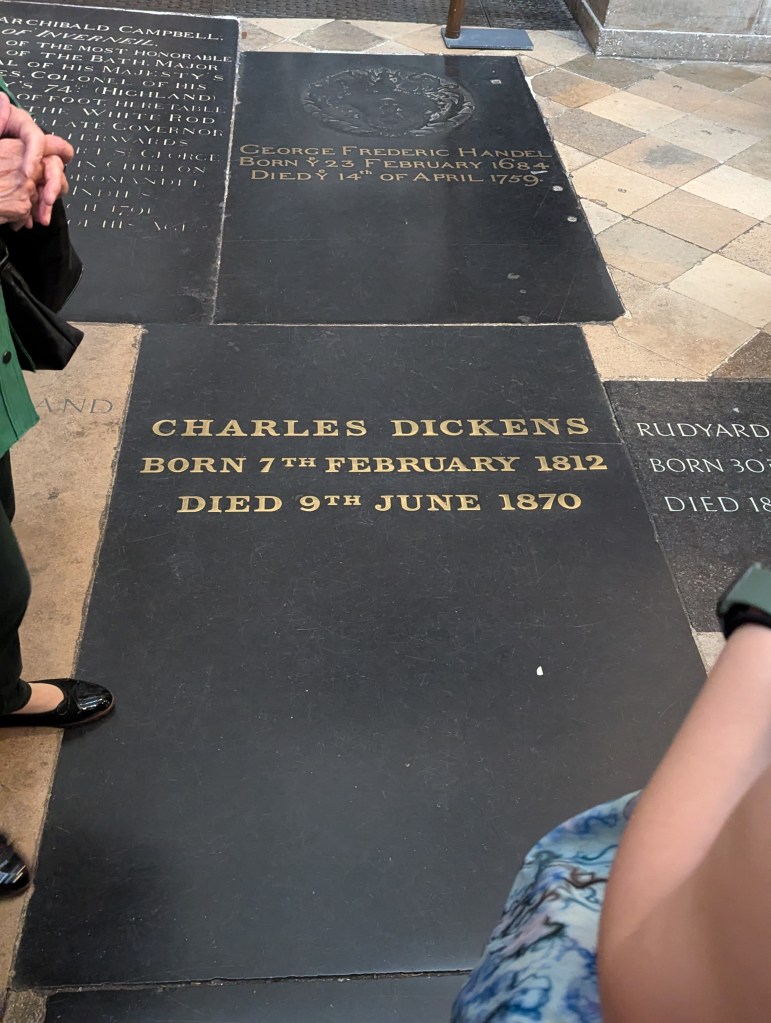
Another plaque that stood out to me was Charles Dickens. He was an English writer who wrote numerous books and short stories, but was most well known to me as the person who wrote the Christmas Carol, which inspired the greatest Christmas movie ever produced, A Muppets Christmas Carol. While not quite as good as its muppet based counterpart, the story has stood the test of time as one of the most popular Christmas stories, having never been out of print since it was released in 1843.
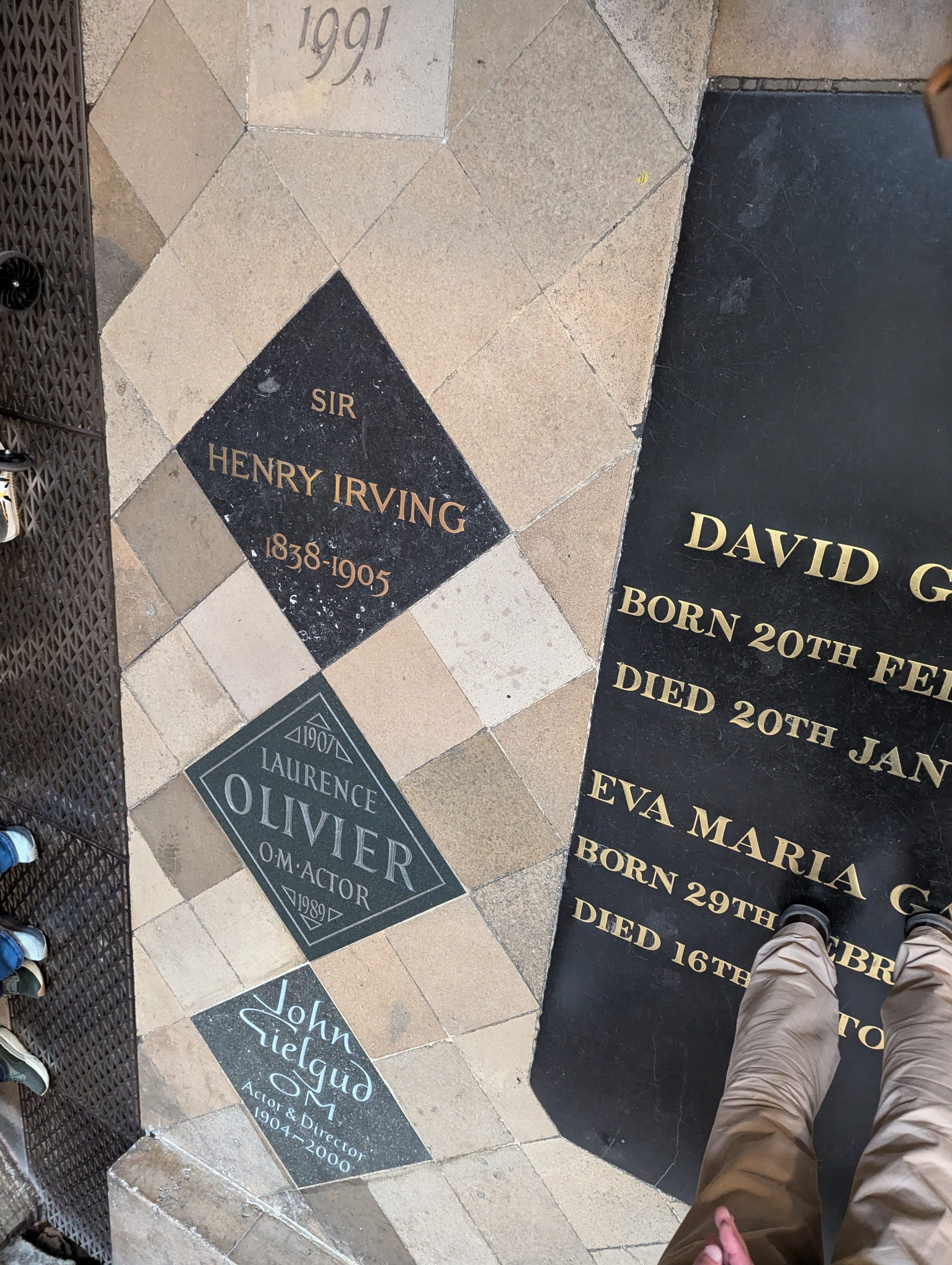
A name that stood out to me as one I have repeatedly heard but never knew the story of was Laurence Olivier. Since coming to London I had heard of multiple plays being the recipient of an Olivier Awards, but did not really know what that meant. Apparently it is a well recognized professional theatre award given primarily to theatres in the west end. This award was named after Laurence Olivier for his long and well perceived career in the theatre, which included roles such as Othello in the play of the same name and Solness in the master builder. He was born and died in England and died in 1989, shortly after the West End theatre awards changed their name to the Olivier Awards in 1984.
 Theatre in London U of A