I absolutely loved Westminster Abbey, it is so beautiful and rich with history. Walking through Westminster Abbey felt like I was walking through so much history and the stories of the past. At the end of the tour, we got to see Peot’s corner, and many famous influential writers were either buried or memorialized. It’s not just a corner; it’s a sacred gathering of Britain’s greatest minds. Being surrounded by monuments to poets, playwrights, and novelists whose words have shaped centuries of literature made me feel like I was in the presence of greatness. I had a feeling of gratitude and was thankful for what they shared with the world.
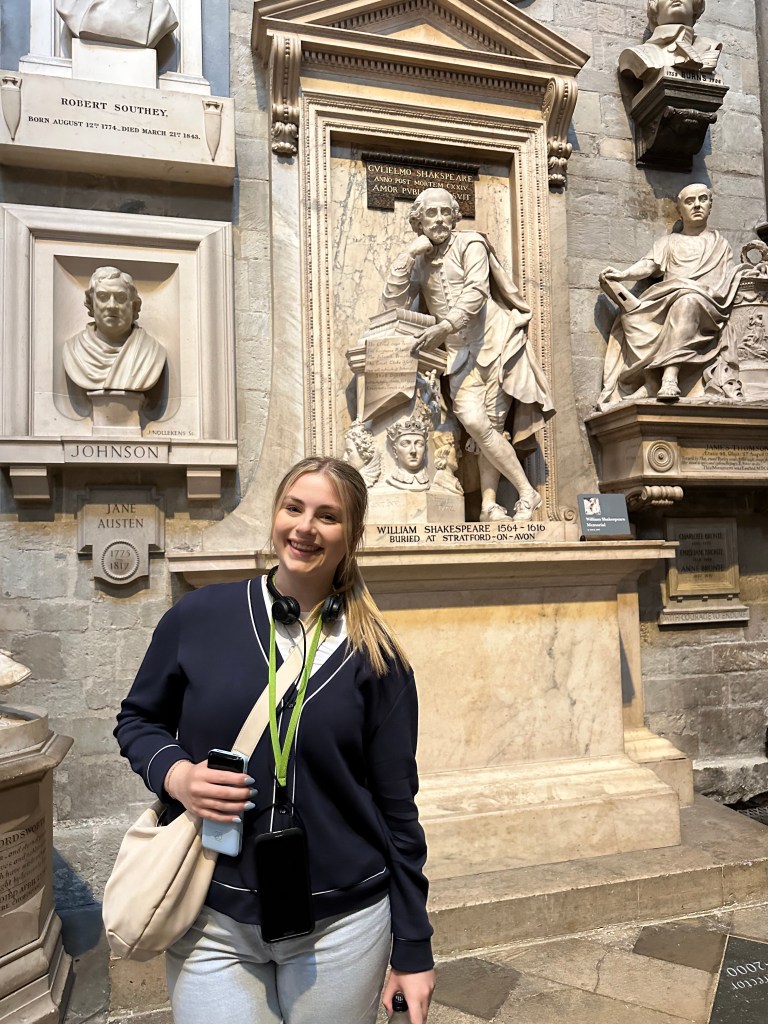
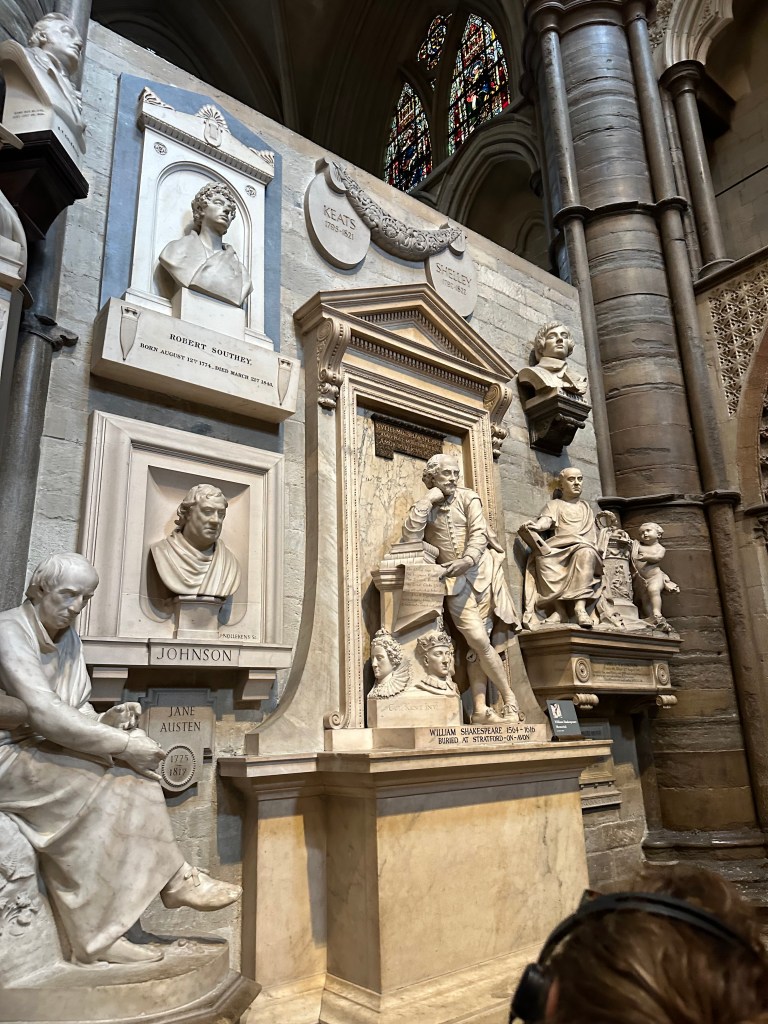
The first influential writer I noticed was William Shakespeare. Though Shakespeare isn’t buried at Westminster Abbey (he is buried in Stratford-upon-Avon), his monument here is so special and unique. It features a statue of him leaning on a stack of books, with a thoughtful, almost mischievous look on his face. I noticed that inscription beneath him includes a quote from The Tempest: “Our revels now are ended…” which feels so fitting for a man who gave the world so many performances. Shakespeare is the most influential writer both then and now. Seeing his monument and the words beneath reminded me how much his work still relates to the world around us, from school classrooms to grand stages like the Globe.
My second influential writer I noticed was Geoffrey Chaucer is buried in the Abbey, and his tomb is one of the oldest in Poets’ Corner. He is known as the father of English literature. Chaucer wrote The Canterbury Tales, which marked a turning point in English writing, shifting literature from Latin and French into everyday English that people actually spoke. His tomb is tucked away into a corner, but it started the tradition of remembering and honoring literary figures here.
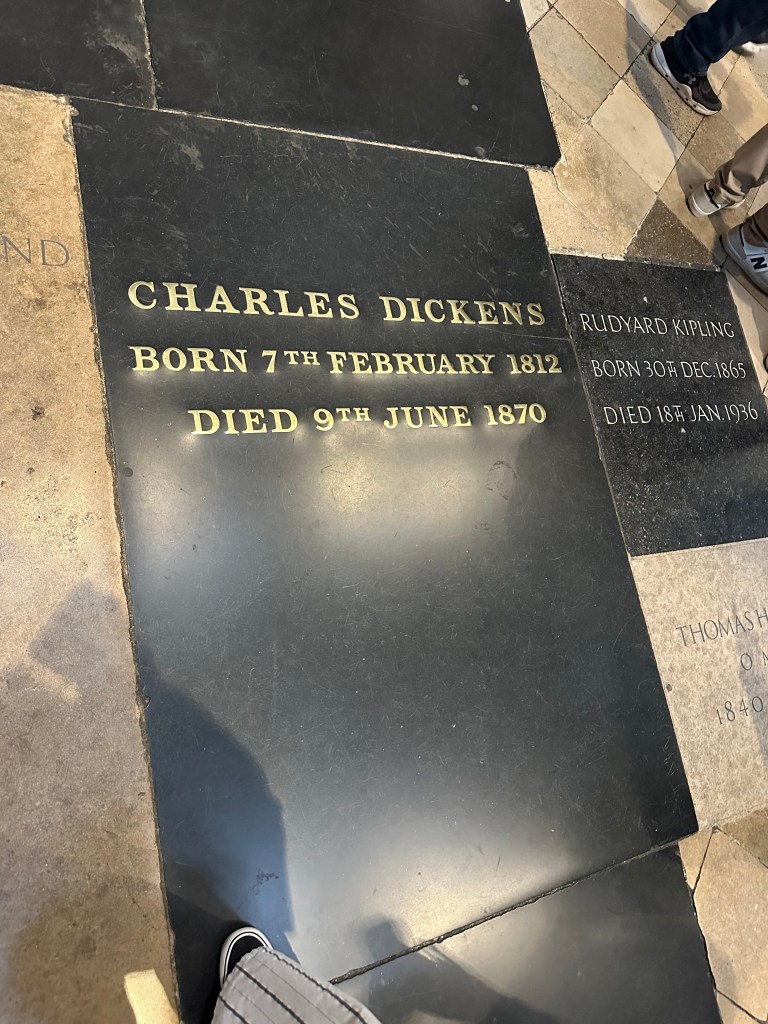
My third influential writer was Charles Dickens, a literary master who is buried in the Abbey. I noticed that his stone was so simple, and there wasn’t much commemoration with it. I thought since he was so influential, there would be more to his tomb and memorial. Although it was simple, I understood why it is this way because he saw himself as a man of the people. I actually loved that—it seemed to reflect how he saw himself: a man of the people. Dickens gave voice to the forgotten, the poor, and the struggling, and his stories, such as Oliver Twist, A Christmas Carol, and Great Expectations. They continue to speak to us with empathy and cleverness.
Overall, being in the Poet’s Corner felt like I was walking with the writers and the voices of the past. There’s something powerful about seeing how writers from different centuries, styles, and social standings gather in the same space. They are united by the way they use words to help you feel emotions. It reminded me why we still read, perform, and treasure their works today.
 Theatre in London U of A