Exploring an ancient city with landmarks that are older than the United States as a whole was a surreal experience. Being able to come into contact with history itself while walking through the Roman Baths has become one of my top experiences in London. I adored visiting Bath and learning about Roman culture during their conquered establishment in Londinium whilst we toured the interactive Roman Baths museum.
“Constructed in around 70AD (almost 2 thousand years ago) as a grand bathing and socializing complex, the Roman Baths is one of the best-preserved Roman remains in the world, where 1 million liters of steaming spring water, reaching 46 celsius (114 desires Fahrenheit), still fills the bathing site every single day” (visit bath.co.uk).
As we walked through the extensive ruins, we listened to the historical context of each finding with a telephone-like device. For someone who becomes easily distracted and bored during a long period of time, this museum did a great job at introducing you to new historical concepts as if they were narrative stories with interesting yet relevant facts through auditory and visual features. It felt like taking a trip back in time where you were a traveler, learning about the local Aquae Sulis people and their customs naturally.
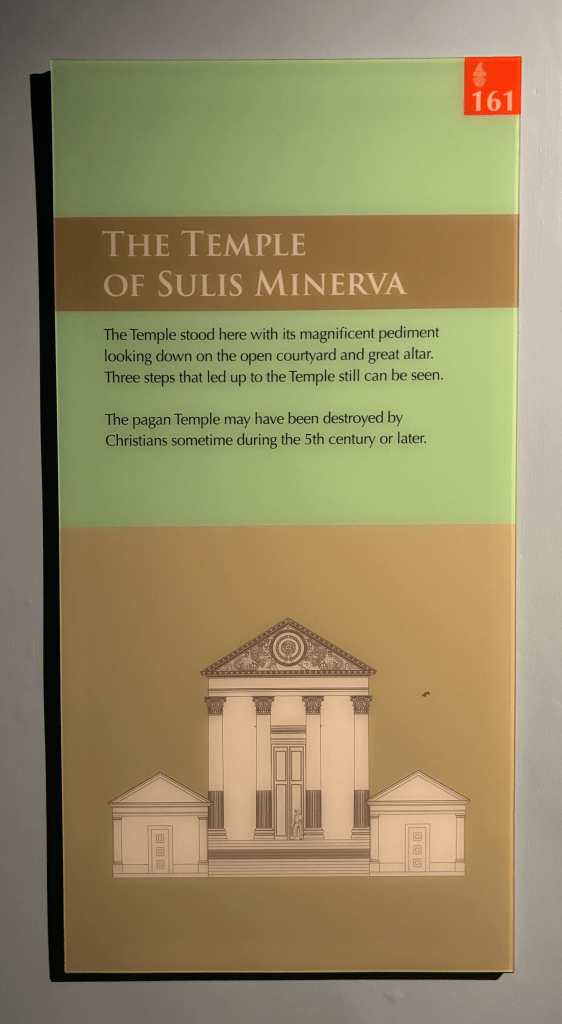
I walked through the 4 main features of the museum: the Roman Bath House, the Roman Temple, the Roman Bath House, and the artifact section showcasing daily objects, house amenities, and gravestones of the Aqua Sulis. Each was equally as enjoyable and vastly interesting to learn about. However, some aspects of the museum especially stood out to me.
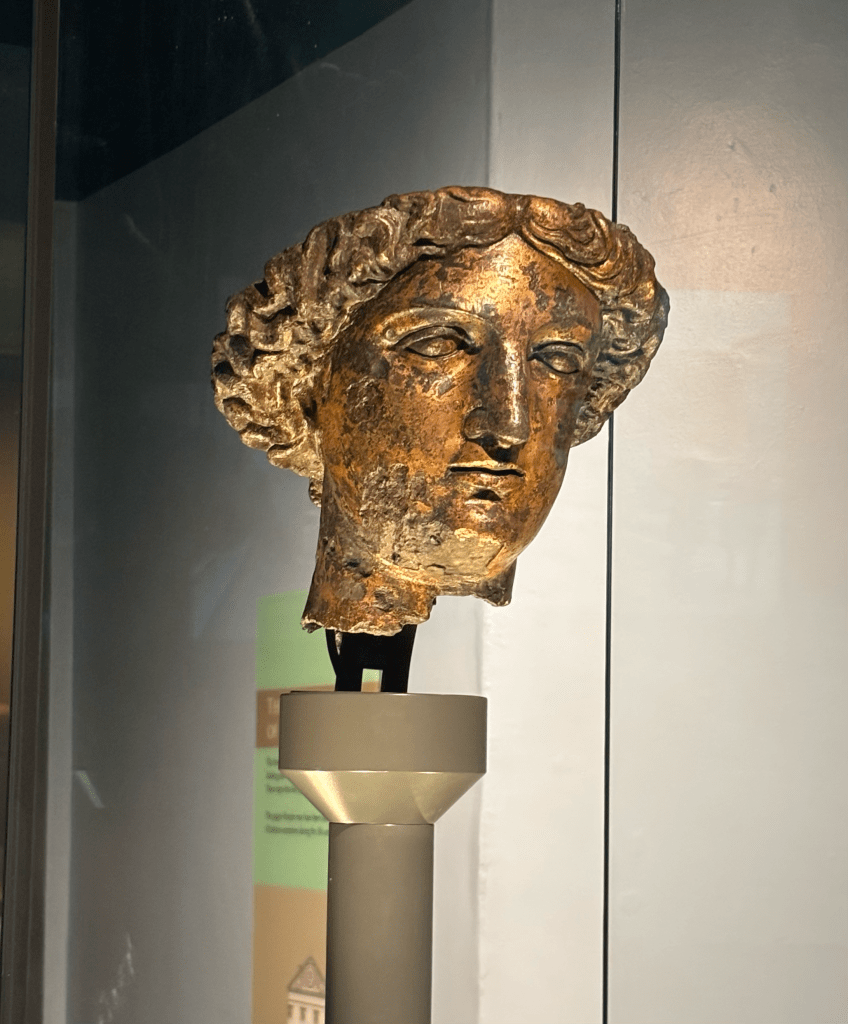
“The gilt bronze head of the goddess Sulis Minerva is one of the best-known objects from Roman Britain. The head is probably from the cult statue of the goddess which would have stood within her Temple beside the Sacred Spring, across the Temple courtyard to the site of the great altar, the site of sacrifice, which stood at the heart of that sacred space…Examination of the head has revealed that it has 6 layers of gilding. The first two use a technique known as fire gilding whilst the 4 later layers are applied as gold leaf.”
One aspect that stood out to me was the golden portrait statue that portrays the Roman goddess, Sulis Minerva. Minerva was the Roman goddess of wisdom, crafts, and strategy. Sulis Minerva was believed to be both a nourishing mother and a powerful agent of curses. People would make offerings to the goddess, including coins and wrapped-up tablets that people would carve the names of those who did them wrong, hoping the goddess would help them exact their revenge by imposing a curse on them.
It was fascinating to learn that although this period of Roman rule existed a thousand years ago, people still crave to exact pain onto others as a result of their own. Our human need to feel justice or satisfaction after we’ve been wronged still persists today. I loved learning of the ever-growing principle that the human condition rarely changes and history doth, indeed repeat itself.
 Theatre in London U of A