Built out of mudstone and rocks, the Tower of London remains standing strong since the year it was founded in 1066. The Tower of London is a historic castle on the north bank of the River Thames. It served as a royal palace, prison, arsenal, and even as a menagerie for exotic animals. On May 23rd I was able to view the legendary site. For my blog post today I’d like to share with you about what I learned.
On 1066, an arrow altered the making of British history. King Harold of England was pierced with an arrow and perished, which gave way to King William the first, also known as, ‘William the Conqueror.’ His Norman army took over and he soon became the ruler of England. The civilians of England didn’t wish to see a new dynasty begin with William as king, whom had seized the throne by military conquest rather than legitimate succession.
To project his new power to detain the threat of united resilience, he had the White Tower built. The White Tower is considered the main landmark of the Tower of England structure. The Tower of England includes the Bell Tower, the Wardrobe Tower, the Lantern Tower, and the Garden Tower which was renamed as the Bloody Tower.
The Bell Towers had warning bells installed to be rung to warn in the case of an invasion. The wardrobe tower held all the king’s refined garments and clothing and the Lantern Tower provided light for navigating ships.
The grand monument painted a picture for royal architecture hundreds of years ago that strived to demonstrate the monarchy’s vast amount of strength and power. However, now it is mostly known for housing the Crown Jewels and for its infamous prison tales. Although witnessing the Crown Jewels’ splendor was an astonishing site, I found that learning about the stories of the people whom were imprisoned was much more fascinating.
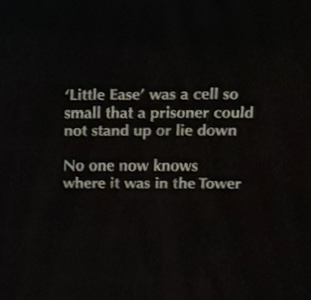
The dark truth behind the Bloody Tower follows an array of individuals whom were kept, executed, or tortured on the very site where many roam today. The story that stood out to me while touring the Bloody Tower exhibit was the execution of Sir Roger Casement. Casement was a British diplomat who became famous for his early ground breaking reports on human rights abuses in the Belgian Congo and Peru, which also confronted King Leopold the second’s cruel ruling. He wasn’t afraid to stand up for those whom didn’t have a voice. He even tried to gain German support when attempting to gain independence for the Irish during the First World War. Imprisoned, the government leaked his personal diaries and released information on his private life. He was then discredited, convicted of treason and hanged.
One of the most shocking and heartbreaking details located in the Bloody Tower were the markings made by prisoners on the stone walls. Messages written about life, regret, and the grace of religion are all stained with sorrow and acceptance. These were the etchings, the scriptures of people whom knew that their lives were bound to end soon, with little to no hope left to escape their doom.
I hold onto these stories and feel for those who met their untimely, gruesome ends. Remembering people such as Sir Roger Casement helps future generations hold tight onto justly morals and the sense of understanding that absolute power corrupts. Corruption leads to tight grips on control that lead to unjustly killings that benefit those only whom wear the Crown.


 Theatre in London U of A