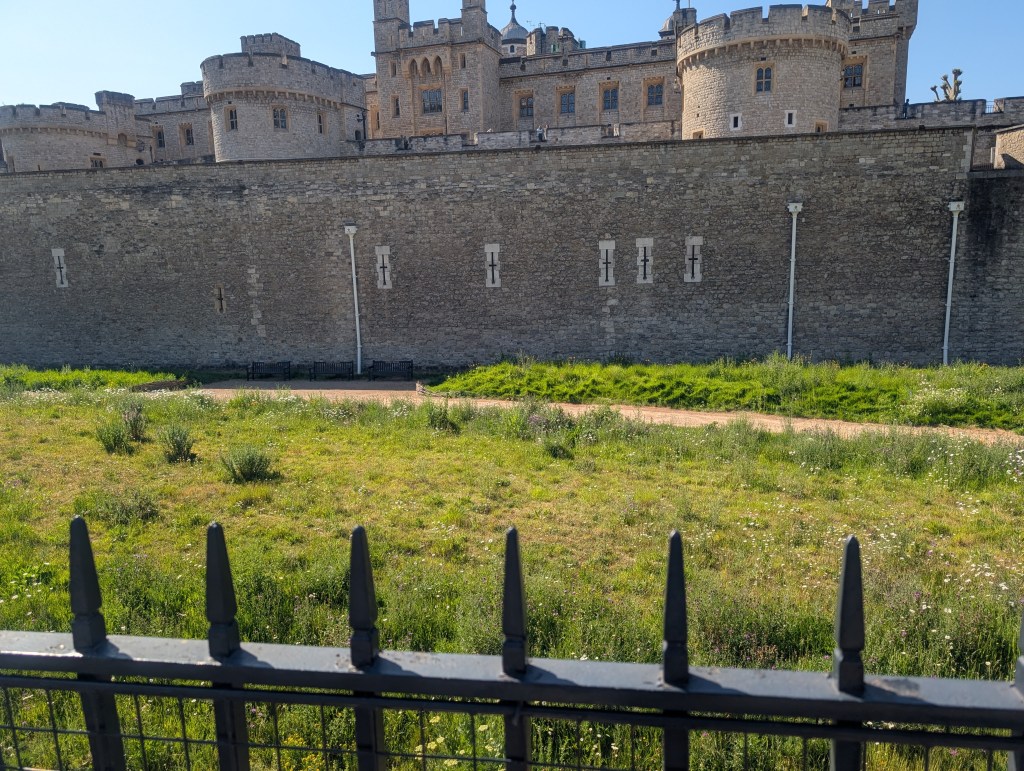
I had an amazing time visiting the Tower of London, it was a place with so much rich history, and while unfortunately I did not get the chance to see all of it, what I did see did not disappoint.
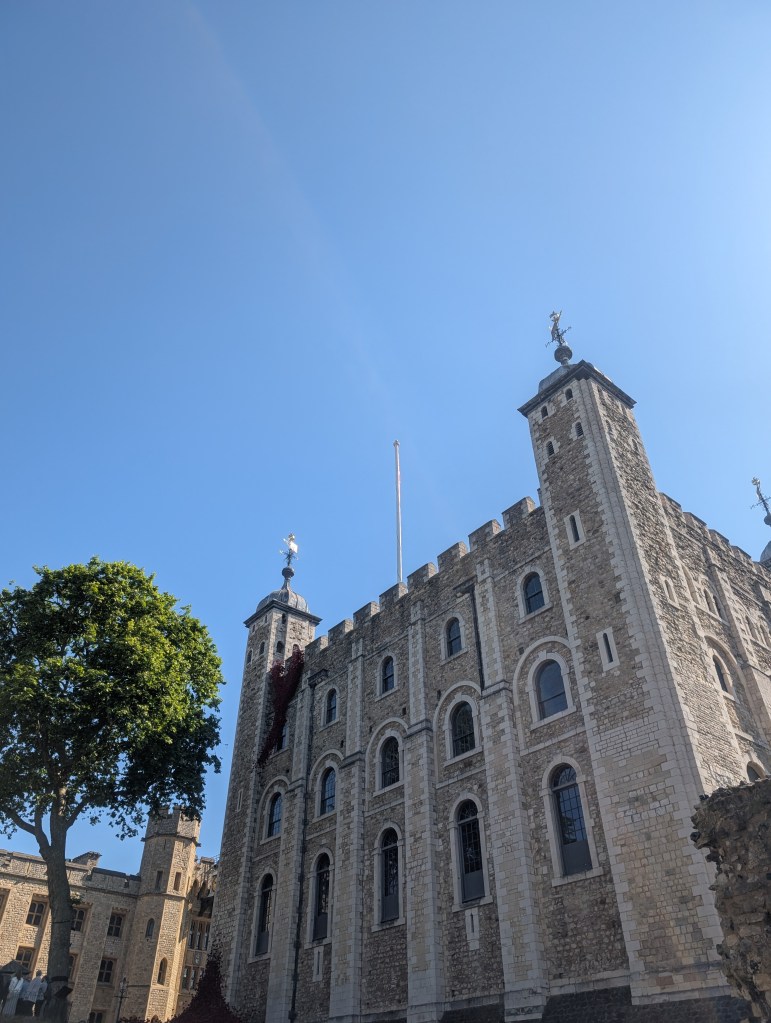
The first thing we saw was the Crown Jewels. Photos were not permitted inside, but I doubt that they would have been able to adequately capture the beauty in there. There were a variety of wonders inside, from crowns and other jewelry to the fanciest golden tableware I’ve ever seen in my life, to the items worn by King Charles III at his coronation. It was stunning how the light reflected off all the tiny little gems, creating shimmering rainbows all across the crowns, something that can’t be seen in just a photograph. Something else that stood out to me was the fact that some of the items inside were still being used occasionally for ceremonial purposes. It was rather humbling to look at the objects, older than the United States, that still had a purpose beyond just being displayed.
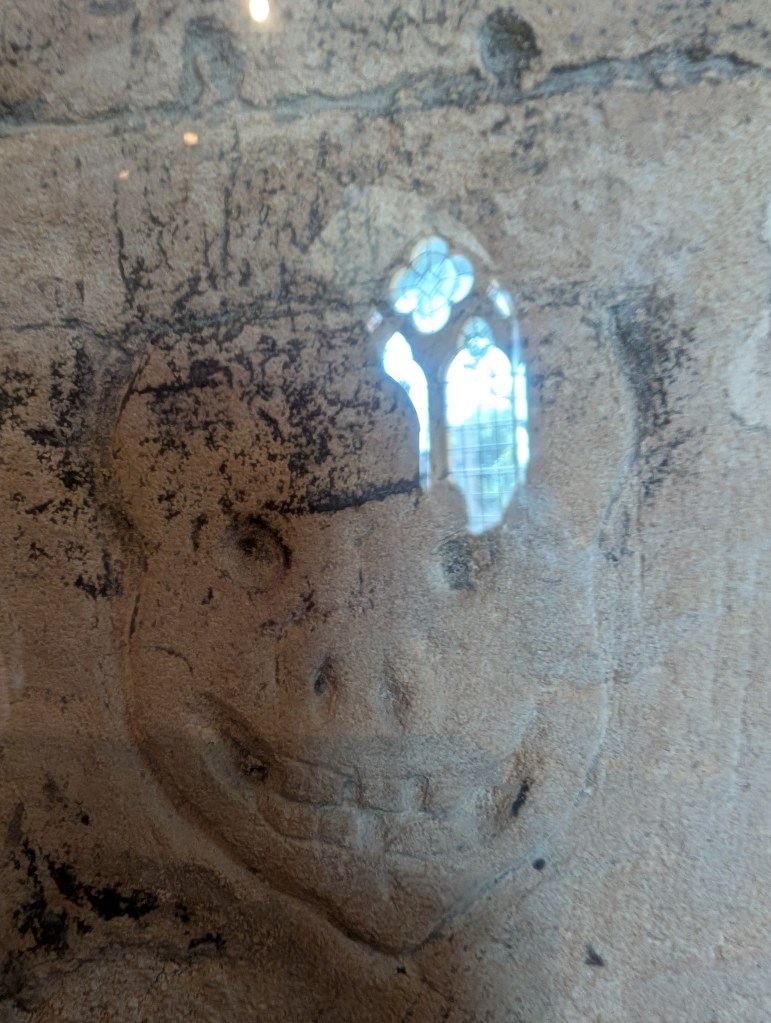
Despite all this, the Crown Jewels may have been the least interesting thing I saw that day, for we next visited one of the towers where some of the prisoners were held. Not just any prisoners though, only the most important people, royalty and extremely notorious criminals were kept there. One room in particular caught my eye, as it was filled with carvings all across its walls made by many prisoners over time. It was fascinating to see how the people kept there were able to exercise what control they had, and how it had turned almost into a tradition.
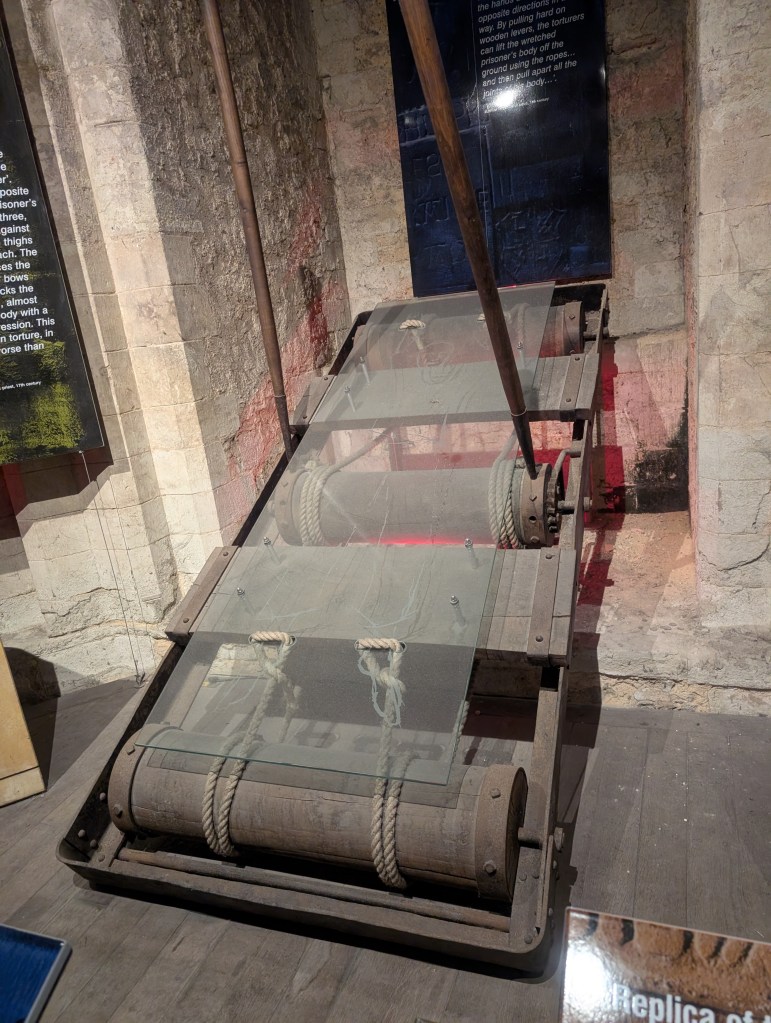
Next, we visited the Bloody Tower to learn about the fitting subject of torture. They said that (physical) torture was quite rare in England back in the day, and wasn’t officially part of any laws, however, over a period of time, over half of all recorded cases of torture occurred at the Tower of London. We saw a variety of instruments of pain, including shackles, “The Rack” which was designed to stretch out a man as far as possible, and the “Scavenger’s Daughter” which was designed to do the opposite, compressing someone as tightly as they could be without killing them, as well as details accounts of how they were used to hurt prisoners, with accompanying visuals. I found it morbidly interesting just how creative humanity can be when coming up with ways to inflict as much pain as possible on each other.
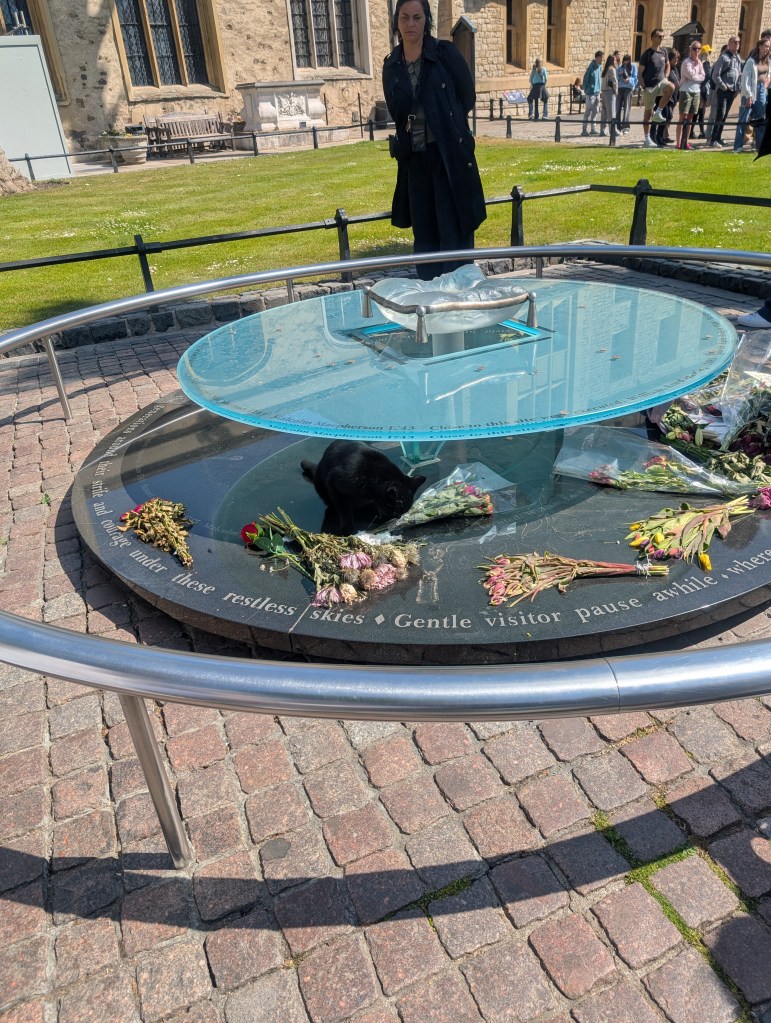
While torture was rarely used on the prisoners, executing them was far more common. Out of all of the people killed at the Tower of London, the most famous would have to be Anne Boleyn, the second wife of King Henry VIII. Unable to give him a son, Henry became dissatisfied with her, and fabricated charges against her of high treason in order to have her executed so he could get a new wife. The spot where she was beheaded was marked with a memorial, with many bouquets of flowers around it.
There was quite a large crowd there in fact, although they did not seem like they were there for Anne Boleyn, but rather the black cat that was sunbathing underneath the glass of her memorial. I looked it up and her name is Nyxie, and she moved in just last year. She belongs to one of the Yeoman Warders, the ceremonial guards of the Tower of London. She immediately stole my heart with how cute she was, and I could have spent the whole time watching her roll around in the sun if the rest of my group didn’t persuade me to move on.

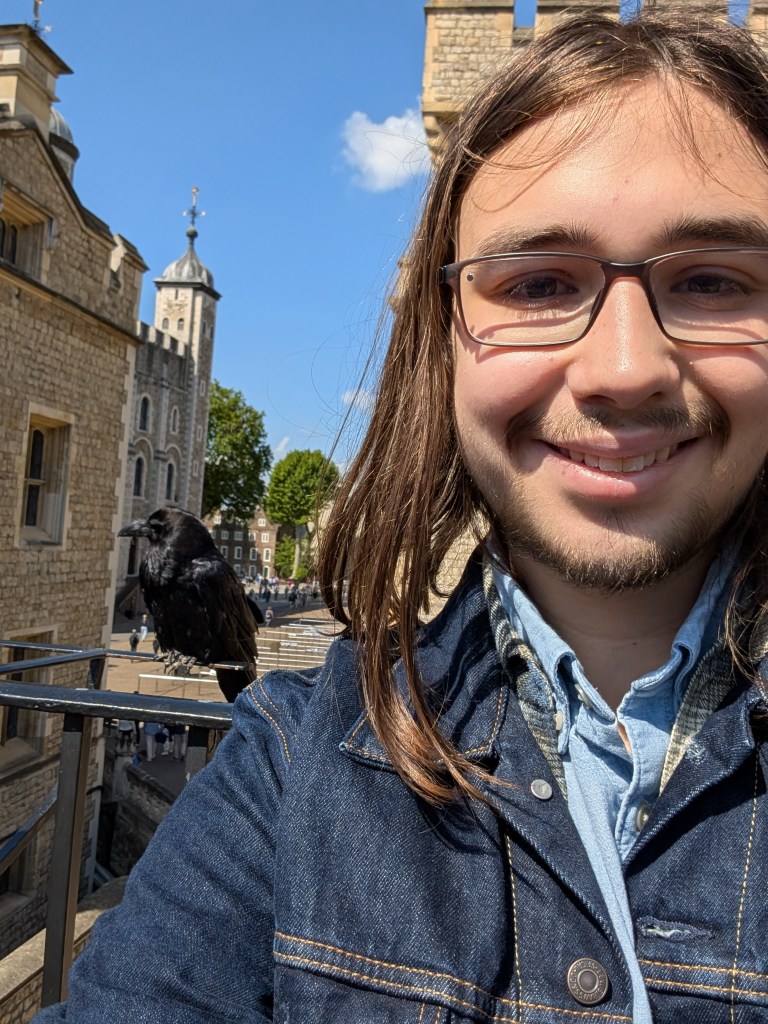
She was not the only jet-black animal there though, for there were also the ravens. There were a number of ravens at the tower, and they have long been a feature of it. Apparently, it is said that if one of the ravens leaves the tower, the entire kingdom would collapse, which is why their wings are clipped. I do hope that none of them escape while I am on this trip for that would cause a lot of complications, and we have already dealt with plenty of those so far.
Anyways, this has been the second of my travel blogs, goodnight, morning, or afternoon, and I hope you’ll read the next one.

 Theatre in London U of A
Wonderful description of the tower! Nyxie is a cutie!
LikeLike