Something I’ve enjoyed the most about watching theatre in London, is seeing the magnificent costumes. How they tell a story, or tell the audience something about the characters. The costumes I have seen in most of the shows I’ve been to in London, are so impressive. When I watched Guys and Dolls at the Theatre, I was so close to the actors. It was a perfect chance to see their costumes up close. The detail in West end shows is incredible, and the designs are always spectacular.
Which is why I was so excited to see the Theatre & Performance Collection at the Victoria and Albert Museum. According to their official website, the collection includes over 3,500 stage costumes and accessories that date back from the mid 18th century. The collection includes pieces of various types of performances including opera, pantomime, film, rock, and circus. Unfortunately, the collection was closed. While the fashion collection was open, it was small and with less variety. A fourth of the collection was also blocked off because of renovations, so it was an even smaller array of pieces to look at. With that said, I was still able to admire some pieces of clothing and learn more about its history.
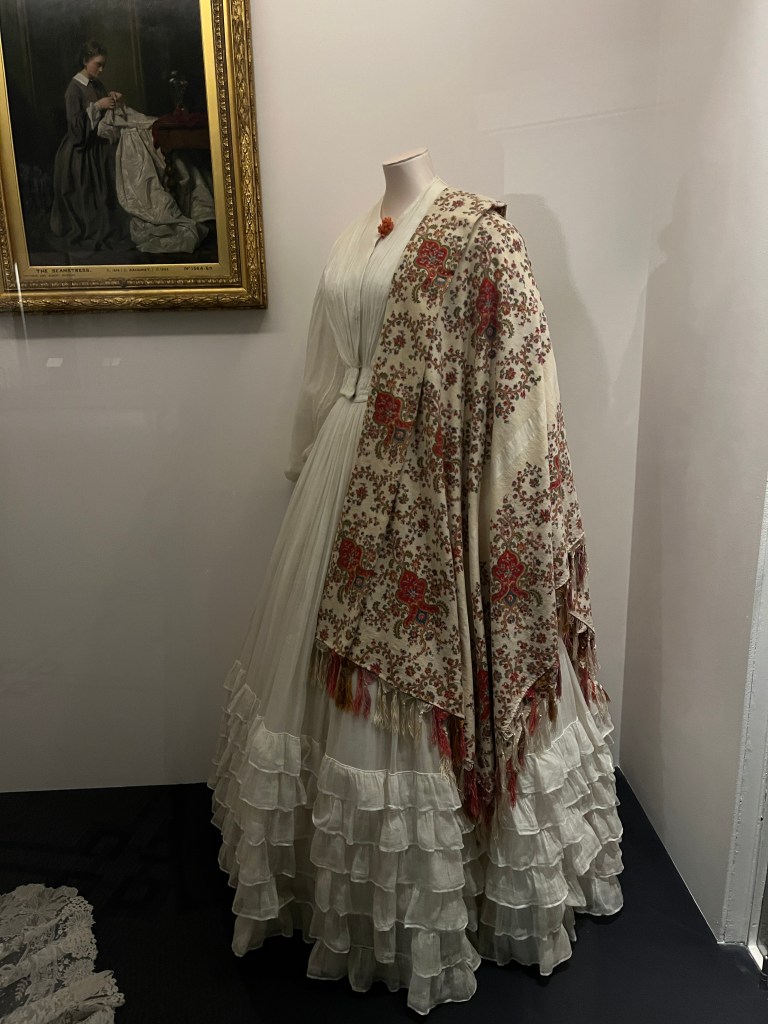
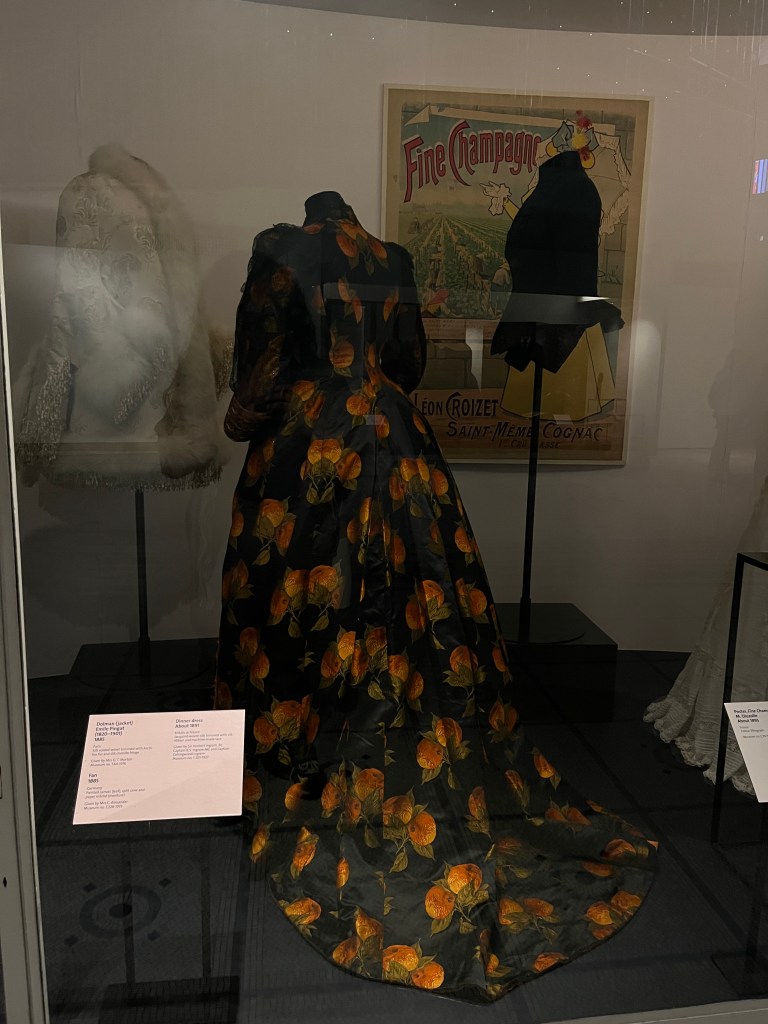
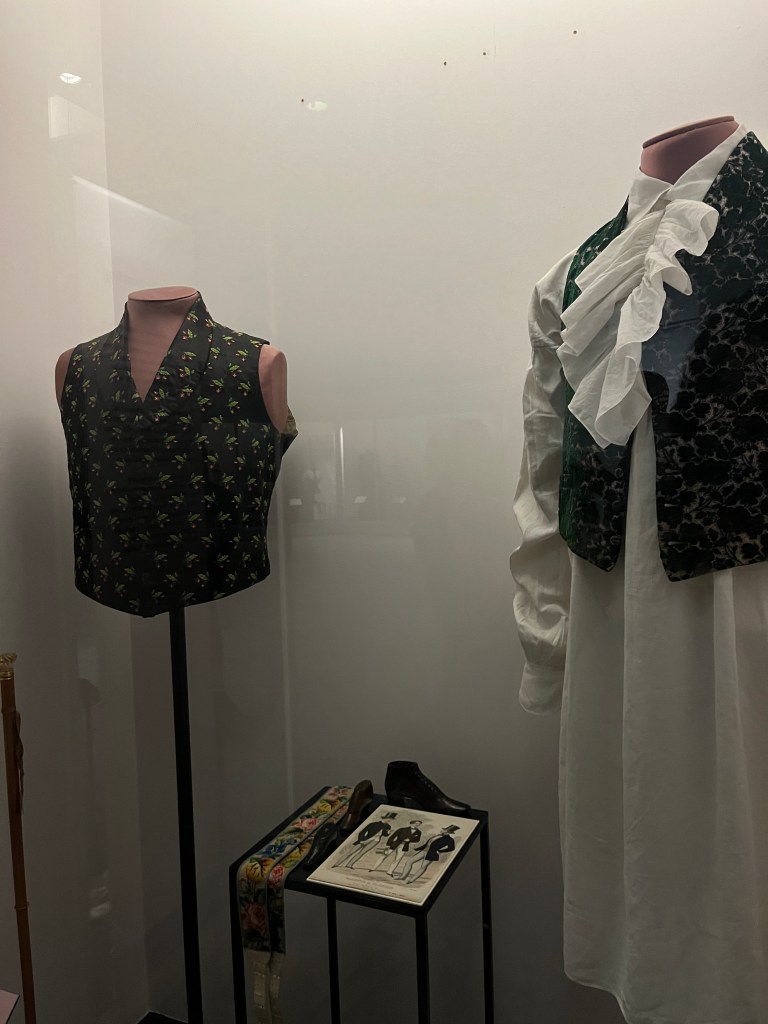
Pictured above are some of my favorite pieces from the Fashion collection.
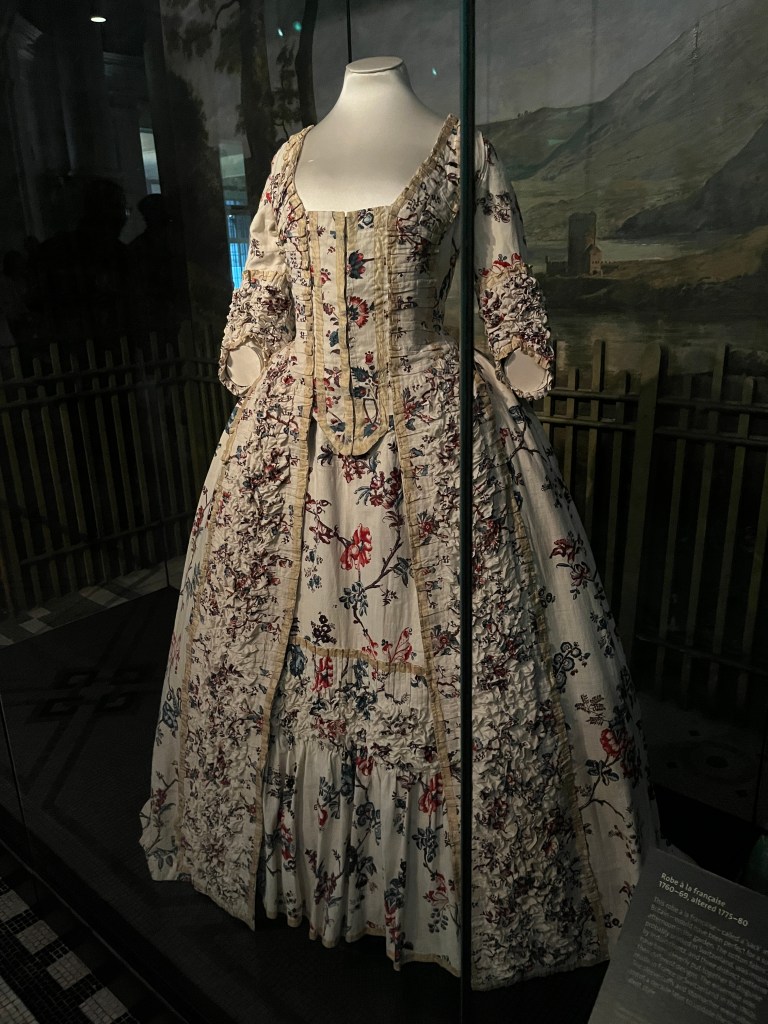
The last one is the “Robe à La Française”, which would have been called a “sack” in Britain. This piece was said to be made in France or Switzerland in the 1760’s.
Another piece that caught my attention was the Blue Dress above. I was immediately reminded of the Royal courts Theatre production of Bluets. It was almost the exact shade of blue used for the costumes. I felt like the dress would have been a perfect addition to this show, if it were set a a different period. The 1850s to be exact. This style of dress came about after the invention of the light framed steel that replaced heavy layers of petticoats. It made the dress lighter, and also more voluminous.
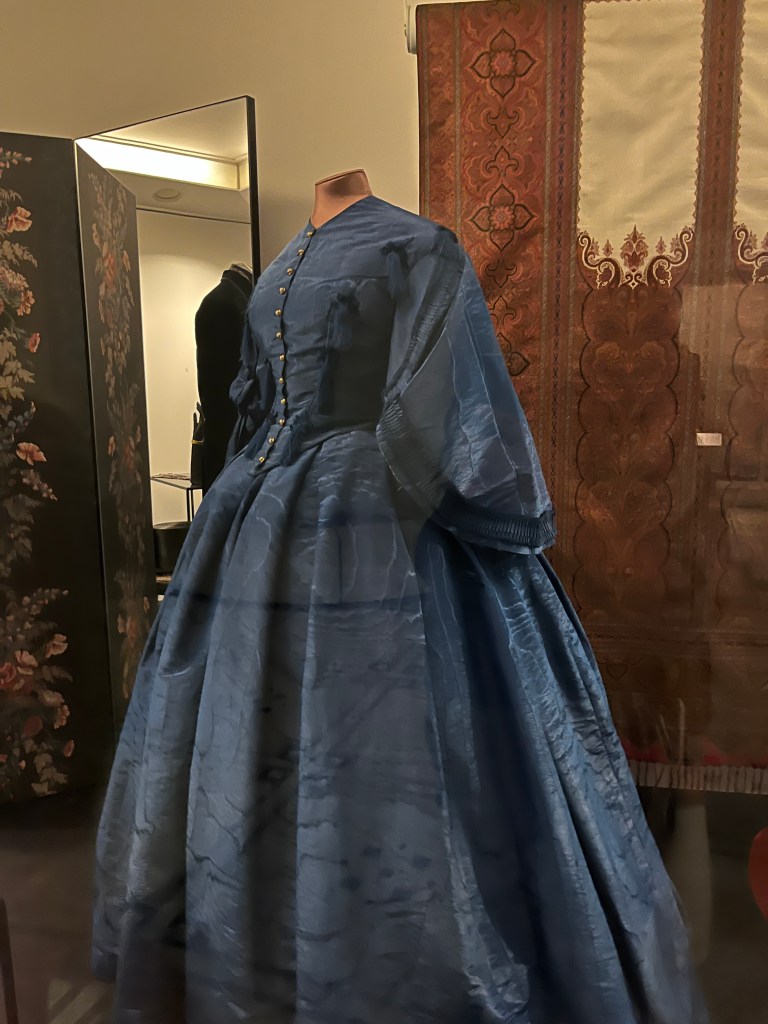
This shade of blue came about from development in the chemical industry, that eventually led to artificial dyes. What I found even more interesting, was that some of those dyes were found to be dangerous. In 1869, The British Medical Journal warned the dangers of arsenic in magenta dyes, that it could leak from washing or even rain. Somehow when I read that, I connected a few more dots with Bluets. In the production, the color blue swallows the narrator whole, damaging its perception of reality. The obsession with the color blue was harmful. When I read the artificial dye fact at the museum, it was too much of a coincidence. How color can be harmful. Isn’t that kind of crazy?
I continued to look at the rest of the exhibits. I was on a mission to find anything that related to the theatre. Right as I left the fashion collection, I was immediately drawn to a headdress The name read, “Theatrical Headdress”. I got really excited! It turns out, that this piece most likely would have been worn by an actor impersonating the king of celestial beings in the 1800s. The shape and high quality of the piece resembled that of crowns worn by the royals or minor deities during the Konbaung period.

The production I immediately thought of when I saw this headdress was King Lear. When King Lear starts losing his mind in the play, the taking away of his crown (both figuratively and physically) is a really important symbol in the play. They are not just taking away his dignity but also his power. The headdress was so well preserved, it looked like it could make anyone look powerful. For it to be a theatrical headdress, the detail and shape of it was magnificent. I thought “I guess if your gonna portray a king, you need to be able to portray power”.
Well that is it for now friends!
Farewell!
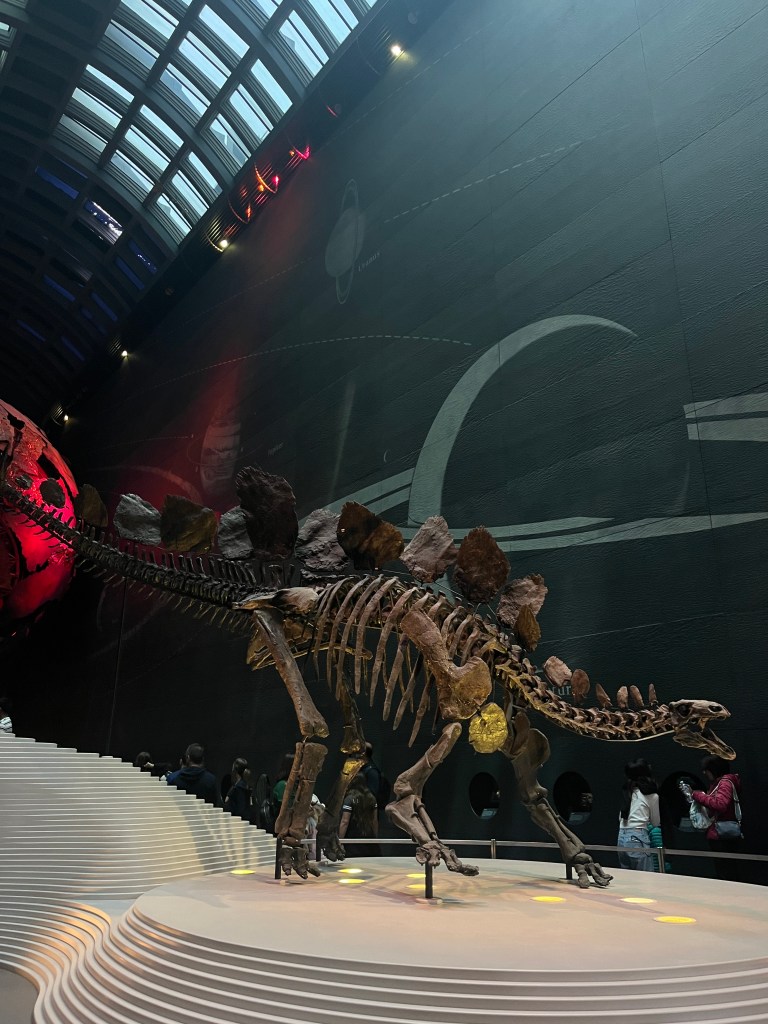
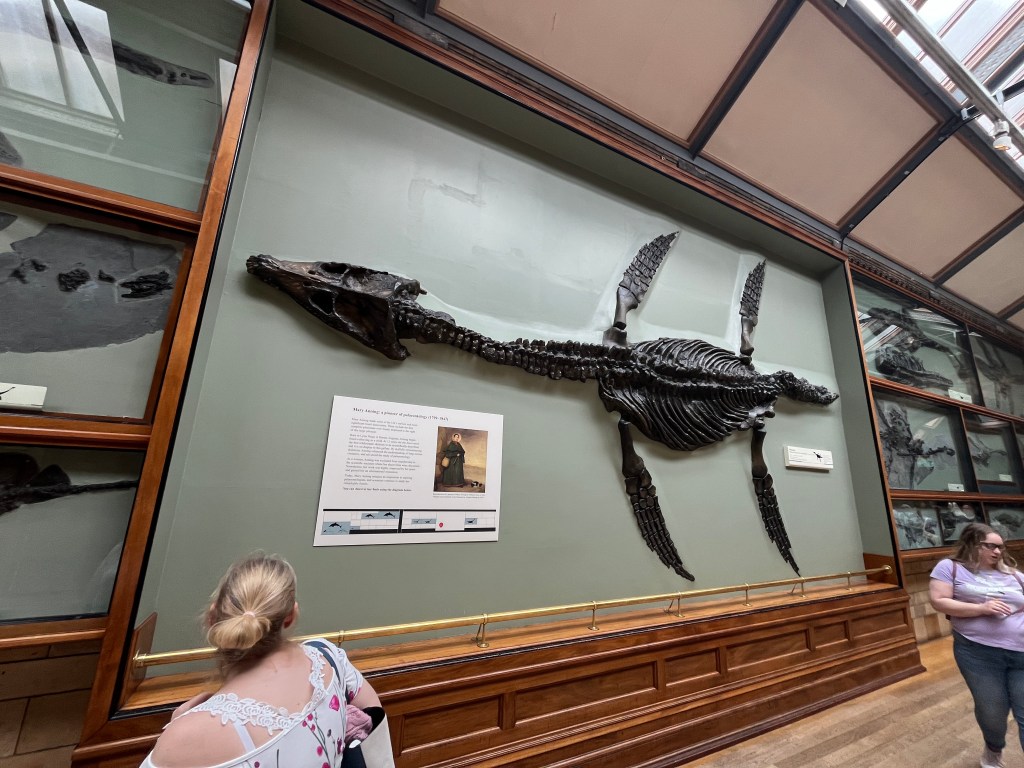
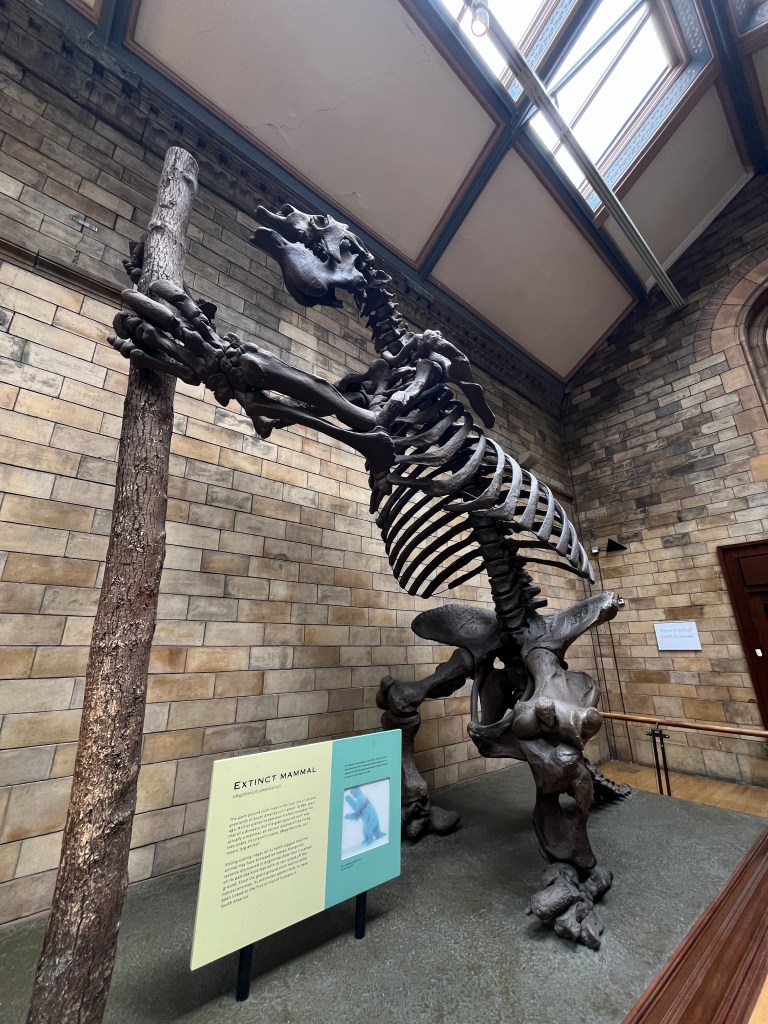
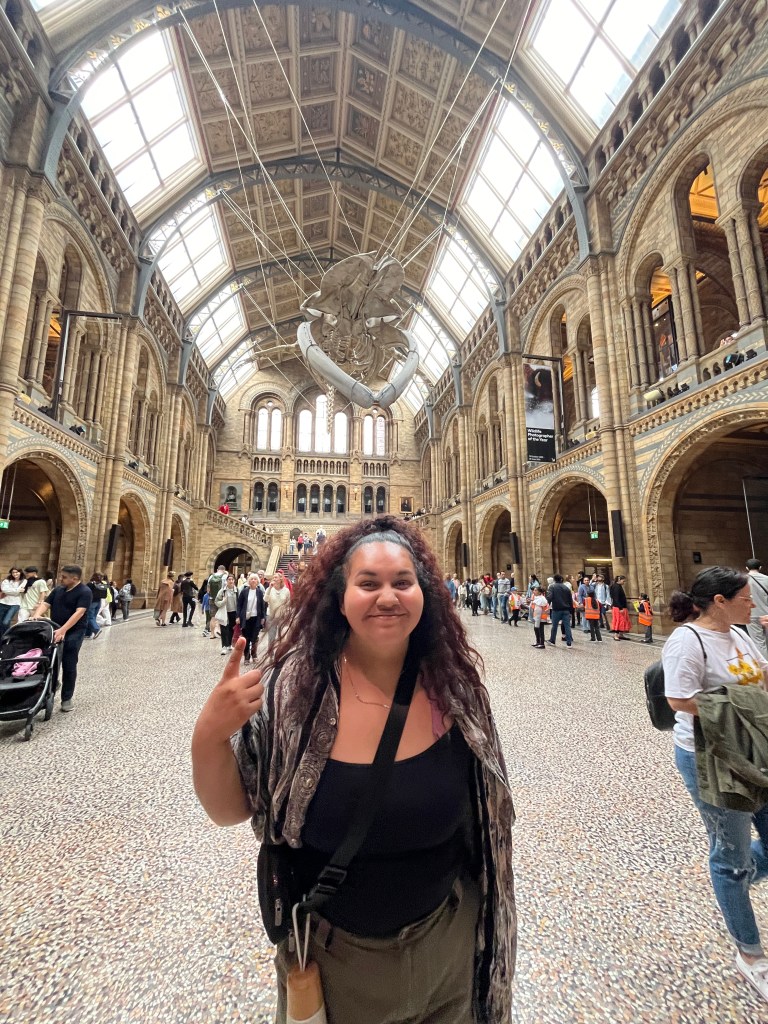
PS: Some of us went to the Natural History Museum afterwards, and these are some pictures of really cool stuff we found!

 Theatre in London U of A