The Victoria and Albert Museum is filled with one of the strangest assortments of artifacts and objects that I have seen in a museum on this trip. While it may not have a collection as big as the British Museum’s or as grandiose a selection as the National Gallery’s exhibitions, its presentation and variety of objects and displays made this museum truly fascinating and definitely one of my favorites to walk around. I mean, I personally can’t name another museum where I could see Michelangelo’s David and then walk about thirty feet down to see a Hello Kitty toaster given just as much reverence. The museum also had a very good emphasis on interactivity, with displays allowing visitors to feel different materials that the objects before them are made out of, create their own etchings or crests, and even try on a replica of a knight’s gauntlet (which is surprisingly easy to move in, I might add).
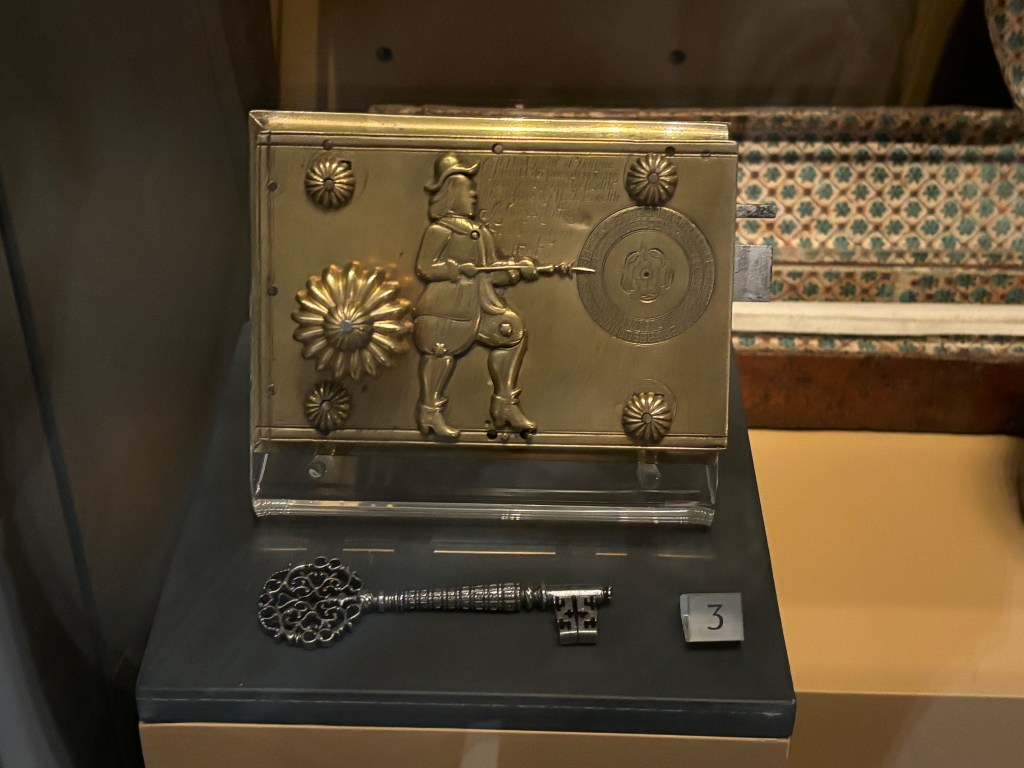
And this museum had so many oddly specific objects calling out to different eras across the world. Whether it be ancient Greek statues, a brief history of comedy, or even an entire exhibit dedicated to contemporary glass work, the museum feels as if it has something to catch the attention of anyone that visits. One thing that caught my eye in particular was an artifact in one of the Britain-based exhibits called the “Detector Lock.” It’s a lock that one would likely place on a door or a safe, and its main selling point I assume was that it would count the amount of times that lock has been opened, keeping itself shut when that counter reaches a hundred. The thing that intrigued me about the lock was the overall design of it, with this overly complicated and well hidden system of buttons and keyholes built into the decorative aspects of the lock.
It depicts the image of a soldier mid-march, with his spear pointing towards a large wheel of numbers on the side, which is directly pointing to the amount of times the lock has been opened. When the soldier’s hat is pressed down, the lock mechanism shoots out and keeps the door or whatever is being kept behind this stalwart soldier’s post safe. Lifting the soldier’s forward leg reveals a keyhole, engaging the deadbolt. When the counter reaches 100 and the lock refuses to open, the owner can press a small button on the soldier’s chest that resets the counter and allows the lock to be opened again (which I feel goes against the idea of the lock in the first place, as the button is out in the open for anyone to press and it invalidates the threat of getting locked out that the countdown carries). This lock shows a lot of detail and craftsmanship, with so many intricacies and mechanisms working in tandem as safety measures to keep the owner’s secrets safe.
When looking at this lock and all the work that was put into it, I was reminded of the show Operation Mincemeat. The lock’s many failsafes and countermeasures felt similar to the kind of planning that the agents of MI-5 would have done normally and underwent for the plot in the show. This comparison to Operation Mincemeat also plays in with the ornateness of the lock overall, keeping up a fancy, distracting facade to draw your attention away from the hidden buttons and levers of the lock, which is exactly the same as the plan to distract and keep the Germans out of Sicily. Looking at that Detector Lock, it feels exactly like the kind of thing that Montague would have in his own home in some way or another, which is what I think most reminded me about the show.
Overall, the Victoria and Albert Museum was a wonderful and highly immersive location to visit, and it might be my favorite museum that we have gone to on this trip.
 Theatre in London U of A