Blah blah blah, stop creeping around and watching me even though you and I both know I love the attention. But you didn’t hear that from me.
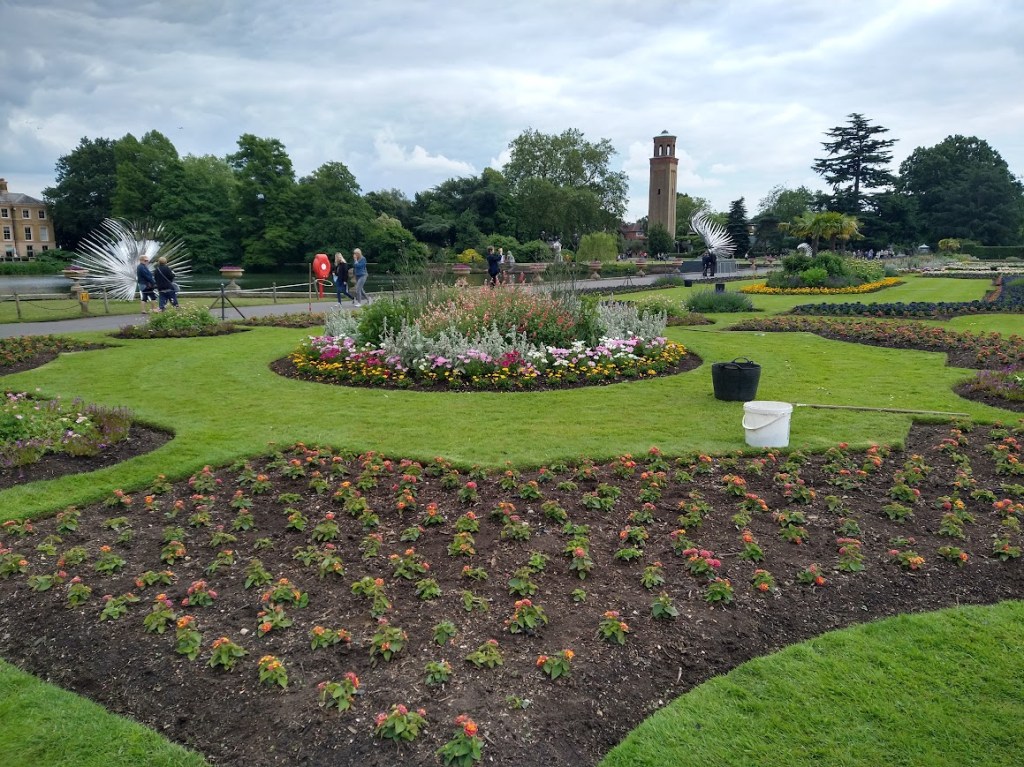
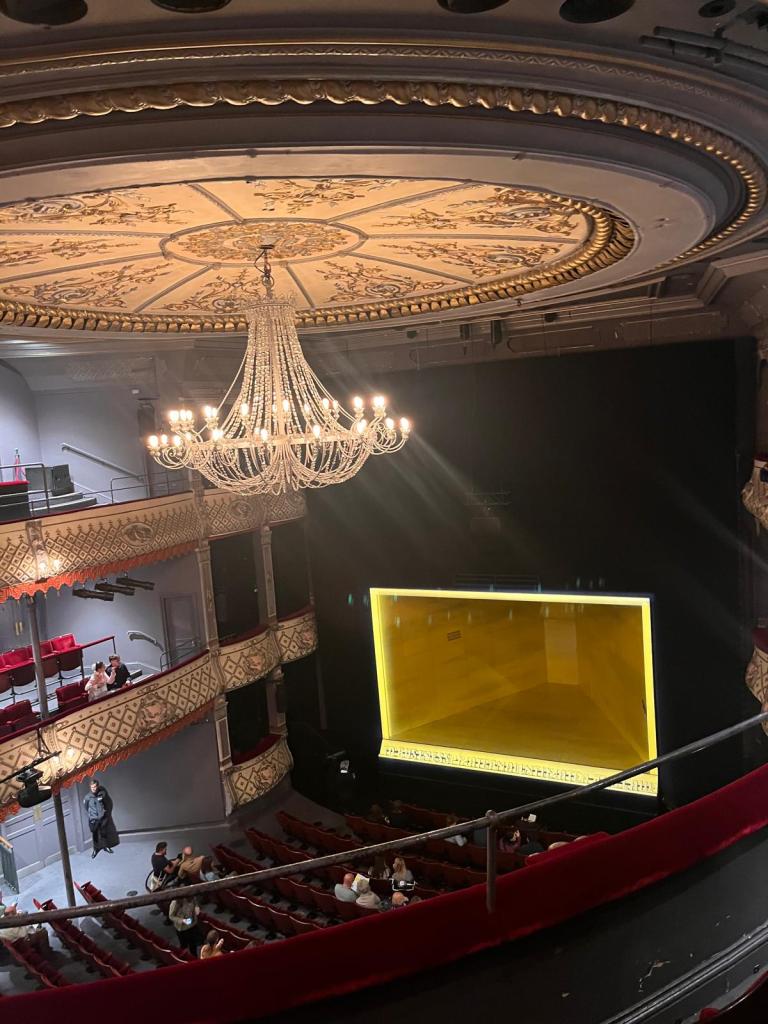
With that being through, I feel that it is now time to get caught up to today. The bullet points are, I went to see Hamilton at the Victoria Palace Theatre, then promptly went to Amsterdam for four days before visiting Kew Gardens, whereafter I saw Bluets, which I talked about in my last blog post. Finally, and most importantly for today’s blog post, this morning I visited the V&A Museum in South Kensington, which houses a variety of very compelling and unique historical artifacts.
We were supposed to start out with the theatre portion of the museum, but it was unfortunately closed alongside the tapestry section, so we started off with fashion. Over time, I worked my way into the sections that house the sculptures, primarily the sculptures that are casts of famous works. One thing about me: I am a lover of high-relief sculpture. The act of being able to see figures emerging from rock is just so magical to me. Don’t get me wrong: I fully respect works that are fully carved from the rock or rest just on the surface, but as an artist I am a huge fan of seeing the process, and the life in the result of the work done. It would be an understatement to say that I spent most of my time in this section of the museum (and I spent a very long time in the museum in general as well!).

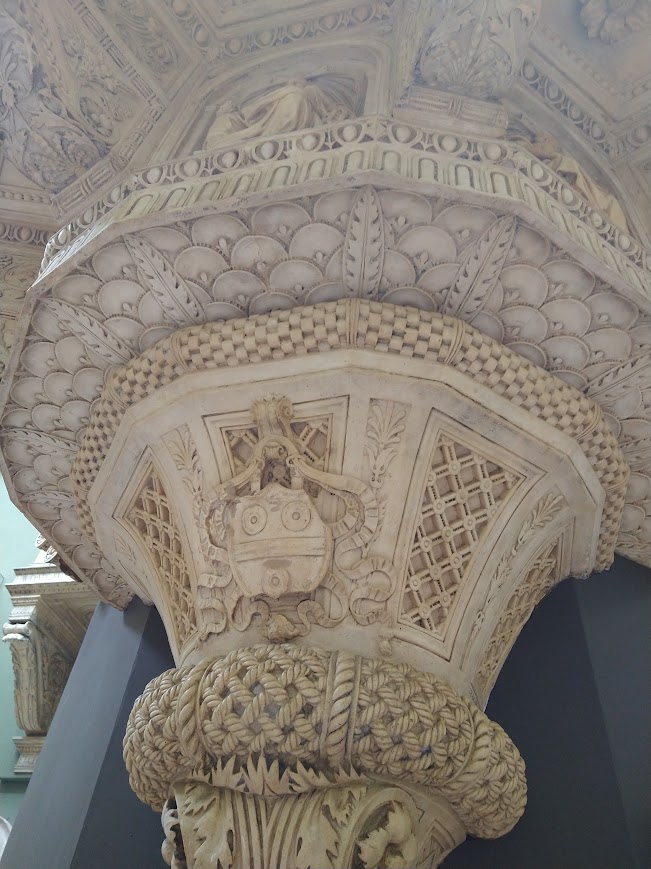
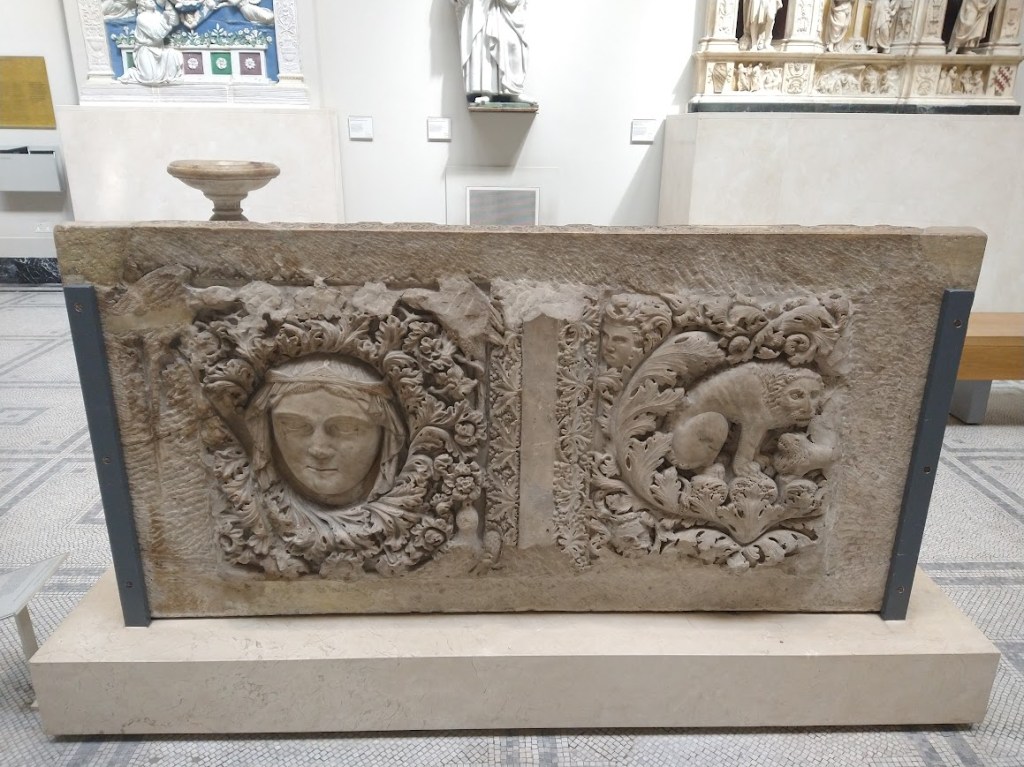
Nothing that I saw in the museum initially made me think of any of the shows that we saw, but in reviewing my photos I found a metaphorical meaning in one of the pieces that really intrigued me. Earlier in the trip, Kaylee, Emma, and I booked tickets to see Machinal at the Old Vic. It was a very interesting show, but something that is prominent in the show is that the main character is imperfect. She does not live up to society’s expectations of her, and in watching the story of her life over this period of time, you can see the hand of the sculptor. The environment molds her and she molds it in a turbulent chain of events. That concept was what drew me into this production of Machinal initially, and it similarly was what drew me to this sculpture.
Throughout the piece, you can see the sculptor’s hand if you look close enough. This is the case for any artist, but some more than others. I believe personally that if you are unable to see the hand of the artist, then you are not looking closely enough. I love that you can see the picture that is conveyed–a lion and a woman–as well as the places where the sculptor(s) chiseled away at the rock with various tools. In the places where there are masses or lines of circles of different depths, the sculptor had to use a punch to carefully and repeatedly create each hole. You can almost trace the way that it progresses as you watch it. The same way the result of the sculpture can be observed through each individual motion used to create it, the story of theatrical pieces like Machinal show you the steps used to create the ending, which in the case of this show is much more dramatic.
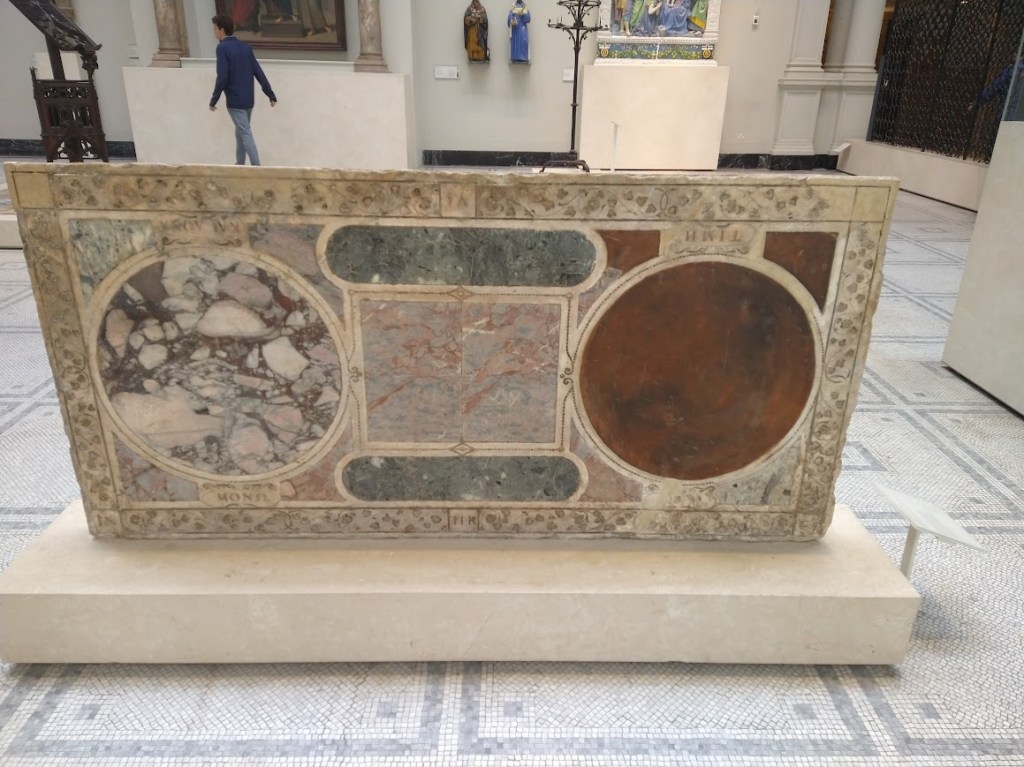
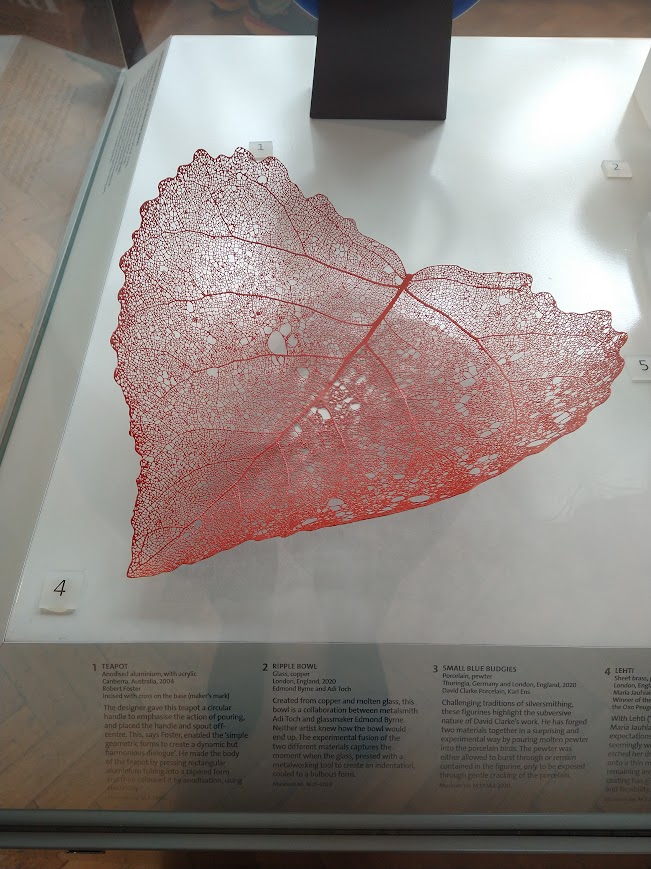
To round this post out, I did find a lot of other things that intrigued me. I went to the contemporary glass section, then the section that housed the paintings and drawings, and found a lot of things that intrigued me. One of them was a leaf made out of bronze that the artist Maria Jauhiainan photo-etched onto a bronze sheet, then dissolved the cells using acid. I love experimentation in art more than anything else, and I love that so many pieces in this gallery showed people pushing the boundaries of what is possible.
Signing off from Stratford-Upon-Avon!
CW
 Theatre in London U of A