Walking through Hampton Court Palace, I felt as if I was walking through the main attractions of three separate towns at once. From the entrance’s “Ye Olde Township” nature, to the decorum and luxury of the palace’s interior, to the sprawling and beautiful gardens that surrounded it all, it was a strangely all-encompassing site to explore.
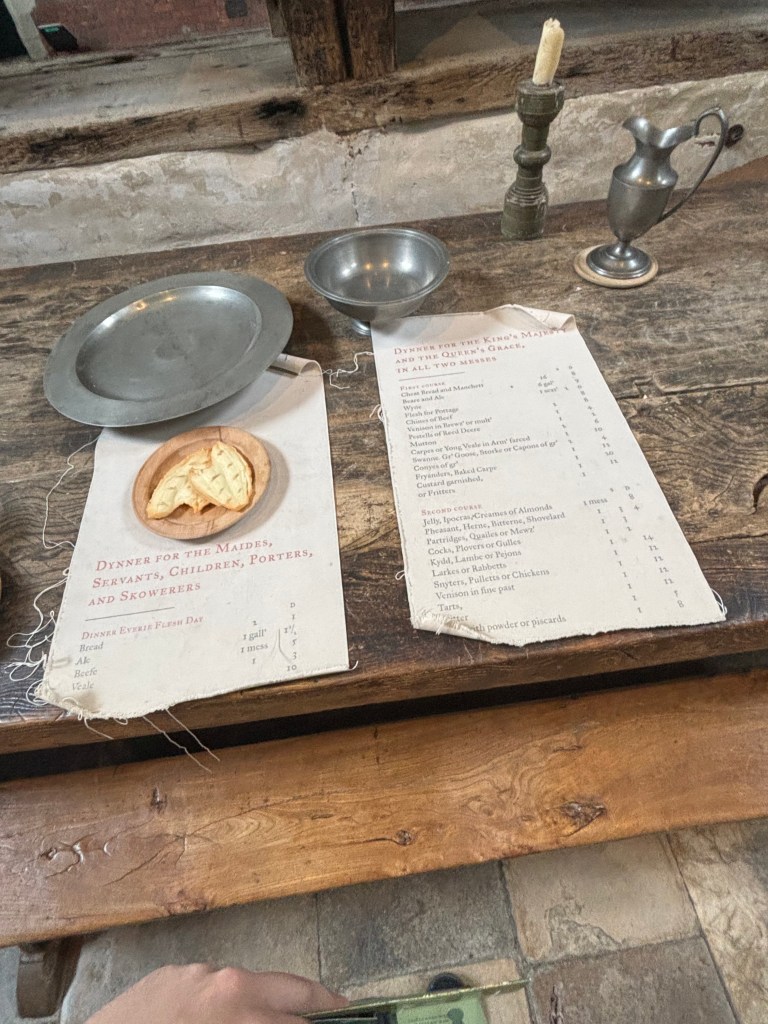
Starting from the entrance, it felt like walking through a recreation of an old medieval castle town, despite just being the kitchens. The narrow cobblestone alleyways and the decorative wheelbarrows filled with bags of grains helped to create the medieval living atmosphere, while pictures of actors in time-appropriate garb put up in the windows of buildings and walkways made the location feel like a vaguely and unintentionally scary tourist-trap. Walking through the kitchens kept this recreation feeling at a maximum, with the walls covered in writing and images depicting the kinds of meals that would have been served in the palace and the ways they were prepared or laid out on the table. It had tons of prop foods and decorative cookware placed around to help set the scene, and all in all it made it a very informative, if somewhat inauthentic, display to walk through.
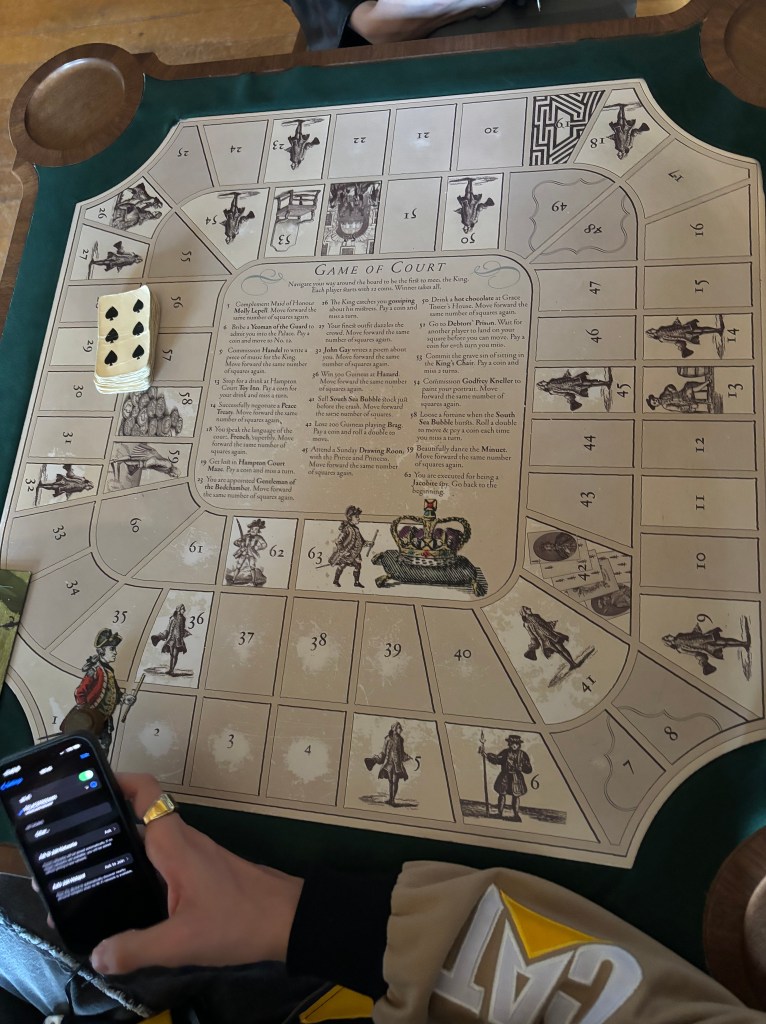
The actual palace kept this exhibition design, however walking through it felt more like a beautifully built museum than a touristy recreation. The architecture’s ornate design and exquisite color palette and the designs of the garden and fountain areas around the interior of the palace were truly something to behold, and seemed befitting of a royal palace. The church in particular was an awe-inspiring sight to behold, with its intricate ceiling showing the stars in the night sky and the overall sense of grandeur within the room giving it this air of divinity that made me scared to make a sound for fear of committing an act of disrespect. Besides the architectural styles of the palace being something to behold, the structure also held a number of artworks and artifacts belonging to the royal collections of Henry VIII as well as William and Mary. The palace held writings of and about Henry VIII’s wives, large pieces of religious artwork, two out of the nine pieces of Caesar’s Triumph (the first six of which are at the National Gallery, and the last one I have no idea where it is because I have not seen it), intricately folded dinner towels, examples of clothing styles that would have been worn around the palace, and even some tables in the Drawing Room dedicated to different (kind of terrible seeming) board and card games.
The most impressive part, and the part that I wish I had spent more time in, of Hampton Court Palace to me was the garden. After exploring the palace in its entirety, I exited the back to see a sprawling expanse, inhabited by trees, statues, fountains, and ducks. Walking through the gardens was very refreshing, especially after having spent most of the time in London either walking through the streets with tall yet skinny buildings towering above me and slightly polluting the air or inside of surprisingly cramped museums and theaters. The openness and natural beauty of the gardens was (quite literally) a breath of fresh air for me, and felt incredibly nice. The gardens were also home to many different little walking paths, with its own greek/roman inspired statues dotting the paths or little courtyards hidden between massive hedge walls. I know that I was unable to explore the whole area, as while leaving I saw signs for cafes and a hedge maze far past the extent of where I went, but the area that I did see was still truly breathtaking.
Overall, Hampton Court Palace was an incredible site to visit, giving more insight into the daily lives of past royals, and I hope I can return one day to find my way through that hedge maze.

 Theatre in London U of A