London is known for its West End theatre productions, but the fringe theatre scene in London is definitely worth checking out. Fringe theatre shows are smaller, lower budget, in out of the way theatres, and they cost less than the bigger shows. I decided to go see Marie Curie at the Charing Cross Theatre and was pleasantly surprised with the show.
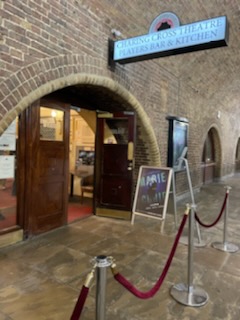
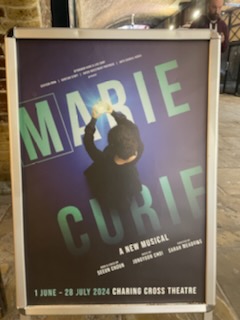
I had a little difficulty finding the theatre, which was actually underground and located underneath the Charing Cross tube station. There were a few times throughout the show when you could hear the rumble of a tube passing overhead. I thought this was very interesting, fun, and added character to the theater but I doubt that’s something you’d experience in a West End theater.
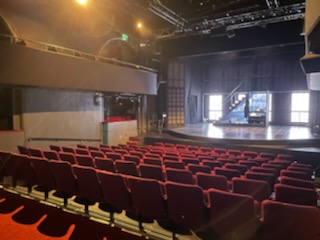
The vibes in the theater reminded me of a small local theater back in Little Rock called the Weekend Theater. There were several sets that were used for the scene changes. There was an upper platform with doors on it and the factory workers would dance behind the door when someone sang about how the workers were becoming ill. I also liked how they played with shadows and silhouettes through the lighting. I think the point of using silhouettes was to show there is little known about radium; they don’t initially realize how dangerous it is and the darkness surrounding its use. Like silhouettes, you can see the top layer, but not the details, which turn out to be deadly. In one number, the workers danced behind the doors when Madame Curie was observing rats and the way the shadows danced matched what she was describing about the rats. I think the lighting was also used to accentuate Marie Curie’s intimate feelings like when she moved to a new country and placed her job before her family so she could learn as much as she could about science. Although there were multiple light sources, the spotlight on Madame Curie at these times created a perfect shadow which I believe was a more pure version of herself. Finally, throughout the show there were screens in the background with a bunch of different equations on them. At one point, Madame Curie is really confused and overwhelmed with emotion and uncertainty and the equations on the screens turned to frantic scribbles.
Something somewhat unique to my experience of this show was my response to all of the physics equations on the walls and blackboards. I’m an engineering major and after taking a few physics classes, I couldn’t help but see if I knew any of the equations or if I could solve them. Given I’ve only taken two basic physics classes I wasn’t surprised I didn’t know most of them but I did know a couple.
The show was pretty good. I wasn’t expecting it to be a musical because it was about Madame Curie but it was a pleasant surprise and I liked the songs. The sound was a little louder than I would have liked but I think I was sitting near the speakers so it was fine. The acting was really good. There was a small cast so a couple of the actors played two characters. The actress playing Madame Curie’s daughter mostly played an adult but at one point had to portray the daughter as a child. She also played an adult cancer patient. There was another actor that was one of the factory workers and played another significant role as well, although I can’t remember what that role was.
I really enjoyed this show and I am glad that I went to see it. I was already familiar with the storyline. My sister was cast in her high school production of Radium Girls and I was reminded of this while watching Marie Curie because it discussed many of the same issues surrounding the workers in radium factories. I found it interesting that each show told the story differently on how using radium in the watch factories caused the workers to become ill.
 Theatre in London U of A