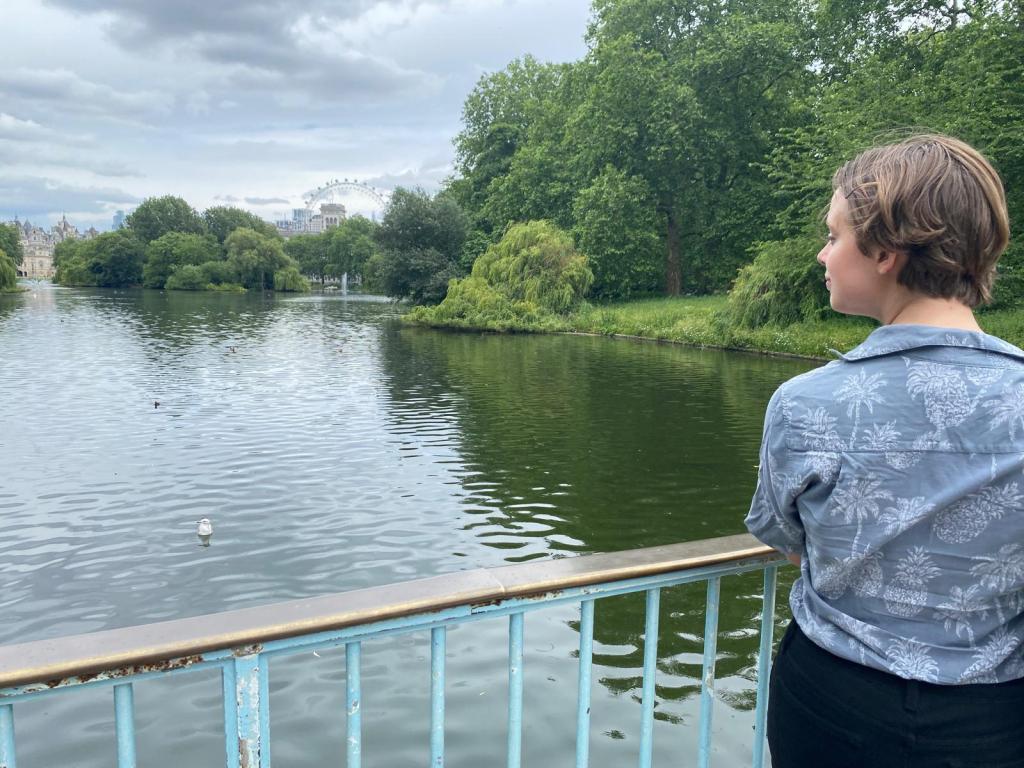
I would say long time no see, but that would be disingenuous. That’s right, I saw you with your little binoculars on a stick, watching me across St. James Park yesterday. Don’t even lie.
Anyway. I’m sure all of you definitely know this already, but on Monday the group went to the historic Westminster Abbey and got a tour from our guide, Molly. In both tours we’ve gone on with her, she has had a lot of wonderfully interesting things to say, though I will admit that I often cannot hear them or remember them after we’re gone. Nevertheless, I had a very enjoyable time being led around the Abbey by her.
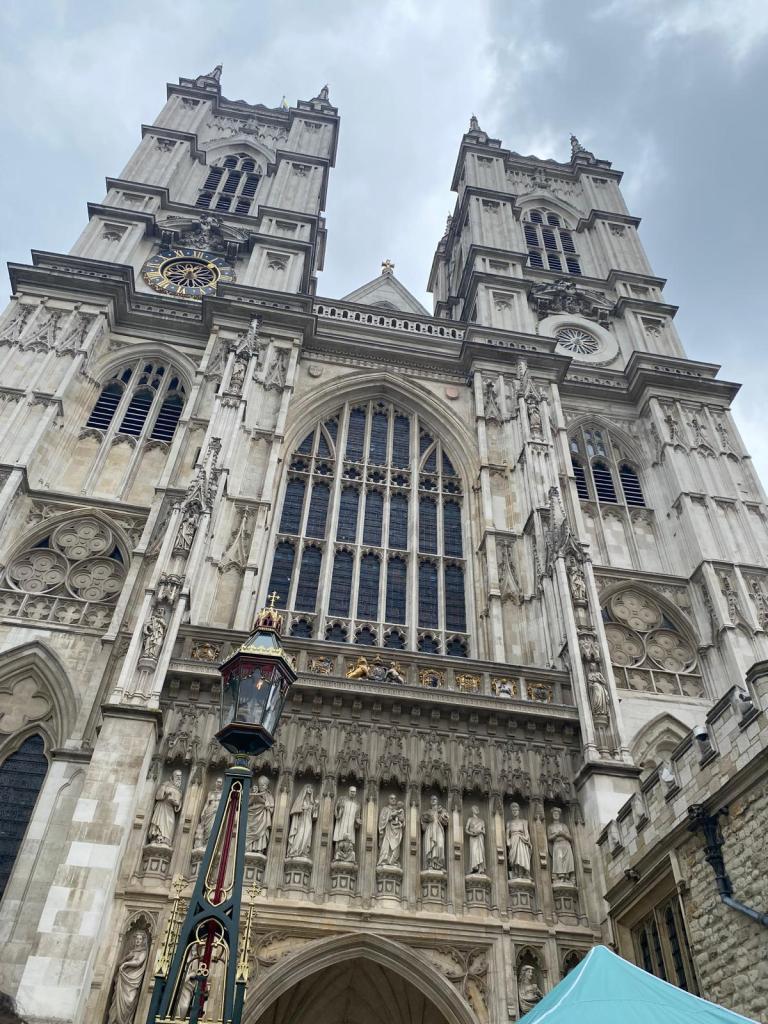

Westminster Abbey has stood for two purposes: first, it was designed to be a monastery, but later it was designated as the coronation location for monarchs, as well as their burial ground. Over time, people who have brought honor to England have been buried there as well. We saw countless plaques dedicated to the dead, both known and unknown. There were great monuments and bits of written-on stone. While we were there, we were tasked with finding some people that stood out to us, primarily in the sections that held the dedications to artists, like writers and actors. My discoveries were mainly focused in the Poets’ Corner, which is the area honoring all of the writers and musicians.
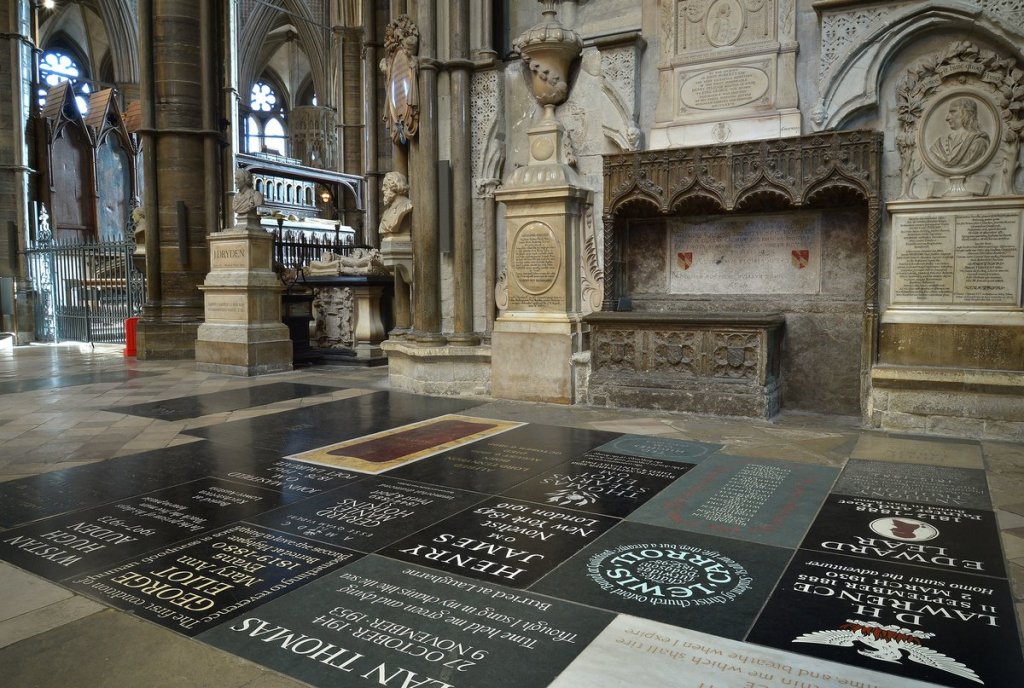
The first that I found was C.S. Lewis, writer of Narnia, who was born 29 November 1898 in Belfast, Ireland. He grew up there, but moved to England after his mother died of cancer in 1908. From there, he studied to become a writer, keeping in touch with his Irish heritage as best he could while being away from the motherland, but always expressing his distaste for the English. He found an idol in W. B. Yeats, who was looked upon in no reverence by the English. He went on to serve the British Army in the First World War, then was rejected from service in the Second. He became a chair at Cambridge University and died in that position in 1963. Upon his death, Lewis was buried at Holy Trinity Church in Headington Quarry, but is honored at the Abbey.

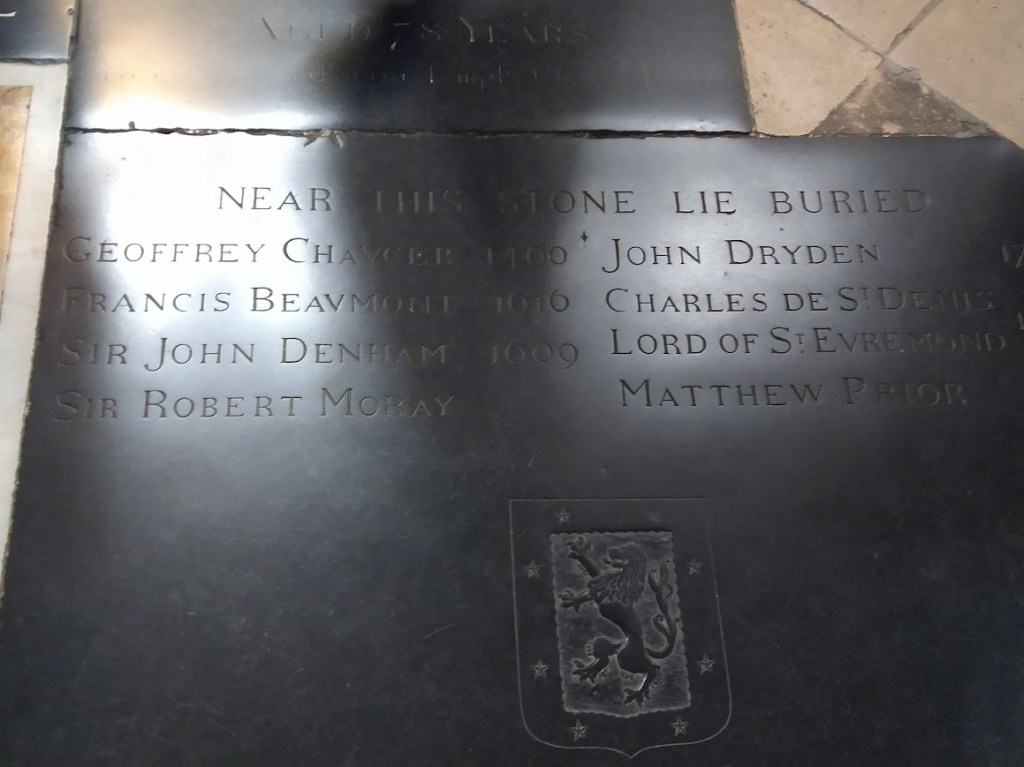
One of the dedications I found that specifically mentioned that the person was buried on the grounds of Westminster Abbey was Geoffrey Chaucer. I have only read him once, in class, but what made him stand out to me was that I remember that I found his writing in the Canterbury Tales to be shockingly modern and interesting to read. He lived from 1343-1412, which to me really asserts how long Westminster Abbey has been standing. While some of the manor has been redone in the past few centuries, a lot of the stonework is original to the building, which is very interesting to see, coming from a country that has only been here a quarter as long as this building has been standing.
The final person who really caught my attention was George Frederic Handel, who among the musicians, was one of the few that I recognized and actually knew his work. There were many names that seemed familiar, but he was one of the few who, when I saw his name, I could picture a melody in my head. He was born in 1685 in what was then Brandenburg-Prussia. He was not born to a family that already had a foothold in music, which made it difficult for him to advance; his father was a barber-surgeon. Due to his family’s lack of high status, there are not many concrete records on his existence prior to his successful career. His father allegedly discouraged him from music, which only encouraged him more, where the little Handel would steal away to the attic to play the clavichord in the night, when his family was asleep. He moved from Hamburg to Italy, then to London in 1710, where he composed Rinaldo, one of the first Italian language operas and one of his most famous. He became a joint manager of the Queen’s Theatre at Haymarket, which is now His Majesty’s Theatre (where Andrew Lloyd Webber’s The Phantom of the Opera is currently playing), where over 25 of his operas premiered. He never married, and like Chaucer, was buried in Westminster Abbey.
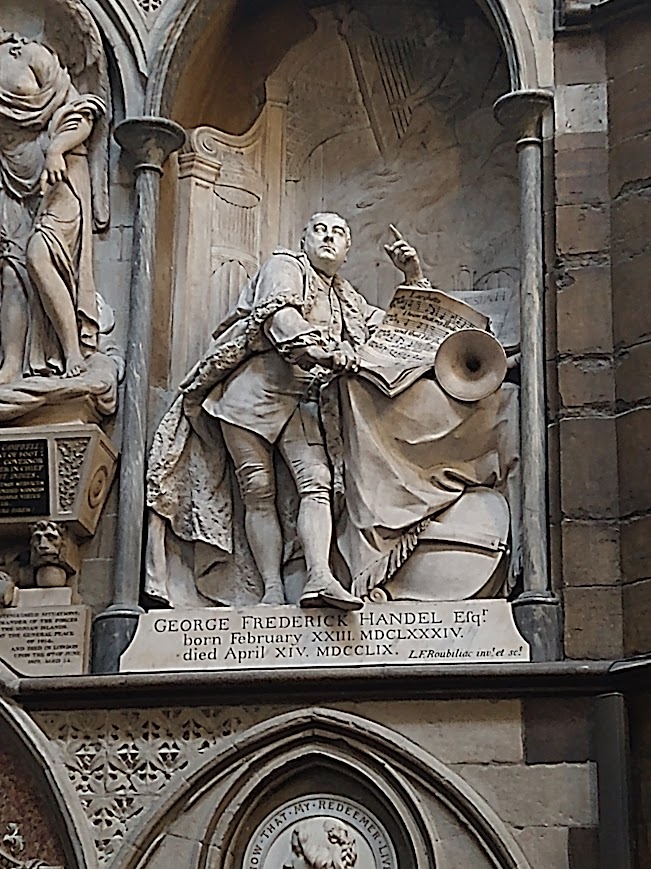
I would have loved to stay and read every plaque in there, and research every name that has been lost to time. I think that places like this, with the plaques and graves of so many people are very interesting. The need to be alive after death in commemoration and honor is very human, and something that I think most of us can relate to. In those who I recognize immediately, I am very interested, but I think that those who are less remembered deserve to be thought of as well.
On that note, a few hours after I left the Abbey, I did go to see a little show called Back to the Future: the Musical! Even though the rest of this blog is pretty intellectual, I thought the masses ought to know this little tidbit, even if it is a bit of whiplash.
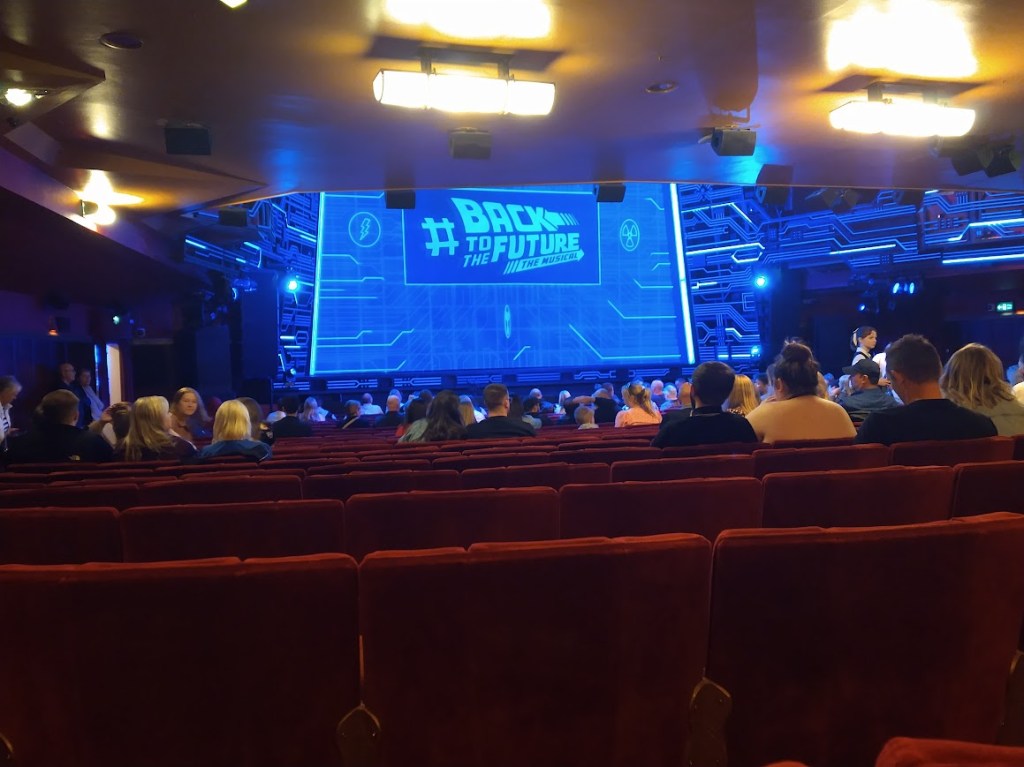
I would probably rate the musical a 5/10. I could have seen the movie for less, and it probably would have been better, though I have to admit that the tech for the DeLorean was really cool. Shoutout to Courtneay Irish for summing it up better than I ever could: Back to the Future was just the movie, put on the stage, but with worse music and pretty much the coolest tech anyone could ask for. But really, I have never wanted a jukebox musical more than I want Back to the Future as a Huey Lewis jukebox musical.
Wait a minute, Doc, are you telling me this blog post is finally over?
CW
 Theatre in London U of A